Monthly Archives: November 2012

Japan

Osaka’s mayor, inspired by Thatcher, requires children to attend Saturday classes

Ida Torres, The Japan Daily Press (November 12, 2012)


Mayor Toru Hashimoto

Mayor Toru Hashimoto

Mayor Toru Hashimoto responded to a recent assault, attempted robbery, and several other violent acts allegedly committed by six youths, with a reinstatement of a mandatory educational guideline that was abolished over ten year ago. Students are to attend Saturday classes in addition to their Monday through Friday schedule. Five elementary schools have already reinstated the Mayor’s guideline and the remainder will have the guideline take force in April 2013. Hashimoto hopes that with the additional school day will not only benefit student academic achievement, but also prevent juvenile delinquency.

For more information:

Japan’s Osaka to restart Saturday classes for schools

China

Ministry of Education sets up new department

Cheng Yingqi and Luo Wangshu, ChinaDaily.com.cn, (November 16, 2012)

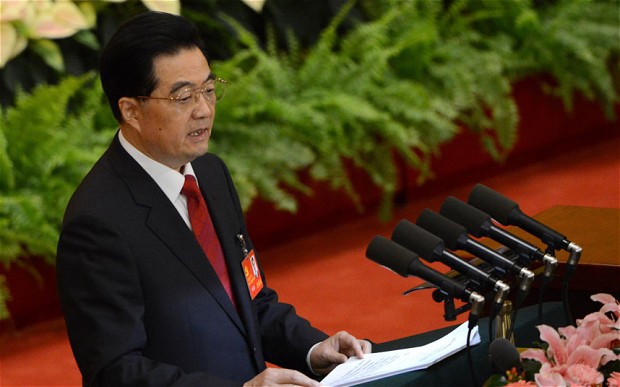
President Hu Jintao speaking at the 18th National Congress of the Communist Party of China

The Ministry of Education has set up a department of education reform, including offices of early-childhood education, special education and continuing education. Major reform measures will be introduced, including policy, research, and publicity of reforms. President Hu Jintao said that authorities will focus on promoting early-childhood education and investing in vocational and technical education.

For more information:

How to Stop Reactionaries From Derailing Reform in China

100 minutes of lip service: Outgoing China president lambasts the corruption he presided over

China, India GDPs to exceed entire OECD by 2060

Scan of Education News: 10/8/12 – 11/10/12

Funding

This month, the European Union’s biannual convention focused on funding for education. There is a growing concern that too many E. U. countries are implementing drastic cuts that will make it difficult to sustain growth once the economy recovers.  As reported in the New York Times, Rok Primozic, E. U. vice chairman, pointed out that “if European governments continue to cut back on education, they are also cutting back on skills.” Nevertheless, SpainGreeceIrelandItaly and Estonia, (as well as non-E.U. countries, such as Chile and Scotland) continue to implement austerity measures that cutback on education spending and lead to protests. In contrast, France,RussiaAustraliaNorway, and South Korea have all declared plans to increase education funding in the coming year, while private funding for education is on the rise in Vietnam and Cambodia.


Teacher Quality

In Guatemala, the issue of access to education becomes complicated as the government’s efforts to increase requirements for teacher qualifications have led to protests by those who see higher levels of education as an impediment to job applicants. However, a recent report from Scotland indicates a link between levels of teacher education and student performance. This link has led the United Arab Emirates to send teachers back to school, but it also might be responsible for a growing skepticism about the qualifications of teachers worldwide. For example, the governments of both France and Japan are questioning the contents of teacher-issued report cards, Malaysiahas decided to test teachers on their knowledge of English, the UK has increased Ofsted school inspections, and India plans to include students in the curriculum design process.


Major Reforms

Several major reforms spotlight the dire need for high quality education and propose drastic changes.  For example, France proposed a ban on homework and a shorter school week, Malaysia and Japan are redesigning curriculum so that it promotes creativity and innovation, and New Zealand’s Education Amendment Bill of 2012 allows for the creation of charter schools.


Brazil

ENEM Exam Highlights Education in Brazil

Ben Tavener, The Rio Times (November 6, 2012)

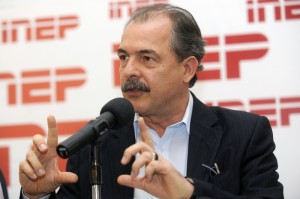
Education Minister Aloizio Mercadante

The Exame Nacional do Ensino Médio (National High School Exam), better known as the ENEM, is a non-compulsory end-of-high school exam that has come under fire due to attendance levels, disruptions and leaked questions. While 5.8 million people registered for the exam, 28 percent failed to attend nationally (25 percent in Rio). Since 2009, the MOE proposed all universities should use the exam as a standard entrance qualification test. Therefore, ENEM exam results are essential to student’s success within a university system that has limited spaces available. Education Minister Aliozio Mercadante noted that space is further limited for many white middle-class students after a fifty-percent quota was introduced to increase the number of university students from diverse socioeconomic backgrounds.

For more information:

Brazil’s University Affirmative Action Law

India

CBSE course committees to have student nominees

Press Trust of India, The Hindu (October 26, 2012)

The Indian Central Board of Secondary Education (CBSE) has declared its plan to include students in its course committees as well as in the process of framing the syllabus. These students will be nominated by the schools and will be selected on the basis of their performance in the 12th grade examinations. The course committees comprise of professors from universities, NCERT experts, teachers and subject experts, private and public schools and working teachers. According to CBSE Chairman Vineet Joshi, this commitment to student voice is motivated by a desire to make the courses and syllabus more inclusive and application-based. Mr. Joshi hopes that student involvement will improve the continuous and comprehensive evaluation-based educational system initiated by CBSE.

For more information:

CBSE students get voice in deciding what to study