Monthly Archives: February 2013

Scan of Ed News: Quality and Access

International-Travel-Agency-262545-262545-1so(links to articles are embedded as hyperlinks)

Recent news reports reveal the ways in which countries all over the world are taking steps to make quality P-12 education more accessible for students.

In Chinathe government is closing privately operated schools and will allow the children of migrant workers to attend public schools. In addition to paying tuition fees for vocational students in southern rural areas, the Chinese government is also looking for ways to increase high school enrollment in areas such as the Xinjiang Uygur autonomous region. In contrast, the government has announced that, in their effort to increase the quality of tertiary institutions, postgraduate education will no longer be free. As noted in The New York Times, the cost of education is felt sharply by those in rural areas, where families are suffering from “high education costs coincid[ing] with slower growth of the Chinese economy and surging unemployment among recent college graduates.”   Meanwhile, state universities in Indonesia will receive government funding to eliminate initial fees for new students and lower tuition rates overall.

In addition to the issue of access to education, many countries are reporting on efforts to improve the quality of education, resulting in conflicts between government officials, union leadership, and teachers. In Denmark, teachers are pushing back against the government’s reform measures, which include increasing the number of hours teachers spend in the classroom. In France, schools have had to shut their doors due to a teacher strike in protest of President Hollande’s reform agenda, which aims to increase classroom time. Guatemalan teachers and students have also been protesting the country’s education reform goals, which include university-level training for all teachers, a measure many believe will have a negative impact on education in rural areas. South Africa has long provided rural teachers with incentive stipends; however, teachers are in the midst of planning a strike to protest the government’s recent decision to terminate the allowances.

Reforms in Mexico and India in the Journal of Educational Change

(links to articles are embedded as hyperlinks)

JEDU 2009:JEDU 2009In the most recent issue of the Journal of Educational Change, studies highlight teacher participation in reform efforts in Mexico and a participatory approach to wide-scale change in India.

Education Reform and Teacher Participation in Mexico

In their study of Mexico’s 2006 Reforma de la Educacion Secundaria (RS) (Reform of Secondary Educatión), Levinson, Blackwood and Cross conclude that despite interest in professionalizing teaching at the secondary level, “for the most part secondary teachers in Mexico neither felt like agents nor partners in the RS…. As in previous reform efforts, teachers mostly felt that they were recipients of plans formulated by government officials, and as a result many have evidenced neither complete compliance nor full commitment to the reform.”  They go on to explore the problematic role of the union in the reform and the concerns that many teachers have about the union. Recent reports from Mexico show that concerns about the union and teacher participation continue.  President Enrique Peña Nieto’s recent education reform initiative is widely seen as an effort to diminish the power of Mexico’s teacher union, which has been led by Elba Esther Gordillo; however, it is not clear if President Nieto will provide the essential structure and support that would allow for authentic teacher participation. At this time, the teachers and union leadership have been presented in the press as allies in the effort to protest Nieto’s reform.

Wide-scale change in India

While recent attention often focuses on the regulations of the Right to Education Act in India (including recent reports  and debates about the progress of this initiative), Tricia Niesz and Ramchandar Krishnamurthy suggested that the wide-scale adoption of Activity-Based Learning (ABL) in Tamil Nadu India was accomplished through a more participatory, grass-roots approach.  They argue that state-level administrators “engaged strategies for change that combined both movement-building tactics and the conventional tools of administrative power.”  These administrators themselves became experts in the ABL method in a way that built good will and moral authority even when administrators used top-down mandates to institutionalize the reform.

China

High school admissions a priority in Xinjiang

By Cui Jia in Urumqi, China Daily (February 1, 2013)

China

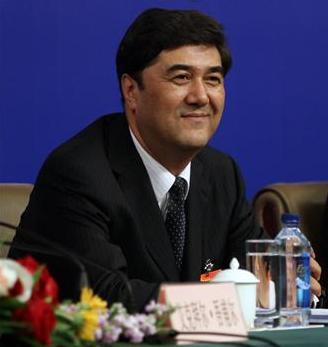
Nur Bekri

Nur Bekri, chairman of the Xinjiang Uygur autonomous region, has stated that in the next five years they hope to increase senior high school admission rates, and make vocational education available for all junior and senior graduates. While there have been significant increases in student enrollment since 2006, and regional governments began paying the tuition fees for vocational students from southern rural areas, the government is searching for ways to encourage more students to continue their studies.

For more information:

Uyghur Pupils Face Beatings

1,600 vagrant Xinjiang children resume normal life

Austria

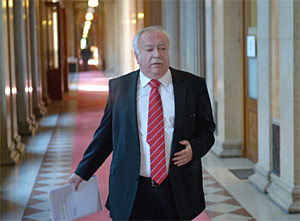
Häupl wants referendum on Comprehensive School

derStandard.at (January 18, 2013)

APA/Schlager

Michael Haüpl  APA/Schlager

The implementation of a comprehensive school system has been the subject of controversial debate for a long time. Now, Michael Häupl, Mayor of Vienna (Socialist Party, SPÖ), has suggested a national referendum asking Austria’s citizens whether they want to keep the current, partly stratified school system or implement a comprehensive school system with whole-day care for all children aged 6 to 14 years. If policymakers are unable to decide on this overdue question, then the Austrian people should, he argues. Johann Gudenus, head of the Austrian Freedom Party and Manfred Juraczka, head of the People’s Party in Vienna, both state that Mr. Häupl is ignoring the bad education conditions in the city of Vienna and therefore recommend that he first take care of those problems before demanding national solutions.

For more information on education news from Austria:

Education report recommends expanding entangled day schools (link in German)

A-levels: Students Union accuses the Ministry of Education of inactivity (link in German)

“Pre-school year for children with problems is German-discrimination” (link in German)