In “Leading educational transformation in Asia: Sustaining the knowledge society,” recently published in the Asia Pacific Journal of Education, Alma Harris, Michelle Jones, Sailesh Sharma, and Sathiamoorthy Kannan explore the role of professional learning communities and professional collaboration in developing and sustaining the knowledge society. In this post, Harris, currently the Director of the Institute of Educational Leadership at the University of Malaya, briefly describes how several different countries are approaching work on professional collaboration at scale, some of the issues currently being debated, and what to look out for in the next few years.
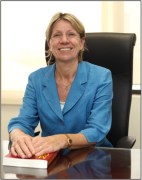
Professor Dr. Alma Harris
Director
Institute of Educational Leadership
University of Malaya
Professional collaboration is increasingly being used in various countries to raise the performance of teachers and to improve student achievement and outcomes. Different countries are inevitably approaching this in their own way but the common denominator factor is inter-dependent professional learning. In some countries, like Singapore, Wales, Finland, and parts of Canada (e.g. Ontario), professional collaboration, in the form of professional learning communities, is a mandated part of the school reform process supported at the Ministerial level. In other countries such as Russia, Australia and Malaysia, professional collaboration is being promoted as a means of improving teacher quality and maintaining the highest standards but is not yet a national expectation.
The debates about professional collaboration range from discussions about the best models to follow, about the time and resources available to support these activities, and the issue of impact. It is important that countries investing in professional collaboration see a return on their investment in terms of better learning and better teaching.
In the next few years, it will be important to look out for how countries that engage in collaborative professional learning fare in international comparisons of educational performance like PISA, PERLS and TIMMs. Looking at high performing systems like Finland,Ontario, Shanghai, Hong Kong, and Singapore, that all invest in collaborative and focused professional learning, it would suggest that this is a potentially important and powerful lever of educational change and improvement.
 The most recent issue of Review of Education: An International Journal of Major Studies in Education, includes a study that explores how Singapore has been able to achieve a relatively high level of school success in recent years. In “Assessment and the logic of instructional practice in Secondary 3 English and mathematics classrooms in Singapore,” authors David Hogan, Melvin Chan, Ridzuan Rahim, Dennis Kwek, Khin Maung Aye, Siok Chen Loo, Yee Zher Sheng, and Wenshu Luo, draw on data collected in 2010 to analyze methods of instruction in secondary math and English classrooms that range from the more traditional models, which focus on memorization and tight control over student behavior, to the more student-centered models, which focus on comprehension and collaboration. The authors argue that teachers in Singapore draw from a variety of instructional practices, and that national high stakes testing has both shaped and constrained what teachers can do in the classroom.



 International Education News