“Why don’t schools change?” In this two-part interview, Jón Torfi Jónasson reflects on his work studying educational change in Iceland and other parts of the world. Part 1 explores some of the institutional factors that make it difficult to make changes even in an “undisciplined” system like that in Iceland. In Part 2, Jónasson discusses some of the advice that he has shared with policymakers and education leaders. Jónasson is a Professor Emeritus of the University of Iceland School of Education where he was also Dean of Social Sciences and Dean of the School of Education.
Thomas Hatch: Can you share with us how your ideas about school improvement have evolved?
Jón Torfi Jónasson: For the past 20 to 25 years, I’ve been interested in how education changes or doesn’t change. In the “old days,” I was very interested in the use of computers in education, and I went to a meeting about this in Switzerland in 1980. I came back from that meeting and advised the Ministry of Education here in Iceland, “We must know what’s happening because this is very, very important.” I thought that from now on everything would change very fast, partly or even mainly through the influence of computers. A few years later, the Government set up a committee on the future of all aspects of government, and I was asked to write on what I thought would happen in education in the next 25 years, from 1985 to 2020. Some thought I would, among other things, be able to explain how computers would change everything and, perhaps, how school might not be needed at all, due to the power of computers. But I was very careful and I often claim that this was a particularly boring book because I said, more or less, that very little would change. Computers would be introduced; they would be used – this was before the internet – and they would probably be connected via video link, but not very much else will change. Well, perhaps something, but probably not very much. And my judgment on this, by hindsight, is that I was more or less correct.
Jón Torfi Jónasson
After that, around 2010, I thought I would write another book about the next 25 years, but I didn’t want to write another boring book so I decided to speculate about what might change but more importantly, what actually hindered sensible change. What should change? And why doesn’t it? That led me to become interested in the inertia of educational systems and educational work generally, and with this I’ve been preoccupied in the past decade or more. In one article, “Educational change, inertia and potential futures,” for example, I focused on inertia and the aspects of education that make change difficult. One of my main conclusions is that people erroneously view education as an organization. Thus, many have been interested in developing organizational leadership and thus organizational change, and have perhaps not sufficiently understood that education is more of an institution. (This argument has been most powerfully made by David Labaree in his 2010, book Someone Has to Fail.) You have to focus on institutional changes and how institutions should or can be changed if you want education to develop.
One of my main conclusions is that people erroneously view education as an organization. Thus, many have been interested in developing organizational leadership and in organizational change, and have perhaps not sufficiently understood education is more of an institution…. You have to focus on institutional changes and how institutions should or can be changed if you want education to develop.
In order to explain my argument, I’ve concentrated on two main institutional aspects, even though there are more that matter. One is that there are subjects that should be taught, and they’ve been essentially the same for over a century or two, with mathematics as the prime example. The other institutional issue is credentialism. Internationally these are very powerful constraining forces, keeping education in a certain form.
But if you ask about Icelandic education, I think it is actually in good shape. A lot of people are more skeptical than I am, but I claim that the strength of the Icelandic system is its lack of formal discipline or constraints. It’s a system that is not disciplined by examinations; we have no national leaving examination, with stakes, at any level. That may change, but that’s been the case during this century. In the past, at the highest level we have had a formal entrance examination (university entrance examination -ice: stúdentspróf), but it is not the same from different upper secondary (i.e., high) schools and thus not national, they all have their own final examinations. Then, when we had the national examination at the end of compulsory education, it was only indirectly used for tracking. Some high schools would try to select students on that basis, but that was not uniformly so. For most students, at least from the countryside, who in practical terms only had access to one upper secondary school, this examination didn’t matter. The tests in compulsory education will now be re-established in a totally revised form, initially in reading Icelandic and mathematics in 4th, 7th and 9th class (out of 10), but solely as a formative assessment mechanism – even though I claim that nobody knows exactly how to use formative mechanisms, but that is a different story.
[T]he strength of the Icelandic system is its lack of formal discipline or constraints. It’s a system that is not disciplined by examinations as we have no national leaving examination, with stakes, at any level.
Of course, we have problems. The main problems are related to the notion of inclusion, e.g., supporting different groups like those who are having mental health issues or learning difficulties, and we also have an increasing immigrant population, and thus we have problems with language, i.e. teaching young people to speak Icelandic who have a different mother tongue. These are being addressed, though I’m not sure how well we are doing this. But we are doing better in education generally than many people accept. We are doing quite well academically and many of our young people are working all over the world in interesting jobs or doing well at top institutions. We’re doing quite well in sports. We have national teams in both genders that are doing reasonably internationally, e.g., in soccer, handball, gymnastics, and basketball. Our young people are internationally successful in music. PISA’s not the only measure of how well we do, that’s my main point. One of the problems with PISA is that it hijacks the discourse. It may have positive aspects, but it is very damaging when one measure takes over the discourse and tells you what needs to be addressed.
TH: If Iceland has one of the most undisciplined systems, in the sense you have explained – and I’m not aware of many others that are like it – that raises a question: Why hasn’t it been easier to change the Icelandic system? Many people in other countries complain that the tests and examinations make it hard for them to change, but what are the institutional factors that are making it hard for this “undisciplined” system to change? What is producing the inertia that’s making change difficult?
JTJ: It is the institutional character of education. One problem, as I mentioned, is the subject control. There are certain subjects that everyone agrees must be taught; well, many – perhaps most people, seem to agree about this, except me. I’m trying to argue that one problem is the absolute versus relative importance of curricular content. There is nothing that’s absolutely necessary to teach, but there are so many things that are useful to understand (even very useful), and certain things may be relatively more important than others. Many, perhaps most of the things we are now teaching are, in my mind, relatively less important than things we’re not teaching. Take genetics which doesn’t have central role in our curriculum. Why isn’t genetics, or perhaps microbiology, the main focus in the natural sciences rather than physics or chemistry? You could easily suggest still other foci. Why shouldn’t artificial intelligence be addressed with connections to the brain and computer sciences – and even placed in primary focus? Isn’t that more important than some of the mathematics we are teaching? I’m certainly not saying mathematics is not important. I’m only saying other things are possibly more important. Teaching about psychology, particularly related to mental health, is another very important subject. And we could go on. So, I’m suggesting that the current subject hierarchy is actually holding control when it shouldn’t.
Most of the things we are now teaching are, in my mind, relatively less important than things we’re not teaching. Take genetics. Why isn’t genetics or perhaps microbiology, the main focus in the natural sciences rather than physics or chemistry?
The other controlling factor is the credential. You want your exams, and you want your marks; you want your social currency, you want to get on. You want to get ahead based on credentials even though a credential is not so important in Iceland, compared to other systems – it still matters – but probably much less than in most other systems. As I said before, here, there is no standardized university entrance examination. In principle, everybody who finishes high school and takes a high school matriculation exam has access to university. Before there was a hindrance if you pursued the vocational track rather than the academic path; then you weren’t allowed unconditionally to enter university. But now that hindrance has been removed, and if you go through a vocational track and take subjects that are needed – some Icelandic, some mathematics, wherever you want to take them – then you can enter university even without taking the matriculation exam.
TH: But who in Iceland determines the entrance criteria for the universities?
JTJ: It’s to a large extent determined by the individual high school who adopt their own standards, but those are based a general framework set by the ministry. Students leave the school with certain marks in certain subjects. If they have some predefined combination of subjects – they have met the university entrance criteria. It’s somewhat diffuse because it can be different for different universities and in different university subjects. If you ask someone “what is it?” No one can actually give a simple general answer. So it’s amorphous and flexible, which I think is very sensible. There are discussions about changing this, but, for the most part, it’s incredibly open. In the medical professions, programs for nurses and doctors have special entrance examinations, but they are exceptions.
TH: Let’s keep pursuing this. If the system is so undisciplined, in the sense you have explained, and it’s so open, shouldn’t Iceland be the easiest place in the world to make changes and improvements in conventional schooling? What else is holding things back?
JTJ: Again my response is: it is education as an institution. There is curriculum guidance for the preschool, which is very open so, in fact, teachers there can do whatever they think makes sense within that very general frame. This makes sense for the preschool and is easy for most people to accept. But it is in fact similar for compulsory education. There is a national curriculum, but it is very open, and I claim that the schools have more freedom to do what they think makes sense than they actually realize. They have been held back by some very ill-defined constraints set by a “divine” tradition. Many would say, “We will not be allowed to do this or that,” when they actually have the implicit permission.
[S]chools have much more freedom to do what they think makes sense than they actually realize. They have been held back by some very ill-defined constraints set by a “divine” tradition. Many would say, “We will not be allowed to do this or that,” when they have implicit permission.
So it’s quite interesting, why we don’t see more changes? There is one institution I haven’t mentioned, which is the parents. A preschool teacher told me this morning that many parents ask her, “Why are you not teaching reading in preschool? You should be doing that.” The parents are making sure that the “right things” are being done, even though the right things they think of are determined by their own, often narrow perspectives. That’s also a controlling force.
It’s a very important question. Why aren’t we changing more than we are? In my writing on inertia I’ve tried to mention a number of constraints. One of the constraints I talk about related to the control of the subjects is the education of teachers, i.e. what they can and cannot teach. What new material are they able to teach? I thought in the 1980’s and 90’s that we should teach computer programming at school. Definitely not to produce programmers but for the same reason we teach mathematics. It’s reasonable to understand and master some of the things that are happening around us. But that was a futile suggestion to make. Hardly anybody was available to teach programming, so you couldn’t press that point. And it’s the same with some other important topics. If you want to place more emphasis on AI or genetics, or ethics or other important new things, who would be teaching those topics? Then, if we think certain skills are important – like teaching initiative, friendship, or creativity – who’s going to teach those? These are very difficult to teach! It’s easier to teach fractions. Teachers also have to attend to all kinds of important things in school that are rather difficult so they would perhaps prefer to do something more manageable like teaching time honored concrete content. Related to this are vested interests. For instance, in secondary schools, when students in Iceland were given more choice of foreign languages, the pupils started to choose Spanish rather than German. Some of the teachers of German, unfortunately, lost their jobs. This doesn’t happen, of course if we don’t change. There are a lot of things like that keeping the system in place. And it is easy to understand and even to sympathize with many of those. But my main point is that if people don’t understand the various institutional constraints, then they don’t understand why the changes that they think are reasonable, don’t happen.
[I]f people don’t understand the various institutional constraints, they don’t understand why the changes that they think are reasonable, don’t happen.
One of the problems is that education is not being discussed as an idea. When people say, “we should change education,” they’re normally implying “we should change the way we teach, for example, mathematics.” They’re not asking if we should teach mathematics at all or other such fundamental questions. There are many things like that, you’re not “allowed” or expected to question so all the changes discussed and potentially taking place are minor. Another problem is that people have this idea that you have to go through all the basics in a content area, otherwise, you can’t understand complex ideas. That means school must attend to a wide range of curricular basics even though nobody actually knows what these basics need to be. There were basics, perhaps defensible in the 1900’s, but not necessarily now, even if they still retain their curricular place. This is being discussed among other related issues in the recent fascinating book by my colleague Tom Fox on becoming edGe-ucated.
Another content issue is communication. Communication should perhaps be the most important subject in a modern curriculum. There are incredibly many different sides to it. I mention a single example. With whom do you have to communicate, how and about what?
Next Week: “Relish the freedom you have and find the balance”: A Conversation with Jón Torfi Jónasson on Educational Change in Iceland (Part 2)
Supporting schools to be leadership teams: Three Australian ‘me to we’ Research-Practice Partnerships — Christine Grice & Fiona Davies, The University of Sydney
Lead the Change (LtC): The 2024 AERA theme is Dismantling Racial Injustice and Constructing Educational Possibilities: A Call to Action. How does your research respond to this call?
Christine Grice & Fiona Davies (CG & FD): Australia is one of the only Commonwealth countries without a treaty with its First Nations peoples. We acknowledge that in the country called Australia, sovereignty has never been ceded. We begin this issue of ‘Lead the Change’ by acknowledging the Traditional Owners of Gadigal land on which we co-construct educational possibilities together that embody change through respect, listening, consultation, and changing ourselves. This research explores research practice partnerships (RPP) between two researchers and three diverse Australian schools that form our cases over a three-year period. The overarching goal of our partnerships was for leaders to work well together to support the development of people, pedagogy, and wellbeing in their school aligned with strategic planning. Our bespoke work developed coherence over time in each context.
Christine Grice & Fiona Davies
Over the last few years, Australian school leaders have told us that increasing workload demands for their teaching teams and themselves is resulting in burnout. They have told us about their struggles to implement constant change, often imposed on them with minimal consultation, and about their limited agency in managing workloads. These perceptions are echoed in international research on teacher wellbeing such as the OECD Teaching and Learning International Survey. There is a sense of more and more work being added, and nothing being taken away. Decades of research on occupational stress tells us that a long-term imbalance between work demands and the resources available to meet those demands affects both wellbeing and performance.
The Australian Institute for Teaching and School Leadership (AITSL) has only recently recognised middle leaders, as ‘teachers who lead’ in a different sphere from principals, reinforcing an unequal, and ununified stance for leading learning together. School leaders have also told us about the limited opportunities to reflect together on their values and purpose as a school. They described doing their best within their own departments but wanting more opportunities to collaborate across departments and with leaders at all levels in their schools. According to TALIS (2018) collaboration is 10% lower in Australian schools than in other OECD countries. When middle leaders develop their full capacity to work together with leaders, teachers, and students, increasing their sphere of influence, they lead beyond the middle (Day & Grice, 2019) and inspire others to further develop their learning strengths through professional relationships supported by carefully planned school structures, communicative learning spaces (Sjolie, Francisco, & Langalotz, 2019), and architectures over time.
We have worked with schools where leadership is more or less distributed, and in all cases, leaders clearly relished the opportunities created by professional learning to collaborate. Middle leaders were ready and willing to contribute to school level change when they felt safe to do so. Our RPPs enable school leaders and their teams to collectively design and craft satisfying and sustainable work aligned with goals, building habits that support communication, reflection, resolution, and action.
Leaders clearly relished the opportunities created by professional learning to collaborate.
LtC: What are some of the ideas you hope the field of Educational Change and the audience at AERA can learn from your work related to practice, policy, and scholarship?
CG & FD: Change involves seeing leadership, pedagogy, and wellbeing in new ways.The aim was for middle leaders to develop a collective framework for long term change, as they made decisions about their interactions, cultural norms, and improvement practices and develop knowledge and skills that could enable them to lead learning together in a sustainable way.
Change is also rooted in values and purpose. Our beliefs about leadership: that leading is a practice that happens in the intersubjective spaces between people who may have role titles and job descriptions, but focus more on working together to diffuse power, enabling them to lead together (Kemmis et al., 2014). Leading as practice is about purpose: the work to be done. The work is achieved through collaborative job crafting that creates clear processes for everyone to work together in accordance with their strengths, humanising and democratising research and leadership work (Penual, et al., 2020 p.663), turning collaboration from an oft overused term to practical action, where the social preconditions for collaboration are enabled.
Improving wellbeing outcomes for students, teachers, and school leaders can only be achieved through collaboration, and yet schools are not structured to collaborate easily, and the practices and purposes of collaborating are largely misunderstood. School effectiveness and improvement is based in action. Connecting the academic and wellbeing needs of students with a shared responsibility for knowing students, aligned with our values and the purpose of education in specific contexts, moves the rhetoric about collaboration and wellbeing to action, by addressing not only why we should work differently, but how to redesign leading learning together in schools, using practice approaches.
Sustainable change involves desiring new ways of working and leaning on protocols to revisit ways of working in a cycle of planning, doing, and evaluating (or saying, doing, and relating). Our RPPs supported leadership teams to grow in their collective efficacy, and were dependent upon the leadership conditions, interactions, and beliefs within each of the schools. The World Health Organisation emphasises the importance of psychosocial wellbeing in the workplace, and there is increasing international recognition of the importance of managing psychosocial risks in workplaces. This is reflected in international standards such as ISO 45003:2021 (Guidelines on managing psychosocial risk) and new regulatory requirements in Australian workplaces including schools. A healthy school workplace is where teachers and leaders promote and sustain the health, safety, and wellbeing of all workers, including the organisation of work and workplace culture. It is no longer acceptable to have unsustainable workloads in schools. Working together using collaborative job crafting equips teachers and leaders with proactive strategies that enhance leading wellbeing in schools. Findings support the growing body of international evidence demonstrating the impact of research/policy/practice collaboration and partnerships on improving the effectiveness of education in schools, particularly in diagnosing school readiness for RPPs.
Change flows over to students and communities. Australian teachers who reported participating in joint activities across classes/age groups, also reported higher use of cognitive activation practices in their classrooms.
Navigating the Leadership Pipeline; Tenets for Effectively Navigating the K12 System for Traditionally Marginalized Candidates — LeAnne C. Salazar Montoya, University of Nevada; Brione A Minor-Mitchell, Clark County School District; Kristin L. Kew, New Mexico State University
Lead the Change (LtC): The 2024 AERA theme is Dismantling Racial Injustice and Constructing Educational Possibilities: A Call to Action. How does your research respond to this call?
LeAnne C. Salazar Montoya, Brione A Minor-Mitchell & Kristin L. Kew (LSM, BMM & KK): Our research is a direct response to the 2024 AERA theme, “Dismantling Racial Injustice and Constructing Educational Possibilities: A Call to Action.” In the context of educational leadership, our study delves into the intricate challenges faced by traditionally marginalized candidates within the K12 system. By identifying and exploring effective tenets for navigating the leadership pipeline, our research aligns with the imperative to dismantle racial injustice. The study seeks to contribute actionable insights that can empower aspiring leaders from marginalized backgrounds, promoting inclusivity and equity within educational leadership. We delved into how schools aligned with the Kansas Can School Redesign Project reform goals by different characteristics, such as a school’s socioeconomic status, student racial composition, and location, among a few others. Our findings unveil some progress in reform aspirations.
LeAnne C. Salazar Montoya, Brione A Minor-Mitchell & Kristin L. Kew
LtC: What are some of the ideas you hope the field of Educational Change and the audience at AERA can learn from your work related to practice, policy, and scholarship?
LSM, BMM & KK: In terms of practice, our collaborative research aims to provide practical guidance for traditionally marginalized candidates navigating the leadership pipeline. It offers tangible strategies addressing systemic barriers and fostering inclusivity. By focusing on actionable steps, the study equips aspiring leaders with the tools to navigate challenges effectively. Regarding policy, the research advocates for nuanced adjustments recognizing and supporting the unique challenges faced by marginalized leaders, thereby fostering an environment conducive to their success. Scholarship-wise, the study significantly contributes to the existing body of knowledge by illuminating the experiences and strategies of traditionally marginalized candidates, enriching the discourse on educational leadership. We invite further collaboration and more education stakeholders to draw upon our research findings and evaluation methods in shaping the trajectory of education reform. We strive to contribute to the collective wisdom that propels educational progress and enhances the pursuit of student success goals in a broader educational reform landscape. Together, we can enrich the discourse and drive positive change in education.
Together, we can enrich the discourse and drive positive change in education.
References:
Supporting schools to be leadership teams: Three Australian ‘me to we’ Research-Practice Partnerships
Day, C., Grice, C. (2019). Investigating the influence and impact of leading from the middle: A school-based strategy for middle leaders in schools, (pp. 4-51). Sydney, Australia: The University of Sydney
Kemmis, S., Wilkinson, J., Edwards-Groves, C., Grootenboer, P., Hardy, I., and Bristol, L., (2014). Changing practices, changing education. New York: Springer.
Penuel, W. R., Riedy, R., Barber, M. S., Peurach, D. J., LeBouef, W. A., & Clark, T. (2020). Principles of collaborative education research With stakeholders: Toward requirements for a new research and development infrastructure. Review of Educational Research, 90(5), 627-674. https://doi.org/10.3102/0034654320938126
Sjolie, E., Francisco, S., & Langalotz, L. (2019). Communicative learning spaces and learning to become a teacher. Pedagogy Culture and Society 27(6):1-18, DOI:10.1080/14681366.2018.1500392
Catalyzing Innovation: Rethinking Scalability — Seth A. McCall, Jessica Yusaitis-Pike & Ellen B. Meier, Teachers College, Columbia University; Babette Moeller, Education Development Center, Inc.
Lead the Change (LtC): The 2024 AERA theme is Dismantling Racial Injustice and Constructing Educational Possibilities: A Call to Action. How does your research respond to this call?
Seth A. McCall, Jessica Yusaitis-Pike, Ellen B. Meier & Babette Moeller (SM, JYP, EM & BM): The Math for All (MFA) research project addresses racial justice through the issue of accessibility in mathematics education. The project focuses on supporting teachers in improving the accessibility of high-quality mathematics for all students in their classroom, whether identified for special education services or not. Unjustly, students of color tend to be overrepresented among several disability categories. As a result, they are often doubly marginalized, because of their color and their disability status. So, the larger MFA project is very much engaged with this question of racial and social justice.
Seth A. McCall, Jessica Yusaitis-Pike, Ellen B. Meier & Babette Moeller
In general, MFA is informed by an appreciation of difference. The neurodevelopmental framework guides the work with schools, with the reminder to leave space for different ways of thinking. As a research project working with 32 schools, these ideas about neurodivergence complicated how the research team thought about going to scale. This response to the AERA call-to-action engages with the concept of scale, encouraging a more nuanced conceptual understanding of scale. Tsing (2015) characterized scalability as the “ability to make projects expand without changing their framing assumptions,” or, more specifically, “the ability of a project to change scales smoothly without any change in project frames” (p. 37). In working with schools, the project focused on how the ideas that MFA introduced within schools lived on within those schools. However, the project does not have to look the same in every situation. In fact, the research team increasingly suspected that it should not look the same in each situation. MFA’s work with teachers encourages them to recognize how students learn differently. However, in focusing on going-to-scale, researchers sometimes frame “difference” as a problem. In these cases, the idiosyncrasies of place become an inconvenience, and the natural unfolding of the world becomes a threat. In sticking with MFA’s vision for the classroom, this research project attempts to trouble taken-for-granted assumptions in educational research related to scale.
MFA’s work with teachers encourages them to recognize how students learn differently.
LtC:What are some of the ideas you hope the field of Educational Change and the audience at AERA can learn from your work related to practice, policy, and scholarship?
SM, JYP, EM & BM: In addition to Tsing’s (2015) troubling of scale, our research draws on other ideas related to the dimensions (Coburn, 2003) and types of scale (Coburn, 2003; Morel et al. 2019). In a sense, these are groups working on different sides of the same mountain. Tsing (2015) primarily addresses anthropology. Coburn (2003) and Morel et al. (2019) primarily address educational researchers and practitioners. While they do not reference each other, they work on the same mountain, the mountain of “scale.” Whereas Tsing (2015) engages with generative worlds beyond conventional notions of scale, Coburn (2003) and Morel et al. (2019) attempt to discern complexity within the concept of scale. Coburn (2003) develops dimensions of change. Educational change efforts might result in changes in depth, sustainability, spread, and shift in ownership. First, depth of change refers to the amount of depth that the change involves for participants.
Second, sustainability refers to the change effort’s ability to last over time. Participants might be forever changed from their experience, or it may wash off Monday morning, or they might move on immediately to competing priorities. Of course, studying the sustainability of an initiative presents methodological challenges, especially in the context of funding mechanisms that make assumptions about the sustainability of “good” ideas. Innovative educational change projects often supply schools with resources during a relatively short period of time before moving on to work with new schools (Coburn, 2003). Coburn examined publications from several reform projects and found only one that returned after the implementation ended. Presumably, for many, the priority shifted to demonstrating success with more schools (2003, p. 6). Perhaps, the implicit assumption is that “good” ideas will prevail within schools or that sustainability beyond a few years is not as important as spreading the reform.
Third, Coburn (2003) addresses “spread” as another dimension of change. Spread involves the degree to which the ideas and practices associated with the endeavor catch on with colleagues. If it makes life easier for participants, the initiative might spread. However, many initiatives strive for more than an easier life. For example, pedagogical change initiatives might envision a better education for children, but they rarely focus on easier lives for teachers. This presents a challenge for the spread of change. Fourth, Coburn (2003) addressed the shift in ownership. This implies that the participants take over responsibility for the work previously completed by others. Of course, ownership involves more than responsibility. It also involves enjoyment. Thus, after taking over ownership, participants might alter the initiative to better fit their own context.
Given these different dimensions, it seems necessary to revisit underlying assumptions related to scale. While Coburn (2003) introduced different ways of thinking about scale, Morel et al. (2019) refined this project. Morel et al. introduced different types of scale: adoption, replication, adaptation, and reinvention. Adoption involves widespread use of an innovation, a sort of extended implementation. More than widespread adoption, replication includes implementation with fidelity that produces the expected outcomes. Adaptation of an innovation involves (or even encourages) local actors adapting the “core principles” of that innovation in their local setting. Finally, reinvention involves experimentation with the original innovation in order to create a new innovation (Morel et al., 2019, pp. 370-372). In the end, more detailed descriptions of scale are needed. Tsing (2015), Coburn (2003), and Morel et al. (2019) provide useful frameworks for thinking about scale. However, further research is needed to both examine how these frameworks apply to specific interventions in specific local contexts and how these frameworks can be refined. Our own study reports findings based on how participants continue to reference ideas and practices from the partnership, how changes within the school affected that process, and how systems of support within these schools sustained and even amplified these ideas and practices.
Imagining Educational Change through Cross-cultural Perspectives on Learning — Heather Reichmuth, Michigan State University; Taeyeon Kim, University of Nebraska – Lincoln
Lead the Change (LtC): The 2024 AERA theme is Dismantling Racial Injustice and Constructing Educational Possibilities: A Call to Action. How does your research respond to this call?
Heather Reichmuth & Taeyeon Kim (HR & TK): Our collaborative autoethnographic research on our experiences teaching and learning in South Korea (hereafter Korea) and the U.S brought us to the concept of mastery learning in the Korean context. Mastery learning is important to examine today as a mechanism to address learning gaps, promote equity, and promote the transfer of concepts to real-life situations (Guskey, 2010; Wiggins, 2014). However, contemporary research on learning tends to concentrate on theories originating from Western contexts, potentially leading to a disregard of the cultural aspects that significantly influence learning, particularly in educational settings catering to culturally and linguistically diverse students (Kim & Reichmuth, 2021). Our study attempts to bring transnational perspectives into theoretical and practical understandings of learning, by examining learning in the Korean context with a transnational lens as a way to construct new educational possibilities and affect positive change in student learning and teacher development.
Heather Reichmuth & Taeyeon Kim
Our research challenges epistemic injustice (Boni & Velasco, 2020; Frank, 2013) and calls for action to better serve diverse aspects of learning, aligning with this year’s conference theme of dismantling racial injustice and constructing educational possibilities in schools.
LtC:What are some of the ideas you hope the field of Educational Change and the audience at AERA can learn from your work related to practice, policy, and scholarship?
HR & TK: There are three aspects of our research that we will highlight for our AERA audience members. First, we hope that through our presentation the audience gains a deeper understanding of how learning is socio-culturally understood and constructed, beyond Euro-centric, linear notions. This means acknowledging multiple and different forms of learning is important for scholars, teachers, and policymakers. For example, as scholars we should consider how we make assumptions about learning and challenge forms of assessment that may not reflect the cultural diversity of students we are assessing and/or writing about. For teachers, the findings suggest that classroom norms and the cultural logic behind learning should be questioned and reframed for the communities they are serving. Finally, our research offers important implications for policymakers by suggesting they revisit contemporary educational policies that prioritize accountability measures within a narrow frame of learning based on the factory model of schooling (Sleeter, 2015).
Classroom norms and the cultural logic behind learning should be questioned and reframed for the communities they are serving.
Second, we want to highlight the impact of our transnational experiences on our conceptualization of learning. In existing studies, mastery learning focuses on specific guidance on elements for mastery and time investment with feedback and formative assessment. We extend the concept of mastery learning informed by Confucian philosophy. Our use of transnational perspectives allowed us to bring Confucian ways of knowing aimed to cultivate the heart, mind, and body as the full self, along with the holistic notion of self being part of and closely related to communities, society, and the world (Wei-Ming, 1985). As global mobility increases, educational stakeholders have to understand how students’ and teachers’ transnational perspectives and lives shape their learning experiences. Thus, our presentation reveals the utility of transnationalism as a theoretical lens as well as embodied life experiences.
Finally, we also want to highlight our methodological approach of using multiple years of collaborative autoethnographic data as a significant tool to explore meaningful change in learning and education. This approach enabled us to bring our onto-epistemological understandings of transnational lived learning experiences, which extends conventional qualitative methods. Our interactive accounts for interpreting and constructing ideas in developing this research can be also seen as part of transformative learning and analysis.
Leading Collaborative Educational Change: Problematizing Conceptualizations of Collaboration in the Context of Educational Change — Paul Campbell, The Education University of Hong Kong
Lead the Change (LtC): The 2024 AERA theme is Dismantling Racial Injustice and Constructing Educational Possibilities: A Call to Action. How does your research respond to this call?
Paul Campbell (PC): The orientation of this year’s theme for AERA is an important one. The focus on not just imagining but constructing educational possibilities and the action required of this to become a reality are important provocations. My work examining the role of collaboration in the pursuit of educational change, the role of leadership within this, and how we understand the related concepts of power and agency I believe connects well with this year’s theme.
Paul Campbell
In examining the dominant discursive concepts and ideas that emerge in relation to collaboration and educational change, this work highlights the nuanced implications they have for change to develop and sustain in diverse systems. My work around collaboration found that in recent years, there has actually been quite limited advancement of thinking on the meaning and conceptualization of collaboration, and the related role of leadership (Campbell, 2020; 2021). Limited examination of the conceptual complexity of collaboration as a policy tool and practice, and the role of leadership in this, has implications for what forms of collaboration emerge in and across systems, and imposes limits on what it can achieve for our communities and the complex challenges and crisis we face.
Collaboration requires a complex consideration of the varied political and organizational influences on and drivers of it in its range of forms.
To achieve its intended impact, collaboration requires a complex consideration of the varied political and organizational influences on and drivers of it in its range of forms. Through the articulation of an alternative framework for understanding collaboration within the domains of practice, policy, and research, my research offers a new frame through which the complex forms, drivers, and influences of collaboration can be understood, and the implications this has for those exercising leadership of it from a variety of positions and standpoints within an education system. What remains though is the need for further critical examination of where power is situated within education systems to enable more responsive approaches to collaboration to emerge from within the communities they are intended to impact, and in doing so, more successfully strive towards broader systemic goals, particularly of equity and justice.
How we understand collaboration in relation to educational change often depends on assumptions of shared understanding, while simultaneously relying on established or existing forms of collaboration to bring about something new. I posit that:
Collaboration is often presented in education policy as the key lynchpin of improvement and change, and this in isolation can be misplaced.
There is a consistent emphasis on collaboration across policy and practice, exemplified through Scotland’s regional improvement collaboratives (Campbell 2021), or other forms of professional networks that support professional learning and change (Brown, et al., 2023) but its manifestation and utilization are often left to chance, or reliant on specific governance arrangements initiated at the middle tier or national levels of education system, as exemplified in the case of Scotland (Campbell, 2021).
With this, emerging collaborative mechanisms at the national and regional level matched with alternative forms of governance, result in power to initiate or drive collaboration lying with fewer people; particularly the forms collaboration can take, its purpose, and intended impact.
Often, the policy context and surrounding discourse in education systems enjoy a shared vocabulary when it comes to collaboration, but without a shared understanding, or operational definition, varied outcomes from collaborative endeavors result.
With this, I see a number of implications for practice, policy and scholarship.
LtC:What are some of the ideas you hope the field of Educational Change and the audience at AERA can learn from your work related to practice, policy, and scholarship?
PC: Practice: If collaboration in sites of practice, manifested in forms often characterised as professional learning networks or communities (Brown et al., 2023), is to achieve the often-related change or improvement goals associated to it, it is vital for educators and leaders, across spaces of practice and policy, to develop, share, and sustain a common definition of collaboration that accounts for the varied possible influences, drivers, and forms of collaboration. This definition needs to be reflected in the collaboration that emerges through necessity or interest, and the collaboration that is planned to achieve organisational or systemic goals within education systems.
Collaboration is often a characteristic of professional practice that intends to support professional learning, change, and improvement in the pursuit of broader systemic goals, such as addressing the poverty related attainment gap in Scotland (Campbell, 2021), or improvement in student outcomes more generally. If such goals are going to be achieved through collaborative approaches to learning, improvement and change, building a more sophisticated understanding of the professional behaviours, needs, expertise, and experiences required for effective collaboration to take place, and a shared understanding of this amongst those coming together to collaboration, will be essential (Campbell, 2020; 2021).
Policy: Across systems, given the status collaboration has developed as a lynchpin to improvement and change, more meaningful and effective approaches will require systems to map, audit, and critically analyse forms of collaboration that already exist and emerge within the system, and plan for systemic structures and operational mechanisms that enable collaboration to happen in both planned and emerging ways, led at different levels within the system.
Scholarship: The possibilities of collaboration and how this intersects with ideas of leadership and change offer important possibilities across systemic contexts. To do so, further theoretical development of collaboration as a systemic mechanism for change exploring how it is mobilised within different tiers of the system, and the unique influences, drivers, and forms that emerge will help scholars, policy makers, and practitioners develop a more nuanced understanding of how collaboration is mobilised in policy and practice.Acknowledging the knowledge, skills, and shared purpose needed to collaborate, the preparedness of individuals across systems to come together to collaborate, what may drive this preparedness, what influences engagement and success, and how this could relate to the forms of collaboration that emerge is also needed.
Overall: Collaboration that extends beyond more technical conceptualisations of change and improvement is essential for our communities and systems. Across the globe today, systems face health and climate emergencies, constitutional uncertainty, forced migration, national disasters, injustices, and many other challenges and crises. Educators and leaders, often positioned as front-line responders to these crises, continue to focus their thinking and efforts around issues of justice, equity, wellbeing, identity, and community, and with this has come a repositioning of educators and school leaders as key decision makers within their communities. With this in mind, we must continue to examine the visible, yet complex, power structures that enable and constrain forms of collaboration that support educators and leaders in school communities to lead meaningful change reflective of their contextual complexities and needs. This was exemplified, in places, during the COVID-19 pandemic and the suspension of previous decision-making protocols and authority which led some educators and leaders to refocus efforts and attention to other factors affecting student outcomes. This included, for example, an emphasis on wellbeing, rethinking the nature of assessment tools, and establishing support for community sensemaking processes in times of crisis and complexity (Campbell et al., 2023). This can prompt us to continue considering what forms of collaboration lead to change and improvement for student outcomes and the work of educators, and how leaders in education systems should be supported to enable this to happen. As scholars in the field of educational change, never has there been a more important time to continue advancing this work.
Unveiling the Vanguard: Analyzing School Characteristics and Aspirations in a Statewide Education Reform in the United States — Danqing Yin, University of Kansas; Rong Zhang, University of Alabama; Jie Chen, Measurement, Inc.
Lead the Change (LtC): The 2024 AERA theme is Dismantling Racial Injustice and Constructing Educational Possibilities: A Call to Action. How does your research respond to this call?
Danqing Yin, Rong Zhang & Jie Chen (DY, RZ & JC): Our research, titled “Unveiling the Vanguard: Analyzing School Characteristics and Aspirations in a Statewide Education Reform in the United States,” delves into the progress made through the Kansans Can School Redesign Project (Kansans Can) initiative. Our study addresses the AERA 2024 conference theme by identifying the school and state education reform goal alignment disparity.
Danqing Yin, Rong Zhang & Jie Chen
Kansans Can is a comprehensive education reform spearheaded by the Kansas Department of Education (KSDE) launched in 2017. This initiative is driven by the overarching goal of assisting schools in accomplishing key objectives regarding student success, encompassing kindergarten readiness, social and emotional growth, personalized learning, civic engagement, high school graduation, and post-secondary success.
Since its inception, public schools and districts in Kansas have embarked on the redesign journey, unfolding in distinct phases. The inaugural “Mercury” stage witnessed schools receiving direct guidance and resources from KSDE. Subsequent schools and districts joined the journey, progressing through participation phases denoted as “Gemini I,” “Gemini II,” “Apollo,” “Apollo II,” and “Apollo III.” As of the present moment, 194 schools across 71 districts in Kansas stand as participants in this initiative. Existing theories and literature offer inconclusive insights into the ramifications of systematic changes and specific strategies within local contexts, with limited empirical studies dissecting the critical components of this change plan.
We harnessed data from Model Schools and report cards for the intricacies of the Kansans Can, and we delved into how schools aligned with the reform goals by different characteristics, such as a school’s socioeconomic status, student racial composition, and location, among a few others. Our findings unveil some progress in reform aspirations. Specifically, through an analysis of data from 24 Mercury schools and 44 Gemini I schools, discernible patterns of the Kansas Can project were revealed with respect to Kansans schools’ goal attainment with Kansans Can as the initiative progresses through subsequent phases.
We delved into how schools aligned with the reform goals by different characteristics.
LtC:What are some of the ideas you hope the field of Educational Change and the audience at AERA can learn from your work related to practice, policy, and scholarship?
DY, RZ & JC: To understand the impact of systematic reform on student outcomes, our team members, including Danqing Yin and Rong Zhang, previously collaborated with economics scholar Dr. Xiaozhou Ding. We undertook a comprehensive examination of the influence of the Kansans Can initiative on schools’ academic performance in its earliest phases.
Employing a robust methodology, we previously utilized school report cards from 2016 to 2021, drawing data from KSDE’s High School Achievement data, the Elementary Achievement data, and the National Center for Education Statistics Common Core data. Our analytical framework centered around an event-study Difference-in-Difference model, allowing us to explore the impact of the Kansans Can School Redesign project on schools that embraced it early, comparing them with those that did not undergo the reform before and after its implementation. The analysis revealed a noteworthy increase in eighth graders’ science achievement, a promising outcome signaling the potential positive impact of the reform. However, intriguingly, we observed no significant changes in science outcomes for other grades or in math and ELA achievements across all grades before and after the reform. The lack of a significant shift in the high school graduation rate was equally noteworthy. These findings raise pivotal questions for our present study with education scholar and statistician Dr. Jie Chen, with the following question: Why the specific improvement in eighth-grade science achievement, and what factors contributed to the lack of change in other areas?
With this question in mind, we formed another team of three education scholars: Danqing YIN, a mixed-methods researcher in education policy; Rong ZHANG, a mixed-methods researcher in educational leadership; and Jie CHEN, a quantitative researcher in educational measurement. We have followed innovative approaches and education reforms in our fields.
As we contemplate the questions about Kansans Can, our team underscores the need for a deeper exploration into the qualitative and quantitative dimensions surrounding our findings. Unraveling the “why questions” requires additional efforts to provide a more nuanced understanding of the intricacies at play. We sincerely hope that this second study on Kansans Can could start an exploration for policy scholars, school districts, and educational organizations, aiding them in making evidence-based decisions. We invite further collaboration and more education stakeholders to draw upon our research findings and evaluation methods in shaping the trajectory of education reform. We strive to contribute to the collective wisdom that propels educational progress and enhances the pursuit of student success goals in a broader educational reform landscape. Here we extend an open invitation to share your insights and explore potential avenues for future collaboration at AERA 2024. Together, we can enrich the discourse and drive positive change in education.
References
Catalyzing Innovation: Rethinking Scalability
Coburn, C. E. (2003). Rethinking scale: Moving beyond numbers to deep and lasting change. Educational Researcher, 32(6), 3–12.
Kew, K. L. (2023). The trajectory of critical research in the field of educational change. Annual Meeting. American Educational Research Association, Chicago, IL.
Morel, R. P., Coburn, C., Catterson, A. K., & Higgs, J. (2019). The multiple meanings of scale: Implications for researchers and practitioners. Educational Researcher, 48(6), 369–377.
Rogers, E. M. (1983). Diffusion of innovations (3rd ed). The Free Press.
Tsing, A. L. (2015). The mushroom at the end of the world: On the possibility of life in capitalist ruins. Princeton University Press.
Imagining Educational Change through Cross-cultural Perspectives on Learning
Boni, A., & Velasco, D. (2020). Epistemic capabilities and epistemic injustice: What is the role of higher education in fostering epistemic contributions of marginalized knowledge producers?. Global Justice: Theory Practice Rhetoric, 12(1), 1-26. https://doi.org/10.21248/gjn.12.01.228
Frank, J. (2013). Mitigating against epistemic injustice in educational research. Educational Researcher, 42(7), 363-370. https://doi.org/10.3102/0013189X12457812
Guskey, T. R. (2010). Lessons of mastery learning. Educational leadership, 68(2), 52-57.
Kim, T., & Reichmuth, H.L. (2021). Exploring cultural logic in teacher learning: Collaborative autoethnography on transnational teaching and learning. Professional Development in Education, 47(2-3), 257-272.https://doi.org/10.1080/19415257.2020.1862278
Sleeter, C. (2015). Multicultural education vs. factory model schooling. Multicultural education: A renewed paradigm of transformation and call to action, 115-136.
Wei-Ming, T. (1985). Confucian thought: Selfhood as creative transformation. State University of New York Press.
Wiggins, G. (2014). How good is good enough. Educational Leadership, 71(4), 10-16.
Yasso, T. (2005). Whose culture has capital? A critical race theory discussion of community cultural wealth. Race Ethnicity and Education, 8(1), 69-91. https://doi.org/10.1080/1361332052000341006
Leading Collaborative Educational Change: Problematizing Conceptualizations of Collaboration in the Context of Educational Change
Brown, C., White, R., & Kelly, A. (2023). Teachers as educational change agents: what do we currently know? findings from a systematic review [version 1; peer review: 2 approved] Emerald Open Research 2021, 3:26
Campbell, P. (2020). Rethinking professional collaboration and agency in a post-pandemic era, Journal of Professional Capital and Community, 5(3/4), 337-341. https://doi.org/10.1108/JPCC-06-2020-0033
Campbell, P., Klein, E. D., & Sawalhi, R. (2023). Leading in times of disruption – preparedness, problems, and possibilities (Part 1). School Leadership & Management, 43(2), 99–103. https://doi.org/10.1080/13632434.2023.2217499
Datnow, A., Yoshisato, M., Macdonald, B., Trejos, J., & Kennedy, B. C. (2023). Bridging Educational Change and Social Justice: A Call to the Field. Educational Researcher, 52(1), 7-52.
Harrison, N., & Luckett, K. (2019). Experts, knowledge and criticality in the age of ‘alternative facts’: Re-examining the contribution of higher education. Teaching in Higher Education, 24(3), 259–271.
Introduction to the Symposium: Decolonizing Professional Learning — Joelle Rodway, Ontario Tech University
AERA’s 2024 annual meeting calls the educational research community to action in service of dismantling racial injustice and constructing educational possibilities that center the humanity and learning of all people. In Canada, we are also called upon to engage in the critical work of decolonization, dismantling the colonial infrastructures that maintain our K–12 and post-secondary education systems as we respond to the Truth and Reconciliation Commission of Canada’s (2015) Calls to Action, which includes changes directly related to our schools and school systems.
Joelle Rodway
In response to these calls, researchers and educators have been engaged in the unlearning, learning, and relearning (Lopez, 2020) required to rebuild learning systems that are inclusive of Indigenous and other ways of knowing and doing and decentering Eurocentric pedagogical practices. In August 2022, a convening of 30 researchers and educators from across Canada gathered at Memorial University in St. John’s, Newfoundland at an event called Decolonizing ProfessionalLearning. Over the course of three days, we came together in sharing circles, small fires, a public panel, and various writing activities to engage our guiding questions:
Where are we coming from? How do we situate ourselves as educational leaders and researchers in these spaces?
What work and research are we doing in our representative regions to decolonize professional learning in the context of K–12 education? What can we learn from each other?
In what ways are we disrupting conventional views of professional learning to create spaces that honor multiple knowledges and ways of knowing?
In this issue of Lead the Change, we seek to engage you in the learning from three of the groups who attended this meeting. These three groups are also actively involved in building a national network called Decolonizing Possibilities Education Change Network, a pan-Canadian network of educational researchers and their practitioner colleagues that seeks to deepen this work of dismantling colonial systems and build equitable learning spaces that honor the humanity of all people. We hope sharing our work with you opens up space for further knowledge sharing and collaboration and inspires you to take up AERA’s call to respond to racial injustice by creating new educational opportunities that strengthen our societies and benefit us all.
A pan-Canadian network of educational researchers and their practitioner colleagues seeks to deepen this work of dismantling colonial systems.
Building Relationships and Decolonizing Possibilities through Education Change Networks — Leyton Schnellert, University of British Columbia; Bonny-Lynn Donovan, University of British Columbia; Sara Florence Davidson, Simon Fraser University
Lead the Change (LtC):The 2024 AERA theme is Dismantling Racial Injustice and Constructing Educational Possibilities: A Call to Action. How does your research respond to this call?
Leyton Schnellert, Bonny-Lynn Donovan and Sara Florence Davidson (LS, BLD & SFD): Professional learning structured as collaborative inquiry between educators and Black, Indigenous, and people of color (BIPOC) community partners and researchers has the potential to foster culturally sustaining and responsive practices that broaden and decolonize understandings of student success and pedagogy (Lopez, 2020; Paris, 2021; Schnellert et al., 2022). Our research offers an example of K-12 educators who have primarily white/settler identities working with Indigenous educators, Knowledge Holders, and researchers within an education change network (ECN). In the Welcoming Indigenous Ways of Knowing ECN Indigenous educators and Knowledge Holders participated in all aspects of the ECN from planning to implementation. Sylix Indigenous Knowledge Holders shared local knowledge and protocols to support educators in welcoming local Indigenous ways of knowing, being, and doing into their classrooms. Our time together also included attention to anti-racism, The Truth and Reconciliation Commission’s (2015) Calls to Action, and the lasting impact of Canada’s Indian Residential Schools.
Leyton Schnellert, Bonny Lynn Donovan and Sara Florence Davidson
Our research offers an example of K-12 educators who have primarily white/settler identities working with Indigenous educators, Knowledge Holders, and researchers within an education change network.
LtC:What are some of the ideas you hope the field of Educational Change and the audience at AERA can learn from your work related to practice, policy, and scholarship?
LS, BLD & SFD: K-12 educators in our context experienced meaningful engagement with local Indigenous knowledge through their interactions with Syilx Knowledge Holders. Findings derived through analysis of interviews, participants’ reflective writing, and field notes also revealed that education change network activities supported educators to engage with difficult knowledge as they awakened to structural inequities. Educators reported conceptual learning and shifts in practice through participation in large group presentations from Indigenous Knowledge Holders and university researchers, and “small fires.” Small fires are a form of action research circles introduced to us by Indigenous educational leader Pamela Spooner based on her experience in an Indigenous women’s leadership group. We hope that our learning relating to developing teacher capacity to enact decolonization and reconciliation in collaboration with local Indigenous Knowledge Holders will contribute to others seeking to engage in this work.
Refusing Erasure: Black and Indigenous Women Educational Leaders Talk Back! — Whitneé L. Garrett-Walker, Ed.D (She/Her), Natchitoches Tribe of Louisiana, enrolled memberUniversity of San Francisco
Lead the Change (LtC):The 2024 AERA theme is Dismantling Racial Injustice and Constructing Educational Possibilities: A Call to Action. How does your research respond to this call?
Whitneé L. Garrett-Walker (WGW): The field of educational leadership is at a crucial moment for both theory and practice (Johnson & Pak, 2018; Ladson-Billings, 2021; Lopez, 2019). It is finally reckoning with the idea that school leadership must embrace diversity, equity, and inclusivity, and the nuances of how identity impacts both leadership and the ability to interrupt systems of oppression across schools. While there is research that deconstructs the need for school administrators to engage in equity, diversity, and inclusion, few research studies have explored how racialized and gendered school administrators navigate school leadership (Garrett-Walker, 2021). There are gaps in the literature that speak to Black and Indigenous women school administrators’ experiences (Garrett-Walker et. al forthcoming; Faircloth & Tippeconnic, 2013). This paper focuses on the unearthing of the long legacies of the presence, power, and potential of Black and Indigenous women in educational leadership positions and how they engage in freedom-fighting within their schools.
Whitneé L. Garrett-Walker
LtC:What are some of the ideas you hope the field of Educational Change and the audience at AERA can learn from your work related to practice, policy, and scholarship?
WGW: It is my hope that the field of Educational Change and the audience at AERA will learn more about how Black and Indigenous women in educational leadership approach and continue in the work, despite many of the challenges faced. I also hope to be in conversation with many other scholars who do similar work for the betterment of us all.
Few research studies have explored how racialized and gendered school administrators navigate school leadership.
Addressing Truth and Then Reconciliation Education as Professional Learning — Lisa Howell and Nicholas Ng-A-Fook, University of Ottawa
Lead the Change (LtC): The 2024 AERA theme is Dismantling Racial Injustice and Constructing Educational Possibilities: A Call to Action. How does your research respond to this call?
Lisa Howell and Nicholas Ng-A-Fook (LH & NN): Our research has spanned a 6-year collaboration between the University of Ottawa, Faculty of Education, and the First Nations Child and Family Caring Society (Caring Society). The Caring Society stands with First Nations children, youth, and families so they have equitable opportunities to grow up safely at home, be healthy, get a good education and be proud of who they are. The Caring Society also develops educational resources so that educators and students across Canada can actively participate in social justice reconciliation initiatives (Howell & Ng-A-Fook, 2023a). Transforming educational possibilities was a focus of many of the Calls to Action by the Truth and Reconciliation Commission of Canada (2015). Our study contributes to the emerging field of truth and reconciliation research in the context of the age of apology in Canada whereby politicians engage in public expressions of remorse for past injustices. (Howell & Ng-A-Fook, 2023b). Our findings suggest that when educators engage in sustained and collaborative professional learning communities, opportunities emerge for profound (un)learning, and commitments to social justice actions to end structural inequities and systemic racism (see Howell & Ng-A-Fook, 2022, 2023a).
Lisa Howell & Nicholas Ng-A-Fook
LtC: What are some of the ideas you hope the field of Educational Change and the audience at AERA can learn from your work related to practice, policy, and scholarship?
LH & NN: Today, several government institutions and citizens in different parts of the world continue to deny or distance themselves from the violent history and legacy of settler colonial harms (Carleton, 2021; Howell & Ng-A-Fook, 2022). Such active distancing from historical “truths” affords the intergenerational beneficiaries of settler colonialism, including some educators, to superficially recognize the lived experiences of Indigenous Peoples (Coulthard, 2014). Consequently, there is much work to be done within different educational systems to reimagine our future relations both inside and outside the context of public education beyond settler colonial moves to innocence (Madden, 2019; Wark, 2021).
Government institutions and citizens in different parts of the world continue to deny or distance themselves from the violent history and legacy of settler colonial harms.
It is our hope that our research might provide curricular and pedagogical possibilities for (re)thinking what decolonizing professional (un)learning might look like in practice, and what potential transformational changes emerge when we seek to co-create, co-sustain, and co-support such spaces with educators and partners (Howell et al., 2023).
Concluding Thoughts from the Symposium Discussant: Decolonizing Professional Learning — Dr. Vidya Shah, York University
The three papers featured in this AERA symposium and discussed above collectively speak to the limits of education systems that were built on the logics of colonialism and white supremacy and continue to uphold these logics. Garrett-Walker (2024) actively names and disrupts these logics in speaking to the importance of centering the experiences of Black and Indigenous women leaders, and documenting counter-stories of presence, power, and potential in their leadership. Howell & Ng-A-Fook (2004) and Schnellert et al. (2024) describe the possibilities of intentional and consistent interventions that situate the possibilities for professional learning between educators within the system and Indigenous Knowledge Holders and researchers outside of this system. Questioning the importance of the “system” and decentering Eurocentric knowledges systems demands that Indigenous and community knowledges are centered and valued.
Vidya Shah & Ardavan Eizadirad
These papers also speak to the importance of relationships in decolonizing work. Howell & Ng-A-Fook (2004) explore how educators are made in and through relations as they face long-held “truths” that uphold historical and contemporary settler colonial realities, such as the distanced and innocent positions so easily assumed in an age of apology. Schnellert et al. (2024) invite us to consider the relations necessary to engage in respectful and reciprocal collaborative inquiries that account for power asymmetries. Garrett-Walker (2024) speaks to the importance of solidarity and co-conspiratorship, a type of engagement that requires us to see ourselves as extensions of one another and be willing to risk for the collective. Professional learning needs to offer educators opportunities to practice relational accountability and solidarity, and to make sense of who we are in relation to (O)thers and the more-than-human world.
Professional learning needs to offer educators opportunities to practice relational accountability and solidarity.
Finally, these three papers invite us to imagine otherwise. Decolonizing professional learning must offer a different way, a different space, and a different experience than being made in and through intersecting systems of oppression. Schnellert et al. (2024) assert that efforts at reconciliation need to happen alongside pedagogical and system transformation. Garrett (2024) speaks to the idea of freedom-fighting and that the very experiences of Black and Indigenous women are central to imagining possibilities for educational justice. Howell & Ng-A-Fook (2004) speak to the “co” in creating, sustaining, and supporting learning between educators and partners.
These papers invite us to question our common-sense assumptions about concepts such as professional, learning, and professional learning, disrupting notions that are disconnected, apolitical, ahistorical, and disembodied. We might be well-served to imagine possibilities for professional learning when we center examples of (un)professional (un)learning.
References:
Introduction to the Symposium: Decolonizing Professional Learning
Truth and Reconciliation Commission of Canada. (2015). Truth and ReconciliationCommission of Canada: Calls to action.
Lopez, A. (2020). Decolonizing educationalleadership: Exploring alternative approaches to leading schools. Palgrave MacMillan.
Building Relationships and Decolonizing Possibilities through Education Change Networks
Hare, J., & Davidson, S. F. (2019). Learning from Indigenous Knowledge in education. In D. Long & G. Starblanket (Eds.), Visions of the heart: Canadian Aboriginal issues (5thed., pp. 203–219). Oxford University Press.
Lopez, A. (2020). Decolonizing educationalleadership: Exploring alternativeapproaches to leading schools. Palgrave Macmillan.
Schnellert, L., Davidson, S. F., & Donovan, B. L. (2022). Working towards relational accountability in education change networks through local Indigenous ways of knowing and being. Cogent Education, 9(1). https://doi.org/10.1080/2331186X.2022.2098614
Refusing Erasure: Black and Indigenous Women Educational Leaders Talk Back!
Faircloth, S. C., & Tippeconnic III, J. W. (2013). Leadership in Indigenous education: Challenges and opportunities for change. American Journal of Education, 119(4), 481-486.
Garrett-Walker, W. L. (2021). Replanting a wild seed: Black women school leaders subverting ideological lynching. Doctoral Dissertations. https://repository.usfca.edu/diss/567
Johnson, L., & Pak, Y. (2018). Leadership for democracy in challenging times: Historical case studies in the United States and Canada. Educational Administration Quarterly, 54(3), 439–469.
Ladson-Billings, G. (2021). I’m here for the hard reset: Post pandemic pedagogy to preserve our culture. Equity & Excellence in Education, 54(1), 68–78.
Lopez, A. E. (2019). Anti-Black racism in education: School leaders’ journey of resistance and hope. In R. Papa (Ed.), Handbook on promoting social justice in education (pp. 1935–1950). Springer International.
Addressing Truth and Then Reconciliation Education as Professional Learning
Carleton, S., 2021. “I don’t need any more education”: Senator Lynn Beyak, residential school denialism, and attacks on truth and reconciliation in Canada. Settler Colonial Studies, 11(4), 466-486. https://doi.org/10.1080/2201473X.2021.1935574.
Coulthard, G.S., 2014. Red skin, White masks: Rejecting the colonial politics of recognition. University of Minnesota Press.
Howell, L., & Ng-A-Fook, N. (2023a). Just Because we’re small doesn’t mean we can’t stand tall: Reconciliation Education in the Elementary School Classroom.Studies in Social Justice, 17(1), pp. 112-135. https://doi.org/10.26522/ssj.v17i1.4044
Howell, L. & Ng-A-Fook, N.(2023b). Truth and then reconciliation research: An emerging field of educational studies. In Robert Tierney, Fazal Rizvi & Kadriye Ercikan (Eds.) International Encyclopedia of Education (pp. 272-282). Elsevier.
Howell, L. & Ng-A-Fook, N. (2022). Unsettling beneficiaries as curriculum inquiries: A case of Senator Lynn Beyak and anti-Indigenous systemic racisms in Canada. Canadian Journal of Education, 45(1), pp. 1-34. https://doi.org/10.53967/cje-rce.v45i1.4787
Madden, B. (2019). A de/colonizing theory of truth and reconciliation education. Curriculum Inquiry, 49(3), 284-312.
Truth and Reconciliation Commission of Canada. (2015). Final report of the Truth and Reconciliation Commission of Canada. Volume 1: Summary. Honouring the Truth, Reconciling the Future. James Lormier & Co. Ltd.
Concluding Thoughts from the Symposium Discussant: Decolonizing Professional Learning
Garrett-Walker, W. (2024). Refusing erasure: Black and Indigenous women educational leaders talk tack! American Educational Research Association Annual Meeting. Philadelphia, PA.
Howell, W. & Ng-A-Fook, N. (2024). Addressing truth and then reconciliation education as professional learning. American Educational Research Association Annual Meeting. Philadelphia, PA.
Schnellert, L., Donovan, B. & Davidson, S.F. (2024). Building relationships and decolonizing possibilities through education change networks! American Educational Research Association Annual Meeting. Philadelphia, PA.
A Critical Gender Analysis of State Educational Agency Policy during the COVID-19 — Erin Nerlino, Boston University
Lead the Change (LtC):The 2024 AERA theme is Dismantling Racial Injustice and Constructing Educational Possibilities: A Call to Action. How does your research respond to this call?
Erin Nerlino (EN): My presentation, “A critical gender analysis of State Educational Agency Policy during COVID-19,” responds to the 2024 AERA theme as it employs a critical framework – feminist critical policy analysis (FCPA) – to state educational agency policy memos to reveal the ways that the feminization of the teaching force contributes to longstanding issues related to power, voice, agency, and autonomy that characterize the teaching profession. Per Marshall et al. (1999), FCPA challenges the patriarchal and hegemonic nature of assumptions embedded in state practices, policies, research, and action through the application of concepts such as power – possession of control over certain groups over others, patriarchy – a system that empowers men over all other groups, and economic exploitation – the taking advantage of unpaid or invisible labor. The ultimate goal of using this critical framework is to examine the underlying structures and assumptions at work in current policy in order to work toward more equitable educational possibilities for the teaching profession, students, and the health of the education system at large. In keeping with the 2024 conference theme, critical theory promotes analysis of the power dynamics that influence and operate within the education system; and working to apply one critical framework reinforces the use of other critical frameworks to unearth the many forms of oppression that exist within societal institutions.
Erin Nerlino
Given the need to stem high teacher attrition rates and improve low teacher satisfaction rates to solve national school shortages, understanding how gender intersects with images, language, framing, and assumptions within policy documents is paramount. Such an understanding unearths the reality of the persistent and historical lack of teacher voices in arenas that make influential decisions. Studies show that including teacher voice has proven to decrease teacher attrition, increase satisfaction, and inform more lasting and transformative reforms (Gyurko, 2012; Johnson, 2019). Examining the issue through a critical, gender-based perspective can shed light on why teachers have so long been on the receiving end versus the constructing end of policy.
Understanding how gender intersects with images, language, framing, and assumptions within policy documents is paramount.
LtC:What are some of the ideas you hope the field of Educational Change and the audience at AERA can learn from your work related to practice, policy, and scholarship?
EN: The feminization of the U.S. K-12 teaching force has long been correlated with the lower status of the teaching profession, including lower pay, and fewer opportunities for leadership positions, among other problems (Symeonidis, 2016). Statistics show roughly 77% of the teaching force within the U.S. is female (National Center of Education Statistics). While the reasoning behind this feminization varies, some attributing it to industrialization opening other jobs for men, others pointing to the emotional labor and care involved in the work, and still others giving credit to changing employment trends among other explanations, it greatly impacts much of the discourse and perception around the teaching profession (Boyle, 2004; Rahayani, 2016). Despite the largely female teacher population, gender stratification characterizes roles that have more influence and power within educational spheres such as administrative, state, and federal policymaking roles. Applying critical and feminist theory to teacher response survey data and state educational agency policy memos from one specific state in the Northeastern United States, this study examines the role gender played in the enactment and the perception of state educational agency policy during COVID-19. One main finding of this work includes the tight control and power over teachers’ work – a manifestation of patriarchal power evident in the state educational policy documents over teachers’ physical work location even in the unprecedented circumstances of the pandemic. A second finding suggests the disempowerment of teachers’ voices, thereby perpetuating the historic subordination of women by ensuring they do not have influence of decisions that directly affect them. Last, a third finding documents the economically based motivation for the aims and purpose of schooling. This rationale for returning to school buildings in person despite pandemic-incited health and safety concerns paints the profession as a means for childcare.
As such, my hope is that this work presented at AERA contributes to the parsing out of where gender intersects with images, language, and assumptions within policy documents from other states and the federal level. From a practical perspective, creating forums for teachers to share their expertise and local knowledge of practice (Cochran-Smith et al., 2009) with the goal of co-constructing policy might assist in challenging the status quo and redistributing power for the betterment of the teaching profession and the students it serves.
Emergent teacher leadership through professional learning networks — Leyton Schnellert, Donna Kozak, Mehjabeen Datoo, Belinda Chi, and Miriam Miller, University of British Columbia; Swee’alt (Denise Augustine), British Columbia Ministry of Education and Child Care
Lead the Change (LtC):The 2024 AERA theme is Dismantling Racial Injustice and Constructing Educational Possibilities: A Call to Action. How does your research respond to this call?
Leyton Schnellert, Donna Kozak, Mehjabeen Datoo, Belinda Chi, Miriam Miller, and Swee’alt (LS, DK, MD, BC, MM & S): In our research, we examine how teachers are leveraging and contextualizing British Columbia’s curriculum to meet local needs, develop competencies of 21st century learners, and develop pedagogies that draw from and lift up students’ funds of knowledge and identity. This case study examines how Education Change Networks (ECNs) can foster teacher leadership and collective work towards common goals in ways that respond to the needs of communities and welcome local holistic Indigenous ways of knowing and being. Teachers in the Growing Innovation in Rural Sites of Learning ECN contribute a wealth of expertise and experience about their local contexts, potential for community-based and community-engaged collaboration, and pedagogical practices. In partnership with the Ministry of Education who support seed funding grants, project leaders were invited to collaborate with local First Nations and Indigenous community members and focus on improving literacy and numeracy for Indigenous students using current research. Collectively, teachers in Growing Innovation in Rural Sites of Learning ECN are primarily from non-Indigenous and non-racialized groups, in contrast to the populations with whom they work.
Leyton Schneller, Mehjabeen Datoo, Donna Kozak, Belinda Chi, Swee’alt & Miriam Miller
LtC: What are some of the ideas you hope the field of Educational Change and the audience atAERA can learn from your work related to practice, policy, and scholarship?
LS, DK, MD, BC, MM & S: We reference our findings to Harris and Muijs’ (2004) four dimensions of teacher leadership: brokering, participative leadership, mediating, and forging close relationships. Our analyses related Harris and Muijs’ dimensions to teacher leaders’ actions, growth, and learning to these four dimensions. Teacher leaders’ brokering moves often involved strategic technical actions such as modelling, chunking, and scaffolding to support colleagues to develop and try innovations in their classrooms to foster student engagement and learning. In terms of participative leadership, teacher leaders developed and co-developed new strategies related to their innovations.
They fostered collaborative ways of working, and colleagues’ sense of ownership and agency. Teacher leaders played a mediating role. They supported colleagues to interpret data including student work and also helped them set goals, make plans, carry out these plans, monitor results, and responsively adapt plans and actions. They acted as a source of expertise and information and drew in additional relevant resources. Finally, and impactfully, they forged close relationships with and between colleagues that supported their learning and growth individually and collectively. Perhaps most significant in our study was that teachers within the Growing Innovation in Rural Sites of Learning ECN did not need to be directed to engage in more inclusive and equity-oriented pedagogies and structural change, this was already a central goal. In their particular contexts, students from local First Nations often comprised a significant portion of the student population, usually more so than in urban settings in British Columbia. What they valued most about the ECN was the opportunity to get emotional support and draw inspiration and energy from one another’s innovations.
Teachers did not need to be directed to engage in more inclusive and equity-oriented pedagogies and structural change, this was already a central goal.
They appreciated how the ECN provided a centrifugal force that values local ways of knowing and being, partnering with local community groups including local First Nations, situated innovation, and student and teacher agency. They had varying degrees of success involving colleagues in their innovations in their rural/remote context. Those who made the most progress in this regard found ways to welcome new members to their local innovation teams and made space for these educators’ insights and contributions.
Fostering Sustainable and Thriving Teams: An Entrepreneurial Ecosystem Driven by Teachers — Chun Sing Maxwell Ho, The Education University of Hong Kong; Ori Eyal, Hebrew University of Jerusalem; Ming Ming Chiu, The Education University of Hong Kong
Lead the Change (LtC): The 2024 AERA theme is Dismantling Racial Injustice and Constructing Educational Possibilities: A Call to Action. How does your research respond to this call?
Chun Sing Maxwell Ho, Ori Eyal, and Ming Ming Chiu (CSW, OE & MMC): Our research responds to the 2024 AERA theme, “Dismantling Racial Injustice and Constructing Educational Possibilities: A Call to Action,” by focusing on the role of entrepreneurial teachers (ETs) within entrepreneurial ecosystems (EEs) in schools. These ecosystems are composed of ETs who are dedicated to learning, experimenting, and fostering innovation in the educational environment. EEs in schools are characterized by their collaborative culture, where members collectively push the boundaries of traditional teaching methods to create new opportunities for learning and growth. This collaborative network supports sharing ideas, resources, and practices that aim to catalyze positive change and address the complex challenge of racial injustice in education. By fostering continuous pedagogical improvement (CPI) and adapting innovative initiatives, ETs are instrumental in addressing diverse student needs and enhancing educational equity (Askell-Williams et al., 2020; Ion & López Sirvent, 2022;).
Chung Sing Maxwell, Ori Eyal & Ming Ming Chiu
ETs in EEs contribute to dismantling systemic barriers by creating and implementing inclusive and culturally responsive pedagogies. Their attributes and competencies, such as mitigating risks and advocating for innovation, enable them to challenge the status quo and introduce novel teaching strategies that cater to students from various racial and socioeconomic backgrounds (Gupta, 2019; Shen et al., 2022). The formal structures within EEs, including incubators and mentoring programs, provide operational support for ETs to engage in transformative educational practices (Apa et al., 2017; Crick et al., 2018). These structures can be leveraged to promote racial equity by ensuring that innovations in teaching and learning are accessible to all students, particularly those from marginalized communities.
This collaborative network supports sharing ideas, resources, and practices that aim to catalyze positive change and address the complex challenge of racial injustice in education.
Furthermore, the EE community, characterized by informal networks among ETs, allows for exchanging knowledge and resources that support initiatives aimed at social justice and educational inclusion (Cavallo et al., 2019; Stam et al., 2021). By nurturing collegiality and professional growth, ETs can collectively work towards dismantling racial injustice within their schools and the broader educational landscape. Our study illuminates how EEs serve as a fertile ground for enacting change and fostering an educational environment where racial equity is prioritized. By highlighting the positive relationships between ET attributes, competencies, formal structures, and community engagement, our research aligns with AERA’s call to action, underscoring the potential of EEs to construct educational possibilities that transcend racial barriers and promote justice.
LtC: What are some of the ideas you hope the field of Educational Change and the audience at AERA can learn from your work related to practice, policy, and scholarship?
CSW, OE & MMC: Our study contributes to understanding of how ETs operate within and influence EEs, offering actionable strategies for educators and policymakers to support educational change. Strategies within the realms of practice, policy, and scholarship are listed below.
Practice:
Development of ET Competencies: Our findings highlight the importance of nurturing ET competencies, particularly among early-career teachers. By doing so, schools can foster a culture of innovation and continuous pedagogical improvement (CPI). Professional development programs should focus on enhancing ET attributes like risk mitigation and resource seeking, which our study shows are linked to increased competencies and, by extension, more robust EEs.
Reflective Learning Communities: We suggest that schools leverage the competencies of ETs to form reflective learning communities, enhancing the collaborative aspect of the school environment and promoting a shared commitment to innovation and improvement.
Policy:
Hiring Strategies: Our research can inform hiring policies, encouraging the selection of individuals with strong ET attributes and potential for competencies. School leaders can use these insights to create targeted recruitment processes that identify teachers capable of contributing significantly to the EE.
Structural Support: Policymakers should consider the design and implementation of school structures that facilitate innovation. Our study’s correlation between ET competencies and formal structures implies that supportive policies can enhance the effectiveness of EEs.
Scholarship:
Dynamic Development of EEs: The positive link between ET competencies and the formal structure and community within EEs suggests a dynamic interplay that warrants further scholarly investigation. Understanding these relationships can provide a more nuanced view of how to cultivate EEs in educational settings.
Impact of Experience: Less experienced teachers have fewer ET competencies, indicating that entrepreneurial capacity can be developed over time. This opens avenues for longitudinal research on how teaching experience influences the development of entrepreneurial competencies and the overall EE.
“I Think it Made Me More Brave”: Uncertainty and Change During the COVID Pandemic — Lauren Yoshizawa, Colby College
Lead the Change (LtC):The 2024 AERA theme is Dismantling Racial Injustice and Constructing Educational Possibilities: A Call to Action. How does your research respond to this call?
Lauren Yoshizawa (LY): I was really drawn to the idea of educational possibilities in this year’s AERA theme. My work focuses on organizational change and how practitioners respond to policy demands; one thing research has repeatedly shown is that we interpret and act on policy messages in ways that are deeply shaped by prior patterns, expectations, and assumptions (e.g., Spillane et al., 2002). This means that what teachers believe is possible is a strong predictor of what changes they actually make when the need or opportunity arises. As many scholars have already noted, the COVID pandemic disrupted old norms and structures in unprecedented ways, opening space to reimagine and reinvent schooling (e.g., Ladson-Billings, 2021; Reich & Mehta, 2021).
Lauren Yoshizawa
We have seen multiple calls to action, scholars and practitioners outlining visions for post-pandemic schools. And yet, extensive reporting has also shown the tremendous demands, anxiety, and isolation that teachers experienced during the pandemic (Kush et al., 2022; Will, 2022). Contextual factors from organizational routines that keep teachers collaborating to district messaging about priorities also shape what seems important and possible to teachers.
What teachers believe is possible is a strong predictor of what changes they actually make when the need or opportunity arises.
Talking to teachers during the pandemic made me curious to understand what new possibilities teachers created in their classrooms—what could they imagine and how did they make it happen? Rather than researching specific top-down initiatives, I started from the perspective that teachers decide what counts as change in their own practice. Along with my team of undergraduate student research assistants, we asked teachers to tell us what important changes they made during the pandemic, what was new about it, how it has impacted their students and themselves, and if and why it is lasting. We asked them to describe their school and what, if any, colleagues or resources helped them as they made their change. The aim of this research is to understand, from the ground-level voices of teachers across the state of Maine, how they achieved new possibilities—regardless how incremental or dramatic—and what this might tell us about the process of both conceiving of and realizing change.
LtC: What are some of the ideas you hope the field of Educational Change and the audience at AERA can learn from your work related to practice, policy, and scholarship?
LY: At AERA this year I will be presenting preliminary findings from part of our multi-phase study on changes that teachers made to their practice during the COVID pandemic in the state of Maine. In particular, I have focused on how teachers described the impact of their changes on students’ learning experiences and on their own experience as a teacher. I hope these findings will spark conversations on a couple different fronts. First, I was struck by the multifaceted role played by uncertainty in these teachers’ narratives about change. In general, the research literature accepts uncertainty as a persistent feature of teaching practice (Lortie, 1975). Yet as Yurkofsky (2022) argues, reform efforts are divided on whether uncertainty is better minimized, through more measurement, routines, and standardization, or instead leveraged, perhaps through critical reflection and efforts to innovate. The pandemic was a period of exacerbated uncertainty for teachers, both environmental uncertainty from outside pressures and technical uncertainty in the means of instruction and learning. In this study, I find that teachers’ explanations about the purpose and impact of their changes were similarly divided in how they responded to that uncertainty. Some teachers emphasized experiencing a need to create stability and predictability amid so much turbulence, or the benefit of rapid feedback loops and communication channels that mitigated day-to-day uncertainty for them and their students. On the other hand, some teachers described the impact of their pandemic changes as leaving them with skills or dispositions to try new things, or to embrace the variability of their students with student-centered curriculum and pedagogy. These were all understandable and meaningful ways that teachers navigated the pandemic. Yet in the future, ambitious changes—changes that ask teachers to rethink their beliefs, assumptions, and established practices—are going to require us to see uncertainty sometimes as an opportunity to leverage and learn from, rather than something that always ought to be minimized.
Second, I am also interested in the role of organizational context in how teachers experience and respond to uncertainty in their work. To that end, I am working on preliminary analyses connecting elements of the teachers’ schools (e.g., the presence of organizational routines, shared practices, culture of improvement) and their different approaches to mitigating or leveraging uncertainty. Given that there will always be uncertainty in teaching, are there ways schools and leaders can organize themselves to support teachers toward productive responses?
References:
A Critical Gender Analysis of State Educational Agency Policy during the COVID-19
Rahayani, Y. (2016). Feminization of teaching. Journal of English and Education, 4(2), 13-24.
Symeonidis, V. (2015). The status of teachers and the teaching profession: A study of education unions’ perspectives. Education International.
Emergent teacher leadership through professional learning networks
Cochran-Smith, M., & Lytle, S. L. (1999). Relationships of knowledge and practice: Teacher learning in communities. Review of Research in Education, 24, 249–305. https://doi.org/10.2307/1167272
Harris, A., & Muijs, D. (2004). Improving schools through teacher leadership. Professional learning. Open University Press and McGraw Hill.
Mcgregor, C. (2023, Oct. 13). Teacher leadership. [Conference presentation]. Canadian Association for Teacher Education Working Conference, Brandon, Manitoba.
Mundorf, J., Beckett, B., Boehm, S., Flake, C., & Miller, C. (2019). From the voices of teachers: Envisioning social justice teacher leadership through portraits of practice. International Journal of Teacher Leadership, 10(2), 67-80.
Paris, D., & Alim, H.S. (2017). Culturally sustaining pedagogies: Teaching and learning for justice in a changing world. Teachers College Press.
Pounder, J. S. (2006).Transformational classroom leadership: The fourth wave of teacher leadership? Educational Management Administration & Leadership, 34(4), 533- 545.
York-Barr, J., & Duke, K. (2004). What do we know about teacher leadership? Findings from two decades of scholarship. Review of Educational Research, 74(3), 255–316.https://doi.org/10.3102/00346543074003255
Fostering Sustainable and Thriving Teams: An Entrepreneurial Ecosystem Driven by Teachers
Apa, R., Grandinetti, R., & Sedita S. R. (2017). The social and business dimensions of a networked business incubator: The case of H-Farm. Journal of Small Business and Enterprise Development, 24(2), 198–221.
Askell-Williams, H., & Koh, G. A. (2020). Enhancing the sustainability of school improvement initiatives. School Effectiveness and School Improvement, 31(4), 660-678.
Cavallo, A., Ghezzi, A., & Balocco, R. (2019). Entrepreneurial ecosystem research: Present debates and future directions. International Entrepreneurship and Management Journal, 15(4), 1291-1321.
Crick, J. M., & Crick, D. (2018). Angel investors’ predictive and control funding criteria: The importance of evolving business models. Journal of Research in Marketing and Entrepreneurship, 20(1), 34–56.
Gupta, A. (2019). Teacher-entrepreneurialism: A case of teacher identity formation in neoliberalizing education space in contemporary India. Critical Studies in Education, 62(4), 422-438.
Ho, C. S. M., Bryant, D. A., & Walker, A. D. (2022). Capturing interactions between middle leaders and teacher entrepreneurial behaviour: An examination through a person-environment fit model. School Leadership & Management, 42(5), 498-519.
Ion, G., & López Sirvent, E. (2022). Teachers’ perception of the characteristics of an evidence-informed school: Initiative, supportive culture, and shared reflection. School Effectiveness and School Improvement, 33(4), 610-628.
Shen, H. Z., & Yang, H. (2022). Educational entrepreneurship in Australian community languages schools: An analysis of ethnic principals’ experience and practice. Cogent Education, 9(1), 1-16.
Stam, E., & Van de Ven, A. (2021). Entrepreneurial ecosystem elements. Small Business Economics, 56(2), 809-832.
“I Think it Made Me More Brave”: Uncertainty and Change During the COVID Pandemic
Kush, J. M., Badillo-Goicoechea, E., Musci, R. J., & Stuart, E. A. (2022). Teachers’ mental health during the COVID-19 pandemic. Educational Researcher, 51(9), 593-597. https://doi.org/10.3102/0013189×221134281
Ladson-Billings, G. (2021). I’m here for the hard re-set: Post pandemic pedagogy to preserve our culture. Equity & Excellence in Education, 54(1), 68-78.
Lortie, D. C. (1975). Schoolteacher: A sociological study. University of Chicago Press.
Reich, J., & Mehta, J. (2021). Healing, community, and humanity: How students and teachers want to reinvent schools post-Covid. Retrieved from https://edarxiv.org/nd52b
Spillane, J. P., Reiser, B. J., & Reimer, T. (2002). Policy implementation and cognition: Reframing and refocusing implementation research. Review of Educational Research, 72(3), 387-431.
Will, M. (2022, April 14, 2022). Teacher job satisfaction hits an all-time low. Education Week.
Yurkofsky, M. (2022). Environmental, technical, and representational uncertainty: A framework for making sense of the hidden complexity of educational change. Educational Researcher, 51(6), 399-410.
Caring for Cultural and Academic Identity: School Conditions and Teacher Practices Supporting the Academic Growth of Black Students — Erin Anderson & Devani Lemmon, University of Denver
Lead the Change (LtC): The 2024 AERA theme is Dismantling Racial Injustice and Constructing Educational Possibilities: A Call to Action. How does your research respond to this call?
Erin Anderson & Devani Lemmon (EA & DL): The 2024 AERA theme centers racial justice and educational opportunity. Our research is directly tied to those goals. Without understanding the teaching practices and strategies that ensure Black students’ academic success, we cannot dismantle racial injustice or ensure equitable educational opportunity. We know that teachers have the greatest impact on student learning (e.g., Rockoff, 2004), and we know that schools perpetuate systemic inequities (e.g., Boykin & Noguera, 2011; Davis & Museus, 2019; Diamond & Gomez, 2023; Gorski, 2011; Hinnant-Crawford et al., 2023; Love 2019). By focusing on classroom-level practices that sustain the academic and cultural identity of Black students, we can help move toward equitable educational opportunities.
Erin Anderson & Devani Lemmon
By identifying schools and teachers who demonstrate success in creating learning environments and opportunities that affirm and celebrate Black students’ identities while holding high expectations and transparent learning, we seek to name and unpack what is happening in the classrooms of teachers practicing equitable instruction and race-conscious learning. The concepts and relationships explored in this study are not new to the field. We are building on the work of Geneva Gay (2002), Gloria Ladson-Billings (1995, 2021), Gholdy Mohammad (2020, 2023), and Bettina Love (2019), among others. However, what we are adding to this perspective is how these ideas become enacted in practice in the context of a diverse district that seeks to improve Black student learning districtwide. We focus on more than just achievement; we also examine how schools create belonging and foster academic, cultural, and individual identities of Black students in service of learning to support improvement throughout the district.
We seek to name and unpack what is happening in the classrooms of teachers practicing equitable instruction and race-conscious learning.
This work began with a pilot study of one district’s middle school that demonstrated the highest ability to support Black students in meeting or exceeding expectations on the annual English Language Arts (ELA) assessment. Through interviews with teachers, coaches, deans, and administrators, we identified four impactful schoolwide actions: (a) explicit attention to race and racial identity; (b) consistent messaging about high academic expectations; (c) systems of co-planning and co-learning for vertical and horizontal teams of teachers, and (d) transparent, honest data use and culture.
Using what we learned in the pilot study, we launched a teacher-level study in Fall 2023. We identified 31 teachers, in grades three through eight, in schools with Black populations of ten percent or more, whose Black students met or exceeded expectations or demonstrated significant growth at rates similar to all students in the state. Currently, we are interviewing and observing those teachers, as well as school instructional leaders, to determine which teacher practices and instructional and engagement strategies are present in classrooms in which Black students have the highest academic learning and growth, and additional factors that contribute to the success of those teachers.
LtC:What are some of the ideas you hope the field of Educational Change and the audience at AERA can learn from your work related to practice, policy, and scholarship?
EA & DL: We think our findings are important for preparing leaders and teachers to support Black student learning. In leadership preparation programs, emerging leaders need to be taught to facilitate the critical consciousness of educators and students to recognize the role of oppression in our schools and to ensure celebrations of Black success and joy. Teachers need to understand what celebrating and interrogating race looks like within the context of the learning environment. The leaders need to then facilitate race-conscious discourse in classrooms and amongst faculty to help teachers practice the skills necessary to identify and challenge their biases and sustain their Black students’ academic identities.
The message for teachers and teacher leaders needs to be to hold the bar for learning high and support students to reach that bar; there also needs to be an expectation that this is a collective and collaborative pursuit. Educators must be able to identify not only what “high expectations” mean for their school, but also how to effectively scaffold for all students so that both the expectation and support are consistent throughout. Leaders and teachers need to be trained in how to have transparent and honest data conversations. This involves recognizing the value of multiple types of data, including qualitative data that help the teachers understand how each student is engaging with learning and disaggregated formative and summative assessment data to identify larger trends and address problems.
Changing educational practice is complex. It involves individuals throughout the system reflecting, developing critical consciousness, learning new ways of thinking, and trying new practices. The field has a solid research base on what makes high quality professional learning but there are still gaps in understanding about what makes a teacher implement new knowledge and skills in their practice. Once we have completed the current data collection and analysis, we will work with networked improvement communities of elementary schools who seek to improve their teaching and learning practices and Black students’ outcomes. Building from the promising practices of their peers, teams of teachers and leaders will work together to use liberatory design and improvement science to try new practices in their classrooms and schools.
We hope that the field can learn the importance of working in research-practice partnerships to address localized problems using established research methods. It is important to focus on what actions or strategies that, when practiced, improve Black students’ learning experiences. Traditionally in academic papers, we present a succinct set of findings and the evidence behind those findings, but we fall short of supporting practicing educators to make those findings come to life. Until we can translate findings into specific suggestions for practice, our research will not have the desired impact. We also think it is important to recognize the expertise of teachers that are having positive outcomes and to give them the opportunity to inform how a school or district helps to develop and prepare other teachers.
Until we can translate findings into specific suggestions for practice, our research will not have the desired impact.
Identifying and Supporting Key Actors in Community-Engaged Change Efforts for Educational Justice — Jeremy F. Price, Cristina Santamaría Graff, and Akaash Arora, Indiana University Indianapolis; Amy Waechter-Versaw, Indiana University Office of School Partnerships
Lead the Change (LtC): The 2024 AERA theme is Dismantling Racial Injustice and Constructing Educational Possibilities: A Call to Action. How does your research respond to this call?
Jeremy F. Price, Cristina Santamaría Graff, Akaash Arora & Amy Waechter-Versaw (JFP, CSG, AA & AWV): This project works to dismantle racial injustice and construct educational possibilities by reaching across boundaries and working to bring people together to engage in educational change to support learners in school marginalized in multiple ways. It integrates several approaches and methodologies to impact not just school infrastructures, but also the approaches to prepare educators through teacher education. Using a “Family as Faculty” approach (Santamaría Graff, 2021; Santamaría Graff & Ballesteros, 2023), we brought family members, in-service educators, and teacher education students together at a local community center to discuss and develop appropriate practices and approaches. Family members of learners with disabilities, representing a range of intersectional identities and communities, were able to share directly with in-service and preservice teachers. These families shared their concerns and their ideas for creating more inclusive and equitable learning environments.
Left to Right: Akaash Arora, Christina Santamaría Graff, Jeremy F. Prince & Amy Waechter-Versaw
Family as Faculty (FAF) brings together folks from different communities across education. Importantly, FAF positions family members as experts of their children (with and without disabilities) within different educational contexts, whereby educators can learn from their knowledge and act upon their recommendations, guidance, or insights. In addition, FAF meetings allow for different groups of individuals committed to the well-being of children/learners to come together and share ideas on how to dismantle racial injustice within their different circles.
Family as Faculty (FAF) positions family members as experts of their children.
LtC: What are some of the ideas you hope the field of Educational Change and the audience at AERA can learn from your work related to practice, policy, and scholarship?
JFP, CSG, AA & AWV: We use social network analysis to identify and describe the ways the in-service teachers, preservice teacher education students, and family members interacted and connected with each other to seek out and share information. We identified and created several metrics for describing the ways these relationships played out in this very diverse—in terms of identities and communities—and heterogenous—in terms of roles in the network—group of people. Using these metrics can help researchers and educators co-construct and facilitate networks across multiple settings to support educational change efforts across participants.
Shifting the Focus: Examining Knowledge Brokers’ Relational Ecosystems — Anita Caduff, Alan J. Daly, and Marie Lockton, University of California, San Diego; Martin Rehm, University of Regensburg
Lead the Change (LtC): The 2024 AERA theme is Dismantling Racial Injustice and Constructing Educational Possibilities: A Call to Action. How does your research respond to this call?
Anita Caduff, Alan J. Daly, Marie Lockton & Martin Rehm (AC, AJD, ML & MR): Our research and development work at SOSNetLab (https://sosnetlab.com/) responds to the AERA call in two ways. First, our research contributes to the understanding of how knowledge mobilization works by examining the practices, actors, motivations, and perspectives of knowledge brokers. Knowledge mobilization is defined as the movement of knowledge and resources to where they will be most useful through a multidirectional process that supports the co-construction and use of knowledge. We do not regard knowledge mobilization as unidirectional, focused on translating knowledge into practice only. Rather, we conceptualize the process as a reciprocated exchange: research, policy, and practice co-influence each other, creating a relational and multidirectional process that involves collaboration, co-production, co-creation, and co-questioning of knowledge (MacGregor & Phipps, 2020; Phipps et al., 2022; Ward, 2017). Knowledge brokers, who are individuals and/or organizations that transfer knowledge between entities that are not immediately connected (Weber & Yanovitzky, 2021), are key to this process and yet often overlooked. We argue that understanding the flow of knowledge and the work of knowledge brokers is crucial to unpacking the supports and constraints for the mobilization of knowledge to where it is most useful. This understanding, in turn, is critical for change, including dismantling racial injustice and imagining new educational possibilities.
Left to Right: Alan J. Daly, Marie Lockton, Anita Caduff & Martin Rehm
Second and simultaneously, we build on this understanding to develop user-driven online tools that enhance the sharing of knowledge by analyzing, visualizing, and catalyzing social relationships. The goal of this toolkit is to support knowledge mobilization towards more equitable opportunities for all learners. In other words, our work contributes to both understanding and making headway toward the core issue that knowledge is often not getting into the hands of educators and policymakers who need it despite heavy investments in knowledge development. Let us elaborate on both aspects of our work.
We build on this understanding to develop user-driven online tools that enhance the sharing of knowledge by analyzing, visualizing, and catalyzing social relationships.
Our research focuses on “external” knowledge brokers, meaning those who introduce knowledge into organizations, such as into schools, districts, and state education agencies, as opposed to being “internally” located within these systems. We define knowledge broadly and include evidence derived from research, data, and lived experience, as we believe knowledge can and is created and shared from every seat. Our partners are equity-focused and evidence-based organizations that mobilize such knowledge resources to different levels of the education system, from curricula for PreK-12 classrooms to policy reports for state-level policy contexts and beyond. Our partners include an organization that creates equity-driven STEM materials and curriculum for K-12 contexts, a policy institute focusing on equitable multilingual learner policy, a non-traditional STEM learning space focusing on mentoring students from underrepresented groups and sharing best practices with the broader mentoring and research community, and a large philanthropic organization as a few examples. On the one hand, our partners provide us with insights into their successful work, which we share with the research community through publications and conference presentations. On the other hand, these same partners drive the co-design and co-development of our tools and a digital platform by sharing their challenges, testing the tools, and providing feedback to improve and further tailor the toolkit to enhance the mobilization of knowledge. Our partners’ input is instrumental as the toolkit’s intended audience are knowledge brokers, like our partners, who share the goal of disrupting educational systems to create more equitable opportunities for all learners.
LtC: What are some of the ideas you hope the field of Educational Change and the audience at AERA can learn from your work related to practice, policy, and scholarship?
AC, AJD, ML & MR: We hope that researchers continue to build on the great work underway by many Educational Change scholars and take away from our work the increased importance of examining the broader relational ecosystem when studying the intersection between research, policy, and practice. Knowledge brokers, who are integral to bridging research, policy, and practice, operate within relational ecosystems that influence knowledge mobilization efforts. We define relational ecosystems as networks with partner organizations and individuals around collaboration, support, and resource exchange. So rather than conceptualize organizations just as solo actors, we recognize and embrace the complex interdependent relationships that surround all of us as a potential source of knowledge exchange and sharing that are often hidden in plain sight. Deeply understanding these relational ecosystems involves investigating the stakeholders who influence and support equity-minded knowledge-brokering efforts, aiming at more equitable opportunities for all students and socially just education.
These stakeholders, who rely on knowledge brokers to support educational change, are often two or more steps removed from the intended change, and do not always directly interact with educators and leaders. Still, these intermediaries play a pivotal role in shaping the work of knowledge brokers and – indirectly – educators’ and students’ lived experiences. For example, math educators’ professional associations may shape the work of knowledge brokers working in the math space. Knowledge brokers who collaborate with these professional associations may adapt their projects to tailor them to the needs and challenges identified by the professional association, and they might be given the opportunity to speak at the professional association’s conferences to share knowledge with the math educator community directly. By analyzing brokers’ social networks around collaboration, support, and resource exchange, we gain insights into developing, refining, and sharing knowledge, resources, and ideas.
To be more specific, by using mixed-methods egocentric social network analysis, we can demonstrate that knowledge brokers in our study rely on relational ecosystems that include diverse organizations and individuals supporting their work in multiple ways. Our findings suggest that these knowledge brokers draw on a relational ecosystem with heterogeneous partners, meaning those with diverse backgrounds, goals, and organization types, including researchers, educational leaders, philanthropies, media outlets, policy institutes, and universities, characterized by strong ties. When we discuss the “strength of ties,” we mean, for example, the duration of the relationships, the frequency of interactions, the degree to which the relationships are mutual (i.e., whether support and resources flow in both directions), and the presence of an affective component such as trust (Granovetter, 1973; Reagans & McEvily, 2003). These strong ties allow knowledge brokers to receive support and engage in exchanges, improving their knowledge creation and mobilization efforts. However, despite having heterogeneous relationships, these strong ties may also create an enmeshed ecosystem in which new information is not likely to enter. In other words, knowledge brokers’ greatest strength, strong ties with diverse partners, may also reflect their greatest constraint in that often, in strong networks, novel information does not easily enter. Identifying these tensions holds promise in strengthening the knowledge mobilization process.
We recognize and embrace the complex interdependent relationships that surround all of us as a potential source of knowledge exchange.
Racial Equity and the Organization: An Educational Change Call to Action — Patricia M. Virella and Román Liera, Montclair State University
Lead the Change (LtC): The 2024 AERA theme is Dismantling Racial Injustice and Constructing Educational Possibilities: A Call to Action. How does your research respond to this call?
Román Liera (RL): The 2024 AERA theme calls on educators to dismantle racial injustice and construct equitable, inclusive, and just educational environments. In my research on organizational change to advance racial equity, I learned that organizational learning, agency, evaluation, and equity are four characteristics that must be part of planning and implementing institutional transformation. For example, administrative and faculty leaders who invest resources and time to train tenure-streamed faculty to learn and develop equity-minded competencies also facilitate opportunities to create structures, policies, and practices that empower equity advocates to engage in action-oriented efforts that integrate racial equity across their organization’s various units (Liera, 2020; 2023).
Patricia Virella (PV): Similarly, I believe that, to dismantle racial injustice, we have to look at the organizational practices that are embedded and work on changing the organization. For example, in my work with school districts, re-constructing educational possibilities requires us to think more about the policies and organizational routines than upholding the culture of niceness. This refers to an environment that emphasizes superficial harmony and conflict avoidance, sometimes at the expense of suppressing diverse opinions and hindering effective collaboration. This culture can inhibit honest discourse and rigorous collaborative engagement among teachers, potentially impacting student outcomes.
Patricia M. Virella & Román Liera
Re-constructing educational possibilities requires us to think more about the policies and organizational routines than upholding the culture of niceness.
LtC: What are some of the ideas you hope the field of Educational Change and the audience at AERA can learn from your work related to practice, policy, and scholarship?
PV: My research into the expression of hope through leadership motivates me to explore avenues through which hope can be conveyed. For example, in my research on crisis and equity, leaders expressed hopeful and hopeless perspectives which enabled or hindered effective and inclusive schools (Virella, 2024). I am optimistic that the Educational Change sector will take the lead in instilling hope and comprehending the significance of purposeful, objective-driven measures. It is imperative for the Educational Change SIG and AERA audience to think critically to facilitate strategic actions aimed at achieving racial equity.
RL: I hope that the field of Educational Change and the AERA audience learn that organizational change to advance racial equity is a multi-layered, multi-leveled effort that requires resources, time, and support. I have spent considerable time studying organizational mechanisms associated with the professoriate. I have been intentional in this area because organizational mechanisms— like hiring—open a window to understanding an organization’s culture and are often more truthful in showing how racism exists and operates through people’s evaluation and decision-making practices. My hope is that the field of Educational Change focuses on organizational mechanisms that will help understand institutionalized racism in educational organizations and create structures, policies, and practices that support the disruption of institutionalized racism.
Pursuing Antiracist Organizational Change: Disrupting Racist and White Supremacist Culture in a Volunteer Education Professional Development Organization through Self-Study — Dr. Naitnaphit Limlamai, Colorado State University; Dr. Christina M. Ponzio, Grand Valley State University
Lead the Change (LtC):The 2024 AERA theme is Dismantling Racial Injustice and Constructing Educational Possibilities: A Call to Action. How does your research respond to this call?
Naitnaphit Limlamai & Christina M. Ponzio (NL & CMP): The research we will present at AERA 2024 shares the process and outcomes of an organizational self-study that we facilitated alongside our colleagues and fellow educators. The study took place within the Michigan Council of Teachers of English (MCTE), a volunteer professional development organization for educators. The purpose of the study was to surface and interrogate ways that racist and white supremacist culture have shown up in the organization’s policies, practices, procedures, and norms. Our aim was to begin envisioning and enacting together antiracist “antidotes.”
Naitnaphit Limlami & Christina M. Ponzio
To quote how our AERA President, Dr. Howard (2023) expressed it in this year’s conference call, this study responds to the 2024 AERA conference theme by sharing our collective undertaking with educators across the state of Michigan to “disrupt punitive policies, oppressive procedures, and brutal practices” to “cultivate . . . radical transformation” within the organization as well as the hearts and minds of its leaders and members. Our research also responds to the call to action because our work as researchers in this study did indeed require us “to think deeply about our own lived experiences and how they connect us with the work that we do” (Howard, 2023). We were also members of MCTE’s executive committee at the time this organizational self-study was conducted, and so our intentions as researchers are inevitably entangled with roles as members and leaders within the MCTE community.
What this means is that, as Dr. Howard (2023) expressed it, in “talking, studying, and researching race and racism” as a part of this study, we were challenged to engage in “listening, learning, reflecting, empathizing, caring, and acting” not just as researchers, but also as insiders who are deeply invested in the relationships and community we cultivated among our colleagues on the MCTE executive committee and in the organization as a whole. Thus, the transformation we report in this study is a reflection not just of the organization, but also of ourselves alongside people we know and care deeply about. In our research, we “look back . . . to imagine forward” (Howard, 2023) so that our work acknowledges the harm we have caused by not encountering the ways in which our organization enacted racism and white supremacy, and explicitly and intentionally moves to change those ideas. In the words of Dr. Howard (2023), we look toward our “research to be a solution in dismantling racial injustice and constructing educational possibilities.”
LtC: What are some of the ideas you hope the field of Educational Change and the audience at AERA can learn from your work related to practice, policy, and scholarship?
NL & CMP: Our work in education—and educational change more broadly—is tied to our identities as scholars, teachers, and activists. To that end, we draw on theoretical grounding to inform our practice and activism, constantly toggling between research and realities for teachers and students. In other words, shifting an organization’s culture away from white supremacy and toward antiracism is grounded in who we are and how we approach the work, informed by our research, reading, and teaching so that we can, in the words of Dr. Howard (2023), “be a catalyst of change.”
Therefore, based on our research (Limlamai & Ponzio, 2023), we offer the following key ideas to keep in mind as we engage in educational change: (a) conduct across micro-, meso- and macro-levels, as educational change entails critical examination by individuals of their own positionalities and interactions (micro), examining organizational practices and structures (meso), and situating all of this within broader ideologies (macro); (b) make explicit goals and values, develop shared language (and practice using it), and build ways to hold each other accountable in short- and long-term change goals; (c) develop authentic community and relationships between members of the organization; (d) involve formal (i.e., officers) and informal (i.e., grassroots) leaders who are visionary, receptive to new ideas, and consistent and predictable; formal leaders were open to leaders who emerged as informal, grassroots leaders; and (e) leverage opportunities for change, examination, and expansion within naturally emerging shifts and fractures within the organization.
Shifting an organization’s culture away from white supremacy and toward antiracism is grounded in who we are and how we approach the work.
Educational change work is dynamic and must respond to those leading the change, as well as with whom they are working to generate the momentum to change. All participants of educational change must approach it from positions of openness and continued learning.
References:
Caring for Cultural and Academic Identity: School Conditions and Teacher Practices Supporting the Academic Growth of Black Students
Boykin, A. W., & Noguera, P. (2011). Creating the opportunity to learn: Moving from research to practice to close the achievement gap. ASCD.
Davis, L. & Museus, S. (2019). What Is deficit thinking? An analysis of conceptualizations of deficit thinking and implications for scholarly research. Currents, 1(1), 117-130.http://dx.doi.org/10.3998/
Diamond, J. B., & Gomez, L. M. (2023). Disrupting white supremacy and anti Black racism in educational organizations. Educational Researcher. https://doi.org/10.3102/0013189X231161054
Gorski, P. C. (2011). Unlearning deficit ideology and the scornful gaze: Thoughts on authenticating the class discourse in education. Counterpoints, 402, 152–173.http://www.jstor.org/stable/42981081
Hinnant-Crawford, B., Lett, E. L., & Cormartie, S. (2023). Improvement: Critical dispositions for equitable improvement. In E. Anderson and S. Hayes, Continuousimprovement: A leadership process forschool improvement. Information Age Publishing.
Ladson-Billings, G. (2021). Three decades of culturally relevant, responsive, & sustaining pedagogy: What lies ahead? The Educational Forum, 85(4), 351–354. https://doi.org/10.1080/00131725.2021.1957632
Ladson-Billings, G. (1995). Toward a theory of culturally relevant pedagogy. American Educational Research Journal, 32(3), 465–491. https://doi.org/10.3102/00028312032003465
Love, B. (2019). We want to do more than survive: Abolitionist teaching and the pursuit of educational freedom. Beacon.
Muhammad, G. (2020). Cultivating genius: An equity framework for culturally and historically responsive literacy. Scholastic Inc.
Muhammad, G. (2023). Unearthing joy: A guide to culturally and historically responsive teaching and learning. Scholastic Inc. Rockoff, J. E. (2004). The impact of individual teachers on student achievement: Evidence from panel data. American Economic Review, 94(2), 247-252.
Identifying and Supporting Key Actors in Community-Engaged Change Efforts for Educational Justice
Santamaría Graff, C., & Ballesteros, M. (2023).Movement toward critical consciousness and humility through Family as Faculty (FAF) approaches. Journal of Transformative Education.http://doi.org/10.1177/15413446231209230
Santamaría Graff, C. (2021). Co-investigation and Education in Family as Faculty approaches: A (re)positioning of power. Theory Into Practice, 60(1), 39 – 50.
Shifting the Focus: Examining Knowledge Brokers’ Relational Ecosystems
Farrell, C. C., Penuel, W. R., Coburn, C. E., Daniel, J., & Steup, L. (2021). Research-practice partnerships in education: The state of the field. William T. Grant Foundation.
Granovetter, M. S. (1973). The strength of weak ties. American Journal of Sociology, 78(6), 1360–1380.
Greany, T., Cowhitt, T., & Downey, C. (2023). Do informal networks become formalised over time? Analysing school networks and multi-academy trust membership in England using ego-centric analysis. Journal of Educational Change. https://doi.org/10.1007/s10833-023-09485-7
Hopkins, M., Weddle, H., Castillo, M., Costa, J., Edwards, K., Elliot, S., Gautsch, L., Lowenhaupt, R., & Salas, V. (2022). Upholding multilingual learners’ civil rights under ESSA: State education agency leaders and the contextual factors shaping their work. American Journal of Education, 128(4), 591–616. https://doi.org/10.1086/720362
MacGregor, S., & Phipps, D. (2020). How a networked approach to building capacity in knowledge mobilization supports research impact. International Journal of Education Policy and Leadership, 16(6). https://doi.org/10.22230/ijepl.2020v16n6a949
Penuel, W. R., & Hill, H. C. (2019). Building a knowledge base on research-practice partnerships: introduction to the special topic collection. AERA Open, 5(4), 2332858419891950. https://doi.org/10.1177/2332858419891950
Phipps, D., Cummins, J., Pepler, D. J., Craig, W., & Cardinal, S. (2022). The co-produced pathway to impact describes knowledge mobilization processes (1). 9(1), Article 1. https://doi.org/10.54656/GOKH9495
Ramey, K. E., Hilppö, J. A., & Stevens, R. (2023). Getting in, getting rooted, and spread: An actor network analysis of the spread of an educational innovation in Finland and the United States. Journal of Educational Change. https://doi.org/10.1007/s10833-023-09486-6
Reagans, R., & McEvily, B. (2003). Network structure and knowledge transfer: The effects of cohesion and range. Administrative Science Quarterly, 48(2), 240–267. https://doi.org/10.2307/3556658
Stone-Johnson, C., Gray, C., & Wright, C. (2021). Learning to lead socially just schools: An exploration of candidate readiness for equity-focused principal preparation in the United States. Professional Development in Education, 47(1), 36–49. https://doi.org/10.1080/19415257.2020.1814386
Weber, M. S., & Yanovitzky, I. (2021). Knowledge brokers, networks, and the policymaking process. In M. S. Weber & I. Yanovitzky (Eds.), Networks, Knowledge Brokers, and the Public Policymaking Process (pp. 1–25). Springer International Publishing. https://doi.org/10.1007/978-3-030-78755-4_1
Weiner, J., Cyr, D., & Burton, L. J. (2022). A study of black female principals leading through twin pandemics. Journal of Education Human Resources, 40(3), 335–359. https://doi.org/10.3138/jehr-2021-0008
Yurkofsky, M. M., Peterson, A. J., Mehta, J. D., Horwitz-Willis, R., & Frumin, K. M. (2020). Research on continuous improvement: Exploring the complexities of managing educational change. Review of Research in Education, 44(1), 403–433. https://doi.org/10.3102/0091732X20907363
Racial Equity and the Organization: An Educational Change Call to Action
Garces, L. M., & Bilyalov, D. (2019). Navigating the quicksand: How postsecondary administrators understand the influence of affirmative action developments on racial diversity work. Teachers College Record, 121(3), 1-40. https://doi.org/10.1177/016146811912100305
Irby, D. (2022). Stuck improving: Racial equity and school leadership. Harvard Education Press.
Liera, R. (2020). Moving beyond a culture of niceness in faculty hiring to advance racial equity. American Educational Research Journal, 57(5), 1954-1994. https://doi.org/10.3102/0002831219888624.
Liera, R. (2023). Expanding faculty members’ zone of proximal development to enact collective agency for racial equity in faculty hiring. The Journal of Higher Education, 94(6), 766-791.https://doi.org/10.1080/00221546.2023.2195769
Ogawa, R. T., Crain, R., Loomis, M., & Ball, T. (2008). CHAT-IT: Toward conceptualizing learning in the context of formal organizations. Educational Researcher, 37(2), 83-95. https://doi.org/10.3102/0013189X08316207
Virella, P. M. (2024). Cultivating critical hope while leading during crisis: A qualitative cross-comparative analysis. American Journal of Education, 130(2), 000-000. http://dx.doi.org/10.1086/728269
Pursuing Antiracist Organizational Change: Disrupting Racist and White Supremacist Culture in a Volunteer Education Professional Development Organization through Self-Study
Limlamai, N. & Ponzio, C. M., (2023) Organizational self-study to build our capacity for antiracist change. Currents: Journal of Diversity Scholarship for Social Change, 3(1). https://doi.org/10.3998/currents.3840
Interdisciplinary Funding and the Virtues of Professors: Evidence from a Survey on Curiosity, Intellectual Humility and Collaboration — Stylianos Syropoulos, Boston College; Liane Young, Boston College; Gregg Sparkman, Boston College; Gordon Kraft-Todd, Boston College; Kim Nelson Pryor, Southern Methodist University; Laura J. Steinberg, Boston College
Lead the Change:The 2024 AERA theme is Dismantling Racial Injustice and Constructing Educational Possibilities: A Call to Action. How does your research respond to this call?
Stylianos Syropoulos, Liane Young, Gregg Sparkman, Gordon Kraft-Todd, Kim Nelson Pryor, and Laura J. Steinberg (SS, LY, GS, GKT, KNP & LJS): In its exploration of faculty views and “virtues,” the research our team will present at the 2024 AERA Annual Conference positions faculty as central actors in constructing the postsecondary campus climate. Indeed, past research reveals the extent to which faculty impact nearly every facet of campus life – including, but not limited to, students’ and diverse faculty’s sense of belonging as well as the cultivation (or not) of cultures of intellectual openness (Syropoulos et al., 2023). These facets of campus climate and culture tie fundamentally into the racialized and gendered nature of higher education organizations. As such, faculty are central to the endeavor of dismantling racial injustice across American higher education (Arday & Mirza, 2018).
Faculty are central to the endeavor of dismantling racial injustice across American higher education.
Thus, our exploration of “virtues” such as curiosity, intellectual humility and collaboration not only provides insight into how faculty may nourish these values to spur more creative and innovative interdisciplinary thinking. It also helps us consider how such virtues might connect to faculty’s openness of spirit and generosity of mind toward diverse and/or contravening perspectives and sources of information–vantages which are key to promoting a culturally inclusive learning and scholarly environment.
From Left to Right: Stylianos Syropoulos, Laura J. Steinberg, Liane Young, Kim Nelson Pryor
At its core, our work aims to probe the tie between faculty virtues and interdisciplinary engagement. Interdisciplinarity, too, is related to the notion of dismantling and constructing – most overtly in its foundational role for “critical studies” and “identity fields” – examples of which include Women’s and Gender Studies, African American and Africana Studies, Latinx and Hispanic Studies, Disability Studies, and others (Pryor, 2022). As critical lenses and social justice considerations continue to infuse existing disciplines and give rise to new fields (e.g., environmental justice), interdisciplinary pillars such as synergy and innovation light the way. In these ways and more, the study of interdisciplinarity, its precursors and its impact, represents a key site for dismantling the status quo and constructing the potential of a new knowledge ethos–one whose many vectors create more pathways for nontraditional scholarship, diverse scholars and work inflected by the call to dismantle racial injustice and right other social ills.
LtC:What are some of the ideas you hope the field of Educational Change and the audience at AERA can learn from your work related to practice, policy, and scholarship?
SS, LY, GS, GKT, KNP & LJS: Our work highlights the positive association between interdisciplinary engagement and a host of desirable intellectual “virtues” for faculty–curiosity, humility, and collaboration. In particular, one of our central findings is that receiving an internal grant for interdisciplinary and collaborative work significantly increases faculty’s identification with these values.
For practice and policy, then, this work suggests tangible benefits to increased funding for interdisciplinary and collaborative work. Prior work by two of our co-authors finds broad benefits of participating in interdisciplinary service, including increasing faculty’s joy, collegiality, and sense of belonging on campus (Pryor & Steinberg, 2023). Our findings add that more interdisciplinarity, spurred by multiple means at the institutional level, can help cultivate a campus culture of intellectual openness and collegiality.
For scholarship, the correlational analysis in our current work merely scratches the surface of potential positive associations between and effects of interdisciplinary engagement and/or grant funding on faculty qualities and campus climate. While significant prior literature explores the impact of interdisciplinary and collaborative engagement on metrics such as grant attainment, publication count, citation frequency, and others (e.g., Curran et al., 2020; Leahey et al., 2017), our work moves the discussion of the faculty-focused impacts of interdisciplinarity beyond productivity and prestige. Future research should continue to push these bounds—as some already has for the impact of interdisciplinary learning on students’ critical thinking, sense of curiosity, and “twenty-first century” knowledge attainment. We know some of what interdisciplinarity can do for advancing cutting-edge science (e.g., Okamura, 2019), and we know some of what it can do to spur student learning. What does it do for creating the kind of faculty we all aspire to be—creative, curious, open?
Privatization, Marketization and the Epistemological Implications in Universities: The Current Outlook in Uganda — Pascal Pax Andebo & Wuqi Yu, University of Maryland
Lead the Change:The 2024 AERA theme is Dismantling Racial Injustice and Constructing Educational Possibilities: A Call to Action. How does your research respond to this call?
Pascal Pax Andebo & Wuqi Yu (PPA & WY): Our research hinges on the concept of Ubuntu, which is about human relations, emphasizing the ‘shared humanity’ beyond ethnic and racial boundaries. The term from Southern Africa signifies the essence of being a person (Eze 2008: 107), or human (Ramose, 1999; 2014; Samkange & Samkange,1980), among other humans, upon whom one’s existence is attributed: umuntu ngumuntu ngabantu, meaning – a person is a person through other persons, or a person is made a person by other persons. Mbiti (1969) stated it this way: “I am because we are; since we are, therefore, I am” (Mbiti, 1969: 215). Ubuntu is also expressed by: Cognatus ergo sum -I am related (to others) therefore I exist(Pobee, 1979: 49)in contrast to cogito, ergo sum, “I think, therefore I am” (Rene Descartes). A person’s humanity is dependent on the appreciation, preservation, and affirmation of other persons’ humanity. Thus, human existence becomes a relationship of dialogue with other persons in the wider social world (Eze, 2008: 107). Community or societal interests supersede those of the individual. The “us” or “we” is more emphasized by dealing in the context of “the communion of persons” as opposed to the “I”. Consequently, in Ubuntu human values of compassion, solidarity, harmony, consensus, hospitality, sympathy (Mupedziswa et al, 2019), dignity, wholeness, social responsibility, generosity, compassion, stewardship-sustainability, altruism, peace, social, and emotional intelligence (Méle, 2016; Peterson & Seligman, 2004) are upheld.
Pascal Pax Andebo & Wuqi Yu
Despite its Southern Africa etymology, the Ubuntu principles have existed beyond the region of Southern Africa. Its epistemological components and orientation attribute knowledge to the community, which passes it to the individual (Battle, 2009: 135) through shared experiences, stories, or proverbs to provide life’s lessons for its members. This forms a basis of education in many societies globally. Therefore, many communities in different parts of the globe have been living according to the principles of Ubuntu, in their intra-community interactions, and with neighbors and foreigners. In examining the relations between humans and non-humans through Ubuntu lens, our research also highlights the awareness that several ways exist for addressing the current global challenge of climate change, by critically reassessing the racialized and class or socioeconomic human relations which manifest in the problem. Human activities like large scale industrialization, market-based agricultural practices have led to devastating effects (Marx, 1963) such as toxic carbon, and other toxic gaseous emissions with limited or no absorption base. Similarly, unsustainable subsistence livelihoods of the growing population, have also compounded the problem, leading to environmental degradation, species extinction, and overall destabilization of ecological cycles in the ecosystem. These call for anthropogenic solutions, partly through a reformed education system that also re-examines the inter-racial human relations critically. In a way, addressing climate change requires the disruption of the constructed human systems that have entrenched hegemonies within human societies, especially through capitalism. On the contrary, Ubuntu holds individuals and communities to responsibilities by imposing on them moral obligations emphasizing the close connections humans and nature share, enforced through the common moral position (CMP) as a basic principle of ethics. The common moral position therefore impresses upon individual members of society ideas sustainability and stewardship for nature, the realization that human existence depends on sustaining nature, and placing injunctions through taboos and totems because “we are because nature is” (Tutu, 2007). Any misuse of nature is a violation in the spirit of Ubuntu, because all are interconnected in the web of life (LenkaBula, 2008).
LtC: What are some of the ideas you hope the field of Educational Change and the audience at AERA can learn from your work related to practice, policy, and scholarship?
PPA & WY: Increasingly, policies that more openly and genuinely promote ‘enhanced diversity’ in the broad educational endeavors are becoming necessary to guide the process of educational change. This recognizes the need for uniqueness and differences that produce a tapestry of alternatives that enrich education theory and practice. That also means, policies should promote the inclusion of Indigenous knowledge and epistemologies that are more globalized and universalized in the way they address the interracial human relations and human-nature relations. Governments policies of countries like Bolivia and Ecuador, among others, have constitutionally enshrined rights for some of nature’s endowments such as “wild rivers” and prohibiting the construction of hydroelectric dams on them. A tribunal has been formed to protect various natural habitats from predatory human behavior (Falk, 2021). Humans should learn from these acts and policies and radically reconfigure the ways humans perceive and learn about nature through a complete paradigm shift, becoming part of the world around them (Haraway, 2016; Tsing, et als., 2017) by abandoning the comforts of human hegemony (Silova, 2021). Through more critical reflections and interpretations of education principles, there is a growing consciousness that is beginning to guide practices in the field of education to focus on decolonizing and revolutionizing the curriculum/syllabus and pedagogy.
Research and scholarship has now highlighted that it is time for the education of humans to look ‘beyond the Western horizon’ (Silova, Rappleye, & Auld, 2020), through ‘pluriversal’ frameworks (Escobar, 2018; Kothari, et al., 2019) appreciate the ‘epistemologies of the South’ (Santos, 2014) and other non-Western thought traditions. These are in the aspects like interpreting the infinite human and more-than-human worlds within worlds. This is challenging the idea of human hierarchies and creating a need to dismantle the hierarchies (LeGrange, 2018; Tallbear, 2019). By promoting education based on the principles of pluriversality, a multiplicity of ways and wisdom of knowing and being, are creating opportunities for humans to expand their notion of concepts (UNESCO, 2020) beyond the confines of the individuals, ethnicity, gender, race, culture, etc.
Another aspect of reflection we learned from our research is the importance of envisioning new models of practice for environmental education in local contexts through the lens of the Indigenous community. Our research explored the question of how Ubuntu reflects aspects of human-nature relations and creates opportunities for visualizing things in nature as partners on equal terms with humans. Our findings reveal that the age-old practices of Ubuntu affirm the rightful place of things existing in nature, and urges a re-evaluation of the relationship humans have with nature, where humans need to humbly recognize their position of dependence on nature, instead of dominance. Therefore environmental education in this era should incorporate this re-ordering of perspectives in advancing solutions to the problems of environmental degradation and climate change.
Our findings reveal that the age-old practices of Ubuntu affirm the rightful place of things existing in nature.
Enhancing education is a complex and pricy agenda in which various interests and priorities compete, and those of functionalism constantly take precedence. Hence, the agenda for promoting environmental justice in education must find its allies in local and Indigenous cultures. This means an effort to connect what is needed to enhance the consciousness and knowledge for educating ecologically minded persons and what is deeply rooted in the local cultural values and ethics that align with the characteristics of environmental education. In the case of Ubuntu, for example, this culturally relevant idea for the African Indigenous community provides an epistemology and the language for environmental education and literacy to recalibrate its objectives and pedagogy towards community needs and values in a culturally responsive way. It is the variance of compatibility that environmental education develops with Indigenous communities that empower the vitality and sustainability of environmental education in different parts of the world.
Teaching-focused Faculty in Research-Intensive Universities: Balancing the Dual Missions of R1-Institutions — Alex Paine & Brian Sato, University of California, Irvine
Lead the Change:The 2024 AERA theme is Dismantling Racial Injustice and Constructing Educational Possibilities: A Call to Action. How does your research respond to this call?
Alex Paine & Brian Sato (AP & BS): The research on Teaching Professors or Professors of Teaching (TP/PoT) within the University of California (UC) system directly addresses the 2024 AERA theme of “Dismantling Racial Injustice and Constructing Educational Possibilities: A Call to Action.” This work sheds light on the background characteristics, roles, and perceptions of teaching-focused faculty, who are potentially key contributors to creating more inclusive STEM undergraduate programs. The research provides valuable insights into the professional experiences of teaching-focused faculty in a research-intensive institution. By examining the unique position of TP/PoTs within the UC system, the study contributes to the broader conversation on educational possibilities and racial justice by exploring the diversity and inclusivity within academic roles.
Alex Paine & Brian Sato
Here are several ways in which the research responds to the call to action:
1. Diversity and Inclusion: The study explores whether there are disparities in the experiences of TP/PoTs from diverse racial backgrounds. Understanding the unique challenges faced by faculty members from minoritized groups can contribute to dismantling racial injustice in academia.
Understanding the unique challenges faced by faculty members from minoritized groups can contribute to dismantling racial injustice in academia.
2. EquitableResourceAllocation: The research highlights the potential misalignment between the training and institutional resources provided to pre-tenure TP/PoTs and the expectations for scholarly activities. Addressing these discrepancies can contribute to creating a more equitable academic environment.
3. ProfessionalAdvancement: By analyzing how pre-tenure TP/PoTs place greater emphasis on scholarly activities, the research may shed light on how these faculty members navigate the challenges of integrating research into their teaching-focused roles. This information can inform policies that promote the professional advancement of teaching-focused faculty.
4. ImpactofResearchonTeaching: The finding that TP/PoTs who engage in research perceive a more significant impact on their colleagues’ teaching underscores the value of research even for teaching-focused faculty. This insight challenges stereotypes and emphasizes the interconnectedness of research and teaching in higher education.
5. InstitutionalSupport: The study offers recommendations on how research-intensive universities can better support teaching-focused faculty, contributing to the call to action by proposing actionable steps for creating a more inclusive and supportive academic environment. In summary, the research directly aligns with the AERA theme by addressing issues of racial injustice, educational possibilities, and institutional support within the context of teaching-focused faculty in research-intensive universities, particularly in STEM disciplines.
LtC:What are some of the ideas you hope the field of Educational Change and the audience at AERA can learn from your work related to practice, policy, and scholarship?
AP & BS: This study on Teaching Professors within the University of California system offers crucial insights for the field of Educational Change. Notably, pre-tenure TP/PoTs exhibit a pronounced emphasis on scholarly activities, prompting discussions about the alignment of training and resources with research expectations for teaching-focused faculty in research-intensive institutions. Despite their primary focus on teaching, TP/PoTs engaged in research perceive a substantial impact on their colleagues’ teaching, underscoring the valuable role of research even within a teaching-oriented faculty position. These findings illuminate the need for a nuanced approach to supporting teaching-focused faculty, guiding institutions in tailoring support systems and resources to their specific requirements. Furthermore, the existence of tenure-eligible positions for teaching-focused faculty challenges traditional norms, prompting exploration into the implications for faculty satisfaction and the overall quality of education. Policymakers can use these insights to develop institutional strategies that adapt to the evolving higher education landscape and effectively support teaching-focused faculty in research-intensive settings.
References:
Interdisciplinary Funding and the Virtues of Professors: Evidence from a Survey on Curiosity, Intellectual Humility and Collaboration:
Arday, J., & Mirza, H. S. (2018). Dismantling race in higher education racism, Whiteness and decolonising the academy. Palgrave MacMilan
Curran, M., Bloom, Q., & Brint, S. (2020). Does cluster hiring enhance faculty research output, collaborations, and impact? Results from a national study of US research universities. Minerva, 58, 585-605.
Leahey, E., Beckman, C. M., & Stanko, T. L. (2017). Prominent but less productive: The impact of interdisciplinarity on scientists’ research. Administrative Science Quarterly, 62(1), 105-139. Okamura, K. (2019). Interdisciplinarity revisited: evidence for research impact and dynamism.
Privatization, Marketization and the Epistemological Implications in Universities: The Current Outlook in Uganda:
Battle, M. 2009. Ubuntu: I in you and you in me. New York: Seasbury Publishing.
Escobar, A. (2018). Designs for the pluriverse: Radical interdependence, autonomy, and the making of worlds, . Durham & London: Duke University Press.
Eze, M.O. 2008. “What is African communitarianism? Against consensus as a regulative ideal.” South African Journal of Philosophy. 27 (4), pp. 106-119
Haraway, D. (2016). Staying with the trouble: Making kin in the chthulucene. Durham: Duke University Press.
Kothari, A., Salleh, A., Escobar, A., Demaria, F., & Acosta, A. (2019). Pluriverse: A post-development dictionary, . New York: Columbia University Press.
LeGrange, L. (2018). The notion of Ubuntu and the (post)humanist condition. In J. P. Mitchell, Indigenous philosophies of education around the world (pp. 40-60). New York: Routledge.
LenkaBula, P. (2008). Beyond anthropocentricity – Botho/Ubuntu and the quest for economic and ecological justice in Africa. Religion and Theology, (15) 3-4. 375-394
Mbiti, J.S. 1969. African religions and philosophy. London: Heinemann
Peterson, C., & Seligman, M. E. (2004). Character strengths and virtues: A handbook and Classification. Washington, DC: American Psychological Association; Oxford University Press.
Pobee, J.S. 1979. Towards an African theology. Nashville: Abingdon Press.
Ramose, M.B. 1999. AfricanpPhilosophy through ubuntu. Harare: Mond Books.
Samkange, S and Samkange, T.M. 1980. Hunhuism or ubuntuism: A Zimbabwean Indigenous political philosophy. Salisbury: Graham Publishing.
Santos, B. (2014). Epistemologies of the South. Justice against epistemicide. . Boulder: Paradigm Publishers.
Silova, I. (2021). Facing the anthropocence: Comparative education as sympoiesis. Comparative and International Education Society (CIES). Comparative and International Education Society (CIES): Presidential Address forthcoming in the Comparative Education Review.
Tallbear, K. (2019). Caretaking relations not American dreaming. Kalfou: A Journal of Comparative and Relational Ethnic Studies, 6 (1). DOI: https://doi.org/10.15367/kf.v6i1.
Tsing, A., Bubandt, N., Gan, E., & Swanson, A. (2017). Arts of living on a damaged planet: Ghosts and monsters of the anthropocene. Minneapolis: University of Minnesota Press.
This week, IEN features the work of scholars who are exploring avenues for change across many different aspects of education including professional learning communities, community arts and sports education programs, and summer math camps. This post is the third in a series featuring excerpts of interviews with presenters participating in the Educational Change Special Interest Group sessions at the upcoming Annual Conference of the American Educational Research Association in Philadelphia in April. This post includes presenters from the session titled: “Creativity and Localized Change: Teachers and Coaches Supporting Transformation.” For previous posts in this series, see: Practices, Programs and Policies for Instructional Coaching and Transforming Organizational Systems for Educational Equity. These interviews are part of the Lead the Change series produced by AERA’s Educational Change Special Interest Group. The full interviews can be found on the LtC website. The LtC series is currently produced by Alex Lamb (Outgoing Series Editor) and Liz Zumpe (Incoming Series Editor).
Through a Professional Learning Community Lens: Managing Complex Change in the K-8 Setting –Kimiya Sohrab Maghzi, Ph.D., University of Redlands; Marni E. Fisher, Ph.D., Saddleback College; Meredith A. Dorner, Ph.D. Irvine Valley College; Joe A. Petty, M.A.,University of San Diego; Kevin Nguyen-Stockbridge, Ph.D., Chapman University; Paul McDonald, Ed.D., Paul McDonald Consulting; Kelsey Wan, M.A. Ed., Community Roots Academy
Lead the Change:What are some of the ideas you hope the field of Educational Change and the audience at AERA can learn from your work related to practice, policy, and scholarship?
Kimiya Sohrab Maghzi, Marni E. Fisher, Meredith A. Dorner, Joe A. Petty, Kevin Nguyen-Stockbridge, Paul McDonald, and Kelsey Wan:Knoster et al. (2000) discuss how change goes through a process of initiation, implementation, and institutionalization. In other words, policy paired with scholarship helps to change practice. In our study, the focal school started the process of changing special education practices by deliberately hiring educators who were open to learning, change, and collaboration. This hiring policy paired with an established professional learning community (DuFour & DuFour, 2012; Van Meeuwen et al., 2020) allowed for centering intervention and support, which breaks from special education’s traditional placement on the outskirts. The shift from an exclusive to an inclusive environment included changes in school structures, hiring a consulting company to establish the school as their own Local Educational Agency (LEA), eventually building their own independent special education team, and integrating the general and special education systems. This policy change also required shifts to align the professional learning communities, implementing intervention systems (OCDE, 2023), regularly revisiting the focus on student success and inclusion, and developing a system to manage change.
From Top Left: Kimiya Sohrab Maghzi, Marni E. Fisher, Meredith A. Dorner, Joe A. Petty, Kevin Nguyen-Stockbridge, Paul McDonald and Kelsey Wan
The key concept from this research is that the Model for Managing Complex Change can have research-based and practical applications to help a leadership team adapt and manage any type of change over time. This offers a scholarly-practitioner and action research-based approach to supporting changes in policy and practice that focuses on reflection, praxis, and immediate data-driven change. While many reforms are based upon standardized interventions for teachers to implement, research shows that teachers need to see the effectiveness of change in their students to embrace implementation (Payne, 2018), and an adaptive model can provide both immediate visible results and flexibility to pivot when needed (Kuluski et al., 2021). To do this, the Model for Managing Complex Change, which served as the basis for the restorative intervention implemented in the PLC we studied, identifies where a gap in resources or planning can hinder the successful implementation of change (Knoster et al., 2001).
An adaptive model can provide both immediate visible results and flexibility to pivot when needed.
In our study, a survey implemented by the research team helped the team of special educators to target specific gaps where the Model for Managing Complex Change identifies that a resource is missing before confusion, anxiety, resistance, frustration, or stalled action could kill momentum. While the limited available literature offers valuable insights to guide the application of the Model for Complex Change in diverse educational settings, little research has empirically examined a method for using this model in practice to address a particular challenge in a school. This study helps to fill a gap in the literature, adding research-based support for utilizing the Model for Managing Complex Change in K-12.
From Stories to Theories of School-Community Arts Partnership: The Case of Austin’s Creative Learning Initiative — Adam Papendieck, The University of Texas at Austin; Brent Hasty & Jackson Knowles, MINDPOP
Lead the Change: What are some of the ideas you hope the field of Educational Change and the audience at AERA can learn from your work related to practice, policy, and scholarship?
Adam Papendieck, Brent Hasty & Jackson Knowles: Our work shows how and why communities and schools come together for change, examining the partnerships that bind together and mobilize the Creative Learning Initiative as a robust and enduring collective impact initiative. We find that community arts partners rely on a rich collection of “useful stories” to make sense of and organize their day-to-day decisions and interactions within the educational sphere.
From Left to Right: Adam Papendieck, Brent Hasty & Jackson Knowles
We find that community arts partners rely on a rich collection of ‘useful stories’ to make sense of and organize their day-to-day decisions and interactions within the educational sphere.
While often created and shared informally, these stories are both influential and instructive in how they draw together authentic histories of partnership experience and link them to partner-specific visions of change. The stories are saturated with valuable local tacit knowledge about learning and change through the arts, and our analysis of them has revealed at least three distinct orientations to partnership that help us understand how and why artists and arts organizations work with schools. In practice-oriented stories of partnership, we see community arts providers making sense of their interactions with schools as an integral aspect of their core artistic practice, approaching partnerships as valuable opportunities to perform, experience, and make art for and with others. In service-oriented stories of partnership, arts organizations make sense of school partnerships as ways of filling gaps in social service ecosystems and supporting systems of education. In change-oriented stories of partnership, artists and arts organizations make sense of their work with schools in terms of how it contributes to social and educational change in the near and long term. Collectively, these stories also reveal how partnership orientations may be integrated and evolve over time, what it means to succeed in partnership, and how change “emerges” in collective impact. Drawing on the scholarship of Drucker (1994), we describe how arts partners might more formally specify their useful stories about partnership as valid and holistic theories of partnership. By integrating key assumptions about 1) the shared goals of partnership, 2) core artistic competencies, and 3) the service environment and educational market in which partnership unfolds, we propose that such theories could more reliably inform the critical and transformative work of school-community arts partnership and contribute to broader learning about community-driven educational change.
The Moderating Effect of Youth Sports Coaches’ Identities on their Professional Knowledge Orientations: A Social Network Perspective — Reut Liraz & Ori Eyal, Hebrew University of Jerusalem
Lead the Change: What are some of the ideas you hope the field of Educational Change and the audience at AERA can learn from your work related to practice, policy, and scholarship?
Reut Liraz & Ori Eyal: We believe that our findings offer valuable insights that can benefit the field of Educational Change and the audience at AERA in terms of practice, policy, and scholarship. First, our research findings highlight that strong attachment to a single identity can both enhance individuals’ knowledge exploitation and hinder their willingness to experiment with new knowledge, even when it is readily available through their social networks. This understanding is crucial because, while the reuse of existing knowledge can provide short-term benefits for professional development, sustained long-term growth requires individuals to effectively integrate new ideas and routines into their practice (Mom et al., 2007; O’Reilly & Tushman, 2013). In today’s rapidly changing world, new discoveries, technologies, and methodologies emerge frequently in various fields. Staying up to date within a particular field is crucial to remain relevant and competitive. By integrating new ideas and practices into their work, professionals can adapt to evolving trends, address emerging challenges, and seize new opportunities.
Reut Liraz & Ori Eyal
Second, we emphasize the importance of diverse and distinct networks that include people from various backgrounds. Such networks play a crucial role in granting access to a wide range of diverse and versatile knowledge sources. This promotes a more balanced approach to knowledge utilization, enhancing professionals’ adaptability and flexibility in navigating the rapidly changing educational landscape (Burt, 1992; O’Reilly & Tushman, 2013).
Third, our study challenges the conventional perspective regarding individuals with multiple sub-identities, suggesting that fostering multiple identities and avoiding a dominant single-salient identity can promote greater professional experimentation and advancement (Ramarajan, 2014). Previous research has linked athletes’ identities to identity foreclosure (Brewer & Petitpas, 2017), which pertains to committing to a specific predetermined identity without critically examining other potential identities or opportunities for personal growth (Marcia, 1980). In line with this, we highlight the obstacles posed by educators’ identity foreclosure within the field of sport. We find that, by embracing different life roles and identities, educators can broaden their range of knowledge and perspectives, opening new avenues for growth. Moreover, when tensions arise among these multiple identities, a dialectical process may unfold, resulting in the integration of old and new knowledge (Marcia, 1980). This dialectical interaction between exploration and exploitation contributes to the development of a more inclusive, complex, and nuanced approach to knowledge utilization, facilitating professionals’ progress.
Overall, our research underscores the importance of cultivating diverse networks and multiple identities for educators’ professional development. By considering these insights, the field of Educational Change and the audience at AERA can enhance their understanding of how identities, social networks, and professional knowledge orientations intersect and impact educators’ educational change.
Overall, our research underscores the importance of cultivating diverse networks and multiple identities for educators’ professional development.
Math Camp: Disrupting Inequities in Summer Math Intervention Programs — Dr. Cat Gaspard, California State University, Northridge
Lead the Change: What are some of the ideas you hope the field of Educational Change and the audience at AERA can learn from your work related to practice, policy, and scholarship?
Cat Gaspard: The majority of math summer intervention programs are designed to either provide extra support to students who are struggling with math or enrichment to advance students’ mathematical knowledge (Halpern, 2002). While these programs can be beneficial for some students, they can also perpetuate inequities in education, and we need to rethink their purpose. It is important to explore, research, and design math summer intervention programs, such as Math Camp, that are accessible to all students, that are inclusive of diverse perspectives and interests, and that challenge stereotypes and biases that may exist in current programs and in the larger education system. My research suggests that interventions that foster a welcoming and fun atmosphere and implement a math curriculum that is exploratory and about “noticing” rather than solving for one answer, may be an advantageous equitable approach for long-term student development and success. Practices should build students’ perseverance and collaboration skills, as well as strengthen math skills (Boaler et. Al 2022).
Cat Gaspard
Rethinking the purpose of summer intervention programs has implications for decision-makers in schools and districts, policymakers, and scholars. For school and district decision-makers, preserving promising practices like those I found in Math Camp will require adopting and implementing a dedicated curriculum for all students and funding for teacher professional development to ensure consistent implementation. For teachers and students to benefit from interventions, we need policies that fund and acknowledge the impact of socially constructed knowledge. In scholarship, we need more timely and current evidence on the impacts of inclusive and equitable summer programs on mathematics learning, as well as more analysis of the features which predict stronger student impacts. Research needs to look at more than math scores to uncover the multiple layers of outcomes and investigations for equitable interventions, including attitude surveys for both students and teachers, as well as interviews. By reevaluating the existing models and adopting more innovative interventions like Math Camp, educators can begin to dismantle current inequities and shift to more effective summer math programs.
References:
Through a Professional Learning Community Lens: Managing Complex Change in the K-8 Setting
Annamma, S. A., Connor, D. J., & Ferri, B. A. (2016). Dis/ability critical race studies (DisCrit). DisCrit disability studies and critical race theory in education. D. J. Connor, B. A. Ferri and S. A. Annamma. Teachers College Press.
Bowen, W. (2007). A complaint free world: How to stop complaining and start enjoying the life you always wanted. Doubleday.
Deleuze, G., & Guattari, F. (1987). A thousand plateaus: Capitalism and schizophrenia. University of Minnesota Press.
DuFour, R., & DuFour, R. B. (2012). Essentials for principals: The school leader’s guide to professional learning communities at work. Solution Tree Press.
Fisher, M. E. (2013). Here there be dragons: The initial defining of prism theory and prismatic inquiry [Dissertation, Chapman University]. Orange, CA.
Fisher, M. E., Maghzi, K. S., Achieng-Evensen, C., Dorner, M. A., Pearson, H., & Chun, M. (2021). Lessons from the transition to pandemic education across the US education system during Covid-19: Analyses of parent, student, and educator experiences. Routledge.
Knoster, T., Villa, R., & Thousand, J. (2000). A framework for thinking about systems change. In R. Villa & J. Thousands. (Eds.). Restructuring for caring and effective education: Piecing the puzzle together. (pp. 93-128). Paul H. Brookes Publishing Co.
Linton, C. (2011). The equity framework. Corwin.
Macedo, D. P., Dendrinos, B., & Gounari, P. (2003). The hegemony of English. Paradigm Publishers.
Payne, J. P. (2018). Professional development and its influence on teacher practice and student achievement [Masters Thesis, Western Kentucky University]. Digital Commons. https://digitalcommons.wku.edu/theses/3064
Van Meeuwen, P., Huijboom, F., Rusman, E., Vermeulen, M., & Imants, J. (2020). Towards a comprehensive and dynamic conceptual framework to research and enact professional learning communities in the context of secondary education European Journal of Teacher Education 43(3), 405-427.
From Stories to Theories of School-Community Arts Partnership: The Case of Austin’s Creative Learning Initiative
Drucker, P. F. (1994). The theory of the business. Harvard Business Review, SeptemberOctober, 95–104.
Papendieck, A., Hasty, B., & Knowles, J. (2021). Learning in an arts education collective impact initiative. In E. de Vries, Y. Hod, & J. Ahn (Eds.), Proceedings of the 15thInternational Conference of the LearningSciences (pp. 1097–1098). International Society of the Learning Sciences. https://repository.isls.org//handle/1/7415
Walzer, N., Weaver, L., & McGuire, C. (2016). Collective impact approaches and community development issues. Community Development, 47(2), 156 166. https://doi.org/10.1080/15575330.2015.1133686
The Moderating Effect of Youth Sports Coaches’ Identities on their Professional Knowledge Orientations: A Social Network Perspective
Bourdieu, P. (1986). The forms of capital. Cultural Theory: An Anthology, 1(81-93), 949.
Brewer, B. W., & Petitpas, A. J. (2017). Athletic identity foreclosure. Current Opinion inPsychology, 16, 118-122.
Burt, R. S. (1992). Structural holes: The socialstructure of competition. Harvard University Press.
Marcia, J. E. (1980). Identity in adolescence. Handbook of Adolescent Psychology,9(11), 159-187.
Mom, T. J., Van Den Bosch, F. A., & Volberda, H. W. (2007). Investigating managers’ exploration and exploitation activities: The influence of top-down, bottom-up, and horizontal knowledge inflows. Journal of Management Studies, 44(6), 910-931.
Nonaka, I. (1994). A dynamic theory of organizational knowledge creation. Organization Science, 5(1), 14-37. O’Reilly, C. A., & Tushman, M. L. (2013). Organizational ambidexterity: Past, present, and future. Academy ofManagement Perspectives, 27(4), 324-338.
Ramarajan, L. (2014). Past, present, and future research on multiple identities: Toward an intrapersonal network approach. Academy of Management Annals, 8(1), 589-659.
Wang, J. (2016). Knowledge creation in collaboration networks: Effects of tie configuration. Research Policy, 45, 68-80.
Math Camp: Disrupting Inequities in Summer Math Intervention Programs
Boaler J., Brown, K., LaMar T., Leshin M., and Selbach-Allen M. (2022). Infusing mindset through mathematical problem solving and collaboration: Studying the impact of a short college intervention. Education Sciences, 12(10), 694.
Halpern, R. (2002). A different kind of child development institution: The history of after-school programs for low-income children. Teachers College Record,104(2), 178-211.
Lynch, Kathleen, Lily An, and Zid Mancenido. (2022). The Impact of Summer Programs on Student Mathematics Achievement: A Meta-Analysis. (EdWorkingPaper: 21-379). Retrieved from Annenberg Institute at Brown University:https://doi.org/10.26300/da7r-4z83
This week, IEN features the work of scholars who are exploring organizational practices aimed at dismantling systemic inequity and promoting anti-racism within education. This post is the second in a series featuring excerpts of interviews with presenters participating in the Educational Change Special Interest Group sessions at the upcoming Annual Conference of the American Educational Research Association in Philadelphia in April. This post includes presenters from the session titled: “Studies of Equity-Minded Organizational Learning in Educational Contexts.” For part one of this series, see: Practices, Programs and Policies for Instructional Coaching. These interviews are part of the Lead the Change series produced by AERA’s Educational Change Special Interest Group. The full interviews can be found on the LtC website.The LtC series is currently produced by Alex Lamb (Outgoing Series Editor) and Liz Zumpe (Incoming Series Editor).
Studying Organizational Change in Sites of Power: Shifting from White-Centered to Equity-Centered Decision-making Processes in Postsecondary Philanthropy — Heather McCambly, University of Pittsburgh & Krystal Villanosa, Northwestern University
Lead the Change (LtC): The 2024 AERA theme is Dismantling Racial Injustice and Constructing Educational Possibilities: A Call to Action. How does your research respond to this call?
Heather McCambly (HM) & Krystal Villanosa (KV): This year’s theme centers two opposing verbs–dismantling and constructing. We can think of these two verbs as a dichotomy, as two sides of the same coin. However, in our projects together over the years we give particular attention to how the ability to engage in new, equitable and sustainable constructions in educational practice is co-constitutive with dismantling racist institutions, and vice versa. As a result, doing one without the other has clear dangers. For example, we analyze how educational grant makers come to notice their own racist practices and work to both weaken and replace them. As we have moved into the current white racial backlash to all things equitable and just in education and social policy, we are seeing firsthand that when equity-minded practices are introduced but not institutionalized they are all too easily swept away. This is true even at foundations (or universities, etc.) that may continue to profess “DEI” commitments.
LtC: What are some of the ideas you hope the field of Educational Change and the audience at AERA can learn from your work related to practice, policy, and scholarship?
HM & KV: We contend that this is a time for us to reflect as researchers on how our work supports organizations to go beyond critiquing or tinkering with white-serving routines, to replacing those routines in ways that cannot be easily eroded by new political tides. The paper featured in this symposium uses a critical institutionalization and organizational decision-making lens to examine how a prolonged effort toward equitable transformation at one postsecondary foundation changed a great many routines and mindsets, but often failed to institutionalize those changes in ways that would last. We strive to tell this story in a way that celebrates the innovative and successful changes we observed, while also using the organization’s failure to institutionalize equitable transformation as a phenomenon that opens up space to imagine and theorize alternative possibilities for future change work.
This is a time for us to reflect as researchers on how our work supports organizations to go beyond critiquing or tinkering with white-serving routines.
Navigating the (Im)Possibilities of Antiracist Organizational Learning: Insights from Graduate Students’ Experiences with ARIS — Aireale J. Rodgers & Brittney Pemberton, University of Wisconsin-Madison
Central to our understanding of educational change is the recognition that change, especially change initiatives driven by a commitment to equity, takes work – painstaking, strategic, visionary, and hard work.Yet, the critical questions of who labors, in what ways, and toward what futures often remain elusive in educational change scholarship. Overwhelmingly, the labor of equity-minded change work is distributed inequitably in educational institutions— often falling upon the shoulders of those most marginalized, notably Women of Color. This presents an important paradox: how are people, who are systematically disenfranchised and most vulnerable to institutional violence and exclusion within the institution, also the ones charged with “dismantling racial injustice and constructing educational possibilities”? Furthermore, how do Women of Color, who too often find themselves in this precarious predicament, experience and resist this labor?
Change, especially change initiatives driven by a commitment to equity, takes work – painstaking, strategic, visionary, and hard work.
We take these questions up in our paper: “Navigating the (Im)Possibilities of Antiracist Organizational Learning: Insights from Graduate Students’ Experiences with ARIS”. This study focuses on eight Women Graduate Students of Color affiliated with an antiracist organizational learning initiative at a Historically White Institution (HWI). We highlight our participants’ experiences enacting antiracist pedagogy, the types of labor they contribute, and their efforts to challenge and seek redress for their labor. Overall, we hope this paper makes three contributions: 1) draw attention to the disproportionate burden placed on minoritized people in antiracist organizational learning and change efforts, 2) recognize the invaluable contributions Women of Color graduate students make to anti-racism initiatives at HWIs, and 3) amplify their calls for material forms redress for their labor.
Aireale J. Rogers (left) & Prittney Pemberton (right)
As two Black women scholar-educators who have navigated similar dynamics, we are deeply invested in revealing the labor dynamic of antiracist change work. We find Dr. Ruth Wilson Gilmore’s (2002) definition of racism as “group-differentiated vulnerability to premature death” particularly revelatory in conceptualizing what’s at stake with antiracist change work (p. 261). Dr. Gilmore emphasizes that the result of racism, and conversely the consequence of forsaking the pursuit of antiracism, is premature death. Put otherwise, (anti)racism is a matter of life and death — one that is as embodied and material as it is ideological. We started 2024 with the news of the tragic and untimely death of Dr. Antoinette Candia-Bailey, affectionately known by many as Bonnie (may she rest in peace and power). As we watched memorials pour in through social media, we were awestruck by the legacy she left and the lives she touched for the better. Dr. Bonnie epitomized what it meant to be a changemaker. In fact, many of us know a Dr. Bonnie and many of us have also lost a Dr. Bonnie far too soon.
If racism structures who lives and who dies, antiracist change work must be about creating tangible and sustainable pathways for people on the death-dealing end of the racial hierarchy to live long, full, self-determined lives. Articulations of educational change work that don’t adequately deal with the ways educational institutions operate as death-dealing machines that disproportionately murder the minds-bodies-spirits of People of Color, especially Black women, miss a crucial dimension. We are thrilled that the papers across our symposium will highlight that educational change demands not only recognizing but also continuously and actively interrogating the implications of power asymmetries on change work, its implications for the work, and its impact on the people who are doing this work.
How Organizational Investments in Campus Cultural Centers Can Demobilize Equity — Jackie Pedota, University of Texas at Austin
LtC: The 2024 AERA theme is Dismantling Racial Injustice and Constructing Educational Possibilities: A Call to Action. How does your research respond to this call?
Jackie Pedota (JP): The theme for 2024 is deeply connected to all my research endeavors as a scholar. I explore issues within higher education at the intersection of race, power, and organizational change to understand how racialized organizational dynamics perpetuate systemic inequities for minoritized communities in ways that reinforce and reproduce racial hierarchies. Specifically, my research agenda examines how Diversity, Equity, and Inclusion (DEI) efforts function within racialized organizations like predominantly white institutions (PWIs). In my work, I leverage organizational and critical theories to uncover the organizational conditions that are required for racially and ethnically minoritized students, staff, and faculty to not just survive, but really thrive, and how their thriving can ultimately open up possibilities to shift the entire campus climate to promote racial equity.
Jackie Pedota
I leverage organizational and critical theories to uncover the organizational conditions that are required for racially and ethnically minoritized students, staff, and faculty to not just survive, but really thrive, and how their thriving can ultimately open up possibilities to shift the entire campus climate to promote racial equity.
Much of my work is heavily influenced by scholars and mentors who strive to dismantle racial inequities to create more just futures for Black, Latino/a/x/e, Indigenous, Asian American, Pacific Islander, and Middle Eastern/North African communities, such as Lori Patton Davis, Victor Ray, Liliana Garces, Antar Tichavakunda, and Heather McCambly. Guided by their prior work, my most recent project, which I’ll present this year at AERA, examines what can happen when PWIs choose to invest (or not invest) in student-initiated diversity initiatives. Over the past two years, I’ve used multiple case study methods to explore three PWIs whose Latino/a/x campus cultural centers, over time, have received varying levels of institutionalized support via infrastructure, staffing, and other financial resources. These additional resources are essential because they create new opportunities for these historically under-resourced centers to increase and broaden their reach while shifting the burden of labor from students to full-time professional staff. Yet, to gain access to this additional financial support and resources provided by university leadership, these once students-run centers and liberatory spaces that bore out of student activism must become more formally embedded within the broader university structure, a structure historically created to privilege white students and maintain white supremacy by reducing the agency of minoritized groups by any means necessary.
LtC: What are some of the ideas you hope the field of Educational Change and the audience at AERA can learn from your work related to practice, policy, and scholarship?
JP: First, I want scholars, administrators, and senior university leaders to understand how seemingly neutral university structures, policies, and practices meant to establish order, efficiency, and “fairness” can perpetuate systemic inequities for minoritized communities in ways that reinforce racial hierarchies within predominantly white organizations. In a previous publication examining the institutionalization of one cultural center, I argue how seemingly neutral, everyday organizational structures, policies, culture, and practices at PWIs (like student fee allocation processes) can disproportionately impact racially and ethnically minoritized university populations, reducing their agency while causing psychological harm (Pedota, 2023). These negative impacts can also be magnified over time as cultural centers become more formally and structurally embedded within the broader university environment by new or existing administrative burdens. These burdens disproportionately take time and resources away from racially and ethnically minoritized groups, as they often face stricter regulatory and accountability standards when compared to other groups across campus. Thus, organizational investments in diversity initiatives, no matter how well-intentioned, can diminish the impact of these initiatives as they become part of an inherently racist system that is antithetical to their intended purpose.
Second, I want to demonstrate how organizational change via institutionalized support for diversity initiatives can provide many important benefits. But, without other substantial campus-wide efforts and attention to racialized organizational dynamics embedded within PWIs, these investments and the benefits these investments produce are limited. In my current project, I found that while additional funding, staffing, infrastructure, and resources were crucial for broadening and increasing support for Latino/a/x students, staff, and faculty, these isolated efforts also serve to absolve university leaders from engaging in more university-wide organizational changes that disrupt racial inequities. As informed by the work of our discussant Eric Felix, institutional leaders must move beyond conceptions of isolated/consolidated DEI labor to a more collaborative/distributed model of shared responsibilities, where everyone is organizationally responsible and accountable for the success and well-being of minoritized campus communities.
Ultimately, I hope my work pushes university administrators and senior leaders to move beyond trying to address individual bias or interpersonal racism (e.g., diversity trainings) to understand that these problems are more systemic and historically embedded within these organizations, even in the most subtle ways. My work demonstrates how diversity initiatives, as they currently function within racialized organizations, are insufficient but vital within the present socio-political context. Racism is built into higher education systems, and if we want to dismantle racial injustice, leaders need to look inward and commit to assessing and altering everyday organizational structures, policies, practices, norms, and routines that continue to advantage white students, staff, faculty, and senior leaders at the expense of racially and ethnically minoritized campus communities. I hope my empirical work is a call to action and that leaders can leverage it to demonstrate the urgent need to dismantle existing inequitable organizational structures, policies, and practices by engaging in racialized change work, as termed by Heather McCambly.
Teacher Education’s Racial Discourses & Novice Teacher Reflections: Questions raised for programs’ racial equity initiatives — Joy Esboldt, University of California, Berkeley
LtC: The 2024 AERA theme is Dismantling Racial Injustice and Constructing Educational Possibilities: A Call to Action. How does your research respond to this call?
Joy Esboldt (JE): My paper “Teacher Education’s Racial Discourses and Novice Teacher Reflections: Questions raised for programs’ racial equity initiatives” examines the efforts and impacts of University-Based Teacher Education (UBTE) Programs’ efforts to address and engage with antiracism through the perspectives of recent graduates, now practicing in K-12 schools. More broadly, my research asks how teachers, leaders, and organizations learn for transformative racial equity and what are the multi-level (micro, meso, macro) mechanisms that shape, support, and constrain such learning. As such, it responds to AERA’s theme in several ways.
The work of teachers for transformative change in public education is critical, yet deeply constrained.
First, the theme calls on us to “examine the most complex issues and challenges…not avoid[ing] but embrace[ing] the most vexing problems” around the enduring presence of racial injustice in schools. The enduring urgency of preparing teachers to work for racial equity is well-established within UBTE. However, this task and the study of it are often categorized as inherently limited as UBTEs strive to prepare pre-service teachers for vastly different contexts of future employment which will inevitably shape teachers’ enactment teachers. Building on the theoretical framework of multisited ethnographies, which examines what “takes hold as people and practices move across time and space” (Vossoughi & Gutiérrez, 2014, p. 604), my work examines how novice teachers engage and adapt discourses and ideas of racial equity from UBTE once practicing in schools. In doing so, it offers reflective questions for UBTE’s own organizational equity learning and work to prepare and support teachers.
Joy Esboldt
Second, the call urges attention to dismantling racial injustice to not simply be limited to the “halls of academia” but to attend to other learning communities, constructed identities, and contend with our own lived experiences. In examining how teachers negotiate meanings of racial equity from their UBTE programs within their new schools and districts, my research holds implications for schooling organizations and equity-oriented practitioners as well as for academic research. This work raises theoretical questions around the relationship between sites of learning, but it also calls on UBTE programs, school leaders, and practicing teachers to not just critique shortcomings but imagine alternative ways to build the world “as it should be.”
LtC: What are some of the ideas you hope the field of Educational Change and the audience at AERA can learn from your work related to practice, policy, and scholarship?
JE: I approach my scholarship with the belief that the work of teachers for transformative change in public education is critical, yet deeply constrained within existing systems and structures as well as histories and dominant narratives (see Leonardo & Esboldt, 2023). Likewise, transformative change within U.S. UBTE is needed to support the development of equity-, justice-, and asset-oriented antiracist educators (Souto-Manning, 2019; Zeichner, 2014), while not forgetting UBTE’s history, contributions, and public role within our neoliberal era (Anderson, 2019; Horsford et. al., 2019; Lipman, 2011). Finally, given the importance of local context and the complexity of teaching, there is no universal formula to prepare and support teachers to work for racial justice (Bartolomé, 1994; Philip, 2019). As I echo scholars and practitioners who have asserted this for generations, I hope my scholarship extends this conversation with implications for practice, policy, and scholarship.
For practice, my work generates a lens for reflection and critical questions for teacher education programs committed to transformative change around how their program supports and constrains teachers’ future understandings and work for racial justice in complex and situated ways (Philip & Benin, 2014). While teachers graduate and enter diverse external environments outside of UBTE’s scope and control, UBTE program leaders might intentionally seek out graduates’ experiences, stories, and understandings to better understand the various effects and growth areas for program efforts. We know that teachers’ efforts to advance racial equity, justice, and critical democracy will inherently be challenged by the systems around them. Specific insight into the ways UBTE graduates navigate, make sense of, and/or feel (under)prepared to address these challenges in classrooms/schools might allow programs to deliberately support pre-service teachers’ development to critically theorize and grapple with the unique dynamics, contexts, and relations of students they will later face. Rather than an external mandate of reform, this perspective prompts transformation initiated from within (Ellis, 2019; Souto-Manning, 2019).
For equity-driven leaders and policymakers, this work necessitates interrogating the impact of various discourses of equity and epistemologies of teacher learning in teacher education policy, programs, and structures. This reminds us that it is not enough for equity or racial justice to be named, included, or nodded to, instead, we must ask how policies, structures, and norms within teacher education policy and programs support or constrain teachers’ critical efforts for transformative social change in the future, rather than simply upholding the status quo.
Finally, for scholarship, my work adds to calls to move beyond simple binaries of practice-belief gaps in teacher learning or the two-worlds problem of teacher education. While important constraints to consider, our scholarship must build from this foundational research, to reconceptualize transformative learning for teachers as a mechanism for educational change in all its complexity. I add to calls to ask multi-leveled and multi-sited questions from our research and to design studies that speak across levels of society and sites of practice.
A Racialized Organization Approach to Faculty Agency for Racial Equity Change Work — Román Liera, Montclair State University
LtC: The 2024 AERA theme is Dismantling Racial Injustice and Constructing Educational Possibilities: A Call to Action. How does your research respond to this call?
Román Liera (RL): In studying organizational change to advance racial equity in higher education, I have learned that dismantling racial injustice and constructing possibilities for transformation often involves the following four components: organizational learning, agency, evaluation contexts, and racial equity (e.g., Dowd & Liera, 2018; Liera, 2020a; 2020b; 2023; Liera & Dowd, 2019; Liera & Hernandez, 2021). In higher education, faculty members are uniquely positioned to advance racial equity across disciplinary departments and program offices because they often oversee their university’s teaching, research, and service components (Griffin, 2020). However, faculty who wish to advance racial equity may be deterred by a lack of training, a lack of support from leadership, or an uncertain sense of authority within larger university power structures (McNair et al., 2020). Although theories of change emphasize multi-level, multi-stakeholder change efforts (Kezar et al., 2021) and equity-minded, inquiry-driven change efforts (Bensimon & Malcom, 2012; Dowd & Bensimon, 2015), faculty agency, specifically within the context of racial equity change is under-theorized.
Román Liera
The paper I am presenting at AERA 2024, “A Racialized Organization Approach to Faculty Agency for Racial Equity Change Work,” aligns with this year’s AERA theme because I applied a critical race organizational lens to synthesize the literature on faculty agency. Specifically, I reviewed the literature on faculty agency to understand the organizational components that empower and hinder faculty members from enacting their agency to advance racial equity. Focusing on faculty members’ agency within the context of organizational change highlights the interconnection between organizational learning, agency, evaluation contexts, and racial equity. For example, with leadership support, faculty members can change structures when they learn how their campus racial culture perpetuates racial inequity and how to implement equity-mindedness in practices. Moreover, faculty empowered to change structures can align campus-level policy with department-level practices that centralize equity-mindedness in evaluation contexts (Liera, 2020a; 2023). However, I have also found that without accountability structures, faculty, especially those with identities associated with low organizational status (e.g., pre-tenured women of color), encountered challenges related to the intersectional relations of power, race, gender, tenure, and discipline (Liera, 2020b; Liera & Hernandez, 2021). For these reasons, my manuscript on faculty agency to advance racial equity responds to this year’s AERA call to dismantle racial injustice and create educational possibilities.
LtC:What are some of the ideas you hope the field of Educational Change and the audience at AERA can learn from your work related to practice, policy, and scholarship?
RL: I hope my research provides theoretical and practical guidance for administrative and faculty leaders to strategize how to best empower faculty to enact their agency to advance racial equity across various organizational units on campus. Specifically, I hope understanding faculty agency as an organizational structure highlights the importance for administrative and faculty leaders to understand how their university’s racial hierarchy hinders racial equity change efforts. Thus, equipping faculty members to advance racial equity requires an assessment of campus racial culture, accountability structures, and leadership support.
Equipping faculty members to advance racial equity requires an assessment of campus racial culture, accountability structures, and leadership support.
About the Interviewees: Heather McCambly is an assistant professor of critical higher education policy at the University of Pittsburgh and a faculty affiliate at the Office of Community College Research and Leadership at the University of Illinois, Urbana-Champaign. As a critical organizational scholar, she uses multiple analytic methods to examine the role of funders, policy, and politics in shaping more (or less) racially just futures in postsecondary education.
Krystal Villanosa is a learning scientist who studies education practitioners’ conceptualizations of racial and educational equity. Drawing from multiple theoretical and analytical traditions, she attends to the consequences and material impacts of practitioners’ beliefs and attitudes about equity on how they design and implement interventions to remediate educational inequality.
Aireale J. Rodgers is an Assistant Professor of Higher Education and Anna Julia Cooper Fellow at the University of Wisconsin-Madison. Drawing on frameworks from critical race studies and the learning sciences, Dr. Rodgers’ scholarship seeks to illuminate how people’s everyday (mis)understandings about race and racism shape learning across various higher education ecologies. Currently, she uses qualitative techniques to study faculty development programs, graduate student socialization processes, and classroom teaching and learning to better understand how educators can facilitate learning that advances critical race consciousness for faculty and students in postsecondary institutions.
Brittney Pemberton is a second-year doctoral student at the University of Wisconsin-Madison in the Department of Educational Leadership and Policy Analysis. Her research explores the role that intimate relationships (e.g., friends, family, romantic partnerships) play in Black women academics’ work/health (im)balance. By calling attention to systemic and institutional barriers that negatively affect the well-being of Black women in academia, Brittney’s work seeks to implement policies and practices that support Black women’s ability to thrive both inside and outside of the academy.
Jackie Pedota is a Doctoral Candidate and incoming Postdoctoral Scholar within the Educational Leadership and Policy department at the University of Texas at Austin. She’s had a wealth of professional experiences across the P-20 educational pipeline, including roles in K-12 instruction, non-profit management, educational technology, and higher education administration. Jackie’s research agenda examines how DEI efforts function within racialized organizations, and her work has been published in peer-reviewed journals, like the Journal of Cases in Educational Leadership, and highlighted in new outlets such as Inside Higher Ed.
Joy Esboldt is a Ph.D. candidate in Critical Studies of Race, Class, and Gender in the School of Education and member of the Women, Gender, and Sexuality Designated Emphasis at the University of California, Berkeley. Her research focuses on teachers’ learning about race, equity, and power in classrooms, schools, and society. Esboldt is a former public school teacher and a current NAEd/Spencer Dissertation Fellow.
Román Liera is an Assistant Professor of Higher Education in the Department of Educational Leadership at Montclair State University. He designs his research program to study racial equity and organizational change in higher education. His current research projects focus on understanding how racism operates in doctoral student socialization, the academic job market, faculty hiring, reappointment, tenure and promotion, presidential hiring, and racial equity professional development.
References:
Anderson, L. (2019). Private interests in a public profession: Teacher education and racial capitalism. Teachers College Record, 121(6).
Bensimon, E. M., & Malcom, L. (2012). Confronting equity issues on campus: Implementing the equity scorecard in theory and practice. Stylus Publishing.
Bensimon, E. M., & Malcom, L. (2012). Confronting equity issues on campus: Implementing the equity scorecard in theory and practice. Stylus Publishing.
Dowd, A. C., & Bensimon, E. M. (2015). Engaging the “race question”: Accountability and equity in U.S. higher education. Teachers College Press.
Dowd, A. C., & Liera, R.(2018). Sustaining change for racial equity through cycles of inquiry. Education Policy Analysis Archives, 26(65), 1-46. https://doi.org/10.14507/epaa.26.3274.
Griffin, K. A. (2020). Institutional barriers, strategies, and benefits to increasing the representation of women and men of color in the professoriate. In L. W. Perna (Ed.), Higher education: Handbook of theory and research (Vol. 35, pp. 1-73). Springer Nature.
Griffin, K. A. (2020). Institutional barriers, strategies, and benefits to increasing the representation of women and men of color in the professoriate. In L. W. Perna (Ed.), Higher education: Handbook of theory and research (Vol. 35, pp. 1-73). Springer Nature.
Horsford, S. D., Scott, J., & Anderson, G. L. (2019). The politics of education policy in an era of inequality. Routledge.
Kezar, A., Holcombe, E., Vigil, D., & Dizon, J. P. M. (2021). Shared equity leadership: Making equity everyone’s work. American Council on Education and USC Rossier Pullias Center for Higher Education.
Leonardo, Z., & Esboldt, J. (2023). White woman: Or, the abused abuser’s role in U.S. educational stratification. In R. J. Tierney, F. Rizvi, & K. Erkican (Eds.), International Encyclopedia of Education (Fourth Edition) (Fourth Edition, pp. 93–103). Elsevier. https://doi.org/10.1016/B978-0-12-818630-5.08012-X
Liera, R. (2020a). Moving beyond a culture of niceness in faculty hiring to advance racial equity. American Educational Research Journal, 57(5), 1954-1994. https://doi.org/10.3102/0002831219888624
Liera, R. (2020b). Equity advocates using equity-mindedness to interrupt faculty hiring’s racial structure. Teachers College Record, 122(9), 1-42.
Liera, R. (2023). Expanding faculty members’ zone of proximal development to enact collective agency for racial equity in faculty hiring. The Journal of Higher Education, 94(6), 766-791. https://doi.org/10.1080/00221546.2023.2195769.
Liera, R., & Hernandez, T. E. (2021). Color-evasive racism in the final stage of faculty searches: Examining search committee hiring practices that jeopardize racial equity policy. The Review of Higher Education, 45(2), 181-209. https://doi.org/10.1353/rhe.2021.0020.
Lipman, P. (2011). The new political economy of urban education: Neoliberalism, race, and the right to the city. New York, NY: Routledge.
McNair, T. B., Bensimon, E. M., & Malcolm-Piqueux, L. (2020). From equity talk to equity walk: Expanding practitioner knowledge for racial justice in higher education. Jossey-Bass.
Philip, T. M. (2019). Principled improvisation to support novice teacher learning. Teachers College Record, 121(6).
Philip, T. M., & Benin, S. Y. (2014). Programs of teacher education as mediators of White teacher identity. Teaching Education, 25(1), 1–23. https://doi.org/10.1080/10476210.2012.743985
Ray, V. (2019). A theory of racialized organizations. American Sociological Review, 84(1), 26-53.
Souto-Manning, M. (2019). Transforming university-based teacher education: Preparing asset, equity, and justice oriented teachers within the contemporary political context. Teachers College Record, 121(6).
Vossoughi, S., & Gutiérrez, K. D. (2014). Studying Movement, Hybridity, and Change: Toward a Multi-sited Sensibility for Research on Learning Across Contexts and Borders. National Society for the Study of Education, 113(2), 603–632.
Zeichner, K. (2014). The struggle for the soul of teaching and teacher education in the USA. Journal of Education for Teaching, 40(5), 551–568.
This week, Mohammad Shefatul Islam describes the recent roll-out of a platform to support the implementation of a new competency-based assessment system in Bangladesh. In the first part of this two-part interview Islam talked about how he first got involved in edtech as a tutor and then describes how his work leading the development of several edtech platforms evolved during the school closures of the COVID-19 pandemic. This interview was conducted in November of 2023, shortly before the rollout of the platform to support the competency-based assessment system.
Islam is a civil service official within the Ministry of Education, with primary responsibilities as a Lecturer in Economics in government colleges. For the past few years, he has been on assignment at the Ministry of ICT and Telecommunication working on a program known as a2i, a collaboration between the Ministry of ICT and the Ministry of Education to help shape the future of education in Bangladesh. Islam has been a leading architect of the development of three different education platforms in Bangladesh: The Teachers Portal was established in 2013 to support blended learning and the development of teachers’ digital skills. Teachers can share presentations and teaching materials on the platform and access an online repository of multimedia materials. With over 600,000 registered, 60% of teachers from around the country have joined the Portal. Following the development of the Teachers Portal, Muktopaath was created as an e-learning platform for education and professional development. In 2018, attention shifted to students and Konnect was founded as an “edutainment platform” to support the development of youth (13 – 18) through access to a safe digital environment that connects them to online and offline activities, educational materials, mentoring, advice, games and competitions. (K stands for Kishore, youth in Bengali.) This interview has been edited for length and clarity.
Thomas Hatch (TH): This year, you have been working to create an online platform to support the shift to competency-based assessments. Can you tell me about that shift? When did that work start?
Shefatul Islam (SI): The new curriculum process started in 2017. We reviewed over 100 countries’ curricula and policy documents like the Sustainable Development Goals. We also took into account the government’s National Education Policy, National Development Plan, and the Bangladesh Delta Plan 2100 which addresses the fact that as a flat, low-lying country, only about a meter above sea level, we are extremely vulnerable to climate change. We took all of these things into account – the changes in the environment, in the economy, in the future skills needed – and we conducted several years of integrated research and extensive stakeholder consultations.
We also started piloting project-based learning activities within the existing curriculum, and that was a big part of my work. In 2018, students were assigned to a project called “Banganabdhu Sheikh Mujibur Rahman and Muktijuddho ke Jani” to interview elderly people in their region about our liberation war in 1971. Teachers took student groups to historical sites, homes, even hosted events to honor the war heroes and do the interviews. As a small experiment, we added a way for students to add a recording to their project pages on Konnect. The students could record the interviews on their mobile phones, and they could share their experience: How they found their interviewees, the time, the place. It was like the story of the whole process. We received over 300,000 submissions from different schools, each about 20-25 minutes, all with a different story because each person had unique experiences. Some of them had family members that were murdered or raped. Some of them had lost fingers or eyes. It was very emotional. Students recorded these powerful stories and after completing projects, uploaded them onto Konnect website, YouTube, or Facebook. Teachers assessed the projects and collected the school’s best, and then picked one to send to a committee at the sub-district level. Those committees chose the top 100, that had the best stories, that were also properly recorded; the sound was clear; the image was clear; and then they sent those on to the district. This way, we collected all the content from local level, and finally picked the top 100 content at the national level.
TH: That’s fabulous! When was the new curriculum rolled out?
SI: The new national curriculum first rolled out in 64 pilot districts in 2022 before we expanded it with one sample school per district. Now in 2023, it has spread across the country for grade 1 and grade 6-7. Next year, we’ll add Grades 2-3 and 8-9. By 2025, it will include all grades with the first public exam from the new curriculum in 10th grade.
TH: Can you tell me about the new app you created to support the new curriculum?
SI: Before talking about that, it can help to have some idea of the old and new curriculum. Before, we had a structured curriculum. At the secondary level, we had about 36 subjects. Some subjects were mandatory and some were optional. This led to some disparities because boys used to take agriculture and girls used to take home science; students from the high levels took sciences and students from the lowest level to humanities. From that curriculum, we have moved to a more comprehensive curriculum so that up to grade 10 there will be only 10 subjects: Language (Bangla and English); Maths; science; social science and history; religion, with four religion textbooks (Islam, Hindu, Christian, and Buddhist). Then four new subjects came up: Digital Technologies, Life & Livelihoods, Arts & Culture, and finally Wellbeing. This includes the most demanded skills and competencies for life and the 21st century across grades 1-10.
Then before launching this curriculum country-wide, we trained our teachers first online through Muktapaath. 100% of the teachers from primary to secondary, received online training to understand the new curriculum and the major changes. After giving the schools all the materials and learning aids, like the teacher guides and the textbooks, the teachers were given five days of face-to-face training. Of course, this training is not sufficient because this is a huge transformation, but in the previous curriculum training took place over one or two or three years. They took lots of time to complete the whole cycle and to train everyone. Now, we can leverage the technology so that we can have 100% training within a very short time.
Another thing we did is that we transformed our schools into training centers. Before, teachers went to the teacher training colleges and stayed at a hotel for five or ten days of training. Instead, this time, we used local schools so the venue is nearby and the teachers don’t need to stay overnight. They can come in the morning and just go back to their home, and we don’t need to spend so much money. Now, the major challenge now is the assessment. Teachers can’t relate it to the previous system that used different percentages, and the parent also were used to exams at different level. From the shift from a summative assessment system to a formative assessment system there is a lot of turbulence. Parents were very anxious about what their kids are learning. Their kids are not coming back with lots of assignment at home. They are not reading out loud. They are not memorizing; they are not going their own personal private tutors. “What are they doing? What are schools doing? Are the students even learning anything? Where are the grades? You are not giving us any transcript. What are their achievements?”
Parents were very anxious about what their kids are learning. Their kids are not coming back with lots of assignment at home. They are not reading out loud. They are not memorizing; they are not going their own personal private tutors. “What are they doing? What are schools doing? Are the students even learning anything? Where are the grades? You are not giving us any transcript. What are their achievements?”
It was also not very easy to develop this this formative assessment strategy because we studied the approaches in a lot of different countries practice, but we never found anything appropriate for us. So we tried to make it our own. There was a huge group involved in the development of this assessment strategy: the universities, the pedagogues, and the assessment specialists within our country, and we created our own solution.
TH: Now what does the app that you’ve developed to support the new curriculum and the new assessments look like?
SI: We actually just started on the platform a few months ago. Although the platform could have done many things easily and automatically, we wanted to make sure the teacher understood the assessment process and the rules and principles behind the design of the platform. So in September of 2023, we did the first assessment training offline and introduced the new materials and tools. We also went through the key steps of the evaluation process: What are the areas teachers have to keep track of and record? How can they collect the evidence and how can they process those performance indicators into differences in students’ performance? We put in place a “three-dimensional” process to break down the different competencies into performance indicators and then levels of performance: Is it good? Is it best? Is support still needed? These are the levels. We moved away from percentages and numbers and now just have these statements. Previously it was one sheet where in Bangla you have got 80%. But what does 80% mean? Does it mean you understand 80% of the subject? But now we can understand a students’ level from the performance indicators.
We developed this assessment strategy for each of the subjects, for each of the grades, and now, as of, September of 2023, I was appointed to develop this online application for it all. It has been a roller coaster ride developing a national level platform within just one or two months. That’s when the Minister said “this has to be done.” But it was a bit lucky for me because I was involved from the very beginning in the development of the curriculum, so I could imagine what I had to do and what I had to deliver. I told them “I understand what I have to do. Let me try. Don’t expect it be perfect the first time. It will be a very comprehensive platform at the end, but I need to have some time.” And I had several conditions that I negotiated with my supervisors. I asked them, “please allow me to hire my own team. I need the experts from this country or from outside the country, no matter what. I need the money to hire them and to engage them. Everyone should be properly incentivized. I don’t care how much they want for this work, I need the best.” And they agreed, and they also gave me a separate office. So for the last two months, I moved away, and I developed a new team of about 70 people. This work includes managing many things from the servers to the transformation of pedagogical information. And the security of the system is very important because this is the information of very young students, and you have to keep in mind that the scale of this product is the whole country: It’s like how can you build a product that is born and then immediately you are walking and running?
The scale of this product is the whole country: It’s like how can you build a product that is born and then immediately you are walking and running?
We also found lots of new things that I’ve never encountered before. Each and every day we’ve found new demands, and everyday we’ve done user tests. Normally, it should take at least 2-3 months to understand the demands and requirements, and then we have to present that to the policymaker so they understand it, and then they can approve our plans. Then the design; then the development; then the testing. But this time there is no “then” at all. We have done everything simultaneously.
We also have a very complex education system and that created other challenges. In the same school, under the same registration, there are different versions of the school, a Bangla and an English version, and there are multiple shifts, in the morning and in the evening. Then there are different boards. We have two boards – Madras Education that is religious education and general education. Then more complexities come if some students change their religion, and we also found that some students in the adolescent period their gender even changed. We never encountered these kinds of issues before. We to address these changes, otherwise how can you produce a transcript for the same person who now has a different identity?
We also encountered that the parents can change. In some cases, the biological parents don’t accept the child, so a different person becomes the child’s guardian. We have to address that because our system uses the national identity number given with the birth certificate, but without the consent of the parents or guardians, how can we identify a child? To address these kinds of things, we have to cooperate with other Ministries like the Ministry of Law and with the municipalities. We never anticipated all these challenges, but luckily, I got the right team, and they produced the app within the timeline. It’s called NOIPUNNO and now teachers can find it in the google play store and use to record students’ performance and progress.
The soft launch was already done with the prime minister, and all the schools in Bangladesh will have to register with the system. They have to put in all the teachers, with each of the subjects and the class sections and then the students. This registration process will run for one week. Then the teachers will get the real time assessment application in three formats: a mobile app in two versions IOS and Android, and there will be an offline version, a desktop version, that they can just download it. Then everything will be updated, so there is also a browser version online. They can use it online everywhere. They can roam anywhere in the world. But we keep the geolocation of the teachers so that we can identify that they are the right person. For that, we have to take the biometrics of the teachers so that they can easily navigate the system and easily log-in every time.
Back in our system, we will be using artificial intelligence because we will have lots of information including basic information about day-to-day learning, like the progression and the achievements of the students. In addition, if students are absent from class, the evidence will be there. Assignments and performance records will also be submitted. We are accepting four different kinds of content from the teachers: images, document, PDF and videos. They can upload their own documents into the system for the evidence of the students’ performance. It will store the materials for at least a students’ life cycle, so there will be 12 years of records. The students can find their learning progression throughout that time.
We are accepting four different kinds of content from the teachers: images, document, PDF and videos. They can upload their own documents into the system for the evidence of the students’ performance. It will store the materials for at least a students’ life cycle, so there will be 12 years of records. The students can find their learning progression throughout that time.
TH: So the teachers are uploading the evidence from the different activities in which the students are involved, but they’re not doing it every day?
SH: Yes, it depends on the design of the learning experience. Completion may be five to ten classes, depending on the intensity of the experience. The teacher will collect all the evidence after the completion of the experience, but they will use this platform for attendance every day begining in 2024. We will also do cross checks to ensure reliability and build trust with the parents. Because if you do not attend a particular class, how can you produce this evidence? So there will be crosschecks like this at different points. Otherwise there will be blame issues. In Bangladesh, parents with powerful families may say “why isn’t my child getting this grade?” – even if they are not in school! That can be happen. So these are some crosschecks so that the teacher can feel safe and so the evidence can support them.
TH: Can parents go on this platform, and see the evidence?
SI: The output will be like a report card for each of the subjects. Each student will get one report card. The teacher can download it and send it to the parents, e-mail it or print it. We are planning to share one ID for each student, but the parents will access it in Konnect where each student will have their own profile where they get the results as per policy guidance from ministry of education. But no one can see it in public; it will be a personalized sharing of the report card, and parents can see it from them there.
TH: How often do the report cards come out?
SI: Twice in a year. Summative assessment usually takes place in June and then the second assessment is after the annual exam in November and December; but meanwhile, there will be lots of continuous or formative assessments in the different subjects. But these summative assessments will be different from the previous ones. There won’t be any sitting and paper pencil -based examinations like before at the secondary level. We have also conceptualized this summative assessment following formative assessment theories. There will be experiences, and each subject will get one day for a performance or they can arrange a fair; or they can arrange a panel discussion. They can showcase their project. There are lots of way they can demonstrate their performance.
TH: So the November, December period is a time when students will be involved in showcasing what they’ve learned in 10 different subjects?
SI: Exactly, but there will also be some preparation days as well for each subject. You might have a demonstration on the next Friday, and there will be two days reserved for preparation. Each of the subject usually gets three days of assessment, with two days of preparation. Those preparation days will also like tracked by the teacher – are the students taking the preparation well? That is part of the assessment as well because the collaboration, problem solving, and participation are also important. It’s not only about the final output. That is about a month for the performances. Before it was thirty to thirty-five days because there were many more subjects.
TH: There’s so much to talk about, but one thing I want to make sure I understand is that this is all obviously very dependent on the teacher, right? What is the situation of teachers in Bangladesh?
SI: The teacher is key. In Bangladesh, I don’t think teaching is the preferred job for everyone. Most of the time, if someone doesn’t find a job, particularly in a decent area, they might come into the teaching profession. probably Its same In most part of the world even In the richest country like Finland! The financial condition and the social status is not very high or low, but it’s in between, and I don’t see many of the teachers who are happy with their profession or their working hours, but as long they are living in their own neighborhood, it can compensate for some of the issues. In some jobs, you have to move from your city or your village, but in teaching, the government has said you can choose your own area where you can live, so you can work where you’re born or where the cost of living may be low. This is the good part. But the motivation is still very low and there are lots of changes coming up that need a higher level of motivation to implement. We can only hope that will happen because otherwise the system will collapse.
Fortunately, I have shared earlier that with the COVID response of our teacher they were like superheroes, so I hope they will embrace the change. Now we’re also developing this application that has been built-in monitoring mechanisms so we can track if any teacher falls behind; if they need support; if they need training; and we’re supporting them with more training online than ever. There are still the challenges in terms of socioeconomic condition that are not in our hands. It depends on lots of things – the politics, the economy, the rate of income, all the externalities –so we can just hope it will be okay in near future. But what is in our hands in the system we are hoping that the teachers will embrace it well. But there are also some social pressures from the parents’ community who are not well aligned so we need to work on different avenues, like promoting awareness, and building the commitment of the parents and community towards the schools. There are lots of trust building issues remaining to work on, so I think the challenge is still there.
One interesting fact, though, is that most of our education institutions in the secondary level are private. 96% of the schools are private. They were established through local community fundraising. So there is a tendency of the community to contribute to the school. I hope if we can properly disseminate our plan and help people understand what the students will get through the curriculum changes, the community will be more involved, more responsible, more cooperative than ever.
TH: But is the platform for the private institutions as well?
SI: Yes! This platform is for all. There are some schools that are not even registered in the government system, and there are some teachers that are not regular teachers, but the school is just taking them in and sending them into the classroom, but our mission is to like include everyone. Our governments provides free textbook for all students until grade 10. So if any student gets any textbook, for any school, they should be evaluated or assessed by a teacher. We shouldn’t care whether this teacher is from government, from private, from NGO or is a regular staff member or not. If schools allow them to take a class, we allow them to be assessed. And the main operation will be done within these schools not above them. The policy level like ministry officials will just get necessary reports. They will have no control over the assessment, only the subject teacher can change or alter the assessment indicators if they want until certain time. This is how the system is developing from the ground up.
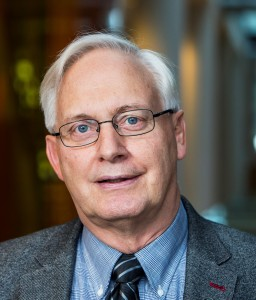












 International Education News