Broadening the Approach to Assessing Educational Change: Lead the Change Interview with Dr. Jose Eos Trinidad
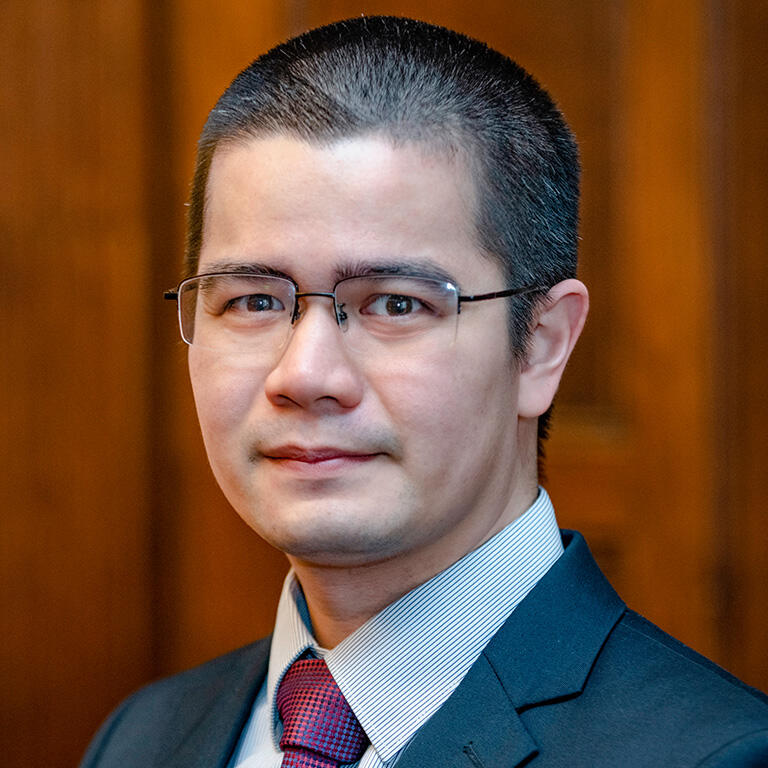
In September’s Lead the Change (LtC) interview, Dr. Jose Eos Trinidad argues that understanding educational change requires a broader understanding of how learning, development, and transformation occur across broader spaces. Dr. Trinidad is an Assistant Professor at the University of California Berkely, where he researches the interaction between schools and “outside” research, philanthropic, and nonprofit organizations. The LtC series is produced by co-editors Dr. Soobin Choi and Dr. Jackie Pedota and their colleagues at the Educational Change Special Interest Group of the American Educational Research Association. A PDF of the fully formatted interview will be available on the LtC website.
Lead the Change (LtC): The 2026 AERA Annual Meeting theme is “Unforgetting Histories and Imagining Futures: Constructing a New Vision for Educational Research.” This theme calls us to consider how to leverage our diverse knowledge and experiences to engage in futuring for education and education research, involving looking back to remember our histories so that we can look forward to imagine better futures. What steps are you taking, or do you plan to take, to heed this call?
Jose Eos Trinidad (JET): In undergrad, I remember learning about the French philosopher Paul Ricoeur, who wrote Memory, History, Forgetting. One of the most profound lessons I learned from his book is the importance of narrative to our remembering and the equal importance of forgetting—of a happy forgetting in the same way that we talk about a happy memory.
I think of Paul Ricoeur now as we consider what to remember, what to forget, and what to unforget in order to construct new vision for educational research. So let me try to answer the question in this way of thinking.
First, what should we remember? I think one of the things we should remember is that education has always been a state of tension. It has involved a history of expansion and exclusion, a history of moving forward and moving back, a history of individuals fighting for causes and the resistance that emerges from such fights. In my own work, I talk about the many forces outside schools that influence education: researchers, philanthropic managers, social justice warriors, teachers’ unions, nonprofit staff, and community-based organizations. I think it is key that we remember how forces both within and outside schools work alongside one another (and at times, in tension with one another) to construct this vision.
Second, any act of remembering entails forgetting. There is this moment in the movie Inside Out when jelly bean-shaped workers decide which memories are no longer relevant, like old phone numbers, and they get thrown into the abyss of oblivion. Remember the fate of Bing Bong? In a way, we need to forget in order to have space for new memories. What, then, do we need to forget? One of the things I have found striking in academia is that we can get hung up on small differences, and we can be very critical of each other’s views—even ones that are almost identical to our own. This can bubble up resentment and antipathy toward one another. Perhaps this is a space where forgetting can happen: that we look forward toward a future where people work alongside one another rather than in conflict with one another. I’m not saying that we must sweep differences under the rug. Rather, we must think about how to productively and constructively be in tension with one another.
“I’m not saying that we must sweep differences under the rug. Rather, we must think about how to productively and constructively be in tension with one another.”
Third, what must we not forget? I think we should never forget the struggles of those at the peripheries and the hope that things can get better. As news of wars and disasters, as well as existential questions, pepper our daily existence, I think we should not forget the experiences of students and families in the thick of these situations. Growing up in the Philippines, I remember that floods, typhoons, and electric blackouts were common occurrences for me—disrupting not just education but also life itself. Elsewhere in the country, I know of friends whose schooling was routinely disrupted by violence and war— whether because of the “drug war” of the former administration or the conflicts in the southern and rural parts of the country. In the world today, these experiences are all too common. Yet I also think that, especially during these times, we should hold steadfast to the hope that things can get better, with us working collectively with one another.
LtC: What are some key lessons that practitioners and scholars might take from your work to foster better educational systems for all students?
JET: My research has typically focused on actors and forces outside schools that affect what happens within schools. These research, philanthropic, nonprofit, and community-based organizations can have profound consequences not just for student outcomes but also for educational change. In many developed countries, research-practice partnerships and school reform organizations can provide added support to schools. In many developing countries, nongovernmental organizations can also be a source of much-needed resources and talent. But these organizations can also carry risks, as they may push their own agendas without consulting or even thinking about students, families, and their communities.
My work, particularly my new book Subtle Webs: How Local Organizations Shape US Education (Oxford University Press, 2025), aims to expand the aperture through which we think about our educational systems. It aims to show what strategies various actors use to influence education, which ones are most consequential, what organizational dynamics underlie particular decisions, and which populations benefit or suffer from these decisions. I think education leaders can take on some of these lessons by understanding the ecosystem of forces that influence what happens in schools.
Another area where I’ve been working is the use of organizational theories to understand schools and support school leaders. In my next book with MIT Press titled Thinking Organizationally: Seven Perspectives on How Organizations Work, I detail seven organizational perspectives that can help frame how we think about schools in particular, and organizations in general. I suggest the acronym SCRIPTS to help organize these perspectives: Structure, Culture, Relations, Institutions, Professions, Transformation, and Social Conflict. By providing practitioners and scholars with an easy mnemonic to remember all these perspectives, I hope they can figure out which aspects to focus on or change. For example, school leaders can interrogate whether their main problem is one dealing with the organization’s structures or routines, or one concerning its culture and identity. By understanding the symptoms and accurately diagnosing the problem, the solutions can become clearer.
LtC: What do you see the field of Educational Change heading, and where do you find hope for this field for the future?
JET: I see the field of educational change moving toward a more expansive definition of “education.” I do not think we should limit our understanding of change to what happens inside PreK–12 systems or higher education institutions alone. Education is happening in many different spaces: in families, community organizations, social movements, nonprofit organizations, digital environments, religious institutions, workplaces, and civic networks. If we want to understand educational change seriously, then we need to document and theorize how learning, development, and transformation occur across these broader spaces. Change does not begin and end with schools, even if schools remain central institutions in people’s lives.
Relatedly, I hope we continue to decenter the most dominant sites and voices in the production of knowledge about educational change. Some of the most important lessons about adaptation, resilience, and transformation are emerging from communities that are too often treated as peripheral to the field: underrepresented minorities, developing countries, indigenous communities, migrants, and families living through conflict, displacement, or environmental instability. These communities are not simply sites of suffering or implementation; they are also sites of knowledge, invention, and strategy. We should learn from how these communities navigate uncertainty, sustain hope, and create meaningful forms of education under difficult conditions. In many ways, they may have much more to teach us about change than the systems we usually place at the center of our theories.
Where do I find hope? I find hope in the fact that, despite all the setbacks and crises that surround education, people continue to organize, imagine, and build. I find hope in teachers who continue to care deeply for students amid enormous constraints, in families and communities who create supports where formal systems fall short, and in young people who insist on more just and humane futures. I also find hope in the possibility that the field itself can become more historically grounded, more globally attentive, and more open to voices that it has too often overlooked. If we can broaden our understanding of where educational change happens, who drives it, and what counts as knowledge about it, then I think the field has much to contribute—not only to improving schools, but to imagining better futures more broadly.

Confronting Structural Inequities in Educational Reform: Lead the Change Interview with Dr. Soobin Choi
In February’s Lead the Change (LtC) interview, co-editor Dr. Soobin Choi argues that meaningful educational change requires confronting the structural inequities, while continually recommitting to inclusive, participatory reform. The LtC series is produced by co-editors Dr. Soobin Choi and Dr. Jackie Pedota and their colleagues at the Educational Change Special Interest Group of the American Educational Research Association. A PDF of the fully formatted interview will be available on the LtC website.
Lead the Change (LtC): The 2026 AERA Annual Meeting theme is “Unforgetting Histories and Imagining Futures: Constructing a New Vision for Educational Research.” This theme calls us to consider how to leverage our diverse knowledge and experiences to engage in futuringfor education and education research, involving looking back to remember our histories so that we can look forward to imagine better futures. What steps are you taking, or do you plan to take, to heed this call?
Dr. Soobin Choi (SC): To heed the call of unforgetting histories, we must begin with a seemingly cynical truth: if the same question had been posed thirty years ago—or if it is posed thirty years from now—the “imagined futures” offered by scholars would likely be hard to distinguish. Educational reform is rarely about inventing entirely new futures. The purposes of public education remain stable; the grammar of schooling reasserts itself; and reform rhetoric cycles far faster than our classrooms ever change (Payne, 2008; Tyack & Cuban, 1995). Across decades, our bright futures rhyme: broaden opportunity, improve learning, and prepare young people for civic and economic life. That was true then, is true now, and will be true later.

Many of our thorniest issues persist not because we lack the technical expertise to solve them, but because we quietly, yet deliberately, choose not to decide on them. In this light, “unforgetting histories” is a process of cyclical tinkering with not only what we decide to do, but also what we decide to leave undecided. We frequently opt for a nondecision, limiting the scope of our inquiry to “safe” or “bipartisan” issues, effectively keeping controversial structural challenges off the research and policy agenda (Fowler, 2012). Both unforgetting and forgetting are elaborately intentional; today’s “unforgetting” often collides with yesterday’s institutionalized forgetting.
The school is a particularly apt site for this intentional forgetting. We treat persistent “base” problems as fixed, natural laws rather than political choices. Through a Marxist lens, the Base represents the economic organization of society—productive forces and relations of production—while the Superstructure includes the law, politics, and, crucially, schooling (Althusser, 1971). Historically, reforms repeatedly ask the school (the superstructure) to fix problems rooted deeply in the base—inequality in wealth, housing, and health—while our governance routines keep the hardest structural issues off the actionable agenda (Labaree, 2012).
Our system becomes increasingly bifurcated, characterized by extreme wealth concentration and precarious labor (OECD, 2024). The system makes a persistent nondecision to leave funding structures, property-tax-based inequities, and competitive sorting mechanisms untouched. This recurring forgetting—the refusal to acknowledge how structural realities bound what schools can achieve—is a form of institutional amnesia in which we should refuse to participate (Pollitt, 2010). The result is a cycle where we task the school with the impossible job of “fixing” a society whose base we refuse to reform.
While this may sound unsparingly candid about the past we have made and the present we inhabit, I am more than willing to embrace this cyclical tinkering as a pleasant journey. To truly “unforget” history is to recognize that a bright future in education is not a static destination, but a perpetual challenge and response cycle (Toynbee, 1987). Borrowing from Arnold Toynbee, we must understand that civilization—and by extension, futuring for education and education research—“is a movement and not a condition, a voyage and not a harbour (Toynbee, 1948, p. 55).” Our collective, consistent effort to tinker is the very essence of this voyage. The sameness of our aspirations across generations is not a sign of failure; it is our most profound way of unforgetting. It is the continuous re-commitment to a bright future that may never be reached in its totality, but is nonetheless worthy of walking toward.
This is where we must transition from the tragic endurance of Sisyphus to the affirmative creative will of the Übermensch. Nietzsche’s Übermensch does not merely endure the “eternal recurrence” of the struggle; they will it (Nietzsche, 1974). We find value not in the arrival at a harbor, but in the power of the voyage itself. As a researcher, educator, and citizen, I plan to heed the AERA call by adopting this posture of active affirmation. I choose to view the repetitive nature of our work not as redundant labor, but as a sacred act of “unforgetting.” My work aims to re-affirm human dignity and possibility against a mechanical system. We tinker not because we are naive enough to believe in a final utopia, but because the act of tinkering is itself a refusal to let the spirit of education decay into static inertia. We walk toward the bright future not because we expect to arrive, but because the walk itself is the only way to remain truly awake to our history and our potential.
“We tinker not because we are naive enough to believe in a final utopia, but because the act of tinkering is itself a refusal to let the spirit of education decay into static inertia.”
LtC: What are some key lessons that practitioners and scholars might take from your work to foster better educational systems for all students?
SC: To build a better educational system for all students, we must, above all, establish systems and provide leadership and policy support that empower every student and their family to participate in the school improvement process. Listening to their diverse opinions and experiences and reflecting them in school reform and change is indispensable for creating a school that truly serves everyone (Choi, 2023). As with all human relationships, if we do not listen, we cannot know what is desired or what is lacking; solutions proposed without listening are inevitably prone to prejudice and misunderstanding. Furthermore, when students and families feel that no one is interested in their perspectives, or when they lack a channel to express them, they cannot help but feel alienated and marginalized. It is when someone genuinely listens to our stories that we feel respected and recognized as true members of community.
Although communication with the school through teachers, principals, or counselors is crucial for student development, this access is unfortunately closer to a privilege for certain groups rather than a universal benefit enjoyed by all. In many countries—not just the United States—student diversity is rapidly increasing, yet the teaching workforce remains highly homogeneous, largely mirroring the dominant groups in society. While approaching a teacher to strike up a conversation or share a concern is easy for some students, it is a source of endless hesitation for others. Similarly, asking about a child’s school life comes naturally to some parents, but for others, it is virtually impossible—whether due to the social and psychological distance from educators or simply a lack of time owing to the relentless demands of making a living.
To truly listen and guarantee the opportunity to speak, we must narrow the gap between schools, students, and homes. Most of my research contributes to bridging this distance between educators and the students they serve. Through professional development, teachers can come to recognize that students’ racial/ethnic, linguistic, and cultural diversity are tremendous assets for learning and development (Choi & Lee, 2020; Choi & Mao, 2021). By integrating this diversity into the classroom, educators can ensure that individual students feel valued, expand their own worlds through their differences, and gain opportunities to understand those unlike themselves (Gay, 2002; Ladson-Billings, 1995). To foster this growth of teachers, principals can exercise leadership that actively supports the classroom environment and creates collaborative spaces for teachers (Choi, 2023; Choi et al., in press). Furthermore, students themselves can become agents of change in building a culturally inclusive school climate, ensuring that marginalized groups feel a genuine sense of belonging (Choi et al., 2025b). Just as it is vital for schools to embrace diverse opinions and values, my research contributes to ensuring that diverse voices, perspectives, and learning opportunities are included in how we evaluate schools and their leadership (Choi, 2025; Choi et al., 2025a; Choi & Bowers, 2026; Lee et al., 2025).
LtC: What do you see the field of Educational Change heading, and where do you find hope for this field for the future?
SC: To understand where the field of Educational Change is heading, we must confront the resistance it currently faces. Unfortunately, we live in a world where acknowledging and promoting the value of diversity is not always embraced, and is sometimes even actively threatened. The field is heading toward a necessary, defining confrontation with a skeptical question: Is carefully listening to individuals truly tantamount to turning our backs on the majority?
This is precisely where I find my greatest hope for the future. Contrary to the logic of exclusion, the evidence shows us a brighter reality. My research demonstrates that when educators actively leverage the value of individual students’ diversity, the learning climate of the entire school actually improves (Choi & Lee, 2020). I find hope in the empirical truth that equity is not a zero-sum game, but a rising tide. As William Blake (1863) wrote, “To see a world in a grain of sand / And a heaven in a wild flower”—I would argue that our hope for the future lies right here. The very first step toward creating a school for all students is acknowledging the profound value of each and every difference.
Beyond Metrics: Rehumanizing Educational Change Through Engaged Scholarship with Dr. Olajumoke Beulah Adigun
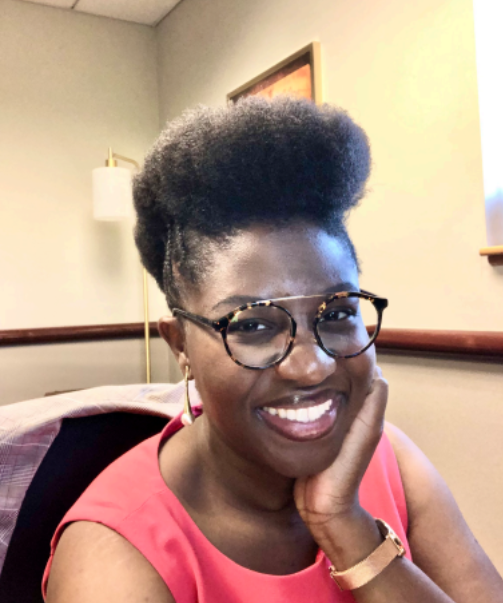
In January’s Lead the Change (LtC) interview Dr. Olajumoke Beulah Adigun argues that academia must move away from speed and metric driven cultures and toward slow, engaged, and contextually grounded scholarship that prioritizes sustained transformation over superficial change. Dr. Adigun is an assistant professor of Educational Leadership at Oklahoma State University The LtC series is produced by co-editors Dr. Soobin Choi and Dr. Jackie Pedota and their colleagues at the Educational Change Special Interest Group of the American Educational Research Association. A PDF of the fully formatted interview will be available on the LtC website.
Lead the Change (LtC): The 2026 AERA Annual Meeting theme is “Unforgetting Histories and Imagining Futures: Constructing a New Vision for Educational Research.” This theme calls us to consider how to leverage our diverse knowledge and experiences to engage in futuring for education and education research, involving looking back to remember our histories so that we can look forward to imagine better futures. What steps are you taking, or do you plan to take, to heed this call?
Dr. Olajumoke Beulah Adigun (OBA): There was a time when a researcher’s identity was defined not by a multiplicity of publications but by work that formatively altered the quality of life for communities. This is a historical dimension of our work that we need to ‘unforget,’ and it speaks directly to AERA’s 2026 theme. The reason this matters is simple: it is difficult to be preoccupied with hurried scholarship while being present with the slow and often-messy work of transformation. This is a salient point in Amutuhaire’s work (2022), which makes a compelling argument that the ‘publish or perish’ culture is perpetuating inequality in academia while undermining the potential generative impact of scholarship in resource-poor regions, where solutions to development problems matter more than publication counts. We have tried the hurried approach, and while it has produced more motion in the policy and politics of education, it has yielded less progress in sustaining outcomes. In the article “Over-Optimization of Academic Publishing Metrics,” Fire and Guestrin (2019) highlight that although publishing metrics continue to rise, their substantive value has significantly diminished. Drawing on Goodhart’s law, they illustrate how these metrics lose meaning when manipulated through practices such as self-citation and inflated reference lists. Furthermore, data show that in 2023 alone, over 10,000 research papers were retracted globally due to issues related to accuracy and integrity (Tran, 2025), underscoring how an emphasis on speed creates a metaphorical chasm that invites errors and potential gamification.
Boyer’s (1996) scholarship of engagement offers a useful frame for understanding the gap in the field of educational change: the problem is not a lack of knowledge, but the failure to translate knowledge into lived reality. This perspective resonates with the slow knowledge argument against the counterproductive acceleration of the process of inquiry (Berg & Seeber, 2016). In the realm of slow knowledge, the journey towards knowledge acquisition honors both the process and the outcome. It recognizes that it takes time to master the conditions within which knowledge can be successfully applied (Orr, 1996). When it’s all said and done, knowledge needs to be contextualized, adapted, and sustained long enough to produce enduring change (Adams et al., 2022). We can also think of this as an invitation to recenter the transformative focus of our change work. If transformation is defined by sustained change, we need to come to terms with the fact that sustaining change requires time for it to be tested, to mature, and to develop a life of its own, allowing its sustainability to become more autonomous than forced. This aligns with design-based implementation research, which emphasizes that knowledge should be generated within the contexts where it will be applied (Penuel et al., 2011).
“The problem is not a lack of knowledge, but the failure to translate knowledge into lived reality.”
My response to the AERA 2026 call has been to fundamentally rethink how I prepare educational leaders, challenging both myself and my students to move from propositions to praxis, from eloquent narratives to actual doing. In a recent course, Instructional Strategies for Adults, rather than requiring papers containing propositions of what well-designed adult instruction should be, my students used real data to design a professional development website, which we called a workshop-in-a-box. They spent each week developing sections grounded in scholarly evidence while applying them to real-world adult learning needs in their respective contexts. With this approach, rather than students telling me what they would do, they did it. At the end of this class, students reported feeling more prepared for real-world leadership challenges, with several already sharing their plans for implementing their designs in their districts. They felt proud of their work, saying they designed the kind of professional development they would want to attend, even though they lacked a frame for articulating it before the class.
This andragogical shift also mirrors my research process. My earlier work relied primarily on quantitative, ex post facto data to examine and understand patterns in various constructs of interest in education. This work has yielded important insights and continues to inform my scholarship. Somewhere along the way, as my colleagues and I began working on the Transformative Leadership Conversations framework (Adams et al., 2022), I became increasingly attentive to the value of applied research in the work we do. When I started my appointment as an assistant professor at Oklahoma State University, the invitation to lead the existing ECHO Education Nigeria initiative emerged at a particularly timely moment, offering both a challenge and an opportunity to make my scholarly engagement more expansive through applied inquiry. Working alongside both scholar and practitioner colleagues, we are implementing and learning how sound theoretical propositions about virtual professional development transfer to those serving in under-resourced environments. ECHO Education Nigeria is a virtual professional development platform that supports educator learning and growth, while promoting collaboration among educators across Nigeria and neighboring African countries. This work, though slow, has been productive and has led to a feature on the Project ECHO website highlighting our efforts to expand the applicability of the framework in a new context.
This shift represents my commitment to unforgetting what education and education research once were: embedded processes of learning, doing, unlearning, relearning, and redoing. I am imagining a future where education research is an actual search process, a slow but deeply meaningful engagement with reality that bridges the gap between knowing and transformation.
Lead the Change (LtC): What are some key lessons that practitioners and scholars might take from your work to foster better educational systems for all students?
OBA: Three lessons emerge from this work that I believe can guide practitioners and scholars in the field of educational change. First, we must recalibrate our aim from change to transformation, which simply means enduring change. Educational systems are saturated with change initiatives, yet transformation remains elusive. The distinction matters because change can be episodic and surface-level, but transformation aims at well-saturated and sustained change that produces a new system of outcomes. In my work with teachers in Nigeria, I witnessed how professional development that merely introduced new practices faded quickly, while approaches that allowed time for adaptation, testing, and iteration became the lifeblood of the work. We can think of transformation as the unforced rhythms of change; it must be cultivated with patience and sustained through commitment. This requires us to resist the pressure for quick wins and instead invest in the slow, and often unsensational work.
“We can think of transformation as the unforced rhythms of change; it must be cultivated with patience and sustained through commitment.”
Second, the quality of our work matters more than the quantity. This is particularly challenging in an academic culture that rewards productivity metrics over meaningful impact. Yet when I observe my students designing professional development they themselves would want to attend, or when I see Nigerian teachers responding to our adaptation of the ECHO framework in ways we never imagined, I am reminded that one piece of deeply contextualized, genuinely useful work is worth the time and effort it takes. I see this same pattern in my work with one of the largest fatherhood support organizations in Oklahoma (Birthright Living Legacy), where a simple evidence-based curriculum I developed for a small network of fathers five years ago has now become a flagship programming element providing training and guided action for hundreds of fathers across the state (Adigun, 2020; 2022). I would argue that our institutions, promotion systems, and funding mechanisms need to be reimagined around permission structures that value depth, rigor, and impact over volume and speed.
Third, and most critically, learning is fundamentally reciprocal. As practitioners and scholars, we take learning to people, but we cannot successfully produce transfer without learning from those we serve about what makes knowledge work (or not) in each unique context. They have just as much to teach us as we have to teach them. My Nigerian colleagues taught me more about adaptive leadership, resourcefulness, and instructional creativity than any textbook could convey. They showed me which theoretical propositions held up under resource constraints, and which required radical reimagining. When we noticed a decline in attendance at our virtual sessions, we reached out to participants to understand the reasons behind this trend. We discovered that while interest remained high, many participants struggled with reliable internet connectivity. However, we also learned that connectivity was more affordable and dependable when they used specific platforms, such as WhatsApp. With this insight, we decided to break our live sessions into bite-sized, low-data video segments and upload them to the WhatsApp group. This adjustment led to a reassuring resurgence in participant attendance and engagement, bringing back a much-needed momentum to the work. This example makes clear that reciprocity is not just ethically right; it is methodologically essential. If we approach communities as recipients rather than co-creators of knowledge and the knowledge delivery process, we will continue to produce research that looks elegant on paper but fails in practice. These lessons converge on a call for patience, genuine partnership, and humility as we press towards educational change.
Lead the Change (LtC): What do you see the field of Educational Change heading, and where do you find hope for this field for the future?
OBA: I see the field of educational change heading toward a more transformational stance. What I mean by this is that the field will not only be about changing the formal systems of education, but also about the community-embedded reach of the work. Further, the accelerated pace of knowledge introduced by non-human automation, such as AI, obliges the field to move into innovative ways of doing what we do. With this reality at the forefront, we are compelled to dig deep rather than simply reach wide. We are compelled to rehumanize our work, making it an endeavor by humans, with humans, and for humans. Collaboration will become the new superpower, and contextual applicability will be the new genius.
I find hope in this field for the future because people are beginning to ask the right questions. It is no longer a secret that speed and volume are not producing the kinds of results we want; therefore, we are compelled to be open to other means. It is also no secret that the tyranny of performative scholarship (Fire & Guestrin, 2019) has created much unhealth in our profession. I see funding agencies beginning to value implementation science and community-partnered research. I see perspectives like slow knowledge gaining traction, and I see intentional collaborations that center reciprocity.
My deepest hope lies in the rising generation of scholar-practitioners who refuse to separate knowing from doing, who insist that research be accountable to the communities it claims to serve, and who are willing to do the slow, messy work of transformation. These emerging scholars understand that in an age of AI and information abundance, our unique contribution as humans is not speed, but wisdom. The kind that comes from sustained presence, deep listening, and genuine partnership. If we can create the conditions for this kind of work to flourish, the field of educational change will not only survive but thrive.
Something went wrong. Please refresh the page and/or try again.


