In the fourth part of this month’s Lead the Change (LtC) interview, Daisy Salazar-Garza discusses her firsthand experience of the inequities in the public education system and the impact this has on students, families, and communities. Salazar-Garza is a Ph.D. student in the School of Educational Studies’ Urban Leadership Program at Claremont University. German is a recipient of the Student Travel Award from the Educational Change Special Interest Group (SIG) of the American Educational Research Association (AREA). The LtC series is produced by co-editors Dr. Soobin Choi and Dr. Jackie Pedota and their colleagues who lead the Ed Change SIG. A PDF of the fully formatted interview will be available on the LtC website.
Lead the Change (LtC): The 2026 AERA Annual Meeting theme is “Unforgetting Histories and Imagining Futures: Constructing a New Vision for Educational Research.” This theme calls us to consider how to leverage our diverse knowledge and experiences to engage in futuring for education and education research, involving looking back to remember our histories so that we can look forward to imagine better futures. What steps are you taking, or do you plan to take, to heed this call?
Daisy Salazar-Garza: The 2026 AERA theme, “Unforgetting Histories and Imagining Futures: Constructing a New Vision for Education Research,” calls us to draw upon our diverse knowledge and lived experiences to engage in meaningful “futuring” for education. For me, as a Chicana educator, scholar, and first-generation doctoral student, this theme feels deeply personal. It is a call that echoes the lessons my family instilled in me from an early age.
My family, especially my father, taught me about life’s harsh realities and the beauty of resilience through the power of storytelling. Around family meals, during long drives, or in quiet moments on the porch, I listened to stories of our history—stories of struggle, perseverance, and hope. These narratives shaped my understanding of who I am and filled me with a deep sense of pride. They taught me to honor the strength passed down from my ancestors and to recognize that storytelling is not only an act of remembrance but also a tool for transformation.
This foundation shapes how I approach educational research. To truly “unforget” our histories, we must center the voices and stories that have been pushed to the margins. Leveraging our collective knowledge requires valuing the lived experiences of those most impacted by educational inequities. By empowering communities with a vested interest in the future of education, we can imagine possibilities rooted in justice, equity, and collective empowerment.
As I continue to heed the 2026 AERA theme, I draw upon this legacy of storytelling and historical remembrance to inform my work. Understanding the social, economic, political, and racial contexts that have shaped communities is essential to serving them authentically—honoring both their strengths and the systemic injustice they have endured. Through remembering and honoring these histories, we can envision and build educational spaces that celebrate our roots and uplift our voices. In doing so, we can cultivate a just and hopeful future that directly confronts the inequities we must transform.
Source: Bank Street Graduate School of Education website
LtC: What are some key lessons that practitioners and scholars might take from your work to foster better educational systems for all students?
DSG: Recently, I had the privilege of working with Dr. Osworth to co-author “Outward Portrayals of Equity: An Examination of Diversity, Equity, and Inclusion in Los Angeles County School Districts.” In 2024, we collected data from 80 public school districts to assess the current state of DEI commitments in Los Angeles County districts.
From this work, several lessons emerge for practitioners and scholars in the field of Educational Change. First, our findings highlight the need to look beyond surface-level portrayals of equity and focus on how DEI policies are enacted in districts and schools. Value statements made toward DEI without creating infrastructure through policy to support the work does not address the racialized nature of the structures within school districts (Salazar-Garza & Osworth, 2026). Second, schools as organizational systems often reproduce existing inequities. Recognizing these structural patterns is the first step toward redesigning them. Ultimately, transformative change needs to occur at the systemic level to disrupt and dismantle entrenched systems of inequality (Salazar-Garza & Osworth, 2026). Finally, pairing enforcement mechanisms, such as culturally responsive teaching, with policy can contribute to conscious efforts to alter internal patterns of organizational inequity (Salazar-Garza & Osworth, 2026).
“Value statements made toward DEI without creating infrastructure through policy to support the work do not address the racialized nature of the structures within school districts.”
Together, these insights emphasize that fostering educational change requires both reflective practice and systemic change. Equity efforts translate into improved student experiences and outcomes when we can redesign structures enacting patterns of inequity.
LtC: What do you see the field of Educational Change heading, and where do you find hope for this field for the future?
DSG: As a scholar-practitioner, I believe the field of educational change is heading toward a deeper partnership with people who are the most affected by our current educational realities. By centering the voices of teachers, students, families, and communities, we can inspire real progress. Change comes when research and practice work go hand in hand to bridge the gap between theory and lived experience.
Given the current polycrisis world we’re navigating, where social, economic, and environmental challenges continually intersect, I find hope in collaboration within the field of education (Virella, 2025). Dr. Virella’s Crisis as Catalyst: Equity-Oriented School Leadership During Difficult Times reminds me that even in moments of uncertainty, there is great potential for transformation. As a school principal who was interviewed and whose narrative is present in this research alongside numerous other school leaders, it is a reminder that practitioners are engaging in powerful practices that are meeting the needs of our present moment. It is also a call to action that we can study practices from the field, derive key lessons, and create frameworks that empower and sustain more educators across the field.
What gives me hope is seeing more educators and researchers approach their work not just as inquiry, but as partnership with students, families, communities. When our research centers humanity and lived experience, educational change can lead us toward a more just and human-centered system for all students.
References
Salazar-Garza,D. and Osworth, D. (2026) Outward portrayals of equity: an examination of diversity, equity, and inclusion in Los Angeles County school districts. Leadership in Education Racial Equity and the Organization: An Educational Change Call to Action. Frontiers in Education. https://doi.org/10.3389/feduc.2026.1642675
Virella, P. M. (2025). Crisis as catalyst: Equity-oriented school leadership during difficult times. Harvard Education Press.
In the third part of this month’s Lead the Change (LtC) interview, Celina German discusses her experiences researching the intersection of community-based youth leadership, after-school club affinity programming, and student activism history. German is a Ph.D. student in the Learning, Literacies, and Technologies program at Arizona State University. German is a recipient of the Student Travel Award from the Educational Change Special Interest Group (SIG) of the American Educational Research Association (AREA). The LtC series is produced by co-editors Dr. Soobin Choi and Dr. Jackie Pedota and their colleagues who lead the Ed Change SIG. A PDF of the fully formatted interview will be available on the LtC website.
Lead the Change (LtC): The 2026 AERA Annual Meeting theme is “Unforgetting Histories and Imagining Futures: Constructing a New Vision for Educational Research.” This theme calls us to consider how to leverage our diverse knowledge and experiences to engage in futuring for education and education research, involving looking back to remember our histories so that we can look forward to imagine better futures. What steps are you taking, or do you plan to take, to heed this call?
Celina German: While working on my 2026 AERA submission, the notion of Sankofa (also visible in the conference logo) kept guiding me through the process. The Akan symbolism of a bird looking back and the word, literally translated as “go back and get,” made me think about what one returns to as part of the process of going forward. As a former high school English teacher and co-advisor of the Black Student Union, my heart also remembers all the great work that is part of the Summer Sankofa program at Arizona State University. My educational background informs the academics I want to participate in.
Source: Arizona State University website
I carry into this work my identity as my family’s first and only birthright citizen. As I navigated the U.S. education system (PK12) as a Romanian-American, gender-question young woman, I saw the unhealthy relationship between whiteness, patriarchal logics, and academic achievement. To engage in coalition work, I deeply reflected (and continue to reflect) on what my positionality and actions say about liberation. My identity hung in the balance of being the only American in a family of naturalized and permanent residents, while at school, I was learning in real time my racialized identity and how others interpreted it. Growing up in southcentral Indiana around very few Romanians, I learned very quickly the gradation of whiteness and how multicultural spaces, like my swim team, filled with mostly first-generation American kids like me, were more accepting of me than most of my educational leaders. However, I thrived in leadership roles despite what adults expected of me.
I bring this worldview to the interviews, research partnerships, and organizing efforts to 1) acknowledge how fraught multicultural coalitions’ history has been in America, and it is with the mindset to 2) recognize that futuring for education is rooted in trust and empathy. We don’t dream with abandon with those whom we are unsure of, and I try to speak with that honesty and humility in the liberation work I engage in. It is not always well-received, and I am constantly learning how to leverage the privilege I have to ensure that those I care about are heard. However, the first step I take is recognizing that all communities have tremendous privilege.
For those reasons, the critical race feminism and transnational frameworks I operate within were part of a journey of learning about my love for critical and real U.S. history (read: Black, Indigenous, Immigrant history). Still, I would not have gotten there alone without the multitude of college professors who engaged me with what I later learned was at the core of Black studies and Ethnic studies curricula. Therefore, the research I do, which I see as a labor of love, explores the history of antiracist educational activism. To better understand the problems we face today, I look back through high school yearbooks, archives, and oral histories to understand what the youth of the past did, attempted, and did not do to transform school structures.
LtC: What are some key lessons that practitioners and scholars might take from your work to foster better educational systems for all students?
CG: Part of my intellectual commitments towards educational change is writing alongside folks whose genius deserves to be heard and recognized, whether in the academic canon or in community outlets. The good fight is happening in the Black Student Unions (BSU), where advisors are engaging in fugitive mentorship and young people are demanding more of their school sites through an art-based YPAR inquiry (German, Smith, Berard, & Wilkerson, 2026; German, Nguyen, Joyner, & Johnson, 2026). To foster better educational systems, listening to practitioners and students for their insights into school system leadership is crucial.
In particular, young people in cultural affinity groups, such as BSU, M.E.Ch.A., or AAPISU, are extremely gifted in their critical consciousness of their leadership identities and in their understanding of the inner workings of school power dynamics. Expanding the definition of educational leaders to include student leaders of color, especially women of color, is the focus of my research. If young people are not part of that school-improvement feedback loop or act only as consultants, we are not engaging the school community that the administration aims to serve. Enacting changes because one is listening to young people in these elected roles is my vision of transformative school leadership.
“If young people are not part of that school-improvement feedback loop or act only as consultants, we are not engaging the school community that the administration aims to serve.”
Part of how I listen is understanding how young people are mentored in out-of-school or after-school programming. I aim to explore how adults co-conspire with youth to bring about educational change. Therefore, I had the opportunity to examine systemic designs for the equity director role through job descriptions. Dr. Ishmael Miller and I researched how institutional logics shape the role of equity directors. Miller’s work reflected on the lived realities of Equity Directors, either through reflexive accounts or historical inquiry (Miller, 2026a); (Miller, 2026b). His work is inspiring me as I explore leadership historically through a review of high school yearbooks illustrating BSU activism. Learning more about non-traditional educational leaders has broadened my perspective on organizational change in community partnerships and out-of-school-time youth organizations.
Lastly, I explore the limits of qualitative methods, such as interviewing, to see where dialogue about educational change can occur across differing, layered identities. Dr. Franklin-Phipps and I are using art to speculate Black educational futures (German and Franklin-Phipps, 2026). Our art inquiry is not to resolve or reach consensus, but to embrace the change needed to keep framing hope when we see sites of Black suffering (Dumas & Ross, 2016). Expanding my methods has inspired me to push the limits of positionality and reflexivity while doing coalition work in the academy.
LtC: What do you see the field of Educational Change heading, and where do you find hope for this field for the future?
CG: I find hope for educational change in young people’s responses to adult-led decisions. Whether a student responds in rage or profound patience, that hope compels me to muster the courage I have as an adult co-conspirator to reconcile what can be mended. I see how educational change is still addressing adultism and rewiring frameworks, so youth voice is not seen as performative. The roles of youth in elected leadership, such as school boards, serve as a weathervane of progress in some districts. I think seeing young people presenting at AERA is expanding the horizons of YPAR research.
I also derive hope from all the community youth work organizers who have been in this work longer than I have. Their creativity in structures that run counter to the leadership development of young people makes me refuse to see the tunnel vision with which academia portrays it. Seeing how strong, mutually beneficial research-practice partnerships engage communities of practice is a step in the right direction for the educational change scholarship.
References
Dumas, M. J., & Ross, K. M. (2016). “Be real black for me” imagining BlackCrit in education. Urban Education, 51(4), 415–442.
German, C., & Franklin-Phipps, A. (2026). Speculating Black Educational Futures: Wit(h)nessing Interviews Through Politics of Knowing. Special Issue. Reconceptualizing Educational Research Methodology (under review).
German, C., Smith, S. L., Berard, L., & Wilkerson, R. (2026). Fugitive Mentorship and Cultivating Expansive Futures: A Collaborative Autoethnography by Black Student Union Advisors. Current Issues in Education, 27(1). https://doi.org/10.14507/cie.vol27iss1.2384
German, C., Nguyen, L., Joyner, J., Samuel, C., Johnson, A. (2026). Creatively Investing in Today’s Changemakers: Setting a YPAR Precedent for Empowered Student Leadership in Our Black Student Union. Journal of Participatory Research Methods. (under review)
Miller, I. A. (2026b). Historicizing the Equity Director Position: Black Community Advocacy by an Intergroup Relations Specialist. Journal of School Leadership, 36(1), 21–45.
Reed, E., German, C., Geraghty, P., Brown, K., & Carmichael, J. (2025). Editorial Introduction: Reflecting on Our Shared Educational Futures: A Global Need to Belong for Transformative Learning. Current Issues in Education, 26(2). https://doi.org/10.14507/cie.vol26iss2.2475.
In the first part of this month’s Lead the Change (LtC) interview, Dr. Paul Campbell discusses his experiences researching educational change, leadership, and policy. Campbell is an Assistant Professor of Educational Administration and Leadership at The University of Hong Kong and President-Elect of the International Congress for School Effectiveness and Improvement (ICSEI). His research focuses on how diverse approaches to knowledge production and research engagement shape reform, and offer new ways for understanding what it means to lead, be a leader, and exercise leadership. Dr. Campbell is a recipient of the Emerging Scholar Award. The LtC series is produced by co-editors Dr. Soobin Choi and Dr. Jackie Pedotaand their colleagues at the Educational Change Special Interest Group of the American Educational Research Association. A PDF of the fully formatted interview will be available on the LtC website.
Lead the Change (LtC): The 2026 AERA Annual Meeting theme is “Unforgetting Histories and Imagining Futures: Constructing a New Vision for Educational Research.” This theme calls us to consider how to leverage our diverse knowledge and experiences to engage in futuring for education and education research, involving looking back to remember our histories so that we can look forward to imagine better futures. What steps are you taking, or do you plan to take, to heed this call?
Paul Campbell: The 2026 AERA theme invites us to remember the histories that have shaped our field while imagining futures that are more inclusive, equitable, and transformative. My scholarship begins with the belief that we cannot imagine new futures without first acknowledging the epistemic closures of the past. Educational leadership and change have long been dominated by Anglo-American traditions, privileging certain ways of knowing while marginalising others. To move forward, we must confront this history directly and commit to advancing epistemic diversity.
In my recent paper with Sefika Mertkan (Campbell & Mertkan, 2025), we argue that while geographical diversification of scholarship is a foundational step, it is insufficient on its own. What is more critical is epistemic diversity; the recognition and mobilisation of multiple epistemological traditions. This requires interrogating who produces knowledge, what epistemologies are applied, how knowledge is circulated and cited, and whose voices are solicited. As we wrote, “advancing epistemic diversity is more critical than geographical diversification in liberating the educational leadership knowledge base from the Anglo-American hegemony.” Remembering this history of epistemic dominance is essential if we are to imagine futures where pluriversal perspectives thrive. Only then can new possibilities emerge for how we understand the nature and purpose of leading educational change, and only then can more just realities for learners and communities thrive.
“Advancing epistemic diversity is more critical than geographical diversification in liberating the educational leadership knowledge base from the Anglo-American hegemony.”
My work also examines how supranational discourses shape our understanding of leaders, leading, and leadership in policy, research, and practice. In ‘Leadership for Learning: A Policy Analysis of the GEM Report 2024’ (Campbell & Sum, 2026), Nicola Sum and I show how global accountability frameworks often fail to take local realities into account. By applying a leadership-for-learning lens, we highlight pathways to reimagine futures where global frameworks are translated into contextually responsive practices. This reflects a desire to bridge histories of epistemic dominance with futures of inclusive, situated knowledge.
Taken together, this body of work reflects both optimism and frustration. Optimism, because there are genuine opportunities to rethink how educational change is understood and enacted. Frustration, because leaders are often positioned within policy-saturated environments that constrain their agency, and because knowledge production practices too often reproduce dominant paradigms rather than center the voices of educators and leaders themselves. The increasingly complex realities facing school leaders, shaped by global norms and demands, local contexts, and broader socio-political realities, require us to rethink not only what leadership and change are, but also how we study and support them.
Heeding the call of the 2026 AERA theme, therefore, means committing to a dual task: remembering the exclusions and closures of the past, while actively constructing futures that are plural, inclusive, and transformative. My scholarship seeks to contribute to this by interrogating the structures that sustain epistemic hegemony, amplifying diverse voices and thinking, and reimagining leadership and the leadership of educational change as a relational, educative, and contextually grounded practice. In doing so, I hope to support a field of educational change that is globally relevant and locally meaningful; one that ultimately serves the needs of students, educators, and communities in more just, equitable, and necessarily diverse ways.
LtC: What are some key lessons that practitioners and scholars might take from your work to foster better educational systems for all students?
PC: “I’m working on the margins in order to shake the core” was how one principal, in my study of principals’ life histories in relation to education reform, described the theme of their professional life and work. This articulation captures the complex realities of how leaders, their leadership, and change are positioned within systems, and the consequences this has for the enactment and possibilities of educational change. From this and related work, several lessons emerge for both scholars and practitioners.
Collaboration must be understood as socially and culturally situated. In ‘Leading Collaborative Educational Change: A Critical Policy Analysis of Leadership and Governance in Hong Kong Schools’ (Campbell & Kam, 2026), I show how hierarchical traditions, accountability demands, and conflict avoidance complicate the intentions and enactment of collaboration. Principals navigate tensions between policy ideals and lived realities, revealing that meaningful collaboration requires relational trust, cultural sensitivity, and reflexive leadership. This highlights the participatory dynamics of collaboration: who is involved, how power is exercised, and how goals are negotiated. Collaboration cannot, therefore, be reduced to structural arrangements or compliance mechanisms; it must be cultivated through participatory processes that respect cultural norms and empower diverse voices.
Agency is central to reimagining leadership in complex systems. In ‘“I’m Working on the Margins in Order to Shake the Core”: Educational Leadership, Agency, and the Reimagining of the Principalship’ (Campbell & Kam, 2026), principals describe how they enact agency through temporal, experiential, and relational dynamics. The agency framework articulated in this work, temporal (drawing on reform histories and aspirations), experiential (learning through practice and mentorship), and relational (building trust and mobilising communities) dynamics, offers a lens for understanding how leaders navigate, reinforce, or resist systemic constraints. For scholars, this challenges dominant conceptions of leaders’ positioning within and against system structures and constraints, and for leaders and educators in sites of practice, it underscores the need to support leaders in exercising agency within, with, and against systemic structures.
Organisational and socio-cultural dynamics must also be foregrounded. Accountability regimes, governance arrangements, and resource allocation shape the possibilities for collaboration and agency. At the same time, socio-cultural dynamics, comprised of hierarchical traditions, community expectations, and cultural dispositions toward conflict avoidance, mediate how leadership is enacted. Leaders must constantly negotiate these forces, balancing compliance with innovation and authority with relational trust. For educators, this means recognising that leadership is enacted within layered organisational and cultural contexts. For scholars, it calls for analyses that move beyond abstract models to examine how leadership is lived and contested in specific contexts.
Innovation in processes of change must also be conceptualised as situated and contested. In ‘Conceptualizing Innovation in Education: Implications for School Leadership and Change’ (Campbell et al., 2026), our editorial team and authors identified five themes requiring consideration for the leadership of innovation: innovation as relational, leadership as enabler or constraint, tensions between policy and practice, supportive cultures, and equity. Innovation is not a neutral construct; it reflects power relations and dominant epistemologies. For policymakers and professionals in sites of practice, this means developing organisational cultures of trust and inclusion. For scholars, it requires interrogating whose knowledge is valued and how innovation intersects with equity and justice.
Together, these insights highlight that educational change is shaped by participatory dynamics, organisational structures, socio-cultural contexts, and the agency of leaders. To reach better systems for all students, we must support leaders as active agents of change who navigate this dynamic complexity and are appropriately prepared and supported to do so.
LtC: What do you see the field of Educational Change heading, and where do you find hope for this field for the future?
PC: Despite persistent challenges, and what seems like a relentless intensification of complexity in education systems, I find hope in several directions.
First, epistemic diversity. Scholars are increasingly interrogating citational practices, editorial structures, and epistemic injustices, creating space for alternative epistemologies to shape the theoretical core of our fields. This movement holds promise for dismantling universalist narratives and cultivating pluriversal perspectives. It also signals a shift toward valuing multiple ways of knowing and being, and toward scholarship that is globally open but locally meaningful.
Second, leadership is reframed as educative, relational, and political. By moving beyond managerial and compliance-driven framings, we can reimagine school leaders as agents of justice, democratic ideals, and community empowerment. My work with school leaders in Hong Kong demonstrates that even within high-accountability systems, leaders exercise agency to sustain trust, adapt practices, and preserve professional identity. These acts of agency, often enacted “on the margins,” provide seeds of transformation that can “shake the core” of entrenched structures. They remind us that leadership is so much more than positional authority; it is a practice of agency, enacted through relationships and values.
Third, innovation as relational and inclusive. As our editorial in School Leadership & Management (Campbell, MacGregor & Sum, 2026) argued, innovation must be understood as a situated process of change rather than a discrete product. It is inherently political, reflecting epistemologies, power relations, and assumptions about whose knowledge counts. Equity and inclusion cannot be treated as add-ons; they must be central to how innovation is defined, led, and legitimised. When innovation is framed this way, it becomes a vehicle for addressing systemic inequities and fostering cultures of collaboration. This is where I see the field heading: toward a more nuanced, contextually grounded, and justice-oriented understanding of educational change.
Fourth, collective capacity. Ultimately, my hope lies in the collective capacity of scholars, policymakers, and professionals in sites of practice to remember histories of exclusion, interrogate present structures of dominance, and imagine futures of inclusivity and equity. The provocations we posed in the editorial mentioned earlier, innovation as process, leadership as dilemma space, and innovation as political, are invitations to debate, but also to act. They call for research and practice that is conceptually plural, empirically grounded, and ethically serious.
By centering agency, collaboration, and epistemic diversity, educational change can become truly transformative. The future of the field depends on our willingness to embrace complexity, to resist reductive framings, and to cultivate leadership and change that are relational, inclusive, and equity-oriented. In this, I find hope: that even amid constraints, leaders and scholars can work on the margins to shake the core and, in doing so, reimagine futures that are more just and humane.
References
Campbell, P. & Kam, Y. C. (2026). Leading Collaborative Educational Change: A Critical Policy Analysis of Leadership and Governance in Hong Kong Schools, Leadership and Policy in Schools, 1-21, https://doi.org/10.1080/15700763.2026.2636612
Campbell, P., Macgregor, S. & Sum, N. (2026). Editorial: Conceptualizing Innovation in Education: Implications for School Leadership and Change, School Leadership and Management, 1-5. https://doi.org/10.1080/13632434.2026.2631919
Campbell, P. & Sum, N. (2026). Leadership for Learning: A Policy Analysis of the Global Education Monitoring Report 2024 and Its Local Implications for School Leadership, Management in Education, 1-9. https://doi.org/10.1177/08920206261430580
Campbell, P. & Kam, Y. C. (2026). “I’m Working on the Margins in Order to Shake the Core”: Educational Leadership, Agency, and the Reimagining of the Principalship, Journal of Educational Administration, 1-26. https://doi.org/10.1108%2FJEA-06-2025-0246
Campbell, P. & Mertkan, S. (2025). Geographical Diversification of Educational Leadership Research: Gaps in Our Understanding, Management in Education, 1-7. https://doi.org/10.1177/08920206251407030
In the first part of this month’s Lead the Change (LtC) interview, Dr. David Osworth discusses his experiences researching the intersections of educational policy and leadership for equity. Osworth is an Assistant Professor of Educational and Cultural Foundations at the University of North Carolina at Greensboro. His research focuses on anti-LGBTQ+ policy, school discipline disparity, and neoliberal educational policy.The LtC series is produced by co-editors Dr. Soobin Choi and Dr. Jackie Pedotaand their colleagues at the Educational Change Special Interest Group of the American Educational Research Association. A PDF of the fully formatted interview will be available on the LtC website.
Lead the Change (LtC): The 2026 AERA Annual Meeting theme is “Unforgetting Histories and Imagining Futures: Constructing a New Vision for Educational Research.” This theme calls us to consider how to leverage our diverse knowledge and experiences to engage in futuring for education and education research, involving looking back to remember our histories so that we can look forward to imagine better futures. What steps are you taking, or do you plan to take, to heed this call?
David Osworth: My scholarship—both at AERA 2026 and beyond—critically examines oppressive structures in education through a historical lens with the express intent of supporting progressive reform that is humanizing and liberatory. I do this, for example, in my recent scholarship on the political hostility toward LGBTQ+ communities. In a critical policy analysis of anti-transgender legislation in North Carolina, I situate the present hostility toward transgender communities against the backdrop of the histories of LGBTQ+ communities within the United States over the 20th century (Osworth & Edlin, 2025). This focus on history not only allows us to understand the current political moment as form of retrenchment (see McQuillan et al., 2022) but also provides a road map to highlight resistance movements that have found purchase in the struggle for equity and how to learn from those strategies to inform present-day policies and politics.
Source: University of North Carolina at Greensboro website
While this is a throughline of my scholarship, it is exemplified by the work I am presenting at this year’s annual conference. Continuing my work surrounding LGBTQ+ issues in education, I am presenting from a larger study on LGBTQ+ educational leaders. This study examines the experiences of 23 LGBTQ+ educational leaders from across the United States as they navigate the current political climate. In this paper, I specifically examine how support—or a lack of support—plays a role in how LGBTQ+ leaders navigate their work. The findings of this paper are set against the history of LGBTQ+ educators in the United States. This paper concludes by outlining how leaders envision the future for other LGBTQ+ leaders and how schools can be made more supportive spaces for LGBTQ+ communities.
Another presentation at this year’s annual conference also engages with history to interrogate the present state of charter schools in New Jersey. Building from previous work that conceptualizes charter schools as a form of racialized enclosure that continues the neoliberal disinvest in public goods (Osworth & Tanner, 2025), my coauthors and I present a spatial analysis of charter schools using census data. We find that charter schools in New Jersey are almost exclusively located in geographies that are urban, lower-income, and predominantly serve non-white families. We situate this finding within the work of Marxist and racial capitalism scholars. We underscore that this exploitative pattern of charter proliferation in the state is directly ties to the history of federal redlining and opportunity hoarding of affluent, white communities (Cashin, 2021; Rothstein, 2017).
LtC:What are some key lessons that practitioners and scholars might take from your work to foster better educational systems for all students?
DO: My work aims to take a critical and interdisciplinary approach to educational research. I think that this is a major takeaway for the field as well as a commitment of the Educational Change SIG. In my recent work on school takeover in a rural school district, I interviewed Parents to better understand how they experienced the State’s intervention (Osworth, 2025, 2024). In this study, parents’ experiences illuminated counter-narratives about the takeover and complicated the State’s narrative about its progress. I think that these studies encapsulate a major takeaway from my scholarship as a whole. If we want to implement and enact change that meets the needs of the communities our schools serve, those communities must be included in the process. Too often, changes in our educational system relegate parents and communities to the periphery in the planning process while simultaneously relying on them to help implement the latest reforms. The findings from my scholarship point toward this reality. While the state education agency may say it includes parent feedback, parents’ experiences point in the opposite direction and demonstrate that trust and goodwill were destroyed in the process.
“Too often, changes in our educational system relegate parents and communities to the periphery in the planning process…”
Scholars and practitioners in educational change should therefore look toward centering community and family knowledge in the process of planning for change—not simply relegating them to be a tool to leverage in the journey for change. This moves from a more transactional view toward a more community-engaged and dialogic approach (see Freire, 1970/2018). My scholarship draws on the work of critical philosophers and thinkers, and I believe that those engaged in educational change need to prioritize the use of these theories, as bell hooks (1994) called for, making theory the cornerstone of liberatory practice.
LtC: What do you see the field of Educational Change heading, and where do you find hope for this field for the future?
DO: More than ever, the field of educational change must remain firmly grounded in a commitment to equity. Current resistance to diversity, equity, and inclusion efforts disproportionately affects individuals from non-dominant identity groups, including—but not limited to—those marginalized by ability, socioeconomic status, gender, language, race, and sexuality. This contemporary moment of retrenchment (see Crenshaw, 1988) poses significant obstacles to efforts aimed at fostering socially just learning environments for all students. I view both my own scholarly work and the broader field as continuing to advance a justice-centered agenda—one that prioritizes the well-being of children and works toward realizing the democratic ideals upon which public education is founded.
At the same time, I am energized by the possibilities for engaging in theoretically robust scholarship within educational change. Concerns are often raised about a perceived disconnect between theory and practice, or about theory-driven research that lacks practical applicability. Yet I see the field at an especially promising juncture for meaningful praxis. Critical theoretical frameworks that offer important analytical tools for addressing today’s equity challenges also explicitly call for action. What is particularly compelling is the opportunity to pursue intellectually rigorous work that simultaneously informs how we act upon research insights. As educators and scholars continue to confront the complex, “wicked” problems facing education, it will be essential to do so through collaborative, community-engaged approaches that integrate theory and practice in purposeful ways. As we respond to the current political moment, I hope to see the field of educational change to keep these commitments to diversity, equity, and inclusion as political pressure continues to mount for us to abandon these lines of inquiry and practice.
References
Cashin, S. (2021). White space, Black hood: Opportunity hoarding and segregation in the age of inequality. Beacon Press.
Crenshaw, K. (1988). Race, reform, and retrenchment: Transformation and legitimation in antidiscrimination law. Harvard Law Review, 101(7), 1331-1387.
hooks, b. (1993). Teaching to transgress: Education as the practice of freedom. Routledge.
Freire, P. (1970/2018). Pedagogy of the oppressed. Bloomsbury.
McQuillan, M. T., Eckes, S., Lewis, M. (2022). A solution in search of a problem: Justice demands more for trans student-athletes to fulfill the promise of Title IX. Marquette Sports Law Review, 33(1), 195-228.
Osworth, D. (2025). “Prepare yourself for the change”: Counternarratives of parents experiencing state takeover. International Journal of Qualitative Studies in Education. https://doi.org/10.1080/09518398.2025.2601552
Osworth, D. & Edlin, M. (2025). The Political Construction of Anti-Transgender Policy: A Critical Policy Analysis of North Carolina State Legislators’ Discursive Formations. Journal of Queer and Trans Studies in Education, 2(2). 1-11. https://doi.org/10.60808/ren9-ak07
Osworth, D. & Tanner, M.N. (2025). From public good to private gain: Charter schools and the racialized enclosure of public education. The Urban Review, 57(4), 833-854. https://doi.org/10.1007/s11256-025-00744-w
Rothstein, R. (2017). The color of law: A forgotten history of how our government segregated America. Liveright Publishing Company.
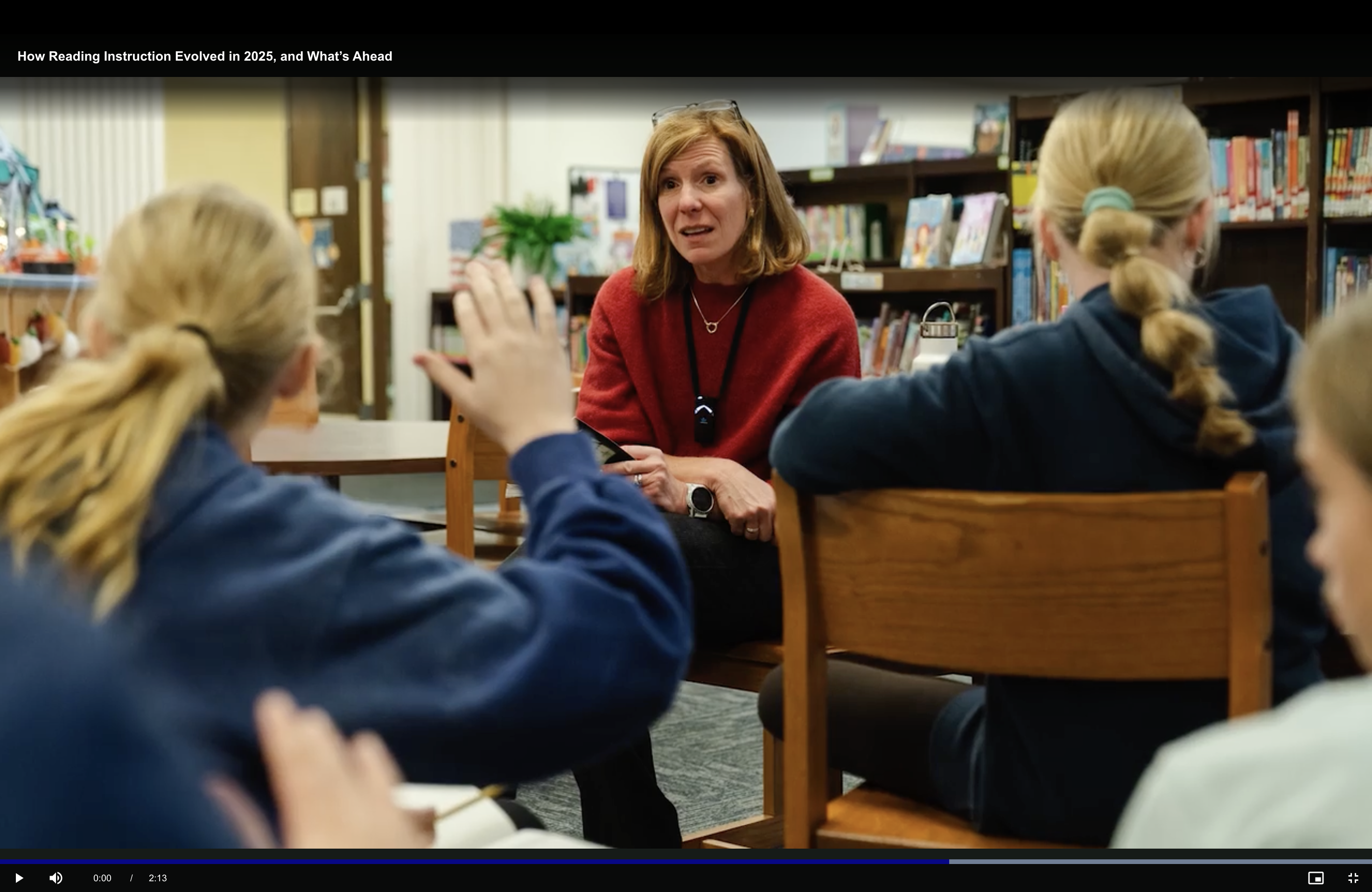
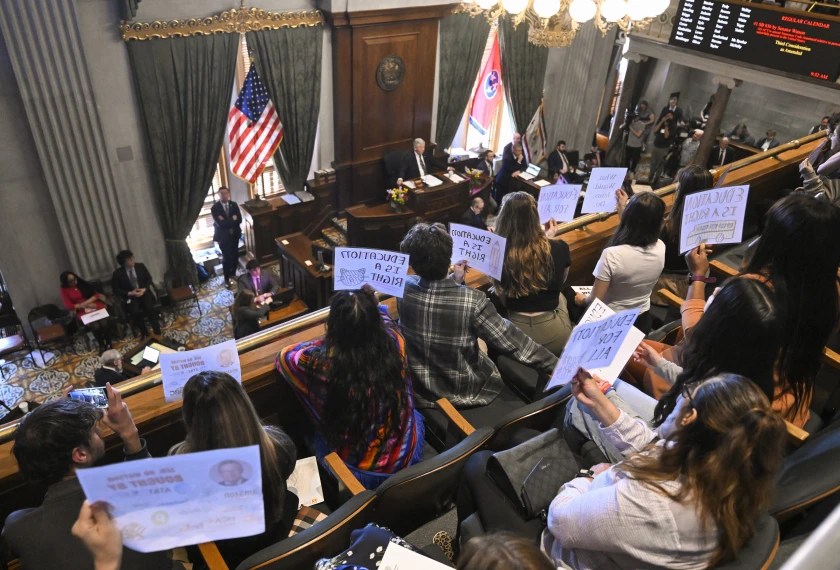
IEN’s roundup of predictions for education in 2026 anticipates an accelerating impact for AI, further calls for school and system transformation, and continuing resistance and challenges for educational reform from changing conditions and political pressures. Last week’s post focused on reviews of some of the key issues and top trends experienced by schools and education systems in 2025. For New Year’s predictions for education from previous years see: 2025, 2024, 2023,2022, 2021 part 1, 2021 part 2, and 2020.
“As India’s higher education system stands at a critical inflection point, shaped by rapid technological change, policy reforms and the demand for inclusion and global competitiveness, the HT Education Summit 2025 is set to bring together some of the most influential voices driving this transformation.”
“…she [Education Minister Fadhlina Sidek] said the initiative includes the creation of dedicated reading spaces in preschools to encourage parental involvement through reading activities.”
“The same technology that allows big companies to run with far fewer people also lowers the barriers to entry for people who want to create value on their own.“
“As generative AI technologies evolve, educators are moving away from fears about AI-enabled cheating and are embracing the idea that AI can open new doors for teaching and learning.”
“Enrollment concerns, growing school choice competition, data privacy and new federal policy priorities are among a slew of challenges facing public schools.”
“K-12 public schools have been through the wringer thanks to a trio of unprecedented disruptions that have rocked teachers and students alike. And in 2026, these high-stakes battles will likely continue.”
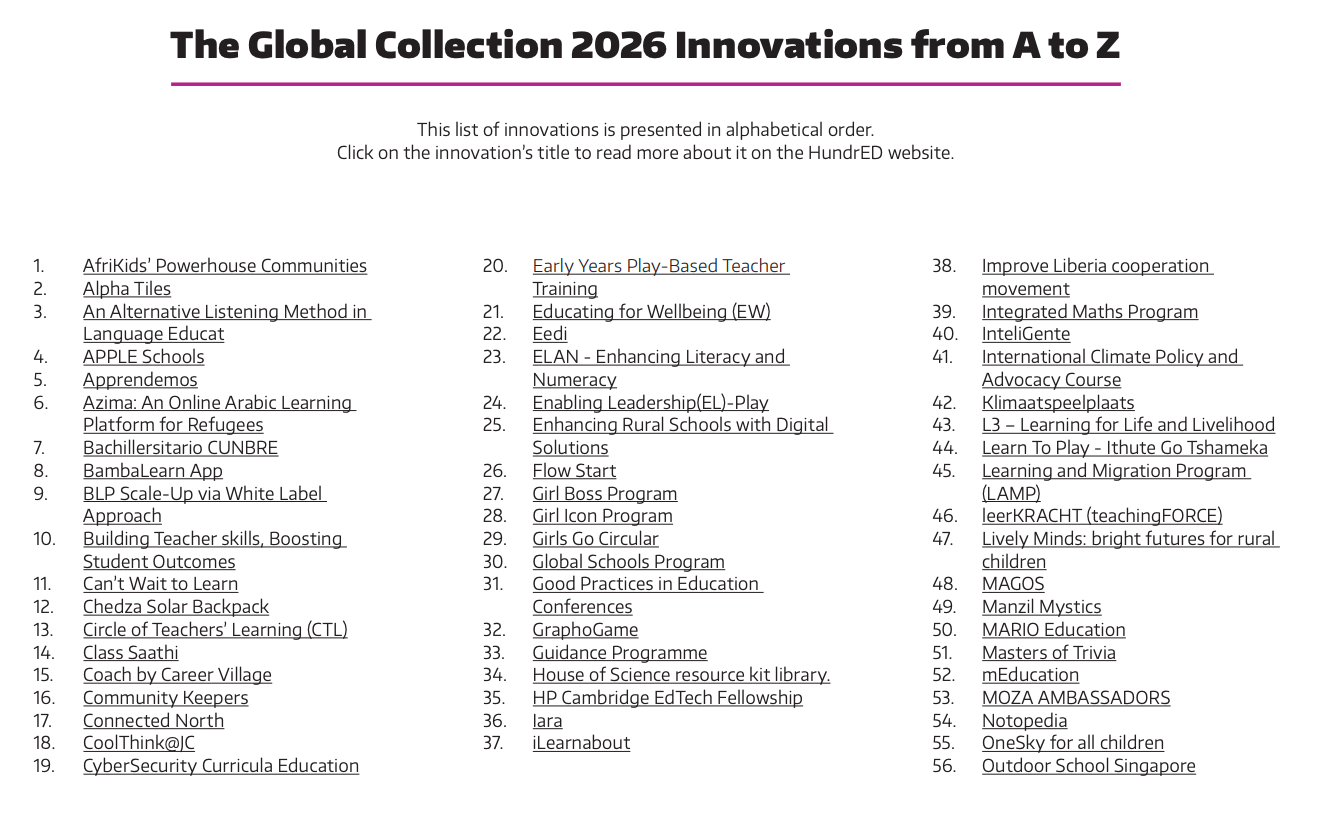
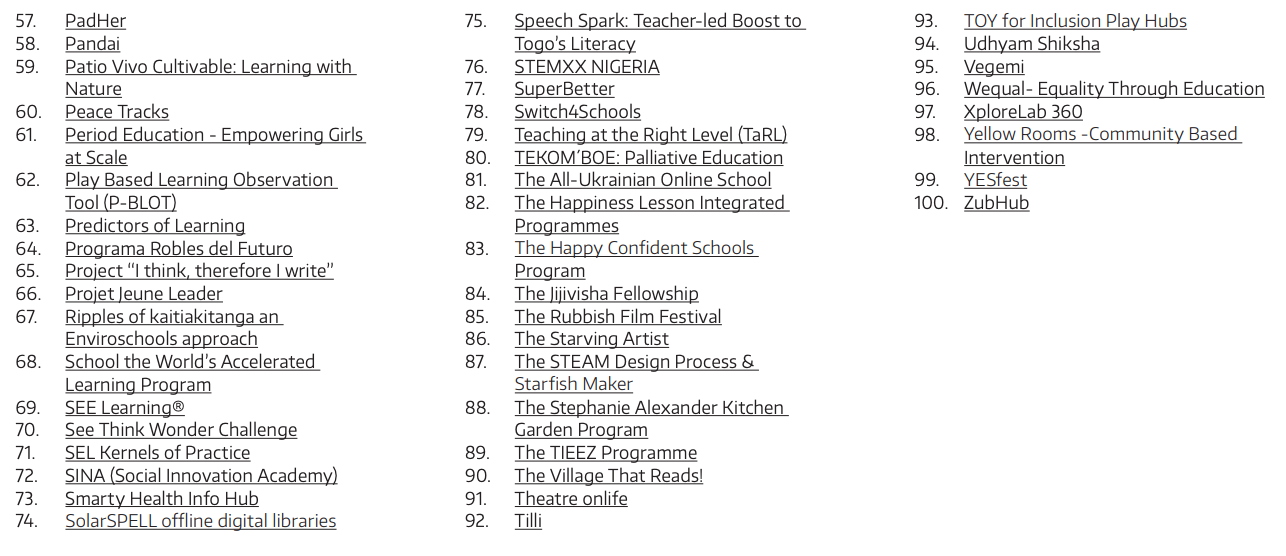
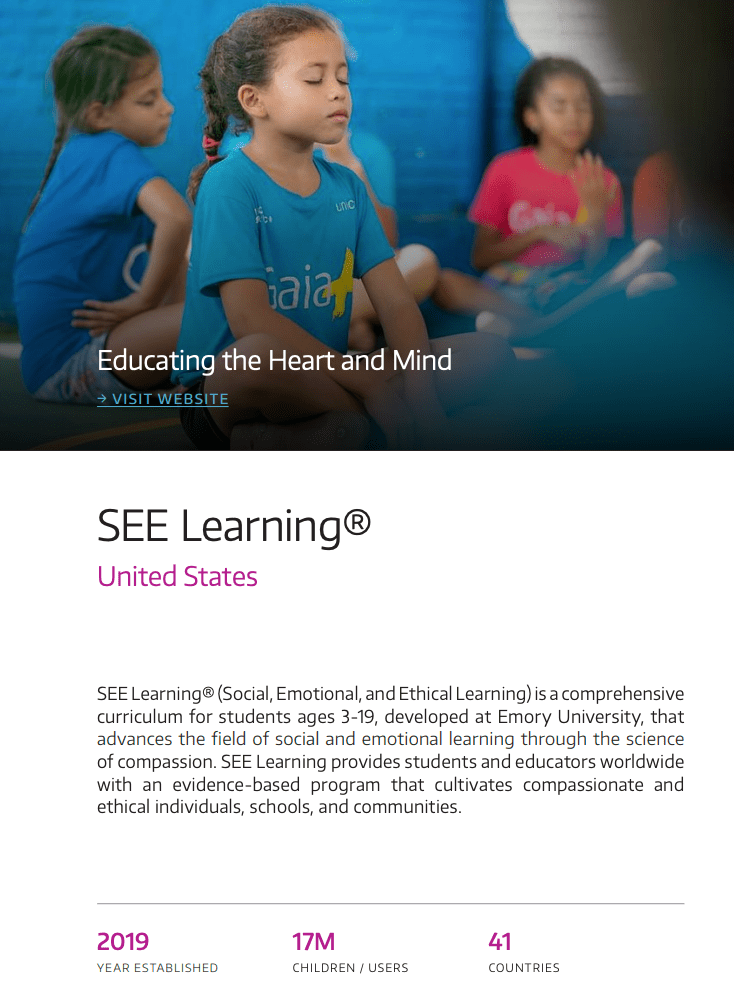
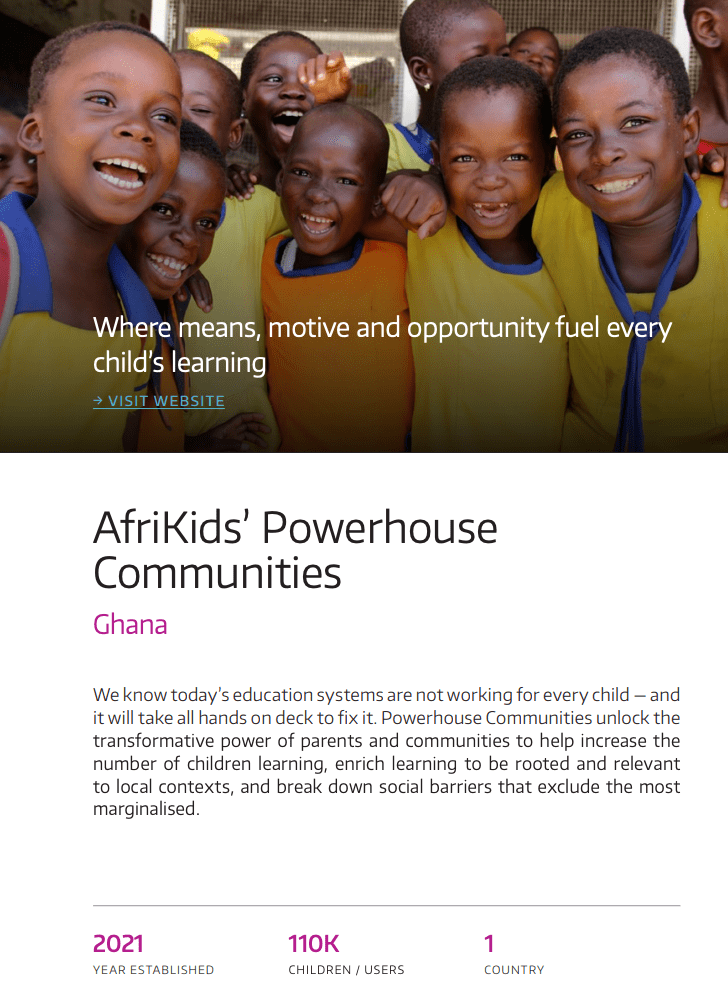
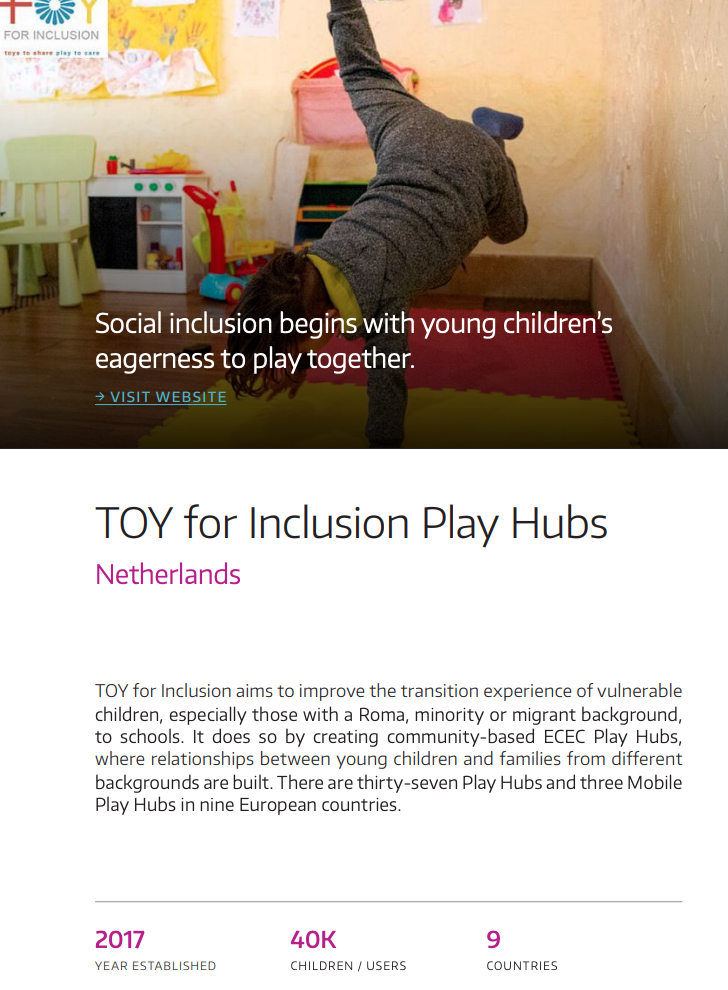
This week’s post highlights education innovations from the 2026 Global Collection curated by HundrED. HundrED was established in 2015 to support the identification and implementation of scalable education innovations worldwide. Since 2017, HundrED has celebrated the annual global collection at an Innovation Summit, which this year was held in conjunction with the WISE summit. To see how this year’s collection of innovation comparesto previous years, see the IEN posts on the HundrED Global Collection for 2025, 2024, 2023, 2022, 2021, & 2019.
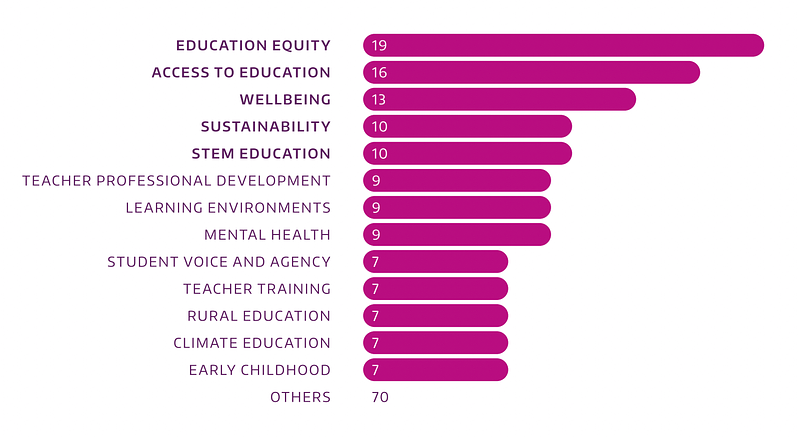
HundrED’s Global Collection for 2026 featured one hundred solutions from six continents selected from more than 800 submissions. The report on the 2026 Global Collection noted that common themes among year’s innovations were access to education, equity, wellbeing, and creativity as well as a 100 percent increase in the number of innovations using some form of educational technology. Some of the panels from the Innovation Summit discussed key findings from the report and introduced this year’s innovations.
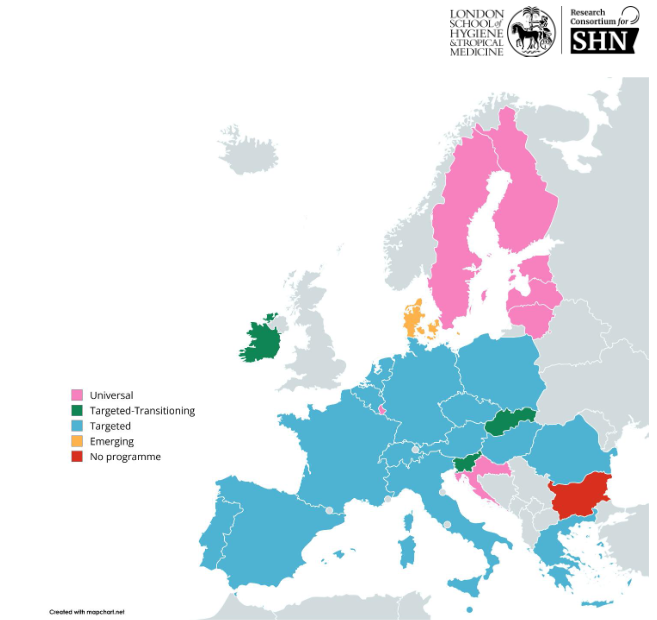
One of the many repercussions from the COVID-19 pandemic was a world-wide hit to students’ health and wellbeing. In particular, proper nutrition and food insecurity was greatly affected by the pandemic and the lockdowns as many students around the world could not get food and food related support at their schools. In Part 1 of this two part series, Sierra Bickford takes stock of the impact school nutrition programs have globally and highlights the effects of these high-impact interventions. Part 2 will scan recent news and research to find some of the many micro-innovations – new developments in practices, structures, and resources in different contexts – that have been implemented to combat this rise in student food insecurity. These posts are part of IEN’s ongoing coverage of what is and is not changing in schools and education following the pandemic school closures. For more on the series, see “What can change in schools after the pandemic?” For related examples of micro-innovations in other areas, see IEN’s coverage micro-innovations to strengthen student relationships, to increase access to college and careers and to improve tutoring: Building Student Relationships Post-Pandemic in School and Beyond; Still Worth It? (Part 1); New Pathways into Higher Education and the Working World? (Part 2); Tutoring takes off and Predictable challenges and possibilities for effective tutoring at scale.
Food insecurity, particularly among children, was one of the critical problems exacerbated by the COVID-19 pandemic and the related societal shutdowns. Estimates suggest that, during the pandemic, the number of people experiencing food insecurity doubled from about 135 million to more than 270 million. In India alone, household food insecurity skyrocketed from 21% in December 2019 to 80% in August 2020, at the same time that diet quality decreased. By the end of 2021, the UN warned that over 43 million people in 38 countries, including Ethiopia, Somalia, South Sudan, Afghanistan, and Yemen, were at risk of experiencing famine or famine-like conditions.
“Estimates suggest that, during the pandemic, the number of people experiencing food insecurity doubled from about 135 million to more than 270 million.”
Even in wealthier countries household food insecurity increased substantially. In the United States, that meant a rise in households experiencing food insecurity from 11% in 2018 to 38% in March 2020. In a report from 2020, the US Census’s Household Pulse Survey estimated the rates of food insecurity had doubled overall, and tripled among households with children. In the wake of the pandemic, school systems, despite vastly different conditions and challenges in different contexts, are working to reestablish nutrition programs and create new strategies to get children access to nutritious balanced meals.
The impact of school based nutrition worldwide
Across the world, school meals have been shown to be a worthwhile intervention with high positive impact on health and learning outcomes. In high income countries, such as those in the United Kingdom, access to nutritious school meals are associated with lower obesity rates. In Sweden, school meals with regulated nutrition requirements have been shown to increase educational attainment, health outcomes, and income across lifetime. One study found that low income families with children in Sweden who received free school meals increased their lifetime income by 6%. The effects that these interventions have on European health care costs estimate “that the return from investment in school meal programs is at least sevenfold, up to a possible €34 for every €1 spent.”
“The effects that these interventions have on European health care costs estimate “that the return from investment in school meal programs is at least sevenfold, up to a possible €34 for every €1 spent.”’
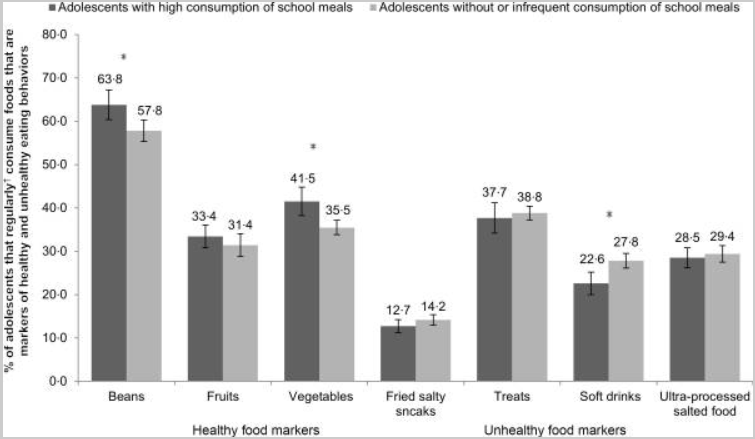
Data from low and middle income countries also support the implementation of free school meals, particularly for increasing attendance and retention. In Burkina Faso female students who were given take-home food attended school at least 90% of the time. Similarly in Bangladesh, the introduction of free fortified biscuits “increased enrollment by 14% and reduced school dropout by 7%.” Nutrition programs in low and middle income countries have been shown to positively affect learning outcomes as well. In India, access to free school meals is associated with higher cognitive outcomes and an 18% increase in literacy test scores. As in the United Kingdom, in Brazil students who were being supplied meals at school were more likely to reduce their intake of unhealthy foods and increase the presence of nutritious food in their diet, which leads to better health outcomes.
The impact of school based nutrition in the United States
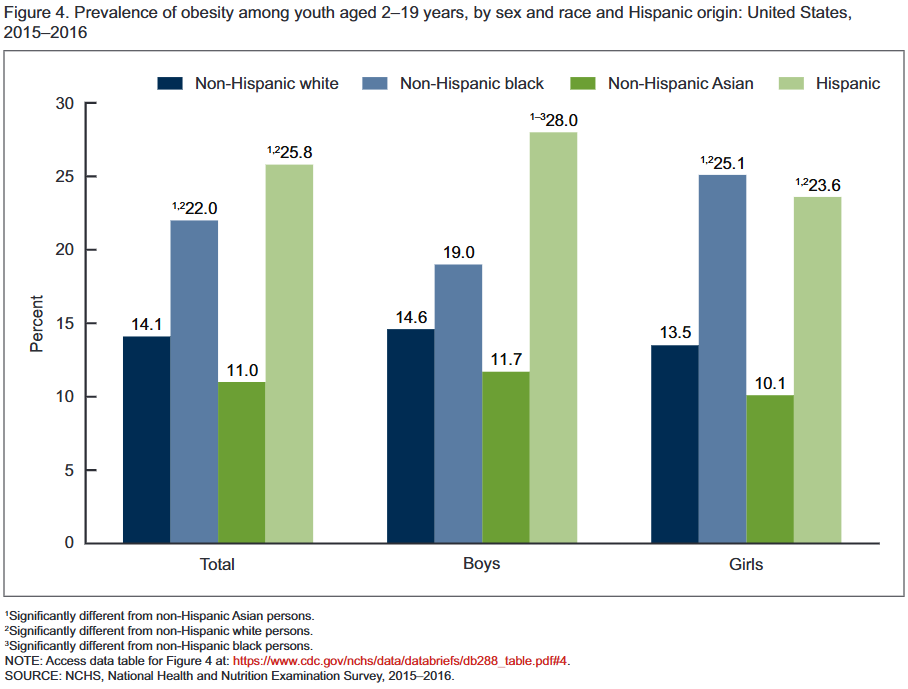
In the US, the National School Lunch Program has long been the primary vehicle for supporting students’ nutritional needs. Around 95% of US elementary, middle, and high schools take part in the program and about 75% of the meals provided through it go to children from low-income families who qualify for free or reduced-price lunches. Students who consistently consumed these meals were more often from low-income households and more likely to be non-Hispanic Black or Hispanic compared to those who didn’t participate. As a consequence, the program is one key means of addressing nutritional and health inequalities in the US, where non-Hispanic black and Hispanic children aremore likely to be overweight or obese and have lower quality diets than white children.
Despite this evidence, the budget bill promoted by the US administration and passed by Congress this past summer reduces funding for federal health and food programs. Estimates from the School Nutrition Association suggest that the bill could create a ripple effect of food insecurity for American children. This ripple effect will include fewer children automatically being eligible for SNAP and school lunch programs as well as fewer schools being able to enroll in Community Eligibility Provision. Nonetheless, even as these cuts are being made, schools and communities across the US and around the world are continuing to develop new ways of reaching more and more children and families and increasing access to higher quality and healthier food.
Teachers’ workloads, AI use, and the status of the teaching profession overall are among the key issues highlighted by the media sources that covered the recent release of OECD’s Teaching and Learning International Survey (TALIS) 2024. In this second part of a two-part post, IEN rounds up some of the headlines that discuss the results for different countries. Part 1 provided a summary of OECD’s results, and Part 2 will For comparison, see previous coverage of the release of the results of TALIS 20218 (Volume 1; Volume 2).
“…98% of Albanian teachers are satisfied with their profession, while only 3% experience high levels of stress—the lowest rate compared to the OECD average of 19%.”
“Artificial intelligence, in this particular case, can likely contribute significantly to reducing the teacher’s workload. Because if it is used appropriately and efficiently, it can streamline many processes such as receiving information, reviewing in-class assignments, grading exams, and organizing activities.”
“Despite higher satisfaction with salaries, the profession suffers from low social recognition. Only 22% of teachers feel that society values their work, and only 15% of educators perceive recognition from political representation.”
“The growing diversity in schools and the increasing need for student support are reflected in teachers’ professional learning needs. Areas for development included using artificial intelligence, teaching students with special education needs, supporting students’ social and emotional development, and teaching in multicultural or multilingual settings.”
“Icelandic teachers are among the most dissatisfied with their pay: only 19% are content with their salaries, compared with an average of one third across the OECD.”
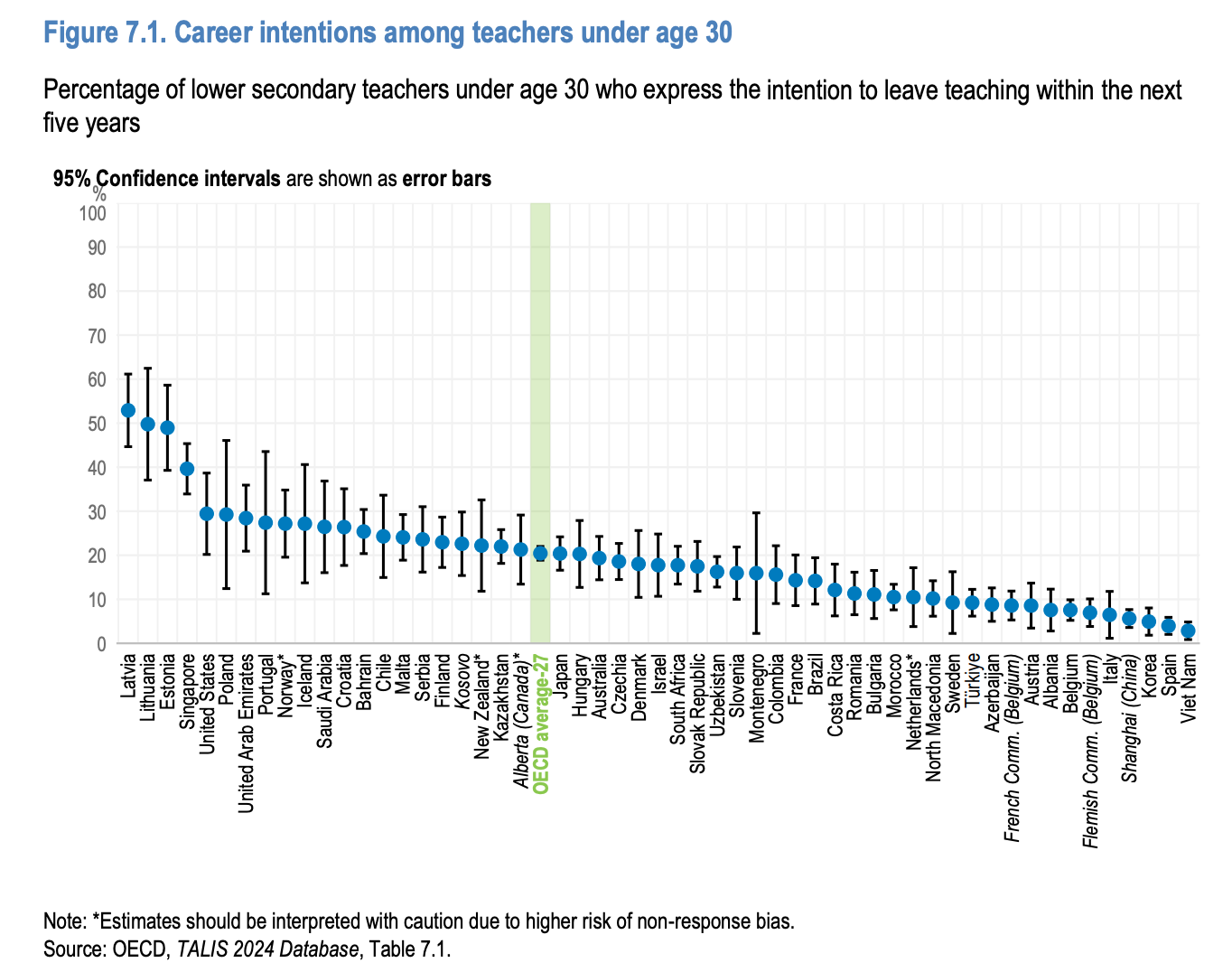
“Half — or 53% — of new teachers in Latvia may leave the profession within the next five years, according to the initial results of the OECD Teaching and Learning International Survey.”
“Education Minister Erica Stanford acknowledged the findings, noting that 62% of graduate teachers lack confidence in teaching the content of all the subjects they handle, and 54% are unsure of how to teach these subjects effectively using proper pedagogical approaches.”
“It has been found that the stress South Korean teachers experience due to parental complaints and students’ verbal violence is among the highest globally.”
“Nine out of ten upper secondary school teachers like their job, and the proportion who expect to stay in the profession has increased. But Swedish teachers also testify to stress and chaos.”
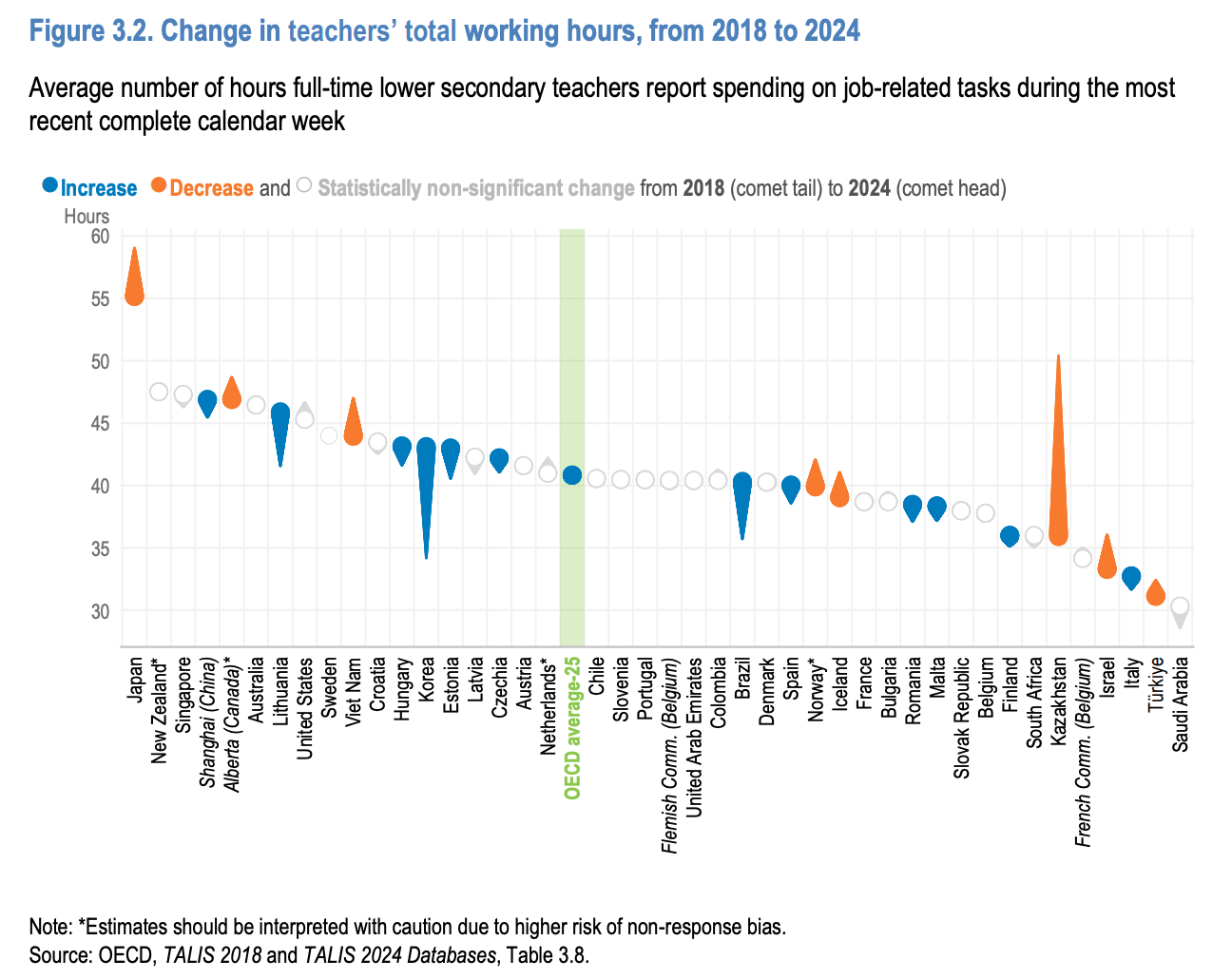
“[N]early 30% of U.S. teachers report frequent on-the-job stress, compared to less than 20% for OECD countries on average. U.S. teachers were also more likely to report that teaching had taken a toll on their mental and physical health. U.S. lower secondary teachers worked on average more than 45 hours a week in 2024, nearly five hours more than the OECD average.”
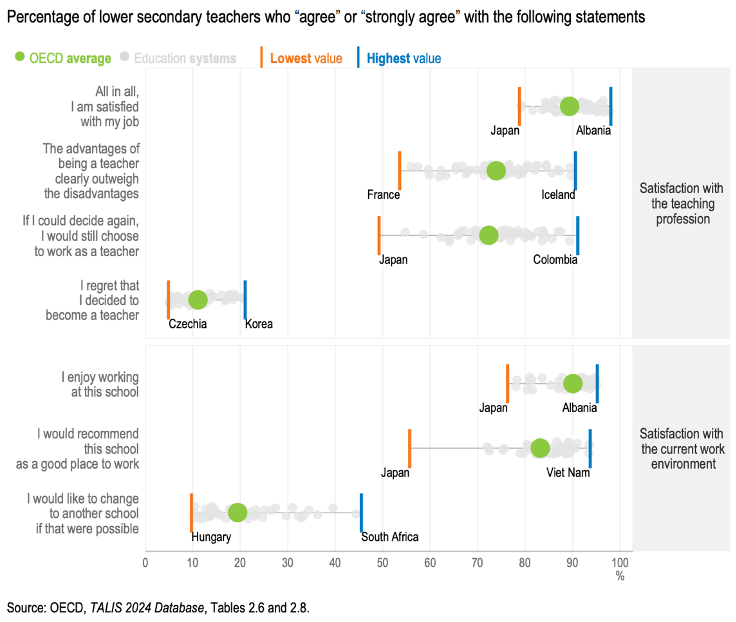
90% of teachers around the world say they are satisfied with their jobs, but many also face an increased workload that challenges their work life balance. In this two part post, IEN explores these and other findings from OECD’s Teaching and Learning International Survey (TALIS) 2024. Part 1 provides a summary of OECD’s results, and Part 2 will round up some of the headlines that highlight the results from different countries. For comparison, see previous coverage of the release of the results of TALIS 20218 (Volume 1; Volume 2).
“Most teachers are happy in their jobs,” declared the OECD, but demographic and technological changes contribute to increasing demands on teachers around the world. Those are two of the take-aways from the report on the results of the 2024 TALIS survey. Launched first in 2008 with a survey of 23 countries, OECD has also carried out the survey of teachers and school leaders in 2013 and 2018 to compare educator’s perceptions, working conditions, and learning environments. In 2024, around 280,000 educators from 55 education systems participated in the survey. Among the other key findings in 2024:
Job satisfaction
On average, almost 9 out of 10 teachers report that they are satisfied with their jobs.
In South Africa, teacher satisfaction has risen by 8% since 2018
In Colombia, 90% of teachers say they would become a teacher again.
Value of the teaching profession
Around 2 out of 3 teachers say they are valued by parents and guardians, but with significant variations:
Over 90% of teachers feel valued in Vietnam Saudi Arabia, United Arab Emirates, Uzbekistan
Less than 50% of teachers feel valued in French-speaking Belgium, Croatia, France, and Japan
Saudi Arabia, Bulgaria and Denmark have increased the share of teachers who feel valued by almost 20%
Age
The average age of teachers across the OECD is 45 years-old, but:
More than half of teachers are 50 or older in Estonia, Hungary, Latvia, Lithuania
The average age of teachers is 38 or 39 in Türkiye, Morocco, the United Arab Emirates and Uzbekistan
Workload and stress
Roughly half of teachers report excessive administrative work as a source of work-related stress
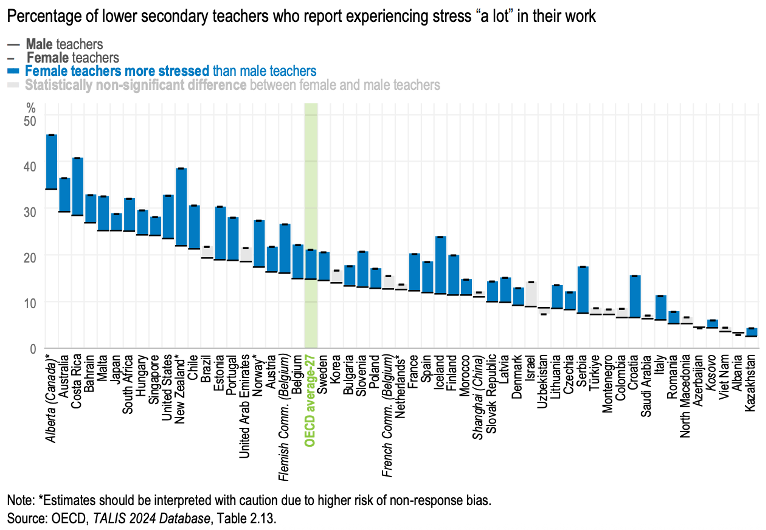
The share of female teachers reporting stress “a lot” in their work is 21% compared to 15% for male teachers.
Japanese teachers work almost 55 hours a week (down from 60 hours a week in 2018, the highest in the world).
Teachers’ sources of stress are more closely linked to constant, unsupported change than to resource shortages
The amount of time spent maintaining discipline has increased in almost all education systems since 2018
About 1 in 5 five teachers, on average, report significant disruptive noise and disorder in their classrooms.
More than half of teachers in Brazil report such disruptions, compared to about a third of teachers in Chile, Finland, Portugal and South Africa
Less than 5% of teachers in in Albania, Japan and Shanghai (China) report facing such disruptions
Preparation
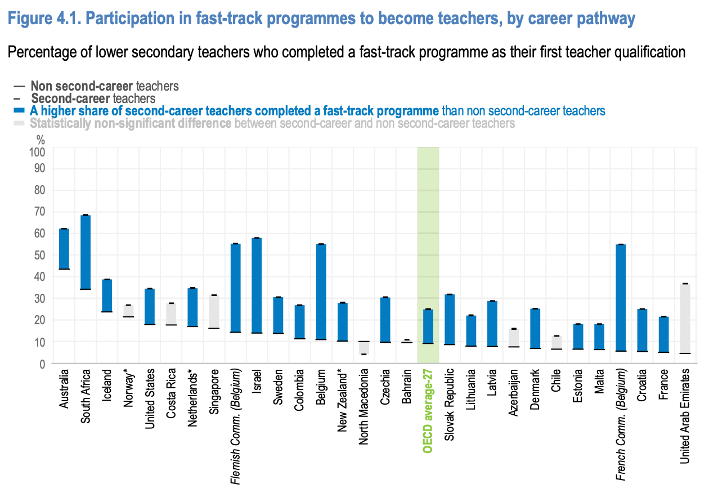
Almost 4 out of 5 teachers participated in regular teacher preparation programs to obtain their initial qualification, but:
More than half of teachers in Australia, Costa Rica, Kazakhstan, Romania, Saudi Arabia and South Africa, do not follow the regular path through teacher education
Almost half of teachers in Australia and almost a third of teachers in Iceland completed “fast-track” or specialized teacher education program
Source: OECD, TALIS 2024
Teacher evaluation and support
Almost 90% of teachers work in schools where they are formally evaluated at least once a year by school leaders, and:
65% of teachers are engaged in post-evaluations discussions about how to improve their teaching.
Slightly less than half of teachers are offered “development or training” plans, ranging from over 90% of teachers in Bahrain and Kazakhstan to under 15% in Iceland.
A little over 10% of teachers participate in programs where they are offered financial incentives and less than 5% participate in programs that include potential sanctions.
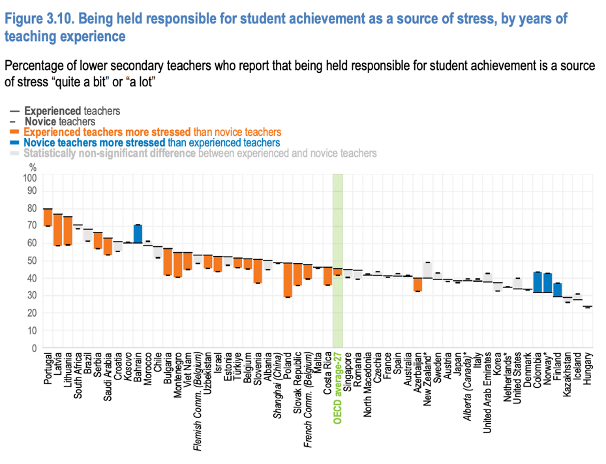
Almost half of teachers’ report that being held responsible for students’ achievement is a source of significant stress:
Over 70% of teachers in Latvia, Lithuania, Portugal and South Africa report such stress
Less than a third of teachers in Finland, Hungary, Iceland and Kazakhstan report this stress
Source: OECD, TALIS 2024
Roughly 20% of teachers, on average, participate in mentorship programs:
Almost 80% of teachers in Shanghai (China) report having an assigned mentor and over 60% of teachers with high self-efficacy report exchanging materials with peers, more than double the percentage of teachers with low
In systems like Uzbekistan over two-thirds of teachers with high self-efficacy report observing other teachers’ classes and providing feedback
AI and online learning
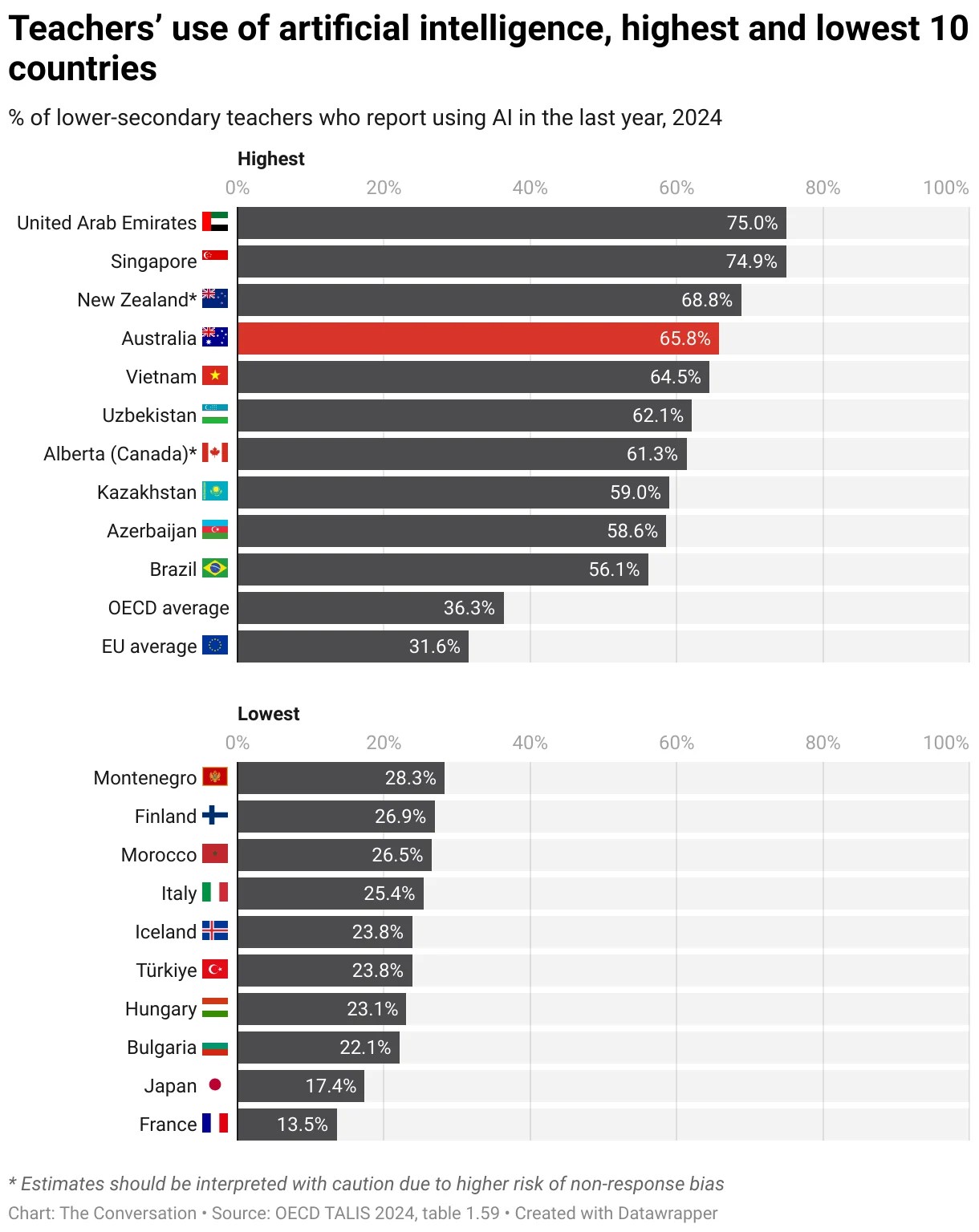
1 in 3 teachers, on average, report using AI in their work:
Roughly three-quarters of teachers in Singapore and the United Arab Emirates (UAE) use AI
Fewer than 20% of teachers in France and Japan use AI
Over 15% of teachers, on average, work in schools where at least one class was taught hybrid, but:
Over 80% of teachers in Singapore, and over 45% of teachers in Israel and the UAE report working schools where at least one class was taught hybrid or online
Next week: High satisfaction, high demands, and changing demographics: Scanning the headlines on the results of the TALIS 2024 (Part 2)
In this month’s Lead the Change (LtC) interview, Taylor Strickland reflects on her research into teachers’ workplace conditions and the professional status of teaching. Strickland is a 4th-year doctoral student and research assistant in the Learning, Leadership, and Education Policy Program at the University of Connecticut’s Neag School of Education Policy Analysis, Research, and Evaluation. Her research uses sociological and organizational theories to study teaching as a profession, the impacts of policy on teachers’ work, and how workplace conditions shape teacher attrition and equity in under-resourced schools.The LtC series is produced by Elizabeth Zumpe and colleagues from the Educational Change Special Interest Group of the American Educational Research Association. This year, the Ed Change SIG recognized Strickland’s work with their Graduate Student Award.A PDF of the fully formatted interview will be available on the LtC website.
Lead the Change (LtC):The 2026 AERA Annual Meeting theme is “Unforgetting Histories and Imagining Futures: Constructing a New Vision for Educational Research.” This theme calls us to consider how to leverage our diverse knowledge and experiences to engage in futuring for education and education research, involving looking back to remember our histories so that we can look forward to imagine better futures. What steps are you taking, or do you plan to take, to heed this call?
Taylor Strickland: My scholarship approaches schools foremost as workplaces and teachers as professionals, a perspective too often overlooked in education research and policy. This perspective is especially urgent amid mounting attacks at federal and state levels on the financial foundations of public schooling and waning student enrollment (Goldstein, 2025; Mervosh & Goldstein, 2025a; Mervosh & Goldstein, 2025b). This financial and enrollment crisis is occurring while the number of graduates entering a teaching career, and on-the -job satisfaction of teaching, are at a 50 year all time low (Kraft & Lyon, 2024). Since the 1980s, researchers have warned that the workplace conditions of teachers are not suitable to attract and retain the highly qualified teachers that our system demands (Ingersoll, 2001; Johnson, 2006; Rosenholtz, 1989). Quite sadly, it seems their warnings have come to bear their bitter fruit, and we are starting to taste the consequences on a scale that can no longer be ignored (Kraft & Lyon, 2024).
Source: UConn Website
Heeding this year’s AERA call to look “back to remember our histories so that we can look forward to imagine better futures,” I reflect on the history of teaching as a profession (Simon & Johnson, 2015; Sorensen & Ladd, 2020). From the conception of public schooling in the United States, the notion of “teaching as a profession” ran against the grain of traditional ideas. The gold standard examples for professions have long been considered law and medicine (Evetts, 2011), whose occupational values include lengthy training and careers and autonomy over their practice (Evetts, 2011; Lortie, 1975). Public schools, by contrast, were first conceived as a public good designed to educate white working class and European immigrant children to be moral, democratic citizens and workers (Goldstein, 2015). The white, mostly female teachers who were put in charge of this endeavor were notably temporary—not expected to pursue life-long professions—and trained quickly with an emphasis on classroom management essentials (Goldstein, 2015). Female teachers were contractually required to leave their teaching posts if marrying and/or becoming pregnant (Apple, 1985; Goldstein, 2015). Unlike professional autonomy recognized in the ‘gold standard’ professions, teachers—as Ingersoll and Collins (2018) describe—function more as middle-women/men, “which may seem similar to professional-like autonomy, but in reality are “highly constrained by larger school-wide [, district, state, and federal] decisions, over which teachers have little control or influence” (p. 168). In sum, the job of teaching from its conception has been decidedly de-professionalized and transient, or what Lortie (1975) describes as a semi-profession.
“The job of teaching from its conception has been decidedly de-professionalized and transient.”
When a job, such as teaching, is not treated as a profession (Evetts, 2011), where lengthy training, degrees, and resultant expertise do not translate to autonomy of practice and respect, it is societally de-professionalized and de-valued (Ingersoll & Collins, 2018), which has great implications for the workplace environments of its employees (Ingersoll & Collins, 2018; Milner, 2013). Susan Moore Johnson and colleagues (2012) developed a measurement framework for nine key elements of the workplace conditions of teachers. Notably, six of the nine elements are related to autonomy of practice, influence in school decision making, and trust/respect of teacher expertise. Unsurprisingly, researchers found that when workplace conditions improve from the lowest quartile, teachers’ transfer intentions drop sharply (Johnson et al., 2012). These findings are quite meaningful given national trends showing that teachers—who have historically had limited professional autonomy and influence—experienced further declines in decision-making power across all key school governance categories between 1993 and 2012 (Ingersoll & Collins, 2018), with more recent research suggesting a continuing downward trend (Kraft & Lyon, 2024). It is then no wonder that the prestige of teaching, interest in the profession, and teachers’ job satisfaction are at a 50-year low (Kraft & Lyon, 2024), given the continued erosion of teachers’ professional status and workplace conditions.
LtC: What are some key lessons that practitioners and scholars might take from your work to foster better educational systems for all students?
TS: In seeking to envision a better future for the professional status and workplace conditions of teachers, I interrogate how reform is implemented in schools and how it impacts the work and professional status of teachers. My qualifying paper and upcoming dissertation focus on the novel concept of “time cultures”—the normative patterns in how time is perceived, valued, and utilized within school teams. The research examines the influence of time cultures on teacher engagement in school improvement. In an era of growing teacher work intensification marked by increasing workload, time pressure, and task complexity for teachers (Creagh et al., 2023), understanding time as a cultural construct helps to reveal how teachers experience and respond to these pressures. Increased task complexity, time pressure, and policy churn—commonplace for the 21st century teacher—are often associated with burnout (Lawrence et al., 2019), declining workplace satisfaction (Creagh et al., 2023), and teacher shortages (Diliberti & Schwartz, 2023; Harbatkin et al., 2025; Martin et al., 2012; Redding & Nguyen, 2023). Notably, work intensification and its impacts on teacher satisfaction and retention are felt most severely by teachers in schools with larger populations of historically educationally underserved students, including English learners, low-income, lower academic achievement, and racially marginalized students – including Black, Hispanic, and Native American students (Creagh et al., 2023; Goldhaber et al., 2023; Simon & Johnson, 2015). At the same time that the demands on teachers have become increasingly complex and intense, the profession has become simultaneously de-skilled and de-professionalized. An era of accountability and neoliberalism—characterized by a constant cycle of reform initiatives and top-down control over teachers’ work (Creagh et al., 2023; Hargreaves, 1992; Hargreaves & Shirley, 2009)—has contributed to the de-professionalization of teaching, declining workplace satisfaction, and teacher shortages.
My work seeks to gain teachers’ firsthand experiences with constant reform cycles and their impact on their professional standing and work. I do this using a previously unused framework in the education literature—the sociology of work time (SWT) (Perlow, 1999). The SWT recognizes time cultures as multi-dimensional and aids in building a more complete picture of teachers’ construction of time cultures through the analysis of the reciprocal exchange between the temporal context (i.e., characteristic ordering, duration, and tempo of practice), the social context, and work-interaction patterns of teachers. This framework honors the expertise of teachers by seeking to understand how their leadership and policy reform experiences intersect with the cultural-time norms of their teams in their unique contexts.
For instance, my qualifying paper shows how the time culture of a math team, tasked with imposed reforms, shaped its attitudes and willingness to implement policy. These findings further indicate that reduced influence in school decision-making may lead teacher teams to reinterpret policy directives to be in alignment with their time culture, thereby reducing the implementation fidelity. The lesson that I hope to share with my work is that education leaders at all levels need to involve teachers—the people who are actually tasked with implementing improvement initiatives – with policy design and implementation. And to better involve teachers, leaders need to understand how teachers use and value their time, so that initiated reforms are seen as useful and sustainable. This would not only better align policy to local realities but would also go a long way in repairing the professional status of teachers.
LtC: What do you see the field of Educational Change heading, and where do you find hope for this field for the future?
TS: Looking back at the history of the teaching “profession,” we see that fundamentally the teaching role was not designed to be an occupation with professional status. The lack of professional status values and practices within the teaching field has eroded the workplace conditions of teachers to the point that teacher shortages are at an unsustainable high and interest in this career pathway is at an all-time low (Kraft & Lyon, 2024; Nguyen et al., 2024). Given this dour assessment of the teaching field, where do I find hope and what can be done to look forward to and imagine a better future?
Quite honestly, I fear the direction in which the teaching field is heading—and has been heading for some time now. To find hope, I must imagine a future where there is a fundamental cultural shift in how our society, government, states, districts, and school leaders respect the professional status of teachers. For this type of transformational cultural change to occur we will need education researchers and leaders at every level—from academia to individual schools—to work together to dismantle the deep-seated structures that have driven down the prestige, appeal, and professional standing of teaching to historic lows. State departments of education should advocate for, and districts should move towards, “revers[ing] the trend of top-down control over teachers’ practices and develop meaningful career ladders” (Kraft & Lyon, 2024, p. 1227). They should also prioritize increasing teacher pay and lowering the cost of degrees in education. Big ships turn slowly—but time is of the essence. We need to attract, train, and retain the best quality educators for our children. Without meaningful changes to how we value and support teaching, we risk a future where too few choose to enter or remain in the classroom.
References
Apple, M. (1985). Teaching and “women’s work”: A comparative historical and ideological analysis. Teachers College Record, 86(3), 455–473.
Creagh, S., Thompson, G., Mockler, N., Stacey, M., & Hogan, A. (2023). Workload, work intensification and time poverty for teachers and school leaders: A systematic research synthesis. Educational Review, 1–20. https://doi.org/10.1080/00131911.2023.2196607
Goldhaber, D., Falken, G., & Theobald, R. (2023). What do teacher job postings tell us about school hiring needs and equity? (CALDER Working Paper No. 282-0323). CALDER Center.
Goldstein, D. (2015). The teacher wars: A history of America’s most embattled profession. Vintage.
Harbatkin, E., Nguyen, T. D., Strunk, K. O., Burns, J., & Moran, A. J. (2025). Should I Stay or Should I Go (Later)? Teacher Intentions and Turnover in Low-Performing Schools and Districts Before and During the COVID-19 Pandemic. Education Finance and Policy, 1–38. https://doi.org/10.1162/edfp_a_00447
Hargreaves, A. (1992). Time and teachers’ work: An analysis of the intensification thesis. Teachers College Record, 94(1), 87–108.
Ingersoll, R. M. (2001). Teacher Turnover and Teacher Shortages: An Organizational Analysis. American Educational Research Journal, 38(3), 499–534. https://doi.org/10.3102/00028312038003499
Johnson, S. M., Kraft, M. A., & Papay, J. P. (2012). How Context Matters in High-Need Schools: The Effects of Teachers’ Working Conditions on Their Professional Satisfaction and Their Students’ Achievement. Teachers College Record, 114(10), 1–39. https://doi.org/10.1177/016146811211401004
Kraft, M. A., & Lyon, M. A. (2024). The Rise and Fall of the Teaching Profession: Prestige, Interest, Preparation, and Satisfaction Over the Last Half Century. American Educational Research Journal, 61(6), 1192–1236. https://doi.org/10.3102/00028312241276856
Lawrence, D. F., Loi, N. M., & Gudex, B. W. (2019). Understanding the relationship between work intensification and burnout in secondary teachers. Teachers and Teaching: Theory and Practice, 25(2), 189–199.https://doi.org/10.1080/13540602.2018.1544551
Lortie, D. C. (1975). Schoolteacher: A sociological study. Chicago, IL: University of Chicago Press.
Martin, N. K., Sass, D. A., & Schmitt, T. A. (2012). Teacher efficacy in student engagement, instructional management, student stressors, and burnout: A theoretical model using in-class variables to predict teachers’ intent-to-leave. Teaching and Teacher Education, 28(4), 546–559. https://doi.org/10.1016/j.tate.2011.12.003
Milner, H. R. (2013). Policy Reforms and De-Professionalization of Teaching. National Education Policy Center. https://eric.ed.gov/?id=ED544286
Nguyen, T. D., Lam, C. B., & Bruno, P. (2024). What Do We Know About the Extent of Teacher Shortages Nationwide? A Systematic Examination of Reports of U.S. Teacher Shortages. AERA Open, 10, 23328584241276512. https://doi.org/10.1177/23328584241276512
Perlow, L. A. (1999). The time famine: Toward a sociology of work time. Administrative Science Quarterly, 44(1), 57–81. https://doi.org/10.2307/2667031
Redding, C., & Nguyen, T. (2023). Teacher working conditions and dissatisfaction before and during the COVID-19 pandemic. EdWorkingPaper: 23-830. Annenberg Institute at Brown University. https://doi.org/10.26300/04xa-zz07
Rosenholtz, S. J. (1989). Teacher’s workplace: The social organization of schools. Longman.
Simon, N. S., & Johnson, S. M. (2015). Teacher Turnover in High-Poverty Schools: What We Know and Can Do. Teachers College Record, 117(3).