This week, Thomas Hatch draws together articles that have expanded beyond discussions of ChatGPT to look at the impact of artificial intelligence in education more broadly. This post is Part 4 of a series scanning the headlines of major education-related media sources since the launch of ChatGPT on November 30, 2022. Previous posts included ChatGPT on ChatGPT in education: Clear summaries and fake citations, ChatGPT: Ban It or Use It?, and Scanning the headlines for international perspectives on ChatGPT in schools.
ChatGPT dominated the headlines for a few months following its release, but many articles have already expanded their focus to consider the impact of AI more broadly in education. These articles describe some of the recent efforts to study and support beneficial uses of AI, but they also continue to explore many of the possibilities, questions, and concerns that have been raised about ChatGPT. As these articles describe, students now have new capabilities to write, to complete assignments, and to cut corners and “cheat” – passing on tasks they used to have to handle themselves to their AI assistants. Teachers, in turn, have new capacities to summarize and review content, to generate assignments, assessments and feedback, but they also face new demands to detect AI-generated texts and to ensure that any AI-assistance they get is accurate, educative, and beneficial.
But what do these developments amount to? Will they lead to fundamental shifts in conventional instructional and typical schools? Schools have absorbed numerous new developments before –computers, the internet, mobile phones and countless others – without changing the nature of classroom activity or the basic character of schooling. In fact, as David Tyack and Larry Cuban have discussed in books like Tinkering Toward Utopia and Oversold and Underused: Computers in the Classroom although efforts to reform and “disrupt” schools are often organized around new technologies, schools also change reforms leading to more incremental changes than many expect and hope for (a concern that Joel Rose raises about the recent influx of AI as well). The resistance of the “grammar of schooling” to many ambitious reform efforts helps to explain why, despite the hopes to “reimagine education” during and after the COVID-19 induced school closures, I’ve seen so many schools and school systems who have returned to business as usual and “resumed their regular programming.” Nonetheless, there have been times when changes in populations and technological capabilities contributed to what turned out to be dramatic changes in schooling including, as David Labaree explains, the development of graded schools, as well as mass enrollment in free, public education, and significant expansions in who could access and complete a high school education. In short, there is no question that ChatGPT and AI are already changing teaching, learning and schooling in some ways, but what difference will those changes make and for whom?
ChatGPT and AI are already contributing to changes in schools, but what difference will those changes make and for whom?
As one effort to track the impact and influence of AI in education, below I share some of the articles from major media sources we’ve come across that discuss how policymakers are trying to respond to the new developments in AI; provide overviews and guides to the proliferation of work on AI and education; and weigh in possible impact, uses and misuses in schools.
Policymakers Respond
“A new UNESCO global survey of over 450 schools and universities found that fewer than 10% have developed institutional policies and/or formal guidance concerning the use of generative AI applications. The results illustrate that an immediate response to the sudden emergence of these powerful generative AI applications that can produce written and visual creations is challenging for institutions.“
White House announces steps on ‘responsible’ AI innovation; VP Harris meets with industry leaders, BayNews 9
“The federal government will invest $140 million to fund seven new artificial intelligence research centers as part of the Biden-Harris administration’s plans to promote ‘responsible American innovation in artificial intelligence,’ with goals of protecting individual rights and safety…”
“‘As is true of all technologies, we know there are some serious risks. As President Biden has underscored, in order to seize the benefits of AI, we need to start by mitigating its risks,’ a White House official told reporters on background. Doing so, the official said, will provide a basis for effective responses to stronger future technology.”
Key Concepts in Designing AI-Based Learning Strategies, The Journal
Education Dept.: Teachers Must Be Central to Unlocking How AI Can Improve Learning, EducationWeek
Artificial Intelligence and the Future of Teaching and Learning: Insights and Recommendations, United States Department of Education
“Fundamentally, AI seeks to automate processes that achieve goals, and yet, AI should never set goals. The goals must come from educators’ vision of teaching and learning and educators’ understanding of students’ strengths and needs. We summarize seven recommendations for policy action. These recommendations are for education leaders.
- Emphasize Humans in the Loop
- Align AI Models to a Shared Vision for Education
- Design Using Modern Learning Principles
- Prioritize Strengthening Trust
- Inform and Involve Educators
- Focus R&D on Addressing Context and Enhancing Trust and Safety
- Develop Education-Specific Guidelines and Guardrails“

Recommendation for desired qualities of AI tools and systems in education
Policy Solutions: Policy questions for ChatGPT and artificial intelligence, Phi Delta Kappan
Overviews and Guides to AI in Schools
Educators Team Up to Respond to Sudden Rise of ChatGPT, EdSurge
“The education partnership TeachAI has formed to help develop guidelines, resources and tools for using AI in education, as well as recommendations for professional development and more. The partnership includes the World Economic Forum, National Association of State Boards of Education, National School Boards Association, Code.org, Educational Testing Service, Khan Academy and ISTE.”
It’s Not Just About ChatGPT. Other AI Technologies Are Heading to Schools, EducationWeek
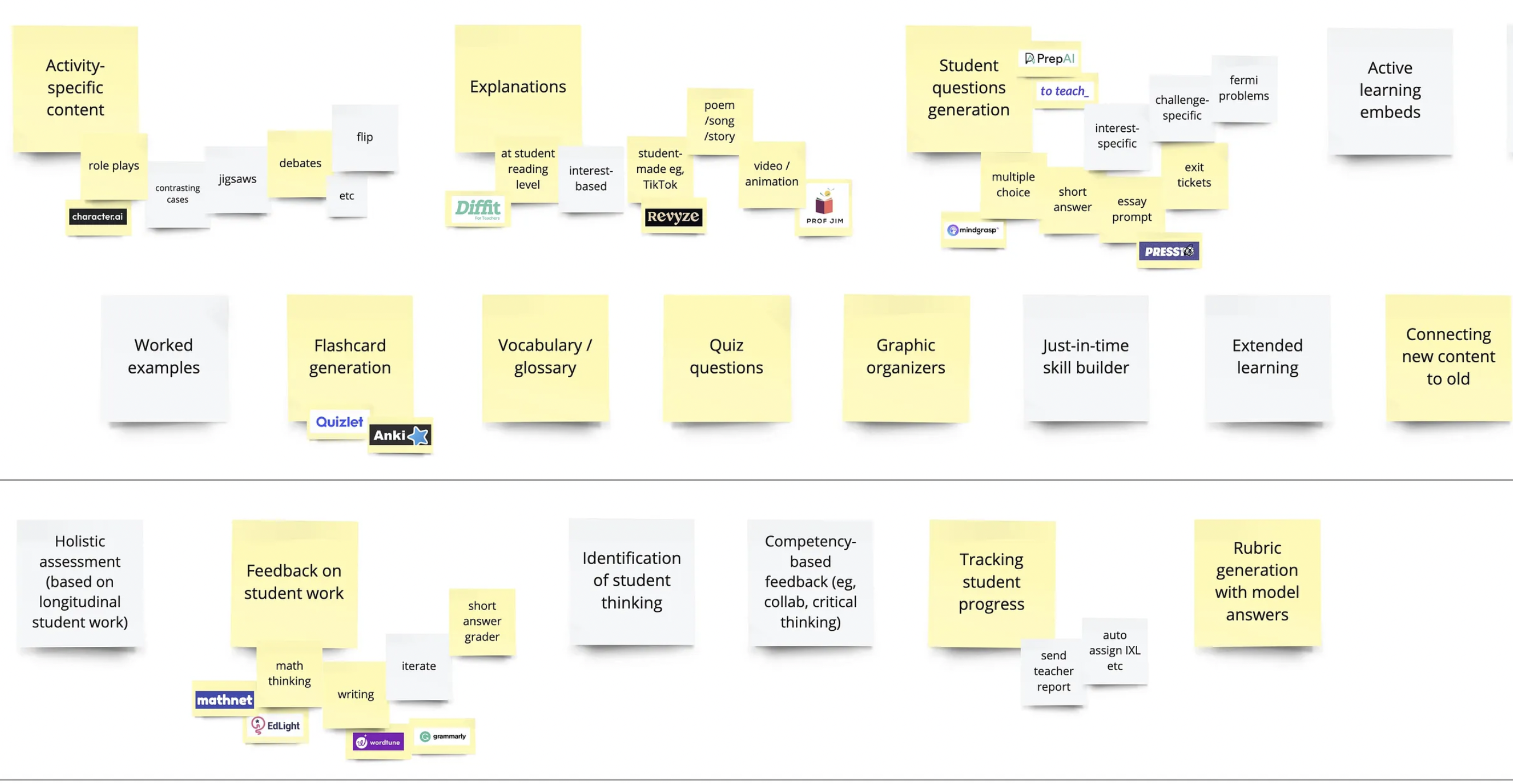
Elements of an AI in Education Map
A Map of Generative AI for Education, Lawrence Holt, Medium
Engaging AI at the League of Innovative Schools Convening, EngageAI Institute
A New Area of A.I. Booms, Even Amid the Tech Gloom, New York Times
“An investment frenzy over ‘generative artificial intelligence’ has gripped Silicon Valley, as tools that generate text, images and sounds in response to short prompts seize the imagination.“
Impact
Will Artificial Intelligence Help Teachers—or Replace Them?, Education Week
“Teachers are going to be able to help students use the tools. Did a calculator replace the role of human teachers in math classrooms? No. The teacher now has to teach how to do arithmetic without a calculator and then how to use the calculator appropriately... I don’t think there’s any danger that it’s going to be better than individualized attention from a human teacher. On the other hand, it may not be a stretch for it to be much better than having no teacher or having a teacher who’s in a classroom that has way too many students for them to pay attention to.“
“Contributor Joel Rose is not convinced artificial intelligence will transform educational outcomes. This has nothing to do with the technology itself; the way ChatGPT works is awe-inspiring. But AI’s benefits are inherently constrained by age-based cohorts, standardized curriculum and all the other hallmarks of what has been called ‘the grammar of school,’ a paradigm designed over a century ago. Here, some suggestions for how schools can break free from this legacy and shift to truly student-centered learning.”
Sal Khan on AI in Education, AEI
ChatGPT in Education: The Pros, Cons and Unknowns of Generative AI, EdTech
The Promise of Personalized Learning Never Delivered. Today’s AI Is Different, The 74
“Educators often encounter lofty promises of technology revolutionizing learning, only to find reality fails to meet expectations. But based on his experiences with the new generation of artificial intelligence tools, contributor John Bailey believes society may be in the early stages of a transformative moment. This may very well usher in an era of individualized learning, empowering all students to realize their full potential and fostering a more equitable and effective educational experience.”
‘Day of AI’ Spurs Classroom Discussions on Societal Impacts of Artificial Intelligence, EducationWeek
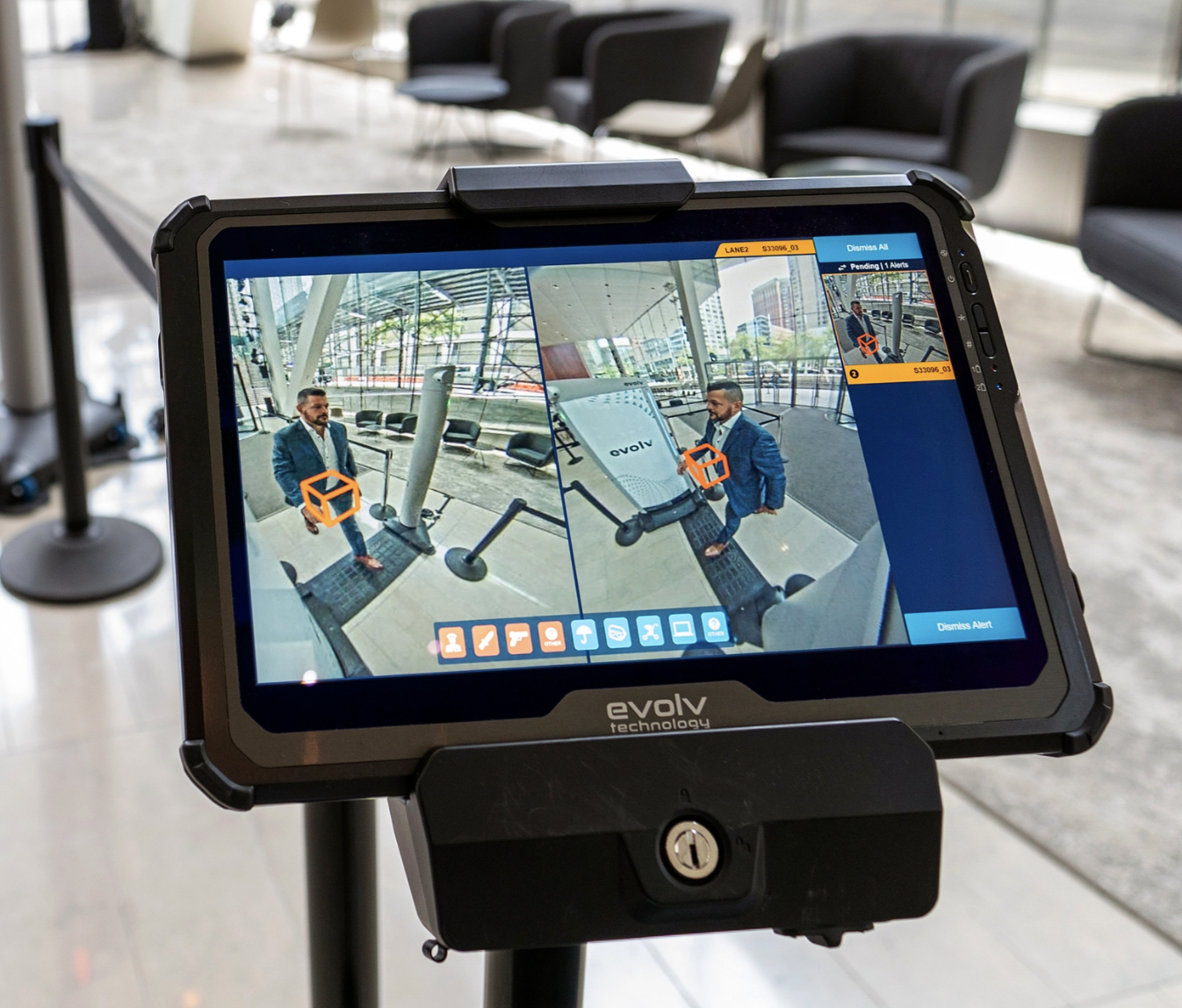
Evolv Express weapons detection system, proposed for school security
Un-Alarmed: AI Tries (and Fails) to Detect Weapons in Schools, The Intercept
“‘Private companies are preying on school districts’ worst fears and proposing the use of technology that’s not going to work,’ said Stefanie Coyle, deputy director of the Education Policy Center at the New York Civil Liberties Union.”
ChatGPT and AI Are Raising the Stakes for Media Literacy, EducationWeek
AI Tools Like ChatGPT May Reshape Teaching Materials — And Possibly Substitute Teach, EdSurge
Uses and Misuses
How Educators are using AI in the Classroom, The Hechinger Report
How Teachers Are Using Artificial Intelligence in Classes Today, EducationWeek
Supporting AI Literacy for Educators: New and Emerging Resources, Digital Promise
“While there are many potential benefits and opportunities in education from the advancement of AI, there are also a copious number of instances where AI has harmed and disempowered historically and systematically excluded communities. Students will need to understand the social and ethical implications of AI as they leverage AI to solve both complex challenges and daily tasks.”
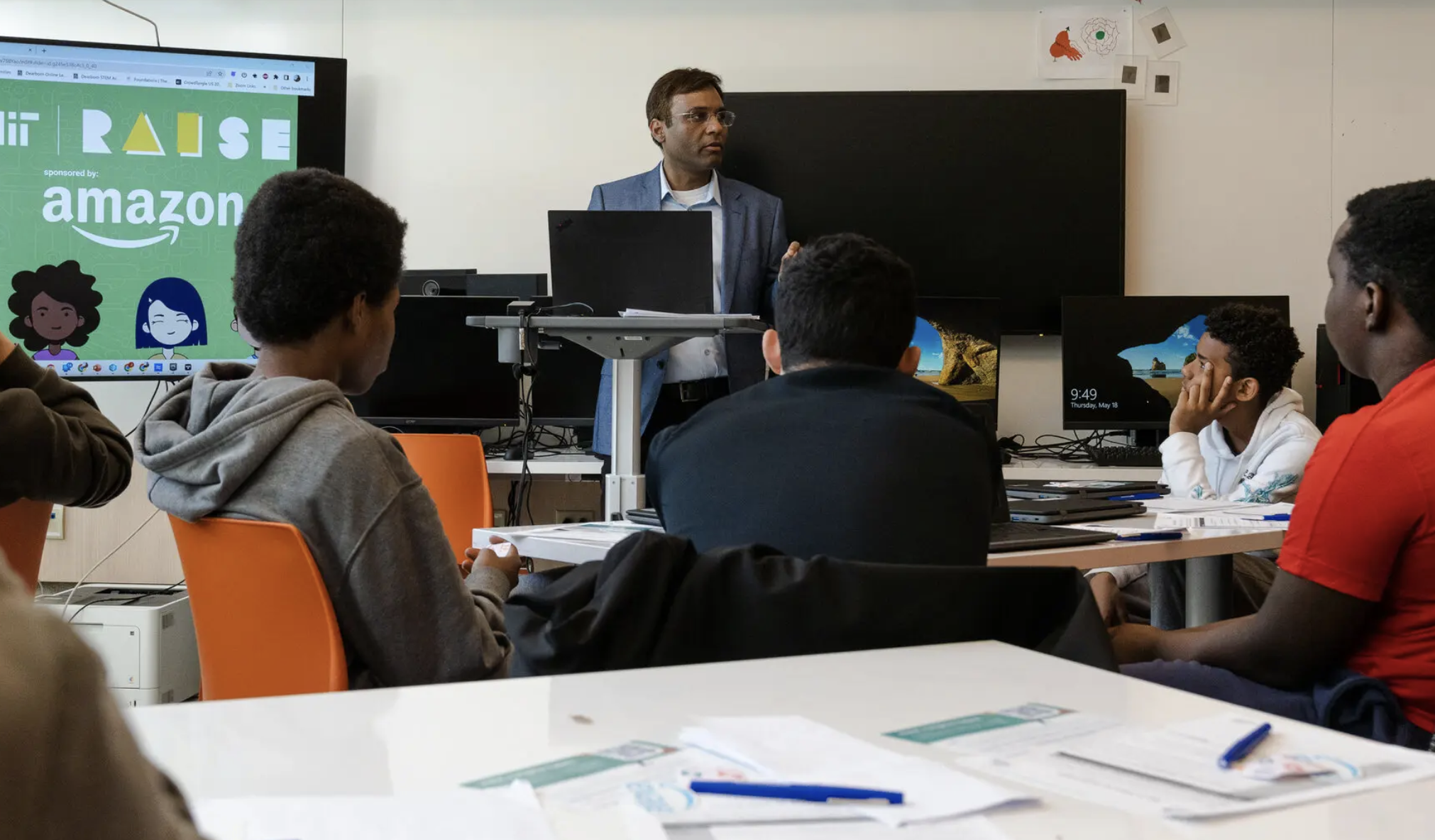
STEM Academy students learn about job availability in artificial intelligence
Hey, Alexa, What Should Students Learn About A.I.?, The New York Times
“While schools debate what to teach students about powerful new A.I. tools, tech giants, universities and nonprofits are intervening with free lessons.“
5 Ways to Use AI Tools to Meet Students’ Needs, Edutopia
Educators Team Up to Respond to Sudden Rise of ChatGPT, EdSurge
“Educators are quickly organizing to respond to the sudden rise of ChatGPT and other AI tools that some worry are a boon to student cheating and others say can help improve the learning process. We round up a list of efforts and look at why it’s an emotional issue for some.”
Chatbots That Impersonate Famous Figures: Should Teachers Use Them or Steer Clear?, EducationWeek
“Persona AI bots can make lessons more engaging—and spread inaccurate information.”
How Teachers Are Integrating AI Into Their Daily Tasks, EducationWeek
AI Isn’t Going Anywhere. Ideas for How Educators Can Make It Work for Them, EducationWeek
Three Ways AI Can Help Teachers Save Time Now, Getting Smart
“The AI Coach platform, for example, guides teachers through goal-setting and action-planning cycles focused on specific areas of instructional practices. Using the platform, teachers reflect on their classroom teaching and set near-term goals as part of a self-paced module that mirrors an instructional coaching process. Teachers have an interactive conversation with a computerized coach, who asks probing, open-ended questions and offers personalized tips for improvement.”
Can AI Tutor Students? Why It’s Unlikely to Take Over the Job Entirely, EducationWeek
What ChatGPT Could Mean for Tutoring, EducationWeek
Can AI Do Teacher Observations and Deliver PD? In Some Schools, It Already Does, EducationWeek
AI Can Coach Teachers. Here’s How It Works, EducationWeek
The Future of the High School Essay: We Talk to 4 Teachers, 2 Experts and 1 AI Chatbot, The 74
Rethinking College Admissions and Applications with an Eye on AI, The 74
“When asked to write a 500-word essay suitable for college admission, the computer produced a piece in seconds about a student’s interest in science and technology, work on the high school robotics team and desire to be part of a college community. It was a decent response to a basic prompt…ChatGPT is on a path to shake up college admissions, and whether schools like it or not, students, admissions professionals and high school counselors must prepare.”
How AI and Other Tech Tools Might be Used to Strengthen Family-School Partnerships, EducationWeek
Here’s What Students Think About Using AI in the Classroom, EducationWeek

 International Education News
Pingback: The Threat & Promise of Advanced Technology in Education: Reflections from the Atlantic Rim Collaboratory | International Education News