In this month’s Lead the Change (LtC) interview Román Liera shares his experience as a scholar working to understand and disrupt processes of racial inequity within higher education systems. Liera is an Assistant Professor of Higher Education in the Department of Educational Leadership at Montclair State University. The LtC series is produced by Alex Lamb and colleagues from the Educational Change Special Interest Group of the American Educational Research Association. A pdf of the fully formatted interview is available on the LtC website.
Lead the Change (LtC): The 2024 AERA theme is “Dismantling Racial Injustice and Constructing Educational Possibilities: A Call to Action.” This theme charges researchers and practitioners with confronting racial injustice directly while imagining new possibilities for liberation. The call urges scholars to look critically at our global past and look with hope and radicalism towards the future of education. What specific responsibility do educational change scholars have in this space? What steps are you taking to heed this call?
Román Liera (RL): Education is an applied field, meaning that we do not research for research’s sake. Instead, we research to advance the field’s knowledge to change norms, policies, practices, and other processes perpetuating inequity and injustice in schools and universities. The AERA call moves us to be equity minded in this work and I hope educational change scholars consider dismantling injustice and constructing possibilities in their research and practice. Additionally, as educators and leaders, we must be intentional about pausing to critically reflect on how our identities, practices, beliefs, and actions could create unwelcoming environments for students of color and other people with minoritized identities. Moreover, equity-mindedness is a cognitive schema that should inform educational change scholars sense making of racial injustice and action to confront, imagine, and actualize racial justice in education (Bensimon, 2007; Bensimon & Malcom, 2012). Being equity-minded means having the knowledge to be critically conscious of race, aware that racialized patterns are embedded in organization norms, policies, and practices, to use data disaggregated by race/ethnicity to identify racial equity gaps, and are responsible for changing norms, policies, and practices that sustain racial inequity (Bensimon & Malcom, 2012; Dowd & Bensimon, 2015).
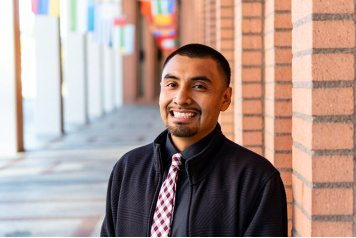
Román Liera
As scholars, we are responsible for critically theorizing the historical and sociocultural context of what we are studying to understand how organization norms, policies, and practices perpetuate racial inequity. In my research, I theorize how the sociopolitical context of racism in the academic job market (Rodgers & Liera, 2023), faculty hiring (Liera, 2020a; Liera & Hernandez, 2021), presidential search and appointment processes (Bensimon & Associates, 2022), and racial equity professional development (Liera, 2020b; 2023a) normalize whiteness. I intend to provide recommendations that higher education administrators, faculty, and staff can use to disrupt whiteness and construct racially equitable environments. For example, Dr. Theresa Hernandez and I studied how color-evasiveness operated through search committee members’ practices in ways that undermined policies designed to centralize racial equity. By doing this, we were able to provide specific recommendations for search committees to identify and disrupt color-evasive practices that delegitimize and devalue faculty candidates of color. For example, administrators and faculty should systematically analyze their campus cultures, including articulating how they think about racial diversity and racial equity regarding organizational change (White-Lewis, 2022).
LTC: In your work, you examine how systemic racism and white supremacy manifest for students, faculty, and community in institutions of higher education, specifically through hiring practices. What are some of the major lessons the field of Educational Change can learn from your work and experience?
RL: I have designed my research program to study organizational change and racial equity. Specifically, I study how racism operates through organization norms, policies, and practices that we often assume are race-neutral. In my scholarship and consultation work, I have observed and experienced the insidious ways white supremacy operates in the sensemaking of administrators, faculty, and staff to understand organizational change regarding racial equity. A major lesson that the field of Educational Change should consider is acknowledging that people in the U.S. have been socialized in hegemonic ideologies like white supremacy, anti-Blackness, and anti-Indigeneity (Diamond & Gomez, 2023; Vega et al., 2022). These ideologies lead to schemas for understanding racism, racial equity, and organizational change, which prevent people from transforming schools, school districts, colleges, and universities. For example, in the U.S., color-evasive racism is a dominant racial schema that informs how administrators, faculty, staff, and educators understand race and racism (Bonilla-Silva, 2006; Chavez-Moreno, 2022; Ray, 2022) within the context of organizational change (Liera, 2023a; McNair et al., 2020). In my work on faculty and presidential hiring, I argue that hiring routines do not have to be explicitly racist to reproduce racial inequity (Bensimon & Associates, 2022; Liera, 2023b).
“Administrators and faculty should systematically analyze their campus cultures, articulating how they think about racial diversity and racial equity regarding organizational change.”
In faculty hiring, color-evasive schemas often filter implicit biases about race. When predominantly White hiring committee members rely on their preferences to favor White faculty candidates and disqualify candidates of color, they selectively apply hiring criteria based on race and gender and expect faculty candidates of color to work twice as hard but scrutinize them twice as much in comparison to White faculty candidates (Liera & Hernandez, 2021). For these reasons, educational change scholars should name color-evasiveness and race neutrality as race-conscious schemas that impede racial equity in organizational change.
Another major lesson for the field of Educational Change is the importance of defining racial equity within the context of organizational change and what organizational change means in one’s specific space. For me, racial equity has two dimensions: (a) race is a system of power (Dowd & Bensimon, 2015), and (b) equity requires accountability to transform norms, policies, and practices that reproduce inequity into norms, policies, and practices that sustain equitable experiences, processes, and outcomes (Bensimon & Malcom, 2012; Dowd & Bensimon, 2015).
Defining racial equity with these two dimensions in mind brings me to another major lesson for the field of Educational Change. Individual change and reflection are important components of organizational change, but they do not transform organizations, thus limiting organizational change. I have encountered challenges to organizational-level racial equity work when educators experience discomfort learning how they have perpetuated racial inequity through their practice. In particular, when White educators committed to change feel white guilt and white fragility, they often disengage from developing strategies and tools to transform norms, policies, and practices or rationalize racial equity as unfairly advantaging People of Color at the expense of White people. For these reasons, it is important to understand racial equity and equity-mindedness at the organizational level.
“Individual change and reflection are important components of organizational change, but they do not transform organizations.”
Dr. Steve Desir and I published an essay drawing from Dowd and Bensimon’s (2015) principles of equity-mindedness and Ray’s (2019) work on racialized organizations to conceptualize equity-minded organizations. In doing so, we argued that equity-minded organizations are social actors that must challenge the status quo by deconstructing and redesigning organizational structures, policies, and practices in ways that (a) enhance the agency of racially minoritized groups; (b) redistribute resources intending to disrupt white supremacy, anti-Blackness, and anti-Indigeneity that are deeply embedded in racialized organizations; (c) delegitimize whiteness as a credential by recognizing and integrating the experiences and knowledge of racially minoritized groups; and (d) are attuned to the structural disadvantages experienced by members of minoritized groups (Liera & Desir, 2023). Instead of focusing on individual-level change, racial equity work at the organizational level requires collective change across multiple organizational units.
LtC: In some of your recent work, you demonstrate how institutions of higher education can use professional development to disrupt white supremacy and foster organizational change. How might your findings help inform our understanding of professional development and educational change for equity more broadly?
RL: I received my training at the University of Southern California’s Center for Urban Education (CUE) under the guidance of Drs. Estela Bensimon (founder of CUE and the Equity Scorecard) and Alicia Dowd. CUE advanced research and practice on racial equity, equity-mindedness, and organizational change. CUE’s theory of change is grounded in practitioner inquiry, which emphasizes that education practitioners learn and change when they encounter indeterminate situations that make them realize their actions do not have the impact they desire (Bensimon & Malcom, 2012). Education change leaders who use practitioner inquiry to design professional development create structured opportunities for educational practitioners to learn about racial equity and organizational change. Practitioner inquiry requires facilitators to provide protocols, tools, and language that require educational practitioners to use equity-mindedness to assess their organization’s norms, policies, and practices (Dowd & Bensimon, 2015).
For example, a provost and faculty leaders contract external consultants to facilitate long-term racial equity professional development training. The facilitators help the provost and faculty leaders identify key campus stakeholders, those in positions with decision-making power, who have expressed interest in racial equity and organizational change. After the campus leaders identify and invite key campus stakeholders to participate, the consultants facilitate the first training of the series to define key terms (e.g., racial equity, equity-mindedness, institutionalized racism), discuss the purpose of the training, and provide campus-wide data disaggregated by race and ethnicity in the area that the inquiry will focus on (e.g., faculty hiring). In the second training, the facilitators provide inquiry tools (Center for Urban Education, 2020) to help the participants assess the campus by identifying existing norms, policies, and practices perpetuating racial inequity in the area of interest. In the same meeting, the facilitators provide additional inquiry tools for the participants to decide what norms, policies, and practices need further assessment (Center for Urban Education, 2020). In the third training, the participants use equity-mindedness to assess their collected data before deciding what norms, policies, and practices need to change. In doing so, the participants develop new norms, policies, and practices to implement. In the fourth training, the participants strategize on how to implement the changes and how to assess whether the changes are having the intended impact.
“Transformation, at both the school and higher education levels, requires systemic and multi-level change.”
Although my example reflects a linear process, practitioner inquiry relies on using equity-mindedness to use systematic data collection and analysis to assess and create norms, policies, and practices. An important point is that practitioner inquiry for racial equity requires the designers and facilitators of the professional development to be equity-minded and have the facilitation skills to scaffold racial equity inquiry (Gonzales et al., 2021; Liera, 2020a, 2023a).
LtC: Educational Change expects those engaged in and with schools, schooling, and school systems to spearhead deep and often difficult transformation. How might those in the field of Educational Change best support these individuals and groups through these processes?
RL: A few weeks ago, I talked with my colleague, Dr. Patricia Virella, about transformation and change. We talked about how transformation, at both the school and higher education levels, requires systemic and multi-level change. For an educational change scholar or practitioner, the thought of transforming entire school, district, or university systems could be overwhelming. Given this context, school and higher education leaders could best support educational change champions by scaling down transformational efforts into more manageable, localized change efforts.
For example, a provost can publicly support racial equity efforts on campus, train deans in equity-mindedness, and provide financial support for deans to train and support administrators, faculty, and staff in their college to use an equity-minded lens to assess their practices. In this example, deans work with their administration, faculty, and staff to facilitate racial equity work in more manageable responsibilities across program offices and departments. Instead of having one cross-campus committee or office responsible for racial equity change work for the entire campus. I pose the following questions as entry points to scale down racial equity change efforts: What is within the jurisdiction of teachers, counselors, faculty, administrative staff, deans, provosts, and other stakeholders on campus? How might they use those resources/skills to support change? What coalitions (internal and external to the organization) are needed to substantiate smaller-level change efforts toward implementing racial equity?
LtC: Where do you perceive the field of Educational Change is going? What excites you about Educational Change now and in the future?
RL: In recent years, I have seen more engagement with theorizing, studying, and writing about racial equity and organizational change. Engaging with racial equity and organizational change is exciting because we are advancing knowledge on how to study and disrupt systemic and institutionalized racism in education organizations. Victor Ray’s (2019), A Theory of Racialized Organizations created a space for organizational change scholars to integrate organization theories and race theories in the fields of education and higher education. I recently read an article by Drs. Heather McCambly and Jeannette Colyvas (2023) where they theorize about racialized change work and provide a model to understand the conditions under which an organization will likely challenge the status quo, when an organization’s racial equity efforts weaken the status quo, and when an organization meaningfully implements racial equity change efforts. For example, organization actors are more likely to advocate changing the status quo when their leadership supports their efforts and when they experience contradictions between espoused equity and justice values and existing practices. However, anti-racist frames like equity-mindedness must inform such motivation to create and adopt routines that disrupt the status quo of white supremacy.
I also read Diamond and Gomez’s (2023) paper on how anti-Blackness and White supremacy are embedded in education organization routines. They advise education change actors to reflect-in-action or engage in “routines and the contemporaneous active evaluation of professional thoughts, theories, actions, and practices during the action itself” (p. 5). Empirically, some scholars have applied racialized organizations to understand racism in admission processes (Poon et al., 2023), graduate education processes (Perez et al., 2023), the academic job market processes (Rodgers & Liera, 2023), and faculty hiring processes (White-Lewis, 2020). These new lines of inquiry allow the understanding of taken-for-granted organizational processes to be highlighted and disrupted. Suppose the field of Educational Change understands how seemingly race-neutral organizational processes perpetuate racial inequity. In that case, scholars can provide recommendations supporting education change practitioners in transforming organizations. Seeing that research on racialized organizations is informing the field of Educational Change is exciting because identifying how to transform education organizations into equity-minded, anti-racist organizations is the first step to long-lasting and meaningful change.
References:
Bensimon, E. M. (2007). The underestimated significance of practitioner knowledge in the scholarship on student success. The Review of Higher Education, 30(4), 441–469. https://doi. org/10.1353/rhe.2007.0032
Bensimon & Associates (2022, October). Whiteness rules: Racial exclusion in becoming an American college president. College Futures Foundation.
Bensimon, E. M., & Malcom, L. (2012). Confronting equity issues on campus: Implementing the equity scorecard in theory and practice. Stylus.
Bonilla-Silva, E. (2006). Racism without racists: Colorblind racism and the persistence of racial inequality in the United States. Rowman & Littlefield.
Center for Urban Education (2020). CUE’s racial equity tools. https://www.cue-tools.usc.edu/
Chávez-Moreno, L. C. (2022). Critiquing racial literacy: Presenting a continuum of racial literacies. Educational Researcher, 1–8(7), 481–488. https://doi.org/10.3102/0013189X221093365
Diamond, J. B., & Gomez, L. M. (2023). Disrupting white supremacy and anti-Black racism in educational organizations. Educational Researcher. Advance online publication. https://doi.org/10.3102/0013189X231161054
Dowd, A. C., & Bensimon, E. M. (2015). Engaging the race question: Accountability and equity in U.S. higher education. Teachers College Record.
Gonzales, L. D., Hall, K., Benton, A., Kanhai, D., & Nuñez, A. M. (2021). Comfort over change: A case study of diversity and inclusivity efforts in U.S. higher education. Innovative Higher Education, 46(4), 445–460. https://doi.org/10.1007/s10755-020-09541-7
Liera, R. (2020a). Equity advocates using equity-mindedness to interrupt faculty hiring’s racial structure. Teachers College Record, 122(9), 1-42. https://doi.org/10.1177/016146812012200910.
Liera, R. (2020b). Moving beyond a culture of niceness in faculty hiring to advance racial equity. American Educational Research Journal, 57(5), 1954-1994. https://doi.org/10.3102/0002831219888624.
Liera, R. (2023a). Expanding faculty members’ zone of proximal development to enact collective agency for racial equity in faculty hiring. The Journal of Higher Education. https://doi.org/10.1080/00221546.2023.2195769.
Liera, R. (2023b). Faculty Hiring Does Not Have to be Explicitly Racist to Reproduce Racial Inequity: Considerations for California Community Colleges when Implementing the Vision for Success DEI Plan. USC Race and Equity Center. Los Angeles, CA.
Liera, R.,& Desir, S. (2023). Taking equity-mindedness to the next level: The equity-minded organization. Frontiers in Education, 8. https://doi.org/10.3389/feduc.2023.1199174.
Liera, R., & Hernandez, T. E. (2021). Color-evasive racism in the final stage of faculty searches: Examining search committee hiring practices that jeopardize racial equity policy. The Review of Higher Education, 45(2), 181-209. https://doi.org/10.1353/rhe.2021.0020.
McCambly, H., and Colyvas, J. A. (2023). Dismantling or disguising racialization? Defining racialized change work in the context of postsecondary grantmaking. Journal of Public Administration Research and Theory 33(2), 203–216. https://doi.org/10.1093/jopart/muac021
McNair, T. B., Bensimon, E. M., & Malcolm-Piqueux, L. (2020). From equity talk to equity walk: Expanding practitioner knowledge for racial justice in higher education. Jossey-Bass.
Perez, R. J., Motshubi, R., & Rodriguez, S. L. (2023). (Mis)alignment of challenges and strategies in promoting inclusive racial climates in STEM graduate departments. AERA Open. Advance online publication. https://doi.org/10.1177/23328584231168639
Poon, O., Lee, D. H., Galvez, E., Engler, J. S., Serrano, B., Raza, A., et al. (2023). A mobius model of racialized organizations: Durability of racial inequalities in admissions. Journal of Higher Education. Advance online publication. https://doi.org/10.1080/00221546.2023.2203630
Ray, V. (2019). A theory of racialized organizations. American Sociological Review, 84(1), 26–53. https://doi.org/10.1177/0003122418822335
Ray, V. (2022). On critical race theory: Why it matters and why you should care. Random House.
Rodgers, A. J., & Liera, R.(2023). When race becomes capital: Diversity, faculty hiring, and the entrenchment of racial capitalism in higher education. Educational Researcher. Advance online publication. https://doi.org/10.3102/0013189X231175359.
Vega, B. E., Liera, R., & Boveda, M. (2022). “Hispanic Serving Institutions” as racialized organizations: Elevating intersectional consciousness to rethink the “H” in HSIs. AERA Open, 8(1), 1-13. https://doi.org/10.1177/23328584221095074.
White-Lewis, D. K. (2020). The facade of fit in faculty search processes. The Journal of Higher Education, 91(6), 833–857. https://doi.org/1 0.1080/00221546.2020.1775058
White Lewis, D. K. (2022). The role of administrative and academic leadership in advancing faculty diversity. The Review of Higher Education, 45(3), 337–364. https://doi.org/10.1353/ rhe.0.0178

 International Education News