In this month’s Lead the Change interview, Jordon Corson shares his research on how education systems can be transformed to reflect the experiences of students with diverse backgrounds and work towards goals of liberation. Many of his reflections are captured in his latest book, Reconceptualizing Education for Newcomer Students (Teachers College Press, 2023). Corson is an assistant professor of education and affiliated faculty member of the M.A. in Holocaust and Genocide Studies at Stockton University. He is also a co-author with Thomas Hatch and Sarah Gerth van den Berg of The Education We Need for a Future We Can’t Predict (Corwin, 2021). The LtC series is produced by Alex Lamb and colleagues from the Educational Change Special Interest Group of the American Educational Research Association. A pdf of the fully formatted interview is available on the LtC website.
Lead the Change: The 2024 AERA theme is “Dismantling Racial Injustice and Constructing Educational Possibilities: A Call to Action.” This theme charges researchers and practitioners with confronting racial injustice directly while imagining new possibilities for liberation. The call urges scholars to look critically at our global past and look with hope and radicalism towards the future of education. What specific responsibility do educational change scholars have in this space? What steps are you taking to heed this call?
Jordon Corson: I think the field of educational change needs to fundamentally shift understandings of, and approaches to, research, reform, and much else. In one sense, stepping back and rethinking what is meant by educational change and who is enacting change gets at how things are carved up and structured in schools and research. Even after many years of critiquing this isolated, hierarchical way of doing things, it’s still a common setup to find a teacher who knows a thing at the front of a classroom and students who have to learn that thing lined up in rows. Then, there’s a researcher sitting in the back to make sense of what’s happening. Historians and educational change folks have beautifully explored the persistence of this architecture in schools (though I would love to read more about how educational researchers also become stuck within their own structures, a “grammar of educational research”). Additionally, and I’m far from the first person to suggest this, the division of teacher from learner or researcher from practitioner is part of a racist, colonial system where marginalized youth are framed only as the subjects of research or teaching (I’m thinking of Leigh Patel’s 2015 book, for instance). That division also ignores and suppresses what is already happening in classrooms, where teachers and students engage in research all the time. They produce complex knowledge that challenges common approaches to educational change. All of this organizing and theorizing is pushed to the side when change only means researchers or policymakers finding ways to “fix” or “improve.” So, in terms of confronting racial injustice, I think teachers, students, and researchers might come to see the work of liberation as a collective project that emerges from below.
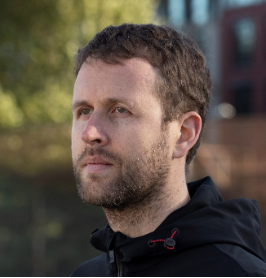
Jordan Corson
Shifting understandings of change would thus also ask researchers and policymakers to become more critical of the kinds of work in which we engage. Looking through the literature on educational change there are so many papers that evaluate the efficacy of a certain reform or policy. They ask questions like, “Did this work?” “What other reform might be more effective?” Instead, I think one task of scholars is to question these reforms themselves. I’m a bit late to the party, but I’ve just started Bettina Love’s (2023) new book, Punished for Dreaming, which looks at the impact of decades of certain kinds of educational change efforts on Black children. The language of improvement and change often blurs the radical possibilities of listening to dreams and studying with other possibilities for structuring education work.
On the other hand, in shifting understandings of educational change, I think there is a lot of political work to be done around contesting change efforts. When I think of impactful educational change, I think of the successful work to impose anti-Black, transphobic, and xenophobic curriculum in schools. Every week, my student teachers and I are forced to grapple with relentless efforts to change public schools into things that are whiter, more private, and defunded. It’s here that I come to the question about how I’m heeding the call to look with hope and radicalism. As a teacher educator and scholar, I think my core responsibility is to think with teachers as they join the powerful work that communities and schools are already doing to reimagine and work toward more liberatory worlds.
I think my core responsibility is to think with teachers as they join the powerful work that communities and schools are already doing to reimagine and work towards more liberatory worlds.
LtC: In much of your work, you use ethnography to examine spaces outside of schools that provide education and offer vital lessons for those working in and studying schools. What are some of the major lessons practitioners and scholars of Educational Change can learn from your work and experience?
JC: This is a bit of a contradictory answer, but I think it’s both that school and everyday life need to speak to each other more and that school needs to leave everyday life alone. For the first one, there are so many beautiful projects that connect educational life in formal spaces to other kinds of education. Whether connected learning (Ito et al., 2013), which looks at broadening access to learning opportunities while strengthening social supports for learning, or the many thoughtful, creative, and critical ways that scholars have taken up funds of knowledge, where Moll et al. (1992) show the vibrant life of households and communities, school and nonformal education can and should be connected. On the other side of things, though, I hold deep concerns about how school can consume other ways of thinking and being. Two things I have found in my research are how a “schooled” way of thinking and acting wash over everyday life and how everyday educational practices that challenge the logics and formations of schooling quickly become precarious, even in culturally affirmative educational spaces. When youth and I walked around New York City, I still found them doing things like raising their hands to prove that they knew an answer, even when they were just chatting with friends. In school, the second educational practices didn’t fit into the broader function of schooling, it became a problem. Students’ funds of knowledge needed to fit into schooling structures that demand rigid outcomes and measurable results.
My point here is that something like funds of knowledge shouldn’t only be about improving student achievement. If cultural life that moves outside of school is so important, it should be about radically changing what schools look like and what purposes they serve rather than simply incorporating students into existing structures. I’m thinking here of ethnic studies programs. I teach a class called Education, Genocide, Liberation, which looks at the different roles schools have played across time and place. For their final project, students take on a case study that shows how education acts as a force for genocide, liberation, social reproduction, and much else. Groups this semester studied a number of radical educational projects, including the Young Lords, Black Panthers, and the Chicano Movement. They also looked at some of the ethnic studies programs that have taken shape within and from these movements. As we studied these histories, students were just blown away. Students kept saying things like, “Wait, school can be like this?” These weren’t programs about better including students in schools. It wasn’t just that students saw themselves represented in the curriculum. They were the curriculum.
It wasn’t just that students saw themselves represented in the curriculum. They were the curriculum.
Learning like that which comes from ethnic studies also shows how school and everyday life don’t exist in some kind of binary. It’s not like school is some oppressive monster and other kinds of education are inherently liberatory. This idea may seem obvious, but I think it’s also really important to protect schools as places of possibility. The youth with whom I have worked often found school to be a refuge, even when they struggled there. I’m not a fan of borders, but I think all of this is to say that there are lessons here of creating schools from the bottom up and making schools with fluid boundaries that also limit their reach into everyday life.
LtC: In your new book, Reconceptualizing Education for Newcomer Students, you call for educational systems to leverage the experiences of immigrant students to foster more inclusive educational practices. What might practitioners and scholars take from this work to foster better school systems for all students?
JC: I don’t necessarily have specific steps so much as a question of how scholars and practitioners might rethink who and what counts in education. A major lesson I took away from this project is that the machinery of schooling is not very good at slowing down. I started the project during the Trump presidency. I wrote the book during the uprisings of 2020 and the first two years of COVID. Of course, some things changed. Schools are always changing. But, the big structures stayed the same. For me, this gets back to a question of what change means and where it comes from. Especially working in New York City, there is just this ongoing piling of reform atop reform, creating an ever-growing heap of policies without really listening to the radical change work that’s already happening. Change has so often come from communities in New York City. Bilingual education, for example, emerged from ongoing fights for educational rights. But, these changes so often come about through struggles against a system that wants only to trudge along a linear path.
The school in which I conducted research is designed to educate immigrant-origin students through culturally and linguistically affirmative approaches. I describe in the book all kinds of radical practices that youth took up and that might contribute to remaking schools rather than continuing along this same path. They engaged in educational practices not bound to specific learning outcomes or measurable objectives. They studied with joy and presence. Of course, teachers and students also pushed for different material conditions. Yet they weren’t just sitting around waiting for new inclusion policies. I wonder what might happen if researchers and practitioners thought of intellectual educational life not as something that they work toward but something already present. What if teachers could listen to and join in on the playful, speculative, education work that leaves behind the confines of achievement?
There are major issues here of responsibility. At this school, as with so many others, there were some tricky visits from an administrator followed by a shift in the curriculum to a certain kind of academic rigor. To this question of a better school system, I think about how teachers and students might be responsible for collectively caring for each other and their community rather than meeting the demands of an administrator. Ultimately, I don’t see it as a leveraging of immigrant-origin students’ knowledge to better include them in this machinery of schooling but rather a rethinking of what schools do, how, and for whom.
LtC: Educational Change expects those engaged in and with schools, schooling, and school systems to spearhead deep and often difficult transformation. How might those in the field of Educational Change best support these individuals and groups through these processes?
JC: Most of my knowledge about this field comes from my work with Professor Tom Hatch and Sarah van den Berg. In our book, The Education We Need for a Future We Can’t Predict, we looked at what we call “spandrels of opportunity” and micro-innovations happening in schools and nonformal spaces around the world. These concepts explore how change occurs on different scales, with different conditions, and for different purposes. It’s often about what’s happening in niches.
Like my previous answer, these kinds of changes are already happening all around us. I think the best way to support those engaged in this kind of work is to promote their work and support the kinds of conditions that will allow their efforts to flourish. It’s hard to choose just one out of all of the organizations we wrote about in the book, but it was thrilling to visit the Beam Center in Brooklyn. They have this massive studio where kids can tinker and build things. It’s a laboratory for kids to play and learn by doing. Beam also sustains great school partnerships where they facilitate arts, science, and all kinds of project-based learning work.
From another perspective, I think researchers are positioned to support long struggles of educational change. I’m thinking here of this current moment in U.S. public schools. Like many areas, New Jersey, which is where my university is located, is dealing with the newest iteration of a teacher “crisis.” As people keep pointing out, though, it’s really an issue of support, investment, and care for teachers and schools, one that is connected to histories of unions and communities fighting for public schools. The situation has led the state of New Jersey to finally listen to ongoing efforts from unions and abandon the edTPA. Now, they’re even peeling back the Praxis. And paying student teachers! As much as my students and I have celebrated these hard-fought wins for teachers, changes have not come with structural support. A $3,000 stipend means a great deal when you’re a working-class student asked to be full time student teacher. But then you have decades of trying to be a teacher while underpaid, overworked, and constantly blamed. All of that is just to say that researchers studying educational change can do a lot in moments like this one. We can situate terms like “crisis” and show how it’s been repeatedly used in the history of U.S. schools. We can use our work to subvert and oppose standardized barriers like Praxis exams. And, we can participate in political organizing efforts. It’s all about where we locate ourselves, how we commit to these kinds of change efforts, and how we remain answerable to the communities with whom we work.
It’s all about where we locate ourselves, how we commit to these kinds of change efforts, and how we remain answerable to the communities with whom we work.
LtC: Where do you perceive the field of Educational Change is going? What excites you about Educational Change now and in the future?
JC: That’s such a great question and, as someone more situated in the fields of anthropology of education and curriculum theory, I have perhaps a different perspective. It seems like Educational Change is a big field that is constantly moving in many directions. Having said that, it’s exciting to see scholars pushing beyond the boundaries of schooling and thinking about education in new ways. As I just mentioned, educational change is happening at different scales. It’s happening in different spaces. And, it’s happening with different understandings of change that go beyond academic achievement. As a quick example, in preparing for this interview, I was reading some recent work in The Journal of Educational Change. There’s one article by Wortham, Shim, Kim, and Shirley (2023) that explores a progressive education approach in South Korea called the Hyukshin school. The piece grapples with tensions between pushing toward achievement and student well-being. I think we as scholars will have to be careful with how we approach these topics lest they simply become incorporated into dominant logics. But, it’s wonderful to see educational change taken up as something not just bound to academic outcomes.
I’m also excited to think about the ways the field might intersect with social movements. I love seeing schooling and education’s role in revolutionary projects. This idea really comes out in a course I teach called Schools of the Future. We spend the first few weeks asking how schools came to look the way they do and exploring the constraints on change. But then, we move around the world and look at all these radically different school models. Students love to look at Forest Schools in Denmark or Summerhill/Free Schools and their anti-hierarchical democratic project. Beyond changes within larger systems, a lot of my students gravitate toward educational projects that change entire societal structures like the Rojava Revolution, a Kurdish liberation movement. Education has been a key aspect of this revolutionary political movement that centers radical democracy, feminism, and ecology. While I don’t think what’s happening in Rojava can or should be translated to the northeast U.S., studying this project opens up new ways of thinking about the possibilities of change and, once more, what we even mean when we talk about educational change.
References
Corson, J. (2023). Reconceptualizing education for newcomer students: Valuing learning experiences inside and outside of school. Teachers College Press.
Hatch, T., Corson, J., & van den Berg, S. G. (2021). The education we need for a future we can′ t predict. Corwin.
Ito, M., Gutiérrez, K., Livingstone, S., Penuel, B., Rhodes, J., Salen, K., … & Watkins, S. C. (2013). Connected learning: An agenda for research and design. Digital Media and Learning Research Hub.
Love, B. L. (2023). Punished for dreaming: How school reform harms Black children and how we heal. St. Martin’s Press.
Moll, L., Amanti, C., Neff, D., & Gonzalez, N. (2006). Funds of knowledge for teaching: Using a qualitative approach to connect homes and classrooms. In Funds of knowledge (pp. 71-87). Routledge.
Patel, L. (2015). Decolonizing educational research: From ownership to answerability. Routledge.
Tyack, D. B., & Cuban, L. (1997). Tinkering toward utopia: A century of public school reform. Harvard University Press.
Wortham, S., Shim, C., Kim, D., & Shirley, D. (2023). Can Korea have academic achievement plus well-being? The case of Hyukshin schools. Journal of Educational Change, 1-23.

 International Education News