In this month’s Lead the Change (LtC) interviews James C. Bridgeforth on the 2025 AERA theme: “Research, Remedy, and Repair: Toward Just Education Renewal.” Dr. Bridgeforth is an assistant professor of educational leadership in the School of Education at the University of Delaware. His research and teaching broadly examine the politics of educational leadership and governance, specifically attending to issues of racism, antiblackness, and community voice in educational decision-making. His most recent research focuses on the challenges facing K-12 school boards and the possibilities for more inclusive and equitable forms of educational governance.
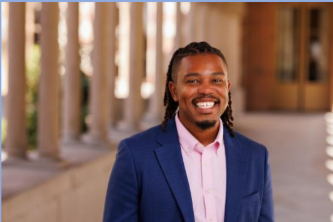
Lead the Change (LtC): The 2025 AERA theme is “Research, Remedy, and Repair: Toward Just Education Renewal.” This theme urges scholars to consider the role that research can play in remedying educational inequality, repairing harm to communities and institutions, and contributing to a more just future in education. What steps are you taking, or do you plan to take, to heed this call?
James C. Bridgeforth (JB): This year’s AERA theme could not be timelier and more necessary given the current state of U.S. education. Conservative politicians and policymakers across the nation have continued their assault on academic freedom and anything that they consider “divisive” or “controversial.” Through censorship policies that limit teaching about racism in K-12 schools (Bridgeforth & O’Neal, 2024) and anti-DEI policies that have decimated multicultural centers and programming on college campuses (Lange & Lee, 2024), it is not hyperbole to say that our education systems are under attack. With former President Donald Trump returning to the White House with a unified Republican Congress and a ready-made playbook in Project 2025 (Dans & Groves, 2023), I fear that this heightened state of legislative and political warfare against equity-focused and justice-oriented approaches to education will continue and may become even more aggressive.
I believe that this moment calls upon us to do more with our research to contribute to a more just future in education. People committed to the lives, hopes, and dreams of marginalized communities have always had to fight for a more just and equitable world. As Dr. Ruha Benjamin reminded us in her 2024 Spelman Founders’ Day address,
Black faces in high places are not going to save us . . . That is, our Blackness and womanness are not in themselves trustworthy if we allow ourselves to be conscripted into positions of power that maintain the oppressive status quo.
While I believe that peer-reviewed journal articles and publications matter, and research conferences can be an incredible space to connect with scholars and engage in rigorous debate, I also recognize the limitations of these spaces in enacting community-oriented change. Far too often, these venues primarily offer opportunities for self-promotion and career advancement with limited attention to how to make the lessons from our research actionable and accessible to communities that can use them. If we continue this cycle, I am deeply concerned that we will fail to meet the challenges of this critical moment in history. I am in full agreement with Dillard (2000) that research is a responsibility “answerable and obligated to the very persons and communities being engaged in the inquiry” (p. 663).
Research can be a powerful tool to reshape the structures and systems that govern our lives, and I am committed to democratizing the ways that we engage in this work. One way that I have tried to have a more direct impact through my research has been working directly with school and district leaders to build and strengthen the community schools strategy. For the last two years, I have been proud to work within the community schools movement in California to support school and district leaders to transform how we do school. Much of this work has involved working with leaders to build their capacities in data-driven decision-making and developing a shared vision for their community schools.
To guard against the potential for this work to reproduce educational injustices and inequities, I have also coached leaders to reimagine the ways that we understand the data that we have available, what data we value, and how more participatory forms of research can lead to more inclusive, equity-driven educational spaces. For example, leaders’ conceptions of data sources that can be used for school improvement are often limited to traditional surveys or feedback forms. As I work with leaders, I regularly introduce more community-driven, participatory methods, like photovoice, that offer leaders new opportunities to collect and analyze data about experiences within their school communities. Similarly, I have been proud to collaborate with the Center for Universal Education at the Brookings Institution to pilot one example of a more participatory form of education research, The Conversation Starter Tools: A Participatory Research Guide to Building Stronger Family, School, and Community Partnerships (Morris, et al., 2024). What has been most exciting about this collaboration is that it explicitly honors the inherent wisdom and expertise of families and communities, positioning them as co-researchers rather than subjects to be studied. For example, the Conversation Starter Tools engage families, students, and educators in critical dialogues based on community-adapted survey items to collectively examining challenges and collaboratively develop solutions to foster family, school, and community engagement.
LtC: As a scholar, educator, and policy advocate, a major focus of your work has been to elevate community voice in educational governance. What are some of the major lessons that practitioners and scholars of Educational Change can learn from your work?
JB: The main lesson that I want practitioners and scholars to learn from my work is that we cannot remain beholden to what is, and we need to focus on what could be. We must believe that more is possible.
Much of my work is based on the premise that those who are closest to a problem should be meaningfully engaged developing potential solutions. In far too many spaces where education policies and decisions are being made, those who will be directly impacted by those decisions are missing from the room. In particular, the hopes, dreams, and visions of persistently marginalized communities have often been ignored or opposed in favor of those who hold power.
My most recent research has been focused on K-12 school boards. Nominally, school board meetings seem to be one of the most accessible spaces for community voice in educational governance. Meetings are legally required to be open to the public and board policies generally require opportunities for the public to address the board on any given number of issues. Yet as I have sat through many hours of school board meetings and interviewed school board members across urban, suburban, and rural contexts, I have confronted a troubling reality: many opportunities for community voice in governance have limited impact on the decisions that boards make (Bridgeforth, 2024).
Some of my collaborative work that was recently published (with Eupha Jeanne Daramola, Taylor Enoch-Stevens, and Akua Nkansah-Amankra) explains how board meeting policies, norms, and routines can often work to limit dialogue and debate, rather than offer opportunities to influence decision-making. For example, during a contentious series of board meetings focused on proposed school closures, board leadership regularly relied on shifting interpretations of board meeting policies to maintain a sense of order decorum, which in turn, stifled opportunities for members of a majority-Black community to share their concerns and opposition to the closures. After hours of emotional testimony, the board ultimately voted to move forward with the closures. Importantly, the board at the center of this study was also majority-Black, raising important questions about the limitations of demographic representation in promoting more inclusive forms of community engagement.
School boards remain key sites of educational policy and decision-making. I believe that more scholars and practitioners need to engage in such critical, creative examinations of existing policies and procedures that can be changed or reimagined to enable a more just, equitable, and participatory policymaking process. This requires us to interrogate how existing board-level policies and routines were developed and whose interests they have generally served. Rather than take for granted existing understandings of good governance, I believe we must go further by asking, good governance for whom? Moreover, we must ask, do our systems serve the needs of a more diverse and inclusive society, or are they relics of a more exclusionary past?
“Much of my work is based on the premise that those who are closest to a problem should be meaningfully engaged in developing potential solutions.”
LtC: Your research has explored manifestations of antiblackness in educational policymaking and in the practices of educational leaders. What might practitioners and scholars take from this work to foster better school systems for all students?
JB: I believe that if we are going to truly foster better school systems for all students, we must reject policymakers’ rhetoric that racism is a relic of our past. We must begin with the truth that racism is endemic to our society and that we must continue to work to mitigate its harms. Several years ago, I published an article in the Journal of School Leadership entitled “This Isn’t Who We Are”: A Critical Discourse Analysis of School and District Leaders’ Responses to Racial Violence in Schools (Bridgeforth, 2021). This study examined close to 150 letters, press releases, emails, and social media posts from school and district leaders in the wake of racist incidents within their school communities. While conducting the analysis for this project, I was repeatedly struck by the ways that leaders often maintained that “racism had no place in their communities”, even as they were responding to harmful acts of racial violence often committed by members of their school communities—including teachers, students, and administrators.
As I build on my research agenda and work towards disrupting racism and antiblackness in educational spaces, I often return to histories of resistance in our society. Learning about Black fugitivity (Givens, 2021) and the histories of Black educational resistance (Walker, 2018) can remind us that the issues that we face today are not so different from those faced throughout our history. These and other historical insights deeply informed a recent comparative critical policy analysis (Bridgeforth & O’Neal, 2024) which documented how Texas and North Dakota developed their anti-Critical Race Theory legislation, which we characterize as acts of educational censorship. The historical record explains that similar reactive policy actions have occurred throughout our history when any semblance of racial progress has been made (e.g., state legislatures passing Black Codes in response to Black political power during Reconstruction).
Part of our goal in conducting this research was aligned with traditions of bearing witness to these actions and ensuring that the race-evasive, dominant narratives embedded in these policies do not go unchallenged. Particularly in times of rampant disinformation, it is important that scholars use our training to ensure that counternarratives exist so that we do not inadvertently cede the fight for truth and justice to those who are committed to maintaining the status quo by limiting or undoing the racial progress that has been made.
“I have confronted a troubling reality: many opportunities for community voice in governance has limited impact on the decisions that boards make.”
LtC: Educational Change expects those engaged in and with schools, schooling, and school systems to spearhead deep and often difficult transformation. How might those in the field of Educational Change best support these individuals and groups through these processes?
JM: To support individuals and groups going through challenging transformation processes, I return to some of the lessons I learned through my participatory research partnership with the Center for Universal Education at the Brookings Institution that I mentioned previously. Due to the success of this research spanning 16 countries across six continents, I was recently invited to be a panelist for the closing keynote of the inaugural National Assembly for Family Engagement in Education. Our panel focused on the six global lessons (Morris & Nóra, 2024) that were uncovered through this collaborative research project. While the research primarily focuses on family, school, and community engagement, I believe that several of the lessons can provide useful insights that can support individuals who are leading many kinds of transformation efforts within their school communities. Two lessons that are most relevant to supporting the work of educational transformation are: 1) Begin with beliefs; and 2) Build at the speed of trust.
The first lesson of beginning with beliefs addresses the understanding that many school communities are undergoing significant demographic changes (Turner, 2020) and in turn, often have diverse beliefs and understandings about the purpose of school. Before attempting to engage in school transformation efforts, this lesson suggests that we should take stock of what the various groups within our school community believe and how those beliefs can inform a shared vision for what our schools should be. This does not mean that we will all eventually agree or that there will not be conflicts or vigorous debates. In fact, I can almost guarantee that things may get contentious as people share their beliefs. However, by sharing our beliefs and openly discussing how we came to those understandings, we can begin the process of building relational trust, which can facilitate greater cohesion and in turn, foster meaningful transformation.
The second lesson, build at the speed of trust, acknowledges that educational leaders are often working under a sense of urgency, or in some cases, a state of emergency. Whether due to calls to quickly address concerns about post-pandemic student achievement levels or navigating issues due to looming budget shortfalls, leaders are regularly expected to make decisions swiftly, often leaving little time and fewer opportunities for building trusting relationships that can inform those decisions. While it is important to recognize the pressures that many leaders are facing, rushing through transformation without taking the time to build deeper levels of trust among community members is one of the swiftest ways to limit the impacts of the change that you’re seeking to make. Leaders, and those who support them, should prioritize strategies and practices to build trusting partnerships across the school community (e.g., home visits with families, restorative practices with students and educators) before any transformation process begins. Importantly, these practices should continue throughout the process to deepen and strengthen those relationships over time.
LtC: Where do you perceive the field of Educational Change is going? What excites you about Educational Change now and in the future?
JB: I’m excited to see an increase in critical scholarship calling for meaningful transformation, rather than tinkering around the edges of educational reform. Although this kind of scholarship has traditionally been relegated to smaller, more specialized academic journals and outlets, I have recently seen more critical scholarship showcased in the flagship journals of the field. One such example was the June 2024 special issue of Educational Evaluation and Policy Analysis focusing on critical approaches to educational research. This special issue offered several incisive calls to action to transform education systems and included a diverse group of scholars, particularly junior scholars in the field. Additionally, I noticed several recent articles published in Educational Researcher addressing critical issues and methods that have similarly been a welcome addition to the field of educational change. For example, I have appreciated recent work in this journal by Lewis and Muñiz (2024) about navigating hostile, anti-DEI environments, Murray and Hailey (2024) about racialized network analyses, and Tanner (2024) about the influences of neoliberalism and whiteness in education.
We are at a moment in time where we cannot afford to be silent or even reserved about the challenges that we face in our society and the need for bold, meaningful change. While we do not know whether the new Trump administration’s proposed policies will come to fruition, I believe that researchers must use every tool within our power to push back against and mitigate the harms that may come to marginalized communities. In the aftermath of the murders of Breonna Taylor and George Floyd in 2020, I remember observing so many marches, calls to action, and events that gave me hope that we might see meaningful changes. While many of those changes proved to be temporary due to the intense backlash from conservative policymakers and those who support them (Samuels & Olorunnipa, 2024), I do remain hopeful that we can eventually realize a more just and equitable future and I believe that the field of Educational Change can and will be a significant part of that future.
References
Bridgeforth, J. C. (2021). “This isn’t who we are”: A critical discourse analysis of school and district leaders’ responses to racial violence. Journal of School Leadership, 31(1-2), 85-106.
Bridgeforth, J. C., & O’Neal, D. (2024). (Re) Setting the racial narrative: Antiblackness and educational censorship. Education Policy Analysis Archives, 32(9), n9.
Bridgeforth, J.C. (2024) Beyond board etiquette: Responding to racism in K-12 school boardrooms. In. Johnson, R.M. and Harper, S.R. (Eds.). The Big Lie About Race in America’s Schools. Harvard Education Press.
Dans, P., & Groves, S. (2023). Mandate for Leadership: The conservative promise. The Heritage Foundation.
Daramola, E. J., Enoch-Stevens, T., Bridgeforth, J. C., & Nkansah-Amankra, A. (2024). “On a risky slope of democracy”: Racialized logics embedded in community–school board interactions. Educational Evaluation and Policy Analysis, 46(3), 506-533.
Dillard, C. B. (2000). The substance of things hoped for, the evidence of things not seen: Examining an endarkened feminist epistemology in educational research and leadership. International journal of qualitative studies in education, 13(6), 661-681.
Givens, J. R. (2021). Fugitive pedagogy: Carter G. Woodson and the art of Black teaching. Harvard University Press.
Lange, A. C., & Lee, J. A. (2024). Centering our humanity: Responding to anti-DEI efforts across higher education. Journal of College Student Development, 65(1), 113-116.
Lewis, M. M., & Muñiz, R. (2024). A call for research on the role of legal counsel in promoting (in)equitable educational policies in a hostile, anti-DEI sociopolitical climate. Educational Researcher, 0(0). https://doi.org/10.3102/0013189X241289402
Morris, E.M. & Nóra, L. (2024). Six global lessons on how family, school, and community engagement can transform education. Brookings Institution.
Morris, E.M., Nora, L. & Winthrop, R. (2024). Conversation starter tools: A participatory research guide to building stronger family, school, and community partnerships. Brookings Institution
Murray, B., & Hailey, C. A. (2024). Missing the forest for the trees: Toward a networked racial analysis of White parents in education policy and research. Educational Researcher, 53(8), 472-477. https://doi.org/10.3102/0013189X241290791
Samuels, R. & Olorunnipa, T. (2024, May 25). George Floyd anniversary sparks retrenchment on racial justice. The Washington Post. https://www.washingtonpost.com/nation/2024/05/25/george-floyd-anniversary-retrenchment/
Tanner, S. J. (2024). There’s no way for this to end well: Lesson planning, neoliberalism, and Whiteness. Educational Researcher, 0(0). https://doi.org/10.3102/0013189X241289932
Turner, E. O. (2020). Suddenly diverse: How school districts manage race and inequality. University of Chicago Press.
Walker, V. S. (2018). The lost education of Horace Tate: Uncovering the hidden heroes who fought for justice in schools. The New Press.

 International Education News