This week’s Lead the Change (LtC) interviews explore the power of partnerships, networks and collaboration for supporting system improvement. This is the first in a series of posts that will featuring excerpts of interviews with presenters participating in the Educational Change Special Interest Group sessions at the upcoming Annual Conference of the American Educational Research Association in Denver in April. This post includes presenters from the session titled: “Organizing Systemic Change in Education: Leveraging Partnerships, Networks and Teacher Collaboration.” These interviews are part of the Lead the Change series produced by Elizabeth Zumpe and colleagues from AERA’s Educational Change Special Interest Group. The full interviews can be found on the LtC website.
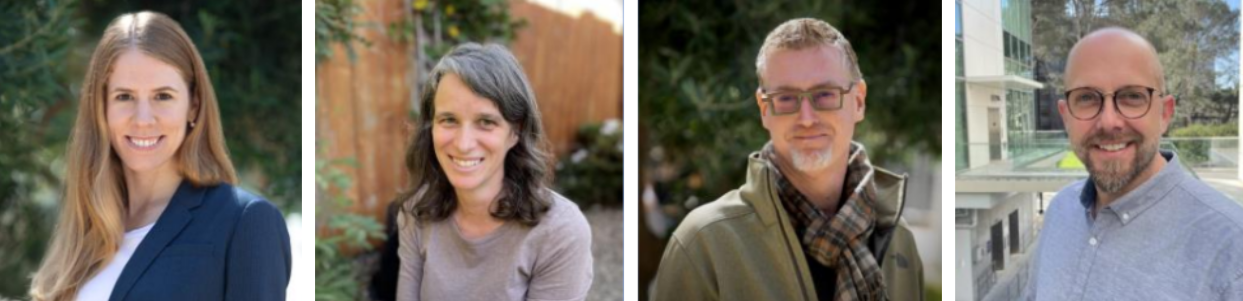
Networks for Knowledge Brokers: A Typology of Support-Seeking Behaviors — Anita Caduff (AC) University of Michigan, Alan Daly (AD) & Marie Lockton (ML) University of California San Diego, Martin Rehm (MR) University of Southern Denmark
Lead the Change (LtC): What are some of the ideas you hope the field of Educational Change and the audience at American Education Research Association (AERA) can learn from your work related to practice, policy, and scholarship?
AC, AD, ML, & MR: Our research offers important insights into the field of Educational Change, particularly for practitioners, policymakers, and scholars interested in understanding the critical role of knowledge brokers in improving education for all learners. Knowledge brokers do not operate in isolation; instead, they are embedded within relational ecosystems that provide access to various forms of support, such as financial resources, infrastructure, strategic advice, capacity building, networking, and knowledge mobilization. We define knowledge mobilization as the movement of knowledge and resources to where they will be most useful through a multidirectional process that supports the co-construction and use of knowledge. By examining how knowledge brokers navigate these ecosystems and engage in support-seeking behaviors, our study highlights three major contributions to practice, policy, and scholarship.
“Knowledge brokers do not operate in isolation.”
To begin with, we surfaced seven distinct knowledge broker profiles based on their social network dynamics and support-seeking behaviors: (1) networked strategist, (2) resource-driven strategist, (3) balanced strategist, (4) capacity-centered networker, (5) self-sufficient mobilizer, (6) balanced mobilizer, and (7) well-funded all-rounder. For example, the self-sufficient mobilizer operated without any financial support to sustain their operations; they focused solely on knowledge mobilization and strategic advice. In contrast, the well-funded all-rounder had high levels of support in all dimensions: infrastructure and finances, strategic advice, networking, and knowledge mobilization. Understanding these profiles helps the field to have a better grasp on the activities of these important educational actors as well as to support knowledge brokers in designing tailored strategies to enhance their effectiveness based on their unique circumstances and needs.
Additionally, the study surfaced three significant tensions that influence knowledge brokers’ support-seeking behaviors. For example, knowledge brokers often compete for scarce resources (e.g., grants) while recognizing the potential benefits of collaboration to achieve shared goals (i.e., the tension between competition and collaboration). Further, brokers balance efforts to create immediately observable, focused outcomes with aspirations for broader, systemic, and long-term impact. The third tension that emerged was between autonomy and interdependence. While autonomy enables alignment with internal organizational goals, interdependence with partners offers access to critical resources but sometimes requires compromising on internal priorities. For example, a knowledge broker may rely on their partners for funding, networks, and expertise and, as a result, occasionally need to cater to the external demands of these partners. These tensions highlight knowledge brokers’ complex balancing act and underscore the importance of creating policies and practices that encourage collaboration, sustainable funding, and alignment between short- and long-term goals.
By mapping knowledge brokers’ relational ecosystems and differences in support-seeking behavior and tensions, this study shifts the focus away from knowledge brokers alone to include the supports they leverage in their broader relational ecosystems. As such, this study suggests that knowledge mobilization is not exclusively an attribute of the knowledge brokers, but is influenced by, and distributed within, a wider knowledge mobilization ecosystem. This reframing opens new avenues for research and practice, including questions about how brokers’ ecosystems influence their effectiveness and how to strengthen these ecosystems. This shift in perspective encourages researchers and practitioners to consider not only the actions of knowledge brokers but also the systemic supports and partnerships that enable their work.
Reimagining the role of broker teachers in cross-sector partnerships — Chun Sing Maxwell Ho (CH) The Education University of Hong Kong, Haiyan Qian (HQ) The Chinese University of Hong Kong, Chiu Kit Lucas Liu (CL) University of Oxford
Lead the Change (LtC): What are some of the ideas you hope the field of Educational Change and the audience at American Education Research Association (AERA) can learn from your work related to practice, policy, and scholarship?
CH, HQ, & CL: This research highlights the transformative power of Hong Kong school–university partnerships (SUPs) in reshaping middle leaders (ML) within schools, offering valuable insights for practice, policy, and scholarship in educational change. We demonstrate how SUPs enhance MLs’ connectivity and brokerage across the school, promoting a layered and collaborative leadership structure. This finding aligns with previous research that highlights the importance of distributed leadership in fostering school improvement. For instance, Leithwood et al. (2020) argue that effective school principals distribute their leadership to engage both formal and informal teacher leaders, thereby enhancing their influence through interactions with others. Similarly, Spillane and Kim (2012) emphasize that leaders enact practices differently according to the school context, which supports the notion that SUPs can tailor development activities to meet specific needs. Furthermore, Bryant and Walker (2024) suggest that principal-designed structures can significantly enhance middle leaders’ professional learning, which is consistent with our findings on the positive impact of SUPs on MLs’ connectivity and brokerage.
“Our findings underscore the necessity for policies supporting sustained, context-specific leadership development.”
Key takeaways include the importance of designing SUPs to foster reflective dialogue and interaction among all school members, thereby nurturing an inclusive, interdisciplinary learning community. Schools can involve interdisciplinary projects where teachers from different subject areas worked together with university researchers to develop integrated curricula. These projects encouraged teachers to engage in reflective dialogue about their teaching methods and explore new ways to connect different subjects. By working together, teachers were able to create a more cohesive and interdisciplinary learning environment for students, promoting a culture of collaboration and continuous improvement (Ho et al., 2024). Our findings underscore the necessity for policies supporting sustained, context-specific leadership development and integrating university resources to facilitate these changes. For scholars, this study provides a model for examining the effects of leadership training on organizational dynamics, emphasizing the role of middle leaders in driving school improvement and fostering a collaborative professional culture.


Transforming school systems to support adolescent learning and well being: Evidence from four California districts — Sarah M. Fine (SF) University of California San Diego, Santiago Rincon-Gallardo (SR) Liberating Learning
Lead the Change (LtC): What are some of the ideas you hope the field of Educational Change and the audience at American Education Research Association (AERA) can learn from your work related to practice, policy, and scholarship?
SF & SR: The first takeaway is that there is a growing number of spaces of vitality and deep learning in California’s high schools, but these remain mainly outside the academic core. The local education agencies (LEAs) in our sample are leveraging new funding to expand and transform Career and Technical Education (CTE) courses into incredibly vibrant places for applied learning. Most LEAs we have visited in California are working successfully to de-stigmatize CTE, to disrupt patterns of social reproduction, and to add “high skill, high wage” pathways for all. Young people are incredibly alive and engaged in these courses, doing work ranging from building fully functional tiny homes for unhoused populations in their community to producing, running, and broadcasting live shows for their school and the larger community, to designing and testing rovers that can explore Jupiter’s moons. Visual and performing arts are also incredibly vital spaces. In less optimistic news, in many of the systems we visited, the academic core seems to have been left on life support, with many classes still featuring low-complexity tasks, teacher-centered instruction, and traditional assessments. This is consistent with research and theory on the remarkable power of the default culture of schooling to maintain the dynamics within the pedagogical core stable despite deliberate attempts to change it (Elmore, 1996; Mehta & Fine, 2019; Tyack & Cuban, 1995) Linked Learning, an approach to student learning that intentionally and strategically links together student’s personal purpose with hands-on, immersive learning opportunities, and disciplined knowledge, is a promising but generally immature effort to connect the vitality that characterizes CTE to core academic classes.
A second takeaway is about the importance of steadiness, systemness, and symmetry when undertaking system-level work to improve adolescent learning and wellbeing. To draw on the work of our shared mentor Richard Elmore (2004), all of the LEAs in our sample were engaged in impressively steady work, developing a clear set of goals and then pursuing those goals over the long haul without succumbing to mission creep or being buffeted by changes in the political winds. In most of the systems that we visited, we also encountered strong evidence of what Michael Fullan (2025) calls systemness – meaning, a broad range of stakeholders (parents, educators, leaders, learners, even crossing-guards) recognized their roles in shaping and enacting the goals of the system. And finally, most of the leaders in the sample clearly recognized the importance of what Sarah and Jal Mehta (2019) call symmetry, e.g.an overall stance and set of values and beliefs about learning that applies both to young people and to adults.
“Successful system transformation requires deprioritizing old academic obsessions.”
Last but not least, our work suggests that successful system transformation requires deprioritizing old academic obsessions. In many of the systems that we visited, there has been a strategic and courageous decision to de-prioritize or eliminate the programs and metrics connected to “the old game” of No Child Left Behind-style academic achievement. One district, for example, decided to deprioritize state standardized tests, while another phased out all Advanced Placement courses and replaced them with dual enrollment opportunities. Elsewhere, system leaders have started to move attention away from California’s college and career readiness indicators, focusing more on the quality of student engagement and learning every day in schools, as well as on indicators of lifelong learning.


 International Education News