Can China reduce the pressures of the national exams that dictate which students get into top universities? Is it possible to maintain a strong academic focus and expand support for student-centered learning and students’ overall wellbeing at the same time? Thomas Hatch explored these questions during interviews with Chinese educators and visits to schools and universities in Beijing, Ningbo, and Dongguan, Shanghai, Nanjing, and Suzhuo in 2024 and 2025. Over the next few weeks, Hatch shares some of what he learned from those experiences. In the first post in this series, he describes the “niches of possibility” both inside and outside the school day in China where the conditions can support more student-centered learning. In subsequent posts, he discusses changes in education policies, educational technology and AI, and other societal conditions that both support and challenge the development of a more balanced education system.
For previous posts on education and educational change in China see “Boundless Learning in an Early Childhood Center in Shenzen, China;” ”Supporting healthy development of rural children in China: The Sunshine Kindergartens of the Beijing Western Sunshine Rural Development Foundation;” The Recent Development of Innovative Schools in China – An Interview with Zhe Zhang (Part 1& Part 2);” “The Desire for Innovation is Always There: A Conversation with Yong Zhao on the Evolution of the Chinese Education System (Part 1& Part 2);” “Beyond Fear: Yinuo Li On What It Takes To Create New Schools (Part 1);” “Everyone is a volcano: Yinuo Li On What It Takes To Create A New School (Part 2);” “Surprise, Controversy, and the “Double Reduction Policy” in China;” ”Launching a New School in China: An Interview with Wen Chen from Moonshot Academy;” and ”New Gaokao in Zhejiang China: Carrying on with Challenges.”
The schools I visited in China were stunning. They were elite schools – public, private, and international – in major cities like Beijing, Shanghai, Ningbo, and Dongguan. Each school had tremendous resources far beyond what a typical school in China might have. What’s more, these schools had facilities that rivaled – or surpassed – those of any of the top schools I have visited in the US, Finland, and Singapore. These schools in China are still focused on conventional academics and on preparing students for exams and college admissions, but they are also developing a variety of student-centered, “hands-on,” and collaborative, learning experiences that offer more opportunities for students to pursue their own interests and support their wellbeing. In that sense, they are not that different from the top public and private schools in the US and around the world that are trying to implement some innovative and engaging educational approaches at the same time that they continue to prepare their students for entrance into top local and international universities. But my visits and my conversations with Chinese educators revealed strikingly different assumptions about innovation and educational change. In the US, the “innovators” I talk to are often seeking to “revolutionize” education and transform almost every aspect of schooling. In contrast, in China, innovative educators often emphasize a more incremental approach to school improvement. That approach aims to integrate a traditional focus on academic knowledge with more progressive pedagogies designed to support the development of the whole person and to foster a wider range of abilities like creativity and critical thinking.
“[I]n China, innovative educators often emphasize a more incremental approach to school improvement. That approach aims to integrate a traditional focus on academic knowledge with more progressive pedagogies designed to support the development of the whole person and to foster a wider range of abilities like creativity and critical thinking.”
I saw this kind of hybrid approach at almost every one of the elite schools I visited in China (as well in other schools in Asia like the Olympia School in Hanoi). Moonshot Academy, a private K-12 school launched in 2017 in Beijing, offers an education “rooted in China and oriented to the world;” the HD schools, a network of private bilingual schools with campuses in four major cities, describes their approach as striving to “foster a global perspective and integrates the best of Chinese and Western culture to develop the talents of the children it serves.” also reflects this hybrid approach. Wenping Li, formerly principal at Tsinghua University High School and a founding member and head of the Tsinglan School, a private bilingual international school, in Dongguan described Tsinglan’s approach as an “integration of Chinese and Western education, rooted in China with Tsinghua Characteristics.“ These schools, as well as a number of others I learned about, show how to create time and space to pursue more student-centered and hands-on activities, even in a system with intense academic pressure such as China’s.
“Niches of Possibility” for Student-Centered Learning in China
Although student-centered learning activities are in some sense “counter–cultural” in Chinese schools (as well as in many other systems around the world), these kinds of activities do not have to be forced into the schedule to replace conventional instruction or to take time away from academic subjects. Some schools in China are finding and creating what I call “niches of possibility” where the conditions are more amenable for more student-centered learning and supporting the development of a wider range of abilities. In the process, the schools are taking advantage of places both inside and outside the regular school day where students can pursue projects and other collaborative inquiries and activities in some core courses and elective classes, extra-curricular programs, summer camps, field trips, competitions, school improvement projects, cultural celebrations and festivals.
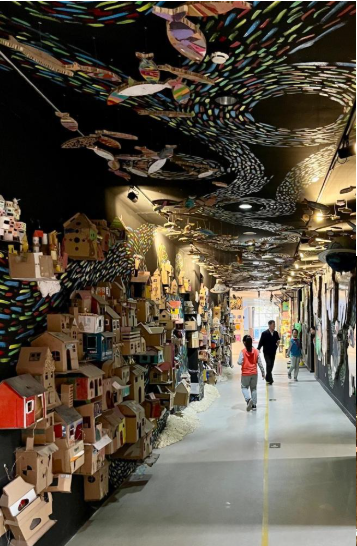
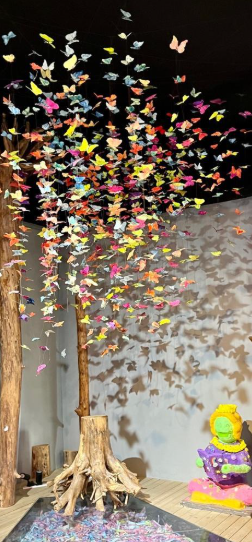
In the primary schools I visited, the attention to student-centered learning, critical thinking and creativity was evident in “signature projects.” In these projects, students worked for several weeks to solve a problem or design a product related to a particular theme or issue. Sometimes all grades and classes would focus on a broad theme like sustainability, but in most schools each grade took up a different theme like water or the seasons designed explicitly to fit the students’ interests and development levels. At the E-Town Experimental Primary School, a public school in the Beijing National Day School network, the products from these projects include cardboard houses and origami creatures that the students designed and constructed. These and other products spill out of their classrooms, taking over the hallways and serving as visible representations of the school’s philosophy and interdisciplinary approach.
At the middle school level, the student-centered projects often focused on a specific problem or issue in the local community. Students in an interdisciplinary global studies course at the HD middle school in Ningbo, for example, developed products to enhance the history and culture of their city, just south of Shanghai, the oldest and now second-largest port in China. The project, like many of the high school projects I observed, followed a design-based thinking process that included researching the history of the port and developing an understanding of the kinds of products and services that might help support tourism in Ningbo. Building on what they learned, one group of students designed souvenirs incorporating a new symbol they created to represent the city. In the process, the students not only learned about the design and manufacturing process, they also learned how to deal with a crisis caused by an unscrupulous factory owner who failed to deliver the souvenirs they had paid him to produce. Another group scripted, filmed, and edited a video to celebrate the port city, but only after having to convince city officials and security guards to fly their drone over the harbor.
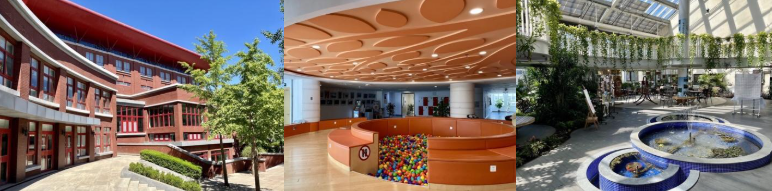
The high schools I visited certainly emphasized preparation for college entrance exams, but students can also engage in many different self-directed, interest-based, and project-based activities. The Beijing National Day School is well-known both for the success of its graduates and for its innovative educational approach and personalized curriculum system. Encompassing both a public school that prepares students for the Gaokao and a private international school preparing students for colleges outside China, BNDS offers 327 Subject Courses, 29 Exploratory Activities, 164 Career Exploration options, and 172 Student Societies. As one teacher at the school described it, “If there are 1,000 students, then there are 1,000 different course timetables.” Although alternative schools in many contexts, often develop outside of or on the margins of conventional systems, BNDS developed their model as part of a pilot program supported by the Ministry of Education, and it has been recognized publicly for its success through awards like a 2014 designation as the only “Flagship Public School in Beijing for Comprehensive Educational Innovation.” BNDS has now expanded its approach in a network of more than thirty schools in Beijing and other areas
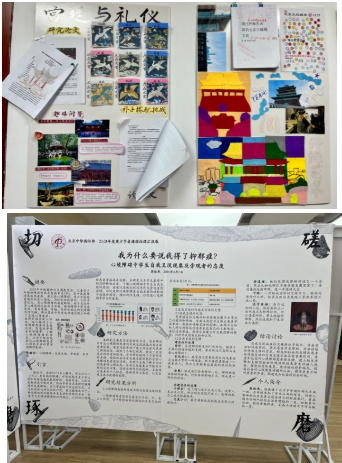
Other high schools I visited, such as Beijing City Academy, created a variety of inter-disciplinary courses, including research and design courses where students can develop and carry out investigations of issues of special interest to them as a regular part of their schedule. At the HD Schools network’s Ningbo High School, 9th and 10th graders can enroll in a two-year long course sequence to learn design thinking and to prepare to carry out their own research and action projects as 11th and 12th graders. Illustrating the kinds of projects I observed at many of the schools I visited, at the Shanghai Shangde Experimental School, I witnessed presentations of projects that included the design of an “anti-tipping” device to prevent classmates from tipping too far back in their chairs; a “proof” that used that used Godel’s incompleteness theorems to show that AI cannot replace human judgement in legal decisions; and the production of a competition-winning remote-controlled race car.
As a result of these developments, even with most classes devoted to conventional academics, students at these schools now encounter repeated opportunities to engage in projects throughout their K-12 experience. At the Tsinglan school, those opportunities include, at the kindergarten level, an investigation of their community that results in the development of a brochure introducing new teachers to local resources and sites; science fair projects in primary school; a 5th grade service project linked to the UN’s Sustainable Goals; end-of-the-year capstone projects in 6th and 7th grade and a culminating “passion project” in 8th grade. Although the emphasis on preparation for college ramps up at Tsinglan’s high school, students can also participate in a “project-period” (after AP exams and other tests have been completed in May) in which they develop a research project in a subject of interest and complete it with some guidance from a mentor.
Creating supports and incentives for student-centered learning
The schools have also found ways to demonstrate the value of innovative educational activities by connecting student-centered activities to field trips and cultural explorations and competitions, cultural celebrations and longstanding Chinese values and traditions. These strategic moves help to create more supportive conditions for developing a “hybrid” system combining key elements of Chinese and Western educational approaches.
Field trips
Beijing City Academy has embedded research and design projects in an extensive set of field trips where the trips themselves provide students with the rewards for their hard work. These efforts began with a one-day trip to a local site and then a two-day camping trip for the 4th grade students. Building on the initial success and popularity of those projects, the trips have now grown to include a week-long cultural exploration of Beijing for students at many different levels, and, for older students, a three week-long cultural exploration of a site somewhere in China. Those extended trips generally involve a week for the students to prepare; roughly a week for the visit; and a week of activities in which the students follow-up and reflect on the experience. These trips usually culminate in performances and presentations where the students shared what they learned (and demonstrate the value of the trips) to their peers, parents and teachers. Notably, the high school students can also elect to work with their teachers in designing and organizing the trips, including booking hotels, arranging transportation, and taking care of other trip logistics.
Cultural festivals, community-wide celebrations, and competitions
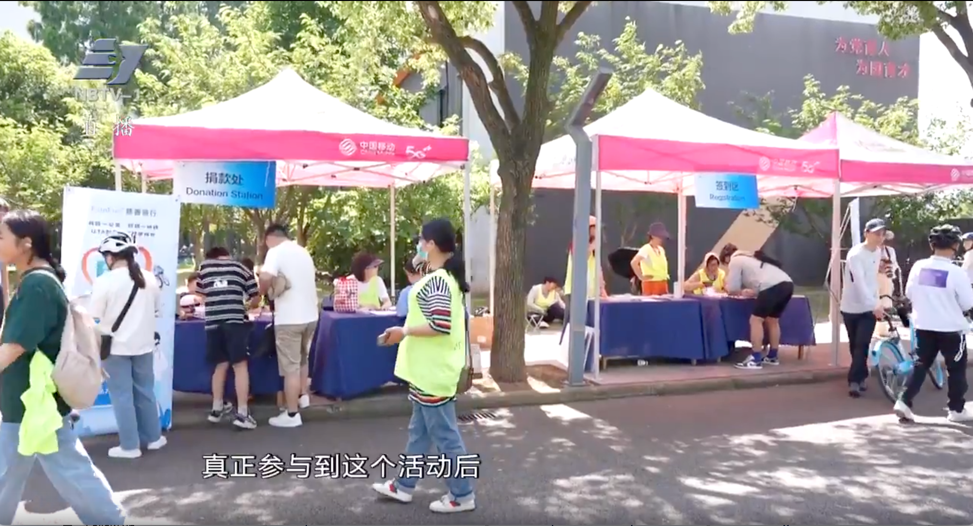
The schools I visited also take advantage of holidays, cultural celebrations, and community-wide events to provide a meaningful context for students to pursue projects, make presentations, and create performances. At BNDS, for example, one teacher in a Chinese literature class engaged her 7th & 8th grade students in a project to learn about “coming-of-age” ceremonies in different communities. In the project, students researched youth development and related ceremonies; wrote reports on what they learned; and produced “flash talks” in which they summarized their reports in 1-minute speeches. The class voted to determine the best speeches, and then the winning students performed their speeches at a ceremony in front of the whole school. At the HD School in Ningbo, middle school students organized a “Cyclathon” to raise money for a local children’s hospital. That event, like other public events at the school, provided opportunities for students to set up booths to sell products they had made and to share performances they had been working on at the same time that they gave members of the wider school community the opportunity to see the value of these student-centered activities
Similarly, at BNDS, every year on the Friday after the college entrance exam, students participate in the “Red Window Fair,” a community wide festival in which students present and share their learning results and sell products to interested teachers and schoolmates. According to the school, the products “can be derived from students’ personal interests, community activities or courses,” and “the purpose of the Red Window Fair is to drive learning motivation from the end of the course chain, improve the implementation of courses, and stimulate students’ internal motivation.” Reflecting the interest in competitions, students vie to be one of the “top ten sellers or even the sales champion” (who will be recognized at the Fair’s opening ceremony the following year), and the students can also participate in the “fierce competition of the auction.”
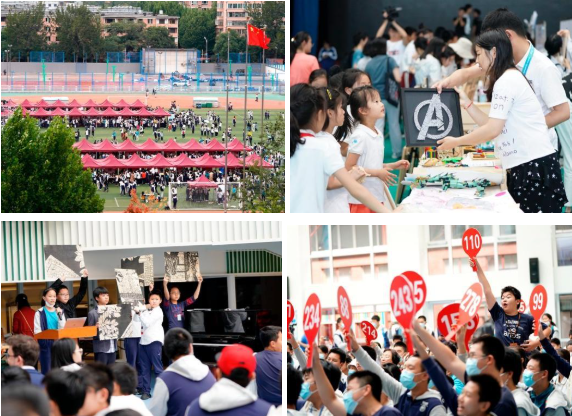
“The purpose of the Red Window Fair is to drive learning motivation from the end of the course chain, improve the implementation of courses, and stimulate students’ internal motivation.”
Many of the schools I visited also encouraged students to participate in a broad range of electives and extra-curricular programs and activities by embedding projects in contests and connecting more student-centered activities to national and international competitions in areas like robotics, debating, and sustainability. Although contests and competitions do create more pressures for students, they are also consistent with the long history of imperial exams and rankings, and they result in highly valued awards and rewards recognized in the college admissions process and by parents and the public more generally.
Challenges for expanding student-centered learning in China
Pushing the boundaries of conventional instruction in any system is not easy. Illustrating the challenges, one of the most innovative schools I visited in 2024, the Etu School, a private school in Beijing has faced financial and regulatory challenges that by the end of 2025 threatened to close the school. Furthermore, even if a few schools can create more innovative learning experiences, there is no guarantee that those innovations will spread across the system. Isolated successes do not necessarily lead to system-wide change, particularly when the successes depend on considerable resources and unusual conditions.
Given the pressures and prevailing conditions, will most schools in China — just like schools in the US and around the world — find it easier to focus on the “innovative” activities that fit into the conventional system with the least disruptions? Schools might adopt just one project period or field trip or cultural experience or celebration (after exams are over) without creating a better balance between conventional and more student-centered activities. What’s more, concerns about the quality of public performances and products and the desire to win competitions might also encourage teachers and parents to dive in and take over or to try to “game the system” to ensure that their child, class or school produces the “best” project-based results. As with any “hybrid,” even innovative activities may become more conventional over time. In the process, projects and other “innovative” educational activities can find a place in the regular school day without disturbing many other aspects of conventional schooling. Under these conditions, expanding the work of innovative schools and taking advantage of the niches of possibility for supporting student-centered learning will depend on changes in many other institutions and the larger society as well.
Next week: Can changes in education policies create flexibility in schools without increasing academic pressure? Stability & change in the education system in China (Part 2)

 International Education News