accountability Australia Austria Back to school Canada Chile China Coronavirus Covid-19 curriculum education Educational change educational innovation Educational Leadership Educational Policy educational technology Education policy education reform England equity Finland Germany India innovation Interview Japan Lead the Change Learning news news scan Norway OECD PISA Politics school closure School Improvement Singapore South Korea teacher education Teachers Teaching technology testing United States vietnam
Author Archives: internationalednews
South Korea
The Korea Herald (September 17, 2012)
The number of students from multicultural families in South Korea rose more than 20 percent in 2012, growing to 0.7 percent of the country’s total student population. According to the data compiled by the Education Ministry, the number of multicultural students who attend primary or secondary schools in South Korea reached 46,954 in 2012. This is nearly five times larger than the 9,389 multicultural students who attended school in 2006, when the ministry began compiling the data. If the current trend continues, multicultural students will take up more than 1 percent of the country’s total primary and secondary school students by 2014.
The South Korean government has responded by devising diverse measures to help the students better adapt to school, including operating “preliminary schools” across the country to teach them the Korean language and culture for about six months before they start regular schooling, and adding “the Korean as a Second Language” subject to the regular curriculum in schools.
For more information:
Malaysia
V. Shuman, Rozanna Latiff, Yiswaree Palansamy, Eunice Au, Punitha Kumar, Akil Yunua and Lavanya Ling, New Straits Times (September 12, 2012)
Education Minister Tan Sri Muhyiddin Yassin has announced a blueprint to transform its education system through 11 educational shifts, to be implemented in three “waves,” from 2012 to 2025, to attain educational access, quality, equity, unity and efficiency. Wave 1 (2012-2015) will focus on turning around the system by supporting teachers and focusing on core skills, while Wave 2 (2016-2020) will focus on accelerating system improvements. Wave 3, from 2021-2025, will move the system towards excellence coupled with increased flexibility in operations. To ensure that implementation is on track, annual progress reports will be published. Initiatives include reworking the primary and secondary school curricula to ensure students will learn to apply new knowledge to unfamiliar contexts. Vocational education will also be given a greater focus, and new evaluation frameworks will be put in place to weed out “under-performing teachers.”
For more information:
Japan
Difficulty in Differenciating Good Teachers from the Rest in the New Teacher Evaluation System
Shinano Mainichi Shinbun (September 11, 2012)
*original article in Japanese
Nagano prefecture in Japan began adopting a merit pay system based on the result of the teacher evaluation in 2011. The recent report on the result of the 2011 evaluation indicate that the system doesn’t work effectively. The result shows that 16,767 out of 17,000 received C in the A to E scale. A former principal in Nagano commented that he had no choice but to give a C to all teachers because assigning low evaluation scores required an evidence-based account, which was not practically feasible. The Nagano Department of Education commented that the current teacher evaluation system has to be something that produces mostly average C scores. This is due to the reconciliation with the teacher union, which argued against the Nagano Department of Education about highlighting the differences among teachers in terms of their teaching effectiveness.
For more information (in Japanese):
Posted in About K-12 International Education News, Newspaper Articles
Tagged Japan, merit pay, teacher evaluation
Romania
Romania Introduces Vocational School-Leaving Exam
Marian Chiriac, Balkan Insight (September 10, 2012)
Romania’s Senate approved a plan to introduce vocational school-leaving exams that will allow students to qualify for vocational training instead of university studies. The Education Ministry proposed the plan in order to address a growing concern over poor results in graduation exams, which have declined steadily since officials raised standards and clamped down on cheating after 1990.
Just under half of all twelfth grade pupils passed their university entry qualification exams this year. In 2011 around 44 per cent of high school pupils failed the exam. Experts cite delays in education reform, inconsistent leadership, and under-funding, as factors that have led to the overall decline of education in Romania.
For more on this topic:
Only 24% percent of candidates pass the baccalaureate in Romania this fall
South Korea
New English test seems like a big waste of public funds
The Hankyoreh (September 12, 2012)
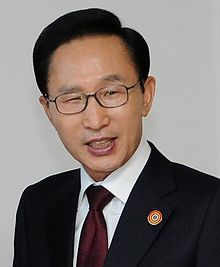
Since Lee Myung-bak took office in 2008, the government of South Korea has invested close to 30 billion won ($26 million) in The National English Assessment Test (NEAT), an English language test that is expected to replace American tests like the TOEIC or TOEFL in the university entrance system beginning in 2013; however, serious questions have been raised by Rep. Yu Gui-hong of the Democratic United Party from the Ministry of Education and Science as to whether NEAT has been effective and reliable.

Students sit a trial version of the National English Aptitude Test at a school in southern Seoul. (Kim Myung-sub/The Korea Herald)
To read more on this topic, go to:
National English Assessment Test (NEAT)
Universities to add Natoinal English Ability Test to admissions
Vietnam
VND15 trillion approved for national education and training
Nhan Dan Online (September 11, 2012)
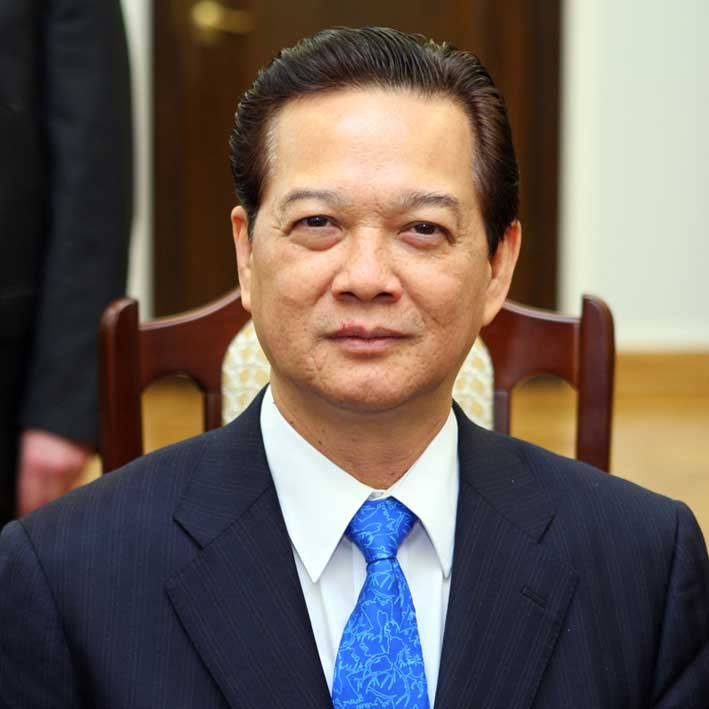
Prime Minister Nguyen Tan Dung has announced that the government will dedicate $730 million to The National Target Program on Education and Training, which will be in effect until 2015. This program aims to standardize universal kindergarten, maintain and improve the standardization of primary and secondary education, and improve literacy rates (currently 90.3% across the population). This program also specifically targets development in disadvantaged regions, rural areas, and communities with ethnic minorities. The construction of a number of facilities, libraries, teacher workrooms, and boarding schools, is expected.
Related resources and background information:
VND 15,200 billion for education and training
PM Calls for More Investment in Education
Schools to Apply New Educational Model
City to Subsidize Education for Poor
Canadian International Development Agency video on “achieving education for all in Vietnam”:
Posted in About K-12 International Education News
Tagged education, kindergarten, reform, vietnam
Scan of Education News: September 1st-18th
The month of September has proven to be an eventful one for global news related to educational policy and change.
This back-to-school time of year has seen teacher strikes in places such as Chicago, England, Australia, Kenya, and Slovakia. These teachers are commonly concerned about new approaches to teacher evaluations and compensation, slashed education budgets, and working conditions. In contrast to many countries that seem to position educators and politicians on opposing sides, Norway announced that it will propose changes to their teacher evaluation system by working with teachers, and incorporating student input as well.
High school students have been staging their own dramatic protests worldwide as well. In Chile, the students occupied schools and government buildings to protest tax reforms that they said failed to devote adequate resources to education. In China, female students protested university gender quotas that eased entrance requirements for male students and kept women out. A similar issue arose in Iran, as 36 universities banned women from 77 fields of study in a move that prompted the UN to call for an investigation.
Innovation and reform in school curricula have also made the news this month. China will focus on vocational training to meet economic demands; France will introduce ethics and citizenship courses; Estonia’s first-graders will learn computer code; and Bosnia will introduce a plan to unite children of different ethnic backgrounds. Over the summer, Hong Kong introduced a controversial “patriotic” curriculum, but the plan was later quashed due to parent and teacher protests.
Singapore has also announced a major new initiative that will revolutionize measures of school effectiveness in the country. Moving away from a quantified approach to evaluating schools (based on test scores and a ranking system), the country will adopt a “student-centric, values-driven” approach to education in which best practices are developed and shared among educators in a new online system. Schools also hope to build relationships with parents and communities. Singapore’s new direction seems to be in stark contrast to the OECD Report, which created a global stir when released last week, as countries were ranked by everything from student performance to teacher pay.
Norway
Opening for student evaluation of teacher effectiveness (original article in Norwegian)
Espen Løkeland-Stai, Dagsagisven (September 15, 2012)
On Wednesday, September 19th, Norwegian Labour Party leader and head of the Education Committee in Parliament, Marianne Aasen, will propose a new teacher evaluation process that is systemic and standardized at the national level. Aasen will propose that evaluations of students decrease, while evaluations of teachers increase. In the end, she hopes the overall number of tests will be cut down.
Aasen believes these evaluations will need to be targeted and necessary, indicating that the current system suffers from varying quality of both the collection of data and the information that is actually used. They will also include student surveys of teacher performance.
Aasen, noting the current conflict at the heart of the teacher strikes in Chicago, does not want to introduce incentives such as teacher pay that is linked to student performance. She believes evaluations must be developed in consultation with teachers. Mimi Bjerkestrand, leader of Utdanningsforbundet (the Teachers Union), agrees. She sees the teaching situation as more complex and complicated than teacher performance, but believes that a thorough review is necessary. Bjerkestrand hopes the emphasis is on new information that will improve institutions, and not the rank and competition between schools.
For more information:
In 2004, Norway introduced the National Quality System (NKVS) for all schools.
Singapore
MOE Removes Secondary School Banding and Revamps School Awards
Ministry of Education Press Release (September 12, 2012)
The Ministry of Education has announced plans to modify its measures of school effectiveness and will shift its emphasis to promote best practices over academic banding (or tracking). Reforms include abolishment of school rankings that are based on academic results, an emphasis on good practices over score-based awards, and building partnerships with parents and the community. The MOE will promote sharing across schools by establishing an online Good School Practices (GSP) repository to encourage the sharing of ideas between schools and teachers.
Additional news reports can be found here:
An infographic from the Singapore Ministry of Education: