Author Archives: T Hatch

A process not an event: A Conversation with Alma Harris & Carol Campbell about the National Discussion on Scottish Education One Year Later (Part 2)

In the second part of this conversation, Alma Harris and Carol Campbell talk with IEN Editor Thomas Hatch about what has (and has not) happened since the release of their report “All Learners in Scotland Matter- National Discussion on Education,” from the National Discussion on Scottish Education almost one year ago. They also share lessons for those who might want to pursue a similar large-scale public engagement and explore how this kind of dialogue could offer a new process to support educational change in the future. In part 1, Harris and Campbell discuss their initial steps and the procedure they pursued as facilitators of the dialogue. The interview was edited by Sarah Etzel & Thomas Hatch.

TH: Can you give us a quick sense of some of those things that you felt you had to put in the report to make sure that children’s concerns were honored?

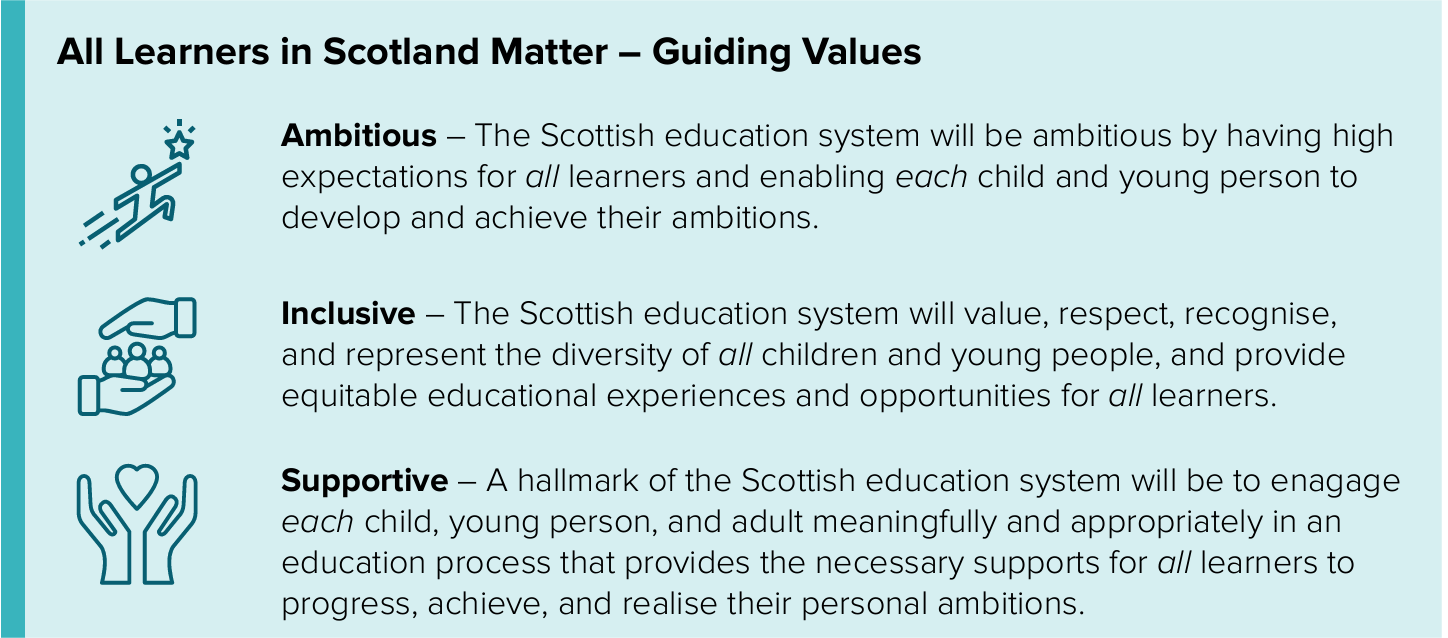
CC: We had a large volume of responses, but we wanted to make sure that we honored the children’s voices by ensuring that their views, including the challenges they were experiencing as well as their hopes for the future, were included in the report. Plus, Alma and I were personally involved in lots of events and communications where we either heard children and young people’s voices directly or through adults speaking on their behalf, so there were stories that we carried with us, and they had an impact that we wanted to make sure were included. For example, a major issue is additional support needs. Scotland has a way of identifying additional support needs which is quite encompassing; it includes but extends beyond a medical diagnosis or a specific identification of a special educational need. At the time of the report, over 1/3 of school-aged children in Scotland had an additional support need. That’s increased since then. I was in a school where over 50% of the pupils had an additional support need. This has been brought up in previous reviews but the issue is getting more and more complex. Obviously the COVID-19 recovery has exacerbated some things and resources are not there to fully support all learners. For me, that was one issue we had to be clear about. When it’s almost half of your demographic, it’s no longer an additional support need; it’s the need of pupils in Scotland. We had quite a lot to say about that.

AH: We gave feedback to the Scottish Government that their core guiding principle of ‘excellence and equity’ was just not being fulfilled on the ground. There are a whole range of complex reasons for that, of course, and responsibility does not just reside within education as inequity is multi-faceted. When talking to parents and those who look after children and young people, one thing was crystal clear, that the ravages of poverty on educational progress and attainment were tangible and were getting worse. The issue of social justice runs right through the National Discussion report. The effect of poverty on the lives and life chances of existing and future generations in Scotland, like so many other countries, is the real issue to be tackled.

In many ways, the whole National Discussion was about inequities in the system, not by design but by default. Most of the anger and frustration we heard, from many groups including teachers and other educational professionals, could be attributed to some sort of injustice or inequity emanating, most usually, from a lack of resource. It was clear that everyone we spoke to wanted to do their level best for children and young people in Scotland. There was a great deal of praise for the Scottish Education system but also a real sense that more could be done. In many ways the National Discussion held a mirror up to the daily reality facing children and young people and the adults that care for and support them. There were many positive things we heard from learners, things they liked, great things about teachers and an excitement about learning. In the report, we talk about the joy of learning and the way in which teachers enthuse and encourage all learners at all levels within the system. In many ways, Scotland is a good education system aiming to be better but to make this jump, as we heard time and time again, some change needs to happen.

CC: Also, the title of the report is, “All Learners in Scotland Matter,” and we were asked to develop a vision. The vision is about all learners in Scotland, which sounds glib, but given what we had heard, to actually realize in practice that all learners in Scotland matter was crucial. So, Scotland’s main education priority is closing the poverty related attainment gap, which is very important. As Alma has indicated, poverty is a serious issue and children’s poverty is a very serious issue, but not all the needs we heard were about this. Some were more about physical disability, some were about mental health, some were about racial or sexual discrimination. Now these intersect, but we were saying you need to look at the full range of inequities and differential treatment.

AH: The thing that struck me most was the fact that there were so many different groups associated with a wide range of issues in education that it was almost impossible to decide who was standing for which specific issue. It was a very crowded landscape. We had the privilege, however, to go beneath the surface, and I think we have a more informed picture of Scottish education because we listened to so many diverse positions and viewpoints.

TH: This does raise the next question, which is, it’s one thing to say truth to power, but then what happens next? Are there ways in which the government has listened and is responding?

CC: The report with the vision, values, and call to action, which gets a bit more into the details of the different things that are being suggested, was released at the end of May last year. There was a parliamentary debate about the report led by the Cabinet Secretary for Education and Skills. All political parties in the Scottish Government have accepted and endorsed the National Discussion and have officially supported it. This is unusual because education is a very political priority in Scotland, so to have all party support was unusual and to have a full parliamentary debate was one way of bringing the report into the public eye. The vision from the report from the National Discussion has been accepted by the Scottish Government and now informs the “National Improvement Framework.”, which is the annual framework for educational improvement in Scotland. The calls to action are intended to inform government decisions and actions moving forward as they align strongly with priorities for attention and implementation.

One positive aspect that I find noteworthy is that the groups we’ve engaged with have embraced certain topics from the National Discussion to advance their own advocacy agendas. Professional organizations, for instance, are highlighting issues such as valuing and developing the profession, while parents are also echoing concerns we’ve addressed, such as support for early learners. This reflects the alignment with the broader national discourse, wherein groups are leveraging specific statements or discussions to push for action. Local authorities, akin to school districts, have integrated elements from the National Discussion into their strategic plans and work.

While progress has been made, it’s fair to say that we would like to see further explicit action and rapid implementation linked to the National Discussion calls to action. The challenge lies in seamlessly integrating these discussions into existing frameworks and plans. This can be particularly frustrating for parents, as they inquire about the fate of their input. We will be asked directly what happened to something a parent or other person told us directly during the National Discussion. While the calls to action are being integrated into governmental work stream, this is not a satisfactory response for people who want explicit and visible responses to their input.

AH:  A couple of reflections on the follow-up. I think responding to a large and complex report based on a huge public engagement exercise is inevitably challenging. Looking at the report, you might think “where to start and what to privilege when everything is so important?“ In reality, also everything costs money. Hence it is perfectly possible that there are just too many things that need attending to in the ‘Call to Action’ section of the National Discussion Report. We accept this but we represented what we heard, faithfully and accurately.

Possibly there is a sense of disappointment that the National Discussion did not point to any one definitive thing that needed to be introduced or changed. If this had been the outcome it would have certainly been neat but also fundamentally unrepresentative of what we heard. On reflection, this public engagement approach to education reform is worthy of consideration by other education systems, primarily because  it offers an alternative to the top-down processes that tend to dominate policy formation and so often fail to deliver.

As a recent Times Educational Supplement article about the National Discussion noted: “This is a model that could be built on and replicated in future reform. It is crucial that the potential here is not lost-the future of Scottish Education depends on it.”

CC: To build on that, over 38,000 people are engaged now. Yes, the scale of data was overwhelming. The range of possibilities is overwhelming. But as Alma said, our advice would be to choose one thing, choose three things. There are clearly some things that need attention. Another generation is going through our education system and there’s an argument about the system being overstretched and not wanting to make wrong decisions on reform, but we can’t leave the status quo either, we heard about urgent and needed changes. For example, workload, violence, equity, all of these things are issues which requires some change.

What came through to me was that people wanted to be heard, and they wanted to make a difference. It wasn’t a case of “please don’t change everything, we’re tired, please go away.” They actually were willing when they were asked. But that quickly turns into frustration and cynicism if you’ve taken your time and effort to engage and you don’t feel appropriate follow through has happened. While we did try to do this differently, it is one of many reviews of Scottish education. Now, the other ones are more specific about curriculum or assessment. But for some people and groups, they’ve now given their advice many times. That’s kind of a tipping point. The government needs to listen and use the evidence to inform decisions.

One of the calls to action is called “Human-centered Educational Improvement”. We’re thinking about this as a new way of making educational changes. A lot of the previous reviews have ended up being very structural in terms of recommendations – abolishing organizations, introducing new qualifications. These all matter, but what we actually heard was people wanted to focus on the people: the children, the young people, the carers, the educators. For them, that was the guiding purpose. The other stuff was important, but they didn’t want another set of structural reforms. They wanted to get the focus back to people and relationships in education.

TH: Let’s delve into that further. If you had the opportunity to do this again or were advising others looking to engage in a similar process, how would you approach it differently? What additional steps would you take to steer it in the direction of being a novel process and form of support for educational change?

CC: There’s interest in Scotland in making sure this is not a one-off event, but we’ve also had international interest. There’s a team in Germany who would like to do something similar, so we’ve been talking about it. I do think the team that’s involved is crucial because it’s a huge amount of work, involving logistics, strategy, research, analysis, and communication. The individuals leading it, whether independent facilitators, senior government figures or some form of ambassadorial role, set the tone, and that matters. It’s important to encourage people from various backgrounds and experiences to lead their own discussions, aligning with our vision that these conversations would take place across different settings, with participants then submitting their insights. Having a clear and compelling question or purpose is essential; otherwise, people may struggle to understand the initiative’s intent. It’s crucial not to overwhelm with too many questions.

In hindsight, I think perhaps we asked too many questions. Don’t try to be too clever about the questions. What do you want? Why? Because people were struggling with any question that seemed complex or abstract. We were asking them to look 20 years into the future, but people were talking about what happened yesterday or what was happening on Monday. I think some of that future thinking is just difficult for people when they’re dealing with their day-to-day.

People were much more comfortable expressing challenges and concerns but articulated less suggestions for practical alternatives. So, perhaps after these large public engagements, you need a slightly different approach to reaching the next steps. As we were working on our final report, we revisited the key groups and tested out the vision and values. This involved another round of iteration to ensure that the wording and content resonated and connected with participants. Mostly, we received positive feedback, but there were some suggestions for improvement. I also think if you say you’re going to listen, you need to genuinely listen.

As independent facilitators, there’s also an expectation that we remain independent, facilitate the discussion, and present the report. But for some countries or systems, I think we should have considered advocacy and action more thoroughly – moving from presenting the report to instigating change. It’s essential to encourage people not to rely solely on the government for all changes. Some require government action, but others relate to cultural shifts within the education system or how people interact with each other. The calls to action from the National Discussion are for everyone involved in Scottish education.

AH: In terms of additional steps, three things come to mind. The first is starting with the end in mind. I think being clearer about exactly what the end point should look like, in terms of action, would have been helpful. In other words, a deep commitment to some change that would follow the National Discussion. The second thing is about policy churn. Inevitably, things change quickly in politics and often policy attention moves on simply because that is just the way that policy works, not because it is a reflection on the nature or importance of the work undertaken.

The third thing I’d say is that the National Discussion remains a good example of flipping the system, shifting power relationships so that ideas flow from a broader base to inform policy making and shape the discourse of education reform. The National Discussion succeeded in providing a broad range of views, in that sense it was an achievement as a genuine broad-based listening exercise. It is important to see the National Discussion therefore not as an event but as on ongoing process of dialogue within the system.

TH: To me, it sounds almost like you’ve described a new and powerful process for engaging many people in sharing their concerns and hopes. But it seems like the mechanisms and routines for continuing that conversation and engaging in advocacy and decision-making at a local and national level have not been fully established yet. Can you imagine some mechanisms or routines that you would like to see put in place to help sustain the conversation and support responses that would address the priorities that surfaced?

CC: There’s a current fear, if we’re honest, in doing anything that might be unpopular or destabilizing. But the National Discussion includes the voices of a lot of people. If I were the political leader or an educational leader, there’s material there to support bringing about changes. It’s not just an idea from the government or from the civil service or from one particular interest group; there’s evidence and voices from thousands of people. The National Discussion needed resources, as we’ve discussed, but an ongoing conversation in Scotland doesn’t. Social media continues, parents’ groups continue to meet, teachers continue to meet, educational organizations continue to advocate.

To pursue transformation, some of the challenges lie in the existing established practices for example linked to the improvement framework and data requirements. However, we would encourage school and system leaders to have the courage to recognize that the status quo needs changes. While they can’t change everything, they can make a difference in their own spheres, whether it’s their classroom, organization, or local authority. I will say that there are some local authorities and schools that have embraced this mindset. It’s about instilling a cultural shift. It doesn’t mean changing everything, but it should mean changing something.

AH: My hope is that the National Discussion shows that an alternative, inclusive approach to educational change and reform is perfectly possible. Very few countries have undertaken such a discussion on education on such a large scale, so in many ways Scotland is ahead of the game. My hope is that this model of change will be embraced by other countries and that in Scotland the National Discussion continues, as a process, in some way.

TH: Is there anything else you want to add that you haven’t mentioned or anything that you learned from the process that you wanted to share at this point?

AH: I have been working in the field of educational change for over three decades and my observation is that I don’t think much has changed in terms of our approaches to reform at scale. I think we know that top-down approaches don’t always work yet there is still an over-reliance on approaches to educational change that are tightly controlled and not creative. Without question, the National Discussion was a creative approach to educational change that generated a great deal of buy-in. I think it offers an alternative approach to reform at scale but only if concrete, meaningful and informed change follows from it. If change does not happen, it is quite simply, a lost opportunity.

CC: It’s of course extremely important to engage and listen with all the formal representative groups in education, teachers, school leaders, etcetera. But by doing this in a broader sense, and we aimed our best to be inclusive and to listen, we heard different things, and we heard important things. Sometimes we hear about student voices or parent engagement, but we heard things I don’t think would have come through the same way. So, I think there are times when a genuinely public engagement matters. I wouldn’t say for something that’s very technical or specific, but this was about what we want for the future of Scottish education. I think that matters. I think that inevitably, and rightly, much of the conversation right now is about digital and artificial intelligence, but we kept hearing about people and relationships, so let’s not lose the priority importance of human-centered educational improvements as we have these other conversations.

Listening Beyond the System: A Conversation with Alma Harris & Carol Campbell about the National Discussion on Scottish Education One Year Later (Part 1)

Almost one year ago, Professors Alma Harris and Carol Campbell released the report “All Learners in Scotland Matter- National Discussion on Education,” a summary of the recommendations that came out of the National Discussion on Scottish Education that they facilitated from September to December 2022. This week, Harris and Campbell discuss with Thomas Hatch the initial steps they took and the overall process they pursued to engage as many people as possible, particularly youth and marginalized populations who are often left out of these conversations. Next week, Part 2 of the conversation considers lessons for others who might want to pursue a similar public engagement and explores how this kind of dialogue could offer a new process to support educational change.
The interview was edited by Sarah Etzel & Thomas Hatch

Thomas Hatch (TH): Can you set the stage for us and give us a sense of what the problem was that led the Scottish Government to ask you to develop this National Discussion on Education?

Carol Campbell (CC): Specifically, in Scotland over 20 years ago, there was a national debate about the purpose of education and what people wanted for the Scottish education system. This led to the development of the Curriculum for Excellence, which became the main curriculum for primary through early high school. However, in 2021, the Scottish government commissioned Professor Ken Muir to review the education system. Among his many recommendations, his first recommendation was to initiate a new large-scale public engagement conversation in Scotland about the future of the education system. His second recommendation emphasized the importance of inclusivity in this discussion, particularly involving children, young people, educators, and parents, and not to give “narrative privilege” to established voices.

TH: What was the source of those recommendations? Why did those things come to the top of the list?

CC: For one thing, with any curriculum that’s been in existence for about 20 years, there’s a question of whether it remains fit for purpose? But, more broadly, I think Professor Muir was thinking about the challenges not only in Scotland, but what was happening globally. For example, the sustainable development goals about access to education for all had been developed but require further attention to be achieved. Scotland has a well-developed education system, but there are still some children and young people who are not being well served. Scotland decided to incorporate the United Nations for the Convention on the Rights of the Child (UNCRC), and if you take that seriously – to support every child to reach their full potential, to value human rights, to value diversity, to care about peace, to care about the planet – that has major implications for education. These are new challenges for our world, and then there was the impact of COVID-19 as well. It was a really big move to go beyond individual reviews of specific things to say, “Okay overall, where are we going as an education system?”

Alma Harris (AH): Within Scotland, there have been a series of reviews undertaken by various specialists, but this was the first time in recent history when Scottish Government were prompted, by the Muir Report, to listen to those within the system about the future direction of education. At its heart, the National Discussion meant going beyond those who are normally consulted in reviews and listening to those who are not usually heard, especially children and young people. I think the prospect of doing something different, and at scale, was particularly exciting because it was a significant challenge to deliver a public engagement process. Despite its challenges, the National Discussion was a real chance to do something very different in terms of informing and shaping future education reform in Scotland.

TH: That’s a great foundation and framing for our conversation. What was your initial response, and what actions did you take?

AH: My initial response was to suggest to Scottish Government that Carol needed to be involved because I realized I couldn’t facilitate a discussion on this scale alone. It was clear from the outset that undertaking this National Discussion would require a lot of support and expertise. To their credit, the Scottish Government provided us immediately with a substantial expert team. Various civil servants and administrators covered all the logistical aspects, which was crucial to ensure we touched as many parts of the system as possible. One important lesson I learned is that to undertake a National Discussion or any public engagement exercise effectively, you need a supportive infrastructure to make sure that many different voices are heard, and varying perspectives are taken on board.

TH: Could you describe a bit about the nature of that team, especially the aspects that were most helpful to you in the process?

AH One critical aspect was the lead civil servant on the National Discussion team. Lorraine Davidson was our ‘go to’ person throughout the process and was simply outstanding. Lorraine provided much needed continuity and reassurance as well as high level problem solving when we needed it. Having a team of specialists, particularly those who could swiftly access schools and other specialist groups was invaluable. There were so many moving parts in this collaborative work that it truly was a huge team effort. Inevitably there were challenges along the way but having Lorraine and the team available to assist us at any time (day or night) was crucial to the success of the National Discussion. Do you agree, Carol?

CC: Yes, the team director was somebody who was very experienced in navigating government; she also had a background in communications. She’s a former political news reporter and that was important because, obviously for a public engagement, you have to think about different ways of communicating and engaging. Alma and I were hired as independent facilitators. We have backgrounds in education, we have connections to Scotland, but our job was actually to listen and to engage. We had to be quite creative about what that engagement might look like.

As one of the very early steps our team reached out to organizations that represent children and young people, that represent marginalized groups and parents, as well as education groups. Before we even officially started, we said to them, “there’s going to be this national discussion, what do you want to talk about?” With children and young people, we had to think about the tone and language to convey a National Discussion in a way that was interesting and meaningful to them. We had to have some advice and support in developing child friendly age-appropriate materials, and multilingual documents in community languages.

We also spent a lot of time going through different iterations and getting feedback on what’s going to be the framing question of this discussion. It ended up being “what kind of education will be needed by children and young people in Scotland in the future, and how do we make that a reality?”

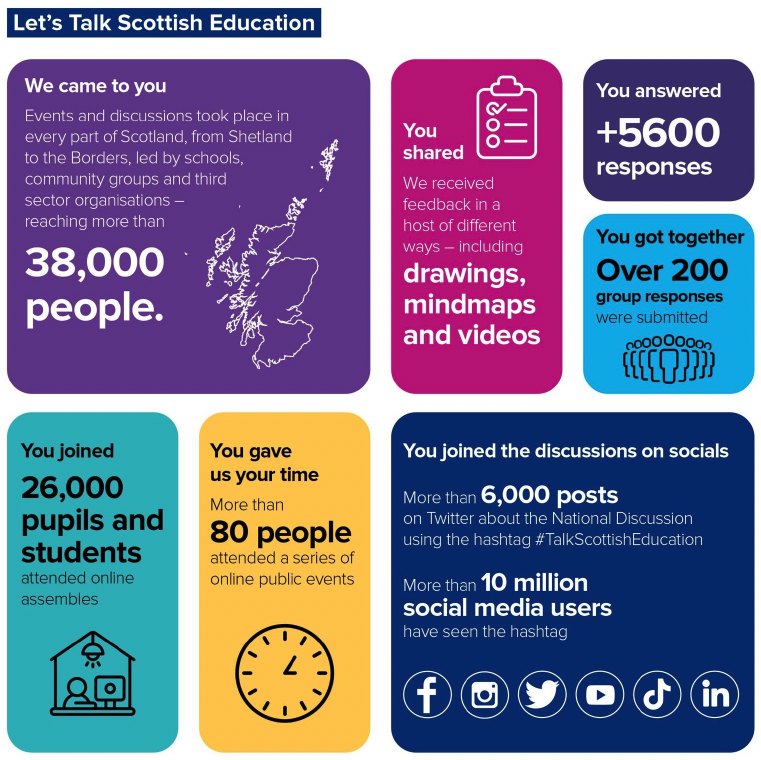
Then it was a very extensive engagement strategy. We had the #TalkScottishEducation and we had a social media specialist on our team. We were super active on social media, but then we had more traditional meetings and focus groups and events as well. I think a key thing was that we didn’t always have to be personally in the room. We encouraged parents’ groups to have their own conversations; teachers to lead conversations in their classrooms; young people to have their own conversations. Then we asked them to submit some feedback along the way in whatever form best suited them.

Example of #TalkScottishEducation used by twitter account for Education Scotland

I think that was important and that’s the only way we got over 38,000 people engaged, some online, some written submissions, some surveys, some open responses in different formats, but that scale of response in a country the size of Scotland couldn’t have been done in a top-down way. It genuinely became a movement where people were hosting their own events, having their own conversations, in addition to the official forums.

TH: This is fascinating to me. What I hear is that there was a lot of work that started even before the “official” conversation began. But I also heard you saying that it was crucial to have this team of experts along with you. Were those all from the Education Ministry or were they in other parts of the civil service?

CC: They were mostly from the Scottish Government Education Department, they were civil servants from Education and people were also pulled in across government and from other key organizations, including the Convention of Scottish Local Authorities (CoSLA), at different times to work on the project. Somebody had a background in social research with an understanding of researching vulnerable people, not specific to education, and they were really helpful in navigating the laws about engaging with children and respecting protected characteristics. It was a case of drawing on people as and when needed, but officially the core team were all drawn from within the Education Department of the government.

TH: The initial work was around shaping the process. You began with engaging people rather than starting with the questions predefined. But how did you put this whole plan and process together? And were there any things that you had in the plan, but you weren’t able to do or things that you tried that didn’t work?

AH: Ahead of planning for the National Discussion came three core principles. The first principle focused on our positionality. Carol and I spent a lot of time reassuring people that we were truly independent facilitators and that we were genuinely interested in listening to all views. The second principle concerned transparency. We clearly communicated, at every opportunity exactly how the National Discussion would be undertaken, so that the same messages were being shared throughout the system and there could be no misunderstanding about our intentions.

The third principle focused on inclusivity. We were clear from the outset, that we intended to listen to the views of as many children and young people as we could, especially but not exclusively. With the support of our brilliant team, we actively sought to include the voices that are not normally heard. We deliberately and relentlessly contacted a wide variety of groups, organizations, and support agencies so we could include such voices.

Our efforts to reach marginalized or vulnerable children and young people so they could be heard was one of the main successes of the National Discussion. We were really keen that we didn’t just restate what various reports and reviews were already saying, so our methodology really pushed the boundaries and extended the reach of our data collection by using multiple and quite novel approaches.  Inevitably, by pushing the boundaries we heard some challenging views, but it was important that we captured those views authentically and with respect.

The very first step Carol and I took, even before the entire process began, was to publicly share a personal piece outlining our stance and our commitment to the process. We wanted those within the system to understand that we were truly independent and personally committed to listening to all voices in the system. 

TH: That’s very powerful. Were there any specific strategies or approaches that were particularly effective in reaching and hearing from people, especially those with challenging perspectives?

CC: If you take the principles that Alma has outlined, we had to honor those in our methods. We decided from quite early on that if we were going to do this, we did not want a typical government consultation – there’s lots of those. It had to look and feel different. Alma and I wrote personally; we did videos where we spoke to people; and we would engage in social media directly with #TalkScottishEducation. Governments are typically wary of social media, because obviously you can receive bots and trolls and criticism, but if you genuinely want to engage a large number of people, that’s how some people engage.

We did have a survey and we also received written submissions. Many of the professional organizations submitted their reports, too. But we also accepted submissions in any format that encouraged the person to contribute. We had videos and pictures, we had a song, and we had a poem. With the help of Education Scotland and what’s called e-Sgoil, which is an online learning platform, there were lessons designed at primary school level and secondary school level, so teachers could have a class discussion and the pupils and students, even young children, could contribute to the National Discussion. Analyzing that range of data was challenging, but it let people participate.

With the most vulnerable groups, we created focus groups with relevant children and young people’s organizations who knew how to work closely with, represent, and appropriately involve marginalized or disadvantaged children and young people. We made sure that either Alma or I was part of the focus group. These were online, but there were people there who really knew the population and knew how to work with them, how to approach them to engage young people in the focus groups too. We were very conscious that, as two professors with our own lived experiences, we don’t know everybody’s experience. That’s why we used mediators as well as encouraging groups to host their own events in ways that worked for them. There were discussion guides produced that people could use should they want to, with materials adapted for different age levels, different languages, and different accessibility requirements. For some people it became clear they would not go to a meeting in a school if somebody from the government was there, while for other people they wanted that. So, if you’re genuine about listening to all voices, you have to think about, “how do we actually listen to all voices?”

TH: That raises the data analysis challenge that you just mentioned. You’ve succeeded in getting this diversity of responses and you’re still two white women who are trying to honor this complexity. So how did you handle that?

AH: The volume of data was quite staggering. Scottish Government commissioned a company to help us manage and interpret the data in its various forms and to offer some initial thematic analysis. Carol and I also engaged with the data sets to ensure we were familiar with the themes and issues that were emerging.  It was important to us that we were not far removed from the data. We felt passionately about representing the views we heard accurately, so we engaged with the data from the National Discussion.

Both of us personally facilitated many discussions both face to face and online which was important as it allowed us to be close to the action. In the final report, we represent what we heard, and some of the issues we raise in the final report are challenging. Our promise to all who participated in the National Discussion was that we would try and encapsulate all views and opinions. We were very clear that this wasn’t about us or about the government; this was about the learners in the Scottish education system and those who educate and support them. In the report, we ensured that the voices of children and young people were front and center and we also made sure the report was about the future of education in Scotland for every learner, not just some.

We hear such a lot about the importance of student voice in educational change and reform but to listen – to really listen – is incredibly hard. The lesson I’ve learned is that you can say you will listen to children and young people but to do it on the ground requires a deep humility and expert brokerage. Without people mediating conversations for us, some children and young people would simply not have spoken to us. I think that the most powerful interviews we engaged in were with those with vulnerable, marginalized, disaffected children and young people who didn’t think the system was for them. Inevitably the volume of data was overwhelming and at times bewildering. I don’t think I’ve ever seen so much data in so many different forms. But I think we stayed true to our principles and our initial purpose by producing an independent final report that did not lose the detail or the nuances of what we heard.

CC: Being independent facilitators, our job was to represent what we heard as best we could. It wasn’t to pass judgment on it or add our interpretation to it. We ended up setting out quite a range of experiences. However, that was also very challenging because, of course, we have our own views and our own opinions. Some of what Alma I heard was heartbreaking, some of it was inspiring. There were some meetings where I came out, and it was just fantastic. There were other ones that were truly difficult and unsettling to listen to. We had to honor that range of experiences. It’s a different task from being a typical academic expert or government reviewer, to really place people’s voices at the heart of this and to take their experiences from what they have said to you. It was, we will say, probably one of the best experiences of our lives. But it was also very, very, very challenging because there’s a huge responsibility that comes with that.

TH: Could you share one or two examples that produced those feelings of elation as well as those that were challenging and heartbreaking?

AH: You do elation, I’ll do challenging.

CC: We were doing this in the context of a pay dispute between the largest teachers’ union in Scotland and the government. In that context, it could have been extremely challenging, but we personally made sure that we met with key people and all the key stakeholder organizations, and we said: “Please, we need you. Please engage in the National Discussion. This isn’t a typical government review, we need you, your insights and expertise, and the voices and experiences of your members.” On a Saturday during a pay dispute, over 100 teachers came together, supported by their union. They spoke about the joy of teaching, and they wanted to return to that joy of teaching and the love of learning. Obviously, that involved all of the real concerns and issues about workload and working conditions, but there was an understanding that was only part of the conversation. Whereas the National Discussion was about: “what do we want for children and young people and for education in Scotland?” That involved shifting to a different conversation about learners and learning. Trying to get to that conversation is a hard one when people are having difficult day-to-day experiences, but people went back to what it was that brought them into education, why they wanted to make a difference, and what their hopes were for the future of Scottish education and especially for learners. For me, those were the conversations that were genuinely joyful, but there were also some challenging ones.

AH: In terms of elation, it was wonderful when we saw on Twitter the videos that children and young people had put together in schools across Scotland, based upon their views of what needs to happen in the future for education. That was very uplifting, and it also signaled that the tone of the National Discussion was truly invitational.

“Launch of the National Discussion on education” by Scottish Government licensed under CC BY 2.0

For me personally, the issue within the National Discussion that I found most challenging was inequity. In summary, there are some children in Scotland right now who are getting a rough deal. There are three examples that immediately spring to mind. First, I spoke with a group of young people who care for a sick or disabled parent or family member. Heartbreaking just doesn’t go near it. Imagine you are a 7-year-old looking after your mum, and then going to school worrying if she will be okay and then getting told off for not concentrating or listening in class or being late (again) for school. As one young carer told me, “Why don’t they understand? I’m caring for my mum and that’s my full-time job. I have to be the adult in the house but at school they treat me like a naughty child.”

Second, there were lots of parents we talked to who were frustrated that their child’s additional learning needs were not being fully met. These parents were concerned that their child was just languishing in the system with no one actively helping them. Sometimes we heard anger, despair, and raw emotion from those adults just trying to navigate the system to get the best for their child.

Third, we heard a lot from children and young people about bullying and the way this made them feel about school. Some children and young people talked about being unsafe at school. These were the stories that kept me awake at night, the conversations with children and young people, who were afraid to go to school or didn’t have money to pay the electricity bill for their mum or get her medication for her.

Many of the young children and young people I spoke to found crucial support in a variety of forms, from specialist groups, from youth workers, from teachers, from after school clubs which they all said helped them cope. But it was still staggering just how many children and young people said (in their own way) that they felt lost or abandoned within the system.

One common frustration that children and young people often felt that no one was listening, so they said to us, “can you make them listen please?” There was one point at the end of the conversation where a young person said to me, “Okay, you’ve listened to us. But will you truly tell them what we think?” That was always the question from children and young people. Will you be honest for us? Will you speak truth to power? We always said that we would, and we always did.

Next week: A process not an event: A Conversation with Alma Harris & Carol Campbell about the National Dialogue on Scottish Education One Year Later (Part 2)

Looking toward the future and the implementation of a new competency-based curriculum in Vietnam: A Conversation about the Evolution of the Vietnamese School System with Phương Lương Minh and Lân Đỗ Đức (Part 2)

To learn more about how Vietnam has achieved almost universal education at a relatively high level of quality in a developing country of over 100 million people, I visited Hanoi last year and talked to a variety of Vietnamese educators, policymakers and researchers. My conversation with Phương Lương Minh and Lân Đỗ Đức at the Vietnam National Institute of Educational Sciences (VNIES) was especially instructive in providing insights into how schooling in Vietnam has improved in rural areas with ethnic minority students. The second part of this conversation looks ahead and discusses what might happen in the future as Vietnam rolls out a new competency-based curriculum and related textbooks. The first part discussed the efforts to improve education in Vietnam over the past thirty years, particularly in ethnic minority areas.  For related posts, see the Lead the Change Interview with Phương Minh Lương and A Conversation with Chi Hieu Nguyen about Vietnam’s responses to the COVID-19 school closures

Lân Đỗ Đức is the Vice Director, The Department of Scientific Management, Training, and International Cooperation at The Vietnam National Institute of Educational Sciences. Phương Lương Minh is a lecturer and coordinator of the Master Program of Global Leadership, Vietnam Japan University (Vietnam National University), and a collaborating researcher at the Vietnam National Institute of Educational Sciences. I am indebted to President Mai Lan and colleagues at VinUniversity for making this trip possible, and to Dr. Le Anh Vinh, Director General of the Vietnam Institute of Educational Sciences (VNIES) and his colleagues for their support.

                                                                                                                        – Thomas Hatch

Looking toward the future of educational improvement in Vietnam

Thomas Hatch (TH): “High-performing” education systems like those in Finland and Singapore have struggled to move to a system that is less exam-driven and that embraces a more active, student-centered pedagogy. Research in Singapore suggests that a kind of hybrid pedagogy has emerged that maintains some traditional practices but has some of the features of active methods as well. What do you expect will happen in classrooms as Vietnam implements the new competency-based curriculum?

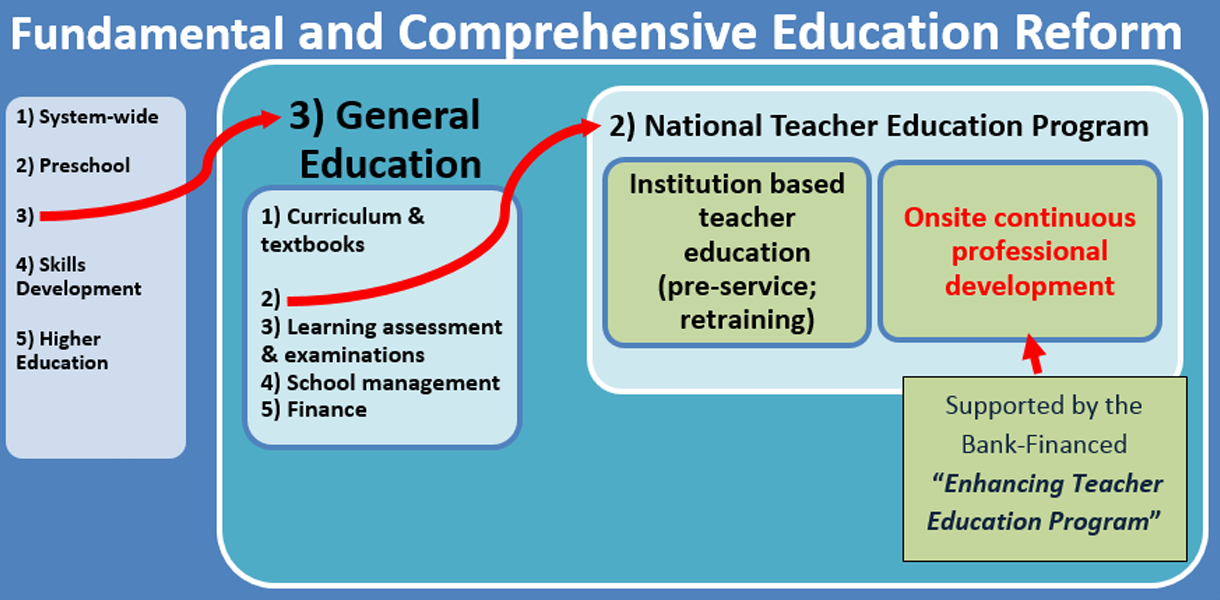
Lân Đỗ Đức (LDD):  Good question! Asian countries have a Confucian tradition where learning is the top priority. We have great respect for teachers. The traditional teaching style is common across countries. Now in Vietnam, as of 2021-22, we have 1.4 million teachers. Although the Ministry of Education and Training (MOET) allocated a lot of resources and carries out professional development programs like the Enhancing Teacher Education Program (ETEP – funded by the World Bank) it’s likely not all are fully able to adopt new methods well. Professional development is a huge, ongoing effort. We hope most Vietnamese teachers are willing to change, but we lack evidence.

Phương Lương Minh (PML): I can share some findings from our report on technology in education conducted for UNESCO. After COVID, there was actually a positive impact on teacher professional development. We have seen that there are now substantial open resources for teachers, even in remote areas there are online learning systems and open resource centers available to them. The teachers now can learn from all the lesson plans already uploaded into the network and shared. We have heard from teachers who think this is really amazing. Even with over 1 million teachers, many can access these platforms. Some of these platforms are controlled by the Ministry of Education, but some are also from private providers. Of course, if creators want official approval, they need to propose learning materials for verification by the Ministry.

TH:  Are people in ethnic minority and rural areas aware of the competency-based curriculum change and the change in textbooks? Will it be easier to make this change in rural areas?

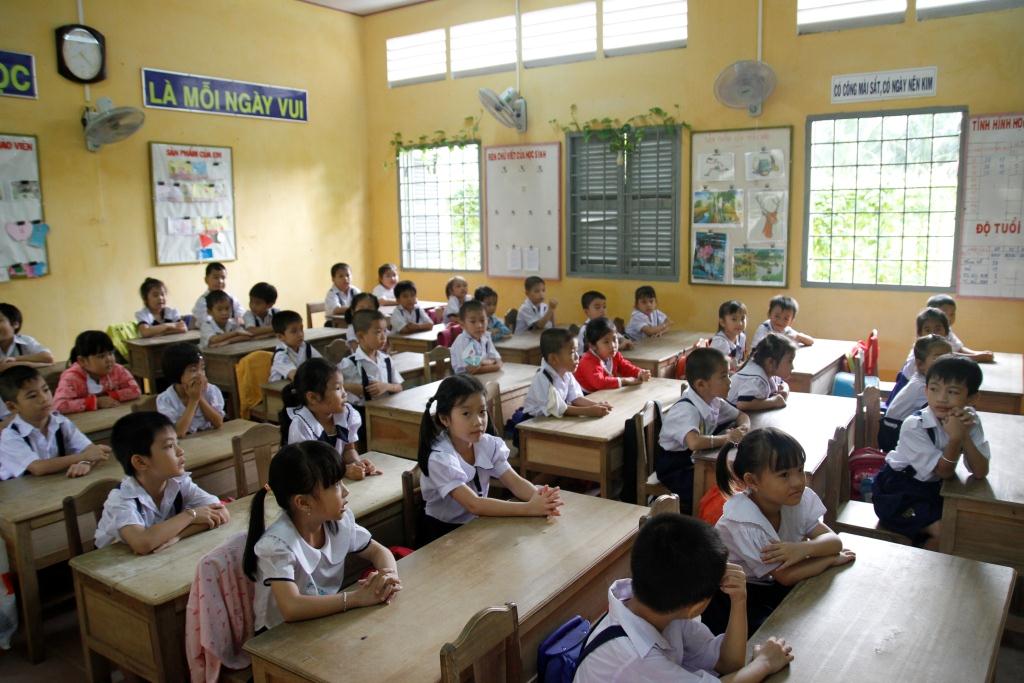
PML: I have not had the chance to see this from my own observations, but I have seen that in remote areas parents often are not close enough to see their children’s education or to know what they are learning or what textbooks they are using. For preschool and primary school, until grade 3, children attend satellite village schools and live at home. But after grade 3, they go to boarding schools located in larger communities, far from their home villages. In some villages that are big enough, they may have schools that go through 4th or 5th grade before children move to boarding schools. The boarding schools are usually far from the villages, in the commune center. The students stay there all week, and they only go home on the weekends so then the parents have no chance to know about the curriculum and the textbooks in the higher grades.

LDD: Depending on the population and number of students in an area, there might be two or three primary schools. When students complete 3rd grade, they transfer to boarding schools that serve as centers for the higher grades. When students transition to secondary school, they may attend boarding schools at that level as well.When boarding schools start depends on the population density in the area. Some places have boarding schools from 4th grade onwards. Others may start at 6th grade or even later.Boarding schools could potentially start as late as 10th grade at the upper secondary level, but not all students continue to 10th grade.

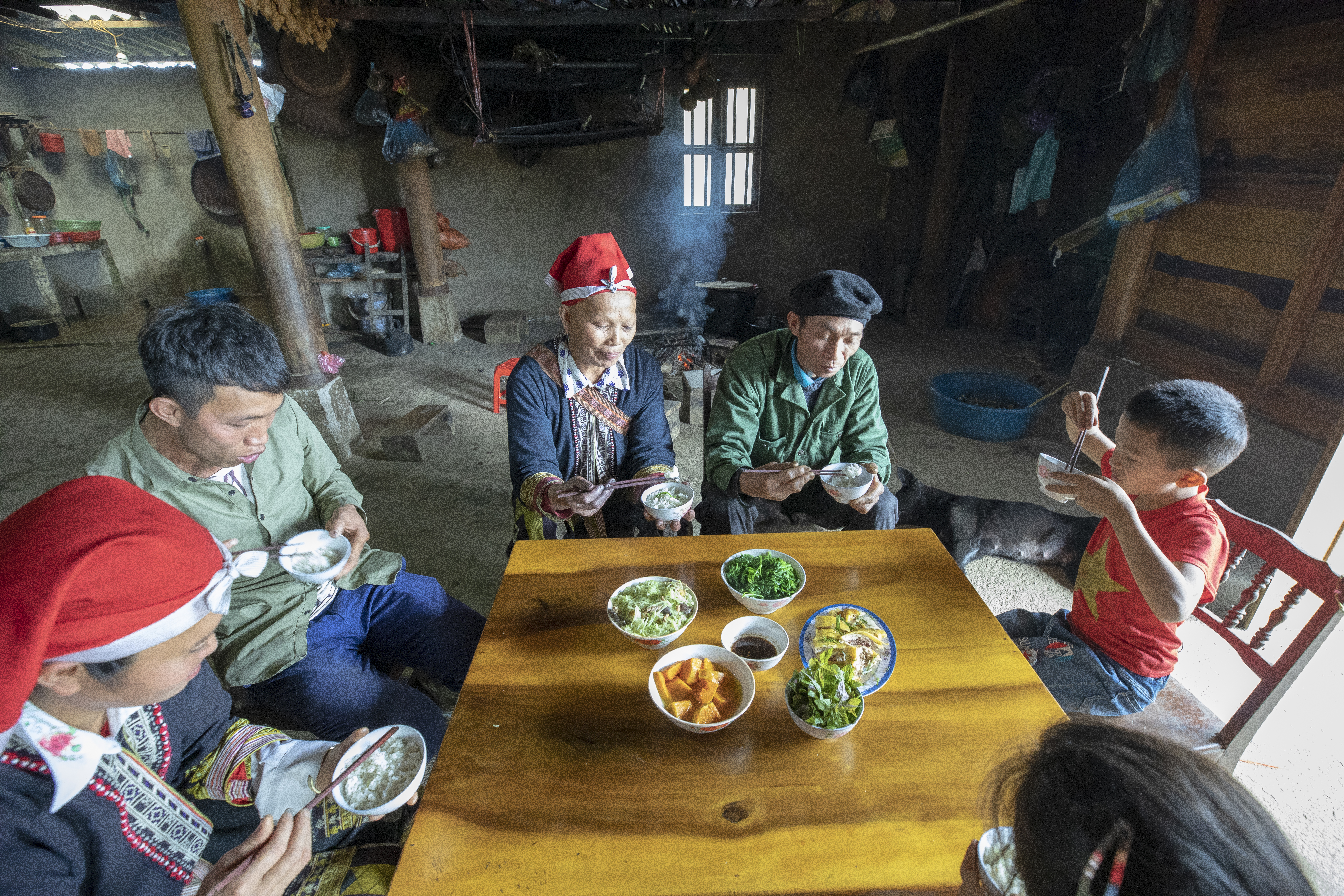
“Ethnic minorities in North Western Vietnam” by CIAT/Trong Chinh is licensed under CC BY-NC-ND 2.0

TH: I wonder what you predict might happen as Vietnam rolls-out the shift to a competency-based curriculum and textbooks. In ethnic minority areas, do you think teachers might resist or parents might worry their children won’t succeed? Or might it actually be easier to make that shift in rural schools?

LDD:  This is something that we hope to study, but I expect there will be varying levels of challenge in different areas. However, I think the willingness of the Vietnamese people to change is high. We really want to change because we that see that many students now don’t have the skills they need for higher education or for vocational education, so we hope the new competency-based curriculum will better prepare students. From 2022-2025 MOET will assign provinces to conduct research on implementation and outcomes. We are very interested in understanding local perspectives on coordination and real impacts, especially in rural and ethnic minority areas. The willingness for change gives me optimism, but we also need to closely study results on the ground.

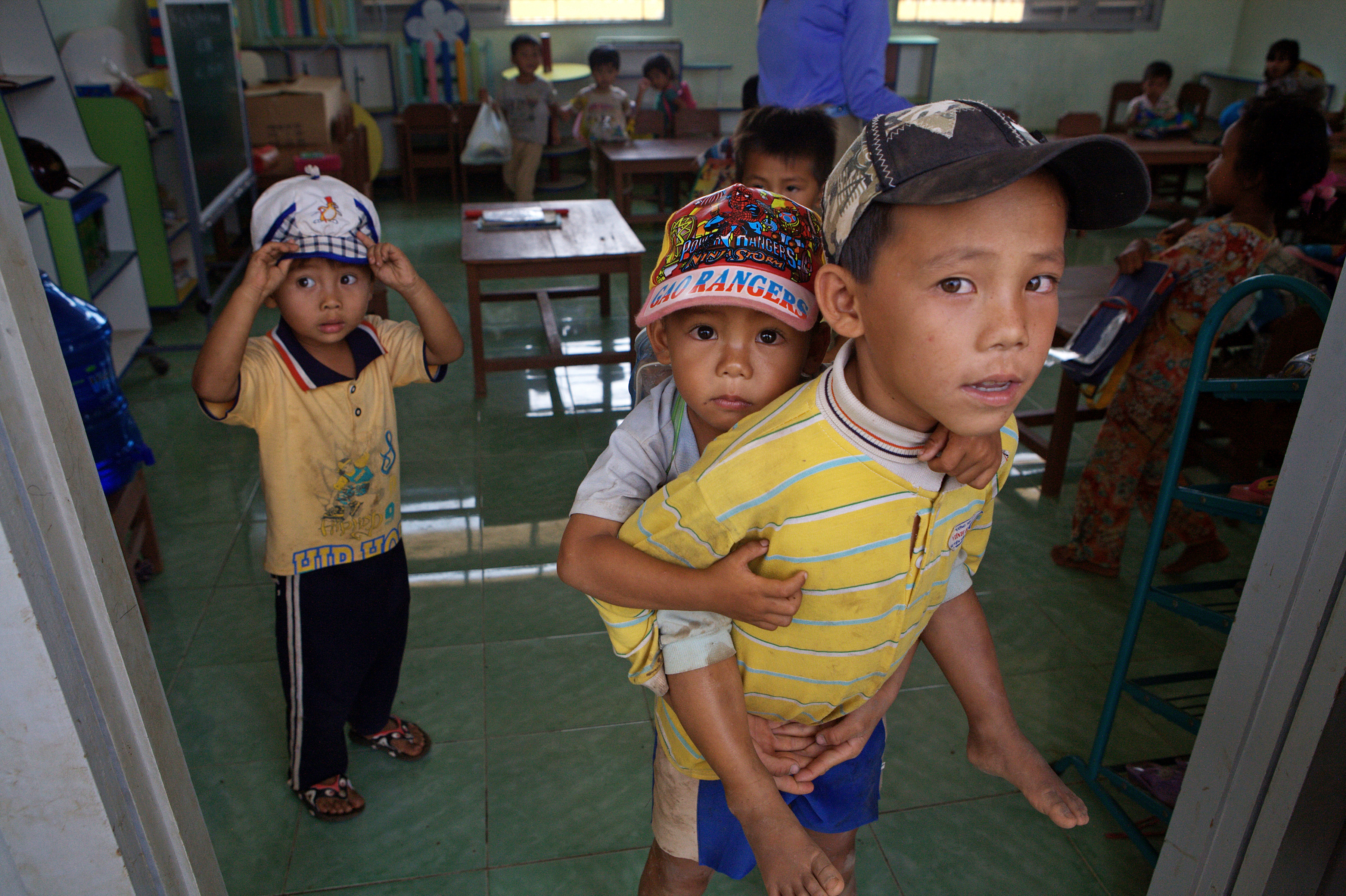
“Vietnam: Poor and ethnic minority students face persistent lower education performance” by
Chau Doan/World Bank is licenced under CC BY-NC-ND 2.0

PML: In our research with the RISE Programme we planned to explore how the new competency-based curriculum was implemented in schools, but because of COVID, the implementation of the new textbooks was delayed. However, in our earlier qualitative longitudinal study we looked at teachers’ and headmasters’ understanding and perspectives on competency-based teaching. The majority have a very clear understanding the objectives of the lessons and the knowledge and skills when asked about the competencies they don’t have a very clear distinction between skills and competencies. Actually, when we looked at in practice, some teachers were doing competency-based teaching in their classroom, but they did not realize it.

TH: Help me understand what that looks like. How could you tell they were already teaching competencies without realizing it?

PML: We collected video recordings of lessons along with the lesson plan and an interview with the teacher before the class and an interview afterward where they watch the recording and reflect afterwards. We ask them what were the competencies that they were teaching. The lesson plans they were designing were still based on the old knowledge-based textbooks not the new curriculum, and we recorded this and had the post-interview, and we could see the teachers were teaching some competencies like creativity and critical thinking in their teaching activities. They still followed the textbook but they changed the pedagogy. They designed the teaching by themselves.

“Children at their desks in a primary school in Vietnam” by GPE/Koli Banik is licensed under CC BY-NC-ND 2.0

TH: But what led them to change their pedagogy? Was it the professional development?

PML: It depends on the individual. Usually, the government’s training is common, but the pedagogy for each lesson depends on each teacher, and the teaching method of the teachers from the rural provinces is different from that of those in the central region so we have to see what are the reasons for these differences: Why can’t the teachers from the Northern provinces teach the competencies as well as those from the central region? From that maybe we can get back to the professional development training delivered by the government and whether that was different or not. Or whether the networking in one school or region is different. 

LDD: These videos were collected before COVID around 2017, and the government has had strong, continuous professional development training every year, and they have had a focus on “active pedagogy” even before they began the comprehensive renovation of the curriculum.  The Ministry of Education actually promoted active teaching methods since the 2000s when we conducted the previous education reform. A lot of the civil society organizations in Vietnam also supported the educators in all the provinces to promote active teaching methods. It is not new. It is not that we changed to the competency-based curriculum, and then we promoted active teaching. Active teaching existed in the previous education reform.

Next steps?

TH:  What do you see as the next step Vietnam needs to take to continue improving its education for all students?

PML:  For me, the most important thing is still teachers. We cannot wait for support from the government or Ministry. What happens in the classroom still comes down to each teacher and child. Supporting training for teachers is critically important so that they enjoy their job and have the inspiration to improve their teaching. That’s why it’s good that we have open resources for them and now, with the Internet, they can easily learn and share with their colleagues from all corners of the country. I think we will be able to make changes very quickly if we can promote this online platform and provide open resources.

LDD: Along with teachers and human resources overall, I think in the coming years Vietnam has to deal with a number of economic issues so at the macro level we need to maintain enough investment in education. But we need to define the top priorities because we have limited resources, and we cannot do everything at once. In recent years, we have focused on changing the preschool. We have a plan, , and VNIES is charged with writing the new preschool curriculum, and it is going to be introduced next year, and we are going to have a pilot from 2025 to 2027. But, for me, for the next 10 years, I think higher education should be a priority. I don’t see many colleges or universities in Vietnam at a high rank.

Achieving Education for All for 100 Million People: A Conversation about the Evolution of the Vietnamese School System with Phương Minh Lương and Lân Đỗ Đức (Part 1)

Vietnam demonstrates that schooling can improve at a large scale, even in a country with a developing economy and over 15 million students. The majority of the Vietnamese population (nearly 86%) are from the Kinh ethnic group, but there 53 other ethnic groups. Some of these ethnic groups have long had high levels of literacy and education, but the Vietnamese government has also made a concerted effort to support the education of students from ethnic minority groups who live in rural areas and mountainous & remote regions and who experience higher levels of poverty. These efforts have contributed to near universal access to education at a relatively high level of quality. To learn more about how Vietnam’s education system has achieved this success, I visited Hanoi last year and talked to a variety of Vietnamese educators, policymakers and researchers. My conversation with Phương Lương Minh and Lân Đỗ Đứcat the Vietnam National Institute of Educational Sciences (VNIES) was especially instructive in providing insights into how schooling in Vietnam has improved in rural areas with ethnic minority students. The first part of this conversation centers on the efforts to improve education over the past thirty years, particularly in these ethnic minority areas. The second part looks ahead and discusses what might happen in the future as Vietnam rolls out a new competency-based curriculum and related textbooks. For related posts, see the Lead the Change Interview with Phương Minh Lương and A Conversation with Chi Hieu Nguyen about Vietnam’s responses to the COVID-19 school closures.

Lân Đỗ Đức is Vice Director of the Department of Scientific Management, Training, and International Cooperation at the Vietnam National Institute of Educational Sciences. Dr. Phương Lương Minh is a lecturer and coordinator of the Master Program of Global Leadership, Vietnam Japan University (Vietnam National University), and a collaborating researcher at the Vietnam National Institute of Educational Sciences. I am indebted to President Mai Lan and colleagues at VinUniversity for making this trip to Hanoi possible and to Dr. Le Anh Vinh, Director General of the Vietnam Institute of Educational Sciences (VNIES) and his colleagues for their support.

                                                                                                                        – Thomas Hatch

Policies for supporting access and quality of education in Vietnam

Thomas Hatch (TH): How has Vietnam managed to develop an education system that has almost universal access to education at a relatively high level of quality in a developing country of almost 100 million people?

Lân Đỗ Đức (LDD):  After the war, the Vietnamese government realized education should be the key to changing human resources and economy, and we tried to maintain almost 20% of national expenditure on education. We also have policies supporting the general education sector, and then we have policies supporting minority education through financial aid. That can include support in some remote areas for secondary students to go to boarding schools. In the remote areas, especially in mountainous areas where ethnic minority communities live, beside the funding from local authorities, one key thing is support from village heads. They are not under the power of the local authorities, but they work with local authorities to support bringing students to school. The provincial and district authorities also provide instructions to lower levels, including villages, to work closely with the education agencies. Under the coordination of the People’s Committee, there is also close cooperation between government authorities and education agencies across provincial, district, and village levels.

TH: I understand that to support quality education in ethnic minority areas, the Vietnamese government is also trying to encourage students from those areas to train to be teachers. What steps have they taken to create a pathway into teaching for these students?

LDD:  When there are not enough young teachers willing to go to rural areas, another key strategy is paying higher salaries as an incentive, with the allowance 50%, 70% , sometimes even two times higher. People also highly respect teachers and education. They understand the benefits for children and ethnic minorities. That’s why they strongly support initiatives to encourage and mobilize children to attend school.  But one barrier is that teachers from outside areas often cannot speak the local ethnic minority languages when they come to work in rural or mountainous villages so it’s very important to train local minority people to become teachers. We have some policies that can make it a bit easier for minority students to enter teacher training programs. Usually, some ethnic minority students are nominated by their provinces to pursue teaching careers, called “cử tuyển”, and they receive some advantages like lower entrance requirements and financial aid from their provinces. In college, they also receive a lot of support. For example, when I was studying math education at the National University, there was one section of a math class that specifically trained in-service math teachers from ethnic minority areas. But after graduation, the students who receive funding from their provinces must return to work in local schools after graduation. For other students, it is different; they must find schools and jobs themselves after graduating.

TH: Do the provinces provide incentives and support for ethnic minority students wanting to study other fields besides teaching?

Phương Minh Lương (PML): Yes, there is support for ethnic minority students in other areas such as agriculture, medicine, economics, and tourism besides just education.To get into college, local authorities can nominate students to apply to university without entrance exams. We call this “Cử tuyển” – “sending to school” – local authorities select the students based on certain criteria, and, normally, students in this program are offered jobs by local authorities after graduating.But in practice, this is often not true. Not all students receive jobs from local authorities after graduating. So then a lot of the parents from ethnic minority groups see that there is no guarantee for their children to receive a job even though there was a commitment.

The power of the collective and social networks in education improvement

TH: In the US, we only hear about the “miracles,” but in Singapore it took 30-40 years to build an effective education system.  In Vietnam, what was successful in the early days in the 1990’s? How were you able to reach people in rural areas and then get them into school and get them learning?

PML: That is the power of the collective that can be known as “power with.” There’s close coordination between authorities at grassroots levels and schools, with monthly meetings between the village or what we call the commune authorities and school leadership and educators. These include school officials like headmaster and representatives of mass organizations like the Women’s Union, Youth Union, and Study Promotion Associations at village level. These meetings are organized by the commune authorities, and they discuss all the problems related to the life of the local people in the village and in the school.  Then if there is a problem, like there are children who have dropped out, then the authorities can support the school in that area and they can come to see why these children dropped out and whether there are any solutions to get these children back to school.

TH: But does that coordination really happen at an individual level – where they meet in a village and say, “These 5 children dropped out, let’s go find out why and get them back in school”?

PML: Yes, the head of the village head works closely with the teachers to find those children. It’s not always easy for teachers to find the children because sometimes the children may be far away in the rice fields or the forests for days helping their families to complete the harvest. But the village head knows how to communicate with those families to discuss the situation. He can mobilize the engagement of police, women’s union, youth’s union and youth in village in this effort. As such, they can quickly find these dropout children and their parents.

TH:  Do you have an example or story of a specific student where this happened and a child dropped out and they brought him to school?

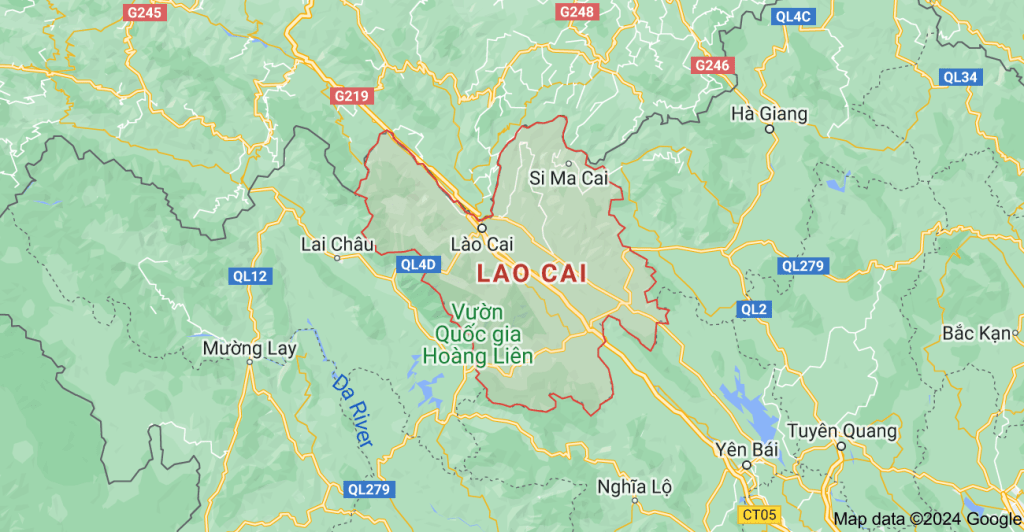
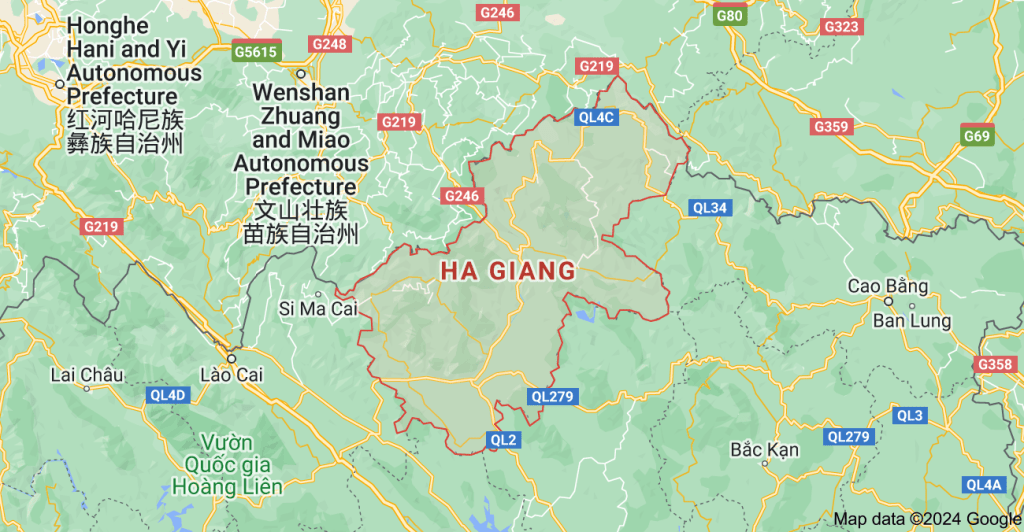
PML:  In Lao Cai and Ha Giang provinces where I worked, the Hmong have some of the lowest school attendance compared to other ethnic groups. The children of the Hmong group may drop out if there is a marriage festival or another village event. The children also often drop out during the tourist season in the summer because foreign visitors come and the children drop out to act as tour guides so they can earn money. To deal with this, there are two things the school headmaster can propose to the Bureau of Education and Training at the district level. First, if it is a festival for the Hmong people, the authorities can allow the school to close for a few days. In some areas, 100% of the students might be from the Hmong group, so in that case all of the children might stay home. So closing the school is the first option. 

Second, when children drop out to earn money, teachers have to work closely with parents and the village head to advocate for the children to attend school rather than earn money. The parents may support education, but some are too poor, or one parent may have died, and there is only one parent to earn money, so in that case, it’s really hard for the children to come to school.  But the government of Vietnam actually provides some financial support for children in disadvantaged areas so they can receive nearly $1,000,000 Vietnamese Dong (roughly $40 USD) per month if they attend school. The money is for the children, but the teachers distribute it to the parents according to the regulations. Apart from money, they can receive rice as well.

TH: One of the arguments I’ve made is that one the strengths of the Singaporean and the Finnish systems is that they are both highly connected and socially networked, both formally and also informally. Even though people are spread out in Vietnam, particularly in rural areas, it sounds like people are still relatively well-connected?

PML: Related to communication and connections, I’ll tell you a story from my experience. In 2011, I did fieldwork for my dissertation in Ha Giang province. It is an area with a high proportion of ethnic minorities – over 70% in some villages and 100% ethnic minorities in others. There was a non-governmental organization (namely ActionAid Vietnam that had a medical care program for children, and one day, my colleague went to a school with a doctor to do some health examinations of the primary and lower secondary school students. The doctor found some children that had teeth that needed to be pulled, otherwise, they’d become infected. Unfortunately, a terrible rumor started that the teacher pulled the children’s teeth to sell to the Chinese people for 15 million Vietnamese Dong per tooth! And the next day all the children were gone, and none of them came to school. Of course, this created a real headache for the local authorities, who had to figure out how to convince the children to come back.

We all thought it was strange that all these parents had the same information though they lived very far from each other.  The Hmong people are very spread out, with several households on each mountain. That was in 2011 and the Internet connection did not work well yet and mobile phones also weren’t common there. But the Hmong people had an informal channel to communicate and share that information so the next day, no children went to school. The local authorities at the district and commune levels and the headmaster and the healthcare center director had to come to each village and convince the parents the rumor wasn’t true and get them to bring the children back. The village head who is from the Hmong people has a good reputation, so he can gather all the Hmong households and get the teachers and the doctors to explain what happened.

Community engagement and educational improvement

TH: It seems like you could argue that Vietnam lacked the educational infrastructure and the money that some other systems have had, but it has had the social and cultural infrastructure that connects communities and maybe we have lost some of those connections in many communities in the US. Do you have some other examples of parent or community engagement in schools?  

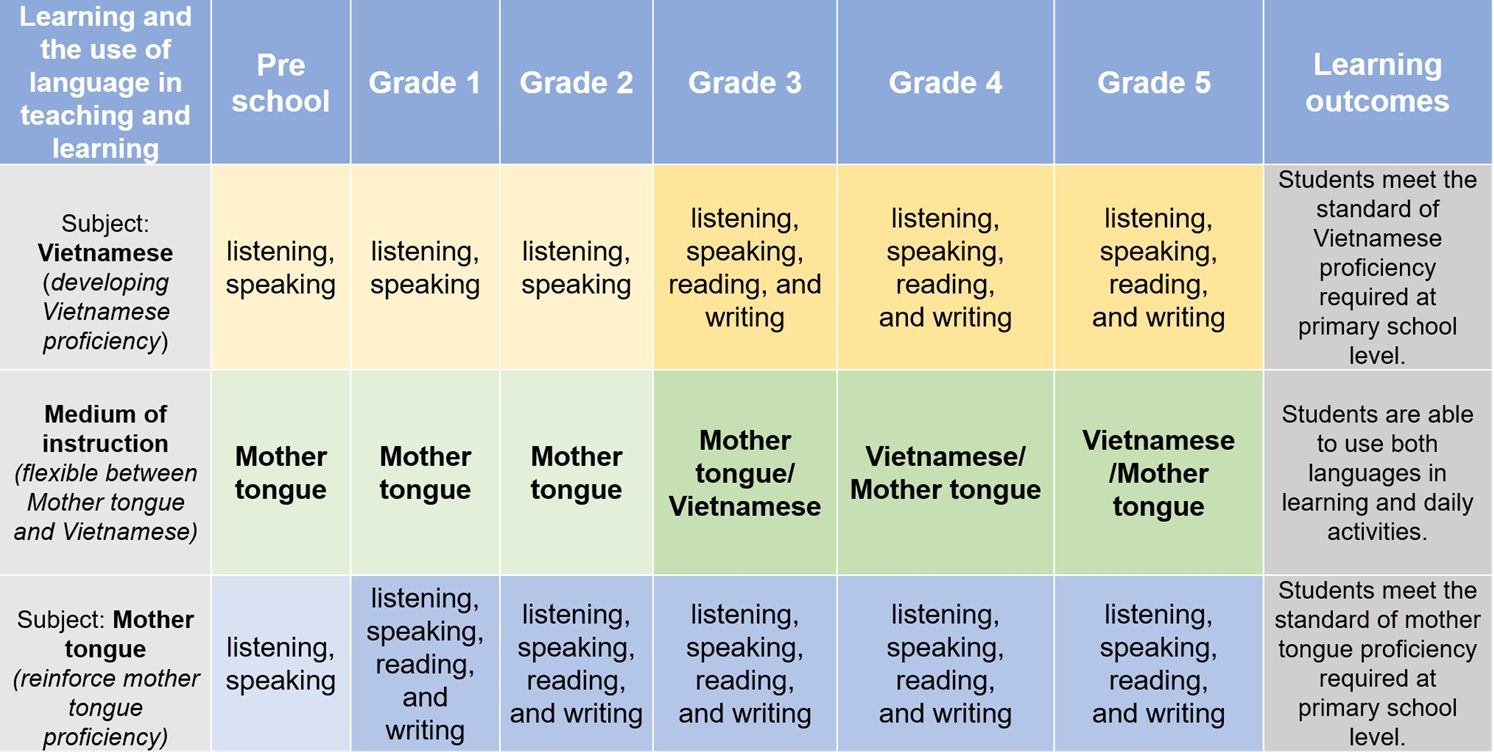
PML: I can talk about another example of parent engagement in ethnic minority areas. In one of my chapters, I wrote about inequities for ethnic minority children in getting access to school. In first grade in primary schools, they have to learn the Vietnamese language, but without good language preparation, and this challenges the enactment of their rights under Article 5 in the Vietnamese Constitution to learn in their mother tongue from an early age – Article 5 of Vietnam’s Constitution states: “Every ethnic group has the right to use its own language and system of writing, to preserve its national identity, to promote its fine customs, habits, traditions and culture.” So we mobilized the ethnic minority parents who are good at the Vietnamese language to come to the school to help the teachers. Most teachers are Kinh people, and they can’t speak the local languages, but the parents can act as translators between children and teachers in those first months until the children understand the teacher and the teacher can understand the Hmong children. That’s a great initiative for bridging education and removing language barriers. Additionally, parents are also willing to contribute their labor to cook for children when schools lack the money to pay for support staff, so these are some good community engagement practices.

TH: You used the phrase “we mobilized parents,” but what does that mean? How did you do that?

PML:  Most parents are aware that, when children have access to education, they can have better lives and for that they need to know Vietnamese. But as I said, ethnic minority groups often live far from the commune centers, so we sometimes establish satellite schools in the villages. Then the parents can see that when the children come to school, they are having a lot of fun. They can see the children singing and reading stories in Vietnamese, and they can see the children’s happiness. It’s that simple – if children enjoy the class, parents will come to support them.

However, it is not easy for the parents to get access to the classrooms without approval from the school. That’s the reason why this model of parent engagement functions with the support of the NGO’s. The NGO’s see the need to engage the parents to help the teachers. It is not that the community people want to come to the school, and they are warmly welcomed by the school. It is the NGO that says to the school it would be good if you have the support of the parents. Recognition is very important here. When the school recognizes the contribution from the parents, then it works. Otherwise without any recognition, there is no chance for the parent to get involved in the school system, yeah. The same for the NGO as well. If they don’t request that the school recognize the contribution from the parents, then it doesn’t work.

THE CONSTITUTION OF THE SOCIALIST REPUBLIC OF VIETNAM

The aims of education and the right to mother tongue education

TH: the education system is focused on improving economic opportunity, getting students into higher education and the workforce. But as you have pointed out in some of your research, this comes at a cost if attention is not paid to local culture and history. Does the government understand this problem, or is it more focused on strengthening the overall economy and education system?

LDD: The government wants to preserve the local culture, and that’s why we also developed the bilingual teaching program funded by UNICEF. It ran for almost 10 years from about 2006 to 2015. Several million dollars were provided to develop learning and teaching materials in minority languages, and the Ministry of Education and Training (MOET) and VNIES  are continuing to work to support teacher training and learning materials for bilingual education and mother tongue instruction in some provinces. But some of these languages don’t have a written form so it is not easy.

PML: It is regulated very beautifully in the policies that all ethnic groups have a right to education in their own language. But in practice, even though the government wants to support them, it is not feasible to do so because of limited resources. For example, without a writing system, we cannot preserve the languages; if we don’t have teachers who are able to teach in the languages and we don’t have the curriculum and textbooks to teach them, it doesn’t work.  Right now, there are only three languages that UNICEF has funded for textbooks (including Mong, J’rai and Cham). So we try to promote and implement Article Five in our Constitution, but it depends on the available conditions

Next in this series: Looking toward the future and the implementation of a new competency-based curriculum in Vietnam: A Conversation about the evolution of the Vietnamese school system with Phương Lương Minh and Lân Đỗ Đức (Part 2) 

Mel Ainscow on Making Schools Inclusive

This week, IEN shares a commentary from Mel Ainscow that draws from his new book: Developing Inclusive Schools. Ainscow (Mel_Ainscow@yahoo.co.uk) is Emeritus Professor of Education at the University of Manchester, Professor of Education at the University of Glasgow, and Adjunct Professor at Queensland University of Technology, Australia. A long-term consultant to UNESCO, Ainscow is currently involved in international initiatives promoting inclusion and equity in education systems. An earlier version of this blog post was published on Fabian Education on April 23, 2024.

Whilst the reforms of the last three decades have undoubtedly had a positive impact within the English education system, they have also led to worrying side effects. In particular, the emphasis on using market forces as an improvement strategy has created winners and losers, as reflected in the growing numbers of children and young people who are excluded from schools or placed in separate provision.

In a new book I reflect on 25 years of research in England and internationally to propose a radical new way of addressing this challenge . This requires a move away from explanations of educational failure that concentrate on the characteristics of individual children and their families, towards an analysis of contextual barriers to participation and learning experienced by students within schools. In this way, those learners who do not respond to existing arrangements can be regarded as ‘hidden voices’ who, under certain conditions, can encourage the improvement of schools.

This thinking calls for coordinated and sustained efforts within schools, recognising that changing outcomes for vulnerable students is unlikely to be achieved unless there are changes in the attitudes, beliefs and actions of adults. The starting point must therefore be with practitioners: enlarging their capacity to imagine what might be achieved, and increasing their sense of accountability for bringing this about. This may also involve tackling negative assumptions, most often relating to expectations about certain groups of learners, their capabilities and behaviors.

Most significantly, our research has shown how certain types of evidence can be used to encourage those within a school to question their practices and, indeed, the assumptions behind these ways of working. In these contexts, the following approaches have proved to be particularly promising:

• Mutual observation of classroom practices, followed by structured discussion of what happened;
• Group discussion of a video recording of one colleague teaching;
• Evidence from interviews with students; and
• Staff development exercises based on case study material or interview data.

This led us to document how such approaches can encourage discussions within schools that are both supportive and yet challenging. In particular, we saw how they can sometimes ‘make the familiar unfamiliar’ in order to stimulate self-questioning, creativity and action. Supportive leadership is crucial in creating the climate within which this can happen.

These ideas are guided by a belief that inclusion should not be seen as separate national policy. Rather, it should be viewed as a principle that inform all policies, particularly those that deal with the curriculum, assessment, school evaluation, teacher education and budgets

Another worrying development in England is the expansion of labels that situate problems of educational progress within children, not least through the adoption of the term ‘special educational needs and disability’. This has led to the widespread use of the shorthand label ‘SEND’, which is explained on the Government’s website as follows:

‘Special educational needs and disabilities (SEND) can affect a child or young person’s ability to learn. They can affect their: behaviour or ability to socialise, for example they struggle to make friends; reading and writing, for example because they have dyslexia; ability to understand things; concentration levels, for example because they have attention deficit hyperactivity disorder (ADHD); and physical ability.’

Alongside the pressures on schools created by market forces, this unquestioned emphasis on student deficits has led to a massive expansion in the number of learners being labelled in order to attract additional resources to support their education. It is also placing additional pressures on local authority budgets that are already stretched. And, of course, it is creating further barriers to the promotion of inclusive schools.

So, echoing the strong international lead provided through Sustainable Development Goal 4, Governments in England and internationally need to prioritise inclusion in schools. My hope is that, in a small way, the experiences and suggestions I present in my book will encourage such a move, which, I argue, should be guided by the UNESCO principle, ‘Every learner matters and matters equally’.

“Relish the freedom you have and find the balance”: A Conversation with Jón Torfi Jónasson on Educational Change in Iceland (Part 2)

In the second part of this two-part interview, Jón Torfi Jónasson draws from his work on educational change in Iceland and other parts of the world to discuss what kind of advice he gives to policymakers and educators. Part 1 explored some of the institutional factors that make it difficult to make changes even in an “undisciplined” system like that in Iceland. Jónasson is a professor Emeritus of the University of Iceland School of Education where he was also Dean of Social Sciences and of the School of Education.

Thomas Hatch (TH): Given what you’ve said in the first part of our interview about how institutional constraints on education operate, what’s your advice to policymakers and head teachers now? How do we work with this?

Jón Torfi Jónasson (JTJ): There are two things. One is the most difficult one, and that’s to get people, particularly professionals in the field, to talk about the idea of education. What is the essence of education? That means encouraging the discussion of the identity of students as people and the communication between people, and thus to focus on crucial social elements. This is so difficult that I understand why people normally avoid it. They want to talk about something else. It is just very difficult to decide what education should be or is. It is something partly personal that has to be developed. It cannot be decided by ministries, or OECD, or whomever. It’s something, at least partly, culturally, and personally developed even though there is a formaly defined core. But even that is difficult to define. One’s ideas may change, and they may differ from one culture to anther, one person to another, even one kid to another, so it’s difficult in that sense, but education centers around human interaction and thus it is a personal activity. But it’s not difficult to attempt to take the discussion up, and then to stick to it, that’s very important.

Jón Torfi Jónasson

The other thing is to relish the freedom you have and find the balance. Teachers should be trusted, but that requires them to be knowledgeable and professional, and this also needs to be discussed. You should give trust to teachers, but not unconditionally. The condition is not to measure what they do, but to listen to how they talk and to what they are concerned about. I am worried about how, by “improving” teacher education and education research, we’re gradually moving the power of talking about educational issues from the teachers to somewhere else. Teachers realize they’re not “allowed” to talk about certain things because they don’t have sufficient grasp of the academic parlance; or they don’t understand the concepts well enough; or they haven’t been following the research. So, they might simply say, “I don’t know.” Even though they are the essential experts, they may insist that they are not, if they feel they lack the right vocabulary.

Last spring, in 2023, I was able to sit in on meetings with teachers in Reykjavík, and I have been impressed with how they want to solve the various challenges themselves. They want to get help, support, but they don’t want to outsource these tasks. Their discourse was anchored in practice. I listened to them talking very professionally and raising crucial educational issues, because they were free to talk as professionals. Sometimes, when teachers become highly educated, they in a sense become prisoners of the theoretical knowledge which seems to distance them from the situation they are facing every day. There’s a paradox there, and I don’t know how to solve it because you need to be informed and educated and simultaneously a visionary working in the field and you have to find the balance.

TH: Given that it’s hard to discuss education and it’s hard to realize that kind of freedom, where does that take you? What can we do?

JTJ: What needs to be done is mainly to discuss those two issues. First to assert that teachers have more freedom to do what they think is necessary: If you consider it important to attend to the kids’ social skills or their identity, you are allowed to do that, because that’s part of education. And then if they say, “Therefore I can’t spend as much time teaching fractions.” Then they’re also given license to decide this, but it has to be quite clear what their educational rationale is. Then I think it’s very important that people are given a license to be professionals themselves. I would still accept that not all people can do this perfectly or even properly. But that’s the price you have to pay when trusting the professionals. You don’t solve this by insisting therefore, that tests are needed everywhere, and accreditation and inspection, and so on. The net result of those is negative for the process of education.

TH: But doesn’t there still need to be some apparatus or someone to give them license to do that?

JTJ: I accept that. I haven’t got a simple solution. When I was most laissez-fair in my thinking, I listened to a former Minister of Education in Alberta, Canada, who was an impressive conservative, and he noted: “we must remember we are in a democratic society, and there must be some rules and some accepted aims.” And I took note. Yes, there must be a framework, and we also have that to some extent in the medical profession. You have doctors who are being educated and licensed, and you trust them to follow what’s happening in the field. But you don’t continuously accredit them. You trust them. You know that there’s a potential problem there, but it is still being done, but still with some general inspection system. The same applies to the teachers. There have to be professional norms that include the expectation that you follow what’s happening in your field; you must understand what’s happening in the world around you; you discuss your ideas, assume responsibilities and respect the culture of education. I’m not saying this is a solution to everything, but this implies a culture; this is a vision.

TH: But there is a fundamental challenge to equity with this, because if you accept that not every teacher will be able to have the same level of expertise or to teach in the same way, then, doesn’t that produce inequities?

JTJ: Absolutely. I find that quite interesting and of course important. When we established our accreditation and national testing system in Iceland in the 1930’s, that was actually pushed by the teachers, who wanted equity. It was not for tracking (even if it was subsequently used for that) and not really for testing. It was an equity issue, and the proponents realized that many of Iceland’s students, especially in the rural areas, were not getting the right or substantive education. That must be remembered when I want to dismantle national testing systems with any stakes attached. Yes, it is meant to have a function. But you get a lot of good work done in the arts, in music and gymnastics and various sports and many other activities even though you don’t have a formal national testing system. And many young people excel in different things without a universal testing edifice. I think you can do a lot of good work using various mechanisms, but often there is some implicit testing, implicit evaluation. There are problems with my argument on testing, especially standardized testing, but I think the pernicious effects are much worse than the positive ones. I also want to shift away from the heavy focus on initial teacher preparation, and I want continuous professional development to take some of its place. If you have professionals who are developing and constantly probing and discussing the main issues, they need to be – and also can be – trusted.

TH: But part of the issue is we have no room to have these conversations. Teachers don’t have the time, and parents don’t have the time. How can we create the time and the mechanisms that allow people to have these discussions where we can both build trust and recognize and deal with the problems that might arise?

JTJ: I think you are there onto a crucial issue and you’re actually spelling out a solution by saying we know that we must create the time, and the solution is to do just that. It’s not easy because you have to push something out. But you need to have the networks and the time to deliberate. I once was at a European conference in Strasbourg organized on behalf of the Council of Europe, and I was asked to lead a discussion group with teachers from all over Europe. To start the discussion, I wanted everybody to say something, so I asked, “if you have extra money for your school, how would you use it?” The first person said, “I would use it to get time to talk to my colleagues.” I said, “That’s fine, but please don’t all mention the same thing.” Still all of them emphatically gave essentially the same answer. One said “I would like time to talk my colleagues in other schools”, but everyone sent essentially the same message, except one person who worked for a ministry. “No, no, I would not use it like that,” he said, “I would use it for something practical.” I will always remember this, and it reminds me how governing instances can be out of touch. The teachers said we need to talk about professional issues but not just teaching concerns. Time must be given to professional conversation between the teachers, among themselves. This is so important. We must allow this; we must create time for this; and we must value its importance within the school and among schools. It is such an important part of the professional life of teachers – probably all professionals.

TH: Earlier in our conversation, you mentioned that the municipality of Reykjavik organized a meeting in the spring of 2023 where teachers were given time when they were able to talk together. You were asked to observe and reflect on those meetings. Can you describe for me a little bit of what you observed?

JTJ: This was what they called a social innovation lab session. I sat in on three half-day sessions that were repeated for three different professional groups (playschool, primary school and recreation centers) in each borough within Reykjavík, the capital city, and I was asked to observe discussion in one of the boroughs.The social innovation lab was originally introduced into our educational setting by colleagues from Alberta, Canada and there were many different parts to it, but in Reykjavik they extended the conversations in important ways because it included the actual leaders of the system: Helgi Grímsson and Fríða Bjarney Jónsdóttir. They led the sessions, but they did it in a way where they were genuinely listening to people expressing their concerns and where there was a real conversation – the professional field deliberating with the top administration. There was not a long monologue on either side. They also had different institutions within the system represented, and they were talking to the teachers and the teachers were talking to them. People were in contact with others they would normally never or rarely be in direct personal contact with, and all these discussions were on an egalitarian basis.

The teachers very clearly expressed their concerns and the problems, but they were not complaining. They were describing their experience. There was also an attitude of actually doing something about these things. The professionals involved were feeling the freedom to deliberate. If they felt something was important and they wanted to do something about it, they could do it! Of course, there were financial issues that then had to be solved, but that was not a constraint to stop them from developing their ideas. That meant it was not just about ideas; it was developing ideas within a system where these could be implemented.

TH: Part of the challenge is that we’re asking people, in a sense, to operate in opposition to the institutional forces that would reward them for just sitting in their office and doing their job, so it takes tremendous courage to take the time for these conversations. The three days could have gone badly, and people could have felt they’d wasted their time, and they might not do it again.

JTJ: I think they realized that, and everybody was so relieved that it didn’t go badly. And that came up with those who planned the event who said it literally in the way you expressed it: “We cannot take the time because we should be sitting in our offices doing what we are used to doing,” but they actually will do it again after this experience. The same doubts were expressed by literally all the participants, but who very emphatically expressed their appreciation afterwards. There were things that should be modified, but they were, to me, relatively minor things. One was the time spent on conceptual clarification. They spent some time clarifying new concepts, like wellbeing and inclusion, but they could usefully spend even more time on that. Another was on developing their ideas further. Some ideas about what could be done were introduced, and they were put on posters, but I think possibly some more time might be spent pursuing those ideas and how these would be transformed into daily practice. But the consensus was that this would be the next stage of related work (which is in process).

TH: In your next meeting with the minister of education in Iceland what advice would you give him?

JTJ: He’s working on the issue of well-being, and I’ve criticized the school system for not attending to that issue for some time, so I think that’s good. But my main advice – and I think it is in line with his intention, is to suggest, “Don’t do it from the top.” We had a minister some years ago who was very keen on information technology, and he encouraged conferences among teachers and developmental projects. He didn’t seek to control everything, and I thought he operated very sensibly. So, I would suggest to the minister, “Make sure that you are supporting good moves by the teachers and schools when implementing general policy and don’t set up pet-projects yourself.“ I think that is a reasonably good strategy, and it will build up trust. But it’s not uni-directional, so teachers need to show they want and deserve to be trusted. Just like these conferences on information technology around 2000. Those were attended by hundreds of teachers. They wanted to learn about the use of computers. They didn’t need to be pushed; they just wanted to be involved.

TH: But again, that takes courage from a minister who, in a sense, has to wait for the things to arise, and he can’t wait. He’s got 4 years, maybe 8 years in office, and he’s got to have something to show for it. And if he’s just standing there waiting for other people to step up…

JTJ: I know that argument, but I don’t feel it is a problem for him. This minister has already established himself as somebody who wants something to happen and it is relatively clear what it is. And to me that’s sufficient, because people know it’s genuine. He’s doing a lot of the right things. And I’m convinced this is sufficient for him as a politician with a future. He doesn’t need to wait for some outcome to become visible because it takes decades anyway. So, I would not be worried on his behalf. I think he’s already evaluated as a successful Minister, even though he is still waiting for something lasting to evolve.

On the Inertia of Education Systems and Hope for the Future: A Conversation with Jón Torfi Jónasson on Educational Change in Iceland (Part 1)

“Why don’t schools change?” In this two-part interview, Jón Torfi Jónasson reflects on his work studying educational change in Iceland and other parts of the world. Part 1 explores some of the institutional factors that make it difficult to make changes even in an “undisciplined” system like that in Iceland. In Part 2, Jónasson discusses some of the advice that he has shared with policymakers and education leaders. Jónasson is a Professor Emeritus of the University of Iceland School of Education where he was also Dean of Social Sciences and Dean of the School of Education.

Thomas Hatch: Can you share with us how your ideas about school improvement have evolved?

Jón Torfi Jónasson: For the past 20 to 25 years, I’ve been interested in how education changes or doesn’t change. In the “old days,” I was very interested in the use of computers in education, and I went to a meeting about this in Switzerland in 1980. I came back from that meeting and advised the Ministry of Education here in Iceland, “We must know what’s happening because this is very, very important.” I thought that from now on everything would change very fast, partly or even mainly through the influence of computers. A few years later, the Government set up a committee on the future of all aspects of government, and I was asked to write on what I thought would happen in education in the next 25 years, from 1985 to 2020. Some thought I would, among other things, be able to explain how computers would change everything and, perhaps, how school might not be needed at all, due to the power of computers. But I was very careful and I often claim that this was a particularly boring book because I said, more or less, that very little would change. Computers would be introduced; they would be used – this was before the internet – and they would probably be connected via video link, but not very much else will change. Well, perhaps something, but probably not very much. And my judgment on this, by hindsight, is that I was more or less correct.

Jón Torfi Jónasson

After that, around 2010, I thought I would write another book about the next 25 years, but I didn’t want to write another boring book so I decided to speculate about what might change but more importantly, what actually hindered sensible change. What should change? And why doesn’t it? That led me to become interested in the inertia of educational systems and educational work generally, and with this I’ve been preoccupied in the past decade or more. In one article, “Educational change, inertia and potential futures,” for example, I focused on inertia and the aspects of education that make change difficult. One of my main conclusions is that people erroneously view education as an organization. Thus, many have been interested in developing organizational leadership and thus organizational change, and have perhaps not sufficiently understood that education is more of an institution. (This argument has been most powerfully made by David Labaree in his 2010, book Someone Has to Fail.) You have to focus on institutional changes and how institutions should or can be changed if you want education to develop.

In order to explain my argument, I’ve concentrated on two main institutional aspects, even though there are more that matter. One is that there are subjects that should be taught, and they’ve been essentially the same for over a century or two, with mathematics as the prime example. The other institutional issue is credentialism. Internationally these are very powerful constraining forces, keeping education in a certain form.

But if you ask about Icelandic education, I think it is actually in good shape. A lot of people are more skeptical than I am, but I claim that the strength of the Icelandic system is its lack of formal discipline or constraints. It’s a system that is not disciplined by examinations; we have no national leaving examination, with stakes, at any level. That may change, but that’s been the case during this century. In the past, at the highest level we have had a formal entrance examination (university entrance examination -ice: stúdentspróf), but it is not the same from different upper secondary (i.e., high) schools and thus not national, they all have their own final examinations. Then, when we had the national examination at the end of compulsory education, it was only indirectly used for tracking. Some high schools would try to select students on that basis, but that was not uniformly so. For most students, at least from the countryside, who in practical terms only had access to one upper secondary school, this examination didn’t matter. The tests in compulsory education will now be re-established in a totally revised form, initially in reading Icelandic and mathematics in 4th, 7th and 9th class (out of 10), but solely as a formative assessment mechanism – even though I claim that nobody knows exactly how to use formative mechanisms, but that is a different story.

Of course, we have problems. The main problems are related to the notion of inclusion, e.g., supporting different groups like those who are having mental health issues or learning difficulties, and we also have an increasing immigrant population, and thus we have problems with language, i.e. teaching young people to speak Icelandic who have a different mother tongue. These are being addressed, though I’m not sure how well we are doing this. But we are doing better in education generally than many people accept. We are doing quite well academically and many of our young people are working all over the world in interesting jobs or doing well at top institutions. We’re doing quite well in sports. We have national teams in both genders that are doing reasonably internationally, e.g., in soccer, handball, gymnastics, and basketball. Our young people are internationally successful in music. PISA’s not the only measure of how well we do, that’s my main point. One of the problems with PISA is that it hijacks the discourse. It may have positive aspects, but it is very damaging when one measure takes over the discourse and tells you what needs to be addressed.

TH: If Iceland has one of the most undisciplined systems, in the sense you have explained – and I’m not aware of many others that are like it – that raises a question: Why hasn’t it been easier to change the Icelandic system? Many people in other countries complain that the tests and examinations make it hard for them to change, but what are the institutional factors that are making it hard for this “undisciplined” system to change? What is producing the inertia that’s making change difficult?

JTJ: It is the institutional character of education. One problem, as I mentioned, is the subject control. There are certain subjects that everyone agrees must be taught; well, many – perhaps most people, seem to agree about this, except me. I’m trying to argue that one problem is the absolute versus relative importance of curricular content. There is nothing that’s absolutely necessary to teach, but there are so many things that are useful to understand (even very useful), and certain things may be relatively more important than others. Many, perhaps most of the things we are now teaching are, in my mind, relatively less important than things we’re not teaching. Take genetics which doesn’t have central role in our curriculum. Why isn’t genetics, or perhaps microbiology, the main focus in the natural sciences rather than physics or chemistry? You could easily suggest still other foci. Why shouldn’t artificial intelligence be addressed with connections to the brain and computer sciences – and even placed in primary focus? Isn’t that more important than some of the mathematics we are teaching? I’m certainly not saying mathematics is not important. I’m only saying other things are possibly more important. Teaching about psychology, particularly related to mental health, is another very important subject. And we could go on. So, I’m suggesting that the current subject hierarchy is actually holding control when it shouldn’t.

The other controlling factor is the credential. You want your exams, and you want your marks; you want your social currency, you want to get on. You want to get ahead based on credentials even though a credential is not so important in Iceland, compared to other systems – it still matters – but probably much less than in most other systems. As I said before, here, there is no standardized university entrance examination. In principle, everybody who finishes high school and takes a high school matriculation exam has access to university. Before there was a hindrance if you pursued the vocational track rather than the academic path; then you weren’t allowed unconditionally to enter university. But now that hindrance has been removed, and if you go through a vocational track and take subjects that are needed – some Icelandic, some mathematics, wherever you want to take them – then you can enter university even without taking the matriculation exam.

TH: But who in Iceland determines the entrance criteria for the universities?

JTJ: It’s to a large extent determined by the individual high school who adopt their own standards, but those are based a general framework set by the ministry. Students leave the school with certain marks in certain subjects. If they have some predefined combination of subjects – they have met the university entrance criteria. It’s somewhat diffuse because it can be different for different universities and in different university subjects. If you ask someone “what is it?” No one can actually give a simple general answer. So it’s amorphous and flexible, which I think is very sensible. There are discussions about changing this, but, for the most part, it’s incredibly open. In the medical professions, programs for nurses and doctors have special entrance examinations, but they are exceptions.

TH: Let’s keep pursuing this. If the system is so undisciplined, in the sense you have explained, and it’s so open, shouldn’t Iceland be the easiest place in the world to make changes and improvements in conventional schooling? What else is holding things back?

JTJ: Again my response is: it is education as an institution. There is curriculum guidance for the preschool, which is very open so, in fact, teachers there can do whatever they think makes sense within that very general frame. This makes sense for the preschool and is easy for most people to accept. But it is in fact similar for compulsory education. There is a national curriculum, but it is very open, and I claim that the schools have more freedom to do what they think makes sense than they actually realize. They have been held back by some very ill-defined constraints set by a “divine” tradition. Many would say, “We will not be allowed to do this or that,” when they actually have the implicit permission.

So it’s quite interesting, why we don’t see more changes? There is one institution I haven’t mentioned, which is the parents. A preschool teacher told me this morning that many parents ask her, “Why are you not teaching reading in preschool? You should be doing that.” The parents are making sure that the “right things” are being done, even though the right things they think of are determined by their own, often narrow perspectives. That’s also a controlling force.

It’s a very important question. Why aren’t we changing more than we are? In my writing on inertia I’ve tried to mention a number of constraints. One of the constraints I talk about related to the control of the subjects is the education of teachers, i.e. what they can and cannot teach. What new material are they able to teach? I thought in the 1980’s and 90’s that we should teach computer programming at school. Definitely not to produce programmers but for the same reason we teach mathematics. It’s reasonable to understand and master some of the things that are happening around us. But that was a futile suggestion to make. Hardly anybody was available to teach programming, so you couldn’t press that point. And it’s the same with some other important topics. If you want to place more emphasis on AI or genetics, or ethics or other important new things, who would be teaching those topics? Then, if we think certain skills are important – like teaching initiative, friendship, or creativity – who’s going to teach those? These are very difficult to teach! It’s easier to teach fractions. Teachers also have to attend to all kinds of important things in school that are rather difficult so they would perhaps prefer to do something more manageable like teaching time honored concrete content. Related to this are vested interests. For instance, in secondary schools, when students in Iceland were given more choice of foreign languages, the pupils started to choose Spanish rather than German. Some of the teachers of German, unfortunately, lost their jobs. This doesn’t happen, of course if we don’t change. There are a lot of things like that keeping the system in place. And it is easy to understand and even to sympathize with many of those. But my main point is that if people don’t understand the various institutional constraints, then they don’t understand why the changes that they think are reasonable, don’t happen.

One of the problems is that education is not being discussed as an idea. When people say, “we should change education,” they’re normally implying “we should change the way we teach, for example, mathematics.” They’re not asking if we should teach mathematics at all or other such fundamental questions. There are many things like that, you’re not “allowed” or expected to question so all the changes discussed and potentially taking place are minor. Another problem is that people have this idea that you have to go through all the basics in a content area, otherwise, you can’t understand complex ideas. That means school must attend to a wide range of curricular basics even though nobody actually knows what these basics need to be. There were basics, perhaps defensible in the 1900’s, but not necessarily now, even if they still retain their curricular place. This is being discussed among other related issues in the recent fascinating book by my colleague Tom Fox on becoming edGe-ucated.

Another content issue is communication. Communication should perhaps be the most important subject in a modern curriculum. There are incredibly many different sides to it. I mention a single example. With whom do you have to communicate, how and about what?

Next Week: “Relish the freedom you have and find the balance”: A Conversation with Jón Torfi Jónasson on Educational Change in Iceland (Part 2)

Fostering Research Practice Partnerships for Leadership Equity: Lead the Change Interviews (Part 9)

This week, IEN features the work of scholars focused on research practice partnerships and racial justice in educational leadership. This is the ninth and final post in a series featuring excerpts of interviews with presenters participating in the Educational Change Special Interest Group sessions at the Annual Conference of the American Educational Research Association in Philadelphia last week. This post includes presenters from the session titled: “Developing Authentic Research Practice Partnerships (RPPs) for Educational Change.” For previous posts in this series, see: Practices, Programs and Policies for Instructional CoachingTransforming Organizational Systems for Educational EquityOrganizational Change and Equity in Professional Learning, Arts and Sports Programs, and Summer CampsDriving Change in Higher EducationRacial Justice and Educational EquityTeachers as Agents of Change, Decolonizing Professional Learning and (Re)Conceptualizing Change at ScaleThese interviews are part of the Lead the Change series produced by AERA’s Educational Change Special Interest Group. The full interviews can be found on the LtC websiteThe LtC series is produced by Alex Lamb (Outgoing Series Editor) and Liz Zumpe (Incoming Series Editor).

Supporting schools to be leadership teams: Three Australian ‘me to we’ Research-Practice Partnerships — Christine Grice & Fiona Davies, The University of Sydney

Lead the Change (LtC): The 2024 AERA theme is Dismantling Racial Injustice and Constructing Educational Possibilities: A Call to Action. How does your research respond to this call?

Christine Grice & Fiona Davies (CG & FD): Australia is one of the only Commonwealth countries without a treaty with its First Nations peoples. We acknowledge that in the country called Australia, sovereignty has never been ceded. We begin this issue of ‘Lead the Change’ by acknowledging the Traditional Owners of Gadigal land on which we co-construct educational possibilities together that embody change through respect, listening, consultation, and changing ourselves. This research explores research practice partnerships (RPP) between two researchers and three diverse Australian schools that form our cases over a three-year period. The overarching goal of our partnerships was for leaders to work well together to support the development of people, pedagogy, and wellbeing in their school aligned with strategic planning. Our bespoke work developed coherence over time in each context.

Christine Grice & Fiona Davies

Over the last few years, Australian school leaders have told us that increasing workload demands for their teaching teams and themselves is resulting in burnout. They have told us about their struggles to implement constant change, often imposed on them with minimal consultation, and about their limited agency in managing workloads. These perceptions are echoed in international research on teacher wellbeing such as the OECD Teaching and Learning International Survey. There is a sense of more and more work being added, and nothing being taken away. Decades of research on occupational stress tells us that a long-term imbalance between work demands and the resources available to meet those demands affects both wellbeing and performance.

The Australian Institute for Teaching and School Leadership (AITSL) has only recently recognised middle leaders, as ‘teachers who lead’ in a different sphere from principals, reinforcing an unequal, and ununified stance for leading learning together. School leaders have also told us about the limited opportunities to reflect together on their values and purpose as a school. They described doing their best within their own departments but wanting more opportunities to collaborate across departments and with leaders at all levels in their schools. According to TALIS (2018) collaboration is 10% lower in Australian schools than in other OECD countries. When middle leaders develop their full capacity to work together with leaders, teachers, and students, increasing their sphere of influence, they lead beyond the middle (Day & Grice, 2019) and inspire others to further develop their learning strengths through professional relationships supported by carefully planned school structures, communicative learning spaces (Sjolie, Francisco, & Langalotz, 2019), and architectures over time.

We have worked with schools where leadership is more or less distributed, and in all cases, leaders clearly relished the opportunities created by professional learning to collaborate. Middle leaders were ready and willing to contribute to school level change when they felt safe to do so. Our RPPs enable school leaders and their teams to collectively design and craft satisfying and sustainable work aligned with goals, building habits that support communication, reflection, resolution, and action.

LtC: What are some of the ideas you hope the field of Educational Change and the audience at AERA can learn from your work related to practice, policy, and scholarship?    

CG & FD: Change involves seeing leadership, pedagogy, and wellbeing in new ways.The aim was for middle leaders to develop a collective framework for long term change, as they made decisions about their interactions, cultural norms, and improvement practices and develop knowledge and skills that could enable them to lead learning together in a sustainable way.

Change is also rooted in values and purpose. Our beliefs about leadership: that leading is a practice that happens in the intersubjective spaces between people who may have role titles and job descriptions, but focus more on working together to diffuse power, enabling them to lead together (Kemmis et al., 2014). Leading as practice is about purpose: the work to be done. The work is achieved through collaborative job crafting that creates clear processes for everyone to work together in accordance with their strengths, humanising and democratising research and leadership work (Penual, et al., 2020 p.663), turning collaboration from an oft overused term to practical action, where the social preconditions for collaboration are enabled.

Improving wellbeing outcomes for students, teachers, and school leaders can only be achieved through collaboration, and yet schools are not structured to collaborate easily, and the practices and purposes of collaborating are largely misunderstood. School effectiveness and improvement is based in action. Connecting the academic and wellbeing needs of students with a shared responsibility for knowing students, aligned with our values and the purpose of education in specific contexts, moves the rhetoric about collaboration and wellbeing to action, by addressing not only why we should work differently, but how to redesign leading learning together in schools, using practice approaches.

Sustainable change involves desiring new ways of working and leaning on protocols to revisit ways of working in a cycle of planning, doing, and evaluating (or saying, doing, and relating). Our RPPs supported leadership teams to grow in their collective efficacy, and were dependent upon the leadership conditions, interactions, and beliefs within each of the schools. The World Health Organisation emphasises the importance of psychosocial wellbeing in the workplace, and there is increasing international recognition of the importance of managing psychosocial risks in workplaces. This is reflected in international standards such as ISO 45003:2021 (Guidelines on managing psychosocial risk) and new regulatory requirements in Australian workplaces including schools. A healthy school workplace is where teachers and leaders promote and sustain the health, safety, and wellbeing of all workers, including the organisation of work and workplace culture. It is no longer acceptable to have unsustainable workloads in schools. Working together using collaborative job crafting equips teachers and leaders with proactive strategies that enhance leading wellbeing in schools. Findings support the growing body of international evidence demonstrating the impact of research/policy/practice collaboration and partnerships on improving the effectiveness of education in schools, particularly in diagnosing school readiness for RPPs.

Change flows over to students and communities. Australian teachers who reported participating in joint activities across classes/age groups, also reported higher use of cognitive activation practices in their classrooms.    

Navigating the Leadership Pipeline; Tenets for Effectively Navigating the K12 System for Traditionally Marginalized Candidates — LeAnne C. Salazar Montoya, University of Nevada; Brione A Minor-Mitchell, Clark County School District; Kristin L. Kew, New Mexico State University

Lead the Change (LtC): The 2024 AERA theme is Dismantling Racial Injustice and Constructing Educational Possibilities: A Call to Action. How does your research respond to this call?

LeAnne C. Salazar Montoya, Brione A Minor-Mitchell & Kristin L. Kew (LSM, BMM & KK): Our research is a direct response to the 2024 AERA theme, “Dismantling Racial Injustice and Constructing Educational Possibilities: A Call to Action.” In the context of educational leadership, our study delves into the intricate challenges faced by traditionally marginalized candidates within the K12 system. By identifying and exploring effective tenets for navigating the leadership pipeline, our research aligns with the imperative to dismantle racial injustice. The study seeks to contribute actionable insights that can empower aspiring leaders from marginalized backgrounds, promoting inclusivity and equity within educational leadership. We delved into how schools aligned with the Kansas Can School Redesign Project reform goals by different characteristics, such as a school’s socioeconomic status, student racial composition, and location, among a few others. Our findings unveil some progress in reform aspirations.

LeAnne C. Salazar Montoya, Brione A Minor-Mitchell & Kristin L. Kew

LtC: What are some of the ideas you hope the field of Educational Change and the audience at AERA can learn from your work related to practice, policy, and scholarship?  

LSM, BMM & KK: In terms of practice, our collaborative research aims to provide practical guidance for traditionally marginalized candidates navigating the leadership pipeline. It offers tangible strategies addressing systemic barriers and fostering inclusivity. By focusing on actionable steps, the study equips aspiring leaders with the tools to navigate challenges effectively. Regarding policy, the research advocates for nuanced adjustments recognizing and supporting the unique challenges faced by marginalized leaders, thereby fostering an environment conducive to their success. Scholarship-wise, the study significantly contributes to the existing body of knowledge by illuminating the experiences and strategies of traditionally marginalized candidates, enriching the discourse on educational leadership. We invite further collaboration and more education stakeholders to draw upon our research findings and evaluation methods in shaping the trajectory of education reform.  We strive to contribute to the collective wisdom that propels educational progress and enhances the pursuit of student success goals in a broader educational reform landscape. Together, we can enrich the discourse and drive positive change in education.

References:

Supporting schools to be leadership teams: Three Australian ‘me to we’ Research-Practice Partnerships

Australian Institute for Teaching and School Leadership (2023). Reflecting on school leadership development Accessed at: https://www.aitsl.edu.au/docs/default-source/lead-develop/leading-for-impact-resources/system-sector-reflection-tool-pdf.pdf?sfvrsn=7edfff3c_2

Day, C., Grice, C. (2019). Investigating the influence and impact of leading from the middle: A school-based strategy for middle leaders in schools, (pp. 4-51). Sydney, Australia: The University of Sydney

Kemmis, S., Wilkinson, J., Edwards-Groves, C., Grootenboer, P., Hardy, I., and Bristol, L., (2014). Changing practices, changing education. New York: Springer.

Penuel, W. R., Riedy, R., Barber, M. S., Peurach, D. J., LeBouef, W. A., & Clark, T. (2020). Principles of collaborative education research With stakeholders: Toward requirements for a new research and development infrastructure. Review of Educational Research, 90(5), 627-674. https://doi.org/10.3102/0034654320938126

Sjolie, E., Francisco, S., & Langalotz, L. (2019). Communicative learning spaces and learning to become a teacher. Pedagogy Culture and Society 27(6):1-18, DOI:10.1080/14681366.2018.1500392

The OECD Teaching and Learning International Survey (TALIS) (2018). Accessed at https://www.oecd.org/education/talis/ World Health Organisation international standard Occupational Health and safety management ISO 45003:2021. Accessed at https://www.iso.org/standard/64283.html#:~:text=This%20document%20gives%20guidelines%20for,promote%20well%2Dbeing%20at%20work


(Re)Conceptualizing Change at Scale: Lead the Change Interviews (Part 8)

This week, IEN features the work of scholars who are shifting the boundaries of educational change to consider scalability, cross-cultural perspectives, and forms of collaboration. This post is the eighth in a series featuring excerpts of interviews with presenters participating in the Educational Change Special Interest Group sessions at the Annual Conference of the American Educational Research Association in Philadelphia last week. This post includes presenters from the session titled: “(Re)Conceptualization Change at Scale: New Visions for and Models of Educational Change.” For previous posts in this series, see: Practices, Programs and Policies for Instructional CoachingTransforming Organizational Systems for Educational EquityOrganizational Change and Equity in Professional Learning, Arts and Sports Programs, and Summer CampsDriving Change in Higher EducationRacial Justice and Educational Equity, Teachers as Agents of Change and Decolonizing Professional LearningThese interviews are part of the Lead the Change series produced by AERA’s Educational Change Special Interest Group. The full interviews can be found on the LtC websiteThe LtC series is produced by Alex Lamb (Outgoing Series Editor) and Liz Zumpe (Incoming Series Editor).

Catalyzing Innovation: Rethinking Scalability — Seth A. McCall, Jessica Yusaitis-Pike & Ellen B. Meier, Teachers College, Columbia University; Babette Moeller, Education Development Center, Inc.

Lead the Change (LtC): The 2024 AERA theme is Dismantling Racial Injustice and Constructing Educational Possibilities: A Call to Action. How does your research respond to this call?

Seth A. McCall, Jessica Yusaitis-Pike, Ellen B. Meier & Babette Moeller (SM, JYP, EM & BM): The Math for All (MFA) research project addresses racial justice through the issue of accessibility in mathematics education. The project focuses on supporting teachers in improving the accessibility of high-quality mathematics for all students in their classroom, whether identified for special education services or not. Unjustly, students of color tend to be overrepresented among several disability categories. As a result, they are often doubly marginalized, because of their color and their disability status. So, the larger MFA project is very much engaged with this question of racial and social justice.

Seth A. McCall, Jessica Yusaitis-Pike, Ellen B. Meier & Babette Moeller

In general, MFA is informed by an appreciation of difference. The neurodevelopmental framework guides the work with schools, with the reminder to leave space for different ways of thinking. As a research project working with 32 schools, these ideas about neurodivergence complicated how the research team thought about going to scale.  This response to the AERA call-to-action engages with the concept of scale, encouraging a more nuanced conceptual understanding of scale. Tsing (2015) characterized scalability as the “ability to make projects expand without changing their framing assumptions,” or, more specifically, “the ability of a project to change scales smoothly without any change in project frames” (p. 37). In working with schools, the project focused on how the ideas that MFA introduced within schools lived on within those schools. However, the project does not have to look the same in every situation. In fact, the research team increasingly suspected that it should not look the same in each situation. MFA’s work with teachers encourages them to recognize how students learn differently. However, in focusing on going-to-scale, researchers sometimes frame “difference” as a problem. In these cases, the idiosyncrasies of place become an inconvenience, and the natural unfolding of the world becomes a threat. In sticking with MFA’s vision for the classroom, this research project attempts to trouble taken-for-granted assumptions in educational research related to scale.

LtC: What are some of the ideas you hope the field of Educational Change and the audience at AERA can learn from your work related to practice, policy, and scholarship? 

SM, JYP, EM & BM: In addition to Tsing’s (2015) troubling of scale, our research draws on other ideas related to the dimensions (Coburn, 2003) and types of scale (Coburn, 2003; Morel et al. 2019). In a sense, these are groups working on different sides of the same mountain. Tsing (2015) primarily addresses anthropology. Coburn (2003) and Morel et al. (2019) primarily address educational researchers and practitioners. While they do not reference each other, they work on the same mountain, the mountain of “scale.” Whereas Tsing (2015) engages with generative worlds beyond conventional notions of scale, Coburn (2003) and Morel et al. (2019) attempt to discern complexity within the concept of scale. Coburn (2003) develops dimensions of change. Educational change efforts might result in changes in depth, sustainability, spread, and shift in ownership. First, depth of change refers to the amount of depth that the change involves for participants.

Second, sustainability refers to the change effort’s ability to last over time. Participants might be forever changed from their experience, or it may wash off Monday morning, or they might move on immediately to competing priorities. Of course, studying the sustainability of an initiative presents methodological challenges, especially in the context of funding mechanisms that make assumptions about the sustainability of “good” ideas. Innovative educational change projects often supply schools with resources during a relatively short period of time before moving on to work with new schools (Coburn, 2003). Coburn examined publications from several reform projects and found only one that returned after the implementation ended. Presumably, for many, the priority shifted to demonstrating success with more schools (2003, p. 6). Perhaps, the implicit assumption is that “good” ideas will prevail within schools or that sustainability beyond a few years is not as important as spreading the reform.

Third, Coburn (2003) addresses “spread” as another dimension of change. Spread involves the degree to which the ideas and practices associated with the endeavor catch on with colleagues. If it makes life easier for participants, the initiative might spread. However, many initiatives strive for more than an easier life. For example, pedagogical change initiatives might envision a better education for children, but they rarely focus on easier lives for teachers. This presents a challenge for the spread of change. Fourth, Coburn (2003) addressed the shift in ownership. This implies that the participants take over responsibility for the work previously completed by others. Of course, ownership involves more than responsibility. It also involves enjoyment. Thus, after taking over ownership, participants might alter the initiative to better fit their own context.

Given these different dimensions, it seems necessary to revisit underlying assumptions related to scale. While Coburn (2003) introduced different ways of thinking about scale, Morel et al. (2019) refined this project. Morel et al. introduced different types of scale: adoption, replication, adaptation, and reinvention. Adoption involves widespread use of an innovation, a sort of extended implementation. More than widespread adoption, replication includes implementation with fidelity that produces the expected outcomes. Adaptation of an innovation involves (or even encourages) local actors adapting the “core principles” of that innovation in their local setting. Finally, reinvention involves experimentation with the original innovation in order to create a new innovation (Morel et al., 2019, pp. 370-372). In the end, more detailed descriptions of scale are needed. Tsing (2015), Coburn (2003), and Morel et al. (2019) provide useful frameworks for thinking about scale. However, further research is needed to both examine how these frameworks apply to specific interventions in specific local contexts and how these frameworks can be refined. Our own study reports findings based on how participants continue to reference ideas and practices from the partnership, how changes within the school affected that process, and how systems of support within these schools sustained and even amplified these ideas and practices.

Imagining Educational Change through Cross-cultural Perspectives on Learning — Heather Reichmuth, Michigan State University; Taeyeon Kim, University of Nebraska – Lincoln

Lead the Change (LtC): The 2024 AERA theme is Dismantling Racial Injustice and Constructing Educational Possibilities: A Call to Action. How does your research respond to this call?

Heather Reichmuth & Taeyeon Kim (HR & TK): Our collaborative autoethnographic research on our experiences teaching and learning in South Korea (hereafter Korea) and the U.S brought us to the concept of mastery learning in the Korean context. Mastery learning is important to examine today as a mechanism to address learning gaps, promote equity, and promote the transfer of concepts to real-life situations (Guskey, 2010; Wiggins, 2014). However, contemporary research on learning tends to concentrate on theories originating from Western contexts, potentially leading to a disregard of the cultural aspects that significantly influence learning, particularly in educational settings catering to culturally and linguistically diverse students (Kim & Reichmuth, 2021). Our study attempts to bring transnational perspectives into theoretical and practical understandings of learning, by examining learning in the Korean context with a transnational lens as a way to construct new educational possibilities and affect positive change in student learning and teacher development.

Heather Reichmuth & Taeyeon Kim

Our research challenges epistemic injustice (Boni & Velasco, 2020; Frank, 2013) and calls for action to better serve diverse aspects of learning, aligning with this year’s conference theme of dismantling racial injustice and constructing educational possibilities in schools.

LtC: What are some of the ideas you hope the field of Educational Change and the audience at AERA can learn from your work related to practice, policy, and scholarship? 

HR & TK: There are three aspects of our research that we will highlight for our AERA audience members. First, we hope that through our presentation the audience gains a deeper understanding of how learning is socio-culturally understood and constructed, beyond Euro-centric, linear notions. This means acknowledging multiple and different forms of learning is important for scholars, teachers, and policymakers. For example, as scholars we should consider how we make assumptions about learning and challenge forms of assessment that may not reflect the cultural diversity of students we are assessing and/or writing about. For teachers, the findings suggest that classroom norms and the cultural logic behind learning should be questioned and reframed for the communities they are serving. Finally, our research offers important implications for policymakers by suggesting they revisit contemporary educational policies that prioritize accountability measures within a narrow frame of learning based on the factory model of schooling (Sleeter, 2015).

Second, we want to highlight the impact of our transnational experiences on our conceptualization of learning. In existing studies, mastery learning focuses on specific guidance on elements for mastery and time investment with feedback and formative assessment. We extend the concept of mastery learning informed by Confucian philosophy. Our use of transnational perspectives allowed us to bring Confucian ways of knowing aimed to cultivate the heart, mind, and body as the full self, along with the holistic notion of self being part of and closely related to communities, society, and the world (Wei-Ming, 1985). As global mobility increases, educational stakeholders have to understand how students’ and teachers’ transnational perspectives and lives shape their learning experiences. Thus, our presentation reveals the utility of transnationalism as a theoretical lens as well as embodied life experiences.

Finally, we also want to highlight our methodological approach of using multiple years of collaborative autoethnographic data as a significant tool to explore meaningful change in learning and education. This approach enabled us to bring our onto-epistemological understandings of transnational lived learning experiences, which extends conventional qualitative methods. Our interactive accounts for interpreting and constructing ideas in developing this research can be also seen as part of transformative learning and analysis.

Leading Collaborative Educational Change: Problematizing Conceptualizations of Collaboration in the Context of Educational Change — Paul Campbell, The Education University of Hong Kong

Lead the Change (LtC): The 2024 AERA theme is Dismantling Racial Injustice and Constructing Educational Possibilities: A Call to Action. How does your research respond to this call?

Paul Campbell (PC): The orientation of this year’s theme for AERA is an important one. The focus on not just imagining but constructing educational possibilities and the action required of this to become a reality are important provocations. My work examining the role of collaboration in the pursuit of educational change, the role of leadership within this, and how we understand the related concepts of power and agency I believe connects well with this year’s theme.

Paul Campbell

In examining the dominant discursive concepts and ideas that emerge in relation to collaboration and educational change, this work highlights the nuanced implications they have for change to develop and sustain in diverse systems. My work around collaboration found that in recent years, there has actually been quite limited advancement of thinking on the meaning and conceptualization of collaboration, and the related role of leadership (Campbell, 2020; 2021). Limited examination of the conceptual complexity of collaboration as a policy tool and practice, and the role of leadership in this, has implications for what forms of collaboration emerge in and across systems, and imposes limits on what it can achieve for our communities and the complex challenges and crisis we face.

To achieve its intended impact, collaboration requires a complex consideration of the varied political and organizational influences on and drivers of it in its range of forms. Through the articulation of an alternative framework for understanding collaboration within the domains of practice, policy, and research, my research offers a new frame through which the complex forms, drivers, and influences of collaboration can be understood, and the implications this has for those exercising leadership of it from a variety of positions and standpoints within an education system. What remains though is the need for further critical examination of where power is situated within education systems to enable more responsive approaches to collaboration to emerge from within the communities they are intended to impact, and in doing so, more successfully strive towards broader systemic goals, particularly of equity and justice.

How we understand collaboration in relation to educational change often depends on assumptions of shared understanding, while simultaneously relying on established or existing forms of collaboration to bring about something new. I posit that:

  1. Collaboration is often presented in education policy as the key lynchpin of improvement and change, and this in isolation can be misplaced.
  2. There is a consistent emphasis on collaboration across policy and practice, exemplified through Scotland’s regional improvement collaboratives (Campbell 2021), or other forms of professional networks that support professional learning and change (Brown, et al., 2023) but its manifestation and utilization are often left to chance, or reliant on specific governance arrangements initiated at the middle tier or national levels of education system, as exemplified in the case of Scotland (Campbell, 2021).
  3. With this, emerging collaborative mechanisms at the national and regional level matched with alternative forms of governance, result in power to initiate or drive collaboration lying with fewer people; particularly the forms collaboration can take, its purpose, and intended impact.
  4. Often, the policy context and surrounding discourse in education systems enjoy a shared vocabulary when it comes to collaboration, but without a shared understanding, or operational definition, varied outcomes from collaborative endeavors result.

With this, I see a number of implications for practice, policy and scholarship.

LtC: What are some of the ideas you hope the field of Educational Change and the audience at AERA can learn from your work related to practice, policy, and scholarship? 

PC: Practice: If collaboration in sites of practice, manifested in forms often characterised as professional learning networks or communities (Brown et al., 2023), is to achieve the often-related change or improvement goals associated to it, it is vital for educators and leaders, across spaces of practice and policy, to develop, share, and sustain a common definition of collaboration that accounts for the varied possible influences, drivers, and forms of collaboration. This definition needs to be reflected in the collaboration that emerges through necessity or interest, and the collaboration that is planned to achieve organisational or systemic goals within education systems.

Collaboration is often a characteristic of professional practice that intends to support professional learning, change, and improvement in the pursuit of broader systemic goals, such as addressing the poverty related attainment gap in Scotland (Campbell, 2021), or improvement in student outcomes more generally. If such goals are going to be achieved through collaborative approaches to learning, improvement and change, building a more sophisticated understanding of the professional behaviours, needs, expertise, and experiences required for effective collaboration to take place, and a shared understanding of this amongst those coming together to collaboration, will be essential (Campbell, 2020; 2021).

Policy: Across systems, given the status collaboration has developed as a lynchpin to improvement and change, more meaningful and effective approaches will require systems to map, audit, and critically analyse forms of collaboration that already exist and emerge within the system, and plan for systemic structures and operational mechanisms that enable collaboration to happen in both planned and emerging ways, led at different levels within the system.

Scholarship: The possibilities of collaboration and how this intersects with ideas of leadership and change offer important possibilities across systemic contexts. To do so, further theoretical development of collaboration as a systemic mechanism for change exploring how it is mobilised within different tiers of the system, and the unique influences, drivers, and forms that emerge will help scholars, policy makers, and practitioners develop a more nuanced understanding of how collaboration is mobilised in policy and practice.Acknowledging the knowledge, skills, and shared purpose needed to collaborate, the preparedness of individuals across systems to come together to collaborate, what may drive this preparedness, what influences engagement and success, and how this could relate to the forms of collaboration that emerge is also needed.

Overall: Collaboration that extends beyond more technical conceptualisations of change and improvement is essential for our communities and systems. Across the globe today, systems face health and climate emergencies, constitutional uncertainty, forced migration, national disasters, injustices, and many other challenges and crises. Educators and leaders, often positioned as front-line responders to these crises, continue to focus their thinking and efforts around issues of justice, equity, wellbeing, identity, and community, and with this has come a repositioning of educators and school leaders as key decision makers within their communities. With this in mind, we must continue to examine the visible, yet complex, power structures that enable and constrain forms of collaboration that support educators and leaders in school communities to lead meaningful change reflective of their contextual complexities and needs. This was exemplified, in places, during the COVID-19 pandemic and the suspension of previous decision-making protocols and authority which led some educators and leaders to refocus efforts and attention to other factors affecting student outcomes. This included, for example, an emphasis on wellbeing, rethinking the nature of assessment tools, and establishing support for community sensemaking processes in times of crisis and complexity (Campbell et al., 2023). This can prompt us to continue considering what forms of collaboration lead to change and improvement for student outcomes and the work of educators, and how leaders in education systems should be supported to enable this to happen. As scholars in the field of educational change, never has there been a more important time to continue advancing this work.

Unveiling the Vanguard: Analyzing School Characteristics and Aspirations in a Statewide Education Reform in the United States — Danqing Yin, University of Kansas; Rong Zhang, University of Alabama; Jie Chen, Measurement, Inc.

Lead the Change (LtC): The 2024 AERA theme is Dismantling Racial Injustice and Constructing Educational Possibilities: A Call to Action. How does your research respond to this call?

Danqing Yin, Rong Zhang & Jie Chen (DY, RZ & JC): Our research, titled “Unveiling the Vanguard: Analyzing School Characteristics and Aspirations in a Statewide Education Reform in the United States,” delves into the progress made through the Kansans Can School Redesign Project (Kansans Can) initiative. Our study addresses the AERA 2024 conference theme by identifying the school and state education reform goal alignment disparity.

Danqing Yin, Rong Zhang & Jie Chen

Kansans Can is a comprehensive education reform spearheaded by the Kansas Department of Education (KSDE) launched in 2017. This initiative is driven by the overarching goal of assisting schools in accomplishing key objectives regarding student success, encompassing kindergarten readiness, social and emotional growth, personalized learning, civic engagement, high school graduation, and post-secondary success.

Since its inception, public schools and districts in Kansas have embarked on the redesign journey, unfolding in distinct phases. The inaugural “Mercury” stage witnessed schools receiving direct guidance and resources from KSDE. Subsequent schools and districts joined the journey, progressing through participation phases denoted as “Gemini I,” “Gemini II,” “Apollo,” “Apollo II,” and “Apollo III.” As of the present moment, 194 schools across 71 districts in Kansas stand as participants in this initiative. Existing theories and literature offer inconclusive insights into the ramifications of systematic changes and specific strategies within local contexts, with limited empirical studies dissecting the critical components of this change plan.

We harnessed data from Model Schools and report cards for the intricacies of the Kansans Can, and we delved into how schools aligned with the reform goals by different characteristics, such as a school’s socioeconomic status, student racial composition, and location, among a few others. Our findings unveil some progress in reform aspirations. Specifically, through an analysis of data from 24 Mercury schools and 44 Gemini I schools, discernible patterns of the Kansas Can project were revealed with respect to Kansans schools’ goal attainment with Kansans Can as the initiative progresses through subsequent phases.

LtC: What are some of the ideas you hope the field of Educational Change and the audience at AERA can learn from your work related to practice, policy, and scholarship? 

DY, RZ & JC: To understand the impact of systematic reform on student outcomes, our team members, including Danqing Yin and Rong Zhang, previously collaborated with economics scholar Dr. Xiaozhou Ding. We undertook a comprehensive examination of the influence of the Kansans Can initiative on schools’ academic performance in its earliest phases.

Employing a robust methodology, we previously utilized school report cards from 2016 to 2021, drawing data from KSDE’s High School Achievement data, the Elementary Achievement data, and the National Center for Education Statistics Common Core data. Our analytical framework centered around an event-study Difference-in-Difference model, allowing us to explore the impact of the Kansans Can School Redesign project on schools that embraced it early, comparing them with those that did not undergo the reform before and after its implementation. The analysis revealed a noteworthy increase in eighth graders’ science achievement, a promising outcome signaling the potential positive impact of the reform. However, intriguingly, we observed no significant changes in science outcomes for other grades or in math and ELA achievements across all grades before and after the reform. The lack of a significant shift in the high school graduation rate was equally noteworthy. These findings raise pivotal questions for our present study with education scholar and statistician Dr. Jie Chen, with the following question: Why the specific improvement in eighth-grade science achievement, and what factors contributed to the lack of change in other areas?

With this question in mind, we formed another team of three education scholars: Danqing YIN, a mixed-methods researcher in education policy; Rong ZHANG, a mixed-methods researcher in educational leadership; and Jie CHEN, a quantitative researcher in educational measurement. We have followed innovative approaches and education reforms in our fields. 

As we contemplate the questions about Kansans Can, our team underscores the need for a deeper exploration into the qualitative and quantitative dimensions surrounding our findings. Unraveling the “why questions” requires additional efforts to provide a more nuanced understanding of the intricacies at play. We sincerely hope that this second study on Kansans Can could start an exploration for policy scholars, school districts, and educational organizations, aiding them in making evidence-based decisions. We invite further collaboration and more education stakeholders to draw upon our research findings and evaluation methods in shaping the trajectory of education reform.  We strive to contribute to the collective wisdom that propels educational progress and enhances the pursuit of student success goals in a broader educational reform landscape. Here we extend an open invitation to share your insights and explore potential avenues for future collaboration at AERA 2024. Together, we can enrich the discourse and drive positive change in education.

References

Catalyzing Innovation: Rethinking Scalability

Coburn, C. E. (2003). Rethinking scale: Moving beyond numbers to deep and lasting change. Educational Researcher, 32(6), 3–12.

Kew, K. L. (2023). The trajectory of critical research in the field of educational change. Annual Meeting. American Educational Research Association, Chicago, IL.

Morel, R. P., Coburn, C., Catterson, A. K., & Higgs, J. (2019). The multiple meanings of scale: Implications for researchers and practitioners. Educational Researcher, 48(6), 369–377.

Rogers, E. M. (1983). Diffusion of innovations (3rd ed). The Free Press.

Tsing, A. L. (2015). The mushroom at the end of the world: On the possibility of life in capitalist ruins. Princeton University Press.

Imagining Educational Change through Cross-cultural Perspectives on Learning

Boni, A., & Velasco, D. (2020). Epistemic capabilities and epistemic injustice: What is the role of higher education in fostering epistemic contributions of marginalized knowledge producers?. Global Justice: Theory Practice Rhetoric, 12(1), 1-26. https://doi.org/10.21248/gjn.12.01.228

Frank, J. (2013). Mitigating against epistemic injustice in educational research. Educational Researcher, 42(7), 363-370. https://doi.org/10.3102/0013189X12457812

Guskey, T. R. (2010). Lessons of mastery learning. Educational leadership, 68(2), 52-57.

Kim, T., & Reichmuth, H.L. (2021). Exploring cultural logic in teacher learning: Collaborative autoethnography on transnational teaching and learning. Professional Development in Education, 47(2-3), 257-272. https://doi.org/10.1080/19415257.2020.1862278

Sleeter, C. (2015). Multicultural education vs. factory model schooling. Multicultural education: A renewed paradigm of transformation and call to action, 115-136.

Wei-Ming, T. (1985). Confucian thought: Selfhood as creative transformation. State University of New York Press.

Wiggins, G. (2014). How good is good enough. Educational Leadership, 71(4), 10-16.

Yasso, T. (2005). Whose culture has capital? A critical race theory discussion of community cultural wealth. Race Ethnicity and Education, 8(1), 69-91.    https://doi.org/10.1080/1361332052000341006

Leading Collaborative Educational Change: Problematizing Conceptualizations of Collaboration in the Context of Educational Change

Brown, C., White, R., & Kelly, A. (2023). Teachers as educational change agents: what do we currently know? findings from a systematic review [version 1; peer review: 2 approved] Emerald Open Research 2021, 3:26

Campbell, P. (2020). Rethinking professional collaboration and agency in a post-pandemic era, Journal of Professional Capital and Community, 5(3/4), 337-341. https://doi.org/10.1108/JPCC-06-2020-0033

Campbell, P. (2021). Collaboration: The ubiquitous panacea for challenges in education. Ed.D thesis. https://theses.gla.ac.uk/82883/3/2021CampbellEdD.pdf

Campbell, P., Klein, E. D., & Sawalhi, R. (2023). Leading in times of disruption – preparedness, problems, and possibilities (Part 1). School Leadership & Management, 43(2), 99–103. https://doi.org/10.1080/13632434.2023.2217499

Carusi, F. T. (2017). Why bother teaching? Despairing the ethical through teaching that does not follow. Studies in Philosophy and Education. http://doi.org.ezproxy.eduhk.hk/10.1007/s11217-017-9569-0

Datnow, A., Yoshisato, M., Macdonald, B., Trejos, J., & Kennedy, B. C. (2023). Bridging Educational Change and Social Justice: A Call to the Field. Educational Researcher, 52(1), 7-52.

Harrison, N., & Luckett, K. (2019). Experts, knowledge and criticality in the age of ‘alternative facts’: Re-examining the contribution of higher education. Teaching in Higher Education, 24(3), 259–271.


Decolonizing Professional Learning: Lead the Change Interviews (Part 7)

This week, IEN features the work of scholars seeking to prioritize decolonization and promote indigenous ways of knowing in professional learning practices. This post is the seventh in a series featuring excerpts of interviews with presenters participating in the Educational Change Special Interest Group sessions at the upcoming Annual Conference of the American Educational Research Association in Philadelphia in April. This post includes presenters from the session titled: “Decolonizing Professional Learning.” For previous posts in this series, see: Practices, Programs and Policies for Instructional CoachingTransforming Organizational Systems for Educational EquityOrganizational Change and Equity in Professional Learning, Arts and Sports Programs, and Summer Camps, Driving Change in Higher Education, Racial Justice and Educational Equity and Teachers as Agents of Change. Next week, IEN will feature two additional interview series from sessions titled: “(Re)Conceptualization Change at Scale: New Visions for and Models of Educational Change” and “Developing Authentic Research Practice
Partnerships (RPPs) for educational Change.” These interviews are part of the Lead the Change series produced by AERA’s Educational Change Special Interest Group. The full interviews can be found on the LtC websiteThe LtC series is currently produced by Alex Lamb (Outgoing Series Editor) and Liz Zumpe (Incoming Series Editor).

Introduction to the Symposium: Decolonizing Professional Learning — Joelle Rodway, Ontario Tech University

AERA’s 2024 annual meeting calls the educational research community to action in service of dismantling racial injustice and constructing educational possibilities that center the humanity and learning of all people. In Canada, we are also called upon to engage in the critical work of decolonization, dismantling the colonial infrastructures that maintain our K–12 and post-secondary education systems as we respond to the Truth and Reconciliation Commission of Canada’s (2015) Calls to Action, which includes changes directly related to our schools and school systems.

Joelle Rodway

In response to these calls, researchers and educators have been engaged in the unlearning, learning, and relearning (Lopez, 2020) required to rebuild learning systems that are inclusive of Indigenous and other ways of knowing and doing and decentering Eurocentric pedagogical practices. In August 2022, a convening of 30 researchers and educators from across Canada gathered at Memorial University in St. John’s, Newfoundland at an event called Decolonizing Professional Learning. Over the course of three days, we came together in sharing circles, small fires, a public panel, and various writing activities to engage our guiding questions:

  • Where are we coming from? How do we situate ourselves as educational leaders and researchers in these spaces?
  • What work and research are we doing in our representative regions to decolonize professional learning in the context of K–12 education? What can we learn from each other?
  • In what ways are we disrupting conventional views of professional learning to create spaces that honor multiple knowledges and ways of knowing?

In this issue of Lead the Change, we seek to engage you in the learning from three of the groups who attended this meeting. These three groups are also actively involved in building a national network called Decolonizing Possibilities Education Change Network, a pan-Canadian network of educational researchers and their practitioner colleagues that seeks to deepen this work of dismantling colonial systems and build equitable learning spaces that honor the humanity of all people. We hope sharing our work with you opens up space for further knowledge sharing and collaboration and inspires you to take up AERA’s call to respond to racial injustice by creating new educational opportunities that strengthen our societies and benefit us all.

Building Relationships and Decolonizing Possibilities through Education Change Networks — Leyton Schnellert, University of British Columbia; Bonny-Lynn Donovan, University of British Columbia; Sara Florence Davidson, Simon Fraser University

Lead the Change (LtC): The 2024 AERA theme is Dismantling Racial Injustice and Constructing Educational Possibilities: A Call to Action. How does your research respond to this call?

Leyton Schnellert, Bonny-Lynn Donovan and Sara Florence Davidson (LS, BLD & SFD): Professional learning structured as collaborative inquiry between educators and Black, Indigenous, and people of color (BIPOC) community partners and researchers has the potential to foster culturally sustaining and responsive practices that broaden and decolonize understandings of student success and pedagogy (Lopez, 2020; Paris, 2021; Schnellert et al., 2022). Our research offers an example of K-12 educators who have primarily white/settler identities working with Indigenous educators, Knowledge Holders, and researchers within an education change network (ECN). In the Welcoming Indigenous Ways of Knowing ECN Indigenous educators and Knowledge Holders participated in all aspects of the ECN from planning to implementation. Sylix Indigenous Knowledge Holders shared local knowledge and protocols to support educators in welcoming local Indigenous ways of knowing, being, and doing into their classrooms. Our time together also included attention to anti-racism, The Truth and Reconciliation Commission’s (2015) Calls to Action, and the lasting impact of Canada’s Indian Residential Schools.

Leyton Schnellert, Bonny Lynn Donovan and Sara Florence Davidson

LtC: What are some of the ideas you hope the field of Educational Change and the audience at AERA can learn from your work related to practice, policy, and scholarship?   

LS, BLD & SFD: K-12 educators in our context experienced meaningful engagement with local Indigenous knowledge through their interactions with Syilx Knowledge Holders. Findings derived through analysis of interviews, participants’ reflective writing, and field notes also revealed that education change network activities supported educators to engage with difficult knowledge as they awakened to structural inequities. Educators reported conceptual learning and shifts in practice through participation in large group presentations from Indigenous Knowledge Holders and university researchers, and “small fires.” Small fires are a form of action research circles introduced to us by Indigenous educational leader Pamela Spooner based on her experience in an Indigenous women’s leadership group. We hope that our learning relating to developing teacher capacity to enact decolonization and reconciliation in collaboration with local Indigenous Knowledge Holders will contribute to others seeking to engage in this work.

Refusing Erasure: Black and Indigenous Women Educational Leaders Talk Back! — Whitneé L. Garrett-Walker, Ed.D (She/Her), Natchitoches Tribe of Louisiana, enrolled member University of San Francisco

Lead the Change (LtC): The 2024 AERA theme is Dismantling Racial Injustice and Constructing Educational Possibilities: A Call to Action. How does your research respond to this call?

Whitneé L. Garrett-Walker (WGW): The field of educational leadership is at a crucial moment for both theory and practice (Johnson & Pak, 2018; Ladson-Billings, 2021; Lopez, 2019). It is finally reckoning with the idea that school leadership must embrace diversity, equity, and inclusivity, and the nuances of how identity impacts both leadership and the ability to interrupt systems of oppression across schools. While there is research that deconstructs the need for school administrators to engage in equity, diversity, and inclusion, few research studies have explored how racialized and gendered school administrators navigate school leadership (Garrett-Walker, 2021). There are gaps in the literature that speak to Black and Indigenous women school administrators’ experiences (Garrett-Walker et. al forthcoming; Faircloth & Tippeconnic, 2013). This paper focuses on the unearthing of the long legacies of the presence, power, and potential of Black and Indigenous women in educational leadership positions and how they engage in freedom-fighting within their schools.

Whitneé L. Garrett-Walker

LtC: What are some of the ideas you hope the field of Educational Change and the audience at AERA can learn from your work related to practice, policy, and scholarship?   

WGW: It is my hope that the field of Educational Change and the audience at AERA will learn more about how Black and Indigenous women in educational leadership approach and continue in the work, despite many of the challenges faced. I also hope to be in conversation with many other scholars who do similar work for the betterment of us all. 

Addressing Truth and Then Reconciliation Education as Professional Learning — Lisa Howell and Nicholas Ng-A-Fook, University of Ottawa

Lead the Change (LtC): The 2024 AERA theme is Dismantling Racial Injustice and Constructing Educational Possibilities: A Call to Action. How does your research respond to this call?

Lisa Howell and Nicholas Ng-A-Fook (LH & NN): Our research has spanned a 6-year collaboration between the University of Ottawa, Faculty of Education, and the First Nations Child and Family Caring Society (Caring Society). The Caring Society stands with First Nations children, youth, and families so they have equitable opportunities to grow up safely at home, be healthy, get a good education and be proud of who they are. The Caring Society also develops educational resources so that educators and students across Canada can actively participate in social justice reconciliation initiatives (Howell & Ng-A-Fook, 2023a). Transforming educational possibilities was a focus of many of the Calls to Action by the Truth and Reconciliation Commission of Canada (2015). Our study contributes to the emerging field of truth and reconciliation research in the context of the age of apology in Canada whereby politicians engage in public expressions of remorse for past injustices. (Howell & Ng-A-Fook, 2023b). Our findings suggest that when educators engage in sustained and collaborative professional learning communities, opportunities emerge for profound (un)learning, and commitments to social justice actions to end structural inequities and systemic racism (see Howell & Ng-A-Fook, 2022, 2023a).

Lisa Howell & Nicholas Ng-A-Fook

LtC: What are some of the ideas you hope the field of Educational Change and the audience at AERA can learn from your work related to practice, policy, and scholarship?     

LH & NN: Today, several government institutions and citizens in different parts of the world continue to deny or distance themselves from the violent history and legacy of settler colonial harms (Carleton, 2021; Howell & Ng-A-Fook, 2022). Such active distancing from historical “truths” affords the intergenerational beneficiaries of settler colonialism, including some educators, to superficially recognize the lived experiences of Indigenous Peoples (Coulthard, 2014). Consequently, there is much work to be done within different educational systems to reimagine our future relations both inside and outside the context of public education beyond settler colonial moves to innocence (Madden, 2019; Wark, 2021).

It is our hope that our research might provide curricular and pedagogical possibilities for (re)thinking what decolonizing professional (un)learning might look like in practice, and what potential transformational changes emerge when we seek to co-create, co-sustain, and co-support such spaces with educators and partners (Howell et al., 2023).

Concluding Thoughts from the Symposium Discussant: Decolonizing Professional Learning — Dr. Vidya Shah, York University

The three papers featured in this AERA symposium and discussed above collectively speak to the limits of education systems that were built on the logics of colonialism and white supremacy and continue to uphold these logics. Garrett-Walker (2024) actively names and disrupts these logics in speaking to the importance of centering the experiences of Black and Indigenous women leaders, and documenting counter-stories of presence, power, and potential in their leadership. Howell & Ng-A-Fook (2004) and Schnellert et al. (2024) describe the possibilities of intentional and consistent interventions that situate the possibilities for professional learning between educators within the system and Indigenous Knowledge Holders and researchers outside of this system. Questioning the importance of the “system” and decentering Eurocentric knowledges systems demands that Indigenous and community knowledges are centered and valued.

Vidya Shah & Ardavan Eizadirad

These papers also speak to the importance of relationships in decolonizing work. Howell & Ng-A-Fook (2004) explore how educators are made in and through relations as they face long-held “truths” that uphold historical and contemporary settler colonial realities, such as the distanced and innocent positions so easily assumed in an age of apology. Schnellert et al. (2024) invite us to consider the relations necessary to engage in respectful and reciprocal collaborative inquiries that account for power asymmetries. Garrett-Walker (2024) speaks to the importance of solidarity and co-conspiratorship, a type of engagement that requires us to see ourselves as extensions of one another and be willing to risk for the collective. Professional learning needs to offer educators opportunities to practice relational accountability and solidarity, and to make sense of who we are in relation to (O)thers and the more-than-human world. 

Finally, these three papers invite us to imagine otherwise. Decolonizing professional learning must offer a different way, a different space, and a different experience than being made in and through intersecting systems of oppression. Schnellert et al. (2024) assert that efforts at reconciliation need to happen alongside pedagogical and system transformation. Garrett (2024) speaks to the idea of freedom-fighting and that the very experiences of Black and Indigenous women are central to imagining possibilities for educational justice. Howell & Ng-A-Fook (2004) speak to the “co” in creating, sustaining, and supporting learning between educators and partners. 

These papers invite us to question our common-sense assumptions about concepts such as professional, learning, and professional learning, disrupting notions that are disconnected, apolitical, ahistorical, and disembodied. We might be well-served to imagine possibilities for professional learning when we center examples of (un)professional (un)learning.

References:

Introduction to the Symposium: Decolonizing Professional Learning

Truth and Reconciliation Commission of Canada. (2015). Truth and Reconciliation Commission of Canada: Calls to action.

Lopez, A. (2020). Decolonizing educational leadership: Exploring alternative approaches to leading schools. Palgrave MacMillan.

Building Relationships and Decolonizing Possibilities through Education Change Networks

Hare, J., & Davidson, S. F. (2019). Learning from Indigenous Knowledge in education. In D. Long & G. Starblanket (Eds.), Visions of the heart: Canadian Aboriginal issues (5thed., pp. 203–219). Oxford University Press.

Lopez, A. (2020). Decolonizing educational leadership: Exploring alternative approaches to leading schools. Palgrave Macmillan.

Paris, D. (2021). Culturally sustaining pedagogies and our futures. The Educational Forum, 85(4), 364–376. https://doi.org/10.1080/00131725.2021.1957634.

Schnellert, L., Davidson, S. F., & Donovan, B. L. (2022). Working towards relational accountability in education change networks through local Indigenous ways of knowing and being. Cogent Education, 9(1). https://doi.org/10.1080/2331186X.2022.2098614

Truth and Reconciliation Commission of Canada. (2015). Truth and Reconciliation Commission of Canada: Calls to action. https://publications.gc.ca/collections/collection_2015/trc/IR4-8-2015-eng.pdf

Refusing Erasure: Black and Indigenous Women Educational Leaders Talk Back!

Faircloth, S. C., & Tippeconnic III, J. W. (2013). Leadership in Indigenous education: Challenges and opportunities for change. American Journal of Education119(4), 481-486.

Garrett-Walker, W. L. (2021). Replanting a wild seed: Black women school leaders subverting ideological lynching. Doctoral Dissertations. https://repository.usfca.edu/diss/567

Johnson, L., & Pak, Y. (2018). Leadership for democracy in challenging times: Historical case studies in the United States and Canada. Educational Administration Quarterly, 54(3), 439–469.

Ladson-Billings, G. (2021). I’m here for the hard reset: Post pandemic pedagogy to preserve our culture. Equity & Excellence in Education, 54(1), 68–78.

Lopez, A. E. (2019). Anti-Black racism in education: School leaders’ journey of resistance and hope. In R. Papa (Ed.), Handbook on promoting social justice in education (pp. 1935–1950). Springer International.

Addressing Truth and Then Reconciliation Education as Professional Learning

Carleton, S., 2021. “I don’t need any more education”: Senator Lynn Beyak, residential school denialism, and attacks on truth and reconciliation in Canada. Settler Colonial Studies, 11(4), 466-486. https://doi.org/10.1080/2201473X.2021.1935574.

Coulthard, G.S., 2014. Red skin, White masks: Rejecting the colonial politics of recognition. University of Minnesota Press.

Howell, L., & Ng-A-Fook, N. (2023a). Just Because we’re small doesn’t mean we can’t stand tall: Reconciliation Education in the Elementary School Classroom.Studies in Social Justice, 17(1), pp. 112-135. https://doi.org/10.26522/ssj.v17i1.4044

Howell, L. & Ng-A-Fook, N.(2023b). Truth and then reconciliation research: An emerging field of educational studies. In Robert Tierney, Fazal Rizvi & Kadriye Ercikan (Eds.) International Encyclopedia of Education (pp. 272-282). Elsevier.

Howell, L. & Ng-A-Fook, N. (2022). Unsettling beneficiaries as curriculum inquiries: A case of Senator Lynn Beyak and anti-Indigenous systemic racisms in Canada. Canadian Journal of Education, 45(1), pp. 1-34. https://doi.org/10.53967/cje-rce.v45i1.4787

Howell, L. & Ng-A-Fook, N., & Giroux B. (2023, January).Unsettling professional learning: Heart, spirit, and teacher (un)learning.  Education Canada Network Magazine. https://www.edcan.ca/articles/professional-learning-in-a-community-of-relations/.

Madden, B. (2019). A de/colonizing theory of truth and reconciliation education. Curriculum Inquiry, 49(3), 284-312.

Truth and Reconciliation Commission of Canada. (2015). Final report of the Truth and Reconciliation Commission of Canada. Volume 1: Summary. Honouring the Truth, Reconciling the Future. James Lormier & Co. Ltd.

Wark, J. (2021). Land acknowledgements in the academy: Refusing the settler myth, Curriculum Inquiry, 51(2), 191-209. https://doi.org/10.1080/03626784.2021.1889924

Concluding Thoughts from the Symposium Discussant: Decolonizing Professional Learning

Garrett-Walker, W. (2024). Refusing erasure: Black and Indigenous women educational leaders talk tack! American Educational Research Association Annual Meeting. Philadelphia, PA.

Howell, W. & Ng-A-Fook, N. (2024). Addressing truth and then reconciliation education as professional learning. American Educational Research Association Annual Meeting. Philadelphia, PA.

Schnellert, L., Donovan, B. & Davidson, S.F. (2024). Building relationships and decolonizing possibilities through education change networks! American Educational Research Association Annual Meeting. Philadelphia, PA.