Category Archives: About K-12 International Education News

OPINION: Known for its intense testing pressure, top-performing South Korea dials it back

This story was produced by The Hechinger Report, a nonprofit, independent news organization focused on inequality and innovation in education. Sign up here for our newsletter
Seoul – Retired British football star David Beckham teaches South Korean children some soccer skills during a publicity tour for insurance group AIA.
Seoul – Retired English soccer star David Beckham teaches South Korean children some soccer skills during a publicity tour for insurance group AIA. 


In a world where education is supposed to drive the economy, is it possible to be overeducated? Some think that’s the case in South Korea.

The unemployment rate is comparatively low, at just over 3.5 percent at the end of 2016. But the unemployment rate for those age 15 to 29 was more than double the national averageand one out of three unemployed people were college graduates.

In addition to the economic consequences of a glut of college graduates, many also decry the personal, social and financial costs created by a system that creates intense pressure for students to get into a top college. The high performance of South Korea’s 15 year-olds on international tests like PISA goes hand in hand with a last-place ranking on the Organisation for Economic Cooperation and Development’s Better Life Index of adolescents’ self-reported measures of happiness.

Parents also pay a high price for top test rankings. South Korean families spend three times more on education before college than families in the U.S. Much of that spending supports private tutoring. The average South Korean family spends 20 percent of its income on after-hours “cram schools,” or hagwons, with spending starting early. More than 35 percent of 2-year-olds, 80 percent of 5-year-olds and 95 percent of middle schoolers attend hagwons. Accounts of high school students working at hagwons long into the night once prompted the government in Seoul to impose a 10 PM hagwon curfew.

As I learned on a recent visit to South Korea, these problems lead to widespread dissatisfaction with the education system, despite its consistent high performance on the international tests. Politicians and policymakers in South Korea have taken notice of the concerns. But they face the difficult task of trying to reduce the pressure on high academic achievement when performing well on tests and getting into a select college remain deeply engrained goals in the society.

Over the past few years, the Ministry of Education has launched a number of initiatives to try to address these issues. And what began as a pilot effort to create an “exam-free semester” in middle school seems to be taking off. The initiative allows principals to eliminate midterms and finals during one semester of middle school (usually the first semester of 7th grade). According to the Ministry of Education, the exam-free semester aims to enhance the happiness and well-being of students by giving them opportunities to explore their passions and career interests. Starting in 42 schools in 2013, the initiative has been gradually expanded each year, reaching all 3,024 middle schools in 2016.

Related: How does South Korea outpace the U.S. in engineering degrees?

Along with the ban on testing, those I talked to emphasized another central component of the policy: a reduction in the number of hours focused on academic instruction each week. That means that 7thgraders only spend 21 hours a week following the national curriculum (instead of the usual 33), with 12 hours a week devoted to activities that expose students to different careers and to skills like playing the guitar not normally addressed in schools.

At the Keisung Middle School in Daegu, for example, they have replaced the main academic subjects with career-related activities on Tuesdays and Fridays. The teachers of the conventional subjects come up with activities, and, in some cases, they turn to parents and members of local businesses to lead classes and talk about their professions and avocations. The teachers also organize field trips and visits to work sites, and the school plans a “career day” in a few weeks, when all 7th graders will spend a full day in one of 35 different job placements.

Despite initial skepticism on the part of many parents, students at the school I visited and nationally have responded enthusiastically. In a 2015 survey of participating students, the Korean Educational Development Institute found that almost 75 percent of students said their relationship with teachers had improved, over 60 percent said their enjoyment of learning had improved, and 50 percent said their stress related to studying had decreased.

Responding to the growing popularity, policymakers decided to expand the initiative into an “exam-free year” for 7th grade in 2017, with pilot programs starting in some schools in 8th and 9th grade as well.

Even with the growing popularity, some South Koreans parents continue to complain that students are losing valuable instructional time that could affect their academic development and their ability to get into a selective high school. Correspondingly, some parents, particularly those in wealthier, higher-performing schools, have responded by increasing the amount of time their middle schoolers spend in hagwons preparing for high school entry tests.

Related: Lessons from Abroad: Singapore’s secrets to training world-class teachers

Pointing to these developments, other critics argue that one initiative in one year of middle school can do little to change a system where testing, ranking and academic performance are paramount at every level.

Nonetheless, the U.S. can take three key lessons from the South Korean experiment.

First, don’t expect to improve education, the economy or students’ life chances by blindly chasing high test performance.

Second, don’t try to do everything at once. Although the initiative can be considered “small” in the sense that it focuses primarily on one grade level, in only a few years it has grown to reach all 450,000 seventh graders in South Korea.

Third, don’t just hope for the best; put in place a series of interrelated supports that can help “small,” focused initiatives take hold and spread. While there is no doubt that any success of the exam-free semester depends on the work of an already overburdened teaching force, the government provides a small subsidy of about $17,000 for every school; professional development providers and teacher education institutions are focusing on helping teachers develop new instructional methods and career-related activities; and a national website has also been created – the “Dream Pathway” – where businesses and community organizations can register to offer activities and field trips for nearby schools.

Another set of interrelated initiatives seeks to address the test pressure and narrow focus on attending selective colleges. Among these initiatives, the South Korean government is implementing a policy forbidding the use of marks received during the exam-free semes­ter to calculate the grade-point averages reported for high school admissions.

The Public Education Normalization Promotion Act prohibits teaching to the test and bans education test items that require learning “beyond regular school teaching.”

Efforts are also being made to reform the admissions process in higher education, including the implementation of a rolling admissions policy in a growing number of colleges.  In 2016, over 65 percent of students were admitted through this process, meaning they do not have to take South Korea’s College Scholastic Aptitude Test (similar to the SAT or ACT in the U.S.) and are instead evaluated on their high school grades, participation in student clubs, volunteering and school awards.

Although it seems odd to those in the U.S. who are focused on getting more students into college, South Korea has also developed an “Employment First, Advancement to University Later” system to encourage more students to switch from a college track to a vocational track.

The free semester program is both small and ambitious, targeting all students and teachers but only at one level of education. No one I talked to was convinced that the program could achieve its most ambitious aspirations any time soon. At the same time, there is now at least a hope that support for a more humanistic education might find a foothold, and, eventually, begin to spread. South Korean schools are creating a break and an opportunity where everyone can – at least for a year – opt in to a system attempting to reduce the pressures and problems with excessive testing.

Thomas Hatch is a professor at Teachers College, Columbia University, co-director of the National Center for Restructuring Education, Schools and Teaching and the founder of internationalednews.com
Educational Change Through Shared Commitments to Student Learning: Lead the Change Interview With Keith Gurley

Dr. Keith Gurley is an associate professor of educational leadership at the University of Alabama at Birmingham. Dr. Gurley has served public schools across several states and has nearly 30 years experience as a classroom teacher, building- and district-level administrator, and now as a professor of educational leadership. His teaching and research interests include equipping aspiring school leaders with an understanding of the power of developing and maintaining strategic focus in schools to effect high levels of learning for all.

In this interview, part of the Lead the Change Series of the American Educational Research Association Educational Change Special Interest Group, Gurley shares his perspective on the role of educators and leaders in instituting educational change. He advocates for approaches such as professional learning communities as a way to promote and provoke change. Gurley also suggests educational leaders recognize the “importance of shared mission, vision, values, and goals (MVVG), fully adopted and passionately owned by all school stakeholders, coalescing exclusively around high levels
of student learning.” These suggestions aim to build a stronger system of public education in the United States rooted in shared goals for :

Public education in the United States is a radical proposition: the explicit goal is that every
child has equal access to high levels of instruction, learning, and achievement. This radical
proposition was established relatively recently in the history of American schooling through the No Child Left Behind (NCLB) legislation (2002). Though rife with faults and
unrealistic expectations, NCLB has had a profound impact on public schooling in America,
and continues to affect the daily educational experiences of school leaders, teachers, and
students across our nation….Public schooling in the United States is a radical proposition, indeed, but only if educators can agree that the focus of their efforts is student learning.

This Lead the Change interview appears as part of a series that features experts from around the globe, highlights promising research and practice, and offers expert insight on small- and large-scale educational change. Recently Lead the Change has also interviewed Kenneth Russell about the role of public education in Sub-Saharan Africa.

Is Finland’s education system changing?

This post is a part of a series of reflections by Thomas Hatch, of Teachers College, Columbia University, on efforts to improve education around the world, originally posted on thomashatch.org. You can trace these emerging themes on the global landscape for education innovation by visiting posts on Estonia, Singapore, Malaysia, and South Africa.

Finland has been hailed for having one of the best education systems in the world; criticized as scores on international assessments have slipped; and, most recently, flooded with questions about whether it is dramatically changing its education system by making conventional subjects “a thing of the past.” Whether you believe Finland’s education system is moving up or down on some set of rankings, it’s clear that there are some teachers, school leaders, and other educators who are trying to do some things differently.  The challenge as Saku Tuominen describes it, is “not pushing new ideas into schools, but trying to identify innovative ideas that are already out there” and helping them spread. As he joked, the problem is that “whatever happens in the classroom, stays in the classroom.”

To address this problem, Tuominen founded HundrED to find promising educational innovations around the world.  HundrED just released its list of 100 global innovations from Afghanistan to Venezuela and many places in between.  Last year, in a kind of test-run for their global work, Tuominen and his colleagues identified 100 Finnish educational innovations that they have documented and shared online.  During my most recent visit to Helsinki last summer, I had the chance to meet with a few of the education innovators on the Finnish list as well as with policymakers and colleagues from a variety of other Finnish educational institutions.  All those with whom I talked not only emphasized that their work begins with a recognition of and respect for the autonomy of teachers and a commitment to basic principles of equity, but also expressed some frustration with the difficulties and slow-pace of improving and changing the Finnish education system. At the same time, those conversations pointed to key avenues for supporting the development of new and more effective educational practices at both the policy and the school level.

Fin100

Policies for change

At the policy level, as Anneli Rautiainen, Head of the newly formed Innovation Center at the Finnish National Agency for Education, explains, Finland has two primary means of influencing education: the curriculum renewal process and the launch of specific policy initiatives. The curriculum renewal process takes place roughly every 10 years and includes an extensive period for public discussion and feedback on potential changes in the national curriculum framework. As a result, Rautiainen explained, “almost everyone can have a say in what children should learn.”  As part of that process, municipalities and local schools also have considerable autonomy in deciding how to implement any changes. The previous curriculum renewal process in 2004 concentrated on the development of the school as a holistic learning environment for students, but the most recent curriculum renewal process emphasizes “phenomenon-based” learning and “transversal” competences that cut across traditional school subjects. Although the new framework does not eradicate subject-based teaching, it stipulates that all students should participate each year in a multi-disciplinary learning module.  Those modules are to be designed locally by teachers, with the expectation that students will be involved in the planning.

As with all policy initiatives, some teachers and schools are already off and running.  In fact, as part of the earlier emphasis on developing a holistic learning environment some have already pioneered approaches that include multi-disciplinary projects. For example, in Fiskars, a community in Finland well-known for its artisans and craft-workers, the local school has expanded the learning environment to include the whole village.  As a result, students regularly participate in workshops that focus on topics like glass blowing and historically based theatre productions.  As a consequence, the school is already well positioned to respond to the expectations for carrying out interdisciplinary projects in the new curriculum framework.

In addition to trying to move the system forward through the curriculum renewal process, the Finnish National Agency for Education also carries out what have been translated as “spear” projects – targeted efforts to support the implementation of other policy priorities.  Most recently, those projects have included an initiative in which municipalities have been invited to apply for funding to enable a teacher in a school to support the professional learning of colleagues by co-teaching, modeling or coaching. “One of our biggest aims,” Rautiainen pointed out “is to have schools become professional learning communities, and to support learning at work, rather than taking a course somewhere else,” and this project is one way of putting that aim into practice. Another project encourages experimentation among municipalities that want to provide instruction in foreign language in earlier grades (before 3rd grade where it begins in most schools now).  An ongoing project designed to get schools “on the move” was launched in 2010 to increase students’ physical activity during the school day and included the expectation that all students in Basic Education should have at least one hour of exercise every day.

Courses for change

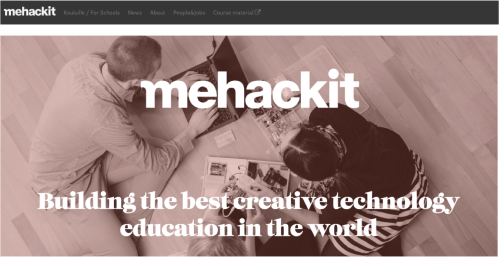
Mehackit and Startup High School, two of the Finnish educational innovations highlighted by HundrED, have found a different place within the conventional education system where new approaches may take root. Both organizations take advantage of the fact that at the upper secondary level (roughly ages 16-18) students have to take roughly 50 compulsory courses, but students can choose the topics for about 25 other courses.  In Mehackit’s case, they began about 2013 by offering workshops and “clubs” to engage young children in programming and coding – making things with technology, not just using technology.  But, as current CEO, Heini Karppinen, explained, Mehackit’s founders are part of a new generation of social entrepreneurs trying to respond to a context where “there are a lot of services that people would like to have, but that they don’t get anymore from the government.” In this case, the founders discovered that those children who attended Mehackit’s clubs and maker-fairs often had parents who were already tech-savvy and working in technology related jobs.  They worried that children who didn’t have parents in tech-related fields would ultimately graduate high school without having experienced the “maker-side” of technology.  To reach all children, the founders felt they needed a way to work within the formal education system.  As the new curriculum framework in 2016 also included computer programming for the first time, they saw a “niche” in working with older students, where teaching programming required sophisticated technical knowledge and skills that relatively few Finnish teachers possess.

mehackit.png

In response to this opportunity, Mehackit created 2 courses for 16-18 year old students that teach programming through projects focused on robotics and electronic music projects and creating multimedia art and graphics.  The courses are designed so that they can be offered by schools around Finland (and Mehackit has already exported them to Sweden and the UK as well) as easily and efficiently as possible. Mehackit not only provides teaching materials, they also hire and train instructors, many of whom are university students working on technology related degrees.  While Mehackit is a for-profit company and schools and municipalities purchase the courses, Mehackit also has a shorter workshop course for 12 to 16-year-old students; provides freely available open source materials; offers a new materials kit at cost; and has created teacher training workshops so that teacher can develop their own, comparable, courses.

HighUp

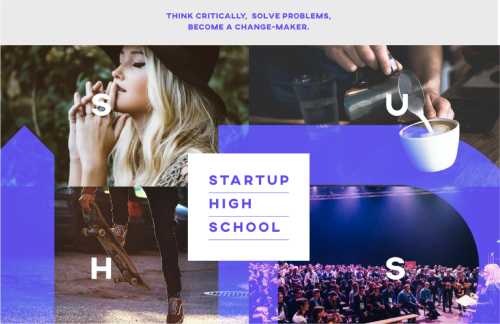
Startup High School has taken a similar approach to Mehackit.  Although Startup High School may eventually create a high school for entrepreneurial studies (along the lines of subject specific schools in Finland that focus on music, the arts, and sports), they are set to begin with an offering of three courses in the fall of 2017.  (Pekka Peura, a teacher whose work I highlighted in “Brand-name” teachers in Finland, is one of the founders of Startup High School.) Those courses are designed to enable students from a number of different upper secondary schools to learn “how to think critically, how to solve problems, and how to be a change maker.” In developing the courses, the founders seek to create the kinds of student-centered, active, and multidisciplinary learning opportunities emphasized in the new curriculum that they described as rarely emphasized in Finland’s typically highly-academically oriented high schools.  Courses will include original video interviews with a variety of Finnish entrepreneurs and artists, including CEO’s, rappers, actors, and dj’s that students will access as they develop their own Linked-in profiles and plans and portfolios illustrating their own design ideas.  Perhaps most importantly, the founders emphasize, students should leave the course as part of a network of peers with common entrepreneurial interests, connected via social media.  While Startup High School could charge for the courses, their plan is to make the courses widely available for free or perhaps with a nominal registration fee that, along with contributions from sponsors, would help to cover their costs.

Although Mehackit essentially delivers the instructors and materials to each school with whom they partner (and they map and track exactly where they are in reaching out to all schools across Finland), Startup High School offers virtual courses that they lead and administer themselves and that students in a number of different high schools can take as one of their 25 elective courses. In both cases, Mehackit and Startup High School are offering new topics and approaches as part of modules or “plug-ins” that not only fit within current course demands and expectations in Finland, but can also be offered as a conventional course in many other education systems.

Opportunities and challenges

            The new ideas and approaches endorsed by policymakers and highlighted by HundrED demonstrate how Finland’s national curriculum framework can support and encourage those who want to change their approach to teaching and learning. But the autonomy that teachers and schools in Finland enjoy also means that many can choose not to change their practice quickly or deeply.  As Rautiainen puts it, the framework and policy initiatives can “nudge” the system, but by no means guarantees that changes will be made.  For example, while some reports indicate that over 90% of Finnish municipalities are participating in the “on the move” initiatives, concerns remain about exactly how it has been implemented and how it is playing out for all students.

Those I talked to acknowledged that there are number of factors that might encourage and reinforce those who choose to use their autonomy to maintain more conventional classroom and school practices.  For one thing, while the new curriculum framework adds expectations for students to engage in interdisciplinary projects, little, if anything, has been left out of the “old” curriculum.  Like Singapore’s effort to create ‘white space” in the curriculum, the changes in the national curriculum framework in Finland try to squeeze more into the conventional curriculum and school day.

But at the same time that some elements of the framework change, many elements of the system remain the same and reinforce conventional practice.  Even without high-stakes annual testing like that in the US, the high-stakes exit exams at the end of high school help to align the whole system, but they also serve as constraints reinforcing the traditional divisions between subjects. Conventional textbooks provide similar constraints. As Antti Rajala, a former teacher and currently a researcher at the University of Helsinki noted, even as they benefit from high-quality textbooks, teachers who are trying to innovate sometimes see “the textbook as an enemy.” As a consequence, as Peura explained, one of the first steps he and others make to change their teaching is to go beyond the textbook.

Along with the autonomy of teachers comes a highly independent teaching force.  Teachers can choose their own professional development plans, and, in many cases, can choose to pursue their work on their own, rather than in collaboration with their colleagues. Peura reported that on one small survey he asked teachers why they don’t share their work more often, and their overwhelming response was that “colleagues” were the biggest obstacle. Peura sees the concerns that Finnish teachers have about changing as understandable, but notes that it means that when one or two teachers do try to make their work public or share it more widely, peers often object.

Perhaps most problematic, this commitment to autonomy runs smack up against Finland’s deep commitment to equity: if early adopters take off with the interdisciplinary projects but others do not, learning experiences across Finland are likely to become less and less comparable. In fact, those I spoke to were less concerned about overall decreases in average test schools and much more concerned that the PISA results and the results of the national monitoring tests are showing that student outcomes are more differentiated and less equitable than they have been in the past.  Illustrating the inherent tension between the autonomy of teachers and the rights of students, Rajala told me that in one of the schools where he is working the principal had to deal with the fact that several of the teachers did not want to incorporate an emphasis on digital skills into their teaching.  In order to respect their autonomy while still ensuring that all the students got the same digital learning experiences as their peers, the principal had to figure out a way to schedule students so that they all got a chance to work with those teachers who were actively working to incorporate digital skills into their classrooms.

Given all of these factors, in a system largely considered to be “working,” with few incentives to change, it should be no surprise that many both inside and outside the education system see maintaining the status quo as a sensible way to operate. That’s why from Tuominen’s perspective, the key issue is to find those innovations that are working – where there is both a clear and widespread need and where the knowledge, skills, and resources to make the necessary changes are also already available.  He cites as examples “the gaming room”, which, essentially provides the plans and materials so that schools can quickly and easily create a place where students can access the most effective educational games and use them during recess and other points during the school day. Similarly, the “house of learning” provides a set of stand-alone tools that help students to plan, track and assess their own learning, without requiring extensive training.  Tuominen does not expect all the “innovations” that HundrED identifies in Finland or globally to take off, but he believes that initiatives like HundrED can help to highlight and spread those that are gaining traction.  In the meantime, however, since the Finnish system is designed to “steer” not to penalize, there will be no grading, sanctions, or public humiliation. But changing the education system will continue to be a subject of public discussion in Finland, particularly when the next curriculum renewal takes place.

Thomas Hatch, Teachers College, Columbia University

hatch@tc.edu


SkillsFuture in Singapore

Last week on IEN, Helen Janc Malone, Santiago Rincón-Gallardo and Kristen Kew previewed their newly published book, Future Directions of Educational Change. This week, Pak Tee Ng provides highlights from his chapter in the book, focusing on the development of lifelong learning efforts in Singapore.  Pak Tee Ng is Associate Dean, Leadership Learning at the National Institute of Education (NIE), Nanyang Technological University (NTU), Singapore. Pak Tee’s latest work on the Singaporean education system and his latest book Learning from Singapore: The Power of Paradoxes is also summarized in his recent IEN post for the Leading Futures series, The Education Paradoxes of Singapore.

Introduction

I believe many people have studied or are studying the Singapore education system. But the spotlight tends to shine on the country’s primary and secondary education sector, given its stellar performance in international comparative tests.  The efforts aimed at promoting lifelong learning beyond the schooling years are often overlooked. However, if one examines the reforms in the education system carefully, one will discern that Singapore has been implementing a suite of strategies with aims much broader and future-oriented than merely having a good schooling system. When I published my book “Learning from Singapore: The Power of Paradoxes” in 2017, I explained this point and further explained that the standing in international comparative tests was not Singapore’s report card. Education for the young, continued learning for adults, and the good of the nation are the real objectives.

Therefore, when Helen Malone, Santiago Rincón-Gallardo and Kristin Kew invited me to contribute a chapter to their latest book “Future Directions of Educational Change”, I was delighted to do so and to present a more detailed account of the lifelong learning efforts in Singapore, a national imperative for the foreseeable future.

Lifelong Learning and SkillsFuture

Lifelong learning in Singapore has always been critical to the country’s development since its independence in 1965. The articulation of that became very clear in 1979 with the institution of the Skills Development Endowment Fund to encourage workers to upgrade their skills.  Government initiatives such as the Lifelong Learning Endowment Fund (LLF) in 2001 and the establishment of the Singapore Workforce Development Agency (WDA) in 2003 further showed the government’s commitment to promote learning beyond schooling. In 2015, all these strategies were brought into an umbrella initiative called SkillsFuture, with a high-powered SkillsFuture Council set up to champion lifelong learning and adopt a multi-sectoral approach to advance the movement. As part of this movement, a SkillsFuture Credit of S$500, that will be topped up at regular intervals, was given to all Singaporeans aged 25 and above.  This amounted to a budget of more than S$1 billion from 2017 to 2020.  Citizens can use this credit to subsidize their continuing education through a range of government-supported courses.

Latest Development in SkillsFuture

The latest developments in SkillsFuture show us how Singapore addresses the effect of disruptive technologies on the workforce. For example, all Singaporean workers can gain the foundational knowledge and skills to cope with the impact of emerging technologies through SkillsFuture. At a more advance level, the SkillsFuture for Digital Workplace Programme was launched in October 2017, with topics covering data interpretation and cybersecurity, to benefit a hundred thousand Singaporeans over the next three years. Results for SkillsFuture overall have been quite encouraging.  380 thousand Singaporeans benefitted from SkillsFuture programmes in 2016, 30 thousand more than 2015.

Support for those still in school is tremendous as well. Budget for post-secondary institutions (PSEIs) bursaries increased in 2017 from S$100 million to S$150 million. Adjustments were made to eligibility criteria so that more students would be eligible to apply for support to participate in SkillsFuture programmes. The number of students who will benefit from the bursary in deepening their skills is projected to increase from 12,000 to 71,000 students. In line with SkillsFuture, there is a shift in the philosophy of higher education to embrace ‘learning by doing’. The universities have begun creating and delivering ‘learning by doing’ programmes, in partnership with various industry stakeholders.

Mindset challenges

The toughest challenge yet for SkillsFuture is in changing people’s mindset regarding the relative value of skills versus qualifications, as Minister for Education (Higher Education and Skills) Ong Ye Kung articulated:

First, all of us – parents, students, educators – we will need to move our focus away from a relentless pursuit of academic grades, to the larger view of human development… Second, employers must likewise do the same. Hire based on interest, skills, and cultural fit, and not just based on grades and qualifications… Third, society needs to recognise and celebrate a wide range of successes – not just managers and leaders, but also entrepreneurs, craftsmen, technicians, sportsmen, artists.

The provisions of SkillsFuture are generous and continuously calibrated. The challenge to SkillsFuture, however, is a cultural and systemic one.

Conclusion

Against a backdrop of increased global competition and disruptive innovations, Singapore is not leaving it to chance that a new learning ecosystem will emerge, one that favors lifelong learning and timely acquisition of deep skills over a chase for paper qualifications. In discussing the direction of educational change around the world, it is noteworthy that SkillsFuture champions a new normal of skills over grades in Singapore, one that will prove critical to the nation’s continued prosperity.

Book Preview: Future Directions of Educational Change

In this post, Helen Janc Malone, Santiago Rincón-Gallardo and Kristen Kew preview their newly published book, Future Directions of Educational Change. Rincón-Gallardo and Janc Malone also discuss their new book in a podcast titled “Separating Good Change from Bad” on Harvard’s EdCast. A brief interview with Santiago Rincón-Gallardo on the Huffington Post elaborates on his work in this book, focusing on the connection between social justice and deep learning.

Book Preview: Future Directions of Educational Change

By Helen Janc MaloneSantiago Rincón-Gallardo,Kristin Kew

Educational change and social justice have often been thought of as fields on parallel tracks; however, the growing body of equity-focused work in education indicates that the two areas should be approached as intertwined streams that must be understood, examined, and addressed together to move the needle on meaningful change in our schools and education system at large. The newly released book, Future Directions of Educational Change (Routledge, 2018), is an anthology of fresh, global perspectives, designed to start a dialogue on salient questions we must address at scale to realize positive outcomes for all young people. Our book addresses social justice, professional capital, and systems change, elevating thought-provoking arguments at the intersection of equity, practice, and policy.

The book opens with a section titled Social Justice. While equity of educational opportunities and student outcomes has long been acknowledged as a desirable educational goal, the educational change field has touched upon social justice superficially in at least two ways. First, questions of power, oppression, and individual and collective freedom have been left mostly unexplored or pursued. And second, the connection between schools and the larger context in which they operate rarely takes center stage.

The four chapters in this section highlight some of the core issues and propose ways forward to infuse educational change practice, policy, and research, with a deliberate focus on social justice. Santiago Rincón-Gallardo (Ch. 1) proposes four theses to link educational change to the pursuit of freedom and social justice. Allison Skerret (Ch. 2.) sheds light on transnational students, the challenges they face when attending school in multiple countries, and possible solutions at the levels of classroom practice, school management, and education policy. Alfredo Sarmiento and Vicky Colbert (Ch. 3) discuss the historical and philosophical foundations of positive discrimination – giving more to those in conditions of disadvantage – and feature Escuela Nueva in Colombia as an example of high-quality education for children in rural and other historically marginalized communities. Patti Lather (Ch. 4) discusses what it means to do empirical research in an unjust world and discusses some of the implications of searching for an emancipatory approach to research in the human sciences. Taken together, the chapters in this section offer key insights on how to turn educational change into a deliberate vehicle to advance the dual – and often conflicting – pursuit of (individual and collective) freedom and a harmonious social order.

Education is the catalyst and central motivator for increasing human prosperity and equity and building more socially just nations. Investing in professional capital and human agency is a necessary and integral part of enacting and sustaining systems change. Building on the ideas from the beginning section of the book on social justice in directing educational change, authors in the second section of our anthology focus on the need for sustained, socially just reforms through the building of professional capital. Authors in this section share their stories on successful educational change reforms in the United States, New Zealand, and Canada.

Jon Saphier (Ch. 8) discusses the need for teacher ownership and moving educators into the political arena in the United States. To Saphier, the problem is, “not uncovering the knowledge for good teaching and is not revealing the components of a knowledge-based profession…but how to mobilize collective action of those to whom the power constituencies listen” (p. 111). In Canada, according to Carol Campbell (Ch. 9), leadership at the top needs to support skills and opportunity for sharing professional learning and exemplary practices and to “facilitate knowledge exchange for spread and sustainability of practices” (p. 128). In her stories of the Maori and Pacifica tribes in New Zealand, Jan Robertson (Ch. 10) shares her research on advocacy for those who most need the resources and the importance of having a holistic knowledge of systems change that appreciates and empowers marginalized student populations.  Robertson shares how capital is developed and aligned within a system to achieve its goals. The last author in the professional capital section, Alan Daly (Ch. 11), shares that embracing the value of building professional capital alongside socially just initiatives can provide a larger system of change – moving from individual silos and traditional grammars to shared responsibility and socially-networked systems-thinking. This has and can support transformational leadership that moves isolated people and schools into system networks that inspire and motivate within and across borders.

Educational change that is focused on social justice and professional capital at its core requires reimagining systems change. The last section of the book is designed to provoke new ways of thinking about educational change. Beatriz Pont (Ch. 13) examines the role policy, politics, and people have played in the constant churn of school reforms that have done little to address the underlying causes of inequity or to bring coherence to both design and implementation of meaningful change. Brahm Fleisch (Ch. 14) situates his chapter in the Global South—India, Kenya, and South Africa—as nations that have received little attention in the Global North, yet whose methodological approaches bring intriguing perspectives on measuring and moving change at scale. Pak Tee Ng (Ch. 15) furthers the conversation by addressing the need for systems alignment between education and workforce to promote lifelong learning that propels a society forward, as it is the case in the recent Singaporean efforts. The book concludes with a coherence framework by Joanne Quinn and Michael Fullan (Ch. 16) who pave the way for emerging discourse on future directions, collaborative cultures, deeper learning, and shared accountability.

Overall, as Andy Hargreaves notes in the book’s foreword, “System-wide change movements are beginning to reconnect with the humanistic purposes that have classically been central to the basic idea of what education is—a process of “leading out” of the whole person, not of depositing rote learning in standardized forms into systems of banking education. In doing so, these movements are also reconnecting with what teachers have always most valued—that their job is to develop the whole person, build character, create citizens, open up opportunity, and cultivate kinds of success that amount to more than a set of grades and achievement scores” (p. xiv).

The book illuminates present thinking on educational change and challenges conventional approaches to research, practice, and policy, proposing instead equity-driven alternatives that could shape education of the future. As Dennis Shirley concludes in the book’s introduction, “Educators must now stand up to the nettlesome realities that now confront us with fortitude and dignity, mindful of our historical responsibilities and with full gravitas of the consequences should we falter” (p. 6).


Lead the Change with Osnat Fellus and Helen Janc Malone

Osnat Fellus is a PhD Candidate at the Faculty of Education, University of Ottawa. Her PhD work focuses on learning and teaching with a specific concentration in theories of identity in mathematics education. Dr. Helen Janc Malone is Director of Education Policy & Institutional Advancement and is National Director of the Education Policy Fellowship Program at the Institute for Educational Leadership. She is also an Adjunct Professorial Lecturer at American University.

This Lead the Change issue captures a qualitative analysis of the first 70 issues of the series. These findings were presented at AERA 2017 in the Educational Change SIG symposium. Malone and Fellus offer a reflective notion of the series’ potential as a site for considering and reflecting on educational change:

One venue for engaging in conversation about educational change has been the Lead the Change Series (Educational Change SIG, 2011-present). The Series features both established and emerging educational change experts from around the globe who have engaged in groundbreaking scholarship. The Series serves to offer an opportunity to identify common challenges across contexts, to highlight promising research, to offer insight on small- and largescale educational change, and to spark collaboration across the educational change community.

This Lead the Change report, unlike the majority of issues, provides a broad overview of the series and reflects on its ongoing work. It explores many previous interviews, but also points to future trajectories for the series.

Change Series (Educational Change SIG, 2011-present). The Series features both established and emerging educational change experts from around the globe who have engaged in groundbreaking scholarship. The Series serves to offer an opportunity to identify common challenges across contexts, to highlight promising research, to offer insight on small- and largescale educational change, and to spark collaboration across the educational change community.

This Lead the Change report, unlike the majority of issues, provides a broad overview of the series and reflects on its ongoing work. It explores many previous interviews, but also points to future trajectories for the series.

Further Lessons with Pasi Sahlberg

                  Since its release in 2011, Pasi Sahlberg’s Finnish Lessons (a version 2.0 was released in 2015) has galvanized researchers and practitioners working in fields of education–some coverage of this interest and reflections on Finland’s education system can be found in IEN’s archives over the past few years. Sahlberg’s book explores the evolution of Finland’s educational system into a world-class system. Many saw Finland’s story as offering a direct rebuke to increasing the standardization and increased testing occurring in the U.S. at that time. As Sahlberg traveled and spoke widely on the book, he began to notice ways in which these “lessons” were taken up or ignored. Building on these new “lessons,” Sahlberg recently came to Teachers College, Columbia University to discuss his new book, FinnishED Leadership, with Sam Abrams, the director of the National Center for the Study of Privatization in Education at Teachers College. Jordan Corson, a Managing Editor of IEN, had a chance to attend this discussion and share some key takeaways with us here. Teachers College has also recorded a video of the event, which can be accessed here.

Sahlberg and Abrams began their conversation by exploring some of the surprising reactions to Finnish Lessons. Sahlberg was shocked by people who seemed to intensely seek reasons to discount the success of Finland’s education system. For example, some suggested that Finland’s success is easy to achieve given its small population. Sahlberg retorts that little changes when shifting the unit of analysis to something like the state level in the U.S. Additionally, Sahlberg found that many people began cherry picking ideas from Finnish Lessons and developing myths about the Finnish education system, something on which he elaborated later in the talk. Other people, greatly inspired by the book, wanted to know how to simply copy this system. Given that Finland’s success is rooted in a specific context, Sahlberg has tried to warn, “don’t try this at home.” At the same time, he does see potential in creating educational change inspired by the Finnish system. It was this type of response that spurred Sahlberg’s thinking for his new book.

FinnishED Leadership begins with what Sahlberg calls an “accidental lunch”—an anecdote about an encounter with former New York governor George Pataki before the two spoke at a conference. As Sahlberg describes it, he and the governor met at a lunch and discussed solutions to schooling problems in the United States. While the governor initially reiterated common refrains about the need to kick out bad teachers and hire good teachers or create more competition through school choice, he also appeared taken with some of Sahlberg’s insights into how Finland achieved its success and reputation. As they rode to the conference, Sahlberg wondered what it would mean if someone with the influence of Pataki suddenly took up and promoted these ideas. He pondered what it would mean if Pataki walked into the conference and said, “I have another speech written, but I’m not going to read that…”. While Pataki ultimately stuck to common thinking about education reform (Abrams reminded the audience that Sahlberg intentionally calls this movement a Global Education Reform Movement), this experience inspired Sahlberg to imagine other leaders taking up Finnish lessons. He wondered what the world could learn from educational changes in Finland.

After this anecdote, Sahlberg spoke to the main points in his book. First, he argued for more of a break in the school day. Breaks mean recess and time off for the kids, but they also mean a break for the teacher. Altering the rhythm of work, he argues, including providing specific spaces like break rooms, creates a much better work environment. Both students and teachers have more time to mess around and hang out, things that allow for rest but can also lead to productive learning. Second, Sahlberg argued for what he calls “leading with small data rather than big data.” What happens inside the classroom is something complex. It is often something for which there is no algorithm. Additionally, if attention is paid to the small data of everyday classroom life, then teachers gain more agency in decision making and a school’s direction. Sahlberg also cautioned that big data can lead to spurious correlations. He provided multiple examples, but perhaps the most intriguing is that increased ice cream consumption correlates to higher PISA results.

Third, Sahlberg pointed out that Finland’s success is rooted in notions of equity. He decries the notion that school must choose between excellence or equity, arguing that education systems can have both. He suggests that a system with high learning outcomes can and should also be an equitable system (and equity means enfranchising teachers, looking at whole learners, and attending to equity in areas such as socioeconomic status). Furthermore, Sahlberg contends that curricular equity relies on schools being able to make their own choices. Fourth, and concluding by returning to the earlier conversation about responses to his first book, Sahlberg talked about issues of “urban legends about Finnish schools.” For instance, he found that many people believed that Finnish students do not have homework. “Of course,” he told the audience, “Finns have homework. It’s just different. And it looks different.” Such myths relate to the broader idea of cherry picking ideas and applying them in isolation. Sahlberg argued that places that want to achieve Finland’s success focus specifically on outcomes but do not look at the many potential paths toward getting there. Speaking specifically about the U.S., he pointed out while the U. S. clamors for the secret to Finland’s success, Finnish schools borrow new research and practice from places like Canada and the U.S.  For instance, Finnish schools integrate Howard Gardner’s notion of multiple intelligences into everyday classroom life. Meanwhile, the U.S. has not deeply explored or incorporated such ideas, or even made steps to move beyond isolated ideas.

Sahlberg highlights these elements of the Finnish educational system, but also acknowledges the difficulties in their broad application. During the Q&A, Diane Ravitch interjected with a question of where we might find state level politicians who listen to these four suggestions. Another audience member asked about the difficulty of leading with small data in the face of international agencies (e.g. Sahlberg’s former employer, the World Bank) that increasingly focus on big data. Sahlberg noted these difficulties but affirmed the possibility of using work like his new book to influence such policymakers. Abrams also pointed to a number of examples of success: Dallas schools have begun to focus more on recess and play time, Orange County schools have emphasized science education, and the state of West Virginia has shifted its approach to standardized testing.

Ultimately, Sahlberg’s goals here are help lessons from Finland’s success translate across contexts. To do so in the U.S. and elsewhere will require complex coordination. The ideas may be deceptively simple; Sahlberg reminds us that the true difficulty is in their implementation.

-Jordan Corson

The Education Paradoxes of Singapore

In the latest post in the Leading Futures Series, edited by Alma Harris and Michelle Jones, Pak Tee Ng reflects on productive paradoxes driving Singapore’s apparent success and future direction. Pak Tee Ng is an Associate Professor in the Departments of the Office of Graduate Studies and Professional Learning and Policy & Leadership Studies at the National Institute of Education in Singapore, and Associate Dean, Leadership Learning. He is currently leading several projects on topics related to educational change in Singapore, including teacher mentoring, teacher motivation, and school leader perspectives toward change. Pak Tee Ng has also been interviewed in the Lead the Change series, featured on IEN in 2015. His latest book, Learning from Singapore: Power of Paradoxes, expands upon the ideas raised in this post.

The Education Paradoxes of Singapore

The excellent results in various international comparative tests put Singapore into a select group of countries and jurisdictions hailed as shining examples of educational success. On the PISA 2012 tests, Singapore students excelled not only in mathematics and science, but actually did better in English reading and comprehension compared with those from English speaking countries (!). For a country in Asia, a continent where students are thought to be rote-learners rather than thinkers, it is against the grain that Singapore students also topped PISA’s 2012 computer-based assessment of problem solving. Interested parties from many countries and jurisdictions visit Singapore to find out its key success factors.  They are also curious as to where Singapore could possibly be heading next, if it is already at the top.

Key Success Factors

Many international experts have analyzed the key success factors of Singapore’s education system.  Generally, Singapore’s success is attributed to shrewd educational policies that take a long-term view, and that are implemented with high levels of fidelity by the schools. Its meritocratic system ensures that students’ advancement in the education system is not based on race, religion or family background, but on their academic merit.  Singapore invests heavily in education, not just for children but for the teachers as well.  It cultivates professional capital systematically by employing high quality teachers, supporting professional development, developing systematic career paths, and grooming promising educators to become leaders. The curriculum is rigorous and there are support programs for students who are lagging behind. There is strong school accountability through a sophisticated school self-evaluation system.

However, some people who know something about Singapore still find aspects of its education success puzzling.  Many people have asked me how Singapore could possibly develop students who were the best problem-solvers in the world, when these students were gearing themselves to do well in standardized tests. Others who have actually visited Singapore schools remarked to me that it was strange that all school leaders in Singapore they have spoken with seemed so proud about how they aligned themselves tightly with national policies and at the same time claimed that their school programs are different from other schools!  When I was overseas, one person asked me why some Singapore parents would want to send their kids to schools overseas if the Singapore school system was so good. Another from the same country asked me how she could get her children into Singapore government schools.  So, there seems to be a richer reality to these generalized key success factors. These are Singaporean paradoxes to be appreciated. That is why in my latest book, “Learning from Singapore: Power of Paradoxes” I shared the Singapore story, told from the lens of paradoxes, rather than the ‘usual’ key success factors.

To understand Singapore, one has to appreciate the multiple pictures of the country that sometimes appear contradictory.  You get a different picture depending on with whom you speak and the perspective that you take. For example, if you talk with the parent of a high performing student, you may get one picture. If you talk with the parent of a low performing student, you may get another picture. If you talk with the parent of a high performing student, who disappointingly did not achieve perfect scores, you may get yet another picture. If you talk with the parent of a low performing student who surprisingly achieved better-than-expected scores… you get the drift. Also, because Singapore’s education system is undergoing change, both new and old paradigms exist at the same time. So, you can find examples of activities that reflect the new paradigm. You can also find those that reflect the old one.  Singapore has students who are problem solvers and those who are rote learners, and even those who are both problem solvers and rote learners.  Therefore, there are many different pictures of Singapore, each focused on a different part of the rich tapestry of realities. That makes Singapore sometimes paradoxical.

But these paradoxes are sources of creative tensions. A key strength of Singapore is that it is able to embrace and draw strength from the creative tensions generated by these paradoxes. They drive dialogues, rather than wedges, because its educators are united in the moral purpose of education.  The result is positive change, albeit non-linear and non-clinical.

There are many paradoxes in Singapore, but I explored four in my book. The first paradox is ‘Timely Change, Timeless Constants’. Singapore pursues change relentlessly, especially in moving away from a system that is obsessed with examination results, to focus on holistic education and providing more pathways to success for children. Yet, it is also resolute in holding on to certain timeless constants – values that serve as the foundation for change. Singapore exhibits the courage to change what needs to be changed, and the wisdom to hold invariant what should not change.

The second paradox is ‘Compassionate Meritocracy’. Singapore adheres strictly to its governing principle of meritocracy. A person’s success should be based on merit, not on race, language or religion.  However, the meritocratic principle in the education system can also mean fierce competition among schools and among students.  Therefore, Singapore has been developing a compassionate side to the meritocratic system, where pathways are built to help children who may be left behind to find success too.

The third paradox is ‘Centralized Decentralization’, an approach of school system management that centralizes strategically to achieve system-level synergies, and decentralizes tactically so that each school may cater more specifically to its students.  That is why Singapore school leaders align their school tightly with national policies and at the same time design programs that are different from other schools to suit their own context!

The fourth paradox is ‘Teach Less, Learn More’, an exhortation to teachers to reflect on their pedagogies to engage students fully in the learning process. The idea is that if teachers teach less but teach better, students should learn more and learn better! In this way, Singapore tries to improve the teaching and learning dynamics in the classroom.

Future Direction

Where is the Singapore education system heading in the future? Although Singapore ranks highly on international comparative tests, it is keen to improve the quality aspects of education and to open up more pathways for young people with different strengths and aspirations to find success in their own ways.  Singapore aims to be an excellent school system for all, rather than a system with good schools for some.  In 2012, Heng Swee Keat, who was then the Education Minister, presented a vision of ‘Every School, a Good School’ for the education system. Actually, in Singapore, the baseline standard of all schools is held high enough so that any school is good enough to offer their students, regardless of socio-economic status, a good chance of future success.  Current Minister for Education (Schools), Ng Chee Meng, said in Parliament that “in many countries, parents are not optimistic that their children will have a good education if they come from the lower socio-economic quartiles. In Singapore, this is not the case. In the 2015 PISA results, about half of our Singaporean students in the bottom socio-economic quarter were found to be resilient, performing better than what their socio-economic status would otherwise predict. This is almost twice the OECD average.”  The current challenge is to get Singaporeans to embrace the idea that any school that their child may go to is a good one, and to reduce the competition in the country among parents to get children into ‘elite schools’.

The education system also hopes to develop in students an entrepreneurial spirit, so that they have the courage to pursue their passions beyond the classroom and the well-trodden paths in the future.  It starts with improving curriculum and pedagogy, so that children find joy of learning and will be intrinsically motivated to learn. The end result is a generation of young people with deep skills, expertise and zeal for lifelong learning. At an MOE awards ceremony in 2017, Minister Ng wore a bow tie and told the audience that it was special bow tie as it was made by a secondary four student from a local school.  Using cut-offs from tailors to make bow-ties suitable for different occasions, this student had won the 2016 National Youth Entrepreneurship Challenge and represented Singapore in the 2017 Network for Teaching Enterprise (NFTE) Global Showcase in New York. Minister Ng said “A Secondary Four student, who was inspired by his school and had the foundation of knowledge to see what is possible, started a journey to chase his dreams. I do not know if he will succeed, but I will certainly make sure I support him. I hope our whole system will support his journey of discovery and exploration to chase his dreams.”

But, this change in education does not stop in schools.  Lifelong learning is what Singapore needs of its people.  Minister of Education (Higher Education and Skills) Ong Ye Kung shared in Parliament the story of one of Singapore’s top film-makers, who went to a Polytechnic for an Advanced Diploma in Film Production, after fulfilling her parents’ wish for her to complete her university education.  Pursuing her passion, she would later win a Special Jury Prize at the Sundance film festival.  Minister Ong commented that the story was one “of pragmatism and passion; of meeting parents’ expectations but still chasing your own dream; of lifelong upgrading yet not conforming to the notion that what follows a Degree must be a Masters degree or a PhD; of venturing beyond Singapore while remaining Singaporean at heart” and that this “is a story about what education can and should do for Singaporeans, for all of us, across every field.”

Conclusion

Singapore’s experience with educational change show that paradoxes can be powerful in driving positive change, provided people are united in a common purpose, and there is commitment and tenacity to see through meaningful and long-term education reform.  Despite achieving what would appear to be great success in education, Singapore is choosing to ditch its past success formula for the sake of the future.  It recognizes that every country or jurisdiction is different and each will have to find its own path.  For a small country that has survived against the odds for five decades, it has the gumption to chart its own path and every intention to thrive for many decades to come.

“Brand-name” teachers in Finland?

New York Times’ reporter Natasha’s Singer’s recent article on “brand-name” teachers, created quite a stir.  Reaction in the Times and elsewhere in the US focused on “topdog” teacher Kayla Dalzel and what EdSurge called the “murky relationship between edtech developers and the educators who tout their products.” For me, the emergence of “brand-name” teachers in the US (and “super tutors” and “celebrity tutors” in places like Singapore and Hong Kong) also highlights both long-standing tensions between private gain and the public good and the way that cultural and economic context shapes education systems.

The discussion reminded me of a conversation I had this summer with Pekka Peura, a Finnish high school math and physics teacher who could be described as an “entrepreneurial teacher.” Peura takes advantage of Finland’s celebrated autonomy for teachers by regularly trying out new ideas in his classroom.  At first, he simply experimented with changing his homework assignments, giving all the assignments to students in 7 week blocks rather than every single day, and letting students decide when and how to complete their work. Now he doesn’t use exams (almost unheard of in the highly exam-driven context of Finnish high schools and in math and physics courses in particular), and he doesn’t do any grading – the students evaluate themselves. Peura explained that he made these changes in his classroom in order to create learning activities and environments where students want to work hard and can evaluate and direct their own learning.

Peura surprised me, however, when he told me that, at the same time, he works systematically to build his reputation and “brand” among educators in Finland. He does that by making his teaching visible and sharing his plans and tools (like a seven week plan for teaching vector calculus) in his own blog, Facebook page, and YouTube videos, as well as in a new book, Flipped Learning, by Marika Toivola, Markus Humaloja, and Peura (the book will be published in English this fall).

Peura’s efforts to “build his brand” have paid off. His Facebook page now has 13,000 members, and he regularly receives invitations to speak at conferences and visit other schools and other countries. He’s gained access to other noted educators and those who wield power and influence in education, and his books and other works certainly have a bigger audience than he would otherwise have had.

Since my Norwegian and Finnish colleagues consistently emphasize the importance of equity and common identity – and not building an “individual brand” – Peura’s approach seem more American than Nordic. But Peura has always had a larger goal in mind: changing the traditional, academic focus of the whole Finnish education system.  As Peura explained, building his reputation is a key means of encouraging other teachers take advantage of the autonomy offered in the Finnish education system and to pursue and share their own efforts to change conventional instruction. “We just need a lot of teachers that are creating their own books, and blogs and leading their own subjects,” he told me.

From Peura’s perspective, Finnish teachers need to go public precisely because it is so counter-cultural. Although the Finnish education system is well-known for supporting teachers’ autonomy and independence, Finnish teachers are not particularly prone to collaborate or share their work. Furthermore, although many know the Finnish education system is high-performing, as Saku Tuominen (an expert on innovation and founder of HundrED) regularly points out, few people can name a single innovative educational tool or practice developed in Finnish classrooms (but everyone seems to know that Angry Birds was launched in Finland).

Given these circumstances, Peura explained to me that he feels that he not only needs to go public with his own work, he needs to help build an audience that is interested in hearing from educators and to encourage other educators to make their work and ideas public as well.  As he put it, “if you have some good tools or ideas to share, there is no one to share with unless people will listen to you.”

At the same time, Peura makes it clear that the relationship between commercial enterprises and classrooms in Finland is also dramatically different from the US.  As he wrote to me:

In Finland we don’t promote companies very easily. I don’t know any teacher, who gets money from some company to advertise them. But it is familiar that some companies give technology hardware or software for free for some classrooms to test them. But we give fair feedback, if the product doesn’t work in the classroom, it is said out loud.

From my point of view it is really important NOT to connect your name-brand with some one company, because we are a very small [community] and teachers know each other, especially if you are a well known teacher, and it eats into your credibility as a change maker. And one thing that is also quite common in Finland is that we try to seek open/free solutions, so if there is a free and a commercial product/solution, we promote the free one. It is crucial for your credibility to promote commercial products only if it’s the best and only solution for some problem. 

There are teachers like Kayla Dalzel and Pekka Peura all over the world, and all have to contend with the tensions between personal gain and the public good, but the context is different.  In this case, when it comes to the US and Finland, it all comes down to trust.  In Finland, they trust teachers.  In the US, we don’t.

We sometimes forget why that’s the case.  As Peura points out, trust, visibility and reputation are inextricably linked everywhere, but Finnish educators work in a system designed to build trust in teachers. US educators do not.


Tom Hatch

This post can also be read at thomashatch.org

Lead the Change Interview with Kenneth Russell

Kenneth Russell is an Education Specialist with UNICEF, currently focusing on education reforms in Zimbabwe. Previously, he worked in Sri Lanka and in Jamaica, where he studied community participation in schools. He holds an Ed.M. in International Education Policy and Ed.D. from Harvard’s Graduate School of Education.

In this interview, part of the Lead the Change Series of the American Educational Research Association Educational Change Special Interest Group, Russell shares his perspective on the vital role of public education in Sub-Saharan Africa, especially as governments are strapped for resources and for-profit and non-governmental organizations appear to offer more successful services in the short-term. While acknowledging the importance of cross-sector partnerships, he emphasizes the need to support sustainable, systemic changes that respond to particular African cultural and political contexts. Russell argues priorities should be on comprehensive reform, such as curriculum and teacher preparation, and meaningfully including youth in the process of educational change. As he puts it, reflecting on the AERA 2017 theme of “Dreams, Possibilities, and the Necessity of Public Education”:

The dream, which we should all share, is for public education systems to develop robust curricula and provide the investments that allow all children to complete a high quality basic education. This education should help young people develop the range of skills and competencies required for 21st century citizenship. This requires strong, and in some cases, non-traditional partnerships within a robust public education framework. This education framework should allow for flexibility in how education is offered and who provides educational services; it should be creative and innovative in terms of how content is developed and delivered; it should be robust in regulation, supervision, and support for service providers, teachers and students, and; it should be unflinching in the drive to ensure the most marginalized get priority access to education services.

This Lead the Change interview appears as part of a series that features experts from around the globe, highlights promising research and practice, and offers expert insight on small- and large-scale educational change. Recently Lead the Change has also interviewed Nic Spaull, himself based in South Africa.