Category Archives: About K-12 International Education News

Lockout and reform: A turbulent year for schools in Denmark

Jakob Wandall

Jakob Wandall

As the school year begins again in Denmark, we asked education researcher and consultant Jakob Wandall to take a look back at the lockout that closed the schools last March, review the key disagreements that led to the standoff, and consider the implications for the upcoming school year and beyond.

In Denmark, the month of March is usually the most intense period of time in the school year as teachers and students prepare for final examinations; however, this past year was an exception as schools were closed. The Municipalities Association (KL), backed by the center-left government, closed the schools in an effort to dismantle long-standing teacher privileges that the teachers’ union refused to concede in negotiations. The 99 municipalities in Denmark are responsible for running the public schools.

In the first days of April, the four-week “lockout” of teachers came to an end, but as a result, schools are now valued even more highly by the more than 600,000 pupils and about 60,000 teachers who were affected.

The standoff between the Municipalities Association (KL) and the Danish Teachers’ Union (DLF) raised questions about the viability of the so-called “Danish model” on the public sector labor market, which is largely governed by collective agreements between employers and trade unions, relative equals in negotiations. These two parties are accustomed to reaching agreements without the need for the national government to step in through legislation.

Danish teachers protest during teacher lockout.

Danish teachers protest during teacher lockout.

This dispute arose because the main teachers’ union did not want to give up the principles upon which working hours were regulated. A full-time teacher taught approximately 25 class periods per week (45 minutes per lesson), unless it was decided that the teacher should perform other tasks (e.g. administrative work, guidance of pupils, further education). This equals approximately 19 teaching hours, and a total of 41 working hours per workweek. This pre-lockout arrangement resulted in schedules that consisted of less than 40% of working hours spent teaching, and no obligation for teachers to be present at school during the remaining working hours. Historically, this schedule represented the belief that teachers had a right to work independently on planning and organization.

According to the Danish model if the parties cannot come to an agreement and further negotiations seems useless, there are four possibilities: the prior agreement could be prolonged, the union could strike, the employers could institute a lockout, or the government/parliament could intervene through legislation as a last resort. The idea behind the strike/lockout is that this should hurt both sides: employers lose production and the workers lose wages. In the public sector, where there is loss of production, there is a greater risk for local politicians as the population could turn against them. In this case, there were several unsuccessful attempts by KL to dismantle the existing working time agreement with the teachers prior to the ultimate lockout of March of 2013.

While Danish students usually go to school from about 8 AM to 1 PM and often attend a publicly financed after-school club, the government and a large part of the opposition to the existing agreement wanted to extend the school day.  The additional time would be devoted to academic work and give less time for “free” play, which is something the Danes have always prioritized. Generally, the teachers were against this approach as well as the proposed changes to their workweek, which was viewed as a preliminary step to making the school day longer in the future. They wanted to solidify their right to a specific length of preparation time in a national agreement rather than leave it to local heads of school who may be pressured by budget considerations.

In the media, the government’s reform was presented as very popular; the general school debate over the last decade has been strongly influenced by mediocre PISA results. KL pointed to teachers’ working hours as the main cause of the PISA scores.

The teachers' union DLF, led by Anders Bondo Christensen (left), in grueling negotiations with Michael Ziegler (right) and KL (Photo: Scanpix)

The teachers’ union DLF, led by Anders Bondo Christensen (left), negotiated with Michael Ziegler (right) and KL (Photo: Scanpix)

At the start of the lockout, parents were faced with the prospect of no school and not knowing when it would start again. It was particularly awkward and difficult for the children. But the parents recruited grandparents, took vacation early or brought the kids along to their workplace as many companies established educational facilities or made space available for the kids. The vast majority in the population felt that this was a legitimate fight between municipalities and the teachers union, and that it should be fought without intervention.

On April 2nd, The Danish parliament passed a law that decided the terms and conditions of Danish teachers without consulting them. The DFL argued that the lockout was premature, heavy-handed, and unfairly one-sided in favor of the local authorities. The teachers union had lost the battle.

But what about the teachers? Many of them spent a month trying to mobilize support led by their trade union and used Facebook and email to show the Danes that they were against the action taken by KL. Most appeared to be delighted to get back to work, despite the general opposition to the agreement forced through by the government. After the conflict everyone worked together and the majority felt that there were no negative effects on cooperation inside the school. Many local governments and school leaders silently disapproved of the lockout. Despite the loss of one month, the mandatory tests and examinations were carried out according to plan. Whether the students have learned less will probably never be explored.

On June 8th 2013, the government and a majority of the opposition in the parliament agreed upon the details for a new plan for school reform. Beginning in August of 2014, the students in Denmark will be spending more time in school. At the same time the applications to teacher training colleges in Denmark has dropped dramatically and 1 out of 2 teachers in Denmark is considering leaving the profession.

The debate over whether this additional teaching time will lead to a better school and more proficient students is ongoing. Meanwhile, at this year’s annual Soroe Meeting (a traditional meeting that brings together those most familiar with pressing educational concerns, including members of parliament, educational journalists, civil servants, researchers, and others) invitees met to discuss leadership and preparation for change. This annual meeting has a strong impact on Danish educational policy, which makes this year’s theme (“Klar til fremtidens skole,” meaning  “Ready for the School of the Future”) of great interest to those concerned about what will happen with Denmark’s schools in the near future. While reporters in attendance do not write about what is discussed at this informal meeting, many attendees shared their experiences on Twitter.
For more information:

Singapore

Educators need to make primary school engaging for students: Heng Swee Keat

Channel News Asia (July 10, 2013)

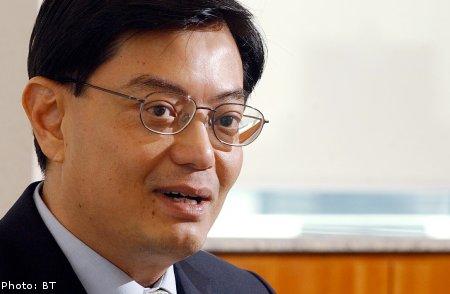
Minister Heng Swee Keat

Minister Heng Swee Keat

In the continuation of efforts to deliver an engaging education to the young so as to fulfill the vision of a Student-Centric, Values-Driven Education, the Ministry of Education organsied the inaugural Primary School Education Seminar and Exhibition. About 2200 teachers attended the seminar during which the Minister of Education outlined the principles of primary school education – “to build strong fundamentals, to provide active, visible and interactive learning, to give feedback to support learning and to affirm the children’s efforts” – so as to lay a good foundation for life long learning for the young charges. The exhibition focused on the demonstration of teaching approaches that promote engaged learning and the holistic development of children.

For more information:

Minister’s speech

A view from Australia

Dr. Leila Morsy Eckert

Dr. Leila Morsy Eckert

Recent reports from Australia question how the changes outlined in the Gonski school funding reform would be impacted by the outcome of the nation’s recent election, in which Prime Minister Julia Gillard was replaced by her opponent, Kevin Rudd. We asked Dr. Leila Morsy Eckert, a Lecturer in the School of Education at the University of New South Wales, to provide us with some background information on the reform effort, different perspectives on the issue, and the implications of this reform for education in Australia.

What does this reform mean for education in Australia? How will it change?

The Better Schools: A National Plan for School Improvement, colloquially known as the Gonski reforms, are in principal meant to account for the real cost of educating a child. Funding is allocated to schools on the basis of the average cost of a student’s education. A base amount of funding will be allocated per child. Additional funding, or “loadings,” will be given to schools based on whether the children who attend that school are, on average, disadvantaged. Disadvantage will be measured on the basis of socio-economic status, language background other than English, indigeneity, rural or small schools, and disability. Funding is sector-blind, meaning that the Catholic Schools Sector and the Independent (Private) Schools Sector will also receive money. 

What are some of the different perspectives on the issues? 

Overall, there is consensus that the current funding system is unclear and unequal (much funding is duplicated, and it is difficult to trace where funding is coming from and where it is going to). However, Catholic School and Independent School representatives have been concerned that they will lose money under the new policy. Others still believe that the premise of the new funding mechanism itself is flawed. Indeed, the Federal Government in Australia funds non-government schools. Many education researchers believe that this has resulted in a system where any family that can afford to send their child to a private or Catholic school does so. One consequence is that public schools have become a place of last resort for all those who cannot afford a private education. The Gonski reforms continue this trend of federal funding of non-government schools. 

What do you expect will be happening in the near future? 

While the reforms have passed in the Senate, it is unclear what will happen next. Politically, there has been a change of leadership—Julia Gillard, the driving force behind the reforms, was replaced as Prime Minister last week by Kevin Rudd, who supports the reforms but to a less fervent degree than Gillard. Also, not all Australian states and territories have signed up to the federal reforms. So, it may be a slow start for any actual change to roll out across the country. 

For more information:

Independent schools sign up to Better Schools plan in $1bn deal

Giles digs in on Better Schools funding scheme

Gonski reforms in ‘chaos’: Pyne

Teacher Education in Norway

In “Examining Features of Teacher Education in Norway,” recently published in the Scandinavian Journal of Education, Karen Hammerness, a Fulbright Grant recipient (2009-2010), describes the vision, coherence, and opportunities to learn she observed in teacher education programs in Norway.  In this post Hammerness and Kirsti Klette, Professor at the University of Oslo, Co-Directors of an ongoing study of comparative teacher education in Norway, Finland, the US, Chile, and Cuba, discuss recent teacher education reforms in Norway.

Screen Shot 2013-07-10 at 10.53.43 PM

Karen Hammerness, Inga Staal Jenset, and Kirsti Klette

At the beginning of this millennium, Norwegian educators and policy makers were surprised to find that Norwegian students had performed lower than the mean in comparison to other OECD countries (and in comparison to other Scandinavian countries) on international tests—a phenomenon that became known as “PISA shock.” In response, educators and policy makers in Norway took a number of steps to improve the quality of teaching, to boost recruitment into teaching, and to increase respect for the profession of teaching. For instance, in 2009, the Ministry of Education proposed new standards for teacher education curriculum and created new curricular guidelines. In addition, in recent years, the country has been investing substantial resources in teacher education, including supporting research grants intended to better understand and develop quality teaching and teacher education.

One of the key debates around teacher preparation today in Norway is one that we see in many of the other countries in our study as well—it revolves around the role that practice plays in teacher preparation. For example, the study described in “Examining Features of Teacher Education in Norway” revealed that the Norwegian teacher educators interviewed saw schools as the primary site where student-teachers should learn about practice: an assumption that learning about practice should be relegated specifically to school settings. They did not describe university courses as a site for novices to learn about teaching practice—reflecting a historical separation between theory and practice that has characterized the field of teacher education in many countries for years. This separation can make it difficult for student-teachers to see the relationship between what they learn in their university courses and their experiences in real schools.

However, some teacher educators in Norway are now embarking upon efforts to try to address these issues and bring the teaching of practice more directly into the teacher education curriculum. For instance, the teacher education program at the University of Oslo has redesigned its curriculum to focus upon core practices of teaching (such as observation of children; classroom management; and assessment of learning). Faculty report that the pilot program has been successful, in terms of student-teachers’ evaluations of their experiences and learning, so that initial plans to revise only the mathematics coursework have been extended to other subject areas.

These efforts in Norway build on work by educators like Deborah Ball and Pam Grossman in the U.S. who have been examining the teaching of “core” and “high leverage” practices to novice teachers. In our ongoing comparative  study of teacher education programs in five countries we are also seeing a number of different efforts to bridge the gap between theory and practice. Programs in Finland, for instance, have increased the use of videos that student teachers take of their own practice, so that student teachers have multiple opportunities to examine their own classroom teaching with expert teacher educators coaching them in their work.  In addition, the Oslo University program and a program in the US at Stanford University, provide student teachers with extensive opportunities to analyze pupil learning, drawing on samples of K-13 classroom work.  Meanwhile, student teachers at the University of Santa Barbara in the US and at the University in Havana in Cuba report that teacher educators explicitly model the kinds of practices discussed in class, such as how to give good feedback, orchestrate classroom discussions, and organize groupwork. All these examples reflect different ways that teacher education courses can make linkages between theory and practice. One of the challenges of this work, however—which we again see across many contexts—is that focusing upon teachings practice in university courses requires very different roles for teacher educators. This shift to practice demands teacher educators use many more materials and resources from real classrooms and requires them to shift their own teaching to provide more attentive and careful coaching around specific, targeted teaching practices.

For more information:

Coherence and Assignment Study in Teacher Education (CATE) at the University of Oslo

Austria

Austria’s Families spend 118 Million Euros a Year on Tuition

by Walter Müller, derStandard (June 25, 2013)

*Original article in German

On average, Austrian families pay more than 600 euros per year in tuition. Extrapolated from the data of 2,901 surveyed parents, a total of 118 million euros are paid for tutoring. About half of surveyed parents feel “very strong” or at least “noticeable” financial stress caused by the cost of tuition. This relates specifically to socially and financially disadvantaged households, if paid tuition is affordable at all. But the high tuition costs are only part of the problem. More than three-quarters of the respondents answered that they need to learn regularly with their children at home. Six out of ten parents do generally find it hard to help the children with their homework and check their knowledge on tests or homework. Education expert Bernd Schilcher explains that the issue of tuition is “basically a scandal.” The reason why high sums need to be raised by the families for private tuition in Austria lies, according Schilcher in the “too-short school days.” Austrian students spend 180 days a year, which Schilcher believes is not enough time. He believes that a new school system with instruction and exercises in the afternoon would cut the need for tutoring in half.

For more information:

Survey: Luxury Private Tutoring

Educational Testing in China, France, and Singapore

Reports in news publications focusing on Singapore, China, and France, show that prominent educational researchers and politicians are raising questions about educational testing, and even introducing reforms that drastically alter the testing landscape.  * Links are embedded as hyperlinks below.

China

According to a new document released by China’s Ministry of Education, the efforts of various education reform efforts over the past few decades has had no impact on China’s “tendency to evaluate education quality based simply on student test scores and school admissions rates.” In order to address the problems brought about by high-stakes testing, the Ministry of Education is taking steps to implement more serious reforms to change how schools are evaluated. Their new evaluation framework, which is called “Green Evaluation,” will end the use of test scores as the only measure of education quality and focus on five new indicators: moral development, academic development, psychological and physical health, development of interests and unique talents, and academic burdens.

France

Ed Alcock for The New York Times

Ed Alcock for The New York Times

As The New York Times recently reported in their article, “Rite of Passage for French Students Receives Poor Grade,” criticism of the baccalauréat in France is building. The weeklong national test is “better known simply as the ‘bac,’ the exhaustive finishing exam that has racked the nerves of France’s students since the time of Napoleon.” It is the “sole element considered in the awarding of high school diplomas,” but many critics such as Emmanuel Davidenkoff, the editor of the education magazine L’Étudiant, say the test does not evaluate the most relevant of students’ capabilities. “In France,” he says, “we evaluate essentially only hard knowledge, not all abilities.” The center-left government wants to reform the national school system, but is focused on primary schools. Education Minister Vincent Peillon believes that the tests will evolve as the country continues to reflect on it.

Singapore

Dr. Linda Darling-Hammond

Dr. Linda Darling-Hammond

The Sunday Times reported on a recent visit from Professor Linda Darling-Hammond of Stanford University, who was recently appointed a Visiting Professor to the National Institute of Education in Singapore. Darling-Hammond shared her impressions of the Primary School Leaving Exam (PSLE) on a visit to the country earlier this month. On the one hand, the examination system in general earned her praise as it places an emphasis on the testing of higher order thinking skills such as application, analysis, synthesis and evaluation. On the other hand, Darling-Hammond has reservations on how the results of a examinations taken at a particular stage (12 year olds) are used to determine the academic future of the children. She is of the opinion that a broader range of modes of assessment be used, including, for example, interviews and portfolios. While the latter approach is “less tidy … more time consuming,” positive results could be yielded from such a broader approach to testing.

Scanning the world: Alternatives to Public Schools

cape20.v033.i01.coverReports in both academic journals and news publications from around the world show that alternatives to conventional public schools, including migrant schools, private vocational schools, and unaccredited schools, have been a recent topic in the news as many countries try to meet the diverse needs and demands of growing populations.

In the latest issue of The Asia Pacific Journal of Education, Sang Kook Lee examines “Migrant schools in the Thailand-Burma borderland: from the informal to the formal.”  The article explores the existence of migrant schools and how they enable children to “have their own education even in the absence of proper legal status.” The growth of these schools indicate the building up of migrant education institutions. For example, since the mid-2000s, Thailand has supported migrant schools in an attempt to “regularize them as learning centers” under the guidance of the government. The article argues that government interest in these unaccredited schools does not indicate a victory of the state over migrants, and migrant schools; instead, they believe it shows the impressive growth of migrant education, which has “achieved recognition from the state as a legitimate formal institution.”

As noted in an earlier post, China has also addressed the issue of migrant schools; however, China decided to shut down the schools and change policy to allow non-native students to attend public schools. While some of these schools were deemed unsafe, parents lamented the loss of the private institutions that they believed their children to be both happy, and learning.

Recently, an article in The New York Times  titled “Trade Schools Offer Hope for Rural Migrants in China,” highlighted the issue of funding for private-run vocational schools operating in China. According to the article,

“While China has long had state-run vocational schools, critics say that they are bogged down by bureaucracy and overwhelmed by the huge number of youths who need training. Private enterprises like BN Vocational School can fill that gap, but only with the outside funding needed to be able to train poor students for free.”

Schools like BN Vocational School operate with support from charities, corporations, and both the Chinese and foreign governments.

Meanwhile, as reported in The Hankyoreh, in “More unaccredited schools popping up to offer international-style education,” South Korean parents have been paying exorbitant tuition rates send their children to unaccredited alternative educational facilities that provide an education that is “not recognized as regular schooling by the Ministry of Education.” Since these schools do not have to report what they teach or register with the government, they are not subject to regulations. Many focus on international education and immersive English education, and charge such high tuition that they are not available for low-income families. While some have called for the government to regulate the excessively high cost of these schools, the government is searching for ways to satisfy the demand for alternative education through public schools, and “help unaccredited alternative schools become places that can serve the interests of the entire public.”

Scan of news: Teachers

Scotland: Susan Quinn, Union president, highlighted members' concerns.

Scotland: Susan Quinn, Union president, highlighted members’ concerns.

Over the past month, reports from various countries have shown both the concerns of teachers and concern about teachers. For example, reports of teacher concerns include India and Argentina, where teachers are looking for reliable salary payments, decent facilities, and quality education for allFinland, where teachers are concerned about a sharp increase in violent student behavior in the classroom; and Greece, where teachers are fighting for the right to protest in the midst of austerity measures that threaten the country’s education system itself. Additionally, in Scotland teachers are protesting a new curriculum and an unmanageable workload.

Reports of concerns about teachers include Lithuania, where students recently outperformed teachers on an exam created by the European Union; Israel, where teachers’ lack of expertise in mathematics has been blamed for student difficulties with the subject; and Malaysia, where the Education Ministry plans to conduct diagnostic exercises to benchmark Science teachers in terms of their content knowledge and pedagogical skills in the field.

Scan of news: Access and Funding

Sources in many countries over the past few weeks highlight issues ranging from educational access and funding, to quality curriculum and government corruption. Here is a quick glimpse of what we’ve seen on the issues of access and funding:

Pia Philip Michael and Bridget Nagomoro visited the UK to discuss the challenges to girls' education in South Sudan. Photograph: Leapfrog Public Relations

Pia Philip Michael and Bridget Nagomoro visited the UK to discuss the challenges to girls’ education in South Sudan. Photograph: Leapfrog Public Relations

Reports have shown that the United Arab Emirates is struggling with the issue of high tuition and long student wait lists, while Singapore’s Senior Minister of State for Education has suggested that the government link educational subsidies with evidence of high quality. Australia and the Philippines seek to increase investment in educational research by launching a partnership that aims to raise the quality of education in the Philippines through investing in research to support K-12 education. Meanwhile, union leaders in Peru met to develop policies that would defend the right of indigenous peoples to public education. Sudan aims to keep young girls in primary school by involving officials in the effort to spread the national message on educating girls. India is about to launch the second round of the Right to Education Act admissions, which will include a reservation of 25% seats in private schools for disadvantaged groups; however, reports reveals that word has not yet reached parents who would benefit most from the new provision. 

India

CBSE introduces Contemporary Comprehensive Education

The Times of India (June 6, 2013)

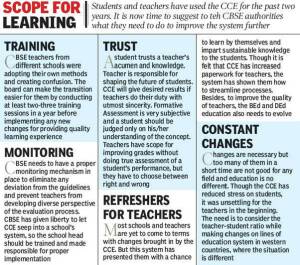
20453381.cmsThe Continuous Comprehensive Evaluation, introduced by the Central Board of Secondary Education (CBSE), was designed with the intention of reducing stress on students and evaluating them “in a more rounded way”; however, the system is being criticized for adding a layer of bureaucracy that reveals a distrust for schools and teachers, adding tremendous paperwork. Some say the process can be streamlined, and once members receive training the new process seems like less of a burden. Students seem to be heavily in favor of the system, which has turned the academic year into two semesters and, as one student said, “made even boring topics interesting through various projects.” Parents are also supportive, saying, “Students are not cramming notes like we had to. Their interpersonal and co-scholastic skills are better and they become better leaders.”

For more information:

A study on implementation of the Contemporary Comprehensive evaluation in upper primary schools of Kerala