The uncertain future of school funding in Australia

3843968-3x2-340x227In order to keep up with the education news in Australia, I check in periodically with Glenn Savage, Researcher and Lecturer in Education Policy, Melbourne Graduate School of Education at University of Melbourne.

“The past few weeks have seen some wild twists and turns in the politics of Australian school funding,” Savage stated in a recent post on The Conversation. Discussions in Australia have focused particularly a confidential paper developed by the Department of the Prime Minister and Cabinet that was leaked to the press earlier this month. As Prime Minister Tony Abbott has indicated, the reforms suggested by the 2011 Gonski Review of Funding for Schooling may be abandoned. As these reforms aimed to address inequities in school funding, and had yet to be fully implemented, many are concerned that an alternative model would not adequately address the needs of disadvantaged students. The leaked “green paper” presented four funding reform options for consideration:

  1. States and territories becoming fully responsible for funding all schools;
  2. States and territories becoming fully responsible for funding all schools, with the federal government funding non-government schools;
  3. Commonwealth involvement in schools reduced, without “significant structural change”; or
  4. Federal government becoming “dominant funder of all schools.”

According to a recent article in The Sydney Morning Herald, under the fourth option the federal government would “adjust for student need and the ability of families to make a contribution.” Therefore, high-income families might end up paying fees to send their children to public schools. The has proved to be the most controversial of the four suggested models, as it purports to target disadvantaged schools while promoting parental choice, yet the fear is that it would result in “separate responsibility for service delivery and funding.” This new model contrasts with the Gonski Review, which stated: “It is important for the future of Australian schooling that the government sector continues to perform the role of a universal provider of high-quality education which is potentially open to all.”

The Gonski Review of Funding for Schooling, which was chaired by businessman David Gonski, built upon a watershed 1973 report known as the Karmel Report. The Karmel Report was produced by the Whitlam government and introduced the ongoing federal funding of schools, which was a departure at the time from the prior model in which state governments funded schools with only supplemental support from the federal government. The report was the first significant intervention in primary and secondary education on the basis of what Savage called a “comprehensive plan of goals and priorities rather than an ad hoc response to particular demands.” As Savage explained, it was a highly influential “moment in school funding because for the first time ever the government started funding schools.”

The Gonski Review, conducted in 2011, came about in response to concerns over increasingly inequitable school funding—despite the attention called to such inequities in the Karmel Report.

The Gonski Review called for what Savage called “a major overhaul in school funding, promoting a needs-based sector-blind model.” As Savage went on to explain, “there is a base amount, for students in primary and secondary schools, and there are ‘loadings’ on top for different groups – such as indigenous students and English Language Learners.”

Savage argues that there is a “common belief that the Gonski Report was just put into practice. That’s somewhat true….but they promised independent schools and Catholic schools that they wouldn’t lose any money under Gonski formula. To get it through parliament, they had to come up with a compromise to say no school would lose a dollar.” Due to political influence, the reforms were never implemented as intended.

Despite public outcry in favor of the Gonski reforms, the current Abbott administration has promised not to continue to fund the reforms suggested by the Gonski Review. “Everyone’s worried because it doesn’t look like Gonski will ever happen in the way it was supposed to,” said Savage, going on to point out the even larger concern that there is a “a complete lack of clarity about how schools will be funded in the future.”

Deirdre Faughey

For more information:

School funding again up for debate http://buff.ly/1MMKApN

Give a Gonski? Funding myths and politicking derail schools debate http://buff.ly/1MMKDlq

School funding report makes flawed case for full Gonski reforms | The Australian http://buff.ly/1KpoXyc

In wake of stalled Gonski Review is there a way forward on school funding? http://buff.ly/1MMKmyK

New data shows slump in public school funding http://buff.ly/1KppdNF

‘Gonksi is not dead’: NSW calls on Federal Government to commit to education reforms – ABC News (Australian Broadcasting Corporation) http://buff.ly/1MMKrme

 

Scanning the education news from the UK and Canada

stream_imgOur latest scan of education news in England, Scotland, Northern Ireland, the Republic of Ireland, Wales, and Canada, shows considerable attention to teachers: shortages of teachers in Scotland and England; “redundancies” and elimination of teaching positions in Northern Ireland and Wales; contract negotiations with the teacher unions in Ontario; and efforts to improve teacher training in Wales and address teacher turnover in Alberta.

The blog from the Institute of Education at the University of London has also had a series of post over the past month addressing key issues in England including income inequality, a new plan to penalize schools that are “coasting” (failing to increase student outcomes), a recent report on the (possible) effects of “free schools”; and the latest reforms related to initial teacher training.

“Local authorities reveal 470 teaching posts are vacant in Scotland,” stv

“Teacher supply agencies searching as far as Canada and Singapore to plug staffing gaps,” The Independent (UK)

“800 school staff redundancies after funding cuts” ITV News (Wales) 

“Ontario teacher unions agree to resume negotiations with Liberals in bid to agree to contracts,” National Post 

“University of Calgary program boosts training for rural teachers,” CBC News

“Education Minister endorses ‘radical plan’ to transform teacher training,” Penarth Times (Wales)

IOE Blog: 

Income distribution in times of austerity: why the cuts are likely to widen the gap, Nicola Pensiero

‘Coasting schools’: learning from international ‘best practice’,

Paul Morris & Christine Han

Free school effects: an impartial review, Francis Green

Teacher training and teacher supply, Chris Husbands

Vietnam: Can one assessment meet the needs of all stakeholders?

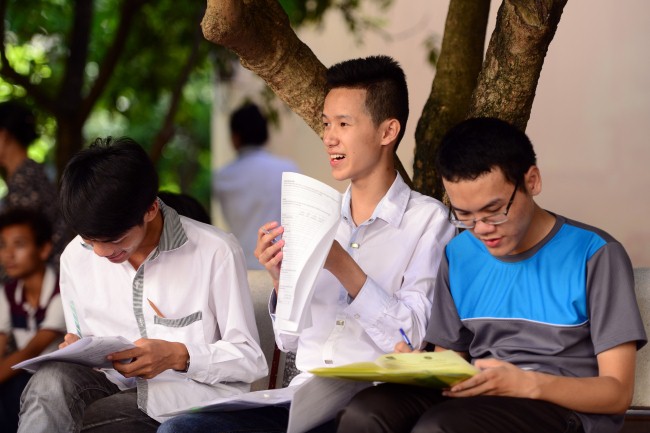
20150707071925-edu-exam-questionVietnamese students surprised the world recently when it was revealed that they outperformed many other advanced countries on the PISA exam. According to a recent BBC article, “the country’s 15-year-olds scored higher in reading, maths and science than many developed countries, including the United States and the United Kingdom.”

News of this achievement has received a great deal of media attention, however in an effort to learn more about recent developments in the Vietnamese education system today we reached out to Duy Pham, former Deputy Director of the Center of Educational Measurement, of the Institute for Education Quality Assurance, at Vietnam National University, and curent doctoral student at the University of Massachusetts Amherst. Pham explained that while the PISA exam has caught the attention of an international audience, the people of Vietnam have been wrapped up in a dynamic debate around high school graduation exams and university entrance exams.

This year, the Vietnam Ministry of Education combined the high school graduation exam and the university entrance exam into one 4-day-long exam. This move came in response to concerns about student well-being and assessment validity. Many felt that students and families were suffering under the pressure of two separate exams. Also, private universities, which admit students who do not get selected for prestigious spots in public universities, felt that the old exam system was too challenging and resulted in the exclusion of too many students. These universities wanted to be able to admit a greater number of students but found that these students were not able to meet the high bar set by the old entrance exams. As Pham explained, “This year the pressure comes from many stakeholders, saying the university system blames the previous entrance exam of not being able to classify students in a way that allows them to select the right students.”

As the new exam was administered in the first week of July, there is no consensus on the new process. While the Ministry of Education has expressed satisfaction with the new system, educators, policymakers, and researchers are concerned that the new exams might be too difficult for the purposes of high school graduation, yet too easy for the purposes of university entrance. The question is how to find one assessment that meets the needs of all students and institutions.

Also, the question of pressure and fairness remains. Students can only take the new exam in one of the approximately 30 testing centers. These testing centers are located in big cities, which means that students from mountainous and rural areas need to travel with a parent or guardian and find accommodations for the duration of the exam. Under the old system, students could at least take the high school graduation exam in their own school settings.

Deirdre Faughey

For more information on this issue:

National exam for university, high school satisfies students – News VietNamNet http://buff.ly/1fQRVdu

One million students sit for national exams – News VietNamNet http://buff.ly/1fQRY9k

Volunteers swing into action for season of exams – News VietNamNet http://buff.ly/1fQS6FI

Vietnam school students and the exam of life in pictures http://buff.ly/1fQS8xe

Flashback: Volunteers devote themselves to helping Vietnam’s national exam contestants http://buff.ly/1OkqFiO

Creative Commons License

This work is licensed under a Creative Commons Attribution-NonCommercial-NoDerivatives 4.0 International License.

Opposition to the Carrera Docente (Teacher Career) Bill in Chile

profe-pulpo-descargarTeachers working in municipal schools in Chile have been in a strike for over a month now. The strike called by the Colegio de Profesores (CP), the Chilean National Teachers Association, began on June 1, 2015 as a way of expressing their opposition to the Carrera Docente Bill (the Teacher’s Career Bill). The bill is part of a national reform proposal in education that encompasses several areas of education, including:

  • regulating profit and student selection in schools subsidized by the state,
  • creation of the Subsecretariat for Early Childhood Education,
  • legislating a national teacher policy,
  • defining the structure for the de-municipalization of education, and
  • legislating a national policy for funding free higher education.

After approving the law that regulates the admission of students and profit in schools that receive state funding (Law #20.845), the government led by President Michelle Bachelet decided to continue the reform agenda with the legislation of a national teacher policy. The bill intended to define among other elements new teachers certification requirements, a teacher evaluation processes, a salary scale, and teacher workload. Teachers, as well as other members of society, have expressed their opposition to this bill through social demonstrations. Teachers are insisting that the bill be withdrawn, arguing that the legislative proposal maintains the individualistic, competitive, and market-driven logic that has prevailed in education, and generates no substantive positive changes. The Education Commission of the Chamber of Deputies formed a dialogue table and teachers acceded to talk to legislators in this tripartite table in mid-June. On June 27, the President named a new Minister of Education, Adriana Delpiano, who declared her willingness to dialogue with teachers but stressed that the government will not withdraw the bill. On June 30, the tripartite table at the Education Commission resumed its work. Teachers are expected to reevaluate the continuity of the strike.

Victoria Parra

For more information on this issue:

Carrera Docente Bill Does Not Meet Chilean Teacher’s Expectations | I Love Chile News http://buff.ly/1IU63Om

El Mostrador – El primer diario digital de Chile – Noticias, reportajes, multimedia y último minuto. http://buff.ly/1IU6bNS

Las críticas del Colegio de Profesores al Plan Nacional Docente « Diario y Radio Uchile http://buff.ly/1TuMRts

Chilean striking teachers take to the streets; million students with no classes — MercoPress http://buff.ly/1TuMT4C

Change of Chile Education Minister Could End University Strike | News | teleSUR English http://buff.ly/1TuMTSk


Creative Commons License
This work is licensed under a Creative Commons Attribution-NonCommercial-NoDerivatives 4.0 International License.
 

Do Charter Schools in Colombia Provide Sufficient Accountability and Choice?

In 1999, Colombia joined many other countries in amplifying educational options by introducing a form of charter schools called Concession Schools (Colegios en Concesión). So far, the Concession schools have been confined to the capital city, Bogotá, where they grew to number 25 in 2003, remaining at that count through 2014. During that period, they accounted for 4 percent of the nearly 1 million students in the city’s primary and secondary schools.

In “Theory versus Reality in Charter Schools in Colombia,” a paper published at the National Center for the Study of Privatization in Education, Dr. Brent Edwards Jr. and Hilary Hartley go beyond assessing academic outcomes to examine the process of authorization, evaluation, and enrollment to determine the degree of accountability and choice the Concession Schools offer.

Edwards and Hartley find (a) that competition among schools has not been realized due to an insufficient quantity of charter schools from which parents can choose (with the implication being that public schools do not feel pressure to compete for students) and (b) that the government’s ability to hold schools accountable has been limited by a lack of clear performance criteria, by weak evaluation methods, and by the politically charged relationship between the government and charter schools. 

While the paper focuses on the original CEC (i.e., charter school) contracts that were set to end at the conclusion of 2014, Dr. Edwards provided IEN with an update on what’s happened since then:

While the leftist mayors of Bogotá have since 2004 been opposed to the CECs because they represent a form of privatization, Mayor Petro, in May 2014, proposed the following: three-year contract extensions for 17 of the 25 CECs; one-year contract extensions for 5 CECs, after which point they would revert to government management; and, for the remaining 3 CECs, conversion to management by the government of Bogotá at the end of their initial contracts in December 2014.  The basis for these decisions was a ranking of all public and CEC schools in Bogotá, with this ranking being the result of a weighted score based on academic performance on standardized tests (50 percent weight), student retention (25 percent), and school climate (25 percent). Those 17 CECs that ranked in the top 50 were deemed to have “good results.” It is not clear from where the data for this ranking came; the Secretary of Education for Bogotá stated that they came from “various entities and studies.”

Interestingly, however, in September 2014, the City Council of Bogotá obstructed the renewal of CEC contracts in accordance with the proposal mentioned above by the mayor. Approval from City Council—a democratically elected body of 45 councilmen—is required for contracts with the government that extend beyond one budget cycle, and in this case CEC contract renewal was voted down. The association of parents from CEC schools lobbied the national minister of education for support, and, indeed, other national ministers got involved (including the minister of government, minister of the interior, and minister of estate) once the President of Colombia came out in support of the CECs. These ministers offered to provide technical and legal support to the City Council of Bogotá, some members of which did not feel that they had the capacity to properly evaluate the situation and to make a decision related to a three-year budgetary commitment. Some council members were also doubtful as to whether they could legally make budget commitments beyond the period of the current government. Yet others, closely associated with the teachers unions, voted down the proposal because they saw the CECs as a form of privatization.

In the end, despite pronouncements from the country’s President regarding the importance of the CECs, despite involvement from the national ministers, and despite pressure from CEC parents and students, it was only possible, based on the laws regulating the city government, to extend CEC contracts for one year, except for those three poorly performing CECs that were initially scheduled to switch to government control at the end of 2014. This outcome resulted from the fact that Mayor Petro never resubmitted his proposal to the city council due to insufficient support from this body for the proposal to pass.

Creative Commons License
This work is licensed under a Creative Commons Attribution-NonCommercial-NoDerivatives 4.0 International License.

21st Century Skills in Japan

Regular IEN contributor Paul Chua has reported several times on Singapore’s efforts to shift to a focus on 21st Century skills. As part of an exchange program with Waseda University, he had a chance to visit several schools in Japan and learn about their approach to 21st Century skills. In this post, with contributions from Prof Takao Mimura, Dean of Waseda Graduate School of Teacher Education, Paul reflects on what he observed in visits to four elementary, junior high and senior high schools, as well as interaction sessions with student teachers of the Waseda Graduate School of Teacher Education.

In Japan, as in Singapore, the competencies and pedagogical moves associated with 21st Century competencies are seen as a central means of using education to ensure sustained economic prosperity in the years to come. These 21st Century aspirations have been articulated in a New Growth Strategy announced by the Japanese government in June 2010 as well as in “The Future Vision on Career Education and Vocational Education at School,” by the Ministry of Education, Culture, Sports, Science and Technology in January 2011. Further, the 21st century competencies I observed in the Japanese classrooms I visited were not dissimilar from what I have known in Singapore: problem solving, communication, collaboration and use of Information Communications Technologies (ICT).

In the 7th, 8th, and 9th grade classes I visited at the Suwadai Junior High School, curriculum design and classroom pedagogy has been shifted to teach these competencies. For example, teachers are asked to design their instruction around any of four pedagogical moves seen as supporting these competencies: discussion; use of ICT; use of library as a learning center; and utilization of guest lecturers. In one lesson that leveraged ICT and discussion, the teacher used a jigsaw strategy to break the students into groups to discuss the ICT-based research work that they had been doing. The discussion centered on evaluating the quality of the research work that they had completed. When the group discussion was over, selected students had to make presentations of the group findings and discussion. In another class, using discussion and guest lecturers, students were set instructional tasks that required them to rank and discuss their ranking of student art works and to compare their rankings with professional artists who had been invited to the school. In a science class, students compared and contrasted a video simulation of a science experiment with their own experience with the same experiment. Even in a physical education class, students reflected on and critiqued their baton-passing in a video-tape of their performance in a relay race.

In another school, the Shioiri Higashi Primary School, we were given an understanding of how Japanese education tries to support the development of a sense of teamwork and collaboration in the students. It is instructive that the school objectives are to help the school community to “shine together, learn together, communicate with each other and to support each other.” Social interaction and collaboration are a focus of attention in both the daily classroom instruction and other school activities. These include mixed-age interactive activities involving students from across grade levels a few times a year as well as activities involving students from the neighboring junior high school who come over to read with the younger students. In other Japanese schools, community life is also a way of living and learning. Large-scale communal activities in virtually all Japanese schools include Entrance and Graduation Ceremonies, and annual Sports Day and Choral Festivals. Although the school lunch might be outsourced to private operators, students are required to serve themselves and the cleaning up of classrooms and the school by students is part of the curriculum.

At the Waseda Senior and Junior High Schools, which are elite private schools, we witnessed how policies (as opposed to activities) could be used to promote the 21st century competencies. For example, the senior high school students do not need to sit for the matriculation examinations to gain entry to Waseda University. According to the headmaster, the rationale for such a policy is to remove the pressure of to master examination techniques so that the students can develop holistically i.e. spiritually, morally with a hope of living in the future world. When asked to elaborate, the headmaster stressed that the purpose of the education in the schools is to help the students to answer the question of “who are they?” and then to choose their university and career options based on this understanding. He did not want the students to just choose a prestigious university without regard of their interests and abilities.

Although the whole exchange visit gave me a good peek into how some Japanese schools are preparing their students for living in the future world, it should be noted that the schools selected for our visit were higher performing ones. Nonetheless, the approaches to developing the 21st century competencies we saw in Japan are broadly similar to those used in Singapore schools, including using non-academic activities to develop the social competencies and allowing select groups of students to bypass some milestone examinations.

Creative Commons License
This work is licensed under a Creative Commons Attribution-NonCommercial-NoDerivatives 4.0 International License.

Scanning the education news from Africa

To provide links for our twitter feed, every week or ten days, we look for news, research, and other media reports on educational change and improvement from a particular part of the world (Africa and Middle East; Asia & the Pacific; Central & South America; The Nordic countries; Europe; or the UK and Canada). While it’s always hard to determine the “hot topics” through these “non-random” scans of traditional and new media, we’re going to start pulling together some of the links we find in these scans and posting them here a little more frequently. This time, the scan focuses on Africa and the Middle East, and over the past two weeks, we’ve noticed more stories about testing-related scandals than almost any other topic. Maybe it’s just exam season, but the stories have come from Egypt, South Africa, Algeria, Morocco, and Ghana:

  • Helicopters, scanners no match for Egypt’s exam cheats – Al-Monitor: the Pulse of the Middle East http://buff.ly/1J8lT8Z
  • allAfrica.com: South Africa: Basic Education On Progress in Group Copying Investigations http://buff.ly/1GnglQZ
  • الشروق أون لاين Education Unions: “Protected and not afraid of punishment… those behind leaked exam topics on Facebook” http://buff.ly/1IoO6Ts
  • Exam Leaks Are a Threat to Morocco’s Education System. Morocco World News http://buff.ly/1H3yQ3I
  • BECE cancellation was a collective decision – Minister of Education | General News 2015-06-18 http://buff.ly/1Gnp59M

Unfortunately, extremism, in this case in Egypt and in Kenya, also continue to be in the news:

  • ‘A trip to the farm’: Egypt canceled these school lessons to combat extremism | Al Bawaba http://buff.ly/1J8m9Fd
  • Education in Kenya Suffers at Hands of Shabab Extremists – The New York Times http://buff.ly/1J8vJI3
  • Kenya: Education crisis looms near border with Somalia as 2,000 teachers flee due to al-Shabaab attacks http://buff.ly/1J8vOLX

In addition to those stories, there were also frequent mentions of basic issues of rights and access to education in the Sudan and Algeria, education budgets and costs in Ghana and Ethiopia, teacher’s pay and teaching education in Uganda and Nigeria respectively. But no scan would be complete without a story or two on world rankings (Morocco) or educational performance (Nigeria):

Creative Commons License
This work is licensed under a Creative Commons Attribution-NonCommercial-NoDerivatives 4.0 International License.

In Norway, where college is free, children of uneducated parents still don’t go

Advocates see it as a case study proving that the problem isn’t solely about money

© 2015 Jon Marcus, as first published by The Atlantic.

OSLO—There’s a saying in famously egalitarian Norway that Curt Rice, the American-born incoming president of the country’s third-biggest university, likes to rattle off: “We’re all sitting in the same boat.”

What it means, said Rice, is that, “To single out anyone, we’re against that. That just does not sit well in the Norwegian soul.”

So all Norwegians have the same tuition-free access to college, no matter what their backgrounds. Every student gets the same allowance for living expenses.

But something surprising is happening in Norway, which explains a similar phenomenon in the United States that has been thwarting efforts to increase the number of Americans pursuing higher education.

Even though tuition is almost completely free here, Norwegians whose parents did not go to college are just as unlikely to go themselves as Americans whose parents did not go to college.

This conundrum demonstrates a critical point that’s widely misunderstood, according to higher-education experts: money is not the only thing keeping first-generation students from seeking degrees.

Even though it’s essentially free, only 14 percent of children from the least-educated families in Norway go to college, compared to 58 percent of children from the most-educated families.

“This is almost a laboratory case, where we get to control one factor — namely, cost — and see what happens,” said Rice, who in August will take over as head of Norway’s Oslo and Akershus University College.

And what happens is that — even though it’s essentially free — only 14 percent of children from the least-educated families in Norway go to college, compared to 58 percent of children from the most-educated families, according to an analysis by a Norwegian education researcher, Elisabeth Hovdhaugen.

That’s almost exactly the same proportion as in the United States, where the cost of college is borne largely by students and their families, and where the Organization for Economic Development and Cooperation reports that only 13 percent of children of parents without higher educations end up getting degrees themselves.

“I don’t think that people do understand it’s not about money,” said John Gomperts, president and CEO of America’s Promise Alliance, a coalition of organizations trying to steer more young people to and through college in the U.S.

It’s a huge issue, considering that fully one-third of five- to 17-year-olds in the United States have parents who did not go to college, the College Board reports, at a time when policymakers are trying to increase the number of Americans with degrees. They’ll be needed to fill the 65 percent of jobs by 2020 that will require some sort of college or university training, according to the Georgetown University Center for Education in the Workforce.

“Norway is an interesting window into this,” Gomperts said. “If you come from a background where everyone goes to college, there’s no question that you’ll go to college. But if you grew up in a challenging community where nobody went to or succeeded in college, there’s no one at home who is going to know how to navigate the system. It takes the right amount of social preparation and support. That’s the magic.”

The Norwegian system eliminates some obstacles in addition to cost. Except for kindergarten, primary and secondary schools are funded nationally, not locally, for example, so there’s ostensibly no difference in education quality between higher- and lower-income towns and cities, as there might be between wealthy suburban and poor urban districts in the United States. And the Norwegian funding system is very easy to understand, while the American system of grants and loans is complex and often confusing, even to families with college-going experience.

But the principle of social equality in Norway also means that there are no programs providing academic support to first-generation or low-income students in college, although there are a few for immigrants and women in fields in which they are underrepresented.

“Helping students from low socioeconomic status does not happen at all,” Hovdhaugen said in her office at the Nordic Institute for Studies in Innovation, Research and Education, across the street from the royal palace in Oslo. “It’s the idea of the equitable society, and that students are considered adults, independent of their parents. You could almost turn it around and say that if the students whose parents with high income were not eligible for support, that would be judged as very unfair.”

Also, because wages remain high for blue-collar occupations, she said, there’s less of a financial incentive for some Norwegians to bother with college, since they can get jobs more quickly, and earn almost as much money, working as plumbers or electricians. American advocates for higher education worry that a similar thing might be happening in the U.S., as people increasingly question the return on investment for degrees; a new federal report shows that the average annual earnings of 25- to 34-year-olds with bachelor’s degrees actually fell from $53,210 in 2000 to $46,900 in 2012, even as tuition continued to rise.

“A bachelor’s degree in the U.S. has been seen as one serious option for getting into the middle class, whereas in Norway everything is a ticket into the middle class, because everyone is in the middle class,” Rice said. “It’s now less clear that it really is a ticket into the middle class in the U.S.”

American students’ scores on the SAT and other college entrance exams also correlate with the level of their parents’ educations; the better-educated a student’s parents, the higher he or she scores on the tests, according to the College Board, which administers the SAT.

Since education affects income, children whose parents didn’t go to college are also unlikely to be well off, said Margaret Cahalan, vice president for research at the Pell Institute for the Study of Opportunity in Higher Education. And families that are less well off are statistically more likely to face health problems, problems with the law and unplanned pregnancies, among other challenges.

Students from such backgrounds “are going to be on average facing more obstacles than a student who comes from a more advantaged background,” including nonfinancial ones, Cahalan said.

With a third of U.S. primary and secondary school students now coming from families without higher educations, the most important lesson is that cultural, and not just economic, considerations may keep many of them from going on to college.

Young people from backgrounds such as these, when considering whether or not to go to college, often “don’t even really know that they can go to the library and borrow books” instead of buying them, said Gomperts.

“How do you know that? You’re not born knowing such a thing. And who’s going to tell you? Stripping away the money piece shows how complicated this is.”

This post was also published on The Hechinger Report.

Brahm Fleisch on building a new infrastructure for learning in Gauteng, South Africa

Twenty Years of Transformation in Education,” published in May by the Gauteng Department of Education in South Africa, illustrates the challenges and possibilities in pursuing systemic instructional reform. In a recent conversation, Brahm Fleisch, outlined central aspects of the strategy in Gauteng, highlighting the important role of the development of what David Cohen and others have called an “infrastructure” for instruction.

As Fleisch has described it, before the first democratic elections in South Africa in 1994, the routines and rhythms of schooling in most urban working class communities in Gauteng had been ruptured. As one recent media report explained, there may have been over 4 million “learner days” in Gauteng lost each year due to protests and other serious disruptions (out of over 11 million lost in South Africa as a whole). Since 1994, however, the government of Gauteng sought to restructure racially segregated administrative systems, address resource inequalities, institutionalize democratic school governance and transform the official curriculum. Although disruptions to education began to subside, substantial improvements in teaching and learning still had to be made. In fact, in 2006, South African 4th and 5th graders scored 45th out of 45 countries on the PIRLS test of reading skills (with 87% of 4th grade students and 78% of 5th grade students in South Africa unable to achieve the lowest standard of performance).

From Fleisch’s perspective, a key weakness of the initial reforms was a failure to reach the “instructional core” and an inability to transform and strengthen the instruction students experienced in classrooms throughout the province. As Fleisch explained, students experienced two different kinds of instruction depending on where they lived. Students in primary classrooms serving working class, poor and rural communities experienced choral recitation, copying from the blackboard into workbooks, incomplete coverage of the curriculum, and low expectations. In contrast, students in primary classrooms serving middle-class communities (both white and black) experienced higher expectations, more advanced reading materials, guided reading and writing, and tasks more aligned to those measured in standardized tests.

In order to create a more consistent and effective approach to instruction for all, the province developed and began implementing the Gauteng Primary Language and Mathematics Strategy (GPLMS) in 2010. Drawing on some aspects of England’s National Literacy and Numeracy Strategies (NLNS) (which a team from the Ontario Institute of Studies in Education evaluated initially in Watching and Learning), the GPLMS provided what Fleisch termed a “triple cocktail” of scripted lesson plans, aligned texts and instructional materials, and coaching for teachers. As in England, the prescriptive nature of some of the reforms in South Africa were particularly controversial. However, building on the work of Barber and colleagues at McKinsey & Co., the strategy designers argued that a highly structured, aligned curriculum needed to be put in place to establish a foundation for more ambitious instructional improvement in the future.

Beyond the high level of prescription and structure, the GPLMS strategy was particularly noticeable for its attention to increasing the quality and consistency of instructional materials available to all students. As Fleisch pointed out, before GPLMS, teachers had to rely on a hodge podge of materials that varied widely in quality. As he put it, there was no coherent theory of instruction to support teachers in selecting and using the materials in productive ways. Further, few of those materials were produced in African languages (particularly the languages of the poorest students) because under apartheid, educational publishers had no market for such materials.   Thus, from Fleisch’s point of view, the development of a coherent sequence of materials aligned to common goals was a particularly crucial step in strengthening the instructional core.

Based on his own case studies and reports from colleagues and the teachers he has met in the field, Fleisch has found that many teachers welcomed the clarity and consistency the materials brought to their work. Reminiscent of the discussion of teacher autonomy in a previous post about South Korea, Fleisch argues that by providing teachers with support, the structured, aligned materials can help teachers to feel more effective and to develop a sense of professionalism. In fact, he’s even found that the teachers in Gauteng have copied and shared the materials with teachers in other provinces.

Fleisch stressed, however, that aligned materials alone are far from sufficient. In turn, he credited the individualized coaching with helping many teachers to develop their knowledge and skills. Fleisch also noted that the coaching had the added benefit of providing many teachers with social and emotional support to help them deal with the massive changes that were undertaken. In particular, the use of the materials and the work with the coaches helped to connect teachers, especially those isolated in poorer and more rural communities, with others who were all engaged in a systemic, coordinated improvement effort. Notably, the “triple cocktail” in Gauteng placed relatively little emphasis on the development of principals or other educational leaders, choosing instead to focus more directly on the content and means of instruction.

To date, the results of the GPLMS strategy are unclear. Twenty Years of Transformation in Education provides an account of some of the advances and challenges experienced in Gauteng overall and in the GPLMS approach in particular. While primary school students in Gauteng have shown steady improvements on South Africa’s national tests, Fleisch also points out that the tests have changed each year, making comparisons difficult. Further, critics continue to point high levels of dysfunction in South African schools overall.

In order to assess the impact of the “triple cocktail,” Fleisch is currently engaged in a set of studies including randomized controlled trials to examine the effects of several different aspects of the strategy. Further, Fleisch cautions that even with a highly-structured intervention like GPLMS, adaptations may need to be made in order for the strategy to succeed in different contexts. In one instance, a nearby province sought to develop a GPLMS-like instructional strategy. In that instance, however, several aspects of the context made implementation more difficult. In particular, students spoke a different variety of languages and the initial materials were pitched at too high a level. The mismatch between students’ readiness for learning and the level of the materials and instruction made it difficult to establish a strong foundation for improvement. As a consequence, Fleisch argues that even prescriptive and structured materials and approaches have to be adapted and updated constantly to ensure that they turn what Nic Spaull has called South Africa’s “zone of improbable progress” into a spiral of concrete and appropriate supports – a “zone of proximal development” – that facilitates steady improvement.

Thomas Hatch

Creative Commons License
This work is licensed under a Creative Commons Attribution-NonCommercial-NoDerivatives 4.0 International License.

Teacher collaboration and professional development around the world

Last month, at the American Educational Research Association Conference held in Chicago, I attended a presentation that offered multiple perspectives on the recent findings in the 2013 Teaching and Learning International Survey (TALIS) report. As the OECD explains, the TALIS report asks teachers and principals who they are, where they teach and how they feel about their work.

Linda Darling-Hammond focused on what the TALIS report can teach us about teachers in the United States. She explained that teachers in the U.S. have insufficient time for planning and collaboration during the school day, which means that they are often left to do this work alone at home. U.S. teachers report that they experience less helpful feedback (coming from principals more often than peers), and sporadic professional development. Yet, collaborative practices and self-efficacy were indicated as drivers of job satisfaction.

Andy Hargreaves argued that while collaboration can be important to job satisfaction, we need to develop a much deeper understanding of what effective collaboration looks like. He argued that we need to know more about why collaborative practices are not always embraced by teachers. As self-efficacy was also related to job satisfaction, Hargreaves suggested that we also think about collective efficacy—the belief that we have in what we can do together, not just alone. Further work needs to be done, he explained, to develop our understanding of when collaboration is useful, when it is simplistic, and when it takes the form of “contrived collegiality.”

With this attention to collaboration and professional development, I decided to conduct a scan of education news around the world to see what I could learn about how different countries are addressing the topic. This scan showed that countries are grappling with several issues, such as the quality, time, and funding for professional development.

In British Columbia, the government is proposing to create professional development standards. Education Minister Peter Fassbender views the establishment of such standards as an act that would put the teaching profession on par with other professions, such as the legal, accounting, or nursing professions. While teachers are currently required to attend professional development sessions, new legislation would determine what those session cover; however, Fassbender says there will be no increase in funding to support the new standards. Concerns have been raised about the privitization of professional development, and the lack of teacher input.

In Australia, ACT teachers have spent a year arguing that they need guaranteed time each week for professional development and collaboration. According to Union Secretary Glenn Fowler, “Teachers do not trust their employer to protect them from snow-balling workloads, and we say to the employer if there is no guaranteed and quarantined time made in the new agreement, we will never see it, and that time may continue to get stripped away from teachers.”

Meanwhile, teachers in Ireland oppose a plan for mandatory continuing professional development (CPD). While most Irish teachers place high value on CPD, a majority fear that “if compulsory, it would promote a ‘compliance mentality’ with minimal real engagement.”

New Zealand has established Communities of Schools as part of their Investing in Educational Success initiative. These schools will set their own achievement goals and will be funded to allow teachers the time to “work with and learn from each other, supported by new teaching and leadership roles.” While funding for these new positions is proving controversial, as one principal shared, “You have to change things. You can’t stay in your same structures, if you do you will end up with the same result: busy schools that are too busy to share.”

Larry Flanagan, general secretary of the Educational Institute of Scotland (EIS), has noticed how busy teachers in Scotland are as well, and called for a period of “consolidataion and calm.” Flanagan said teachers needed breathing space after the delivery of the Curriculum for Excellence (CfE) and new exams:”The last thing Scottish teachers need to hear at the moment is that the pace of change needs to be stepped up.” He called for additional resources and support for professional development.

Deirdre Faughey