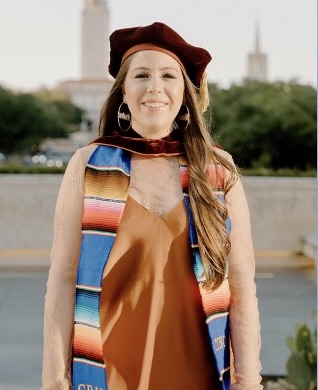
In this month’s Lead the Change (LtC) interview, Jackie Pelota discusses the role of research in remdying education inequality. Pelota is a Postdoctoral Associate in the Educational Leadership and policy department at the University of Texas at Austin. The LtC series is produced by Elizabeth Zumpe and colleagues from the Educational Change Special Interest Group of the American Educational Research Association. A pdf of the full interview will be available on the LtC website.
Lead the Change (LtC): The 2025 AERA theme is “Research, Remedy, and Repair: Toward Just Education Renewal.” This theme urges scholars to consider the role that research can play in remedying educational inequality, repairing harm to communities and institutions, and contributing to a more just future in education. What steps are you taking, or do you plan to take, to heed this call?
Jackie Pedota (JP): At this pivotal moment, it is more crucial than ever to align our research with action and reflection, bridging the gap between theory and practice. Since Hamas’ attack on Israel on October 7th, 2023, Israel’s counterattack and invasion of Gaza has led to the death of over 30,000 mostly civilian Palestinians, including young children. Students, faculty, and others across campuses have shown their support for the Palestinian people in the aftermath. These overwhelmingly peaceful campus protests took a turn for the worse in April 2024 when they were met with aggressive tactics, retaliation by administrators (e.g., withholding degrees), and police violence. On April 24th, 2024, I witnessed this police violence against students and faculty first-hand at my own campus of the University of Texas at Austin, and it was horrifying.
Students, primarily Arab, Muslim, Jewish, and other minoritized students, bravely stand at the forefront of ongoing protests, actively participating in democratic processes and demanding justice for the Palestinian people. These students work tirelessly to posit alternative futures, repair harm, and alleviate suffering. Yet, they have been met with unprecedented violence and harsh resistance from the very leaders and administrators who promised to support them–and who likely urged them to “change the world” in speeches when they first stepped onto campus at orientation. As an early career scholar and someone who aspires to hold a faculty position one day, it has been disheartening to witness this decoupling of academic researchers’ ideas from their everyday actions.
We in the Educational Change field can learn so much from these students if we listen to them. They are applying what they have learned. They are putting theory into practice to push for substantive change.
Thus, we must ask ourselves: How can we, as scholars, produce research that creates more just, equitable, and liberatory educational systems? To better align these research aims with everyday actions, I think the bare minimum we all can do is to hold space to hear from these students, taking their concerns seriously and advocating via our institutional channels for leaders to drop disciplinary charges. I also believe it is important for me to use my privilege as a scholar to uplift these students’ experiences and, in my research, draw attention to the underlying driving force behind these institutional actions—the well-funded right-wing political infrastructure that is increasingly shaping policies and practices within higher education.
“There is an urgent need to affirm, support, and empower faculty, especially faculty of color, to uphold principles of academic freedom and racial inclusion.”
In the months leading up to the 2025 AERA annual meeting, I hope to see more students, faculty, scholars, and leaders stand in solidarity. If we truly believe in higher education’s role in sustaining a multi-racial democracy, we all should be finding ways to support these students—working with, not against them. We will be working for decades to repair the trust that has been shattered for so many students at colleges and universities across the country. However, we can start this work now. At AERA and beyond, there is hope that we, as Educational Change scholars, will answer the call to produce research while actively repairing our educational systems for those who have been most marginalized by these very systems.
LtC: Your work has involved examining increasing pressures from state legislation restricting teaching and scholarship focused on race and racial inclusion in higher education. What are some of the major lessons that practitioners and scholars of Educational Change can learn from your work and experience?
JP: Currently, I am studying how faculty are changing their practices in response to a wave of legislative efforts to curtail the curriculum, research, policies, and practices focused on diversity, equity, and inclusion (DEI) in higher education. As of May 24th, 2024, 85 bills have been introduced to state legislatures across the country, with 14 successfully passing into law, limiting racial inclusion efforts, free expression, and academic freedom (Lu et al., 2024). Ongoing efforts spearheaded by external right-wing organizations and think tanks, like the Manhattan Institute, represent a coordinated campaign to roll back long-fought civil rights advancements within higher education via the erosion of academic freedom (Kamola, 2024).
Through interviews and observations over the last three years, my colleagues and I have found that, without adequate institutional support, many faculty change their teaching and research on race to protect themselves even when laws are not yet in effect (Pedota, 2023). In response to political and legal threats, faculty, particularly faculty of color, find themselves navigating a complex and shifting landscape with little to no guidance from senior leaders and department-level administrators (Pedota, 2023). Moreover, the communication and guidance faculty receive from higher education administration often reflect an overinterpretation of vague bill language (Reilly, 2024). This results in guidance that is more restrictive than necessary, a dynamic called repressive legalism (Garces et al., 2021). These overly cautious responses are partly driven by public university leaders fearing political backlash and funding cuts (Moody, 2023).
“Without adequate institutional support, many faculty change their teaching and research on race to protect themselves even when laws are not yet in effect.”
When faculty are left alone to interpret and respond to these legal pressures, many act from a place of self-preservation and safety to ultimately suppress racial inclusion work otherwise protected under academic freedom (Pedota, 2023). As faculty of color are the most visible of targets for potential disciplinary action or professional attacks, they feel even more pressure to change their teaching approaches, cancel courses, remove course content, and pause research (Golden, 2023). Ultimately, proposed bills targeting race scholarship and DEI work, even when not enacted into laws, are taking a psychological toll, resulting in poor working environments and the loss of faculty from impacted states (Melhado, 2023; Pedota, 2023). These curricular impacts and departures substantially threaten higher education and democracy, as faculty of color play a vital role in cultivating critical thinking, innovation, and democratic participation (Milem et al., 2005).
Thus, there is an urgent need to affirm, support, and empower faculty, especially faculty of color, to uphold principles of academic freedom and racial inclusion. It is imperative for all faculty to be in solidarity and work as a collective to leverage and uphold academic freedom. My work thus offers timely insights that will benefit faculty as they navigate the current sociopolitical context. Notably, my prior and ongoing work demonstrates the need to create long-term ongoing structures and processes to better educate not just faculty but also college-level administrators on their rights and protections under academic freedom (Pedota, 2023). Previous studies confirm faculty’s uncertainties around academic freedom, highlighting the need to specifically bolster faculty of color’s understandings and access to its rights and protections (Hutchens & Miller, 2023; Kateeb et al., 2012; Rangel, 2020).
The research also illuminates how external actors (e.g., advocacy organizations, civil rights groups, professional associations) are essential for bolstering faculty’s work. However, many faculty are unsure how to begin cultivating these connections, and faculty of color largely feel unsupported and unacknowledged by external actors’ efforts (Pedota, 2023). These external organizations should proactively work with faculty on the ground in impacted states to share information and build organizing capacity.
LtC: Your research has used participatory methods, including oral history, to examine dynamics of organizational change focused on racial equity in higher education institutions. What might practitioners and scholars take from this work to foster better school systems for all students?
JP: I have long been drawn to oral history as a methodology for transformational change. Oral history is the practice of gathering, preserving, and interpreting the unique, first-hand experiences and memories of individual people and communities involved in past events (Oral History Association, n.d.). Many organizations, like Voice of Witness, have pushed the field of oral history further with the goal to democratize storytelling, allowing communities to share their stories in their own words, illuminating contemporary issues in a deeply personal and impactful manner. This approach to oral history, which aligns most with my own, challenges harmful stereotypes, showcases the diversity of experiences, and positions those with lived experiences as experts on racial equity issues, fostering a greater understanding and empathy among listeners.
I have been involved with many local and national oral history projects over the past six years that mostly focused on the experiences of Latino/a/x individuals and communities. For instance, when the Black and Latino cultural centers at my undergraduate institution were at risk of being consolidated into one multicultural center, folks within the Samuel Proctor Oral History Program sprang into action to document and archive the rich and important histories of these spaces to combat this proposed erasure. These efforts amplified the voices of those who had experienced injustice firsthand at a predominantly white institution and underscored the essential role of these cultural centers in ensuring their histories and communities ultimately survive and thrive. In this way, deeply personal narratives, like those gathered through oral history, can be effective in highlighting and humanizing systemic issues within education.
Through my work, I have seen how oral history can promote racial equity by demonstrating storytelling as a powerful tool for social change. This approach to research promotes deeply listening to and learning from marginalized communities—communities that have been deliberately silenced or remain unheard. From my experience with the Voces of a Pandemic Oral History project through the Voces Oral History Center at the University of Texas at Austin, I learned that oral history requires an ethics-driven approach to storytelling to ensure narrators have power and choice in the storytelling process, viewing them as collaborators rather than subjects.
In this oral history project, many narrators were still processing the hardship and trauma experienced during the COVID-19 global pandemic. Listening and learning from communities in this context required me to create and maintain a safe and brave space for folks and employ a trauma-informed approach to interviewing. For instance, interviewers must be cognizant of how trauma can manifest and be vigilant as they interview narrators, providing moments to breathe and be attentive to what that person needs at that moment. Voice of Witness’s Ethical Storytelling Principles and other resources like “Say It Forward: A Guide to Social Justice Storytelling” can provide guidance on these issues, ensuring that stories are told responsibly and respectfully.
Ultimately, by using oral history to document and share powerful first-person testimonies, we can foster a more inclusive and equitable society, where the experiences and insights of those impacted by injustice are not only heard but valued and acted upon to promote change within education. As such, I believe that the many principles that undergird oral history have much to offer practitioners and scholars.
LtC: Educational Change expects those engaged in and with schools, schooling, and school systems to spearhead deep and often difficult transformation. How might those in the field of Educational Change best support these individuals and groups through these processes?
JP: Through my work with student affairs practitioners, college students, alumni, and advocacy organizations, I have learned that disrupting and transforming historically inequitable educational systems requires broad collaborative networks. It is not enough to solely work with people inside of P-20 educational systems, like students and administrators. Transformational work requires coalition building, brave leadership, and redistribution of resources to minoritized groups who remain disadvantaged by current organizational arrangements. To organize for transformational work, scholars must develop and leverage the influence and expertise of those within the broader community, such as families, community leaders, local non-profits, faith-based organizations, and national advocacy and civil rights groups.
On January 1st, 2024, both HB 1 and SB 17 went into effect in Texas, banning the use of state funds for DEI-related efforts, including designated offices, trainings, and diversity statements in faculty hiring. Within this current restrictive context, I have seen the power that the broader community can have to pressure and influence policymakers and institutional leaders. I am part of a coalition of students, alums, faculty, unions, civil rights groups, advocacy organizations, professional associations, and grassroots collectives who work across Texas to combat the legislative efforts by state policymakers to undo decades of racial progress in an increasingly diverse state. In this work, I have witnessed how establishing networks and coalitions outside of formal educational spaces allows those working within these constrained and often oppressive systems to more freely exchange ideas, share experiences, and provide mutual support. Such spaces are especially important during a time when many students, staff, and faculty are receiving little to no information. This coalition has also fostered a sense of community and collective responsibility, making advocating for educational change less challenging and more empowering by knowing you have a group of committed folks behind you.
I believe that scholars within the field of Educational Change should be seeking out and engaging in these kinds of civil rights coalitions and other similar community-based grassroots collectives. Scholars have an important role to play in such coalitions, sharing insights from their scholarship that could inform strategies and approaches for systems change. Transforming educational systems in our deeply divided and inequitable society is a long-term and ongoing process that will require fervent research-informed advocacy and activism for years to come. Ultimately, such change depends upon building a community and a critical mass of stakeholders invested in racial equity.
LtC: Where do you find hope and inspiration for the possibilities of Educational Change going forward?
JP: As someone who studies DEI efforts at this moment, I often feel like my work is a continual uphill battle just to end up in the same place I started. It requires constant effort just to hold our ground, leaving less time and energy for transformational advancements. Those who have been engaged in Educational Change work for a while likely understand these sentiments and can relate. And yet, there is always hope.
During times when Educational Change work feels particularly daunting and almost impossible, I draw hope and inspiration for grassroots activists in the South. I was born and raised in Miami and have lived in South and North Florida for most of my life. I have seen how media outlets and those on social media have characterized politics and policies in the state of Florida with little to no attention to the brave grassroots activism historically led by People of Color.
In the most difficult and dehumanizing of conditions, grassroots organizations like Dream Defenders have persevered to fight for change across Florida. Despite passed anti-DEI legislation, the folks at Dream Defenders remain steadfast in their #Cantbanus campaign, organizing school walkouts and legislative advocacy days to fight against political attacks on public education. Even within the current environment, the Dream Defenders believe change is possible. If they can believe this in the most challenging of environments, then so can I. Their efforts help me see change as a long-term project—where the movement for racial equity is about both the short and long game. The unwavering commitment of Southern activists reminds me that, despite the difficulties, our collective efforts in DEI and educational change can and will pave the way for a more equitable future.
References
Garces, L. M., Johnson, B., Ambriz, E., & Bradley, D. (2021). Repressive legalism: How postsecondary administrators’ responses to on-campus hate speech undermine a focus on inclusion. American Educational Research Journal, 58(5), 10321069.https://doi.org/10.3102/00028312211027586
Golden, D. (2023, January 3). ‘It’s making us more ignorant’. The Atlantic. https://www.theatlantic.com/ideas/archive/2023/01/ron-desantis-florida-critical-race-theory-professors/672507/
Hutchens, N. H., & Miller, V. (2023). Florida’s stop WOKE act: A wake-up call for faculty academic freedom. Journal of College and University Law, 48(1).
Kamola, I. (2024, May). Manufacturing backlash: Right-Wing think tanks and legislative attacks on higher education, 2021-2023. American Association of University Professors. https://www.aaup.org/sites/default/files/Manufacturing_Backlash_final.pdf
Kateeb, I., Lewis, M., & Hamoush, S. (2012). Understanding the concept of academic freedom in North Carolina A&T State University. International Journal of Science in Society, 3(2), 9–22. https://doi.org/10.18848/1836-6236/CGP/v03i02/51322 Lu, A., Elias, J., June, A. W., Marijolovic, K., Roberts-Grmela, J., & Surovell, E. (2024, March 8). DEI legislation tracker. The Chronicle of Higher Education. https://www.chronicle.com/article/here-are-the-states-where-lawmakers-are-seeking-to-ban-colleges-dei-efforts
Melhado, W. (2023, September 7). Texas’ political environment driving faculty to leave, survey finds. The Texas Tribune. https://www.texastribune.org/2023/09/07/texas-higher-education-faculty-dei-tenure/
Milem, J. F., Chang, M. J., & Antonio, A. L. (2005). Making diversity work on campus: A research-based perspective (pp.1–39). Association American Colleges and University.
Moody, J. (2023, March 30). The silence of Florida’s presidents. Inside Higher Ed. https://www.insidehighered.com/news/faculty-issues/academic-freedom/2023/03/30/silence-floridas-presidents
Pedota, J. (2023). How faculty contend with threats to academic freedom and racial inclusion. UC National Center for Free Speech and Civic Engagement. https://freespeechcenter.universityofcalifornia.edu/fellows-22-23/how-faculty-contend-with-threats-to-academic-freedom-and-racial-inclusion/
Rangel, N. (2020). The stratification of freedom: An intersectional analysis of activist-scholars and academic freedom at U.S. public universities. Equity & Excellence in Education, 53(3), 365–381. https://doi.org/10.1080/10665684.2020.1775158
Reilly, M.L. (2024, March 5). Anti-DEI bills rely
on vague language and self-censorship. Forbes.https://www.forbes.com/sites/meglittlereilly/2024/03/05/anti-dei-bills-rely-on-vague-language-and-self-censorship/?sh=287256fd1742

 International Education News