Tag Archives: homeschooling

Critical Consciousness, Digital Equity, and Critical Unschooling in the United States: Lead the Change Interviews (Part 6)

This week’s post includes excerpts from interviews with presenters discussing “Redefining leadership and equity in evolving educational spaces” at the Annual Conference of the American Educational Research Association next week. For previous posts featuring presentions at this year’s AERA conference see Part 1 “Leveraging Partnerships, Networks and Teacher Collaboration for Educational Change,” Part 2 “Leaders, Leadership Practices, and Educational Change in the US, Korea, and Hong Kong: Lead the Change Interviews (Part 2),” Part 3 “Educational Transformation in Schools and Colleges in the US and South Africa: Lead the Change Interviews (Part 3),” Part 4 Teacher Education, Teacher Certification, and Teacher Meetings in Israel, Korea, Switzerland and the US: Lead the Change Interviews (Part 4), and Part 5 “Anti-discrimination policies in Massachusetts and socioeconomic education reform in Türkiye.” The Lead the Change interviews are  produced by Elizabeth Zumpe and colleagues from AERA’s Educational Change Special Interest Group. The full interviews can be found on the LtC website


Action spaces to support teaching critical consciousness: Risk-taking within professional learning communities – Christina L. Dobbs, Boston University – Madora Soutter, Villanova University – Daren Graves, Simmons University – Elianny C. Edwards, College of the Holy Cross – Scott Seider, Brianna C. Diaz, Babatunde Alford, Kaila Daza, Sarah E. Fogelman, Trang U. Le, Alexandra Honeck, Hannah Choi, Yuwen Shen, & Hehua Xu, Boston College.

Lead the Change (LtC): What are some of the ideas you hope the field of Educational Change and the audience at American Education Research Association (AERA) can learn from your work related to practice, policy, and scholarship?

CD, MS, DG, EE, SS, BD, BA, KD, SF, TL, AH, HC, YS, & HX: We will present a project from the past several years called the Critical Crew Project. This project sought to teach middle grade students about critical consciousness (Freire, 1973), the ability to challenge and navigate oppressive forces, and to document how those schools used professional learning community (PLC) spaces to learn and teach critical consciousness with students during advisory meetings….We learned a great deal across this project about systems of multi-level change to build support for learning at a range of levels. Teachers needed space and support to learn about teaching critical consciousness that had structure without prescription. Our approach of having flexible tools with lots of space for specialization for contexts and particular students seemed to resonate with teachers. We found also that, as university partners, we served as conduits to research and other materials for PLCs and to use their feedback for refining the work, without being overly directive about the project. We also learned about producing a range of work products as a result of the project – academic papers, curricular materials, videos from classrooms, etc. – which has helped us push different levers, such as publishing research or presenting teacher workshops or building curriculum and participate in different conversations as a result of the work.

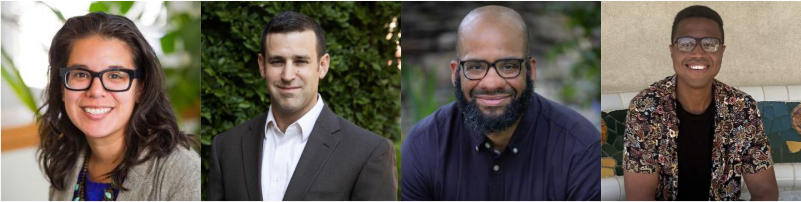
From Left to Right: Dr Christina Dobbs, Dr Scott Seider, Dr Daren Graves, Babatunde Alford

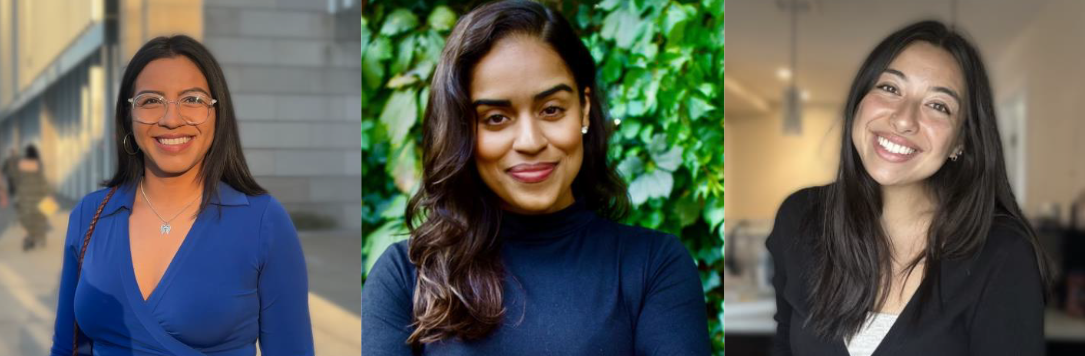
From Left to Right: Brianna Diaz, Dr Elianny Edwards, Kaila Daza

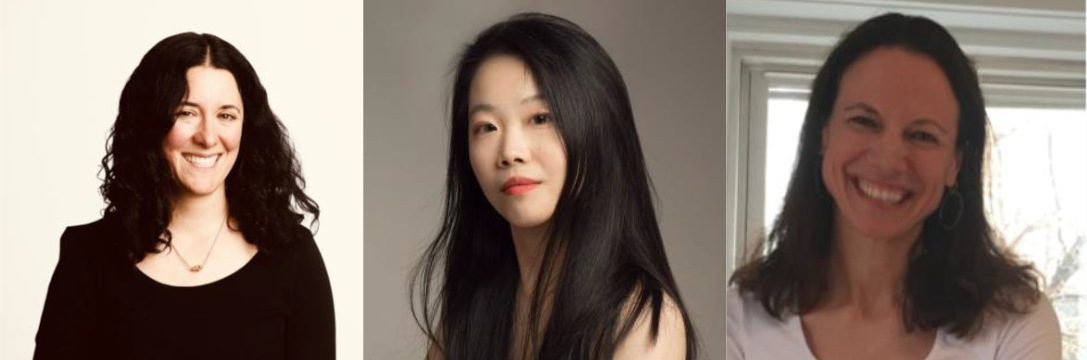
From Left to Right: Dr Trang Le, Alexandra Honeck, Hannah Choi
From Left to Right: Sarah Fogelman, Hehua Xu, and Dr Madora Soutter

Digital Equity and Inclusion: Insights into Educational Change and School Initiated Improvements – Christopher Sanderson, University of Arizona 

Lead the Change (LtC): What are some of the ideas you hope the field of Educational Change and the audience at American Education Research Association (AERA) can learn from your work related to practice, policy, and scholarship?

CS: My research offers insights into the challenges and strategies facing K-12 school districts in their efforts to promote digital equity and inclusion, providing valuable lessons for practice, policy, and scholarship. My work emphasizes the importance of integrating digital tools and providing professional development for educators to address disparities effectively. For example, I highlight the need for further training to bridge digital literacy fissures. From a policy perspective, I encourage sustained district-level planning and collaboration to tackle systemic barriers, such as the expiration of temporary programs like the CARES Act and ACP (Federal Communications Commission, n.d.; US Department of Education, 2024). Digital equity must be treated as a long-term priority rather than a short-term response to crises like the COVID-19 pandemic (Petersen, 2024).  

I also emphasize holistic definitions of digital equity and inclusion, which include access to affordable internet, devices, and the necessary digital skills. Collaborative approaches are essential, and I focus on engaging administrators, teachers, parents, and community members in co-creating solutions to foster a shared vision of digital equity and inclusion. My research highlights the importance of addressing systemic inequities and recognizing biases in policy and practice. For instance, I noted that federal programs often exclude K-12 schools, advocating for tailored, inclusive, sustainable, district-level strategies (National Telecommunications and Information Administration, 2024).  

My work offers frameworks to explore the intersections of digital inclusion, systemic inequities, and community collaboration in educational change. It contributes to the growing body of literature on digital equity by providing insights into how schools can navigate barriers to ensure every student has the tools for success. Focusing on localized, context-driven solutions and collaborative efforts, this research aims to inform and create more equitable learning environments that address both immediate needs and long-term goals. This study may support school districts in assessing their progress toward digital equity and inclusion, offering recommended actions for transformative change. Through the collection and analysis of data, districts can identify patterns and make informed decisions on future steps.  

The findings from this study can serve as a catalyst for action-oriented planning beyond its conclusion. The ultimate goal is to develop actionable strategies that help school districts achieve equitable student access. While an outsider can only begin to grasp the challenges students, communities, and schools face regarding technology access, internet connectivity, and digital skills development, addressing these barriers requires strategic, locally driven planning. Schools are complex and diverse, with digital equity and inclusion needs varying from one site to another. For example, one school might require more digital literacy training for caregivers, while another may need additional internet hotspots to ensure students can access devices outside school hours. 

Dr Christopher Sanderson

Achieving Excellence Academy: Critical  Unschooling and the Promise of a  Humanizing Education – Dr. María del Carmen Salazar & Nadia Saldaña-Spiegle, University of Denver, Ashlea Skiles, Denver Public Schools

Lead the Change (LtC): What are some of the ideas you hope the field of Educational Change and the audience at American Education Research Association (AERA) can learn from your work related to practice, policy, and scholarship?

MS, NS, AS: One of the central contributions of this research is the expansion of the concept of critical unschooling. We, the researchers, extend this concept by conceptualizing “home-based” as one’s sense of “home” which is inclusive of home culture, community, native language, intersectional identities, history, heritage, ancestors, and ultimately, of one’s full humanity. We, the researchers, put the concept of critical unschooling on the ground and bring to live a real-world example in an educational setting with secondary students and teachers of color. This is an important contribution to the field because it extends theory into practice.

Another important contribution of this research is that student voices are centered and the concept of critical unschooling is shaped by their experiences and insights. One of the most impactful findings is how students redefine excellence as a result of the Achieving Excellence Academy (AEA). As an example, one student stated, “Excellence is not just holding onto your goals, it’s going after and representing yourself, and reflecting yourself in your goals.” Another student emphasized, “Before, I only thought about excellence athletically and academically, but after this program, I think it’s cultural too…pride in your own culture, accepting other people’s cultures, and being woke.” The AEA expanded students’ perceptions of excellence to include a focus on their well-being and cultural pride. Moreover, teachers of color extended this concept into teaching and learning by sharing how they enacted critical unschooling.
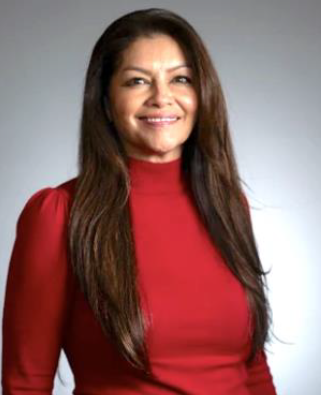
Dr María del Carmen Salazar
Nadia Saldaña-Spiegle
Ashlea Skiles

The Evolution of an Alternative Educational Approach in Vietnam: The Olympia School Story (Part 1)

This week IEN discusses the evolution of the Olympia Schools, founded as a small kindergarten in 2003 by Ms. Minh An Pham and several other parents. Since that time, Olympia has grown to encompass a kindergarten and a primary, middle, and high school with a combined enrollment of 1,200 on a common campus in Hanoi. The post is based on a conversation between Thomas Hatch and Minh An Pham (Co-founder, Board of Directors), Quoc DanTran (Head Of Mathematics Department, Vice-head of Academic Council), Dr.Thuc AnhVo (Head of Foreign Languages Department; English teacher),and Thanh HaLe (Head of Science & Technology Department).

This discussion builds on previous posts documenting the founding and evolution of a variety of different schools and educational programs including the development of the ETU School in China (Beyond Fear: Yinuo Li On What It Takes To Create New Schools), the Citizens Foundation in Pakistan (Expanding to Say “Yes”: The Ongoing Work of The Citizens Foundation in Pakistan), Second Chance in Liberia, (Accelerating Learning in Africa: The Expansion and Adaptations of Second Chance), and Fount of Nations in Malawi (Building equal learning opportunities for differently-abled children in Malawi: An interview with Patience Mkandawire on the evolution of Fount for Nations). Taken together, these post show how powerful educational experiences, often ones that deviate from conventional and “accepted” practice, can take off in all kinds of contexts.

The power of love, dissatisfaction, and determination

The founding and development of the Olympia Schools is a familiar but inspiring story. The story begins with love and a deep belief in education. It requires some money or material resources but relies on determination, connections, and social capital. Along the way, success builds on a whole series of critical decisions – and sometimes “fortunate accidents” – that contribute to micro-innovations and adaptations that make it possible for the school to find a supportive community and create the conditions where alternative approaches to education can take root.

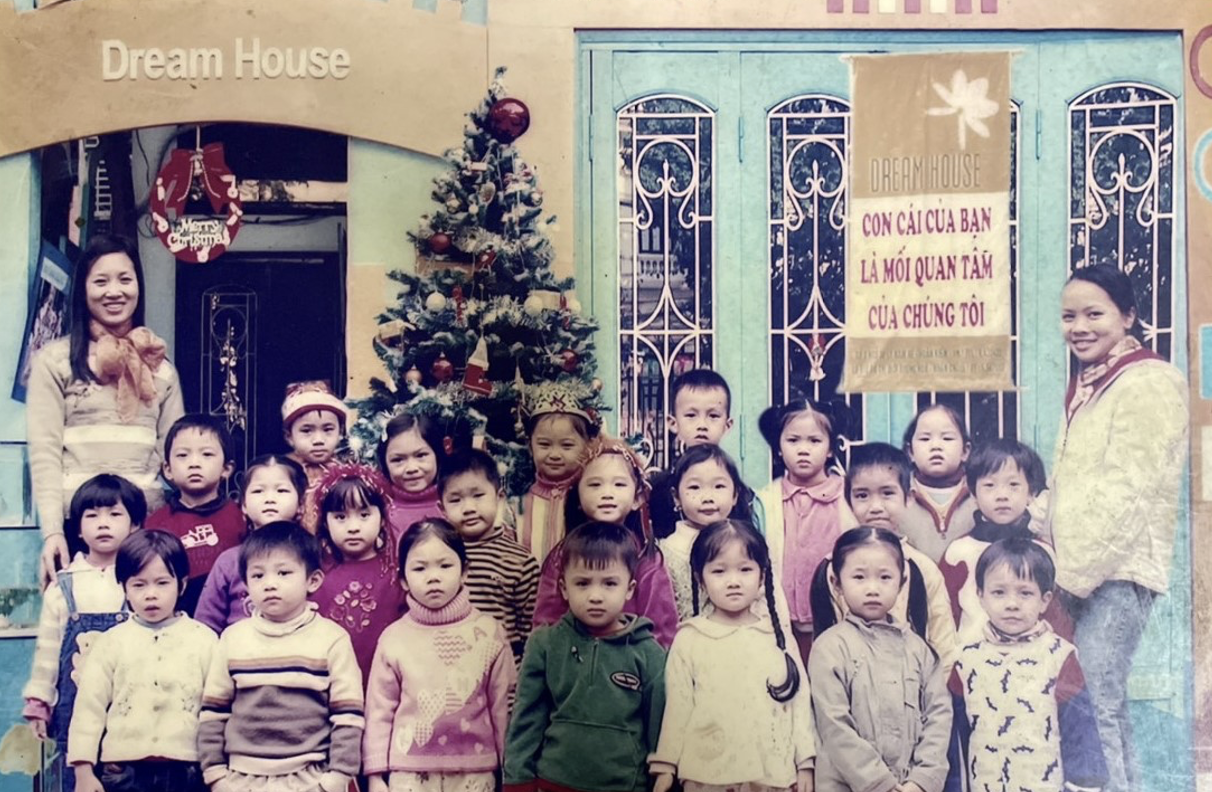
Dream House 2003

The story of the Olympia School begins in 2003 in Hanoi, when Ms. Minh An Pham and three of her friends were looking for kindergartens for their children. It was almost ten years since the Vietnamese government had begun loosening some requirements related to education and other sectors. Economic development was in full swing, and more and more international companies were finding their way to Vietnam.  All four friends got jobs at one of those international companies and Ms. Pham told me that experience gave them opportunities to see the confidence and independence of their co-workers’ children. That exposure reinforced their concern that – although many Vietnamese students excel in academics – they often seemed to lack what she called “life skills.” As Ms. Pham put it, it seemed as if Vietnamese students had lost their confidence in speaking up and sharing their ideas. She attributed that to a school system based on a Confucian education tradition that emphasized memorization, examination, and respect for teachers, coupled with a tendency for Vietnamese parents to constantly compare how their children were doing and how they ranked academically.

With a growing international community and increasing opportunities for international work, Ms. Pham and her friends wanted to make sure that their children gained both academic and life skills and that their children could learn English along with Vietnamese. When they looked around to find a school that could meeting those goals, however, they did not see any public kindergartens that met these criteria. There were a few private options that Ms. Pham and her friends thought seemed more like day-care centers than schools, and there was one private kindergarten imported from Singapore. But even that – very expensive – option only ran from 9 – 3 PM, still not long enough to take care of their children while the four women worked. Seeing no other options, the four friends began to think about creating a kindergarten of their own.

The power of social networks

Their first steps toward developing a school came with the help of another colleague at work. Although Ms. Pham had graduated from a teacher training institution in Vietnam, she went straight into the business world after graduation. As a consequence, she had never worked in schools and was not that familiar with early childhood education. But, Ms. Pham told me, the four friends were fortunate to work with a woman whose mother was a well-known educator who specialized in kindergarten. As Ms. Pham described it, “she was our first teacher,” and introduced the four friends to a number of educational experts who helped them learn about other early childhood approaches, including the “Reggio approach” that originated in Reggio Emilio, Italy. As they visited local schools and traveled to observe private kindergartens in places like Ho Chi Minh City and Singapore, they focused more and more on schools that emphasized “developmentally appropriate practice” as well as some schools that were inspired by Howard Gardner’s Theory of Multiple Intelligences. On the one hand, Ms. Pham explained, these approaches provided broad support for children’s development and encouraged children to be independent. On the other hand, they also fit well with the Vietnamese national kindergarten curriculum. Notably, the national curriculum was already divided into areas that concentrated on physical, musical, and ethical development, and the four friends felt those subjects aligned well with the different strengths and abilities highlighted in theory of multiple intelligences.

They expanded their group of advisors as they were introduced to more and more people, including several working with not-for-profits like Save the Children, who had extensive experience in Vietnam. Those advisors looked at the plans to combine MI-based and developmentally appropriate curriculum with the Vietnamese national curriculum and concluded: “this is doable.” With that green light, Ms. Pham bought textbooks and gathered teaching materials and, with the help of their network of experts, reviewed and aligned them with the national curriculum. They rented a small house in an alley of Hanoi and worked with a designer to renovate it; they drew on the connections and expertise of their advisors to recruit and hire teachers; and, after an intense six months, opened their doors to the “Dream House” kindergarten and welcomed a small group of six students – four children of their own and two children who lived nearby.  To make it all possible, Ms. Pham worked the evening shift at her job and spent the whole morning at the kindergarten.

Key developments in the first years

The four friends were fortunate to have the means and the relationships to get the school off the ground, but, as Ms. Pham explained, they also had to credit their houses to the bank, draw on their salaries to make sure they had enough money to pay the teachers, and “every time a student quit the school, we worried so much that we would not have enough money to keep going…” Nonetheless, the school grew year-by-year, from 6 students to 12 students, from 20 students to 60, as the first cohort expanded and progressed through the grades.

Dream House Primary and Secondary Schools 2007

By 2007, they were able to start the year with both a group of primary school students and a group of secondary school students. Along the way, several key decisions helped to create the time in the day and the space in the curriculum that they needed to stay true to their original vision of a developmentally based, holistic, education aligned with the national curriculum.  First, they decided to teach Vietnamese and English in an integrated way. As Ms. Pham explained, she had seen private schools in Ho Chi Minh City that were teaching English, but only as a separate subject. “Our innovation,” Ms. Pham said, “was to teach English along with the other subjects.” That meant teaching key skills and concepts in math, science, and history in Vietnamese and then teaching the related English vocabulary in the same class. This innovation created space in their schedule because they did not have to find time to teach a separate English course. Furthermore, the subject teachers teaching in Vietnamese could co-teach with their colleagues teaching English, making coordination and communication easier. Perhaps most importantly, from the students’ perspectives, instead of having to make connections between concepts and vocabulary taught in different classes, they encountered an integrated curriculum that reduced confusion.

Second, although Vietnamese public schools generally ran for a half-day (usually from about 7:30 AM to 12 PM, 6 days a week), Dream House decided to run a full-day program, from 8 AM – 4:30 PM. That decision created additional time during the school day that allowed them to meet the national curriculum requirements, add and integrate the teaching of English, and incorporate the teaching of their own “life skills” curriculum. In particular, the national curriculum requirements for social science included both ethics and society and nature, but Dream House chose to split social science up by teaching nature during their science classes and then teaching ethics and society in their life skills class. As Ms. Pham put it, “we reconfigured all the subjects in the school day and made it a comprehensive approach, integrating Vietnamese and English.”

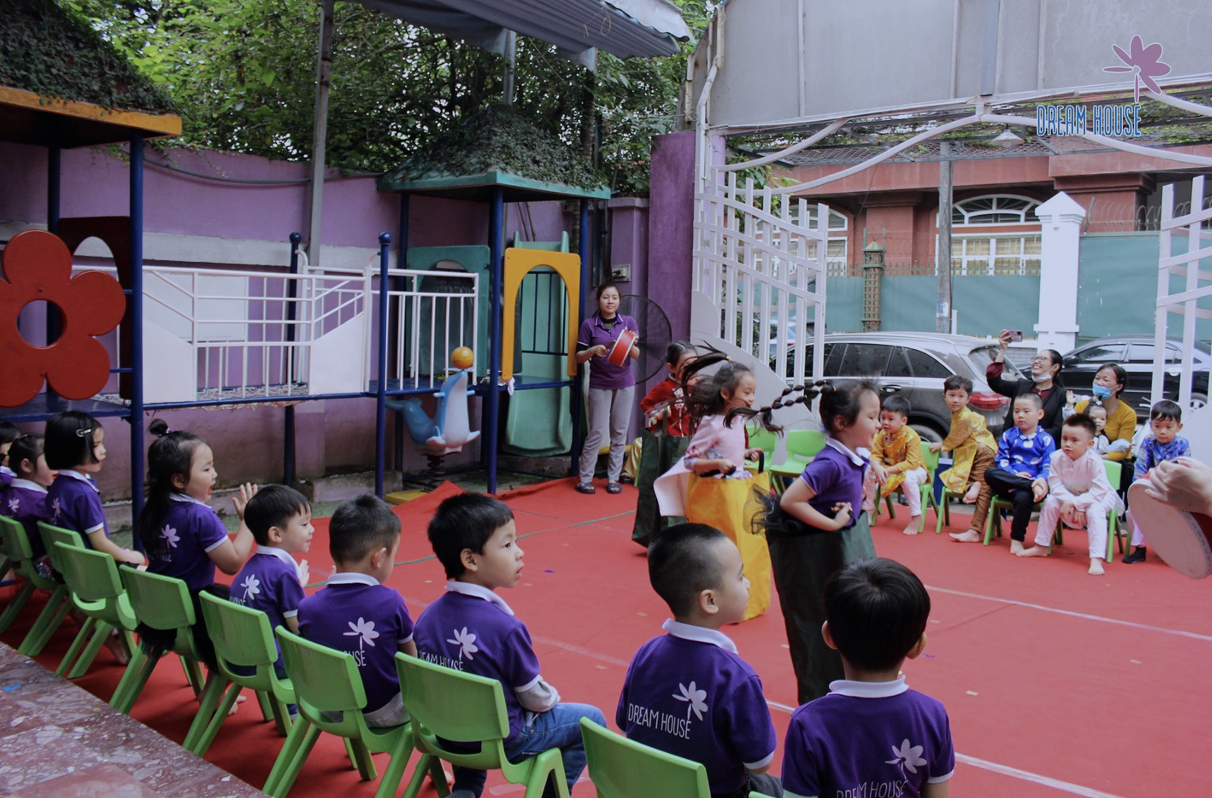
Movement games of kindergarten in Dream House

With those critical decisions and strategic choices, the basic structures for their primary, middle, and high school were in place. Capping off this period of development, what began as Dream House, moved to a new, larger campus in 2010.  As part of a competition to come up with a new name, the Olympia School was born, the winning teacher paper declaring it a symbol for wisdom and success.

Next week: The “School of Change”: The Olympia School Story (Part 2)