Tag Archives: TALIS Survey

High satisfaction, high demands, and changing demographics: Scanning the headlines on the results of the TALIS 2024 (Part 2)

Teachers’ workloads, AI use, and the status of the teaching profession overall are among the key issues highlighted by the media sources that covered the recent release of OECD’s Teaching and Learning International Survey (TALIS) 2024. In this second part of a two-part post, IEN rounds up some of the headlines that discuss the results for different countries. Part 1 provided a summary of OECD’s results, and Part 2 will For comparison, see previous coverage of the release of the results of TALIS 20218 (Volume 1; Volume 2).

Headlines around the world

Albania

Albania among top OECD countries in international teachers’ survey results, Albanian Telegraphic Agency

“…98% of Albanian teachers are satisfied with their profession, while only 3% experience high levels of stress—the lowest rate compared to the OECD average of 19%.”

Australia

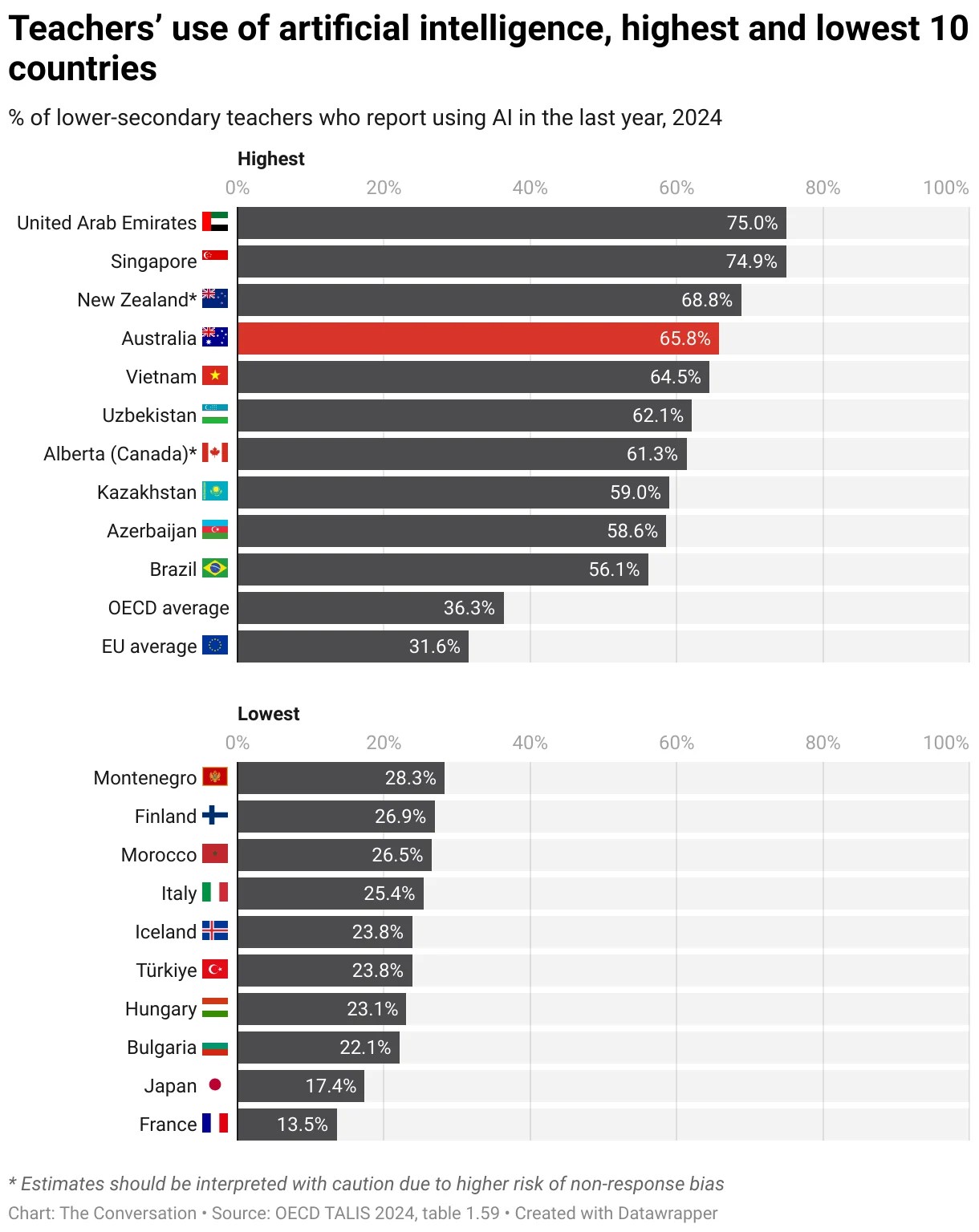
Australian teachers are some of the highest users of AI in classrooms around the world, Yahoo News Australia
Australian teachers are among the world’s most stressed – despite low class time, The Advertiser

Australian teacher shortage among worst in the OECED, SchoolNews.com

“Australia is now among the top three OECD countries for teacher shortages in public schools. That is unacceptable for a wealthy, developed nation.”

Austria

New teachers hardly feel prepared for everyday school, Vol.at

Belgium

Teachers report high stress due to administrative burden, Belganewsagency.eu

“A striking 70 percent of lower secondary school teachers in Belgium report stress from too much administrative work, far above the OECD average.”

Canada – Alberta

Alberta teachers report highest stress levels globally, CityNews Calgary
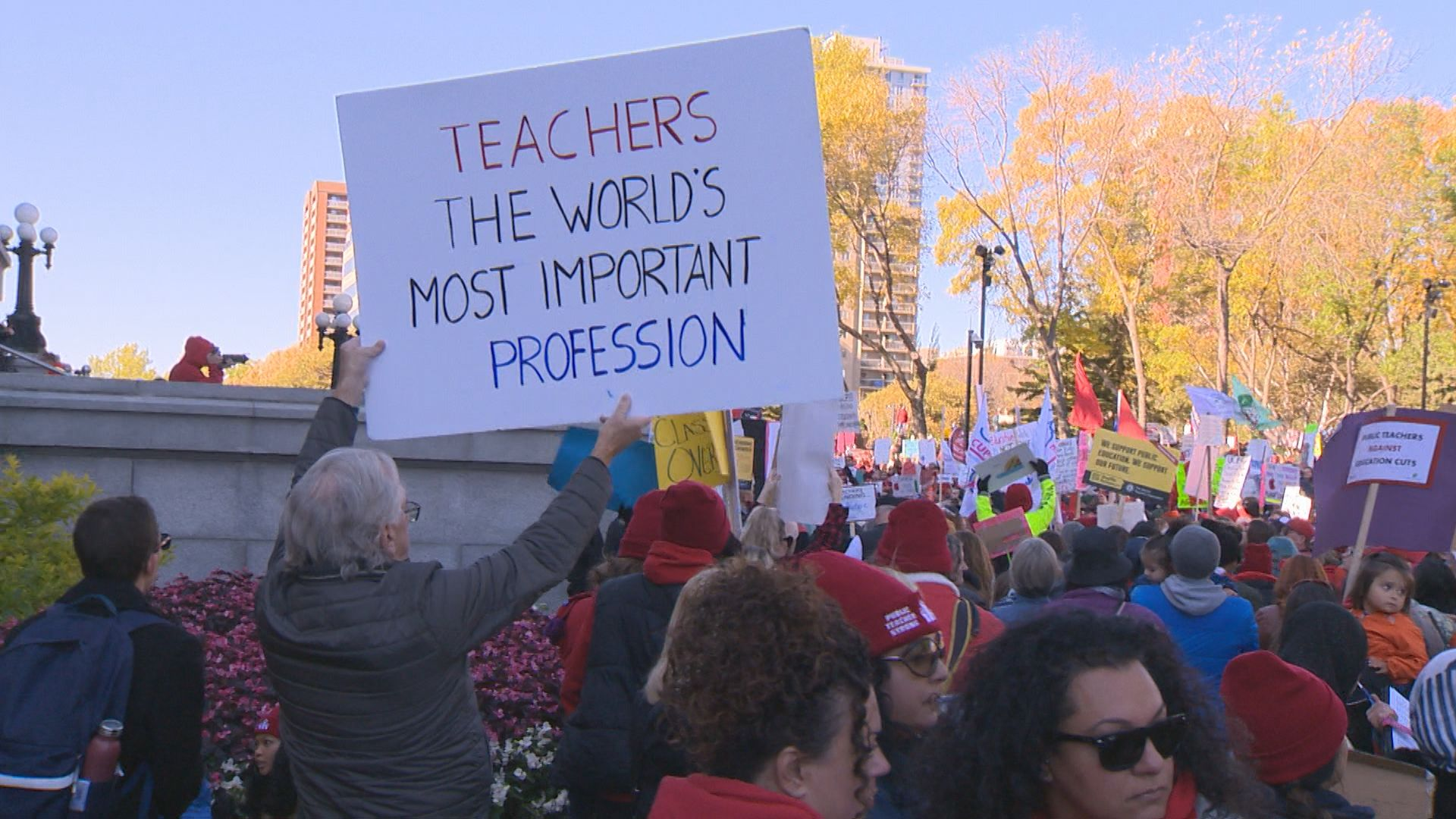
Source: Zach Dafoe, CityNews

Costa Rica

AI surges in Costa Rican schools ahead of official policy, TicosLand

Artificial intelligence, in this particular case, can likely contribute significantly to reducing the teacher’s workload. Because if it is used appropriately and efficiently, it can streamline many processes such as receiving information, reviewing in-class assignments, grading exams, and organizing activities.”

Croatia

Croatian teachers among the most education, however, the workload is constantly increasing, PortalHr

Czechia

Young teachers are disappearing: Why is the profession uninteresting even though salaries are improving, Iustecko.cz

“Despite higher satisfaction with salaries, the profession suffers from low social recognition. Only 22% of teachers feel that society values ​​their work, and only 15% of educators perceive recognition from political representation.”

Estonia

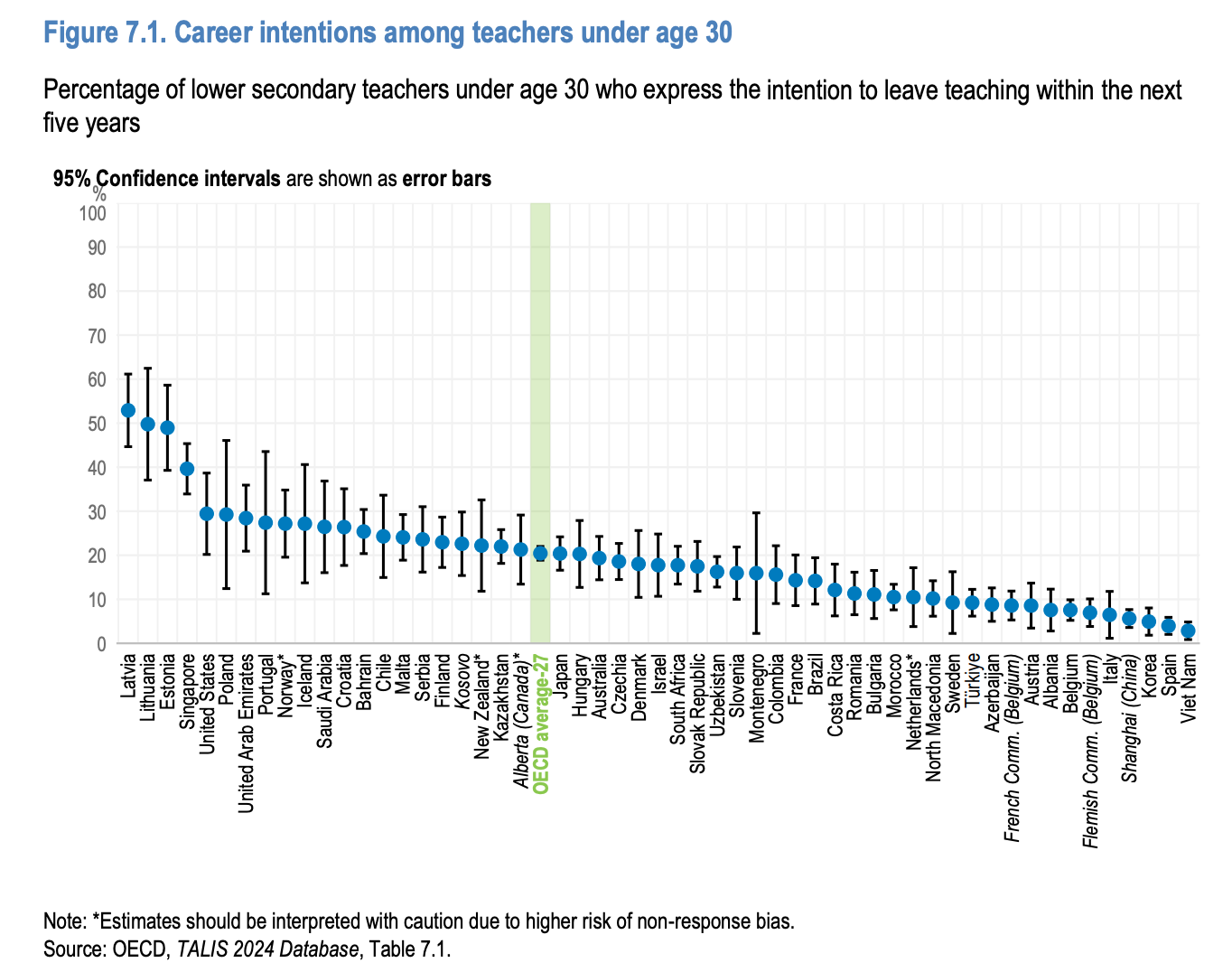
Study: Nearly half of teachers plan to change jobs in the coming years, ERR
Finland

TALIS 2024: Lower secondary teachers are satisfied with their work — Increasing diversity in schools challenges teachers to learn new skills, Valtioneuvosto

“The growing diversity in schools and the increasing need for student support are reflected in teachers’ professional learning needs. Areas for development included using artificial intelligence, teaching students with special education needs, supporting students’ social and emotional development, and teaching in multicultural or multilingual settings.”

France

Teaching in France: a despised and increasingly difficult profession on TALIS 2024 Survey, cafepedagogique.net

Hungary

Hungarian teachers report rising satisfaction and greater autonomy, OCED TALIS survey shows, The Hungarian Conservative
Source: Hungarian Conservative

Iceland

Almost all teachers satisfied with jobs — but pay worries persist, RUV.is

“Icelandic teachers are among the most dissatisfied with their pay: only 19% are content with their salaries, compared with an average of one third across the OECD.”

Israel

Israeli teachers satisfied but face staffing crisis, The Jerusalem Post

Japan

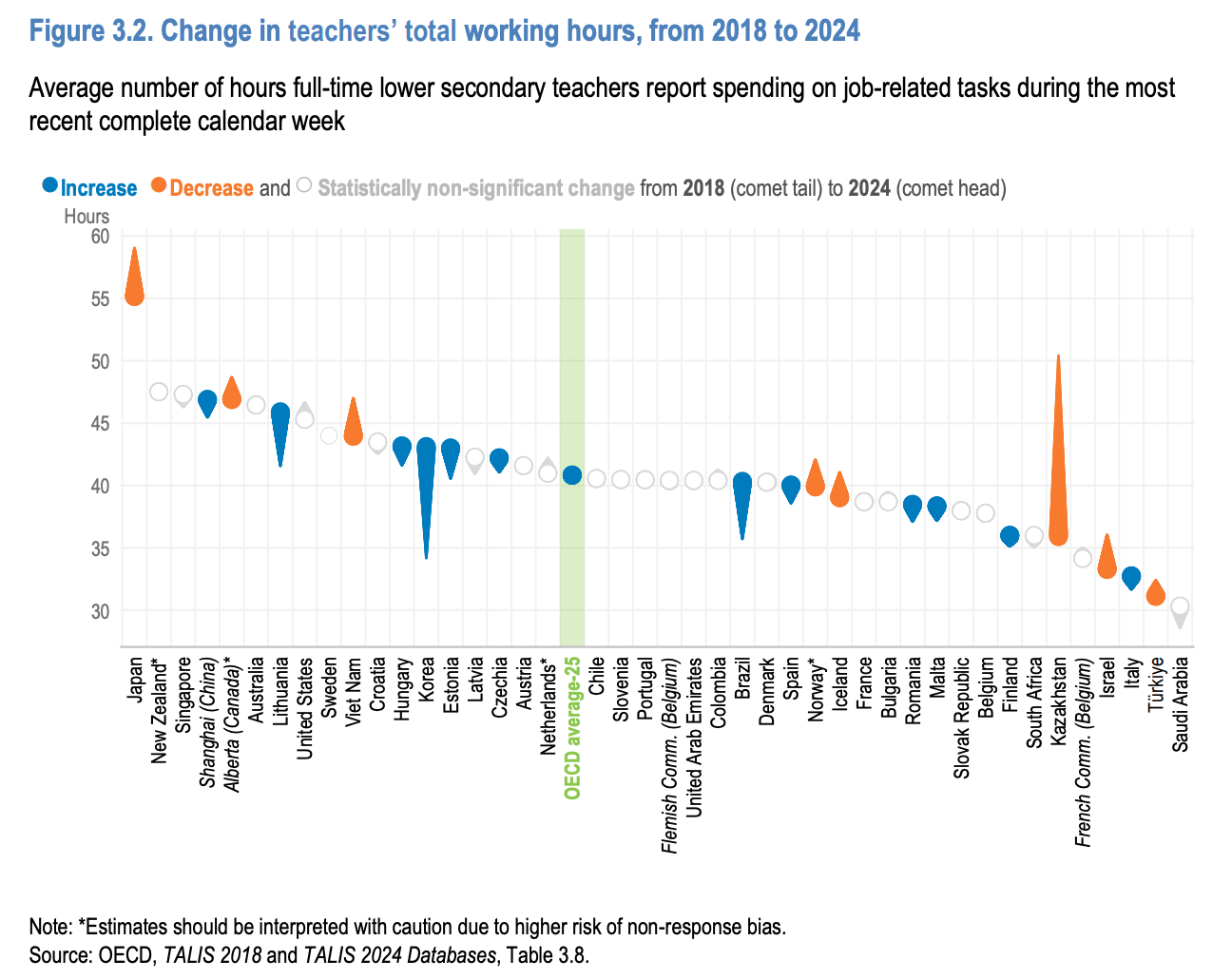
Japan’s teachers work longest hours among OECED peers, Nikkei Asia
Latvia

Half of new teachers in Latvia could leave the profession within five years, Baltic News Network

“Half — or 53% — of new teachers in Latvia may leave the profession within the next five years, according to the initial results of the OECD Teaching and Learning International Survey.”

Lithuania

Most Lithuanian teachers higher confident, happy with their working conditions, The Baltic Times

New Zealand

Initial teaching training needs strengthening, The National Tribune

OCED TALIS 2024: NZ teachers lack confidence in core teaching skills, gov’t acts, Devdiscourse

“Education Minister Erica Stanford acknowledged the findings, noting that 62% of graduate teachers lack confidence in teaching the content of all the subjects they handle, and 54% are unsure of how to teach these subjects effectively using proper pedagogical approaches.”

Portugal

Portugal faces an urgent need for 38,000 new teachers by 2034, Cnedu.pt

Portuguese teachers among the most satisfied in the OECED, Portugal Pulse

Singapore

Global survey finds Singapore teachers spend less time teaching and marking, but work longer hours, The Straights Times
Source: MDDI

3 in 4 Singapore teachers use AI, more than double overseas peers: OCED Survey, The Straights Times

South Korea

Over half Korean teachers identify parental complaints as major source of stress, Korea JoongAng Daily

South Korean teachers top OECD in career regret due to stress, The Chosun Daily

“It has been found that the stress South Korean teachers experience due to parental complaints and students’ verbal violence is among the highest globally.”

Spain

Almost half of the secondary school teachers in the State believe that initial training is not adequate, Diari ARA

Spain is one of the countries where the fewest teachers consider leaving the profession, Sur in English
Source: Sur in English via Álex Sánchez

Sweden

Swedish Teachers Report Job Satisfaction Despite Stress and Challenges, Sweden Herald

“Nine out of ten upper secondary school teachers like their job, and the proportion who expect to stay in the profession has increased. But Swedish teachers also testify to stress and chaos.”

United States

For teachers, work-life boundaries are harder to keep than ever, Education Week

“[N]early 30% of U.S. teachers report frequent on-the-job stress, compared to less than 20% for OECD countries on average. U.S. teachers were also more likely to report that teaching had taken a toll on their mental and physical health. U.S. lower secondary teachers worked on average more than 45 hours a week in 2024, nearly five hours more than the OECD average.”
High satisfaction, high demands, and changing demographics: Scanning the headlines on the results of the TALIS 2024 (Part 1)

90% of teachers around the world say they are satisfied with their jobs, but many also face an increased workload that challenges their work life balance. In this two part post, IEN explores these and other findings from OECD’s Teaching and Learning International Survey (TALIS) 2024. Part 1 provides a summary of OECD’s results, and Part 2 will round up some of the headlines that highlight the results from different countries. For comparison, see previous coverage of the release of the results of TALIS 20218 (Volume 1; Volume 2).

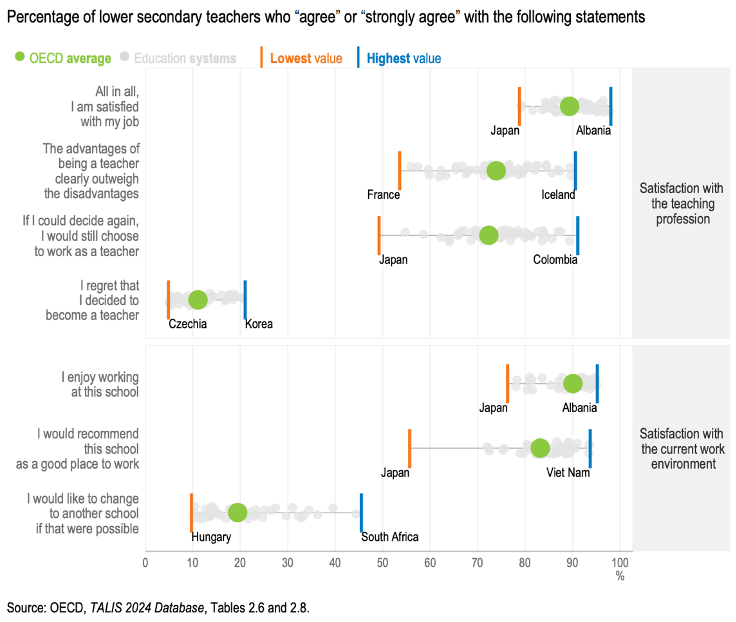
Most teachers are happy in their jobs,” declared the OECD, but demographic and technological changes contribute to increasing demands on teachers around the world.  Those are two of the take-aways from the report on the results of the 2024 TALIS survey. Launched first in 2008 with a survey of 23 countries, OECD has also carried out the survey of teachers and school leaders in 2013 and 2018 to compare educator’s perceptions, working conditions, and learning environments. In 2024, around 280,000 educators from 55 education systems participated in the survey. Among the other key findings in 2024:

Job satisfaction

On average, almost 9 out of 10 teachers report that they are satisfied with their jobs.

  • In South Africa, teacher satisfaction has risen by 8% since 2018
  • In Colombia, 90% of teachers say they would become a teacher again.

Value of the teaching profession

Around 2 out of 3 teachers say they are valued by parents and guardians, but with significant variations:

  • Over 90% of teachers feel valued in Vietnam Saudi Arabia, United Arab Emirates, Uzbekistan
  • Less than 50% of teachers feel valued in French-speaking Belgium, Croatia, France, and Japan
  • Saudi Arabia, Bulgaria and Denmark have increased the share of teachers who feel valued by almost 20%

Age

The average age of teachers across the OECD is 45 years-old, but:

  • More than half of teachers are 50 or older in Estonia, Hungary, Latvia, Lithuania
  • The average age of teachers is 38 or 39 in Türkiye, Morocco, the United Arab Emirates and Uzbekistan

Workload and stress

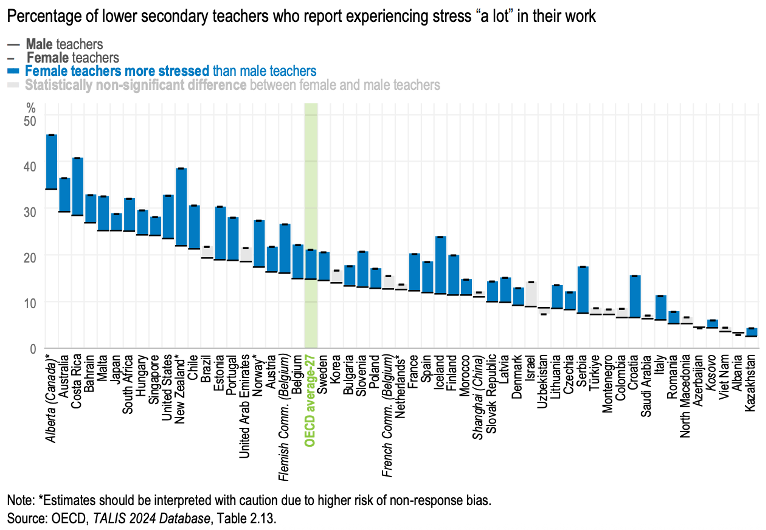
Roughly half of teachers report excessive administrative work as a source of work-related stress

  • The share of female teachers reporting stress “a lot” in their work is 21% compared to 15% for male teachers.
  • Japanese teachers work almost 55 hours a week (down from 60 hours a week in 2018, the highest in the world).
  • Teachers’ sources of stress are more closely linked to constant, unsupported change than to resource shortages

The amount of time spent maintaining discipline has increased in almost all education systems since 2018

  • About 1 in 5 five teachers, on average, report significant disruptive noise and disorder in their classrooms.
  • More than half of teachers in Brazil report such disruptions, compared to about a third of teachers in Chile, Finland, Portugal and South Africa
  • Less than 5% of teachers in in Albania, Japan and Shanghai (China) report facing such disruptions

Preparation

Almost 4 out of 5 teachers participated in regular teacher preparation programs to obtain their initial qualification, but:

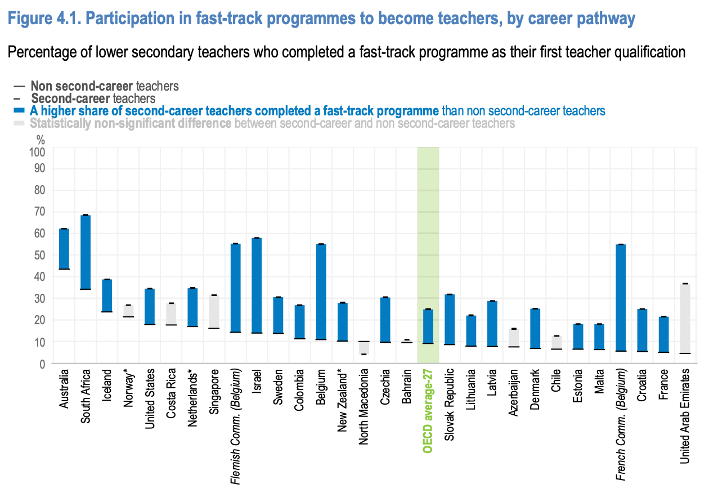
  • More than half of teachers in Australia, Costa Rica, Kazakhstan, Romania, Saudi Arabia and South Africa, do not follow the regular path through teacher education
  • Almost half of teachers in Australia and almost a third of teachers in Iceland completed “fast-track” or specialized teacher education program
Source: OECD, TALIS 2024

Teacher evaluation and support

Almost 90% of teachers work in schools where they are formally evaluated at least once a year by school leaders, and:

  • 65% of teachers are engaged in post-evaluations discussions about how to improve their teaching.
  • Slightly less than half of teachers are offered “development or training” plans, ranging from over 90% of teachers in Bahrain and Kazakhstan to under 15% in Iceland.
  • A little over 10% of teachers participate in programs where they are offered financial incentives and less than 5% participate in programs that include potential sanctions.

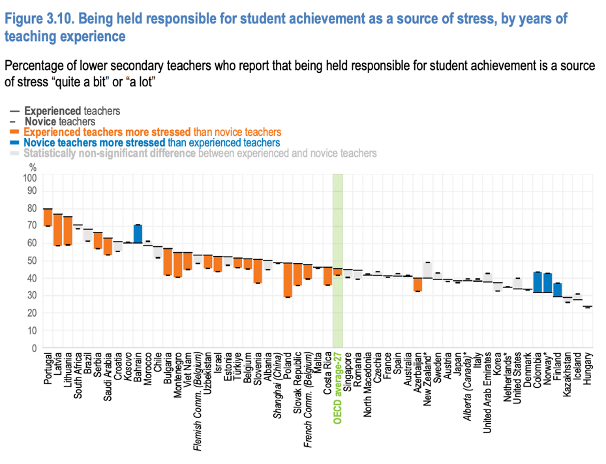
Almost half of teachers’ report that being held responsible for students’ achievement is a source of significant stress:

  • Over 70% of teachers in Latvia, Lithuania, Portugal and South Africa report such stress
  •  Less than a third of teachers in Finland, Hungary, Iceland and Kazakhstan report this stress
Source: OECD, TALIS 2024

Roughly 20% of teachers, on average, participate in mentorship programs: 

  • Almost 80% of teachers in Shanghai (China) report having an assigned mentor and over 60% of teachers with high self-efficacy report exchanging materials with peers, more than double the percentage of teachers with low
  • In systems like Uzbekistan over two-thirds of teachers with high self-efficacy report observing other teachers’ classes and providing feedback

AI and online learning

1 in 3 teachers, on average, report using AI in their work:

  • Roughly three-quarters of teachers in Singapore and the United Arab Emirates (UAE) use AI
  • Fewer than 20% of teachers in France and Japan use AI

Over 15% of teachers, on average, work in schools where at least one class was taught hybrid, but:

  • Over 80% of teachers in Singapore, and over 45% of teachers in Israel and the UAE report working schools where at least one class was taught hybrid or online

Next week: High satisfaction, high demands, and changing demographics: Scanning the headlines on the results of the TALIS 2024 (Part 2)

SCANNING THE HEADLINES FOR RESULTS FROM TALIS 2018: TEACHING, LEARNING, AND LEADERSHIP

This week IEN provides a glimpse of how a few media outlets around the world have characterized the results from the OECD’s recent release of Volume II of the TALIS 2018 results, Teachers and School Leaders as Valued Professionals. This volume summarizes the results of a survey of teachers and school leaders from 48 countries, with a focus on questions related to 1) how society and teachers view the teaching profession, 2) employment contracts and salaries, 3) how teachers work together and 4) how much control teachers and leaders have over their work. This week’s online search for “TALIS 2018 volume II OECD” turned up very few stories in English. However, there were a number of headlines in smaller outlets and other languages, some of which were (google) translated below. More English headlines appeared in a scan of the TALIS headlines last June following the release of Volume I.

Australia

TALIS 2018: Valuing teachers and school leaders as professionals, Teacher Magazine (Australia)

9 out of 10 teachers from all OECD countries and economies are satisfied with their job, but only 26% think the work they do is valued by society; 14% believe that policy makers in their country or region value their view, and only 24% believe that they can influence education policy.

Croatia

Teachers overwhelmingly feel they have control over things (translated), srednja.hr

“About 98% of Croatian teachers believe that they have control over the choice of teaching methods and student evaluation, 93% of them have control over the discipline of students (92% in secondary school), 94% of them have control over the choice of homework.”  But only 9% of teachers agree that the teaching profession is valued in society.

Denmark

Danish teachers are more stressed than their Nordic colleagues (translated), folkeskolen.dk

43% of Danish teachers are considering another job, and 31% of “feel that their job has a negative impact on their mental health to some extent. In comparison, only 24 per cent of Swedish teachers, 23 per cent of Icelandic, 13 per cent of Finnish and 10 per cent of Norwegian teachers.”

England

England’s teachers ‘most stressed’ in developed world, Times Education Supplement

“70% of lower secondary teachers report being stressed either ‘a lot’ or ‘quite a bit’… 77% of teachers are ‘all in all’ satisfied with their job, however, this is the lowest rate in the OECD, with all the other countries having rates of above 80%.”

France

Talis: The French teachers, the most despised in the world? (translated), Café Pedagogique

“85% of French teachers feel satisfied with their work, but Talis demonstrates that French teachers are not only isolated and underpaid but also despised by their institution.”

Italy

80% Italian teachers perceive various degrees of stress, low salary always a reason for dissatisfaction (translated), Orizzontescuola.it

“Only 12.1% of teachers in upper secondary schools feel valued, without particular differences by geographic areas and by order of school. The data also shows that 7% of the entire teaching staff think they are listened to by the country’s political leadership class.”

Japan

TALIS — Teachers’ stress factors: “Amount of work” “Parents” (translated), Kyoiku Shimbun

“The percentage of Japanese elementary and junior high school teachers who have a lot of administrative work and stress on dealing with parents exceeded the average in participating countries. Principals at elementary and junior high schools were also stressed about their responsibility for their students’ abilities and dealing with parents.”

Korea

1 out of 4 middle school teachers “will quit teaching in the next 5 years” (translated), Chosun Edu

“Nevertheless, the proportion of teachers who agree that the teaching profession is valued is 67%, much higher than the OECD average of 26%.” However, only 54% OF teachers and 62% of principals said they were satisfied with their working conditions, slightly lower than the OECD average (66%).

Latvia

Almost all Latvian teachers are satisfied with their work, the survey shows (translated), nra.lv

“23% of teachers surveyed agree or totally agree with the statement that their profession is valued in the community, while 91% of Latvian teachers indicate that they are generally satisfied with their work”

Norway

Norwegian teachers work well together (translated), NEA Radio

95% of teachers say that there is a good culture for supporting each other and working together at the school…Teachers also feel that they have good control over their own teaching.”

Slovakia

Survey: Our educators receive little respect (translated), Felvideck.ma,

“Only 4.5% of teachers in Slovakia feel that teachers’ work has a high degree of social appreciation, while only 2.1% of school principals believe it”

Slovenia

They are not appreciated by the public or by policy makers (translated), Večer

The majority of “Slovenian teachers and principals were satisfied with their profession and workplace, and slightly less satisfied with their salary… but only 3% of teachers say policy makers value their views and opinions.”

  • Thomas Hatch

Teacher collaboration and professional development around the world

Last month, at the American Educational Research Association Conference held in Chicago, I attended a presentation that offered multiple perspectives on the recent findings in the 2013 Teaching and Learning International Survey (TALIS) report. As the OECD explains, the TALIS report asks teachers and principals who they are, where they teach and how they feel about their work.

Linda Darling-Hammond focused on what the TALIS report can teach us about teachers in the United States. She explained that teachers in the U.S. have insufficient time for planning and collaboration during the school day, which means that they are often left to do this work alone at home. U.S. teachers report that they experience less helpful feedback (coming from principals more often than peers), and sporadic professional development. Yet, collaborative practices and self-efficacy were indicated as drivers of job satisfaction.

Andy Hargreaves argued that while collaboration can be important to job satisfaction, we need to develop a much deeper understanding of what effective collaboration looks like. He argued that we need to know more about why collaborative practices are not always embraced by teachers. As self-efficacy was also related to job satisfaction, Hargreaves suggested that we also think about collective efficacy—the belief that we have in what we can do together, not just alone. Further work needs to be done, he explained, to develop our understanding of when collaboration is useful, when it is simplistic, and when it takes the form of “contrived collegiality.”

With this attention to collaboration and professional development, I decided to conduct a scan of education news around the world to see what I could learn about how different countries are addressing the topic. This scan showed that countries are grappling with several issues, such as the quality, time, and funding for professional development.

In British Columbia, the government is proposing to create professional development standards. Education Minister Peter Fassbender views the establishment of such standards as an act that would put the teaching profession on par with other professions, such as the legal, accounting, or nursing professions. While teachers are currently required to attend professional development sessions, new legislation would determine what those session cover; however, Fassbender says there will be no increase in funding to support the new standards. Concerns have been raised about the privitization of professional development, and the lack of teacher input.

In Australia, ACT teachers have spent a year arguing that they need guaranteed time each week for professional development and collaboration. According to Union Secretary Glenn Fowler, “Teachers do not trust their employer to protect them from snow-balling workloads, and we say to the employer if there is no guaranteed and quarantined time made in the new agreement, we will never see it, and that time may continue to get stripped away from teachers.”

Meanwhile, teachers in Ireland oppose a plan for mandatory continuing professional development (CPD). While most Irish teachers place high value on CPD, a majority fear that “if compulsory, it would promote a ‘compliance mentality’ with minimal real engagement.”

New Zealand has established Communities of Schools as part of their Investing in Educational Success initiative. These schools will set their own achievement goals and will be funded to allow teachers the time to “work with and learn from each other, supported by new teaching and leadership roles.” While funding for these new positions is proving controversial, as one principal shared, “You have to change things. You can’t stay in your same structures, if you do you will end up with the same result: busy schools that are too busy to share.”

Larry Flanagan, general secretary of the Educational Institute of Scotland (EIS), has noticed how busy teachers in Scotland are as well, and called for a period of “consolidataion and calm.” Flanagan said teachers needed breathing space after the delivery of the Curriculum for Excellence (CfE) and new exams:”The last thing Scottish teachers need to hear at the moment is that the pace of change needs to be stepped up.” He called for additional resources and support for professional development.

Deirdre Faughey

The search for a more equitable education system in Chile

Recently, I spoke with Dr. Beatrice Avalos-Bevan, Associate Researcher at the Center for Advanced Research in Education, at the University of Chile, in order to follow-up on an earlier post about the recent reforms in Chile. In that post, we noted that reports on educational reforms in Chile made it seem that the country might be putting an end to private education. Diane Ravitch also commented on these reports and followed up with Mario Waissbluth. As we explained in our earlier post, while the country is not ending private education, President Michelle Bachelet aims to eliminate parental payments or co-funding of subsidized private schools and increase funding for all schools by implementing new education and tax reforms that would help pay for a more equitable education system.

In conversation with Dr. Avalos-Bevan, we spoke about the issues of educational inequality that have captured the attention of teachers and students, leading to the large and sometimes violent protests over the past decade. Beginning in 2006, protests were organized by secondary students during the first term of President Michelle Bachelet’s administration – a movement that came to be known as the “Penguin Revolution” (after the white shirts and dark jackets of students’ school uniforms). The protests became more numerous and violent during the following Sebastián Piñera administration. When Bachelet returned for a second term as President in 2014, she was elected on an education reform platform that was embraced by students and teachers, and she even brought some of the former student leaders in to work in her administration.

As Mario Waissbluth explained in our last post, the “first wave of legislation” was sent to Congress in May; however, students continue to be dissatisfied because initial actions did not consider as yet changes in the administration and improvement of municipal or public schools, although these have been announced for the second semester of this year. This has caused students and teachers to reconvene their street protests as a way to put pressure on the administration and call attention to their ongoing concerns this past June. Those protests ended with the use of tear gas on thousands of university students

School Funding and Student Protests

As Dr. Avalos-Bevan explained, in the current system there are public or municipal schools, subsidized private schools, and elite private schools. The concern over inequality stems from the fact that the subsidized private schools are able to collect money from the government while also charging tuition. As a result, these schools receive a level of funding that the public or municipal schools cannot attain. Over time, the student population attending public schools has been shrinking, as more families strive to place their children in well-resourced subsidized schools.

The student protests have honed in on school funding because the students personally experience the increasingly segregated school system and the differences in the quality of education provided by the public or municipal schools versus the subsidized private schools. They also pay attention to the country’s poor performance on international assessments, such as Pisa and TIMSS, and attribute it to the flaws they see in the system.

Dr. Avalos-Bevan explained that in order to create a more equitable system, all schools need to receive a higher amount of government funding. For this reason, President Bachelet has suggested increasing taxes by 3% of gross domestic product, and increasing the corporate tax rate to 25% (up from 20%). President Bachelet will also stop funding of current private subsidized schools that operate on a for-profit basis, making all subsidized primary and secondary education free, creating more universities and increasing kindergarten funding and pre-K institutions.

Quality and Teacher Education

Colegio de Profesores, the largest teachers’ union in Chile, joined the student effort and held a strike last month to protest President Bachelet’s reform efforts, which they say don’t go far enough to address the fundamental issues of inequality that plague Chilean schools. Despite what some have seen as indicators of significant reform, others are concerned that the process has not encouraged “adequate public participation in the bill-writing process.”

In addition to refining school funding in Chilean schools, Dr. Avalos-Bevan says that there is a similar problem with private universities and the teacher preparation programs they have created. In the years between 2004-2010, private colleges have increased and are now being criticized for what many identify as an increase in profits without sufficient evidence of quality education. These institutions are known to admit students to their teacher education programs with very low qualifications, who graduate without adequate skills. According to Dr. Avalos-Bevan, the government has created a test (the Prueba Inicia, or Start Test) that aims to assess the students’ content knowledge as they leave university, but the test is currently administered on a voluntary basis. Therefore, many teachers graduate without taking this assessment. Of the few who take this test, many perform poorly.

Despite this issue of teacher education, Dr. Avalos-Bevan believes the main problem has to do with teachers’ working conditions. Salaries are low compared with those who enter professions that require the same level of education (4-5 years), and 75% of a teacher’s contract time has to be spent teaching in the classroom (27 hours per week, which is the highest of all OECD countries, according to the latest TALIS survey), leaving little time for planning, grading, and meeting with other teachers. Dr. Avalos-Bevan would like to see the establishment of a teaching career, with specifications as to how teachers may progress, what kinds of salaries they may achieve, and paths for them to move into other positions in the education system. Currently, there is a strong civil society movement pushing for changes in this direction that expects to propose a plan for the President to consider.

Deirdre Faughey

TALIS Survey

“Most teachers work ‘largely in isolation’ and do not engage in the collaboration with colleagues that could make their teaching much more effective,” claims a report based on the latest Teaching and Learning International Survey (TALIS). TALIS questioned more than 100,000 lower-secondary teachers in 34 countries, and while the results have not drawn as much attention as the 2013 PISA results, media in several parts of the world have picked up on the release of the TALIS data.

Denmark, http://www.folkeskolen.dk/

Danish teachers have much less training than the rest of the OECD (link in Danish)

 France, Le Figaro

French teachers insufficiently trained and evaluated during their career (link in French) 

Italy, Il Giornale D’Italia

The older teachers? In Italy (link in Italian)

IsraelThe Jerusalem Post

Average Israeli middle school teacher is middle aged female, satisfied with job

“The average Israeli middle school teacher is a middle aged woman who is for the most part satisfied with her chosen profession, the National Authority for Measurement and Evaluation in Education said on Wednesday, citing the results of the Organizations for Economic Co-operation and Development’s Teaching and Learning International Survey.”

JapanThe Japan Times

Japanese teachers work longest hours among OECD members

“Japanese teachers work an average of 53.9 hours per week, the highest figure among the OECD’s 34 member countries. The figure for Japan was well above the average of 38.3 hours among OECD members, according to the Teaching and Learning International Survey, which Japan participated in for the first time.”

Malaysiawww.malaysiandigest.com (with video)

Malaysian Teachers Spend 29pc Of Their Time On Admin Work, Says Study

“Malaysian teachers only spend on average 71 per cent of their working time on actual teaching and learning, while the rest of their time is occupied by administrative tasks and keeping order in the classroom.In comparison, the average teaching and learning time of the 33 countries surveyed in the global poll Teaching and Learning International Survey (Talis) 2013 was 78.7 per cent.”

Mexico, http://www.am.com.mx

Mexico designated by violence in secondary (link in Spanish)

Netherlands, http://www.nltimes.nl

Teachers happier in NL than elsewhere

“Results revealed that on average, Dutch teachers are happy with their work and more satisfied then the majority of their foreign colleagues. In The Netherlands, teachers take five hours for weekly class preparation, compared to an international average of seven. TALIS also found high levels of teaching co-operation occurring the The Netherlands, with over 50% of principles reporting that they rarely need to take steps to support co-operation. Dutch teachers were also reported to actively take extra training to improve in their field, and enjoy high levels of job growth.”

Poland, The News/Polskie Radio (audio clip)

TALIS report shows Polish teachers have excellent education but lack competences required by present day school challenges.

Singapore, Channel News Asia

Teachers in Singapore are the youngest, but among the best-trained worldwide: Survey

“Singapore has the youngest teaching force among the countries surveyed, with an average age of 36 – seven years below the global average is 43, according to TALIS. ‘We have a relatively younger teaching force due to the significant increase in the number of teachers in recent years. The younger teachers complement the depth and expertise of more experienced teachers who continue to be valued, and who provide professional support and mentoring for the Beginning Teachers,’ the Ministry of Education said in a statement.”

Spain, Libertad Digital

Why are Spanish teachers rated so poorly? (link in Spanish)

SwedenThe Local

Swedish teachers feel least valued: OECD

“The Teacher and Learning International Survey (TALIS) asked teachers in OECD countries about their views on their jobs. Sweden landed at the very bottom when it came to rating a career in teaching. Only France and Slovakia had worse results. Only one in twenty Swedish teachers thinks that their profession is appreciated in Sweden.”

UK, Education Media Centre

OECD TALIS authors comment on the experience of England’s teachers (audio)