Philippe Lopez | AFP | Getty Images
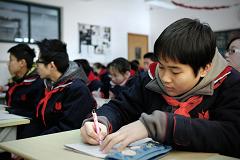
Over the past month, reports have touched on large scale reforms and resolutions. Spain’s recent reform effort includes a revised national syllabus and a proposed shift in the language of instruction, and has been met with protests, mainly over the cuts to funding, wages, and working conditions. Mexico’s Senate passed a controversial education reform bill that will institute standardized testing for teachers, and a new teacher evaluation system – measures that have led to massive protests as well. Meanwhile, China’s Ministry of Education plans to reduce homework, mandatory exams, and the “100 point” assessment system. Teachers will be expected to use confidence-building comments, such as “excellent,” “good,” “qualified” and “will-be qualified.”

 International Education News
Pingback: Post-class reflection | School Change
Perhaps one of the reasons that Mexico ranks so poorly in education rankings is that teaching jobs there are protected so strongly by the union–not just for the person holding the job, but for his or her children.
Yes, that is correct. A teacher in Mexico can literally pass on or bequest their job to their kids. The child can either take up the position, or sell it.
Pingback: Education reform in Mexico | International Education News
Pingback: Santiago Rincón-Gallardo with Deirdre Faughey | Esteem