This week IEN shares key ideas and resources from two meetings of the Atlantic Rim Collaboratory (ARC) that engaged policymakers and education leaders in exploring the potential of AI in education. The meetings included an ARC pre-Summit ThoughtMeet with A Focus on Democracy & AI Advanced Technology (like ChatGPT) in Schools, and the annual in-person Summit in Oslo, Norway that included a “Focus on AI and Education”. ARC co-founder and Learnlab CEO, Yngve Lindvig, offered some provocations as well as an opportunity to play with ChatGPT.
ARC brings together members of education systems and organizations such as Ireland, Iceland, Scotland, Uruguay, Wales, and the Canadian provinces of Nova Scotia, and Saskatchewan, and the International Confederation of Principals (ICP). Summaries and materials from previous ThoughtMeets are available on the ARC Education Project website. This article was written by Mariana Domínguez González, Sarah McGinnis & Trista Hollweck.
Ready or not, advanced technology (like ChatGPT) is part of the educational landscape, Yngve Lindvig declared. Even as the debate continues on the possibilities and consequences for schools and higher education, educational leaders must make policy decisions on artificial intelligence in their systems that take into account key questions like:
• How can we make sure that pedagogy drives technology and not the opposite?
• How do we make AI generated data relevant for teachers and students to support learning?
• How can teachers and students be data generators and critical users?
• How can teachers be their own data managers and have access to effective tools for data informed feedback in real time?
• How do we know the data we use is ethical and complies with General Data Protection Regulations (GDPR)
In this context, Lindvig argued, ChatGTP and advanced technology should be embraced, rather than feared, but in a thoughtful and reflective way. Although many governments and system leaders are concerned about the speed of change and a lack of control over AI, banning its use in schools and higher education is not the answer, he continued. AI has the possibilityto disrupt established instruction and assessment practices tosupport student learning in new and powerful ways, but its threats must not be taken lightly, he warned.

Addressing both threats and opportunities, Lindvig described how data-informed learning can be a critical element of effectiveAI use in schools, where data are generated by the students andare used in the learning situation. Since the origin of content in most data management systems is unknown, however, a number of risks must be considered when using AI generated data in schools. These include lack of diversity in content, creating an echo chamber of self-reinforcing opinions and sources, and promoting content that may not be aligned with priorities in educational systems. The main problem is that when a student uses AI generated data, the output is not derived from the student’s critical thinking, reflection, ideas, or product, but it is outsourced to a machine that disconnects the student from the learning. On the other hand, Lindvig explained, if you are able to make an AI-empowered solution within your system, controlled by your system, linked to the curriculum, tagged with curriculum goals, incorporating student feedback based on the intentions in the curriculum, then we have a system that could actually change something.
For Lindvig, perhaps one of the most powerful changes that AI could bring to education is a shift from more traditional assessment practices (such as essay writing and tests) to production-based formats where students must demonstrate their learning in multiple ways using a variety of multi-modal formats. When AI is assessing multi-modal products aligned with the goals that the teacher sets for the learning experience, then the teacher also gets something in return for using advanced technology. Additionally, AI used for assessment can engagestudent learning and provide immediate feedback within the classroom. Of note, AI implementation guided by teachers’ goals ensures that the feedback provided to students is aligned with the educational system’s curriculum and not “big tech” controlled algorithms. After testing this type of AI implementation in Scandinavian schools in May and June, Lindvig noted that teachers reported that the AI feedback on student work was aligned with the values in the curriculum and that it provided them with more time to communicate with their students.
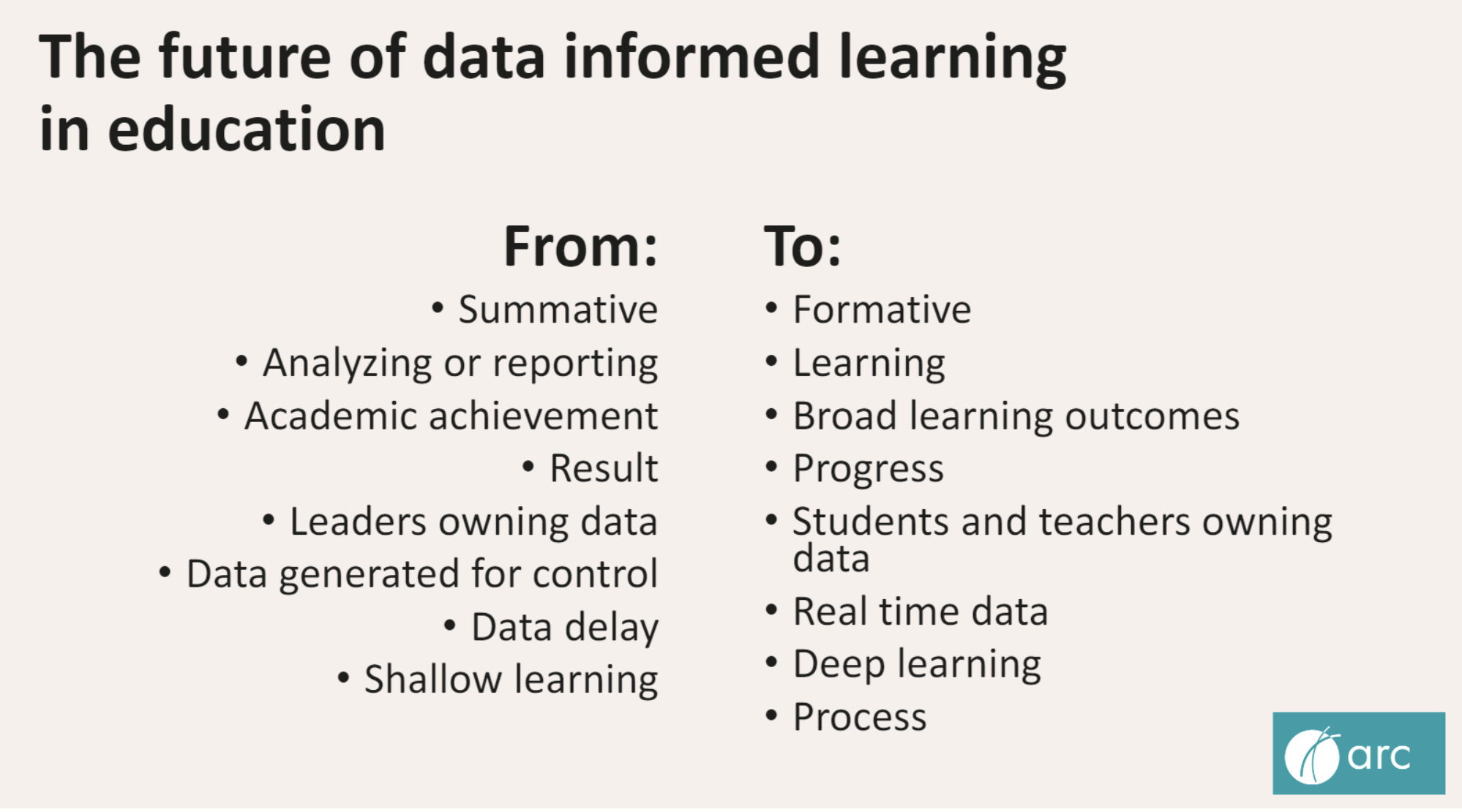
So where do system leaders start in order to implement an AI-empowered solution that is pedagogically relevant? According to Lindvig, systems should:
• Own the login platform, even if a company runs it for the system.
• Control the student catalog which contains the data.
• Implement very strong General Data Protection Regulations, and decide –at a federal, provincial and/or municipal level- which applications are allowed to be used.
• Own the curriculum by making sure that the applications filter the information so that it includes only the content that is relevant and pertinent to the national/provincial curriculum.
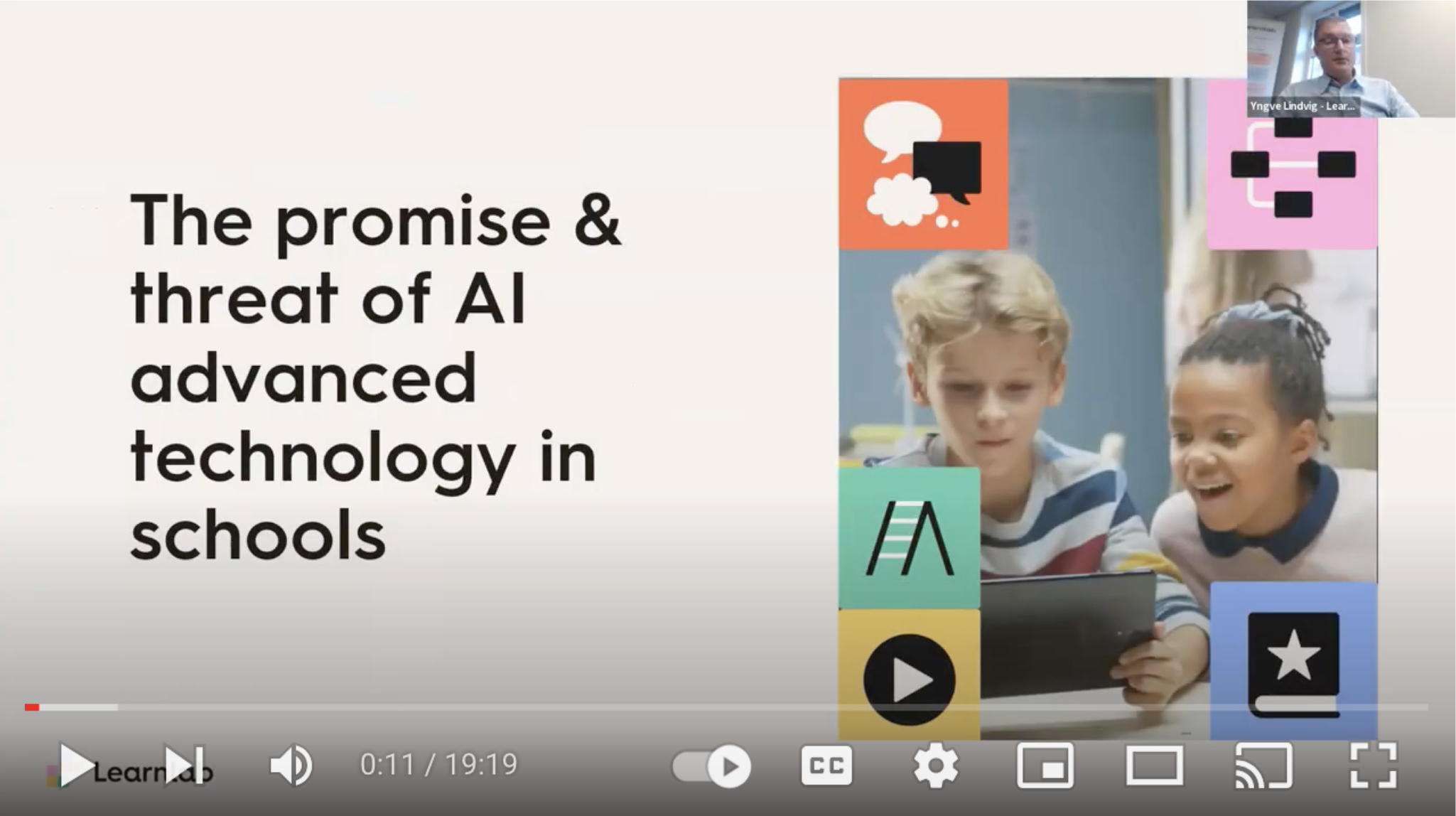
ARC Pre Summit March 2023 Yngve Lindvig
Yngve Lindvig´s ARC Talk on The Promise & Threat of Advanced Technology in Education
Previous IEN posts from ARC include A Focus on (Imperfect) Leadership: Snapshots from the 9th ARC Education ThoughtMeet; Well-Being, Social Emotional Learning (SEL) and the COVID-19 Pandemic: Snapshots from the 8th ARC Education Thoughtmeet; and The ARC Education Project: Rethinking Secondary Examinations and Credentials. Previous IEN posts on AI include: ChatGPT on ChatGPT in education: Clear summaries and fake citations (The ChatGPT six month anniversary edition Part 1); Ban It or Use It? Scanning the Headlines: The Chat GPT six month anniversary edition Part 2; Scanning the headlines for international perspectives on ChatGPT in schools: The Chat GPT six month anniversary edition Part 3; and What difference will AI make in schools? Scanning the headlines on Chat GPT’s six-month anniversary (Part 4).


 International Education News