This week’s post features the work of Phương Minh Lương and Tine S. Prøitz. They are two of the participants in this month’s issue of Lead the Change, which brings together interviews with four members of a virtual convening on Education System (Re)Building for Equity and Social Justice in Teaching and Learning organized by Amanda Datnow, Vicki Park, Don Peurach, and Jim Spillane, with the support of the Spencer Foundation. Next week’s post will feature interviews with two other participants, Amelia Peterson and Maria Teresa Tatto. The convening, with virtual meetings in May and June of 2023, was designed to help establish “a cross-national community of scholars whose members take appreciative, critical, and practical perspectives on advancing educational access, quality, and equity by (re)building education systems.” To continue the discussions begun during the convenings, we invite those attending Annual Meeting of the American Educational Research Association in April to join the conversation with Minahil Assim, Thomas Hatch, Phương Minh Lương, Don Peurach, and Tine Prøitz at a symposium for AERA’s Educational Change Special Interest Group – Equity and Educational Transformation in a Cross-National Perspective. The LtC series is produced by Alex Lamb and colleagues from the Educational Change Special Interest Group of the American Educational Research Association. A pdf of the fully formatted interview is available on the LtC website.
Phương Minh Lương
Lead the Change (LtC): The 2024 AERA theme is “Dismantling Racial Injustice and Constructing Educational Possibilities: A Call to Action.” Can you tell us how your work on educational transformation responds to this call?
Phương Minh Lương (PHL): I have contributed to Vietnam’s educational transformation for the past 23 years as a researcher, teacher and social activist. I have participated in a number of studies addressing educational reform and equity in educational access for disadvantaged children including Research on Improving System of Education in Vietnam (2017-2023) and a national study on developing high-quality human resources for ethnic minorities in Vietnam through pre-service and in-service training systems (2023-2025). These research projects involve close collaboration with policy makers from the Ministry of Education and Training and have informed the country’s educational policies and contributed to curriculum and intervention programs for educational quality improvement, particularly for disadvantaged groups.
I have also drawn on this research to develop equity-driven curriculum with an emphasis on achieving Sustainable Development Goal No 4. This work involved specific efforts to educate both master’s students and undergraduates to become agents of change through courses like human rights and national policies, human rights and social justice, civil society organizations, community development, and world of gender.
As a social activist, I have initiated a series of community development projects and a field research internship for both Vietnamese and international students. These projects have been conducted in cooperation between Hanoi University and some non-government organizations such as Aid et Action, Plan International, and Action on Poverty. Via these projects, we have gradually fueled students’ sense of responsibility and accountability of securing wellbeing for less advantaged communities in Vietnam and worldwide.
As a teacher educator, I have provided in-service training courses for teachers at different educational levels. With funding from International non-government organizations like ActionAid International Vietnam, Save the Children, and UNICEF, we have jointly developed culturally relevant teaching methods and textbooks for ethnic minority students in disadvantaged areas in Vietnam. All in all, social justice and equity are deeply imbued in my work. The intersection of research, teaching and service-learning projects has supported the achievement of access to a more equitable, inclusive, and quality education for disadvantaged students in Vietnam.
The intersection of research, teaching and service-learning projects has supported access to a more equitable, inclusive, and quality education for disadvantaged students in Vietnam.
LtC: How do you define and operationalize equity (and/or social justice) in your work?
PHL: Recognition means treating cultural claims as if they are a question of morality and justice. In this sense, education needs to ensure that all students’ claims of respect, dignity, and esteem are seen as equal individual rights. Here, recognition is treated as “one fairly specific form of moral and political relations between the state and its citizens” (Patten, 2017, p. 163). The paradigm of recognition can encompass not only movements aiming to revalue unjustly devalued identities but also deconstructive tendencies rejecting the “essentialism” of traditional identity politics (Fraser & Honneth, 2003).
Redistribution concerns the distribution of economic opportunities and resources considering cultural identities and differences. As such, it “encompasses not only class-centered political orientations… but also socioeconomic transformation or reform as the remedy for gender and racial-ethnic injustice” (Fraser & Honneth, 2003, p. 12). Accordingly, inequity includes both deprivation (being denied an adequate financial resource) or marginalisation (being confined to an undesirable or poorly allocated budget). Representation encompasses authoritative engagement and active participation in decision-making for a certain group in society. Recognition is reflected in the ‘representation’ dimension in which claims and power positions of different individuals and groups are acknowledged equally by having their voices heard and by their participation in any policies and programs related to their benefits and rights (Fraser & Honneth, 2003). This means that representation can be examined in terms of sex, ethnicity, socioeconomic status, and location of participants in the education system.
Although equity and justice are recognized in Vietnam’s legal framework at the institutional level, they have not been operationalized effectively at the organizational and individual levels.
From this perspective, the concept of justice is seen to secure sustainable equity for all in systems where those in power are held accountable for equal treatment for all, while rights-holders are empowered to actively claim their deserved equal rights and opportunities.
With this understanding of equity and justice, I’ve undertaken research, teaching and development projects with a constructivist and human right-based approach. In that approach, both those in power and rights-holders are empowered to address the structural inequities in the system in terms of redistribution, recognition and representation, and the development of their personal commitments and capacities.
LtC: What is a core issue/challenge you are grappling with in your work related to systems and/or equity and social justice?
PHL: Although equity and justice are recognized in our legal framework at the institutional level, they have not been operationalized effectively at the organizational and individual levels. At the organizational level, for example, the Educational Management Information System (EMIS) has been quite weak in Vietnam. As a consequence, it has been difficult to collect and analyse the ethnicity related information/data needed to address equity in terms of financing/ budgeting and investments/ procurement/ bidding procedures. This situation makes it difficult for me and others to carry out research that generates adequate knowledge and data for developing effective policies and practices related to equitable access to quality and inclusive education.
At the individual level, we need a better professional development and pre-service and in-service teacher training system so that teachers can learn how to secure equity and justice in their work. For instance, as lecturers, we have not been trained to use formative assessments effectively to make sure students from different backgrounds, particularly those from disadvantaged groups, do not fall behind. As a result, it is understandable that our policy makers and practitioners in the educational system do not have the capacity to put the legal framework of equity and justice into practice effectively.
LtC: What can researchers and practitioners of educational change learn from your work?
PHL: In Vietnam’s educational system, we promote equity and justice in ways relevant to our socio-cultural & political context. One of the most effective ways to transform our system is to engage policymakers and concerned stakeholders in our research, teaching and community development projects. For example, my research on equity in educational access for children of migrant workers in the industrial zones in Vietnam provides findings for my courses like “Human Development and Sustainable Development Goals” and “Social Policies.” Within these courses, we cooperated with the United Nations Development Program (UNDP) to deliver a Responsible Business Communication Campaign to advocate for companies to secure the equal right to quality education for children of their migrant workers.
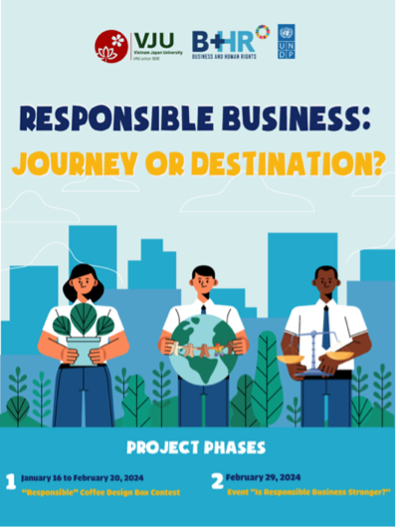
I am also active in networks with international scholars from the USA, UK, Germany, Australia, and Japan in research and teaching related to equity and justice issues on both a national and global scale. These collaborations enable me to see equity and justice from different perspectives and in different contexts and helps me to develop a socio-culturally relevant concept of equity and justice within Vietnam’s context. This puts equity and justice forward as principles and goals that can be achieved with collective action in a synergy and socio-cultural ecology of concerned stakeholders.
Tine S. Prøitz
Lead the Change (LtC): You were a participant in a recent convening to share and examine work around the world on equity, social justice, and educational transformation, and The 2024 AERA theme is “Dismantling Racial Injustice and Constructing Educational Possibilities: A Call to Action.” Can you tell us how your work on educational transformation responds to this call?
Tine S. Prøitz (TSP): My work relates to the conference theme through investigations of how education systems are developed in education policy and in practice with an aim to provide equal educational possibilities for all students. My work primarily focuses on the education systems of Norway and Sweden that have traditionally been associated with welfare systems characterized by universal rights including free access to public education. These countries rank high on comparative measures on equity in education (Blossing et al., 2014) and are considered successful in equal access to education and learning opportunities for all (Frønes et al. 2022). Even so, international studies show that the Nordic countries are experiencing increasing inequalities along several dimensions where socio-economic status and other background factors influence student’s academic achievement (Frønes et al 2022). As a result, many are asking if the Nordic countries can maintain a ‘School for All’ in the face of increasing diversities and social inequalities, globalization and other changing conditions (Lundahl, 2016; Telhaug et al., 2006).
Can Nordic countries maintain a ‘School for All’ with increasing diversities and social inequalities, globalization and other changing conditions?
Furthermore, the differences among the Nordic countries in terms of the degree of privatization, demographic characteristics and the governing of schools indicates that a rise in inequality relates to complex issues. In an ongoing comparative and mixed method research project (CLASS-Comparisons of leadership autonomy in school districts and schools) I am working with colleagues in Norway, Sweden and Germany to look into some of the complexity. We focus on how the relationships between education leaders in municipalities, school districts and in schools open or close education opportunities for all. By studying how educational leaders work with inclusion and assessment can help to reveal how education opportunities for students are constructed differently under varied framings of education systems.
We are also studying structures for collaborative knowledge development in education. Here equality is interesting in terms of how actors in education in different contexts can become involved in the nexus between education policy and practice (Prøitz et al. 2023). I am currently looking into new ways of working in research practice partnerships (RPPs). In these studies, we are exploring how to challenge traditional asymmetrical power relations and hierarchical structures by, for example, valuing practitioner´ experience-based knowledge equally with research based knowledge without compromising scientific quality.
We are exploring how to challenge traditional asymmetrical power relations and hierarchical structures by, for example, valuing practitioners´ experience-based knowledge equally as research-based knowledge without compromising scientific quality.
LtC: How do you define and operationalize equity (and/or social justice) in your work?
TSP: Taking a systems perspective involves the investigation of what education systems consist of and also how different system elements can influence what practitioners do, in terms of creating and limiting opportunities for action. From such a perspective, equity can be understood: as equity in terms of opportunity and choice; access and admission; results and outcomes; and treatment and adaption. In the Nordic setting, historically, equity has been viewed as everybody being the same, but today’s approach to equity tends to treat everyone as unique, with a focus on equivalence and the appraisal of individual autonomy, diversity, and merit (Aasen 2007; Prøitz & Aasen 2017). In the CLASS-project, we are looking at what approach to equity is promoted in policy and in the practice of education leaders.
In the Nordic setting, equity in education has traditionally been understood as everybody being the same, while today’s understanding of equity tends to consider everybody as unique and is more of a question of equivalence and the appraisal of individual autonomy, diversity, and merit.
In the context of RPPs we are emphasizing the concept of equality in participation and involvement between all partners of the research practice partnerships. Equal here refer to having the same powers to be involved in decision making about common aims and goals, but without having to be involved in all parts of the research activities. Partners in RPPs often have different roles and competences of varied relevance in the stages of the work of the RPP (Prøitz & Rye 2023).
LtC: What is a core issue/challenge you are grappling with in your work related to systems and/or equity and social justice?
TSP: The recent developments in the Nordic countries challenge basic ideas of the Nordic education model as a universal welfare good for all students (Telhaug et al. 2006); it also puts the “one public school for all” principle under pressure and thereby the national curriculum and the national quality development system as well (Dieude 2023). Consequently, our research takes as a core issue how public education systems develop and handle education opportunity for all under changing circumstances. These changing circumstances include more heterogenic and diversified populations with new expectations, more individual rights-oriented students and parents, teachers striving to handle more complex student populations with varied needs, and governments with different focus and shifting conceptions of equity. Our CLASS-studies of education leader autonomy, so far shows how the recognition of a growing number of individual rights challenges education leaders´ autonomy as they try to secure the rights of all students. Preliminary findings also show that education leaders experience more autonomy when it comes to supporting the involvement and participation of all students in schools, an issue high on the agenda in both policy and in practice and one that takes a lot of education leaders´ time and attention. Issues that I grapple with right now in these concrete studies include the classic question of how today’s public education system can balance the needs of the individual with the broader needs of the collective and the society. From a more long-term perspective, although I highly value the idea of a public education systems for all, I wonder: is a public education system for all a realistic idea for the future? If so, what will it take to sustain it?
Is public education systems for all a realistic idea for the future? If so what will it take to sustain it?
LtC: What can researchers and practitioners of educational change learn from your work?
TSP: I hope that the work I’ve shared in publications and in meetings with scholars, teachers, school leaders, administrators, and policymakers can inspire a renewed discussion of what education systems we construct and what we need to do to build sustainable systems with education opportunities for all. I hope to raise awareness and debate on what we mean by equity as well as by equivalence in today’s education systems. Building on the Nordic model’s more traditional meanings of equity in terms of opportunity and results does not seem to meet the challenges of today. Identifying further steps and potential solutions for more equitable education systems will require collaborations between researchers and practitioners. I hope that the work on RPPs may contribute to ways of working more closely together for educational change.
About the Interviewees:
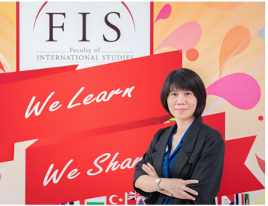
Phương Minh Lương is a lecturer and coordinator of the Master Program of Global Leadership of Vietnam Japan University (Vietnam National University). She is also a collaborating researcher with the Vietnam National Institute of Educational Sciences (Ministry of Education and Training). Her expertise and work focuses on Education, Development and Sustainability, specifically, securing human rights, equity and social justice, wellbeing and sustainable development for People, Family, and Community through theories of recognition, agency development, and socio-cultural ecological transformation. She has been a trainer of teachers and educational managers related to teaching methods and sustainable development issues for the past 18 years for several international non-governmental organizations. Her publications have primarily focused on internationalization and intercultural competence in higher education, green skills and labour market, equity, justice and sustainable developments.

Tine S. Prøitz is a professor of education science at the University of South-Eastern Norway. Her research interests are in the fields of education policy and education practice, education systems studies, and comparative studies with an emphasis on actor relations and actor collaborations. Prøitz is currently the principal investigator of the CLASS-Comparisons of leadership autonomy in school districts and schools project and she is the vice dean of research at the Faculty of Humanities, Sports and Educational Sciences.
References (PHL):
Fraser, N. (2003), Social justice in the age of identity politics: Redistribution, recognition, and participation. In N. Fraser & A. Honneth (Eds.), Redistribution or recognition? A political-philosophical exchange (pp. 7-109). Verso.
Fraser, N., & Honneth, A. (Eds.). (2003). Redistribution or recognition? A political-philosophical exchange (pp. 7- 109). Verso.
Patten, A. (2017). Equal recognition: The moral foundations of minority rights. Princeton University Press.
References (TSP):
Aasen, P. (2007). Equality in Educational Policy: A Norwegian Perspective. In Teese, Lamb & Duru-Bellat (eds.) International studies in educational inequality, theory and policy (pp. 460-475). Dordrecht: Springer Netherlands.
Blossing, U., Imsen, G., & Moos, L. (2014). Nordic schools in a time of change. In U. Blossing, G. Imsen, & L. Moos (Eds.), The Nordic education model. A ‘school for all’ encounters neo- liberal policy (pp. 1–14). Dordrecht, The Netherlands: Springer.
Dieudè, A. (2023). Private school policy and practice in Norway: Governing private schools: State funding and standardisation. Phd-thesis University of South-Eastern Norway.
Frønes, T. S., Pettersen, A., Radišić, J., & Buchholtz, N. (2020). Equity, equality and diversity in the Nordic model of education (p. 412). Springer Nature.
Lundahl, L. (2016). Equality, inclusion and marketisation of Nordic education: Introductory notes. Research in Comparative and International Education, 11(1), 3–12.
Prøitz, T. S., & Rye, E. (2023). Actor Roles in Research–Practice Relationships: Equality in Policy–Practice Nexuses. In Prøitz, T. S., Aasen, P., & Wermke, W. (eds.)From Education Policy to Education Practice: Unpacking the Nexus (pp. 287-304). Cham: Springer International Publishing.
Prøitz, T. S., & Aasen, P. (2017). Making and re-making the Nordic model of education. In The Routledge handbook of Scandinavian politics (pp. 213-228). Routledge
Prøitz, T. S., Aasen, P., & Wermke, W. (2023). Education policy and education practice nexuses. In Prøitz, T. S., Aasen, P., & Wermke, W. (eds.) From Education Policy to Education Practice: Unpacking the Nexus (pp. 1-16). Cham: Springer International Publishing.
Telhaug, A.O., Asbjørn Mediås, O., & Aasen, P. (2006). The Nordic model in education: Education as part of the political system in the last 50 years. Scandinavian journal of educational research, 50(3), 245-283.

 International Education News
Pingback: Education System (Re)Building for Equity and Social Justice (Part 2): Lead the Change Interviews with Amelia Peterson and Maria Teresa Tatto | International Education News