All five Nordic countries and Costa Rica occupy the top slots on the latest World Happiness Survey, but life satisfaction of those under 25 in English countries has dropped sharply in the past 10 years. What’s going on? This scan of the headlines from around the world gives a glimpse of the results from the latest World Happiness survey and explores the relationship between children’s social media use and happiness. For other recent stories from IEN about children’s wellbeing see: Could concerns about the academic pressure on students in China lead to real changes in conventional schooling? Stability & change in the education system in China (Part 4), Engagement, Wellbeing, and Innovation in the Wake of the School Closures in Vietnam: A Conversation with Chi Hieu Nguyen (Part 2); A view from Poland (Part 2) – Jacek Pyżalski discusses the effects of the COVID-19 pandemic on students, teachers and wellbeing; Thirteen insights into teacher wellbeing and mental health in England; Headlines around the world: PISA (2015) Well-Being Report
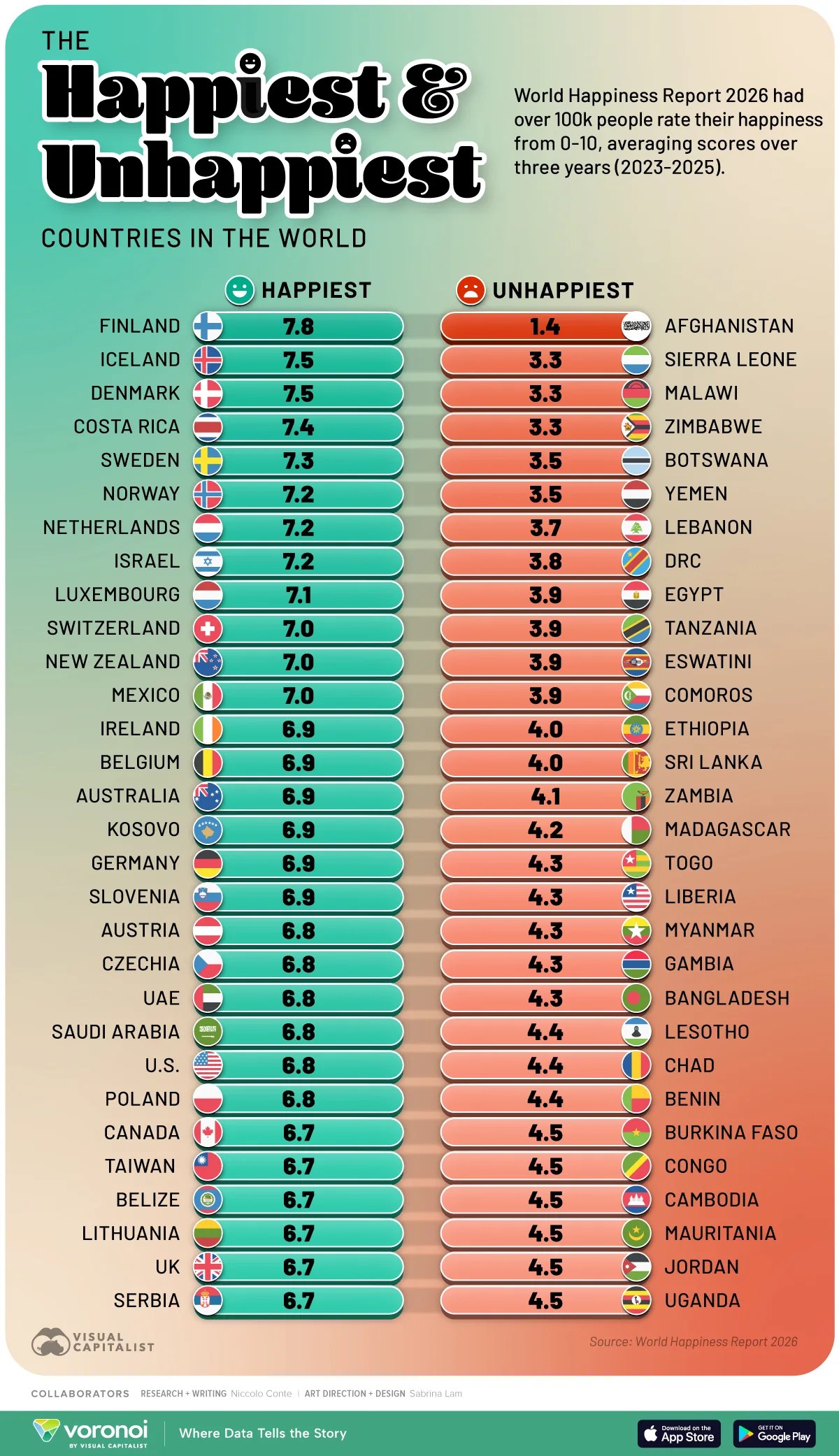
The 2026 rankings mark the second year in a row that none of the English-speaking countries appear in the top 10. The United States is at 23rd place, Canada is at 25th and Britain at 29th.
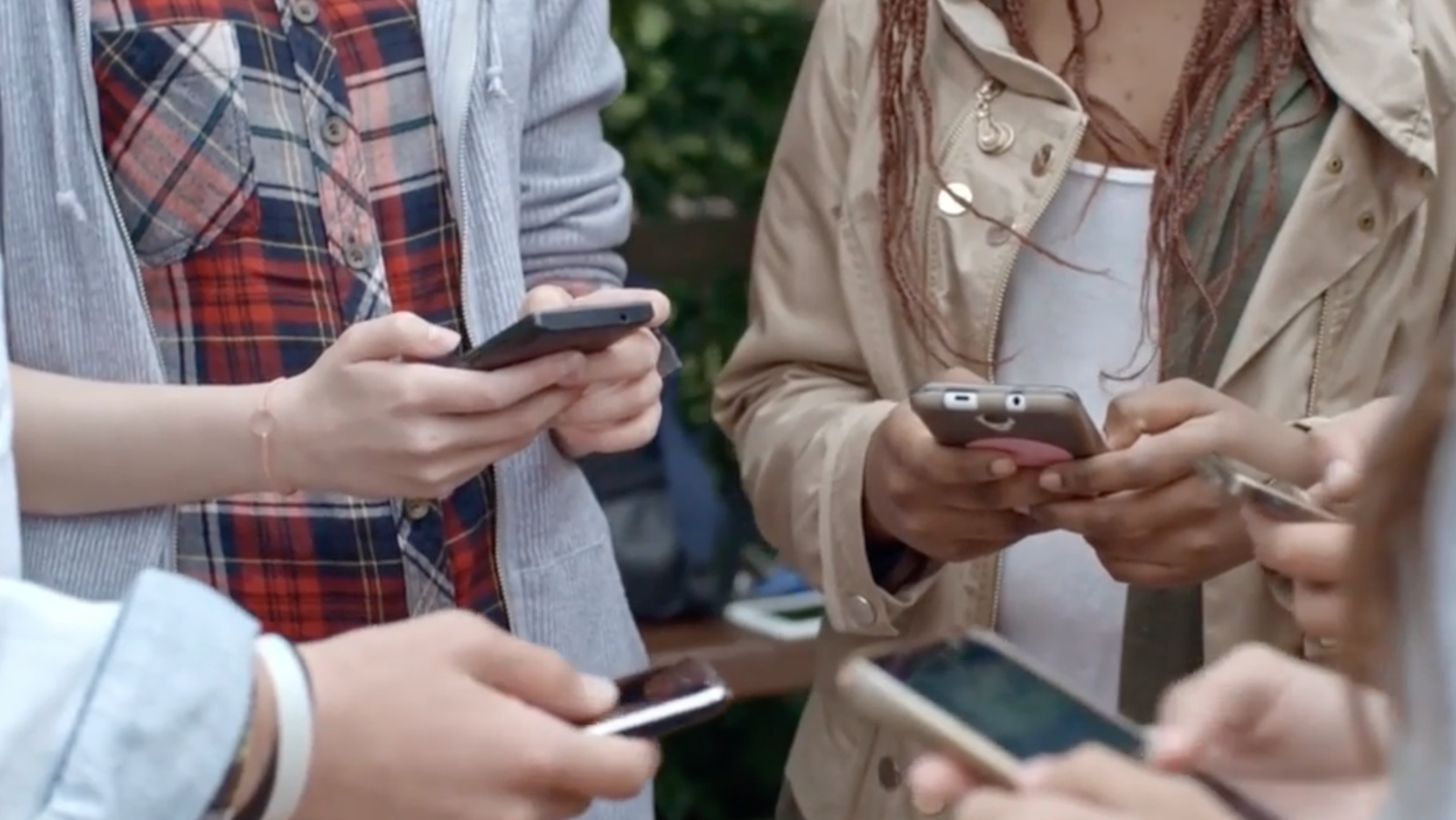
“Heavy social media use contributes to a stark decline in well-being among young people, with the effects particularly worrying in teenage girls in English-speaking countries and Western Europe, according to the World Happiness Report 2026.”
Canada slipped to 25th place after coming 18th last year, finishing behind the 23rd-ranked United States…In the 2015 report, Canada ranked fifth but has since steadily declined, with 25th place marking its lowest ranking since the report was launched in 2012.
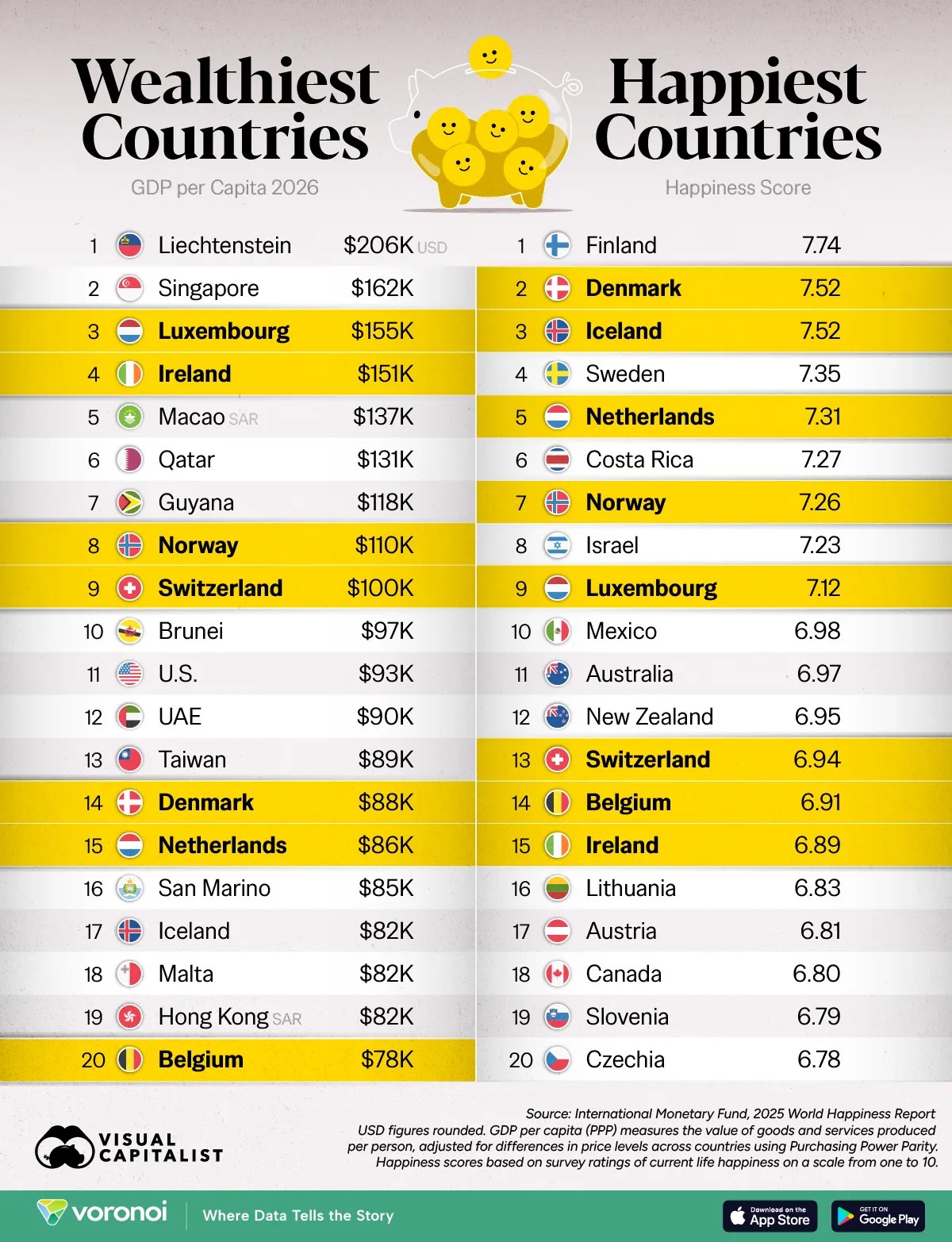
“All five Nordic countries are in the top six, with Iceland and Denmark close behind Finland. In fourth place is Costa Rica, the highest ranking ever for a Latin American country. Sweden and Norway are in fifth and sixth places.”
The latest World Happiness Report has once again highlighted the stark contrast in happiness levels across South Asia. India, ranking 116th, trails behind its neighbouring country Pakistan, which sits at 104, and even war-affected nations such as Iran (97th). Other neighbours fared differently, with Bangladesh at 127, Sri Lanka at 134, Afghanistan at 147, and Nepal at 134.
“The report suggested that higher levels of social media usage was linked to lower wellbeing, particularly when use was heavy and more passive, such as browsing or “doom scrolling” rather than active communication.”
Can the changing economic, political, and demographic conditions in China combine with growing concerns about students’ mental health and wellbeing to create a more balanced education system? Thomas Hatch explores this question in the final post in a series that shares his reflections on his conversations with Chinese educators and visits to Chinese schools over the past two years. The first post in this series explored some of the “niches of possibility” within the conventional Chinese curriculum and schedule that may foster the development of more student-centered approaches. The second post reviewed changes in educational policy in China that may have created some additional flexibility for schools to pursue innovative educational approaches and reinforced exam pressures at the same time. The third post discussed how one experimental school is trying to take advantage of AI to support students’ learning and development and the fourth considered recent efforts to respond to growing concerns about students’ mental health.
The elite schools I visited in China demonstrate the kinds of innovative practices that can fit into the Chinese education system even with its exam-based focus and intense academic pressures. At the same time, the academic pressures continue to constrain any attempt to change instruction and spread more student-centered pedagogies on a wide scale. Although it seems that there may be no way out of the “trap” of increasing academic pressure, it’s also clear that the Chinese education systems has changed substantially over the past thirty years, in concert with significant developments in the demographic, economic, technological and political conditions in China. These realities left me wondering: Could China leverage the changing societal conditions to create more balanced educational experiences for future generations of students?
“Could China leverage changing societal conditions to create more balanced educational experiences for future generations of students?”
Changing conditions in China over the past 30 years
In China, the massive expansion of education at every level, and particularly the growth in the number of university places could have helped to lessen some of the exam-based pressure on students. However, those developments took place along with the massive growth in the Chinese population to over 1.3 billion people by 2010. At the same time, almost 800 million people have lifted themselves out of poverty and China’s middle class, now the largest in the world, includes over 500 million people. Even with the substantial increases in the number of colleges and universities, those developments mean that many more parents aspire to get their children into a handful of top institutions of higher education and many more students are competing for those limited places.
Further fueling the pressure is a substantial rural-urban divide, with students in rural areas experiencing much more difficult basic conditions and much less chance of getting a good education, getting a good score on the Gaokao, or getting into college. Although most villages had a primary school of some kind in the 1990’s, as birth rates fell and rural parents migrated to cities to take advantage of the economic opportunities, almost three-quarters of all primary schools – around 300,000 – were closed. As a consequence, some children have to travel long distances to school and others spend the school week at boarding schools, including what are estimated to be some 60 million “left-behind children” whose parents could not take them when they migrated to find work. As of 2015, there were about 100,000 boarding schools in rural China, with an estimated 33 million children living in them, including about 12% of primary school children and 50% of rural secondary school students. Crucially, the difficult conditions contribute to the gap between urban and rural students in high school completion and access to higher education.
Recent changes in birth rates, employment, and college enrollment
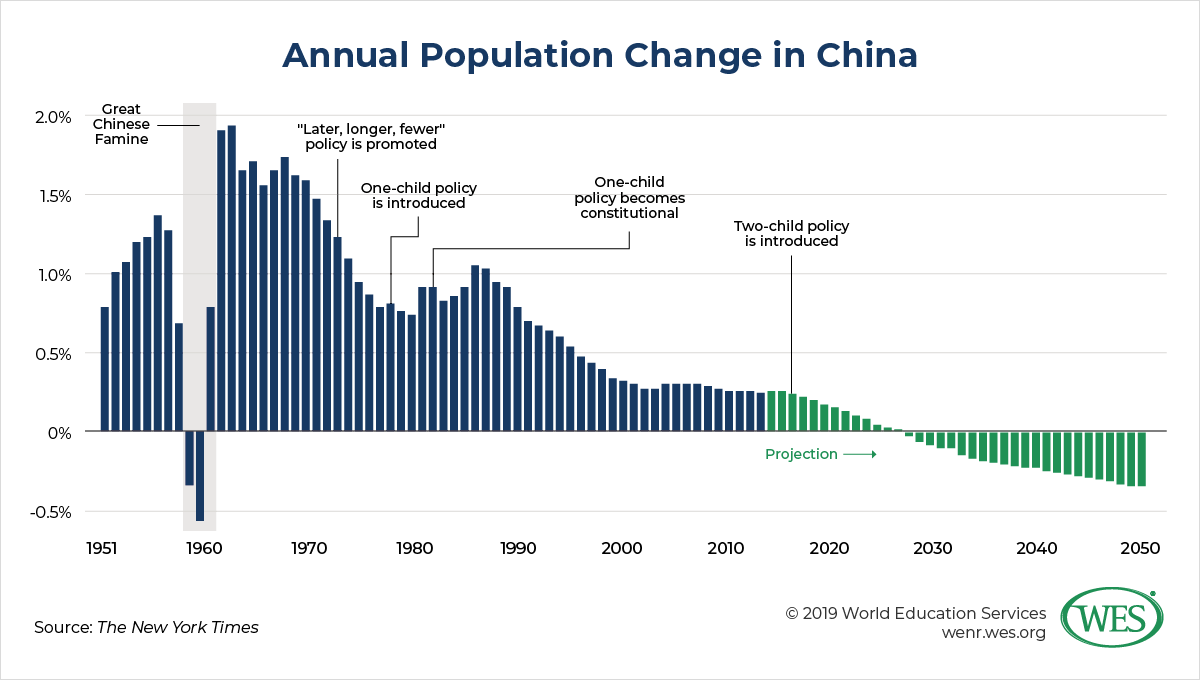
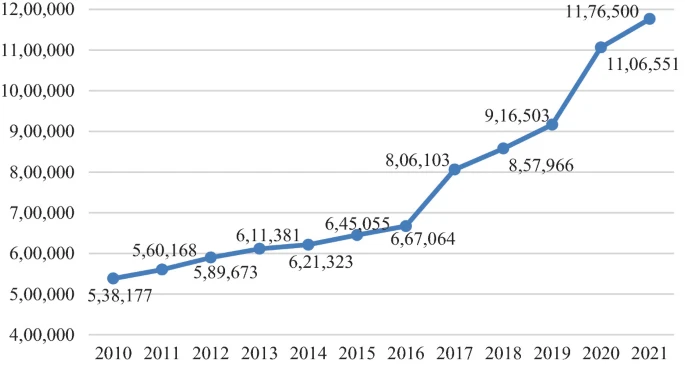
But conditions are changing again – fast. Births in China have now declined so much that the birth rate in 2023 was about half of what it was in 2015 only eight years earlier. The population decline in 2023 was also twice as large as it was in 2022, the first year the population dropped in 60 years. China’s economic growth has now slowed to one of its lowest rates in more than three decades; a real estate crisis has contributed to plunging house prices; and unemployment among youth has been so bad that in 2021 more than 70% of those 16 – 24 year-olds who were unemployed in Chinese cities had a college degree. By 2023, once the overall youth unemployment rate passed 21% China temporarily stopped reporting the figures. In 2024, with a new measure that excludes students, youth unemployment still stood at over 14%. At the same time, the expansion of higher education has continued while employment opportunities for post-secondary graduates have dropped. In 2024, only half of the 11.58 million graduates have gotten a job or gained admission to postgraduate study. Recognizing that problem, the Chinese government has encouraged universities to admit many more masters and doctoral students, leading enrollments in graduate programs to double between 2010 and 2021.
Unfortunately, the glut of college graduates, in turn, has contributed to diminished job prospects for many of those who worked so hard for good grades and high scores on the Gaokao. As one researcher at China’s National Institute of Education Sciences put it, college graduates should lower their expectations and look for jobs in sectors such as food or parcel delivery; other reports claimed masters degree recipients were taking on jobs like trash collectors. These changing circumstances challenge the very idea that schools are a vehicle for upward social mobility As one joke puts it: “The mortgage is nearly 10 million, the spouse does not work, and the second child is studying abroad. This is simply the three things that will cause the middle class to fall back into poverty.” Given these developments, some researchers see a recent drop in the number of graduate school applicants as a “return to rationality” Perhaps, the latest generation of Chinese students are beginning to recognize that postgraduate study can no longer guarantee them a better job.
“[S]tudents should lower their expectations and look for jobs in sectors such as food or parcel delivery“
Under these demographic and economic conditions, it’s possible to imagine scenarios where the seemingly inevitable increases in academic pressure and competition might subside somewhat. After years of urbanization that exacerbated the rural-urban gap in educational and economic prospects, a “reverse” migration and a redistribution of the population back to smaller cities and rural areas may be underway. Rural – urban migration had already slowed down before the COVID pandemic, and China’s statistics bureau reported that there were almost two and a half million fewer migrant workers in urban areas in 2021 than there were in 2019, with more migrants staying closer to home. That reversal has been aided by the development of the digital economy and opportunities for remote work as well as by longstanding restrictions that make it difficult, if not impossible for migrant workers to access housing, schooling for their children, and other benefits.
Taken together, these changes could encourage many more students and their families to stay where they are and to take advantage of the massive growth in higher education outside the major cities. With a decreasing population more distributed around the country there could be fewer students competing for an expanded number of places in colleges and universities. At the same time, if more youth recognize that academic competition is not yielding the access to elite universities or job prospects that previous generations expected – and they see that more studying does not necessarily lead to better results – academic pressure could subside further.
New developments in curriculum, technology, and assessment?
A new set of curriculum standards and new textbooks may also help to fuel this shift, providing a policy context that can encourage many schools to pursue more student-centered learning. As one description of the changes put it, beginning in 2024 with the initial introduction of new textbooks, “compulsory education will enter a new era in which new curriculum standards, new textbooks, and new classrooms are mutually compatible, from the past ‘educating for scores’ and ‘educating for abilities’ to the comprehensive deepening of ‘educating people.’”
[C]ompulsory education will enter a new era in which new curriculum standards, new textbooks, and new classrooms are mutually compatible, from the past “educating for scores” and “educating for abilities” to the comprehensive deepening of “educating people.”
The new curriculum and textbooks continue to highlight the learning of subjects but promote a change in focus from “fragmented class objectives” to more integrated and systematic unit objectives, a new emphasis on the transfer and application of knowledge, and a transition from “practicing questions to solving problems.” The math textbook, for example, has added two “mini-projects” for each semester that are supposed to take up at least 3 lessons. The changes in the English textbooks create another niche of possibility for more interdisciplinary and student-centered learning by spending less time on grammar and organizing each unit around theme-based projects. Changes being made in the questions for the Gaokao to focus more on applications of knowledge and on problem-solving rather than on memorization could play an important part in this shift.
Technological developments could also facilitate the development and spread of innovative practices by facilitating more personalized learning experiences and contributing to more powerful assessments. Although these new technologies and AI could be used to teach students more and more traditional content and skills more quickly, they could also help to make conventional instruction much more efficient. As the efforts of the teachers at the Suzhou Experimental Primary School demonstrated, AI could also create more space and time for student-centered learning experiences and to support the development of a much wider range of interests and abilities and student wellbeing. Of course, such technological development in schools depends on close cooperation between AI and tech companies and Chinese schools as well as the Chinese government’s continuing efforts to support digitization of schools and teaching in remote rural areas.
As I have argued in “The power of condensing the curriculum,” all of these demographic, economic, political, technological and educational changes could create the opportunity and incentives to reduce the time spent on exam preparation and create more balanced school experiences. All of these are enormous “if’s,” however. Predicting generational attitudes, in particular, is far from an exact science and certainly not something to count on. As Yong Zhao, a well-known expert on educational change and China told me in my interview with him before my first trip, “China will not drop the Gaokao,” and taking the “tang ping” route for many is a risk that could have consequences like social isolation, diminished economic potential, and a lower standard of living.
A perfect storm or just another typhoon? Changing society, changing beliefs, changing schools
In the end, real changes in the academic pressure, and expanding support for a wider range of abilities and student mental health and wellbeing in China, as in the US and education systems, depends on the “perfect storm” of changes in education policies, technologies, economic and demographic conditions, and changes in the deep-seated values and beliefs that sustain conventional school practices.
As important as the Gaokao may be, by the time I left China I was convinced that the Gaokao is just an expression and manifestation of a basic belief that those who score the highest, those who work the hardest, deserve the riches they accumulate. In that sense, China may not be that different from the United States, where that same kind of belief in individual achievement sustains a highly inequitable system and the conventional modes of instruction and schooling it relies on.
“[T]he Gaokao is just an expression and manifestation of a basic belief that those who score the highest, those who work the hardest, deserve the riches they accumulate.”
As Daniel Markovitz argues in The Meritocracy Trap, in the US, success in school and in life is generally seen as a product of an individual’s talent and effort. Similarly, failure – in terms of poor grades, the inability to get into a good college, get a good job, or make a good living – is often cast as a personal failing rather than a manifestation of systemic inequalities. From this perspective, those who score high on exams, secure admission to an elite college, become CEO’s or make billions of dollars deserve the rewards and riches they have attained. My conversations with many of my colleagues and many students in China seemed to echo these beliefs, as they noted that competitions and rankings, including the Gaokao, provide the best way to identify those who will be most successful despite the pressure and the problems it produces. Those beliefs also contribute to an internalization of failure and feelings of shame, with many students worrying that with poor performance in school or on the Gaokao they are letting their families down.
Changing any education system depends on understanding the complex interplay of historical, geographic, demographic, economic, political, and cultural conditions that produced the schools, policies, and practices that operate today. But it also means confronting those conditions, while embroiled in them. We can look for leverage and open up opportunities for people to expand their views, question their values and beliefs, and develop alternative points of view that might support the emergence of new institutions, structures, and practices over time. Perhaps these generational changes can support the emergence of a hybrid “East/West” approach to education that provides a better balance between a focus on academic achievement the development of a wider range of skills and students’ wellbeing.
“We can look for leverage and open up opportunities for people to expand their views, question their values and beliefs, and develop alternative points of view that might support the emergence of new educational institutions, structures, and practices over time.“
Can growing concerns about students’ mental health and wellbeing support the emergence of educational practices that combine a focus on academics with more student-centered pedagogies? In the fourth post of this five-part series, Thomas Hatch explores this question, prompted by his conversations with Chinese educators and visits to schools and universities in Beijing, Ningbo, and Dongguan. The first post in this series described the “niches of possibility” within the conventional Chinese curriculum and schedule where innovative schools are developing more student-centered approaches even within a heavily exam-based system. The second post discussed some of the changes in educational policies and regulations that created some flexibility within the system but may have contributed to academic pressures as well. The third post shared some examples of how teachers in a primary school in China are using AI to support students’ learning and engagement. The final post will discuss what can be learned from the ways that the Chinese education system has evolved over the past twenty-five years and how future changes couldallow for the emergenceof more student-centered instructional practices and more support for students’ wellbeing.
When I arrived in China for the first time in May of 2025, it was already clear that education in China has changed, in numerous ways, both in the last 40 years and just in the last few years as well. As I detailed in the second post in this series, those changes have included the achievement of near universal enrollment through lower secondary school, dramatic increases in the number of students enrolling in college, and new policies and practices governing the Gaokao itself. But I heard over and over again that even with the many changes students today face significantly more academic pressure that previous generations. In the end, I’m left wondering: can the seemingly ever-increasing academic pressure in China increase demands – and opportunities – for developing a balanced education system that supports academic development as well as students’ overall wellbeing?
‘[C]an the seemingly ever-increasing academic pressure in China increase demands – and opportunities – for developing a balanced education system that supports academic development as well as students’ overall wellbeing?
Academic pressure in China has gotten worse: The rise of “neijuan” and “tang ping”
I had only been in China a few days when several colleagues told me about the growth in the use of the terms “juan” and “tang ping.” “Juan,” when used in “Huā Juǎn/花卷” means “roll” as in a steamed bun known as a flower roll. But in recent years “juan” has been used to suggest that a person is being rolled in a washing machine the way we in the West might talk about being caught up “in the rat race,” constantly running like a rat on a spinning wheel. Yi-Ling Liu,writing in the New Yorker in 2021, linked the growth in the use of the term to a video showing a student from one of the top universities in China riding his bicycle and looking at his laptop at the same time.
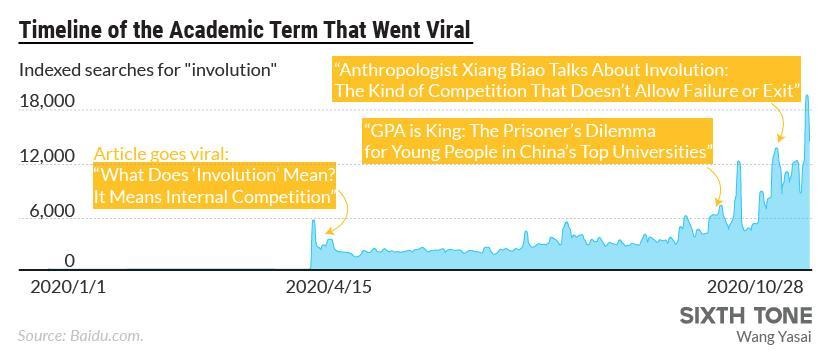
When I looked up “juan” online, I found a series of stories that explained that the term “nei juan” — represented by the characters for “inside” and “rolling” (内卷) and translated in English as “involution” – emerged as one the most popular Chinese words of 2020. The Chinese anthropologist Xiang Biao describes involution as a process of curling inward that can be considered the opposite of “evolution.” As he puts it, “neijuan” as an “endless cycle of self-flagellation,” in which people are trapped in a competition that everyone knows is meaningless.
For students, it means that getting a high score on the Gaokao is not enough. It means that they also have to compete to get the highest possible grade point average and the most extensive resume. As explained in GPA is king: The prisoner’s dilemma for young people at China’s top universities: “Whether you can learn something or whether it is within your own interests is no longer the only evaluation criteria for engaging in activities. Its value on the resume must be considered. Therefore, this has become a kind of ‘roll’. In order not to fall behind classmates and fall into passivity, everyone has to fill their resumes as much as possible.”
“Whether you can learn something or whether it is within your own interests is no longer the only evaluation criteria for engaging in activities. Its value on the resume must be considered. Therefore, this has become a kind of ‘roll’. In order not to fall behind classmates and fall into passivity, everyone has to fill their resumes as much as possible.”
Over roughly the same period, the growth of the usage of “tang ping (躺平),” – translated literally as “lying flat” – represents a response to the pressure and the endless competition. Supposedly, the movement began with a post on a social media site in April of 2021 where the user announced: “Lying flat is my wise movement. Only by lying down can humans become the measure of all things.” Since then, the use of “tang ping” has grown on social media as well, including in a series of posts in 2023 in which college graduates were photographed sprawled out in their commencement regalia.
In “China’s young ‘lie flat’ under social challenges,” Yao-Yuan Yeh explains that the term “describes the generations born in the late 1990s and 2000s who, disappointed by their lack of social mobility and economic stagnation, have decided not to strive for their futures.” One worker who embraced the term was quoted as saying: “According to the mainstream standard, a decent lifestyle must include working hard, trying to get good results on work evaluations, striving to buy a home and a car, and making babies. However, I loaf around on the job whenever I can, refusing to work overtime, not worrying about promotions, and not participating in corporate drama.”
Interpretations of “tang ping” vary, however. Some I spoke to used it to imply that students who checked out of classes or group activities were lazy or entitled and unwilling to do the work required of others. But “tang ping” also refers to those who drop out or disengage more as a form of resistance, a refusal to participate in the “roll” and “rat race” and all that they entail. Perhaps reflecting both interpretations at once, one survey of a nationally representative sample of adults in China found that, in general, “tang-ping related behaviors” were considered morally wrong, but they were considerable acceptable in scenarios where there was a low expectation that effort would be rewarded (such as working in a company that promised to pay performance bonuses but rarely did).
Could growing concerns about student’s mental health and wellbeing create a better balance in Chinese schools?
Taken together, “neijuan” and “tang ping” illustrate an impossible choice for Chinese students – join in the endless competition for academic achievement or drop out and lie flat – without any guarantee that either will lead to a better life. Could this impossible choice propel innovation? Already, these growing pressures have contributed to the double reduction policy and greater attention to mental health.
In response, in 2020, the Chinese government introduced “depression assessments” as part of mandatory health screenings for high school students, and in 2021, the Chinese Ministry of Education issued a directive to strengthen professional support and scientific management, and strive to improve students’ mental health literacy.” Following that directive, the education authority in Beijing required primary and middle schools to incorporate mental health education in their curricula and to hire at least one dedicated counselor to address students’ psychological needs. In 2023, China established a National Advisory Committee for Students’ Mental Health to be “responsible for research, consultation, monitoring, evaluation, and scientific popularization of mental health work in universities, middle schools and primary schools across the country.” In addition, an official from the Chinese Ministry of Education declared “The whole of society has reached a consensus to strengthen the mental health education of students,” and the Ministry announced a series of guidelines to safeguard the mental health of young people. Key steps include:
Primary and secondary schools have to have at least one full-time or part-time teacher on mental health and universities are required to have at least two full-time psychology teachers.
Primary and secondary schools are encouraged to incorporate psychology courses into their curriculum, and universities are required to have compulsory courses on psychological health.
Counties need to conduct psychological evaluations at least once a year and establish mental health records for students from the senior levels of primary school and beyond, and universities are also expected to conduct mental health evaluations of all new students.
The guidelines also reiterated key aims of the earlier double reduction policy and declared that “effective measures should be taken” to reduce homework and tutoring and to ensure students have two hours of physical exercise daily. The guidelines also noted that to ensure implementation, “students’ mental health will be taken into account when evaluating the work of provincial governments and administrators of all levels of schools.” As with changes to the Gaokao and the double reduction policies, the question is whether or not the pressure to change continues to grow. Will the desire to support youth mental health and wellbeing continue to spread? Will educators and policymakers take advantage of this window of opportunity and extend and deepen these initial efforts?
Next week – What Conditions Could Foster a More Balanced Education System? Stability & Change in the Education System in China (Part 5)
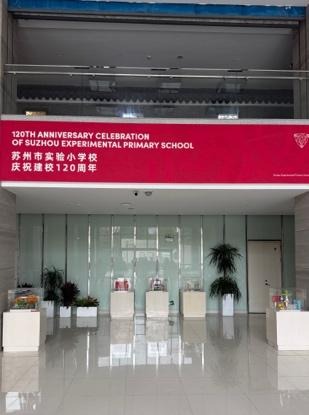
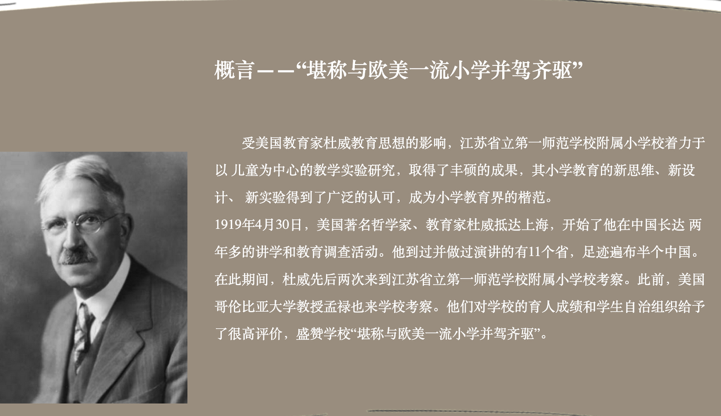
What challenges and opportunities can AI create for creating a more balanced education system? In the third post in this five-part series of reflections on his visits to innovative schools in China, Thomas Hatch describes what he learned from a visit to the Suzhou Experimental Primary School in December of 2025. This post summarizes what he took away from a forum where a group of teachers described the different ways they are using AI and the critical questions that it raises for them. The Suzhou Experimental Primary School is recognized as one of the best primary schools in China. In addition to famous graduates that include the architect I. M. Pei, that recognition builds on a long history that includes two visits from John Dewey during his visit to China that began in 1919. At the time, Dewey described the school as “the equal of first-class elementary schools in Europe and America” (“堪称与欧美一流小学并驾齐驱”). This post draws on an AI-generated transcription and translation of the conversation and benefitted from the comments of Zhenyang Yu and the support of Jianhua Ze and colleagues from the World Association for Creativity (WAFC) who arranged the visit.
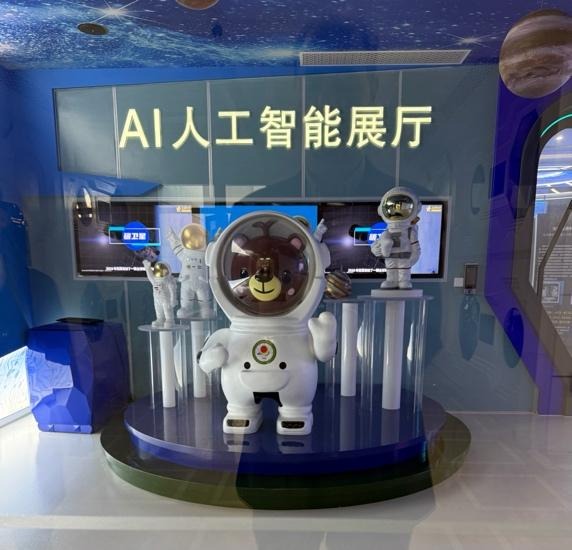
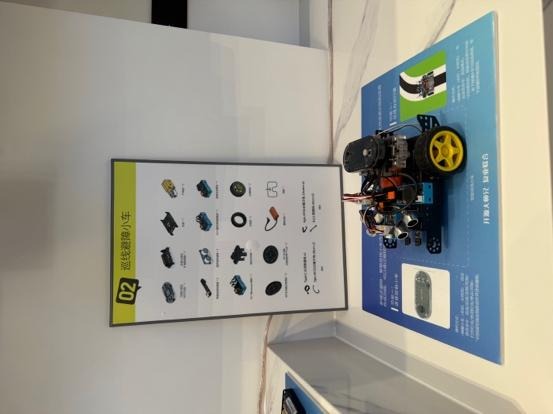
A warm welcome and an unexpected surprise awaited around every corner of my school visits in China. This past December, those surprises revealed what seemed to be a sudden explosion in the uses and discussions of AI in education. There was an elaborate AI lab at the Shanghai Shangde Experimental School (along with a drone arena and a robotics track); a showcase of sophisticated “kits” for incorporating AI into hands-on activities at the Nanjing PD Center; and a series of presentations at a conference on hands-on learning organized by the World Association for Creativity that highlighted the importance of the teachers’ role in AI.
AI room from the Shangde Experimental School
An AI kit for teachers from Nanjing’s PD Center
At the Suzhou Experimental Primary School, I was not thinking about AI at all when the leader from the school, Ge Daidan, and several English teachers, Zhao Hong, and Ye Qiujiao, took me on a tour of the school and led me through the school’s own museum. The many rooms and exhibitions of that museum chronicled John Dewey’s visits to the school in 1919 as well as the school’s growth and development since that time. But the surprise came when I went up the stairs and turned a corner, only to discover a small crowd of about thirty people waiting for me in a well-appointed meeting room. As soon as I was seated at the head of a conference table, six teachers, arranged in a semi-circle in front of a giant screen, launched into a set of carefully prepared and thought-provoking presentations about how they were working with and reflecting on their uses of AI throughout the school. Those presentations offered specific examples of how AI can already be put to work in a wide range of classes – including kindergarten, Chinese, English, Math, and Art – to help create more powerful, interactive, and student-centered learning opportunities in China and around the world. Yet at the same time, the teachers raised fundamental questions about the role of AI in education in general, the specific role of teachers in mediating AI use, and what distinguishes human contributions from those of AI.
The moderator, Huang Fei, began the forum by asking a question from a paper by Professor Wu Kangning of Nanjing Normal University – “What challenges does AI bring to education?” Faced with the waves of new developments, she asked “Should we embrace AI or wait and see? Should we lead or follow? How will the role of teachers, the form of the classroom, and the ecology of education be reshaped?”
“Should we embrace AI or wait and see? Should we lead or follow? How will the role of teachers, the form of classroom and the ecology of education be reshaped?”
Although it was impossible to capture all the issues that were raised throughout the rest of the forum, key questions included:
Is it too early to be trying to incorporate AI into our work with students?
Will AI provide assistance or will it become a crutch?
How can AI save time, foster creativity, and support innovation, and strengthen teachers’ relationships with their students rather than weaken them?
Will AI help students and teachers to extend and develop their capacities rather than undermine them?
How can AI foster students and teacher’s creativity rather than stifle it?
How can AI enhance teachers and students’ motivation rather than diminish it?
What is the teachers’ role when AI is being used?
Will AI lead to a focus on precision and efficiency that may interfere with the spiritual growth of students?
How can we use AI to ignite the mind and heart?
How can future education balance AI data-driven insights with humanistic judgment?
As the moderator noted, these questions illustrate that “challenges and opportunities are often two sides of the same coin,” tensions that are unlikely to have a simple resolution, but that will require regular reflection.
[T]hese questions illustrate that challenges and opportunities are often two sides of the same coin, tensions that are unlikely to have a simple resolution, but that will require regular reflection
AI across subjects and classrooms
Following the opening remarks, the other five panelists offered a series of specific examples that demonstrated how the school is attempting to find a balance that enables students and teachers to use AI to extend their abilities without increasing the incentives and creating the conditions that discourage them from deepening their learning and exercising their agency and creativity.
Kindergarten, Ms. Sheng:
AI acts as a “good helper” in kindergarten by generating a growth record for each child, based on the teachers’ observations and other data. In turn, AI can use this data to generate lesson plans and personalize growth plans which can save teachers time and enable them to focus on developing their relationships with their students.
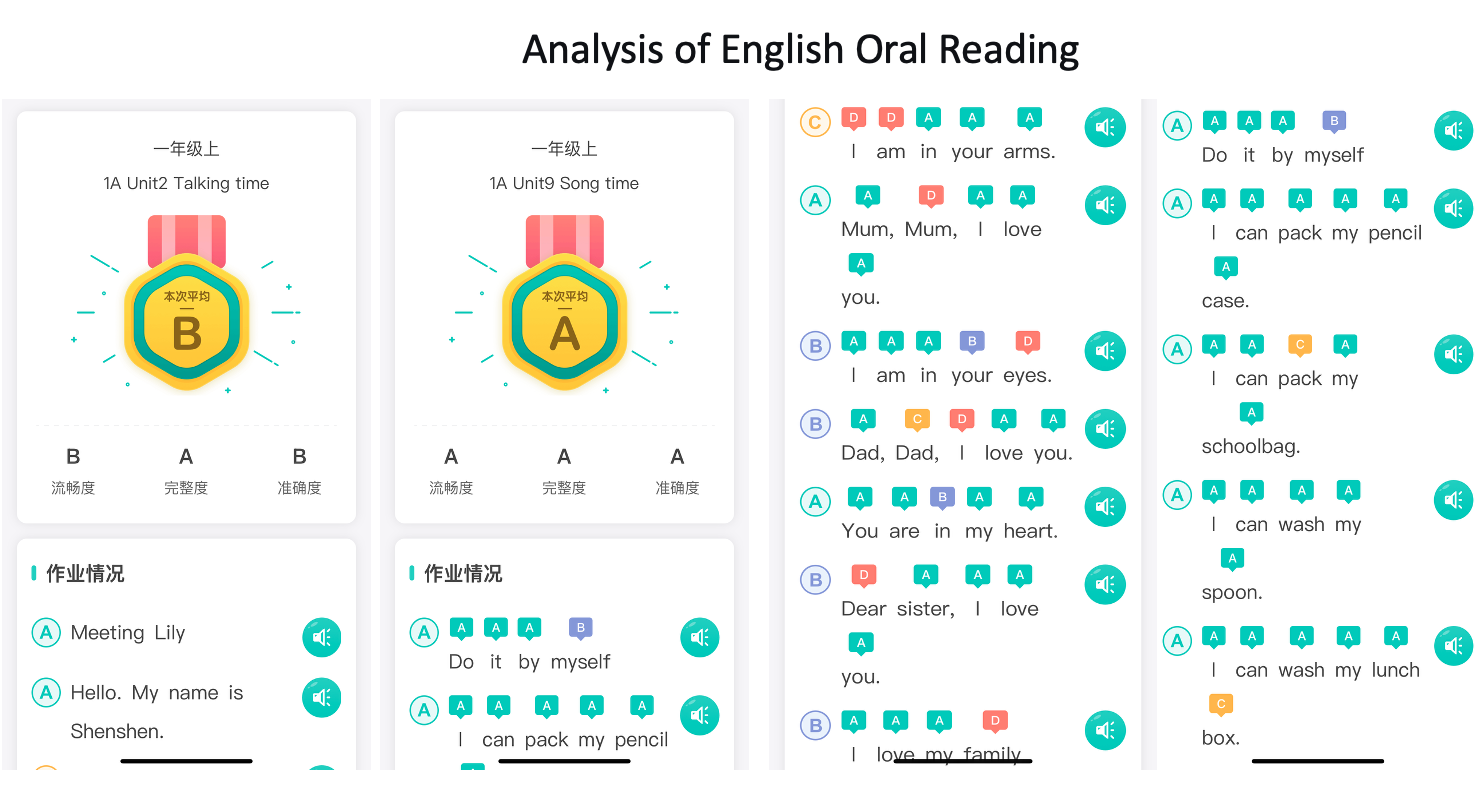
As one example, they are using commercially produced software to help record students’ read-alouds,” and to use AI to track students’ growth in fluency, integrity, and accuracy. (For comparison to uses of AI in the US see “AI Tutors Are Now Common in Early Reading Instruction. Do They Actually Work?). When they identify students who are hesitant and reluctant in reading and speaking aloud, they can also use AI to create interactive picture books that match each child’s interests and skill level. By reducing the demands of the interactive dialogues on pronunciation, ideally, they can increase a child’s willingness to speak and express themselves.
Chinese, Ms. Huang:
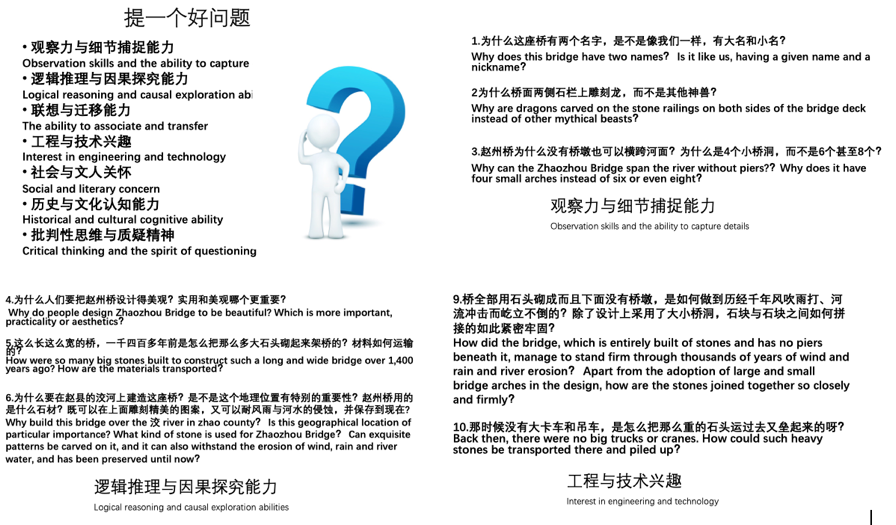
AI has helped teachers shift from answering questions to generating them. In the past, teachers assessed comprehension by asking students to answer questions about what they read about in historical, scientific and cultural texts. But now, they have shifted to inviting students to share their own questions, and teachers then use AI to analyze the students’ questions and to build their curriculum around them. As Ms. Huang put it: “Every good question is a seed of creation” and a window into the students’ interests, their observational abilities, and their logical reasoning. Reading a text about achievements in science, technology, and engineering, like the Zhaozhou Bridge, can lead to questions that help make visible the “germination of scientific thinking.”
“Every good question Is a seed of creation.”
4 slides illustrating how AI has organized and categorized the students’ questions generated from their reading about the Zhaozhou Bridge
Art, Ms. Wang:
AI has “injected a new vitality into our primary school art class,” Ms. Wang explained as she chronicled how the teachers are helping students to use AI to expand their artworks and designs in a variety of ways, including:
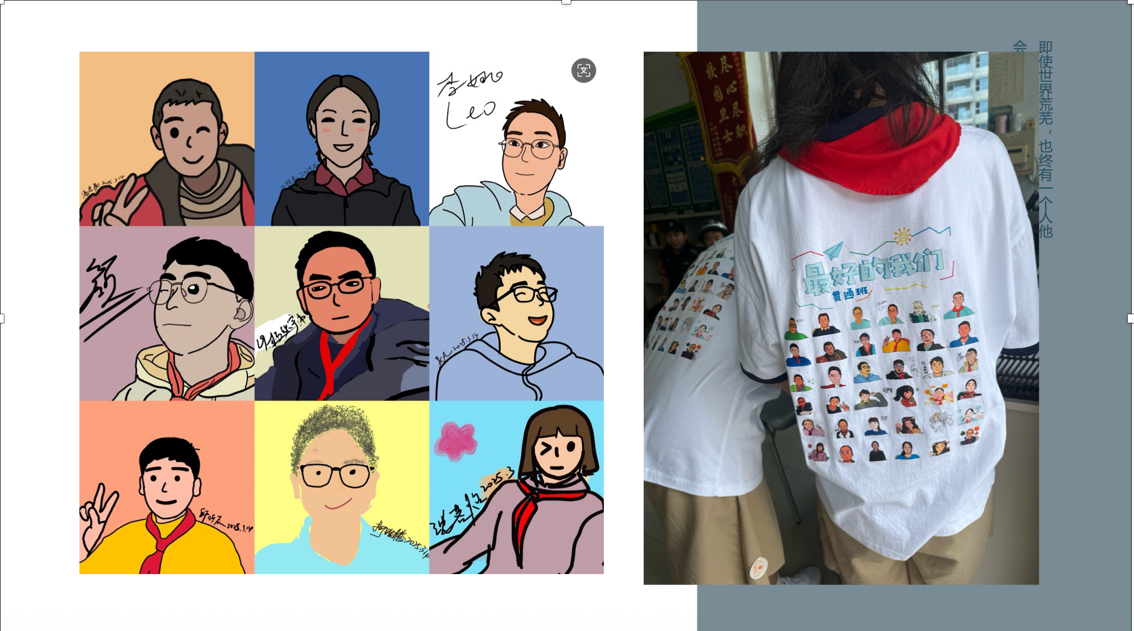
Making drawings on tablets that can then be printed on graduation t-shirts or turned into stop-motion animation.
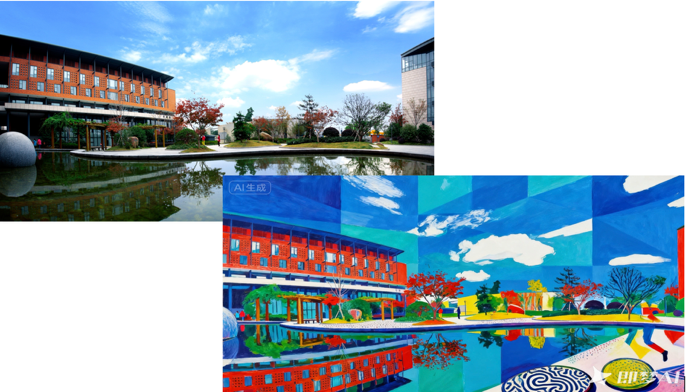
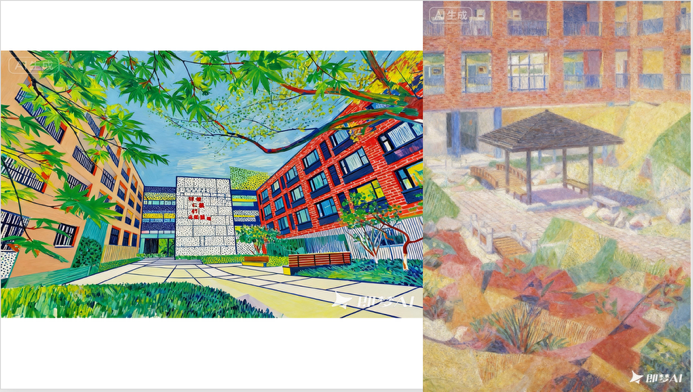
Using AI to explore what paintings of objects like their school campus might look like if they were painted by different artists or in different artistic periods as a way to develop students’ understanding of different artistic styles.
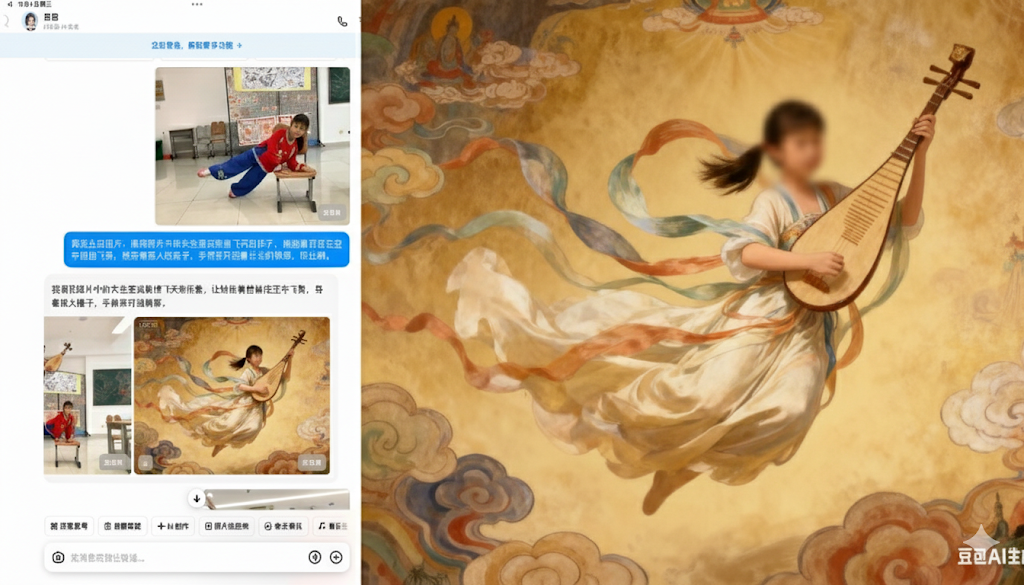
Giving students opportunities to place themselves in ancient paintings to enhance their historical and cultural understanding of art forms like Dunhuang Feitian dance.
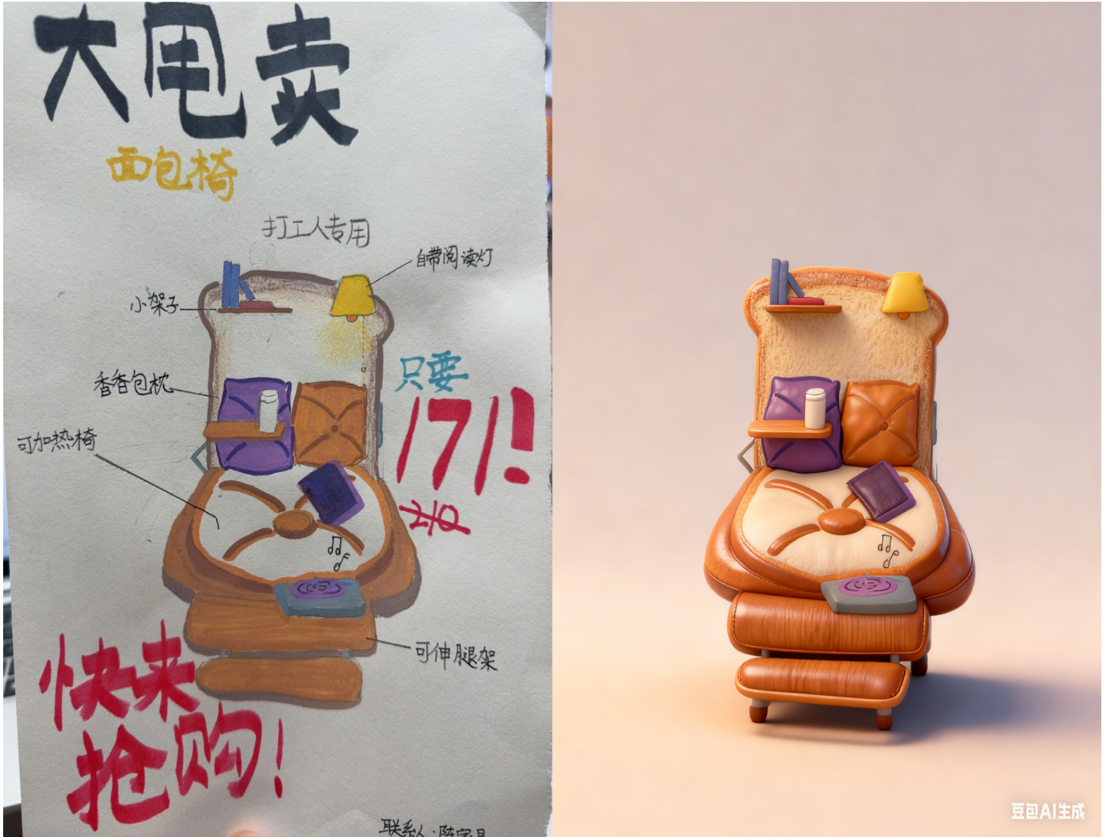
Developing students’ designs and design abilities by using AI as an assistant to render their drawings in 3-D, enabling them to envision whether their design for an object like a chair would support someone’s weight or collapse to the ground.
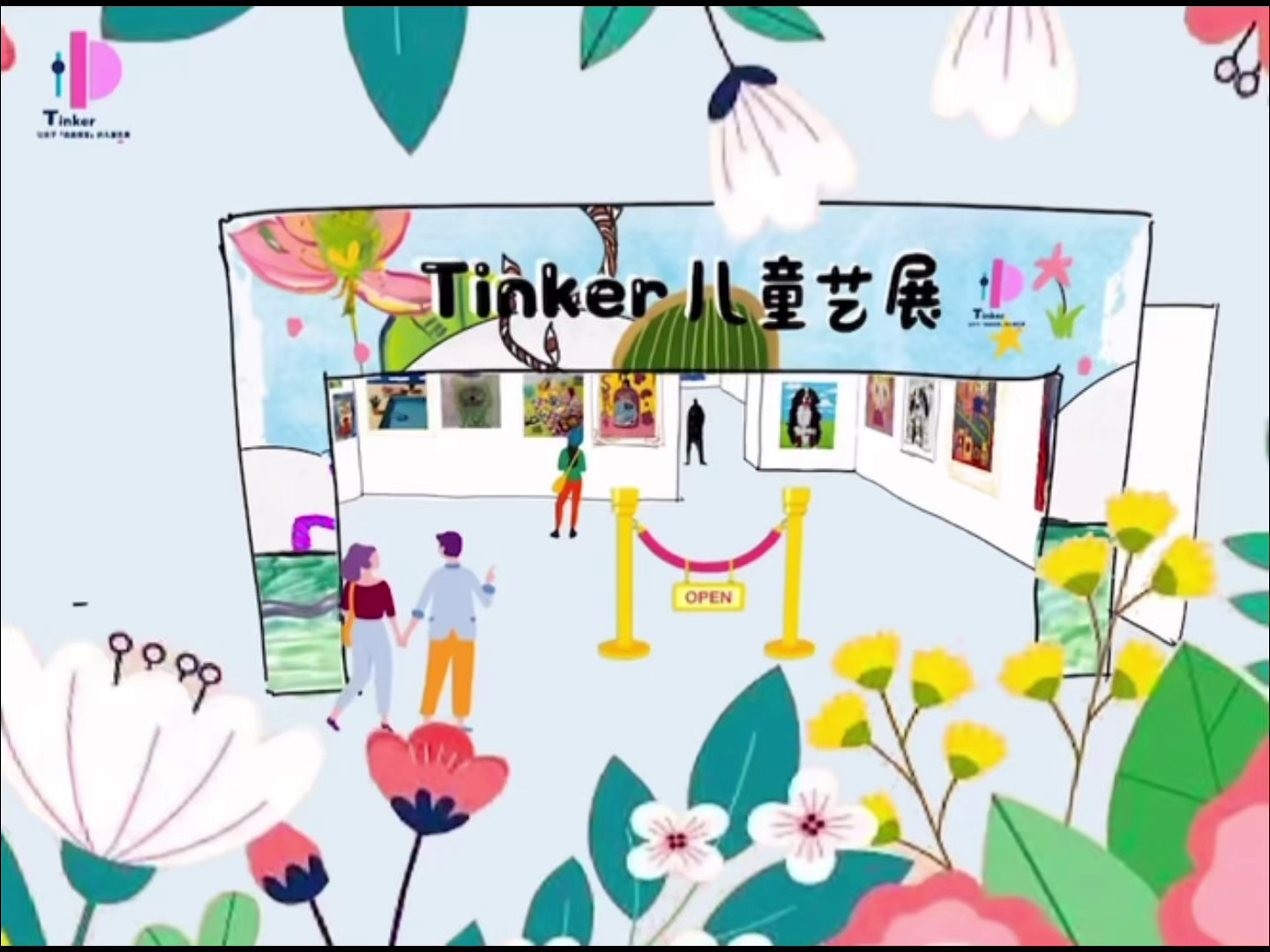
Building a virtual exhibition hall where the students can display their paintings and sculptures, and parents and friends can view and comment on them.
Yet, at the same time that Ms. Wang highlighted these artistic possibilities, she wondered: with the ease of generating finished products, will students become lazy? She concluded with a metaphor of hope: “I have always thought that AI is a museum that helps us find inspiration, not a print shop that gives you finished products directly.”
Math, Ms. Xu:
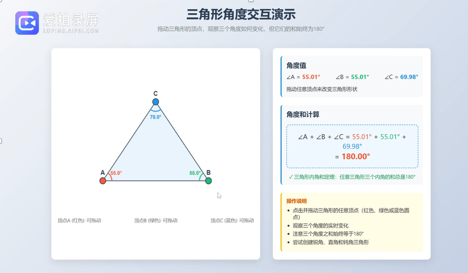
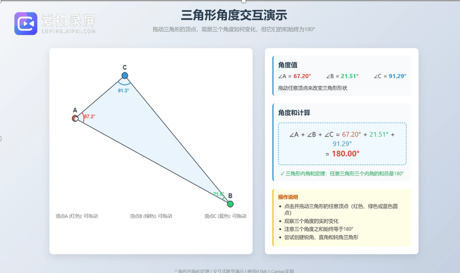
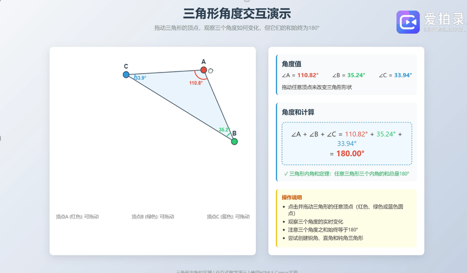
Teachers are using AI to help them create interactive and collaborative activities. For instance, to help students understandthat the sum of the interior angles of a triangle is always 180 degrees – a fundamental geometric principle – the teachers are usingAI to produce a series of interactive demonstrations. Groups of students can manipulate the vertices of triangles of different shapes, discuss the results, and make comparisons. AI can record the conversations and help teachers identify key words and misconceptions that can inform their subsequent instruction.
They envision as well using AI to increase the precision and effectiveness of their teaching. They can imagine assigning students exercises to complete on digital devices and developing AI agents that can identify mistakes and then link to corresponding explanation videos and examples to work on.
Data-use, Ms. Hu:
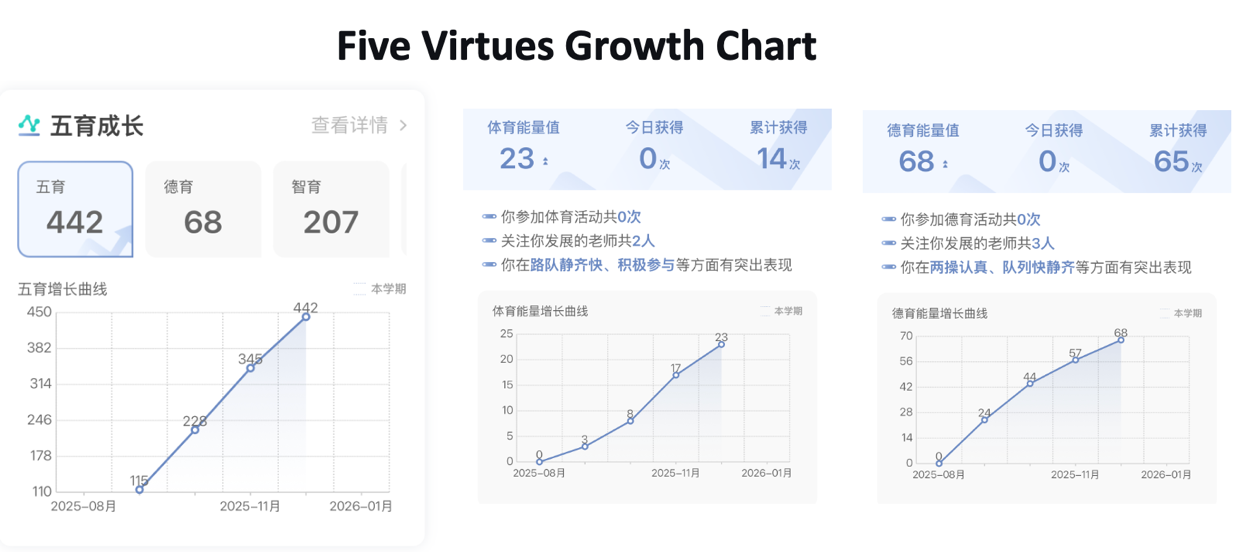
In addition to using different AI applications to collect subject-specific data within particular classes, the school also uses AI to help them look for trends and patterns in data across the school. These analyses make it possible for them to quickly visualize growth trends and patterns in in five different areas including physical fitness, effort, ethics, and academics.
Teachers can also use AI to help them adjust their instruction to meet the needs of different classes. For instance, teachers can compare students’ English homework to see that one class may be struggling with pronunciation while another may be more be particularly advanced in vocabulary, leading a teacher to emphasize activities for sound discrimination for the first class and to introduce new content to the second. Ms. Hu concluded by noting that “AI can give us a clear diagnostic map. But a prescription…is our teacher’s duty and wisdom.”
Hope and concerns for the future
Across these examples, I was particularly struck by the way teachers addressed the common concern that AI could transform teachers’ roles and the effect it might have on the teacher-student relationship. As Ms. Sheng articulated it, will the use of AI help to deepen teachers’ expertise and help to strengthen the relationships between teachers and students? Or will it interfere with teacher-child interactions and violate the essence of their child-centered educational approach?
“[W]ill the use of AI help to deepen teachers’ expertise and enable them strengthen their relationships with their students, or will it interfere with teacher-child interactions and violate the essence of child-centered educational approach?”
In response, the teachers emphasized that AI can’t replace the emotional links between people, and that teachers need to be able to pay attention to the more emotional aspects of children lives that may not be captured in the notes, observations, and other data that AI relies on. “AI can create beautiful paintings,” Ms. Wang, the art teacher noted, “but it can’t read the crooked little happiness in the sun painted by children. AI can’t replace the teacher who squats down to ask the child ‘Why are the clouds painted pink today?’”
The presentations concluded with each teacher sharing, with hope and confidence, that they could find a balance that takes advantage of the potential of AI while enhancing the opportunities for teachers to draw on their emotional experience and humanity. As one put it, “I think as a teacher, the real wisdom lies in using the computing power of AI to liberate the teacher’s mind.”
The moderator added, that by following the development of the students and constantly adjusting teachers’ practice and cognition of teaching, “we will be able to gradually adapt to this educational change… It is really good to let AI be good at its skills and let the teacher keep his heart. Cultivate each child’s unique light with educational wisdom. Let’s guard the children’s unique light together.”
“It is really good to let AI be good at its skills and let the teacher keep his heart. Cultivate each child’s unique light with educational wisdom. Let’s guard the children’s unique light together.”
What does education demand of AI and its developers?
I don’t have any idea how many other educators in China are using AI in these ways, but I have no doubt that these are the kinds of questions we should all be asking: How can we find a balance that takes advantage of AI without succumbing to it? How can we enable students and teachers to use AI to extend their abilities without discouraging the from exercising their agency, deepening their learning, and developing their creativity?
As Dewey suggested, education is not preparation for life; it is life itself. And in that spirit, we need to go beyond arguments about whether and how to stop children from using AI to ask, as these teachers are doing, how we can use AI powerfully, ethically, equitably?
At the same time, even if we embrace Dewey’s philosophy and strive to engage students in real world activities, we do so with care and guidance. We can encourage students to explore the world beyond their classrooms, venture into the forest or cultivate a garden, but that does not mean that we leave them to play in a patch of poison ivy. Reflecting the concerns about the potential harms of AI use in schools, the Chinese government has already developed guidelines designed to support ethical and appropriate uses of generative AI and to address potential harms. According to these guidelines, “primary school students are not allowed to independently use open-ended AI content generators, which could allow them to use AI to do their assignments for them. Middle school students may explore the logical structure of AI-generated content, while high school students are permitted to engage in inquiry-based learning that involves understanding AI’s technical principles.” At the end of 2025, the Chinese Cyberspace Administration also released draft regulations that would restrict AI chatbots from influencing human emotions in ways to could contribute to self-harm. (In contrast, as Max Tegmark, MIT physicist and founder of the Future of Life Institute, points out that the US government has more regulations on sandwiches and food safety than on a technology that could sell AI girlfriends to 11-years olds and might develop a “superintelligence” capable of overthrowing the government itself.)
Like the teachers at the Suzhou Experimental Primary School, we have to keep in mind both the possibilities for learning and the dangers that AI brings. It can analyze huge amounts of data and identify patterns on a large scale. It can provide greater precision and efficiency in some tasks, but it can also be addictive, misleading, and biased. It works, in a sense, on the past, on the data that has been generated and made accessible, but lacks – for now at least – as the teachers pointed out, human emotion and imagination. That means that the greatest benefits of AI may come when educators are a crucial part of children’s relationships with AI and other technologies; when we equip teachers with the tools of AI rather than relying on the ghost in the machine; when we use AI to help us imagine new and more equitable educational arrangements, new opportunities for learning and teaching that are not trapped in our past experience. As Cornelia Walther expressed it: “We must double down on the human element. The better we become at being human, at communicating, at reasoning, and at envisioning, the more the mirror of AI will reflect back greatness.”
The examples these teachers shared point to some of the many ways that AI and other technologies may open the doors to more interactive, student-centered activities in China and other parts of the world. But will they? In the end, I came back to the moderator’s initial questions that launched the entire forum: What is the role of teachers, students, and schools in artificial intelligence? Should we lead, or should we follow? These presentations taught me that teachers and students should be leading the way. To make that possible, rather than asking “what challenges does AI bring to education?” We need to bring the challenges of education to AI and demand a thoughtful and ethical response.
“These presentations taught me that teachers and students should be leading the way. To make that possible, rather than asking “what challenges does AI bring to education?” We need to bring the challenges of education to AI.”
Teachers and students should bring their questions and ideas to artificial intelligence. We need to tell the AI designers and developers what education demands; what schools, educators and students need, and what problems they face. By truly challenging the designers and artificial intelligence itself, perhaps we can make AI a tool that expands our educational imagination.
Next Week: Could concerns about the academic pressure on students in China lead to real changes in conventional schooling? Stability & change in the education system in China (Part 4)





 International Education News