Can new developments in busing and transportation help schools to cut costs and become more sustainable? That’s the question that Carter Hyde and Hannah Nguyen tackle in the second part of this three-part review of recent news and research related to schools and sustainability. Part 1 explored how climate change and related disruptions can have a negative impact on student learning. Part 3 will explore what schools can do to make their facilities and other aspects of school operations more sustainable.
These posts are part of IEN’s ongoing coverage of what is and is not changing in schools and education following the pandemic school closures. For more on the series, see “What can change in schools after the pandemic?” For examples of micro-innovations in other areas, see Access to food and school meals in the US and around the world; Innovations in providing children with food and nutrition; Building Student Relationships Post-Pandemic in School and Beyond; Scanning the Post-COVID Challenges and Possibilities for Access to Colleges and Careers in the US ; New Pathways into Higher Education and the Working World? (Part 2); Tutoring takes off and Predictable challenges and possibilities for effective tutoring at scale.
++++++++++++++
What kinds of innovations might enable schools to cut costs and become more sustainable? New developments in school transportation and busing may be at the top of the list. Swapping diesel-fueled buses for electric vehicles, using technology to create more efficient routes, and encouraging biking and other transportation alternatives are among the most notable innovations that can make school transportation more sustainable.
Electric buses
The development of electric school buses has been one of the most important innovations in sustainable schooling, helping both to save money and, in some cases, supporting student attendance and learning. Potential cost savings are one key factor that has encouraged a number of communities in Rhode Island, Southern California, and New York to make the switch to electric school buses. Although electric buses can cost between $150,000 to $300,000 more than a conventional diesel-powered bus initially, replacing a diesel bus can ultimately help reduce operational costs by 60%.
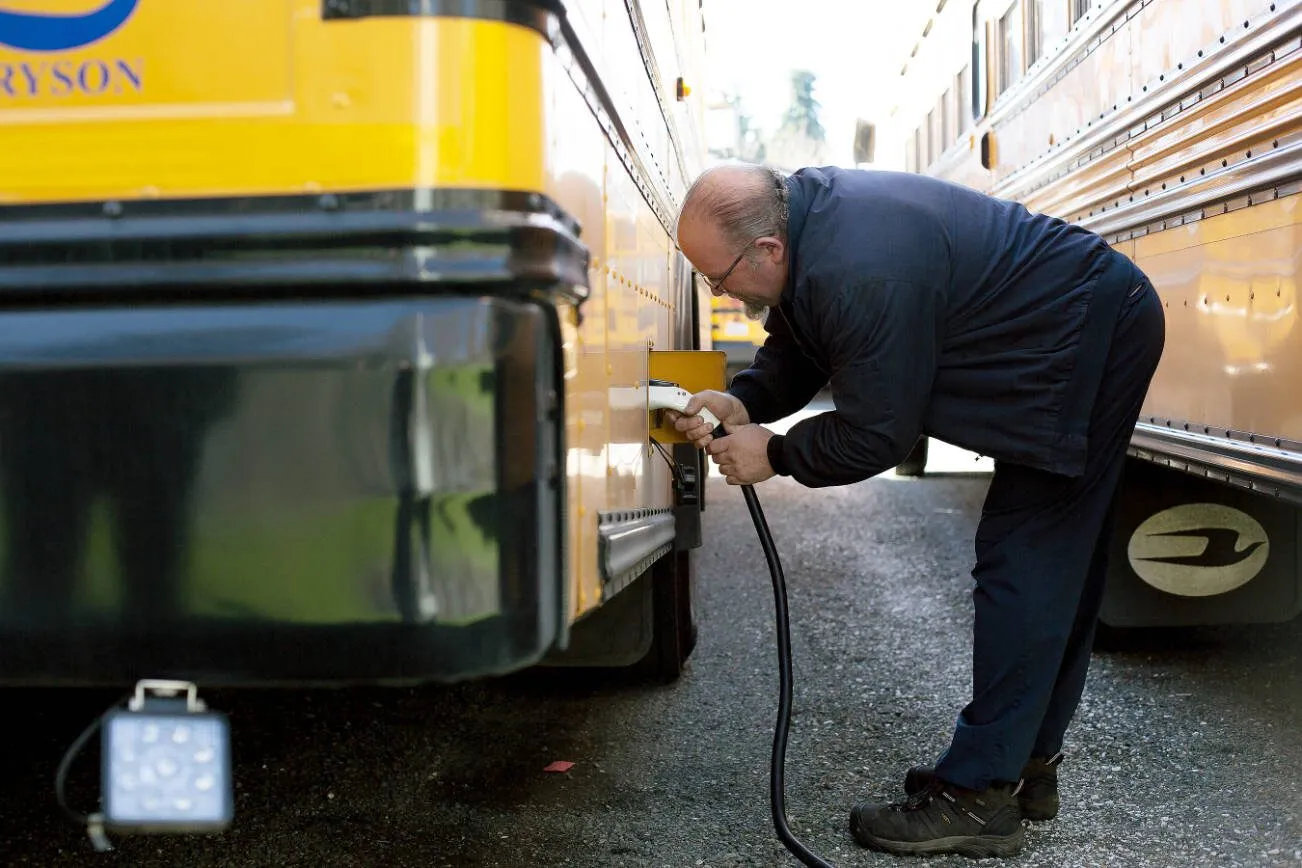
The invention of the vehicle grid has helped to drive those cost savings because bus batteries can be plugged into the grid, where they can be charged or where they can send energy back to the grid if the electrical utility needs more power. In addition to the direct cost-savings, electric buses can help to reduce air pollution with related health benefits. As one report put it, for electric buses, “the up-front investment, along with delivering students to school and home again, is delivering greater value; in better health for students and neighborhood residents as well as climate-saving reductions in greenhouse gas emissions.” That’s because gas-powered vehicles significantly increase health risks and switching to electric buses can yield “up to $247,600 in health and climate benefits for each bus, including reduced rates of adult mortality and childhood asthma.”
“[T]he up-front investment, along with delivering students to school and home again, is delivering greater value; in better health for students and neighborhood residents as well as climate-saving reductions in greenhouse gas emissions.”
Route mapping
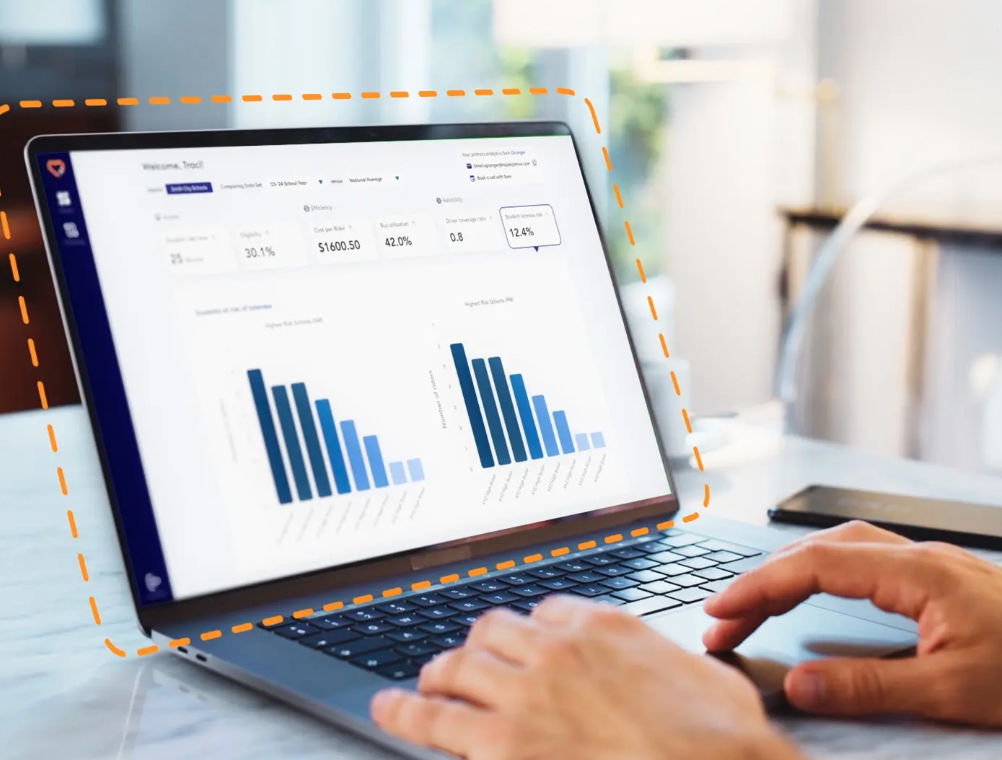
Securing funding for electric buses is only one step, but new technologies and AI are also creating opportunities to increase efficiency through innovations in route mapping. One district in Colorado Springs teamed up with HopSkipDrive to test the company’s “RouteWise AI” program which aims to address bus driver shortages and reduce student absenteeism. The program has cut the number of bus routes in half and increased on-time arrival rates to 99%, saving the district $8 million over a decade.
Alternative modes of school transportation
Even the most efficient bus routes cannot solve every logistical problem, particularly in areas where buses are inaccessible or unavailable due to proximity limitations or driver shortages. In response to these limitations, many districts are shifting their focus toward encouraging safe alternative modes of transport to school. For instance, Hawai’i schools received an $8 million boost for school travel through the Safe Routes to Schools fund. The goal of the fund is to “get more kids out of cars and onto safe and comfortable pedestrian and bike paths within walking distance of their schools.” A lack of funds and limited availability of buses also led to an initiative at Detroit’s Davis Aerospace Technical High School to give students free bicycles for their commute to school. Donations from the community helped pay for the bikes, which helped to reduce chronic absenteeism and reduced the amount of time students had to spend walking to school or waiting for buses.
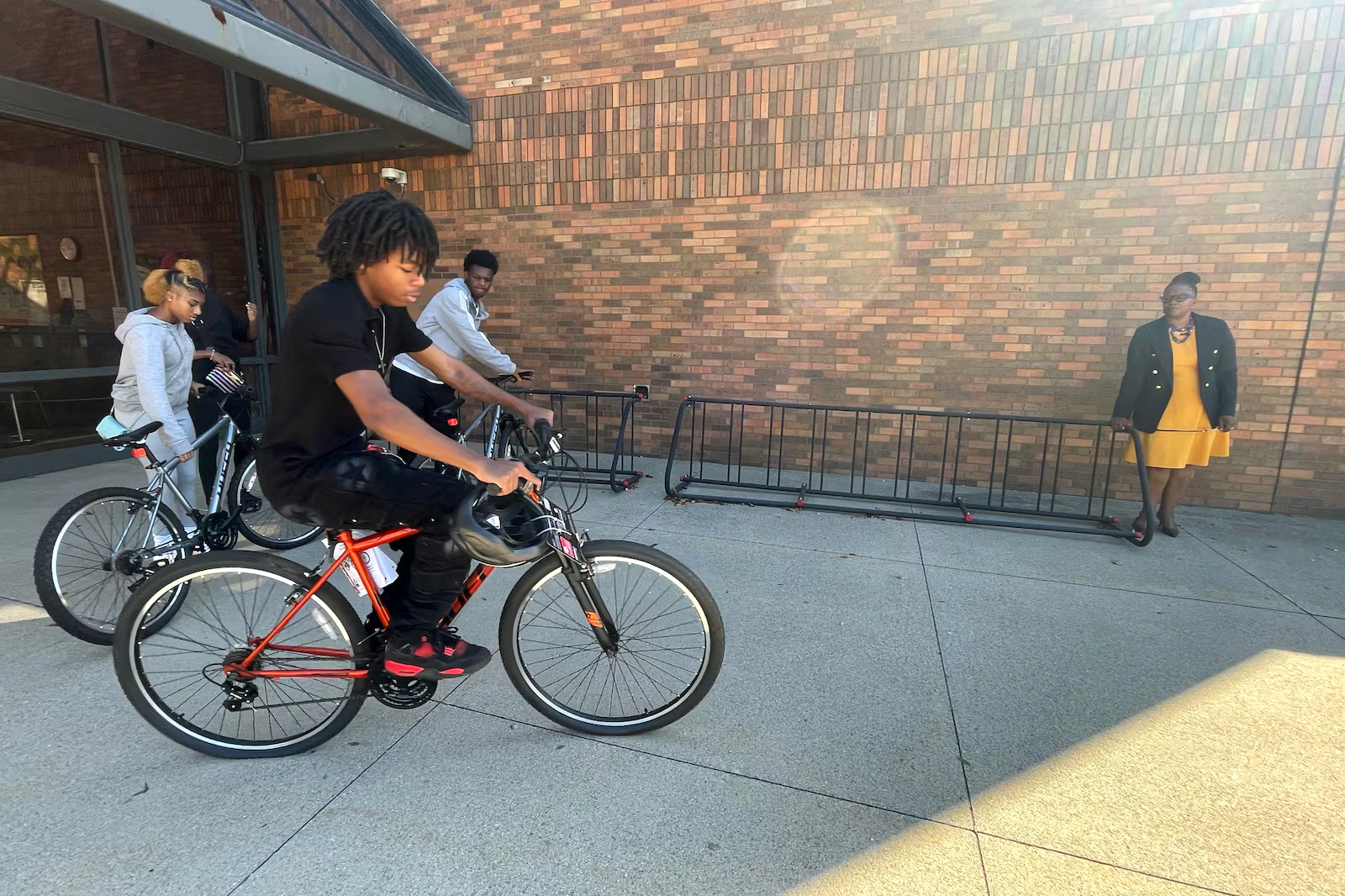
“Bike buses,” consisting of groups of people who ride to or from school together, serve as another transportation related micro-innovation that can have multiple benefits. Michael Cohen, in a Washington Post article suggested the popularity of bike buses spread virally on social media when people in Barcelona posted videos of a “bicibus.” According to Cohen, numerous other communities have developed their own form of bike buses, and a variety of websites including Montclair (NJ) Bike Bus and Bike Bus World provide information and news for those in their local communities and offer specific guidelines to help others start their own versions. In addition to safety, switching from buses to bikes can also help to build relationships and social connections among students and parents, eliminating congestion, and reducing pollution.
Policy “roadmaps”
Beyond the buses and related technologies, policymakers are creating new policy “roadmaps” and “guidebooks” that provide a broader strategic framework that helps schools, districts, and municipalities to deal with their transportation needs. In 2023, New York became the first state to pass a school bus electrification mandate. To make the transition more tangible for schools, the New York State Energy Research and Development Authority (NYSERDA) released a bus roadmap and guidebook that details the key challenges, costs, funding and policies involved in the switch to electric buses. According to New York Governor Hochul, “our roadmap and guidebook will provide school districts and bus operators with the latest information to enhance their fleets with zero-emission buses through proper planning, purchasing, and financing.”
“[O]ur roadmap and guidebook will provide school districts and bus operators with the latest information to enhance their fleets with zero-emission buses through proper planning, purchasing, and financing.”
New York’s roadmap provides a blueprint for reaching sustainability targets and is a part of a much larger ongoing movement. In 2024, the Environmental Protection Agency posted updated emission standards that include guidelines for school buses. Under the 2021 Bipartisan Infrastructure Law, the EPA launched the Clean School Bus Program, a $5 billion, five-year grand program, to give schools the funding to purchase low- and zero-emission school buses. Although the Trump Administration has not provided additional funding, during the Biden Administration, nearly $2.7 billion was distributed, with 90% of the funds going directly to electric school buses.
Next week — How innovations in school facilities can address climate change and support learning: Sustainability, students and schooling (Part 3)
For more information regarding transportation and sustainability, see:
Schools lined up for help getting cleaner school buses. Then came the EPA freeze (AP News 2025)
How one school district is turning to AI to solve its bus driver shortage (CBS News 2024)
Electric school buses give students a healthier ride. The break from pollution could also help their grades (Chalkbeat 2025)
Why 98% of districts are modernizing transportation (District Administration 2025)
Funding for electric school buses hits bump in smaller districts (ECO RI 2024)
The school bus driver shortage has improved slightly but continues to stress K-12 public education (Economic Policy Institute 2025)
Why some districts are shifting teens from school buses to public transit (Edweek 2025)
NY schools have to electrify buses by 2035. Here’s how one district is making the switch (North Country Public Radio 2024)
Riding the yellow school bus: Equity in bus transportation across districts, schools, and students (Sage Journals 2022)
Electric school buses and waterfront parks get Environmental Bond Act Boost (The City 2025)
School bus driver shortage: Durham parents must drive students to school 1 day per week in December (WRAL News 2024)


