Can new developments in assessment support more student-centered learning? In the second part of this three-part series, Adelaida Kim summarizes how AI and other technologies already offer educators new ways to generate, administer, and analyze assessments, including more student-centered and competency-based assessments. Part one provided an overview of some of the uses of AI in both large-scale tests and classroom-based assessments. Part three will compare the strengths and weaknesses of the assessment capabilities of selected teacher-directed AI platforms, EdTech tools, and AI “assistants.” Part four will provide examples of “micro-innovations” that already demonstrate how AI and new technologies can assess and support the development of specific skills and abilities across subjects and levels. For related stories on AI and education, see: Can AI “ignite the mind and heart”? Stability & change in the education system in China (Part 3); Scanning the global headlines for recent news on AI, schools, and education; AI, Cellphones, Literacy, Students’ Mental Health, Political Turmoil and More: Scanning the Headlines for the Top Education Stories for 2025.
++++++++
The rush to incorporate AI into all manner of educational platforms and products has already equipped educators with new ways to assess their students. Many of those tools support conventional tests and quizzes, but some may offer educators opportunities to develop alternative assessments, including portfolios, performance tasks, evidence demonstrations, peer reviews, and self-assessments. In particular, emerging technologies, including AI, could assist teachers in generating more complex, real-world tasks, facilitate data collection, analysis, and feedback, and perhaps foster the development and assessment of a wider range of abilities and overall well-being. Although it is too early to tell how effective many of the new developments will turn out to be, an examination of some of the news and research on assessment over the past few years points to new developments in digital platforms, digital portfolios, learning management systems, and tools for adaptive learning that all bear watching.
New Platforms, Portfolios, Learning Management Systems, and Assessment Tools
Teachers and students in the US and around the world now have access to a host of different learning platforms. Some of those platforms include features that may help educators manage the complexity of competency-based and personalized assessment. Lift Learning, Foundry, Headrush Learning, Epiphany Learning, and Building 21 represent systems designed specifically around competencies rather than content sequences. These platforms provide structures for organizing student evidence, tracking mastery, supporting project-based learning, and facilitating personalized learning plans. These elements aim to make it easier for teachers to capture artifacts from daily classroom work, such as quick reflections, conference notes, or mini-tasks, and align them to clear performance indicators. The flexibility of these systems allows educators to support formative assessments, such as “micro-conferences,” that provide students with quick feedback and collect and analyze data teachers can use to inform instruction.
Online platforms
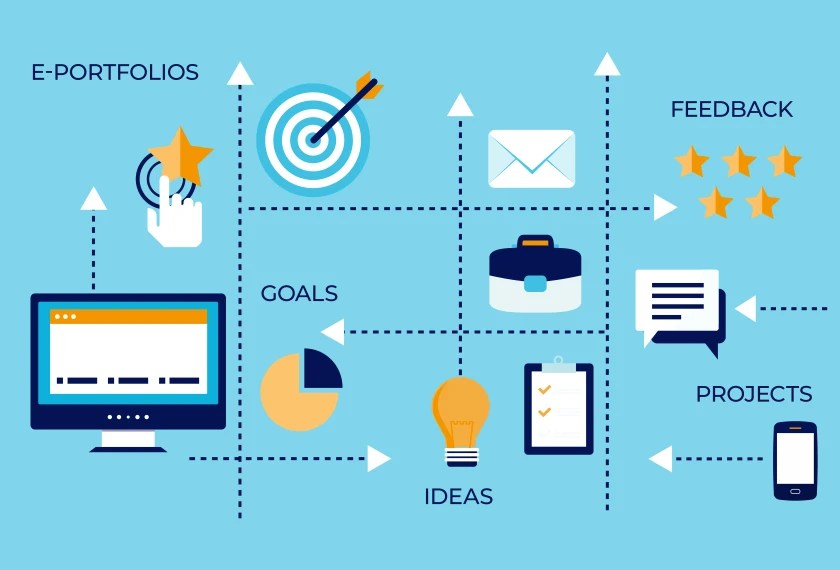
Online platforms may also provide an environment that makes it easier for teachers and students to develop digital portfolios (e-portfolios) that track the development of skills and competencies that extend far beyond those measured by conventional tests. Digital portfolios can capture multimedia materials documenting the processes, products, and performances that students complete. The hope is that by creating a living, accessible collection of work, students, parents, and future educators can all trace academic growth and evolving interests over time, making learning more transparent, equitable, and aligned with real-world competencies.
Learning management systems
Traditional learning management systems have also evolved to support alternative assessment practices. Schoology and Canvas, for example, offer features for rubric-based assessment, multimedia submissions, peer review, and mastery tracking. Meanwhile, Canvas Credentials extends this functionality through digital badges and micro-credentials, intended to indicate when students have demonstrated specific competencies by completing specific activities or producing particular products. These environments aim to provide teachers with an easy way to access new assessment tools, allowing them to integrate tools such as exit tickets, short video explanations, iterative revisions, or authentic performance tasks into familiar LMS workflows.
Platforms for “real-world” skills
Another emerging category includes tools that help bridge classroom learning with real-world skills and career pathways. Territorium, LifeJourney, and Lightcast help schools align student assessments with employability skills and labor-market data. These platforms support a broader vision of alternative assessment: one that recognizes not only classroom competencies but also skills demonstrated in internships, co-ops, community experiences, or extracurricular learning. By mapping student evidence to industry-recognized competencies, these tools help teachers and schools emphasize authentic tasks and support the development of abilities that go beyond conventional academic tasks.
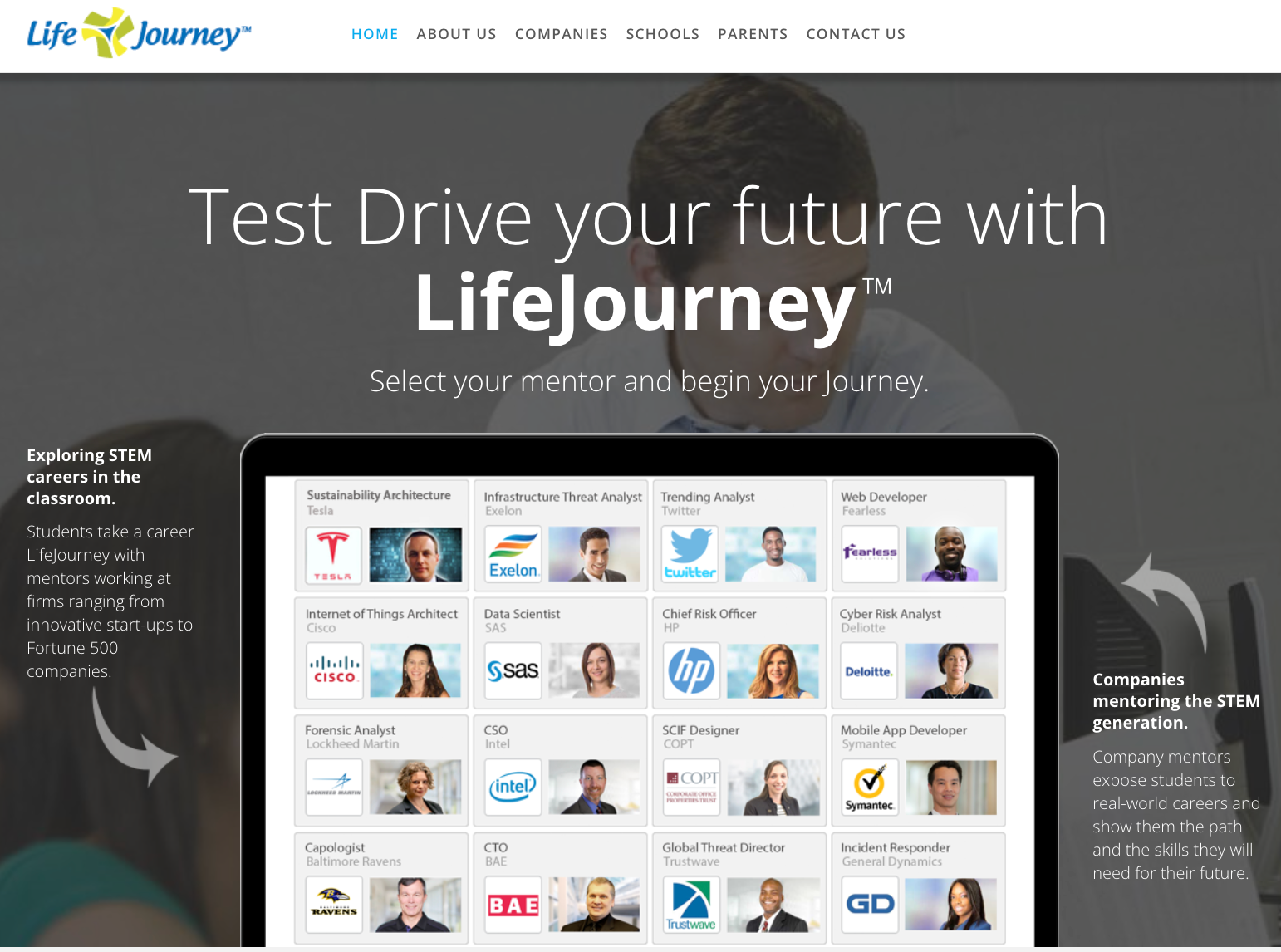
LifeJourney Homepage showcasing mentors from various industries
Adaptive learning environments
New developments are also supporting the kind of adaptive learning and personalized assessment environments that many hope will make it possible to individualize and differentiate instruction more effectively than in the past. Area9 Lyceum, for example, uses adaptive algorithms to provide continuous formative checks and individualized learning pathways. In these contexts, students can receive real-time feedback, progress through dynamic question pathways, and engage in small-scale, personalized tasks that adjust to their performance. Similarly, some programs, such as Learn Everywhere, expand the boundaries of where assessment can occur. Allowing students to earn competency-based credit for learning outside the traditional classroom encourages schools to adopt flexible, evidence-driven assessment models. In this approach, teachers use short reflections, artifact documentation, and performance checkpoints to verify learning in diverse settings.
Tools that support multilingual learning and multimodal assessment
To extend the power of this support for alternative assessments, other new tools like Flint AI and School AI can help educators to create assessments that support multilingual learners. These tools enable students to read and respond to prompts, activities, and feedback in different languages. These tools can be particularly useful in subjects that focus on knowledge acquisition, critical thinking, and deeper learning – rather than simply on learning English or another non-native language. In addition, platforms like Canva and Notebook LM increasingly offer opportunities to create and analyze assessments in multiple modalities. These platforms enable students to demonstrate their learning through video-based presentations, audio podcasts, and graphic descriptions, providing windows into their thinking that conventional written responses cannot offer. Again, these alternative formats can be especially useful when students are still developing their capacities to express themselves in writing or in a non-native language.
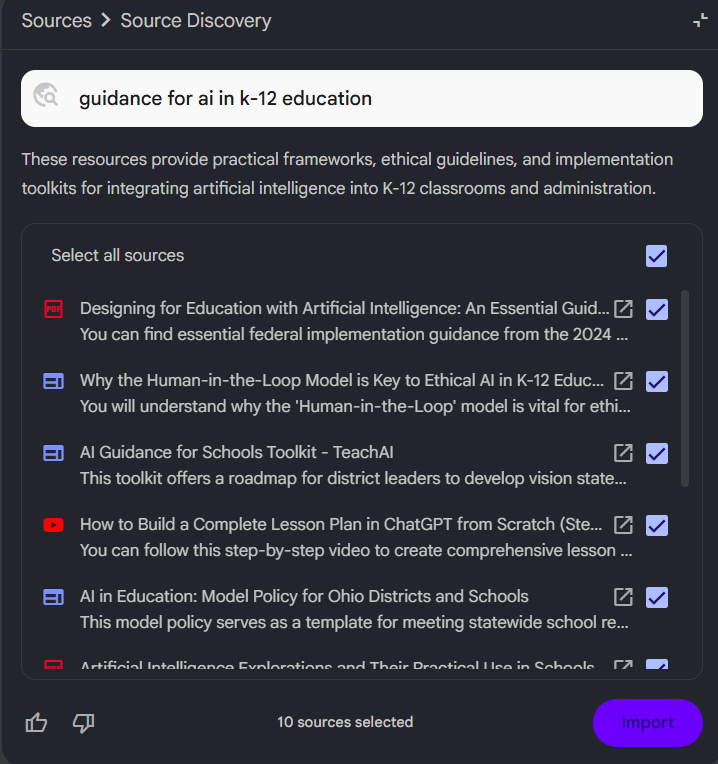
Notebook LLM using multiple sources to create assessments such as flashcards, quizzes, and student patterns. Ditch That Textbook, 2026
Implications?
All these developments are creating a new ecosystem for learning and assessment. The hope is that these new tools and platforms will reduce the burden on teachers, increase transparency for students, and support richer, more authentic, and more personalized demonstrations of learning. However, if the past is any guide, these new developments may be more likely to reinforce conventional testing and instruction than to lead to an immediate revolution. An account of the remarks of Larry Cuban, author of books like Oversold and Underused: Computers in the Classroom, to Google engineers put it this way: “AI will not force educators to rethink how teachers teach, and students learn. Instead, teachers will simply adapt AI to fit the ‘contours’ of their classrooms, keeping it on the periphery of their teaching repertoire.”
“AI will not force educators to rethink how teachers teach and students learn. Instead, teachers will simply adapt AI to fit the ‘contours’ of their classrooms, keeping it on the periphery of their teaching repertoire.” – Larry Cuban
Platforms like Kahoot!, Wayground, Blooket, Gimkit, Quizlet, Formative, Mentimeter, and Plickers can make it easy for teachers to quickly generate formative assessments that students find engaging and that provide frequent information on what students are and are not learning. At the same time, those tools are much better for creating tests and quizzes that measure recall and basic skills than for assessing deeper learning. As with all new technologies, issues of implementation, bias, equity, safety, and effectiveness must be addressed. So far, surveys suggest that the use of AI is growing at a pace that outstrips evidence of its effectiveness and efforts to produce guidelines to support ethical, equitable, and safe use. As a report from Milken Institute published at the end of 2025 indicated, 60% of schools and districts in the US had no guidance on AI use at all, with decisions about how to use AI left largely up to individual teachers. Under these conditions, concerns about AI among educators, parents, and even students are growing, leaving open a critical question: Can concerns about the use of AI and other new technologies for assessment be addressed as they become ubiquitous?
Next week: The Emerging Affordances of Teacher-Directed Platforms, EdTech Tools, and Multimodal Assistants: AI, New Technologies and the Future of Assessment (Part 3)
This work is licensed under a Creative Commons Attribution 4.0 International License.


