Author Archives: internationalednews

Lead the Change interview with Marnie H. O’Neill

Dr Marnie O'Neill

Dr Marnie O’Neill

Marnie O’Neill is a Senior Honorary Research Fellow in the Graduate school of education at The University of Western Australia. Her initial fields of teaching and research were in English Education studies, language, learning and literacy and teacher education. She has taught across all degree levels in the School and was Director of Teaching in the preservice program for a number of years and served as Dean and Head of School from 2000-2005.

Marnie co-ordinated the Doctor of Education program from 1998-2011, and was instrumental in reviewing the program in preparation for offering it in Hong Kong and Singapore. Major responsibilities were in supervision of doctoral students in both the on-shore programs and in the transnational programs in Singapore and Hong Kong. Recent publications include “Fitness for purpose: a problem for professional doctorates in Education?” in Stead, V. (2015). The Education Doctorate (Ed.D.): Perspectives on Access, Social Justice, Diversity, and Community Leadership. New York, NY: Peter Lang, and a special issue of Education Research and Perspectives (forthcoming), Globalization, Internationalization and English Language: Studies of Education in Singapore, Malaysia and Australia

In this interview, which is part of the Lead the Change Series of the American Educational Research Association Educational Change Special Interest Group, O’Niell shares her thoughts on important issues in educational change today:

The promises associated with the technology revolution (as yet unfulfilled in Australia) are not equally distributed, but if fulfilled, they have the potential to give young people access to ideas, to opportunities and connections with like-minded potential collaborators and colleagues anywhere in the world. Curriculum adaptations, which encourage transnational projects (already undertaken in a number of schools through Global Learning Alliance, for example) can broaden students’ knowledge and skills bases and help them to develop global connections that are recognized in formal assessment practices.

This Lead the Change interview appears as part of a series that features experts from around the globe, highlights promising research and practice, and offers expert insight on small- and large-scale educational change. Recently Lead the Change has also published interviews with Diane Ravitch, and the contributors to Leading Educational Change: Global Issues, Challenges, and Lessons on Whole-System Reform (Teachers College Press, 2013) edited by Helen Janc Malone, have participated in a series of blogs from Education Week.


NYC Outward Bound Schools and the ecology of New York City Schools

As part of a series of posts on the evolution of organizations in New York City, the US, and other parts of the world including India and parts of Africa, this post explores the evolution of NYC Outward Bound Schools, an organization dedicated to experiential education in New York City. In order gain a better understanding of the possibilities and challenges for educational innovation NYC Outward Bound has encountered, we recently spoke with several former and current leaders of the organization. They talked about the development of NYC Outward Bound’s work and vision as well as the constantly changing conditions in which organizations like NYC Outward Bound have to operate and adapt. 

Emerging in the rapidly changing educational landscape of the 1980’s, particularly in the wake of A Nation at Risk, NYC Outward Bound Schools established its first educational programs. Since that time, the organization has remained focused on engaging learners in hands-on, experiential education. Over 30 years of evolution, NYC Outward Bound has expanded its presence in New York City. Yet, in contrast to the common practice of organizations attempting to scale rapidly and drastically, NYC Outward Bound has expanded slowly and strategically, moving from offering curricular programs for New York City public schools to operating a network of 11 public schools in the city by 2016. To more deeply explore the history and practices of NYC Outward Bound, we discussed the organization with three of its leaders: Richard Stopol, the president and CEO of NYC Outward Bound Schools, Anthony Conelli, former chief schools officer, and school designer Rebecca Tatistcheff.

The organization and philosophy

Founded in 1941 by Kurt Hahn and Lawrence Holt, Outward Bound began as a school on the coast of Wales that helped train seamen for the harsh life of living at sea. Relatively quickly, however, Outward Bound expanded to a broader focus of encouraging individuals and groups to explore nature and test their physical and mental strength through a number of different outdoor, adventure-based, programs. As NYC Outward Bound Schools’ website puts it, these programs reflect the central philosophy that people “learn and grow when they leave the safety of everyday experiences and challenge themselves in new ways.” After over 70 years, Outward Bound now operates these outdoor adventure programs throughout the world.

Outward Bound 1.0 –Startup Mode

In the 1980’s, at the urging of Greg Farrell, then-Executive Director of the Fund for the City of New York, Richard Stopol and a small team of colleagues brought the powerful, group-based experiential learning activities offered by Outward Bound to New York City youth. Among its goals, NYC Outward Bound aimed to translate outdoor adventure experiences to an urban environment and make them part of a school day.

To accomplish these goals, in its first iteration, NYC Outward Bound focused on 2 strands of work. First, they focused pairing New York City youth with adults in courses that involved outdoor expeditions. Stopol contends that many of the adults who participated in these early courses became key supporters of the new local organization. While this programming carried definite educational elements, it mostly focused on adapting “traditional” Outward Bound experiences incorporating the themes of adventure, service and cross-cultural exploration so that they could take place in New York City.

Second, as part of a partnership with “high-needs” public schools, the organization adapted Outward Bound learning experiences for a number of schools. NYC Outward Bound staff members paired with public school teachers to develop curriculum and courses rooted in Outward Bound philosophy, creating courses that looked like an Outward Bound expedition. In these collaborations, NYC Outward Bound sought to increase student engagement and improve attendance by helping to create curricula and professional development activities for teachers. In those efforts, in Stopol’s words, they sought to bring “as much Outward Bound as you could into the classroom while aligning it with whatever the standards were.” In the process, NYC Outward Bound staff co-planned and co-taught with teachers and worked to create whole sections of the school schedule for the implementation of Outward Bound related classes and projects. For instance, students might engage in an Outward Bound urban expedition, such as learning about and navigating the subway system, as part of their social studies class. At the same time, students would complete a range of assignments related to the expedition.

Outward Bound 2.0—Operating Schools

In the midst of NYC Outward Bounds’ initial efforts to work with schools a question kept popping up from students. “Why can’t the rest of my day be like my Outward Bound class?”  As interest in educational reform grew around the US, an opportunity to address that question also arose when the New American Schools Development Corporation launched a competition to create and implement “break the mold schools”.  The national organization of Outward Bound submitted a winning proposal to create their own model for schools. With the funding they received, Outward Bound opened a division within its national organization to design and implement Expeditionary Learning (or EL) schools in a number of cities. In contrast to the school partnerships in New York City, the EL schools would be based entirely on Outward Bound’s pedagogy and every classroom would incorporate the practices Outward Bound uses to spark and support student learning. Eventually, NYC Outward Bound came to operate the EL schools in New York City, and the answer to the question, “why can’t the rest of my day be like my Outward Bound class,” had become, “it can.”

With the election of Michael Bloomberg as mayor in 2001 and his administration’s support for the development of new schools, NYC Outward Bound Schools saw another opportunity to expand their work. As Stopol put it, NYC Outward Bound Schools decided to “more or less put all its eggs in one basket” and focus on opening new schools. These would be schools that are built upon the EL model and that also offer students opportunities to take part in Outward Bound experiences outside the classroom. With Gates Foundation funding and support from the Bloomberg administration, NYC Outward Bound started opening more new schools in 2004. By 2016, the total number of schools operated by NYC Outward Bound Schools grew to 11.

In this new environment, NYC Outward Bound has had to try to continue to build on the experiential learning model while balancing the shifting demands and expectations for schools reflected in changing policies at the City, State, and Federal level. For instance, each NYC Outward Bound school has a school designer who helps shape curriculum and thematic, experiential learning units called “expeditions.”  As their website proclaims, treating the entire city as a classroom is an important element of the organization’s approach, and many of the expeditions engage students in fieldwork experiences during which they conduct research and meet with experts in the fields they are studying.   At the same time, the designer and teachers have had to contend the establishment of new school report cards in New York City and subsequent state initiatives to use test scores to evaluate teachers and to implement the Common Core Learning Standards.

Outward Bound 3.0 – Beyond the whole school model

In the early 2010’s, although charter schools continued to expand in New York City, funds and support for the development of new public schools began to wane.  As a consequence, NYC Outward Bound staff members have wondered how they can both deepen their work in their existing schools and expand their influence.  The efforts to deepen their approach has included the establishment of a college preparation program to increase the number of its students who attend and finish college. This “to and through college” program looks at how to use college counselors as well as peers to support students in the NYC Outward Bound Schools both while they are in high school as well as when they are in college. The program includes a partnership with CARA (a college access program) through which graduates of NYC Outward Bound schools currently in college serve as coaches for students currently enrolled in NYC Outward Bound schools.

On a more organizational level, NYC Outward Bound Schools also endeavors, as former CSO Anthony Conelli explains, to answer the question “how do you create a context that allows people to share their practice, own their conversation, and improve this kind of work?”  As part of these efforts, the leaders of the 11 NYC Outward Bound network schools meet monthly.  With the “host” school rotating each month, the leaders visit classrooms and look at student work together, sharing observations and feedback with the host school.

In addition to deepening the work in the existing schools, NYC Outward Bound continues to look for ways to create what Conelli calls “places of influence” — new ways and new venues through which to share their educational philosophy and practices and to support others in doing so. With this in mind, NYC Outward Bound has expanded its work by developing a model for “associate schools.” Associate schools are existing public schools within New York City that work with NYC Outward Bound staff to adopt a particular feature or structure associated with its educational approach. For example, associate schools might look at how to organize their curriculum into expeditions, or they might adopt the “Crew” structure that is in place in all NYC Outward Bound Schools, a team-based approach to supporting and advising groups of students. In some ways, this way of working with partner schools, as Conelli puts it, takes the whole school model and pulls apart its strands. At the same time, it also serves as a way to provide an easier entry point and the scaffolding needed to help existing schools to take on the whole school model.

NYC Outward Bound—concluding by looping back

When Richard Stopol thinks back NYC Outward Bound’s 30-year history in New York City and this arc from infusing Outward Bound into schools, creating a network of new schools, and now sharing practices and resources with associate schools, he takes a moment to calculate that NYC Outward Bound Schools has worked with 14 chancellors of education and 5 mayors in New York City. Of course, he contends, the changing social and political landscapes of New York City have required some adaptation from the organization. And yet, Stopol sees a consistent mission for NYC Outward Bound over the years: To help the youth of New York City by bringing the Outward Bound approach to the city’s public schools in ways that “transform schools and change lives.”

Jordan Corson

Response to PISA: Exploring the success of Singapore

Last week, when the PISA 2015 scores were released, Thomas Hatch shared a response and a scan of headlines from around the world. We reached out to an international group of scholars and asked them to share their own response to the PISA results as well. Today we share a comment from Dr. Saravanan Gopinathan of the Lee Kuan Yew School of Public Policy, National University of Singapore.

2016 has been a good year for Singapore Education. Results released in the TIMSS and PISA assessments shows a sustained trend towards high performance in Maths. Science and Literacy. Those who are critical of Singapore’s education model point to two features. One is that while Singapore students have admirable mastery of PISA content domains, they are incapable of problem solving, applying content to authentic situations, etc. This is attributed to teacher dominated teaching, memorisation and extra out-of-school coaching. The other is that while Singapore may have an excellent system, it is not sufficiently equitable, showing a long tail in performance. And yes, we have not produced any Nobel Prize winners.

What can be said in its defense? There has been a conscious, sustained effort since 1997 to promote knowledge building pedagogies via curriculum and assessment reform, teacher professional development and textbook redesign. It would be reasonable to assume that in a tight compact system like Singapore, reforms are beginning to change teaching and learning practices. With regard to the second, Singapore’s Ministry of Education (MOE) has pointed to the fact Singapore’s proportion of low performers in each of the three domains is at about 10% among the lowest of all participating systems and its proportion of top performers in each domain is the highest among all participating education systems.

Let us enjoy our status as a top education reference system, at least until the next PISA results!

For more from Dr. Gopinathan, read “Real Singaporean Lessons: Why do Singaporean students perform so well on PISA?” which was published as part of the Leading Futures series on IEN.

For more on the recent PISA results, explore the following recent articles:

Pisa results 2016: Singapore sweeps the board http://buff.ly/2hr1zYN (TES, 12/6)

Behind Singapore’s PISA rankings success http://buff.ly/2hsWfRB (ABC online, 12/7)

Asian countries dominate, science teaching criticised in PISA survey http://buff.ly/2hsS3RJ (Business World, 12/7)


Response to PISA 2015: Beware of simplistic representations in media

Last week, when the PISA 2015 scores were released, Thomas Hatch shared a response and a scan of headlines from around the world. We reached out to an international group of scholars and asked them to share their own response to the PISA results as well. Over the next few days we will be posting their comments. Today we share a comment from Yong Zhao, of the University of Kansas:

While I understand news media have to use some sensation-seeking headlines, I wish journalists would be more careful because these headlines have serious consequences. Education is very complex, culturally rooted, and local and cannot be simplistically represented with rankings. More important, I hope PISA and TIMSS stop presenting their results in simplistic ways to the media, for example, stop using league tables. Better yet, stop the programs entirely. 

For more from Zhao, read his latest commentaries, including:

“How does PISA put the world at risk? (part 5): Racing to the past,”

Excerpt: “PISA has certainly successfully put a number of East Asian education systems on a pedestal and thus constrained their ability and desire to make drastic changes. But they need drastic changes if they wish to truly cultivate the kind of talents needed to become innovative societies that rival the West because the authoritarian East Asian education model leaves little room for creative and unorthodox individuals to pursue their passion, question the authority, and develop their strengths, although it is extremely effective in homogenizing individuals, enforcing compliance, and hence producing great test scores.”

“Don’t Read Too Much into it: What Brexit and U.S. election surprises can teach us about PISA”

Excerpt: “These two back-to-back spectacular failures of data-driven predictions remind us that data can be deceiving, misleading, and sometimes just quits working. Blind faith in data can have disastrous and long-lasting consequences…”

“Don’t Read Too Much into it: Did the shift from paper to computer ruin east Asia’s? (China’s?) PISA performance?”

Excerpt: “What could have caused such a uniform change in eight education systems in as short a time as three years? The only common factor I could find is the change of PISA delivery format: from paper to computer.” 

For more on the recent PISA results, explore the following recent articles:

Pisa: Can the results really be trusted to tell us anything about education standards? http://buff.ly/2hqT6o4 (TES, 12/6)

Finland’s schools were once the envy of the world. Now, they’re slipping. http://buff.ly/2hsRNCs (The Washington Post, 12/8)

Opinion: Dip in PISA results a sign of things to come http://buff.ly/2hsNEhX (The Educator, 12/12)

Responding to PISA 2015: Reframing for a humanistic future of education

Last week, when the PISA 2015 scores were released, Thomas Hatch shared a response and a scan of headlines from around the world. We reached out to an international group of scholars and asked them to share their own response to the PISA results as well. Over the next few days we will be posting their comments. Today we share a response from Dr. Dennis Shirley, of Boston College:

Most discussions about PISA are centered around the top performers on the rankings and what can be learned from them–but there are more important aspects to which we should pay attention. I’m impressed by the way that the OECD consistently defines PISA as a tool to help nations to progress towards the Sustainable Development Goals of the United Nations. These include eradicating extreme poverty, ensuring health care for all, and providing free and high-quality education at the primary and secondary school levels to all of the world’s students. We need good data to measure our progress towards those goals. If PISA is one tool among many that can help with this undertaking, why wouldn’t we want to use it?

But on one point there is no doubt: we need a complete re-framing of the competitive cul-de-sac that too often accompanies the release of PISA scores. The focus on reading, math, and science excludes important curricular areas that are essential to a sound and balanced education. Narrowing in on those three topics while neglecting the social studies and civics skills desperately needed in a world characterized by brinkmanship and bluster hardly can provide a complete picture of where a given jurisdiction stands or where it needs to progress.

So let’s study PISA results not to pit one nation against another, but to learn from one another. Let’s be open-minded and curious, mindful of the international geopolitical context we all now inhabit and the dangerous siren call towards an anachronistic insular imperative of nationalism, exclusion, and one-upmanship.

The world needs a radical change of course. We need a more inspiring global imperative of cross-cultural dialogue and exchange. We need a new world in which test scores are only one part—and a small part at that—of an agenda that moves all of us closer towards the Sustainable Development Goals and a humanistic future for education.

Dennis Shirley, author, The New Imperatives of Educational Change:  Achievement with Integrity, Professor, Lynch School of Education, Boston College, and Editor-in-Chief, The Journal of Educational Change.

For more on the recent PISA results, explore the following recent articles:

“How Do American Students Compare to Their International Peers?” http://buff.ly/2gXJ76s (The Atlantic, 12/7)

The Best Students in the World http://buff.ly/2gFN0k8 (U.S. News & World Report, 12/6)

Behind the world’s best students is a soul-crushing, billion-dollar private education industry http://buff.ly/2gXOQJt (Quartz, 12/11)


Responding to PISA 2015: The importance of cultural context

Last week, when the PISA 2015 scores were released, Thomas Hatch shared a response and a scan of headlines from around the world. We reached out to an international group of scholars and asked them to share their own response to the PISA results as well. Over the next few days we will post their comments. We begin with Dr. Alma Harris and Dr. Michelle Jones, of the University of Malaya, are also editors of the Leading Futures series published by IEN.

PISA has its strengths. There is a wealth of data for researchers to analyse and use. It also has its weaknesses. One is the cultural blind spot. Countries are weighed and measured as if little differences exist between them, when in fact, the differences in their social, cultural and contextual make-up is vast. When cultural variations are factored in, rather than ignored, the basis for meaningful comparison becomes less secure. Looking at all the data about educational performance, in context, may help formulate future policy directions, far more, than relying on one measure every three years.

For more from Dr. Harris and Dr. Jones, read their Leading Futures post, “The Dutch Way: Is the Netherlands a best kept educational secret?” in which they argue that the success of the Dutch system can be attributable to their combined focus on democratic values with an approach to policymaking that relies on both collaboration and autonomy.

For more on the recent PISA results, explore the following recent articles:

Global education leaders discuss PISA results and equity in secondary education http://buff.ly/2hrQVhj (The Asia Society, 12/9)

Who’s telling the truth about M’sia’s Pisa 2015 scores? http://buff.ly/2gIpDoG (Malaysiakini.com, 12/9)

Kit Siang: Unendorsed data used to tabulate PISA scores http://buff.ly/2hKxpMs (Malaymailonline.com, 12/9)

PAGE: Education ministry must clear up Pisa controversy http://buff.ly/2hKCmF2 (Free Malaysia Today, 12/13)

Headlines Around the World PISA 2015 Edition

This post was originally published on www.thomashatch.org

Following the cascade of headlines on the release of TIMSS scores last week, the results of the 2015 PISA tests were announced yesterday. There were some cautions about putting too much weight on the rankings. In fact, both Valerie Strauss in the US (“Why Americans should not panic about international test results”) and Stewart Riddle and Bob Lingard in Australia (Pisa results don’t look good, but let’s look at what we can learn before we panic) tried to stave off knee jerk reactions. Nonetheless, as usual, the headlines around the world seem to focus primarily on who’s on top of the rankings and where individual countries place on one or more of the tested subjects of math, reading, and science. Times Higher Education put it succinctly — Pisa results 2016: Singapore sweeps the board – but noted that while East Asian countries dominate the rankings, “China loses ground in tables after new provinces are included for the first time.”  While some reports about TIMSS noted declines in performance by Finnish 15 year-olds, Finland remained near the top on the PISA tests, but the high performance of neighboring Estonia was recognized as well (Finland and Estonia top of the class in EU for education, Euronews).  Other countries beyond Asia, like Canada, also received some positive headlines (Canadian students rank fourth for science performance, The Globe and Mail).

Many headlines in Australia seized on bad results from PISA 2015 that echoed declines on TIMMS (as Teacher Magazine put it, PISA 2015 brings more bad news for Australia while ABC Online highlighted Australian schools are in ‘absolute decline’ globally, says PISA report).  At the same time, in headlines and on twitter, concerns (and blame) over poor performance of Wales and Scotland were also in evidence (Full Pisa results 2016 show Wales’ schools are still adrift of the rest of the rest of the UK, Wales Online; Scottish school standards in maths and reading slump in damning PISA survey, Herald Scotland).

There was also considerable controversy in Malaysia where government officials touted what they viewed as improved results (PISA 2015: Malaysia shows significant improvement in Math, Science & reading, New Straits Times Online); however, critics pointed out that OECD did not include Malaysia in the results of PISA 2015 (PISA 2015: Malaysia shows significant improvement in Math, Science & reading, New Straits Times Online). Quotes from one source cited OECD’s concern of a response rate of sampled schools in Malaysia of roughly 50% compared to the desired 85% response rate.

Beyond the headlines, reporting sometimes noted both good news and bad news.  As (a rough translation) from Diario Perú21, put it:  “The good news is that the level of Peruvian schoolchildren improved in the last three years – the fastest… in Latin America, the bad news is that Peru still ranks in the last place on the list.”

Meanwhile, Spiegel Online noted that German students were in the “upper middle” of the rankings but also highlighted that only two other countries scored lower when students were asked whether they could envision a career in science.   In the US, however, stories headlined declines in math performance with only a mention or two that the association of between socio-economic status and student performance in science in the US has declined (American teens’ math scores fall on an international test, Los Angeles Times‎; Internationally, U.S. Students Are FallingUS News & World Report).

In a few cases, reports went beyond the basic rankings to highlight other aspects of the findings.  Schools Week for example, headlined “No improvement for a decade” but also highlighted what it called “10 other oddities” including “White working class pupils are not doing worse than ethnic minority working class pupils”and “Second-generation immigrant children do as well as pupils with parents born in England.”  Quartz also used the PISA 2015 release to headline gender issues (The origin of Silicon Valley’s gender problem).  A number of reports also picked up on several other results that OECD highlighted, including gender gaps (particularly in interest in and career aspirations in science) and countries that were high performers and showed equity in education outcomes (like Canada, Denmark, Estonia, Hong Kong and Macao).  However, those issues usually did not make it into the headlines.

(It is worth noting, however, that this exercise of scanning the headlines continues to be limited by language abilities and the vagaries of online translations, which continue to produce hard to interpret results like “Science does not go into the forest! Polish students at the forefront of PISA 2015”)

— Thomas Hatch

Australia

PISA results show further decline in Australia’s education rankingsCanberra Times 

Australia not preparing students for adult lifeSky News Australia‎

PISA 2015 brings more bad news for AustraliaTeacher Magazine 

Teenagers fall year behind internationally in mathsThe Australian

Australian schools are in ‘absolute decline’ globally, says PISA reportABC Online

PISA results don’t look good, but let’s look at what we can learn before we panic, The Guardian

Canada

Canadian students rank fourth for science performanceThe Globe and Mail

England

Pisa: UK and England see performance drop in maths and reading, but climb rankings in scienceTES News 

Estonia

PISA 2015: Estonia’s basic education best in EuropeThe Baltic Course

Finland

PISA: Finland only country where girls top boys in scienceYLE News

Germany

Pisa-Studie: Deutschland hält sich im oberen MittelfeldSpiegel Online

 Ireland

Irish students among ‘best at reading’ in developed world, In-Depth-Irish Times

Japan

Japan’s 15-year-olds perform well in PISA global academic surveyThe Japan Times

Luxembourg

PISA results 2015: Luxembourg student test results remain below OECD averageLuxemburger Wort

Macau

Education | Macau students ‘score high’ on PISA 2015Macau Daily Times

New Zealand

NZ students’ results decline, but still above OECD average – PISA …New Zealand Herald

Malaysia

PISA 2015: Malaysia shows significant improvement in Math, Science & readingNew Straits Times Online

Norway

Norwegian 15 year olds climbing on the PISA rankingsAftenposten

 Peru

PISA 2015: Perú mejoró sus resultados pero sigue en los últimos …Diario Perú21

Poland

Nauka nie idzie w las! Polscy uczniowie w czołówce PISA 2015TVP Info

Scotland

Scottish school standards in maths and reading slump in damning PISA survey.Herald Scotland

Singapore

Singapore students top in maths, science and reading in Pisa international benchmarking testThe Straits Times

United States

American teens’ math scores fall on an international test, Los Angeles Times‎

Internationally, U.S. Students Are FallingUS News & World Report

Wales

Full Pisa results 2016 show Wales’ schools are still adrift of the rest of the rest of the UK.Wales Online


Real Singaporean Lessons: Why do Singaporean Students perform so well in PISA?

In this latest post in the Leading Futures Series, edited by Alma Harris and Michelle Jones, Zongyi Deng and S. Gopinathan shine a spotlight on the success of Singapore’s school system and argue that the country’s success comes from educational policies and practices that have helped to develop social cohesion, economic development, and nation building. As Deng and Gopinathan suggest, reforms that aim to borrow “best practices” must consider the social, cultural and institutional contexts of which they are a part.

Singapore has been widely recognised as one of the world’s top-performing systems. Its extraordinary record of students’ performance in international comparative studies of achievement includes: first in problem-solving, second in mathematics, and third in science and reading (PISA 2012); second in mathematics, fourth in science and fifth in reading (PISA 2009); first in science (both primary 4 and secondary 2 levels) and second in mathematics (primary 4 level), and third in mathematics (secondary 2 level) (TIMSS 2007); and fourth among 45 education systems (PIRLS 2006). What explains the top rankings in the current PISA tests? What lessons, if any, could Singapore offer other countries who want to improve on their educational performances?

As with other high-performing countries, answers to these two questions can be found in a body of literature (reports, books and articles) written by international organizations like the OECD and the World Bank, consultancy firms like McKinsey and Grattan, and educational spokesmen and scholars like Pasi Sahlberg and Pat Tee Ng. Singapore is said to have a high- quality teaching force ensured and enhanced by high standards of teacher recruitment, effective teacher preparation and professional development. The school system is run by high-quality school leadership developed through careful selection, leadership experiences and professional development programmes. In addition, the country sets high academic expectations and standards for its students and monitors the performance of schools against those expectations and standards. Furthermore, Singapore is noted to have implemented educational reform to promote student-centric and ICT-enhanced pedagogy that encourages deep learning, critical thinking and creativity.

Overall, this body of literature adopts the “best practice” approach to explaining the educational success of a high-performing system wherein a set of particular characteristics are identified and translated into best practices for borrowing worldwide. However, whether the identified characteristics are causally linked to the system’s superior performance in PISA is an open question, with little or no empirical evidence to justify the identification. In addition, lacking in such explanation are those factors beyond school—educational history, family aspirations, parental involvement, private tuition, etc.—that could play a part in PISA success, particularly in Asian countries.

In our latest article (Deng & Gopinathan, 2016), we provide an alternative explanation for Singapore’s education success and, in so doing, question such an approach to explaining the education success of a high-performing country. From a historical perspective, education has played a vital role in the success story of Singapore—the remarkable transformation from a fishing village to a first world country over four decades.  Such a transformation has much to do with the effective implementation of a set of educational policies and reforms by a strong and competent government. Among these policies were the bilingual policy in the 1950s which encourages Singaporeans to be proficient in both the English language and in their respective ethnic mother tongues (Chinese Mandarin, Malay, and Tamil), and the streaming policy in the late 1970s which track primary and secondary students into various streams based on their examination results.  The implementation of the bilingual policy entails a commitment to equality with respect to language rights of the three main ethic groups and a recognition of the necessity and value of English as an international language to Singapore.  The streaming policy, modified and adjusted over the years, has reduced attrition and early school leaving.  In addition, the government mandated and implemented a uniform and common curriculum (taught in English) centered on the study of mathematics, science and languages, with technical subjects as a supplement, and made a firm commitment to the principle of meritocracy.  Universal free primary education and curriculum standardization were achieved by the late 1970s and early 1980s, respectively. In short, educational policy and practice in Singapore has functioned as a means for social cohesion, a vehicle for economic development, and for nation building.

While it has been sometimes fashionable to decry the significance of school education in the West, and indeed be skeptical about the role schools can play in social, civic, and even economic functions, in Singapore there are few such doubts (Gopinathan, 2007). This leads to our questioning of the employment of PISA results as the prime yardstick of the educational performance of an education system. The primary function of school education as conceived in PISA is economic—developing competencies for the economy in the 21st century. Such a conception entails a narrowing of the function of education, thus reducing the social and civic significance of an education system.

The historical perspective also brings to light two basic features of the system that may better help explain Singapore’s high rankings in PISA:

First, the national curriculum stresses the development of students’ competences in mathematics, science and languages – the three subjects tested in PISA.  Second, a commitment to academic rigour and standards, underpinned by the principle of meritocracy and enforced by a system of national high-stakes examinations (PSLE [Primary School Leaving Examination], ‘O’ and ‘A’ levels), has lifted the floor under the quality of teaching and learning for all student groups throughout the school years (Deng & Gopinathan, 2016).

However, the national curriculum, together with the high-stakes examination system, has steered classroom practice towards a kind that is still largely traditional and didactic in nature, directed towards the transmission of curriculum content and examination performance. Since the mid-1980s the government has attempted to alter such a traditional practice through educational reform.  The most progressive and radical reform came in 1997 when then Prime Minister Goh introduced the framework of Thinking Schools, Learning Nation (TSLN). Subsequently, a plethora of reform initiatives have been rolled out in schools, which aim at producing pedagogical changes characterized by: (1) more opportunities for constructing knowledge, higher-order thinking, and innovation; (2) more meaningful use of ICT for teaching and learning;  (3) more time on interdisciplinary learning and a greater emphasis on knowledge application.

What has been the impact of reform initiatives on conventional classroom practice? What is the present nature of pedagogy in Singapore’s classrooms? According to the findings of Centre for Research in Pedagogy and Practice (CRPP) in the National Institute of Education (NIE),

Notwithstanding multiple reform initiatives to encourage the TSLN’s pedagogical vision, pedagogical practice in Singapore’s classrooms has remained largely traditional, directed towards curriculum content delivery and examination performance. There is very little evidence of sustained teaching for higher order thinking, meaningful use of ICT, students’ constructing knowledge, and interdisciplinary learning (Deng & Gopinathan, 2016)

This finding, in fact, is consistent with what is found in the international literature about the inability of reform to alter conventional classroom practice.

It is therefore questionable that the success of Singapore in PISA can be attributable to the government’s implementation of educational reforms aimed at transforming classroom pedagogy. In fact, if TSLN’s reform initiatives had an impact on classroom practice, it would probably have led to a fall in students’ performance in PISA. There is empirical evidence in Finland and Canada (Quebec) confirming that when the traditional and teacher-centred pedagogy is replaced by a student-centric, constructivist one, the PISA results of a system decline (Sahlgren, 2015).

The CRPP’s empirical findings reveal a distinct kind of ‘hybrid pedagogy’ that serves to explain in part Singaporean students’ success in PISA:

  • Classroom teaching is largely driven by content coverage and preparing students for semester-end and high-stakes examinations, with the primary focus on the transmission of knowledge and skills contained in the national curriculum (represented by teaching and examination syllabi).
  • Accordingly, classroom teachers tend, to a large degree, to rely on whole-class forms of lesson organisation, with whole-class lectures and question-and-answer sequences (IRE) as the dominant methods. They also depend heavily on textbooks and instructional materials and provide students with a significant amount of worksheets and homework, with a special focus on their mastery of specific procedures and problem-solving skills.
  • When teachers do make limited use of constructivist pedagogical methods – such as checking prior knowledge, monitoring understanding and providing formative feedback – they largely do so for the purpose of getting students to know the correct answers rather than developing their conceptual understanding and higher order thinking. Classroom talk, largely dominated by teachers and used mostly for checking content mastery, does not lead to extended conversation and critical thinking on the part of the students (Deng & Gopinathan, 2006; also see Hogan, 2014).

And, this pedagogy is regulated and shaped by a centralized education system, with a national curriculum that prescribes what is to be learnt and taught. It is also powerfully driven by high stakes examinations which stream students into various school types and curriculum tracks based on their examination performances.

In view of such pedagogy and its underpinning cultural and institutional arrangements, Singapore’s superior performance in PISA no longer appears to be a miracle.  Here comes a paradox. Singapore’s pedagogy is still largely conservative, directed toward the transmission of predetermined content and examination performance. Yet PISA is strongly forward-looking and future-oriented, with the ambition of testing skill in authentic contexts deemed essential for the 21st century. If this is true, then Singapore’s pedagogy must be seen as functioning well in preparing students for the 21st century. However, it has been widely recognized that such pedagogy is ineffective in developing individual talents, critical and innovative thinkers for the knowledge-based economy.

The paradox exists because of the uncritical acceptance of PISA by many politicians and policy-makers.  PISA tests, framed by the test taking situation and in the form of paper-and pencil items, do not live up to its promise of testing real-life skills and competencies in authentic contexts. Furthermore, the claim that PISA measures the competencies needed for 21st century, Stefan Hopmann argues, is unwarranted and questionable; OECD provides neither sufficient justifications nor systemic research evidence for it.

In conclusion, the social, cultural and institutional contexts of schools in Singapore, and the kind of pedagogy regulated, supported, and constrained in such contexts, are vital in understanding Singapore’s top rankings in the current PISA tests. It is therefore questionable that one can borrow “best practices” from a system without a careful consideration of the social, cultural and institutional contexts of which they are a part. Furthermore, the OECD’s claims that PISA results provide the prime indicator of the educational performance of a country and that PISA measures skills needed for life in the 21st century are questionable and contested.

Notes on Authors

Zongyi Deng is an associate professor at National Institute of Education, Nanyang Technological University.

S. Gopinathan is an adjunct professor at the Lee Kuan Yew School of Public Policy, National University of Singapore.

 

Headlines Around the World TIMSS 2015 Edition

This post was originally posted on www.thomashatch.org.

Generating a cascade of headlines, the results of the Trends in International Mathematics and Science Study were released this week. As in the past, Asian countries dominated the rankings.  The press release noted:

“Singapore, Hong Kong SAR, Korea, Chinese Taipei, and Japan continue outperforming all participating countries in mathematics at the fourth and eighth grades, maintaining a 20 year edge according to results released today from TIMSS”

For the most part, headlines highlighted whether a particular country did well or poorly, often with a particular focus on mathematics performance.  The headlines in Australia were especially gloomy, describing the country’s results as “flatlining” (Australian student performance flatlining, Teacher Magazine), “embarrassing” (Australian maths results embarrass minister, 9 News), and as a “wake-up call” (‘Wake-up call’ as Aussie kids ‘outgunned’ in maths by US, Canada, England Financial Review). Finland accustomed to more positive news also did not fare so well.  While google translate left much to be desired, the general tenor of the article in Helsingin Uutiset seemed clear: “the results of the boys have deteriorated, and the girls have to wedge the boys over in all the studied areas.”

Occasionally, headlines did not mention the outcomes in Asian countries and instead reported on performance related to closer neighbors (Aftenposten in Norway for example noting Norwegian 5th-graders the best in the Nordic countries in mathematics while the BBC pointed out Northern Ireland primary pupils highest achieving in Europe in maths tests).  In some cases, sources reported on conflicting aspects of a country’s performance. In South Africa, for example, allAfrica emphasized the positive (South Africa: Minister Welcomes Improvements in TIMSS Study), while News24 did not (SA pupils among lowest 5 in the world in maths, science).  In the United States, the Wall Street Journal provided the positive spin (U.S. Students Score Higher Than Average on International Math Test); the Washington Post highlighted the negative (U.S. students still lag many Asian peers on international math and science exam); and the Christian Science Monitor covered both sides (US students gain a bit on math, but science scores still lag Asia).

Only in a few cases did headlines point to some of the other information available in the results (such as news on gender gaps, homework, and students’ confidence like those reported on by TES: Timss: England’s pupils do less homework and seven other things we learned from today’s study). The journal Science, however, focused on a new development in TIMSS 2015 by highlighting the overall poor performance of “advanced” high school students taking the most challenging math and science classes.  In Are the best students really that advanced? Science reported that with the exception of Russian students and some Slovenian students these “advanced” students in the nine countries “performed progressively worse as they moved from elementary to middle to high school.”  Notably that article also pointed out that “The East Asian students did not participate in the TIMSS Advanced (assessment) because it was seen as conflicting with the high-stakes final exam that determines university placement in those countries. So the TIMSS sheds no light on their performance across their entire school careers.” With such poor results and limited participation on the new test but a trend toward overall improvements on the more familiar tests, questions about teaching to the test are likely to be asked.  Further questions may come with the release of the results of the latest round of PISA tests on “PISA Day”, next Tuesday, December 6th (and I’ll share a scan of the PISA headlines next week both here and on internationalednews.com)

Thomas Hatch


A sampling of TIMSS results headlines:

Australia

Australian student performance flatlining, Teacher Magazine,

Aust maths results embarrass minister, 9 News

‘Wake-up call’ as Aussie kids ‘outgunned’ in maths by US, Canada, England
Financial Review

England

English pupils improve results in international maths and science exams, The Guardian

Finland

Tytöt menivät poikien ohi jo matikassakin – 4.-luokkalaisten taidot heikkenevät Suomessa, Helsingin Uutiset

France

French students rank last in EU for maths, study finds, France24

Germany

Study: German students’ mathematics achievement declines

Ireland

Ireland ranks 15th in global league table for maths, science, Irish Times

GDP would be boosted by 2.3 per cent if universal basic skill levels were achieved

Japan

Japanese students’ average scores rise in global math, science tests, The Mainichi

Morocco

Moroccan Math and Science Education Struggling, But Improving: Survey, Morocco World News

Northern Ireland

Northern Ireland primary pupils highest achieving in Europe in maths tests, BBC

Norway

Norwegian 5th-graders the best in the Nordic countries in mathematics, Aftenposten

New Zealand

New Zealand pupils below average in maths results – TIMSS, New Zealand Herald

Singapore

Singapore students top global achievement test in mathematics and science, Straits Times

South Africa

South Africa: Minister Welcomes Improvements in TIMSS Study, allAfrica

SA pupils among lowest 5 in the world in maths, science,  News24

UAE

UAE pupils improve maths and science skills, global study shows, The National

United States

U.S. students still lag many Asian peers on international math and science exam, Washington Post

U.S. Students Score Higher Than Average on International Math Test, Students in some Asian nations excel; U.S. students improve

 Wall Street Journal

US students gain a bit on math, science scores but still lag Asia, Christian Science Monitor

The problem and possibilities of improvement and “innovation” in education (Singapore and Malaysia edition)

This post was originally published on www.thomashatch.org.

The first problem with innovation is that it is hard to define. It is one of those, “you’ll know it when you see it” kinds of things.  As a consequence, almost any “new” practice, program, resource, or idea that departs from convention may appear “innovative” to some.  Yet for others, only the most revolutionary, transformative, or disruptive practices or materials deserve to be called “innovative.”  A shift from thinking of “innovations” as a singular category –  something is either “innovative” or it’s not – to thinking about the “symptoms” of innovation provides one way to address this definitional ambiguity.  (The philosopher Nelson Goodman, one of Noam Chomsky’s teachers, took this approach when discussing the definition of “art.”)  Symptoms of innovation include the extent to which something departs from convention as well as the extent to which it changes or transforms related activities. For example, even “smart” phones still retain some of the features of the land-lines that preceded them, but their mobility and wireless connectivity are new and make possible all kinds of activities (texting, surfing the internet, using apps etc.) that have changed the ways people behave and interact.  Other symptoms might include the extent to which something is viewed as innovative within a particular context (a region or industry) or as cutting across contexts.  From this perspective, mobile phones appear to be quite innovative as they have spread and contributed to changes in behaviors and activity across international contexts.  At the same time, technologies like whiteboards that seem commonplace in classrooms in many countries nowadays may still seem innovative in parts of the world where they are just being introduced.  In either case, the extent to which these new technologies have or might change behaviors and activities remains to be debated.

In education, many different practices, programs, and school models have been hailed as “innovative” in different times.  Nonetheless, substantial departures from conventional classroom practices and activities rarely seem to take hold across schools and contexts (as Larry Cuban continues to examine when it comes to technology and computer use in the classroom). In order to explore some of these “issues of innovation” and the challenges and possibilities for improving conventional educational practices, I am working with colleagues Deirdre Faughey, Jordan Carson, and Sarah van den Berg to look at what educators consider “innovative” both inside conventional school systems as well as outside (in alternative schools, after school programs, tutoring programs, museums, online activities etc.); and I’m looking at what’s “innovative” in both developed and developing education systems (such as those in New York City, Singapore, Kuala Lumpur, and Johannesburg). Theoretically these different educational settings should create different opportunities for, and perhaps different kinds of, innovations. Ideally, looking at how innovative efforts evolve in different contexts will provide some clues about what it really takes to transform conventional learning opportunities so that all students, from all backgrounds can be successful.  (For a look at some initial descriptions of efforts to improve different aspects of education, see posts on Citizen Schools, New Visions, the iZone, the Millennium Villages Project in Africa, and the India School Leadership Institute.)

Over the next few months, I will be reporting on what I learned when I visited and talked with colleagues in Singapore and Malaysia about recent efforts to improve their educational systems and what might be “innovative” in education in each context. The education systems in Singapore and Malaysia are particularly interesting because they are geographic neighbors with some shared history and culture.  Education systems in both countries are quite centralized, and both have introduced a number of initiatives to change and improve their performance.  Nonetheless, their education systems are at very different stages of development. Singapore continues to be at the top or near the top on comparative tests like PISA and TIMMS, while Malaysia ranks below more than fifty other countries in reading, mathematics, and science. Furthermore, while Malaysia has substantially increased enrollment rates at every level of schooling, it is in the midst of increasing compulsory schooling from six to eleven years, and it is still working to increase enrollments in upper secondary education which stood at 82% in 2011.

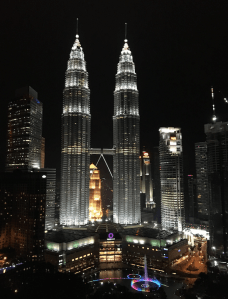
Twin Towers, Kuala Lumpur

Twin Towers, Kuala Lumpur

What struck me most, however, in my visits, were the differences in where efforts to produce more innovative learning opportunities are taking place.  What I found in Malaysia, for example, reminded me in some ways of what I see in New York City: the growth of alternative schools, after school programs, and other educational opportunities created by independent groups and individuals operating outside the public school system. Those I talked to about innovation in Kuala Lumpur pointed to a number of for-profit and not-for-profit efforts to create private schools and to provide workshops, camps, and other learning opportunities outside the regular school day. Among private schools, the alternatives to government-run public schools include international schools often connected to or resembling those operating in the US and elsewhere and some newer international schools established by Malaysian private universities like Taylors’ University and Sunway University. There are also new schools associated with alternative school networks in the US like Acton Academy as well as a growing homeschooling movement.  Outside the school day, organizations and collaborative like Edunation, Arus Academy, Tandemic, and EnglishJer have sprouted to address what their members see as gaps or problems with the Malaysian education system.

At the same time, the government in Malaysia has continued efforts to ensure all children have access to education while also launching a variety of initiatives to increase the quality of education. Recent initiatives have focused on integrating Higher Order Thinking Skills into the curriculum, establishing a technological infrastructure in all schools (including internet connectivity, computers/computer labs, and a virtual learning environment), and programs to establish “Trust Schools” (modeled after the academies in England or what those in the US would consider charter schools).  Often, the Ministry of Education, with limited resources, finds a contractor to lead these initiatives, but then these contractors have to find and develop the means themselves to roll their work out across large numbers of teachers and schools.

Singapore

Singapore

In contrast, when I asked about innovation in Singapore, those I talked to generally pointed to major initiatives launched by the government as part of continuing efforts to improve and change the education system. These include efforts to focus on the development of 21st Century skills amongst all students and to integrating technology productively into teaching (as part of Singapore’s Fourth Master Plan for technology integration). These efforts reflect what colleagues in Singapore have called a “centralized decentralized” approach to create opportunities for schools and teachers to develop innovative practices, which if effective, can then be scaled up across the system. This approach included the creation of a set of Future Schools in 2007 that experimented with different approaches to using technology and that could serve as models or prototypes that could inspire other schools to change their instructional practices. In addition, in 2011 the Ministry of Education established Edulab which now provides support for educators to develop new practices and resources and creates opportunities to share those practices and resources across teachers and schools.

There are numerous educational opportunities outside the regular school classroom in Singapore, but those generally connect to and complement the work going on in the government-run schools rather than serving as independent educational alternatives.  Educational programs established outside the public schools in Singapore include workshops and field trips organized by cultural institutions such as the Singapore Discovery Center and the National Gallery of Singapore.  These educational opportunities serve as “Learning Journeys” that schools are required to offer students as part of Singapore’s commitment to integrating National Education into the curriculum.  The opportunities for learning after school and on weekends are also dominated by tutoring offered by a host of individuals and “tuition centers”.  Despite the concerns of the Singaporean government and many educators and parents, tutoring has grown into a 1.1 billion dollar industry (almost double the $650 million spent on tutoring in 2004) with 600 different tuition centers registered with the Ministry of Education (up from 500 in 2011).  Tuition centers focus primarily on preparing students for the national exams that students in Singapore take at the end of primary  and upper secondary school and before admission to university; but some centers try to distinguish themselves with their own educational approaches and some aim to help students develop skills that go beyond those emphasized in the tests.

Singapore and Malaysia present very different contexts for developing new educational opportunities for students, but both have to contend with the challenges of figuring out which new practices and programs might work and what kinds of mechanisms will help educators and schools to build on any successes. In the next few weeks, I will be following up on these initial impressions with closer looks at the evolution of some of the programs and organizations that are working to improve the educational opportunities in each of these systems.

— Thomas Hatch