Author Archives: internationalednews

Denmark: School Reform

Photo: Klaus Holsting

Anders Bondo Christensen
Photo: Klaus Holsting

The latest school reform proposal in Denmark calls for a 25-hour workweek for teachers, inclusion education, measurable goals, and a collaborative discussion about teacher training. Despite the fact that the reform has controversial implications for wages, work hours, and professional development, Anders Bondo Christensen (chairman of the Danish Union of Teachers) has garnered the support of the majority of teachers. Christensen is now hoping that Education Minister Christine Antorini will see that the plan is close to the government’s objectives.

Education Minister Christine Antorini

Education Minister Christine Antorini

However, in a controversial move, Minister Antorini has just  introduced a large-scale study in which more than 3,500 students in a total of 200 schools will be taught in their native languages, including Arabic and Turkish. In a press release, Antorini said, “We want to know more about what helps develop the language skills and knowledge of bilingual students. The trials will use and strengthen the tools that some schools and councils already have available today.”
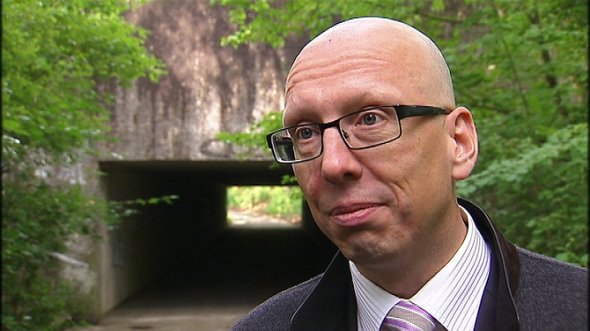
Danish People's Party Education Spokesperson, Alex Ahrendsten

Danish People’s Party Education Spokesperson, Alex Ahrendsten

Alex Ahrendtsen, Danish People’s Party education spokesman, expressed the his disapproval.  “I’m shocked,” he said. “In the midst of school talks, she allows such a bomb blast.It destroys a really suitable climate for negotiations.” Instead, Ahrendtsen would prefer to see greater efforts to include bilingual students in Danish culture.

Other Nordic countries are debating similar issues and are watching closely.

For more information:

Please consult links embedded in the scan above, as well as those listed below.

Primary School Gets Back Hours in Mother Tongue (link in Danish)

Broad Support for Bondo’s Teacher Initiative (link in Danish)

Liberal Alliance: High school test should not determine access to secondary education (in Danish)
France

Paris teachers rebel against Socialists’ school reform

Joseph Bamat, France 24 (January 22, 2013)

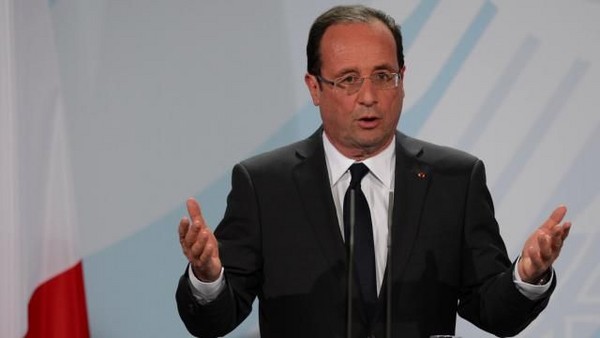
President Francois Hollande

President Francois Hollande

Paris-region teachers are striking against President Francois Hollande’s first major school reform, which calls for a reduction in class time during the school day and the addition of a half-day on Wednesdays. Teachers claim that the reform, set to begin in September of 2013, will require longer work hours with no compensation, and that it will have no impact on the overall quality of education. French teachers strongly supported Hollande in last year’s presidential election, when he promised a reform of the school system and a heavy investment in education.

For more information:

Teachers Strike Over 5-day Work Week

French Teachers Strike for Education Reforms


Guatemala

Program to Promote Educational Reading Levels

Prensa Libre (January 11, 2013)

c9e9ad2a43a146355919a081f7560134_int470As Guatemalan schools begin the 2013 academic school year this month, teachers across the country are expected to implement a new reading program, entitled “Leamos Juntos” (the literal translation of which is “We Read Together”), aimed to promote reading and to involve students, teachers, families, and communities in the development of reading. The program has in common characteristics of earlier reading reforms from 2006 and 2011 – which, among their goals, served to promote healthy reading habits within families as well as to maintain Guatemalan oral traditions – and is a response to an “Ibero-American Educational Cooperation” conference) held last October 2012 . Within that conference, Spanish-speaking countries vowed to prepare a reading plan for the furthering of literacy in their schools.

With 90M Quetzales (a little over $11M) invested in the reform, one primary component of the program involves a normalized half-hour of reading per day within classrooms as a way to foment a love of reading among students. The money, borrowed from the International Development Bank, will be used for four purposes: 1) the purchase of 4.5M books, 2) materials to safeguard and deliver books to schools, 3) infrastructure for the storage of books, and 4) the eventual printing of e-books donated by UNESCO.

The Guatemalan Ministry of Education has created a national commission on reading as well as departmental commissions that are in charge of their respective educational centers and schools (both public and private). These commissions are expected to devise the human resources necessary to follow through with the promotion as well as effective methods – including a systemization of “good reading practices” – for teachers to help children with acquiring and developing their reading skills. Those departmental commissions are also in charge of their own resources and materials, presumably divided from the investments mentioned previously.

Additionally the reform calls for a commission of integrated school reading that includes the director of the institution, two teachers, two parent representatives, and two students whose responsibilities include ensuring the appropriate use of materials (ensuring that they’re organized by theme, type, language, etc.). Teachers in all institutions have the major responsibility of carrying out lessons that involve student participation and activities related to the reading. Finally, periodic evaluations of reading departments, institutions, and areas are a part of the reform.

Contributed by Tran Templeton

For more information:

Guatemala: National Reading Program “We Read Together”

90M Quetzales Invested in Reading Program


Mexico

Mexico Approves Massive Education Reform

Associated Press (January 16, 2013)

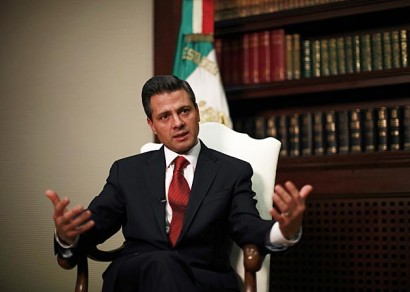
President Enrique Pena Nieto

President Enrique Pena Nieto

President Enrique Pena Nieto will enact a new public education law that calls for the creation of a formal system for hiring, evaluating and promoting teachers, in an effort to put an end to the buying and selling of teaching positions.”The goal of the reform is a quality education and for this there are two big things (needed): evaluating professional teachers and the body that will evaluate the system,” said Sen. Juan Carlos Romero Hicks, president of the Senate’s Education Commission. With this move, the federal government will take control over the public education system, which has been dominated by the 1.5 million-member National Union of Education Workers.

Union President Elba Esther Gordillo

Union President Elba Esther Gordillo

Elba Esther Gordillo, who led the union for the past 23 years, has been accused of using union funds for personal gain.

For more information:

Hosts of Elba Esther mobilized against labor and educational reforms (in Spanish)

Mexico Takes on Teachers Over School Control 

Thousands of Teachers in Mexico Protest Pending Education Reform Initiatives

State Congresses Approve Education Reform (in Spanish)

Mexico Approves Education Reform, But Not Everyone is Celebrating (in Spanish)

Japan

10 bil. yen for science education / Govt plans to raise subsidies for primary, middle school materials

Daily Yomiuri (January 8, 2013)

Japan’s education ministry, prompted by Democratic Party of Japan proposals, has increased subsidies for the purpose of providing more funds for science education in primary and middle schools. The plan is to fund teaching science as well as provide the supplies and books to conduct experiments inside more classrooms. Based on recent IEA (International Association for the Evaluation of Educational Achievement) global surveys, when middle school students are asked what kind of jobs they wished to pursue, 20% of middle school students responded “want to find jobs utilizing scientific knowledge,” which is significantly lower than the international average of 56%.

China

Boosting migrants’ education

By Cheng Yingqi, China Daily (January 14, 2013)

Xue Jun/For China Daily

Xue Jun/For China Daily

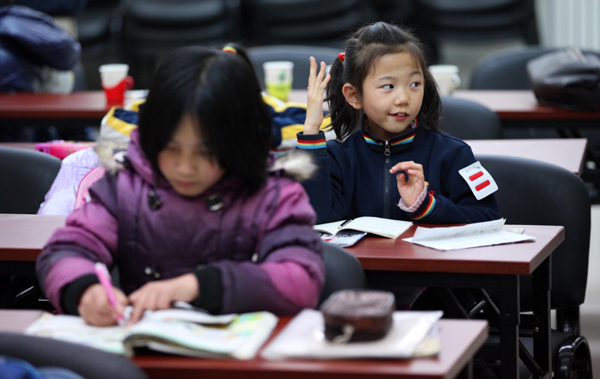
In an effort to improve the quality of education for migrant workers in China, the education authority in Beijing’s Chaoyang district will shut down non-government run schools and guarantee that migrant workers’ children will attend public schools. Private schools for the children of migrant workers have sprung up in Beijing, Shanghai and other large cities where the public schools do not accept children who do not have residence permits; however, many of these schools have been deemed unsafe for schooling and have not been officially authorized to operate.

According to this article, “Over the past six years the Chaoyang education commission cut the number of schools for migrant workers’ children from 135 schools teaching more than 50,000 students, to 25 schools teaching 11,000 students.” These closures worry parents who fear their children will have trouble adapting to the public school environment.

For more information:

Migrant Education in China (OECD Report)

Chinese cities to relax school entry for rural migrants

More regions to reform migrant education system

Chile & Haiti

Chilean preschool curriculum to be implemented as public policy in Haiti

Latercera (January 10, 2012)

*link in Spanish

As a result of the work produced by two Early Childhood Education Pilot Programs in Haiti, the Chilean National Intercultural Preschool Education Board (JUNJI), designed a Preschool Curricular Plan for Haiti with the help of the Chilean Agency for International Cooperation (AGCI). This month, AGCI’s executive director, Ambassador Jorge Daccarett, will visit some of the educational establishments before meeting with Haiti’s Education Minister Sr. Vanneur Pierre to advance the implementation of this curricular proposal.

Formal education in Haiti begins at the age of six. Chile’s push for the implementation of preschool establishments began in 2009 with the creation of two Preschool Centers. JUNJI’s vice-president, Maria Francisca Correa, maintains that being able to contribute to the development of this preschool curricular proposal for Haiti is very inspiring since she is convinced of the vital importance of early childhood education.

Japan

5,274 Teachers Took A Leave From Work Due to Mental Health Reasons

Nikkei Shinbun (December 24, 2012)

*Link in Japanese

The Ministry of Education, Culture, Sports, Science and Technology (MEXT) reported that the number of public school teachers who took a leave from their schools due to mental health reasons in year 2011 was 5,274. While this number is down 2.4% since 2010, the number is still twice as many compared to 10 years ago. The main reason for the increasing depression is a decrease in a healthy work-life balance.To improve the working environment for teachers, the ministry proposed two plans. One is to assign experienced teachers to new teachers as mentors. The second is to implement training programs for returning teachers, who took a leave from their work, to facilitate their re-entry.
For more information:

Depression, mental illness among Japan’s public school teachers increasing

Teachers too busy to deal with struggling students


India: Funding the Right to Education (RTE) Act

Photo: The Hindu

Photo: The Hindu

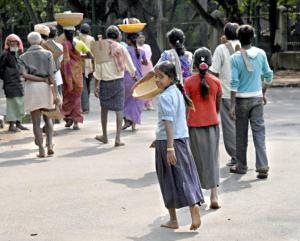
In an effort to improve the country’s economy, the Indian government has cut funding to the Right to Education (RTE) Act, which aims to provide every child between the ages of six and 14 with an elementary education. Cuts are expected to total 2-3% of the total RTE budget for 2012-2013, a substantive deduction that will affect the implementation of the RTE legislation. Civic bodies, such as Brihanmumbai Municipal Corporation (BMC), have reported that they simply cannot afford to meet the requirements of RTE.  The decrease in funding is expected to affect many, such as disabled children who rely on government supported transportation, and children in areas of conflict.

Meanwhile, cities such as Nagpur are holding seminars to inform and educate local principals about RTE implementation, in the hope of improving student achievement country-wide. Tripura is a rare example of a state that has been able to meet the requirements of RTE. Tripura admitted 44,000 students under the RTE quota this year, and plans to increase the age of students who qualify to receive a free education. Tapan Chakraborty, School Education Minister, pointed out that the Left Front government has been spending more than 20% of its annual budget on education, while the central government has spent less than 10%.

Students will begin applying to schools under RTE on January 10, 2012; however, member schools of the Karnataka State Private School Management’s Federation (KSPSMF) have warned that they will not admit disadvantaged students if the government does not reimburse them.

Ireland

Ruairí Quinn calls for “inclusive debate” on education in Ireland

Donal Walsh, SchoolDays.ie (December 18, 2012)

Ireland: Google Images

In response to the recently released TIMSS and PIRLS scores, Ruairí Quinn, Ireland’s Education Minister, wants to reassess the amount of time students spend studying each subject. While Irish students performed at an above average level, the students of Northern Ireland achieved better results in mathematics. Quinn believes that the solution is to ensure a higher standard of knowledge amongst primary school teachers, and to increase the amount of time the students spend studying math and science. He said: “I have asked the National Council for Curriculum and Assessment to review the recommended time allocations for all subjects in the primary school.”

For more information:

What will happen in education in 2013?