Author Archives: internationalednews

Egypt

Back to school: Morsi gets black marks from Egypt’s teachers

Randa Ali, Ahram Online (September 10, 2012)

President Morsi

On Sunday, September 9, President Morsi approved a modification to state-employed teacher pay that allows teachers to receive 100 percent of their salary in bi-annual batches to be dispersed on October 2012 and January 2013. For some teachers, this means their salaries will double; however, many teachers believe the compensation remains incommensurate with their levels of experience. Additional demands include permanent positions for long-term temporary employees. There is some likelihood that this demand will be met on Monday, September 17, as temporary public workers are expected to be permanently hired by June 2013.

For more information, see the following links: Egyptians tell Morsi to keep election promises (PressTV)
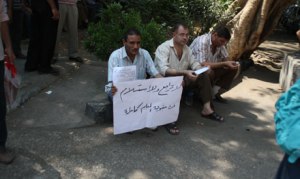
Three protesters – ‘teachers’ full rights’ (Photo: Randa Ali)
Ireland

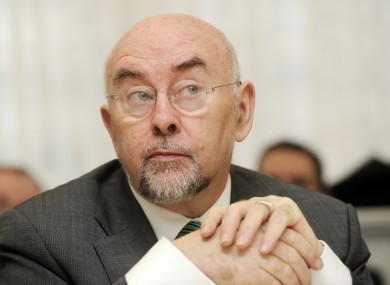
The Minister for Education and Skills, Ruairí Quinn T.D.

Minister Quinn gives go ahead for major restructuring of initial teacher education provision

Press Release, Irish Department of Education and Skills (September 5, 2012)

The Minister for Education and Skills, Ruairí Quinn T.D., will go ahead with a sweeping overhaul to teacher education. Following recommendations from a recent Higher Education Authority (HEA) report, only six “centres for teacher education” will provide Initial Teacher Education (ITE) offering primary and post-primary teaching. In the new system, greater emphasis will be placed on literacy, math and pedagogical skills.  Additional curricular reforms have already been outlined by the Minister.

The HEA has been asked to submit a report with more formal proposals and financial implications by the end of the year.

Click here to view full report

Chile

Chilean students announce new protests demanding a better education

Ultima Hora (September 2, 2012)

“Education is sold”

Chilean university students announced today that they will mobilize once more during the second week of September. These student protests demand better quality of education and reject government intervention, such as the proposed tax reform. Students’ pleas for a restructuring of the Chilean education system have not been addressed by the Chilean government.

Chilean Gov Calls for an End to School Occupations

Gwynne Hogan, The Santiago Times (September 6, 2012)

Santiago Mayor Pablo Zalaquett

Santiago Mayor Pablo Zalaquett and Education Minister Harald Beyer have responded to a month of student marches and occupations by calling for students to return to school when in opens, on September 20th: “We are making an appeal to the youth, we encourage them to fight for their right to quality education through peaceful marches and cultural acts, but they must stop missing school because there are not going to be special laws for them,” Zalaquett said. In 2011, 70,000 students were held back when the school system was paralyzed due to similar school occupations.

Australia

PM Pledge for Top Five School Spot

Michelle Grattan, The Age (September 7, 2012)

The Australian Prime Minister, Julia Gillard, announced a new school funding arrangment (dubbed the “Gonksi Plan”), promised to “legislate for a goal of having Australia in the top five schooling systems in the world by 2025.” By then, Gillard said that Australia should be among the top five nations in reading, science, and math, and be noted for the provision of high quality and equity education. Among other things, the Gonski funding plan recommended an extra $5 billion a year overall (in 2009 dollars) for school funding, and variables such as economic disadvantage, disability, school size and the particular needs of indigenous students.

For more information:

“PM Pledge for Top Five School Spot” (video clip)

In a panel discussion, presented by La Trobe University, Ideas and Society Program, May 2012, Carmen Lawrence, Richard Teese, Dennis Altman and (host) Lorraine Ling, discuss the Gonski Report and educational issues present in Australia today.

Experts respond to Gillard’s announcement.

Austria

One third of Austrian students face difficulties in reading
N.N., derstandard.at (6 September 2012)

An extended analysis of PISA-data presented by the European Commission reveals that 27.5 percent of Austria’s adolescents face severe difficulties in reading or are dyslexic. The number has increased during the past years from 19.3 percent (2000) to today’s 27.5 percent. Within the European Union (EU), Austria ranks third, right after Bulgaria (41 percent) and Romania (40.4 percent). In Finland, only 8.1 percent of students are categorized as students with insufficient reading skills, according to the PISA data.

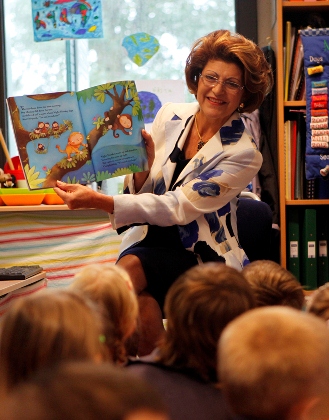
ImageAndroulla Vassiliou, Commissioner of the EU, emphasizes that the ministers of the EU decided to reduce the number of 15-year-old students with poor reading skills from 20 percent to 15 percent by 2020. They advise national states to invest in the education of the students’ reading competences, especially because of its economic benefit.

Click here to read the study in English.

India

Poor PISA score: Govt blames ‘disconnect ‘ with India

Anubhuti  Vishnoi,  Indian Express online (September 3, 2012)

Indian students participated in Program for International Student Assessment (PISA) for the first time in 2009. 16,000 students from 400 schools across the Indian states of Himachal Pradesh and Tamil Nadu took this test. Though Himachal Pradesh and Tamil Nadu are among the best performing states in India, the PISA scores of their students were dismally low, leading to much discussion in India. The Ministry of Human Resource Development (HRD), however, is arguing that these scores are not a reflection of the country’s schooling but of the disconnect between the test questions and India’s socio-cultural specificities, especially that of rural India. The Ministry will write to the Organization for Economic Cooperation Development to address this disconnect.

India

AP for reforms to make RTE effective

The Hindu online (September 2, 2012)

The Right to Education Act (2009) makes education free and compulsory for children between 6 and 14 years. It also mandates government schools to provide free education to all children and that these schools be managed by School Management Committees (SMC). Viewing the disconnect between the local government schools and the people in that community as an impediment to the effective implementation of RTE, the Andra Pradesh School Education Department has recommended a series of reforms. These include making it compulsory for SMC members’ children to attend the concerned school in their locality, having teachers teach in other schools in the area to meet teacher shortage, and providing after-school remedial classes for students.

Summer Break

The International Education News will be taking a short summer break for the month of August.  We will return in early September, 2012, with regular posts about education news from around the world.  In the meantime, please continue to follow us on Twitter.

Germany

German state of Baden-Württemberg axes 11,600 teacher jobs in the next few years (in German)
Spiegel Online (10 July 2012)

The minister of Baden-Württemberg announced an “awakening of education” when he was elected in 2011.  Now, the “awakening” has come:  11,600 teacher jobs will be cut in the next couple years. Although many in the state have doubts about these teacher cuts, the minister and others believe that they’re needed due to budget shortfalls.  Furthermore, the number of pupils in schools has dropped by 15,000 over the last five years in Baden-Württemberg.  Proponents of the teacher firings thus believe that less teachers are needed in general.  Opposing the measure are the teacher unions, who are shocked by the minister’s measure to fire so many teachers.

Chile

Chile’s English Teachers To Be Put To The Test
Agostini, M.  The Santiago Times (11 July 2012)

The Chilean government has revealed a new initiative that aims to improve English education in Chile by testing English teachers’ competency.  The test, designed by Cambridge University, will determine the teachers’ knowledge of the English language. It will be required of roughly half the teaching population (approximately 5,000 teachers) in public schools throughout the country, and, as Education Minister Harald Beyer said, “Those who obtain the highest levels…will be able to become certified with an additional test.”