Category Archives: About K-12 International Education News

From a “wide portfolio” to systemic support for foundational learning: The evolution of the Central Square Foundation’s work on education in India (Part 1)

Over the next two weeks IEN looks at the first 10 years of the evolution of the Central Square Foundation (CSF) and its efforts to build the capacity for improving learning outcomes in India. The posts draw from an interview with CSF’s Co-Managing Director Shaveta Sharma-Kukreja. Part one explores the first five years of the Foundation’s initiatives (2012-2017) and how they developed their strategy for the next five years focusing on foundational learning, educational technology, and affordable private schools. Part two concentrates on the “four pillars” of their approach to foundational learning and the lessons they have learned in trying to improve learning at scale in India. For more on the 10th Anniversary of CSF’s founding see #10YearsOfCSF: Leaders at CSF on Their Vision for the Next Decade.

Central Square Foundation’s first five years: Developing a “wide-portfolio”

Thomas Hatch: Can you tell me about the background and evolution of the Central Square Foundation (CSF)?

Shaveta Sharma-Kukreja: We started in February 2012. The founder of CSF, Ashish Dhawan, has one of the largest private equity funds in India. He always had a deep desire to move to the development sector, and he started by serving on boards of other NGOs to try to gain an understanding of education. I joined CSF in July 2012, and for the first five years, we were only funded by our founder which allowed us to be very entrepreneurial in how we looked at education. The only “guardrails” he put up were that we would be a non-profit; we will look only at school education (K-12); and we would support young social entrepreneurs. As a result, venture philanthropy shaped a lot of the work that we did in the first phase of our journey.

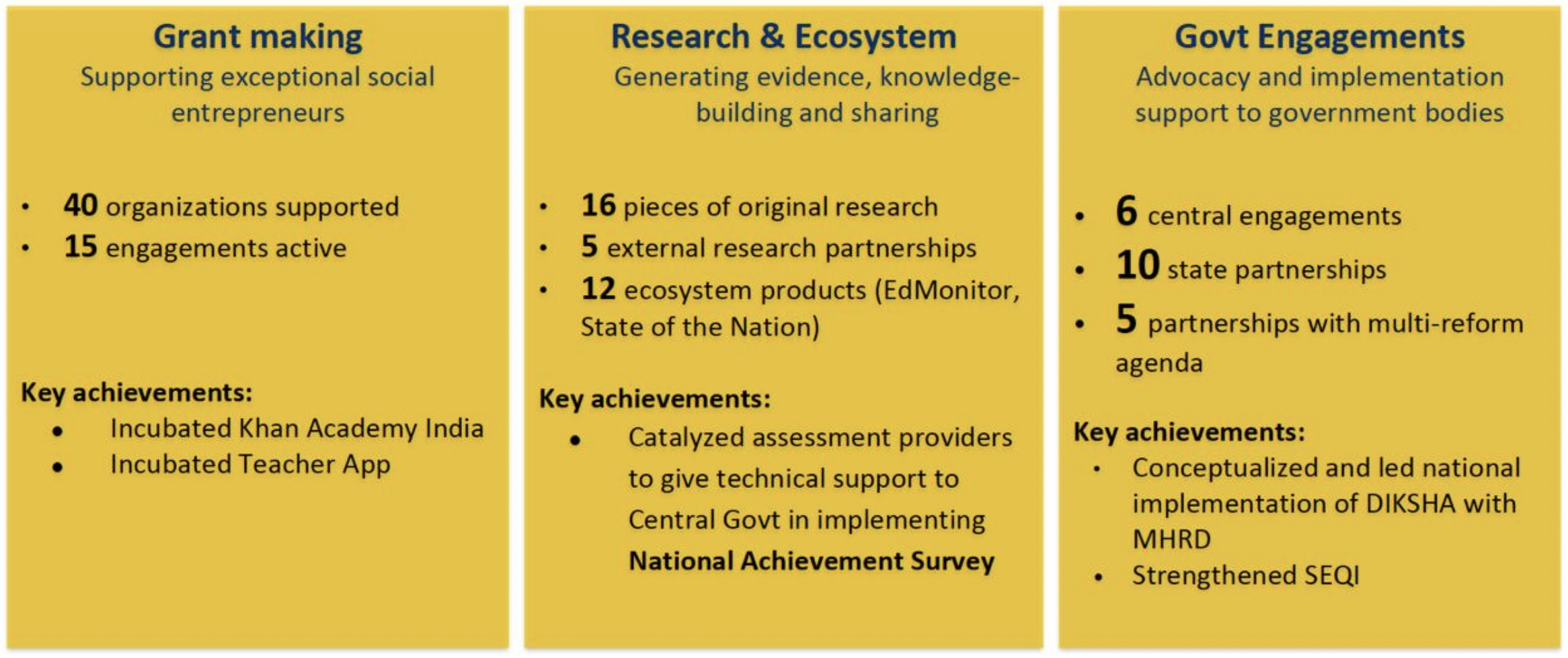
Without external funders, we had the flexibility to look at a diverse set of issues from education technology to early childhood education to data and assessments. During this time, grant making was one big part of our work. Second, we supported research, particularly research from the perspective of how it can inform policy. Since we are neither a university, or an evaluation agency, our research was always oriented more for policymakers and for other education leaders and on how our research can help the ecosystem develop a collective voice. Third, we focused on government engagement. Even while we were doing grant making and looking for innovative solutions, we knew that for any solution to scale and be sustainable it needed government adoption. Early on, we weren’t even sure what government engagement meant, but we began by trying to come up with innovative solutions, having smart researchers lend their voice to it, and then handing it over to the government to run with it. But, as in much of the developing South, government demands typically include asking you to work in partnership with them, so we ended up setting up a number of project management units both at the central and the state level.

TH: What’s the advantage of an organization like yours taking some of that work on in a partnership with the government?

SS: The reality is that most people in the government understand the issues and challenges that the system is facing; they’re not blind to it. but the education production function is so complex that it’s difficult to pick out one part of the problem and solve it. The government is in the business of setting up the policy, and they are doing the regulation, and they are also the service provider of education. Working with an external partner enables them to hire people with a different profile – with different backgrounds and more specific expertise about a particular issue. The external partner becomes an extension of the government but they’re also able to bring a different profile of talent and to be razor sharp on the issue that they’re working on.

Working with an external partner enables [the government] to hire people with a different profile – with different backgrounds and more specific expertise about a particular issue. The external partner becomes an extension of the government, but they’re also able to bring a different profile of talent and to be razor sharp on the issue that they’re working on.

For example, working on a partnership focused on school leadership was my first project at CSF. At that time, school leadership as a term was not even being used in India. But, in 2012- 13, we were able to bring a group of people together, including myself, from the US and India, with expertise in organizational leadership to create the India School Leadership Institute (ISLI) which worked with principals of “low-fee” private schools. (For an overview of the evolution of ISLI see IEN’s conversation with ISLI Founding Director, Sameer Sampat.) But then the government was able to set up a National Center for School Leadership that built on a lot of our learnings in ISLI even though “low-fee” schools aren’t even part of the government sector.

The development of India’s national online platform for teachers provides another good example. As you know, the growth of technology in India has always had the advantage of better device penetration, cheaper internet, cheaper hardware but the software solutions have been the problem. In this case, states started building their own portals for teacher education but their first version was basically just a PDF of their teacher manual that they put on their websites. So there was a huge opportunity for a platform to be built, not just a portal, but a platform on a national level that states could connect to. 

The national teacher platform called DIKSHA relied on core technology that came from the EkStep Foundation. Their own legacy is from AADHAR which is a platform enabling the Government of India to directly reach residents of the country in delivery of various subsidies, benefits, and services by using the resident’s unique 12-digit Aadhaar number only. They already had sophisticated technology at a level that no state government would have been able to develop itself. CSF then took on the project management responsibilities to integrate and adapt the technology for the state governments so that it aligned with their needs and had the look and feel of their website portals. It was a logical opportunity for CSF to start working with the government, but it was dependent on identifying a strong need where the government wanted support and where CSF had the ability to provide that support.  It’s one of my favorite examples of a government partnership, because it involved a foundation like EkStep that brought in the technical capability; we brought in the project management capability, and we also had a much deeper understanding of teacher education, having worked on that for about four years. To the best of our knowledge, this is one of the most successful examples of a public good being created in partnership with CSO’s and NGO’s and different parts of the government. By 2020, the Prime Minister described DIKSHA As “one nation one platform” for the entire spectrum of education, now serving students and families as well as educators.

Shifting to phase 2: Focusing on “impact”

TH: The examples you talked about illustrate how you were operating during those first five years? 

SS: Yes, and this was the time at the end of what we call the first phase of our work that our Board put the question in front of us of “What will CSF’s work look like?” During that phase, we were an operating organization which doesn’t actually work on the ground with students and teachers and school leaders. We incubated ISLI.  

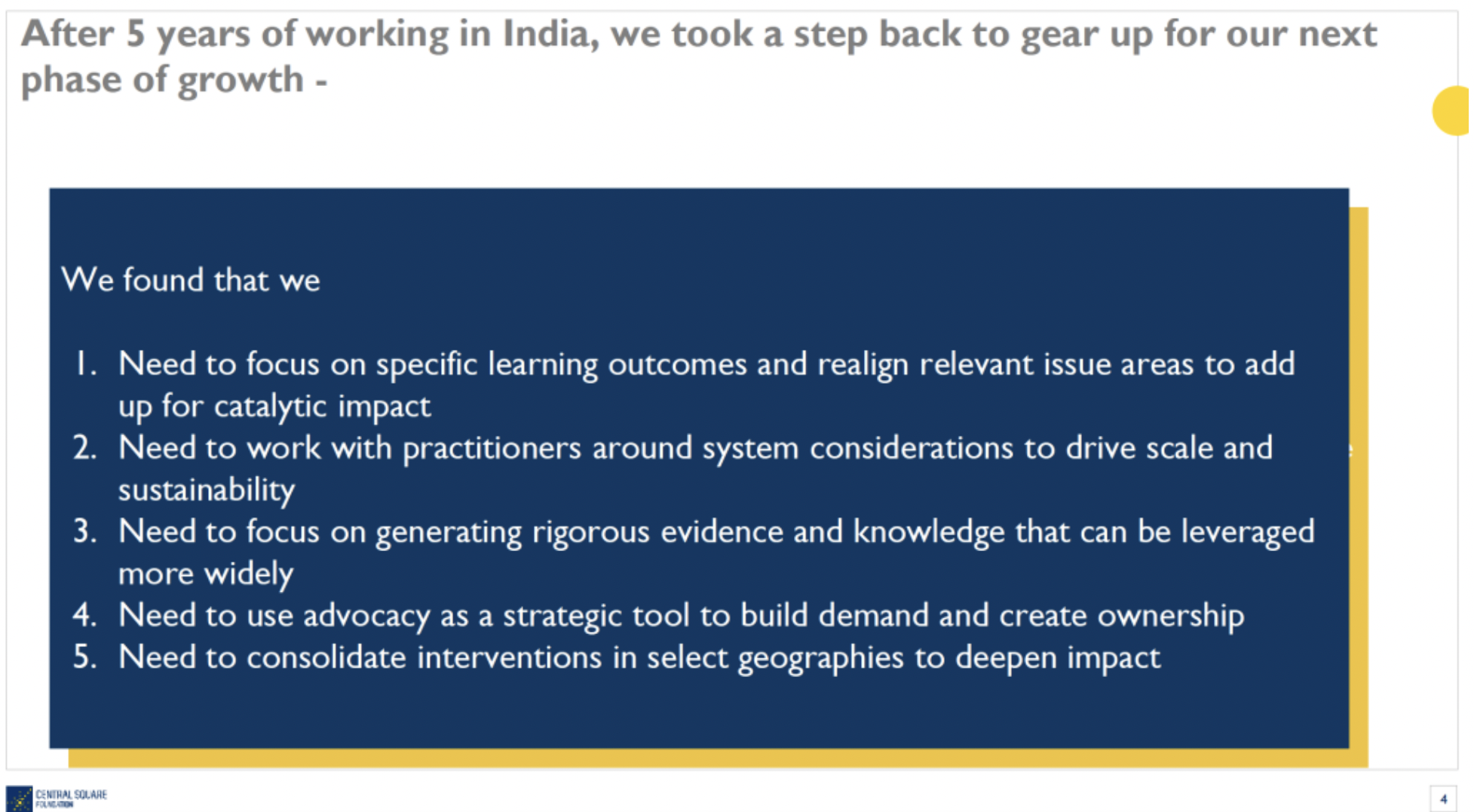
We helped to bring the leader in from the US (Sameer Sampat who went on to co-found, with Azad Oommen the first Executive Director of CSF, Global School Leaders on the ISLI model), but I was the donor on the team. I wasn’t running the organization. We were also working with states who had different interest areas. In Delhi at one point, we were working on the school-to-work transition and department restructuring. Two very distinct areas of work that are not directly related to student learning outcomes. It’s a long value chain for department restructuring: it depends on department re-structuring leading to better pedagogy and better curriculum that reach classrooms in schools and teacher education programs that then leaders to better teaching and learning.  Our board left it up to us to decide: would it be better for CSF to continue with the “wide portfolio” approach and continue to engage with state and central government, when an opportunity and interest appeared? Or should we take stock and pick a part of learning outcomes where we could have a more direct impact? And we felt that the breadth of our work allowed us a space where we could narrow down our focus and make a more meaningful impact. We essentially said:  Let’s pick out an area. Let’s be more outcome and measurement and evaluation driven in our work overall and also in how we work with our partner.” We always say for education reform to stick we need to zoom in to a district and go deep. Similarly, we decided to pick an issue within education and go deep. 

Would it be better for CSF to continue with the “wide portfolio” approach and continue to engage with state and central government, when an opportunity and interest appeared? Or should we take stock and pick a part of learning outcomes where we could have a more direct impact?

This was around 2017 and about the time that the Gates Foundation began looking at doing work in education in India.  Our first validation came when they chose CSF as an “in-country” partner. We were still a relative rookie in the education space when they saw potential in us. 

As we moved into this second part of the CSF journey, we shifted from the portfolio approach to three focus areas: 

  • Foundational learning
  • Technology in education
  • Private school sector

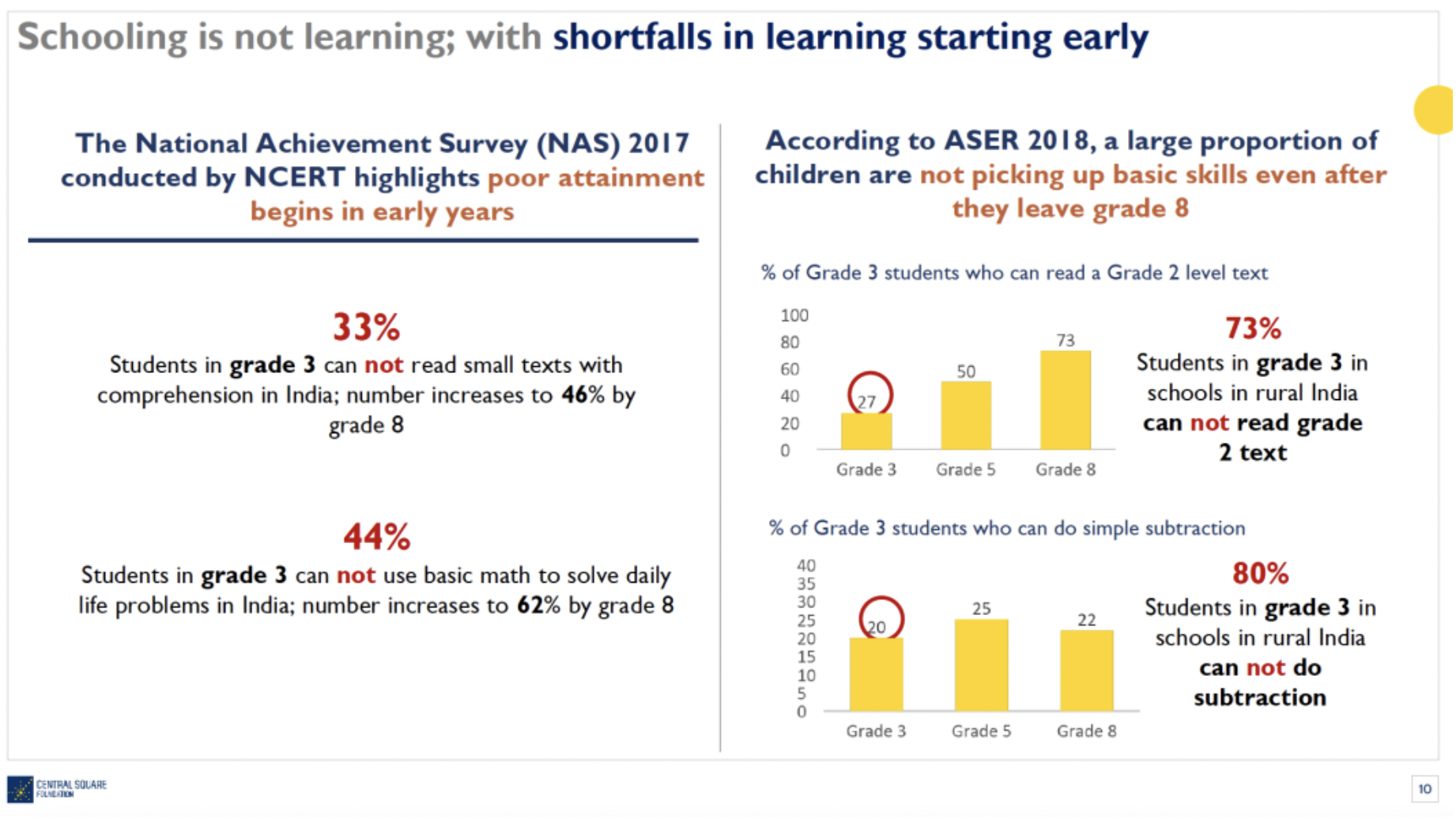
Landing on the need for foundation learning was very evident for us. There is a rural household survey called ASER which has been going on in India for 20 years, and it shows that the problems with basic skills are quite deep.

The second area, building on some of our earlier work, was education technology. The widespread availability and use of mobile devices and data put India in a unique position relative to many other countries. There was also a lot of for-profit entrepreneurial activity happening in India, so we saw an opportunity for solutions to be created and designed locally. We also had a unique advantage because CSF had already been playing an evangelizing role for how tech can be leveraged for education within the government system. 

The third issue area is private schooling.  We are very unique as a country where over 40% of children do not take advantage of the free education provided by the public education system. Education in India, like it is worldwide, is aspirational. The moment a family can afford to pull their child out of the free government school, they would rather send their child to a private school with fees beginning at roughly $10 a month. For the most part, the government has looked at the private school system mostly from the perspective of regulation, and there hasn’t been a strong focus on quality. But in the first phase of our work, because a lot of us, including our founder Ashish, came from the management and the corporate side of the world, many people assumed “Oh you guys must be pro-private schools,” and it took us a while to clarify that whether it’s a government school or low fee private school the school is accountable to deliver quality education. 

Our approach to these three areas has been similar to what I described for our first phase: 

  • Working with the government and creating a reform agenda with a collective voice of other education leaders
  • Evidence building and supply shaping comes from the work we do with our partners, with other NGOs in the ecosystem with a sharp focus on the public good – making sure that whatever we are creating is available to others in the education ecosystem – and an emphasis on research
  • Deepening our government engagement efforts by shifting from working across multiple issues in multiple geographies to focusing our work in certain states on the issue of foundational literacy and numeracy

Getting to scalable and sustainable solutions in these areas became an extension of our approach in phase two. Across focus areas like education technology, we are trying to be more sharply focused on early learning, including at home, and in our work in private schools, we are trying to raise the bar for quality at the primary level. From a measurement perspective, we are targeting the learning poverty index the World Bank has highlighted (measuring the percentage of children who can read and understand a simple text by age 10), asking “how can we contribute to bringing down learning poverty in India?” with an ambitious target of bringing it down from 55% to 15% over the next five or six years. We’ve found this is both a directional goal– requiring us to articulate how our work contributes to it – and an aspirational and inspiring goal that connects our work with others. 

TH: Given how hard it is to achieve these goals, have you also established some benchmarks to see if you’re headed in the right direction?

SS: Unfortunately, because of COVID, the plan to get a baseline is still on paper. The whole principle of system reform is that you’re doing it – not just with the approval of the government – but in partnership with the government. However, with the situation worldwide with COVID, that’s been impossible. We actually adapted a tool that USAID uses, the Early Grades Reading Assessment and the Early Grades Math Assessment. We’ve partnered with an assessment agency, and we’ve piloted it in English and in Gujarati so the tool is ready, but quite honestly haven’t even asked the government for permission yet because it’s just unfair. We’re also acutely conscious that whenever we get an opportunity to do the baseline, it will actually be lower than it would have been before COVID first hit. But, in a way, it will also capture a more picture from ground right now. 

Time for an inclusive turn: Mel Ainscow on Inclusion as a guiding principle for educational reform in Portugal

This week Mel Ainscow shares his reflections on the implications of Portugal’s efforts to make inclusion a centerpiece of educational policymaking. Ainscow is Emeritus Professor of Education at the University of Manchester, Professor of Education at the University of Glasgow, and Adjunct Professor at Queensland University of Technology. His works include ‘Struggles for equity in education: The selected works of Mel Ainscow’, and previous posts for IEN include ‘Finding pathways to equity’: A Conversation with Mel Ainscow and Christopher Chapman. An earlier version of this article, written for a UK audience, was published by the Fabian Education policy Group.

March 2022 saw the publication by the OECD of a review of national education policy in Portugal. The report, which was produced as part of OECD’s ‘Strength through Diversity’ project, has important implications for future reforms in many countries.

Legislation

The most striking thing that emerges from the OECD review is the way that, over the last twenty years or so, Portuguese policy makers have used inclusion as a guiding principle for educational reform. Crucially, this is not seen as a discrete policy – a task to be allocated to certain individuals or groups. Rather, inclusion is regarded as a principle that must inform all educational policies, not least those concerned with the curriculum, accountability, funding and teacher education. In this sense, it is seen as being everybody’s responsibility.

“Inclusion is regarded as a principle that must inform all educational policies, not least those concerned with the curriculum, accountability, funding and teacher education. In this sense, it is seen as being everybody’s responsibility.

Since 2008, Portugal has had in place laws envisioning the provision of education for all students, without exception, in their local mainstream school. This legislation led to special schools being transformed into resource centres for inclusion, tasked with supporting their former students, who are now placed in mainstream schools.

Further legislation in 2018 provided a framework that sees inclusive education as a process under which the education system must be reformed so that it can adapt to the needs of all students. With this agenda as the focus, the Government has given priority to the development of policies that guarantee equal access to public education in ways that are intended to promote educational success and equal opportunities.

Abolishing labels

Importantly, the Portuguese legislation has moved away from a view that it is necessary to categorise students in order to intervene. Rather, it supports the idea that all children and young people can achieve a profile of competencies and skills at the end of their compulsory education career, even if they follow different learning paths. It therefore emphasises flexible curricular models, systematic monitoring of the effectiveness of interventions, and an ongoing dialogue between teachers and parents/caregivers.

“All children and young people can achieve a profile of competencies and skills at the end of their compulsory education career, even if they follow different learning paths.

This approach is in stark contrast to that taken in many countries, including my own, where recent years have led to an expansion of labels that situate problems of educational progress within the child. In England, this emphasis on labelling has led to a massive expansion in the number of learners placed in separate provision of various forms.  At the same time, there has been a worrying increase in those who are out of school altogether.

Collaboration

A key feature of the Portuguese education system is the emphasis placed on collaboration. This is facilitated by a well-established pattern of schools working in local clusters – a particular strength in relation to the promotion of inclusive practices and forms of organization that support the introduction of these ways of working. Indeed, many other countries are seeking to establish similar arrangements, building on research suggesting that collaboration between schools has an enormous potential for fostering their capacity to respond to student diversity.

A further area of strength in Portugal is the active involvement of community representatives in policy formulation within the school clusters. This includes the appointment of school directors, who are elected for four years. These arrangements provide a sound basis for engaging community partners to support the promotion of inclusion and equity within a local cluster.

Impacts

I was privileged to be a member of the team that carried out the review in Portugal. A striking feature of our discussions with stakeholders in different parts of the country was the widespread awareness and acceptance of the principles upon which the national education policies are based.

Particularly impressive was the way that children and young people talked about their pride at being students in a school that is inclusive. Many also talked of the value they gained from being involved with such a diverse range of classmates.

“Children and young people talked about their pride at being students in a school that is inclusive. Many also talked of the value they gained from being involved with such a diverse range of classmates.

At the same time, there is a high level of awareness at all levels of the education system of the dangers associated with using labels in referring to potentially vulnerable groups of students. Frequent mention was also made of the political history of the country that has influenced the concern to see education as a basis for fostering democracy.

Implications

As the Portuguese education system moved forward in relation to inclusion over the last two decades, the country has also seen impressive developments in terms of equity. Indeed, it is one of the few countries with a positive trajectory of improvement in all of the subjects assessed by OECD’s Programme for International Student Assessment (PISA). In addition, the rate of early leavers from education has reduced significantly, although there are significant variations between regions.

Portugal is one of the few countries with a positive trajectory of improvement in all of the subjects assessed by OECD’s Programme for International Student Assessment (PISA).

It seems, then, that seeing inclusion as a principle for educational reform can provide a pathway to excellence. This points to the urgent need for a new direction in education policies across the world. These should be guided by UNESCO’s ‘Education 2030 Framework for Action’, which emphasizes inclusion and equity as laying the foundations for quality education.

So, as countries formulate policies for education reform, I suggest that it is now time to take an inclusive turn. Moving in this radically new direction will, of course, take time, as is evident in the story of Portugal, where there are, of course, still more challenges to be addressed. It will also require that the resources and expertise that exist within alternative provision should be redirected towards the development of schools where children and young people learn how to learn together and live together.

Leadership, research, and educational change in a time of disruption: The Lead the Change Interview with Rebecca Lowenhaupt

This month’s Lead the Change (LtC) interview features a conversation with Rebecca Lowenhaupt, an Associate Professor of Educational Leadership at Boston College. Her research investigates educational policy and school leadership in the context of immigration.

Lead the Change: The 2022 AERA theme is Cultivating Equitable Education Systems for the 21st Century and charges researchers and practitioners with dismantling oppressive education systems and replacing them with anti-racist, equity, and justice-oriented systems. To achieve these goals, researchers must engage in new methodologies, cross-disciplinary thinking, global perspectives, and community partnerships to respond to the challenges of the 21st century including the COVID-19 Pandemic and systemic racism among other persistent inequities. Given the dire need for all of us to do more to dismantle oppressive systems and reimagine new ways of thinking and doing in our own institutions and education more broadly, what specific responsibility do educational change scholars have in this space? What steps are you taking to heed this call?

Rebecca Lowenhaupt: As educational change scholars, we have long understood the complexity of shifting entrenched practices within organizations. We are well-aware of the many barriers to change that can keep reforms from succeeding, and we have had some success developing models and frameworks to support adaptable, learning organizations. The current call to focus these efforts on dismantling oppression and designing new, justice-oriented systems provides a clear purpose and direction for us in our scholarship and partnership work.

I am hopeful that we are well-situated to address these issues. While the pandemic has been devastating for educational institutions in so many ways, we have seen how, when faced with crisis, many of our public schools were able to respond nimbly, work in partnership with public health and government, and serve as hubs of support for many communities. We continue to grapple with substantial challenges in education from youth mental health to staffing shortages and the ongoing politicization of curriculum. At the same time, new forms of leadership and collaboration have emerged along with an understanding that the complex problems we are facing as a society require interdisciplinary, innovative solutions. For example, many schools implemented pandemic response teams comprised of educational leaders, local government and public health officials, and in some cases, concerned parents. These teams helped sift through changing state guidelines, emerging research, and risk management, to support educational leaders’ decision making. In some districts, schools partnered with community organizations in new ways to address food insecurity and technology needs among families (Lowenhaupt et al., 2020). And across states, state leaders partnered with one another and researchers to share guidance and tools for their respective districts, such as the work conducted by the English Learner Working Group led by the Council of Chief State School Officers (CCSSO) in partnership with nearly 20 state EL directors (Hopkins & Weddle, 2021).

During this generative, if difficult, time, our role as researchers has shifted. In many cases, we have been brought in to help our partners in the field make sense of the changing landscape. Our research-practice partnerships have become more important than ever and require us as researchers to engage alongside practitioners with our boots on the ground, not as outsiders simply documenting what we see. As we encourage our partners to try things out, it is our responsibility to help them evaluate and understand the impact of their initiatives. Because the pace of change accelerated so rapidly as organizations tried to respond to the pandemic, we were called on to speed up our processes as scholars to support our partners.

“Addressing injustice requires coordination across institutions.”

Several researchers rose to the challenge by finding ways to support partners as well as providing timely, relevant policy guidance to support educational leaders in the field. For example, the Annenberg Institute produced a series of policy briefs that brought existing research to bear on the current crisis through the EdResearch for Recovery Initiative. In one brief, Kraft and Falken (2021) offered a summary of research and recommendations for implementing high dosage tutoring at scale in response to school closures and disruption. Similarly, the Journal of Professional Capital and Community provided an opportunity for rapid response and engagement. A colleague and I contributed a piece on school leadership for immigrant communities during the pandemic, highlighting the role leaders play ensuring access for students and families and providing opportunities for collaboration among educators and across immigrant- serving organizations (Lowenhaupt & Hopkins, 2020). And capturing student perspectives, Reich and Mehta (2021) shared their insights about what post-pandemic schooling might, and should, look like in real time. These are just a few examples of the many ways our scholarly community sought ways to quickly and meaningfully respond.

Now, as we are gradually emerging from the crisis, it is important to keep in mind that unexpected (and expected) changes will continue to challenge us to keep pace with an evolving field. We also have much to learn about bridging fields to address such complex problems—a challenge one school faces is likely also a concern for mental health providers and impacted by community resources and local government agencies. Addressing injustice requires coordination across institutions. As researchers, we can help uncover barriers and map the intersecting systems that shape educational experiences. We can also engage with our partners in developing solutions and learning about how those solutions shape practice as intended.

LtC: Given some of your work examining how social-justice oriented leaders holistically support immigrant students in challenging contexts (such as under accountability pressure and during the ongoing COVID-19 pandemic), what are some of the major lessons the field of Educational Change can learn from your work and experience?

RL: Throughout my career, I have always studied change as an inherent, defining feature of schooling. Whether studying new immigrant destinations or the implementation of new curricula, I have found that educational change is the norm despite the multiple ways the organization of schooling is entrenched. If we acknowledge that things are always changing despite an understandable longing for stability, we will need to build educational organizations that are responsive and adaptive to change. Over time, the pressures facing schools continue to increase, particularly in the last few years as the ripple effects of the pandemic, alongside an increasing number of climate related disasters such as fire and hurricanes, demographic changes caused by global migration, and ongoing political unrest continue to challenge educational organizations. Tied to this broader context, internal pressures of schooling such as severe staffing shortages and contested curricula require organizations and their leaders to be nimble and responsive to a range of challenges.

Take, for example, a national study my colleagues and I are in the midst of conducting on school district practices to support immigrant-origin students. We launched our study in 2018 during a time of crisis for immigrant communities that not only impacted students and families, but also impacted the work of educators seeking to support their students (Yammine & Lowenhaupt, 2021; Lowenhaupt, Mangual Figueroa, & Dabach, 2021). At the time, both the education and research community were alarmed at the deleterious effects of policy changes at the federal level such as the travel ban on Muslim- majority countries and challenges to the Deferred Action for Childhood Arrivals (DACA) Program. Increased immigrant enforcement, the separation of children at the border, and other anti-immigration policies were found to impact students from immigrant families attending our nation’s public schools (Costello, 2016; Ee & Gándara, 2020; Rodriguez et al., 2022).

While our study’s inception came in response to one crisis, we quickly found ourselves in partnership with district leaders in the midst of another crisis caused by the pandemic. As we navigated our ongoing research through various disruptions that included school closures and then reopening, online instruction shifting to hybrid and back to in-person, and a halt to immigration that was then followed by a flood of recent arrivals, it struck us how change really was the only constant for our district partners. At the same time, we were impressed by the ways in which our partners were able to rely on existing routines and establish new ones that allowed for reflection, communication, and connection.

Our study found educational leaders with routines and structures in place that created a bridge between them and their communities prior to the pandemic were better able to respond in real time to changing needs and circumstances (Lowenhaupt et al., 2021). Relatedly, my research has clarified for me the importance of context even as it changes. Leaders who knew the contours of their community, its assets and needs, were better able to leverage and innovate in the midst of
crisis. They had routines in place to listen to and understand the unique histories and experiences of their community, and this allowed them to continue learning as the community context changed (Lowenhaupt et al., 2020).

“Leaders who knew the contours of their community, its assets and needs, were better able to leverage and innovate in the midst of crisis.”

In our work, we have seen that relationships and trust really matter during crisis, not just among educators, students and families, but also between researchers and practitioners. I know
that many of us have known this for a long time, thanks to Bryk and Schneider (2002), among others. But I think the pandemic really highlighted this and amplified the need to create and maintain relationships in purposeful, organizational ways. For example, the pivot to providing basic resources to families in need was easier in districts where educators had pre-existing relationships, not only with families but also with community organizations, food banks, and other service providers who could help establish new strategies for supporting community members. These relationships proved invaluable in navigating barriers and responding to emergent needs during crisis.

LtC: In some of your recent work, you use a large- scale survey across multiple states to examine educators’ beliefs and understandings about immigrant students. In the current political climate, how might we support educators in having justice-oriented and liberatory beliefs and practices?

RL: Often, there is a sense from general educators and even some school leaders that they are not responsible for addressing issues related to immigration, particularly issues that may arise outside of school such as those involving immigration enforcement or the need for various social services. This form of boundary management is incredibly understandable, given the number of demands and responsibilities on educators’ plates, especially in the midst of the pandemic. It also makes sense in terms of how educators may feel about bounding their work based on their expertise in education, not immigration policy or law, with some educators with awareness of their own limitations trying to tune out external distractions and focus on academics (Queenan et al., 2022). Those with a more holistic view of their roles may still see their work as bounded by the school walls, taking up issues of safety and belonging within school without considering, or lacking the confidence, knowledge, or skills to address the many ways external threats outside of school may impact their students (Lowenhaupt et al., 2021).

In our research, we have also seen a few instances of educators who support anti- immigrant policies or identify politically with those promoting these policies maintaining a boundary in their work. They do so as a way to manage the tension between honoring their professional commitment to care for all students with their support for policies that threaten those same students’ sense of safety and belonging. These educators avoid using the terms, “immigrant” or “immigration” when referring to their students, instead selecting other terms such as “Hispanic” or “English Learner”, perhaps as a way to avoid tangling with the broader politics and maintain a focus on educational categories and designations relevant to their work (Yammine & Lowenhaupt, forthcoming).

Our research team is currently working on a paper about the ways educators do (and don’t) view immigration issues as part of their roles in their work with immigrant-origin students (Queenan et al., 2022). Perhaps not surprisingly, we find that designated instructors of multilingual learners (MLs) are often the ones to feel that addressing issues is part of their job, as opposed to an added responsibility. We attribute this belief, at least in part, to the training and understanding these educators typically have about the communities they serve. We also have seen the many ways these educators identify personally with these issues, many of whom have themselves experienced immigration in their own or their families’ lives (Queenan et al., 2022).

“School and district leaders play an important role in establishing a sense of shared responsibility among all educators.”

We also found that school and district leaders play an important role in establishing a sense of shared responsibility among all educators, not just those focused on supporting MLs. The extent to which leaders speak openly about these issues, signal support to their community and staff, and ensure that educators have access to information and training shapes the ways educators view their roles and responsibilities when it comes to engaging with students, families, and even the broader community about the particular challenges facing immigrant communities as they evolve.

LtC: Educational Change expects those engaged in and with schools, schooling, and school systems to spearhead deep and often difficult transformation. How might those in the field of Educational Change best support these individuals and groups through these processes?

RL: In the midst of the pandemic, I have given a lot of thought to my role as a researcher and scholar during such a time of disruption. What can we do? I have come to realize that there are a few things we can do that are absolutely necessary in our current circumstances: first, we can facilitate meaningful reflection, helping make and hold space open for our partners to make sense of their efforts, consider the resources and barriers that may help them achieve their goals, and interrogate their own assumptions and habits that may get in the way of transformative practice. For example, when initial school closures took place in the spring of 2020, our research team pivoted to facilitate online conversations with our district partners as opposed to the design work we initially planned. Instead, we offered time for job-alike pairs from districts around the country to commiserate and share strategies with one another. We also invited individuals to share a practice that they were proud of and work across districts to brainstorm how to deepen or expand that practice. Leveraging our skills as facilitators, several colleagues and I have developed other opportunities for practitioners to gather, pause, and reflect in the midst of a busy time. I think we need to do the same for ourselves, finding ways to build our own practice of reflection and recalibration in the midst of change.

Second, I see an important role for evidence in the midst of educational change. What kinds of data will we help our partners attend to? How can we contribute our research skills to help gather and interpret evidence about change as it is enacted? Decision-making is hard enough during times of upheaval, and one role we can play is to help our partners bring evidence to that process. Sometimes, that is as simple as taking notes in a meeting, pulling out themes, and reflecting those back to leaders as they plan for next steps. Other times, it is a matter of gathering and interpreting practical measures as we did in our district-university partnership focused on expanding family engagement practices where we documented participation rates in Parent-Teacher Conferences (Lowenhaupt & Montgomery, 2018).

“What kinds of data will we help our partners attend to?… We have the tools, skills, and time to expand what counts as evidence.”

As research partners, we have the tools, skills, and time to expand what counts as evidence, and I encourage us to continue innovating in this regard. Sometimes, our partners have particular habits or biases when it comes to evidence. In public schools, for example, we are accustomed to looking at accountability measures, graduation rates, and other formalized and generally quantitative metrics
that while useful, can be dehumanizing and don’t attend to the individual perspectives and experiences of those who matter most. We can help round out the array of evidence that matters for educational change decisions, sometimes providing the elbow grease to gather additional information, qualitative data, or help design new forms of data that are more directly linked to the decisions at hand. For example, while it is students who are most impacted by the majority of decisions, schools often lack the mechanisms to gather their perspectives on particular, emergent issues. We can help our partners by developing questionnaires or engaging in interviews with students in response to current dilemmas. We can also help identify relevant practical measures, drawing on the tools of improvement science to identify and generate quick, accessible forms of evidence that can help ascertain the impact of changes (Bryk et al., 2013). Of course, this isn’t easy especially in the midst of various disruptions that can demand educational leaders’ full attention. In the context of crisis, we cannot always design the most rigorous study or gather as much evidence as we may want. However, we can still step in and gather information to help our partners use some form of evidence to develop strategies and innovations.

Third and relatedly, we can help document and learn from the process of our partnership. Working alongside practitioners, we can support the process while also taking notes, writing up next steps and identifying barriers and mechanisms to contribute not only to change efforts in one particular context, but also help extend our learning to other contexts as well. Essentially, we can study educational change at the same time that we find ways to support the change process as research partners.

LtC: Where do you perceive the field of Educational Change is going? What excites you about Educational Change now and in the future?

RL: I think this field is incredibly relevant, now more than ever, given the major disruptions we have experienced and can anticipate in the years ahead. Given the many tools we have now to study organizations as organic, evolving entities, I think we have much to contribute to an evolving field. As educators and researchers, we are also learners, and I hope that we are well-positioned to learn from what is happening now and apply those lessons to what comes next.

Thinking about my own trajectory, I’m excited to continue exploring how to involve communities in more meaningful ways in the change process. This is happening in some contexts organically via engagement and protest, as families on different sides of the political spectrum have made their voices heard about topics ranging from temporary and permanent school closure, masking, safety, policing, and racism in schools. While I certainly agree with some movements more than others, there is no doubt that communities are actively engaging in educational change.

In this politically divisive context, I have thought a lot about how to partner more purposefully in ways that lead to coordinated, collaborative change. In the current moment of pandemic recovery and racial reckoning, I have seen among some of my partners a willingness to seek the input and wisdom of youth and families. In particular, I’m excited to think about strategies to bring more youth voices to the table as we recreate a vision of schooling that is more holistic and expansive building on the traditions of Youth Participatory Action Research (e.g. Camarotta & Fine, 2008) to think creatively about supporting youth leadership for change. I am also excited to pursue new partnerships beyond schools and think collectively within communities across organizations, local government, and families about addressing complex social problems together. These are new areas of research for me, and I think increasingly relevant given the various crises we are facing. Education alone cannot solve the problem.

The challenges are daunting, but I hope we can leverage some of the strategies I talked about above to support our practitioner partners as we work to envision and enact real change. As we navigate the uncertainty of a future that will likely continue to challenge our commitments and capabilities to address longstanding and growing inequalities, rise of global migration, and climate change, we will need to continue to innovate across sectors and continue to adapt. As Bryk et al. (2015) put it, we need to continue learning to improve. I do believe that as a community of scholars, those of us working on Educational Change are up for the task!

The LtC series is produced by the Educational Change Special Interest Group of the American Educational Research Association; Jennie Weiner, Chair; Olga O. Fellus, Program Chair; Corinne Brion, Secretary/Treasurer; Alexandra Lamb, Series Editor; Cynthia Wise, Social Media Coordinator. A pdf of the fully formatted interview is available on the LtC website.

References

Bryk, A., & Schneider, B. (2002). Trust in schools: A core resource for improvement. Russell Sage Foundation.

Bryk, A. S., Gomez, L. M., Grunow, A., & LeMahieu, P. G. (2015). Learning to improve: How America’s
schools can get better at getting better. Harvard Education Press.

Costello, M. B. (2016). The Trump effect: The impact of the 2016 presidential election on our nation’s schools. Alabama Appleseed Center for Law and Justice.

Ee, J., & Gándara, P. (2020). The impact of immigration enforcement on the nation’s schools. American Educational Research Journal, 57(2), 840-871.

Hopkins, M. & Weddle, H. (Eds). Restart & Recovery: State Leadership Guide for Engaging Stakeholders in Continuous Improvement of English Learner Programs & Services During COVID and Beyond. CCSSO: Washington D.C. https://learning.ccsso.org/engaging-stakeholders-in-continuous-improvement-of-english-learner-programs-services-during-covid-19-beyond

Kraft, M., Schueler, B., Loeb, S., Robinson, C. (2021). Accelerating Student Learning with High-Dosage Tutoring. Retrieved from Annenberg Institute at Brown University: https://annenberg.brown.edu/recovery/edresearch1

Lowenhaupt, R. and Hopkins, M. (2020). Considerations for school leaders serving US immigrant communities in the global pandemic. Journal of Professional Capital and Community. 5(3/4), 375-380. https://doi.org/10.1108/JPCC-05-2020-0023

Lowenhaupt, R., D.B. Dabach, Mangual Figueroa, A. (Online, 2021). Safety and belonging in
immigrant-serving districts: Domains of educator practice in a charged political landscape. AERA Open.
https://doi.org/10.1177/23328584211040084

Lowenhaupt, R., Mangual Figueroa, A., Dabach, D.B, Gonzales, R.G., Yammine, J., Morales, M., Tesfa, E., Andrade, P. and Queenan, J. (2020). Connectivity and creativity in the time of COVID19: Immigrant serving districts respond to the pandemic. Immigration Initiative at Harvard Issue Brief Series no. 4, Cambridge MA: Harvard University.

Lowenhaupt, R., Mangual Figueroa, A., Dabach, D.B, Tesfa, E., Andrade, P. and Queenan, J. (2021, November). “We’re already doing it”: Expanding leadership practices in support of immigrant communities in times of crisis. Paper presented at the University Council for Educational Administration Annual Convention. Online.

Lowenhaupt, R. & Montgomery, N.* (2018). Family engagement practices as sites of possibility: Supporting immigrant families through a district-university partnership. Theory into Practice, 57 (2), 99-108. DOI: 10.1080/00405841.2018.1425814

Queenan, J., Andrade, P., Lowenhaupt, R., Mangual Figueroa, A. (2022, April). Supporting Immigrants in School: Educators’ Personal and Professional Identities in Context. Paper presented at the annual conference of the American Educational Research Association. Toronto, Canada.

Reich, J., & Mehta, J. (2021, July 21). Healing, Community, and Humanity: How Students and Teachers Want to Reinvent Schools Post-COVID. https://doi.org/10.35542/osf.io/nd52b

Rodriguez, S., Roth, B. J., & Villarreal Sosa, L. (2022). “Immigration enforcement is a daily part of our
students’ lives”: School social workers’ perceptions of racialized nested contexts of reception for immigrant students. AERA Open, 8, 23328584211073170.

Yammine, J. & Lowenhaupt, R. (Online, 2021). Educators’ perceptions of immigration policy implications on their schools: A mixed-methods exploration. Teachers College Record.

Yammine, J. & Lowenhaupt, R. (Forthcoming). Leveraging existing educator expertise: Serving Latinx students in the rural Southeast. In E. Hamann, S. Wortham, & E. Murillo (Eds.), Re-engineering Education in the New Latinx Diaspora. New York, NY: Teachers College Press.

Well-Being, Social Emotional Learning (SEL) and the COVID-19 Pandemic: Snapshots from the 8th ARC Education Thoughtmeet

  • How can we measure the long-term impact of the COVID-19 pandemic on the mental health and well-being of students and educators?
  • What are the medium and long-term strategies that support the well-being of all student from diverse cultural backgrounds, as well as those vulnerable families?
  • What are the key factors- physical, social and/or emotional- that systems should focus on in our efforts to enhance staff and student well-being during and beyond this pandemic context?

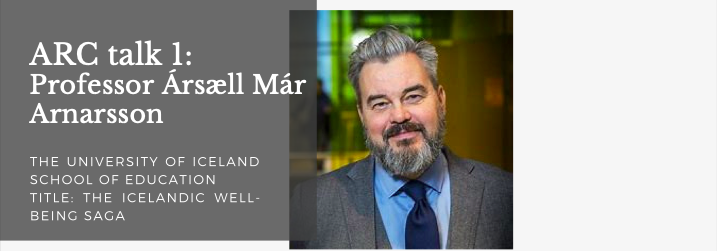
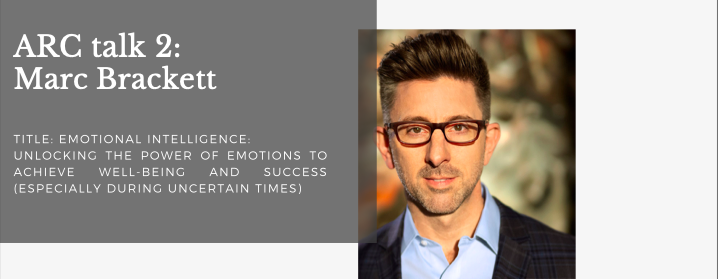
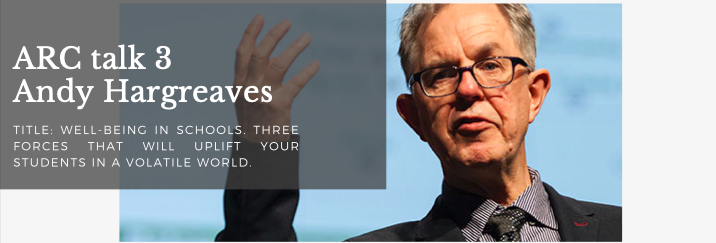
These key question launched A Focus on Well-being and Social Emotional Learning (SEL), the Atlantic Rim Collaboratory’s January ThoughtMeet (TM). ARC Talks were provided by Ársæll Már Arnarsson (Professor at the University of Iceland School of Education), Marc Brackett  (Director of the Yale Center for Emotional Intelligence) and ARC co-founder and President Andy Hargreaves. This post highlights the key ideas and issues that were discussed by the ARC TM participants, representatives from the seven ARC member systems and its global partners. A detailed description from the January meeting can be found here; additional videos and other resources can be found here. This post was produced by Mariana Domínguez González, ARC Research Assistant and Trista Hollweck, ARC Project Director

The Icelandic Well-being Saga

The Icelandic Well-Being Saga

“Children are engaged in their well-being and they are expressing their feelings. It is our responsibility to make that acceptable and to show them the way forward.”

In his ARC talk, Ársæll Már Arnarsson shared how Iceland was able to increase student well-being through policy and practice. Keeping in mind the important link between research and policy development, the Icelandic government drew from local, national and international studies to make changes in their legislation focused on child and adolescent well-being. Iceland´s Act of the Integration of Services in the Interest of Children´s Prosperity was written in June 2021 and was implemented in January of 2022. The Act is a gradual, coordinated law focused on the education and well-being of children from an early age. It proposes that each child have a support plan developed by a caseworker in coordination with the child’s family, and that this plan be revisited frequently. 

Emotional Intelligence: Unlocking the Power of Emotions to Achieve Well-being and Success (Especially During Uncertain Times)

A focus on Social Emotional Learning and Well-being

“[S]chools have too many rules, not enough feelings”

In his ARC talk, Marc Brackett began by asking ARC delegates about their own emotions and feelings. For Brackett, emotions are important to recognize and name because they have a direct impact on our attention, our memory and our learning; on our capacity to make decisions; on the quality of our relationships; on our physical and mental health; and on our performance and creativity. This ability to recognize and name emotions is part of emotional intelligence which he defines as a set of discrete yet interrelated skills that can be learned and developed regardless of age. He then introduced ARC delegates to RULER, a systemic approach to social emotional learning (SEL) that he uses with schools worldwide. RULER is an acronym for:

Recognizing emotions in self and others
Understanding causes and consequences of emotions
Labeling emotions accurately
Expressing emotions
Regulating emotions effectively

In describing RULER and its use, Brackett highlighted that it should be implemented first with teachers through professional learning processes before using it with students. Additionally, pedagogical practices and school-wide policies around RULER should always take into consideration the different existing levels of mindsets, skill-development, as well as the school and home emotional climates of students. 

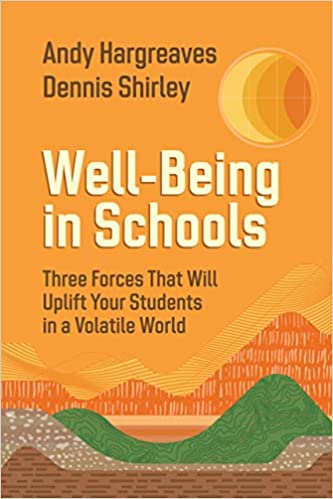
Well-being in Schools. Three Forces That Will Uplift Your Students in a Volatile World

A focus on Social Emotional Learning and Well-being

“One way to get well is to engage with the world, and to care about it and to feel that you are an actor and not only someone who is resilient or responsive or trying to cope at the same time.”

In the final ARC talk of the event, Andy Hargreaves presented the key ideas from his new book with colleague Dennis Shirley. He began by describing how recent interest in well-being draws from both the Global Education Reform Movement (GERM) and VUCA (Volatility, Uncertainty, Chaos, Ambiguity). The first of which he argues has led to a sense of too much control, while the second creates a feeling of being out of control. For Hargreaves, SEL and well-being are not opposites or in competition. Rather, SEL is an important part of the holistic well-being concept. He posited that SEL helps educators and students cope with the educational challenges they experience, but collective effort must also be directed at changing the system to increase well-being. He challenged ARC delegates to pay attention, not only to the interactive, the emotional and the social dimensions of well-being, but also to consider the societal, the physical and the spiritual. An important question for delegates to ask when engaging in policy development on this topic is “What is the role of well-being in society?”

What’s next?

Like previous ARC TMs, this event stimulated thinking and provoked further questions for participants. A more detailed capture of the discussion can be found in the summary document. The summary also includes a number of questions to spark future discussions for policy development, implementation, and practice, such as:

  • How can the research on well-being and SEL be made more accessible to policymakers, leaders and educators?
  • What are political challenges to the design and implementation of well-being models in education?
  • How can we meaningfully and effectively integrate well-being and SEL into schools at all levels? 
  • What resources and professional development will support teachers in this work and how do we provide it?
  • How can we engage students in taking an active role in their education to improve well-being and prosperity?
  • How can we provide space, time and access for staff and student well-being and SEL?

Key References and Resources

Arnarsson, Kristofersson, G. K., & Bjarnason, T. (2018). Adolescent alcohol and cannabis use in Iceland 1995–2015. Drug and Alcohol Review37(S1), S49–S57. https://doi.org/10.1111/dar.12587

Brackett, M. A., Bailey, C. S. Hoffmann, J. D. & Simmons, D. N. (2019). RULER: A Theory-Driven, Systemic Approach to Social, Emotional, and Academic Learning. Educational Psychologist54(3), 144-161. https://doi.org/10.1080/00461520.2019.1614447

Hargreaves, A. & Shirley, D. (2021). Well-Being in Schools. Three Forces That Will Uplift Your Students in a Volatile World. ASCD.

European School Survey on Alcohol and Other Drugs (ESPAD)

Health and Behavior of School-Aged Children (HBSC)

Yale Center for Emotional Intelligence

About the Atlantic Rim Collaboratory

The Atlantic Rim Collaboratory (ARC) is an international policy learning network that was established in 2016 to advance educational change based on eight guiding principles: equity, excellence, inclusion, wellbeing, democracy, sustainability, human rights, and professionally run systems. Headquartered at the University of Ottawa (Ontario, Canada) since 2019, ARC brings together senior public officials (i.e ministers and deputy ministers of education), professional association leaders (i.e. unions and inspectorates) and other key stakeholders from its seven education member systems (Iceland, Ireland, Nova Scotia, Saskatchewan, Scotland, Uruguay and Wales), global partners (International Confederation of Principals) and international experts and scholars to discuss, debate and exchange knowledge about educational policy issues and to formulate responses suited to their contexts. One of the founding ideas behind ARC is to tear down the walls between countries and regions, as well as between educational researchers and politicians, in order to pursue the most fundamental ideas of what it means to be educated in today’s world for the mutual benefit of all ARC-systems and future generations of students worldwide. Every year, ARC members meet at the annual Summit hosted by one of the member systems. However, since 2020, in addition to a virtual summit, ARC has also hosted bi-monthly virtual ARC ThoughtMeets (TMs) for its members. The TM outreach series was designed to stimulate and support a global educational movement for equitable, inclusive and sustainable educational solutions to COVID-19.

A view from Japan (part 2): Hiro Yokota on parenting, education and the new Digital Agency in Japan

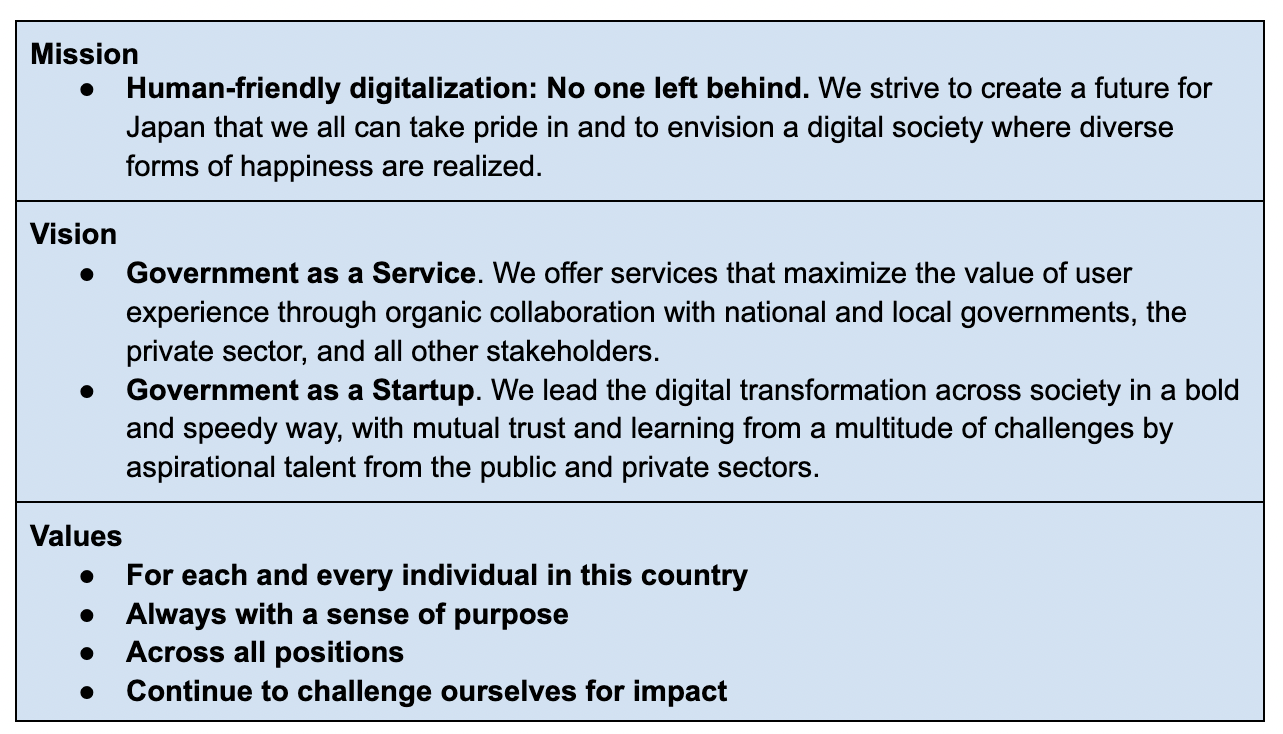
This week’s post features a follow-up interview with Hirokazu Yokota, discussing his experiences during the COVID-19 pandemic in Japan, as a parent, education policymaker and now government officer at Japan’s newly established Digital Agency. Yokota was a principal architect of two recent policies: the Basic Act on the Formation of a Digital Society, which set basic principles to transform Japan by cross-ministerial policy making and passed the Japanese Diet on May 2021; and the Priority Policy Program for Realizing Digital Society, which include policy measures for the government to implement and got cabinet approval in December 2021. Recently, he published an article on school leadership in Japan in the International Journal of Leadership in Education. The post shares his own views and does not necessarily represent official views of DA and the Japanese government.

IEN: What has been happening with you and your family this year? How does this compare to what you told us in your previous post at the beginning of the pandemic (A view from Japan: Hirokazu Yokota on school closures and the pandemic)?

Hirokazu Yokota: Too many changes to remember, I would say… the positive thing is that I and my family are still doing well and safe, which is the most important. My working style has changed a lot. I still work from home two to three days a week, which means I have more time to spare with my kids. Almost every meeting, including the ones with the Minister, happens online, which was almost inconceivable pre-pandemic to me. The society now has more tolerance for that flexible style, as it found paper-based and face-to-face working style infeasible in the presence of this lasting pandemic.

The other side? My six-year-old daughter suddenly said she wanted to wear a mask on top of another and cried (she always wears one when going outside). She, by watching TV news etc., was kind of afraid of getting Omicron. I couldn’t just say getting it isn’t a big deal. Kids absorb and think much more from what they see in the world than we imagine. As a parent, I have to balance two seemingly-conflicting demands – providing my kids with real-life, authentic opportunities to interact with a variety of people, and preventing the infection of Covid-19 at the same time. This is a very challenging act of parenting, and to be honest, I have not found any solid answer here.

“As a parent, I have to balance two seemingly-conflicting demands – providing my kids with real-life, authentic opportunities to interact with a variety of people, and preventing the infection of Covid-19 at the same time. This is a very challenging act of parenting”

IEN: It’s interesting to see that you’re now working at a new governmental agency. What is the Digital Agency and what does it have to do with this pandemic?

HY: The Covid-19 pandemic was a wake-up call for Japan’s digital transformation. Management of the health crises was hampered by outdated and cumbersome administrative systems. Additionally, in the past, each ministry, agency, and local government has been promoting digitalization separately, which resulted in 1,700 local governments with 1,700 systems: procured and managed separately with dispersed responsibility. The COVID-19 pandemic highlighted the ineffectiveness of this practice.

As a response, in September 2020, then Prime Minister SUGA Yoshihide made the digitalization of Japan one of his top priorities. Accordingly, the Digital Agency (DA) was established at an incredible speed and launched in September 2021. DA has strong powers of comprehensive coordination, such as the power to make recommendations to other ministries and agencies.

What is particularly interesting is that of the about 600 DA officers, a third (some 200) are coming from the private sector, which creates a mixed organizational culture of thorough coordination of stakeholder interests in the public sector and agile/flexible decision making in the private sector. New challenges every day, but a very inspiring working environment. Given that I’ve mainly worked within the education sector it really helps to broaden my perspective.

IEN: In the field of education specifically, you previously mentioned that the Japanese government planned to implement “one device per student” initiative. What has worked, and what has been problematic?

HY: The Ministry of Education, Culture, Sports, Science and Technology (MEXT) has started the GIGA (Global and Innovative Gateway for All) School Program to make certain equitable and individually optimized learning by providing one computer per student and high-speed Internet for schools, which originally aimed at one device per student by the end of FY 2023. In the face of the COVID-19 crisis, it was accelerated and strengthened, with the distribution of one device per student almost completed by July 2021. About 461 billion yen (some 4 billion US dollars) in total was allocated for that purpose, which obviously was a huge investment.

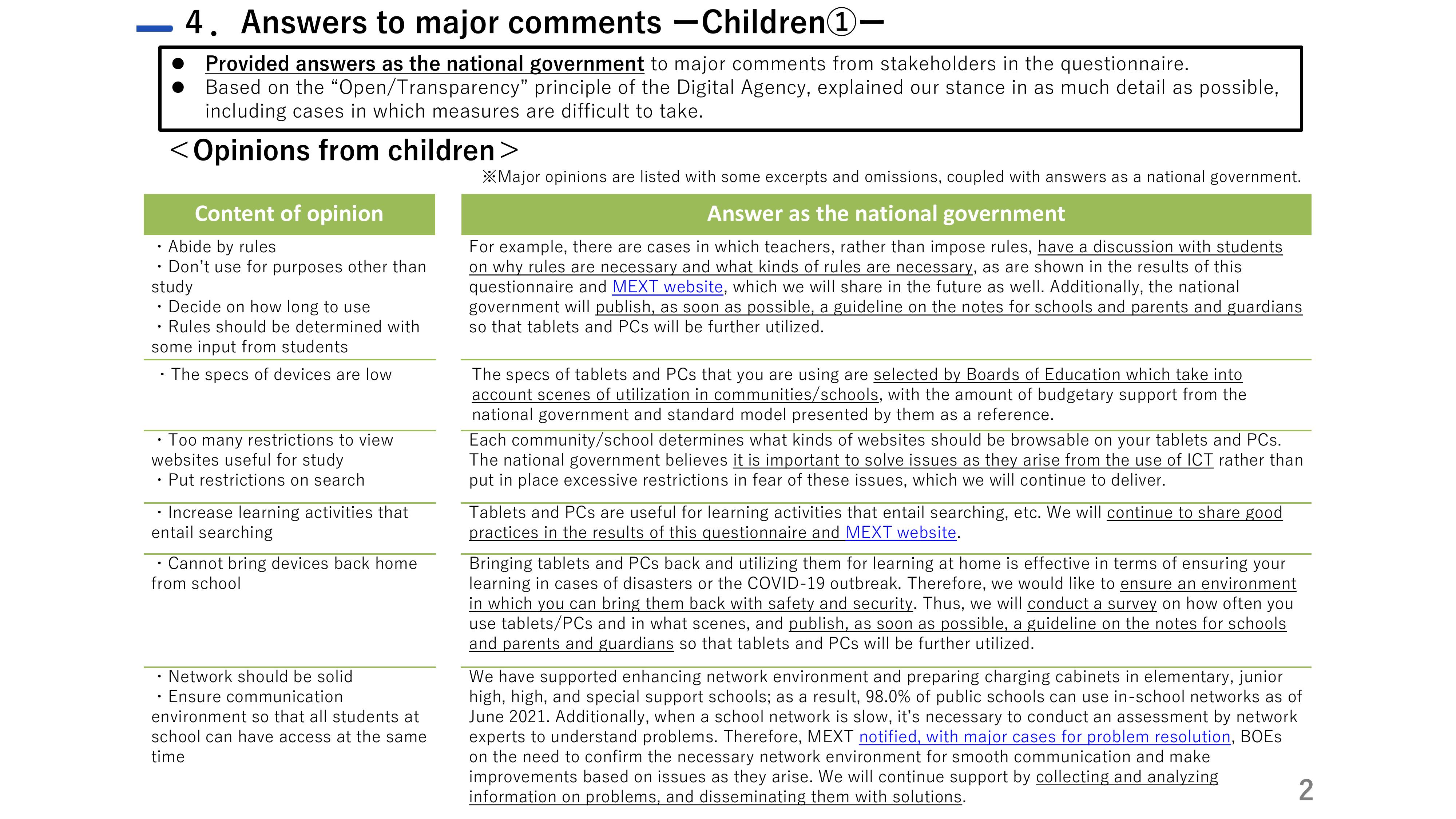
However, when I collected voices from 217,000 students and 42,000 educators through an online questionnaire on this GIGA School Initiative in July 2021, it turned out that there were many problematic issues on the ground – including slow networks, slow digitalization of school affairs, school staff that never got devices, equipment that was too old or insufficient for use inside and outside of the classroom as well as insufficient support by experts. In terms of policy implementation, just distributing a subsidy does not necessarily guarantee that ICT devices are actually used, and there are many steps to be taken before these are put into daily use like pencils and notebooks.

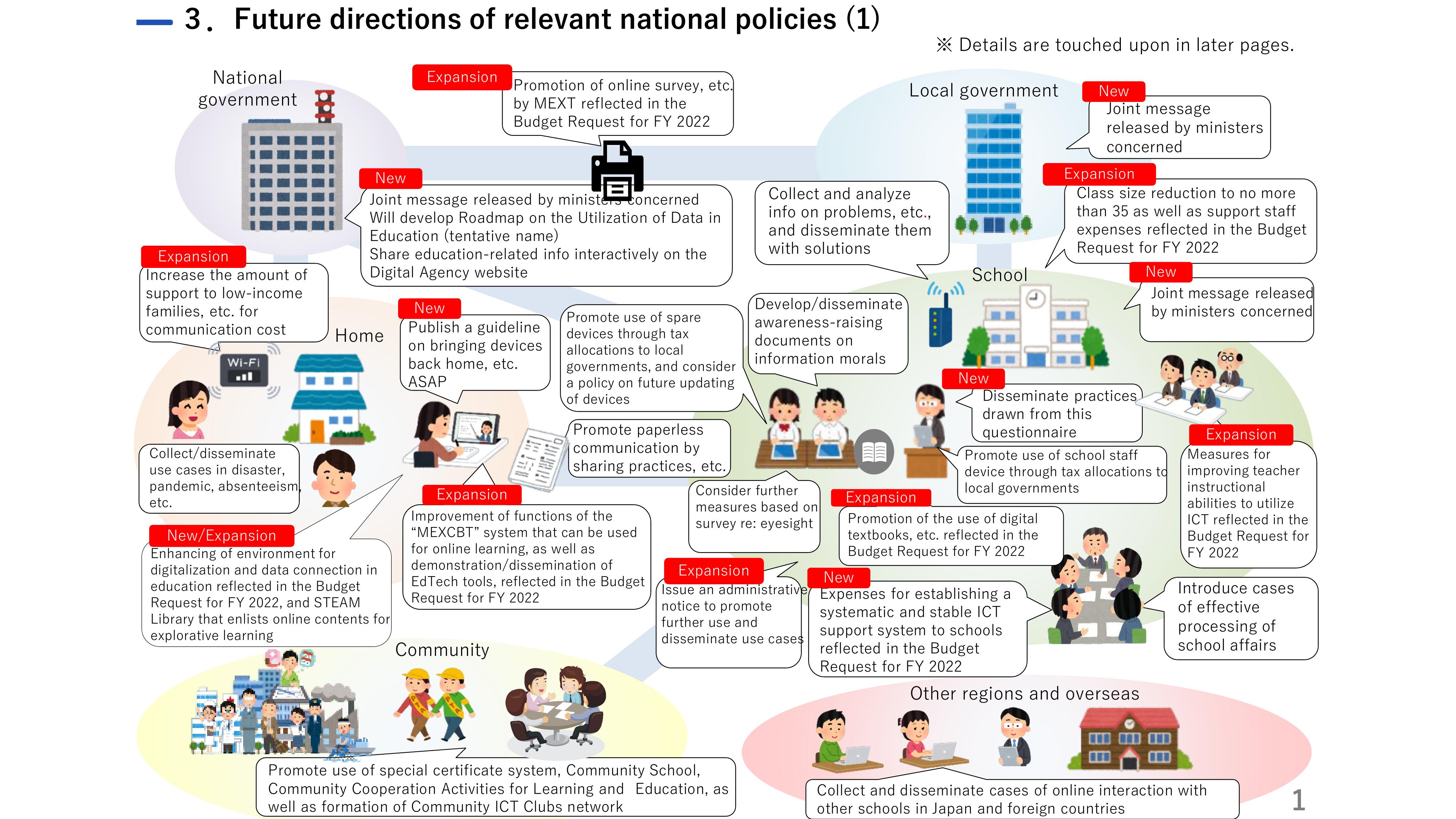
In order to fill in this gap between policy and practice, the Digital Agency, with the ministries concerned, released a joint message to students and educators, and presented their responses in the form of future directions of relevant policies. Some of them actually led to subsequent supplementary budget items approved in December 2021.

Additionally, we took the comments from students and educators very seriously, and based on the “Open/Transparency” principle of DA, we explained our stance in as much detail as possible, including cases in which measures are difficult to take. This, I believe, is very meaningful as a new trial of policy refinement based on voices from the ground, where digital plays a significant role in reaching out to people/users.

IEN: This initiative is still in progress, but what’s next?

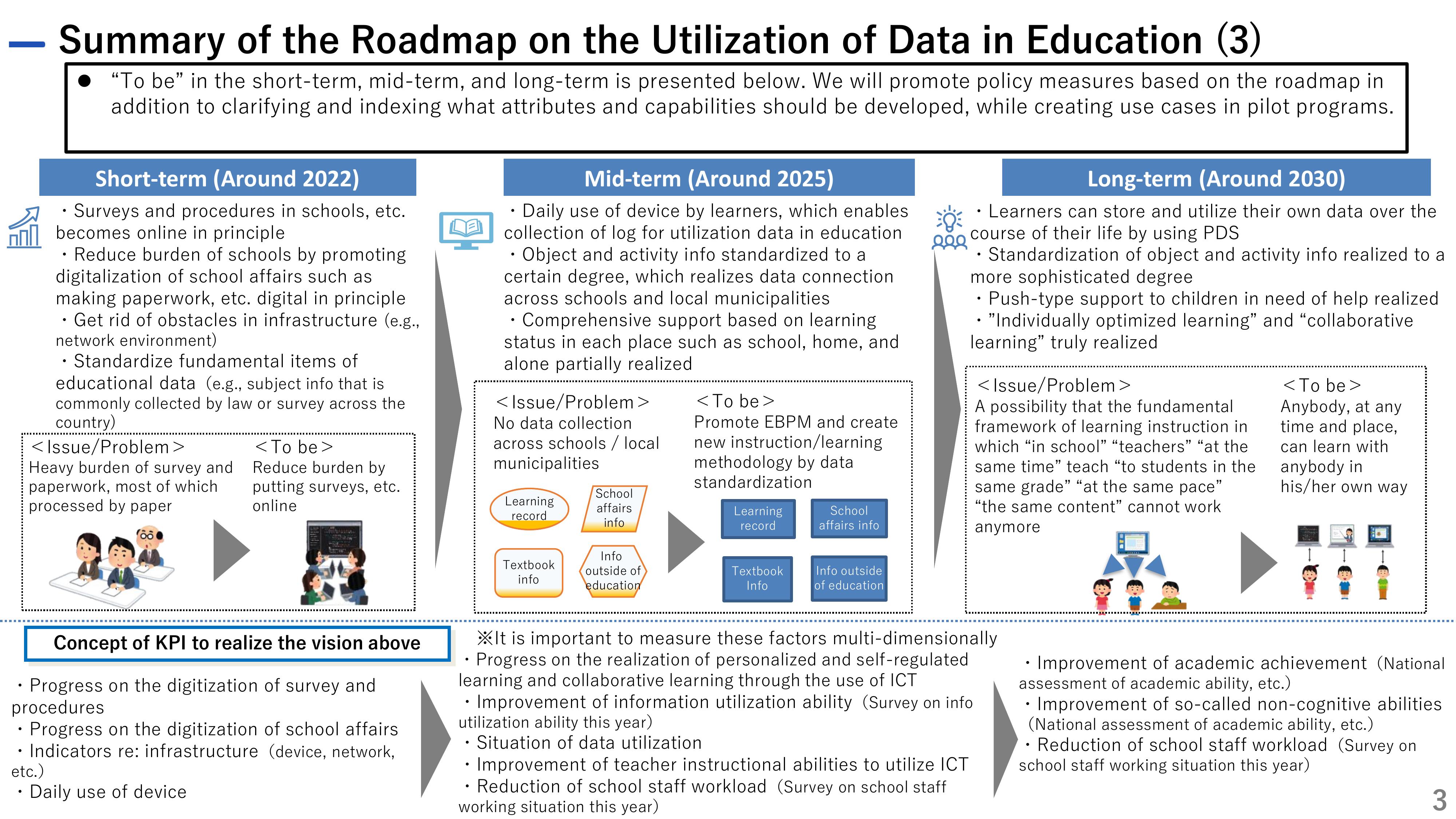
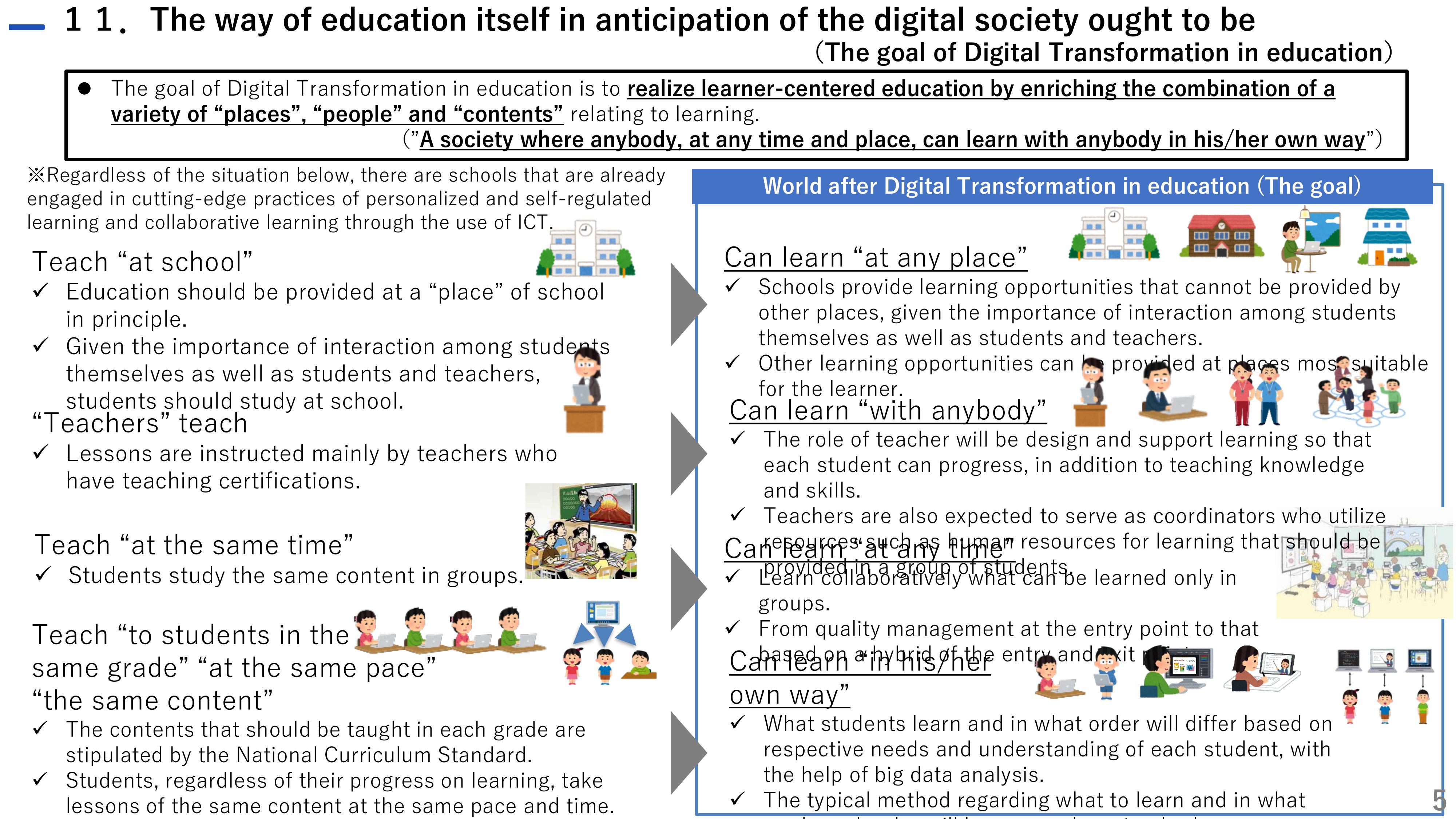
HY: Yes, when we think of three phases of digital transformation – (1) digitization, (2) digitalization, and (3) digital transformation, the current movement is mostly in phase (1) (digitization). However, the potential of digital technology goes far beyond taking paper and face-to-face processes and putting them online; it also lies in promoting student-centered learning as well as providing wraparound and push-type services to children by connecting a variety of data. Therefore, recently (in January 2022), DA and the ministries concerned published “Roadmap on the Utilization of Data in Education.” First, we set the mission of digitalization in education as “a society where anybody, at any time and place, can learn with anybody in his/her own way,” and established “three core goals” – enriching the (1) scope, (2) quality, and (3) combination of data – for realizing that mission. Issues and necessary measures, such as standardizing data in education, the way the creation of the platform in the field of education ought to be, determining rules/policies for the utilization of data in education, are clarified with a timeline.

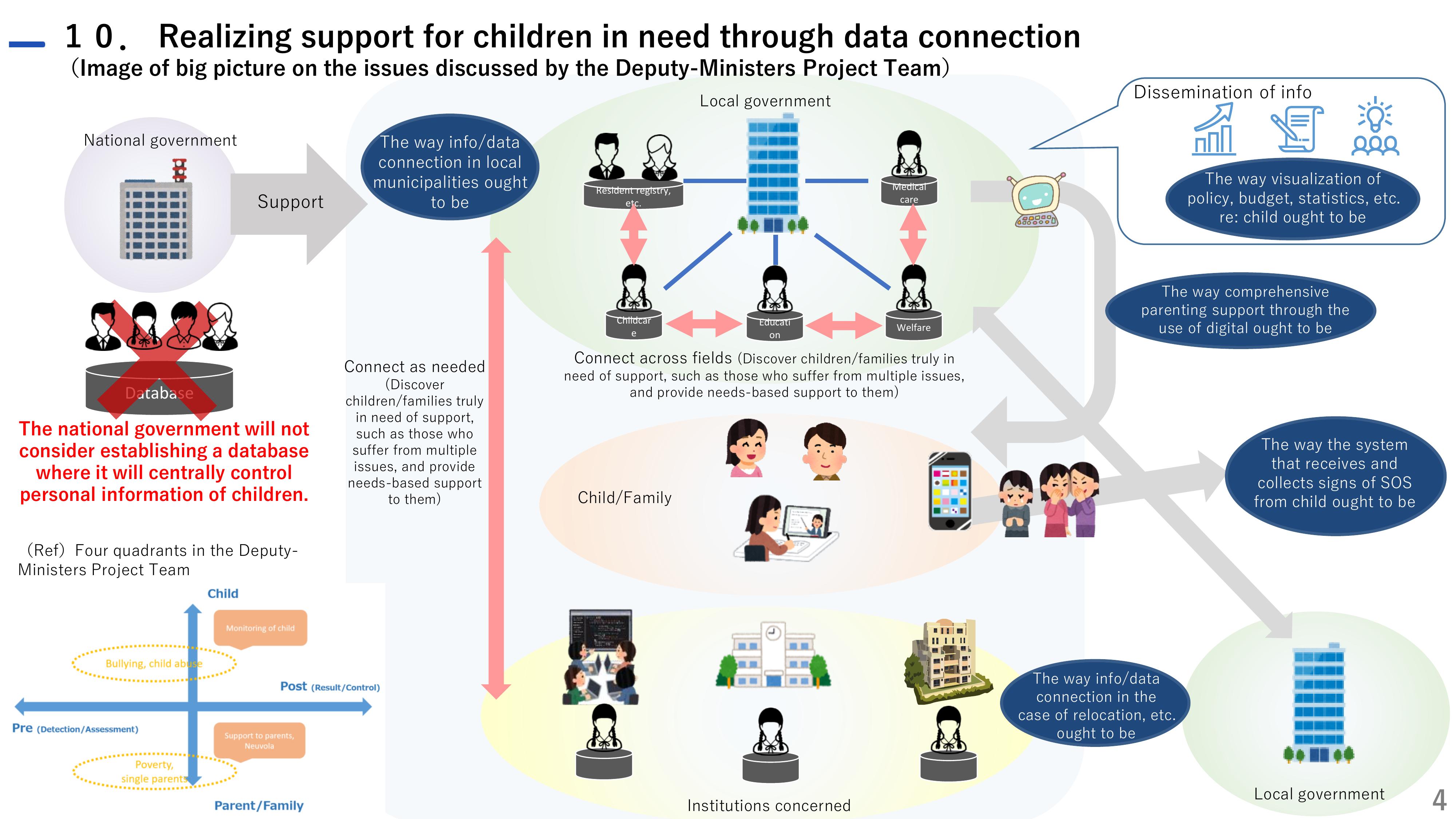
Although most of the policy measures are supposed to be taken by MEXT, DA recently started a pilot project for realizing support for children in need (e.g. poverty, child abuse) through data connection across departments and organizations. As for now, when it comes to data in such fields as education, childcare, child welfare, medical care, etc., they are handled at different departments within the local government. Additionally, there are a variety of institutions concerned such as child consultation centers and schools, each of which, based on their respective role, engage in support for children by utilizing the information that they have. Unfortunately, this sometimes results in each organization/department working in silos without having a clear understanding of which children/families need priority support. For example, the “Child Development Monitoring System” in Minoh City, Osaka Prefecture, classifies children through (1) economic situation, (2) child rearing ability, (3) academic achievement, and (4) non-cognitive abilities, etc.; they then utilize the results for support and monitoring through case meetings, etc.. Building on such practices, we will support local governments by establishing a system for connecting data in education, child welfare, health etc. as needed, utilizing that data to discover children truly in need (e.g. poverty, child abuse) and providing push-type support to them.

IEN: Knowing that fundamentally changing education is such hard work – just like “Tinkering Toward Utopia” – what do you imagine for education in the future?

HY: We have to admit the possibility that the fundamental framework of learning instruction in which “in school” “teachers” “at the same time” teach “to students in the same grade” “at the same pace” “the same content” cannot work anymore. This is not because teachers are incapable of doing their jobs. This is because there are so many different needs that children have – from absenteeism, special needs, Japanese-language learners, poverty, to so-called gifted.

With that in mind, we set the goal of digital transformation in education as realizing learner-centered education by enriching the combination of a variety of “places”, “people” and “contents” relating to learning (”A society where anybody, at any time and place, can learn with anybody in his/her own way”). For example, teachers are also expected to serve as coordinators who utilize resources such as human resources for learning that should be provided to a group of students (“Can learn ‘with anybody’”). Additionally, assessment will move from measurement of student learning at the entry point (how much students learn) to that based on a hybrid of the entry and exit points (what attributes and abilities they acquire) (“Can learn “at any time””). Furthermore, what students learn and in what order will differ based on respective needs and understanding of each student, which can be helped with big data analysis (“Can learn “in his/her own way””). This is easier said than done, but MEXT recently set up a new special council composed of stakeholders to discuss concrete policy measures to realize this vision. I’m hopeful that Japanese education will be able to shift from an equality-oriented, lecture-style system to the one that embraces diversity (individually optimized learning and collaborative learning) without undermining our focus on equity.

What’s Changing Post-COVID in Finland, New Zealand, and South Africa?

This week, IEN’s Correne Reyes takes a look at how education policies and initiatives have evolved post-COVID in two relatively “high-performing” education systems — Finland and New Zealand — and in a developing education system — South Africa.

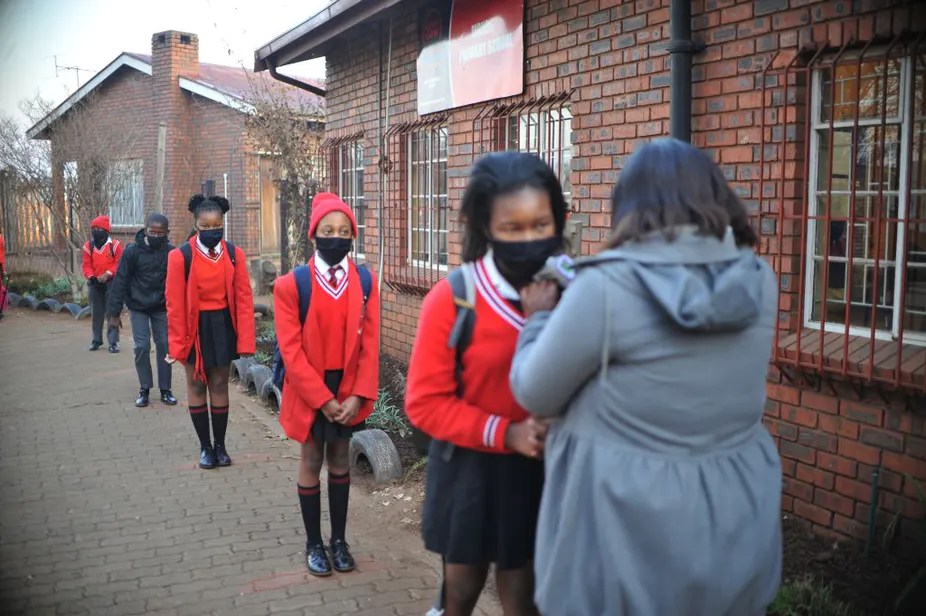
Around the world, COVID school closures led to enrollment drops and concerns about health and safety that education systems like South Africa continue to confront. Meanwhile, systems like Finland and New Zealand appear to have dealt with those initial issues and are now tackling challenges like the emotional toll resulting from the pandemic.

According to The Conversation, in South Africa “Although improving, the achievement outcomes are still low, fragile and susceptible to shocks. The COVID-19 pandemic has dealt the education system a major blow, especially for poor and vulnerable learners.” As one example, South Africa reported a 30,000 student enrollment deficit in Grades R and Grade 1 due to the lockdown. With extended school shutdowns in July 2020 and January 2021, 9 million students faced hunger and malnutrition since they rely on school meals for their daily nutrition. Furthermore, only 22% of households have a computer and 10% have an internet connection, limiting remote options. Inequitable internet access means that is primarily students from wealthier communities with better resourced schools who have been able to continue their learning during the school closures. Despite these challenges, the South African government announced a plan to reduce the education budget over the next three years with a cut of over 4% for this financial year, which is likely to lead to further inequity.

“Although improving, the achievement outcomes are still low, fragile and susceptible to shocks. The COVID-19 pandemic has dealth the education system a major blow, especially for poor and vulnerable learners.”

Although Finland and New Zealand continued to experience some school closures, they have been able to turn their focus in policymaking to the health and wellbeing of their students and to rebuilding their foreign student numbers.

In terms of health and emotional support, New Zealand announced an investment of $75.8 million in their newest education wellbeing package to tackle the mental health that have arisen due to COVID-19. For the first time, primary and secondary schools will have “greater access to guidance counselors and counseling support services.” Additionally, Finland’s recent government proposal requested that “both comprehensive and upper secondary schools must have at least one social worker per 670 pupils / students and one school psychologist per 780 pupils / students.” This ratio would ensure more equal access and quality of health services in different parts of Finland. Finland suggests this would “promote the extension of compulsory education, improve opportunities to tackle bullying and also help to fill learning and well-being gaps caused by the corona.”

“New Zealand announced an investment of $75.8 million in their newest education wellbeing package to tackle the mental health and wellbeing issues that have arisen due to COVID-19.”

In both New Zealand and Finland, pandemic-related concerns have also shifted to address the loss of international students. Before the pandemic, international education in New Zealand was the fifth largest export industry, amounting to about $5 billion dollars a year. However, with the pandemic, and a 62% drop in related income from the decline in international students, experts predict it may take 10 years for the industry to recover. Education New Zealand chair, Steve Maharey, recognized that New Zealand was too dependent on China and India for students and the industry needed to diversify. To address the same issue, the Finnish Ministry for Foreign Affairs has prepared the D visa, a bill that would allow third-country researchers, students and their family members the possibility to obtain a Finnish long-term visa, in hopes to promote education and work based migration.

Collaborative Community-Based Research, Leadership, and Counter-Movements: A Conversation with Ethan Chang

This month’s Lead the Change (LtC) interview features Ethan Chang’s discussion of his work on Collaborative Community-Based Research, social justice leadership, and counter-movementsChang is an assistant professor in the Division of Educational Leadership and Innovation at Arizona State University.

Lead the Change: The 2022 AERA theme is Cultivating Equitable Education Systems for the 21st Century and charges researchers and practitioners with dismantling oppressive education systems and replacing them with anti-racist, equity, and justice-oriented systems.

To achieve these goals, researchers must engage in new methodologies, cross-disciplinary thinking, global perspectives, and community partnerships to respond to the challenges of the 21st century including the COVID-19 Pandemic and systemic racism among other persistent inequities.

Given the dire need for all of us to do more to dismantle oppressive systems and reimagine new ways of
thinking and doing in our own institutions and education more broadly, what specific responsibility do educational change scholars have in this space? What steps are you taking to heed this call?

Ethan Chang: This is a big and important question. I would agree that there is consensus that we must all do more. But before asking what more we might do, I think there is a prior question: What have we as education scholars been doing? And to draw on Tuck (2009), have these various scholarly doings actually worked? In posing Tuck’s questions to myself and thinking about the urgent, but daunting work of dismantling oppressive systems, I choose to concentrate my work in three areas: (1) Collaborative Community Based Research (CCBR); (2) learning and social justice leadership development; and (3) critical studies of countermovements.

Collaborative Community-Based Research.

Collaborative, Community-Based Research (CCBR) is an approach to inquiry thatstrives to produce knowledge that emanates from, and isaccountable to, those historically excluded from knowledge production processes (Cammarota & Fine, 2008; Glass et al., 2018; King, 2016; Kirshner, 2015). It
refuses prevailing theories of change that insist more and better knowledge automatically leads toward justice (Tuck, 2009). As a process and a product, CCBR facilitates new epistemic relations, identities, practices, and concepts to prefigure the kinds of futures we hope to bring into the world (Curnow et al., 2019).

One way that Leiʻala Okuda and I have taken up CCBR is by engaging in the political education project of “recuperación crítica” (critical recovery) or “harnessing historical interpretation to the formulation of organizing strategies” (Rappaport, 2020, p. 94). We had the privilege of sharing in the insights of elders and former youth activists whose community-based struggles sparked anti-eviction and ʻāina-based
movements throughout Hawaiʻi and the Pacific. In partnership with elder-activists-researchers, we have sought to understand how and why they became lifelong activists (c.f., Conner, 2014) and focused on the organizational environments in which they were inducted into movement work as one way to access this question. We have undertaken this work because we believe it will take intergenerational work to undo centuries of oppression. As Miʻkmaq scholars poignantly remind, social transformation requires “thinking seven generations ahead” (Julian, 2016). Our CCBR activities—hosting virtual events, crafting academic and popular articles, authoring new identities for ourselves and each other (Catania et al., 2021)—represent various ways that we have attempted to enact this long-term theory of change, particularly amid a global pandemic that has strained intergenerational ties.

“It will take intergenerational work to undo centuries of oppression.”

Social Justice Leadership.

Another way I understand how change happens is by cultivating broad-based, collective leadership. Many scholars have productively challenged traditional definitions of school leadership underpinned by military and corporate models of organizational administration (Ishimaru, 2019; McGhee & Anderson, 2019). My work aims to extend scholarship that pulls the field away from assumptions about leadership as an individual act of heroism and toward models of leadership as a praxis of organizing (Ishimaru, 2013); that is, an exercise of analysis and action that co-designs bold and transformative visions of community self-determination and emphasizes building the leadership capacities of others (Anderson, 2009; Anderson & Chang, 2018; Awaachia’ookaate’ & Chang, 2020; Lac & Mansfield, 2018). We have been particularly inspired by Horsford (2012) and her scholarship that amplifies the lessons and insights of Black women leaders and educators like Ella Baker and Septima Clark. We feel there is so much to gain and so little to lose by turning to fields beyond education such as Social Movement, Black, Indigenous, Chicanx, and Asian American Studies. These fields offer generative locations for thinking about how change happens and how we might dedicate ourselves to meaningful projects of education
and social transformation in our lifetimes.

Countermovements.

In my scholarship, I have also focused my energies on countermovements, or movements that aim to
undermine gains made by progressive social movements (Meyer & Staggenborg, 1996). Over the past several years, we have witnessed Blue Lives Matter rallies surface in response to the Black Lives Matter movement. We have also observed symbolic performances like the 1776 Commission emerge in response to expansive curricula developments like the 1619 Project (Hannah-Jones, 2019). These possessive investments in status quo racial hierarchies are not new (Harris, 1993; Lipsitz, 2006). But my
work has sought to illumine how these patterns of retrenchment play out on the shifting terrain of education politics today.

As one example, I studied an oppositional movement to Ethnic Studies, which is an interdisciplinary curricula and pedagogy that centers the insights of Black, Indigenous, and minoritized peoples (Cuauhtin et al., 2019). I spent extended time with white parents in a California suburb and attempted to understand how they positioned Ethnic Studies as “anti-American” and “anti-White,” forged a strategic coalition with disability advocates, and digitally sutured or bound their local countermovement to broader right-wing populist currents (Chang, in press). Telling the story of one local countermovement offers potential ways of comprehending, anticipating, and, as I ultimately concluded, weathering the next countermovement.

Each of these strands of inquiry cohere around a theory of change rooted in the lessons and insights of social movements. These projects have afforded productive tools and concepts to resist a swift desire to “do more,” and instead, to move with a sustainable (and sustaining) sense of urgency to build more humanizing and liberatory educational spaces.

LtC: What are some of the major lessons the field of Educational Change might learn from your work and experience on critical analyses of education technology?

EC: My studies on EdTech raise similar questions about how we think change happens (Tuck, 2009). If there is one lesson I hope this work raises, it is that our imagined futures of a “twenty-first century education” demand attention to past and present realities of racism. My work in this space investigated how the institutional field of EdTech unevenly rewarded those actors and organizations who distanced themselves from acknowledging systemic oppression (Chang, 2019). In a familiar tale of American innovation, organizations who received significant funding and media attention were those who championed reform narratives about “fixing” the individual child in preparation for tomorrow’s society
(Chang, 2020; see also, Katz, 2020; Sims, 2017). By contrast, those who utilized digital tools to cultivate youth critical consciousness—to examine the historical formation of present inequities in an effort to
dismantle them—were underpaid, undervalued, and burdened by the day-to-day demands of organizational survival.

Like some of my current work on countermovements, this thread of inquiry into the EdTech landscape has proven profoundly ahistorical and deeply sobering. Most digital innovations rarely paid attention to “educational debts” that we know impact educational outcomes (e.g., adequate housing, nutritious foods, livable wages, to name a few; Ladson-Billings, 2006). Still, what keeps me returning to questions of digital technologies are pockets of hope and resistance such as cases in which youth appropriate digital tools for their own ends such as utilizing Google mapping technologies or social media platforms to build organizing power in their communities (Akom et al., 2016; Emejulu & McGregor, 2017). Our CCBR work aims to extend these insights. We seek to use digital tools to reconnect with prior generations of activists, leverage cloud-based platforms to cultivate place-based leadership, and co-create education and social futures rooted in the lessons of past struggles.

“Let’s move with a sustainable (and sustaining) sense of urgency to build more humanizing and liberatory educational spaces.”

LtC: In some of your recent work, you discuss the barriers to developing justice-oriented leadership development programs (i.e., moving beyond individual texts or courses to renovate entire learning ecologies). Your exploration of Highlander offers a number of lessons for leadership preparation programs. What would you consider as some of the most important lessons?

EC: The Highlander Research and Education Center (founded in 1932 as the Highlander Folk School) is an invitational, residential adult learning center for labor, educational, civil rights, environmental, and grassroots community leaders. It dramatically shaped the trajectory of U.S. history and culture, and for over the past century, survived and thrived amid ongoing state and vigilante attacks. Our work on Highlander surfaced in response to a white supremacist arson attack on the center in March of 2019 (Chang & Glass, 2021). We understood “recuperación crítica” (critical recovery) as one way to counter white supremacists’ literal attempts to erase Highlander. But in addition to studying Highlander on its own terms, we approached the school as a potentially illustrative case to “re-envision the ‘how’ and ‘who’ of leadership preparation” (Bertrand & Rodela, 2018, p. 28).

One of the lessons we feel Highlander offers is the power of bold, transformative visions, or what Kelley (2002) might call “freedom dreams.” Co-founder of Highlander, Myles Horton, put it this way: “You can’t develop any valuable leadership if you don’t teach people that they can deal with big problems” (Horton, 1990, p. 147). For Highlander, these big problems included Jim Crow segregation, poverty wages, environmental pollution (among others). This lesson is particularly urgent given the ways educational administration programs can, at times, focus on the small, technical, and managerial aspects of leadership. One of my strongest students recently graduated from our program and decided not to become a principal. She felt the state department of education kept principals “busy with mandates” and sought alternative organizational contexts to enact the kinds of leadership she felt in her naʻau (her gut; see Meyer, 1998). I offer these observations not to diminish the incredible and transformative work of school leaders, but to point the arrow back at my own teaching and scholarship and ask: How am I preparing aspiring education leaders to engage with “big problems”? In what ways am I working to transform the organizational contexts of schooling that so often discourage promising individuals from becoming formal school leaders? For me, Highlander provided a way to clarify the costs we pay, and the valuable people we lose, when we do not cultivate the conditions for aspiring education leaders to deal with big problems.

But Highlander also offers insight into how organizations might adapt to the ways big problems shift over time. Black woman activist, educator, and singer, Bernice Johnson Reagon, observed that Highlander possessed a remarkable ability to “move through time” (Phenix & Selver, 2009). Insights from unfolding social movements—for race, gender, sex, environmental, immigrant, and Indigenous rights (to name a few)—directly informed the organizational roles and routines at Highlander. By actively recruiting individuals that community members identified as leaders, Highlander invited students to infuse organizational structures with their values (Selznick, 1948). In this way, Highlander offers a concrete example of a leadership learning ecology rooted in and responsive to progressive social movements.

LtC: Educational Change expects those engaged in and with schools, schooling, and school systems to spearhead deep and often difficult transformation. How might those in the field of Educational Change best support these individuals and groups through these processes?

EC: Like the first question, this question raises two prior concerns for me: first, regarding schooling as a privileged site of inquiry; and second, concerning how researchers might meaningfully support educators, activists, and organizers in ways that trouble an historical paternalism in our field.

“Highlander invited students to infuse organizational structures with their values.”

In the first instance, we know that schooling is only one way to organize teaching and learning (Varenne & McDermott, 1999). Nearly thirty years ago, Tyack and Tobin (1994) conceptualized the “grammar” of schooling to name the taken-for-granted school practices such as the single-subject, age-segregated classroom (p. 454). Like the grammar of speech that organizes meaning in language, the grammar of schooling organizes the everyday practices of teaching and learning in schools (Beckham, 2019; Mehta & Datnow, 2020). When we think of “deep and often difficult transformation” then, it involves changing this grammar. It entails rewriting inherited cultural scripts that so often reduce radical education reform ideas into modest additions to the everyday practice of schooling.

In contrast to studies that operate within the grammar of schooling, rich and exciting education scholarship has focused on learning in social movement (Curnow et al., 2019; Jurow et al., 2014; Shield et al., 2021) and community-based spaces (Baldridge, 2019; Terriquez & Serrano, 2018). Of course, these spaces are not insulated from oppressive roles or routines (Baldridge, 2020; Clay & Turner, 2021). But these studies allow us to consider— or perhaps more accurately, to recover— alternative grammars of teaching and learning such as learning spaces in which classrooms become intergenerational learning circles, teachers identify as relatives, or worksheets are replaced by visits with community elders (Kahakalau, 2020; Shield et al., 2021). These educational spaces represent promising local nodes for building and sustaining a national movement for education justice (Warren, 2018); one capable of realizing more than symbolic additions to the grammar of schooling (Rincón-Gallardo, 2019).

“Leadership as accompaniment stands in solidarity with youth and their struggles for a more dignified and just world.”

This question also raises important tensions concerning the meanings of “support” and the modes of association between “researchers” and the “researched” and between education leaders and the families and young people they aim to serve. Rebeca Gamez and I have been thinking through the idea of leadership as accompaniment as one way to specify social justice leadership in relation to youth activists. Accompaniment is a praxis drawn from social movement and abolitionist studies (Mei-Singh, 2021; Tomlinson & Lipsitz, 2019; Watkins, 2019). Like musical accompaniment, “It starts with careful listening, empathy, and identification” and “involves augmenting, accenting, and countering one musical voice with others” (Tomlinson & Lipsitz, 2019, p. 27). Educational leadership as accompaniment foregrounds an ethic of listening, attends to dominant forms of exclusion, and stands in solidarity with youth and their struggles for a more dignified and just world (Chang & Gamez, 2022). Awaachia’ookaate’ and I have also been interested in notions of accompaniment and aim to think through the challenges and risks inherent in articulating accompaniment toward decolonial ends (Awaachia’ookaate’ & Chang, 2020; c.f., Mackey et al., 2020). Across our projects, we aim to hold ourselves accountable for any recommendations we might pose to education leaders. In the words of Lugg and Shoho (2006): “To advocate for social justice, while being risk-adverse in practice, is the worst sort of professional hypocrisy (p. 205). We approach accompaniment as a generative research praxis that moves us to foreground deep listening and stand in solidarity with those whose lives and expertise have been historically disregarded.

LtC: Where do you perceive the field of Educational Change is going? What excites you about Educational Change now and in the future?

I prefer not to speculate on where the field of Educational Change is going but can comment on what excites me and where I hope the field might be heading. One hope is that CCBR will gain increasing legitimacy but in ways that resist shallow inclusion into academia. Scholarship that aims to produce knowledge that is answerable to those with most at stake, that values humanizing processes in addition to products, that is committed to a radical reflexivity is needed now more than ever. Engaged scholars like Sheeva Sabati, Emily Borg, Chrissy Hernandez, Saugher Nojan, Farima Pour-Khorshid, George Lipsitz, Diane Fujino, and Ron Glass are doing impactful work in this area. These scholars understand CCBR as a valuable methodology for producing rigorous and relevant scholarship and insist on CCBR’s foundational political commitments to intervene in the cultural and material contexts of injustice.

Another direction that I hope to see more of in Educational Change scholarship are studies that take seriously the lessons of past and unfolding social movements. Skeptics might comprehend this direction of inquiry as impractical or even impossible amid a global pandemic that has exhausted our school leaders and educators. But it is precisely this exhaustion that speaks to a need for something other than individual models of heroic leadership. In their analysis of the common activist statement, “I’m exhausted,” Emejulu and Bassel (2020) examine the social structures that demand exhaustion and exact a toll on the minds and bodies of women of color (p. 402). One social structure pertains to a patterned refusal to take women of color’sinsights seriously. Activists are exhausted because we keep rehearsing old missteps and mistakes. We continue to insist that we can build futures premised on the oppression of others or remain fearful of our differences instead of leveraging them as sources of collective strength (c.f., Hernandez et al., in press; Surviving Society, 2021). Education research that engages past and present movements can help us reach beyond this exhausting normal. I hope to continue to be a part of conversations that animate these important insights and build toward more humanizing and liberatory educational spaces.

The LtC series is produced by the Educational Change Special Interest Group of the American Educational Research AssociationJennie Weiner, Chair; Olga O. Fellus, Program Chair; Corinne Brion, Secretary/Treasurer; Alexandra Lamb, Series Editor; Cynthia Wise, Social Media Coordinator. A pdf of the fully formatted interview is available on the LtC website.

References
Akom, A., Shah, A., Nakai, A., & Cruz, T. (2016). Youth Participatory Action Research (YPAR) 2.0: How technological innovation and digital organizing sparked a food revolution in East Oakland. International Journal of Qualitative Studies in Education, 29(10), 1287-1307. https://doi.org/10.1080/09518398.2016.1201609

Anderson, G. L. (2009). Advocacy leadership: Toward a post-reform agenda in education. Routledge.

Anderson, G. L., & Chang, E. (2018). Competing narratives of leadership in schools: The discursive turn in organizational theory. In C. James, S. D. Kruse, M. Connolly, and J. H. Eddy Spicer (Eds.),
The SAGE International Handbook on School Organization (pp. 84-102). Sage.

Awaachia’ookaate’ & Chang, E. (2020). Safe zones, dangerous leadership: Indigenous leadership in settler- colonial school contexts. Journal of School Leadership, 30(6), 519-540. https://doi.org/10.1177/1052684620951723

Baldridge, B. (2019). Reclaiming community: Race and the uncertain future of youth work. Stanford
University Press.

Baldridge, B. J. (2020). The youthwork paradox: A case for studying the complexity of community- based youth work in education research. Educational Researcher, 49(8), 618-625. https://doi.org/10.3102/0013189X20937300

Beckham, K. (2019). The real-alternative school paradox: A California continuation high school’s struggle to be something different in a universe of real schools (Doctoral dissertation, Stanford University). ProQuest Dissertations Publishing.

Bertrand, M., & Rodela, K. C. (2018). A framework for rethinking educational leadership in the margins: Implications for social justice leadership preparation. Journal of Research on Leadership Education, 13(1), 10-37. https://doi.org/10.1177/1942775117739414.

Cammarota, J., & Fine, M. (2008). Revolutionizing education: Youth participatory action research in motion. Routledge.

Catania, R., Chang, E., Gwen, K., Kubota, G., Narikawa, L., Okuda, L. … Yamashiro, A. (2021). Get busy! Kūpuna activists’ insights for social movement organizing today.

Chang, E. (2019). A politics of redaction and racial justice in digital education reform. Harvard Educational Review, 89(2), 289-313. https://doi.org/10.17763/1943-5045-89.2.289

Chang, E. (2020). Digital meritocracy: Intermediary organizations and the construction of policy knowledge. Educational Policy, 34(5), 760-784. https://doi.org/10.1177/0895904818802116

Chang, E. (In press). Curricular countermovements: How white parents mounted a popular challenge to Ethnic Studies. Harvard Educational Review.

Chang, E., & Glass, R. D. (2021). Toward a just leadership learning ecology: A CHAT-IT analysis of the Highlander Idea. Educational Administration Quarterly. OnlineFirst. https://doi.org/10.1177/0013161X211054835

Chang, E., Gamez, R. (2022). Educational leadership as accompaniment: From managing to cultivating youth activism. [Manuscript submitted for publication].

Clay, K. L., & Turner III, D. C. (2021). “Maybe you should try it this way instead”: Youth activism amid managerialist subterfuge. American Educational Research Journal, 58(2), 386-419. https://doi.org/10.3102/0002831221993476

Conner, J. (2014). Lessons that last: Former youth organizers’ reflections on what and how they learned. Journal of the Learning Sciences, 23(3), 447-484. https://doi.org/10.1080/10508406.2014.928213

Cuauhtin, T. R., Zavala, M., Sleeter, C., Au, W. (2019). Rethinking Ethnic Studies. Rethinking Schools, Ltd.

Curnow, J., Davis, A., & Asher, L. (2019). Politicization in process: Developing political concepts, practices, epistemologies, and identities through activist engagement. American Educational Research Journal, 56(3), 716-752. https://doi.org/10.3102/0002831218804496

Emejulu, A. & McGregor, C. (2017). Towards a radical digital citizenship in digital education. Critical Studies in Education, 60(1), 1-17. https://doi.org/10.1080/17508487.2016.1234494

Emejulu, A., & Bassel, L. (2020). The politics of exhaustion. City, 24(1-2), 400-406. https://doi.org/10.1080/13604813.2020.1739439

Glass, R. D., Morton, J. M., King, J. E., Krueger-Henney, P., Moses, M. S., Sabati, S., & Richardson, T. (2018). The ethical stakes of collaborative community-based social science research. Urban Education, 53(4), 503-531. https://doi.org/10.1177/0042085918762522

Hannah-Jones, N. (2019, August 14). The 1619 Project. The New York Times. https://www.nytimes.com/interactive/2019/08/14/magazine/1619-america-slavery.html,

Harris, C. I. (1993). Whiteness as property. Harvard Law Review, 106(8), 1707-1791. https://doi.org/10.2307/1341787

Hernandez, C., Sabati, S., Chang, E. (In press). Towards pedagogical justice: Teaching worlds that we can collectively build. Education Theory.

Horsford, S. D. (2012). This bridge called my leadership: An essay on Black women as bridge leaders in education. International Journal of Qualitative Studies in Education, 25(1), 11-22. https://doi.org/10.1080/09518398.2011.647726

Horton, M. (1990). The long haul: An autobiography. Doubleday press.

Ishimaru, A. M. (2019). Just schools: Building equitable collaborations with families and communities. Teachers College Press.

Ishimaru, A. (2013). From heroes to organizers: Principals and education organizing in urban school reform. Educational Administration Quarterly, 49(1), 3-51. https://doi.org/10.1177/0013161X12448250

Julian, A. R. (2016). Thinking seven generations ahead: Mi’kmaq language resurgence in the face of settler colonialism. (Doctoral dissertation, University of New Brunswick).

Jurow, A. S., Kirshner, B., Torralba, J. A., Taraboulsi, S. E., Teeters, L., Buidalli, B… Dutilly, E. (2014). Theorizing learning in the context of social movements. International Society of the Learning Sciences.

Kahakalau, K. (2020). Island in-sight! In P. Greier & T. Gouvêa (Eds.), Edushifts: The future of education is now (pp. 169-190). http://www.socialinnovationacademy.org/wpcontent/uploads/2017/11/EduShifts_Eng_virtual.pdf

Katz, Y. (2020). Artificial whiteness: Politics and ideology in Artificial Intelligence. Columbia University Press.

Kelley, R. D. (2002). Freedom dreams: The Black radical imagination. Beacon Press.

King, J. E. (2016). We may well become accomplices: To rear a generation of spectators is not to educate at all. Educational Researcher, 45(2), 159-172. https://doi.org/10.3102/0013189X16639046

Kirshner, B. (2015). Youth activism in an era of education inequality. New York University Press.

Lac, V. T., & Mansfield, K. C. (2018). What do students have to do with educational leadership? Making a case for centering student voice. Journal of Research on Leadership Education, 13(1), 38-58.
https://doi.org/10.1177/1942775117743748

Ladson-Billings, G. (2006). From the achievement gap to the education debt: Understanding achievement in US schools. Educational Researcher, 35(7), 3-12. https://doi.org/10.3102/0013189X035007003

Lipsitz, G. (2006). The possessive investment in whiteness: How white people profit from identity politics. Temple University Press.

Lugg, C. A. & Shoho, A. R. (2006). Dare public school administrators build a new social order?: Social justice and the possibly perilous politics of educational leadership. Journal of Educational Administration, 44(3), 196- 208. https://doi.org/10.1108/09578230610664805

Mackey, H. J., Faircloth, S., & Cummins, J. D. (2020). Honoring culturally sustaining and affirming educational/school leadership practices for Indigenous children and youth. Journal of School Leadership, 30(6), 491-492. https://doi.org/10.1177/1052684620951736

McGhee, C. & Anderson, G. L. (2019). Gentrification, market regimes, and the new entrepreneurial principal: Enacting integration or displacement? Leadership and Policy in Schools, 18(2), 180-194.
https://doi.org/10.1080/15700763.2019.1611871

Mehta, J., & Datnow, A. (2020). Changing the grammar of schooling: An appraisal and a research agenda. American Journal of Education, 126(4), 491-498. https://doi.org/10.1086/709960

Mei-Singh, L. (2021). Accompaniment through carceral geographies: Abolitionist research partnerships with Indigenous communities. Antipode, 53(1), 74-94. https://doi.org/10.1111/anti.12589

Meyer, D. S., & Staggenborg, S. (1996). Movements, countermovements, and the structure of political
opportunity. American Journal of Sociology, 101(6), 1628-1660. https://doi.org/10.1086/230869

Meyer, M. A. (1998). Native Hawaiian epistemology: Sites of empowerment and resistance. Equity &
Excellence, 31(1), 22-28. https://doi.org/10.1080/1066568980310104

Phenix, L. M., & Selver, V. (2009). You got to move: Stories of change in the South. Milestone Film & Video.

Rappaport, J. (2020). Cowards don’t make history: Orlando Fals Borda and the origins of Participatory Action Research. Duke University Press.

Rincón-Gallardo, S. (2019). Liberating learning: Educational change as social movement.

Routledge. Shield, A. E., Paris, D., Paris, R., & San Pedro, T. (Eds.). (2020). Education in movement spaces: Standing Rock to Chicago Freedom Square.

Routledge. Selznick, P. (1948). Foundations of the theory of organization. American Sociological
Review, 13(1), 25-35. https://doi.org/10.2307/2086752

Sims, C. (2017). Disruptive fixation: School reform and the pitfalls of techno-idealism. Princeton University Press.

Surviving Society. (2021). The surviving society alternative to woman’s hour: Akwugo Emejulu. https://www.patreon.com/SurvivingSociety

Terriquez, V., & Serrano, U. (2018). A beloved community: Promoting the healing, well-being, and leadership capacities of boys and young Men of Color. USC Program for Environmental and Regional Equity.

Tomlinson, B., & Lipsitz, G. (2019). Insubordinate spaces: Improvisation and accompaniment for social justice. Temple University Press.

Tuck, E. (2009). Suspending damage: A letter to communities. Harvard Educational Review,
79(3), 409–427. https://doi.org/10.17763/haer.79.3.n0016675661t3n15

Tyack, D., & Tobin, W. (1994). The “grammar” of schooling: Why has it been so hard to change? American Educational Research Journal, 31(3), 453–479. https://doi.org/10.3102/00028312031003453

Varenne, H., & McDermott, R. (1999). Successful failure: The school America builds. Westview Press.

Warren, M. R. (2018). Lift us up, don’t push us out! Voices from the front lines of the educational justice movement. Beacon Press.

Watkins, M. (2019). Mutual accompaniment and the creation of the commons. Yale University Press.
“We are just broken”: The fate of education for girls in Afghanistan after the Taliban takeover

This week, nearly 6 months after the US forces left Afghanistan, Naila Shahid shares some of the news and links since August of 2021 describing the impact of the Taliban takeover on girls’ education there. 

 With the Taliban takeover of the Afghan government last August, many expressed fears that the substantial gains made in girls education in the past 20 years might be lost.  Although an estimated 3.7 million children remain out-of-school in Afghanistan – 60% of them girls, according to World Bank reports, girls’ secondary school attendance increased 32% from 2003 to 2017. By 2018, girls made up almost 38 percent — 3.8 million — of students in the country; by comparison only 5,000 Afghan girls were enrolled in schools in 2001. Over the same period, the presence of women in higher education also rose, and the  gender disparity in higher education enrollment decreased over time in favor of female students entering Afghan universities. For example, there were only 1,000 female participants in the Kankor exam (the University entrance exam) in 2003, while this number jumped to an all-time high – 78,000 – in 2013. In 2020, Shamsia Alizada, the daughter of a coal miner from Kabul, received the highest score out of 170,000 students on the entrance exam.

When the US troops pulled out, however, and the Taliban seized control of the country in 2021,  many businesses and institutions, including schools, shut down. Since that time, public elementary schools have reopened again and in September 2021 the Taliban government announced the reopening of government high schools but only for boys, saying only that “a safe learning environment” was needed before older girls could return to school.  Private schools, including girls secondary schools and universities, only started operating again in 10 out of 34 provinces, after they negotiated with local Taliban leadership.  

 In  October 2021, Afghan officials announced that girls would be able to resume attendance in government secondary schools, but only after the development of a new educational framework. That statement did not give a time frame for reopening and made thousands of girls fearful about their exams, their plans to graduate, their university applications and their academic future in general. In November 2021, the Afghan government added a statement about reopening secondary schools for girls, simply stating“good news coming soon”. As of January of 2022, the  Taliban are pledging/promising to open all girls schools after the Afghan New Year in late March, offering a deadline for the first time. According to the Taliban’s Deputy Minister of Culture and Information, the major barriers for reopening the secondary schools for girls have been the “capacity” as they plan to completely segregate girls and boys schools. 

Depriving girls of their educational rights has contributed to continuing unrest. Reports have shared the stories of  women and girls in some areas of Afghanistan (mostly urban) who are raising their voices against the closure of girls’ secondary schools and taking action. Among those voices: 

Roya, 18,  who was supposed to graduate from high school and was preparing for the university entrance exam, declared: 

“I always dreamed of being a lawyer and had been preparing to get into law school, but now with the Taliban taking over I don’t think I have a future.”

Rahela Nussrat, 17,in her final year of high school and and unable to attend classes since the takeover, lamented:

 “When the Afghan government fell, I lost my right to education, this was the first time I cried specifically because of my gender.” 

Zakia Menhas, a medical student at Kabul university waiting for her college to reopen, told NPR’s Lulu Garcia-Navarro: 

“We really – just fed up – and it is really devastating for us. Like, we had hopes. We had dreams to chase. And now it is just a dark place. And we cannot find that light. And we are just broken.” 

Despite the challenges, some are managing to persevere. 

 Shabana Basij- Rasikh whogrew up in Kabul in the 1990s, has been operating Afghanistan’s only private boarding school for girls – the School of Leadership, Afghanistan (SOLA), explained 

“Education transforms lives and societies. It’s transformed my life and it’s transformed my Afghan society these past 20 years.”

Angela Ghayour, who witnessed the civil war in Afghanistan in 1992 as well, could not bear to see girl’s deprived of education once again. After three months with little progress from the Taliban, she used social media to bring together 400 volunteers and started the Online Herat school to provide educational resources to women and girls. As she put it: 

“I feel this school is the result of all of my pain, my agonies and experiences. Our motto is, the pen instead of the gun.”

In the western province of Herat, the teachers’ union, 40 school principals and parents pushed back and reopened the schools in October. However, they had to negotiate with the local Taliban officials to have completely segregated classes and only female teachers. The parents are determined. Mastoura who now escorts her two daughters to school every day is resolute.

“We had concerns, and we have them still, But daughters must get an education. Without education, your life is held back.”

A timeline of the reported events: 

September 20, 2021- Afghanistan’s new government is likely to impose severe restrictions on girls’ education, The New York Times

September 24, 2021- Deputy UN chief urges girls’ education is a must for Afghanistan, Thompson Reuters Foundation News

October 11, 2021- What will happen to girl’s education under Taliban rule?, Thompson Reuters Foundation News

October 13, 2021- Amnesty International published testimonies from teachers and students in Afghanistan, Amnesty International

October 18, 2021- Taliban stops school for girls over 12, CBS News

October 22- 2021- Afghan girls determined to return to school, CBS News

October 29, 2021- Online learning (secretly) continues for girls in Afghanistan, Global Citizen

October 31, 2021- Afghan girls think their education doesn’t have a future, The New York Times

October 31, 2021- Afghan women’s education in limbo, Deadline

November 02, 2021- Afghanistan’s government says it will soon announce  “good news” about girl’s education, Reuters

— Naila Shahid

Leading new, deeper forms of collaborative cultures: Commentary from Cecilia Azorín and Michael Fullan

“How can schools be transformed into collaborative learning cultures? What are the first steps to be taken to initiate the shift towards collaboration? How can collaboration within and across schools be developed and extended?” Those are some of the questions that Cecilia Azorín and Michael Fullan ask in the fourth commentary in a series launched by Corrie Stone-Johnson and the Journal of Educational Change. In a 2021 editorial, Stone-Johnson introduced the series called Back to School in which she invited authors to “explore how and in what ways Covid-19 has shaped—and is shaping—schools and schooling around the world. This week’s post provides an excerpt from the commentary that brings together the ideas and insights of Azorín and Fullan from their work on collaboration and networking. Previous commentaries in this series include: Yong Zhao and Jim Watterston’s “The changes we need post-Covid,” “What can change in schools after the pandemic?”from Thomas Hatch; and “Owning educational change in Korean schools” by  Taeyeon KimMinseok Yang, and Sunbin Lim.

As Azorín and Fullan summarize their argument: 

“From its origin as teaching as a lonely profession (‘behind the classroom door’), collaboration since the 1960s has made halting progress. Some strong collaborative school cultures were established over the decades, but they were limited in three ways: they were in the minority; were mostly intra-school with a smattering of school districts; and they did not become an established part of a new culture. Over the past decade we have begun to see examples of networks of schools, but these too did not represent system change. Recently (mostly in the past two or three years) there is a new and powerful surge in collaboration arising from the combination two forces: first, the growing evidence that traditional school systems have been seen as ineffective for the majority of students having lost their sense of purpose (see Fullan, 2021), and second, that the pandemic has exposed the weakness of the school system, and serendipitously increased the interest in innovation and system reform as we enter thepost-pandemic period (Fullan & Edwards, 2022).

Prior to COVID-19, there was consensus on the need to prepare future generations in environments of collaboration (Azorín, 2022), but it did not materialize in practice. The pandemic has accelerated networking in education as a powerful tool for innovation. Collaboration is needed and the pandemic made this need greater. “Teaching today is a collaborative and social profession” which implies “moving ideas, knowledge, and teaching practices around in professional communities and networks of shared professional learning” (Hargreaves, 2021, p. 142). We see these developments emerging (and, indeed are part of networks ourselves working on this very agenda). We predict that this recent trend will take off in the coming years.”

In response, they describe what they call the “pulsar model of educational change:” 

Azorín (2020a) used the term ‘supernova’ to describe the impact that COVID-19 has had on education and argued that “like the lifecycle of a star, the educational journey of the previous decades has come to an end” (p. 381)

The ‘supernova effect’  has brought with it the potential for an unprecedented pedagogical  renewal and  change that could give rise to the real-time rapid development of new approaches to education.

The initial supernova drive has given way to what we call the pulsar model, where the change forces connect and interact thereby fostering processes of experimentation and innovation in education. Figure 1 shows the Pulsar Model of Educational Change, represented by a lighthouse (light beam) that illuminates the new educational pathways. In short, the Copernican axis represent the centrality of students; the light beam places collaboration at the center of action, and the innovation field concerns the pedagogical and collaborative developments essential for success.”

To learn more, the full commentary, “Leading new, deeper forms of collaborative cultures: Questions and pathways” can be found in the February 2022 issue of the Journal of Educational Change.

Five Paths of Student Engagement: An Interview with Dennis Shirley

…now is the time to re-engage our youth in their learning, and to find our own justly-earned portion of joy and fulfillment in doing so.

This week’s post features an interview with Dennis Shirley, author with Andy Hargreaves of Five Paths of Student Engagement:  Blazing the Trail to Learning and Success and Well-Being in Schools: Three Forces That Will Uplift Your Students in a Volatile World. Shirley is Professor of Education at the Lynch School of Education and Human Development at Boston College, and author of The New Imperatives of Educational Change: Achievement with Integrity. 

IEN: Why this book focusing student engagement now? 

Dennis Shirley: One challenge with schooling is that teachers want students to focus on the curriculum they’ve chosen, and students have other interests and concerns that lead them to daydream or disrupt instruction. In the US, Gallup polls tell us that about half of our students in grades 5-12 are engaged with their learning.  About a quarter are passively disengaged, and another quarter are actively disengaged. What can we do to help those students who are disconnected with their schools to feel more motivated to learn?  This is the question that motivated Andy Hargreaves and me to write this book.

In the US, about half of our students in grades 5-12 are engaged with their learning.  About a quarter are passively disengaged, and another quarter are actively disengaged. What can we do to help those students who are disconnected with their schools to feel more motivated to learn?

Since the book has come out in June of last year, I’ve been privileged to present its key ideas to educators all over the world in webinars and interactive workshops. One might think that with COVID-19 causing so many disruptions that educators would be preoccupied with simply managing the pandemic, but I’ve been pleased to find that they are more determined than ever to make sure that their students are deeply engaged with their learning. Every presentation that I’ve done has been followed by spirited discussions about how our young people have changed as a result of the pandemic and how our educational systems should adjust as a consequence.

IEN: What did you learn in working on this book that you didn’t know before?

DS: In Five Paths of Student Engagement, we challenge three big myths of student engagement.  The first myth is that all learning has to be socially relevant.  We tend to hear this a lot from many colleagues and especially from those who are involved with social justice agendas that they want their students to promote.  These concerns speak to legitimate aspirations for students to receive educations that help them to be active citizens in the future. What some educators tend to forget, however, is that children and young people have interests of their own.  Sometimes these interests concern outlandish things like dinosaurs, unicorns, hobbits, and muggles that could be powerful levers for promoting their engagement with learning. The young adult sections of our book stores are packed with best-selling books that cater to these cravings of today’s youth for adventure and fantasy.

The second myth is that all learning has to be facilitated with technology. Old-fashioned, “brick and mortar” schools are out, it is said; digital learning is in.  Of course, there are technological tools that promote student engagement; I use them myself in online courses that I teach in a new Master’s degree program we’ve started in global perspectives on educational change.. But all we have to do is venture into a school where students are riffing in a jazz quartet or are conducting experiments with chemicals that they have just learned about to know that first-hand, three-dimensional experiences still have an important place in education.  Especially when it comes to the restorative power of nature, we can do much more to get our students outside of their school buildings and exploring their local ecosystems, even in the most densely populated communities. Andy and I discuss this more in our new ASCD book entitled Well-being in Schools:  Three Forces to Uplift Your Students in a Volatile World.

The third myth is that all learning has to be fun. Happiness, exuberance, and excitement are delightful parts of learning when we can get them, but should these be the only emotions our students experience in their schools? If you think about it, there’s not much fun to be found in learning about racism or climate change, but these contemporary challenges are important parts of any credible social studies or science curriculum. Let’s not limit ourselves to the superficial pursuit of superficial forms of emotional gratification when we could and should be going for genuine gravitas instead.

Let’s not limit ourselves to the superficial pursuit of superficial forms of emotional gratification when we could and should be going for genuine gravitas instead.

IEN: What’s happened since you completed the book? 

DS: We gathered most of the data for our book by working cheek-by-jowl with educators in a network of rural educators in the Pacific Northwest of the US. It was a very different world when we began this work all the way back in 2013. At the time few people seriously imagined that the United Kingdom would actually break away from the European Union or that Donald Trump could become president of the United States. We had no idea that the COVID-19 pandemic would be coming our way and that it would so profoundly disrupt schools and learning around the globe. 

These transformations meant that we had to write a very different kind of book than that which we initially imagined. While the on-the-ground work of teaching and learning in schools continued without interruption up until the spring of 2020, we found that we had to rework many passages of the manuscript and revise some of our interpretations in light of the new circumstances. 

In our introduction we write about the transition from an outmoded Age of Achievement and Effort to a new Age of Engagement, Well-being, and Identity. This change was evident before the arrival of the pandemic and has now become obvious to all of us. I’ve argued elsewhere that anyone who thinks that the way that we are going to get young people more engaged with learning when the pandemic winds down will be by giving them more test preparatory activities is seriously disconnected from our world today. 

…anyone who thinks that the way that we are going to get young people more engaged with learning when the pandemic winds down will be by giving them more test preparatory activities is seriously disconnected from our world today

IEN: What’s next — what are you working on now?

DS: The persistence of COVID-19 means that in the short term, Andy and I are presenting a lot of webinars and online workshops related to the theme of student engagement.  Engagement is the kind of topic that can change your life, really: I often find myself noticing if my attention has lapsed when dealing with something, and then I go back and try to ascertain why it did so.  In that way the book has been helpful and transformative in my personal life, and not just in my professional pursuits.

Five Paths of Student Engagement and Well-being in Schools were initially part of a single book manuscript, along with a third section on identity and belonging. As that original manuscript kept growing larger and larger, however, Andy and I eventually agreed that it needed to be divided up into three shorter books. We’re currently more than half-way done with the book on identity and belonging and are aiming to have it completed and published by Corwin Press in 2022. 

IEN: What’s your hope for the future and what do you hope this book will contribute to it? 

DS: In spite of some missteps, on the whole I’m delighted with how agile our educators and schools have been in responding to COVID-19. We’ve seen a resurgence of long-suppressed creativity that should give us all great hope for the future. The new visibility of the ethos of care that brings people into our profession has been uplifting, too.  I love learning about teachers who have done things like convert their home dining room into a Hogwarts library to engage their students with online learning, or who transform their backyard tree house into a classroom to excite their students’ imagination and to increase their motivation. Even the simplest things, like when a principal tells teachers to let the kids go outside and play more frequently than was done in the past, can be very significant in the lives of the young.

Last year a survey of young Americans conducted by Harvard University revealed widespread optimism about the future in spite of many contemporary challenges. The hopefulness of African-American young people was especially striking, from a dismal 18% who were optimistic in 2017 to 72% who were hopeful in 2021. That young people can look towards the future with determination and commitment when the “bad news bias” of the media is so prevalent across the political spectrum should chasten those pundits who indulge in fashionable pessimism so relentlessly. 

That young people can look towards the future with determination and commitment when the “bad news bias” of the media is so prevalent across the political spectrum should chasten those pundits who indulge in fashionable pessimism so relentlessly.

The schools that Andy and I conducted our research in in the Pacific Northwest were often dreadfully underfunded, and the communities frequently were struggling economically. In one discussion with a classroom of students in a small town in Idaho, not one single student saw a plausible future for themselves in their hometown. Yet their resilience, and their determination to make the most of themselves, remains indelibly printed in my memory. So in spite of all of our obstacles and worries, now is the time to re-engage our youth in their learning, and to find our own justly-earned portion of joy and fulfillment in doing so.