Category Archives: About K-12 International Education News

Global School Leaders Respond to COVID-19

How are school leaders responding to the coronavirus outbreak? This week’s post describes the responses to school closures of members of Global School Leaders (GSL). GSL provides preparation and professional development programs for school leaders in India, Malalysia, Indonesia, and Kenya.  Sameer Sampat and Azad Oommen launched GSL to build on and expand work they and their colleagues began at the India School Leadership Institute (ISLI) in 2013. Sampat discussed the initial evolution of ISLI in an IEN interview in 2016.  An interview with Sampat about the work of Global School Leaders and the challenges and possibilities for seeding leadership preparation programs around the world will be published in IEN later this spring. This post appeared originally on Medium

School leaders can respond to GSL’s global survey about their responses to the outbreak in their communities: https://t.co/NEQNCgxu6l

As the COVID-19 crisis deepens and spreads, a strong response by school leaders (SLs) is urgent to mitigate against the disruption faced by children who may be out of school for the foreseeable future. SLs are uniquely positioned to have the respect and personal relationships to guide families on how to support their children at home during this unprecedented, fast-moving challenge.
In our program partner regions in India, Indonesia, Kenya, and Malaysia, schools are shut and public gatherings, including training workshops, are banned. We are bringing our four partner organizations together to provide motivation and thought-partnership as we face this unprecedented crisis. Our partners’ response to taking responsibility within their communities is inspiring.

This blog shares the actions taken by our team and partners to support SLs through this crisis. We hope it sparks ideas that other SLs can localize for use in their own communities. We are still finding ways that our SLs and partner organizations can meaningfully build collective action to support those most in need. If reading this blog sparks any thoughts, suggestions, or feedback, we would love to hear from you.

GSL Response Framework

As GSL, we are focused on supporting playing a leadership role by motivating and supporting our partners to take a collective response. Two primary thoughts are centering us:

  1. We must keep the physical and mental well-being of our leaders, teachers, and students at the top of our actions
  2. This moment highlights the critical leadership role our SLs must rise to in service of their schools and communities. To that end, we must first and foremost model the same care and urgency that we hope to see from our SLs.

We are working with our partners to address the needs of our SLs so that they, in turn, can ensure that every child is cared for and their basic needs are met. Parents see the SLs as community leaders, but SLs are dealing with an unprecedented situation.

Partners are now working through a three-step initial response and sharing updates on weekly network calls. We drafted this tool to codify a framework for action that collects the thoughts we’ve heard from our partners:

  1. Set-Up Communication Channels: Partners are checking in on, finding resources to support, and motivating SLs to ensure that they have the energy and ability to serve their communities, despite the personal challenges they may be facing.
  2. Understanding Community Needs: Based on the information that is emerging from the communication chain, partners are facilitating responses to community needs. Partners are collecting data and sharing regular updates on the assets/ needs of the communities.
  3. Inspiring with Stories of Hope: Partners are surfacing and documenting stories about how SLs are finding ways to respond to provide insight and motivation for others, both in our networks and beyond.

Partner Progress and Resources

Over the past week, our partners have been putting together multiple efforts to support their SLs and communities. Here are a few highlights with attached resources:

Pemimpin GSL (Malaysia)

Dignitas (Kenya)

  • Building communications channels with SLs to understand their needs, which they have captured here
  • Developing a comprehensive plan that includes:
  • Skill-building with SLs on relevant Leading Learning competencies — engaging parents, dealing with trauma, leveraging online and radio learning tools
  • Clusters of Support — ways to bring groups of schools together to distribute resources and check-in on well-being

Inspirasi (Indonesia)

  • Creating a call for SLs to share short video clips of how they’re responding to the crisis
  • Developing a webinar on “School Leadership in Crisis” that will feature a panel of Ministry of Education and Culture officials, local academics, and practitioners
  • Will be delivering their planned last workshop of the academic year via Zoom in mid-April

Alokit (India)

  • Setting up weekly small group calls with SLs from the ISLI program in Delhi and Hyderabad that Alokit co-founders worked with personally to understand their needs. See their notes.

Next Steps

As next steps, we are building resources that address the following questions that have emerged from the work being done by our partners:

  1. Are there conversation templates for how teachers should be using their time speaking with families during this crisis?
  2. What are some pre-skills we can be working on with SLs to motivate them to more fully interact with teachers and their communities if they aren’t doing so on their own accord?
  3. What kinds of data should partners be collecting? What is the impact we want to be able to have at the end of this and what is the data we need to be collecting now in order to ensure that we’ve done this?

While our contexts are different, our partners are united by a fierce belief in the importance of school leadership in meeting the needs of learners and their communities. We are compiling a list of education-related resources — please feel free to look through these if they are helpful to you. We will be checking in with our partners regularly and will continue to update our community through this evolving situation.

— Global School Leaders

SCANNING THE HEADLINES FOR RESULTS FROM TALIS 2018: TEACHING, LEARNING, AND LEADERSHIP

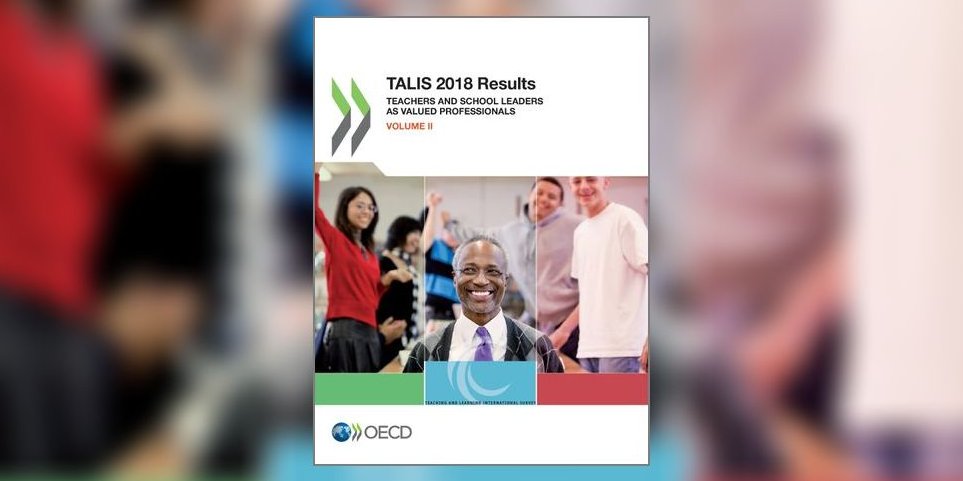
This week IEN provides a glimpse of how a few media outlets around the world have characterized the results from the OECD’s recent release of Volume II of the TALIS 2018 results, Teachers and School Leaders as Valued Professionals. This volume summarizes the results of a survey of teachers and school leaders from 48 countries, with a focus on questions related to 1) how society and teachers view the teaching profession, 2) employment contracts and salaries, 3) how teachers work together and 4) how much control teachers and leaders have over their work. This week’s online search for “TALIS 2018 volume II OECD” turned up very few stories in English. However, there were a number of headlines in smaller outlets and other languages, some of which were (google) translated below. More English headlines appeared in a scan of the TALIS headlines last June following the release of Volume I.

Australia

TALIS 2018: Valuing teachers and school leaders as professionals, Teacher Magazine (Australia)

9 out of 10 teachers from all OECD countries and economies are satisfied with their job, but only 26% think the work they do is valued by society; 14% believe that policy makers in their country or region value their view, and only 24% believe that they can influence education policy.

Croatia

Teachers overwhelmingly feel they have control over things (translated), srednja.hr

“About 98% of Croatian teachers believe that they have control over the choice of teaching methods and student evaluation, 93% of them have control over the discipline of students (92% in secondary school), 94% of them have control over the choice of homework.”  But only 9% of teachers agree that the teaching profession is valued in society.

Denmark

Danish teachers are more stressed than their Nordic colleagues (translated), folkeskolen.dk

43% of Danish teachers are considering another job, and 31% of “feel that their job has a negative impact on their mental health to some extent. In comparison, only 24 per cent of Swedish teachers, 23 per cent of Icelandic, 13 per cent of Finnish and 10 per cent of Norwegian teachers.”

England

England’s teachers ‘most stressed’ in developed world, Times Education Supplement

“70% of lower secondary teachers report being stressed either ‘a lot’ or ‘quite a bit’… 77% of teachers are ‘all in all’ satisfied with their job, however, this is the lowest rate in the OECD, with all the other countries having rates of above 80%.”

France

Talis: The French teachers, the most despised in the world? (translated), Café Pedagogique

“85% of French teachers feel satisfied with their work, but Talis demonstrates that French teachers are not only isolated and underpaid but also despised by their institution.”

Italy

80% Italian teachers perceive various degrees of stress, low salary always a reason for dissatisfaction (translated), Orizzontescuola.it

“Only 12.1% of teachers in upper secondary schools feel valued, without particular differences by geographic areas and by order of school. The data also shows that 7% of the entire teaching staff think they are listened to by the country’s political leadership class.”

Japan

TALIS — Teachers’ stress factors: “Amount of work” “Parents” (translated), Kyoiku Shimbun

“The percentage of Japanese elementary and junior high school teachers who have a lot of administrative work and stress on dealing with parents exceeded the average in participating countries. Principals at elementary and junior high schools were also stressed about their responsibility for their students’ abilities and dealing with parents.”

Korea

1 out of 4 middle school teachers “will quit teaching in the next 5 years” (translated), Chosun Edu

“Nevertheless, the proportion of teachers who agree that the teaching profession is valued is 67%, much higher than the OECD average of 26%.” However, only 54% OF teachers and 62% of principals said they were satisfied with their working conditions, slightly lower than the OECD average (66%).

Latvia

Almost all Latvian teachers are satisfied with their work, the survey shows (translated), nra.lv

“23% of teachers surveyed agree or totally agree with the statement that their profession is valued in the community, while 91% of Latvian teachers indicate that they are generally satisfied with their work”

Norway

Norwegian teachers work well together (translated), NEA Radio

95% of teachers say that there is a good culture for supporting each other and working together at the school…Teachers also feel that they have good control over their own teaching.”

Slovakia

Survey: Our educators receive little respect (translated), Felvideck.ma,

“Only 4.5% of teachers in Slovakia feel that teachers’ work has a high degree of social appreciation, while only 2.1% of school principals believe it”

Slovenia

They are not appreciated by the public or by policy makers (translated), Večer

The majority of “Slovenian teachers and principals were satisfied with their profession and workplace, and slightly less satisfied with their salary… but only 3% of teachers say policy makers value their views and opinions.”

  • Thomas Hatch

An Interview with Dennis Shirley: The 100th Anniversary Issue of the Lead the Change Series

This week’s post features an interview with Dennis Shirley, is Professor of Education at the Lynch School of Education and Human Development, author most recently of The New Imperatives of Educational Change:  Achievement with Integrity. This 100th Anniversary issue is one of a set of interviews this year in which previous interviewees in the Lead the Change (LtC) Series review their previous responses and consider how they might modify/ adjust/add to what they wrote based on their experiences and insights since publication. The fully formatted interview can be found on the LtC website of the Educational Change Special Interest Group of the American Educational Research Association.

LtC: How, and in what ways, has your work evolved since the first publication of this piece? What ideas/points still hold true? Which might you revise?

Dennis Shirley: Since I published my original contribution in Lead the Change in 2012, I have studied school networks and innovations in the US, Canada, Germany, Norway, and South Korea.  This research shows just how transformative joint work by educators across schools and systems can be. In the original 2012 contribution, I was most enthusiastic about community organizing for educational change; since then, however, I have seen how community organizations can be co-opted by powerful corporations and their philanthropic agencies. In one particularly egregious case, a community organizing effort in a struggling inner-city high school that had shown signs of improvement led to half of the school being turned over to a charter management organization. The irony here was that the traditional public school continued improving and the charter school part did not in spite of generous philanthropic support. So, there is good and bad community organizing, and I’m more discriminating about promoting that model now.

The one statement that stands out the most for me from my previous piece is “Educators can help to allay nationalist anxieties that have been exploited in times of economic insecurity.” I wish I had stated that point more emphatically in my 2012 Lead the Change submission, given all that has happened since then with the rise of authoritarian populism and contemporary political polarization. I also wish I had been more outspoken about the challenge of climate change and situated that more centrally in contemporary curriculum reform. Finally, at the time of the submission, I was optimistic about the capacity of policy makers to attend to important research findings and to integrate them into their strategies, but now it is apparent that the educational profession will have to find other ways to influence governments than evidence alone, so that political advocacy and coalition-building must become more central components of our professional identities.

LtC: What do these shifts suggest to you about the field of educational change more broadly?

DS: On the one hand, the field of educational change is a small enterprise in what Amitai Etzioni once called the “semi-professional” of teaching, so we have little impact on our large and often unwieldy school systems.  On the other hand, I think we’ve done a good job punching above our weight and nudging systems in good directions, given the magnitude of the challenges that confront us. Even though the larger political environment is marked by

increased insularity in many countries, including my own, I’m encouraged by the overall tenor of our profession and by educators’ determination to question dangerous political ideologies and their ramifications for our students. Because younger generations are less nostalgic for an idealized past, more curious and open to interactions with others from different cultures, and more concerned about climate change than older generations, we have reason for optimism about the future. New technologies are helpful here, by providing for ease of communication and by enabling students to learn how to check facts and to distinguish conspiracy theories from evidence.  I would like to see these tools used more intentionally and skillfully in our schools—which does not mean that we should be blind to the dangerous aspects of the Internet and social media.

“The righteous indignation of youth at the condition of the world they are inheriting deserves honest acknowledgment and continual encouragement.”

What most excites you about the direction of the field of educational change is going? What are the future research directions that should be addressed in the field of educational change?

Several years ago, I was alarmed by the rise of nationalism and decided that it was time to create an on-line masters’ degree program called “Global Perspectives: Teaching, Curricula, and Learning Environments” at the Lynch School of Education and Human Development at Boston College. I credit this program with providing some of the richest and most rewarding cross-cultural encounters and exchanges I’ve ever experienced. It’s one thing to read about teaching strategies in different places; it’s quite another to have an on-line class with students from Kenya, Nigeria, Germany, Korea, and the US in their classrooms all around the world engaging in spirited debates with one another. Contrary to my worries, students quickly bonded with one another and shared lesson plans and assessment tools in a spirit of collegial generosity. I hope these kinds of experiences both on and off-line will help to promote a new movement of fundamental human solidarity in our schools and societies that will overcome the regrettable tendency to stigmatize outsiders and to impute negative motives to them when none exist. “Love of your country is a beautiful thing,” the cellist Pablo Casals once said, “but why should the love stop at the border?”

LtC: What advice might you have for those interested in affecting change and improvement?

DS: The major piece of advice I would give to anyone entering educational change today would be to avoid the temptation of groupthink. Too often in education, we fall into a kind of mindless parroting of whatever the research du jour is.  Think of the “self-esteem movement,” “emotional intelligence,” “multiple intelligences,” and “growth mindsets,” for example. Each of these ideas spawned a cottage industry of professional development workshops that became all the rage in our schools for years. Eventually, however, it was shown that while each development effort had some basis in fact, each easily became open to misinterpretation and often was implemented in ways damaging for positive youth development. Right now, we are in the midst of a fascination with social and emotional learning in the US (generally referred to well-being elsewhere). I encourage all of us to distinguish between what is positive in this new trend and will help our young people to flourish, and that which is silly happy-talk.  The young know when they are being patronized and appreciate honesty and direct feedback more than we give them credit for. There are serious social and ecological crises that await a rising generation, and the righteous indignation of youth at the condition of the world they are inheriting deserves honest acknowledgment and continual encouragement.

“I would like to see the field of educational change take up this climate challenge in our schools seriously and sustainably.”

LtC: What are the future research directions that should be addressed in the field of educational change?

Political philosopher Hannah Arendt once wrote that “Education is the point at which we decide whether we love the world enough to assume responsibility for it.”  Do we love the world, in this specific sense?  I’m not so sure. Confronting the magnitude of the climate change crisis upon us, I can’t help wondering if we’ve been overlooking some fundamental realities about our human condition:  That we are embodied, that we are interdependent with nature, that we exist in a historical chronology in which we are reliant upon one another for sustenance and shelter. It seems we have been evading these ontological truths, have become caught up in other transient pursuits, and now are having to confront our essential contingency in a planet of breathtaking beauty that we have taken for granted and exploited shamelessly. It’s time for a major pivot for all of us. I would like to see the field of educational change take up this climate challenge in our schools seriously and sustainably.

ABOUT THE LTC SERIES: The Lead the Change series, featuring renowned educational change experts from around the globe, serves to highlight promising research and practice, to offer expert insight on small- and large-scale educational change, and to spark collaboration within the Educational Change SIG; Kristin Kew, Chair; Mireille Hubers; Program Chair; Na Mi Bang, Secretary/Treasurer; Jennie Weiner, LtC Series Editor; Alexandra Lamb, Production Editor

Amidst COVID-19’s Spread, Hope For Education Innovation Glimmers In Vietnam

This week’s post comes from Michael Horn, a senior partner at Entangled Solutions, and the co-founder of and a distinguished fellow at the Clayton Christensen Institute. This post appeared originally on Forbes.com

With COVID-19 spreading across the globe, I’ve watched the impact on Korea and Vietnam with some measure of connection and concern.

As the countries to which I journeyed on my Eisenhower Fellowship in 2014 and studied their education systems in some depth, the manner in which the disease’s spread has shut down their schools has struck me on two levels: worry about the health of the communities and hope for innovation.

It’s with an eye on the opportunity for innovation—improving an educational system that needs an overhaul—that I’ve paid close attention to the response of Everest Education, an after-school tutoring organization I got to know while in Vietnam and whose board I joined after my return to the United States.

Schools and after-school programs were shut down in the beginning of February in Vietnam. With no opportunity to learn in traditional classrooms, students became nonconsumers of education—literally unable to access formal education—overnight.

As students of disruptive innovation—the process that transforms complicated, expensive and inconvenient services into ones that are far more affordable, convenient, and accessible—know, disruption typically takes root in areas of nonconsumption. There the new service has a marked advantage, as its competition is nothing at all.

That describes the unintended opportunity in which Everest Education found itself, as after-school programs have remain shuttered and students have had no options to continue their studies.

One Everest student, Nguyen Viet Khanh Linh, who is studying for the International English Language Testing System (IELTS)—the world’s most popular English language proficiency test for higher education—said she was worried she wouldn’t be able to stay on track for her test in May. Currently pursuing an Advance Diploma in Multimedia at Arena Multimedia Education Center in Hanoi, Linh’s plan is to transfer to an exchange program in Korea, Singapore or Europe to complete a bachelor degree after earning the 30-month program diploma.

“I’m not sure which exchange programs I will join eventually, but almost all of them ask for IELTS as a prerequisite,” Linh said. “I’m trying to get it done in my first year before the arts workload gets heavier. I [was] afraid I [wouldn’t] be able to study for IELTS and work on my portfolio at the same time.” 

Everest had fortunately been developing an online-learning solution for some time. After experimenting with a range of products, Everest had settled on a platform that facilitated a live online class that, much as Minerva does in its active learning platform, takes advantage of the learning science around active learning to create an experience in which students are interacting with each other and the teacher in real time and taking part in learning games.

As Don Le, CEO and co-founder of Everest, shared, “Most online learning involves watching videos or listening to lectures, and students get bored easily. With our live online classes, students… feel a social bond. The experience feels really natural and fun.”

At the onset of the crisis, Everest swung into action and took its research and development into overdrive, as it deployed its online-learning experience across all of its classes to support all of its grade 1–12 students. An astounding 98% of its students successfully transitioned to its online-learning solution.

From there, Everest began focusing on serving the now-vast market of after-school nonconsumers in Vietnam. To date, it has amassed more than 1,000 online registrations and is scaling up to open as many classes as possible to meet the pent-up demand.

And here’s the opportunity—to help take a system built on rote memorization and turn it into a student-centered learning experience that is marked by active learning far more in line with the research around how students best learn.

“In some ways, it’s even better than a physical classroom,” Tony Ngo, Everest Education’s Chairman and co-founder said. “Online learning is a great solution while students are out of the classroom, and in the long run, it will become a critical tool in how students learn.”

I’ve noted before that disaster preparedness—and, it follows tragically, outright disasters—represent opportunities to innovate. Put another way, “a crisis is a terrible thing to waste.”

Amidst the challenges that COVID-19 brings, I hope we see education innovations that don’t just take subpar brick-and-mortar experiences and move them online where they will be even worse, but instead transcend the traditional lecture model to leverage technology and fundamentally transform the learning experience into one in which all students have a much greater likelihood of success.

In a country in Vietnam in which innovating in education is challenging, my hope is that Everest begins to blaze a new trail for the nation’s students.

6 Things Educators Can Do From Home To Help Their Students

This week IEN is posting reflections from Thomas Hatch published initially on ThomasHatch.org. This post is just one of many providing personal reflections (like Larry Cuban’s discussion of his own experiences with the polio epidemic) or providing links and resources for educational activities including those from the New York Times (Coronavirus Resources: Teaching, Learning and Thinking Critically);NPR (Kids Around The World Are Reading NPR’s Coronavirus Comic and Coronavirus And Parenting: What You Need To Know Now); and Unesco. We invite readers to share their experiences and resources with us as well.

What can we do? That’s a question we are all asking right now. For all of us that question begins with what we can do to keep ourselves and those around us safe and healthy.  But parents and educators like me are also thinking about what we can do to support our children, students and colleagues as K-12 schools close and classes go online. There are no easy answers, but here are 6 things I’m thinking about to try to deal with the challenges and take advantage of the possibilities:

  1. Focus on health and wellness. Learning is an important goal, but health and wellness for everyone has to come first. Students will learn the most from the acts of courage and kindness that help keep us all going.
  1. Suspend Schoolwork. Suspend exams, grades, and any other requirements that may contribute to stress and anxiety – for teachers and parents as well as students. Children and parents need opportunities and guidance for engagement in positive and productive activities, not more reasons to fight over homework or “keeping up.”  
  1. Encourage invention, design, creative expression and meaningful engagement. Instead of trying to figure out how to cover the curriculum, educators can put the syllabi aside and focus on meaningful activities – activities related to important learning goals that might be motivating and interesting for students to do while they are out of school.  Instead of creating new demands, concentrate on creating new possibilities:
    • Encourage students to keep a weekly diary – in words, pictures or any other media
    • create online journals, newspapers and magazines that students can contribute to
    • Invite students to share artwork, music, writing, photographs, or videos in an online exhibition
    • Stage online “talent shows” for students to share videos they have produced
    • Provide links to online resources and tutorials for learning languages, playing an instrument, developing academic abilities or learning other skills and enable students to share their progress
  1. Connect, connect, connect. Educators are uniquely positioned to provide information and support for their students, particularly those who are struggling the most. We can check-in, ask how they and their families are doing, share the latest news and resources, and help to identify critical needs. Educators can also build relationships and fight isolation by finding and creating opportunities for students to connect with one another as well with adults, particularly those in retirement homes, hospitals or anywhere else people might be disconnected and in distress
  1. Find new ways to serve the community. Create online community service activities and virtual service projects. My oldest daughter, a senior in college, has been serving as a mentor and had to say goodbye to the elementary student she visited every week, but what if they didn’t have to say goodbye? What if they could stay in touch by text or video even for a short-time every week? With so many students of all ages out of school, we can create online clearinghouses where students – or anyone really – could connect with those looking for mentoring, tutoring, or just conversation. Reach out and partner with parents, those from community centers, after school programs, Americorps programs like City Year and Citizen Schools, museums,  and libraries to find and create these activities for students to engage in online. Together educators and these extended programs can work to focus particularly on the students and their families who may be unable to get online or stay connected.
  1. Embrace collective responsibility. From living in Norway for a year, I learned it is possible both to respect the rights of every individual and cultivate a sense of collective responsibility.  There is no more important time for reinforcing our common bonds and recognizing that everything we do has an impact on our neighbors. It could be as simple as inviting children to call their grandparents or extended family once a day or a couple of times a week or just calling down the hall, leaning out the window or talking across the fence. The most profound thing we can do in difficult times can be done anywhere in any circumstances, dedicate ourselves to working with and for each other.

— Thomas Hatch

A Conversation about School Improvement Networks and Collaborative Inquiry in Chile

This week, Mauricio Pino-Yancovic and Alvaro González talk with IEN about their new book on the Chilean Ministry of Education’s recent improvement strategy relying on school networks. Written with Luis Ahumada and Chris ChapmanSchool Improvement Networks and Collaborative Inquiry: Fostering Systematic Change in Challenging Contexts describes the processes and challenges of implementing collaborative practices between schools.

Why this book, why now?

The School Improvement Strategy was put in place at a moment when the Chilean school system was going through a period of significant structural reforms to improve the quality and equity of public education. A basic principle of this reform effort was to produce a cultural change from competition to collaboration as a way to produce the necessary conditions for systemic improvement. The School Improvement Networks (SINs) were instrumental to making that change. The Networks were mandated by the Chilean Ministry of Education to bring together between 5 and 15 schools, each represented by their principal and curriculum coordinator, a representative of the municipal department of education, and one or two Ministry supervisors. Through LIDERES EDUCATIVOS, a Center at the Pontificia Universidad Católica de Valparaíso, we were commissioned by the Ministry to produce a yearly monitoring report of networks across the country based on questionnaire data. In addition, in 2016 we did a qualitative study of 15 networks in different regions to deeply understand how networks had been formed and were initially developing.

This book was born out of the necessity to open a dialogue with scholars around the world investigating networking and collaboration. We have learned very much from US and Canadian as well as European scholars. In fact, the opportunity to publish our manuscript came from an invitation by Chris Brown at the University of Durham and Cindy Poortman at the University of Twente to write for a series on Professional Learning Networks (PLNs) they edit with Emerald. Also, we have collaborated in this book with Chris Chapman from the University of Glasgow who has been a key supporter and friend in our projects. Finally, we were driven by the conviction that we had something meaningful to contribute from the Global South regarding collaboration and networking. Although the book is focused in Chile, we are aware that the challenge of developing a culture of collaboration in a context of privatization, competition and isolation, resonates with many countries.

What did you learn in working on this book that you didn’t know before?

From our experience studying and working with networks, we realized that it is much more powerful to think about the challenge of improvement from a systemic perspective rather than an individual one. Networks facilitate developing such a systemic approach, but we were first hand witnesses of how difficult it was to enact such change in practice, especially in a competitive environment such as the Chilean one.

By pulling together the evidence from several studies about networking, we produced a clearer picture of what networking among schools looks like in practice. This picture shows us that there are three key elements that need to be in place to ensure the sustainability of networks:

  • Building professional capital among network actors which would allow them to increase their capacity for collective change and improvement
  • Developing network leadership capacities for leading upwards, leading laterally, and leading downwards, which mobilizes influence and power relations within and outside networks, which is crucial in a challenging context
  • Establishing an appropriate system infrastructure to support and legitimize changing cultural patterns beyond the remit of networks themselves.

What’s happened in these contexts since you wrote the book?

In October 2019, Chileans took to the streets demanding social reforms aimed at tackling inequality and changes to a constitution that dates back to the 1980s, during the dictatorship of general Augusto Pinochet. It has been four months of massive protests and harsh police repression, which have mobilized the country to hold political actors to account on several topics. Education has been a central issue in these past months, as social and economic inequality is reproduced and reinforced in our neoliberal-inspired school system. Teachers and school leaders have had to deal with the consequences of this social discontent in schools and, in some cases, networks have been a key support in helping them to decide how to approach the situation. School networks seems to be an appropriate path to continue supporting a cultural change.

Unfortunately, the current government had decided earlier in 2019 to partially withdraw support to the School Improvement Networks strategy, although they have not phased it out altogether. Ministry supervisors were redeployed to focus on providing support and intervention directly to underperforming schools. Nonetheless, in most cases, networks have continued their work as school leaders value the opportunities to share and exchange experiences among schools in the same geographical area. In addition, we have been invited to support several school networks project at district levels. The findings described in this book are also being used by those who are pushing forward strategies based on meaningful collaboration for school improvement.

What’s next — what are you working on or what do you hope will happen in these contexts?

The agreement between the Ministry of Education and the LIDERES EDUCATIVOS Center ended in December 2019 but a renewal application was submitted, and we are awaiting a response. In the meantime, everyone in our team has gone to work elsewhere although still linked to the issue of networking and collaboration for school improvement. For instance, Mauricio is now a researcher of the Center for Advanced Research in Education (CIAE), Institute of Education at Universidad de Chile, working on projects to develop and support school networks using Collaborative Inquiry, and working closely with districts on the systemic improvement of the territory. Álvaro has gone to work as a postdoctoral researcher at Universidad de O’Higgins and he is starting a three-year study about the support provided to underperforming schools in Chile, where interorganizational collaboration and learning play a key role. Luis Ahumada has returned to his position as Professor at the School of Psychology at PUCV, still involved in educational leadership. Also, we hope to continue our collaboration with Chris Chapman, Chris Brown, Cindy Poortman and many other scholars that we had the chance to know through the ICSEI PLN network and elsewhere.

What do you hope those working in other parts of the world will take away from your experiences?

Many educational systems have opted for the strategy of networking to support improvement not only for schools in difficulty but also entire systems. This movement builds on the empirical evidence showing how difficult it is for a school to improve on its own. Our book shows that in marketized school systems, such as the Chilean one, it is possible to overcome the logic of individual accountability, promoting collaboration and co-responsibility between all levels of the system. We hope that our book will inspire decision- and policy-makers to promote networking at different levels of the system and to create spaces where collective support and democratization allow for the development of a different bond among schools and the communities they serve.

LEAD THE CHANGE SERIES Q & A with Kirsi Pyhältö

Kirsi Pyhältö, Ph.D. is Full Professor of educational sciences in the Faculty of Educational Sciences, at the University of Oulu, Finland, and research director in the Centre for University Teaching and Learning, at the University of Helsinki. Her research interests include school development, teachers’ professional agency, and student and teacher well-being. She has over 140 publications that include refereed articles, book chapters, and textbooks. Over the years Pyhältö has led several externally funded research projects on the above mentioned topics in collaboration with her colleagues. Currently, Pyhältö is leading two active research groups: Learning and Development in School http://www.learninginschool.fi/ and From a Ph.D. Student to an Academic Expert https://researchondoctoraleducation.wordpress.com/. Dr. Pyhältö is founding co- coordinator of EARLI Special Interest Group 24: Researcher Educationand Careers. For a full list of publications see: https://tuhat.helsinki.fi/portal/fi/persons/kirsi-pyhaltoe(677db559-b36b-44a4-90c6-d3e4bd87e94b)/publications.html. Dr. Kirsi Pyhältö can be reached at: kirsi.pyhalto@helsinki.fi

In this interview, part of the Lead the Change series of the American Educational Research Association Educational Change Special Interest Group, Dr. Pyhältö discusses her work on teacher agency and school reform. As she puts it:

Our recent research on teacher agency shows that a strong sense of professional agency contributes to school development in various ways. There is, for instance, emerging evidence that professional agency in the teacher community also promotes active and intentional teacher learning in the classroom. This implies that learning in and between the classroom and the professional community is one of the focal areas of teacher learning. Professional agency in the form of active and intentional teacher learning both in the classroom and in the professional community has shown to be associated with increased student engagement and academic success, reduced levels of early career in-service teachers’ attrition, teachers’ experimentation with innovative teaching methods and commitment in school development, and reduced levels of teacher stress. It can be argued that teachers’ sense of professional agency is a central determinant for the extent to which they are able to engage in continuous professional learning, contribute to school development, make a difference in their working environment, and continually develop sufficient strategies to cope with work-related stressors—to promote sustainable change in the society.

This Lead the Change interview appears as part of a series that features experts from around the globe, highlights promising research and practice, and offers expert insight on small- and large-scale educational change. Recently, Lead the Change has also interviewed Moosung Lee and Christina Dobbs.

Scanning the headlines on the impact of the Coronavirus (COVID-19) on education in China and around the world

This week, IEN provides a short overview of a few articles in the Chinese media discussing the outbreak of the Coronavirus as well as a quick scan of headlines discussing the outbreak’s impact on education in many parts of the world.

The coronavirus broke out in China while students were on break for their winter holiday, and most students were still at home when the situation began to get serious. Due to the on-going spread, the Chinese government postponed the date for returning to school until late February. But in late January, as Sixth Tone reported, China’s education ministry “ordered institutions to continue administering coursework online. Daily activities including flag-raising ceremonies, roll calls, and lectures are now conducted virtually.” As a consequence, “millions of Chinese students are starting a new school term not in their classrooms, but in front of their computers.” In some cases, teachers are making recordings to share online, while in others teachers are live-streaming their lectures/classes online. Xinhuanet profiled one math teacher, Zhang Sheng, who described his routines for live-streaming, recording videos, and homework. “’This has doubled my workload, but if it makes my students happy, I will do it,’” Zhang was quoted as saying.

Some see this as a big opportunity for online education in China while others see potential problems since most K-12 and university teachers and students are not familiar with online teaching. Equity and access to technology and the internet are also concerns. Students in urban areas are complaining of slow internet connections, but many students in remote places are finding it difficult to log into their courses at all.

Government guidance for schools and headlines about the outbreak and education in China

广东印发中小学线上教学指引:APP须经审核备案,要特别关注农村地区和留守儿童, China Education Daily ,
Online teaching activities instruction from Guangdong province education department: Online platforms (APPs) need to be checked and reviewed, and more attention should be given to rural students and children from migrant family

海南:停课不停学 不要把学生“锁”在屏幕前 小学中高年级学生每天在线学习不得超过45分钟, China Education Daily
Instructions from the education department of Hainan: Students should continue learning outside of school, while not being locked in front of digital screens. It is suggested that elementary students should not study for more than 45 minutes online every day.

停课不停学,我们在行动, China Education Daily
A document from Jiangxi province: Schools should have their own strategies and schedules to help students study online, especially for grade-12 students who are going to take the college entrance examination (Gaokao) in the coming summer. Specific learning platforms are identified to use for teaching and learning activities for the whole county.

Kids in Shanghai won’t be returning to school amid coronavirus outbreak, New York Post
The Shanghai government has announced that students will not return to schools now and the semester will start via online learning amid China’s coronavirus outbreak. K-12 students in Shanghai will start online classes from March 2.

Coronavirus outbreak forces China’s after-school activities to shut down — or move online, CNBC
As the virus keeps children at home, Chinese parents and schools are turning to online education, putting pressure on after school industry players to move online or get shut down.

Bans hinder international student travel, China Daily
Travel restrictions from the US government, visa issues and flight cancelations are hindering some Chinese students from resuming their studies after the winter break. US universities are using measures ranging from videoconferencing to online assignments to help Chinese students whose study plans have been disrupted by recent travel restrictions.

Free online learning platform for students sees smooth operation amid epidemic, xinhuanet
A free online learning platform was launched for China’s primary and secondary school students studying at home during the outbreak of COVID-19.

Online classes get mixed reactions from students, teachers, Sixth Tone
“…an increase in demand for livestreaming and other online education services is causing app crashes and other internet disruptions, with several related hashtags including “Tecent Classroom crashed” trending on microblogging platform Weibo.”

Online classes can’t replace classrooms, China Daily
China has been witnessing a different kind of new semester, in which the classroom was moved online, because of the novel coronavirus outbreak. Yet, problems emerged and show that online classes can never replace real classes, at least for now.

Recent headlines on the coronavirus outbreak and education around the world

Schools should prepare for coronavirus outbreaks, CDC officials warn, Education Week
“’You should ask your children’s schools about their plans for school dismissals or school closures,’ Nancy Messonnier, a director at the Centers for Disease Control, said during a press briefing on Tuesday. ‘Ask about plans for teleschool.’”

Coronavirus has reached the U.S. What can schools do? Education Drive
This article gives advice on how U.S. schools get prepared for the challenges caused by the spread of coronavirus.

If coronavirus gets worse in the US, online learning can fill the gaps, Education Week
The coronavirus outbreak this year has forced K-12 schools to close for a prolonged period of time, and e-learning has helped fill the gap in instruction. Similar measures could also be considered by U.S. schools.

Universities brace for lasting impact of coronavirus outbreak, Times Higher Education
The outbreak of coronavirus could serve as a good chance for universities to brace positive changes, such as improving online teaching and the use of education technology, and providing health services and hygiene standards. Furthermore, universities in China may consider making themselves more competitive and attractive among world universities.

Will coronavirus crisis trigger an enrollment crisis? Inside Higher Ed
U.S. colleges could see a major enrollment pipeline cut off this fall if the coronavirus epidemic persists. Meanwhile, Australian universities are missing more than half their Chinese students weeks before their fall semester begins.

The coronavirus outbreak is the biggest crisis ever to hit international education, The conversation
For Australian higher education, the coronavirus outbreak may be the biggest disruption to international student flows ever before.

Korea to postpone new school year as coronavirus spikes, The Korea Herald
“’To prevent the spread of infection, and for the safety of students and school faculty, the education ministry will postpone the first day of the 2020 school year at kindergartens, elementary, middle and high schools across the country by a week,’ Education Minister Yoo Eun-hae said in a government press briefing.’”

Vietnam sharply divided on coronavirus school closures, VOA News
“Supporters want to keep students at home until April, while opponents say the panic is overblown.”

Coronavirus: Hong Kong school closures cripple bus companies, South China Morning Post
Drivers and minders on Hong Kong school buses have been left unpaid and threatening to quit, because of class suspensions aimed at curbing the coronavirus outbreak.

Education companies set back by China’s coronavirus crisis, EdWeek Market Brief
Education companies are feeling the effects of the spread of the coronavirus in the world in a number of ways. Education-focused businesses are worried about keeping China-based employees healthy and safe. Other companies that have developed products for use in the Chinese education market are seeing usage numbers drop as students and teachers stay home from school.


  • Aidi Bian & Thomas Hatch


The Same New Things From The New York Public Library (Part 2 of 2)

This post is the second part of a piece on the nonformal education work at The New York Public Library. In the first post, we reported on NYPL president Tony Marx’s work in implementing new educational programs.

Some Things Don’t Change

Since Tony Marx’s arrival in 2011, NYPL has undergone dramatic changes, particularly in its educational programming. Despite these changes, the Library’s work continues a long tradition embedded in its founding. “We’ve always been there, helping kids read, before they start school, once they’re in school,” Marx says. The Library has always been a place to explore learning as a lifelong pursuit. From its founding, Marx suggests that since its inception, learning has always been foundational to NYPL’s identity. Combining these goals and the Library’s already-present infrastructure, NYPL has been able to dramatically increase its presence in the nonformal education sector in the city. In this way, the library is the same place it has always been. It sits outside of schools, but it is a recognizable place of learning. If anything, these programs act to solidify NYPL’s mission.

In fact, the library has committed almost a billion dollars to improving its branches. Specifically, they are focusing on improving branches in outer boroughs, helping to work toward all New Yorkers having a civic space that could act as a learning center for the community.

A Unique Place In the Landscape

Though the Library aims to continue this mission, it is undeniably changing in more radical ways than it had in its first 100 years. As the library shifted from a passive to a more proactive role in nonformal education in OST spaces, the question was not only what to do or how to do it. Marx joined the NYPL at a moment when people questioned the very role of a Library in a city. At this time, Marx saw an almost-unique opportunity built into what many viewed as an existential threat to the Library. Large scale institutions with an established legacy almost never innovate at scale. Yet, when Marx took over as president of the NYPL, he recognized an opening.

NYPL is equipped with the resources of buildings and is known as a learning institution. It also sits outside the standard educational bureaucracy. Marx suggests that in the library there are “no judgements, no exams, no expectations other than we want to help.” Without the common constraints and regulations of other educational institutions, NYPL found the freedom to pursue the programs they have developed in the last decade. Of course, this freedom also comes with risks. The Library may not be beholden to much other than its patrons’ interests and needs, but many of these programs rely on funding sources such as grants or gifts rather than the more permanent, sustainable structure of public funding.  The Library may be less vulnerable to political shifts, but it is still exploring how to continue innovating without losing its position.

Marx offers a detailed story that illustrates this point:

 Two to three million New Yorkers live in the digital dark. They don’t have broadband at home. I discovered this for myself by meeting this kid. I’m leaving a branch in the Bronx, it’s after hours, a beautiful evening. There’s a kid sitting on the stoop and he has an ancient laptop and I say “what are you doing?” And he says “my math homework. It’s online, it’s assigned.” I say, “that’s great. Why are you sitting here?” He tells me it’s because he can’t afford broadband at home. “So,” the kid says, “I sit here after the library kicks me out and get bleed through the door.” I thought “oh my god, he’s trying to do his math homework. We want him to do his math homework. That’s crazy”. So, I come back [to the office]. I discover that there are millions of people in his situation, which is shocking to me. Maybe it’s shocking that I was shocked. And then I think, ok, let’s do something. We’re going to lend people broadband at home. We can play, at scale. So we raised millions of dollars from Google. We started lending to 10,000 families at a time Wi-Fi hotspots that they could take home for a year. Then, we said, ok, so this depends on soft money. At the time, with the Obama administration, we had the FCC interested in what we were doing. It was a national problem. But of course, things changed…

Additionally, the library may largely operate free of restraints, but it is not an island. The NYPL seeks connections with other institutional bodies in the city. Notably, Marx comments on how strange it seemed that when he arrived the largest library system and the largest school system did not often talk. He began meeting regularly with Chancellors of schools to explore how to increase learning. More, connections and this work in general helps reach more New Yorkers and directly responds to some of the systemic inequities youth encounter in the education system and beyond. For instance, as Marx sought funds to continue the broadband program, he found that in 2017, there was still a federal program offering broadband to kids who qualify for a free or reduced lunch. The Chancellor at the time told him that they could not do the program. The problem here was that the government would pay for the subscription, but they would not pay for the “little $50 box that makes it work,” as Marx puts it. Once more, the relative autonomy of the Library allowed them to pay for the devices and allowed the DOE to take advantage of the free subscriptions. The connection allowed the library to uncover a more sustainable model and provided a way for both the DOE and the NYPL to better serve New York City children.

The Library clearly fills a gap between school and OST education. Conversely, as many of these programs suggest, the Library is also pushing at the bounds of what nonformal learning can be at a large, institutional scale. As Marx and others in the Library continue searching, they aim to find new programs, new ways of connecting, and reach more families throughout New York City.

The Same New Things From The New York Public Library (Part 1 of 2)

In this post, part of our series looking at educational change in nonformal settings, we speak with Anthony W. Marx, President and CEO of The New York Public Library. In previous posts, we’ve written about the Beam Center and CS for All.

 When Tony Marx traveled to The New York Public Library (NYPL) as a child, he found everything he could possibly imagine. The Library housed books, news, and all the information a future academic could desire. These days, Marx,  NYPL’s President and CEO, notes that almost every person walking around the city carries a library in their pocket. It would seem that in a world of smart phones, some might contend that brick and mortar libraries serve little purpose. Yet, Marx sees the rise of the internet and increased access to information as a unique opportunity for the NYPL. More than ever, he suggests, libraries can be active sites of learning.

Of course, NYPL has long been an institution devoted to education. From the time Andrew Carnegie’s donations helped build branches in communities throughout the city and across the U.S.,  NYPL has always been rooted in education. The Library welcomed kids learning to read and encouraging lifelong learning of New York City’s residents. Since Marx’s arrival in 2011, however, the library has undergone drastic changes in the shape and scope of their educational programming. In the last decade, the NYPL and its 88 branches scattered across the city have more actively focused their offerings to meet community needs and respond to the changing role of libraries. During this time, the NYPL as an organization has leveraged its status as a stalwart institution and its relative autonomy to greatly expand its role in the city’s educational landscape. Throughout these many changes, the Library has maintained its long history of providing space and learning opportunities for New York City residents.

“It’s Right There In The Name” 

Entwined with the notion that the Library has always been a place of and for education, it is also a place for the public. In Marx’s words, “We’ll take anyone who walks through our doors, without exams, without judgments.” As long as the Library is open, anyone that wants to can pass through its doors. For decades, this publicness allowed library branches to act as kind of educational safe haven. They could offer homework help after school or an air-conditioned space during summer breaks. At the same time though, the library largely played a passive role in education. While local branches did offer small classes or adult education programs, these were scarce and informally organized. Now there are 2 million visits to formal programs.

In a similar vein, the Library’s ongoing commitment to the public means that it is open, democratically available, but optional. “If we don’t offer what people want, they won’t come,” Marx suggests, “but they are coming in record numbers.” At the start of the 21st century, with the Library’s offerings increasingly accessible simply by logging onto a computer, what people used to have to do by traveling to the Library, they could suddenly accomplish in the comfort of their own home. One might think that in modern times, the library as a public site had become obsolete. NYPL certainly had to wrestle with the question of how to best serve New Yorkers and entice them to come to the Library. But, Marx and his colleagues never saw these issues as problems.

Among many other initiatives, upon Marx’s arrival, the library began new, targeted educational programming. Where in previous decades the library had been more of an implicit educational site with a hodgepodge of offerings, they took on a more active role in New York City’s educational landscape. This expansion began in earnest in 2013, when Maggie Jacobs joined the library as the Director of Educational Programs. Surveying different neighborhoods to understand needs and opportunities in local branches, the library began developing new “Outside of School Time” models for New York City’s youth. Though still evolving, the library now operates several main educational endeavors.

One such program provides homework help in several local branches for 1st through 8th grade students. Library visitors still identified help with schoolwork as a service they most wanted from the library. With a staff of tutors, this program supports diverse groups of students in structured learning time. A related program creates a direct link between the NYPL and local high schools. The program offers an apprenticeship, guiding 10th to 12th graders toward becoming reading tutors. During the fall semester, they attend classes and train to become tutors. Classes in this semester also carry credits that the DOE recognizes. In the spring semester, participants work as paid interns, teaching reading to 1st and 2nd grade students. Another program offers a place-based digital curriculum for middle school students. Here, students research different aspects of their community and undertake projects such as

digital photography, podcasting, and neighborhood mapping. Finally, the Library has developed a program from a 15 million dollar “magic grant” from the Helen Gurley Brown Trust to academically support high school students. Students who participate in this program receive academic resources to apply for and succeed in college. Students also design and pursue a passion project and are able to receive grants for participating in other enrichment programs.

These programs both filled an educational gap in the nonformal space. Along with more traditional programs such as ESL classes or computer skills classes, the library increased its annual visits almost tenfold (to around two million people a year). Much of this work focuses on working with youth in underserved communities. To help make these programs a reality, the Library both increased direct partnerships with the DOE and others

Next week, we will share the 2nd part of this post.