One of the many repercussions from the COVID-19 pandemic was a world-wide hit to students’ health and wellbeing. In particular, proper nutrition and food insecurity was greatly affected by the pandemic and the lockdowns as many students around the world could not get food and food related support at their schools. In Part 1 of this two part series, Sierra Bickford takes stock of the impact school nutrition programs have globally and highlights the effects of these high-impact interventions. Part 2 will scan recent news and research to find some of the many micro-innovations – new developments in practices, structures, and resources in different contexts – that have been implemented to combat this rise in student food insecurity. These posts are part of IEN’s ongoing coverage of what is and is not changing in schools and education following the pandemic school closures. For more on the series, see “What can change in schools after the pandemic?” For related examples of micro-innovations in other areas, see IEN’s coverage micro-innovations to strengthen student relationships, to increase access to college and careers and to improve tutoring: Building Student Relationships Post-Pandemic in School and Beyond; Still Worth It? (Part 1); New Pathways into Higher Education and the Working World? (Part 2); Tutoring takes off and Predictable challenges and possibilities for effective tutoring at scale.
Food insecurity, particularly among children, was one of the critical problems exacerbated by the COVID-19 pandemic and the related societal shutdowns. Estimates suggest that, during the pandemic, the number of people experiencing food insecurity doubled from about 135 million to more than 270 million. In India alone, household food insecurity skyrocketed from 21% in December 2019 to 80% in August 2020, at the same time that diet quality decreased. By the end of 2021, the UN warned that over 43 million people in 38 countries, including Ethiopia, Somalia, South Sudan, Afghanistan, and Yemen, were at risk of experiencing famine or famine-like conditions.
“Estimates suggest that, during the pandemic, the number of people experiencing food insecurity doubled from about 135 million to more than 270 million.”
Even in wealthier countries household food insecurity increased substantially. In the United States, that meant a rise in households experiencing food insecurity from 11% in 2018 to 38% in March 2020. In a report from 2020, the US Census’s Household Pulse Survey estimated the rates of food insecurity had doubled overall, and tripled among households with children. In the wake of the pandemic, school systems, despite vastly different conditions and challenges in different contexts, are working to reestablish nutrition programs and create new strategies to get children access to nutritious balanced meals.
The impact of school based nutrition worldwide
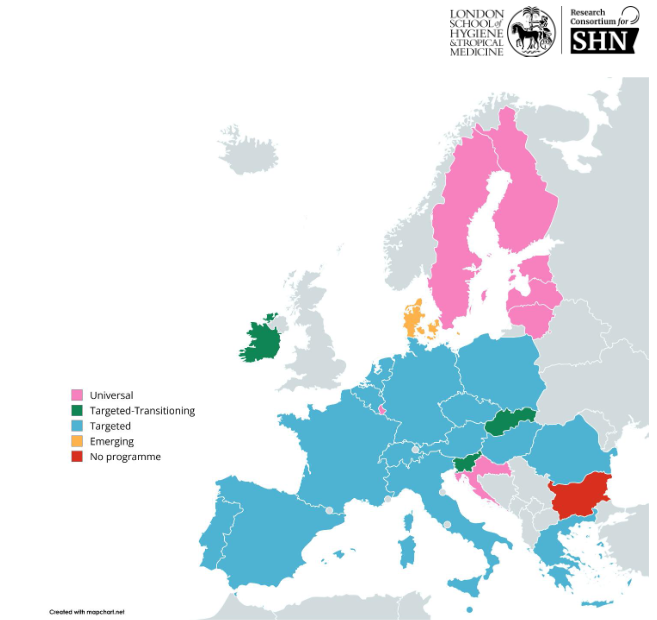
Across the world, school meals have been shown to be a worthwhile intervention with high positive impact on health and learning outcomes. In high income countries, such as those in the United Kingdom, access to nutritious school meals are associated with lower obesity rates. In Sweden, school meals with regulated nutrition requirements have been shown to increase educational attainment, health outcomes, and income across lifetime. One study found that low income families with children in Sweden who received free school meals increased their lifetime income by 6%. The effects that these interventions have on European health care costs estimate “that the return from investment in school meal programs is at least sevenfold, up to a possible €34 for every €1 spent.”
“The effects that these interventions have on European health care costs estimate “that the return from investment in school meal programs is at least sevenfold, up to a possible €34 for every €1 spent.”’
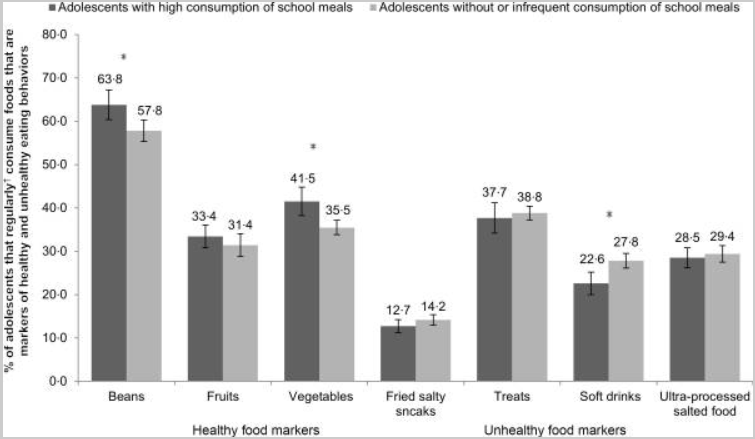
Data from low and middle income countries also support the implementation of free school meals, particularly for increasing attendance and retention. In Burkina Faso female students who were given take-home food attended school at least 90% of the time. Similarly in Bangladesh, the introduction of free fortified biscuits “increased enrollment by 14% and reduced school dropout by 7%.” Nutrition programs in low and middle income countries have been shown to positively affect learning outcomes as well. In India, access to free school meals is associated with higher cognitive outcomes and an 18% increase in literacy test scores. As in the United Kingdom, in Brazil students who were being supplied meals at school were more likely to reduce their intake of unhealthy foods and increase the presence of nutritious food in their diet, which leads to better health outcomes.
The impact of school based nutrition in the United States
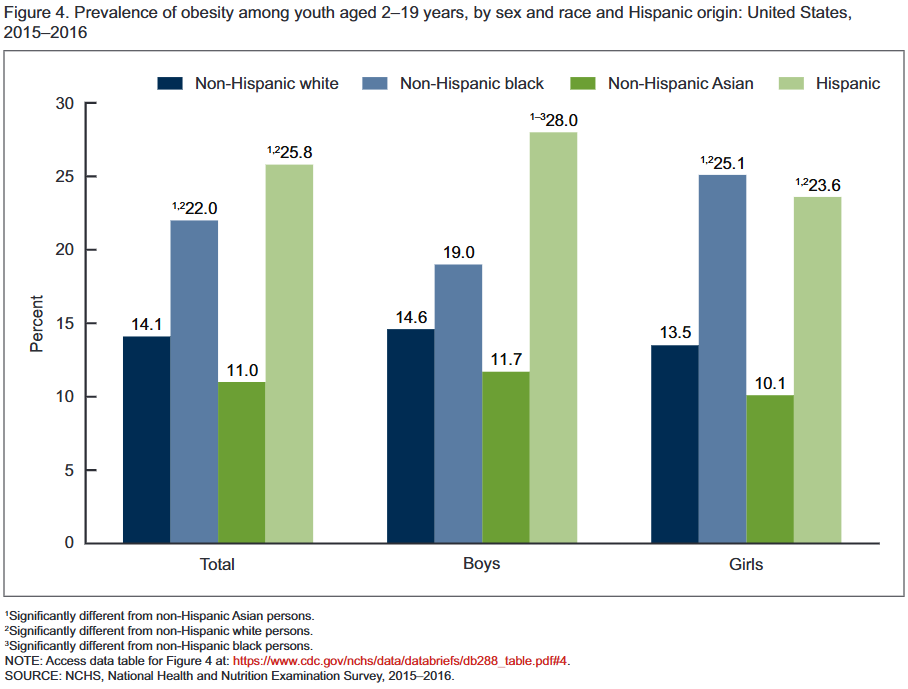
In the US, the National School Lunch Program has long been the primary vehicle for supporting students’ nutritional needs. Around 95% of US elementary, middle, and high schools take part in the program and about 75% of the meals provided through it go to children from low-income families who qualify for free or reduced-price lunches. Students who consistently consumed these meals were more often from low-income households and more likely to be non-Hispanic Black or Hispanic compared to those who didn’t participate. As a consequence, the program is one key means of addressing nutritional and health inequalities in the US, where non-Hispanic black and Hispanic children aremore likely to be overweight or obese and have lower quality diets than white children.
Despite this evidence, the budget bill promoted by the US administration and passed by Congress this past summer reduces funding for federal health and food programs. Estimates from the School Nutrition Association suggest that the bill could create a ripple effect of food insecurity for American children. This ripple effect will include fewer children automatically being eligible for SNAP and school lunch programs as well as fewer schools being able to enroll in Community Eligibility Provision. Nonetheless, even as these cuts are being made, schools and communities across the US and around the world are continuing to develop new ways of reaching more and more children and families and increasing access to higher quality and healthier food.
What are the critical education issues facing India following the school closures of the pandemic? What are some of the practices and initiatives that could serve as building blocks for improving one of the largest educational systems in the world? Haakon Huynh explores these questions in the second part of a two-part series on K-12 education improvement efforts in India. The first part looked at some of the long-standing barriers hindering the development of India’s educational system. For previous posts related to education in India see: From a “wide portfolio” to systemic support for foundational learning: The evolution of the Central Square Foundation’s work on education in India (Part 1 and Part 2); and Sameer Sampat on the context of leadership & the evolution of the India School Leadership Institute.
Beyond the largely school-based, academic concerns of foundational learning and increasing access to colleges and careers, four other interwoven issues – including chronic absence, mental health, nutrition and sustainability – have been receiving increasing attention in the aftermath of COVID-19 related pandemic in India. The discussion of these issues illustrate both the critical challenges as well as the kinds of initiatives and innovations that are already being pursued that can give hope for the future in India and beyond.
Chronic absenteeism: When enrollment isn’t enough
For some time, the Indian government has focused on increasing enrollment, but in recent years, chronic absenteeism may have taken over as a critical issue. In fact, the Annual Status of Education Report (ASER) 2024 shows that enrollment now exceeds 98% among 6–14-year-olds. Encouragingly, early childhood enrollment has also risen significantly, and digital access among adolescents has become nearly universal. At the same time, data from ASER 2021 showed that over 20% of rural primary school children were not attending school at all even after reopening, and school-level data reported that 21% of schools had fewer than half their students attending regularly, though the extent of absences varied extensively by region. In some states, absence rates were slightly more than 10%, but in places like Bihar, West Bengal and Madhya Pradesh they ranged from 40% to 50%. In rural Telangana 75% of students missed 10 % or more of all school days and more than 50% missed 15% or more.
As in the United States and other countries, poor attendance and chronic absenteeism in India are connected to negative learning outcomes and increased chances of dropping out, particularly for already disadvantaged populations (National Collaborative on Education and Health, 2015; Uppal et al., 2010). Although research in India has been limited, common factors contributing to absences include disinterest in school, illness, weather, transportation, work demands, family obligations, (Malik, 2013) poor peer relations and being overage (Shah, 2021). Girls also have a lower attendance rate than boys, reflecting cultural and gender-related issues such as menstruation, child marriage, household responsibilities, and societal expectations (Raj et al., 2019). Although programs like mid-day meal offerings can increase attendance for part of the day, students may still leave after lunch, so that even students who are counted in a morning roll-call may still miss a substantial part of the school day. Complicating matters, most schools in India still rely on a manual system for tracking attendance which makes it difficult to collect, review, and act on the data in a timely way at the school level, and a lack of digitization means it’s difficult to aggregate and analyze the data across schools. All of which means reporting of attendance is subject to fraud and manipulation.
Responding to some of these specific issues, one pilot effort in ten schools – the Chronic Absenteeism Assessment Project (CAAP) – in the state of Telangana developed a way to measure student attendance using a fingerprint scanner connected to a tablet which allowed data to be analyzed relatively quickly. Beyond the technology, this approach included the development of “Education Extension Workers” (EEWs) who could follow-up with absent students and their families, investigate the reasons for absences, and respond appropriately.
Mental health: Entering the mainstream?
Although attendance and chronic absence began receiving attention before the pandemic, mental health has been a neglected and often taboo topic. None of India’s 22 languages have words for “mental health,” “depression,” or many other mental illnesses, yet a national survey in 2016 documented 50 derogatory terms used for people suffering mental illnesses. At the same time, even before the pandemic, India had one of the highest suicide rates in Asia. Furthermore, according to the same national survey, over 80% of those who did report mental health problem could not access adequate treatment – not surprising given that India only had three psychiatrists for every million people and even fewer psychologists (in contrast, the US has almost 400 psychiatrists and psychologists for every million people).
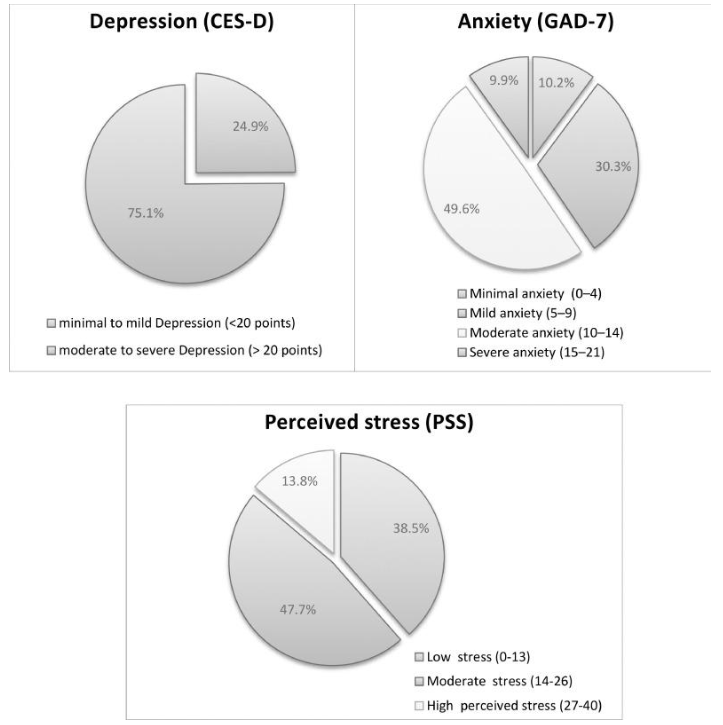
The pandemic and associated lockdowns only made the situation worse. Even by the middle of 2020, surveys were suggesting that as many as 40% of participants reported suffering mental health problems and more than 65% of mental health professionals surveyed reported in increase in self-harm behaviors among their patients. By 2021, the mental health of Indian university students had worsened significantly, with over 75% experiencing moderate to severe depression and nearly 60% experiencing moderate to severe anxiety. School counselors have also noted rising mental health concerns, with one study reporting that counselors are dealing with challenges ranging from heightened anxiety and social isolation to increased aggression and cyberbullying.
These increases, however, also may reflect a growing willingness to recognize, report and seek treatment for mental health issues. Furthermore, as early as 2020, the Indian government launched the Manodarpan initiative to provide psychosocial support for students, families, and educators. Among other things, the initiative provides counseling resources, a national helpline, and school-based mental health programs.
Attention to socio-emotional learning is also growing in some schools in India as approaches like “feelings check-ins” are supported by programs like the Simple Education Foundation and Apni Shala. This practice invites students to begin the school day by identifying and sharing how they feel, often using a simple visual chart or prompt. Other initiatives include POD Adventures, a smartphone-based mental health intervention co-developed with Indian adolescents. Among other components, the app prompts youth to identify their feelings, name the source of their stress, and plan responses.
Nutrition is another concern receiving more attention post pandemic. India faces a so-called “triple burden” of undernutrition, micronutrient deficiency, and obesity. About 6% of children are overweight or obese and over 65% are anemic.
Although some progress had been made on these health issues, the pandemic set that work back. Disruptions to India’s food systems included interruptions of food programs, reduced access to healthy foods, and increased costs. Illustrating the challenges, the COVID-19 lockdown in the state of Karnataka led to the suspension of the Mid-Day Meal (MDM), iron–folic acid (IFA) supplements, and deworming programs. In turns, those disruptions likely contributed to increases in the rates of children who were underweight from about 30% in 2017 to 45% in 2021 while anemia rates nearly doubled from 21% to 40% during the pandemic.
These disruptions, however, along with government and civil society awareness campaigns may also have brought greater attention to these issues in recent years. Even before the pandemic, the Ministry of Education sought to support children’s nutrition and healthy eating by implementing School Nutrition (Kitchen) Gardens. That national program, launched in 2019, recommends that every class spend one to two hours per week in the school’s garden and encourage the integration of garden activities into the school curriculum. The produce from these gardens is intended to supplement school meals, supporting both nutrition and experiential learning.
Although India has issued national guidelines mandating school nutrition gardens in all schools, progress has been uneven. Some states have taken it further by encouraging families to develop their own gardens. The Nutrition Garden program, implemented in rural areas of the states of Tamil Nadu and Odisha, trained families to cultivate diverse vegetables and offered structured nutrition education. In a similar program in rural schools in in the state of Andhra Pradesh, a 2025 study found that after receiving gardening kits and nutrition education through their government schools, students established kitchen gardens at home and increased their vegetable consumption by 90%.
Sustainability: Preparing for a warmer planet
Climate change has also emerged as both a critical challenge but also a potential driver of innovation in education in India. In 2019, India was ranked number seven among a list of the countries affected by the changing environment, but 65% of the Indian population had not heard of climate change. As one step in raising awareness about the issue, India’s 2020 National Education Policy (NEP), emphasized the need for environmental education in schools and suggested a shift from content-based learning to skill-based learning in climate education. At the same time, some Indian universities have emerged as global leaders in sustainability with India being the best-represented nation in the 2024 Times Higher Education Impact Rankings assessinguniversities’ contributions to each of the 17 United Nations sustainable development goals (SDGs).Institutions such as Saveetha Institute, Shoolini University, and JSS Academy are ranked among the world’s top performers, contributing to clean energy (SDG7), health (SDG3), and sanitation (SDG6).
Although the costs can be prohibitive, architects in India have also been exploring sustainable schools designed explicitly to respond to and take advantage of the environmental conditions in their local contexts. One of those schools serves a desert township in Ras that houses families of those working in a cement plant. To minimize the impact of the harsh sun and make the structure as energy-efficient as possible, the architects created a fragmented layout of sheltered and semi-enclosed spaces to maximize shade and ventilation. A Central Board of Secondary Education school run by the Rane Foundation in a rural village of Tamil Nadu relied on local and recycled materials to create a design that eliminates the need for air-conditioning. Another private, international school in Bengaluru sought to take advantage of its setting near a national park to cultivate respect and curiosity in the natural environment. To do so, the design creates both inside and outside learning spaces and allows students to get perspectives on the trees and plantings from multiple perspectives.
Sustainable schools (top left to bottom right) designed for a desert climate in Ras, Rajasthan; for rural Tamil Nadu, and for a natural setting in Bengalaru
The green economy’s rapid expansion and the promise of high-paying jobs in fields like renewable energy and environmental policy have also contributed to a surge in the numbers of students interested in sustainability education. Supporting those interests, several initiatives seek to engage students in learning about and promoting sustainable practices. For example, the Green School Initiative involves over 35,000 students, more than a 1000 teachers across 110 schools in supporting student-led efforts to promote sustainability in their local communities. In addition to providing environmentally-based curricula, the Initiative sponsors action projects and capacity-building activities related to the UN’s Sustainable Development Goals, particularly in areas of Energy, Water, Forests & Biodiversity, and Waste.
The Green Schools Programme and other efforts support student engagement in issues of sustainability by giving them the opportunity to both study and grade their schools on their environmental performance. For example, Birla Vidya Niketan a school of 4,000 students in New Delhi has become known for its attention to sustainability and its student-led electricity audits. By appointing student monitors to ensure fans and lights are switched off when classrooms are empty, the school promotes peer-led accountability in daily energy use. The chosen students complete simple forms to track behavior and encourage energy-saving habits among classmates. To assess impact, the school analyzes changes in its electricity bills. Principal Minakshi Kushwaha emphasized the role of peer education, noting that students are more receptive to feedback from fellow students than from teachers alone. Another public school in Delhi, RK Puram, involves students in energy audits and also involves them in projects related to renewable energy and waste management that build on the school’s commitment to developing sustainable facilities. Demonstrating the international power of these efforts, student audits and related projects can also be found in the PowerSave Schools Program in Southern California in the Let’s Go Zero campaign in the UK.
Common denominators and synergies?
The challenges of mental health, chronic absence, nutrition, and sustainability are deeply rooted and disproportionately impact the most marginalized; but these are not isolated challenges. The challenges interconnect and build on each other creating a set of barriers that can undermine learning and development. Although the complexity and scale of the education system in India compounds the challenges, coordinated efforts to address these critical challenges could also provide cascading benefits in the largest education system in the world.
The pandemic disrupted educational services and exacerbated inequalities in India, but did it also create opportunities to improve education more broadly? In this 2-part series, Haakon Huynh explores some of the initiatives that aim to deliver more inclusive, high-quality education for the next generation in the world’s most populous nation. This week, part 1 outlines some of the enduring issues in education in India and shares a few examples of the programs and practices trying to address them. A second post will focus on some of the efforts to address concerns that are taking on increasing importance in India post-pandemic including chronic absence, mental health, nutrition, and sustainability. For previous posts related to education in India see: From a “wide portfolio” to systemic support for foundational learning: The evolution of the Central Square Foundation’s work on education in India (Part 1 and Part 2); and Sameer Sampat on the context of leadership & the evolution of the India School Leadership Institute.
On top of long-standing concerns about improving foundational learning, the school closures also heightened concerns about academic learning overall. The National Achievement Survey, for example, showed a significant decline in test scores, particularly in high school, as class 10 scores fell by about 13% in Mathematics, 18% in Science, and 9% in Social Science. A survey of students in 200 schools in Assam between 2018 – 2022 showed that, during the pandemic, students had lost the equivalent of nine months of learning in math and eleven months in language. A study in Tamil Nadu, in 2021 also found significant learning deficits (or about .7 standard deviations in math and almost .4 standard deviations in language) compared to similar students tested in 2019; however, in contrast to other countries like the US, some recovery took place relatively rapidly, as two-thirds of the deficit was made up within six months after school reopening.
NIPUN Bharat, Department of School Education & Literacy
Within this context, states and schools in India are pursuing a host of specific innovations aiming to support students’ ability to read, write and count. These include tech-enabled approaches supported by the Central Square Foundation like digital microlearning video modules delivered weekly to teachers and school leaders in Bihar and a Mentor mobile app used for real-time classroom observations. The HundrED collection of global innovations also features a number of resources and practices that have demonstrated some effectiveness in supporting foundational learning in India. Among them, Building Blocks, a maths app, provides over four hundred interactive games that children from grades 1 – 8 can explore at their own pace to supplement their instruction in school.
At the same time, limited access to computers and the internet in India – where just 4% of rural households own a computer – continue to constrain the reach of tech-dependent efforts to support foundational learning. As a result, other initiatives recognized as part of HundrED’s collection of global innovations are trying to develop approaches that do not rely on the internet. Building on the fact that a billion Indians watch nearly four hours of TV every day, BIRD (the Billion Reader’s Initiative) adds Same Language Subtitling (SLS) on mainstream entertainment on television & streaming platforms. TicTacLearn (TTL) endeavors to increase access to educational content through a free digital education platform that provides over 14,000 curriculum-aligned videos and assessments in seven Indian languages. While the videos are available on YouTube, TTL also distributes them via pen drives, making it possible to load the content onto school computers in remote areas with limited internet.
HundrED’s Global Collection this year also features the Raster Master Three-Generational (3G) Learning Model which shows what’s possible without reliance on the internet, television or other technologies. This initiative transforms unused walls in streets and courtyards into learning spaces for the “Teachers of the Street.” Painted with chalkboard paint, these walls provide a cost-effective, visible, and accessible platform for teaching letters, numbers, and basic lessons, which are often led by children themselves. Like the HopeHouseproject in Rwanda where secondary school students paint educational murals featuring world maps, alphabets, numbers in English and Kinyarwanda, these low-tech approaches are particularly well-suited to lowering the barrier to participation for first-generation learners and out-of-school children.
Increasing access to college and careers
Although India has rapidly expanded access to higher education, the pandemic has also intensified concerns about future readiness in India and helped to drive efforts to create new pathways into college and careers. In terms of access, a recent government press release highlights that between 2011–12 and 2021–22, enrollment in state public universities rose from 23.4 million to 32.4 million students, while private universities experienced a staggering 497% increase in enrollment.
These increases included significant gains in access to higher education among marginalized groups. According to the Ministry of Education, enrollment among indigenous communities rose by over 100%, among protected castes by more than 75%, and among Muslim minorities by 60%. The Gender Parity Index also improved from 0.87 in 2011–12 to 1.01 in 2021–22, meaning 1.01 women were enrolled for every man. At the same time, concerns about equity remain, particularly in private institutions that now account for over a quarter of all higher education enrollment. Private universities are not legally required to follow affirmative action mandates even though they often benefit from public support like land grants and tax exemptions. Under these conditions, the share of historically marginalized students in private higher education has increased moderately, but hasn’t kept pace with the increased access in public institutions. Furthermore, although increasing the diversity of the faculty might help to build the enrollment of students from historically marginalized backgrounds, only 4.1% of faculty in top-ranked private universities belong to protected caste communities; and faculty positions reserved for such communities in public institutions like Indian Institutes of Managements remain largely vacant with over 83% of these posts unfilled.
In addition to issues surrounding equity, as in other countries, there is a disconnect between the skills taught in academia and what’s in demand in industry. This has contributed to high levels of youth unemployment and estimates that only about half (51%) of Indian graduates are considered employable. This underemployment crisis is especially acute among highly educated youth. Two-thirds of India’s unemployed are young people with secondary or higher education, many of whom delay entering the job market while holding out for “white-collar” roles. Correspondingly, in sectors like healthcare and engineering a lack of alignment between curricula and labor market needs contributes to a situation where millions of trained graduates are unable to find meaningful employment. The current education system, critics argue, emphasizes degrees over real-world skills, leading to large pools of underutilized talent at a time when India is on the cusp of its so-called demographic dividend – the time where the largest part of its population is in working age.
The paradox of educated unemployment has become one of India’s most pressing post-pandemic challenges. According to the Periodic Labour Force Survey (2023–24), the unemployment rate among those with secondary education or higher stands at 6.5%, significantly higher than among those with less education, which is just about 1% for middle school graduates and just 0.2% for those with no formal education. The situation is especially dire for educated urban women, who face an unemployment rate of about 13%, more than double that of their male counterparts at 6%. Despite small year-on-year improvements, these figures show that more education no longer translates to better economic outcomes, and in fact, often exacerbates social inequality.
In one effort to address these challenges following the disruptions of the pandemic, The 2020 National Education Policy (NEP) introduced several innovations including academic credit banks, digital systems that allow students to accumulate and transfer credits earned across different institutions. By enabling learners to pause, resume, and combine coursework flexibly, these kinds of innovations could support more personalized pathways to completing degrees. The policy also places greater emphasis on vocational education aiming to expose at least 50% of learners to vocational education by 2025. Of course, putting these elements into policies is only one step, and it remains to be seen to what extent these policies will be implemented and exactly who might benefit.
Next week: New Frontiers for Educational Improvements in India?Critical educational issues in India post-pandemic (Part 2)





 International Education News