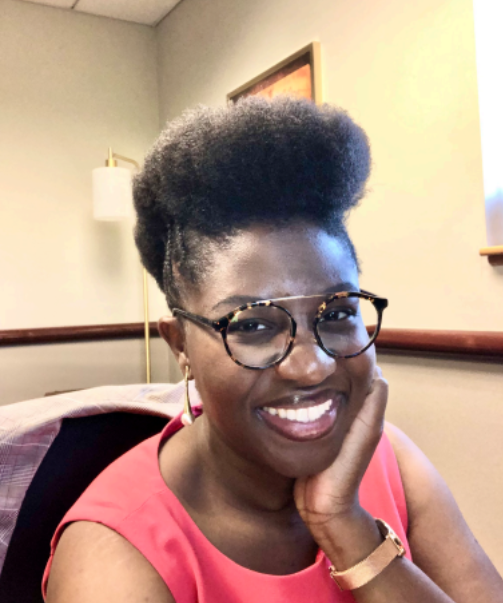
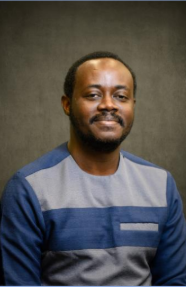
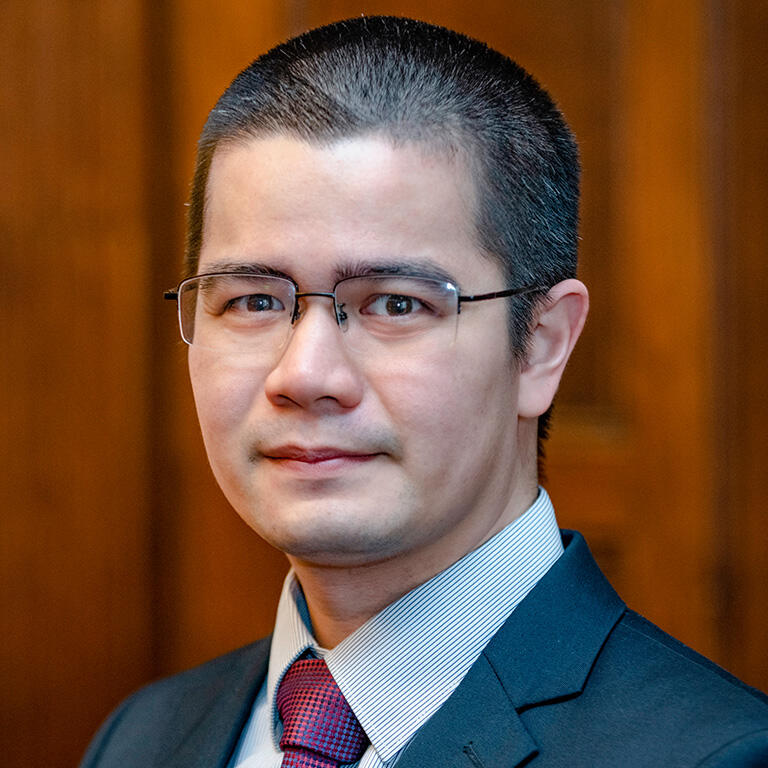
In September’s Lead the Change (LtC) interview, Dr. Jose Eos Trinidad argues that understanding educational change requires a broader understanding of how learning, development, and transformation occur across broader spaces. Dr. Trinidad is an Assistant Professor at the University of California Berkely, where he researches the interaction between schools and “outside” research, philanthropic, and nonprofit organizations. The LtC series is produced by co-editors Dr. Soobin Choi and Dr. Jackie Pedota and their colleagues at the Educational Change Special Interest Group of the American Educational Research Association. A PDF of the fully formatted interview will be available on the LtC website.
Lead the Change (LtC): The 2026 AERA Annual Meeting theme is “Unforgetting Histories and Imagining Futures: Constructing a New Vision for Educational Research.” This theme calls us to consider how to leverage our diverse knowledge and experiences to engage in futuring for education and education research, involving looking back to remember our histories so that we can look forward to imagine better futures. What steps are you taking, or do you plan to take, to heed this call?
Jose Eos Trinidad (JET): In undergrad, I remember learning about the French philosopher Paul Ricoeur, who wrote Memory, History, Forgetting. One of the most profound lessons I learned from his book is the importance of narrative to our remembering and the equal importance of forgetting—of a happy forgetting in the same way that we talk about a happy memory.
I think of Paul Ricoeur now as we consider what to remember, what to forget, and what to unforget in order to construct new vision for educational research. So let me try to answer the question in this way of thinking.
First, what should we remember? I think one of the things we should remember is that education has always been a state of tension. It has involved a history of expansion and exclusion, a history of moving forward and moving back, a history of individuals fighting for causes and the resistance that emerges from such fights. In my own work, I talk about the many forces outside schools that influence education: researchers, philanthropic managers, social justice warriors, teachers’ unions, nonprofit staff, and community-based organizations. I think it is key that we remember how forces both within and outside schools work alongside one another (and at times, in tension with one another) to construct this vision.
Second, any act of remembering entails forgetting. There is this moment in the movie Inside Out when jelly bean-shaped workers decide which memories are no longer relevant, like old phone numbers, and they get thrown into the abyss of oblivion. Remember the fate of Bing Bong? In a way, we need to forget in order to have space for new memories. What, then, do we need to forget? One of the things I have found striking in academia is that we can get hung up on small differences, and we can be very critical of each other’s views—even ones that are almost identical to our own. This can bubble up resentment and antipathy toward one another. Perhaps this is a space where forgetting can happen: that we look forward toward a future where people work alongside one another rather than in conflict with one another. I’m not saying that we must sweep differences under the rug. Rather, we must think about how to productively and constructively be in tension with one another.
“I’m not saying that we must sweep differences under the rug. Rather, we must think about how to productively and constructively be in tension with one another.”
Third, what must we not forget? I think we should never forget the struggles of those at the peripheries and the hope that things can get better. As news of wars and disasters, as well as existential questions, pepper our daily existence, I think we should not forget the experiences of students and families in the thick of these situations. Growing up in the Philippines, I remember that floods, typhoons, and electric blackouts were common occurrences for me—disrupting not just education but also life itself. Elsewhere in the country, I know of friends whose schooling was routinely disrupted by violence and war— whether because of the “drug war” of the former administration or the conflicts in the southern and rural parts of the country. In the world today, these experiences are all too common. Yet I also think that, especially during these times, we should hold steadfast to the hope that things can get better, with us working collectively with one another.
LtC: What are some key lessons that practitioners and scholars might take from your work to foster better educational systems for all students?
JET: My research has typically focused on actors and forces outside schools that affect what happens within schools. These research, philanthropic, nonprofit, and community-based organizations can have profound consequences not just for student outcomes but also for educational change. In many developed countries, research-practice partnerships and school reform organizations can provide added support to schools. In many developing countries, nongovernmental organizations can also be a source of much-needed resources and talent. But these organizations can also carry risks, as they may push their own agendas without consulting or even thinking about students, families, and their communities.
My work, particularly my new book Subtle Webs: How Local Organizations Shape US Education (Oxford University Press, 2025), aims to expand the aperture through which we think about our educational systems. It aims to show what strategies various actors use to influence education, which ones are most consequential, what organizational dynamics underlie particular decisions, and which populations benefit or suffer from these decisions. I think education leaders can take on some of these lessons by understanding the ecosystem of forces that influence what happens in schools.
Another area where I’ve been working is the use of organizational theories to understand schools and support school leaders. In my next book with MIT Press titled Thinking Organizationally: Seven Perspectives on How Organizations Work, I detail seven organizational perspectives that can help frame how we think about schools in particular, and organizations in general. I suggest the acronym SCRIPTS to help organize these perspectives: Structure, Culture, Relations, Institutions, Professions, Transformation, and Social Conflict. By providing practitioners and scholars with an easy mnemonic to remember all these perspectives, I hope they can figure out which aspects to focus on or change. For example, school leaders can interrogate whether their main problem is one dealing with the organization’s structures or routines, or one concerning its culture and identity. By understanding the symptoms and accurately diagnosing the problem, the solutions can become clearer.
LtC: What do you see the field of Educational Change heading, and where do you find hope for this field for the future?
JET: I see the field of educational change moving toward a more expansive definition of “education.” I do not think we should limit our understanding of change to what happens inside PreK–12 systems or higher education institutions alone. Education is happening in many different spaces: in families, community organizations, social movements, nonprofit organizations, digital environments, religious institutions, workplaces, and civic networks. If we want to understand educational change seriously, then we need to document and theorize how learning, development, and transformation occur across these broader spaces. Change does not begin and end with schools, even if schools remain central institutions in people’s lives.
Relatedly, I hope we continue to decenter the most dominant sites and voices in the production of knowledge about educational change. Some of the most important lessons about adaptation, resilience, and transformation are emerging from communities that are too often treated as peripheral to the field: underrepresented minorities, developing countries, indigenous communities, migrants, and families living through conflict, displacement, or environmental instability. These communities are not simply sites of suffering or implementation; they are also sites of knowledge, invention, and strategy. We should learn from how these communities navigate uncertainty, sustain hope, and create meaningful forms of education under difficult conditions. In many ways, they may have much more to teach us about change than the systems we usually place at the center of our theories.
Where do I find hope? I find hope in the fact that, despite all the setbacks and crises that surround education, people continue to organize, imagine, and build. I find hope in teachers who continue to care deeply for students amid enormous constraints, in families and communities who create supports where formal systems fall short, and in young people who insist on more just and humane futures. I also find hope in the possibility that the field itself can become more historically grounded, more globally attentive, and more open to voices that it has too often overlooked. If we can broaden our understanding of where educational change happens, who drives it, and what counts as knowledge about it, then I think the field has much to contribute—not only to improving schools, but to imagining better futures more broadly.