Category Archives: Newspaper Articles

Links to newspaper articles about international educational issues.

Scan of Ed News: University Rankings, Curriculum, and Teacher Training

(links are embedded as hyperlinks)International-Travel-Agency-262545-262545-1so

Beyond the issues of protests, unions, and funding, which were highlighted in the first part of this monthly scan, part II brings together links to a number of recent articles and reports that touch on the kinds of issues raised by the latest Academic Reputation Survey.

Academic Reputation Survey

Each year, Times Higher Education and Thomson Reuters sends an email to thousands of academics worldwide inviting them to participate in the annual Academic Reputation Survey, which aims to gain insight on the reputations of academic institutions within the academic community. While this method of ranking has been controversial, education news reports show that many countries take these rankings very seriously, making improvements to their education systems that they hope will elevate their national reputation on a global scale.

In their effort to produce the most college-ready students in the world, many countries are focused inward on issues such as language and curriculum, teacher training and evaluation, and school accountability, while also paying close attention to competitive outward measures.

Language Requirements in Higher Education

Of the top 20 schools, the only one from a non-English-speaking country is Japan’s University of Tokyo; all other schools are located in the US, the UK, Australia or Canada. Since 2006, Prime Minister Abe’s has focused on fostering “global talent to reverse the nation’s declining competitiveness on the world stage,” an effort that has led him to target English-language studies as an area of improvement. His plan would mandate that people reach certain scores on the Test of English as a Foreign Language (TOEFL) to gain college admission, graduation, and to qualify for government jobs.

Seen in Beijing, a T-shirt mocking poorly spoken English. Photo: AFP

Seen in Beijing, a T-shirt mocking poorly spoken English. Photo: AFP

Meanwhile, in China, a 2010 survey showed 80% of people polled agreed that there is a language crisis. “Because students devote more effort into passing English tests, they spend less time studying for courses for their major, dealing a ‘heavy blow’ to overall education,” said Zhang Shuhua, head of the Intelligence Research Academy. In March, some of China’s top universities dropped the requirement of an English test as part of their recruitment exams, yet over 40,000 Chinese students poured into Hong Kong to take the SAT exam, and the best are opting to study at foreign universities. This “brain drain” is a trend the leadership is seeking to reverse.

Similarly, Russia will begin testing foreign migrants in the Russian language and establish a “universal history textbook,” a fact that has many concerned. Education Minister Livanov said, “A history manual must not interpret events, but list a sequence of historical facts,” and indicated that it will be the teacher’s job to assess the facts and the logic behind them.

Teacher Training and Evaluation
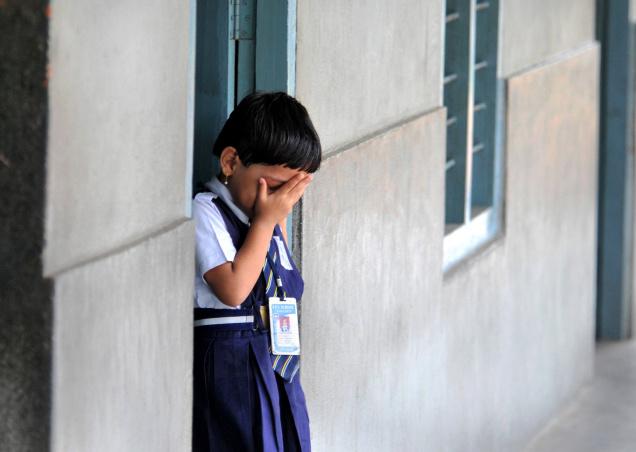
REPORT CARD: While most schools have adequate numbers of classrooms, separate toilet facilities for girls and boys, the availability of playground, school ramp, kitchen shed and boundary wall remains a major challenge in many States. Photo: K.R. Deepak

REPORT CARD: While most schools have adequate numbers of classrooms, separate toilet facilities for girls and boys, the availability of playground, school ramp, kitchen shed and boundary wall remains a major challenge in many States. Photo: K.R. Deepak

In India, low test scores on basic math and literacy assessments have led to calls for a higher standard for teacher training. Yet, private schools, which many feel provide a superior education, do not offer their teachers the same level of training. According to child rights activist Vasudev Sharma, the disparity in teacher training “is one of the major differences between private and government schools,” yet parents continue to rely on the reputation of private schools.

In a similar move to raise the bar for teachers, Australia will require all future teachers to score in the top 30% of a literacy and numeracy test, and Scotland will require that teachers become content area specialists as well as pedagogues. Yet, as we have seen in Guatemala, efforts to enforce higher standards for teachers leads to concerns about exclusion. Ireland is pushing back against this notion. According to Education Minister Quinn, “a diverse society needs a diversity of teachers, not a ‘one size fits all’ approach which ‘streamlines a particular cohort into teaching’.” At the International Summit on the Teaching ProfessionJohn Bangs went a step further, stating that “a national teacher appraisal scheme is not essential to an education system’s success…. For appraisal to work, therefore, it must be valued by teachers and be seen as a welcome addition to their professional lives.” We have seen further examples of this notion in recent research conducted in Korea, Mexico, and India.

Data Manipulation
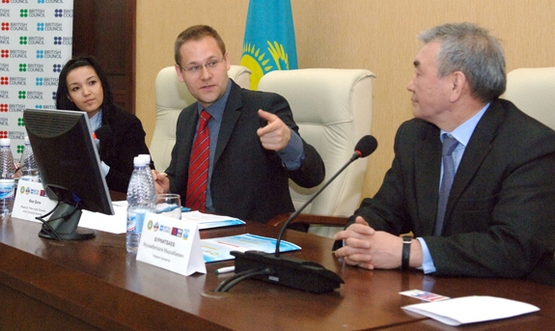
Phil Baty, Times Higher Education

Phil Baty, Times Higher Education

While teachers might struggle to see evaluations as essential to an educational system’s success, universities seem to have accepted the importance of the international ranking systems – so much so that they will go to extreme lengths. In response to the University of Cork’s recent attempt to manipulate the data, Phil Baty, editor of the international rankings of Times Higher Education, explained, “Global university rankings have become phenomenally influential in recent years – not only helping students to decide where to invest many thousands of dollars in tuition fees, but also in helping university leaders shape strategies and in helping governments to make multimillion-dollar funding decisions in some parts of the world.” Additionally, as seen in another recent example of educators manipulating data in the US, intense pressure to be successful within systems that value strict measures of evaluation can also lead to unintended outcomes.


Scan of Ed News: Protests, Unions, and Educational Funding

(links to articles are embedded as hyperlinks)International-Travel-Agency-262545-262545-1so

This month’s scan of recent educational research and news reveals a number of inter-connected issues that are arising in different places around the world.  In part one of this month’s scan, we highlight teacher and student protests, the role of teacher unions, and the uses of educational funding. Part II, which will appear later this week, will share reporting on issues of curriculum, testing, teacher and school evaluations, and higher education.

Teacher and Student Protests:

Ongoing protests highlight a globalized concern surrounding the issue of access to high quality education. Student protests in countries such as Portugal, Chile, Bulgaria, and Spain, focus on changing the system in ways that allow greater opportunity for access, while teacher protests Spain, Greece, and France, aim to preserve an established system now threatened by austerity measures. These protests highlight issues dominant in global news reports in recent weeks, such as the role of teacher unions and educational funding.

The Role of Teacher Unions in Ed Reform: Mexico and South Korea

The Hankyoreh

Korea Teachers and Education Workers’ Union (KTU), The Hankyoreh

Mexico recently witnessed the arrest of Elba Esther Gordillo, long-time president of Mexico’s teachers’ union. Charged with organized crime, Ms. Gordillo’s arrest was widely seen as a boon to education reformists and government officials because it called into question the integrity of unions and provided an example of the disruption of “business-as-usual,” at a time when the government is imposing drastic new reformsUnion leaders say these reforms will lead to students having no guarantee of free public schooling; however, the arrest of Gordillo highlights Mexico’s struggle with corruption, seen by many to be the main prohibitor of change. Two recent studies published by the Asia Pacific Journal of Education, found that school reformers should be “advised to rethink the school change model design in a way of fully capturing human aspects in the reform process.” Nevertheless, we can see direct examples of government threats against unions in South Korea, where teachers are now fighting against government efforts to withdraw recognition of the teachers’ union, and in South Africa, where politicians and lawyers are fighting to have education declared an “essential service,” a move that would make it illegal for teachers to go on strike.

Educational Funding:

While most student protests demand affordable higher education, many governments are focused on providing free education to children of all ages. One example is India, where the Karnataka High Court has declared that all private school students between six and 14 years of age are eligible for free education, not just those from poor families gaining admission under a 25% quota fixed by the Right to Free and Compulsory Education Act. However, it is also interesting to note that India’s private schools are expanding and raising their tuition rates. According to L.R. Shivarame Gowda, chairperson of the Joint Action Committee of Private Schools, tuition hikes are necessary for providing quality education: “The numbers of private schools in the city are multiplying, so schools need to provide better facilities to keep in pace with the development and retain students.”  In Japan, the issue of educational funding has become more political, as the government has decided to deny North Korean schools access to their tuition-free program. Education Minister Shimomura presented his view that schools under the influence of the General Association of Korean Residents in Japan conflict with the Fundamental Law of Education which calls for education free from any undue political influence. As reported in the International Review of Education, China’s private universities offer an example of institutions that struggle financially, yet provide the people with alternatives that might ultimately allow more students to benefit from the advantages of higher education; however, China also provides an example of how funding alone might not provide children with the education they deserve. The country’s system of residential registers favors those who live in big cities – a holdover from the era of a planned economy, originally used as the basis for rationing of food and other necessities – is fast developing into a serious social issue.

The Hindu

The Hindu


Singapore

14295425_0The Singapore Ministry of Education has been surveying educators and parents about their concerns with the Singapore education system. The results reveal worries about a perceived over-emphasis on exams and grades that contribute to a high stress education system that overlooks non-academic talents. Additional concerns include anxiety about declining social mobility and rates of inclusion due to disparities in access to education that favors privileged children who can afford tuition.

In response to these kinds of concerns, the Ministry of Education has launched initiatives aimed at strengthening efforts to help every student succeed by:

  • building a strong foundation in literacy and numeracy, from the kindergarten level to secondary level. For the primary and secondary school levels, the existing Learning Suppport Programme for Primary 1 and Primary 2 students will be extended through all 6 years of primary education and even to secondary level.
  • providing teachers with professional development opportunities to learn clear research-based principles to reach out to “low-progress learners.” These measures will help ensure that all students benefit from the best opportunities in education regardless of their background and pace of development.
  • piloting 15 kindergartens in working class neighborhoods in Singapore and providing further support to the pre-school sector, which the MOE has traditionally not been overseeing.
  • expanding support for students with special needs by providing additional post-diagnosis services for parents, streamlining the application and enrollment process for special education schools, and increasing funding for low-income students with special needs.

For more information:

More help in Math, English for weaker students

Helping every student succeed (MOE)

Get back to basics of education: Heng Swee Keat

More support for students with special needs (MOE)

Exams and streaming: Recalibrating our education system (commentary)

Scan of Ed News: Quality and Access

International-Travel-Agency-262545-262545-1so(links to articles are embedded as hyperlinks)

Recent news reports reveal the ways in which countries all over the world are taking steps to make quality P-12 education more accessible for students.

In Chinathe government is closing privately operated schools and will allow the children of migrant workers to attend public schools. In addition to paying tuition fees for vocational students in southern rural areas, the Chinese government is also looking for ways to increase high school enrollment in areas such as the Xinjiang Uygur autonomous region. In contrast, the government has announced that, in their effort to increase the quality of tertiary institutions, postgraduate education will no longer be free. As noted in The New York Times, the cost of education is felt sharply by those in rural areas, where families are suffering from “high education costs coincid[ing] with slower growth of the Chinese economy and surging unemployment among recent college graduates.”   Meanwhile, state universities in Indonesia will receive government funding to eliminate initial fees for new students and lower tuition rates overall.

In addition to the issue of access to education, many countries are reporting on efforts to improve the quality of education, resulting in conflicts between government officials, union leadership, and teachers. In Denmark, teachers are pushing back against the government’s reform measures, which include increasing the number of hours teachers spend in the classroom. In France, schools have had to shut their doors due to a teacher strike in protest of President Hollande’s reform agenda, which aims to increase classroom time. Guatemalan teachers and students have also been protesting the country’s education reform goals, which include university-level training for all teachers, a measure many believe will have a negative impact on education in rural areas. South Africa has long provided rural teachers with incentive stipends; however, teachers are in the midst of planning a strike to protest the government’s recent decision to terminate the allowances.

Reforms in Mexico and India in the Journal of Educational Change

(links to articles are embedded as hyperlinks)

JEDU 2009:JEDU 2009In the most recent issue of the Journal of Educational Change, studies highlight teacher participation in reform efforts in Mexico and a participatory approach to wide-scale change in India.

Education Reform and Teacher Participation in Mexico

In their study of Mexico’s 2006 Reforma de la Educacion Secundaria (RS) (Reform of Secondary Educatión), Levinson, Blackwood and Cross conclude that despite interest in professionalizing teaching at the secondary level, “for the most part secondary teachers in Mexico neither felt like agents nor partners in the RS…. As in previous reform efforts, teachers mostly felt that they were recipients of plans formulated by government officials, and as a result many have evidenced neither complete compliance nor full commitment to the reform.”  They go on to explore the problematic role of the union in the reform and the concerns that many teachers have about the union. Recent reports from Mexico show that concerns about the union and teacher participation continue.  President Enrique Peña Nieto’s recent education reform initiative is widely seen as an effort to diminish the power of Mexico’s teacher union, which has been led by Elba Esther Gordillo; however, it is not clear if President Nieto will provide the essential structure and support that would allow for authentic teacher participation. At this time, the teachers and union leadership have been presented in the press as allies in the effort to protest Nieto’s reform.

Wide-scale change in India

While recent attention often focuses on the regulations of the Right to Education Act in India (including recent reports  and debates about the progress of this initiative), Tricia Niesz and Ramchandar Krishnamurthy suggested that the wide-scale adoption of Activity-Based Learning (ABL) in Tamil Nadu India was accomplished through a more participatory, grass-roots approach.  They argue that state-level administrators “engaged strategies for change that combined both movement-building tactics and the conventional tools of administrative power.”  These administrators themselves became experts in the ABL method in a way that built good will and moral authority even when administrators used top-down mandates to institutionalize the reform.

China

High school admissions a priority in Xinjiang

By Cui Jia in Urumqi, China Daily (February 1, 2013)

China

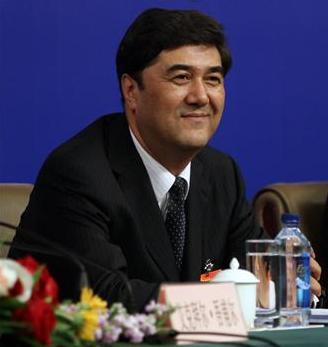
Nur Bekri

Nur Bekri, chairman of the Xinjiang Uygur autonomous region, has stated that in the next five years they hope to increase senior high school admission rates, and make vocational education available for all junior and senior graduates. While there have been significant increases in student enrollment since 2006, and regional governments began paying the tuition fees for vocational students from southern rural areas, the government is searching for ways to encourage more students to continue their studies.

For more information:

Uyghur Pupils Face Beatings

1,600 vagrant Xinjiang children resume normal life

Denmark: School Reform

Photo: Klaus Holsting

Anders Bondo Christensen
Photo: Klaus Holsting

The latest school reform proposal in Denmark calls for a 25-hour workweek for teachers, inclusion education, measurable goals, and a collaborative discussion about teacher training. Despite the fact that the reform has controversial implications for wages, work hours, and professional development, Anders Bondo Christensen (chairman of the Danish Union of Teachers) has garnered the support of the majority of teachers. Christensen is now hoping that Education Minister Christine Antorini will see that the plan is close to the government’s objectives.

Education Minister Christine Antorini

Education Minister Christine Antorini

However, in a controversial move, Minister Antorini has just  introduced a large-scale study in which more than 3,500 students in a total of 200 schools will be taught in their native languages, including Arabic and Turkish. In a press release, Antorini said, “We want to know more about what helps develop the language skills and knowledge of bilingual students. The trials will use and strengthen the tools that some schools and councils already have available today.”

Danish People's Party Education Spokesperson, Alex Ahrendsten

Danish People’s Party Education Spokesperson, Alex Ahrendsten

Alex Ahrendtsen, Danish People’s Party education spokesman, expressed the his disapproval.  “I’m shocked,” he said. “In the midst of school talks, she allows such a bomb blast.It destroys a really suitable climate for negotiations.” Instead, Ahrendtsen would prefer to see greater efforts to include bilingual students in Danish culture.

Other Nordic countries are debating similar issues and are watching closely.

For more information:

Please consult links embedded in the scan above, as well as those listed below.

Primary School Gets Back Hours in Mother Tongue (link in Danish)

Broad Support for Bondo’s Teacher Initiative (link in Danish)

Liberal Alliance: High school test should not determine access to secondary education (in Danish)

Guatemala

Program to Promote Educational Reading Levels

Prensa Libre (January 11, 2013)

c9e9ad2a43a146355919a081f7560134_int470As Guatemalan schools begin the 2013 academic school year this month, teachers across the country are expected to implement a new reading program, entitled “Leamos Juntos” (the literal translation of which is “We Read Together”), aimed to promote reading and to involve students, teachers, families, and communities in the development of reading. The program has in common characteristics of earlier reading reforms from 2006 and 2011 – which, among their goals, served to promote healthy reading habits within families as well as to maintain Guatemalan oral traditions – and is a response to an “Ibero-American Educational Cooperation” conference) held last October 2012 . Within that conference, Spanish-speaking countries vowed to prepare a reading plan for the furthering of literacy in their schools.

With 90M Quetzales (a little over $11M) invested in the reform, one primary component of the program involves a normalized half-hour of reading per day within classrooms as a way to foment a love of reading among students. The money, borrowed from the International Development Bank, will be used for four purposes: 1) the purchase of 4.5M books, 2) materials to safeguard and deliver books to schools, 3) infrastructure for the storage of books, and 4) the eventual printing of e-books donated by UNESCO.

The Guatemalan Ministry of Education has created a national commission on reading as well as departmental commissions that are in charge of their respective educational centers and schools (both public and private). These commissions are expected to devise the human resources necessary to follow through with the promotion as well as effective methods – including a systemization of “good reading practices” – for teachers to help children with acquiring and developing their reading skills. Those departmental commissions are also in charge of their own resources and materials, presumably divided from the investments mentioned previously.

Additionally the reform calls for a commission of integrated school reading that includes the director of the institution, two teachers, two parent representatives, and two students whose responsibilities include ensuring the appropriate use of materials (ensuring that they’re organized by theme, type, language, etc.). Teachers in all institutions have the major responsibility of carrying out lessons that involve student participation and activities related to the reading. Finally, periodic evaluations of reading departments, institutions, and areas are a part of the reform.

Contributed by Tran Templeton

For more information:

Guatemala: National Reading Program “We Read Together”

90M Quetzales Invested in Reading Program


Mexico

Mexico Approves Massive Education Reform

Associated Press (January 16, 2013)

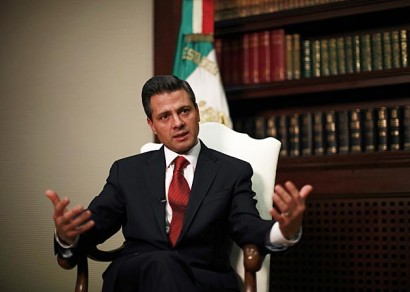
President Enrique Pena Nieto

President Enrique Pena Nieto

President Enrique Pena Nieto will enact a new public education law that calls for the creation of a formal system for hiring, evaluating and promoting teachers, in an effort to put an end to the buying and selling of teaching positions.”The goal of the reform is a quality education and for this there are two big things (needed): evaluating professional teachers and the body that will evaluate the system,” said Sen. Juan Carlos Romero Hicks, president of the Senate’s Education Commission. With this move, the federal government will take control over the public education system, which has been dominated by the 1.5 million-member National Union of Education Workers.

Union President Elba Esther Gordillo

Union President Elba Esther Gordillo

Elba Esther Gordillo, who led the union for the past 23 years, has been accused of using union funds for personal gain.

For more information:

Hosts of Elba Esther mobilized against labor and educational reforms (in Spanish)

Mexico Takes on Teachers Over School Control 

Thousands of Teachers in Mexico Protest Pending Education Reform Initiatives

State Congresses Approve Education Reform (in Spanish)

Mexico Approves Education Reform, But Not Everyone is Celebrating (in Spanish)

China

Boosting migrants’ education

By Cheng Yingqi, China Daily (January 14, 2013)

Xue Jun/For China Daily

Xue Jun/For China Daily

In an effort to improve the quality of education for migrant workers in China, the education authority in Beijing’s Chaoyang district will shut down non-government run schools and guarantee that migrant workers’ children will attend public schools. Private schools for the children of migrant workers have sprung up in Beijing, Shanghai and other large cities where the public schools do not accept children who do not have residence permits; however, many of these schools have been deemed unsafe for schooling and have not been officially authorized to operate.

According to this article, “Over the past six years the Chaoyang education commission cut the number of schools for migrant workers’ children from 135 schools teaching more than 50,000 students, to 25 schools teaching 11,000 students.” These closures worry parents who fear their children will have trouble adapting to the public school environment.

For more information:

Migrant Education in China (OECD Report)

Chinese cities to relax school entry for rural migrants

More regions to reform migrant education system