Category Archives: Partnerships

How Do You Build a Learning Ecosystem? Gregg Behr on the Evolution and Expansion of Remake Learning and Remake Learning Days (Part 2)

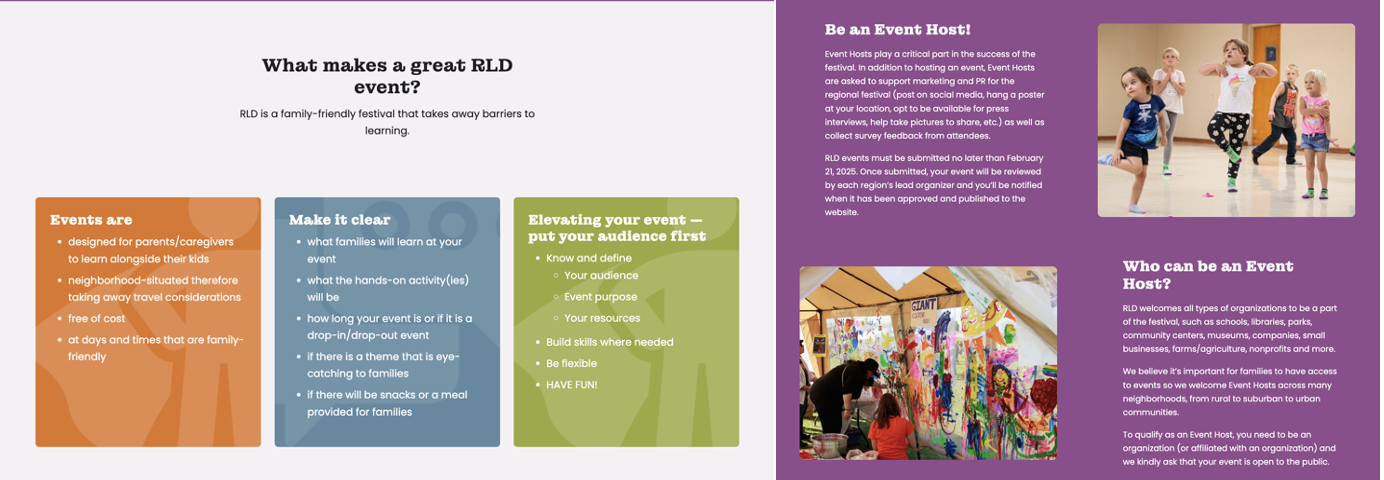
What does it take to expand support for learning in and across communities? In the second part of this 2-part interview, Gregg Behr talks about the development of the first Remake Learning Days in Pittsburgh, Pennsylvania and how they spread to community-wide efforts in 15 different regions in 4 countries. In 2007, Behr, the executive director of The Grable Foundation, founded Remake Learning as a network of educators, scientists, artists, and makers supporting future-driven opportunities for children and youth in Pittsburgh. Celebrating its 10th edition this month. Remake Learning Days began in 2016 as a local learning festival with hands-on learning events for children of all ages at libraries, schools, parks, museums, and other community spaces. Behr is also the author with Ryan Rydzewski of When You Wonder, You’re Learning, sharing the science behind the  work and words of Fred Rogers and Mister Rogers Neighborhood, a well-known television show that ran for over thirty years.  This interview has been edited for length and clarity.

TH:  Let’s turn to one of the activities that I think has become a signature of your work – Remake Learning Days. What were some of the critical “aha’s” in their development? 

GB: The first “aha” happened in one of the human centered design sessions. In Pittsburgh, we had a firm called Maya Design, and they had a retreat room surrounded by whiteboards where they would facilitate these amazing sessions. In 2015, we convened about 30 people, including folks who came from the White House Office of Science and Technology Policy. We were asking these big questions about how far Remake Learning had come and where we might go – asking, essentially, how do you build out a learning ecosystem? What would that look like? It was during that session that it became clear that the network was serving professionals like teachers and afterschool directors, librarians, and designers really well, but that we weren’t really designed to serve parents, families and caregivers. There was a clear “aha” that if we didn’t seriously engage with these members of our community, we’d risk being incredibly faddish, and we started wrestling with what we could do to engage this group. There wasn’t an obvious way to just plug parents and families into our different programs and activities, but through this user design process two things came to light. One was that someone talked about how open houses were one of the singular moments when parents, families and caregivers really come to schools and engage with educators, as surface level as it might be. Then totally separately, someone talked about how, at least in Pittsburgh, we have lots of neighborhood festivals like the Pickle Festival, the Perogie Festival, etc. I can’t even remember who it was, but someone said “Hey, what if we put these two ideas together? This idea of neighborhood festivals with the idea of an open house?” And so we started to talk about having a kind of festival of open houses of all of these places for kids and learning that had been built over the past couple of years. At that point, we had dozens, if not hundreds of makerspaces. We had STEM labs. We began to wonder what might happen if there was a chance for parents, families and caregivers together with their kids to get into all of these spaces and to get beyond their schools and to go into into the Carnegie Museum of Art or whatever it might be. That was the germ of the idea of what became Remake Learning Days, but I can’t even recall what it was called initially. 

A screenshot of a website

AI-generated content may be incorrect.

Within a year, we had the first Remake Learning Days in 2016 because all sorts of organizations said they wanted to participate. There were more 250 events over the course of about nine days. 25,000 people came out in that very first year! That was the second aha – seeing all of those people come out and realizing “Oh, there’s something here!” The other big realization was that there were 250 events that were self-organized: they did it and they weren’t paid to do it. Clearly something had traction, in 2025 in Pittsburgh, we’ll celebrate 10th edition of Remake Learning Days. 

TH: That’s an incredible story. In 2019, other cities in the US and in other countries started hosting their own Remake Learning Days: How did they start to spread? 

GB: The same people from the White House Office of Science and Technology Policy challenged Remake Learning to document its work in what became the Playbook. In fact, someone from that Office left the White House to work with the Sprout Fund in designing the Playbook. The basic idea behind the Playbook was to create something that would be as helpful to people and organizations in Pittsburgh as it would be to Flint, Michigan or Oklahoma City. After seeing how the Remake Learning Days had taken hold in Pittsburgh, we started looking for financial support to develop the Playbook. We got some funding primarily from the Carnegie Corporation of New York, and created what we initially called a toolkit that communities could use to host their own Remake Learning Days.  At the time, Remake Learning was deeply involved with other national organizations and associations that were involved with STEM, the maker movement, and other things like that. We just put the toolkit out there to say, “Who else might want to host Remake Learning Days?” And that’s how they began to spread. 

TH: As I understand it, you’ve tried to let these Remake Learning Days grow and spread more or less on their own?  Are there any particular lessons you’ve learned, either any lessons you’ve learned, either vicariously or from your interactions with those in other communities? 

GB: In terms of letting them spread, yes and no. We’ve tried to provide just enough guardrails so that, if a Martian comes down and goes to Remake Learning Days in Pittsburgh and then Doncaster, England and then southern Wisconsin, it would seem like these things are connected.  If Remake Learning Days are going to be successful, you have to have that connection, but they also have to feel contextualized in these different places. 

Along the way, the team has learned a thousand lessons. They’re going to continue to iterate as they look ahead to years 11 and 12, but like so many other community-based initiatives, you need to have that “backbone” organization; you have to have that clear champion who’s going to lead the work. In one instance, there was an amazing woman who made Remake Learning Days happen where she lived. But after she left, it hasn’t been the same thing. It was so tied to one person and one organization that it just didn’t stick; so we’ve learned that lesson. We’ve also learned the lesson that sometimes things have beginnings and ends. Chattanooga and Chicago hosted phenomenal Remake Learning Days, and they met the needs of the Public Education Foundation in Chattanooga and the Chicago Learning Exchange. But they plateaued in their utility, and both said, essentially, “We’ve loved this, but we’re not going to continue with this,” and we’ve learned that’s totally fine. We’ve seen places like Sarasota and Doncaster completely adopt this approach; raise lots of local money; and Remake Learning Days are now integral to their local efforts. If we were to shut down Remake Learning here in Pittsburgh, they would continue on in some of these other places. We’ve learned all sorts of lessons about leadership, about local financing, about making it local so people feel connected to it. It’s not just a franchise that someone imports; the Remake Learning team has worked hard in terms of monthly meetings and all sorts of things to make sure there’s quality control for successful festivals. 

A group of people standing outside

AI-generated content may be incorrect.
Gregg Behr at a Remake Learning event (photo: Ben Filio)

TH: I didn’t realize how much work the Remake Learning team is putting into these. I thought you put the Playbook out there, and then just let people use it. But you actually have a team that coordinates with these other places, and in a sense sanctions these other events, and says, “Yes, these are Remake Learning Days. This is one of our partner events”? 

GB: Again, the answer is yes and no. Everything that Remake Learning has done, maybe to its detriment, is through Creative Commons licensing, so people have used the Remake Learning Network playbook and also the Remake Learning Days toolkit to their own effect. In New Hampshire, they have used the playbook to support the development of their local learning networks but never with any formal coordination with Remake Learning— – and that’s okay. Places like Qatar have had “Doha Learning Days” and have used the Remake Learning Days playbook. I’d say it’s a loosely sanctioned process. But then there are two producers of Remake Learning Days, and they in turn work with the team in Sarasota or the team in Doncaster, or wherever it may be. 
TH: How does that work? Does Sarasota have to pay the producers or are they providing pro bono services to the places that want to do it? 

GB: Yes, they have a remarkable team supported by The Patterson Foundation in Sarasota; and, for Sarasota and elsewhere, Remake Learning has borne the costs for some of the regional and national marketing, because with an event like this, the most significant costs are marketing. 

TH: Have you run into challenges where you wish that some place wouldn’t call their events Remake Learning Days? 

GB: There have been some challenges along the way, with some places that want to call it something else like “STEM Days,” and the team has had some tough conversations with some cities, saying if we’re going to be part of this, then there are a few things you need to do. Some cities have just said, “We’re going to have our own thing.”  There are also challenges around quality control and questions about what kinds of events to connect with.  There are now some pop-up festivals which have been hugely successful.  People have staged events in Tel Aviv and Antarctica, but sometimes these are singular events on a particular day, and they’re branded and connected to Remake Learning Days, and they’re on the website, but it’s not a multi-day festival the way it is in Sarasota or southern Wisconsin or Kansas City. 

Dates are also difficult. Even with the pop-up events, Remake Learning Days have had a set date range, something like April 23rd through May 23rd. For example, the six regions in Pennsylvania that now host Remake Learning days, they all happen at the same time. That is very deliberate, and they are coordinated statewide. But in 

Tennessee, they valued Remake Learning Days, but May didn’t work for them because of state testing, and it turns out that May is not a great time for Remake Learning Days in Uruguay. That raises the question: does it have to be around the same dates around the world for it to be called Remake Learning Days? The team is wrestling with a whole bunch of questions like this as they go forward. They’re trying to provide greater flexibility while maintaining quality control. 

TH: Can you say anything more about the next steps or the challenges ahead for Remake Learning Days and Remake Learning? 

GB: In terms of challenges, like a lot of these things, no one ever imagined there being a 10th edition. But even with that, ongoing fundraising is a challenge. Yet, for corporate funders, sponsoring an event like Remake Learning Days is a lot easier than sponsoring a network. For fundraising, it certainly helps that they have built up a body of data, including qualitative evidence – write-ups and videos – to support it. Quantitative data, too! For example, they worked with Heather Weiss, who led the Harvard Family Research Project to document their impact on parents. Their goals included helping parents understand how learning is being remade; helping parents understand how they can support their own kids if they find their kids are lit up by art and design or coding or maker-centered programs; and building up demand among parents so they might go to school board meetings, parent-teacher conferences, or their local library to ask questions about these approaches to learning that are clearly lighting up their kids. Heather’s work demonstrated that parents were gaining familiarity with STEAM and new approaches to learning and building their interest and support for those approaches.  

Looking toward the future, I think we’ll see fewer sites that host Remake Learning Days, but they will be more embraced by their region, with significant regional funding. In addition to seeing that in southern Wisconsin, on the west coast of Florida, and Doncaster, the Pennsylvania Department of Education has invested significantly in Remake Learning Days and different units from the state government are also providing in-kind support. I think we may see more changes like that where public funding also helps to drive further engagement and support from local and state governments.  

TH: Looking to the future, let’s return to Remake Learning in Pittsburgh. What do you think it will take to sustain and deepen this work overall?  Are there particular problems that have to be addressed or changes that have been made? 

GB: There are always lots of answers to a question like that!  One thing we have to address is leadership. The leadership has evolved over the years. When it was time for the Sprout Fund to sunset, and they wrapped up their work, we hired what amounted to a director for Remake Learning, and there have been a number of directors since that time, each of whom has held the position for at least two or three years. But incredibly, it wasn’t until around 2014 or 2015 that we convened what we call the Remake Learning Council. This is a council of CEOs, learning scientists, leaders of cultural institutions and others who meet regularly with the director and the Remake Learning team and provide advice and support.  Of course, the people in these roles change positions all the time. There are new museum directors, new superintendents and so on. We have to pay attention to that churn and make sure we have the right people and the right support, and that’s a great leadership challenge. It’s also what makes Remake Learning sustainable – it’s crucial to have a large number of leaders across the community who value this work, who are contributing to the design of it and advancing it. 

Relatedly, Remake Learning, if you can believe it, has never been its own separate 501 (c) (3) [which would allow it to be a charitable organization collecting tax exempt donations]. That’s because part of the strategy in the beginning was to demonstrate that this was not going to be something that competed for funding with other charitable organizations, like museums and some of our other charitable partners. Instead, Remake Learning has been fiscally sponsored by other organizations, and I think that’s been a real benefit – so that the focus could be the work itself. Initially, Remake Learning was fiscally sponsored by the Sprout Fund; then it was fiscally sponsored by our regional association of grantmakers called Grantmakers of Western Pennsylvania. It’s currently fiscally sponsored by the Allegheny Intermediate Unit, our region’s educational service agency. But we always have to check in on our structure: Do we have the right home? Do we have the right governance? That’s an ongoing challenge for the network. 

Another challenge with any organization that reaches 20 years is that you’ve got people who’ve been involved for nearly 20 years, and there are people who just joined two weeks ago. We have to keep the work fresh and relevant for the newcomers as much as for the veterans. This is a programmatic challenge.  It’s hard to keep things fresh for most everyone involved. As one example of “keeping things fresh,” Remake Learning started in the past few years to distribute what they call Moonshot Grants. Regionally, I think they’ve spent about three or four million dollars in grants to local organizations and schools that are really trying to push the edge of what constitutes great learning, especially as such much around us is changing. That’s one example that’s kept the work really fresh. 

Remake Learning has also really leaned into some of its national and international partnerships, which has pushed its work forward. Just last week Remake Learning announced ten national moonshot grants, which came out of the Forge Futures Summit, which brought together organizations involved in learning ecosystems from around the US, and even a few other places worldwide. This speaks to the spread and the tension: Remake Learning is committed to being a regional organization and it has to continue to do basic things brilliantly at the regional level. It’s not a national or international organization, but it sometimes has – or could have – a national and international role to play. That’s what Remake Learning Days have done, and Remake Learning is figuring out how to do that as a network while not distracting ourselves from our core mission regionally. 

TH: Can you say a bit more about what Remake Learning has done internationally? 

GB: Remake Learning has partnerships with a number of international organizations including HundrED in Finland, Big Change out of London, OECD, and the Global Education Leadership Partnership.  Just as an example, Remake Learning got connected to Big Change pre-pandemic because they had done a report and Remake Learning ended up being one of their case studies. Now Remake Learning and Big Change are funding a loose federation of international organizations that meet almost monthly. Along with Remake Learning and Big Change, it includes Learning First out of Bermuda, People for Education in Canada, Learning Creates Australia, Innovation Unit, Zizi Afrique in Kenya, Fundacio Bonfill in Spain, Educate! in Uganda, and Dream a Dream out of India. You’ve got people who represent different geographies. In some cases, they are more metropolitan like Remake Learning, but in others are more nationwide, like Uganda Educate! The first meeting focused on Bermuda’s transforming education system. The second one was a showcase of some of the work in Australia. It’s become a global learning community.
Towards a Collaborative, Open-Minded, Respectful Community of Global Learning: Lead the Change Interview with Tracy X. P. Zou

In the latest Lead the Change (LtC) interview, Tracy X. P. Zou discusses her efforts to develop a collaborative approach to scholarship and to incorporate global, international, and intercultural dimensions into the teaching and learning. Zou is an assistant professor in the Department of Educational Administration and Policy at the Chinese University of Hong Kong. The LtC series is produced by Elizabeth Zumpe and colleagues from the Educational Change Special Interest Group of the American Educational Research Association. A pdf of the fully formatted interview is available on the LtC website.

Lead the Change (LtC): The 2025 AERA theme is “Research, Remedy, and Repair: Toward Just Education Renewal.”  This theme urges scholars to consider the role that research can play in remedying educational inequality, repairing harm to communities and institutions, and contributing to a more just future in education. What steps are you taking, or do you plan to take, to heed this call? 

Tracy Zou (TZ):  I believe that cultivating collaborations can be a meaningful approach to addressing inequality, repairing harm, and contributing to a more just future by giving voice to important stakeholders to enhance the relevance and impact of educational change research. In many education change projects in higher education, faculty members and students are only informed about, not involved in, the change. Such projects do not usually lead to a desirable impact on teaching and learning practices. To be impactful, changes need to be initiated with people, not imposed on them. 

Globally, many scholars are calling for a collaborative approach to scholarship, but in practice, we encounter many barriers, including faculty members’ heavy workload. Faculty face increasing demands to generate more research more quickly and with higher impact. This means that, in many parts of the world, including Hong Kong where I am based, engaging in educational change is less rewarded than doing research. Against this backdrop, much of my research has involved teaching and learning-focused collaborations among faculty members and between faculty members and students. My studies have included research on students as partners (SaP) and faculty member collaborations for cultivating communities of practice. 

The SaP study (Zou et al., 2023a) involved working with 43 undergraduates as partners in three research projects across two research-intensive universities in Hong Kong. SaP is considered challenging in Asia because it requires an equal relationship in teacher-student collaborations, and there is typically a larger power distance in many Asian regions. We show SaP is achievable in Hong Kong with proper alignment between SaP project designs and the student partners’ roles. Conducive designs include involving students in project configuration, providing them with peer collaboration opportunities, and designing project topics that interest the larger student community. We found that faculty who were previously skeptical about collaborating with students as ‘equals’ came to see the potential and became inspired to experiment with this practice.

In a faculty member collaboration study (Zou et al., 2022; 2023b), I investigated four government-funded cross-institutional teaching enhancement projects involving faculty from six universities in Hong Kong and Mainland China. While these collaborations aimed to bring systemic changes to teaching practices and curriculum design, we encountered various challenges including heavy workload of faculty members and incompatible credit systems in different universities. Our findings show that creatively aligning the larger project outcomes with the priorities of the institutions or departments of individual faculty members can tackle some of these challenges. Achieving this alignment requires faculty members to adjust elements of the larger project outcomes to match local needs and negotiate with the research team about new ways of achieving the planned outcomes. In this process, faculty members have opportunities to exercise considerable leadership at a local level.  These findings suggest a possibility of breaking down inequities in higher education by providing means for faculty—especially teaching-track faculty at research-intensive universities—to have voice and provide leadership in large-scale projects on educational change. 

I believe that this research on collaboration can enable a more equal and just educational system in two ways. First, the research involves carefully designed interventions that bring small, yet important collaborative initiatives that have the potential to be scaled up, introducing changes developed from the bottom up. Additionally, the findings provide implications that can encourage similar projects for a wider impact collectively. 

LtC: Your work has involved collaborative approaches to researching how teachers and students in higher education develop professional capacity and problem solving skills. What are some of the major lessons that practitioners and scholars of Educational Change can learn from your work and experience?

TZ: The most important lesson that can be learned from my research on collaborative approaches is that faculty members should involve students in educational change, trust them, and provide them with autonomy and freedom to experiment. This is easier said than done. One challenge is that project funding mechanisms, at least those in Hong Kong, tend to hold faculty members accountable if project outcomes deviate from the proposal. In some of my projects, faculty members have been concerned that giving students the autonomy to make decisions would be risky. 

However, our findings showed that giving students autonomy typically enhances their engagement. In a project about students’ learning experiences during the COVID-19 pandemic, we involved students as co- researchers starting from the project planning stage, giving them voice in defining the specific topic and the scope of the research (e.g., what aspects of learning, which groups of students to be researched), designing the methodologies, and constructing the budget. These are tasks that are not typically handled by students, but we found that students became extremely committed to the project as they focused on the matters that were most relevant and exciting to them. For example, one group of students investigated the impact of the pandemic on international students studying in Hong Kong from developing countries and revealed how financial and resource constraints influenced students’ learning and well-being. 

Another important lesson learned is about proper and flexible project designs. Collaborative endeavors cannot be fully predicted up front and often require revision and re-direction in project outcomes. Our research findings provide evidence for the need for embedding flexibility in the research design.

Thirdly, my research suggests that practitioners, scholars, and grant-makers interested in collaborative research need to allow creativity in conveying the project outcomes. If you want to involve students, for example, you might find that students are less enthused about or academically prepared for writing rigorous reports—which scholars and grant-makers might typically expect as a project outcome—but can get excited about making a short video and creating memes to demonstrate their learning. Allowing creativity empowers students to use their expertise rather than being required to conform to traditional methods. 

Finally, regarding projects and initiatives that involve collaborations among faculty members, my research suggests that intervention designers, researchers, and grant-makers need to take into consideration the holistic professional development needs of the faculty members involved and build those needs into the design of the collaborative initiatives. For example, the collaborative projects could take into account how the research can result in learning and artifacts that might become part of participating members’ portfolios that they may need for longer-term career development. It is important to note that an equal and respectful relationship is the key to any collaborative professional capacity building.

LtC: One major strand of your work has focused on the internationalization of teaching and curriculum in higher education. What might practitioners and scholars take from this work to foster better school systems for all students?

TZ: Internationalization of teaching and the curriculum concerns the incorporation of global, international, and intercultural dimensions into the teaching and learning processes and the curriculum (Leask, 2015). It is basically about creating an open-minded, respectful community of global learning that aims to benefit all students. The notion of internationalization is sometimes misunderstood as merely developing intercultural skills or including international examples in teaching material. Internationalization fundamentally involves not only acknowledging other cultures but also deeper transformational work to become critically aware of one’s own identity and the cultural and political assumptions underpinning our curriculum and teaching practice. 

In my research, facilitating internationalization of teaching and the curriculum starts from understanding how faculty members make sense of the concept of internationalization and how they relate it to their courses and programs (Zou et al., 2020). This initial step helps build a common understanding between academic/educational developers and faculty or practitioners, engaging everyone in an open and critical discussion. For example, we discussed with a journalism faculty member about what it looks like to be an ethical and professional journalist in a global world, and which parts of the curriculum prepare students (or not) for the relevant attributes. We reached a consensus that, while there are international learning opportunities in the existing curriculum, they remain insufficient. This understanding allowed for further discussion on what actions to take. 

Furthermore, we found that educational developers should start these conversations by connecting internationalization efforts with specific faculty members’ disciplines. This connection is important because our study (Zou et al., 2023c) shows that faculty members from different disciplines engage internationalization differently according to what is seen as ‘knowing’ and ‘being’ in their disciplines. For example, in hard disciplines such as science, learners are expected to acquire foundational scientific knowledge before they can develop the identity of a scientist. In soft disciplines such as humanities, ‘knowing’ is achieved as learners use their own perspectives and experiences to make sense of the content. Accordingly, internationalization of the curriculum in hard disciplines may make more sense at a later stage of the learning process, such as through a capstone. In contrast, soft disciplines may productively leverage students’ diverse cultural experiences throughout their programs to develop multiple perspectives and critical thinking. Situating internationalization in disciplinary contexts also allows for deeper learning beyond superficial approaches such as language and skills training, becoming embedded in students’ development of professional identities and civic capacity to work and live together with people from different backgrounds. 

The SaP concept discussed earlier can also contribute to internationalization of teaching and the curriculum. Faculty members and scholars of Educational Change can consider involving students in collaboratively re-designing teaching materials and curricula, such as by asking students to share which topics inspire them and how they prefer to learn these topics. It is important to involve students from all backgrounds, particularly with representatives from local communities as well as from abroad, to build an open-minded, inclusive, and respectful community in which every student can find their place and thrive. 

LtC: Educational Change expects those engaged in and with schools, schooling, and school systems to spearhead deep and often difficult transformation. How might those in the field of Educational Change best support these individuals and groups through these processes?

TZ: Indeed, transformation is often difficult. Resistance to change is common in many school systems. I believe those in the field of Educational Change can offer support by encouraging more diversity in the formats through which we share our knowledge about transformation in various contexts at various scales and forms. For example, typically, the research field prefers journal articles written in the educational research genre. However, my previous 6-year experiences of editing a teaching and learning e-newsletter in a research-intensive university in Hong Kong taught me that some faculty members have important educational change expertise to share but lack skills and time to publish in venues designed for educational research. To encourage more diverse authors and perspectives, the journal, International Journal for Academic Development, for which I serve as an associate editor, welcomes ‘reflection on practice,’ a shorter piece (1,000-1,500 words) about the authors’ conceptualizations and reflections on academic development practices in their work contexts. This format offers a platform for practitioners to share their practices and thoughts, which helps engage more stakeholders and move the field towards a more inclusive space. 

The Educational Change field can also offer support by creating collaborative spaces that bring scholars and educators from different disciplines and cultures together. The space could be physical or virtual. What is important is to define a shared area of interest and create attractive themes within that area. Some scholars might describe these spaces as communities of practice (Wenger, 1998). In my own collaborative research with faculty members from different disciplines, including science, social science, engineering, and business, we cultivated many synergies when we focused on themes (e.g., undergraduate research, SaP) that interested all of us. Many of my research ideas emerged from the collaborative process, and some of my collaborators found my ideas useful to their teaching enhancement or course development. 

LtC: Where do you perceive the field of Educational Change is going? What excites you about Educational Change now and in the future? 

TZ: I am excited about how the field of Educational Change is changing and growing towards a focus on more just and sustainable futures. In recent years, I have noticed more studies that focus on disadvantaged and marginalized groups and communities (e.g., Walker, 2023; Zumpe, 2023) that did not receive much attention before. Stronger criticality can be seen in these studies as scholars work to challenge the dominance of certain theories and assumptions. I think these changes are necessary to move the field forward. 

What I feel most excited about Educational Change now is that change initiatives and research about them more often involve teachers’ and students’ engagement and development. When an educational change initiative starts and records even a small achievement, I have seen that the experience of success and the involvement of participants in the success lead to more conducive student learning and teacher satisfaction from the work. As a researcher, I feel proud to design effective interventions that generate positive changes or at least some insights about how to make improvement in the next implementation. 

I am excited about the huge potential of scholarship about Educational Change to elevate the quality of education at all levels. In this complex world, changes are inevitable, and the field of Educational Change can prepare students and teachers to adapt to changes, solve problems, and innovate through designing interventions that are supported by theories and attuned to the local contexts. For example, we know that the emergence of generative artificial intelligence (GenAI) and other technological advancement will bring substantial changes to educational experiences. In the absence of support and knowledge about how to adapt to and incorporate these technological advances, there might be undesirable consequences such as students uncritically relying on GenAI and failing to achieve intended learning outcomes. Scholars of Educational Change should work collaboratively with teachers from all backgrounds to design learning experiences and assessments that are valid and meaningful in a GenAI-mediated world. 

That said, I also see that there is still much room to improve in the field of Educational Change. Many scholars and practitioners in disadvantaged areas suffer from resource shortages that create systemic barriers for educational change to happen and for their work to be seen and valued. I believe that the field of Educational Change needs to cultivate inclusion and open-mindedness to diverse perspectives and different practices. We especially need to recognize how practices that are established in developed regions may involve significant learning and innovations to establish in more marginalized or under-resourced contexts. An open-mindedness is needed to keep the field moving towards a more just world. 

References

Leask, B. (2015). Internationalizing the curriculum. Routledge.Walker, M. (2023). Towards just futures: A capabilitarian approach to transforming undergraduate learning outcomes. Cambridge Journal of Education53(4), 533-550. https://doi.org/10.1080/0305764X.2023.2189227

Wenger, E. (1998). Communities of Practice:Learning, Meaning, and Identity. Cambridge University Press.

Zou, T.X.P., Chu, B., Law, L., Lin, V., Ko, T.,Yu, M., & Mok, P. (2020). University teachers’ conceptions of internationalisation of the curriculum: A phenomenographic study. Higher Education80, 1–20. https://doi.org/10.1007/s10734-019-00461-w

Zou, T.X.P., Hounsell, D., Parker, Q.A., &Chan, B.Y.B. (2023b). Evaluating the impact of cross-institutional teaching enhancement collaborations using a professional capital framework. Journal of Professional Capital and Community, 9(1)68-82https://doi.org 10.1108/JPCC-03-2023-0021

Zou, T.X.P., Kochhar-Lindgren, G., Hoang, A.P., Lam, K., Barry, T. J., & Leung, L. Y. Y. (2023a). Facilitating students as partners: Co-researching with undergraduates in Asian university contexts. Educational Reviewhttps://doi.org/10.1080/00131911.2023.2246674

Zou, T.X.P., Law, L. Y. N., & Chu, B.C.B.(2023c). Are some disciplines ‘hard to engage’? A cross-disciplinary analysis of university teachers’ approaches to internationalization of the curriculum. Higher Education Research & Development, 42(5), 1267-1282. https://doi.org/10.1080/07294360.2023.2217092

Zou, T.X.P., Parker, Q.A., & Hounsell, D.(2022). Cross-institutional teaching enhancement and distributed leadership: An empirical study informed by activity theory. Journal of Higher Education Policy and Management, 44(3), 276-292. https://doi.org/10.1080/1360080X.2021.2002791

Zumpe, E. (2023). School improvement at thenext level of work: The strugglefor collective agency in a school facing adversity. Journal of Educational Changehttps://doi.org/10.1007/s10833-023-09500-x