Tag Archives: education reform

Bringing a Tablet-Based Foundational Learning Program to all the Primary Schools in Malawi: Joe Wolf and Kira Keane on the Evolution of Imagine Worldwide (Part 1)

What does it take to scale a tablet-based foundational learning program to all the primary  schools in Malawi? In this 3-part interview, Joe Wolf and Kira Keane describe how Imagine Worldwide has approached that challenge and share some of what they have learned in the process.  The tablet-based program at the center of Imagine Worldwide’s work, developed by software partner onebillion, serves as a supplement for regular instruction, with each child in a school spending a targeted 150 minutes per week working independently on problems related to reading and mathematics. Imagine Worldwide partnered with the Government of Malawi to rollout the program in 500 primary schools in 2023-24, with the ultimate goal of expanding to all 6000 primary schools in Malawi, serving 3.8 million learners in standards [grades] 1-4 annually. Joe Wolf is the Co-CEO and Co-Founder of Imagine Worldwide and Kira Keane is the Director of Communications. (Photos/graphics are from Imagine Worldwide unless otherwise noted.)

TH: Can you describe for us some of the key steps or phases you went through as you developed your work to test and then to scale-up this tablet-based program in Malawi? 

Joe Wolf: The first phase of our work was all research oriented. We wanted to see if these learner-centric tablet models could work – were they really effective for children? – before asking under-resourced systems to spend time, energy, and capital on them. That meant we had a prolonged research phase that included nine randomized controlled trials. That was across different contexts, different languages, different implementation models, different countries – really exhaustively trying to prove that these solutions can, in fact, add significant value. 

The second phase was what we call “learning to scale:” What are the processes that need to be done repeatedly well to scale within these contexts? We purposely spread our work out across seven countries, with different implementation models, different implementation partners, different types of structures to really test what needs to be done repeatedly well so that these systems can adopt the work at scale. Then, only in the last three years, we’ve put the pedal down and said, “Okay, I think we’re ready to really think about scaling.” And we were only able to act on scaling thanks to the leadership of the government of Malawi, who saw the learning gains of our pilot programs and saw how this edtech intervention could support their national goals of improving foundational skills.  At that point in 2022, we served around 6000 children, but we increased it to about 700,000 children by the beginning of 2025. That’s a 100x increase in the last two years, which I think is a testament to the scalability of the model, the execution of the team, and the leadership of our government partners. 

A map of africa with a yellow circle

AI-generated content may be incorrect.

TH: What’s the third phase? Implementation? 

JW: I would say it’s scale plus continuous improvement. Now, our research is less efficacy oriented and more implementation oriented. How do we make it better and better and better? To address that, we have four levers we focus on: 

  • Access: How do we serve more and more children and make the solutions easier and easier to implement? 
  • Cost-effectiveness: How do we bring down the recurring costs to be as low as possible? We’ve brought costs down around 75% in the last five years, and we think there’s still room to go. Our key inputs are all highly deflationary, so we’re getting better economies of scale as we grow. Right now, we’re at about seven dollars (USD) per child per year. We think we can get that under five dollars (USD) as we get better economies of scale. 
  • Advocacy: How do we use data to improve the implementation model in the software so that the efficacy of the program continues to go up and up and up? It’s one of the beauties of technology that it can iterate and improve. You’re not building a building and putting in books and then five years later it’s deteriorated. We actually have the ability to use data to continuously improve through this flywheel of innovation.
  • Sustainability. How do we work with our government partners to build operational and financial sustainability?  And how do we do it starting day one, where we’re building the “muscles” within the existing education system, as opposed to the classic approach of starting off outside the system and then trying to hand it off to the system. Too often, if you haven’t done a good job of building that internal muscle, and then things fall apart. So we’ve really taken the system strengthening approach, acknowledging that there are capacity and infrastructure gaps within the countries where we work and that there are key functions that need to be built that don’t currently exist within some of these systems. We’ve tried to give it time so that, by the end of the implementation phase, the system has already been doing the work for an extended period of time. That way, you don’t have this fall off as you try to hand-off everything to the system itself.

Kira Keane: I just want to underscore a couple of points that Joe made. For Imagine, this notion of the continuous improvement loop, it’s not like we did things, something went wrong and we’re like, “Oh, we have to fix this.” This was an intentional design element from the very beginning: How do we get continuous feedback to improve both the software itself and the implementation model? And the other point is that our key question is “How do we serve as many children as possible?” The need is so immense and the population growth will be so intense over the next 10-15 years so we really need to be focused on scale. That means working with our government partners to aim for generational impact, really looking at country-wide scale, and focusing on how we design for that.

JW: I’ll add two more things to what Kira said. The ecosystem is exhausted by pilots – by small things that don’t scale, that don’t have evidence, that take a lot of time and resources. Scale from day one very much aligns with where the governments are. They have a big problem with the lack of foundational learning among their students, and they need big solutions. Little, tiny things are just distracting and take too much time and energy. The second thing is that we have positioned our organization to be temporary in nature, so our job is to put ourselves out of business as quickly as we possibly can. We don’t see these as “Imagine Worldwide” programs in Malawi or “Imagine Worldwide” in Sierra Leone. These are programs of the government in Malawi and of the government in Sierra Leone that we are helping to support. We’re helping to build capacity and infrastructure to build muscle within the systems. But as soon as the government is ready to maintain this on its own, we are more than pleased to step out of the way and to move on to the next challenge. I think that positioning is really important for the governments. It’s really important for the funders. It’s really important for us and our team. Too many times, an NGO establishes itself and 50 years later, the NGO is still there, doing the work. We need this work to be sustainable within existing systems. Part of that is a commitment for us to get out of the way. We have to believe in sovereignty and the power of governments to run themselves, while also acknowledging that the use of technology in a place like Malawi is new, and so there is going to be a period of time where we have to build some functions that do not currently exist.

TH: That certainly resonates with my experiences in the US where we’ve seen multiple improvement efforts collide in schools in ways that can actually undermine their capacity for improvement. What made Malawi a good context for you to work on scale-up?  

JW: The work in Malawi actually predates the partnership with Imagine. There was a program called “Unlocking Talent,” with the software developer onebillion that became our partner. The onebillion CEO went to Malawi, I think, 15 years ago, fell in love with the country, and developed the product. The first product they developed was in Chichewa, in Malawi. In other words, this was not developed in the West and then adapted to the context. This actually was developed within the Malawian context. We became a research partner to look at impact and to help do the RCT work. That has now evolved into a much more scalable model that we call the BeFIT Program. It’s serving standards [grades] one through four, whereas the first program was only standard two. 

A person holding a tablet

AI-generated content may be incorrect.
Key elements of the BeFIT program in Malawi

There have been a whole bunch of iterations along the way to develop our general approach, but it basically evolved by thinking about what it would take to actually scale the program much more cost effectively to many more students in more systems. If you look at the other places that we worked, you’ll see that we started with finding local partners, mostly local NGOs, some local social-oriented businesses, and then turned over a lot of the functions to those local partners to see what worked in different contexts. From that, we have built a series of centralized functions that we’re now drawing on in our country partnerships, as opposed to having it be completely decentralized. We learned a lot from the initial more decentralized exploration, but we’re now in the process of creating more standardization. Part of scaling depends on acknowledging that you can’t have fifty different bespoke operations. You need to have systems and standards and data systems. When you have 6000 children in Malawi, using a total of 1000 devices, you can do some things by hand; but now we’re trying to serve millions of children in Malawi, with hundreds of thousands of tablets. We now need data driven systems in order to be able to manage that equipment in the field. 

TH: Let’s follow the arc of that evolution in Malawi. What are some of the steps that were crucial to your learning and to the development of the model?

JW: In Malawi, we took seven or eight years to do the research and to get the right level of government buy-in to understand what was working. That included learning things like what’s the infrastructure for the typical school in Malawi? Just to give you the context, that means more than 100 children per teacher and inadequate levels of teacher training. There’s very rarely basic infrastructure in place, so no electricity and certainly no internet connectivity. That’s the reality of the average class in Malawi. So as you think about the components of our model that have emerged the first was what you would call the infrastructure component. We put solar power into all of our schools, addressing questions like: 

  • Where do solar panels go? 
  • How does the solar electricity feed a bank of lithium batteries? 
  • How do the tablets get stored and secured overnight so that they’re charged and they’re safe? 
  • How does all that equipment get distributed to children in a really efficient manner, so that you’re getting as much asset utilization as possible and as much learning time as possible? 

In the end, our research consistently shows that the number of minutes each student uses the content is directly correlated to the level of learning. So we’re addressing these 101 things that need to be done in terms of the infrastructure and operations to maximize that time on task. And that has to take into account that the school day and the school periods are very short in Malawi and you have a lot of children in the classroom. So even just getting kids in and out of a classroom is a lot harder than in many other contexts.

A group of children raising their hands

AI-generated content may be incorrect.
A classroom in Malawi

TH: You just described those complexities really effectively, but for those of us who aren’t familiar with the context, can you go into it even more deeply? What does it really take to get a program like this up and running at scale? 

JW: I think that in addition to a foundational learning organization, we are, in a lot of ways, also a supply chain logistics company. Learning gains are still our north star, but the reality is you’re talking about a phase one of BeFIT that involved launching the program in five hundred schools in five months across half of the country of Malawi, including very rural districts. So we have to deal with the logistics of getting five hundred secure storage cabinets into those schools. We have to deal with the logistics of getting 100,000 tablets distributed across those 500 schools and of getting the solar equipment put into 500 schools. That’s a significant operational lift, and you have to approach that with a level of rigor in terms of those key functions, if you’re going to be able to scale, and you’re going to be able to do that on time. And we had to do that on budget in the middle of a huge macro-economic meltdown in terms of currency and raw materials. In the grand scheme of things, once the equipment is in place, kids can get learning very, very quickly. There’s not a huge lift in terms of adult training. There’s not a huge lift in terms of the role of the adult in the model itself; the content has been built to be autonomous, meaning the child can be self-directed. The tablets themselves have been built to be very robust. A lot of enhancements have been made to make the tablet durable. There’s a long battery life so it can be used throughout the day. Every part of the tablet has been built with screws so that a component can be swapped out if something breaks. So every part of the context has been taken into account in order to get that equipment into the field and utilized. This is one of the big learnings: you have to start with the context in mind, and you have to start with the learning objectives in mind. You then make a series of software decisions, and then you make a series of hardware decisions. Too often in education, it goes the other direction, where people buy stuff, but then they haven’t really thought about what’s going to go on the stuff? What’s the training required? What are the charging and security components of it? What is our learning objective at the end of the day? You have to start with learning, move into the context, and think about all the infrastructure decisions that need to be made in order to make that learning possible in that context. 

KK: I think it’s also important to flag that in working on the logistics we included the government from day one. That means things like using the delivery trucks the government already had. Trying to manage that coordination may have been a little slower or less efficient in some ways, but too often people design an implementation model, put a bow on it, and then hand it to the government without including them from inception. 
Next Week: Building the Capacity to Improve and Sustain Foundational Learning Through Government and Local Partnerships in Malawi: Joe Wolf and Kira Keane on the Evolution of Imagine Worldwide (Part 2)

New Frontiers for Educational Improvements in India? Critical educational issues in India post-pandemic (Part 2)

What are the critical education issues facing India following the school closures of the pandemic? What are some of the practices and initiatives that could serve as building blocks for improving one of the largest educational systems in the world? Haakon Huynh explores these questions in the second part of a two-part series on K-12 education improvement efforts in India. The first part looked at some of the long-standing barriers hindering the development of India’s educational system. For previous posts related to education in India see: From a “wide portfolio” to systemic support for foundational learning: The evolution of the Central Square Foundation’s work on education in India (Part 1 and Part 2); and Sameer Sampat on the context of leadership & the evolution of the India School Leadership Institute.

Beyond the largely school-based, academic concerns of foundational learning and increasing access to colleges and careers, four other interwoven issues – including chronic absence, mental health, nutrition and sustainability – have been receiving increasing attention in the aftermath of COVID-19 related pandemic in India. The discussion of these issues illustrate both the critical challenges as well as the kinds of initiatives and innovations that are already being pursued that can give hope for the future in India and beyond. 

Chronic absenteeism: When enrollment isn’t enough

For some time, the Indian government has focused on increasing enrollment, but in recent years, chronic absenteeism may have taken over as a critical issue. In fact, the Annual Status of Education Report (ASER) 2024 shows that enrollment now exceeds 98% among 6–14-year-olds. Encouragingly, early childhood enrollment has also risen significantly, and digital access among adolescents has become nearly universal. At the same time, data from ASER 2021 showed that over 20% of rural primary school children were not attending school at all even after reopening, and school-level data reported that 21% of schools had fewer than half their students attending regularly, though the extent of absences varied extensively by region. In some states, absence rates were slightly more than 10%, but in places like Bihar, West Bengal and Madhya Pradesh they ranged from 40% to 50%. In rural Telangana 75% of students missed 10 % or more of all school days and more than 50% missed 15% or more.

As in the United States and other countries, poor attendance and chronic absenteeism in India are connected to negative learning outcomes and increased chances of dropping out, particularly for already disadvantaged populations (National Collaborative on Education and Health, 2015; Uppal et al., 2010). Although research in India has been limited, common factors contributing to absences include disinterest in school, illness, weather, transportation, work demands, family obligations, (Malik, 2013) poor peer relations and being overage  (Shah, 2021). Girls also have a  lower attendance rate than boys, reflecting cultural and gender-related issues such as menstruation, child marriage, household responsibilities, and societal expectations (Raj et al., 2019). Although programs like mid-day meal offerings can increase attendance for part of the day, students may still leave after lunch, so that even students who are counted in a morning roll-call may still miss a substantial part of the school day. Complicating matters, most schools in India still rely on a manual system for tracking attendance which makes it difficult to collect, review, and act on the data in a timely way at the school level, and a lack of digitization means it’s difficult to aggregate and analyze the data across schools. All of which means reporting of attendance is subject to fraud and manipulation.

Responding to some of these specific issues, one pilot effort in ten schools – the Chronic Absenteeism Assessment Project (CAAP) – in the state of Telangana developed a way to measure student attendance using a fingerprint scanner connected to a tablet which allowed data to be analyzed relatively quickly. Beyond the technology, this approach included the development of “Education Extension Workers” (EEWs) who could follow-up with absent students and their families, investigate the reasons for absences, and respond appropriately. 

Mental health: Entering the mainstream?

Although attendance and chronic absence began receiving attention before the pandemic, mental health has been a neglected and often taboo topic. None of India’s 22 languages have words for “mental health,” “depression,” or many other mental illnesses, yet a national survey in 2016 documented 50 derogatory terms used for people suffering mental illnesses. At the same time, even before the pandemic, India had one of the highest suicide rates in Asia. Furthermore, according to the same national survey, over 80% of those who did report mental health problem could not access adequate treatment – not surprising given that India only had three psychiatrists for every million people and even fewer psychologists (in contrast, the US has almost 400 psychiatrists and psychologists for every million people). 

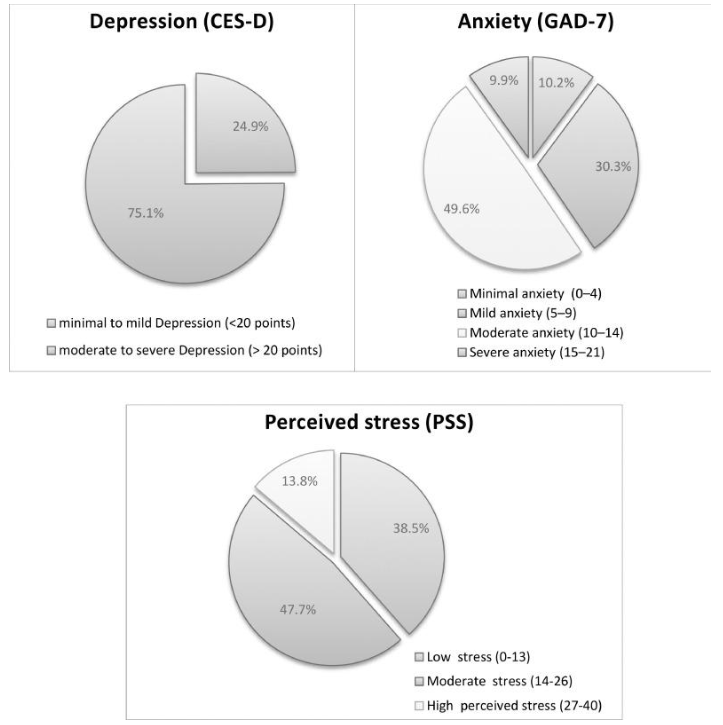
The pandemic and associated lockdowns only made the situation worse. Even by the middle of 2020, surveys were suggesting that as many as 40% of participants reported suffering mental health problems and more than 65% of mental health professionals surveyed reported in increase in self-harm behaviors among their patients. By 2021, the mental health of Indian university students had worsened significantly, with over 75% experiencing moderate to severe depression and nearly 60% experiencing moderate to severe anxiety. School counselors have also noted rising mental health concerns, with one study reporting that counselors are dealing with challenges ranging from heightened anxiety and social isolation to increased aggression and cyberbullying.

 These increases, however, also may reflect a growing willingness to recognize, report and seek treatment for mental health issues. Furthermore, as early as 2020, the Indian government launched the Manodarpan initiative to provide psychosocial support for students, families, and educators. Among other things, the initiative provides counseling resources, a national helpline, and school-based mental health programs.   

Source: The Manodarpan Website

Attention to socio-emotional learning is also growing in some schools in India as approaches like “feelings check-ins” are supported by programs like the Simple Education Foundation and Apni Shala. This practice invites students to begin the school day by identifying and sharing how they feel, often using a simple visual chart or prompt. Other initiatives include POD Adventures, a smartphone-based mental health intervention co-developed with Indian adolescents. Among other components, the app prompts youth to identify their feelings, name the source of their stress, and plan responses. 

A group of children looking at a book

AI-generated content may be incorrect.
Source: HundrED

Nutrition: India’s triple burden

Nutrition is another concern receiving more attention post pandemic. India faces a so-called “triple burden” of undernutrition, micronutrient deficiency, and obesity. About 6% of children are overweight or obese and over 65% are anemic

Although some progress had been made on these health issues, the pandemic set that work back.  Disruptions to India’s food systems included interruptions of food programs, reduced access to healthy foods, and increased costs. Illustrating the challenges, the COVID-19 lockdown in the state of Karnataka led to the suspension of the Mid-Day Meal (MDM), iron–folic acid (IFA) supplements, and deworming programs. In turns, those disruptions likely contributed to increases in the rates of children who were underweight from about 30% in 2017 to 45% in 2021 while anemia rates nearly doubled from 21% to 40% during the pandemic. 

These disruptions, however, along with government and civil society awareness campaigns may also have brought greater attention to these issues in recent years. Even before the pandemic, the Ministry of Education sought to support children’s nutrition and healthy eating by implementing School Nutrition (Kitchen) Gardens. That national program, launched in 2019, recommends that every class spend one to two hours per week in the school’s garden and encourage the integration of garden activities into the school curriculum. The produce from these gardens is intended to supplement school meals, supporting both nutrition and experiential learning. 

Although India has issued national guidelines mandating school nutrition gardens in all schools, progress has been uneven. Some states have taken it further by encouraging families to develop their own gardens. The Nutrition Garden program, implemented in rural areas of the states of Tamil Nadu and Odisha, trained families to cultivate diverse vegetables and offered structured nutrition education. In a similar program in rural schools in in the state of Andhra Pradesh, a 2025 study found that after receiving gardening kits and nutrition education through their government schools, students established kitchen gardens at home and increased their vegetable consumption by 90%. 

Sustainability: Preparing for a warmer planet

Climate change has also emerged as both a critical challenge but also a potential driver of innovation in education in India. In 2019, India was ranked number seven among a list of the countries affected by the changing environment, but 65% of the Indian population had not heard of climate change. As one step in raising awareness about the issue, India’s 2020 National Education Policy (NEP), emphasized the need for environmental education in schools and suggested a shift from content-based learning to skill-based learning in climate education. At the same time, some Indian universities have emerged as global leaders in sustainability with India being the best-represented nation in the 2024 Times Higher Education Impact Rankings assessing universities’ contributions to each of the 17 United Nations sustainable development goals (SDGs). Institutions such as Saveetha Institute, Shoolini University, and JSS Academy are ranked among the world’s top performers, contributing to clean energy (SDG7), health (SDG3), and sanitation (SDG6). 

Although the costs can be prohibitive, architects in India have also been exploring sustainable schools designed explicitly to respond to and take advantage of the environmental conditions in their local contexts. One of those schools serves a desert township in Ras that houses families of those working in a cement plant. To minimize the impact of the harsh sun and make the structure as energy-efficient as possible, the architects created a fragmented layout of sheltered and semi-enclosed spaces to maximize shade and ventilation. A Central Board of Secondary Education school run by the Rane Foundation in a rural village of Tamil Nadu relied on local and recycled materials to create a design that eliminates the need for air-conditioning. Another private, international school in Bengaluru sought to take advantage of its setting near a national park to cultivate respect and curiosity in the natural environment. To do so, the design creates both inside and outside learning spaces and allows students to get perspectives on the trees and plantings from multiple perspectives. 

A collage of different buildings

AI-generated content may be incorrect.
Sustainable schools (top left to bottom right) designed for a desert climate in Ras, Rajasthan; for rural Tamil Nadu, and for a natural setting in Bengalaru

The green economy’s rapid expansion and the promise of high-paying jobs in fields like renewable energy and environmental policy have also contributed to a surge in the numbers of students interested in sustainability education.  Supporting those interests, several initiatives seek to engage students in learning about and promoting sustainable practices. For example, the Green School Initiative involves over 35,000 students, more than a 1000 teachers across 110 schools in supporting student-led efforts to promote sustainability in their local communities. In addition to providing environmentally-based curricula, the Initiative sponsors action projects and capacity-building activities related to the UN’s Sustainable Development Goals, particularly in areas of Energy, Water, Forests & Biodiversity, and Waste. 

The Green Schools Programme and other efforts support student engagement in issues of sustainability by giving them the opportunity to both study and grade their schools on their environmental performance. For example, Birla Vidya Niketan a school of 4,000 students in New Delhi has become known for its attention to sustainability and its student-led electricity audits. By appointing student monitors to ensure fans and lights are switched off when classrooms are empty, the school promotes peer-led accountability in daily energy use. The chosen students complete simple forms to track behavior and encourage energy-saving habits among classmates. To assess impact, the school analyzes changes in its electricity bills. Principal Minakshi Kushwaha emphasized the role of peer education, noting that students are more receptive to feedback from fellow students than from teachers alone. Another public school in Delhi, RK Puram, involves students in energy audits and also involves them in projects related to renewable energy and waste management that build on the school’s commitment to developing sustainable facilities. Demonstrating the international power of these efforts, student audits and related projects can also be found in the  PowerSave Schools Program in Southern California in the Let’s Go Zero campaign in the UK

Common denominators and synergies?

The challenges of mental health, chronic absence, nutrition, and sustainability are deeply rooted and disproportionately impact the most marginalized; but these are not isolated challenges. The challenges interconnect and build on each other creating a set of barriers that can undermine learning and development. Although the complexity and scale of the education system in India compounds the challenges, coordinated efforts to address these critical challenges could also provide cascading benefits in the largest education system in the world. 

The Whole Child Model at the Van Ness Elementary School: A Conversation with Keptah Saint Julien (Part 1)

This week’s post shares the first part of a conversation between Thomas Hatch and Keptah Saint Julien about the development of a Whole Child School Model at the Van Ness Elementary School, a District of Columbia Public School. The school was closed in 2006 due to under enrollment as the surrounding neighborhood was re-developed, with the school re-opened in 2015 under the leadership of Principal Cynthia Robinson-Rivers. Under Robinson-Rivers’ leadership and in partnership with Transcend, an organization that promotes school innovation and helps spread innovative school designs, Van Ness designed the Whole Child Model which prioritizes student wellbeing and socio-emotional growth. Currently, the school serves a racially diverse group of over 375 Preschool-5th grade students, with approximately 50% of students receiving free or reduced price lunch and 15% classified as having special needs. The redesign has been so successful that Van Ness received the District of Columbia Public School district’s (DCPS) Standing Ovation Award for excellence in school innovation in 2017-18 and schools across the district and country are beginning to adopt and adapt the approach. Keptah Saint Julien is a partner at Transcend with over a decade of experience in urban education. Saint Julien now works with her colleagues at Transcend to share the model in a Whole Child Collaborative in D.C. and in schools in Transcend’s national network. To support that work, Transcend recently received a $4 million dollar grant to study and scale the model in the DCPS and in Aldine ISD, in Texas.

“Our aim is to cultivate critical thinkers and develop a generation of confident, curious, and compassionate members of society.” – Van Ness Elementary School

Thomas Hatch: The work going on at Van Ness is really fascinating, both for the development of the model there and for the way you and your colleagues are working with other communities to adapt it. Can you start by telling us what was the problem that the Van Ness model set out to address?

Keptah Saint Julien: It started off with the idea that all students deserve a school that supports their overall wellbeing. Just as students need academic skills, they need social and emotional skills. The Whole Child Model is rooted in the belief that children’s academic success is inextricably linked to their social, emotional learning, and overall well-being, and the belief that we can and must attend to the whole child while achieving academic excellence as well.

Keptah Saint Julien

TH: My understanding was that while some of these key ideas and the impetus came from Cynthia, she also began with a community engagement initiative, essentially to find out what people in the community were concerned about. Is that right?

KSJ: That was definitely an important part of setting the vision for the school and a key part of the partnership with Transcend. We lead through a community driven research and design process. What that looks like is that we’re going out and talking with key stakeholders, learning from them and coming together to create graduate aims and learning experiences that work for all students in meeting those aims.

TH: Who were the stakeholders that you reached out to as part of that work with Transcend?

KSJ: Families. It’s our philosophy and it’s Van Ness’ philosophy that families are integral partners in this work. The vision for Van Ness was shaped through early conversations with families. You can think about our approach to wellbeing as consisting of three parts:

  • One part is a set of family engagement strategies that we call Family Circle. Van Ness prioritizes home visits for every student. Families receive regular updates through weekly newsletters and text updates, and participate in events like coffee with the principal to ask questions and share ideas.
  • The next part of the model is CARE, which is a cohesive set of Tier 1 supports that every student receives to help them feel safe and a sense of belonging. We worked closely with teachers at Van Ness to test and codify strategies that worked. Then we also have CARE plus strategies designed to support students whose past experiences and personal histories suggest they may benefit from a deeper sense of safety and connection at school.
  • Finally, we have Boost, which includes what are often termed Tier II and III supports and provide the additional boost and targeted interventions that some students need.

TH: Some of the things that are really striking to me about the model are the very specific and explicit structures, practices, and routines – what I would call the “micro-innovations” – that create a real, tangible infrastructure for supporting student wellbeing. Can you highlight a few of those?

KSJ: As I mentioned before, everything starts with CARE. CARE stands for Compassion, Assertiveness, Routines, and Environment. One routine is a set of strategies for what we call a “Strong Start” in the morning. Strong start begins with greetings and breakfast in the classroom. In fact, every student is greeted by two or more adults before they even enter into the classroom, and students have the autonomy to decide what kind of greeting they would like to receive, whether it’s a handshake, a high five, a hug or something else. We’re very much empowering students and putting them as decision makers. The whole purpose of Strong Start is to help students start the day feeling a sense of safety and connection to their classroom community, in addition to providing them with strategies they can use throughout the day. Another part of Strong Start, for example, is ‘Breathe and Focus,’ where students learn how to breathe deeply, release stress they may be carrying, and center themselves – things that help with executive functioning and self-regulation. They use that strategy throughout the day. If they’re having a moment of tension or frustration later on in the day, they can use the skills that they learned from Strong Start to enter their reasoning state.

Then there are strategies like using intentional language and tone, which helps teachers speak with students and issue directions in clear and consistent ways. Classroom jobs is another routine which I personally love. It relies on teachers who deeply know their students and their unique goals. So if I’m a student who struggles with organization, for example, my teacher knows this about me and might give me the intentional, meaningful job of being the person that organizes our classroom library. That’s my job.

We’re also very intentional about classroom design. ​​We know that if we are in spaces that feel beautiful and safe and clean our behavior automatically shifts. I think about going to a museum or the library. There are certain behaviors and ways that we feel when we’re in spaces like that. Teachers are very thoughtful when designing their classrooms. One of the tenets of care in classroom design is having natural elements, like green leaves and plants, as well as natural lighting. The classroom walls are free from clutter.

“We’re also very intentional about classroom design. ​​We know that if we are in spaces that feel beautiful, safe and clean our behavior automatically shifts.”

Students also actively shape the design of the space. Student work and pictures of them and their families are prominent throughout the classroom, enhancing the home to school connection. School should feel like a space for healing and an extension of home. There are also “centering spaces” in each classroom as part of the classroom design. It is an intentional space where students can go and collect their thoughts and get back to a calmer, “ reasoning” state through breathing and reflection. This is especially important for students who have experienced trauma.. All that is part of CARE, the first tier which every student gets. Additionally, there is a focus on adult wellbeing. A beautiful thing right now at Van Ness is that Cynthia has partnered with some therapeutic services provided by the Georgetown Center for Well-Being in School Environments (WISE) so teachers are able to receive therapy.

What Can the World Learn from Educational Change in Finland Now? Pasi Sahlberg on Finnish Lessons 3.0

In this conversation, Pasi Sahlberg discusses his latest work and the motivation behind his new book  Finnish Lessons 3.0 What Can the World Learn from Educational Change in Finland? This is Sahlberg’s third look at the Finnish educational system, diving deeper into the changes and challenges since the publication of the first edition of Finnish Lessons in 2011.

Why this book, why now? 

Pasi Sahlberg: It is about ten years since the first edition of Finnish Lessons was published. At that time the world was very different, OECD’s PISA had rearranged the global image of education, and international transfer of educational ideas was blossoming. There was relatively little literature about education in Finland at the same time when the demand for deeper and more evidence-based stories was huge. When the book was published in 2011 only a few believed it would live beyond its first edition. Everyone, including me, was surprised to learn that Finnish Lessons soon became a best-seller that was translated to nearly 30 languages.

We decided to update the story about Finland’s schools when more data became available, especially from OECD’s PISA 2012 that showed Finland’s earlier high performance had started to decline. The Economic downturn caused by the 2008 banking crisis had forced Finland to cut spending on education and Finnish schools were experimenting with new pedagogical innovations. The second edition was published in 2015, and I thought that this updated edition would be good enough forever.

Unfortunately, Finnish education continued to struggle in both what students learned in school and how the school system was able to serve children with widening range of socio-economic and cultural backgrounds. PISA 2015 and 2018 raised more questions in international forums and also in local debates about the real state of Finnish education. My publisher and I had a conversation about having yet another edition of Finnish Lessons that would take a more detailed stock of the state of education in Finland. It was a good decision – in the middle of the writing process the global coronavirus crisis hit the world and offered an additional question to be answered: How did Finnish schools cope with remote learning and disruption that caused so much confusion and troubles elsewhere?

What did you learn in working on 3.0 that you didn’t know before?

When the going gets tough, you need well-prepared educators whom you can trust in finding the best way forward.

Researching the unknown and writing about it is always a learning experience. Since Finnish Lessons 2.0 was published I have resided in the U.S., Finland and Australia and that gave me a unique opportunity to take a closer look at Finnish education from outside and inside. Conversations with educators and colleagues in these three locations over the years have been particularly helpful in understanding the power and the challenges of Finnish schools. For example, I learned to appreciate the flexibility and creativity that are embedded in the Finnish way of education. This became particularly evident in early 2020 when all education systems unexpectedly went into remote learning mode when most school buildings were closed for several weeks due to the global coronavirus pandemic. I have always spoken to foreign visitors about these system characteristics in Finland but it was that tiny ugly virus that made that concretely visible. When the going gets tough, you need well-prepared educators whom you can trust in finding the best way forward. This is exactly what flexible management, lack of rigid external standards, and collaborative problem solving were able to do in Finland where students and teachers were able to navigate through the hard times with less damage than most others. I have included these stories in my new book.

What’s happened in Finland since you wrote the book? 

This I explain in detail in this third edition. Many things have changed. On one hand, there are some interesting new developments, such as the new curricula for all levels of school education that aims at making teaching and learning more engaging and interesting for both teachers and students. On the other hand, Finland has lost some of its most important educational assets it had earlier compared to other countries: Equity and quality of its educational outcomes. There are significantly more low-performing students, family background explain more of students success in school than before, and all young people spend much more time staring at digital screens that is time away from reading, playing and sleeping.

What’s next — what are you working on now?

I have a busy year ahead here in Sydney, Australia. I am leading a couple of large research projects at the university and working with half a dozen doctoral students. Besides that, there are two new book projects in the pipeline. I try to work a bit less and spend more time with my boys and family.

What’s your hope for the future and what do you hope the book will contribute to it? 

The main thread of Finnish Lessons is collectivism, collegiality, and collaboration at various levels of society.

My hope is in young people and their passion to change the course we live right now. Look at the issues like climate change, fight against racism and gender equality, for example. These global movements are strongly led by young people. This is really positive regarding what the future looks like. I hope that Finnish Lessons will continue to speak for better agency for teachers thereby stronger voice for students regarding their education and life. The main thread of Finnish Lessons is collectivism, collegiality, and collaboration at various levels of society. I hope that Finnish Lessons helps more people to understand that education is fundamentally a common good a bedrock of democracy that has been challenged recently in number of countries around the world.

Poland: Reforming an improving school system

A recent scan of the education news in Europe highlights that new education reforms in Poland are making the headlines.  While Poland’s PISA scores are going up, there is still considerable controversy over the direction of further improvement initiatives. The current reforms have been positioned as occurring within a broader political struggle in the country.

The proposed new reforms would change the system from a three-tier school system (with elementary, middle, and high schools) to just two levels.  In the new system, students will attend an eight-year elementary school, and then they will spend four years in either a high school or a vocational school.

The protest against the Law and Justice (PiS) party's education reform proposal (pictured) (AFP Photo/Janek Skarzynski)

The protest against the Law and Justice (PiS) party’s education reform proposal (pictured) (AFP Photo/Janek Skarzynski)

Since a series of education reforms passed in 1998-1999, Polish students have attended 6-year elementary schools, three-year lower secondary (or, middle) schools, and three-year upper secondary schools. This approach had been a part of a broader school improvement effort that has contributed to Poland’s success on international measures of student achievement, such as the PISA exams. According to a 2011 OECD report, the structural changes of the 1998-1999 reform included the creation of a new type of school, called the lower secondary school “gymnasium,” which became a symbol of the reform. Vocational training was postponed by one year, allowing a greater number of students to be assessed. The reformers of the time argued that these improvements would allow Poland to raise the level of education by reaching more students in rural areas. Reformers also argued that these changes would allow teachers to use methods and curricula more suited to the needs of students, and that by linking the structural change with curricular reform, teachers would be encouraged to change what and how they teach.

Critics of the 1998-99 changes, like current Law and Justice MP Dariusz Piontkowski (and former teacher), however, complained that students were only being prepared to take tests. Piontkowski looks forward to curricular reforms that will come after the structural reforms:

“We are bringing back the teaching of history. We are bringing back patriotic education,” he declared. “It’s time that pupils understand what they are learning.”

Nonetheless, tens of thousands of people, mostly teachers, are reported to be protesting against the new reforms fearing dramatic loss in jobs and “chaos” in the schools. However, these protests are not focusing on schools alone; they are seen as part of a wave of concern about what is seen as the government’s broader populist, conservative agenda. Questions are being raised about restrictions placed on journalists and what is seen as new barriers to transparency in government, particularly as politicians were frustrated about the voting process that ushered in this new reform. Protestors reportedly chanted: “No to chaos,” and, “The death of Polish education.”

For more on educational reform in Poland see:

Eurydice: The System of Education in Poland in Brief

NCEE:  Poland Overview

OECD: Education at a Glance 2016, Poland Country Note

The Impact of the 1999 Reform in Poland

Deirdre Faughey

Real Singaporean Lessons: Why do Singaporean Students perform so well in PISA?

In this latest post in the Leading Futures Series, edited by Alma Harris and Michelle Jones, Zongyi Deng and S. Gopinathan shine a spotlight on the success of Singapore’s school system and argue that the country’s success comes from educational policies and practices that have helped to develop social cohesion, economic development, and nation building. As Deng and Gopinathan suggest, reforms that aim to borrow “best practices” must consider the social, cultural and institutional contexts of which they are a part.

Singapore has been widely recognised as one of the world’s top-performing systems. Its extraordinary record of students’ performance in international comparative studies of achievement includes: first in problem-solving, second in mathematics, and third in science and reading (PISA 2012); second in mathematics, fourth in science and fifth in reading (PISA 2009); first in science (both primary 4 and secondary 2 levels) and second in mathematics (primary 4 level), and third in mathematics (secondary 2 level) (TIMSS 2007); and fourth among 45 education systems (PIRLS 2006). What explains the top rankings in the current PISA tests? What lessons, if any, could Singapore offer other countries who want to improve on their educational performances?

As with other high-performing countries, answers to these two questions can be found in a body of literature (reports, books and articles) written by international organizations like the OECD and the World Bank, consultancy firms like McKinsey and Grattan, and educational spokesmen and scholars like Pasi Sahlberg and Pat Tee Ng. Singapore is said to have a high- quality teaching force ensured and enhanced by high standards of teacher recruitment, effective teacher preparation and professional development. The school system is run by high-quality school leadership developed through careful selection, leadership experiences and professional development programmes. In addition, the country sets high academic expectations and standards for its students and monitors the performance of schools against those expectations and standards. Furthermore, Singapore is noted to have implemented educational reform to promote student-centric and ICT-enhanced pedagogy that encourages deep learning, critical thinking and creativity.

Overall, this body of literature adopts the “best practice” approach to explaining the educational success of a high-performing system wherein a set of particular characteristics are identified and translated into best practices for borrowing worldwide. However, whether the identified characteristics are causally linked to the system’s superior performance in PISA is an open question, with little or no empirical evidence to justify the identification. In addition, lacking in such explanation are those factors beyond school—educational history, family aspirations, parental involvement, private tuition, etc.—that could play a part in PISA success, particularly in Asian countries.

In our latest article (Deng & Gopinathan, 2016), we provide an alternative explanation for Singapore’s education success and, in so doing, question such an approach to explaining the education success of a high-performing country. From a historical perspective, education has played a vital role in the success story of Singapore—the remarkable transformation from a fishing village to a first world country over four decades.  Such a transformation has much to do with the effective implementation of a set of educational policies and reforms by a strong and competent government. Among these policies were the bilingual policy in the 1950s which encourages Singaporeans to be proficient in both the English language and in their respective ethnic mother tongues (Chinese Mandarin, Malay, and Tamil), and the streaming policy in the late 1970s which track primary and secondary students into various streams based on their examination results.  The implementation of the bilingual policy entails a commitment to equality with respect to language rights of the three main ethic groups and a recognition of the necessity and value of English as an international language to Singapore.  The streaming policy, modified and adjusted over the years, has reduced attrition and early school leaving.  In addition, the government mandated and implemented a uniform and common curriculum (taught in English) centered on the study of mathematics, science and languages, with technical subjects as a supplement, and made a firm commitment to the principle of meritocracy.  Universal free primary education and curriculum standardization were achieved by the late 1970s and early 1980s, respectively. In short, educational policy and practice in Singapore has functioned as a means for social cohesion, a vehicle for economic development, and for nation building.

While it has been sometimes fashionable to decry the significance of school education in the West, and indeed be skeptical about the role schools can play in social, civic, and even economic functions, in Singapore there are few such doubts (Gopinathan, 2007). This leads to our questioning of the employment of PISA results as the prime yardstick of the educational performance of an education system. The primary function of school education as conceived in PISA is economic—developing competencies for the economy in the 21st century. Such a conception entails a narrowing of the function of education, thus reducing the social and civic significance of an education system.

The historical perspective also brings to light two basic features of the system that may better help explain Singapore’s high rankings in PISA:

First, the national curriculum stresses the development of students’ competences in mathematics, science and languages – the three subjects tested in PISA.  Second, a commitment to academic rigour and standards, underpinned by the principle of meritocracy and enforced by a system of national high-stakes examinations (PSLE [Primary School Leaving Examination], ‘O’ and ‘A’ levels), has lifted the floor under the quality of teaching and learning for all student groups throughout the school years (Deng & Gopinathan, 2016).

However, the national curriculum, together with the high-stakes examination system, has steered classroom practice towards a kind that is still largely traditional and didactic in nature, directed towards the transmission of curriculum content and examination performance. Since the mid-1980s the government has attempted to alter such a traditional practice through educational reform.  The most progressive and radical reform came in 1997 when then Prime Minister Goh introduced the framework of Thinking Schools, Learning Nation (TSLN). Subsequently, a plethora of reform initiatives have been rolled out in schools, which aim at producing pedagogical changes characterized by: (1) more opportunities for constructing knowledge, higher-order thinking, and innovation; (2) more meaningful use of ICT for teaching and learning;  (3) more time on interdisciplinary learning and a greater emphasis on knowledge application.

What has been the impact of reform initiatives on conventional classroom practice? What is the present nature of pedagogy in Singapore’s classrooms? According to the findings of Centre for Research in Pedagogy and Practice (CRPP) in the National Institute of Education (NIE),

Notwithstanding multiple reform initiatives to encourage the TSLN’s pedagogical vision, pedagogical practice in Singapore’s classrooms has remained largely traditional, directed towards curriculum content delivery and examination performance. There is very little evidence of sustained teaching for higher order thinking, meaningful use of ICT, students’ constructing knowledge, and interdisciplinary learning (Deng & Gopinathan, 2016)

This finding, in fact, is consistent with what is found in the international literature about the inability of reform to alter conventional classroom practice.

It is therefore questionable that the success of Singapore in PISA can be attributable to the government’s implementation of educational reforms aimed at transforming classroom pedagogy. In fact, if TSLN’s reform initiatives had an impact on classroom practice, it would probably have led to a fall in students’ performance in PISA. There is empirical evidence in Finland and Canada (Quebec) confirming that when the traditional and teacher-centred pedagogy is replaced by a student-centric, constructivist one, the PISA results of a system decline (Sahlgren, 2015).

The CRPP’s empirical findings reveal a distinct kind of ‘hybrid pedagogy’ that serves to explain in part Singaporean students’ success in PISA:

  • Classroom teaching is largely driven by content coverage and preparing students for semester-end and high-stakes examinations, with the primary focus on the transmission of knowledge and skills contained in the national curriculum (represented by teaching and examination syllabi).
  • Accordingly, classroom teachers tend, to a large degree, to rely on whole-class forms of lesson organisation, with whole-class lectures and question-and-answer sequences (IRE) as the dominant methods. They also depend heavily on textbooks and instructional materials and provide students with a significant amount of worksheets and homework, with a special focus on their mastery of specific procedures and problem-solving skills.
  • When teachers do make limited use of constructivist pedagogical methods – such as checking prior knowledge, monitoring understanding and providing formative feedback – they largely do so for the purpose of getting students to know the correct answers rather than developing their conceptual understanding and higher order thinking. Classroom talk, largely dominated by teachers and used mostly for checking content mastery, does not lead to extended conversation and critical thinking on the part of the students (Deng & Gopinathan, 2006; also see Hogan, 2014).

And, this pedagogy is regulated and shaped by a centralized education system, with a national curriculum that prescribes what is to be learnt and taught. It is also powerfully driven by high stakes examinations which stream students into various school types and curriculum tracks based on their examination performances.

In view of such pedagogy and its underpinning cultural and institutional arrangements, Singapore’s superior performance in PISA no longer appears to be a miracle.  Here comes a paradox. Singapore’s pedagogy is still largely conservative, directed toward the transmission of predetermined content and examination performance. Yet PISA is strongly forward-looking and future-oriented, with the ambition of testing skill in authentic contexts deemed essential for the 21st century. If this is true, then Singapore’s pedagogy must be seen as functioning well in preparing students for the 21st century. However, it has been widely recognized that such pedagogy is ineffective in developing individual talents, critical and innovative thinkers for the knowledge-based economy.

The paradox exists because of the uncritical acceptance of PISA by many politicians and policy-makers.  PISA tests, framed by the test taking situation and in the form of paper-and pencil items, do not live up to its promise of testing real-life skills and competencies in authentic contexts. Furthermore, the claim that PISA measures the competencies needed for 21st century, Stefan Hopmann argues, is unwarranted and questionable; OECD provides neither sufficient justifications nor systemic research evidence for it.

In conclusion, the social, cultural and institutional contexts of schools in Singapore, and the kind of pedagogy regulated, supported, and constrained in such contexts, are vital in understanding Singapore’s top rankings in the current PISA tests. It is therefore questionable that one can borrow “best practices” from a system without a careful consideration of the social, cultural and institutional contexts of which they are a part. Furthermore, the OECD’s claims that PISA results provide the prime indicator of the educational performance of a country and that PISA measures skills needed for life in the 21st century are questionable and contested.

Notes on Authors

Zongyi Deng is an associate professor at National Institute of Education, Nanyang Technological University.

S. Gopinathan is an adjunct professor at the Lee Kuan Yew School of Public Policy, National University of Singapore.


Learning from successful education reforms in Ontario: Part II

imagesIn 2003, the Ontario government began to focus on issues of educational improvement. The government instituted a series of reforms that have proven incredibly successful, with elementary achievement results rising from 54% in 2003 to 72% in 2014, and high school graduation rates rising from 68% to 84% in the same amount of time. This past summer I spoke with Mary Jean Gallagher, Ontario’s Chief Student Achievement Officer and Assistant Deputy Minister of the Student Achievement Division, and Richard Franz, Ontario’s Director of Research, Evaluation & Capacity Building, to learn more about their experiences with this reform effort thus far, and their plans for the future. As this conversation was so informative, we have decided to post it in two parts. In part one we focused on aspects of the reform that have been key to its success thus far. Here, in part two, we explore Ontario’s approach to moving forward with an expanded reform agenda.

Planning the Future:

In 2013, Ontario’s Ministry of Education (MOE) set a renewed vision for the education system. This process allowed them to identify critical information about what they have achieved, and share this information with parents, business leaders, community members, teachers and students. As Gallagher explained, as a result of Ontario’s success over the past decade, “we have a newfound respect for our ability to set goals and measure progress and achieve them, so we are more careful about goals we set.” By engaging in a broadly based, 7-month collaborative consultation process, they engaged both qualitative and quantitative research methods to determine their next steps.

This process culminated in the production of their “Achieving Excellence” report. This report identifies four new, interconnecting goals for the education system. As they are described in the report:

  • Achieving Excellence: Children and students of all ages will achieve high levels of academic performance, acquire valuable skills and demonstrate good citizenship. Educators will be supported in learning continuously and will be recognized as among the best in the world.
  • Ensuring Equity: All children and students will be inspired to reach their full potential, with access to rich learning experiences that begin at birth and continue into adulthood.
  • Promoting Well-Being: All children and students will develop enhanced mental and physical health, a positive sense of self and belonging, and the skills to make positive choices.
  • Enhancing Public Confidence: Ontarians will continue to have confidence in a publicly funded education system that helps develop new generations of confident, capable and caring citizens.

As Gallagher and Franz explained, the process of determining these goals helped them to understand that in the future they need to “heighten the relevance of what people are learning, increase experiential learning, and use the community more broadly.” By engaging community members in the process they were able to learn that those members felt they had valuable information and experiences to offer the educational system, and were being underutilized. As a result, the MOE is now thinking of better ways to reach out.

Another key aspect that emerged is the importance of student voice. Since the consultation process included school-age students, the MOE was able to learn more about what the students felt needed to be changed about their own education. The MOE, for example, developed a program called “Students as Researchers,” which invites students to formulate questions about how to make their schools better places and trains them in research skills and ethics so that they can design and implement their own research projects, which are then shared with the MOE.

Challenges of new goals:

Looking ahead, Gallagher and Franz explained that there is some tension around the notion that good teaching and learning must be measured. New challenges include thinking about ways in which the system might be able to broaden the measures of success, and what counts as success, so that the emphasis is not only on test scores. This is particularly relevant since one of their new goals is to improve student well-being. In setting the goal, the MOE also must consider how to measure something that has no history of measurement or policy focus.

Another concern is the additional demands of the bureaucracy that might be added once new goals, and new measurement systems for those goals, are implemented. As Gallagher and Franz noted, one of the reasons for the success of the education reforms so far has been attributed to the narrow focus on a small number of goals. With a focus on the renewed four goals, how can they be incorporated into a successful system without overburdening it? As Franz explained, the new tension is about how to do it all is such a way that gets you the insight and information needed to guide the practices of all involved in the system in addressing the new goals, while continuing to build coherence such that actions in the name of one goal also support achievement of the other goals.

For more information:

Ontario Ministry of Education

Deirdre Faughey

Creative Commons License
This work is licensed under a Creative Commons Attribution-NonCommercial-NoDerivatives 4.0 International License.

Learning from successful education reforms in Ontario

class-roomIn 2003, the Ontario government began to focus on issues of educational improvement. The government instituted a series of reforms that have proven incredibly successful, with elementary achievement results rising from 54% in 2003 to 72% of elementary students performing at or above the provincial standard in in reading, writing and mathematics in 2014, and high school graduation rates rising from 68% to 84% in the same amount of time. This past summer I spoke with Mary Jean Gallagher, Ontario’s Chief Student Achievement Officer and Assistant Deputy Minister of the Student Achievement Division, and Richard Franz, Director of Research, Evaluation & Capacity Building, for the Student Achievement Division, to learn more about their experiences with this reform effort thus far, and their plans for the future. As this conversation was so informative, we have decided to post it in two parts. Here, in part one, Gallagher and Franz share some of their thinking on aspects of the Ontario reform effort that have been essential to its success.

Bringing educators into policymaking realm

In 2008, Gallagher was the leader (Director of Education) of Canada’s southernmost school district when she was selected for her new position at the Ontario Ministry of Education (MOE). This position – Chief Student Achievement Officer and Assistant Deputy Minister of the Student Achievement Division– was envisioned as an innovation. While MOE officials were typically promoted from public service positions, Gallagher’s experience was in schools, as a teacher, a principal, superintendent, and Director of one of Ontario’s 72 school districts. With the creation of this Division and position, and the hiring of Gallagher, the MOE demonstrated that it valued the expertise of educators. This went along with the MOE’s renewed emphasis on valuing the work of educators, particularly in positions that focused on student achievement. At that time, the MOE wanted to ensure that all of their work was based on valuing educators—seeing improved learning as a result of improved teaching.

With this new effort to bring educators into the policymaking realm, the MOE also made sure that approximately two-thirds of staff within the Student Achievement Division was comprised of practicing educators who had already proved themselves to be strong instructional leaders. In order to do this they created new positions in which practitioners, such as teachers and school leaders, could work for up to three years with the MOE. The theory behind this model was that working closely with “front-line” educators would build the capacity of both those who worked in the field, as well as those who worked in the central offices. Franz pointed out that working with educators on the creation of new policy helps the MOE officials by providing perspective on how such policy might “land” in schools. Additionally, once those educators complete their temporary positions in the MOE offices and return to their schools, they arrive with more knowledge and understanding of how such policies were developed and created. This new “blended” model builds appreciation in both spheres. As Gallagher and Franz explained, this effort helps create alignment between goals, priorities, methodologies and implementation, and over the past 13 years it has proven a “formula for wonderful results.”

Maintaining a limited number of goals

Gallagher and Franz also attributed Ontario’s success to the MOE’s narrow focus on a limited number of educational goals, specifically increasing student achievement, closing educational gaps, and increasing confidence in public education. As Gallagher and Franz explained, these are the goals that everyone working in the Ontario education system can recite, as well as the targets associated with them. By focusing closely on a limited number of goals they have seen a huge difference in their ability to keep focused on what is important.

In addition to knowing these goals, educators have become increasingly aware of the ways in which they can measure improvement and identify success as they work to achieve them. This allows teachers to develop an understanding of their own efficacy and agency, which, as Gallagher and Franz noted, excites and motivates educators. Ontario’s focus on province-wide testing standards in literacy and numeracy, and a set curriculum, has promoted clarity about what students are expected to know, understand, and be able to do.

Using data and assessments to test the system, not individuals

Starting in the mid-1990s, Ontario’s government began implementing a set of tests based on Ontario’s Curriculum Expectations and Standard of Achievement for grades 3 and 6 in reading, writing, and math, as well as in grades 9 (math) & 10 (literacy). As Gallagher explained, Ontario holds very high standards for their students. Student work is identified as level 1, 2, 3, 4, and the provincial standard of success is level 3 (the equivalent of a letter grade of B), which is higher than what is expected on the Program for International Student Assessment (PISA).

Ontario’s assessment organization is an arms-length organization of the government, funded by the MOE but separate from it with its own board of directors. This organization has become, over time—an opportunity for professional learning as well, as teams of educators are assembled to devise test items and mark assessments over the summer months. As a result, teachers become well versed in the standards and measurement of performance and thereby build their own assessment literacy.

Gallagher and Franz note that these assessments are not standardized, and are not proprietary. Instead, they are criterion referenced assessments of the curriculum. The tests are used to gather information about the degree to which the students are able to demonstrate what they have learned from the curriculum. As a result, Ontario’s teachers feel less pressure to “teach to the test”; instead, the teachers are teaching to a curriculum they approve of and which teachers have had a hand in developing. The overall sense is that the tests are used to assess the entire educational system, rather than individual teachers and students. This collective focus also encourages teachers to work collaboratively and use assessment for learning for student achievement efforts.

Ontario has also moved to a common data system across the province as well. Starting in the late 1990s, the government created a tracking system in which all students were assigned an ID number. This allows the MOE to track individual school’s assessments of student performance, and compare those results to province-wide results. The ID number is also now being used to track students from early childhood education through to college (or apprenticeships). As Gallagher and Franz noted, this ID number is not linked to student names, but is used to analyze trends and patterns to understand what is happening system-wide.

Collaborative Inquiry

Teachers in Ontario regularly work together to analyze student work and plan new instructional strategies. These practices are articulated in an assessment policy called “Growing Success” and have been put into practice through a collaborative inquiry model of professional learning. Professional learning through collaborative inquiry has been so successful that it has replaced the old model of professional learning in which teachers were corralled in “banquet hall style” training sessions, where experts presented and teachers broke out into workshops. As Franz explained, “We assume that teachers come now with a certain level of skill, and we work with teachers on how to use a collaborative inquiry approach to examine student work, thinking about how to move students, and making that the object of their inquiry.”

How have classrooms changed?

As Gallagher explained, one of the things that everyone has learned is that the ideal classroom is less about teaching strategies and more about teacher thinking and behavior. This process starts in the assessment domain, with deep teacher knowledge of the students, the curriculum, and the learning goals. Then, the teachers can utilize any of the strategies they might have in their “backpack,” to help the students progress. Generally, in an ideal classroom one might see high levels of engagement, individual and group work, and differentiation; however, there is no particular reliance on any specific strategies or programs throughout the period. The aim is to allow teachers the space to try out their own strategies, and to develop their ideas through collaborative discussion with other teachers. This way, teachers feel accountable to one another and the classroom becomes a “de-privatized” place.

What Gallagher and Franz have noticed is that there is a trend of more inquiry-based learning in classroom. While there are some concerns about how much curricular content there is to learn, there is an increase in student-led learning, focusing on problem solving and creative work. In the following audio excerpt, Gallagher describes a recent visit to a kindergarten classroom where the teachers allowed students to lead an extended study of trees:

Be on the look-out for part two of this post, in which we focus on how Ontario plans to move ahead with an expanded reform agenda.

Deirdre Faughey

Creative Commons License
This work is licensed under a Creative Commons Attribution-NonCommercial-NoDerivatives 4.0 International License.

Interview with Pak Tee Ng

Dr. Pak Tee Ng

Dr. Pak Tee Ng

Pak Tee Ng is Associate Dean of Leadership Learning and Head of the Policy and Leadership Studies Academic Group at the National Institute of Education (NIE), Nanyang Technological University (NTU) in Singapore.

In this interview, which is part of the Lead the Change Series of the American Educational Research Association Educational Change Special Interest Group, he describes where he would like to see the country’s educational system moving forward:

“I would like to see that teachers will believe, even more strongly, that they are not merely doing a job in school but they are, as a whole teaching fraternity, contributing to nation- building and the long-term well- being of Singapore. Teachers will also change their mindsets towards teaching and learning, so that we will succeed in teaching less, so that children may actually learn more.”

This Lead the Change interview appears as part of a series that features experts from around the globe, highlights promising research and practice, and offers expert insight on small- and large-scale educational change. Recently, Lead the Change has also published interviews with Diane Ravitch, and the contributors to Leading Educational Change: Global Issues, Challenges, and Lessons on Whole-System Reform (Teachers College Press, 2013) edited by Helen Janc Malone, have participated in a series of blogs from Education Week.

Early childhood education and the economy

A scan of online news reports published in countries around the world over the past month found that current reports on the topic of early childhood education show a range of economic concerns. While the news in some countries focuses on early childhood education as it relates to childcare, others focus on the connection between education in the early years and economic development. For example, reports from China focus on education as one aspect of whole child development, and similarly, reports from Thailand, India, and Australia, emphasized that early childhood education can be a crucial factor in lifting individuals out of poverty. Other reports focus on the ways in which early childhood education can be an overall investment in a country’s future.

In a recent article, titled “Household income and preschool attendance in China,” Xin Gong, Di Xu, and Wen-Jui Ham, found a positive association between household income and preschool attendance in both rural and urban settings. By showing that household income is influential in determining which children access early childhood education, this article relates with findings presented in a recent report on early childhood development by UNICEF. The UNICEF report points out that “millions of children, especially the most marginalized, are excluded from school,” and finds that international funding for education is on the decline. Yet, according to an article in Want China TimesChina has increased spending on early childhood education, budgeting 50 billion yuan ($8 billion) for a three-year project to provide access to quality education.

Singapore presents the example of a country that, according to the World Bank, placed “education at the core of the nation’s development.” Yet, as an article in The Huffington Post explained, “early-childhood education is one of the few spots where Singapore is not yet a world leader.” However, in response to the 2012 Economist Intelligence Unit, which ranked Singapore’s early childhood education system 29th in the world, the government has “announced funding initiatives for subsidies for parents and childcare centers, new sources of scholarship money for teachers, and the creation of new preschools and kindergartens.”

In Australia, a Productivity Report on Childcare and Early Childhood Learning, released on February 20th, received a critical reception in the press because it did not recommend an increase in funding. Instead, the report recommended the simplification of a complicated system with the introduction of a single early learning subsidy. Geraldine Neylon, writing for The Conversation, called this a “missed opportunity” to build upon prior reforms that focused on teacher quality. In another commentary, published in The Sydney Morning Herald, Matt Wade emphasized that while the current system is due for an overhaul, an investment in early education would lead to greater economic gains for the entire country. Meanwhile, Prime Minister Abbott has suggested policy reforms that would (similar to the report’s recommendations) make childcare more affordable and less regulated, noting in particular that such a move would potentially enable more women to join the workforce. As John Cherry, advocacy manager with the non-profit Goodstart Early Learning, explained in an article in the Sydney Morning Herald: “The number one reform objective is to make childcare more accessible and more affordable for low and middle income families….The number two objective is to continue to raise the quality of care so that children have a better start to their school education. The number three one is to make sure that vulnerable children are getting the support that they need. That costs money.”

Deirdre Faughey