This week IEN shares a post from Jeff Wetzler, a co-founder of Transcend and Transcend senior fellow Sujata Bhatt. This post, originally published in EdSurge, was written for a US audience but the international parallels are clear. As Bhatt and Wetzler explain: “With the COVID-19 pandemic, education systems around the globe have awakened to the urgent need to redesign schools to become more relevant and equitable. Innovation is no longer an optional pathway; it needs to be fundamental to how schools and systems operate. We need to redesign our teaching and learning infrastructure to embrace and meet local needs. Doing so means growing local community capacity to reinvent how students experience learning, and redesigning regional and national systems to support innovation at the local level. This piece was written specifically to describe what schools in the US could do to support R&D by using funding for schools made available by the passage of American Rescue Plan Act in March, but the approaches outlined here can readily be applied in all kinds of systems in the US and around the globe. In the past the federal government of the United States has created large funding programs like the School Improvement Grants (SIG) referred to in the article, and they have had little impact because they did not focus on growing the innovation R&D capacity of systems. In this piece, we ask, How might education systems respond differently this time?”
In 2019, the United States spent 2.8 percent of its Gross Domestic Product on Research and Development (R&D). R&D is our nation’s engine of innovation. It put that smartphone in your hand, that solar panel on your roof, and that COVID-19 vaccine in your arm. R&D unquestionably makes our lives better.
“[O]ur education system needs to innovate to make it more equitable, agile, relevant and responsive.”
At a basic level, R&D is the set of activities an organization undertakes to innovate—using research techniques to solve problems or learn new things. During the crises of 2020-21, we clearly saw that our education system needs to innovate to make it more equitable, agile, relevant and responsive. We learned that education conditions are intensely local; they vary dramatically in each and every community, limiting the usefulness of one-size-fits-all solutions. We also saw many communities embracing local innovation because they had to.
The Community-Based Innovation Opportunity
Over the next few months, the Federal Government is infusing $122.8 billion in Elementary and Secondary School Emergency Relief (ESSER) funding into our education system. This unprecedented investment offers a once-in-a-lifetime opportunity to redesign our teaching and learning infrastructure from the ground up by empowering local school communities to innovate.
Why local communities? During the pandemic, systems, schools, teachers, families and students began innovating to make different kinds of education possible. Perea Elementary in Memphis, for example redesigned how parents, teachers, and children support each other in virtual, in-person, and hybrid settings.
Contrary to the prevalent narrative of learning pods as the province of privilege, Edgecombe County Schools in North Carolina created learning pods for students without wifi access. The Oglala District, serving indigenous Lakota families in South Dakota, designed the Lakota Oyate Homeschool Coop to meet the needs of children who were disengaged and worried about both cultural and physical safety. This inventive renaissance needs to be supported and sustained. As these examples show, we learned that families and students want greater involvement, including the opportunity to infuse cultural values and traditions into what has been a one-size-fits-all model of schooling. We also know from previous funding programs like School Improvement Grants (SIG) that large infusions of federal funds can be less than successful if states, districts and schools do not work in collaboration to grow conditions for innovation at the local level. Why not bring these learnings and agents for change together to grow capacity for school communities to lead their own innovation journeys?
What if we—each state, each regional agency, each district, each school—were to commit to spending even just 2.8 percent of our ESSER funding to catalyze deep, broad, local, community-based innovation? What if we used this tiny percentage of our massive federal windfall to reinvent our education system by building strong local conditions, particularly the capacity of each and every school to apply evidence-based approaches to reinventing teaching and learning?
“It starts with a small step: take evidence-based methods and models that we know work now, and seed and sustain them in local contexts so they can take root, grow, and spread.“
With this small investment, we could leapfrog our nation’s PK-12 system from our current inequitable industrial era learning model to equitable, 21st century learning—and thereby create an education sector that is prepared to be flexible, agile, and resilient when the next crisis comes along. It starts with a small step: take evidence-based methods and models that we know work now, and seed and sustain them in local contexts so they can take root, grow, and spread.
How Might States, Regions, and Districts Develop and Support Local School Communities’ Innovation Capacity?
Below are two powerful, locally empowering strategies that states, regional service centers, and districts could use to focus their 2.8 percent R&D Reinvention investments:
SCHOOL INNOVATION EMPOWERMENT
Invest in capacity for community-based redesign and evidence-based efforts with long-term impact.
A Local Reinvention Team in Every School: Invest in teachers, families, parents and students to form teams that can design and prototype learning experiences that are customized to create equitable, responsive, 21st century schools. When schools reopen, they face inimitable challenges in redesigning learning for students who return from a year of crises with varying strengths, skills, knowledge and needs. The focus, pace and sequence of learning, as well as the resources and supports provided, need to be tailored to each learner’s identity, prior knowledge, development, way of learning and life experiences—which requires designing new types of learning experiences collectively and coherently—not classroom by individual classroom. This is deep, creative, team-based innovation requiring listening, passion and energy while driving collaboratively towards a defined mission. Districts and states could resource (via Title I or II funds, or a separate Innovation fund) participation in these reinvention teams, which would develop innovation capacity for educators, families and students.
Access to an Innovation Specialist: Invest in giving school reinvention teams temporary (2-3 years) access to innovation specialists explicitly tasked with growing local capacity to own and carry on the work. Innovation is not a haphazard process; R&D entails methods rigor, and expertise. These methods and mindsets are not widespread in the pre-K-12 sector, and they need to be. Innovation specialists who have expertise in these methods could be explicitly tasked with growing reinvention teams’ capacity to design and run rigorous R&D pilots so that over time the school community has the skills, methods and confidence to develop a transformational school design unsupported by coaches.
Create system-level Innovation Funds that enable schools to access and adapt innovative models: Support school communities in investing in and implementing high-quality, evidence-based learning models that are equitable and responsive to the demands and opportunities of the 21st century.
“Every school needs to reinvent itself to support diverse learners survive and thrive in complex environments. However, the experiences need not be created and recreated by scratch in each and every school.“
Every school needs to reinvent itself to support diverse learners survive and thrive in complex environments. However, the experiences need not be created and recreated by scratch in each and every school. School reinvention teams and communities should be able to adapt and adopt models developed elsewhere, particularly ones that are equitable, rigorous and evidence-based (and codified in the model libraries described below). To do so requires funding to pay for the models and for the innovation specialists who support the initial adaption process.
STATE / REGION / DISTRICT R&D AMPLIFICATION
Invest in regional and state-wide reinvention capacity-building structures.Innovation Connectivity: Invest in leadership relationships and development by convening groups of school and systems leaders who are actively engaged in reinvention so that leadership capacity grows and knowledge may be shared across those networked groups. Innovation requires a different type of leadership; one that builds opportunities and guardrails rather than managing top-down compliance. Systems leaders need support in growing their capacity to lead innovation this way, and they need to be connected to others because innovation spreads through networks. These networks of innovative leaders need to be resourced and built. Launching, supporting and sustaining innovation networks across schools within districts and across districts within a region and state would be a valuable use of funds.
Model Libraries: Invest in documenting innovative learning experiences and models via video and design blueprints, as well as funding regional and national “libraries” and platforms that allow systems and schools to borrow from each others’ experiences and models, thereby accelerating the spread of reinvention.
There are inspiring bright spots across the country that can supply others with inspiration and tangible approaches to implement. These innovative models are centered on equity, effective learning and human flourishing, so that all young people not only maximize their own potential but also see, confront and tackle society’s greatest challenges. Documenting evidence-based models that other communities can borrow and adapt, rather than reinventing the wheel each time, saves time and money.
It is impossible to forecast all of the crises, ruptures, and even opportunities that lie ahead. Imagine if each school, each district, each state chose to spend a mere 2.8 percent of their ESSER funds to proactively build capacity and infrastructure for this unknown future. These proven strategies have the power to yield an unprecedented return on investment for our children.
Lead the Change (Ltc): The 2021 AERA theme is Accepting Educational Responsibility and invites those of us who teach in schools of education to accept greater responsibility for the inadequate preparation of educators for work in racially, ethnically, culturally, and linguistically diverse P–12 schools and postsecondary institutions. For example, when educators discipline African American students at disproportionately higher rates, misdiagnose them for special education, identify too few of them for advanced placement and international baccalaureate programs, deliver to them a culturally irrelevant curriculum, teach them in culturally disdaining ways, and stereotype their families as careless and hopeless, the schools of education that produced these professionals are just as responsible as the professionals themselves. Furthermore, if scholars who study and document these trends do too little to make our findings actionable, then we, too, are contributors to the cyclical reproduction of these educational inequities. Given the dire need for all of us to do more to dismantle oppressive systems in our own institutions and education more broadly, what specific responsibility do educational change scholars have in this space? What steps are you taking to heed this call?
Deborah Netolicky: The rhetoric of education policy the world over is about the common good and quality, equitable outcomes for all. In Australia, we had the Melbourne Declaration (Barr et al., 2008) and now the Mparntwe Declaration (Education Council, 2019). Both declare an education goal of excellence and equity for all young people, and the building of a democratic, equitable, just, culturally diverse society that values Australia’s Indigenous cultures. Australia likes to imagine itself as a multicultural melting pot of inclusive diversity, yet, as in many countries, our rhetoric and our imagined national identity fall well short of our reality. As Suraiya Hameed, Marnee Shay, and Jodie Miller (Hameed et al., forthcoming) note, the concept of excellence in education for Indigenous students has been greatly under-theorised and requires a strengths-based rather than a deficit perspective. Racism, sexism, classism, religious discrimination, sexual orientation discrimination, ableism, and the reverberations of our colonial past, persist. Inequities remain. Educational change is too often a political ball bounced back and forth, with governments making decisions based on short term political cycles and winning election votes, rather than on holding the line on sustained improvement for all.
Part of ‘accepting educational responsibility’ is working from a foundation of citizenship grounded in a shared moral purpose. Citizen-scholars and citizen-practitioners engage deeply with education committed to excellence, equity, and opportunity for all. We must not ignore the reverberations of past oppressions and the echoes of past violence in our current world. If we are to address the intensifying challenges that face society, education, and individuals, education scholars and practitioners need to make the implicit explicit, deeply interrogating systems, structures, policies, pedagogies, practices, and our own beliefs, behaviours, and language. Scholars, practitioners, and pracademic scholar-practitioners need to engage with, and provide safe spaces for, education debates, including, and especially, those that are uncomfortable and awkward, and that require us to examine our own motivations, biases, and privilege. As many authors argue in the forthcoming edited book Future Alternatives for Educational Leadership: Diversity, Equity, Democracy, and Inclusion (Netolicky, forthcoming), positive educational change requires challenging and providing alternatives to Western (that is, White, masculine, materialist, hetero) norms and paradigms.
Decolonisation—deconstructing dominant ideologies and dismantling educational structures—is not enough. What is needed is not just the breaking down of systems of power and privilege, but also the building up of what we would like to exist in its place. This means including, embracing, and investing in Indigenous, culturally diverse, and culturally marginalised ways of knowing, being, teaching, and leading in education. We need these ways of knowing and doing to understand and apply inclusive policies and practices that serve all those in our communities, especially the most vulnerable.
“What is needed is not just the breaking down of systems of power and privilege, but also the building up of what we would like to exist in its place.”
LtC: Much of your work is informed by your positionality as a “pracademic” and the special understandings and experiences that come as a result. What would be some of the major lessons the field of Educational Change can learn from your work and experience sitting in this specific space?
DN: Much of my scholarly work has involved looking at education, educational change, professional learning, and educational leadership through the lens of identity (e.g., Netolicky, 2017, 2019, 2020a). I have defined identity as the “situated, ongoing process through which we make sense of ourselves, to ourselves and to others” (Netolicky, 2020d, p.19). Examining education through the lens of identity allows us to remain focused on education as a human endeavour, wrestling with multiplicities, complexities, and tensions. In our forthcoming chapter, Claire Golledge and I (Netolicky & Golledge, forthcoming) advocate for what we call a wayfinding approach to school leadership that balances intuition with strategy, improvisation with systematisation, empathy with policy, the individual with the whole. This approach, and awareness of the multiple tensions navigated constantly by those working in schools, could be considered and engaged with by those in the field of educational change.
In the book Transformational Professional Learning: Making a Difference in Schools (Netolicky, 2020d), I utilise my positionality as boundary spanning teacher-leader-researcher who works to bridge the gap between research and practice. The structure of the book mirrors the ways I bring a practice lens to scholarship, and a research lens to my daily work enacting theory into practice. In our upcoming Journal of Professional Capital and Community Special Issue—‘Pracademia: Exploring the possibilities, power and politics of boundary-spanners straddling the worlds of practice and scholarship’—Trista Hollweck, Paul Campbell, and I (Hollweck et al., forthcoming) explore the identities, spaces, and tensions of what can be called pracademia. The multipart identities and multiplicitous spaces of pracademia involve simultaneous active engagement in education scholarship and practice.
Democratic educational change benefits from those operating in different educational spaces and also those operating between and across various educational arenas and communities. The pracademic whose day job is in the world of practice is free from the metrics and pressures of academia, free to engage in scholarship in some ways on their own terms, but also often in or beyond the margins of the academe. The pracademic whose day job is in a university is active in the practice of school-based education through working amongst and alongside practitioners, immersed in the work of school contexts, and engaging in scholarship ‘with’ rather than ‘to’ or ‘of’ those in schools. Often the in-between spaces involve unpaid bridging, sharing, and collaborating work.
Identity work—of pracademics, practitioners, or academics—can be part of scholarship that is a political act, edging from the margins of the academe towards the centre, in which we challenge ourselves to do “writing that matters – to us, to our communities, to our nations, to social justice, to the greater good” (Netolicky, 2017, p.101). Education theory and practice are always intertwined, but embracing the concept of pracademia in educational change is about intentionally embracing nexus and community. It is about co-creating a collective space shared by teachers, school leaders, scholars, policymakers, political advisors, and community members. It is about working within and across education spaces, and working together.
LtC: In some of your recent work regarding the future of education in a Post-COVID world, you speak to both the possibilities for a return to some practices and change for others. What do you see as the most needed changes to policy/practice in the field, in educators’ daily practice and interactions with colleagues and students alike to create, as you say, reform for good?
DN: Injustices and deficiencies in our education and social systems are being revealed during the pandemic. Often multiple and intersecting disparities such as racial, gendered, socioeconomic, and cultural inequities became evident in, for example: the significantly increased risk to women’s employment and livelihoods compared to men’s; and the increased risk of mortality from COVID-19 of Indigenous Australians, ethnic minority groups in the UK, and Black Americans, as compared to their White counterparts. The pandemic also accelerated educational change, forcing innovation and introspection in education (Netolicky, 2020b). The person—child, student, teacher, leader—has come into sharper focus. Care and collaboration rose to the top of the priority list in education (Doucet et al., 2020), as did increasingly flexible ‘whole-person’ approaches to judging student success and providing student pathways for future success. What has receded is a focus on standardised testing as education systems are forced to reflect on how the apparent success of education is measured, and negative impacts of cultures of competition, surveillance, and hyperaccountabilities. While tertiary entrance examinations went ahead in Australia in 2020, alternate admissions pathways were also introduced by Universities. These include calculation of a predicted Australian Tertiary Admission Rank (ATAR) based on students’ Year 11 results, and a Special Tertiary Admissions Test available to all students including those studying vocational pathways at school. In the UK, examinations (GCSE, A-Level, Scottish Highers, and Scottish Advanced Highers) were cancelled in 2020 and 2021, replaced with aggregated teacher-assessed grades that currently form the basis of UCAS applications. US universities have varying admissions policies, but most are currently ‘test-optional’ for a year or more (some permanently), meaning applicants do not have to sit the SAT or ACT standardised college admissions test. Rather, US applicants are submitting portfolios of achievements, employment, and community involvement to demonstrate their readiness for university. Universities leading flexible admissions criteria and processes (including portfolio entry, virtual tours, and online interviews) may help to change the focus of schools towards preparing students for beyond school, rather than on succeeding in examinations at the end of school. These increasing flexibilities may also go some way to democratising the university admissions process for marginalised groups.
“The pandemic also accelerated educational change, forcing innovation and introspection in education.”
During periods of remote learning, educators asked themselves: (1) What is it that we’ve missed during remote education that we want to bring back to schooling and education?; and (2) What is it that has been removed that we do not want to return to? (Netolicky, 2020c). Underpinning these questions are what we—those of us working, teaching, and leading each day in schools and universities—have come to realise are paramount: health and wellbeing, the importance of learning for all students regardless of circumstance, meaningful work, community, connectedness, adaptability, and resilience. We learned that governments, education systems, and schools need strong, clear leadership that can respond to crises with immediacy while considering the long-term view and the needs of the specific community. We learned that technologies can support teaching, learning, collaborating, and developing student autonomy, but cannot replace the connection, engagement, and learning that is possible when we are face to face. We learned that schools are more than places of learning. They are sites of community, relationships, society, values, and care. They also serve the practical, economic function of looking after children while parents go to work.
“We learned that schools are more than places of learning. They are sites of community, relationships, society, values, and care.”
Teachers have missed seeing students in person, and the complex and important non-verbal communication of the classroom, in which the teacher can ‘read the room’, see how each young person is approaching the day and the lesson, re-engage a disengaged student, or re-teach a concept to those who aren’t getting it. Students have missed school as a place where they see their friends and their teachers. What we would benefit from continuing to develop are:
Curricula in which students are active agents;
Use of a range of technologies to enhance learning, collaboration, and communication, and to empower students in their learning;
The declining focus on high-stakes testing and cultures of competition between schools and education systems, replacing this with a focus on multiple pathways to success and flexible alternatives that address the needs of students and their families; and
Providing trust, support, and resourcing to the teaching profession so that educators can get on with the complex work of serving their communities.
LtC: Educational Change expects those engaged in and with schools, schooling, and school systems to spearhead deep and often difficult transformation. How might those in the field of Educational Change best support these individuals and groups through these processes?
DN: Transformational professional learning— “learning that shifts beliefs, and thereby behaviours, of professionals” (Netolicky, 2020d, p.18)—has the capacity to support schools and school systems to successfully propel fruitful educational change. I argue (Netolicky, 2020d) for professional learning for those working in schools that:
Is targeted and ongoing;
Is driven by educational (not corporate or political) agendas;
Considers identity and humanity, providing high support and high challenge;
Offers voice, choice, and agency to the adult learner;
Pays close attention to context, culture, and relationships, avoiding one-size-fits-most models;
Enables collaboration that is rigorous, purposeful, sometimes uncomfortable, and allows respectful disagreement;
Broadens our definition of professional learning beyond courses or conferences; and
Invests time, money, and resources in the learning of teachers and school leaders.
Those in the field of educational change can support practitioners through teacher training, partnerships, sharing their scholarship broadly, and supporting practitioners undertaking post-graduate study. In my literature class, we are currently studying Margaret Atwood’s The Handmaid’s Tale, and discussing the ways in which this 1985 novel continues to resonate with modern readers, dealing as it does with inequities; misuse of power to protect the needs of a few; unjust class structures; oppression due to gender, sexuality, race, and class; and reduction of individual freedoms with increased government control in the name of a ‘greater good’ (something we have experienced during the pandemic). One of the characters talks about the intention of the novel’s distressing dystopian reality as intended to be “better” but notes that “better never means better for everyone. It always means worse, for some.” We need education that is good for all, not just good for some. It is imperative that we continue to consider the very purpose of education, and how we invest in what we value. I often talk in my workplace about changing culture and building trust ‘one conversation at a time’. We all have a responsibility to change education for the better for all students, one conversation, policy, study, action, paper, citation, webinar, social media post, at a time. Scholars can ensure that they are speaking not only to one another, but to communities, governments, and education professionals. We can communicate our scholarly work through accessible channels (such as open access, and popular, online, or social media) so that it is available to those working in schools.
Those working with, and alongside, schools and school systems can do so with an understanding of the realities of the lived experiences of school-based educators, including: intensification of workload; increasing job complexity; and escalating emotional stresses resulting from family and social issues impacting students such as violence, financial difficulties, discrimination, and mental health. We can resist the short termism of fast policy change that follows election cycles, in which politicians present education policy quick fixes or simplistic solutions to win votes, rather than playing the long game of education. We can all advocate for sustained educational change focused on common good and long-term improvements. We can challenge deficit media narratives around teaching and schools when they are accused of ‘failing’ or ‘falling behind’ and instead work to instil trust in, offer alternate narratives of, and engage in scholarship that shares the voices and complexities of, the teaching and school leadership profession.
“We can all advocate for sustained educational change focused on common good and long-term improvements.”
LtC: Where do you perceive the field of Educational Change is going? What excites you about Educational Change now and in the future?
DN: One exciting thing I see happening in the field of educational change is the global, networked approach fortified and amplified by the pandemic. Collaboration—local, national, and global collaboration that is meaningful, transparent, productive, and focused on the shared moral purpose of the greater good for all—is key to a positive future. Now, more than ever, we are talking, researching, and working together, across societies, countries, systems, sectors, and fields, to co-design solutions to injustice, inequity, and discriminatory structures and practices.
An ongoing development in educational change and other fields is an increasing diversity of voices, perspectives, and representations. As Jon Andrews, Cameron Paterson, and I noted (Netolicky et al., 2019), and as is evident in my experience as editor of two books aiming to share diverse perspectives, this is not easy to achieve. It is often those with important perspectives to offer—from a range of ethnic and cultural backgrounds, genders, sexualities, classes, belief systems, and (dis)abilities—who are least able to contribute, for a range of complex reasons. It remains important for all scholars, educational leaders, and organisers of conferences and events, to consider who is cited, who is invited, and who is excluded, and to pursue the ongoing work of diversity and inclusion. We need to ask ourselves what behaviours and language we accept without challenge. We need to speak against microaggressions in our own professional and personal contexts. We need to consider how measurements of educational ‘excellence’ might perpetuate discrimination, favouring some and disadvantaging others. What do our measures measure, and what do our methods of research reinforce?
We need to seek out and seek to understand Indigenous and non-Western knowledges, ways of knowing, theories, and theorists. Including diverse cultural positions and approaches to research moves from problematising and othering cultural minorities, to expanding perspectives and the current knowledge base (Shay, 2019). What is exciting is the increasing valuing, reclaiming, and development of Indigenous research methodologies. Australian examples include Melitta Hogarth’s Indigenous Critical Discourse Analysis (Hogarth, 2017, 2018) and Marnee Shay’s Collaborative Yarning Methodology (Shay, 2019). Drawing simultaneously on Indigenous and Western methodologies—learning, working, and researching at ‘the interface’ (Ryder et al., 2020)—can challenge societal norms (Hogarth, 2017) and lead to innovation, the formation of new knowledge, and the development of culturally safe methodologies (Ryder et al., 2020). It is this work at the boundary, the interface, or the nexus that offers possibilities, as it means not binary thinking but both/and thinking in which new spaces, communities, and knowledges are formed, that can move educational change forward, while honouring and acknowledging its past.
References
Barr, A., Gillard, J., Firth, V., Scrymgour, M., Welford, R., Lomax-Smith, J., Bartlett, D., Pike, B., & Constable, E. (2008). Melbourne declaration on educational goals for young Australians. Ministerial Council on Education, Employment, Training and Youth Affairs.
Hameed, S., Shay, M., & Miller, J. (forthcoming). “Deadly leadership” in the pursuit of Indigenous education excellence. In D. M. Netolicky (Ed.), Future Alternatives for Educational Leadership: Diversity, Inclusion, Equity, and Democracy. Routledge.
Hogarth, M. (2017). Speaking back to the deficit discourses: A theoretical and methodological approach. The Australian Educational Researcher, 44(1), 21-34.
Hogarth, M. D. (2018). Addressing the rights of Indigenous peoples in education: A critical analysis of Indigenous education policy. (Doctoral dissertation, Queensland University of Technology).
Hollweck, T., Campbell, P., & Netolicky, D. M. (forthcoming). Defining and exploring pracademia: Identity, community, and engagement. Journal of Professional Capital and Community.
Netolicky, D. M. (2019). Elevating the professional identities and voices of teachers and school leaders in educational research, practice, and policymaking. In D. M. Netolicky, J. Andrews, & C. Paterson (Eds.) Flip the System Australia: What matters in education. Routledge.
Netolicky, D. M. (2020a). Being, becoming and questioning the school leader: An autoethnographic exploration of a woman in the middle. In R. Niesche & A. Heffernan (Eds.) Theorising Identity and Subjectivity in Educational Leadership Research, pp. 111-125. Routledge.
Netolicky, D. M. (2020b). Leading from Disruption to ‘Next Normal’ in Education. In Education Disrupted, Education Reimagined: Thoughts and Responses from Education’s Frontline During COVID-19 (e-book). World Innovation Summit for Education (WISE) in partnership with Salzburg Global Seminar.
Netolicky, D. M., & Golledge, C. (forthcoming). Wayfinding: Navigating complexity for sustainable school leadership. In D. M. Netolicky (Ed.), Future Alternatives for Educational Leadership: Diversity, Inclusion, Equity, and Democracy. Routledge.
Ryder, C., Mackean, T., Coombs, J., Williams, H., Hunter, K., Holland, A. J. A., & Ivers, R. Q. (2020). Indigenous research methodology – weaving a research interface. International Journal of Social Research Methodology, 23(3), 255-267.
Shay, M. (2019). Extending the yarning yarn: collaborative yarning methodology for ethical Indigenist education research. The Australian Journal of Indigenous Education, 1-9.
ABOUT THE LTC SERIES: The Lead the Change series, featuring renowned educational change experts from around the globe, serves to highlight promising research and practice, to offer expert insight on small- and large-scale educational change, and to spark collaboration within the Educational Change Special Interest Group of the American Educational Research Association. Kristin Kew, Chair; Mireille Hubers; Program Chair; Na Mi Bang, Secretary/Treasurer; Min Jung Kim, Graduate Student Representative; Jennie Weiner, LtC Series Editor; Alexandra Lamb, Production Editor.
This week IEN shares an interview with Jordan Corson that focuses on his work on learning with transnational youth inside and outside schools. Corson is an Assistant Professor of Education and an affiliated faculty member of immigration studies at Stockton University. He is a co-author with Thomas Hatch and Sarah Gerth van den Berg of The Education We Need for a Future We Can’t Predict (Corwin, 2021). This post is the first in an occasional series that features the work of early career scholars. The series grows out of a collaboration (#EdIntColl) between IEN, ARC (Atlantic Rim Collaboratory), ICSEI (International Congress For School Effectiveness And Improvement), and the Educational Change SIG (Special Interest Group) of AERA (American Educational Research Association).
IEN: What’s the key problem or issue that you’ve been working on?
Jordan Corson: In this early part of my career, I’ve really been focused on critically engaging questions of who and what counts in education. Interrogating problems of marginalization, my work aims to challenge dominant understandings of inclusion, reform, and of education itself. Exploring these issues has taken on a number of forms, but has so far largely focused on two research projects. First, I studied with people living and working in a neighborhood and marketplace in Mexico City called Tepito. When I was first living in Mexico, I heard a lot about this neighborhood that “didn’t have education yet.” People in Tepito may have varying levels of schooling, but they’re constantly engaged in complex educational practices in their everyday lives. Spending a lot of time in Tepito ultimately led to an ethnographic and historical project about educational life in the neighborhood.
An image of Tepito
In a similar vein, my dissertation project looked at the everyday lives of immigrant youth in a newcomer school in New York City. Even in the culturally and linguistically affirmative space of their school, one designed specifically to support immigrant students, the youth with whom I worked had become labeled “at-risk” of dropping out.
In these projects, I aimed to challenge the deficit narratives around educatedness and labels like being “at-risk.” Working ethnographically, I looked at rigorous intellectual work taking place in everyday life, be it practices of translaguaging, navigating the city, taking on family and professional responsibilities, or just hanging out and sharing ideas with each other. But, showing educational life as something already present was just a starting point. Although scholars like Shirley Brice Heath and Kris Gutierrez have been working to challenge schooling’s monopoly on education, the problem here is that, at the risk of creating an overgeneralization, these kinds of “non-formal” educational practices are still not taken seriously. Something like afterschool clubs or extracurriculars might be seen as important (though supplementary) education, but that still misses so much in everyday life. One example I always love to share is the albur, a kind of wordplay or double entendre that people practice in playful conversation in Tepito. There’s no school or program, no training to learn how to do this, but it takes serious intellect and creativity to engage in the back and forth of albureando. In educational research, that’s just not seen as serious knowledge or a necessary skill. Similarly the youth with whom I worked in New York City were only seen as educated when they succeeded in formal educational processes. I never wanted to attack public schools that are already under constant attack, but this returns to my initial question of engaging educators and policymakers on issues of who and what counts in education.
A sign hanging in the newcomer school
IEN: What did you learn about it?
JC: Beyond any other lesson, what I’ve really learned is that as researchers, we’re so often limiting our scope and our work. Questions of educational change are largely just looking to keep “tinkering toward utopia” as if the ultimate goal is to achieve Horace Mann’s dream of universal schooling. Youth labeled “at-risk” in schools may want education reform or policy change, but they’re certainly not sitting around waiting for policymakers or anyone else. They are pushing for changes on the ground, through things like demands for immigrant rights. Moreover, they’re also doing their own thing. They’re engaging in educational work that is useful to their everyday lives. They’re taking up rigorous ideas and feeling successful in doing so. And, they’re collectively participating in education (both formal and non-formal) that they find joyful and pleasurable. What that says to me is that we need more educational research that goes beyond figuring out ways to better school kids. Educational research and educational discourses in general are dominated by these twin concerns for inclusion in schools and academic success. I don’t want to abandon those aims or suggest schools should accept the marginalization that many students face, but there are many more educational questions out there. It’s about listening to what is already happening and respecting kids’ collective autonomy. My job as a researcher and educator who wants to change education is not to figure out how to improve inclusion mechanisms. It’s not a matter of reform. Instead, it’s about exploring how kids who are already equal, and who verify that equality through everyday intellectual work, have been marked as “at-risk” or “failing,” even in inclusive and affirmative educational environments. From there, it’s about thinking about inventive, playful ways for researchers to work on undoing all the unequal conditions we’ve made.
It’s about exploring how kids who are already equal, and who verify that equality through everyday intellectual work, have been marked as “at-risk” or “failing,” even in inclusive and affirmative educational environments
IEN: What are the implications for policy/practice?
JC: I think the biggest implication here is that policy, practice, and even schooling itself need to be restricted. The kids with whom I worked already had jobs, family responsibilities, and all kinds of commitments. As kids struggled, teachers rightly wanted to help. But, that so often meant adding in tutoring, afterschool, and other supports on top of everything else. Simultaneously, educational life outside of the school is getting smaller and smaller. At one point during fieldwork for my dissertation, some of the participants and I were at a museum. A docent was guiding us around, offering really cool details and information about the works we encountered. At one point, she asked us to all sit around a painting and started asking people to raise their hands and share ideas. It suddenly hit me, we were just back in school. The logics and expectations governing school have spread out so far, they’re encroaching on all parts of life. Simultaneously, though, there are obviously standardizing and normative forces encroaching on schools. I want to be careful here and reiterate that I think school is a wonderful place and schools should absolutely be searching out ways to welcome students and help them succeed. But, school is just one educational site among many. And, it’s a place where so much happens beyond academic success. Most of my fieldwork took place outside of schools, but some of the best stuff I observed in classrooms were teachers conspiring with students to subvert and navigate things like state tests. There were also some really beautiful moments when teachers stepped back and let the wild joyfulness of education take over. Beyond any kind of culturally responsive teaching, teachers here let a borderless curriculum rooted in students’ lived realities take over. It wasn’t drawing on interests and identities to help them read but just letting students explore and enact their own educational pursuits. Sometimes, that might be seen as academically useful from a schooling perspective. Two of the participants in the project loved performing translanguaged raps in front of their class. There were also some fantastic collective actions like the kids starting a gender and sexuality alliance. But, it also involved students sitting back, texting, and messing around on their phones. I don’t want to idealize it (there were a few pretty chaotic moments) or ignore ongoing oppressions and exclusions that these kids face, but these moments opened up some amazing possibilities for collective planning and routes that work against policy and practice that sought to govern their lives.
Educational life outside of the school is getting smaller and smaller… The logics and expectations governing school have spread out so far, they’re encroaching on all parts of life
IEN: What resources, tools, readings, helped you carry out your work?
JC: I don’t want to refer to research participants as resources, but the work was only possible thanks to their ideas, activities, and hospitality. It’s been hard to keep in touch since the project concluded, particularly during COVID, but their intellectual generosity is truly what made this work. One of the greatest resources for the participants and I was always New York City. The subway, parks, wandering the streets in the middle of summer. The place just oozes with educational potential. At the same time, beyond any IRB protocol, I always wanted to center mutual care and safety. Resources around things like know your rights were really helpful.
In terms of readings, I keep a number of books with me throughout writing. Leigh Patel’s Youth Held at the Border uses youth narratives to challenge the labels used to confine and exclude immigrant youth. The book balances intimate storytelling with a thorough critique of structural issues surrounding immigration in the United States. Whenever I feel a sense of futility creeping in, I turn to Saidiya Hartman’s work as well as Fred Moten and Stefano Harney’s The Undercommons. This kind of writing shows the creative and productive possibilities of rigorous academic work. It offers both the dominating ways that people are governed and controlled and the many strategies people take up to resist that kind of governance. Moten and Harney also show how intellectual labor comes from all over, be it be chatting on the front porch or on the factory floor at work. Furthermore, they really flip the script and show how educational institutions like universities so often act to regulate thought and codify knowledge. Finally, Rancière’s Ignorant Schoolmasterillustrated how equality is not simply some future possibility towards which we work but a starting point.
Of course, as lonely as writing can be, colleagues and mentors have always been great resources for bouncing ideas off of, sharing readings, or reining me in. I guess when it comes down to it, I’ve been a very small part of these research projects.
IEN: What’s next for your work? What problems and issues are you/will you be working on? What are your hopes for that work – what do you envision for the future?
JC: I’m just starting out as a professor, so what’s next for my work is a lot of learning how to live within and balance the varying demands of academic life. That certainly means supporting a lot of first gen folks as they become teachers. Trying to stay true to my research focus, I’ve tried to balance supporting the development of their craft with some critical questions regarding the privatized, credentialing nature of things like the edTPA.
From these research projects, I’ve been preparing manuscripts for journals and beginning the process of converting my dissertation into a book. I hope and know both the work in Tepito and the dissertation project will be with me for some time, so it’s a bit difficult to think of what’s next beyond trying to share that work. I do know the demands of academia have so far suggested I be the sole author of something like a dissertation. Going forward, I want to seek out more collaborative research that builds on collective knowledge.
Which is a more radical view of the future of schools? Is it a world with AI everywhere and floating desks? Or, is it a world in which equality is a fundamental principle applied to everyone that enters the school?
Looking ahead, one project about which I’m increasingly interested is the role of the future in education. When I started teaching last year, I inherited a class called Schools of the Future. In building the syllabus, I found a lot of institutional projections and probabilities of what schools would be like in the future, including lots of images of limitless technology. On the first day of class, I asked everyone to find or create a media image of what schools might look like in 25 years. I asked everyone to really push at the boundaries of possibility, thinking about the wildest images of schools of the future. The most common vision we came up with seemed to be like an episode of the Jetsons. In order to consider the future, we’ve also been looking at a lot of images of the past. How have schools been constructed (and why) and how have they changed over time and place? One example we looked at was some of the education work of the Black Panther Party. As we looked at the actual curriculum and explored some of the pedagogy, there wasn’t anything all that futuristic about it. In some ways, it involves some recitation and rote learning. But, that leads to a question of which is a more radical view of the future of schools? Is it a world with AI everywhere and floating desks? Or, is it a world in which equality is a fundamental principle applied to everyone that enters the school? These questions, once more, return to this fundamental issue of who and what counts in education. But, any kind of new project is somewhat down the line. For now, I’m just really happy to continue writing and working with some awesome students who I still haven’t met face to face.
This week IEN re-posts a blog from the team at the GEM report that looks at the leading role that youth continue to play addressing the global climate emergency. The post provides a follow-up to IEN’s roundup of the decade from 2010-2020 that highlighted a series of stories on youth activism
In the middle of the pandemic, the world’s youth has not lost its focus on the planet’s biggest challenge. School children in Germany are setting up a political party, Klimaliste, standing in local elections. The party has policies aimed at ensuring the Paris agreement climate pledges are not breached. It’s also born out of annoyance at support that the Green party is giving to the local car industry rather than to renewable energy. After years of environmental activism and little change, it seems children’s anger may be the most important and effective campaign for climate action.
As many of the communities most affected by climate change are in low- and middle-income countries, it is unsurprising that climate justice activism by children emerged there. In Latin America, Belizean Madison Pearl Edwards and Ecuadorian Nina Gualinga have stood against threats to biodiversity from climate change and fossil fuel industries since ages 9 and 8. Established in 2006, the African Youth Initiative on Climate Change links the issue with sustainable development, including poverty reduction, and allows youth activists across the continent to share ideas, strategies and lessons.
Government failure to curb carbon emissions, long after the damaging impact on future generations has been established, is the basis of constitutional lawsuits by youth in Europe and in countries elsewhere, including Canada, Colombia, India, Pakistan, the Philippines, Uganda and the United States.
Although the recent spotlight on Swedish climate activist Greta Thunberg arguably reflects media bias towards Western stories, there is a compelling logic to climate activism in the form of school strikes. One week in September 2019 saw the largest climate mobilization in history, with some 7.6 million taking to the streets. Greta reached her 131st week of school strikes this month. Her strikes inspired the birth of a youth movement, Fridays For Future, whose next day of action is on March 18th, entitled #NoMoreEmptyPromises. Their website details an impressive database of school strikes per country per month. No region is left untouched.
Even though school closures have put a dampener on some of these organised movements this past year, youth activists have found alternative movements. When the COP-20 was postponed, for instance, youth organisations set up their own “Mock COP“, a two-week virtual meeting with dozens of delegates from 140 countries, to show what they would do if they were in charge.
Image: Victoria Pickering
While built on scientific consensus, schoolchildren’s leading role on climate is justified. Younger generations will be more exposed than political decision makers to climate change’s long-term impact. Behind the school strikes is the fact that today’s schooling, devised and provided by adults, will be irrelevant if tomorrow’s planet is uninhabitable. “What will we do with all this development if we are not going to have a future?” asked Ridhima Pandey, who, aged nine, filed a lawsuit against the Indian government in 2017 for failing to take action against climate change.
Education has immediate benefits, but from a capability perspective, which values individual agency, it can also deliver on the promise of greater future capability. Older generations undermine this promise by claiming a bright future through education while destroying its very possibility.
What is certain is that students are more likely to engage in politics with well-designed civics education and an open learning environment that supports discussion of controversial topics and allows students to hear and express differing opinions. A study of 35 countries showed that openness in classroom discussion led to an increase in the intention to participate in politics. Note the peaceful nature of protests by school children as well. The 2016 GEM Report showed that, across 106 countries, people with higher levels of education were more likely to engage in non-violent protests.
It should not be surprising, therefore, that teachers have supported school boycotts. An Education International resolution encouraged affiliates to ‘stand in full solidarity with all students striking or protesting against climate change’ and schools ‘not to take action against students’. Schools for Climate Action argues that schools and educators have legal child protection mandates, and inaction on climate change amounts to child neglect. Academics have set up petitions as well, each signed by well over 1000 in support of school strikes for climate.
It is a shame that children are being forced to miss days of school in order to wake adults up to their wrongdoings. But a wake up call is certainly needed. We stand with teachers and academics in saying that this is a peaceful, and justified movement we should support.
This week, IEN features an episode of the Getting Unstuck podcast in which hosts Jeff Ikler and Kirsten Richert talk with Thomas Hatch about his new book with Jordan Corson and Sarah Gerth van den Berg, The Education We Need for a Future We Can’t Predict (Corwin, 2021). The wide-ranging conversation addressed a number of topics from the book including why reform efforts so often fail and what we can do to create the conditions to make real improvements in schools right now and to build the foundation for transforming schooling over the long term. As Ikler and Richert put it in their own book, Shifting: How School Leaders Can Create a Culture of Change (Corwin, 2021), these are steps that can help to get education “unstuck.” Audio is available for both the full interview and an abridged version.
In a blog post on the conversation, Ikler highlighted several key ideas from the conversation:
What kind of education do we need?
“We have to recognize that there are going to be aspects of the future that are unpredictable; we’re just not going to know exactly what’s expected or required. And so the idea that we could somehow agree now on what we think the world is going to be like 20 or 30 or 50 years from now is not realistic or adequate to guide our education system. So my point in the book is, let’s recognize that fact and prepare our students to be flexible and adaptable, so that they can adjust to the circumstances.”
“We have to improve the schools we have, but at the same time, we have to transform the education system so that we’re supporting the development of all students.”
Should we improve the schools we have now or transform the system?
“We can and we have to improve the schools that we have right now. But that can’t be at the expense of doing the hard, long-term work on transforming the education system over time. And I think too often, we’re caught between choosing one or the other. It’s like either we can improve the schools we have, or we can start over and have this disruptive new education system. And the reality is, we have to do both. We have to improve the schools we have, but at the same time, we have to transform the education system so that we’re supporting the development of all those students, particularly those who’ve been disadvantaged by the system for so long.”
What can we do to improve schools and transform the system?
“Find those environments where more powerful approaches to teaching and learning can take root find to take advantage of those conditions there rather than trying to power over the entire school and the entire school system and make everything different and changed in a short period of time.”
This week, IEN features the latest Lead the Change (LtC) interview with Dr Steven J. Courtney, a Senior Lecturer and the Education Research Coordinator at the Manchester Institute of Education, University of Manchester, UK. He is co-convenor (with Ruth McGinity) of the research interest group Critical Education Policy and Leadership (CEPaLS) and an editor of the journal Critical Studies in Education. A pdf of the fully formatted interview will be available on the LtC website.
Lead the Change: The 2021 AERA theme is Accepting Educational Responsibility and invites those of us who teach in schools of education to accept greater responsibility for the inadequate preparation of educators for work in racially, ethnically, culturally, and linguistically diverse P–12 schools and postsecondary institutions. For example, when educators discipline African American students at disproportionately higher rates, misdiagnose them for special education, identify too few of them for advanced placement and international baccalaureate programs, deliver to them a culturally irrelevant curriculum, teach them in culturally disdaining ways, and stereotype their families as careless and hopeless, the schools of education that produced these professionals are just as responsible as the professionals themselves. Furthermore, if scholars who study and document these trends do too little to make our findings actionable, then we, too, are contributors to the cyclical reproduction of these educational inequities. Given the dire need for all of us to do more to dismantle oppressive systems in our own institutions and education more broadly, what specific responsibility do educational change scholars have in this space? What steps are you taking to heed this call?
Steven Courtney: Oppressive systems cannot be dismantled until they are understood. Thus, we, as educational-change scholars, need to contribute descriptive, explanatory, and analytical illumination to national and international conversations, debates and policies, and to point the way to actions that will make a positive difference to the oppressed. This question highlights the consequences of giving insufficient thought to how power functions in education. We need to be clear that power relations are reproduced through education practices, structures, and cultures: these privilege some people and marginalise others, predominantly according to structural features such as race and gender. No educational change is neutral in this respect: all will either reproduce or alter these relations, and so educational-change scholars need above all to examine change in this context.
“We need to be clear that power relations are reproduced through education practices, structures, and cultures.”
Focusing on power and its effects, on context and empowerment rather than, for instance, on the supposed effectiveness or efficiency of any given intervention, is what makes me a critical scholar (see Smyth, 1989) — I discuss this in more detail in the introduction to a major new textbook (Courtney et al., 2021). My early, pre-doctoral research, for instance, focused on school inspection in England – this is a policy mechanism that appeals explicitly to school improvement, particularly for the most disadvantaged, yet can have a range of damaging effects on, inter alia, school leaders’ identities and careers (Courtney, 2012, 2016). The school inspectorate, Ofsted, was created in 1992 as a means of operationalising school choice in England (Scotland, Wales and Northern Ireland have different quality-assurance processes). Schools are ranked overall and in specified areas. These areas have changed over the years, but a focus on teaching, learning, leadership, and management has endured. Schools are ranked either “outstanding”, “good”, “requires improvement” or “inadequate”. The reports are publicly available and are intended to provide parents with the necessary information to choose rationally between schools. Through school-inspection policy, parents are constructed as consumers in a market. What interests me about school inspection is its potential to illuminate the tensions between structure – here, hyper-accountability – and school professionals’ agency and identity.
My PhD dissertation (Courtney, 2015) was recognised by AERA Division A, and in it, I argued that the long-standing policy of school-type diversification in England was predicated on conceptualising children as having fixed abilities and hierarchising provision accordingly. The mechanism — school choice — is legitimated through its appeal to the superficially neutral notion of the market, but this conceals the profoundly neoconservative primary objective of keeping children in their place, or social reproduction. I have written about this more recently with more explicit focus on how this relies on eugenics thinking (Jones et al., 2021), where socio-economic advantage is seen as deriving from genomic advantage, and is therefore hereditary. School systems in such an ideological landscape tend to privilege children’s classification over their social mobility; the aim is to provide an education appropriate to their potential, which is conceived as fixed and variously limited. When analysed systemically, these “limits” tend to rise with the children’s socio-economic capital, suggesting they are not limits after all but rather shaped by access to resources. This landscape, and the contemporary emphasis on corporatised leadership, constructs a certain kind of ideal school leader, who knows that, to gain status, they need to build an empire through acquisitions and mergers, adhere to private-sector, entrepreneurial values and methods and privilege the standards agenda. Perhaps more troubling they must also accept the fiction outlined above that children’s limitations are inscribed into their bodies, evidenced, for example, as accent, deportment, health and taste, and are thus discernible and educationally actionable.
My later empirical research has focused on education privatisation, particularly on multi-academy trusts (MATs), which are more-or-less homologous to CMOs in the USA (e.g., see Courtney & McGinity, 2020). Grouping more individual academies (charter schools) into MATs has been depicted in policy as an important educational change that will operationalise school autonomy — a key shibboleth of the Right — but Ruth McGinity and I conclude that MATs actually operationalise education depoliticisation, where the state transfers responsibility for decisions concerning education to (1) private, or corporatised institutions; (2) families (which is a form of privatisation); and (3) the caprices of fate. This shift in responsibility for policy formulation, rationale and enactment happens through the structure – here, MATs — but also through the language used in schools and in government. Inevitably, we see these effects playing out in how school leaders see themselves and in what they think they ought to be doing. For instance, Ruth and I noted that the MAT leaders we observed and interviewed spent a lot of time trying to work out what the MAT’s distinctive purpose and values were. The idea did not occur to them that, in a public-school structure, these do not necessarily have to be distinctive; common education values can be established at national level through public policymaking that is politically engaged and so is democratically legitimated. These MAT leaders are enculturated in an education market where branding is key and requires a USP, and where education values and objectives are delegated to them by the state, as arms-length parastatal organisations. Any educational change has to be realised in the context of a clear understanding of how things presently are: illuminating this for the field is my main contribution.
“Any educational change has to be realised in the context of a clear understanding of how things presently are”
LtC: Given some of your work challenging neoliberal reform efforts as well as how and leadership has been conceptualized (i.e., the “grammar” of schools) and thus enacted in schools, what would be some of the major lessons the field of Educational Change can learn from your work and experience?
SC: The learning goes both ways, believe me: I owe a great deal to outstanding critical field-leaders such as Helen Gunter, Michael Apple, John Smyth, Gary Anderson, Pat Thomson, Jill Blackmore, Stephen Ball, Tanya Fitzgerald and Trevor Gale.
One of the main contributions that these scholars have made to my thinking, and which I pass on to the field, concerns the importance of theory, theorizing and conceptualizing in education (Courtney et al., 2018). Scholars can best explain and illuminate if they make good use of appropriate thinking tools – throughout my career, I have drawn on Bourdieu, Arendt, Foucault, and Queer Theory. All have helped me to re-frame my research in ways that bring a new and useful perspective. For instance, as Fenwick English (2016) has written in this series, ‘Bourdieu’s work underscores how vastly more complex real change is and why most of what we think of today as change is largely tinkering at the edges of what exists’. My own work with Bourdieu supports this analysis, demonstrating how leaders’ identities are invested in particular educational arrangements that make countervailing change unthinkable (Courtney, 2017).
Thinking about educational change in this way was one of the motivations for me to explore with Bryan Mann in the article to which you refer (Courtney & Mann, 2020), why it is apparently so challenging to achieve lasting change. The problem was articulated by Tyack and Tobin (1994) as concerning a ‘grammar of schooling’, comprising features such as teaching knowledge through subjects and age grading. Bryan and I argue that if we are to take seriously Tyack and Tobin’s assertion that the grammar of schooling consists in structures that organise meaning, then we need to discount the examples they produced: these, we suggest, are the product of organising structures and not the structures themselves. Following this logic, two consequences arise. First, the actual grammar of schooling comprises four overarching discourses: industrialism; welfarism; neoliberalism and neoconservatism – it is these discourses that organise meaning in education (and indeed, society). Second, the reified products of those grammars, which include the features identified by Tyack and Tobin (1994), require a new name. We call them lexical features, since they express and reveal the underlying grammar, and use them to explain the interplay of durable and more transient features of the education systems in the USA and England.
An important consequence of conceptualising change in this way is that it becomes clear that grammatical change is highly unlikely without state support. This means that changes achieved by individual actors, including school leaders, are most likely going to remain lexical. This runs counter to the prevailing direction of much school-improvement and educational-change literature, which holds the school leader as key to systemic change. Bryan and I would argue, in fact, that this is simply a belief that itself reflects the current neoliberal grammar, which fetishises the individual.
“The school leader as key to systemic change… is simply a belief that itself reflects the current neoliberal grammar, which fetishises the individual.”
LtC: In some of your recent work, you speak to the ways neoliberal policies and discourses (e.g., “getting the right people on the bus”) can serve to de-professionalize and dehumanize teachers. Such work has implications for how we engage in real and lasting change in schools as well as the type of institutions we wish schools to be. What do you see as the most needed changes to policy/practice to address these issues in the field, in educators’ daily practice and interactions with colleagues and students alike?
SC: In “Get off my bus!”, Helen Gunter and I (Courtney & Gunter, 2015) draw on Hannah Arendt to problematise a suite of leadership practices and dispositions constructed as ‘transformational’, ‘strong’ and admirably ‘relentless’, using Collins’ (2001) business-oriented bus metaphor about effective leadership. We argue that Arendt’s four-part definition of totalitarianism enables understanding of such leadership practices and identities in high-stakes, performative audit cultures such as those contemporarily privileged in neoliberal regimes like education. These four features are ideology (the standards agenda); total terror (the real risk of dismissal); the destruction of human bonds (reducing teachers to data points through audit and dismissing them); and bureaucracy (concealing these radical practices through banal administrative “re-structures” and everyday surveillance). Importantly, all the school leaders I interviewed engaged in these practices and all thought they were doing important educational-change work that was sanctioned by the state and justified by raised student-attainment scores. And they were right. But the human consequences were either unheeded, never recognised, or unacknowledged.
School leadership has been atomised purposively, with school leaders in England encouraged first to act individually to gain advantage for their school in the market, and now in clusters through MATs. Calling this MAT-located practice ‘system leadership’ conceals the way it rarely extends beyond the MAT. What is needed is a structure to encourage local praxis that takes into account its systemic and human impacts. The General Teaching Council for Scotland (GTCS) has helped work towards this objective in that nation: it helped draw up the Teacher Standards there, for example and so has a direct, important role in shaping the profession. Its English counterpart, The Chartered College of Teaching (https://chartered.college/), is the latest in a series of attempts to provide an independent voice for teachers there, and whilst it is perhaps too early to talk confidently about its impact, it seems to be making a good start.
Focusing on the systemic, re-professionalising and human will require a shift in thinking away from a focus on the entrepreneurial, individualised educational leader as primary change agent. Entrepreneurial leaders accept personal responsibility for fixing structural issues, and so they are popular with policy makers. The schools where such leaders thrive are de-professionalising, because corporate entrepreneurialism is not educative (Courtney, 2020). The two concepts have become purposively conflated through policy over many years in several nation states, including the USA (Saltman & Means, 2021).
LtC: Educational Change requires those engaged in and with schools, schooling, and school systems to spearhead deep and often difficult transformation. How might those in the field of Educational Change best support these individuals and groups through these processes?
SC: The field of Educational Change neither exists to champion all change, nor is its function to instrumentalise professionals in schools as reform achievers. Some reforms and reform agendas are harmful, as has been demonstrated by, for example, Ravitch (2014) and Gorski & Zenkov (2014). I have written about how technology has been used to intensify privatisation in US schools, taking the examples of cyber charters and predictive analytics using big data (Courtney, 2018). These are ‘difficult transformations’ that are legitimated through being labeled examples of ‘modernisation.’ As a result, there is moral as well as substantive pressure for teachers and leaders to get on board. I think embracing this approach would be a mistake, and borders on collusion with those who seek to further deprofessionalise educators.
The most useful way for those in the field of Educational Change to support professionals is to provide thinking tools and context to help them work out what enacting this change might mean; where in the wider scheme of national or global education reform it sits; what its conceptual antecedents are; and its likely impact on minoritised groups and individuals. In understanding educational change in this way, I have been greatly helped by important critical work by Blackmore and McNae (2021). They outline the differences between functional, interpretive and critical approaches to understanding school change. Briefly, functional approaches assume a more-or-less direct causal relationship between an intervention and student outcomes; interpretive approaches foreground contextualised experiences of change; and critical approaches ask who benefits, who loses, and how the socio-political informs sense-making concerning the change. Only once this thinking occurs should the focus of the practitioner move to how best to engage agentically in the change process, if at all. Here, the Educational-Change field is not short of intellectual resources.
LtC: Where do you perceive the field of Educational Change is going? What excites you about Educational Change now and in the future?
SC: I find it exciting that the field of Educational Change is increasingly welcoming insights from the critical part of the field, where the focus is on power, ethics and inequity. This seems to me to be appropriate as the field moves to a richer understanding of what needs to change in education. For instance, going back to your opening question, I note and welcome your framing of this fundamental problem as an often-insufficient handling of diversity, as stereotyping and cultural disdain. All these speak to the work that the critical field is doing in, for example, race (Watson, 2020), gender (Fuller, 2013) and sexual identity (Courtney, 2014). These are helpful in the way in which they prompt thinking about the inequitable effects of power on the change process itself, and on groups of people who are involved in the change. It is very good news for the field that educational change is no longer reducible to a tick list of de-contextualised factors that actors deemed key – often the organisational leader – ought to implement (see Blackmore and McNae, 2021, for more on this).
We need to take care not to lose sight of the importance of a well-funded public education system that is fair for all and whose values are educative rather than corporate.”
So that’s the field. Concerning the educational change that is happening right now in response to the COVID-19 pandemic, I am less optimistic than those who see it as potentially paradigm shifting (e.g., Watson, 2020). It may well be that, but it is also an opportunity for those whom Bourdieu (1990) might have characterised as being virtuoso players of the game, who are in a position to change its rules to suit them. There is a reason that capitalism often favours disruptors and by extension, disruption: the notion of privatisation by disaster is well established (Fontdevila et al., 2017; Jabbar, 2015). We need to take care not to lose sight of the importance of a well-funded public education system that is fair for all and whose values are educative rather than corporate (Gunter & Courtney, 2020).
References
Blackmore, J., & McNae, R. (2021). Educational reform and leading school change. In S. J. Courtney, H. M. Gunter, R. Niesche, & T. Trujillo (Eds.), Understanding Educational Leadership: Critical Perspectives and Approaches (pp. 237–252). Bloomsbury.
Bourdieu, P. (1990). The Logic of Practice. Polity Press.
Collins, J. C. (2001). Good to Great: Why some companies make the leap … and others don’t. Collins Business.
Courtney, S. J. (2014). Inadvertently queer school leadership amongst lesbian, gay and bisexual (LGB) school leaders. Organization, 21(3), 383–399. https://doi.org/10.1177/1350508413519762
Courtney, S. J. (2015). Investigating Schoo Leadership at a Time of System Diversity, Competition and Flux. University of Manchester.
Courtney, S. J. (2016). Post-panopticism and school inspection in England. British Journal of Sociology of Education, 37(4), 623–642. https://doi.org/10.1080/01425692.2014.965806
Courtney, S. J. (2017). Corporatising school leadership through hysteresis. British Journal of Sociology of Education, 38(7), 1054–1067. https://doi.org/10.1080/01425692.2016.1245131
Courtney, S. J. (2018). Privatising educational leadership through technology in the Trumpian era. Journal of Educational Administration and History, 50(1), 23–31. https://doi.org/10.1080/00220620.2017.1395826
Courtney, S. J. (2020). Why you should reject entrepreneurial leadership. In J. S. Brooks & A. Heffernan (Eds.), The School Leadership Survival Guide: What to Do when Things Go Wrong, How to Learn from Mistakes and Why You Should Prepare for the Worst (pp. 409–421). nformation Age Publishing.
Courtney, S. J. (2012). Ofsted’s revised school inspection framework: Experiences and implications. In BERA (Ed.), British Educational Research Association. http://www.leeds.ac.uk/educol/documents/216133.pdf
Courtney, S. J., & Gunter, H. M. (2015). Get off my bus! School leaders, vision work and the elimination of teachers. International Journal of Leadership in Education: Theory and Practice, 18(4), 395–417. https://doi.org/10.1080/13603124.2014.992476
Courtney, S. J., Gunter, H. M., Niesche, R., & Trujillo, T. (2021). Introduction: Critical scholarship and educational leadership. In S. J. Courtney, H. M. Gunter, R. Niesche, & T. Trujillo (Eds.), Understanding Educational Leadership: Critical Perspectives and Approaches (pp. 1–11). Bloomsbury.
Courtney, S. J., & Mann, B. (2020). Thinking with ‘lexical’ features to reconceptualize the ‘grammar’ of schooling: Shifting the focus from school to society. Journal of Educational Change, 1–21. https://doi.org/10.1007/s10833-020-09400-4
Courtney, S. J., & McGinity, R. (2020). System leadership as depoliticisation: Reconceptualising educational leadership in a new multi-academy trust. Educational Management, Administration and Leadership. https://doi.org/10.1177/1741143220962101
Courtney, S. J., McGinity, R., & Gunter, H. M. (2018). Educational leadership: Theorising professional practice in neoliberal times (S. J. Courtney, R. McGinity, & H. M. Gunter (Eds.)). Routledge.
English, F. W. (2016). Lead the Change Series: Q&A with Fenwick W. English. In Lead the Change (Issue 61, pp. 1–4). AERA Educational Change Special Interest Group. https://www.aera.net/Portals/38/docs/SIGs/SIG155/61 _Fenwick English .pdf?ver=2016-09-10-130624-330
Fontdevila, C., Verger, A., & Zancajo, A. (2017). Taking advantage of catastrophes: Education privatisation reforms in contexts of emergency. In Private Schools and School Choice in Compulsory Education (pp. 223–244). Springer.
Jabbar, H. (2015). ‘Drenched in the past:’ The evolution of market-oriented reforms in New Orleans. Journal of Education Policy, June, 1–22. https://doi.org/10.1080/02680939.2015.1047409
Jones, S., Courtney, S. J., & Gunter, H. M. (2021). Leading in a genetics-informed education market. In S. J. Courtney, H. M. Gunter, R. Niesche, & T. Trujillo (Eds.), Understanding Educational Leadership: Critical Perspectives and Approaches (pp. 355–369). Bloomsbury.
Saltman, K. J., & Means, A. J. (2021). Corporatization and educational leadership. In S. J. Courtney, H. M. Gunter, R. Niesche, & T. Trujillo (Eds.), Understanding Educational Leadership: Critical Perspectives and Approaches (pp. 339–354). Bloomsbury.
Smyth, J. (Ed.). (1989). Critical Perspectives on Educational Leadership. The Falmer Press.
Tyack, D., & Tobin, W. (1994). The “grammar” of schooling: Why has it been so hard to change? American Educational Research Journal, 31(3), 453–479. https://doi.org/10.3102/00028312031003453
ABOUT THE LTC SERIES: The Lead the Change series, featuring renowned educational change experts from around the globe, serves to highlight promising research and practice, to offer expert insight on small- and large-scale educational change, and to spark collaboration within the Educational Change Special Interest Group of the American Educational Research Association. Kristin Kew, Chair; Mireille Hubers; Program Chair; Na Mi Bang, Secretary/Treasurer; Min Jung Kim, Graduate Student Representative; Jennie Weiner, LtC Series Editor; Alexandra Lamb, Production Editor.
Richard Elmore died peacefully and unexpectedly the night of February 9, 2021. I’ve found myself crying over the past couple weeks remembering Richard’s presence in my life as a mentor, a beloved teacher, and a dear friend. I get teary eyed each time I read over the outpouring of beautiful stories and messages shared in the online memorial site created by his family, and learning more about the powerful presence he had in the lives of so many – family, students, colleagues, and friends. Among the things treasured by those whose lives Richard touched are his sharp intellect, his generous heart, his contagious laughter, his profound respect for and belief in young people, and (especially in his later years) his growing irreverence for the schooling systems that constrain them.
Richard learns geometry from his tutor, Maricruz, a 13-year-old girl from Santa Rosa, Mexico
The poet Naomi Shihab Nye once said “People don’t pass away./They die/ and then they stay.” There are many ways in which we can expect Richard to stay with us over decades to come.
Richard’s thinking has and will remain crucial as a reference to those seeking to understand how and under what conditions powerful learning can – and most often doesn’t – happen in schools, in school systems, and beyond. Some of Richard’s key contributions to the field that have stood, and will no doubt continue to stand the test of time include:
Richard’s thinking has and will remain crucial as a reference to those seeking to understand how and under what conditions powerful learning can – and most often doesn’t – happen in schools, in school systems, and beyond.
Positioning the instructional core as the basic unit that our efforts as educators, teachers, school and system leaders should aim to transform fundamentally: “the problems of the system are the problems of the smallest unit”; “if it’s not in the instructional core, it’s not there”; “the real accountability is in the tasks students are asked to do”;
Proposing a “backward-mapping” logic to examine, plan, and carry out education improvement work (starting from what you want to cause and moving gradually from the inside out to adapt the practices, systems and cultures surrounding it as change is underway);
The notion that no amount of external pressure on schools will work in the absence of internal accountability (shared responsibility for improvement within the school) or reciprocal accountability (the responsibility of the system to invest the necessary resources and develop the necessary capacity of educators and leaders to produce the expected results) – “if you push an atomized, incoherent organization with an external accountability system, it will only become more incoherent.”
His more recent exploration of ‘outlier’ groups and organizations that are nurturing and unleashing powerful learning among young people and children (NuVu, Beijing Academy in China, Redes de Tutoría in Mexico).
His dire and sharp critique of the multiple ways in which schooling – the very institution intended to develop our young people’s ability and joy to learn – is getting in the way of powerful learning. (“A major lesson we have learned from attainment-driven models of schooling is that it is possible to disable human beings as learners by convincing them that they do not have the capability to manage their own learning”).
The list goes on, but I don’t intend here to cover the whole range of Richard’s intellectual and public legacy (a more detailed account of his outstanding public service and academic trajectory can be found in this post from the Harvard Graduate School of Education). I will instead share a more personal account of Richard as an example of a Beginner´s Mind, to illustrate how he stands out in the sea of internationally renowned education experts.
Richard knew a lot about schools, school reform, and education policy. And I mean A LOT. For many, students and colleagues alike, his mere presence was intimidating for this very reason. But much more prominent than what he knew was his disposition to learn: his openness to find surprise in the familiar and his willingness – almost eagerness – to put his own thinking to the test. I remember him telling me in one of our shared times in Mexico, with his loud, contagious laughter, how funny it was for him to find that people that organized a series of his talks in South America were shocked to find that he had learned a few new things in the ten previous years. His book I Used to Think… Now I Think is a beautiful collection of essays where prominent education thinkers are asked to describe some of the most important ways that their thinking has changed over the years. About the book, Richard remarked “It strikes me as ironic that in a field nominally devoted to the development of capacities to learn, there is so little evidence of what those who do the work have actually learned in their careers.”
Richard remarked “It strikes me as ironic that in a field nominally devoted to the development of capacities to learn, there is so little evidence of what those who do the work have actually learned in their careers.”
Richard’s openness to finding surprise in the familiar is beautifully demonstrated in his habit of visiting classrooms one day every week. This habit, established after decades of studying education reform and policy, became an almost religious practice that opened Richard’s mind to the everyday realities of classroom practice and gave him an unmatched sensitivity and profound understanding of teaching and learning, and the many ways in which education policies with lofty intentions almost invariably miss the mark of affecting the instructional core in any substantive way.
It was Richard’s Beginner’s Mind that led him to accept my invitation to visit Mexico in 2010 to learn about tutoría (the pedagogical practice at the core of the Learning Community Project, also known as Redes de Tutoría). He endured an early morning flight and a ride of over 100 kilometers of bumpy, dusty roads to get to a remote rural community in the State of Zacatecas. Once there, he accepted the invitation of Maricruz, a 13-year-old girl from Santa Rosa to learn geometry with her support as a tutor. He was struck by her confidence and joy as a learner and a teacher, an experience that moved him (and all of us who had the privilege of being in Santa Rosa that day) to tears. It was Richard Beginner’s Mind that saw and named the Learning Community Project as a social movement, an insight that provoked in me what I can only describe as an intellectual awakening. It crystalized and integrated several ideas that had until then felt scattered and disorganized. This insight, a seemingly small side-comment in the vast extension of Richard’s thinking, is now foundational to my thinking and work on educational change.
I don’t know of another academic that is as openly willing – even eager – to prove himself wrong – as Richard was. You can see this in his writing and his public speaking. His book Restructuring in the Classroom with Penelope Peterson and Sarah McCartney is an account of the disintegration of his faith in school restructuring as a strategy for instructional change. Here, he outlines that new school structures do not produce, as he initially believed, the changes in culture required to enhance the learning experience of children in classrooms. In his commentary paper “‘Getting to Scale’… It Seemed like a Good Idea at the Time” he reflects back on key flaws of his thinking 20 years earlier, articulated in his classic article “Getting to Scale with Good Educational Practice.” In his last interview Richard talked about Instructional Rounds, a practice that he developed with colleagues at Harvard. He said it struck a chord with many school and district leaders, and that it helped them reconnect with their purpose, that it stimulated a lot of action and excitement. But – and here comes the punch line – he came to learn that “there was really not much relationship between satisfaction and impact.”
As the Buddhist tradition suggests, in a Beginner’s Mind lie the keys to a happier life and a healthier connection to others and the world – much needed features of the more conscious lives and the more humane world that we can build.
Richard died in the midst of a profound global crisis, in times where nothing less than the human project is at stake. In the world that we’re leaving behind, many academics have been revered for and built their identities around all they know. Richard’s conscious decision to maintain a Beginner’s Mind even at the pinnacle of his academic stardom shines as a bright light in a dark sea. I hope many of us will find in his example the courage to cultivate a Beginner’s Mind: to engage – as he invited us in his last podcast – in learning to do things we are fully incompetent to do; to be open to the awe of seeing the familiar in a new light; and to welcome with open arms the times when our dearest certainties are proven wrong. As the Buddhist tradition suggests, in a Beginner’s Mind lie the keys to a happier life and a healthier connection to others and the world – much needed features of the more conscious lives and the more humane world that we can build.
In his last years, in addition to taking on painting, Richard brought the attention of his Beginner’s Mind to the future of learning: the latest findings of the neuroscience of learning, the potential role of architectural design to represent and enable diverse models of learning; and the work of outliers in the learning world. His excitement about the future of learning however, grew in a way inversely proportional to his faith in schools and school systems. Richard grew increasingly skeptical about the prospect of schools and school systems becoming effective vehicles to protect and cultivate the extraordinary learning minds of our young people. He grew highly discouraged and impatient with how, to the contrary, compulsory schooling crushes the natural curiosity and joy to learn in children and youth. The last time I saw him in person, during a short visit to Boston, he told me he was working on a book of his latest thinking – one that, he confided to me with a playful smile, would likely upset many people.
Richard left a huge question for us to tackle: Will schools and school systems figure out a way to move away from schooling and cultivate powerful learning instead?
Richard left a huge question for us to tackle: Will schools and school systems figure out a way to move away from schooling and cultivate powerful learning instead? His answer today would be a resounding ‘No’. I hope we’ll be able to prove him wrong on this one. I can picture him, with his Beginner’s Mind, laughing out loud with joy when we do.
Pasi Sahlberg: It is about ten years since the first edition of Finnish Lessons was published. At that time the world was very different, OECD’s PISA had rearranged the global image of education, and international transfer of educational ideas was blossoming. There was relatively little literature about education in Finland at the same time when the demand for deeper and more evidence-based stories was huge. When the book was published in 2011 only a few believed it would live beyond its first edition. Everyone, including me, was surprised to learn that Finnish Lessons soon became a best-seller that was translated to nearly 30 languages.
We decided to update the story about Finland’s schools when more data became available, especially from OECD’s PISA 2012 that showed Finland’s earlier high performance had started to decline. The Economic downturn caused by the 2008 banking crisis had forced Finland to cut spending on education and Finnish schools were experimenting with new pedagogical innovations. The second edition was published in 2015, and I thought that this updated edition would be good enough forever.
Unfortunately, Finnish education continued to struggle in both what students learned in school and how the school system was able to serve children with widening range of socio-economic and cultural backgrounds. PISA 2015 and 2018 raised more questions in international forums and also in local debates about the real state of Finnish education. My publisher and I had a conversation about having yet another edition of Finnish Lessons that would take a more detailed stock of the state of education in Finland. It was a good decision – in the middle of the writing process the global coronavirus crisis hit the world and offered an additional question to be answered: How did Finnish schools cope with remote learning and disruption that caused so much confusion and troubles elsewhere?
What did you learn in working on 3.0 that you didn’t know before?
When the going gets tough, you need well-prepared educators whom you can trust in finding the best way forward.
Researching the unknown and writing about it is always a learning experience. Since Finnish Lessons 2.0 was published I have resided in the U.S., Finland and Australia and that gave me a unique opportunity to take a closer look at Finnish education from outside and inside. Conversations with educators and colleagues in these three locations over the years have been particularly helpful in understanding the power and the challenges of Finnish schools. For example, I learned to appreciate the flexibility and creativity that are embedded in the Finnish way of education. This became particularly evident in early 2020 when all education systems unexpectedly went into remote learning mode when most school buildings were closed for several weeks due to the global coronavirus pandemic. I have always spoken to foreign visitors about these system characteristics in Finland but it was that tiny ugly virus that made that concretely visible. When the going gets tough, you need well-prepared educators whom you can trust in finding the best way forward. This is exactly what flexible management, lack of rigid external standards, and collaborative problem solving were able to do in Finland where students and teachers were able to navigate through the hard times with less damage than most others. I have included these stories in my new book.
What’s happened in Finland since you wrote the book?
This I explain in detail in this third edition. Many things have changed. On one hand, there are some interesting new developments, such as the new curricula for all levels of school education that aims at making teaching and learning more engaging and interesting for both teachers and students. On the other hand, Finland has lost some of its most important educational assets it had earlier compared to other countries: Equity and quality of its educational outcomes. There are significantly more low-performing students, family background explain more of students success in school than before, and all young people spend much more time staring at digital screens that is time away from reading, playing and sleeping.
What’s next — what are you working on now?
I have a busy year ahead here in Sydney, Australia. I am leading a couple of large research projects at the university and working with half a dozen doctoral students. Besides that, there are two new book projects in the pipeline. I try to work a bit less and spend more time with my boys and family.
What’s your hope for the future and what do you hope the book will contribute to it?
The main thread of Finnish Lessons is collectivism, collegiality, and collaboration at various levels of society.
My hope is in young people and their passion to change the course we live right now. Look at the issues like climate change, fight against racism and gender equality, for example. These global movements are strongly led by young people. This is really positive regarding what the future looks like. I hope that Finnish Lessons will continue to speak for better agency for teachers thereby stronger voice for students regarding their education and life. The main thread of Finnish Lessons is collectivism, collegiality, and collaboration at various levels of society. I hope that Finnish Lessons helps more people to understand that education is fundamentally a common good a bedrock of democracy that has been challenged recently in number of countries around the world.
This week, IEN shares the latest edition of the Doctoral Corner Q & A from the AERA Educational Change Special Interest Group. This week’s Q & A features Anna Nelson, LCSW. Nelson is a College Assistant Professor with New Mexico State University (NMSU) School of Social Work and a Ph.D. Candidate in Educational Leadership and Administration at NMSU. From 2010- 2016, she served as Executive Director of the New Mexico Forum for Youth in Community, a statewide network intermediary that promoted racial, health, academic and economic justice for all youth statewide. The fully formatted interview can be found on the LtC website.
LtC: What inspired you to study educational change?
Anna Nelson: As a Critical Race Scholar and doctoral student in Educational Leadership, a licensed social worker since 2003, and a social work educator for more than a decade, my trajectory in educational change stems from my own lived experiences with education and my professional experiences as an educator and social worker. Consistently thematic in these experiences is an ever-present dichotomy. Where the potential exists for education to bolster resilience, inspire liberation and offer opportunity, the stark reality is that education is oppressive for many Black, Indigenous and Students of Color (BISOC). As a cisgender, mixed Woman of Color, I experienced school as a safe space where my mind, body and spirit were nourished. In serving BISOC, however, I regularly witness educational marginalization, punitive disciplinary actions and disparate pedagogical practices waged against them. This, coupled with the understanding of my educational privilege, edifies my mission to promote deep, socially just and liberatory educational transformation.
LtC: What and/or who inspires you in the field? Why?
AN: Seminal authors who inspired me are many, including Anzaldúa (1987; 1990), Crenshaw (1989), Constance-Huggins (2012), Delgado and Stefancic (2012), Freire (1970; 1974; 2005), hooks (1994), Ladson-Billings (1998), and Solórzano and Delgado Bernal (2001). These authors deepen my critical analysis and perspectives on education transformation and provide language to contextualize BISOC’s educational experiences. However, one distinguishes herself for me as both inspirational and transformative, and she is Tara Yosso (2005).
In 2005, Yosso authored Whose Culture Has Capital? A Critical Race Theory Discussion on Community Cultural Wealth. This article made my heart sing because, in a revolutionary way, it challenges cultural deficit narratives in education while simultaneously uplifting vast funds of knowledge, cultural capital and community cultural wealth BISOC possess. I see my students in Yosso’s (2005) words. I see hope in resistant capital, or the ability to speak truth to power and maintain one’s values and beliefs in the face of oppression (Yosso, 2005). I routinely witness aspirational capital, or the ability to maintain ones hopes and dreams even during adversity (Yosso, 2005), permeating the lived experiences of BISOC. BISOC’s brilliant expression of navigational capital, or the ability to successfully maneuver through systems and institutions that weren’t designed for or by Communities of Color (Yosso, 2005), is profound. Finally, BISOCs’ manifestations of familial capital, or the cultural funds of knowledge grown from language, collective history, memory and intuition shared across generations (Yosso, 2005) serve as a powerful foundation to combat cultural deficit narratives in education. I see these sources of cultural capital because Yosso (2005) gave me words to name them and taught me how to identify and honor them in BISOC.
LtC: What do you believe to be the biggest challenge for educational change and what would be a first step to address this challenge?
AN: While education is widely accepted as a human right (United Nations, 1948), the sociopolitical era in which we exist underscores deep civil unrest and profound differences in educational attainment, divided by perceived street race (López, et al., 2018), gender, sexual orientation, socioeconomic status and myriad points of identity (Crenshaw, 1989). Indeed, as Jones (2000; 2002) puts it, this reflects a lifetime of lived experiences apart from one another. To me, this is the grand challenge for education in 2021 and beyond, the need to urgently adopt antiracist, culturally humble (Tervalon & Murray-Garcia, 1998) and sustainable (Paris & Alim, 2017) curricular, pedagogical, and educational leadership practices that promote liberatory social justice and true equity in education.
Angela Davis (1983) calls us to action by stating, “It is not enough to be nonracist, we must be antiracist.” It is not sufficient to strive to be nonracist in our own actions and beliefs. As educators and educational leaders, we are compelled to radically acknowledge the disparities in academic outcomes and opportunities for BISOC and commit to taking action against policies, practices and paradigms that give rise to these disparities. This action begins within us through the consistent practice of cultural humility (Tervalon & Murray-Garcia, 1998).
“It is not sufficient to strive to be nonracist in our own actions and beliefs.”
Widely adopted by social workers and public health practitioners, cultural humility is an emerging practice in education. It requires of us a deep commitment to life-long learning and critical self-reflectivity, recognizing and challenging power imbalances between ourselves, students and communities, and holding systems and institutions accountable. We begin a sustainable practice of cultural humility when we regularly ask ourselves, “What were my perceptions of and how did I interact with students, colleagues and community members who have identities different from my own? How did I contribute to, or detract from, social justice and equity today?” and, “What can I do differently to promote social justice and equity in my work tomorrow?” We practice cultural humility when we critically analyze our curricula, pedagogy, and organizational policies for access, representation and equity. We are culturally humble allies when we interrupt and confront implicit biases and microaggressions. We humbly stand in allyship when we leverage privilege by creating pathways for power and action for our students. These actions create a foundation for culturally sustainable practices, or those that honor cultural capital, resilience and resistance among our students and promote liberatory social justice and equity as integral to education.
“We practice cultural humility when we critically analyze our curricula, pedagogy, and organizational policies for access, representation and equity.”
LtC: What are some new areas of inquiry and/or directions you think the field should be headed?
AN: Despite “unprecedented levels of cultural, linguistic, ethnic, racial and gender school diversity” (Santamaria & Santamaria, 2016, p. 1), cultural deficit narratives in academe and disparities in access and outcomes for BISOC persist in the United States. Combined with cumulative traumatic impact of racism and other oppression, these structures produce a trifecta of social injustice for BISOC in higher education. One crucial direction the field of education must consider with urgency is adopting antiracist policies and practices that uplift the cultural capital and resilience of BISOC, while systematically dismantling those that lead to academic inequities for BISOC.
With the dual purposes of igniting critical discourse within educational change and providing a framework for analyzing higher education contexts, institutional policies and practices that may either perpetuate injustice or uplift the immense cultural wealth possessed by BISOC, Critical Trauma Theory (CTT) (Nelson, 2019; 2020a; 2020b; 2020c; Nelson, Kew & Castro, 2020) is one solution to persistent educational disparities for BISOC. CTT is a microtheoretical perspective within Critical Race Theory that attends to the impact of cultural, cumulative and collective oppression-based trauma experienced by many BISOC, often in education contexts, while simultaneously uplifting vast funds of knowledge, resilience and cultural capital they possess (Nelson, 2019; 2020a; 2020b; 2020c; Nelson, et al., 2020).
Attending to the intersectional identities each of us possess, CTT offers the first unified definition of oppression-based trauma as:
Oppression-based trauma is exposure to and lived experiences of personally-mediated, institutional and structural forms of oppression (Jones, 2000) through symbolic, emotional, verbal, physical, sexual, economic and environmental manifestations, across one’s lifespan. Oppression-based trauma exposure includes but is not limited to linguicism, racism, colorism, nationalism, sexism, classism, homophobia, transphobia, xenophobia, islamophobia, colonization, political, historical and intergenerational trauma, and acts of oppression because of one’s documentation, immigration-, refugee-, or former incarceration status.
Advised by this definition are CTT’s five key tenets. First, CTT calls educators and educational leaders to radically acknowledge that oppression-centered structural and institutional barriers to education access exist for BISOC and other decentered identities (Crenshaw, 1989; Delgado & Stefancic, 2017; Ladson-Billings, 1998; Solórzano & Yosso, 2001; Yosso, 2005). Second, this acknowledgement must also hold to account that exposure to oppression and subsequent risk for trauma is ever-present (Goodwin, 2014; Jordan, et al., 2014; Kucharska, 2018; & Nadal, 2018), where nascent literature links trauma with restricted academic outcomes (Arnekrans, et al., 2018; Bernat, et al., 1998; Cantrell, 2016; Jolley, 2017; Jordan et al., 2014; & Walker, 2016). Third, CTT contends that oppression-based trauma is cumulative, cultural and collective, thereby requiring its own critical micro-theoretical perspective that delineates it from individual trauma to address oppression-based trauma in educational contexts. Fourth, centrality of experiential knowledge evidences the existing presence of students’ posttraumatic growth, healing, resilience and resistance in the face of oppression (Yosso, 2005). Fifth and finally, because of the prevalence of oppression-based trauma and its detrimental impact on academic success for college students, CTT is a vital socially-just micro-theoretical addition to CRT that educators and educational leaders must consider applying to their work.
CTT is promising in its practical application, offering educational leaders and educators tools and skills necessary for transforming their educational settings into antiracist/oppressive, culturally safe environments for BISOC to thrive. Recently I had the honor of presenting a CTT-guided series for one community college in New Mexico committed to implementing CTT campus-wide. This series culminated in my presentation of the Applied Critical Trauma Theory (ACTT)-Guided Assessment Tool which measures self- reports of personal, professional and institutional adoption of CTT-guided strategies, including a campus equity walk (Nelson, 2021). Further CTT application will be discussed in an April, 2021, paper presentation entitled Riotous Research: A Critical Trauma Theory to uplift the language of those unheard- Black, Indigenous and Social Work Students of Color.
I am humbled by this opportunity to participate in AERA’s Educational Change Special Interest Group Doctoral Corner and hopeful CTT will be one resource among many that inspires collective transformation in education systems nationally.
References
Anzaldúa, G.E. (1987, 1999). Borderlands/La Frontera: The new Mestiza. Aunt Lute Books.
Anzaldúa, G.E. (1990). Haciendo caras, una entrada. In G. Anzaldúa (ed.), Making face, making soul/Haciendo caras: Creative and critical perspectives by feminists or color. San Francisco, CA: Aunt Lute Books.
Arnekrans, A.K., Calmes, S.A., Laux, J.M., Roseman, C.P., Piazza, N.J., Reynolds, J.L., Harmening, D., & Scott, H.L. (2018). College students’ experiences of childhood developmental traumatic stress: Resilience, first-year academic performance, and substance use. Journal of College Counseling, 21(1), 2-14. https://doi.org/10.1002/jocc.12083
Bernat, J.A., Ronfeldt, H.M., Calhoun, K.S., & Arias, I. (1998). Prevalence of traumatic events and peritraumatic predictors of posttraumatic stress symptoms in a nonclinical sample of college students. Journal of Traumatic Stress, 11(4), 645-664. https://pubmed.ncbi.nlm.nih.gov/9870219/
Cantrell, A.M. (2016). Understanding posttraumatic stress and academic achievement: Exploring attentional control, self-efficacy and coping among college students. Masters Theses and Specialist Projects. Paper 1618. http://digitalcommons.wku.edu/theses/1618
Jordan, C.E., Combs, J.L., & Smith, G.T. (2014). An exploration of sexual victimization and academic performance among college women. Trauma, Violence, and Abuse, 15(3), 191-200. doi: http://dx.doi.org/10.1177/1524838014520637.
Kucharska, J. (2018). Cumulative trauma, gender discrimination and mental health in women: Mediating role of self-esteem. Journal of Mental Health, 27(5), 416-423. https://pubmed.ncbi.nlm.nih.gov/29260963/
Ladson-Billings, G. (1998) Just what is critical race theory and what’s it doing in a nice field like education? International Journal of Qualitative Studies in Education, 11(1), 7-24.
López, N., Vargas, E.D., Juarez, M., Cacari-Stone, L., & Bettez, S. (2018). What’s your “street race”? Leveraging multidimensional measures of race and intersectionality for examining physical and mental health status among Latinxs. Sociology, Race and Ethnicity, 4(1), 49-66. doi: 10.1177/2332649217708798
Nadal, K. L. (2018). Concise guides on trauma care series. Microaggressions and traumatic stress: Theory, research, and clinical treatment. Washington, DC: American Psychological Association. http://dx.doi.org/10.1037/0000073-000
Nelson, A. (2019, December). An introduction to Critical Trauma Theory and its relationship to substance use disorders in Latinx Communities [Webinar]. National Latino Behavioral Health Association.
Nelson, A. (2020a, January). Practical tools to implement critical allyship and Radical self-care in our service delivery to Latinx communities [Webinar]. National Latino Behavioral Health Association.
Nelson, A. (2020b, September 15). Applying theory to the work: Bridging panel concepts to practice through decolonization and antiracism [Panel Presentation]. National Hispanic and Latino Addiction Technology Transfer Center Network, National Latino Behavioral Health Association, and U.S. Health and Human Services Substance Abuse and Mental Health Services Administration Center for Substance Abuse Prevention, The Intersection of Acculturation, Assimilation and Substance Use Disorders in the Latinx Community: A Virtual Learning Community.
Nelson, A. N., Kew, K. L. & Castro, E. (2020, Apr 17 – 21). Applied Critical Trauma Theory to Enhance Resilience and Success for College Students with Oppression-Based Trauma [Roundtable Session]. AERA Annual Meeting, San Francisco, CA. http://tinyurl.com/v4ce9gw (Conference Canceled)
Nelson, A.N. (2021a, January 29). Critical Trauma Theory Series: Applied Critical Trauma Theory (ACTT)-Guided Assessment Tool [Webinar]. San Juan Community College.
Nelson, A.N. (2021b). Riotous research: A Critical Trauma Theory to uplift the language of those unheard- Black, Indigenous and Social Work Students of Color [Paper Session]. Social Work, White Supremacy, and Racial Justice: Reckoning with our History, Interrogating the Present, and Reimagining Our Future. Compendium pending publication.
Paris, D., & Alim, H.S. (Eds.). (2017). Culturally sustaining pedagogies: Teaching and learning for justice in a changing world. Teachers College Press. ISBN: 978-0-8077-5833-5
Solórzano, D.G., & Delgado Bernal, D. (2001). Examining transformational resistance through a Critical Race and LatCrit theory and framework: Chicana and Chicano students in an urban context. Urban Education, 36, 308-342. http://uex.sagepub.com/cgi/content/abstract/36/3/308
Yosso, T. (2005). Whose culture has capital? A critical race theory discussion of community cultural wealth. Race, Ethnicity and Education, 8(1), 69-91. doi: 10.1080/1361332052000341006
Along with the devastation of the coronavirus outbreak and widespread school closures come hopes for reimagining schools as they reopen. These hopes for the future, however, rest on making the concrete improvements in schools that we know we can make today.
Despite the enormity of the challenges and the massive race and income-based inequities in society and schools that the coronavirus exposed – again – the pandemic has also made visible the fact that many communities already have the capacity to address at least some of these challenges. In New York City, in the first month of the school closure, the Department of Education worked with businesses like Apple and Microsoft to provide almost 500,000 computers and iPads to students who needed them. Across the US and around the world, even with limited digital infrastructure, communities are opening up hotspots for public use, equipping buses with Wi-Fi (and sometimes solar power), and pursuing other innovative ways of getting students online. Given the existing possibilities, one commissioner for the US Federal Communications Commission testified that the connectivity gap could be closed “virtually overnight.” If it can be done, then it should be done. No need to wait any longer.
Getting students connected to the Internet is no panacea for educational challenges, however, particularly in many parts of the developing world, where almost half of all students don’t have a computer at home and over 40 percent lack access to the internet. We also know that even with Internet access and online opportunities, significant improvements in students’ learning depend on developing more powerful instructional practices and providing better support for educators. Nonetheless, the responses to the coronavirus show that we have the capacity to address some inequitable learning opportunities, and we can take these steps right now by responding to high-leverage problems.
High-Leverage Problems
My colleagues in the New Jersey Network of Superintendents and I argue that those efforts can begin by developing a coordinated response to what I call high-leverage problems:
High-leverage problems concentrate on issues widely recognized as central to the development of more equitable educational opportunities and outcomes.
They present opportunities for visible improvements in relatively short periods of time.
They establish a foundation for long-term, sustained, systemic efforts that improve teaching and learning.
Addressing high-leverage problems depends on developing a keen sense of what matters to people and what matters in an organization. It requires careful analysis of multiple problems and continuous reflection on the process of addressing them. It relies on a powerful repertoire of strategies that meet the specific demands of different situations and on developing new practices and resources when necessary. All together, these steps can lead to the “quick wins” that help propel organizational and social changes in many sectors.
#Learningloss & Learning to Read
Take the critical concern for the “learning loss” likely to be created by the massive disruptions to schooling that so many children around the world are experiencing. That term – now almost a one-word hashtag – actually obscures a host of challenges that have to be unpacked to be addressed productively. First, different children experience learning loss to different degrees; they may experience it in some academic areas and not others; learning loss may also be affected by experiences of trauma and the stresses and socio-emotional challenges that come with the pandemic; it may result from inaccessibility to online learning and school support services including free meals and counseling; and it may stem a loss of relationships with peers and teachers, disengagement with school, and prolonged absences from learning in person or online. Such a litany of problems can make any first step seem inadequate and pointless. Nonetheless, breaking down a high leverage problem like learning to read yields a coordinated series of strategies that many communities already have the capacity to pursue:
Make books by authors from a variety of backgrounds freely accessible.
Find children with vision problems and provide them with glasses.
Develop and understanding of why some children are chronically absent from school/online learning and support regular attendance.
Identify children who are struggling to learn to read and provide targeted interventions.
The logic is simple: when children have access to books, when they can see, when they’re in school, and when they receive targeted support if they’re struggling, they’re much more likely to learn to read.
The logic is simple: when children have access to books, when they can see, when they’re in school, and when they receive targeted support if they’re struggling, they’re much more likely to learn to read.
Even in countries like the United States, children in high-poverty areas have a much harder time getting books than their peers in middle-income areas, but a number of programs (including one sponsored by the country singer Dolly Parton) have taken advantage of book vending machines, doctor’s offices, and other mechanisms to address this issue. Organizations like EmbraceRace and the Jane Addams Peace Association post lists of books by authors from different racial and cultural backgrounds so that there’s no excuse not to provide all children with access to materials that reflect their heritage.
Of course, making books and print materials available in a variety of languages, by authors from a range of backgrounds, is just one step. Children still need to be able to read those books once they get those books into their hands. Nonetheless, 25 percent of school-aged children in the United States have undiagnosed eye problems that inhibit their ability to read, and one in three children haven’t had their vision tested in the past two years (if at all); but relatively low-cost programs to test students’ vision and get glasses to those who need them do exist. In the developing world, it may be complicated to create a supply chain that makes print materials readily available and ensures every child who needs glasses gets a pair, but it can be done.
We know that chronic absences from school have a devastating effect on children’s learning and have a disproportionate impact on students in communities of color, but that knowledge has also led to the development of a number of successful strategies for helping many children to get to and stay in school. Despite the re-emergence of the “reading wars” over the best approach to teach reading, there are a number of well-established strategies and supports that many teachers and schools are already using that target the specific needs of at least some of the students who experience difficulties in learning to read when they are in school.
Improve Schools and Transform Education
These first steps may not reach every student right away, and any initial success has to be followed by developing educational activities that foster more advanced skills and a broader set of developmental needs – an even more challenging proposition. Ultimately, addressing these challenges will depend on truly reimagining schooling, and, reconceptualizing notions like “learning loss” that ignore the mile-wide and inch-deep curriculum and age-graded pacing that make it almost impossible for students to catch up once they’re left behind.
We need to reimagine schooling, reconceptualizing notions like “learning loss” that ignore the mile-wide and inch-deep curriculum and age-graded pacing that make it almost impossible for students to catch up once they’re left behind
In short, the pandemic itself will not change schools: Nothing will change in schools unless we change it. Yet the strategies to provide glasses, to address chronic absences, and to provide targeted support in reading can lead to real improvements in schools – even in the midst of a pandemic – if we choose to dedicate the time, resources and commitment to put them into practice on a wide basis. We can take these critical steps to make the schools we have more efficient, more equitable and more effective today and to lay the groundwork for transforming education as a whole in the future.





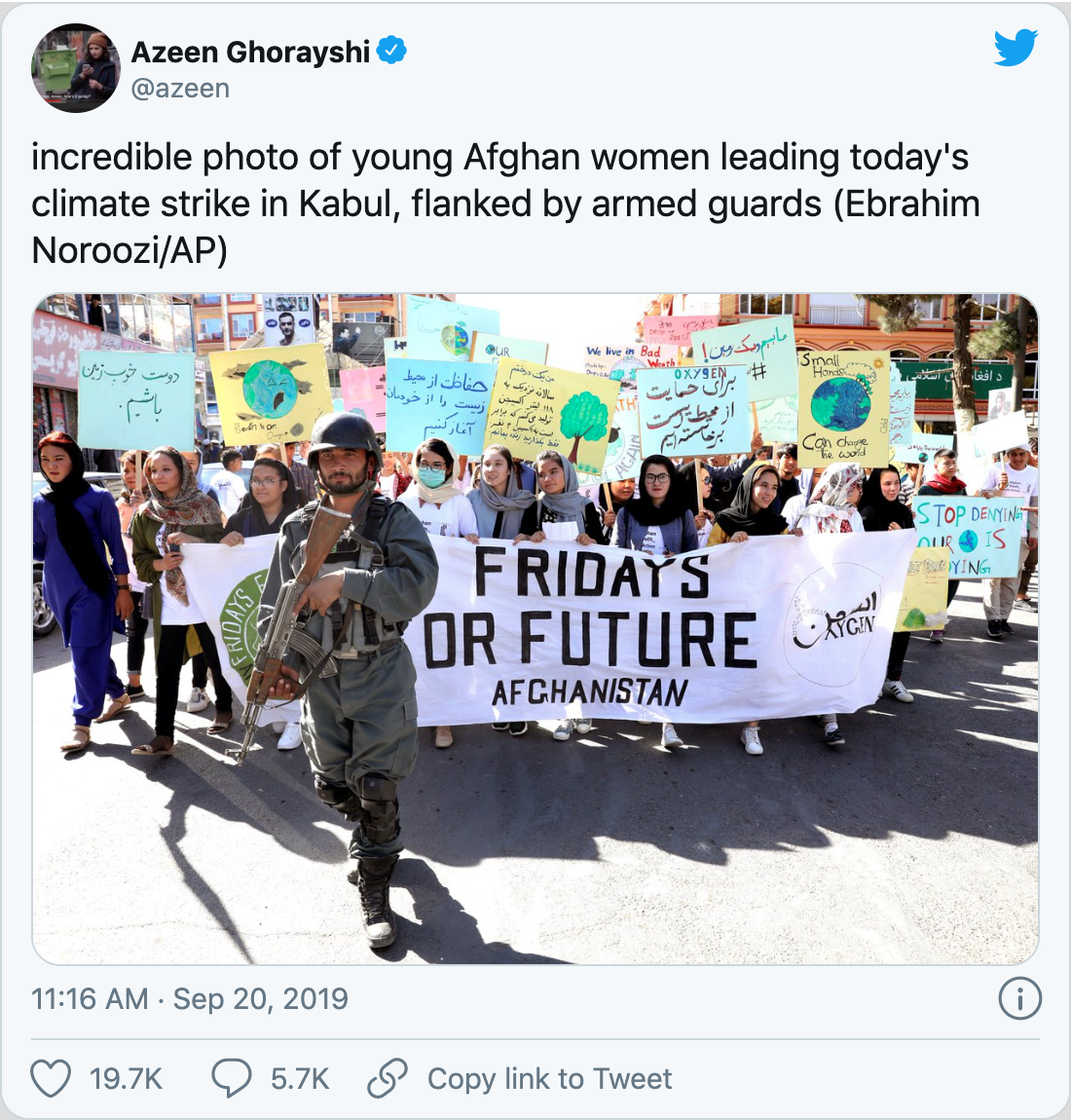

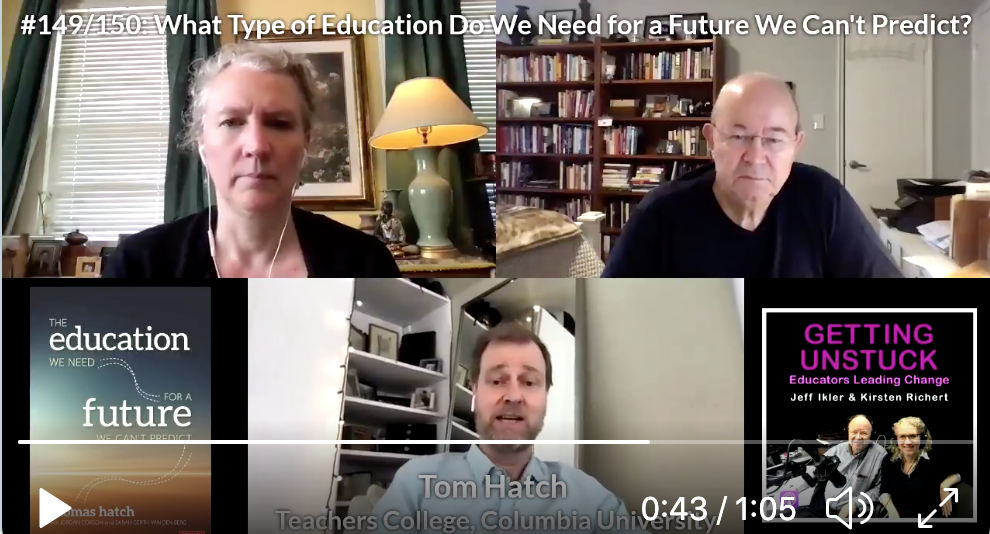





 International Education News