Tag Archives: history

From foundational learning to colleges and careers: Critical educational issues in India post-pandemic (Part 1)

The pandemic disrupted educational services and exacerbated inequalities in India, but did it also create opportunities to improve education more broadly? In this 2-part series, Haakon Huynh explores some of the initiatives that aim to deliver more inclusive, high-quality education for the next generation in the world’s most populous nation. This week, part 1 outlines some of the enduring issues in education in India and shares a few examples of the programs and practices trying to address them. A second post will focus on some of the efforts to address concerns that are taking on increasing importance in India post-pandemic including chronic absence, mental health, nutrition, and sustainability.  For previous posts related to education in India see: From a “wide portfolio” to systemic support for foundational learning: The evolution of the Central Square Foundation’s work on education in India (Part 1 and Part 2); and Sameer Sampat on the context of leadership & the evolution of the India School Leadership Institute

Foundational learning and academics

With 248 million people enrolled in the education system, no single description can capture all the educational issues being pursued in India. But by almost any measure, foundational learning has been one of India’s major concerns for the government and funders for some time. According to India’s Annual Status of Education Report (ASER) in 2018, approximately 80% of grade 3 students in rural areas could not read a grade 2 text or solve basic subtraction problems

A diagram of a group of people

AI-generated content may be incorrect.

On top of long-standing concerns about improving foundational learning, the school closures also heightened concerns about academic learning overall. The National Achievement Survey, for example, showed a significant decline in test scores, particularly in high school, as class 10 scores fell by about 13% in Mathematics, 18% in Science, and 9% in Social Science. A survey of students in 200 schools in Assam between 2018 – 2022 showed that, during the pandemic, students had lost the equivalent of nine months of learning in math and eleven months in language. A study in Tamil Nadu, in 2021 also found significant learning deficits (or about .7 standard deviations in math and almost .4 standard deviations in language) compared to similar students tested in 2019; however, in contrast to other countries like the US, some recovery took place relatively rapidly, as two-thirds of the deficit was made up within six months after school reopening.

To address these long-standing academic concerns, the Indian government has launched education policies such as the National Initiative for Proficiency in Reading with Understanding and Numeracy (NIPUN Bharat). Major efforts to develop and scale-up effective approaches for foundational learning are also supported by groups based in India like the Central Square Foundation and international donors like the Gates Foundation

A screen shot of a chart

AI-generated content may be incorrect.
NIPUN Bharat, Department of School Education & Literacy

Within this context, states and schools in India are pursuing a host of specific innovations aiming to support students’ ability to read, write and count. These include tech-enabled approaches supported by the Central Square Foundation like digital microlearning video modules delivered weekly to teachers and school leaders in Bihar and a Mentor mobile app used for real-time classroom observations. The HundrED collection of global innovations also features a number of resources and practices that have demonstrated some effectiveness in supporting foundational learning in India. Among them, Building Blocks, a maths app, provides over four hundred interactive games that children from grades 1 – 8 can explore at their own pace to supplement their instruction in school. 

At the same time, limited access to computers and the internet in India – where just 4% of rural households own a computer – continue to constrain the reach of tech-dependent efforts to support foundational learning. As a result, other initiatives recognized as part of HundrED’s collection of global innovations are trying to develop approaches that do not rely on the internet. Building on the fact that a billion Indians watch nearly four hours of TV every day, BIRD (the Billion Reader’s Initiative) adds Same Language Subtitling (SLS) on mainstream entertainment on television & streaming platforms.  TicTacLearn (TTL) endeavors to increase access to educational content through a free digital education platform that provides over 14,000 curriculum-aligned videos and assessments in seven Indian languages. While the videos are available on YouTube, TTL also distributes them via pen drives, making it possible to load the content onto school computers in remote areas with limited internet. 

A group of children playing on a tablet

AI-generated content may be incorrect.

HundrED’s Global Collection this year also features the Raster Master Three-Generational (3G) Learning Model which shows what’s possible without reliance on the internet, television or other technologies. This initiative transforms unused walls in streets and courtyards into learning spaces for the “Teachers of the Street.” Painted with chalkboard paint, these walls provide a cost-effective, visible, and accessible platform for teaching letters, numbers, and basic lessons, which are often led by children themselves. Like the Hope House project in Rwanda where secondary school students paint educational murals featuring world maps, alphabets, numbers in English and Kinyarwanda, these low-tech approaches are particularly well-suited to lowering the barrier to participation for first-generation learners and out-of-school children. 

A group of people sitting on a wall

AI-generated content may be incorrect.

Increasing access to college and careers 

Although India has rapidly expanded access to higher education, the pandemic has also intensified concerns about future readiness in India and helped to drive efforts to create new pathways into college and careers. In terms of access, a recent government press release highlights that between 2011–12 and 2021–22, enrollment in state public universities rose from 23.4 million to 32.4 million students, while private universities experienced a staggering 497% increase in enrollment.  

A graph on a white background

AI-generated content may be incorrect.

These increases included significant gains in access to higher education among marginalized groups. According to the Ministry of Education, enrollment among indigenous communities rose by over 100%, among protected castes by more than 75%, and among Muslim minorities by 60%. The Gender Parity Index also improved from 0.87 in 2011–12 to 1.01 in 2021–22, meaning 1.01 women were enrolled for every man. At the same time, concerns about equity remain, particularly in private institutions that now account for over a quarter of all higher education enrollment. Private universities are not legally required to follow affirmative action mandates even though they often benefit from public support like land grants and tax exemptions. Under these conditions, the share of historically marginalized students in private higher education has increased moderately, but hasn’t kept pace with the increased access in public institutions. Furthermore, although increasing the diversity of the faculty might help to build the enrollment of students from historically marginalized backgrounds, only 4.1% of faculty in top-ranked private universities belong to protected caste communities; and faculty positions reserved for such communities in public institutions like Indian Institutes of Managements remain largely vacant with over 83% of these posts unfilled.  

In addition to issues surrounding equity, as in other countries, there is a disconnect between the skills taught in academia and what’s in demand in industry. This has contributed to high levels of youth unemployment and estimates that only about half (51%) of Indian graduates are considered employable. This underemployment crisis is especially acute among highly educated youth. Two-thirds of India’s unemployed are young people with secondary or higher education, many of whom delay entering the job market while holding out for “white-collar” roles. Correspondingly, in sectors like healthcare and engineering a lack of alignment between curricula and labor market needs contributes to a situation where millions of trained graduates are unable to find meaningful employment. The current education system, critics argue, emphasizes degrees over real-world skills, leading to large pools of underutilized talent at a time when India is on the cusp of its so-called demographic dividend – the time where the largest part of its population is in working age.

Output image

The paradox of educated unemployment has become one of India’s most pressing post-pandemic challenges. According to the Periodic Labour Force Survey (2023–24), the unemployment rate among those with secondary education or higher stands at 6.5%, significantly higher than among those with less education, which is just about 1% for middle school graduates and just 0.2% for those with no formal education. The situation is especially dire for educated urban women, who face an unemployment rate of about 13%, more than double that of their male counterparts at 6%. Despite small year-on-year improvements, these figures show that more education no longer translates to better economic outcomes, and in fact, often exacerbates social inequality. 

In one effort to address these challenges following the disruptions of the pandemic, The 2020 National Education Policy (NEP) introduced several innovations including academic credit banks, digital systems that allow students to accumulate and transfer credits earned across different institutions. By enabling learners to pause, resume, and combine coursework flexibly, these kinds of innovations could support more personalized pathways to completing degrees. The policy also places greater emphasis on vocational education aiming to expose at least 50% of learners to vocational education by 2025. Of course, putting these elements into policies is only one step, and it remains to be seen to what extent these policies will be implemented and exactly who might benefit. 

Next week:  New Frontiers for Educational Improvements in India? Critical educational issues in India post-pandemic (Part 2)

Building the capacity for high quality education at scale: Can Vietnam transform the conventional model of schooling (Part 2)?

Despite a much more limited budget and a much larger population than “high performing” countries like Finland and Singapore, some common factors help explain Vietnam’s educational success. Drawing on observations from a trip to Vietnam, the second post in this 4-part series from Thomas Hatch focuses on some of the key elements that helped Vietnam make substantial improvements in education. Future posts explore Vietnam’s subsequent efforts to shift to a competency-based approach and some of the critical issues that have to be addressed in the process. For other posts related to Vietnam, see part 1 of this series, Can Vietnam transform the conventional model of schooling? Educational improvement at scale, and earlier posts including Achieving Education for All for 100 Million People: A Conversation about the Evolution of the Vietnamese School System with Phương Minh Lương and Lân Đỗ Đức (Part 1); Looking toward the future and the implementation of a new competency-based curriculum in Vietnam: A Conversation about the Evolution of the Vietnamese School System with Phương Lương Minh and Lân Đỗ Đức (Part 2); The Evolution of an Alternative Educational Approach in Vietnam: The Olympia School Story Part 1 and Part 2; and Engagement, Wellbeing, and Innovation in the Wake of the School Closures in Vietnam:  A Conversation with Chi Hieu Nguyen (Part 1 and Part 2).

What does it take to create a “high-performing” education system? For long-standing top-performers like Singapore and Finland a comprehensive educational infrastructure includes: 

  • Technical capital – adequate funding, facilities, curriculum materials, and assessments 
  • Human capital – well-prepared, well-supported, and well-respected educators
  • Social capital – shared understanding and strong connections and relationships among educators, policymakers, community members and between schools and the education sector and other parts of the society.

In Vietnam, a more limited budget and a much larger population have made it harder to produce and sustain high-quality facilities, a well-prepared and supported workforce, and a tightly connected and coherent education system. Nonetheless, the Vietnamese education system has been able to draw on and develop some key aspects of technical, human, and social capital that have contributed to the establishment of a system that provides almost universal access to education through 9th grade at a relatively high level of effectiveness.

Technical capital: Funding, Facilities, and Textbooks 

In terms of funding, the Vietnamese government demonstrated its commitment to education by increasing public spending on education from about 1% of GDP in 1990 to about 3.5% in 2006. Those investments were essential for the construction of large numbers of new primary and lower secondary schools in the 1990s and for the production and distribution of free textbooks for students whose families could not afford them. In turn, these efforts contributed to the substantial increases in enrollment and access to education during that time. 

Vietnam has continued that financial commitment to education by spending nearly 20% of its budget (almost 5% of its GDP) on education from 2011 – 2020,  a level of spending higher than countries like the US and even Singapore. That commitment was put into a law passed in 2019 that stipulates that the government should spend at least 20% of its budget on education moving forward, though it has not quite reached that level. Notably, the government commitment has included an investment in equity as Vietnam allocates more spending per capita to disadvantaged provinces and municipalities and pays higher salaries to teachers serving in those areas.

A graph of red bars

Description automatically generated with medium confidence

Government-produced textbooks have also played a critical role in the evolution of Vietnam’s education system. These textbooks served as the “de facto” curriculum for some time, with teachers trained to deliver the content in the textbooks and large classes of students moving through the textbooks in a lock-step fashion. Like “managed instruction” approaches that have raised test scores and achievement levels in some districts in the US, textbooks produced by the government with centrally established learning goals may have provided the rapidly increasing student population with access to a common educational experience aligned to conventional assessments and international tests. As a history of the education system in Vietnam explained it, the replacement of textbooks at all school levels in the early 1990s “brought consistency to general education across the nation.” 

Human Capital: Respect for teachers and teachers’ expertise 

In Vietnam, explanations of the development of the educational system often cite the respect for teachers and their work and dedication as critical factors in the development of the education system. Notably, in OECD’s 2018 TALIS survey of teachers and teaching 92% of Vietnamese teachers report feeling valued by society, some of the highest rates among all OECD countries and astoundingly high compared to the OECD average of 26%. By comparison, slightly over 70% of teachers in Singapore (#2 in the rankings) and slightly less than 60% of teachers in Finland say they feel valued by society. In addition, 93% of teachers in Vietnam reported that teaching was their first choice of career (versus an average of 67% of teachers in other OECD countries).  Correspondingly, teacher absenteeism is virtually unknown in Vietnam. 

There is also some evidence to suggest that, overall, teachers in Vietnam have a relatively high level of expertise. For example, data from the Young Lives project shows that primary school math teachers’ pedagogical skills are the one school variable that explains a significant amount of the difference in the gap between the scores of students in Vietnam and their counterparts in India and Peru. Furthermore, the variance in the effects that teachers have on their students’ learning is much smaller in Vietnam than it is in many other countries, suggesting that there are relatively few really bad teachers. 

A graph of the teacher's values

Description automatically generated with medium confidence

Social capital: Shared values, common commitment, and relationships

Along with Asian countries like China and Singapore, Vietnam shares Confucian traditions that have placed high value on education for hundreds of years. That commitment to education has also been a critical part of the economic and social development of Vietnam over the last half century of the 20th Century. In 1945, for example, Ho Chi Minh declared Vietnam’s future depended on the education of its children, and that same year, the government issued decrees announcing a call for “anti-illiteracy” campaigns and the establishment of literacy classes for farmers and workers. Shortly thereafter, 75 thousand literacy classes with nearly 96 thousand teachers were serving 2 and a half million people. 

The intertwining of education and national development was also evident in the 1980’s as Vietnam’s shift towards a more market-based economy aligned well with the interests of international NGO’s like the World Bank and the Asia Development Bank. These and other international organizations have provided crucial funding and guidance for economic and educational development in Vietnam since the 1990’s.  

Those I talked to in Vietnam also emphasized the importance of the commitment to education that parents demonstrate in their support for schools. Vietnam’s education minister in 2015, put it succinctly:  “Vietnamese parents can sacrifice everything, sell their houses and land just to give their children an education,”

Importantly, students also demonstrate a belief in the power of education and respect for their teachers. 94% of the Vietnamese students surveyed as part of the PISA tests in 2015 agreed with the statement that “It is worth making an effort in math, because it will help us to perform well in our desired profession later on in life,” and surveys from the latest PISA test in 2022 showed that the proportion of class time teachers in Vietnam have to spend keeping order in the primary classroom (9%) is one of the smallest among all participating countries. 

Along with these shared values and commitments, Vietnam also appears to have developed some strong relationships between educators, government officials, and community leaders and parents.  Attention to these relationships may have played a particularly valuable role in the effort to extend and support schooling in rural ethnic minority areas. Phương Minh Lương, who has worked and conducted research with several ethnic minority communities, explained it to me this way:  “That is the power of the collective or what we might call the ‘power with.’  There’s close coordination between authorities at grassroots levels and schools, with monthly meetings between the village or what we call the commune authorities and school leadership and educators. These include school officials like the headmaster and representatives of mass organizations like the Women’s Union, Youth Union, and Study Promotion Associations at the village level. These meetings are organized by the commune authorities, and they discuss all the problems related to the life of the local people in the village and in the school.  Then if there is a problem, like there are children who have dropped out, then the authorities can support the school in that area and they can come to see what are the reasons these children dropped out, and are there any solutions to get these children back to school.”

The Evolution of an Alternative Educational Approach in Vietnam: The Olympia School Story (Part 1)

This week IEN discusses the evolution of the Olympia Schools, founded as a small kindergarten in 2003 by Ms. Minh An Pham and several other parents. Since that time, Olympia has grown to encompass a kindergarten and a primary, middle, and high school with a combined enrollment of 1,200 on a common campus in Hanoi. The post is based on a conversation between Thomas Hatch and Minh An Pham (Co-founder, Board of Directors), Quoc DanTran (Head Of Mathematics Department, Vice-head of Academic Council), Dr.Thuc AnhVo (Head of Foreign Languages Department; English teacher),and Thanh HaLe (Head of Science & Technology Department).

This discussion builds on previous posts documenting the founding and evolution of a variety of different schools and educational programs including the development of the ETU School in China (Beyond Fear: Yinuo Li On What It Takes To Create New Schools), the Citizens Foundation in Pakistan (Expanding to Say “Yes”: The Ongoing Work of The Citizens Foundation in Pakistan), Second Chance in Liberia, (Accelerating Learning in Africa: The Expansion and Adaptations of Second Chance), and Fount of Nations in Malawi (Building equal learning opportunities for differently-abled children in Malawi: An interview with Patience Mkandawire on the evolution of Fount for Nations). Taken together, these post show how powerful educational experiences, often ones that deviate from conventional and “accepted” practice, can take off in all kinds of contexts.

The power of love, dissatisfaction, and determination

The founding and development of the Olympia Schools is a familiar but inspiring story. The story begins with love and a deep belief in education. It requires some money or material resources but relies on determination, connections, and social capital. Along the way, success builds on a whole series of critical decisions – and sometimes “fortunate accidents” – that contribute to micro-innovations and adaptations that make it possible for the school to find a supportive community and create the conditions where alternative approaches to education can take root.

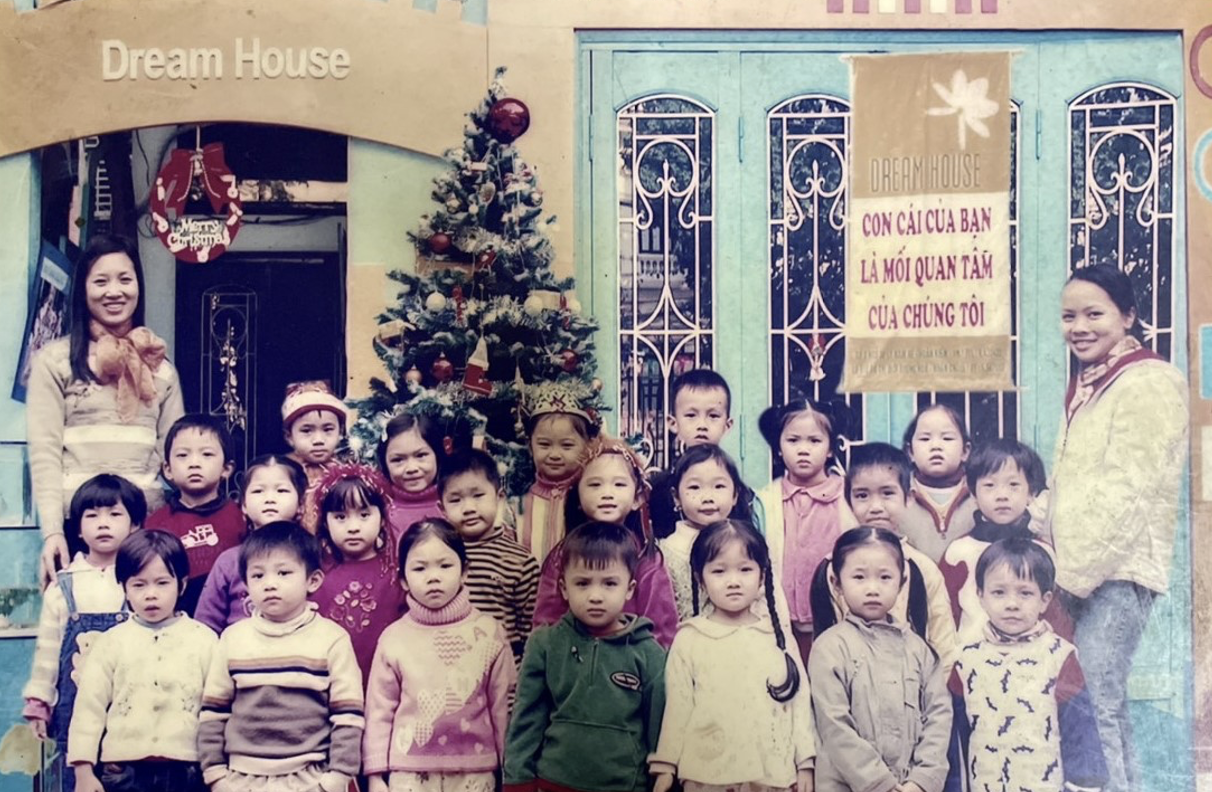
Dream House 2003

The story of the Olympia School begins in 2003 in Hanoi, when Ms. Minh An Pham and three of her friends were looking for kindergartens for their children. It was almost ten years since the Vietnamese government had begun loosening some requirements related to education and other sectors. Economic development was in full swing, and more and more international companies were finding their way to Vietnam.  All four friends got jobs at one of those international companies and Ms. Pham told me that experience gave them opportunities to see the confidence and independence of their co-workers’ children. That exposure reinforced their concern that – although many Vietnamese students excel in academics – they often seemed to lack what she called “life skills.” As Ms. Pham put it, it seemed as if Vietnamese students had lost their confidence in speaking up and sharing their ideas. She attributed that to a school system based on a Confucian education tradition that emphasized memorization, examination, and respect for teachers, coupled with a tendency for Vietnamese parents to constantly compare how their children were doing and how they ranked academically.

With a growing international community and increasing opportunities for international work, Ms. Pham and her friends wanted to make sure that their children gained both academic and life skills and that their children could learn English along with Vietnamese. When they looked around to find a school that could meeting those goals, however, they did not see any public kindergartens that met these criteria. There were a few private options that Ms. Pham and her friends thought seemed more like day-care centers than schools, and there was one private kindergarten imported from Singapore. But even that – very expensive – option only ran from 9 – 3 PM, still not long enough to take care of their children while the four women worked. Seeing no other options, the four friends began to think about creating a kindergarten of their own.

The power of social networks

Their first steps toward developing a school came with the help of another colleague at work. Although Ms. Pham had graduated from a teacher training institution in Vietnam, she went straight into the business world after graduation. As a consequence, she had never worked in schools and was not that familiar with early childhood education. But, Ms. Pham told me, the four friends were fortunate to work with a woman whose mother was a well-known educator who specialized in kindergarten. As Ms. Pham described it, “she was our first teacher,” and introduced the four friends to a number of educational experts who helped them learn about other early childhood approaches, including the “Reggio approach” that originated in Reggio Emilio, Italy. As they visited local schools and traveled to observe private kindergartens in places like Ho Chi Minh City and Singapore, they focused more and more on schools that emphasized “developmentally appropriate practice” as well as some schools that were inspired by Howard Gardner’s Theory of Multiple Intelligences. On the one hand, Ms. Pham explained, these approaches provided broad support for children’s development and encouraged children to be independent. On the other hand, they also fit well with the Vietnamese national kindergarten curriculum. Notably, the national curriculum was already divided into areas that concentrated on physical, musical, and ethical development, and the four friends felt those subjects aligned well with the different strengths and abilities highlighted in theory of multiple intelligences.

They expanded their group of advisors as they were introduced to more and more people, including several working with not-for-profits like Save the Children, who had extensive experience in Vietnam. Those advisors looked at the plans to combine MI-based and developmentally appropriate curriculum with the Vietnamese national curriculum and concluded: “this is doable.” With that green light, Ms. Pham bought textbooks and gathered teaching materials and, with the help of their network of experts, reviewed and aligned them with the national curriculum. They rented a small house in an alley of Hanoi and worked with a designer to renovate it; they drew on the connections and expertise of their advisors to recruit and hire teachers; and, after an intense six months, opened their doors to the “Dream House” kindergarten and welcomed a small group of six students – four children of their own and two children who lived nearby.  To make it all possible, Ms. Pham worked the evening shift at her job and spent the whole morning at the kindergarten.

Key developments in the first years

The four friends were fortunate to have the means and the relationships to get the school off the ground, but, as Ms. Pham explained, they also had to credit their houses to the bank, draw on their salaries to make sure they had enough money to pay the teachers, and “every time a student quit the school, we worried so much that we would not have enough money to keep going…” Nonetheless, the school grew year-by-year, from 6 students to 12 students, from 20 students to 60, as the first cohort expanded and progressed through the grades.

Dream House Primary and Secondary Schools 2007

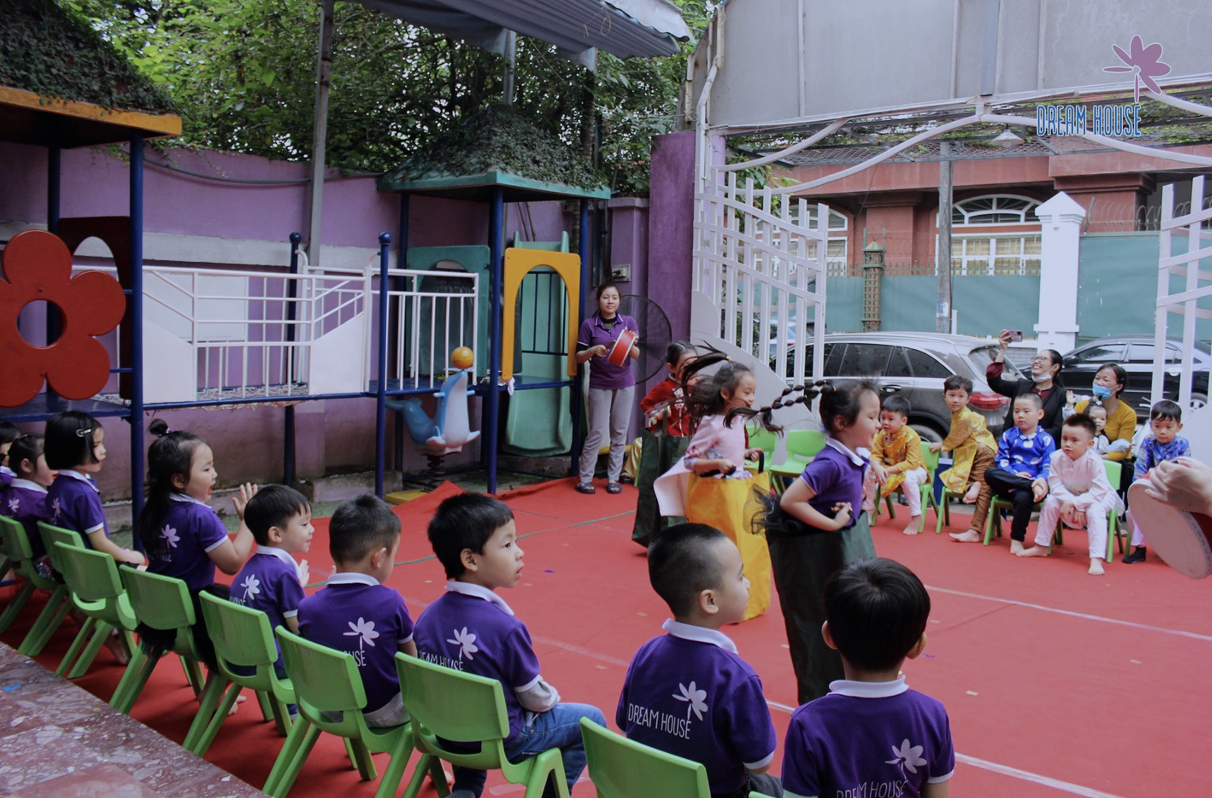
By 2007, they were able to start the year with both a group of primary school students and a group of secondary school students. Along the way, several key decisions helped to create the time in the day and the space in the curriculum that they needed to stay true to their original vision of a developmentally based, holistic, education aligned with the national curriculum.  First, they decided to teach Vietnamese and English in an integrated way. As Ms. Pham explained, she had seen private schools in Ho Chi Minh City that were teaching English, but only as a separate subject. “Our innovation,” Ms. Pham said, “was to teach English along with the other subjects.” That meant teaching key skills and concepts in math, science, and history in Vietnamese and then teaching the related English vocabulary in the same class. This innovation created space in their schedule because they did not have to find time to teach a separate English course. Furthermore, the subject teachers teaching in Vietnamese could co-teach with their colleagues teaching English, making coordination and communication easier. Perhaps most importantly, from the students’ perspectives, instead of having to make connections between concepts and vocabulary taught in different classes, they encountered an integrated curriculum that reduced confusion.

Second, although Vietnamese public schools generally ran for a half-day (usually from about 7:30 AM to 12 PM, 6 days a week), Dream House decided to run a full-day program, from 8 AM – 4:30 PM. That decision created additional time during the school day that allowed them to meet the national curriculum requirements, add and integrate the teaching of English, and incorporate the teaching of their own “life skills” curriculum. In particular, the national curriculum requirements for social science included both ethics and society and nature, but Dream House chose to split social science up by teaching nature during their science classes and then teaching ethics and society in their life skills class. As Ms. Pham put it, “we reconfigured all the subjects in the school day and made it a comprehensive approach, integrating Vietnamese and English.”

Movement games of kindergarten in Dream House

With those critical decisions and strategic choices, the basic structures for their primary, middle, and high school were in place. Capping off this period of development, what began as Dream House, moved to a new, larger campus in 2010.  As part of a competition to come up with a new name, the Olympia School was born, the winning teacher paper declaring it a symbol for wisdom and success.

Next week: The “School of Change”: The Olympia School Story (Part 2)