Tag Archives: India

India’s ongoing effort to implement the Right to Education Act

Recent reports from India show that the country is grappling with several issues surrounding the implementation of the Right to Free and Compulsory Education Act, also known as the Right to Education Act (RTE). RTE was signed into law in 2009 with the aim of providing every child between the ages of 6-14 with a high quality, compulsory education. Yet, as outlined below, the country’s efforts to comply with the law have brought to light various issues that have hindered an already confusing and complicated process.

The apparent first step in the effort to educate all children involves enrolling them in school. In some parts of the country, such as Navi Mumbai, 80% of public school seats remain unoccupied. The Times of India quoted one official as saying that last year only a handful of the over 3,000 available private school seats had been filled. The Indian Express noted the particular concerns raised by parents of nursery school children, as well as children with special needs. As one Delhi school principal shared, “In totality, there are no dearth of seats in city schools. But when everyone is looking to get their children into the ‘so-called best schools’ in the city, it is then we have a problem. And frankly, the problem will continue till the problem of supply and demand is solved.”

Reports from areas such as Aurangabad show that private schools, which are legally required to designate 25% of their highly coveted seats to disadvantaged students, are finding ways to bypass this requirement. By altering the application schedule, or failing to post admission dates in public spaces, and in some cases even creating illegal admission tests or enrolling fictitious students, these private schools violate the RTE. As a result, civic organizations are taking up the effort to disseminate information to parents, and the government has promised strict oversight of admission procedures. However, this year the government has also transferred the admission process online, which raises questions about how those who are illiterate and/or do not have access to the internet will be able to apply for school admission at all (some reports indicate that this online system is purposely intended for “unaided,” or private, non-minority schools). Reports from Chennai show that the government has declared only a one week time period for enrolment, which would further hinder the process and is contrary to the spirit of the RTE.

Even with these enrolment issues, some reports point to a drastic increase in applications from urban poor families, from 140,000 last year to 360,000 for next year. As more and more families seek to enroll their children in school, the standard lottery admission process has proven tedious and contributed to an increase in complaints. Many of the complaints derive from the lack of transparency, which has led some parents to apply to a number of schools to increase the changes of their child getting in.

Once students are enrolled in school, concerns arise about what goes on inside of schools. On this topic, reports point to schools’ lack of compliance in terms of infrastructure and teacher training. According to dnaindia.com, only 59.67% of students are in schools that have met the teacher student ratios outlined in RTE. Further, while RTE mandates that all teachers in the country be trained by 2015, India has 660,000 untrained teachers and 500,000 vacant positions.

Student attendance is an additional concern, as The New Indian Express reports that the Education Department in Karnataka has called for an RTE amendment that would establish an authority to maintain attendance records, notifying the parents of absent children. A recent article in The Times of India, quotes Ossie Fernandes, director of Human Rights Foundation (HRF), as saying, “there is no auditing…to check whether RTE is implemented.” Fernandes went on to suggest that if government and private schools are serious about implementing RTE, they should be open to independent school inspections.

Yet, some say that India must first address the larger issue of childhood poverty and slavery, which has forced many children into the workplace rather than the classroom. According to the recent Global Slavery Index, India is home to half of the world’s modern slaves. Despite the government’s 2012 ban of all types of child labor under the age of 14, little has changed in the past two years. With a poverty rate of approximately 25%, and more than 50% of the population under the age of 25, a recent editorial in The Nation suggests that implementation and enforcement of either the child labor law or the RTE will require the ratification of the International Labor Organization’s Convention 182.

Widespread call to improve vocational education

Christopher Furlong, BBC

Christopher Furlong, BBC

News reports from this past month have shown that many countries are rethinking the role of vocational training in their education systems.

In Denmarkwww.dr.dk reports that the government is considering new academic entrance requirements to vocational programs that some fear would result in thousands of students being barred from such programs.

Denmark is not alone in it’s effort to “raise the bar” on vocational education. The BBC reported that a survey of British employers showed almost 60% believe the government does not do enough to provide students with the vocational training they need.  The Guardian has also reported that a new standard will be applied to vocational education, allowing for diplomas endorsed by companies such as Kawasaki, Honda, and Volvo, but also hotels and even the Royal Ballet School, which is backing a qualification in performing arts.

Similarly, Thailand is also pledging to reform education to meet the demands of employers by reforming their system of vocational education. As reported in The Nation, the Education Ministry shared plans to work with the private sector to jointly design curriculum and training programs that give students real-life experiences as well as an academic education. The Thai government will also work with Germany, Australia, Japan and China – countries that have large investments in Thailand. However, in an earlier article, The Nation also reported that some researchers have expressed concerns that the government could still be doing more.

Similar news reports, collected from online sources over the past month, show a widespread call to improve vocational education, to reconsider the academic curriculum, and for educators to work alongside employers. These reports can be found coming from countries such as MalaysiaNigeriaThe United Arab EmiratesLiberiaSudanGhanaIreland, and India.

Teacher Quality in India, England, Finland, and Sweden

A quick scan of the recent news on teacher quality illustrates the continuing debates over the best strategies to develop the most effective teaching force.  In India, a recent panel discussion suggested there is a divide between those who call for greater focus on attracting the most promising candidates by elevating the status of the profession, raising salaries, and establishing guidelines for professional responsibilities, and those who call for updating teacher training programs so that candidates will be better prepared for the challenges of the profession.

In England, the strategy of using financial incentives and higher standards for professional entry to increase the quality of the labor pool has been in the news again as the Mail Online reports that the number of job applicants for teaching training positions in math and physics in particular has “collapsed.”  Two years ago the UK Education Secretary, Michael Gove, sought to improve teacher quality by withdrawing funding for teacher training to students who achieved only the third class honors degree. The measure put the country in line with other high performing countries, such as Finland and South Korea, but the story reports that the cut-off score contributed to over 700 teacher training vacancies in math and almost 400 in physics. Related reforms include an increase in the number of candidates training in schools rather than teacher training colleges which Geoff Whitty discussed in a recent IEN post. ICTScoop also describes a project designed to recruit new teachers help improve literacy and numeracy in underserved areas as “getting off to a slow start.”

At EDUCA 2013, Thailand’s annual conference for teacher professional development, Pasi Sahlberg explained Finland’s approach to teacher quality. The government has accomplished this by funding teacher education, recruiting the best candidates as teachers, and giving teachers more time to prepare for classes. While what Sahlberg calls this “Less Is More” approach often emphasizes teacher preparation and recruitment, Sweden is experimenting with further investments  in professional development. For example, with funding provided by the European Union, a new project will provide coaching and observation support for teachers in select schools.

Addressing teacher quality in Australia and India

Reports over the past month show that Australia and India are countries are implementing new policies to address teacher quality, albeit with two distinctly different approaches.

In Australia, principals will be given the power to address teacher behavior as part of an $150 million reform effort to improve the quality of teaching. Education Minister Adrian Piccoli described it to the AAP as “more like a private sector approach to performance management….It’s going to be a fair process but a tougher process than what exists already.” Teachers who fail to meet the new standards of conduct could be released, demoted, fined or cautioned. Additional reforms include salaries based on meeting standards rather than employment length.

In India, the government has adopted a three-pronged strategy to improve teacher quality, which includes (i) the strengthening of Teacher Education Institutions, (ii) the revision of curriculum for teacher education in accordance with the National Curriculum Framework for Teacher Education 2009 and (iii) the laying down of minimum qualifications for Teacher Educators and their continuous professional development.

In Thiruvananthapuram, the capital of the Indian state of Kerala, the District Institute of Education and Training (DIET) will embark on a three-month study to analyze how classroom practices correspond to the prescribed curriculum of the district’s primary schools.  As Mohammed Kabir, a DIET official, explained to The Hindu, “There is an increasing need to analyze the problems faced by practicing teachers to get a complete picture. Sometimes, teachers follow textbook-based teaching while the curriculum mandates on activity-based learning. This might be out of habit or due to lack of understanding about the methodology. Here, teachers can open up on the problems they face in adapting to the methods”, said Mohammed Kabir, a DIET official.

Scan of news: Teachers

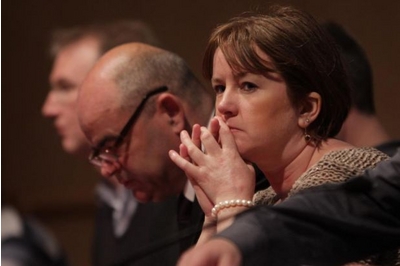
Scotland: Susan Quinn, Union president, highlighted members' concerns.

Scotland: Susan Quinn, Union president, highlighted members’ concerns.

Over the past month, reports from various countries have shown both the concerns of teachers and concern about teachers. For example, reports of teacher concerns include India and Argentina, where teachers are looking for reliable salary payments, decent facilities, and quality education for allFinland, where teachers are concerned about a sharp increase in violent student behavior in the classroom; and Greece, where teachers are fighting for the right to protest in the midst of austerity measures that threaten the country’s education system itself. Additionally, in Scotland teachers are protesting a new curriculum and an unmanageable workload.

Reports of concerns about teachers include Lithuania, where students recently outperformed teachers on an exam created by the European Union; Israel, where teachers’ lack of expertise in mathematics has been blamed for student difficulties with the subject; and Malaysia, where the Education Ministry plans to conduct diagnostic exercises to benchmark Science teachers in terms of their content knowledge and pedagogical skills in the field.

Scan of news: Access and Funding

Sources in many countries over the past few weeks highlight issues ranging from educational access and funding, to quality curriculum and government corruption. Here is a quick glimpse of what we’ve seen on the issues of access and funding:

Pia Philip Michael and Bridget Nagomoro visited the UK to discuss the challenges to girls' education in South Sudan. Photograph: Leapfrog Public Relations

Pia Philip Michael and Bridget Nagomoro visited the UK to discuss the challenges to girls’ education in South Sudan. Photograph: Leapfrog Public Relations

Reports have shown that the United Arab Emirates is struggling with the issue of high tuition and long student wait lists, while Singapore’s Senior Minister of State for Education has suggested that the government link educational subsidies with evidence of high quality. Australia and the Philippines seek to increase investment in educational research by launching a partnership that aims to raise the quality of education in the Philippines through investing in research to support K-12 education. Meanwhile, union leaders in Peru met to develop policies that would defend the right of indigenous peoples to public education. Sudan aims to keep young girls in primary school by involving officials in the effort to spread the national message on educating girls. India is about to launch the second round of the Right to Education Act admissions, which will include a reservation of 25% seats in private schools for disadvantaged groups; however, reports reveals that word has not yet reached parents who would benefit most from the new provision. 

India

CBSE introduces Contemporary Comprehensive Education

The Times of India (June 6, 2013)

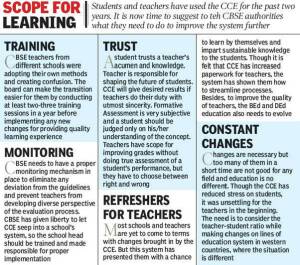
20453381.cmsThe Continuous Comprehensive Evaluation, introduced by the Central Board of Secondary Education (CBSE), was designed with the intention of reducing stress on students and evaluating them “in a more rounded way”; however, the system is being criticized for adding a layer of bureaucracy that reveals a distrust for schools and teachers, adding tremendous paperwork. Some say the process can be streamlined, and once members receive training the new process seems like less of a burden. Students seem to be heavily in favor of the system, which has turned the academic year into two semesters and, as one student said, “made even boring topics interesting through various projects.” Parents are also supportive, saying, “Students are not cramming notes like we had to. Their interpersonal and co-scholastic skills are better and they become better leaders.”

For more information:

A study on implementation of the Contemporary Comprehensive evaluation in upper primary schools of Kerala

Reforms in Mexico and India in the Journal of Educational Change

(links to articles are embedded as hyperlinks)

JEDU 2009:JEDU 2009In the most recent issue of the Journal of Educational Change, studies highlight teacher participation in reform efforts in Mexico and a participatory approach to wide-scale change in India.

Education Reform and Teacher Participation in Mexico

In their study of Mexico’s 2006 Reforma de la Educacion Secundaria (RS) (Reform of Secondary Educatión), Levinson, Blackwood and Cross conclude that despite interest in professionalizing teaching at the secondary level, “for the most part secondary teachers in Mexico neither felt like agents nor partners in the RS…. As in previous reform efforts, teachers mostly felt that they were recipients of plans formulated by government officials, and as a result many have evidenced neither complete compliance nor full commitment to the reform.”  They go on to explore the problematic role of the union in the reform and the concerns that many teachers have about the union. Recent reports from Mexico show that concerns about the union and teacher participation continue.  President Enrique Peña Nieto’s recent education reform initiative is widely seen as an effort to diminish the power of Mexico’s teacher union, which has been led by Elba Esther Gordillo; however, it is not clear if President Nieto will provide the essential structure and support that would allow for authentic teacher participation. At this time, the teachers and union leadership have been presented in the press as allies in the effort to protest Nieto’s reform.

Wide-scale change in India

While recent attention often focuses on the regulations of the Right to Education Act in India (including recent reports  and debates about the progress of this initiative), Tricia Niesz and Ramchandar Krishnamurthy suggested that the wide-scale adoption of Activity-Based Learning (ABL) in Tamil Nadu India was accomplished through a more participatory, grass-roots approach.  They argue that state-level administrators “engaged strategies for change that combined both movement-building tactics and the conventional tools of administrative power.”  These administrators themselves became experts in the ABL method in a way that built good will and moral authority even when administrators used top-down mandates to institutionalize the reform.

India: Funding the Right to Education (RTE) Act

Photo: The Hindu

Photo: The Hindu

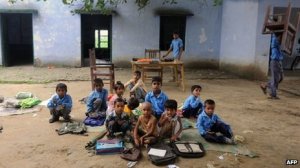
In an effort to improve the country’s economy, the Indian government has cut funding to the Right to Education (RTE) Act, which aims to provide every child between the ages of six and 14 with an elementary education. Cuts are expected to total 2-3% of the total RTE budget for 2012-2013, a substantive deduction that will affect the implementation of the RTE legislation. Civic bodies, such as Brihanmumbai Municipal Corporation (BMC), have reported that they simply cannot afford to meet the requirements of RTE.  The decrease in funding is expected to affect many, such as disabled children who rely on government supported transportation, and children in areas of conflict.

Meanwhile, cities such as Nagpur are holding seminars to inform and educate local principals about RTE implementation, in the hope of improving student achievement country-wide. Tripura is a rare example of a state that has been able to meet the requirements of RTE. Tripura admitted 44,000 students under the RTE quota this year, and plans to increase the age of students who qualify to receive a free education. Tapan Chakraborty, School Education Minister, pointed out that the Left Front government has been spending more than 20% of its annual budget on education, while the central government has spent less than 10%.

Students will begin applying to schools under RTE on January 10, 2012; however, member schools of the Karnataka State Private School Management’s Federation (KSPSMF) have warned that they will not admit disadvantaged students if the government does not reimburse them.

India

Provide toilets and drinking water for every school, orders Supreme Court

AFP, The Economic Times (October 6, 2012)

The emphasis on moving from access to quality is a commonplace argument concerning schools in developing countries. India claims to have achieved close to 100% enrollment of girls and boys in primary schools and is embarking on quality strengthening interventions to retain these students; however, quality is an extremely wide concept in the context of India and in most schools it begins with providing potable water and clean and functional toilets to its students. The Supreme Court of India has recently passed a ruling making it mandatory for public schools to provide this most basic infrastructure over the period of next six months.

For more information:

Indian court orders toilets to be placed in all schools

The Times of India: School Toilets