Tag Archives: Malawi

Scaling and Adapting Tablet-Based Supplemental Learning in Malawi, Sierra Leone, and Tanzania: Joe Wolf and Kira Keane on the Evolution of Imagine Worldwide (Part 3)

In the third part of this three-part interview (see Part 1 and Part 2), Joe Wolf and Kira Keane discuss the role of teachers in a table-based supplemental learning model and the efforts to adapt the model to three different contexts in Africa. Part one described the evolution of Imagine Worldwide’s approach and part two discusses Imagine Worldwide’s approach to make the work sustainable by building partnerships with government officials and local community members. The tablet-based program at the center of Imagine Worldwide’s work, developed by software partner onebillion, serves as a supplement for regular instruction, with each child in a school spending a targeted 150 minutes per week working independently on problems related to reading and mathematics. Imagine Worldwide partnered with the Government of Malawi to rollout the program in 500 schools in Malawi in 2023-24, with the ultimate goal of expanding to all 6000 primary schools, serving 3.8 million learners in standards [grades] 1-4 annually. Joe Wolf is the Co-CEO and Co-Founder of Imagine Worldwide, and Kira Keane is the Director of Communications. (Photos/graphics are from Imagine Worldwide unless otherwise noted.)

Thomas Hatch (TH): What can you tell us about the work that has to be done with teachers to scale and sustain the tablet-based model? 

Joe Wolf (JW): The role of facilitator in the model is relatively straightforward. You don’t need a highly trained adult, and they don’t have to be a teacher. It can be a community volunteer or someone else, and that’s made it a very scalable model in terms of human capital. That’s important, because there just aren’t enough humans in these educational contexts. What makes this so scalable, in my opinion, is that when you have a single child and you have a single tablet, there’s an interaction between the child and the content that creates learning gains. When you move to one hundred kids, that linkage doesn’t change. When you move to a million kids, that linkage doesn’t change, you still have the relationship between the child and the content. Things do get more complex in that you have more equipment, and you have more schools, and you need to make sure that the equipment doesn’t get stolen. But when you have a model that depends on human capital, you need more and more and more teachers; and those teachers need to stay trained; and they need to show up every day; and they need to be able to engage one hundred children at the same time. It’s ten out of ten in terms of complexity when you have an inadequate number of teachers and you have to train those teachers to somehow be effective for those one hundred learners. 

TH: This is definitely a critical problem – how can programs be effective if they depend on more qualified teachers than can ever be supported? But then there are legitimate concerns that programs that don’t rely on teachers are sending the message that teachers aren’t important and that we don’t need those adults. How do you address those concerns that you’re trying to replace teachers with technology? 

KK: That issue has really been top of mind for us, particularly as we think about our communications around the program.  One very conscious decision we’ve made is to go back into the community to report on our research results. This means going back to teachers and saying, “Look, this is how your students are doing. This is what we’re learning. This is how this work can support you. This is how it reinforces your instruction.” From the beginning, we’ve really tried to include teachers as well as parents and community leaders in saying that “what you’re part of has implications not only for your own children and your students, but for the country.” We’ve had to be very mindful of that and of making sure that we build in feedback opportunities for teachers. Now in our implementation research, we have researchers going out into the community, conducting workshops and creating opportunities to hear from teachers so that we can continue to improve that process. But so far, our early implementation results and qualitative information coming from teachers is that it’s highly, highly popular.

Photo: IRC

JW: I also think that we just have to be realistic and fact-based with the current situation. In Malawi, there are one hundred kids per classroom and the average age in Malawi is 16 or 17 years old. It’s one of the youngest countries in the world. That means the number of kids is going to go up dramatically, but the level of resources is not going to go up dramatically.  So you already have a problem, and the problem is going to get worse. You cannot build enough schools or hire enough teachers quickly enough or at low enough cost to solve this problem. That’s just the reality, and, in that context, many of these countries are eager to pursue innovative approaches. They’re not building bank branches. They’re going to mobile banking and now their mobile banking is so much better than ours. It had to be. It’s classic Clayton Christensen and his theories of disruptive innovation: where does innovation take root? It takes root in areas of non-consumption, where the status quo is not entrenched. The government of Malawi is really open about this and there is a real thirst for innovation. This is being well received by the government, by the communities, because what’s currently happening is not producing learning gains. 

In addition, we have purposely situated ourselves in a supplemental, complimentary part of the government school’s timetable. There is already literacy and numeracy on the timetable, teacher led instruction, and that stays the same. Then we have a complementary supplemental period where every student is learning adaptively, and what we’re finding is that some of the biggest fans of that model are the teachers, because they’re saying, I have a little bit of a break during the tablet program, because the kids are super immersed in their own learning. The kids are showing up more often. Attendance is going up. They’re learning more; their attitude toward learning is improving. The teachers and the parents are seeing a higher return on investment of keeping the kids in school.  There are just a lot of positive things that are happening for that teacher so that it isn’t in any way positioned as a replacement, as much as an aid that just makes their jobs easier and more sustainable.

TH: I think that’s so crucial. What a difference it might make for a teacher to have a period like that where they can see every student engaged. That’s just such a classic win-win. As we wrap-up, I’d love to hear more about scale-up. What have you learned from scaling across different contexts? 

JW: We’ve come up with what we think are the preconditions for success in partnership with governments. We want to find governments that are already committed to: 

  • Bringing technology into the classroom for teachers and students; 
  • Boosting foundational learning; and
  • Providing solar electrification for their schools. 

We want governments to be already moving on this journey. Then we’re helping them get there, as opposed to trying to convince them to do things. We are out of the convincing game. It doesn’t serve anybody. But we know we need strong government buy in, so we need strong leaders within the government that are committed. We also need a strong local ecosystem of partners that can execute. To help with that, we fill the position we call the “ecosystem coordinator.” That helps us act as a group that is solely dedicated to bringing together the disparate pieces and stakeholders and having them all march forward together to do this work. If you don’t have somebody who has this as their only job, the work will not happen because there’s too much else going on. The jobs are too overwhelming. 

We also need a funding community that is interested in the places that we’re working. We need bold philanthropic capital that’s willing to go first and willing to do the things that need to be done to get the full government buy in. We need support to get to a critical mass of schools. We need evidence that’s generated specific to that context. We need the ecosystem to be organized in a way that you can create an executable plan. Nobody can make decisions on whether this should go to scale, whether that’s the government or whether that’s funders, without having that done first. And it’s the perfect role of philanthropy to be that risk capital early within a country. What we’re in the process of proving, is that if we do that well, the program is in a position to go to scale with government support and they government is also in a position to mobilize more international and multi-lateral funding. 

Organizationally, we’ve seen that the demand is everywhere. Every week, there are countries asking us work with them, but we’ve decided to focus on four countries of different sizes, with four different languages. We want to work in partnership with these government and prove that the model can, in fact, scale. Then at the end of that phase, we’ll just open source everything and try to bring in a lot more players beyond us. We’ve decide to hone in on what we’re calling our “scale portfolio” with Malawi, Sierra Leone and Tanzania being the first three countries that we’re prioritizing. Then we’ll also have a Francophone country in that portfolio. If we do this well, I think that will provide the evidence that’s needed to figure out how to scale this. At this point, adding a fifth or sixth or seventh country, that’s not what the world needs. We know the demand is there. It’s more important that we show how we can build a system, in partnership with a national government in different contexts. 

TH: Have you had to make adjustments or adaptations so that the model you developed in Malawi can work in these different contexts? 

JW: Absolutely. I think continuous improvement is the DNA of our organization. How do we make the procurement better? How do we make the training better? How do we make those community sensitizations better? How do we better collect data in super low-connectivity areas? How do we take that data so we can improve the software and the implementation model? Innovation is a messy game, and it’s filled with fits and starts, so every day there’s a whole bunch of challenges that come up and a whole bunch of solutions that make the model even better. We have to acknowledge that as much as we want to create standardization in systems, every place is different. Our model in Tanzania will look slightly different than our model in Malawi, and we have to allow for those bottom-up adjustments.  It’s back to that relationship between the child and the content. That relationship probably doesn’t change all that much. There are slight adaptations as you go from language to language or from national curriculum to national curriculum, but those are pretty minor. There’s a lot of overlap in the instruction. It’s really the behavior of the adults surrounding the program that may look different in Tanzania. Just as an example, one of the districts that we’re launching in Tanzania is bigger than the entire country of Malawi, so the logistics of working in smaller and larger countries have to be considered. In terms of other differences, in Sierra Leone, we’re working in standards one through six and in a context that is post- civil war and Ebola and everything else. That means there are a lot of overage kids that are way behind in foundational skills. In Tanzania, we’re only working in standards one through three, because that’s been a more stable place. Malawi is in between, as we’re working in standards one through four. That comes from very different realities in terms of number of kids that have to be served with that same tablet and that same content.

TH: Is there anything you’d like to add that you haven’t already mentioned?

JW: I just want to hammer home the importance of philanthropic capital. The governments do not have the early-stage capital. The Big Aid organizations are not going to be early – that’s not their job. Nearly half of the world’s youth will be African by 2030 – half!  Yet there’s not a single foundation that any of us can name that writes million dollar checks for primary schools in Africa. The disconnect between the size of the challenge and the amount of institutional capital focused on it is stunning. So I do think that when people say, “What can we do about this?” Providing capital has to be part of it. A big reason why the work in Malawi has advanced is because some of our supporters decided to make a big philanthropic bet. It wasn’t just, ”Let’s fund 10 schools and see what happens.” This was, “Let’s fund five hundred schools in a year and see what happens.” That made it a really different conversation, and we’re having success in finding other bold philanthropists that think about things the same way. But it’s not easy. There’s not a lot of institutions that focus on this. Under these conditions, I think part of the work is saying, “Hey, whatever you care about world, if it’s environment, if it’s economy, or if it’s global peace, foundational learning is directly tied to all of that, and we have to pay attention to the region that will have half of the world’s youth in a few years.” 

Bringing a Tablet-Based Foundational Learning Program to all the Primary Schools in Malawi: Joe Wolf and Kira Keane on the Evolution of Imagine Worldwide (Part 1)

What does it take to scale a tablet-based foundational learning program to all the primary  schools in Malawi? In this 3-part interview, Joe Wolf and Kira Keane describe how Imagine Worldwide has approached that challenge and share some of what they have learned in the process.  The tablet-based program at the center of Imagine Worldwide’s work, developed by software partner onebillion, serves as a supplement for regular instruction, with each child in a school spending a targeted 150 minutes per week working independently on problems related to reading and mathematics. Imagine Worldwide partnered with the Government of Malawi to rollout the program in 500 primary schools in 2023-24, with the ultimate goal of expanding to all 6000 primary schools in Malawi, serving 3.8 million learners in standards [grades] 1-4 annually. Joe Wolf is the Co-CEO and Co-Founder of Imagine Worldwide and Kira Keane is the Director of Communications. (Photos/graphics are from Imagine Worldwide unless otherwise noted.)

TH: Can you describe for us some of the key steps or phases you went through as you developed your work to test and then to scale-up this tablet-based program in Malawi? 

Joe Wolf: The first phase of our work was all research oriented. We wanted to see if these learner-centric tablet models could work – were they really effective for children? – before asking under-resourced systems to spend time, energy, and capital on them. That meant we had a prolonged research phase that included nine randomized controlled trials. That was across different contexts, different languages, different implementation models, different countries – really exhaustively trying to prove that these solutions can, in fact, add significant value. 

The second phase was what we call “learning to scale:” What are the processes that need to be done repeatedly well to scale within these contexts? We purposely spread our work out across seven countries, with different implementation models, different implementation partners, different types of structures to really test what needs to be done repeatedly well so that these systems can adopt the work at scale. Then, only in the last three years, we’ve put the pedal down and said, “Okay, I think we’re ready to really think about scaling.” And we were only able to act on scaling thanks to the leadership of the government of Malawi, who saw the learning gains of our pilot programs and saw how this edtech intervention could support their national goals of improving foundational skills.  At that point in 2022, we served around 6000 children, but we increased it to about 700,000 children by the beginning of 2025. That’s a 100x increase in the last two years, which I think is a testament to the scalability of the model, the execution of the team, and the leadership of our government partners. 

A map of africa with a yellow circle

AI-generated content may be incorrect.

TH: What’s the third phase? Implementation? 

JW: I would say it’s scale plus continuous improvement. Now, our research is less efficacy oriented and more implementation oriented. How do we make it better and better and better? To address that, we have four levers we focus on: 

  • Access: How do we serve more and more children and make the solutions easier and easier to implement? 
  • Cost-effectiveness: How do we bring down the recurring costs to be as low as possible? We’ve brought costs down around 75% in the last five years, and we think there’s still room to go. Our key inputs are all highly deflationary, so we’re getting better economies of scale as we grow. Right now, we’re at about seven dollars (USD) per child per year. We think we can get that under five dollars (USD) as we get better economies of scale. 
  • Advocacy: How do we use data to improve the implementation model in the software so that the efficacy of the program continues to go up and up and up? It’s one of the beauties of technology that it can iterate and improve. You’re not building a building and putting in books and then five years later it’s deteriorated. We actually have the ability to use data to continuously improve through this flywheel of innovation.
  • Sustainability. How do we work with our government partners to build operational and financial sustainability?  And how do we do it starting day one, where we’re building the “muscles” within the existing education system, as opposed to the classic approach of starting off outside the system and then trying to hand it off to the system. Too often, if you haven’t done a good job of building that internal muscle, and then things fall apart. So we’ve really taken the system strengthening approach, acknowledging that there are capacity and infrastructure gaps within the countries where we work and that there are key functions that need to be built that don’t currently exist within some of these systems. We’ve tried to give it time so that, by the end of the implementation phase, the system has already been doing the work for an extended period of time. That way, you don’t have this fall off as you try to hand-off everything to the system itself.

Kira Keane: I just want to underscore a couple of points that Joe made. For Imagine, this notion of the continuous improvement loop, it’s not like we did things, something went wrong and we’re like, “Oh, we have to fix this.” This was an intentional design element from the very beginning: How do we get continuous feedback to improve both the software itself and the implementation model? And the other point is that our key question is “How do we serve as many children as possible?” The need is so immense and the population growth will be so intense over the next 10-15 years so we really need to be focused on scale. That means working with our government partners to aim for generational impact, really looking at country-wide scale, and focusing on how we design for that.

JW: I’ll add two more things to what Kira said. The ecosystem is exhausted by pilots – by small things that don’t scale, that don’t have evidence, that take a lot of time and resources. Scale from day one very much aligns with where the governments are. They have a big problem with the lack of foundational learning among their students, and they need big solutions. Little, tiny things are just distracting and take too much time and energy. The second thing is that we have positioned our organization to be temporary in nature, so our job is to put ourselves out of business as quickly as we possibly can. We don’t see these as “Imagine Worldwide” programs in Malawi or “Imagine Worldwide” in Sierra Leone. These are programs of the government in Malawi and of the government in Sierra Leone that we are helping to support. We’re helping to build capacity and infrastructure to build muscle within the systems. But as soon as the government is ready to maintain this on its own, we are more than pleased to step out of the way and to move on to the next challenge. I think that positioning is really important for the governments. It’s really important for the funders. It’s really important for us and our team. Too many times, an NGO establishes itself and 50 years later, the NGO is still there, doing the work. We need this work to be sustainable within existing systems. Part of that is a commitment for us to get out of the way. We have to believe in sovereignty and the power of governments to run themselves, while also acknowledging that the use of technology in a place like Malawi is new, and so there is going to be a period of time where we have to build some functions that do not currently exist.

TH: That certainly resonates with my experiences in the US where we’ve seen multiple improvement efforts collide in schools in ways that can actually undermine their capacity for improvement. What made Malawi a good context for you to work on scale-up?  

JW: The work in Malawi actually predates the partnership with Imagine. There was a program called “Unlocking Talent,” with the software developer onebillion that became our partner. The onebillion CEO went to Malawi, I think, 15 years ago, fell in love with the country, and developed the product. The first product they developed was in Chichewa, in Malawi. In other words, this was not developed in the West and then adapted to the context. This actually was developed within the Malawian context. We became a research partner to look at impact and to help do the RCT work. That has now evolved into a much more scalable model that we call the BeFIT Program. It’s serving standards [grades] one through four, whereas the first program was only standard two. 

A person holding a tablet

AI-generated content may be incorrect.
Key elements of the BeFIT program in Malawi

There have been a whole bunch of iterations along the way to develop our general approach, but it basically evolved by thinking about what it would take to actually scale the program much more cost effectively to many more students in more systems. If you look at the other places that we worked, you’ll see that we started with finding local partners, mostly local NGOs, some local social-oriented businesses, and then turned over a lot of the functions to those local partners to see what worked in different contexts. From that, we have built a series of centralized functions that we’re now drawing on in our country partnerships, as opposed to having it be completely decentralized. We learned a lot from the initial more decentralized exploration, but we’re now in the process of creating more standardization. Part of scaling depends on acknowledging that you can’t have fifty different bespoke operations. You need to have systems and standards and data systems. When you have 6000 children in Malawi, using a total of 1000 devices, you can do some things by hand; but now we’re trying to serve millions of children in Malawi, with hundreds of thousands of tablets. We now need data driven systems in order to be able to manage that equipment in the field. 

TH: Let’s follow the arc of that evolution in Malawi. What are some of the steps that were crucial to your learning and to the development of the model?

JW: In Malawi, we took seven or eight years to do the research and to get the right level of government buy-in to understand what was working. That included learning things like what’s the infrastructure for the typical school in Malawi? Just to give you the context, that means more than 100 children per teacher and inadequate levels of teacher training. There’s very rarely basic infrastructure in place, so no electricity and certainly no internet connectivity. That’s the reality of the average class in Malawi. So as you think about the components of our model that have emerged the first was what you would call the infrastructure component. We put solar power into all of our schools, addressing questions like: 

  • Where do solar panels go? 
  • How does the solar electricity feed a bank of lithium batteries? 
  • How do the tablets get stored and secured overnight so that they’re charged and they’re safe? 
  • How does all that equipment get distributed to children in a really efficient manner, so that you’re getting as much asset utilization as possible and as much learning time as possible? 

In the end, our research consistently shows that the number of minutes each student uses the content is directly correlated to the level of learning. So we’re addressing these 101 things that need to be done in terms of the infrastructure and operations to maximize that time on task. And that has to take into account that the school day and the school periods are very short in Malawi and you have a lot of children in the classroom. So even just getting kids in and out of a classroom is a lot harder than in many other contexts.

A group of children raising their hands

AI-generated content may be incorrect.
A classroom in Malawi

TH: You just described those complexities really effectively, but for those of us who aren’t familiar with the context, can you go into it even more deeply? What does it really take to get a program like this up and running at scale? 

JW: I think that in addition to a foundational learning organization, we are, in a lot of ways, also a supply chain logistics company. Learning gains are still our north star, but the reality is you’re talking about a phase one of BeFIT that involved launching the program in five hundred schools in five months across half of the country of Malawi, including very rural districts. So we have to deal with the logistics of getting five hundred secure storage cabinets into those schools. We have to deal with the logistics of getting 100,000 tablets distributed across those 500 schools and of getting the solar equipment put into 500 schools. That’s a significant operational lift, and you have to approach that with a level of rigor in terms of those key functions, if you’re going to be able to scale, and you’re going to be able to do that on time. And we had to do that on budget in the middle of a huge macro-economic meltdown in terms of currency and raw materials. In the grand scheme of things, once the equipment is in place, kids can get learning very, very quickly. There’s not a huge lift in terms of adult training. There’s not a huge lift in terms of the role of the adult in the model itself; the content has been built to be autonomous, meaning the child can be self-directed. The tablets themselves have been built to be very robust. A lot of enhancements have been made to make the tablet durable. There’s a long battery life so it can be used throughout the day. Every part of the tablet has been built with screws so that a component can be swapped out if something breaks. So every part of the context has been taken into account in order to get that equipment into the field and utilized. This is one of the big learnings: you have to start with the context in mind, and you have to start with the learning objectives in mind. You then make a series of software decisions, and then you make a series of hardware decisions. Too often in education, it goes the other direction, where people buy stuff, but then they haven’t really thought about what’s going to go on the stuff? What’s the training required? What are the charging and security components of it? What is our learning objective at the end of the day? You have to start with learning, move into the context, and think about all the infrastructure decisions that need to be made in order to make that learning possible in that context. 

KK: I think it’s also important to flag that in working on the logistics we included the government from day one. That means things like using the delivery trucks the government already had. Trying to manage that coordination may have been a little slower or less efficient in some ways, but too often people design an implementation model, put a bow on it, and then hand it to the government without including them from inception. 

Next Week: Building the Capacity to Improve and Sustain Foundational Learning Through Government and Local Partnerships in Malawi: Joe Wolf and Kira Keane on the Evolution of Imagine Worldwide (Part 2)

Happy New Year from IEN!

IEN will be taking a break over New Year’s returning with our first stories of the year on January 9th. In the meantime, please revisit some of our most viewed stories of the year and have a restful, peaceful, and healthy New Year!

What’s changing in classrooms and schools right now? Micro-innovations for teaching, learning and education (Part 1)

What’s changing in classrooms and schools right now? (Part 2) Micro-innovations supported by private and public sources

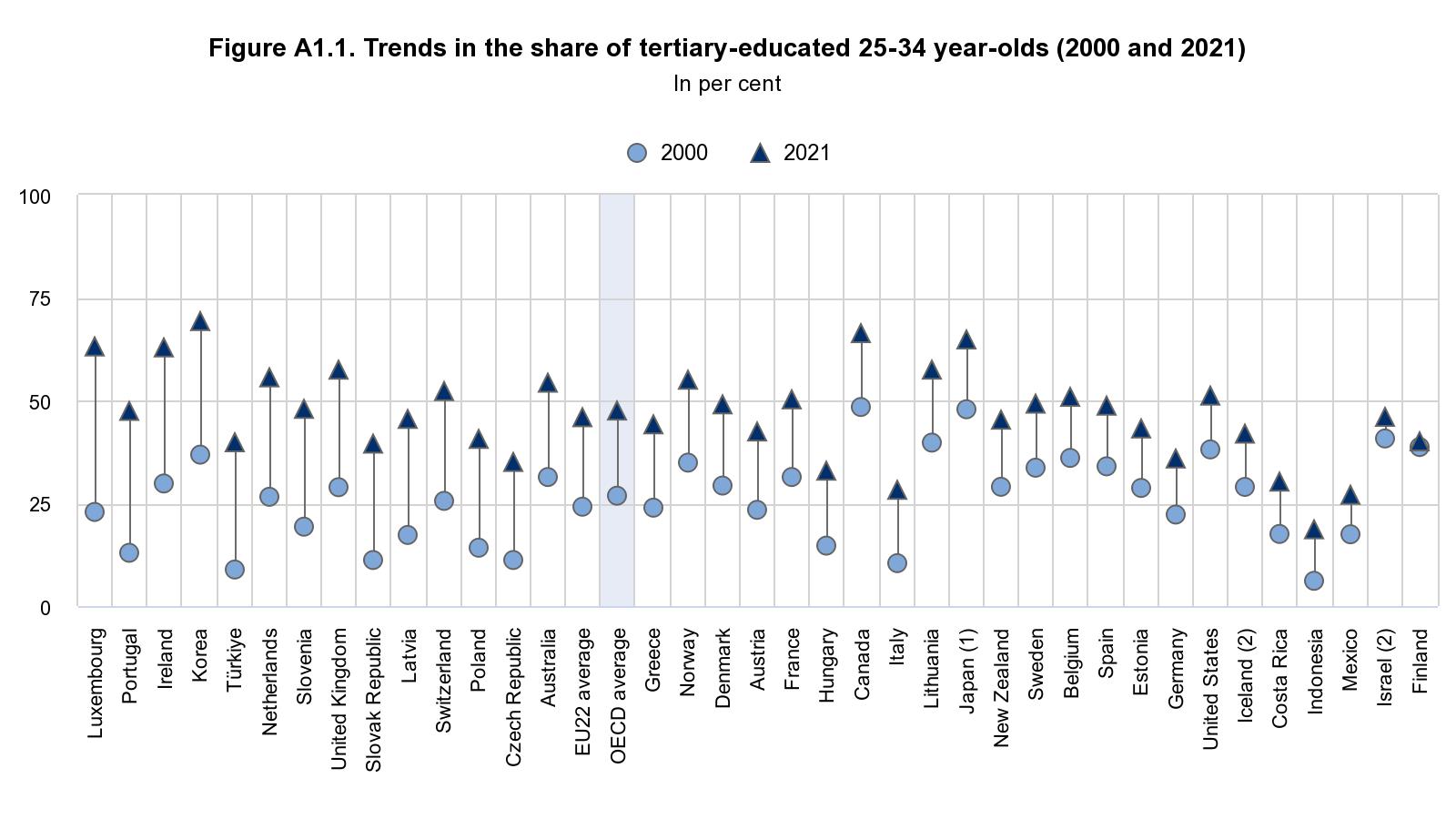
Scanning the headlines for results from OECD’s Education at a Glance: October 2022 Edition

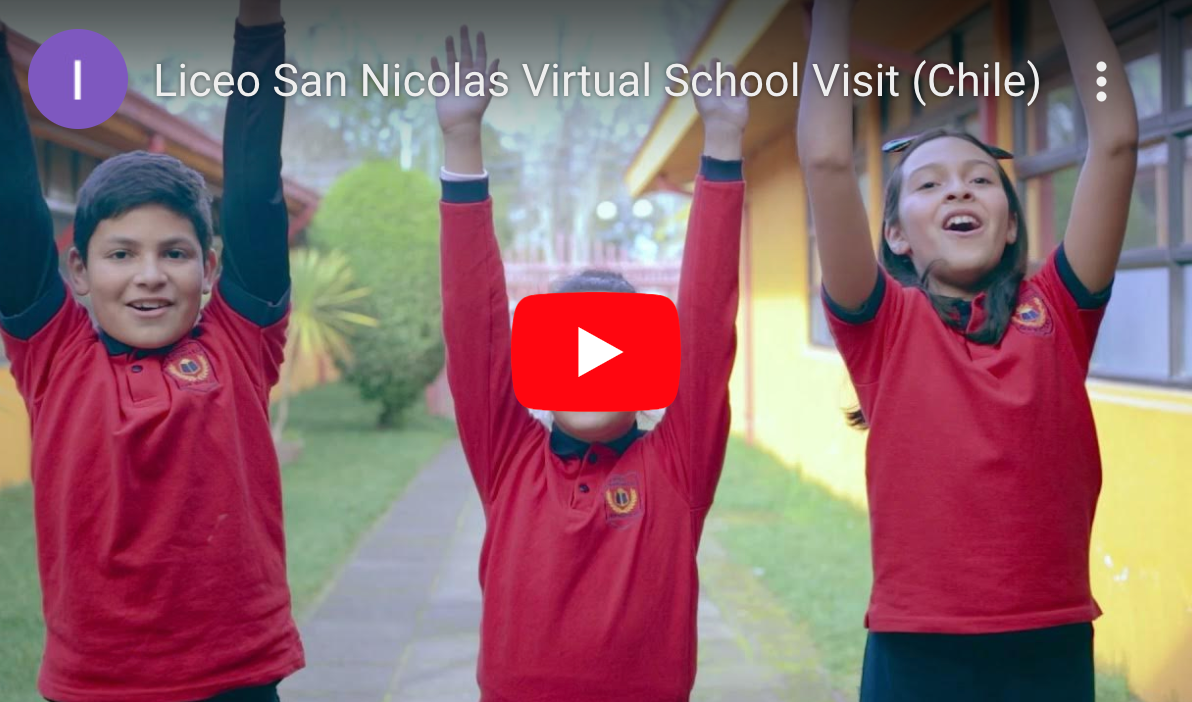
Promoting equity through language access: A virtual visit to Liceo San Nicolas (Chile) and Easton Academy (UK)

Building equal learning opportunities for differently-abled children in Malawi: An interview with Patience Mkandawire on the evolution of Fount for Nations (Part 1)

From a “wide portfolio” to systemic support for foundational learning: The evolution of the Central Square Foundation’s work on education in India (Part 1)

Building equal learning opportunities for differently-abled children in Malawi: An interview with Patience Mkandawire on the evolution of Fount for Nations (Part 2)

In part 2 of this interview, Patience Mkandawire talks with Thomas Hatch about Fount for Nations recent evolution, work during the COVID school closures, and next steps. Part 1 of the interview focused on the origins and initial challenges in developing an organization that has developed school, hospital, and community programs to support the education and development of differently-abled children in Malawi. In addition to being one of the founders of Fount for Nations, Mkandawire was selected as an Obama Scholar at Columbia University during the 2021-22 year.

Gaining control of the program and focusing on schools
Thomas Hatch: You’ve told us about the origins of Fount of Nations in the activity center you established at a hospital; about the first two years after you established Fount of Nations with work in activity centers in several hospitals and in resource centers in schools. What was the next step? What was the next big transition point?

Patience Mkandawire:  At that point, we expanded to include more attention to community engagement, which also has its own set of challenges, but we also closed the hospital program. We narrowed our focus to working with schools and community engagement. At the same time, we realized that because we didn’t have our own space we operated basically on the whim of the schools and the teachers; we had no control over our programming. We started thinking that to really control our own program and maintain fidelity of our programs, we needed our own center, like our model school. We started planning for that and that opened in 2020, which was bad timing, of course, because that’s when the pandemic hit.

But when we started doing more work in the community, we realized the economic barriers that many of our parents faced, which was not something we had focused on. We started doing home visits and found that a lot of our parents had come from a village, left their land, and come into the city and were living in areas with very poor economic conditions. That started us thinking that we should develop an economic empowerment program. Initially, I was not too keen on this, but my field team insisted that we really had to do it because the parents weren’t listening to us. There was a time that one of the counselors went out for a group counseling session and when she came back her face was gloomy. “What happened?” I asked her, “Was the turnout not good?” And she said “This is by far the best turnout. I had close to 40 parents come to the session, but all of them are on my neck saying things like ‘words can’t help us because all you do is talk to us. We want money, we want a livelihood.’”

“This is by far the best turnout. I had close to 40 parents come to the session, but all of them are on my neck saying things like ‘words can’t help us because all you do is talk to us. We want money, we want a livelihood.’”

I was opposed to that because it’s not an area we knew anything about. Nobody on our team was an expert on it. But we began to do some research on micro-finance, and we tried a partnership with another organization that was already doing business and economic empowerment for mothers.That partnership however didn’t last long enough to yield results. We were stuck on logistics of how to train parents that often had to take care of their kids full-time. I am not sure what it really was but most organizations we tried to work with weren’t really willing to make adjustments to take into account the unique needs of children with disabilities or their families.  But we soon learned about Opportunity International. They had been training farmers and other populations in financial literacy, and we were able to get them to do financial literacy training for us. Then, once the parents were trained, we realized we needed to give them access to money…so we reached out to some of our funder friends, the Segal Family Foundation who connected us with a funder that was willing to give direct social cash transfers to some of our parents. We linked the cash transfers to the child’s education. In that way, we created incentives for increasing children’s attendance at school, and it turned out great.

TH: You said the economic impact program was successful, but what was your measurement of success? 

PM: We measured academic indicators such as attendance, progression and parent involvement in learning. We also measured social indicators like how many meals do the children eat a day. For example, before the program (and during the pandemic), 76% of the parents said their child ate once or twice a day because they just didn’t have any money. After the financial literacy training, the numbers flipped. Over 80% were able to eat three times a day. In addition, close to 70% of the businesses they started with the initial social cash transfers are still running.

The Pandemic & Beyond

TH: Can you talk a little bit about how the pandemic affected the development of your program. What did you learn and how has that influenced how you think about developing and sustaining the program in the future?

PM: The pandemic is why I am here in the US, as part of the Obama Scholars program. When the pandemic hit, schools closed. And that was the first time we had ever imagined that anything would happen to our schools, I just can’t describe the feeling… All our programming happened in schools; our teacher training happened in schools; our parent convening happened in schools; many of our community convenings happened in schools. Schools are central in almost every village so they were very easy access points for us to meet people and to convene people, and suddenly, schools were all closed. And our teaching was all paper and pen. We had started doing some digital data collection, but our teachers across the country still taught on the blackboard 

I remember one of the first things I did was give a break to the entire team. We just decided “Okay we’re all going to go home, and we’re going to take a two week break to think about what we’re going to do. Can we survive without schools? Like what sort of work can we do? How can we support our participants? Our community members? Our champions? Our advocates?” 

“Can we survive without schools? Like what sort of work can we do? How can we support our participants? Our community members? Our champions? Our advocates?”

Over that break, the Government started to respond. They said “We’re going to have remote learning programs and we’re going to have TV and radio programs.” But I was thinking, “How is this going to reach a child who learns differently? Who cannot process? Who cannot hear?” Fount for Nations needed to respond too, but at that point, our team was also at risk and there was a lot of fear that we might die. But the team realized “if we are this scared, imagine what our parents are going through?”

It was really a team effort, and my husband and I would check in with individual team members and ask, “How are you doing? What are you going through?” But one by one, they said things like “We need to come back to work.” First, we said “We’re going to support the government in doing remote learning, and our parents are going to be teachers.”  That was a gamble, but we brought back our volunteers and decided they would provide the support because teachers could not go in the homes. We had the volunteers meet with the teachers and learn about the typical lesson plans for the week and then the volunteers would call the parents, and the parents taught the children. Fount for Nations led a coalition of 4 education partners of the Segal Family Foundation to deliver remote learning to 3000 primary school learners across the country. One of our other long-time-partners, Rays of Hope ministries, released a handbook for teachers to support the school radio programs, and we used that to train our volunteers. Then we just started deploying SMS texts and phone calls, and that’s how the kids learned during that period. All this is happening on the phone. It was a surprise in some ways how well parents responded. Our volunteers would set appointments with the parents, and if our volunteers were late, we’d receive a phone call, “I just wanted to check with you because I’m looking at the time, and she hasn’t called yet. Is everything okay?” 

The second thing was the counseling sessions. We also did that on the phone. Our counselors set up a protocol for mental health screening, and we started calling all our parents.  They’d get a call – “How are you doing?” – to check in.  If the parents’ needed extra support, the counselors would refer them or consult with them. We were also taking a gamble because this was the first time we’d ever called the parents for counseling sessions. Our counseling sessions had been in person. If the parents needed to cry, the counselor was there to just feel that with them. Now the sessions were not only over the phone, some of them were with a person the parents had never met because we had to increase the number of volunteers to make all the calls. It was a much higher volume. 

It was crazy, and I was just upset at how in 2020, we still didn’t have any digital options for kids with special needs to learn in Malawi. In 2020, we didn’t have any psycho-social or mental health support for parents. In 2020, we didn’t have any therapists that could offer mobile services or online services. In 2020, Fount for Nations was one of three, maybe four organizations in the country that focused on education for kids with special needs. I just felt “I can’t do this,” because clearly people were not convinced that our work was as important as we think it is. That’s when the opportunity to come to Columbia came up. Joseph, my husband, said “Go. You need inspiration. You’re stuck. I think you need to go and meet awesome people. Meet experts. Get inspired. Come with ideas and then we’ll continue.” So I did, and I’ve been studying things like comparative policy studies at Teachers College, non-profit policy and advocacy, learning how international education policy is formulated. So now I’m thinking Fount for Nations is much more than a direct service provider. I’m thinking of Fount for Nations as a critical player in the ecosystem for inclusive education: as bringing all these stakeholders together to define and sustain the ecosystem and to inspire more actors to care about this issue.

in 2020, we still didn’t have any digital options for kids with special needs to learn in Malawi. In 2020, we didn’t have any psycho-social or mental health support for parents. In 2020, we didn’t have any therapists that could offer mobile services or online services

That’s been a big shift in terms of our plans and in our overall strategy. For example, in our training, we’re thinking of using a “train the trainer” model and focusing on being really, really good at that. We could offer that training to a wider range of organizations that can support learning and development for teachers and for children, particularly those who have learning difficulties. I’m also thinking about how to get back to the health care system because there’s still a role that they play, especially in assessment and diagnosis.  I’m also thinking more about research now. How do we collect action-oriented data? How do we apply evidence-based research and implementation? Now merging those three things – advocacy, training and research – is becoming the core of our future plans. We are now working towards Fount for Nations becoming the Center of Excellence for Inclusive Education in the country and bringing together all these elements to really reduce the inequalities that exist in access to quality education for these children. I want to acknowledge that from our journey we’ve learned that the child’s education has not really been what the child is taught, but who else is around them that supports their learning. If the teachers’ perceptions are wrong; if parents’ perceptions are wrong; if community perceptions are wrong; if healthcare is not supported; if research is not adequate; if the government does not fund social services, then, no matter how creative our approach is – which was our initial idea – kids still won’t be learning. They still won’t be succeeding.

“We’ve learned that the child’s education has not really been what the child is taught, but who else is around them that supports their learning.

TH: You really tied up that story beautifully and transitioned into where you’re heading. One thing you didn’t mention, though, that kind of brings you back to your initial experience with your brother, is your interest in growth monitoring because you’ve identified early screening and assessment as critical factors moving forward. Can you just say a word about your strategy with that? 

PM: Yes, it was like a light bulb moment when I realized we could build on that. Like I said before, children in Malawi go to see a community health care worker for the first five years of their lives. From birth up to five, every single month, they have to go for growth monitoring. They are just going to get their weight checked; they’re going to get their height checked. And it’s mostly for nutrition screening, deworming, vaccinations, but they never get screened for developmental delays or learning difficulties. But I realized it’s a great opportunity because we could intervene early. The project I’m working on right now is, first of all, to adapt the assessment tools that are recommended so they are simple to screen for developmental delays and learning difficulties. And then we’ll train the healthcare workers to administer those assessments at the regular checkups that the kids come to anyway. That way we’ll get to see how many kids are at risk of developmental delays or at risk of learning difficulties. Then we can design workshops for the parents, because, with the pandemic, we’ve found that they can teach and help support their kids. For example, now that we know a child is struggling to sit up, how can we support the kid early on? And how can we intervene early? For most of these issues, parents would not know or understand that their child has something like epilepsy or even cerebral palsy until they were in primary school or even later. For example, I remember Elisa, whom I met when she was 17, and she had to drop out because she was just too big to be in primary school, and no one knew she had epilepsy until she repeated the same class 4-5 times!  I wonder if we had met Elisa when she was six months or a year old? What difference might that have made? Could she have coped with her condition and been more successful?  We want to make sure that these kids have a strong start by giving parents the information about what conditions their children have and the information that they need to help cope. Hopefully this generation of children will have a much better start.

Building equal learning opportunities for differently-abled children in Malawi: An interview with Patience Mkandawire on the evolution of Fount for Nations (Part 1)

In part 1 of this interview, Patience Mkandawire talks with Thomas Hatch about the origins and initial challenges in developing Fount for Nations, an organization that has developed school, hospital, and community programs to support the education and development of differently-abled children in Malawi. Next week, part 2 of the interview will focus on Fount for Nations more recent evolution, work during the COVID school closures, and next steps. In addition to being one of the founders of Fount for Nations, Mkandawire was selected as an Obama Scholar at Columbia University during the 2021-22 year.

The Origins of Fount for Nations
Thomas Hatch: Could you start by telling us a little bit about how Fount for Nations got started. What got you interested in these issues?

Patience Mkandawire: It was basically my mom who pushed me. She loved helping people and there was a time I was taking my baby brother for growth monitoring — in Malawi, growth monitoring happens every single month for children from birth to five years. When I was 14 or 15, being the eldest, I took my brother into the clinic and we were stuck in a line from 7 am to 3 pm and all he needed to do was get his weight checked! I went back home, and I said, “Mom, that was such a waste of my time.” She just told me, “You’re not the only one who wasted your time, so maybe you should go and help out.”  And so I did. I went back to the clinic, and I asked a Dr. “Why do we have such long lines? How can I help?” “We don’t have a lot of people who do triage,” the Dr. told me. “If you wouldn’t mind just weighing babies that will drive the traffic a lot faster.”  That’s how I started.

I said, “Mom, that was such a waste of my time.” She just told me, “You’re not the only one who wasted your time, so maybe you should go and help out.”

After that, I started volunteering at a local hospital [one of only two hospitals in the country that offered chemotherapy] and I had a lot of time to understand why the kids were in the hospital, and I was very curious about their learning. At one point, I met a boy who had lymphoma and he told me that he was in grade four, but I found out he could not write his name — he wrote his name backwards and confused the B’s and the D’s. For me, that was so fascinating because I never really struggled in school, and here was this boy who was supposed to be moving into upper primary school, how could he not know how to spell his name?  I talked to an American pediatrician there who sort of took me under her wing. She showed me things around the children’s ward. She introduced me to special needs, and she told me he might have what we call dyslexia. At that point I set up an activity center for children at the hospital. I worked with a team of UN volunteers, and we did a little bit of fundraising for it. We did a toy drive and then a book drive, and I spent a lot of time with the kids, tutoring them and giving them opportunities for play and coloring and drawing and things like that.

That was really the first step. Then I went to college and studied nutrition and food science. The hospital was in the same city where I studied, so it was easy for me to just go there to check on things because I was not doing this alone, I was doing this with the team of professionals. After college, I didn’t have a job right away, and I volunteered at my mom’s school because my mom was a teacher at a private school. There I met another boy. This time it was looking like he had autism and his teachers were automatically failing him. But I got to spend time with him, and I discovered how he learned and found he loved storytelling and drawing. I experimented by telling him stories for whatever lesson he was supposed to be learning and asked him to draw. For example for his history class or his geography class, I’d tell stories about the Amazon and the insects there and the other species, and then he would draw. He did so well, and l thought “What an interesting way to learn.” But then I thought, “If this is what it looks like in a private school, I wonder what it would be like in a public school?” I visited a public school, and I found a lot of the same drama and problems there and that really started everything. It was a combination of experiences. I volunteered in different spaces then finally, I was like, no, something needs to be done and that’s when I set up Fount for Nations, with the support of my mom and my, then, very close friend who’s now my husband. We registered the organization and wanted to focus on children’s learning and children learning differently and to use creative arts as a way to teach literacy and numeracy. After I registered the organization, I went back to the activity center at the hospital, and it became one of the places that we worked. We re-opened the center with trained volunteers and trained healthcare workers. We professionalized it because I was now more aware and more organized.

TH: After establishing Fount for Nations you worked in healthcare settings and in schools, but did you have a focus at that time on working with children with developmental or learning differences? 


PM: That hasn’t really changed. I wanted to see that children who learn differently or are differently-abled can progress in school, but our scope was larger. We did programming in hospitals and programming in schools and programming in communities. And our goal was wherever a child is, they should be able to continue learning and succeed in their learning. So that was basically it…we wanted to see these kids do better in school and progress through school. We’ve been trying to achieve that ever since.

“that was basically it…we wanted to see these kids do better in school and progress through school. We’ve been trying to achieve that ever since.”

But the hospital programs, initially, were a little bit different. Even though it all started with a child who had cancer and a learning difficulty, not all of the children in the hospital were like that. For the hospital program we had to open it up. Our criteria were that the children had to be in primary school, six years to twelve years old, and the other criteria was they had to be in the hospital receiving treatment that would keep them out of school for a period of three months or more. According to the school schedule, if a child misses three months or more then they repeat the whole year, and we wanted to avoid the repetition. If they were going to be in a hospital for more than three months receiving treatment, then they qualified for our program. Kids with malaria, for example, did not qualify, because those are short treatments, but if they had tuberculosis, if they had cancer, or if they had HIV – that was also a very big deal at that time – then they could be enrolled in our program because they would be absent from so many classes. We later reduced this requirement to a month or more of hospitalization or if they were on treatments that required multiple hospitalizations.

The school program, on the other hand, has always been 100% children with learning differences because we work in school resource centers. These are special centers within the school where all the kids with different conditions come in and that’s where they get their support. In the resource centers, it doesn’t matter the child’s age or their ability, they are all put in one room with one teacher. That’s why it was such a challenge because even two kids with autism or two with cerebral palsy had very different needs. Children with cerebral palsy may have some mobility or no mobility. Some kids with autism were highly functional, but others weren’t. As a consequence, with the resource centers at the time, some of it was just the amount of work that the teachers had to put in to offer individualized learning. That’s where we came in: to provide the volunteers to reduce the student-teacher ratio. When we started, that ratio was around 45 or 50 to one teacher. We placed up to three volunteers per school reducing it to about 5 to 10 kids per teacher or teaching assistant. That’s how it was structured in the beginning, for the first two to three years of our work, focusing on strengthening the health care system and strengthening the school system to be able to support the children.

Initial Challenges

TH: What are some of the first challenges you faced as you tried to work in these different areas?
PM: The first challenge was at the hospital where I started the first activity center and in understanding the place of education in health care. There was a new leader at the hospital. He was not a pediatrician. He did not think that there was value in addressing the social-emotional aspects of patient care. He felt that we just needed to focus on physiology so we were in conflict.  As one of only two hospitals in the country that offered chemotherapy, kids and their families often had to travel 400 kilometers from their homes to receive treatment. This was not easy on the families, so the hospital would admit the children for the duration of their treatment. That meant six months in the hospital, nine months in a hospital, a year in the hospital. And this is time away from school, away from socialization, away from friends, away from play, away from everything that is familiar to a child. My argument was that this affects their recovery; it affects how they respond to the medication; and, of course, it affects their parents, many of whom don’t believe their kids can get better.  So, we offered emotional health care for the parents and also for the child focused on play. And we used play to explain the different conditions and to explain the process of chemo to them. We used to play to help them just unwind and not be afraid of all the needles and being in the hospital. Also, we used play for learning and for providing continuity so that when they went back into school they are not lost and they have not regressed.

Everything came to an end when we were planning a fundraising event to renovate an old building into a new activity center for the hospital because we were starting to run out of space. There was a building that they used as a construction warehouse that was empty, and we wanted to renovate it. Everything was all set, but the day before the event, there was a misunderstanding with the hospital director and he literally kicked us out of the hospital. Just like that the program ended, and Fount for Nations left the hospital. I was so disappointed, but the beautiful thing about it is we had trained volunteers and healthcare practitioners, nurses and community health workers to provide play therapy and support the children socio-emotionally. I think the program stopped for about six months, but then it picked up again and now it’s being run independently.

The other challenge we had was with schools. We worked in resource centers for children with learning differences in government primary schools and those schools had their own unique challenges like low teacher salaries, lack of training for teachers, and teachers being overburdened. Initially, we sat down with the teachers and we said, “What do you need to help you succeed? To help these kids succeed?” And they said “we need extra help; we need teaching assistants, we need materials, we need help with parents.”  So, we focused on all those things.  

We also asked the parents, “Is this helping?” And what the parents said was, “This is great, but there is a lot of stigma and discrimination in the communities, and we get really discouraged and really disheartened.” We had been doing a lot of information sessions with parents to help them understand the different conditions that the children had, and we wanted to help them with coping strategies. But they told us, “The problem is bigger than us.”  Building on that, I wanted to help combat myths like these kids are bewitched and should be locked away which comes from the community, so we started doing a lot more community engagement and started working with chiefs and local leaders to start raising awareness around the abilities of children with developmental and learning differences.

We had an advantage for this work because in schools we started what we called “showcases.” At these showcases, kids from the resource centers would demonstrate what they had been learning. Because we used creative arts, it was very tangible, with displays of bangles, mats and color paintings among other creative projects. People were super excited. They’re like “oh these kids can actually do things!” Around the third year, we started an annual auction. We took what the kids produced at the hospital and the schools and worked with an artist to frame them, and then we auctioned them off. Part of it was fundraising but the most important part was raising awareness about what these kids can do about what they are learning. It was an educational family fun day as well as a fundraiser. 

But after a year of doing everything that the teachers and the parents wanted, we realized we couldn’t financially sustain it, so we sat with the teachers again and asked them, “What works? What doesn’t work? What has worked for you, this year, and what hasn’t worked? And what are your priorities?” They told us, “We would like you to focus on teacher training and parent support.” So, we dropped the material support. We dropped the volunteer program. We dropped the showcases. Instead, in addition to providing trainings for teachers, we started advocating in communities directly as opposed to having the school as our base. That later on served us in the pandemic because we had other avenues to deliver our programming, as opposed to just being stuck in a school. 

…We started advocating in communities directly as opposed to having the school as our base. That later on served us in the pandemic because we had other avenues to deliver our programming, as opposed to just being stuck in a school.