This week, IEN’s managing editor Sarah Etzel continues a scan of recent news articles and research on post-pandemic developments in the teaching profession. In part two of the post, Etzel describes some of the initiatives to use technology to help to free-up time for teachers by reorganizing staffing and scheduling. Part one explored innovations in blended and remote teacher professional development models and the use of AI to provide feedback to teachers.
What’s happened to teachers in the wake of the COVID-19 pandemic? On the one hand, in the US teacher vacancies appear to have grown substantially. One report released in the fall of 2023 showed 55,000 vacant teaching positions, an increase from 36,000 the previous year. On top of that, the report found that 270,000 teachers – almost 9% of the entire teaching force – are “underqualified,” either lacking full certification or teaching in a subject in which they are not certified. The National Center for Education Statistics also revealed that 86% of K-12 schools reported problems hiring new teachers in advance of the 2023-24 school year, and almost half of all public schools describing themselves as “understaffed.” On the other hand, the pandemic helped to stimulate experiments with new models for staffing and with virtual teachers that might help to address teacher shortages.
Staffing Changes: Unconventional Teaching Roles
Whether in-person or virtual, a small set of schools and organizations around the US are exploring what alternative teaching and staffing models for schools could look like. A report from FutureEd focusing on pandemic-inspired staffing strategies, for example, highlights the benefits of some co-teaching, team teaching, and mentor teaching models. Public Impact, working with a network of over 300 schools, has pioneered models designed to use teacher teams to enable teachers who have shown their effectiveness to reach more students. These “multi-classroom” leaders teach part-time and also lead small, collaborative teams of other teachers, paraprofessionals, and intern teachers in the same grade or subject. Cadence extends the reach of effective teachers by developing a national team of mentor teachers who deliver online lessons for a group of partner schools across the US. The teachers in the partner schools both learn from the mentor models and they can incorporate the lessons into the work with their own students. As Steven Wilson, a co-founder of Cadence, puts it: “It’s like being able to sit in the back of the room of the best teacher in the building for weeks at a time and see his or her moves and adapt them and make them your own.”
The FutureED report also emphasizes the potential of flexible class sizes, time blocks, and instructional cycles that allow for teachers to work with smaller groups of students outside of traditional grade-level and schedule constraints. As an example, the report highlights a particularly unusual approach from Kairos Academies in St. Louis that developed a seven-week schedule in which students attend school for five weeks, followed by two weeks off; staff have one week off, but use the other week to review data and plan for the next cycle. The report quotes, Gavin Schiffres, Kairos founder and CEO, describing what he sees as the advantages of the cycles; “With the cycle model, we operate in sprints, much like the technology industry. In a traditional calendar, you have kids in the building for such long stretches that as soon as there’s a break, everyone just wants to crash.”
“We operate in sprints, much like the technology industry. In a traditional calendar, you have kids in the building for such long stretches that as soon as there’s a break, everyone just wants to crash.”
Drawing on interviews with a small group of leaders from six districts involved in staffing experiments, the Center on Reinventing Public Education issued a report on how unconventional teaching roles could help to make the profession more sustainable and increase teacher satisfaction in the process. Some of these roles include:
Lead teacher: An individual who mentors a team of teachers (across content areas or grade levels) by developing curricula and co-teaching as necessary
Empowered teacher: An individual who supports with school-level policies and sets learning targets
Team teacher: An individual who teaches a large group of students (50-80) in collaboration with two to four other teachers
Community learning guide: An individual who works with a group of educators and their students to create experiences grounded in students’ wider environment, community, or culture.
Solo learning guide: An individual who independently teaches a small group students (5-15) in school or home contexts
Technical guide: An individual who leverages subject area expertise (e.g. robotics, architecture) to provide curriculum support and work with small groups of students
According to the report, teachers in these roles shared that they experienced less stress and felt more motivated; working in diverse or team settings, teachers were able to share responsibilities, learn from each other, and feel connected to the purpose of teaching. Despite the potential, a review of the CRPE report from the National Education Policy Center cautions that it is too early to tell whether these kinds of staffing changes could be scaled effectively or whether they would have the desired impact.
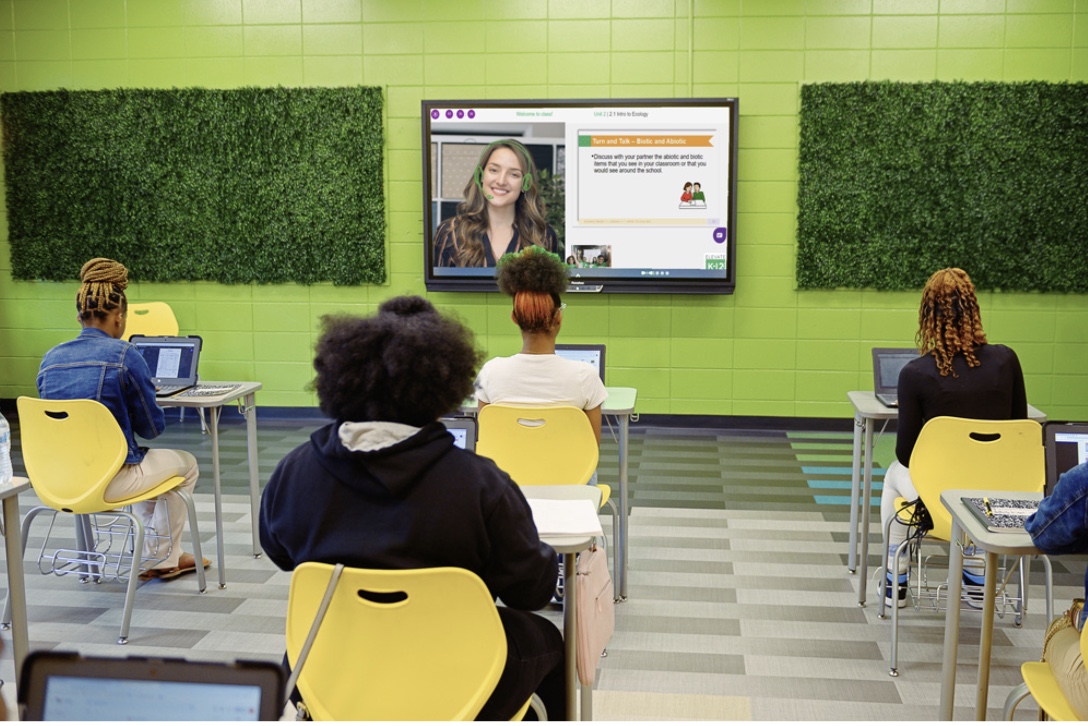
Along with developing new virtual and hybrid approaches for students to learn, during and after the pandemic, reports also note that some districts are spending millions of dollars on virtual teachers to fill-in when they can’t find the personnel they need in their local area. Among these, districts in Little Rock, Arkansas, Charleston County, South Carolina, San Jose, California, and Milwaukee Wisconsin have contracted with companies such as Elevate K-12, Coursemojo, and Proximity Learning to address their teacher vacancies and to provide virtual instructors who zoom into their classes. These companies employ fully certified virtual teachers who provide “synchronized learning services” in a range of subjects. The virtual teachers interact with students completely through the online platforms, with, in some cases, in-person supervision provided by paraprofessionals or long-term substitute teachers.
The benefits and drawbacks of these approaches are also being debated in the press. For some, these virtual options provide an alternative to other “quick fix” solutions that have been used to fill empty classrooms in the past, including hiring uncertified teachers, incentivizing military veterans to join the teaching force, or removing some degree requirements. According to the CEO of a San Jose charter school network that contracts with Coursemojo, this situation is not ideal, “but until we really, radically change the education profession here in the United States, we’re going to be looking at solutions like this.” Catherine Schumacher, Executive Director of Public Education Partners stated the importance of not shaming “districts for doing the absolute best they can do to get qualified teachers,” especially in a climate where “we have systematically underpaid…educators for years.”
Other advocates argue that the subjects virtual teachers are teaching have historically been hard to fill, meaning many students did not have access to these educational opportunities, particularly in low-resource school districts. As the Milwaukee Public Schools talent management director put it: “when we talk equity and access, I want to ensure that if my students want to take pre-calc, if they want chemistry, if they want physics, that they have the opportunity to do so.”
The cost-effectiveness of the virtual models also remains in question. For one school district in Milwaukee, Wisconsin, a contract with Elevate-K12 helped them fill 55 open positions at a cost of about $3.9 million, a savings from the $5 million it would have cost to hire that many in-person teachers. A district representative reported that they were able to save the $1.1 million because they did not have to provide benefits for Elevate K-12 teachers. In contrast, a school district in Charleston County, South Carolina that has used the virtual learning platform, Proximity found that these models were more expensive, as the schools needed to hire paraprofessionals to watch the students during the virtual classes.
Critics point to the fact that there is not yet enough evidence to show that students are achieving positive learning outcomes under these models, but proponents such as Elevate K-12 founder Shaily Baranwal, argue that virtual teaching during Covid-19 took place under emergency circumstances and, with more time to prepare and focus on delivery methods, post-pandemic virtual teaching could be particularly effective. Critics also question whether students’ social experiences and sense of belonging will suffer when they have virtual teachers, and some wonder who will be held accountable for student learning under blended learning models (i.e. the paraprofessionals who are in class every day with the students, or the virtual teachers?). With all these uncertainties, many parents remain skeptical of this virtual solution and question whether virtual teaching will be the best fit for their children.
The bottom line? Freeing up time to teach?
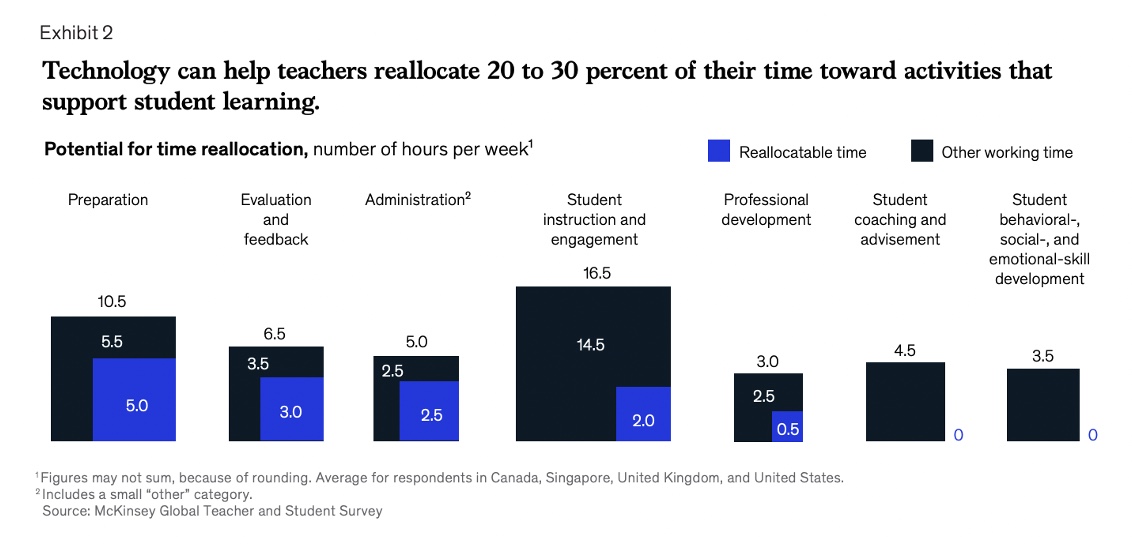
At the end of the day, the success of any of these “innovations” in professional learning depends on whether they can be put in place without adding to teachers already overloaded schedules and extensive set of responsibilities. Post-pandemic articles continue to highlight challenges like a lack of planning time for teachers and excessive time spent in staff meetings as well as hopes that AI may help address these issues by freeing up teachers’ teachers time from administrative tasks and helping teachers create differentiated assignments. Through a survey of 368 school-based employees across the U.S., AI-Equity found that 84% of those who used AI in the Daily/Weekly category reported they were “more excited about continuing education sector work because of AI,” compared to 52% of all respondents, while 94% of Daily/Weekly AI users shared that it made them more productive. According to research from MIT, AI can improve the performance of skilled workers in fields such as consulting by approximately 40%. A report from McKinsey and Co. estimates that teachers could free up 20-30% of their time by using AI and other technologies to support activities such as preparation, conducting evaluations and giving feedback, administrative duties, and professional development. The Christensen Institute argues that teachers may not use their reallocated time for increased student engagement without proper incentives, but freeing up teachers’ time could help to alleviate burnout and increase the attractiveness of the profession.
However, sources also caution that AI should not be viewed as a panacea for solving these issues, and in fact, may exacerbate some of the challenges that teachers face. As one teacher explained, the expectations developing lessons incorporating AI and other forms of technology “takes extreme planning, and that, we don’t have time for anymore.” Moreover, the increasing use of AI raises numerous questions about the potential impact on students’ learning and development. In particular, as Julia Freeland Fisher cautions, the education market doesn’t prioritize relationship building within its attainment metrics and so may fail to take into account AI’s impact on those relationships. Under those conditions, as Freeland Fisher put it, “the more commonplace that AI companions, coaches, and anthropomorphized bots in learning and support models are, the more fragile students’ social connectedness may become.”
What are professional learning networks? What do we know about them? This week, IEN features reflections from an international group of researchers on what they learned about Professional Learning Networks (PLN’s) through their work on a special issue of the Journal of Professional Capital and Community. Led by Special Issue Editors Cindy Poortman and Chris Brown, the post draws from the efforts of a network of researchers from the International Congress on School Effectiveness and Improvement (ICSEI) and describes key points from the special issue and how work on PLN’s might develop in the future.
IEN:Why this focus on professional learning networks, why now?
Chris Brown/Cindy Poortman: The focus on the power of collaborative learning of educators has been growing for years: both within and across schools. We call the variety of groups who engage in collaborative learning with others outside of their everyday community of practice to improve educational outcomes, Professional Learning Networks (PLNs (e.g. see Networks for Learning)). PLNs are associated with effective professional development and ultimately improved outcomes for students. At the same time, their success depends heavily on the way in which PLN processes are guided: with research reporting both promising and disappointing results. Moreover, research into PLN effectiveness is methodologically challenging. Many have studied networks and communities before us, and we aim to build further on their important work, having ourselves been involved in projects about Research Learning Communities and -Networks, Data Teams, Teacher Design Teams and cross-school Professional Learning Communities. We notice that schools in many different countries are motivated to participate in networks more than ever, while there is still much to learn in this area. Having mapped out what we think are the main areas that need further investigation, we are excited to work together with schools, partner organizations, and other scholars to further discover how PLNs can be most beneficial for educators and their students.
PLNs are associated with effective professional development and ultimately improved outcomes for students. At the same time, their success depends heavily on the way in which PLN processes are guided
IEN:What did you learn in working on this special issue that you didn’t know before?
CB/CP: Many factors influence PLN processes including collaboration, shared focus on student learning, reflective dialogue, and leadership. Even if PLN participants successfully collaborate and learn together within their group, they still need to successfully share and refine the knowledge developed within the PLN with other colleagues in their ‘home’ schools (as well as other institutions). Only then, will they be able to achieve the ambitious goals of school and system improvement. What’s more, they need to do this in such a way that their colleagues can incorporate this knowledge into their educational practice as experts. We call the process of creating, sharing and applying knowledge, knowledge mobilization(KMb). In our experience with schools, we noticed that PLN members often find it hard to communicate with colleagues outside their PLN about approaches and outcomes. At the same time, school leaders sometimes report they should have done more to support networking between PLNs and their member schools. This is why we were very happy to work with our ICSEI PLN network colleagues on this special issue.
And we have learned a lot. For instance, the paper from Livia Jesacher-Roessler addresses how and whether PLN-participants see themselves as knowledge mobilizers, but also explores how individual and organizational knowledge mobilization is linked to institutional change. It shows that much more is needed from the school as a whole than simply the participation of individuals in a PLN, who are sometimes not even aware of their role in mobilizing knowledge. The paper by Leyton Schnellert and Deborah Butler shows how inviting co-teaching partners into a PLN to engage in collaborative inquiry and engaging in cycles of inquiry with a co-teaching partner is helpful in this respect. The paper by Miriam Mason & David Galloway shows how evidence of student improvement can support further development of PLNs, while also emphasizing the value of a contextual approach. The findings of Joelle Rodway and her colleagues show the importance of both direct and indirect interactions for understanding knowledge brokerage, as well as the importance of different types of relationships (e.g., including both sharing information and giving advice). Those with formal roles are not always the ones most effectively brokering knowledge.
…much more is needed from the school as a whole than simply the participation of individuals in a PLN, who are sometimes not even aware of their role in mobilizing knowledge
Particularly significant post-pandemic, Pierre Tulowitzki’s paper addresses levers and barriers to success of a PLN that takes the form of a blended learning program, showing the importance of both informal and professional communication in this context. The combination of in-person with online meetings was essential. Although some of the other papers emphasized the importance of context, this paper shows how participants transferred models or concepts from other countries to their local context, after careful considerations of required adaptations and experimentation. And with a specific type of PLN, namely Research-Practice Partnerships (RPPs) on the rise, Stephen MacGregor’s paper discusses co-production: shifting the research paradigm so that researchers and stakeholders co-lead research activities, and collectively apply their expertise, knowledge and skills within a team. Design, implementation and reporting on measurement tools for evaluating co-production would benefit from researchers engaging more openly and critically with psychometric and pragmatic considerations for a better understanding of the impact of co-production. Finally, Amanda Datnow’s commentary highlights a number of interesting areas for further development. For example, the extent to which PLNs contribute to achieving social justice goals, and the emotional aspects of PLNs.
IEN: What’s happened since you completed the special issue and what’s next?
CB/CP: It’s been busy for all of us! To provide just a few examples, first, both of us were invited to sit on the New South Wales (NSW) Curriculum Reform Teacher Engagement Advisory Group. We are advising on NSW’s teacher engagement model for teacher expert networks. We are also contributing to (video)lectures for the related blended learning program. Despite the distance, we truly enjoy being involved in this exciting and important work. In March a project run by Livia Jesacher-Roessler funded by the province of Tyrol started to unpack many of the issues she discusses in her paper: in particular, how different institutional logics of different professions impact on both PLNs and knowledge mobilization. Along with Stephen MacGregor we will also be working with What Works in Children’s Social Care to run a Research Learning Communities intervention for Looked After Children in England. With this iteration of the RLC programme, the team will be working with Subject Leads and Designated Teachers from at least 120 schools. The focus will be specific areas related to maths and English that virtual school heads and designated teachers feel are beneficial to improving key primary school outcomes for this vulnerable group. As series editors of the Emerald PLN book series, we are also looking forward to forthcoming books in the series, including a volume by Mason and Galloway on PLNs in Sub-Saharan Africa.
IEN: What’s your hope for the future and what do you hope your work on professional learning networks will contribute to it?
CB/CP: Since we started collaborating within the ICSEI PLN network, we have developed a research agenda for areas we think would benefit from further work, with input from network members and building further on their studies. In the book Networks for Learning, Alan Daly and Louise Stoll’s chapter helped us identify conceptual, methodological and impact challenges which were starting points for this research agenda. After several conceptual pieces, such as a systematic review on reflective professional inquiry, we are eager to advance to more empirical studies, also applying more innovative methodologies (e.g. using text mining and machine learning for analysis purposes and/or using data from blended learning PLNs). At the same time, we are looking forward to sharing practical guidelines with educators in a forthcoming handbook based on what is already known about effective PLN work so far. Of perhaps most importance, however, is that while learning outcomes are key, students’ wellbeing and issues of equity should be central to all of our PLN work (as Leyton Schnellert and Sara Florence Davidson describe in this blog post). So we are pleased to see both educators and scholars, such as our special issue discussant Amanda Datnow, advancing the field towards impact for children in this area.
Lead the Change (Ltc): The 2021 AERA theme is Accepting Educational Responsibility and invites those of us who teach in schools of education to accept greater responsibility for the inadequate preparation of educators for work in racially, ethnically, culturally, and linguistically diverse P–12 schools and postsecondary institutions. For example, when educators discipline African American students at disproportionately higher rates, misdiagnose them for special education, identify too few of them for advanced placement and international baccalaureate programs, deliver to them a culturally irrelevant curriculum, teach them in culturally disdaining ways, and stereotype their families as careless and hopeless, the schools of education that produced these professionals are just as responsible as the professionals themselves. Furthermore, if scholars who study and document these trends do too little to make our findings actionable, then we, too, are contributors to the cyclical reproduction of these educational inequities. Given the dire need for all of us to do more to dismantle oppressive systems in our own institutions and education more broadly, what specific responsibility do educational change scholars have in this space? What steps are you taking to heed this call?
Deborah Netolicky: The rhetoric of education policy the world over is about the common good and quality, equitable outcomes for all. In Australia, we had the Melbourne Declaration (Barr et al., 2008) and now the Mparntwe Declaration (Education Council, 2019). Both declare an education goal of excellence and equity for all young people, and the building of a democratic, equitable, just, culturally diverse society that values Australia’s Indigenous cultures. Australia likes to imagine itself as a multicultural melting pot of inclusive diversity, yet, as in many countries, our rhetoric and our imagined national identity fall well short of our reality. As Suraiya Hameed, Marnee Shay, and Jodie Miller (Hameed et al., forthcoming) note, the concept of excellence in education for Indigenous students has been greatly under-theorised and requires a strengths-based rather than a deficit perspective. Racism, sexism, classism, religious discrimination, sexual orientation discrimination, ableism, and the reverberations of our colonial past, persist. Inequities remain. Educational change is too often a political ball bounced back and forth, with governments making decisions based on short term political cycles and winning election votes, rather than on holding the line on sustained improvement for all.
Part of ‘accepting educational responsibility’ is working from a foundation of citizenship grounded in a shared moral purpose. Citizen-scholars and citizen-practitioners engage deeply with education committed to excellence, equity, and opportunity for all. We must not ignore the reverberations of past oppressions and the echoes of past violence in our current world. If we are to address the intensifying challenges that face society, education, and individuals, education scholars and practitioners need to make the implicit explicit, deeply interrogating systems, structures, policies, pedagogies, practices, and our own beliefs, behaviours, and language. Scholars, practitioners, and pracademic scholar-practitioners need to engage with, and provide safe spaces for, education debates, including, and especially, those that are uncomfortable and awkward, and that require us to examine our own motivations, biases, and privilege. As many authors argue in the forthcoming edited book Future Alternatives for Educational Leadership: Diversity, Equity, Democracy, and Inclusion (Netolicky, forthcoming), positive educational change requires challenging and providing alternatives to Western (that is, White, masculine, materialist, hetero) norms and paradigms.
Decolonisation—deconstructing dominant ideologies and dismantling educational structures—is not enough. What is needed is not just the breaking down of systems of power and privilege, but also the building up of what we would like to exist in its place. This means including, embracing, and investing in Indigenous, culturally diverse, and culturally marginalised ways of knowing, being, teaching, and leading in education. We need these ways of knowing and doing to understand and apply inclusive policies and practices that serve all those in our communities, especially the most vulnerable.
“What is needed is not just the breaking down of systems of power and privilege, but also the building up of what we would like to exist in its place.”
LtC: Much of your work is informed by your positionality as a “pracademic” and the special understandings and experiences that come as a result. What would be some of the major lessons the field of Educational Change can learn from your work and experience sitting in this specific space?
DN: Much of my scholarly work has involved looking at education, educational change, professional learning, and educational leadership through the lens of identity (e.g., Netolicky, 2017, 2019, 2020a). I have defined identity as the “situated, ongoing process through which we make sense of ourselves, to ourselves and to others” (Netolicky, 2020d, p.19). Examining education through the lens of identity allows us to remain focused on education as a human endeavour, wrestling with multiplicities, complexities, and tensions. In our forthcoming chapter, Claire Golledge and I (Netolicky & Golledge, forthcoming) advocate for what we call a wayfinding approach to school leadership that balances intuition with strategy, improvisation with systematisation, empathy with policy, the individual with the whole. This approach, and awareness of the multiple tensions navigated constantly by those working in schools, could be considered and engaged with by those in the field of educational change.
In the book Transformational Professional Learning: Making a Difference in Schools (Netolicky, 2020d), I utilise my positionality as boundary spanning teacher-leader-researcher who works to bridge the gap between research and practice. The structure of the book mirrors the ways I bring a practice lens to scholarship, and a research lens to my daily work enacting theory into practice. In our upcoming Journal of Professional Capital and Community Special Issue—‘Pracademia: Exploring the possibilities, power and politics of boundary-spanners straddling the worlds of practice and scholarship’—Trista Hollweck, Paul Campbell, and I (Hollweck et al., forthcoming) explore the identities, spaces, and tensions of what can be called pracademia. The multipart identities and multiplicitous spaces of pracademia involve simultaneous active engagement in education scholarship and practice.
Democratic educational change benefits from those operating in different educational spaces and also those operating between and across various educational arenas and communities. The pracademic whose day job is in the world of practice is free from the metrics and pressures of academia, free to engage in scholarship in some ways on their own terms, but also often in or beyond the margins of the academe. The pracademic whose day job is in a university is active in the practice of school-based education through working amongst and alongside practitioners, immersed in the work of school contexts, and engaging in scholarship ‘with’ rather than ‘to’ or ‘of’ those in schools. Often the in-between spaces involve unpaid bridging, sharing, and collaborating work.
Identity work—of pracademics, practitioners, or academics—can be part of scholarship that is a political act, edging from the margins of the academe towards the centre, in which we challenge ourselves to do “writing that matters – to us, to our communities, to our nations, to social justice, to the greater good” (Netolicky, 2017, p.101). Education theory and practice are always intertwined, but embracing the concept of pracademia in educational change is about intentionally embracing nexus and community. It is about co-creating a collective space shared by teachers, school leaders, scholars, policymakers, political advisors, and community members. It is about working within and across education spaces, and working together.
LtC: In some of your recent work regarding the future of education in a Post-COVID world, you speak to both the possibilities for a return to some practices and change for others. What do you see as the most needed changes to policy/practice in the field, in educators’ daily practice and interactions with colleagues and students alike to create, as you say, reform for good?
DN: Injustices and deficiencies in our education and social systems are being revealed during the pandemic. Often multiple and intersecting disparities such as racial, gendered, socioeconomic, and cultural inequities became evident in, for example: the significantly increased risk to women’s employment and livelihoods compared to men’s; and the increased risk of mortality from COVID-19 of Indigenous Australians, ethnic minority groups in the UK, and Black Americans, as compared to their White counterparts. The pandemic also accelerated educational change, forcing innovation and introspection in education (Netolicky, 2020b). The person—child, student, teacher, leader—has come into sharper focus. Care and collaboration rose to the top of the priority list in education (Doucet et al., 2020), as did increasingly flexible ‘whole-person’ approaches to judging student success and providing student pathways for future success. What has receded is a focus on standardised testing as education systems are forced to reflect on how the apparent success of education is measured, and negative impacts of cultures of competition, surveillance, and hyperaccountabilities. While tertiary entrance examinations went ahead in Australia in 2020, alternate admissions pathways were also introduced by Universities. These include calculation of a predicted Australian Tertiary Admission Rank (ATAR) based on students’ Year 11 results, and a Special Tertiary Admissions Test available to all students including those studying vocational pathways at school. In the UK, examinations (GCSE, A-Level, Scottish Highers, and Scottish Advanced Highers) were cancelled in 2020 and 2021, replaced with aggregated teacher-assessed grades that currently form the basis of UCAS applications. US universities have varying admissions policies, but most are currently ‘test-optional’ for a year or more (some permanently), meaning applicants do not have to sit the SAT or ACT standardised college admissions test. Rather, US applicants are submitting portfolios of achievements, employment, and community involvement to demonstrate their readiness for university. Universities leading flexible admissions criteria and processes (including portfolio entry, virtual tours, and online interviews) may help to change the focus of schools towards preparing students for beyond school, rather than on succeeding in examinations at the end of school. These increasing flexibilities may also go some way to democratising the university admissions process for marginalised groups.
“The pandemic also accelerated educational change, forcing innovation and introspection in education.”
During periods of remote learning, educators asked themselves: (1) What is it that we’ve missed during remote education that we want to bring back to schooling and education?; and (2) What is it that has been removed that we do not want to return to? (Netolicky, 2020c). Underpinning these questions are what we—those of us working, teaching, and leading each day in schools and universities—have come to realise are paramount: health and wellbeing, the importance of learning for all students regardless of circumstance, meaningful work, community, connectedness, adaptability, and resilience. We learned that governments, education systems, and schools need strong, clear leadership that can respond to crises with immediacy while considering the long-term view and the needs of the specific community. We learned that technologies can support teaching, learning, collaborating, and developing student autonomy, but cannot replace the connection, engagement, and learning that is possible when we are face to face. We learned that schools are more than places of learning. They are sites of community, relationships, society, values, and care. They also serve the practical, economic function of looking after children while parents go to work.
“We learned that schools are more than places of learning. They are sites of community, relationships, society, values, and care.”
Teachers have missed seeing students in person, and the complex and important non-verbal communication of the classroom, in which the teacher can ‘read the room’, see how each young person is approaching the day and the lesson, re-engage a disengaged student, or re-teach a concept to those who aren’t getting it. Students have missed school as a place where they see their friends and their teachers. What we would benefit from continuing to develop are:
Curricula in which students are active agents;
Use of a range of technologies to enhance learning, collaboration, and communication, and to empower students in their learning;
The declining focus on high-stakes testing and cultures of competition between schools and education systems, replacing this with a focus on multiple pathways to success and flexible alternatives that address the needs of students and their families; and
Providing trust, support, and resourcing to the teaching profession so that educators can get on with the complex work of serving their communities.
LtC: Educational Change expects those engaged in and with schools, schooling, and school systems to spearhead deep and often difficult transformation. How might those in the field of Educational Change best support these individuals and groups through these processes?
DN: Transformational professional learning— “learning that shifts beliefs, and thereby behaviours, of professionals” (Netolicky, 2020d, p.18)—has the capacity to support schools and school systems to successfully propel fruitful educational change. I argue (Netolicky, 2020d) for professional learning for those working in schools that:
Is targeted and ongoing;
Is driven by educational (not corporate or political) agendas;
Considers identity and humanity, providing high support and high challenge;
Offers voice, choice, and agency to the adult learner;
Pays close attention to context, culture, and relationships, avoiding one-size-fits-most models;
Enables collaboration that is rigorous, purposeful, sometimes uncomfortable, and allows respectful disagreement;
Broadens our definition of professional learning beyond courses or conferences; and
Invests time, money, and resources in the learning of teachers and school leaders.
Those in the field of educational change can support practitioners through teacher training, partnerships, sharing their scholarship broadly, and supporting practitioners undertaking post-graduate study. In my literature class, we are currently studying Margaret Atwood’s The Handmaid’s Tale, and discussing the ways in which this 1985 novel continues to resonate with modern readers, dealing as it does with inequities; misuse of power to protect the needs of a few; unjust class structures; oppression due to gender, sexuality, race, and class; and reduction of individual freedoms with increased government control in the name of a ‘greater good’ (something we have experienced during the pandemic). One of the characters talks about the intention of the novel’s distressing dystopian reality as intended to be “better” but notes that “better never means better for everyone. It always means worse, for some.” We need education that is good for all, not just good for some. It is imperative that we continue to consider the very purpose of education, and how we invest in what we value. I often talk in my workplace about changing culture and building trust ‘one conversation at a time’. We all have a responsibility to change education for the better for all students, one conversation, policy, study, action, paper, citation, webinar, social media post, at a time. Scholars can ensure that they are speaking not only to one another, but to communities, governments, and education professionals. We can communicate our scholarly work through accessible channels (such as open access, and popular, online, or social media) so that it is available to those working in schools.
Those working with, and alongside, schools and school systems can do so with an understanding of the realities of the lived experiences of school-based educators, including: intensification of workload; increasing job complexity; and escalating emotional stresses resulting from family and social issues impacting students such as violence, financial difficulties, discrimination, and mental health. We can resist the short termism of fast policy change that follows election cycles, in which politicians present education policy quick fixes or simplistic solutions to win votes, rather than playing the long game of education. We can all advocate for sustained educational change focused on common good and long-term improvements. We can challenge deficit media narratives around teaching and schools when they are accused of ‘failing’ or ‘falling behind’ and instead work to instil trust in, offer alternate narratives of, and engage in scholarship that shares the voices and complexities of, the teaching and school leadership profession.
“We can all advocate for sustained educational change focused on common good and long-term improvements.”
LtC: Where do you perceive the field of Educational Change is going? What excites you about Educational Change now and in the future?
DN: One exciting thing I see happening in the field of educational change is the global, networked approach fortified and amplified by the pandemic. Collaboration—local, national, and global collaboration that is meaningful, transparent, productive, and focused on the shared moral purpose of the greater good for all—is key to a positive future. Now, more than ever, we are talking, researching, and working together, across societies, countries, systems, sectors, and fields, to co-design solutions to injustice, inequity, and discriminatory structures and practices.
An ongoing development in educational change and other fields is an increasing diversity of voices, perspectives, and representations. As Jon Andrews, Cameron Paterson, and I noted (Netolicky et al., 2019), and as is evident in my experience as editor of two books aiming to share diverse perspectives, this is not easy to achieve. It is often those with important perspectives to offer—from a range of ethnic and cultural backgrounds, genders, sexualities, classes, belief systems, and (dis)abilities—who are least able to contribute, for a range of complex reasons. It remains important for all scholars, educational leaders, and organisers of conferences and events, to consider who is cited, who is invited, and who is excluded, and to pursue the ongoing work of diversity and inclusion. We need to ask ourselves what behaviours and language we accept without challenge. We need to speak against microaggressions in our own professional and personal contexts. We need to consider how measurements of educational ‘excellence’ might perpetuate discrimination, favouring some and disadvantaging others. What do our measures measure, and what do our methods of research reinforce?
We need to seek out and seek to understand Indigenous and non-Western knowledges, ways of knowing, theories, and theorists. Including diverse cultural positions and approaches to research moves from problematising and othering cultural minorities, to expanding perspectives and the current knowledge base (Shay, 2019). What is exciting is the increasing valuing, reclaiming, and development of Indigenous research methodologies. Australian examples include Melitta Hogarth’s Indigenous Critical Discourse Analysis (Hogarth, 2017, 2018) and Marnee Shay’s Collaborative Yarning Methodology (Shay, 2019). Drawing simultaneously on Indigenous and Western methodologies—learning, working, and researching at ‘the interface’ (Ryder et al., 2020)—can challenge societal norms (Hogarth, 2017) and lead to innovation, the formation of new knowledge, and the development of culturally safe methodologies (Ryder et al., 2020). It is this work at the boundary, the interface, or the nexus that offers possibilities, as it means not binary thinking but both/and thinking in which new spaces, communities, and knowledges are formed, that can move educational change forward, while honouring and acknowledging its past.
References
Barr, A., Gillard, J., Firth, V., Scrymgour, M., Welford, R., Lomax-Smith, J., Bartlett, D., Pike, B., & Constable, E. (2008). Melbourne declaration on educational goals for young Australians. Ministerial Council on Education, Employment, Training and Youth Affairs.
Hameed, S., Shay, M., & Miller, J. (forthcoming). “Deadly leadership” in the pursuit of Indigenous education excellence. In D. M. Netolicky (Ed.), Future Alternatives for Educational Leadership: Diversity, Inclusion, Equity, and Democracy. Routledge.
Hogarth, M. (2017). Speaking back to the deficit discourses: A theoretical and methodological approach. The Australian Educational Researcher, 44(1), 21-34.
Hogarth, M. D. (2018). Addressing the rights of Indigenous peoples in education: A critical analysis of Indigenous education policy. (Doctoral dissertation, Queensland University of Technology).
Hollweck, T., Campbell, P., & Netolicky, D. M. (forthcoming). Defining and exploring pracademia: Identity, community, and engagement. Journal of Professional Capital and Community.
Netolicky, D. M. (2019). Elevating the professional identities and voices of teachers and school leaders in educational research, practice, and policymaking. In D. M. Netolicky, J. Andrews, & C. Paterson (Eds.) Flip the System Australia: What matters in education. Routledge.
Netolicky, D. M. (2020a). Being, becoming and questioning the school leader: An autoethnographic exploration of a woman in the middle. In R. Niesche & A. Heffernan (Eds.) Theorising Identity and Subjectivity in Educational Leadership Research, pp. 111-125. Routledge.
Netolicky, D. M. (2020b). Leading from Disruption to ‘Next Normal’ in Education. In Education Disrupted, Education Reimagined: Thoughts and Responses from Education’s Frontline During COVID-19 (e-book). World Innovation Summit for Education (WISE) in partnership with Salzburg Global Seminar.
Netolicky, D. M., & Golledge, C. (forthcoming). Wayfinding: Navigating complexity for sustainable school leadership. In D. M. Netolicky (Ed.), Future Alternatives for Educational Leadership: Diversity, Inclusion, Equity, and Democracy. Routledge.
Ryder, C., Mackean, T., Coombs, J., Williams, H., Hunter, K., Holland, A. J. A., & Ivers, R. Q. (2020). Indigenous research methodology – weaving a research interface. International Journal of Social Research Methodology, 23(3), 255-267.
Shay, M. (2019). Extending the yarning yarn: collaborative yarning methodology for ethical Indigenist education research. The Australian Journal of Indigenous Education, 1-9.
ABOUT THE LTC SERIES: The Lead the Change series, featuring renowned educational change experts from around the globe, serves to highlight promising research and practice, to offer expert insight on small- and large-scale educational change, and to spark collaboration within the Educational Change Special Interest Group of the American Educational Research Association. Kristin Kew, Chair; Mireille Hubers; Program Chair; Na Mi Bang, Secretary/Treasurer; Min Jung Kim, Graduate Student Representative; Jennie Weiner, LtC Series Editor; Alexandra Lamb, Production Editor.
This week, IEN shares an interview with Jeffrey P. Carpenter (@jeffpcarpenter), the latest in the Lead the Change (LtC) Series for the Educational Change Special Interest Group of the American Educational Research Association. Carpenter is an Associate Professor of Education and Director of the Teaching Fellows Program at Elon University in Elon, North Carolina, and he has been a teacher in high schools and middle schools in Japan, Honduras, and the United States. A pdf of the fully formatted interview will be available on the LtC website.
Lead the Change (Ltc): The 2021 AERA theme is Accepting Educational Responsibility and invites those of us who teach in schools of education to accept greater responsibility for the inadequate preparation of educators for work in racially, ethnically, culturally, and linguistically diverse P–12 schools and postsecondary institutions. For example, when educators discipline African American students at disproportionately higher rates, misdiagnose them for special education, identify too few of them for advanced placement and international baccalaureate programs, deliver to them a culturally irrelevant curriculum, teach them in culturally disdaining ways, and stereotype their families as careless and hopeless, the schools of education that produced these professionals are just as responsible as the professionals themselves. Furthermore, if scholars who study and document these trends do too little to make our findings actionable, then we, too, are contributors to the cyclical reproduction of these educational inequities. Given the dire need for all of us to do more to dismantle oppressive systems in our own institutions and education more broadly, what specific responsibility do educationalchange scholars have in this space? What steps are you taking to heed this call?
Jeffrey Carpenter (JC): Across all education sectors, it is clear that we need to do more to contribute to change in the interest of systematically underserved and oppressed students and communities. I primarily study self-directed teacher professional learning, and this past summer, many educators undertook various forms of self-directed learning around matters associated with racial justice and anti-racism. I’m engaged in several current research projects in which we study the opportunities and challenges of self-directed educator learning in this context. For example, I’m working with colleagues on a study of Instagram content from educators who identify themselves as anti-bias, anti-racist (ABAR) educators. I’m also interested in how educators can sustain self-directed learning that may make them quite uncomfortable or lead them into potentially complicated and contentious discussions. Although autonomy can be beneficial, it can also potentially be exercised to avoid or flee difficult but potentially necessary and powerful conversations. So, one step I am taking in my work, to support these aims, is to ask more research questions that pertain directly to self-directed educator learning that challenges the status quo and helps make our teaching and schools more justice-oriented.
Also, I agree that researchers, myself included, often do too little to make our findings actionable to educators. The implications of our research cannot always just be, “Well, it looks like we need to do more research.” To try to get my work in front of more educators’ eyes, I have tried to translate some of my research into practitioner-oriented pieces for outlets like Educational Leadership (see Carpenter, 2016) and Kappan magazine, and to present at practitioner-oriented conferences like ISTE and ASCD. I also share summaries of all of my research articles via my Twitter (@jeffpcarpenter). Recently, I’ve tried doing a couple livestreams where I talk about my research. I know, however, that this is an area where I can improve and need to do more. I’m also aware of the risks of going too far or too fast with implications and actionable findings; sometimes it does require time for knowledge to build and accumulate
LtC: Given your focus on various form of technology and its role in teacher professional development, collaboration and student learning, what would be some of the major lessons the field of Educational Change can learn from your work and experience?
JC: Research on teacher learning has paid a lot of attention to formal interventions or programs targeted at developing teacher knowledge and/or skills in particular areas. Research on online teacher learning has also tended to explore formal online programs. We’ve learned a good deal from such research, but we also know teachers do not just learn and engage in professional activities in such formal contexts. I don’t think you can fully understand educational change without paying some attention to teachers’ organic, informal, self-directed, grassroots professional learning. My work has therefore been more focused on the ways educators use different technologies outside of official programs or courses for professional learning and networking. I’ll highlight four studies my co-authors and I published recently that should be of interest to the field. The first two studies deal specifically with change in relation to professional learning that includes digital elements.
First, I’ve co-authored several papers with Torrey Trust and Dan Krutka on professional learning networks (PLNs), and we recently published an article in the Journal of Educational Change on how educators’ PLNs change over time (Carpenter, Krutka, & Trust, 2021). In 2018, we followed up with respondents to a 2014 survey on PLNs and asked them how their PLNs had changed since that earlier survey response. The respondents described a variety of changes in their PLNs and attributed those changes to a multitude of factors; we analyzed these changes using a social ecological model. Participants were most likely to reference changes in the people in their PLNs, and shifts in jobs or job responsibilities were the most common factor influencing changes in PLNs.
The second study that specifically addressed change is part of a series of studies I’ve conducted with Bret Staudt Willet on teaching-related subreddits (Staudt Willet & Carpenter, 2021). In this most recent study, we analyzed more than a million contributions from close to 100,000 users to two subreddits over a three‐and‐a‐half year timespan. The two subreddits were quite different in nature and culture, which demonstrates how online spaces for educators are not monolithic, even within the same platform. Subreddits are also different from many other social media in that users primarily remain anonymous, which creates both opportunities and challenges with educator professional activities.
“Online spaces for educators are not monolithic, even within the same platform”
Two other studies that should be of interest relate to recent trends in educators’ uses of technology. First, I’m working with Matthew Koehler, Catharyn Shelton, and Spencer Greenhalgh on research into the online educational marketplace TeachersPayTeachers.com (TPT), which is widely used by educators but to date has barely been researched (Koehler et al., 2020). It appears that many teachers are making use of resources and curriculum from sites like TPT, and these sites operate outside of the regulation and approval processes associated with more traditional sources of curriculum. There’s little understanding of how sites like TPT may be contributing to education change. We recently published the results of the first stage of this project, which focused on the money side of the platform. We found that despite some of the democratizing rhetoric around the site, TPT sales were dominated by a small group of elite sellers who may in many regards be akin to small publishing houses.
Finally, Instagram has become the site of a fair amount of professional activity among educators, and my Elon colleagues and I conducted the first survey of educators on their Instagram use (Carpenter et al. 2020). Instagram’s role in education will be interesting to follow, as the rise of social media influencers has been important in other industries and we are beginning to see more education influencers on Instagram and more recently Tik Tok. What kinds of change influencers may bring to education will be important to explore.
Across these four studies, it is apparent that by using social media and other online platforms, educators can adjust their professional learning activities according to their evolving interests and choose different spaces that meet their various needs. However, the same openness that may attract educators to these media mean that issues of quality, expertise, and commercial motivations inevitably complicate the use of social media platforms
“By using social media and other online platforms, educators can adjust their professional learning activities according to their evolving interests.”
LtC: In some of your recent work, you highlight the possibilities and challenges of self-directed learning in social media spaces. Such work has implications in terms of how we can best promote meaningful change in learning delivery and orientations across educational institutions and the field writ large. What do you see as the most needed changes to policy/practice to address these issues in the field, in educators’ daily practice and interactions with colleagues and students alike?
JC: Self-directed educator professional learning is commonplace, but school districts and re-certification regimes often accept only certain types of activities for continuing education credit or licensure requirements. This can mean school districts potentially miss out on some of the benefits of the collective knowledge and resources educators develop through self-directed learning. It can also mean that there are missed opportunities to scaffold and improve the quality and impact of self-directed professional learning. Policy makers could consider how to accommodate and support the admittedly messy variety of participant-driven, voluntary professional activities that exists. Yes, formal, school-mandated PD can positively impact teacher and student learning, and it will remain part of the professional learning landscape. But it is apparent that educators do not learn and network purely through such PD formats. Meaningful learning and professional connections can occur via social media. Why not try to leverage that? Many, many educators do not want to learn only about the topics their state, district, or school decide to prioritize. Different educators begin professional learning experiences from different starting points and seek to implement what they learn in unique contexts.
School administrators should seek to understand and support the full scope of professional activities and learning in which educators engage. Self-directed learning activities may sometimes be less explicitly linked to institutional goals or strategic plans, but some such activities can likely be harnessed to the benefit of schools or districts. Educational institutions and policy makers have often attempted to curtail teachers’ social media use, especially their interactions with students, and such policies often fail to consider the ways educators use social media for professional learning. Educators can use platforms like Instagram, Reddit, and Twitter, to connect with others and engage in various kinds of professional exchanges. School leaders, policymakers, and teacher educators alike should consider ways in which wise professional uses of social media could be scaffolded and encouraged, while pitfalls and problems could be minimized or avoided. For example, some school districts have developed systems by which educators can earn continuing education units (CEUs) through submitting documentation for and reflective writing about some of their self-directed professional activities on Twitter (Carpenter et al., 2016).
LtC: Educational Change requires those engaged in and with schools, schooling, and school systems to spearhead deep and often difficult transformation. How might those in the field of Educational Change best support these individuals and groups through these processes?
JC: That so many teachers appear to be willing to engage (largely voluntarily) in self-directed professional learning via social media suggests to me that there are a lot of teachers who are hungry for educational change. However, social media stereotypically is not associated with “deep and often difficult transformation.” Now, some of that stereotyping of social media is a little unfair, as there are deep and difficult discussions that happen among social-media-using educators. But discussions don’t inevitably lead to transformation, or even humbler forms of change. It is possible that some or even much of the education discussion on social media amounts to idle chatter that does little to contribute to changes in teaching practices and student learning. There is important work to be done regarding how to help educators derive the most possible benefit from the wider networks they can establish and conversations they can engage in thanks, in part, to social media. For social media to have more positive impacts in education than negative ones, teachers will need to be able to manage a variety of tensions; the field of Educational Change may be able to impact how those tensions are navigated and mitigated. For example, social media is lauded for lowering barriers to participation and giving voice to users who may struggle to be heard elsewhere, but this lowering of barriers to participation also means that the quality of the shared content via social media can be problematic. Educators who use social media must be skeptical and critical consumers, aware of the pitfalls and perils associated with these media, and they may need assistance to become such users.
“Educators who use social media must be skeptical and critical consumers, aware of the pitfalls and perils associated with these media, and they may need assistance to become such users.”
Another tension the field of Educational Change can further attend to is exploring the optimal balance between self-directed professional learning and system-directed professional learning. Administrators, school boards, and policy makers understandably are interested in PD that is related to the approved curriculum, educator performance standards, and school and district strategic plans. They may have very good reasons for wanting groups of teachers to have shared PD experiences and common understandings of certain topics. If every educator pursues a completely self-directed PD path, educators in a district or school could lack the shared understandings that would help them to collaborate and push forward bigger change initiatives. Some educators may be self-aware enough and engage consistently in reflection such that their self-directed PD is maximally beneficial, but others may need external nudges to recognize their own areas for growth. Also, students could encounter a dizzying array of strategies and expectations if there are no shared experiences of any kind in the professional learning of their teachers.
LtC: Where do you perceive the field of Educational Change is going? What excites you about Educational Change now and in the future?
JC: The pace and quantity of social media activities and content are relentless and potentially overwhelming. This contrasts sharply with how much of the work of education change is slow and incremental. We are experiencing a historical moment where there is finally, and rightfully a lot of demand and momentum for educational change. The immediacy and public nature of social media may help keep up the pressure for change, and that pressure may at times be helpful and on other occasions it may not be. I am excited by the prospects for helping pre-service teachers (PSTs) to make wiser use of social media. Many PSTs will at some point explore professional social media uses. To increase the chances that they use social media in ways that contribute to positive educational change, teacher education programs could help PSTs learn how to leverage the learning affordances and mitigate the challenges of social media. Teacher educators may be able to play a key role in helping PSTs understand the dangers associated with different social media platforms. Social media can provide PSTs with access to resources and educators otherwise unavailable to them, but managing the quantity of content and assessing its quality can prove difficult. Many PSTs could benefit from activities that help them consider the relative strengths and weaknesses of tools such as Instagram and heuristics that help them assess the content and ideas they find via such media.
References
Carpenter, J.P. (2016). Teachers at the wheel. Educational Leadership, 73(8), 30-35.
Carpenter, J. P., & Krutka, D. G. (2016). The virtual workroom. The Learning Professional, 37(4), 24.
ABOUT THE LTC SERIES: The Lead the Change series, featuring renowned educational change experts from around the globe, serves to highlight promising research and practice, to offer expert insight on small- and large-scale educational change, and to spark collaboration within the Educational Change Special Interest Group of the American Educational Research Association. Kristin Kew, Chair; Mireille Hubers; Program Chair; Na Mi Bang, Secretary/Treasurer; Min Jung Kim, Graduate Student Representative; Jennie Weiner, LtC Series Editor; Alexandra Lamb, Production Editor.



 International Education News