Tag Archives: vietnam

Challenges and opportunities for learning and development in Vietnam: Can Vietnam transform the conventional model of schooling (Part 3)?

How can education in Vietnam continue to improve despite questions about the quality of teaching, concerns about the coherence of the education system, and other issues? The third post in this 4-part series from Thomas Hatch explores some of the challenges as well as the opportunities that educators in Vietnam face as they try to shift the whole system to focus on competencies. For the other posts in this series on Vietnam, see part 1 on educational improvement at scale beyond PISA and part 2 on some of the key elements that have contributed to those improvements. Earlier posts related to Vietnam include Achieving Education for All for 100 Million People: A Conversation about the Evolution of the Vietnamese School System with Phương Minh Lương and Lân Đỗ Đức (Part 1); Looking toward the future and the implementation of a new competency-based curriculum in Vietnam: A Conversation about the Evolution of the Vietnamese School System with Phương Lương Minh and Lân Đỗ Đức (Part 2); The Evolution of an Alternative Educational Approach in Vietnam: The Olympia School Story (Part 1 and Part 2); and Engagement, Wellbeing, and Innovation in the Wake of the School Closures in Vietnam:  A Conversation with Chi Hieu Nguyen (Part 1 and Part 2).

Illustrating the complexity and contextual nature of educational change, some of the factors identified as critical in the evolution of other “higher performing” education systems do not apply in Vietnam. Somehow, the Vietnamese education system has improved substantially even though improving the qualifications of teachers and the quality and consistency of teacher preparation have been concerns for some time. At the same time, even as the PISA tests in 2012 were showing the world how much the Vietnamese education system had improved, the government was already developing initiatives to embrace new competency-based goals and student-centered instruction. To that end, among other changes, new competency-based textbooks began to roll-out in Vietnam during the pandemic, even as many other high-performing education systems struggle to make that major systemic shift. Given developments in the Vietnamese education system over the past 30 years, what are the challenges and possibilities for creating a competency-based education system moving forward? 

A group of books with cartoon characters

AI-generated content may be incorrect.
Covers of some grade 4 textbooks of Vietnam Education Publishing House (Photo: Vietnam Education Publishing House)

Improvement despite concerns about the teaching force, coherence, and corruption

The improvements in the Vietnamese education system in the 1990’s and 2000’s were made despite a series of persistent concerns about the quality of the teaching force that remain today. These issues include a low cut-off for entrance into teacher education and failure to attract good students into teaching along with substantial numbers of underqualified teachers. Furthermore, despite feeling valued, teachers in Vietnam are not well paid, with wages that are not competitive with those in other sectors. In fact, at the same time that the “Growing Smarter” report from the World Bank highlighted the importance of a highly qualified, well-paid teaching force, it also acknowledged that teachers are paid substantially less in Vietnam than they are in other “high-performing” education systems like Singapore.  Teachers are also paid less in Vietnam than they are in other Asian countries like Thailand, which perform much worse on international tests. 

Explanations of high education system performance also often highlight the importance of coherence and alignment among goals, strategies, and incentives across all aspects of the education system. In the case of Vietnam, the historical traditions and top-down structure of the bureaucracy fosters a culture of compliance that, for better and worse, can maintain a rigid focus on textbook-based learning and exam performance. At the same time, Vietnam has decentralized control over financing of education in particular, leading one analyst to suggest that Vietnam’s 63 provinces are almost like 63 different education systems, with weak links between financing, information-processing, and accountability. Lê Anh Vinh, Director of the Vietnam National Institute of Educational Sciences, and colleagues also named the fragmentation and poor connections among key aspects of Vietnam’s education system as a critical enduring problem. 

Corruption across sectors in Vietnam also remains a concern. Although measures of corruption show some improvements over the past ten years, Transparency International reports that as of 2023, Vietnam ranks 83rd out of 180 countries in corruption, slightly below the average, and 64% of those surveyed in Vietnam think corruption is a big problem. Transparency International also reported that in Vietnam there has also been “an explosion of competition for admission to ‘desired schools.’…As a result, corruption in enrollment for desired schools – particularly primary and junior secondary schools – has become rampant in Vietnam, threatening the affordability and accessibility of public education.” The textbook industry, central to the efforts to shift to the new focus on competence, has also been embroiled in a major scandal. 

Building blocks for a shift to competency-based learning? 

In a system long dominated by rote learning and teacher-directed instruction,  the implementation of a new curriculum and textbooks in Vietnam that began during the pandemic is not nearly as abrupt as many might expect. There has been a history of interest in and encouragement for the application of knowledge – not just the acquisition of knowledge – and to more active, student-centered pedagogies as far back as the 1980’s. As part of the Do Moi renovation efforts, Vietnam introduced a new set of textbooks and related policies that sought to support “a more practical and learner-centered education which was seen at the time as necessary for post-war social and economic recovery. Those initiatives recognized knowledge acquisition as important, but also advocated for the engagement of students in real-world activities, application of knowledge, and the holistic development of students.  

Shortly after the turn of the 21st Century, another reform plan put in place a different set of state-sanctioned textbooks that were to be based on newly developed curriculum frameworks (which Vietnam had never had before). This effort sought to balance knowledge acquisition and application by establishing educational aims in knowledge, skills and attitudes. Skills included those identified as relevant for students’ present and future lives such as conducting experiments, raising questions, and seeking information. In turn, teachers were encouraged to adapt their teaching to students’ needs and to use more active learning methods. 

By 2010, some policymakers from the Ministry of Education had also taken an interest in adopting the Escuela Nueva model of education, which had been developed and scaled up in Colombia. That model sought to promote students’ development through active engagement in learning using materials like self-paced learning guides and formative assessments. Piloting began in a few selected school districts, but, by 2016 tens of thousands of teachers and millions of students in Vietnam were using the model. Those experiences exposed the teachers and students involved to some of the key pedagogical ideas and practices reflected in the most recent curricular materials.

At the same time that the Escuela Nueva initiative was underway, the Vietnamese government was also developing the comprehensive plans to shift the whole system to a focus on competencies. Critical aims of these reforms included altering “the outdated teaching and learning methods – which were formerly structured around the transmission of knowledge and memorization of facts – with technology-based education to equip students with hands on skills necessary for the twenty-first century.” Along with the adoption of the competency-based curriculum in 2018 (with implementation begun in first grade in 2020), the government implemented a “one curriculum – multiple textbooks” policy freeing schools from the requirement to use the single set of state-sanctioned textbooks. This new policy was designed to give schools greater choice in selecting materials relevant for their students and their local context and more flexibility in determining the content to be taught by reducing compulsory subjects and adding optional and integrated subject and theme activities.

A group of people sitting at a table with books

AI-generated content may be incorrect.
Teachers in Vietnam studying new learning materials (Photo: Vietnam Education Publishing House)

In the most recent reforms, the Vietnamese government also made substantial changes in assessment and testing in order to take the focus off academic performance in conventional subjects and reduce the pressure on students. In primary classrooms, along with eliminating homework, the reforms replaced the grade-based evaluation system with oral and written feedback. At the high school level, the reforms created a single standardized exam to replace a long-criticized sequence of a six-subject exit exam followed about a month later by an SAT-like placement exam for college. 

Summing up the shift to expand the focus of the system beyond academics, at the end of 2024, the Minister of Education and Training, Nguyen Kim Son, stated that the goals of the systemic education reform efforts include developing “well-rounded individuals who know how to live happily and create happiness for themselves and others.” He went on to say: “When students engage in self-directed exploration, problem-solving, and discovery, they develop enthusiasm and are motivated to delve deeper. This progression – from knowing to understanding, from analyzing to applying and synthesizing – enhances their excitement and happiness as they master each level.”

Signs of a shift in (some) instruction? 

As has been the case almost everywhere, the large-scale efforts to transform conventional instruction in Vietnam have encountered considerable resistance and numerous challenges. A review of Escuela Nueva’s expansion to Vietnam by the World Bank, (one of the funders of the project) concluded that the program had a “positive” impact on children’s cognitive and non-cognitive achievement. However, other evaluations suggest that the effects were modest at best. For example, a more recent evaluation acknowledged some short-term positive outcomes, particularly for ethnic minority students, but, over the long-term, those effects appear to have faded away. Furthermore, observers reported that some teachers and students ended up mechanically following the steps in the learning guides – much as they had rigidly followed the textbooks the guides were supposed to replace. In addition, skeptical teachers continued to use traditional methods alongside the new approach, and some parents, concerned that their children were not learning, complained their children came home with “empty minds.” Critics and the press picked up on issues like these, leading to an explosion of negative coverage in the local and national press, with many schools stopping the project as a result. 

At the same time, even in the early piloting phase of the implementation of the Escuela Nueva model, there were some provinces where there were reports of “transformative impact.” An evaluation of from the Department of Education in a northern province with a large ethnic minority population was particularly enthusiastic: 

“Students who were dependent on teachers are now more independent, bold, confident, and excited to learn, and their learning results are better. Thanks to slower-paced learning, teachers have more time to pay attention to weak students, helping to reduce the percentage of weak students. For ethnic minority students, [the program] offered chances to participate in many activities and communicate (listen and speak) with friends in Vietnamese, and their Vietnamese learning results are more advanced. In particular, the new School Model has fundamentally changed the pedagogical activities of the school in the direction of self-discipline, self-management, democratization, and formation of necessary competencies and qualities of Vietnamese citizens.”

Another review of the comprehensive reforms noted similar challenges but also evidence of progress, stating: “When launched in 2014, the process has been challenged due to concerns about the feasibility by public opinion, schools, and teachers. However, after two years of implementation, there have been obvious changes in primary education. The guiding principles of learning and teaching at primary schools now are what the students learned and what they could do, rather than their grades.”  

Most recently, researchers have been analyzing videos of classroom practice in a small set of high schools across 10 provinces. Their preliminary analysis uncovered numerous instances in which teachers were using strategies like questioning, feedback and modeling to support students’ learning of skills like creative thinking and problem solving. They also found that teachers in high-performing classrooms provided more opportunities to discover new concepts and connect them to prior knowledge and experiences. They conclude that conventional instruction continues to dominate but add: “there may be more competency-focused learning than is often reported in research on Vietnamese education, and perhaps more than many policymakers know, given their ardent critiques of the education system that, they think, is tailored to memorization and testing.” 

Next Week: Next steps and critical challenges in the development of the Vietnamese education system: Can Vietnam transform the conventional model of schooling (Part 4)?

Building the capacity for high quality education at scale: Can Vietnam transform the conventional model of schooling (Part 2)?

Despite a much more limited budget and a much larger population than “high performing” countries like Finland and Singapore, some common factors help explain Vietnam’s educational success. Drawing on observations from a trip to Vietnam, the second post in this 4-part series from Thomas Hatch focuses on some of the key elements that helped Vietnam make substantial improvements in education. Future posts explore Vietnam’s subsequent efforts to shift to a competency-based approach and some of the critical issues that have to be addressed in the process. For other posts related to Vietnam, see part 1 of this series, Can Vietnam transform the conventional model of schooling? Educational improvement at scale, and earlier posts including Achieving Education for All for 100 Million People: A Conversation about the Evolution of the Vietnamese School System with Phương Minh Lương and Lân Đỗ Đức (Part 1); Looking toward the future and the implementation of a new competency-based curriculum in Vietnam: A Conversation about the Evolution of the Vietnamese School System with Phương Lương Minh and Lân Đỗ Đức (Part 2); The Evolution of an Alternative Educational Approach in Vietnam: The Olympia School Story Part 1 and Part 2; and Engagement, Wellbeing, and Innovation in the Wake of the School Closures in Vietnam:  A Conversation with Chi Hieu Nguyen (Part 1 and Part 2).

What does it take to create a “high-performing” education system? For long-standing top-performers like Singapore and Finland a comprehensive educational infrastructure includes: 

  • Technical capital – adequate funding, facilities, curriculum materials, and assessments 
  • Human capital – well-prepared, well-supported, and well-respected educators
  • Social capital – shared understanding and strong connections and relationships among educators, policymakers, community members and between schools and the education sector and other parts of the society.

In Vietnam, a more limited budget and a much larger population have made it harder to produce and sustain high-quality facilities, a well-prepared and supported workforce, and a tightly connected and coherent education system. Nonetheless, the Vietnamese education system has been able to draw on and develop some key aspects of technical, human, and social capital that have contributed to the establishment of a system that provides almost universal access to education through 9th grade at a relatively high level of effectiveness.

Technical capital: Funding, Facilities, and Textbooks 

In terms of funding, the Vietnamese government demonstrated its commitment to education by increasing public spending on education from about 1% of GDP in 1990 to about 3.5% in 2006. Those investments were essential for the construction of large numbers of new primary and lower secondary schools in the 1990s and for the production and distribution of free textbooks for students whose families could not afford them. In turn, these efforts contributed to the substantial increases in enrollment and access to education during that time. 

Vietnam has continued that financial commitment to education by spending nearly 20% of its budget (almost 5% of its GDP) on education from 2011 – 2020,  a level of spending higher than countries like the US and even Singapore. That commitment was put into a law passed in 2019 that stipulates that the government should spend at least 20% of its budget on education moving forward, though it has not quite reached that level. Notably, the government commitment has included an investment in equity as Vietnam allocates more spending per capita to disadvantaged provinces and municipalities and pays higher salaries to teachers serving in those areas.

A graph of red bars

Description automatically generated with medium confidence

Government-produced textbooks have also played a critical role in the evolution of Vietnam’s education system. These textbooks served as the “de facto” curriculum for some time, with teachers trained to deliver the content in the textbooks and large classes of students moving through the textbooks in a lock-step fashion. Like “managed instruction” approaches that have raised test scores and achievement levels in some districts in the US, textbooks produced by the government with centrally established learning goals may have provided the rapidly increasing student population with access to a common educational experience aligned to conventional assessments and international tests. As a history of the education system in Vietnam explained it, the replacement of textbooks at all school levels in the early 1990s “brought consistency to general education across the nation.” 

Human Capital: Respect for teachers and teachers’ expertise 

In Vietnam, explanations of the development of the educational system often cite the respect for teachers and their work and dedication as critical factors in the development of the education system. Notably, in OECD’s 2018 TALIS survey of teachers and teaching 92% of Vietnamese teachers report feeling valued by society, some of the highest rates among all OECD countries and astoundingly high compared to the OECD average of 26%. By comparison, slightly over 70% of teachers in Singapore (#2 in the rankings) and slightly less than 60% of teachers in Finland say they feel valued by society. In addition, 93% of teachers in Vietnam reported that teaching was their first choice of career (versus an average of 67% of teachers in other OECD countries).  Correspondingly, teacher absenteeism is virtually unknown in Vietnam. 

There is also some evidence to suggest that, overall, teachers in Vietnam have a relatively high level of expertise. For example, data from the Young Lives project shows that primary school math teachers’ pedagogical skills are the one school variable that explains a significant amount of the difference in the gap between the scores of students in Vietnam and their counterparts in India and Peru. Furthermore, the variance in the effects that teachers have on their students’ learning is much smaller in Vietnam than it is in many other countries, suggesting that there are relatively few really bad teachers. 

A graph of the teacher's values

Description automatically generated with medium confidence

Social capital: Shared values, common commitment, and relationships

Along with Asian countries like China and Singapore, Vietnam shares Confucian traditions that have placed high value on education for hundreds of years. That commitment to education has also been a critical part of the economic and social development of Vietnam over the last half century of the 20th Century. In 1945, for example, Ho Chi Minh declared Vietnam’s future depended on the education of its children, and that same year, the government issued decrees announcing a call for “anti-illiteracy” campaigns and the establishment of literacy classes for farmers and workers. Shortly thereafter, 75 thousand literacy classes with nearly 96 thousand teachers were serving 2 and a half million people. 

The intertwining of education and national development was also evident in the 1980’s as Vietnam’s shift towards a more market-based economy aligned well with the interests of international NGO’s like the World Bank and the Asia Development Bank. These and other international organizations have provided crucial funding and guidance for economic and educational development in Vietnam since the 1990’s.  

Those I talked to in Vietnam also emphasized the importance of the commitment to education that parents demonstrate in their support for schools. Vietnam’s education minister in 2015, put it succinctly:  “Vietnamese parents can sacrifice everything, sell their houses and land just to give their children an education,”

Importantly, students also demonstrate a belief in the power of education and respect for their teachers. 94% of the Vietnamese students surveyed as part of the PISA tests in 2015 agreed with the statement that “It is worth making an effort in math, because it will help us to perform well in our desired profession later on in life,” and surveys from the latest PISA test in 2022 showed that the proportion of class time teachers in Vietnam have to spend keeping order in the primary classroom (9%) is one of the smallest among all participating countries. 

Along with these shared values and commitments, Vietnam also appears to have developed some strong relationships between educators, government officials, and community leaders and parents.  Attention to these relationships may have played a particularly valuable role in the effort to extend and support schooling in rural ethnic minority areas. Phương Minh Lương, who has worked and conducted research with several ethnic minority communities, explained it to me this way:  “That is the power of the collective or what we might call the ‘power with.’  There’s close coordination between authorities at grassroots levels and schools, with monthly meetings between the village or what we call the commune authorities and school leadership and educators. These include school officials like the headmaster and representatives of mass organizations like the Women’s Union, Youth Union, and Study Promotion Associations at the village level. These meetings are organized by the commune authorities, and they discuss all the problems related to the life of the local people in the village and in the school.  Then if there is a problem, like there are children who have dropped out, then the authorities can support the school in that area and they can come to see what are the reasons these children dropped out, and are there any solutions to get these children back to school.”

Can Vietnam transform the conventional model of schooling? Educational improvement at scale (Part 1)

Could the developments of the education system in Vietnam show one pathway to establishing – and then transforming – conventional schooling? Drawing on a series of interviews as well as a trip to Vietnam, the first post in this 4-part series from Thomas Hatch discusses how Vietnam has achieved near universal education at a relatively high level of quality. Subsequent posts will examine the efforts to shift the Vietnamese educational system to a focus on competencies and some of the critical issues that have to be addressed in the process. For other posts related to Vietnam, see Achieving Education for All for 100 Million People: A Conversation about the Evolution of the Vietnamese School System with Phương Minh Lương and Lân Đỗ Đức (Part 1); Looking toward the future and the implementation of a new competency-based curriculum in Vietnam: A Conversation about the Evolution of the Vietnamese School System with Phương Lương Minh and Lân Đỗ Đức (Part 2); Then Evolution of an Alternative Educational Approach in Vietnam: The Olympia School Story Part 1 and Part 2; and Engagement, Wellbeing, and Innovation in the Wake of the School Closures in Vietnam:  A Conversation with Chi Hieu Nguyen (Part 1 and Part 2).

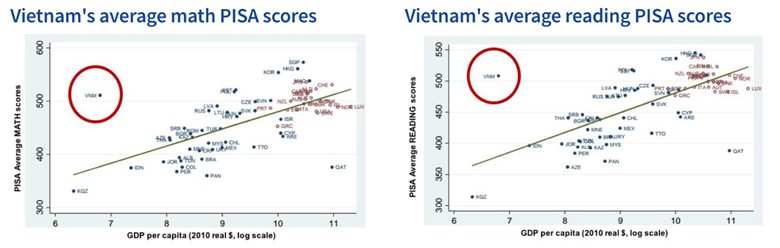
What’s surprising about Vietnam’s educational system? For many, it’s Vietnam’s high performance on the PISA tests often used to gauge educational quality. Since 2012, Vietnam’s 15-year-olds have had some of the highest average PISA scores in reading, math, and science in comparison to other developing economies. Average math scores, in particular, are comparable to or better than the average scores of some of the richest economies in the world, including the United States. In addition, according to the OECD, 34% of Vietnamese students were “among the most disadvantaged students who took the PISA test in 2022,” yet their average score in mathematics was one of the highest for students of similar socio-economic backgrounds, and the gap between the students in the highest and lowest socio-economic categories was smaller than the OECD average.

As surprising as those results might be, as someone who has been studying “higher“ and “lower“ performing education systems such as Finland and Singapore, several other aspects of Vietnam’s educational system stand out as well:  

  • Vietnam has achieved near universal education at a relatively high level of quality in a country with almost 100 million people – roughly 10 times the populations of Finland and Singapore combined.
  • Despite these differences, some, though not all, of the key factors that support high system performance in Finland and Singapore seem to apply in Vietnam.
  • Vietnam has already launched major initiatives to shift the entire education system to focus on competency-based goals and more student-centered instruction, a move that “high performing” systems like Finland and Singapore are still trying to figure out how to make.

All of this has been achieved in a country with 54 different ethnic groups, where the city of Hanoi, on its own, has a larger population than all of Singapore and where the budget is about 22 Billion USD, compared to about 95 Billion USD in Finland.   

In another 20 years, will Vietnam be leading the way in transforming the conventional model of schooling that has dominated education for more than 100 years?  To explore this question, in the first part of this series of posts, I share some of my observations about the key developments in the Vietnamese education system over the past thirty years.

Improvements in enrollment and access to schooling for all students

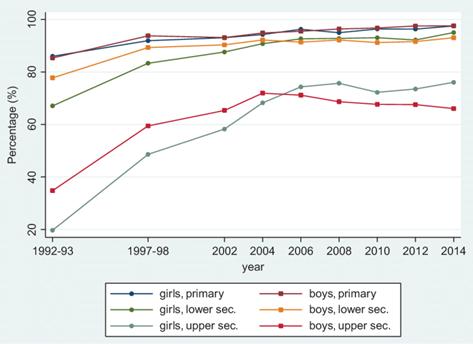
As many countries with developing education systems continue to try to provide access to education for all students, Vietnam has achieved school enrollment rates near 100% in kindergarten, primary, and lower secondary schools. A significant amount of that growth took place in less than 20 years, between 1990 and 2012. Enrollment in secondary schools in particular tripled in only 14 years, rising from about 23% in 1992 to almost 75% by 2006. Although secondary school enrollment remains a concern, as there has been only a slight increase since then, the mean years of schooling for adults in Vietnam is still higher than expected, given its per capita income.

Evidence of Educational Quality & Equity: PISA and beyond

Although many countries are working to expand access to schooling, educational quality remains a critical concern around the world. But the results of the 2012 PISA tests suggests that Vietnam has been able to increase both access and quality significantly. Those results showed that by 2014, Vietnam’s 15-year-olds were 17th in math and 19th in reading out of 65 countries. More astoundingly, that performance made Vietnam an outlier – performing significantly higher in both reading and math than other education systems with a comparable GDP.

These striking outcomes garnered considerable attention and generated a number of critiques that have raised legitimate concerns about the accuracy of the results. Notably, students who drop out of school in Vietnam after 9th grade are not included in the sample taking the PISA test, inflating the average PISA scores. In addition, one report suggests that some Vietnamese students participating in the PISA tests have been encouraged to do their best to “bring Vietnam honor,” and in one case, students received t-shirts identifying them as PISA participants. At the same time, this report concludes that, although these problems could have had some effect on Vietnam’s scores, statistical adjustments for those issues “do not change the overall finding that Vietnam’s PISA performance was exceptional” and that it substantially outperformed other countries of similar income levels.  

Several other sources of data confirm the significant growth in Vietnamese students’ educational performance. First of all, by 2019, 96% of the population over 15 could read and write. Vietnam’s own tests of mathematics and language in 2001 and 2007 also show what analysts describe as “very large increases over six years.” Comparisons with other developing education systems in India, Peru, and Ethiopia carried out by the Young Lives project show that the scores of the Vietnamese students continue to grow significantly over time, leading to the conclusion that a year of primary school in Vietnam is “considerably more productive in terms of quantitative skill acquisition” than a year of schooling in the other countries. As a consequence, in Vietnam, almost 19 out of every 20 10-year-olds can add four-digit numbers, and 85% can subtract fractions – proportions of correct answers similar to many OECD countries and substantially higher than those in other countries with similar GDP.

Although there are still some differences in the enrollments and performance of students from different ethnic minority groups, particularly at the upper secondary level, Vietnamese education policy and funding explicitly recognize the rights of all students to learn their own language and preserve their cultures. Article 11 of the Vietnamese Constitution states: “Every ethnic group has the right to use its own language and system of writing, to preserve its national identity, to promote its fine customs, habits, traditions and culture.” In addition, Phuong Luong, a researcher from Vietnam National University and the Vietnam National Institute of Educational Sciences estimates that the Vietnamese government has over 130 different policies to support ethnic minorities, including 10 key policies on introduction of ethnic minority languages and cultures into curriculum; more than 20 policies for financial support/scholarships, exemption or reduction of tuition fees, housing and accommodations for ethnic minority students; and five different policies for recruiting ethnic minority teachers. Most recently, the Vietnamese government has implemented regulations abolishing school fees for public education from preschool to high school. Previously, even public schools charged families fees for things like uniforms, textbooks, and other purposes. Although estimated to cost the government about 1.3 billion USD, these new regulations, along with new limits on costly supplementary tutoring sessions, are designed to ease the financial burdens of education for all students, particularly those from disadvantaged backgrounds.

Next week: Building the capacity for high quality education at scale: Can Vietnam transform the conventional model of schooling (Part 2)

The Evolution of an Alternative Educational Approach in Vietnam: The Olympia School Story (Part 1)

This week IEN discusses the evolution of the Olympia Schools, founded as a small kindergarten in 2003 by Ms. Minh An Pham and several other parents. Since that time, Olympia has grown to encompass a kindergarten and a primary, middle, and high school with a combined enrollment of 1,200 on a common campus in Hanoi. The post is based on a conversation between Thomas Hatch and Minh An Pham (Co-founder, Board of Directors), Quoc DanTran (Head Of Mathematics Department, Vice-head of Academic Council), Dr.Thuc AnhVo (Head of Foreign Languages Department; English teacher),and Thanh HaLe (Head of Science & Technology Department).

This discussion builds on previous posts documenting the founding and evolution of a variety of different schools and educational programs including the development of the ETU School in China (Beyond Fear: Yinuo Li On What It Takes To Create New Schools), the Citizens Foundation in Pakistan (Expanding to Say “Yes”: The Ongoing Work of The Citizens Foundation in Pakistan), Second Chance in Liberia, (Accelerating Learning in Africa: The Expansion and Adaptations of Second Chance), and Fount of Nations in Malawi (Building equal learning opportunities for differently-abled children in Malawi: An interview with Patience Mkandawire on the evolution of Fount for Nations). Taken together, these post show how powerful educational experiences, often ones that deviate from conventional and “accepted” practice, can take off in all kinds of contexts.

The power of love, dissatisfaction, and determination

The founding and development of the Olympia Schools is a familiar but inspiring story. The story begins with love and a deep belief in education. It requires some money or material resources but relies on determination, connections, and social capital. Along the way, success builds on a whole series of critical decisions – and sometimes “fortunate accidents” – that contribute to micro-innovations and adaptations that make it possible for the school to find a supportive community and create the conditions where alternative approaches to education can take root.

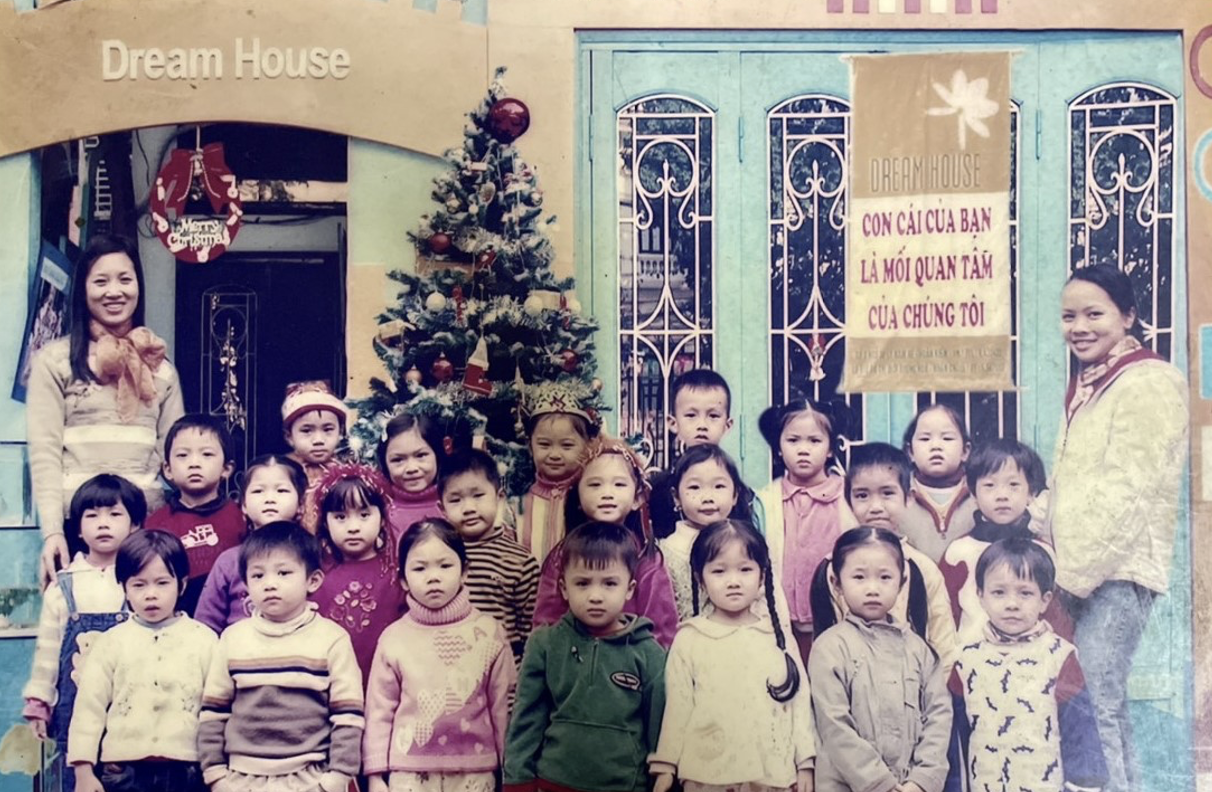
Dream House 2003

The story of the Olympia School begins in 2003 in Hanoi, when Ms. Minh An Pham and three of her friends were looking for kindergartens for their children. It was almost ten years since the Vietnamese government had begun loosening some requirements related to education and other sectors. Economic development was in full swing, and more and more international companies were finding their way to Vietnam.  All four friends got jobs at one of those international companies and Ms. Pham told me that experience gave them opportunities to see the confidence and independence of their co-workers’ children. That exposure reinforced their concern that – although many Vietnamese students excel in academics – they often seemed to lack what she called “life skills.” As Ms. Pham put it, it seemed as if Vietnamese students had lost their confidence in speaking up and sharing their ideas. She attributed that to a school system based on a Confucian education tradition that emphasized memorization, examination, and respect for teachers, coupled with a tendency for Vietnamese parents to constantly compare how their children were doing and how they ranked academically.

With a growing international community and increasing opportunities for international work, Ms. Pham and her friends wanted to make sure that their children gained both academic and life skills and that their children could learn English along with Vietnamese. When they looked around to find a school that could meeting those goals, however, they did not see any public kindergartens that met these criteria. There were a few private options that Ms. Pham and her friends thought seemed more like day-care centers than schools, and there was one private kindergarten imported from Singapore. But even that – very expensive – option only ran from 9 – 3 PM, still not long enough to take care of their children while the four women worked. Seeing no other options, the four friends began to think about creating a kindergarten of their own.

The power of social networks

Their first steps toward developing a school came with the help of another colleague at work. Although Ms. Pham had graduated from a teacher training institution in Vietnam, she went straight into the business world after graduation. As a consequence, she had never worked in schools and was not that familiar with early childhood education. But, Ms. Pham told me, the four friends were fortunate to work with a woman whose mother was a well-known educator who specialized in kindergarten. As Ms. Pham described it, “she was our first teacher,” and introduced the four friends to a number of educational experts who helped them learn about other early childhood approaches, including the “Reggio approach” that originated in Reggio Emilio, Italy. As they visited local schools and traveled to observe private kindergartens in places like Ho Chi Minh City and Singapore, they focused more and more on schools that emphasized “developmentally appropriate practice” as well as some schools that were inspired by Howard Gardner’s Theory of Multiple Intelligences. On the one hand, Ms. Pham explained, these approaches provided broad support for children’s development and encouraged children to be independent. On the other hand, they also fit well with the Vietnamese national kindergarten curriculum. Notably, the national curriculum was already divided into areas that concentrated on physical, musical, and ethical development, and the four friends felt those subjects aligned well with the different strengths and abilities highlighted in theory of multiple intelligences.

They expanded their group of advisors as they were introduced to more and more people, including several working with not-for-profits like Save the Children, who had extensive experience in Vietnam. Those advisors looked at the plans to combine MI-based and developmentally appropriate curriculum with the Vietnamese national curriculum and concluded: “this is doable.” With that green light, Ms. Pham bought textbooks and gathered teaching materials and, with the help of their network of experts, reviewed and aligned them with the national curriculum. They rented a small house in an alley of Hanoi and worked with a designer to renovate it; they drew on the connections and expertise of their advisors to recruit and hire teachers; and, after an intense six months, opened their doors to the “Dream House” kindergarten and welcomed a small group of six students – four children of their own and two children who lived nearby.  To make it all possible, Ms. Pham worked the evening shift at her job and spent the whole morning at the kindergarten.

Key developments in the first years

The four friends were fortunate to have the means and the relationships to get the school off the ground, but, as Ms. Pham explained, they also had to credit their houses to the bank, draw on their salaries to make sure they had enough money to pay the teachers, and “every time a student quit the school, we worried so much that we would not have enough money to keep going…” Nonetheless, the school grew year-by-year, from 6 students to 12 students, from 20 students to 60, as the first cohort expanded and progressed through the grades.

Dream House Primary and Secondary Schools 2007

By 2007, they were able to start the year with both a group of primary school students and a group of secondary school students. Along the way, several key decisions helped to create the time in the day and the space in the curriculum that they needed to stay true to their original vision of a developmentally based, holistic, education aligned with the national curriculum.  First, they decided to teach Vietnamese and English in an integrated way. As Ms. Pham explained, she had seen private schools in Ho Chi Minh City that were teaching English, but only as a separate subject. “Our innovation,” Ms. Pham said, “was to teach English along with the other subjects.” That meant teaching key skills and concepts in math, science, and history in Vietnamese and then teaching the related English vocabulary in the same class. This innovation created space in their schedule because they did not have to find time to teach a separate English course. Furthermore, the subject teachers teaching in Vietnamese could co-teach with their colleagues teaching English, making coordination and communication easier. Perhaps most importantly, from the students’ perspectives, instead of having to make connections between concepts and vocabulary taught in different classes, they encountered an integrated curriculum that reduced confusion.

Second, although Vietnamese public schools generally ran for a half-day (usually from about 7:30 AM to 12 PM, 6 days a week), Dream House decided to run a full-day program, from 8 AM – 4:30 PM. That decision created additional time during the school day that allowed them to meet the national curriculum requirements, add and integrate the teaching of English, and incorporate the teaching of their own “life skills” curriculum. In particular, the national curriculum requirements for social science included both ethics and society and nature, but Dream House chose to split social science up by teaching nature during their science classes and then teaching ethics and society in their life skills class. As Ms. Pham put it, “we reconfigured all the subjects in the school day and made it a comprehensive approach, integrating Vietnamese and English.”

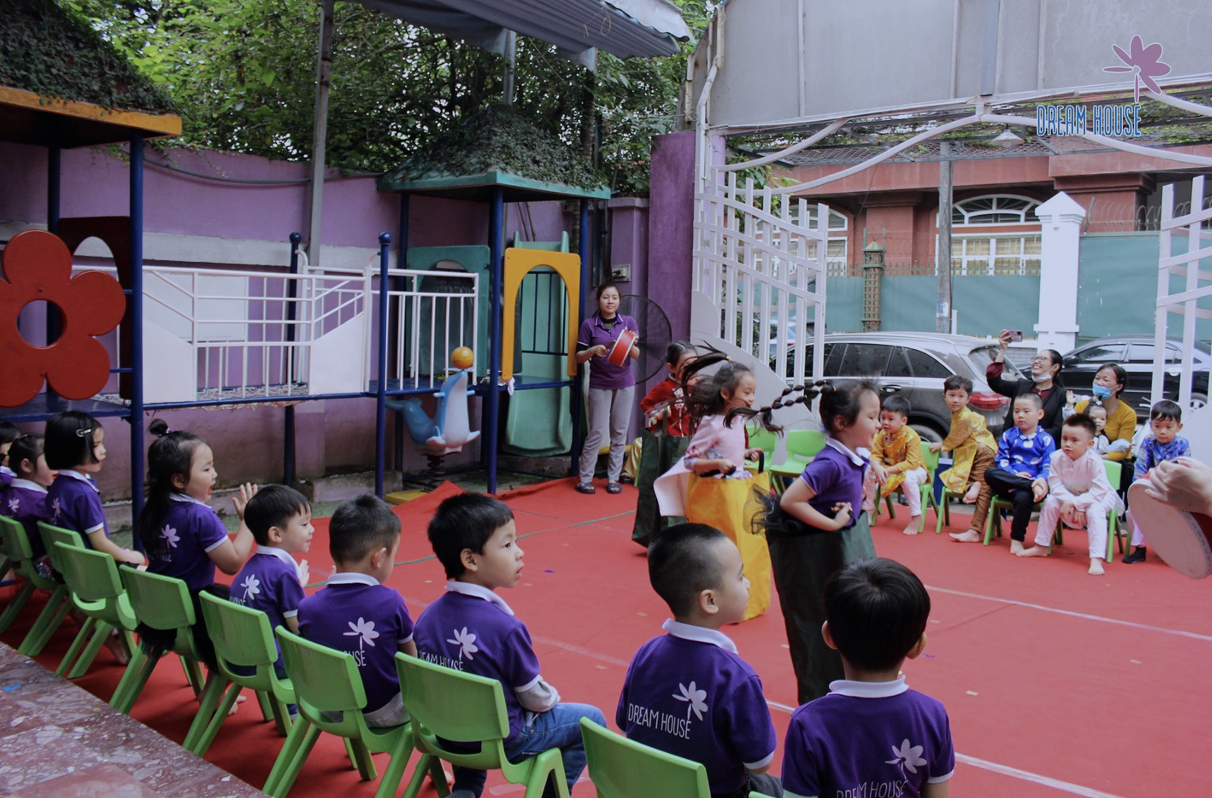
Movement games of kindergarten in Dream House

With those critical decisions and strategic choices, the basic structures for their primary, middle, and high school were in place. Capping off this period of development, what began as Dream House, moved to a new, larger campus in 2010.  As part of a competition to come up with a new name, the Olympia School was born, the winning teacher paper declaring it a symbol for wisdom and success.

Next week: The “School of Change”: The Olympia School Story (Part 2)

Amidst COVID-19’s Spread, Hope For Education Innovation Glimmers In Vietnam

This week’s post comes from Michael Horn, a senior partner at Entangled Solutions, and the co-founder of and a distinguished fellow at the Clayton Christensen Institute. This post appeared originally on Forbes.com

With COVID-19 spreading across the globe, I’ve watched the impact on Korea and Vietnam with some measure of connection and concern.

As the countries to which I journeyed on my Eisenhower Fellowship in 2014 and studied their education systems in some depth, the manner in which the disease’s spread has shut down their schools has struck me on two levels: worry about the health of the communities and hope for innovation.

It’s with an eye on the opportunity for innovation—improving an educational system that needs an overhaul—that I’ve paid close attention to the response of Everest Education, an after-school tutoring organization I got to know while in Vietnam and whose board I joined after my return to the United States.

Schools and after-school programs were shut down in the beginning of February in Vietnam. With no opportunity to learn in traditional classrooms, students became nonconsumers of education—literally unable to access formal education—overnight.

As students of disruptive innovation—the process that transforms complicated, expensive and inconvenient services into ones that are far more affordable, convenient, and accessible—know, disruption typically takes root in areas of nonconsumption. There the new service has a marked advantage, as its competition is nothing at all.

That describes the unintended opportunity in which Everest Education found itself, as after-school programs have remain shuttered and students have had no options to continue their studies.

One Everest student, Nguyen Viet Khanh Linh, who is studying for the International English Language Testing System (IELTS)—the world’s most popular English language proficiency test for higher education—said she was worried she wouldn’t be able to stay on track for her test in May. Currently pursuing an Advance Diploma in Multimedia at Arena Multimedia Education Center in Hanoi, Linh’s plan is to transfer to an exchange program in Korea, Singapore or Europe to complete a bachelor degree after earning the 30-month program diploma.

“I’m not sure which exchange programs I will join eventually, but almost all of them ask for IELTS as a prerequisite,” Linh said. “I’m trying to get it done in my first year before the arts workload gets heavier. I [was] afraid I [wouldn’t] be able to study for IELTS and work on my portfolio at the same time.” 

Everest had fortunately been developing an online-learning solution for some time. After experimenting with a range of products, Everest had settled on a platform that facilitated a live online class that, much as Minerva does in its active learning platform, takes advantage of the learning science around active learning to create an experience in which students are interacting with each other and the teacher in real time and taking part in learning games.

As Don Le, CEO and co-founder of Everest, shared, “Most online learning involves watching videos or listening to lectures, and students get bored easily. With our live online classes, students… feel a social bond. The experience feels really natural and fun.”

At the onset of the crisis, Everest swung into action and took its research and development into overdrive, as it deployed its online-learning experience across all of its classes to support all of its grade 1–12 students. An astounding 98% of its students successfully transitioned to its online-learning solution.

From there, Everest began focusing on serving the now-vast market of after-school nonconsumers in Vietnam. To date, it has amassed more than 1,000 online registrations and is scaling up to open as many classes as possible to meet the pent-up demand.

And here’s the opportunity—to help take a system built on rote memorization and turn it into a student-centered learning experience that is marked by active learning far more in line with the research around how students best learn.

“In some ways, it’s even better than a physical classroom,” Tony Ngo, Everest Education’s Chairman and co-founder said. “Online learning is a great solution while students are out of the classroom, and in the long run, it will become a critical tool in how students learn.”

I’ve noted before that disaster preparedness—and, it follows tragically, outright disasters—represent opportunities to innovate. Put another way, “a crisis is a terrible thing to waste.”

Amidst the challenges that COVID-19 brings, I hope we see education innovations that don’t just take subpar brick-and-mortar experiences and move them online where they will be even worse, but instead transcend the traditional lecture model to leverage technology and fundamentally transform the learning experience into one in which all students have a much greater likelihood of success.

In a country in Vietnam in which innovating in education is challenging, my hope is that Everest begins to blaze a new trail for the nation’s students.

Scan of education news: Asia

Photo: Nguyen Thi Hoang Yen

Photo: Nguyen Thi Hoang Yen

As we return from hiatus and schools in the US open their doors again, our latest scan looks over the recent education news in East Asia. This quick scan reveals a of variety concerns with the extent and quality of education. Reports include those focusing on the long-standing need to ensure that all school-age students are enrolled in and attend schools in Pakistan and the Philippines. Reports also address continuing attacks on girls and girls’ education in Afghanistan. Other reports describe what some have called a “problematic” college admissions process in Vietnam, and, even in South Korea, often touted as a high-performing system, there are concerns about changing populations, particularly in rural villages, and related school closings. Several broad efforts to improve education systems are also in the news, including a “blueprint” in Malaysia focusing on the quality of graduates, a “radical” school reform in Taiwan, a new education programme from the education and training ministry in Vietnam, and a general drive to improve education in Pakistan and prepare students for the knowledge economy.

Why 25 million children are out of school in Pakistan – The Express Tribune http://buff.ly/1LSObpr

#AkoSiDaniel Campaign Aims to Empower Children in the Philippines Through Education The World Post http://buff.ly/1JwTZPx

Girls’ education under attack: Over 100 Afghan schoolgirls poisoned Daily Pakistan http://buff.ly/1Ulu8o1

Vietnam’s education minister takes responsibility for problematic college admission process, Tuoi Tre News  http://buff.ly/1L2P7BW

As South Korean Villages Empty, More Primary Schools Face Closings, New York Times http://buff.ly/1KpZ0iG

Malaysian Education Blueprint focuses on quality of graduates – Minister, Astro Awani http://buff.ly/1O6Ib9O

Education and training ministry unveils new education programme – VietNam News http://buff.ly/1KFGhy6

Pakistan launches drive to improve education system, The Daily Times http://buff.ly/1Ulu47P

Creative demand: Taiwan says radical school reform will set it apart, Christian Science Monitor http://buff.ly/1Kq0sBz

Taiwan: Progressive Education Reform Unrepresented Nations And Peoples Organization, UNPO http://buff.ly/1L2SOrb

Creative Commons License
This work is licensed under a Creative Commons Attribution-NonCommercial-NoDerivatives 4.0 International License.

Following up on test results in Vietnam

Photo: Dao Ngoc Thach

Photo: Dao Ngoc Thach

In this brief post we follow up with Duy Pham on the issue of testing in Vietnam. When we last spoke with Pham, who is a former Deputy Director of the Center of Educational Measurement, of the Institute for Education Quality Assurance, at Vietnam National University, and curent doctoral student at the University of Massachusetts Amhersthe explained that this year Vietnam introduced a new assessment that combined two purposes: high school graduation and university entrance.

The Ministry of Education and Training has released the results of the new assessment. The results show that the high school graduation rate dropped by 8% (from 99% in 2014 to 91% in 2015). According to Vietnam.net, “Of the 816,830 students who sat the high school examinations in July 68,700 failed, for a pass rate of 91.58 per cent, a 7.44 per cent decline compared to 2014 and some 6 per cent less than in 2012 and 2013. Students in high schools passed at a rate of 93.42 per cent while the pass rate for those in continuing education was 70.08 per cent.” Ministry officials attributed this drop in the pass rate to the increased quality of the new assessments.

For more information:

High school graduation ratio reached 91.58% nationwide (link in Vietnamese)

Educators lament as Vietnamese students score poorly in national English test

Educators say national-exam failure rate shows better discipline, less cheating

Creative Commons License
This work is licensed under a Creative Commons Attribution-NonCommercial-NoDerivatives 4.0 International License.

Vietnam: Can one assessment meet the needs of all stakeholders?

20150707071925-edu-exam-questionVietnamese students surprised the world recently when it was revealed that they outperformed many other advanced countries on the PISA exam. According to a recent BBC article, “the country’s 15-year-olds scored higher in reading, maths and science than many developed countries, including the United States and the United Kingdom.”

News of this achievement has received a great deal of media attention, however in an effort to learn more about recent developments in the Vietnamese education system today we reached out to Duy Pham, former Deputy Director of the Center of Educational Measurement, of the Institute for Education Quality Assurance, at Vietnam National University, and curent doctoral student at the University of Massachusetts Amherst. Pham explained that while the PISA exam has caught the attention of an international audience, the people of Vietnam have been wrapped up in a dynamic debate around high school graduation exams and university entrance exams.

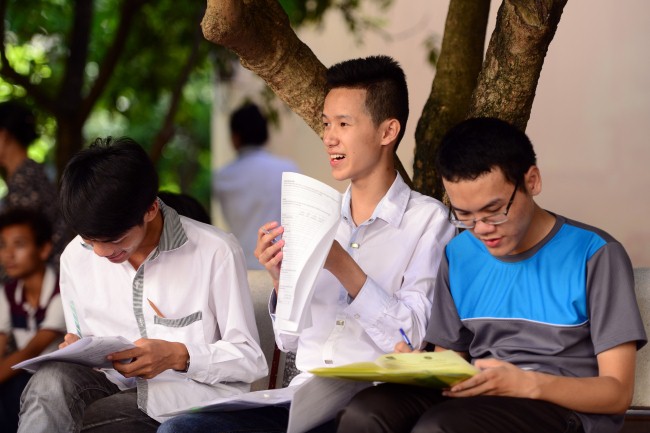
This year, the Vietnam Ministry of Education combined the high school graduation exam and the university entrance exam into one 4-day-long exam. This move came in response to concerns about student well-being and assessment validity. Many felt that students and families were suffering under the pressure of two separate exams. Also, private universities, which admit students who do not get selected for prestigious spots in public universities, felt that the old exam system was too challenging and resulted in the exclusion of too many students. These universities wanted to be able to admit a greater number of students but found that these students were not able to meet the high bar set by the old entrance exams. As Pham explained, “This year the pressure comes from many stakeholders, saying the university system blames the previous entrance exam of not being able to classify students in a way that allows them to select the right students.”

As the new exam was administered in the first week of July, there is no consensus on the new process. While the Ministry of Education has expressed satisfaction with the new system, educators, policymakers, and researchers are concerned that the new exams might be too difficult for the purposes of high school graduation, yet too easy for the purposes of university entrance. The question is how to find one assessment that meets the needs of all students and institutions.

Also, the question of pressure and fairness remains. Students can only take the new exam in one of the approximately 30 testing centers. These testing centers are located in big cities, which means that students from mountainous and rural areas need to travel with a parent or guardian and find accommodations for the duration of the exam. Under the old system, students could at least take the high school graduation exam in their own school settings.

Deirdre Faughey

For more information on this issue:

National exam for university, high school satisfies students – News VietNamNet http://buff.ly/1fQRVdu

One million students sit for national exams – News VietNamNet http://buff.ly/1fQRY9k

Volunteers swing into action for season of exams – News VietNamNet http://buff.ly/1fQS6FI

Vietnam school students and the exam of life in pictures http://buff.ly/1fQS8xe

Flashback: Volunteers devote themselves to helping Vietnam’s national exam contestants http://buff.ly/1OkqFiO

Creative Commons License

This work is licensed under a Creative Commons Attribution-NonCommercial-NoDerivatives 4.0 International License.

Vietnam

VND15 trillion approved for national education and training

Nhan Dan Online (September 11, 2012)

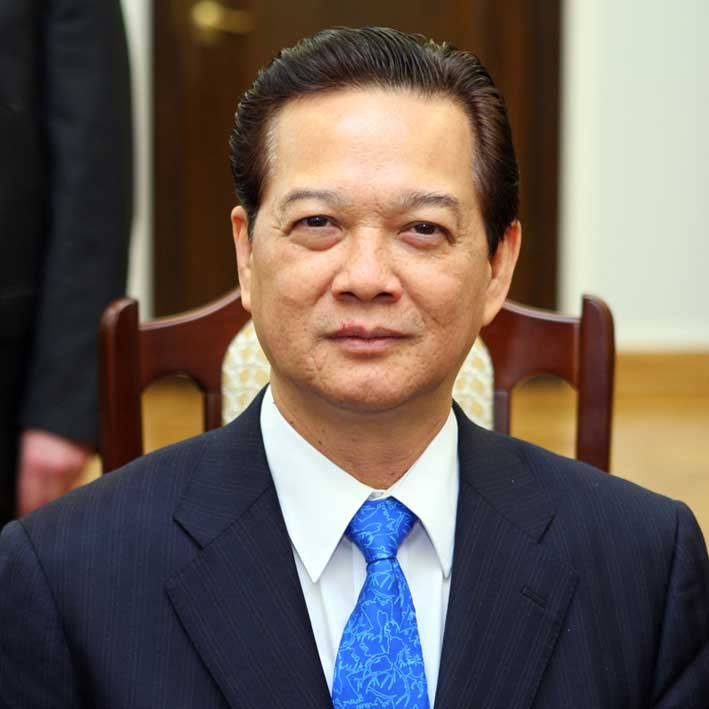
Prime Minister Nguyen Tan Dung

Prime Minister Nguyen Tan Dung has announced that the government will dedicate $730 million to The National Target Program on Education and Training, which will be in effect until 2015. This program aims to standardize universal kindergarten, maintain and improve the standardization of primary and secondary education, and improve literacy rates (currently 90.3% across the population). This program also specifically targets development in disadvantaged regions, rural areas, and communities with ethnic minorities. The construction of a number of facilities, libraries, teacher workrooms, and boarding schools, is expected.

Related resources and background information:

VND 15,200 billion for education and training

PM Calls for More Investment in Education

Schools to Apply New Educational Model

City to Subsidize Education for Poor

Canadian International Development Agency video on “achieving education for all in Vietnam”: