Category Archives: About K-12 International Education News

The Power of Rest In and For Education: An “Idle” Conversation About the Social Brain with Mary Helen Immordino-Yang

“Rest is not idleness, and to lie sometimes on the grass under trees on a summer’s day, listening to the murmur of the water, or watching the clouds float across the sky, is by no means a waste of time.”
-John Lubbock

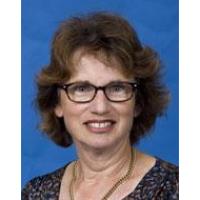
We recently we spoke to Mary Helen Immordino-Yang, a neuroscientist, developmental psychologist, and an associate professor of education at USC, about her research and its potential implications for educational change. Her work explores the inextricable link between the development and function of the brain and sociocultural experiences, particularly emphasizing the neuropsychological basis for rest and the opportunities and constraints that educational settings create for rest. Below, we share a brief summary of our conversation, touching on Dr. Immordino-Yang’s background, her work, and her new book, Emotions, Learning, and the Brain: Exploring the Educational Implications of Affective Neuroscience (Norton, 2015), which will be released next month.

Among other influences, Dr. Immordino-Yang came to her current work on the social brain and the power of rest through an interest in language and culture. During her undergraduate work, she studied languages as varied as Kiswahili and Russian. These studies translated well to her first job, teaching in a school in Boston where over eighty languages were represented. In her teaching, Dr. Immordino-Yang frequently engaged and observed language learning and interaction within the school. Her interest in how cultures build, navigate, and employ language led her to graduate work in education and psychology at the Harvard Graduate School of Education. At Harvard, she pursued her interests in development, biology and culture, merging these disparate fields in questions of education “to learn about cognitive neuroscience…what is now affective and social neuroscience.” Early in her doctoral work she began developing her current lines of research when she realized that “not very much was known about the social brain.”

After completing her doctoral work, Dr. Immordino-Yang undertook postdoctoral training with Antonio Damasio at the Brain and Creativity Institute and later joined the faculty at USC. At USC, her work has focused on the relationship between mind and brain, as she put it, “applying studies of affective neuroscience to the social realm.” From her perspective, “the biological mechanisms by which we experience emotions, and by which culture shapes the mind, are not clear.” Therefore, her work aims to illuminate what she considers an understudied and inextricable link between sociocultural experiences and neurological processes. For her, the social world and the biological world do not function as separate entities. Instead, the two are deeply related and in fact interdependent on each other. She says that “the mind is one job the brain does. So, we can’t say that one is causing the other. Our social world…facilitates and organizes our biological development, which in turn builds our interpretations of the social world.”

Within education, Dr. Immordino-Yang argues that “we should build educational theories around what is biologically possible.” At the same time, she approaches her work by asking “how culture shapes knowing and being. How do we build complex types of experiences that are culturally shaped?” She contends that this understanding helps educators and researchers recognize students’ complex identities. Extending this line of inquiry, she is currently working on a cross-cultural study in Los Angeles, looking at children from immigrant families and, “how kids cross cultures and…how relationships are reflected in their biological selves.”

Among the applications for this research in schooling, Dr. Immordino-Yang suggests that “education’s main purpose is to teach people skills and habits of mind for interpreting and understanding situations in any domain of knowledge.” If sociocultural and neurological are so deeply linked, she argues, schooling must also account for these dynamics. Already-existing approaches such as project-based learning may take such dynamics into account by integrating work and play. Additionally, Dr. Immordino-Yang’s research suggests schools need to create space for children to construct their own narratives for meaning making and understanding. These changes are “not just superficial,” Dr. Immordino-Yang explains. “They are actually hooking [students] into different biological mechanisms that allow them to tie actions to their internal, grander sense of self.” Furthermore, such work allows educators to rethink their very understandings of what learning is.

Dr. Immordino-Yang also talked about her upcoming book, where she outlines a case for the educationally productive use of rest. “What this means,” she says, “is giving time and skills to help people reflect” on their experiences. By creating space for rest (both unstructured time and literal rest) she argues that educators can introduce opportunities for imagination, daydreaming, and creativity. Time for rest, she added, can promote deep reflection, and habits of mind that support healthy learning and development.
Learning from successful education reforms in Ontario: Part II

imagesIn 2003, the Ontario government began to focus on issues of educational improvement. The government instituted a series of reforms that have proven incredibly successful, with elementary achievement results rising from 54% in 2003 to 72% in 2014, and high school graduation rates rising from 68% to 84% in the same amount of time. This past summer I spoke with Mary Jean Gallagher, Ontario’s Chief Student Achievement Officer and Assistant Deputy Minister of the Student Achievement Division, and Richard Franz, Ontario’s Director of Research, Evaluation & Capacity Building, to learn more about their experiences with this reform effort thus far, and their plans for the future. As this conversation was so informative, we have decided to post it in two parts. In part one we focused on aspects of the reform that have been key to its success thus far. Here, in part two, we explore Ontario’s approach to moving forward with an expanded reform agenda.

Planning the Future:

In 2013, Ontario’s Ministry of Education (MOE) set a renewed vision for the education system. This process allowed them to identify critical information about what they have achieved, and share this information with parents, business leaders, community members, teachers and students. As Gallagher explained, as a result of Ontario’s success over the past decade, “we have a newfound respect for our ability to set goals and measure progress and achieve them, so we are more careful about goals we set.” By engaging in a broadly based, 7-month collaborative consultation process, they engaged both qualitative and quantitative research methods to determine their next steps.

This process culminated in the production of their “Achieving Excellence” report. This report identifies four new, interconnecting goals for the education system. As they are described in the report:

  • Achieving Excellence: Children and students of all ages will achieve high levels of academic performance, acquire valuable skills and demonstrate good citizenship. Educators will be supported in learning continuously and will be recognized as among the best in the world.
  • Ensuring Equity: All children and students will be inspired to reach their full potential, with access to rich learning experiences that begin at birth and continue into adulthood.
  • Promoting Well-Being: All children and students will develop enhanced mental and physical health, a positive sense of self and belonging, and the skills to make positive choices.
  • Enhancing Public Confidence: Ontarians will continue to have confidence in a publicly funded education system that helps develop new generations of confident, capable and caring citizens.

As Gallagher and Franz explained, the process of determining these goals helped them to understand that in the future they need to “heighten the relevance of what people are learning, increase experiential learning, and use the community more broadly.” By engaging community members in the process they were able to learn that those members felt they had valuable information and experiences to offer the educational system, and were being underutilized. As a result, the MOE is now thinking of better ways to reach out.

Another key aspect that emerged is the importance of student voice. Since the consultation process included school-age students, the MOE was able to learn more about what the students felt needed to be changed about their own education. The MOE, for example, developed a program called “Students as Researchers,” which invites students to formulate questions about how to make their schools better places and trains them in research skills and ethics so that they can design and implement their own research projects, which are then shared with the MOE.

Challenges of new goals:

Looking ahead, Gallagher and Franz explained that there is some tension around the notion that good teaching and learning must be measured. New challenges include thinking about ways in which the system might be able to broaden the measures of success, and what counts as success, so that the emphasis is not only on test scores. This is particularly relevant since one of their new goals is to improve student well-being. In setting the goal, the MOE also must consider how to measure something that has no history of measurement or policy focus.

Another concern is the additional demands of the bureaucracy that might be added once new goals, and new measurement systems for those goals, are implemented. As Gallagher and Franz noted, one of the reasons for the success of the education reforms so far has been attributed to the narrow focus on a small number of goals. With a focus on the renewed four goals, how can they be incorporated into a successful system without overburdening it? As Franz explained, the new tension is about how to do it all is such a way that gets you the insight and information needed to guide the practices of all involved in the system in addressing the new goals, while continuing to build coherence such that actions in the name of one goal also support achievement of the other goals.

For more information:

Ontario Ministry of Education

Deirdre Faughey

Creative Commons License
This work is licensed under a Creative Commons Attribution-NonCommercial-NoDerivatives 4.0 International License.

Learning from successful education reforms in Ontario

class-roomIn 2003, the Ontario government began to focus on issues of educational improvement. The government instituted a series of reforms that have proven incredibly successful, with elementary achievement results rising from 54% in 2003 to 72% of elementary students performing at or above the provincial standard in in reading, writing and mathematics in 2014, and high school graduation rates rising from 68% to 84% in the same amount of time. This past summer I spoke with Mary Jean Gallagher, Ontario’s Chief Student Achievement Officer and Assistant Deputy Minister of the Student Achievement Division, and Richard Franz, Director of Research, Evaluation & Capacity Building, for the Student Achievement Division, to learn more about their experiences with this reform effort thus far, and their plans for the future. As this conversation was so informative, we have decided to post it in two parts. Here, in part one, Gallagher and Franz share some of their thinking on aspects of the Ontario reform effort that have been essential to its success.

Bringing educators into policymaking realm

In 2008, Gallagher was the leader (Director of Education) of Canada’s southernmost school district when she was selected for her new position at the Ontario Ministry of Education (MOE). This position – Chief Student Achievement Officer and Assistant Deputy Minister of the Student Achievement Division– was envisioned as an innovation. While MOE officials were typically promoted from public service positions, Gallagher’s experience was in schools, as a teacher, a principal, superintendent, and Director of one of Ontario’s 72 school districts. With the creation of this Division and position, and the hiring of Gallagher, the MOE demonstrated that it valued the expertise of educators. This went along with the MOE’s renewed emphasis on valuing the work of educators, particularly in positions that focused on student achievement. At that time, the MOE wanted to ensure that all of their work was based on valuing educators—seeing improved learning as a result of improved teaching.

With this new effort to bring educators into the policymaking realm, the MOE also made sure that approximately two-thirds of staff within the Student Achievement Division was comprised of practicing educators who had already proved themselves to be strong instructional leaders. In order to do this they created new positions in which practitioners, such as teachers and school leaders, could work for up to three years with the MOE. The theory behind this model was that working closely with “front-line” educators would build the capacity of both those who worked in the field, as well as those who worked in the central offices. Franz pointed out that working with educators on the creation of new policy helps the MOE officials by providing perspective on how such policy might “land” in schools. Additionally, once those educators complete their temporary positions in the MOE offices and return to their schools, they arrive with more knowledge and understanding of how such policies were developed and created. This new “blended” model builds appreciation in both spheres. As Gallagher and Franz explained, this effort helps create alignment between goals, priorities, methodologies and implementation, and over the past 13 years it has proven a “formula for wonderful results.”

Maintaining a limited number of goals

Gallagher and Franz also attributed Ontario’s success to the MOE’s narrow focus on a limited number of educational goals, specifically increasing student achievement, closing educational gaps, and increasing confidence in public education. As Gallagher and Franz explained, these are the goals that everyone working in the Ontario education system can recite, as well as the targets associated with them. By focusing closely on a limited number of goals they have seen a huge difference in their ability to keep focused on what is important.

In addition to knowing these goals, educators have become increasingly aware of the ways in which they can measure improvement and identify success as they work to achieve them. This allows teachers to develop an understanding of their own efficacy and agency, which, as Gallagher and Franz noted, excites and motivates educators. Ontario’s focus on province-wide testing standards in literacy and numeracy, and a set curriculum, has promoted clarity about what students are expected to know, understand, and be able to do.

Using data and assessments to test the system, not individuals

Starting in the mid-1990s, Ontario’s government began implementing a set of tests based on Ontario’s Curriculum Expectations and Standard of Achievement for grades 3 and 6 in reading, writing, and math, as well as in grades 9 (math) & 10 (literacy). As Gallagher explained, Ontario holds very high standards for their students. Student work is identified as level 1, 2, 3, 4, and the provincial standard of success is level 3 (the equivalent of a letter grade of B), which is higher than what is expected on the Program for International Student Assessment (PISA).

Ontario’s assessment organization is an arms-length organization of the government, funded by the MOE but separate from it with its own board of directors. This organization has become, over time—an opportunity for professional learning as well, as teams of educators are assembled to devise test items and mark assessments over the summer months. As a result, teachers become well versed in the standards and measurement of performance and thereby build their own assessment literacy.

Gallagher and Franz note that these assessments are not standardized, and are not proprietary. Instead, they are criterion referenced assessments of the curriculum. The tests are used to gather information about the degree to which the students are able to demonstrate what they have learned from the curriculum. As a result, Ontario’s teachers feel less pressure to “teach to the test”; instead, the teachers are teaching to a curriculum they approve of and which teachers have had a hand in developing. The overall sense is that the tests are used to assess the entire educational system, rather than individual teachers and students. This collective focus also encourages teachers to work collaboratively and use assessment for learning for student achievement efforts.

Ontario has also moved to a common data system across the province as well. Starting in the late 1990s, the government created a tracking system in which all students were assigned an ID number. This allows the MOE to track individual school’s assessments of student performance, and compare those results to province-wide results. The ID number is also now being used to track students from early childhood education through to college (or apprenticeships). As Gallagher and Franz noted, this ID number is not linked to student names, but is used to analyze trends and patterns to understand what is happening system-wide.

Collaborative Inquiry

Teachers in Ontario regularly work together to analyze student work and plan new instructional strategies. These practices are articulated in an assessment policy called “Growing Success” and have been put into practice through a collaborative inquiry model of professional learning. Professional learning through collaborative inquiry has been so successful that it has replaced the old model of professional learning in which teachers were corralled in “banquet hall style” training sessions, where experts presented and teachers broke out into workshops. As Franz explained, “We assume that teachers come now with a certain level of skill, and we work with teachers on how to use a collaborative inquiry approach to examine student work, thinking about how to move students, and making that the object of their inquiry.”

How have classrooms changed?

As Gallagher explained, one of the things that everyone has learned is that the ideal classroom is less about teaching strategies and more about teacher thinking and behavior. This process starts in the assessment domain, with deep teacher knowledge of the students, the curriculum, and the learning goals. Then, the teachers can utilize any of the strategies they might have in their “backpack,” to help the students progress. Generally, in an ideal classroom one might see high levels of engagement, individual and group work, and differentiation; however, there is no particular reliance on any specific strategies or programs throughout the period. The aim is to allow teachers the space to try out their own strategies, and to develop their ideas through collaborative discussion with other teachers. This way, teachers feel accountable to one another and the classroom becomes a “de-privatized” place.

What Gallagher and Franz have noticed is that there is a trend of more inquiry-based learning in classroom. While there are some concerns about how much curricular content there is to learn, there is an increase in student-led learning, focusing on problem solving and creative work. In the following audio excerpt, Gallagher describes a recent visit to a kindergarten classroom where the teachers allowed students to lead an extended study of trees:

Be on the look-out for part two of this post, in which we focus on how Ontario plans to move ahead with an expanded reform agenda.

Deirdre Faughey

Creative Commons License
This work is licensed under a Creative Commons Attribution-NonCommercial-NoDerivatives 4.0 International License.

Leading school change in Singapore

How do school principals make sense of education reforms that push them into unchartered territory?   I recently spoke with Dr. Vicente Reyes, Lecturer, with the School of Education, University of New England, Australia, who argues that when schools leaders are faced with uncertainty they have an opportunity to create the future they would like to see. In 2015, Reyes published a study titled “How do school leaders navigate ICT educational reform? Policy learning narratives from a Singapore context.” In this study, Reyes (2015) examined the experiences of school leaders in Singapore as they grappled with policy reforms that aimed for ubiquitous use of information communication and technology (ICT). Reyes (2015) found that as they tried to respond to these policies, school leaders experienced “shifting identities, emerging roles and ambivalent capacities.”

The policymakers Reyes spoke with described ICT as the “external wings that would propel the economy to the next stage.” As Singapore has a small domestic market of only 4 million people, cloud technology is valued for the potential it holds to help the country reach out internationally, to China, India and beyond. Similar to the view that the cloud technology can broaden Singapore’s economic reach, Education Ministry Officials also view it as holding the potential to broaden the traditional definition of a classroom, and therefore develop the skills and competencies students will need to participate in this future economic market. However, while the direction forward has been identified, and education has been identified as the vehicle for implementing the required changes, no one knows exactly what changes need to be made or how it will play out.

As the Singaporean education context is highly structured and focused on high stakes exams, both in primary and secondary school, the ICT reforms introduced a promise of creativity and experimentation that was a stark contrast to the traditional “drill and kill” educational focus. However, the new policy introduced a predicament for school leaders who need to remain high achievers while experimenting with creativity.

Reyes shows that in order to respond to this predicament, school leaders had to adopt a pioneering spirit. Since these leaders didn’t have prior experiences or examples to learn from, they needed to go outside of their comfort zones, which can be unnerving. Reyes used the metaphor of a captain on a ship— a ship in the middle of an ocean without functioning navigation tools. As Reyes explained, “If you don’t move forward, you will find peril. If you do, you might hit an iceberg. School leaders need to make those decisions.”

In order to help school leaders navigate these difficult contrasts, as Reyes explained, Singapore’s Ministry of Education has made an effort to promote create incentives to encourage innovation and eliminate pressures that might limit risk-taking. One example is their “Coyote Funds,” or funds given to school leaders to use for experiments. MOE officials encourage school leaders to think of the goal of these projects as experimentation that leads to learning rather than to focus on whether or not they are “successful.” However, as Reyes explained, a number of the proposals for Coyote Funds were rejected for their “failure to be true failures,” or insufficiently innovative. Each proposal was scored and evaluated, which ultimately supported Singapore’s high stakes status quo. While Singapore is interested in creating an education model inspired by what they view as a meritocratic and creative U.S.A. school model, Reyes cautions that the changes may be incremental rather than fundamental or transformational.

–Deirdre Faughey

Creative Commons License
This work is licensed under a Creative Commons Attribution-NonCommercial-NoDerivatives 4.0 International License.

Lead the Change interview with Helen Timperley

Dr. Helen Timperly

Dr. Helen Timperley

Helen Timperley is Professor of Education at The University of Auckland in New Zealand. Her early teaching and school leadership career led to a research focus on promoting leadership, organizational and professional learning to improve the educational experience of students currently under-served by our education systems.

In this interview, which is part of the Lead the Change Series of the American Educational Research Association Educational Change Special Interest Group, Timperley shares her vision for successful educational change:

“My vision for educational change to be successful includes policy makers, school leaders, teachers and students all having the knowledge and skills to undertake effective diagnoses of challenging situations and the capacity to design fit-for-purpose solutions.”

This Lead the Change interview appears as part of a series that features experts from around the globe, highlights promising research and practice, and offers expert insight on small- and large-scale educational change. Recently, Lead the Change has also published interviews with Diane Ravitch, and the contributors to Leading Educational Change: Global Issues, Challenges, and Lessons on Whole-System Reform (Teachers College Press, 2013) edited by Helen Janc Malone, have participated in a series of blogs from Education Week.

Creative Commons License
This work is licensed under a Creative Commons Attribution-NonCommercial-NoDerivatives 4.0 International License.

Curriculum and assessment in African countries

This week, we conducted a scan of education news published in the past month from countries in Africa. These articles highlight efforts to increase access and quality of education through the implementation of national curricula and assessments and through initiatives focused on teacher recruitment, salaries, and training.

South Sudan recently launched its first national curriculum. Gurtong.net quoted Jonathan Veitch, UNICEF Country Representative, as saying…

“For now the curriculum is complete, textbooks must be designed and published, teachers need to be trained to implement this curriculum, and school managers, inspectors and supervisors require training to provide the required management and oversight….”

Reports from South Africa (recently ranked “almost dead last in math and science” on this year’s World Economic Forum Global Competitiveness report, as News24 noted) show that even with curriculum and assessments in place, educators need to see their worth in order for them to be useful for instruction. The Daily Maverick recently reported that both the teachers’ union and the Department of Basic Education agree that the current national assessments are not effective, and some teachers’ unions have already promised to “opt-out” of administering the current assessments.

Tensions between teachers and the national government in Kenya also reflect something of a “Catch-22.” In a recent World Bank report, concern was expressed that the quality of education in the country was alarmingly inadequate. On the one hand, many critics of the government, including many teachers, argue that the reasons include the government’s failure to comply with a court order to increase teacher salaries by 50-60%. In response, teachers are engaged in a formal, long-term strike to protest inadequate salary, which they would like to see rise to the levels of other professions. On the other hand, supporters of the government suggest that the teacher strikes are contributing to the problems because they result in irregular access to classrooms for most students. In a stalemate, the Education Ministry ordered schools to close as of September 21st.

According to All Africa, Cameroon’s Education Ministry is taking steps to try to “professionalize” teaching by bringing in Dutch consultants to help refine teacher training, as well as curriculum. According to Roeland Monasch, the CEO of the Dutch NGO Aflatoun, the solution is simple: “He assured that once teachers are well trained, students will do well in class.”

Deirdre Faughey

Creative Commons License
This work is licensed under a Creative Commons Attribution-NonCommercial-NoDerivatives 4.0 International License.

Government funding and refugee migration in Nordic region

syria_children_refugee_camp

Photo: DFID

Our review of education news this week focuses on Nordic countries, where issues of government funding and the migration of refugees figure prominently. This brief scan shows that for countries such as Finland, Norway, and Sweden, the influx of refugees has implications for the classroom. For example, Norway is launching an innovation competition to teach Syrian refugee children to read. As The Nordic Page reports:

Norway is fronting an initiative to develop a smartphone application that can help Syrian children to learn how to read, and improve their psychosocial wellbeing. This will take the form of an international innovation competition in cooperation with Norwegian and international partners.

Erna Solberg, Prime Minister of Norway, also recently announced that Norway will double its support for education between 2013 and 2017. In a statement published on MSNBC.com, Solberg stated:

The gap in education funding is vast. Reaching the new goals will require concerted efforts and major investments. National governments must lead the way. Innovative partnerships, including partnerships with the private sector, will play an important part. A crucial outcome of the Oslo summit on education in July was the launch of the International Commission on the Financing of Global Education Opportunities, which was welcomed by the UN Secretary-General. 

Similarly, Sweden has recently announced the addition of $3 billion to its national budget, intended to address education and housing issues, and to restore a welfare system that many feel has been depleted in recent years; however, at the same time the country has seen an unprecedented number of 6,901 people seeking asylum in just one week’s time—3,467 of them from Syria. As Reuters reports,

Local authorities will get more than 1 billion crowns extra for integrating refugees this year, with government also increasing spending to support refugee children in school. Total spending on refugees will rise to 19.4 billion crowns in 2016 out of a total budget of around 920 billion and up from an estimated 17.4 billion this year.

In contrast, Finland is grappling with a strong opposition to the influx in refugees, as well as controversial cuts to the education budget. According to The Helsinki Times, these cuts will have implications across all levels of education, but for primary education it will call particular attention to:

…the appropriations for the reduction of class sizes in primary schools. Terhi Päivärinta, a director at the Association of Finnish Local and Regional Authorities, believes it is consequently possible that class sizes will grow in some municipalities.

In each of these countries, plans for increases or decreases to educational funding were in the works long before this refugee crisis began. As they are now being implemented under somewhat different circumstances, it will be interesting to see how they unfold in the next weeks and months.

Deirdre Faughey

Creative Commons License
This work is licensed under a Creative Commons Attribution-NonCommercial-NoDerivatives 4.0 International License.

Lead the Change Interview with Miriam Ben-Peretz

Miriam Ben-Peretz is Professor Emerita at the Faculty of Education at the University of Haifa. She has been Chair of the Department of Teacher Education and Dean of the School of Education at the University of Haifa, as well as President of Tel-Hai College, and visiting Professor at several universities internationally.

In this interview, which is part of the Lead the Change Series of the American Educational Research Association Educational Change Special Interest Group, Ben-Peretz shares lessons she has learned from educational change in Israel:

“Educational change in a country like Israel has shown that change has to be all encompassing, implemented by institutional forces such as the Ministry of Education or a board of education in a community. Without the impact of institutional recognition, no state-wide educational change can be implemented, certainly not over time.”

This Lead the Change interview appears as part of a series that features experts from around the globe, highlights promising research and practice, and offers expert insight on small- and large-scale educational change. Recently, Lead the Change has also published interviews with Diane Ravitch, and the contributors to Leading Educational Change: Global Issues, Challenges, and Lessons on Whole-System Reform (Teachers College Press, 2013) edited by Helen Janc Malone, have participated in a series of blogs from Education Week.

Creative Commons License
This work is licensed under a Creative Commons Attribution-NonCommercial-NoDerivatives 4.0 International License.

Scan of Ed News: UK

To follow up on our most recent post with Toby Greany discussing the development of academies in England, we did a quick scan of recent education news from the UK.

Recent reports included a review of funding in England’s free schools (a type of academy), concerns about some schools (particularly faith-based schools) “demanding” money from parents, and questions about whether a plan to extend free childcare to 30 hours a week could end up leading to cut backs in the number of children who can be served.

In Northern Ireland, where %92 of students attend schools with students largely of a single faith, debates have focused on a major report on shared and integrated education. While the government education committee issuing the report said that “every school in Northern Ireland should take part in some form of shared education, as The Belfast Telegraph reported the committee could not resolve all the issues relating to shared and integrated education.

Assessment was in the news in both Scotland as Wales. In Scotland, First Minister Nicola Sturgeon said that she did not want to create “crude league tables”, but plans to introduce new standardized tests in primary and lower secondary schools (national testing for five to 13-year-olds was eliminated in Scotland in 2003). In Wales, the focus has been on the launch of new “Wales-only” qualifying exams in secondary schools. Among other things, those GCSE (General Certificate of Secondary Education) exams will have “a greater stress on the functional aspects of language with reading, writing, speaking and listening skills” all counting towards the final grade. Relatedly, in Ireland, the Central Application Office (responsible for overseeing the application process for most undergraduate places) will be making changing in the points system it uses. At least in part, the change is designed to reduce the number of applicants tying on same score.

Recent news also includes concerns about a teacher shortage in Northern Scotland and as well as questions about the value of “exporting” Irish teachers to the UK. As The Independent put it, “It has cost the Irish taxpayer millions to educate them but last week hundreds of Irish teachers began their careers – in British classrooms….” 

ENGLAND

The 60% extra funds enjoyed by England’s free school pupils, The Guardian http://buff.ly/1idEYfb

Schools ‘demand money from parents’ – BBC News http://buff.ly/1VNDAOt

Free childcare scheme ‘could backfire’ in schools – BBC News http://buff.ly/1idF1HP

NORTHERN IRELAND

Shared education: Northern Ireland Assembly committee backs expansion –BBC News http://buff.ly/1JVwdz8

Stormont report urges increase in shared education, Belfast Telegraph http://buff.ly/1Qotqkq

Authors propose 35-year road map to prosperity and social justice in North, The Irish Times http://buff.ly/1EOIVB2

SCOTLAND

Scottish education: The return of standardised testing? BBC News http://buff.ly/1Nq1pdV

Northern Scotland suffering teacher shortage with 300 posts unfilled, The Guardian http://buff.ly/1Nq1rSZ

REPUBLIC OF IRELAND

Overhaul of CAO points will see average scores drop for school leavers, The Independent http://buff.ly/1Q1hPqu

Educated for export: young Irish teachers making a buck in UK, The Independent http://buff.ly/1Q1hLXL

WALES

‘Exciting’ new Wales-only GCSEs are launched, BBC News http://buff.ly/1ixhktU

First Minister praises new education plan, The Barry Gem http://buff.ly/1Nq2iTA

Creative Commons License
This work is licensed under a Creative Commons Attribution-NonCommercial-NoDerivatives 4.0 International License.

How are academies, academy chains, and the “self-improving school system” developing in England? A podcast with Toby Greany

Toby Greany

Toby Greany

In this podcast, Toby Greany, Professor of Leadership and Innovation at the UCL Institute of Education in London, highlights some of the recent developments in the English government’s embrace of “academies” and “academy chains” (akin to charter schools and charter management organizations in the US). In the process, Greany discusses some of the challenges to developing what David Hargreaves has called a “self-improving” school system. In a series of papers, Hargreaves argues that in a system like England’s where schools have a high degree of autonomy and where the number of academies and chains are increasing, schools need to work in deep partnership with one another if all schools are to be successful.

In the podcast, Greany begins by briefly describing the roots of school autonomy in England in the Education Reform Act of 1988 and the launch of the “academy movement.” While the previous Labour government had initiated the academies as a relatively small-scale approach to address chronic underperformance in deprived city schools, the Conservative-led Coaliton government rocket-boosted the movement with the passage of the Academies Act in 2010. The Academies Act allowed any school that was identified as Good or Outstanding by the English school inspectors (Ofsted) to convert to an academy. As an academy, rather than getting funding from the local authorities, funding comes direct from the national government. Further, rather than being subject to local oversight, academies have additional “freedoms” or “autonomies”: these include the freedom to develop their own curriculum and the freedom to hire teachers who have not gone through England’s process for teacher certification (which has also been substantially revised in recent years). While more successful schools can choose to convert to academy status, schools deemed underperforming are forced to become sponsored academies, effectively meaning that they are taken over and run by an academy chain (technically called a Multi-Academy Trust, MAT). These academy chains can be run by philanthropists, universities or any other credible organization, but the most common sponsors now tend to be other successful schools. In such a favorable environment, some academy chains in England have grown considerably in only a matter of two or three years, when networks in the US have taken ten to fifteen years to reach the same size. While there have been some early positive reports, numerous questions remain about the effectiveness of the academy chains.

In describing more recent developments, Greany builds on a set of blogs that he wrote last year in which he outlined several of the challenges to developing a self-improving system and laid out two possible scenarios for the future. One scenario is unbridled competition in which every school is essentially out for itself (Greany punctuates the scenario by likening it to the “post-apocalyptic” scenes in Mortal Engines, a series of books from Philip Reeve, in which London is the first city to move itself onto wheels so that it can devour other cities). Greany describes the second scenario as looking more like the Tour de France in which there is competition between networks of schools just as there is between teams of cyclists, but there is also collaboration within each network.

Drawing on his latest research as well as a report to the select committee of Parliament that was looking into the growth and effectiveness of the academies, Greany describes some hybrid developments where there may be both competition and collaboration between schools and networks simultaneously. Looking towards the future, Greany highlights that much more work needs to be done to figure out what a good network or chain of academies looks like and that important questions about the democratic legitimacy of the academy approach still needs to be addressed. As he concludes, “ultimately, how parents feel about this system seems to be a question we’re not thinking enough about.”

Podcast with Toby Greany: Complete Toby Greany Interview

On the beginnings of autonomy and academies in England:

“The story in England goes back to 1988 and the Education Reform Act that year which effectively gave schools much greater decision-making rights…”


On the self-improving school system and the challenges to it:

“If you have a system of 21,000 autonomous schools can they – individually – all aspire to be and do they all have the capacity to be Outstanding and great schools in their own right?…”  


On recent developments: 

“I think what we’re seeing is differential development…” 


On academy chains:

“There have been some interesting developments at the policy level which I think have helped mitigate some of the worst excesses of things that were happening in the two or three years after the 2010 election…” 


Two scenarios:

“Municipal darwinism” or the “Tour de France”—and how they are playing out today


One “potentially interesting” example of collaboration across networks in one community:

“We’ll do it in a way that tries to exemplify moral purpose and actually get the best outcomes particularly for the most disadvantaged children…”


Looking toward the future:


Creative Commons License
This work is licensed under a Creative Commons Attribution-NonCommercial-NoDerivatives 4.0 International License.