Category Archives: About K-12 International Education News

Lead the Change Interview with Miriam Ben-Peretz

Miriam Ben-Peretz is Professor Emerita at the Faculty of Education at the University of Haifa. She has been Chair of the Department of Teacher Education and Dean of the School of Education at the University of Haifa, as well as President of Tel-Hai College, and visiting Professor at several universities internationally.

In this interview, which is part of the Lead the Change Series of the American Educational Research Association Educational Change Special Interest Group, Ben-Peretz shares lessons she has learned from educational change in Israel:

“Educational change in a country like Israel has shown that change has to be all encompassing, implemented by institutional forces such as the Ministry of Education or a board of education in a community. Without the impact of institutional recognition, no state-wide educational change can be implemented, certainly not over time.”

This Lead the Change interview appears as part of a series that features experts from around the globe, highlights promising research and practice, and offers expert insight on small- and large-scale educational change. Recently, Lead the Change has also published interviews with Diane Ravitch, and the contributors to Leading Educational Change: Global Issues, Challenges, and Lessons on Whole-System Reform (Teachers College Press, 2013) edited by Helen Janc Malone, have participated in a series of blogs from Education Week.

Creative Commons License
This work is licensed under a Creative Commons Attribution-NonCommercial-NoDerivatives 4.0 International License.

Scan of Ed News: UK

To follow up on our most recent post with Toby Greany discussing the development of academies in England, we did a quick scan of recent education news from the UK.

Recent reports included a review of funding in England’s free schools (a type of academy), concerns about some schools (particularly faith-based schools) “demanding” money from parents, and questions about whether a plan to extend free childcare to 30 hours a week could end up leading to cut backs in the number of children who can be served.

In Northern Ireland, where %92 of students attend schools with students largely of a single faith, debates have focused on a major report on shared and integrated education. While the government education committee issuing the report said that “every school in Northern Ireland should take part in some form of shared education, as The Belfast Telegraph reported the committee could not resolve all the issues relating to shared and integrated education.

Assessment was in the news in both Scotland as Wales. In Scotland, First Minister Nicola Sturgeon said that she did not want to create “crude league tables”, but plans to introduce new standardized tests in primary and lower secondary schools (national testing for five to 13-year-olds was eliminated in Scotland in 2003). In Wales, the focus has been on the launch of new “Wales-only” qualifying exams in secondary schools. Among other things, those GCSE (General Certificate of Secondary Education) exams will have “a greater stress on the functional aspects of language with reading, writing, speaking and listening skills” all counting towards the final grade. Relatedly, in Ireland, the Central Application Office (responsible for overseeing the application process for most undergraduate places) will be making changing in the points system it uses. At least in part, the change is designed to reduce the number of applicants tying on same score.

Recent news also includes concerns about a teacher shortage in Northern Scotland and as well as questions about the value of “exporting” Irish teachers to the UK. As The Independent put it, “It has cost the Irish taxpayer millions to educate them but last week hundreds of Irish teachers began their careers – in British classrooms….” 

ENGLAND

The 60% extra funds enjoyed by England’s free school pupils, The Guardian http://buff.ly/1idEYfb

Schools ‘demand money from parents’ – BBC News http://buff.ly/1VNDAOt

Free childcare scheme ‘could backfire’ in schools – BBC News http://buff.ly/1idF1HP

NORTHERN IRELAND

Shared education: Northern Ireland Assembly committee backs expansion –BBC News http://buff.ly/1JVwdz8

Stormont report urges increase in shared education, Belfast Telegraph http://buff.ly/1Qotqkq

Authors propose 35-year road map to prosperity and social justice in North, The Irish Times http://buff.ly/1EOIVB2

SCOTLAND

Scottish education: The return of standardised testing? BBC News http://buff.ly/1Nq1pdV

Northern Scotland suffering teacher shortage with 300 posts unfilled, The Guardian http://buff.ly/1Nq1rSZ

REPUBLIC OF IRELAND

Overhaul of CAO points will see average scores drop for school leavers, The Independent http://buff.ly/1Q1hPqu

Educated for export: young Irish teachers making a buck in UK, The Independent http://buff.ly/1Q1hLXL

WALES

‘Exciting’ new Wales-only GCSEs are launched, BBC News http://buff.ly/1ixhktU

First Minister praises new education plan, The Barry Gem http://buff.ly/1Nq2iTA

Creative Commons License
This work is licensed under a Creative Commons Attribution-NonCommercial-NoDerivatives 4.0 International License.

How are academies, academy chains, and the “self-improving school system” developing in England? A podcast with Toby Greany

Toby Greany

Toby Greany

In this podcast, Toby Greany, Professor of Leadership and Innovation at the UCL Institute of Education in London, highlights some of the recent developments in the English government’s embrace of “academies” and “academy chains” (akin to charter schools and charter management organizations in the US). In the process, Greany discusses some of the challenges to developing what David Hargreaves has called a “self-improving” school system. In a series of papers, Hargreaves argues that in a system like England’s where schools have a high degree of autonomy and where the number of academies and chains are increasing, schools need to work in deep partnership with one another if all schools are to be successful.

In the podcast, Greany begins by briefly describing the roots of school autonomy in England in the Education Reform Act of 1988 and the launch of the “academy movement.” While the previous Labour government had initiated the academies as a relatively small-scale approach to address chronic underperformance in deprived city schools, the Conservative-led Coaliton government rocket-boosted the movement with the passage of the Academies Act in 2010. The Academies Act allowed any school that was identified as Good or Outstanding by the English school inspectors (Ofsted) to convert to an academy. As an academy, rather than getting funding from the local authorities, funding comes direct from the national government. Further, rather than being subject to local oversight, academies have additional “freedoms” or “autonomies”: these include the freedom to develop their own curriculum and the freedom to hire teachers who have not gone through England’s process for teacher certification (which has also been substantially revised in recent years). While more successful schools can choose to convert to academy status, schools deemed underperforming are forced to become sponsored academies, effectively meaning that they are taken over and run by an academy chain (technically called a Multi-Academy Trust, MAT). These academy chains can be run by philanthropists, universities or any other credible organization, but the most common sponsors now tend to be other successful schools. In such a favorable environment, some academy chains in England have grown considerably in only a matter of two or three years, when networks in the US have taken ten to fifteen years to reach the same size. While there have been some early positive reports, numerous questions remain about the effectiveness of the academy chains.

In describing more recent developments, Greany builds on a set of blogs that he wrote last year in which he outlined several of the challenges to developing a self-improving system and laid out two possible scenarios for the future. One scenario is unbridled competition in which every school is essentially out for itself (Greany punctuates the scenario by likening it to the “post-apocalyptic” scenes in Mortal Engines, a series of books from Philip Reeve, in which London is the first city to move itself onto wheels so that it can devour other cities). Greany describes the second scenario as looking more like the Tour de France in which there is competition between networks of schools just as there is between teams of cyclists, but there is also collaboration within each network.

Drawing on his latest research as well as a report to the select committee of Parliament that was looking into the growth and effectiveness of the academies, Greany describes some hybrid developments where there may be both competition and collaboration between schools and networks simultaneously. Looking towards the future, Greany highlights that much more work needs to be done to figure out what a good network or chain of academies looks like and that important questions about the democratic legitimacy of the academy approach still needs to be addressed. As he concludes, “ultimately, how parents feel about this system seems to be a question we’re not thinking enough about.”

Podcast with Toby Greany: Complete Toby Greany Interview

On the beginnings of autonomy and academies in England:

“The story in England goes back to 1988 and the Education Reform Act that year which effectively gave schools much greater decision-making rights…”


On the self-improving school system and the challenges to it:

“If you have a system of 21,000 autonomous schools can they – individually – all aspire to be and do they all have the capacity to be Outstanding and great schools in their own right?…”  


On recent developments: 

“I think what we’re seeing is differential development…” 


On academy chains:

“There have been some interesting developments at the policy level which I think have helped mitigate some of the worst excesses of things that were happening in the two or three years after the 2010 election…” 


Two scenarios:

“Municipal darwinism” or the “Tour de France”—and how they are playing out today


One “potentially interesting” example of collaboration across networks in one community:

“We’ll do it in a way that tries to exemplify moral purpose and actually get the best outcomes particularly for the most disadvantaged children…”


Looking toward the future:


Creative Commons License
This work is licensed under a Creative Commons Attribution-NonCommercial-NoDerivatives 4.0 International License.
Scan of education news: Asia

Photo: Nguyen Thi Hoang Yen

Photo: Nguyen Thi Hoang Yen

As we return from hiatus and schools in the US open their doors again, our latest scan looks over the recent education news in East Asia. This quick scan reveals a of variety concerns with the extent and quality of education. Reports include those focusing on the long-standing need to ensure that all school-age students are enrolled in and attend schools in Pakistan and the Philippines. Reports also address continuing attacks on girls and girls’ education in Afghanistan. Other reports describe what some have called a “problematic” college admissions process in Vietnam, and, even in South Korea, often touted as a high-performing system, there are concerns about changing populations, particularly in rural villages, and related school closings. Several broad efforts to improve education systems are also in the news, including a “blueprint” in Malaysia focusing on the quality of graduates, a “radical” school reform in Taiwan, a new education programme from the education and training ministry in Vietnam, and a general drive to improve education in Pakistan and prepare students for the knowledge economy.

Why 25 million children are out of school in Pakistan – The Express Tribune http://buff.ly/1LSObpr

#AkoSiDaniel Campaign Aims to Empower Children in the Philippines Through Education The World Post http://buff.ly/1JwTZPx

Girls’ education under attack: Over 100 Afghan schoolgirls poisoned Daily Pakistan http://buff.ly/1Ulu8o1

Vietnam’s education minister takes responsibility for problematic college admission process, Tuoi Tre News  http://buff.ly/1L2P7BW

As South Korean Villages Empty, More Primary Schools Face Closings, New York Times http://buff.ly/1KpZ0iG

Malaysian Education Blueprint focuses on quality of graduates – Minister, Astro Awani http://buff.ly/1O6Ib9O

Education and training ministry unveils new education programme – VietNam News http://buff.ly/1KFGhy6

Pakistan launches drive to improve education system, The Daily Times http://buff.ly/1Ulu47P

Creative demand: Taiwan says radical school reform will set it apart, Christian Science Monitor http://buff.ly/1Kq0sBz

Taiwan: Progressive Education Reform Unrepresented Nations And Peoples Organization, UNPO http://buff.ly/1L2SOrb

Creative Commons License
This work is licensed under a Creative Commons Attribution-NonCommercial-NoDerivatives 4.0 International License.
Summer break

Here at IEN we are taking a short break at the end of summer so that we can gear up for the new school year. Please check back with us in September when we will share new posts on topics ranging from academy schools in England to the improvement effort in Ontario and the push for creativity in Singapore. As always, we will continue to share links to international news articles from around the world on Twitter.


Following up on test results in Vietnam

Photo: Dao Ngoc Thach

Photo: Dao Ngoc Thach

In this brief post we follow up with Duy Pham on the issue of testing in Vietnam. When we last spoke with Pham, who is a former Deputy Director of the Center of Educational Measurement, of the Institute for Education Quality Assurance, at Vietnam National University, and curent doctoral student at the University of Massachusetts Amhersthe explained that this year Vietnam introduced a new assessment that combined two purposes: high school graduation and university entrance.

The Ministry of Education and Training has released the results of the new assessment. The results show that the high school graduation rate dropped by 8% (from 99% in 2014 to 91% in 2015). According to Vietnam.net, “Of the 816,830 students who sat the high school examinations in July 68,700 failed, for a pass rate of 91.58 per cent, a 7.44 per cent decline compared to 2014 and some 6 per cent less than in 2012 and 2013. Students in high schools passed at a rate of 93.42 per cent while the pass rate for those in continuing education was 70.08 per cent.” Ministry officials attributed this drop in the pass rate to the increased quality of the new assessments.

For more information:

High school graduation ratio reached 91.58% nationwide (link in Vietnamese)

Educators lament as Vietnamese students score poorly in national English test

Educators say national-exam failure rate shows better discipline, less cheating

Creative Commons License
This work is licensed under a Creative Commons Attribution-NonCommercial-NoDerivatives 4.0 International License.
The legitimation crisis of educational change

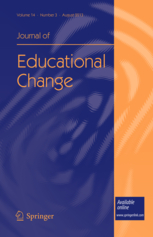
10833The Journal of Educational Change publishes important ideas and evidence of educational change. Contributions represent a range of disciplines, including history, psychology, political science, sociology, anthropology, philosophy, and administrative and organizational theory. The journal also draws attention to a broad spectrum of methodologies, including quantitative and qualitative approaches, documentary study, action research, and conceptual development.

As the journal’s editor-in-chief, Dennis Shirley, explains in his introduction to the August issue, the five articles published this month point us in “promising directions for improving our schools and enhancing the legitimacy of our public educational systems.”

Shirely argues, “The quest for legitimacy has driven many governments to turn to data and a more scientific approach to educational change. On the one hand this is a felicitous development, especially for researchers. On the other hand, the pursuit of certainty through the quantification of education has itself proved nettlesome. It seems that the mathematization of teaching and learning can conceal a number of blind spots that can create new problems for teachers and students. How this occurs and can be overcome is represented vividly in this new issue of The Journal of Educational Change.”

To read Shirley’s complete introduction, click here: The legitimation crisis of educational change.

Creative Commons License
This work is licensed under a Creative Commons Attribution-NonCommercial-NoDerivatives 4.0 International License.

The uncertain future of school funding in Australia

3843968-3x2-340x227In order to keep up with the education news in Australia, I check in periodically with Glenn Savage, Researcher and Lecturer in Education Policy, Melbourne Graduate School of Education at University of Melbourne.

“The past few weeks have seen some wild twists and turns in the politics of Australian school funding,” Savage stated in a recent post on The Conversation. Discussions in Australia have focused particularly a confidential paper developed by the Department of the Prime Minister and Cabinet that was leaked to the press earlier this month. As Prime Minister Tony Abbott has indicated, the reforms suggested by the 2011 Gonski Review of Funding for Schooling may be abandoned. As these reforms aimed to address inequities in school funding, and had yet to be fully implemented, many are concerned that an alternative model would not adequately address the needs of disadvantaged students. The leaked “green paper” presented four funding reform options for consideration:

  1. States and territories becoming fully responsible for funding all schools;
  2. States and territories becoming fully responsible for funding all schools, with the federal government funding non-government schools;
  3. Commonwealth involvement in schools reduced, without “significant structural change”; or
  4. Federal government becoming “dominant funder of all schools.”

According to a recent article in The Sydney Morning Herald, under the fourth option the federal government would “adjust for student need and the ability of families to make a contribution.” Therefore, high-income families might end up paying fees to send their children to public schools. The has proved to be the most controversial of the four suggested models, as it purports to target disadvantaged schools while promoting parental choice, yet the fear is that it would result in “separate responsibility for service delivery and funding.” This new model contrasts with the Gonski Review, which stated: “It is important for the future of Australian schooling that the government sector continues to perform the role of a universal provider of high-quality education which is potentially open to all.”

The Gonski Review of Funding for Schooling, which was chaired by businessman David Gonski, built upon a watershed 1973 report known as the Karmel Report. The Karmel Report was produced by the Whitlam government and introduced the ongoing federal funding of schools, which was a departure at the time from the prior model in which state governments funded schools with only supplemental support from the federal government. The report was the first significant intervention in primary and secondary education on the basis of what Savage called a “comprehensive plan of goals and priorities rather than an ad hoc response to particular demands.” As Savage explained, it was a highly influential “moment in school funding because for the first time ever the government started funding schools.”

The Gonski Review, conducted in 2011, came about in response to concerns over increasingly inequitable school funding—despite the attention called to such inequities in the Karmel Report.

The Gonski Review called for what Savage called “a major overhaul in school funding, promoting a needs-based sector-blind model.” As Savage went on to explain, “there is a base amount, for students in primary and secondary schools, and there are ‘loadings’ on top for different groups – such as indigenous students and English Language Learners.”

Savage argues that there is a “common belief that the Gonski Report was just put into practice. That’s somewhat true….but they promised independent schools and Catholic schools that they wouldn’t lose any money under Gonski formula. To get it through parliament, they had to come up with a compromise to say no school would lose a dollar.” Due to political influence, the reforms were never implemented as intended.

Despite public outcry in favor of the Gonski reforms, the current Abbott administration has promised not to continue to fund the reforms suggested by the Gonski Review. “Everyone’s worried because it doesn’t look like Gonski will ever happen in the way it was supposed to,” said Savage, going on to point out the even larger concern that there is a “a complete lack of clarity about how schools will be funded in the future.”

Deirdre Faughey

For more information:

School funding again up for debate http://buff.ly/1MMKApN

Give a Gonski? Funding myths and politicking derail schools debate http://buff.ly/1MMKDlq

School funding report makes flawed case for full Gonski reforms | The Australian http://buff.ly/1KpoXyc

In wake of stalled Gonski Review is there a way forward on school funding? http://buff.ly/1MMKmyK

New data shows slump in public school funding http://buff.ly/1KppdNF

‘Gonksi is not dead’: NSW calls on Federal Government to commit to education reforms – ABC News (Australian Broadcasting Corporation) http://buff.ly/1MMKrme


Scanning the education news from the UK and Canada

stream_imgOur latest scan of education news in England, Scotland, Northern Ireland, the Republic of Ireland, Wales, and Canada, shows considerable attention to teachers: shortages of teachers in Scotland and England; “redundancies” and elimination of teaching positions in Northern Ireland and Wales; contract negotiations with the teacher unions in Ontario; and efforts to improve teacher training in Wales and address teacher turnover in Alberta.

The blog from the Institute of Education at the University of London has also had a series of post over the past month addressing key issues in England including income inequality, a new plan to penalize schools that are “coasting” (failing to increase student outcomes), a recent report on the (possible) effects of “free schools”; and the latest reforms related to initial teacher training.

“Local authorities reveal 470 teaching posts are vacant in Scotland,” stv

“Teacher supply agencies searching as far as Canada and Singapore to plug staffing gaps,” The Independent (UK)

“800 school staff redundancies after funding cuts” ITV News (Wales) 

“Ontario teacher unions agree to resume negotiations with Liberals in bid to agree to contracts,” National Post 

“University of Calgary program boosts training for rural teachers,” CBC News

“Education Minister endorses ‘radical plan’ to transform teacher training,” Penarth Times (Wales)

IOE Blog: 

Income distribution in times of austerity: why the cuts are likely to widen the gap, Nicola Pensiero

‘Coasting schools’: learning from international ‘best practice’,

Paul Morris & Christine Han

Free school effects: an impartial review, Francis Green

Teacher training and teacher supply, Chris Husbands

Vietnam: Can one assessment meet the needs of all stakeholders?

20150707071925-edu-exam-questionVietnamese students surprised the world recently when it was revealed that they outperformed many other advanced countries on the PISA exam. According to a recent BBC article, “the country’s 15-year-olds scored higher in reading, maths and science than many developed countries, including the United States and the United Kingdom.”

News of this achievement has received a great deal of media attention, however in an effort to learn more about recent developments in the Vietnamese education system today we reached out to Duy Pham, former Deputy Director of the Center of Educational Measurement, of the Institute for Education Quality Assurance, at Vietnam National University, and curent doctoral student at the University of Massachusetts Amherst. Pham explained that while the PISA exam has caught the attention of an international audience, the people of Vietnam have been wrapped up in a dynamic debate around high school graduation exams and university entrance exams.

This year, the Vietnam Ministry of Education combined the high school graduation exam and the university entrance exam into one 4-day-long exam. This move came in response to concerns about student well-being and assessment validity. Many felt that students and families were suffering under the pressure of two separate exams. Also, private universities, which admit students who do not get selected for prestigious spots in public universities, felt that the old exam system was too challenging and resulted in the exclusion of too many students. These universities wanted to be able to admit a greater number of students but found that these students were not able to meet the high bar set by the old entrance exams. As Pham explained, “This year the pressure comes from many stakeholders, saying the university system blames the previous entrance exam of not being able to classify students in a way that allows them to select the right students.”

As the new exam was administered in the first week of July, there is no consensus on the new process. While the Ministry of Education has expressed satisfaction with the new system, educators, policymakers, and researchers are concerned that the new exams might be too difficult for the purposes of high school graduation, yet too easy for the purposes of university entrance. The question is how to find one assessment that meets the needs of all students and institutions.

Also, the question of pressure and fairness remains. Students can only take the new exam in one of the approximately 30 testing centers. These testing centers are located in big cities, which means that students from mountainous and rural areas need to travel with a parent or guardian and find accommodations for the duration of the exam. Under the old system, students could at least take the high school graduation exam in their own school settings.

Deirdre Faughey

For more information on this issue:

National exam for university, high school satisfies students – News VietNamNet http://buff.ly/1fQRVdu

One million students sit for national exams – News VietNamNet http://buff.ly/1fQRY9k

Volunteers swing into action for season of exams – News VietNamNet http://buff.ly/1fQS6FI

Vietnam school students and the exam of life in pictures http://buff.ly/1fQS8xe

Flashback: Volunteers devote themselves to helping Vietnam’s national exam contestants http://buff.ly/1OkqFiO

Creative Commons License

This work is licensed under a Creative Commons Attribution-NonCommercial-NoDerivatives 4.0 International License.