Category Archives: About K-12 International Education News

Improving teacher education in Norway

In 2013, Karen Hammerness and Kirsti Klette reported on the efforts to improve teacher education in Norway. In this post, following recent conversations with members of the Ministry of Education in Norway, Hammerness puts the work on teacher education in historical perspective and describes some of the latest developments.

Norway is a particularly interesting country to follow in terms of teacher education policy. Questions about the quality of education came to the forefront in 2000, with the publication of the first PISA results (what some Norwegians refer to as “the PISA-shock”). Those results showed that Norwegian students had not performed as well as many had hoped or expected. In fact, along with students in the United States, Norwegian students’ outcomes, were slightly lower than the average of the OECD countries measured. Concerns continued to mount when the second round of PISA revealed Norwegian students’ performance declining further.

A weak system of teacher education was considered to be one of the key problems. Policy makers and educators pointed to several key challenges. First, teacher preparation was organized around a ‘generalist’ conception of teaching. At the time, the Norwegian system of teacher certification allowed teachers to teach all subjects at all grade levels—a conception captured by the term allmenlærer—roughly translated as “teacher of all.” Next, the quality—and size—of teacher preparation programs varied considerably throughout the country. Furthermore, teacher education coursework in the programs seemed disconnected from teaching practice and was not tightly tied to current research on teaching and learning. Finally, reports suggested a steady decline in applications to teacher education institutions, amplifying concerns about a lack of qualified teachers in the near future.

Teacher education reforms

In response, over the last five years, Norway has invested heavily in funding for work on teacher education and teaching and made a number of important policy changes. In 2010, building upon a white paper that had summarized key concerns about preparation of teachers, Norway transformed their system of certification and established two ‘lines’ or ‘streams’ of certification—a stream that prepares teachers for grades 1-7 (somewhat similar to a primary school certification in the US), and another that prepares teachers to teach grades 5-10 (when lower secondary school ends in Norway). A new national curriculum framework for teacher education was also developed and came into effect in 2010. The framework required more coursework on pedagogy and learner knowledge, including an emphasis upon research-based subject-specific methods, learners’ development, and classroom management. The new framework also created new graduation requirements including the completion of a bachelors’ thesis, related to teaching and learning. In addition, new regulations stipulated that teacher education programs would need to increase the percentage of faculty who have completed doctoral studies—ultimately, requiring programs to ensure that 50% of faculty have PhDs.

A proposal was also made to address some larger ‘structural’ issues that affected the quality of higher education. In particular, in 2008, the government released a report calling for a reduction in programs in higher education, including teacher education. Correspondingly, some policymakers expected that the new requirements might lead to significant restructuring, particularly among smaller and more remote teacher education programs. Conceivably, such programs might decide to focus upon one degree; they might start to share students, collaborate or even merge with other local institutions; or the programs might determine that they could not meet the new demands and might voluntarily choose to close.

Responses to the reforms

These moves to streamline programs are not easy in a country like Norway. Teacher preparation has been central to the identity of many of the smaller institutions throughout the country—reflecting a social policy that has been supportive of small institutions in a country in which the population has been somewhat ‘spread out’ across a wide geographical area. The existence of such small, local academic institutions (and teacher preparation programs) reflects a national investment and policy support for the deeply held value of living and working locally. This support for living in in widely-dispersed regions throughout the country in fact has been a historical Norwegian value–and it seems understandable, given that Norway spans about 2,500 miles from north to south (and, with 25,000 miles of rugged coastline, it is among the ten countries with the longest coastlines).

Norwegian educators point out that teacher education programs have been central to supporting and financially maintaining smaller regional institutions of higher education. As Øyvind Johnson, a Senior Advisor at the Ministry, noted, “Teacher education is the pillar of many of these small institutions.” Many of these institutions prepare only a very few teachers every year (although of course, they also are intended to prepare teachers who are committed to remaining local). For instance, reflective of the small scale of some of these institutions: a recent report found that of the twenty programs in Norway that prepare teachers for teaching in grades 1-7, as many as twelve institutions have fewer than 50 student-teachers, and two have as few as nine students.

The new requirements have put considerable strain on some of the smaller institutions throughout Norway to redesign, develop new curriculum, and to change program expectations. However, Ministry representatives reported that none of the programs thus far had chosen to focus only upon one certification ‘stream’ nor had any programs voluntarily closed entirely. At one point, the Ministry considered requiring programs to have a minimum of twenty students in order to remain open, but never put such a requirement in place. As Johnson noted, “If programs had under twenty applicants, what would you do?” In short, policymakers have been trying to develop policies that both strengthen programs and continue to provide support for small, local institutions (and local communities) all the while, maximizing flexibility and equity of participation. Not surprisingly, under these conditions, the number of teacher education programs that offered the allmenlærer degree has not changed since the reform: there were twenty programs prior to the latest reforms, and twenty remain.

What’s Next: A continued focus on “existing programs”

In considering future steps to continue to improve teacher education, the ministry has also just released a new strategy, Lærerløftet (or, raising teachers), which has set forth a set of key themes for continued improvement of teacher education. Top among them is the requirement that teachers in both streams will have to obtain a master’s degree. By 2017, all teacher education programs must be structured as 5-year programs. Senior advisors from the Ministry reported that several reasons underlay that decision: the desire to ensure that teachers are substantially well-prepared and the belief that an additional year beyond a Bachelor’s degree provides more depth of training; more support for teachers to use research in their teaching and to draw upon scientific knowledge in their work; and an opportunity for teachers to develop an understanding of the research base of teaching and learning through their work on a Master’s thesis. As Dalen Tennøe explained, “We looked to Finland, that teacher education should be research-based.” The latest strategy also calls for tightening requirements for entry into teacher education—Norwegian students are graded on a scale of 1-6 (1 being lowest and 6 highest), and currently the requirement has been that to enter teacher preparation one needed a three average in mathematics and Norwegian. Now, prospective teachers will need at least a four in mathematics to enter teacher education. Illustrating the challenges however, at the same time that the policy makers use the example of Finland to support the strengthening of these requirements, a recent newspaper article with the headline “Yrket som falt fra statustoppen” (the profession fallen from high status), shows that critics of these policies also use Finland as an example to argue that teachers should be granted greater autonomy without policy makers’ intrusions.

However the debate develops, Norwegian policymakers are not considering the development of alternative routes into teaching as a policy lever for improving teacher preparation. (For a related argument on why policy makers might not consider alternative pathways into teacher education, see Pasi Sahlberg’s post on why there is no Teach for Finland.) Senior Advisors in Norway were quite clear that the focus of policy was improvement of current programs, not on adding new or alternative pathways. Although Norway does have a “Teach First” program, it is the only alternative program in the country—it is offered at the University of Oslo and has only 20 students. As Fredrik Dalen Tennøe, Deputy Director General, Norwegian Ministry of Education and Research, noted, “The main focus has been improving the teacher education programs which are there already, not introducing new [pathways] into the schools.”

 

Multicultural Education in South Korea

Over the past decade or so, South Korea (as well as Taiwan and Japan) has experienced a wave of immigration that has resulted in an increasingly ethnic and racially diverse population. The issue has received considerable attention—from the media, as well as from politicians—as the country works to find ways to address the needs of multicultural population, as well as a rising concerns about ethnic conflictsdiscrimination, and a general sense that South Korea is “not ready for multiculturalism.” However, South Korea is a country that been considering ways to “redefine multiculturalism,” such as with the concept of Tamunhwa (multiculturalism), which suggests that South Koreans need to learn as much as they can about the new immigrant population while finding ways to create a “new national identity not based on ethnicity.”

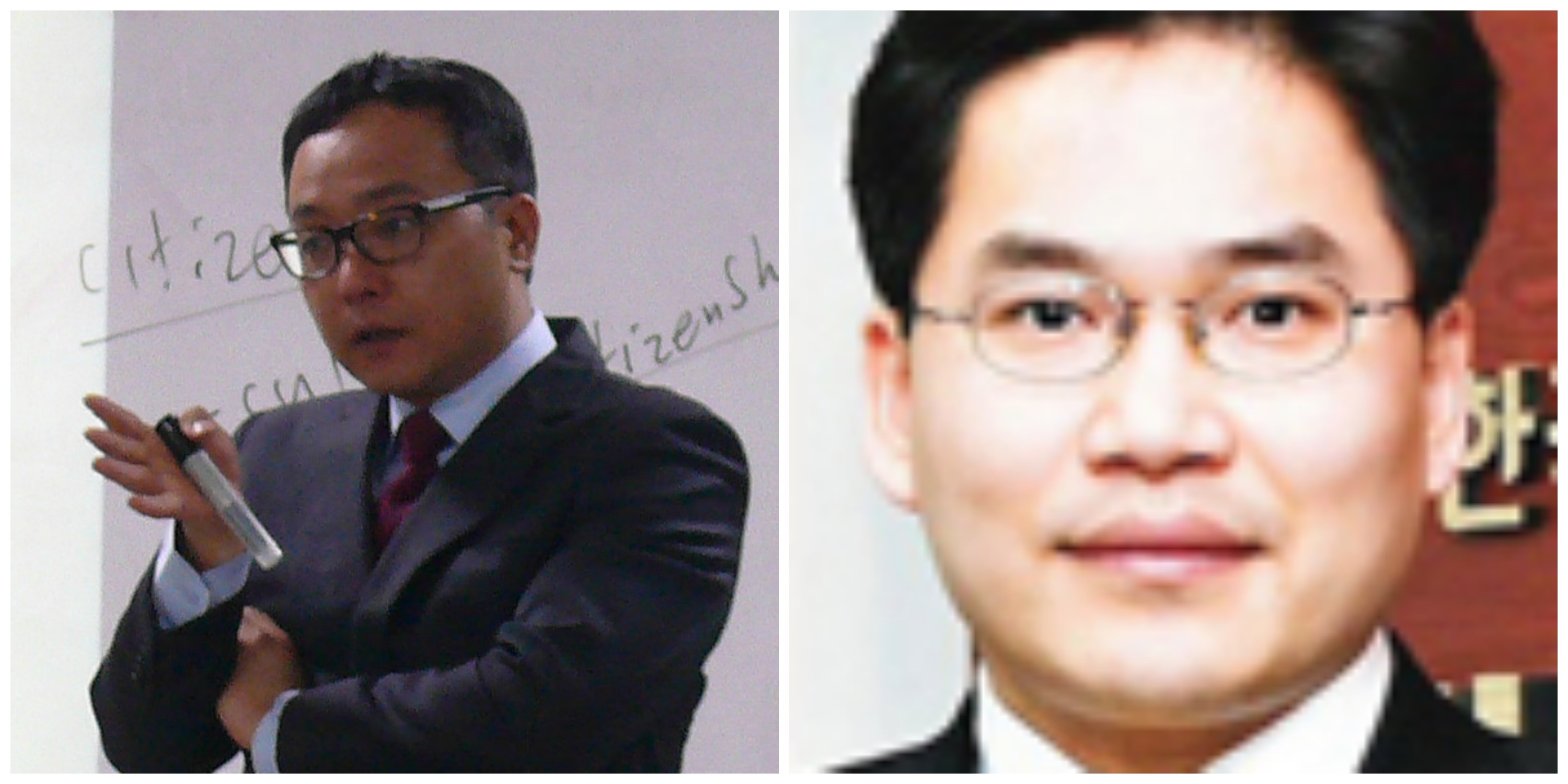
Dr. Jeehun Kim & Dr. Jang-ham Na

Dr. Jeehun Kim & Dr. Jang-ham Na

In order to learn more about how educators are addressing multiculturalism in the classroom, Eun-Kyoung Chung and Deirdre Faughey spoke with Dr. Jeehun Kim and Dr. Jang-ham Na, two visiting scholars at Teachers College, Columbia University, this semester. In this interview, posted on Esteem: Conversations Between Educators, the two scholars explain what they are learning about the multicultural classroom in South Korea. For example, while textbooks and the curriculum are centralized and the Ministry of Education has established guidelines for multicultural instruction, there is no mechanism for ensuring that these guidelines are followed by teachers and schools. This might be problematic for curricular reforms that aim to cater to multicultural populations that are geographically specific, as well as curricular reforms that aim to promote sensitivity to multiculturalism throughout the country.  The scholars also address the issue of teacher education, and the difficulties that sometimes arise when student teachers ask for strategies and methods that address the needs of a diverse student body. Since South Koreans have long considered their population homogenous, the issue of multiculturalism can become personal. As Jang-ham Na explains, “When it comes to multiculturalism, depending on what social background you have, sometimes you have some privilege compared with others. But the privilege will be gone in other places. So we have to be more critical.”

Esteem has also published recent interviews with scholars such as Luis Huerta, Christopher Emdin, Karen Hammerness, Maxine Greene, and Pedro Noguera.  To learn more please visit www.esteemjournal.org

Interview with Allan Luke

Dr. Alan Luke

Dr. Allan Luke

Allan Luke is Emeritus Professor at Queensland University of Technology in Australia, and Adjunct Professor at the Werklund School of Education at the University of Calgary. He has authored and edited 15 books and multiple articles on literacy, sociology of education, and policy. This interview, which is part of the Lead the Change Series of the American Educational Research Association Educational Change Special Interest Group, appears as part of a series that features experts from around the globe, highlights promising research and practice, and offers expert insight on small- and large-scale educational change. Recently, Lead the Change has also published interviews with Diane Ravitch, and the contributors to Leading Educational Change: Global Issues, Challenges, and Lessons on Whole-System Reform (Teachers College Press, 2013) edited by Helen Janc Malone, have participated in a series of blogs from Education Week.

Singapore update: Changing post-secondary education to broaden K-16 outcomes

In earlier posts, Paul Chua discussed Singapore’s recent initiatives to create space within the K-12 system to support the development of 21st Century Skills. In this post, he describes related efforts to change the applied education sector of the post-secondary education system. The applied education sector is generally regarded as education in the Institute of Technical (Vocational) Education and the Polytechnics. The mission of the Polytechnics is to train practice-oriented and knowledgeable professionals to support the technological and economic development of Singapore.

To keep the education system relevant for the ever-evolving needs and demands of the economy, the Ministry of Education in Singapore systematically conducts regular reviews of the various sectors of the education system. With the implementation of the recommendation arising from the reviews of the Primary Education and Secondary Education sector of the system well underway, and most recent reviews of the higher education sector completed, the Ministry turned to the applied education component of the education system. To this end, The Ministry of Education released the Applied Study in Polytechnics and ITE Review (ASPIRE) report and the Singapore government established the SkillsFuture Council last year.

ASPIRE and SkillsFuture Council

The rationale for ASPIRE is to “to further strengthen Singapore’s applied education pathways, provide more opportunities for Singaporeans to realise their full potential and aspirations, and to support better alignment of the supply of and demand for skills, so that Singapore will continue to prosper and be a land of hope and opportunity for everyone in the years ahead.” Its recommendations are clustered into 3 areas: 1) making appropriate educational and career choices, 2) development of relevant skills, and 3) career progression. To drive the ASPIRE recommendations forward, at the inaugural SkillsFuture Council meeting, the Council has identified four thrusts of work aligned to the recommendations.

What are the ASPIRE and SkillsFuture Council trying to achieve?

Multiple objectives are being achieved through ASPIRE and the SkillsFuture Council work. As there are going to be some things in life that require degree qualifications e.g. law, medicine and engineering while others do not absolutely need a degree, one objective is to better match the demand and supply for skills. Another is to cater to the new demands of the economy and develop Singapore’s society to an advanced stage through the acquisition of deep skills. However, in relation to the learning of academics, development of skills tends to have lower (not low) status in the eyes of many.

As such, a key target of the SkillsFuture Council is to try to change the Singapore societal mindset to recognize that every individual may not need a degree in order to progress in one’s career. It is doing this through influencing the “outcome” variables of a career based on skills mastery (i.e. salaries, promotional prospects and eventually the intangible thing of “status” – how you are seen in the eyes of the public). Realistic about the challenges ahead, the Ministry of Education noted that such a transformation of societal attitudes and mindsets “…will be a major, long term effort involving collaboration with all stakeholders, including employers, training providers, unions and individuals” (MOE, 2014).

Cognizant of the negative perception of an applied or skills-based approach to education, the current approach in Singapore is to promote the mastery of deep skills that support modern high value-adding jobs, much like the highly skilled workers in Germany’s Mittelstand. In addition, educational and career guidance will actively be used in the Singapore case to guide students to study courses that lead to careers that fit their inclinations and aptitudes.

How does the SkillsFuture Council attempt to do this?

The SkillsFuture Council takes off where the ASPIRE committee ends its scope of work. Amongst other things, the Council will specifically address the issue of working with employers, industry associations, and unions to develop specific skills progression frameworks for key sectors. This approach hopes that if students progress along the skills ladder, productivity should increase, followed by employment incomes and promotional prospects. The Council also seeks to promote respect for every job and for the skills mastery achievements of every individual. It hopes to achieve this through the efforts of a community-led Lifelong Learning Council.

Impact on K-12

There are multiple possible impact points on K-12. First, as the ASPIRE report noted, this emphasis on skills will help “realise their [students’] potential and progress in life, no matter what their starting point.” Second, if the re-shaping of societal attitudes and mindsets towards career progression via the mastery of skills is successful, the re-shaping could subsequently expand parents’ and children’s focus on academic (and examination) success in the schools to a more balanced attention to both academic and non-academic skills. The approach suggests that with these changes and with greater balance, non-academic skills such as the 21st century competencies of student leadership, teamwork and communication will not be overshadowed by the need to spend inordinate amounts of time on honing academic skills.

OECD report on homework

OECD’s recent report “Does Homework Perpetuate Inequities in Education?” has generated a variety of articles in countries like the US, the UK, Australia and New Zealand. Those stories mention the reported range–from 14 hours in Shanghai to 3 hours in Finland–but often focus on how much or how little student in a particular country do in comparison to peers in other countries (or sometimes both). Many also mention the reported links between higher amounts of homework and a slight increase in test scores in mathematics in most countries, though, in the US, higher amounts of homework are linked to a slight decrease in math test scores. Not surprisingly, the results have been interpreted as proving “homework sucks” and as suggesting that homework is a “blessing.”

The news also begins to get into some of the complexities, such as the higher amount of homework that socioeconomically-advantaged students do in comparison to their peers, though barely touching some of the larger issues of the costs and benefits (personally and developmentally not just economically) of having children spend more or less time on homework. This is a tension and an issue across school systems, including China where, as Jiang Xueqin, deputy principal of Tsinghua University High School, describes in his interview with C.M. Rubin: “parents complain to each other that high stakes testing is robbing their children of their childhood, curiosity, and creativity,” at the same time that they are standing in line to enroll their four-year olds in cram schools.

More importantly, perhaps, how much homework children should have can be seen in light of the larger questions about how children (and adults) should spend all of their time. Both students in Finland and in South Korea only spend about 3 hours a week on homework, but what those Finnish and South Korean students do with the rest of the their out-of-school time, however, is dramatically different (as is evident from Amanda Ripley’s Wall Street Journey story last year on a teacher works in South Korea’s tutoring academies “The $4 million dollar teacher”). As Learning in and out of school in diverse environments (a report from the LIFE Center) points out, school occupies a relatively small fraction of the waking hours of people throughout their lifetimes. From that perspective, it’s not simply about whether to have more or less homework, it’s about breaking down the boundaries between what happens “in school” and “out of school” and supporting learning wherever and whenever it takes place.

“Where Teens Have the Most Homework,” The Atlantic

“’Long homework hours’ for UK families,” bbc.news

“Report shows Irish teens among highest for time doing homework,” Irish Examiner

“Six hours a week: Australian students record increased homework hours,” The Sydney Morning Herald

“Shanghai 15-year-olds do the most homework — eight hours a week more than Australians,” News.com.au

“Homework sucks and we have the research to prove it,” mic.com

“Homework: a blessing, not a battleground” (opinion), The Telegraph

“Study: Teens doing less homework,” stuff.co.nz

“Should schools ban homework?” CNNOpinion, Etta Kralovec, author of The end of homework

Learning in and out of school in diverse environmentsfrom the LIFE Center

Networking and collaboration in education

Daniel Muijs

Dr. Daniel Muijs

Daniel Muijs, Head of Research and Deputy Head of the School of Education at the University of Southampton, recently visited the National Institute of Education to provide consultancy services on scaling efforts of educational innovations, funded by the eduLab programme. Professor Muijs, editor of School Effectiveness and School Improvement, has published widely in the areas of educational effectiveness, school network and teacher leadership, among others.

Prof Muijs prefaced the workshop by sharing the recent trends with respect to school networks and collaboration. Networking and collaboration in education have become increasingly popular in the recent years; there are large numbers of such programs in the UK and internationally. In the UK, there is a proliferation of school federations and academy chains. Internationally, schools are configured into network and cluster arrangements such as in New York City and Singapore respectively.

He then clarified some of the key ideas used in the workshop through differentiating between the concepts of network and collaboration in education in that a network in education is defined as at least two organizations working together for a common purpose for at least some of the time. Collaboration in education, on the other hand, refers to the joint activities between actors from different organizations within the network. So, network is the umbrella concept within which collaboration takes place.

To account for the recent increase in the number of network and collaboration programs in education, one could examine the potential benefits that such networks and collaboration could bring to the table. For instance, it has been found that there is clear evidence that network and collaboration can broaden student learning opportunities, as well as increase teacher capacity. But, can it improve student outcomes? To answer the latter question, it is unfortunate that there is currently little strong causal evidence of the relationship between network and collaboration, and increase in student outcomes. However, there is evidence that specific forms of collaboration having specific impacts. Overall, Prof Muijs opined that there is a need for more quantitative studies on the causal relationship between networks and collaboration, and student outcomes.

When collaboration between schools is successful in bringing about the benefits, it can normally be attributed to a few factors such as the following: 1) trust; 2) clear focus and goals; 3) strong support and brokerage; and 4) clear wins for all.   Whilst trust could be facilitated by prior relationships, it can also be carefully developed in a step-by-step fashion. Having a clear focus, as well as shared ownership of goals can help too in promoting collaboration between schools. A strategy that could be fairly easily implemented to create the shared ownership of goals and build trust is to create a dialogue amongst the network schools to identify common problems facing the schools for them to collaboratively solve. Another factor that has been found to be important for the promotion of collaboration is the strong support provided by the leadership of the schools in the network. To further promote collaboration, external brokerage may be required too; the external brokerage being a neutral party can serve to develop trust amongst the schools. Finally, there is a need for clear wins for all in the sense of “what’s in it for me?”; every party in the network must perceive that they will benefit from the collaboration in the network.

However, when collaboration between schools fails to live up to its purported benefits, it is normally due to factors such as the lack of time set aside for collaboration and when there is a lack of clear goals for collaborating and when there is a lack of shared perspective and understanding of the goals of the collaboration. Collaboration will also fail if there are no clear wins for all in the network and when there is a lack of capacity on the part of the schools to leverage on the opportunities afforded by the collaborative set-up.

Finally, Prof Muijs touched on the role that leadership plays in successful school networks. According to the empirical evidence, one role of leadership is to provide active management support, for example, establishment of clear direction at the start as well as the provision of time for collaboration, and a clear management structure in the network like a clear professional development structures. Leadership roles such as distributed leadership might emerge and these should be duly recognized. The latter scenario calls for the need for principals to adjust and re-adjust their perspectives and leadership as the contexts evolve. Additionally, encouragement of distributed leadership in the network can aid in the promotion of collaboration between schools, and can be aided by it.

This summary was provided by IEN Contributing Editor Paul Chua.

Curriculum reform in Australia

In 2010, Australia established its first national curriculum: the Australian Curriculum. The Australian Curriculum has defined content and achievement standards for the entire country. After a staged process of development, it is now being implemented. Recently, this curriculum was reviewed for the first time by the Australian federal government. The review raised a number of concerns that have led federal Education Minister Christopher Pyne to announce he will work with advisors to make sure it is serving the needs of Australian students. Pyne has stated, however, that any changes to be made as a result of the review won’t be implemented until at least 2016, due to the difficulty of earning the support of states and territories.

To learn more about this curriculum reform and the context of reform in Australia, I spoke with Dr. Glenn Savage of the University of Melbourne. Dr. Savage, with Kate O’Connor, recently published an article in the Journal of Education Policy titled “National agendas in global times: curriculum reforms in Australia and the USA since the 1980s.” From his perspective, there may be similar driving forces for reform in the US and Australia, but the reforms themselves have been quite different.

Savage and O’Connor (2014) wanted to understand how curriculum reform in Australia and the US were playing out, given that both countries have federal systems and histories of state and local control over education. Their research identified three key historical phases in the development of curriculum, which are shared by both nations. The first is the late 1980s, when both countries developed national education goals for the first time. They see this phase as a shift towards thinking in national terms, but also as a precursor to the standards movement of the 1990s and the push towards nationalizing aspects of the curriculum. The second was in the 1990s, when both countries attempted to create national curriculums or frameworks. In both countries those efforts failed when the realities of actually having to put the reforms into practice came along. For example, in both countries there was strong pushback against the idea of moving towards a national approach. The third phase was when each country rejuvenated their national reform efforts as a result of global economic and social pressures in the late ‘90s and early 2000s. Influences included the global PISA testing program, which put the performance of each country in a global perspective and helped put standards-based national reforms back on the agenda. 

While there have been common historical driving forces in both countries, Savage and O’Connor (2014) see current reforms as very distinct in scope and form. In the US, the Common Core State Standards (CCSS) are voluntary national standards that focus on the areas of literacy and numeracy, whereas in Australia the national curriculum is more extensive and discipline-based. Savage and O’Connor (2014) argue that the distinctive nature of reform in each country can be explained to a large extent by four key differences in the ‘national policy space’ of each nation: 1) contrasting system diversity and complexity; 2) different roles and expectations of federal governments; 3) different forms of state-to-state intergovernmental cooperation; and 4) the contrasting involvement of non-government policy actors. The authors argue that the distinctive features of each system mean that each country provides different “conditions of possibility for reform” (Savage & O’Connor, 2014, p. 18). Their key argument is that while global flows of policy ideas and practices are powerful, these influences manifest differently in different national contexts. As such, reforms must be thought of as both national and global

Looking ahead, Savage identifies several issues that Australia will need to work through in relation to the curriculum.

First is the fall-out from the recent review of the curriculum. It is the first review of the curriculum and it has been heavily politicized. There are ideological arguments around it and it has raised questions about what a contemporary curriculum should look like. There is the possibility that the review could lead to the reshaping of certain elements of the Australian Curriculum.

Second is an ongoing debate about federalism and the role of state and tertiary governments in education. A Reform of the Federation White Paper, which was developed by a taskforce in the Department of the Prime Minister and Cabinet, was released in late October. The goal is to work out the appropriate division of responsibility between states and government. In contrast to the US, national intergovernmental organizations have long been essential to the Australian reform process and have the capability of bringing all of the states together with the federal government to consider a number of education-related issues.

Another issue Savage identified is that even though Australia now has a national curriculum, there are differences in how states interpret and enact the standards. Despite a common national framework, state-based inflections emerge. While this can be positive, in that it allows for tailoring to state-based needs and issues, it can also present problems of consistency, which is partly what the national curriculum set out to tackle in the first place. In one example, the state of Victoria has adopted a hybrid curriculum called “AusVELS” that takes some from the national Australian Curriculum, and some from the prior Victorian Essential Learning Standards.

Savage also said that since federation in 1901, there have been debates around the role of academic knowledge versus vocational knowledge and skills. From the early 1900s, for example, many Australian states tracked students into either high schools (academically-focused) or technical schools (vocationally-focused). In 1980s, most states eliminated tech schools and established a common, unified school system that aimed to provide all students with the opportunity to go to university. While this effort was intended to be a more inclusive model, it has also led to an increase in high school drop out rates. In order to address this, the pendulum has swung back and there are now proposals at Federal and State levels to return to a more vocational curriculum.

Finally, Savage said there are now debates about what a curriculum should look like for the future. Some argue that the curriculum should prioritize disciplinary knowledge, while others argue more for 21st century skills and competencies so that students are ready to participate in global workforce. There are huge tensions around this issue as many feel the skills focus is too short-sighted and too focused on what students should be able to do, rather than what they should know.

As Savage explained, the issues that Australia is grappling with at the moment are also educational issues that many countries across the globe are dealing with, illustrating the point that educational policies need to be recognized as simultaneously national and global in nature.

Deirdre Faughey

Quality Assurance in Chile (Different context, same issues?)

Chile’s education system has embraced school choice and market-based reforms like no other system in the world, but on my visit to Santiago I heard many of the same questions about what to do for failing schools and how to assure educational quality that I have heard in the US and in countries like Norway, the Netherlands, and Singapore. These questions focus on what to test and assess, how often to assess, and how to publish the results, what to do about persistently failing schools (or, put another way, the persistent failures of policies to help schools improve); and how to ensure that municipalities, districts, charter operators and other public and private “school owners” comply with legal regulations and reach acceptable standards of educational quality.

Debating Testing & Assessment

Chile’s current national test, SIMCE, developed in the 1980’s and 90’s in response to concerns of a number of different groups. Some saw SIMCE as a way to check that public resources were being used appropriately, in a context of decentralization of schools’ administration. Advocates for school choice, in particular, emphasized that to have a “free” marketplace, parents and students needed information on school performance to make decisions. Many educators also saw the development of the test as the way to provide teachers and schools with information so they could make improvements. (For a history of SIMCE, see Meckes & Carrasco Two decades of SIMCE: an overview of the National Assessment System in Chile”)

Enduring differences of opinion around these issues, however, have fueled a cycle of reviews, commissions, developments and adjustments in SIMCE and the Chilean approach to quality assurance. These reviews have included a Commission in 2003 that addressed questions like whether the tests were measuring the right things, whether the tests should be given every year, and whether they should be sample-based (like NAEP in the US or national testing in Finland) or census-based (given to all students at a particular level as are the tests required by the No Child Left Behind Act in the US).

A new Commission, established just this year by the Bachelet government, is revisiting many of these same questions. In this case, however, the review is fueled by some of the same concerns about the amount of testing that many are also raising in the United States. I was surprised to find, however, that even Chile does not require the same kind of annual testing in reading and mathematics from 3rd-8th grade that my children have experienced in New York. Currently, Chilean students are assessed in 2nd grade in reading, 4th grade in math and language, and every two years in science and history. A new test for 6th grade (at the end of what the Chilean’s call “basic education” has already been introduced, but with the concerns about too much testing the current government may stop it. This latest Commission is expected to share their findings with the government shortly. The Commission’s report will again consider how often national testing should take place, in what grades and subjects, what the results should be used for, and how public the results should be.

Making test results public & the “discovery” of persistently failing schools

Whether and how to make test results public remains one of the most contentious issues in Chile (as well as in many other countries including Norway, Denmark, and the Netherlands).  In the early 1990’s, SIMCE results were not published – even though the law governing SIMCE actually required it. However, demands to use the data for accountability and other purposes led to the publication of the results beginning in 1995. The data was used at that time in a number of ways including to provide rewards to some groups of schools and teachers and to identify schools that were not doing well.

In Chile the publication of tests results made visible the problem that some schools continued to get poor results year after year. Interestingly, at about the same time in the Netherlands, demands by newspapers to make public the results of school inspections revealed a similar pattern of repeatedly failing schools. In both countries, the recognition of persistently failing schools (which could also be seen as a problem of persistently failing policies) helped to highlight that information alone was not sufficient to lead parents and students to choose more successful schools, nor to equip teachers and schools to make improvements.   In response both Chile and the Netherlands eventually developed approaches to failing schools that included many elements reminiscent of the provisions for failing schools under NCLB in the US. These included the development of expectations for failing schools to improve performance, technical assistance to help them do so, and delivery to parents of information about the schools’ performance and their options to take their children elsewhere.

Ensuring Quality Assurance

In Chile, as in many other countries, quality assurance in general, has also become a focus for considerable policymaking over the past fifteen years. Following the “penguin riots” of 2006 (named for the black and white school uniforms worn by the protesting students), improving quality assurance was the main issue around which those in different places on the political spectrum agreed. Those agreements included a variety of changes in educational regulations that are still being put into place. Among these are the establishment of two new agencies (an Education Superintendency and an Education Quality Assurance Agency) so that the Ministry of Education does not oversee both school improvement and the assessment of the effectiveness improvement efforts (even Finland is in the process of creating new government agencies to deal with the division of responsibilities around quality assurance).

In Chile, the Education Superintendency will be responsible for ensuring compliance with legal regulations (Norway created a similar agency and “legal inspection” after years of having almost no way of knowing whether municipalities were complying with event the most basic educational requirements).

Meanwhile, the tasks of the Chilean Education Quality Assurance Agency will include evaluating schools using tests like SIMCE; assessing the extent to which schools reach established learning standards; and assessing schools on other quality indicators including academic selfesteem, school climate, and healthy life style. The Agency also will be responsible for using these assessments to classify schools into performance levels (High, Middle, Medium Low, and Insufficient). While the Chilean classification will draw on a variety of data, over 60% of the score will be based on students’ performance on the learning standards (similar to the emphasis of New York City’s Progress Report on test scores, up until just announced changes)

The results of this assessment process will determine how often Chilean schools will be inspected; guide the development of plans or contracts for improvement for low-performing schools; offer information parents’ can use in school selection; and, ultimately, could be used to withdraw the Ministry’s public recognition of the school (the Dutch created their own “risk-based” process to identify schools they felt needed additional oversight and support). Notably, however, with continuing debates and disagreements around the extent of testing and the process of closing failing schools in Chile, plans to classify schools beginning this year may not be fully carried out.

Thomas Hatch


“El Plan Maestro” & Teacher Education

During my recent visit to Chile, the deep and growing interest in issues of education was obvious as photographers and journalists crowded to document what was largely an academic gathering to discuss issues of teacher education. Lorena Meckes, a professor of education and one of my hosts at the Pontificia Universidad Católica de Chile, joked that eight years ago, “We would have had to buy all the journalists lunch to encourage them to write about education. But now, they call us up and say, ‘What do you have for us?’” However, as Cristián Cox, Dean of the Faculty of Education at Pontificia Universidad Católica de Chile, also noted: “Chilean society is obsessed with education, but also deeply divided about how to go about it.”

As one effort to address those divisions and develop some consensus regarding efforts to improve teaching in particular, while I was in Chile, more than twenty different institutions delivered a statement to the government titled “El Plan Maestro.” The plan—a play on “master plan” as well as the Spanish word for teacher—has been developed by organizations that include the teachers’ union, research centers, institutions connected to teacher education, as well as members of student groups. In addition to a set of policy recommendations more generally aimed at improving the quality of teaching in Chile, “El Plan Maestro” also includes a call for three changes particularly relevant for teacher preparation: 1) A greater focus upon the process of recruiting potential teachers; 2) Stronger criteria to determine the selection of candidates; and 3) development of a set of national standards for the accreditation of teacher education programs.

The call for these changes grow out of a series of concerns about Chilean teacher education as a system. Teacher education programs vary considerably and are numerous—ranging from university-based institutions to private institutions, mirroring the K-12 landscape that includes a mix of public/private, not-for-profit and for- profit schools of variable quality. With no compulsory entrance exam, teacher education programs also vary in terms of selectivity—some programs serving students who have demonstrated high levels of academic performance and others who have not. Furthermore, there’s no required certification or exit exam to determine what students have learned in their teacher education programs or to what extent they are prepared to be successful in the classroom. Adding to this variability, applications to teacher preparation programs have skyrocketed with enrollment in teacher education tripling since 2002. (Current estimates suggest about 100,000 students are enrolled in teacher education institutions—including primary, secondary and special education).

While applicants for teacher education programs increase, educators, national committees within Chile as well as organizations such as OECD have raised questions about the nature and quality of the preparation. Many of these questions echo those in the US and elsewhere including concerns about the ‘gap’ between theory and practice and the relevance of coursework to classroom practice and to the everyday work of teaching.

Even before the delivery of El Plan Maestro, some recent policy developments since 2007 have begun to address these challenges for teacher education. First, institutions that prepare teachers must now be accredited. Second, policy makers put in place a new exit exam for all graduates (although it is not compulsory). Third, educators and policy makers have developed a set of standards—the Estándares Orientaciones para los Egresados de las Carreras de Pedagogía — for recently graduated teachers, published in 2010 by the Ministry of Education. These standards are intended to guide the development of curriculum within teacher education programs—from primary to upper secondary levels of teaching. The standards focus upon the disciplinary content knowledge, the pedagogical content knowledge, and the skills and practices that new teachers need to be able to enact in their classrooms. For instance, the standards include topics related to children’s literature as well as the representations of key ideas: “Teachers know a wide range of literature for children” and “Teachers know a range of representations of the concepts they will be teaching.” These new standards are intended to underscore a conception of teaching as a professional practice; as complex; and one which requires skills, strategies, and approaches that are research-based, and not easily learned through individual experience. In particular, the standards help communicate an understanding, that there are specific aspects of the practice of teaching that must be learned in the context of a deep and extended engagement with peers and more experienced teachers—not simply ‘on the job’ or in unsupported practical experiences in schools.

Despite these developments, recent results of the new non-compulsory certification exam revealed that of the 24 institutions participating, graduates from the less-selective institutions struggled. In at least 8 of those institutions, more than 50% of the graduates scored at what was identified as an ‘insufficient’ level on the exam. Of particular concern is the finding by Meckes, which suggests that the graduates who scored below the minimum requirements on the exit exams are more likely to be employed in lower-income communities. Conversely, graduates who were more successful on the exit exam were more likely to be employed by schools that served higher-income communities—again pointing to considerable inequities for children.

Looking forward, next steps include government funding for research on the current state of teacher education. For instance, faculty based at Centro De Estudios De Politicas Y Prácticas En Educación, CEPPE, at the Pontificia Universidad Catolica de Chile, developed a survey of graduates of all the teacher education institutions across Chile (more than 28 different institutions have participated so far). The survey measures teacher candidates “opportunities to learn” and to reach the standards for teacher education. The goal of the survey is ultimately, to ‘lift up’ the curriculum and pedagogy within teacher education across Chile by sharing online data on the results of reports by graduates. An institution participating in this survey will get a series of individual, program-based results that describe, for instance, the extent to which teacher candidates report opportunities to learn about the theoretical basis for teaching writing as well as the opportunities candidates report to learn about practical strategies for teaching pupils to write introductory paragraphs and to develop an argument in writing.

At the same time, given that the standards only specify a set of outcomes for teacher preparation without identifying the kinds of learning opportunities that might lead to achieving them, the government has also created a grant program aimed at improving the quality of teacher preparation, and in turn, at stronger teacher performance and increased learning outcomes for students. With this funding, eleven teacher education institutions have begun efforts to redesign courses, improve teaching practices within courses, and, in some cases, redesign specific experiences and assignments in courses in teacher education. For example, the faculty at the Pontificia Universidad Católica de Chile (PUC) has identified a set of ‘core practices’ upon which their program will focus (see related work at the University of Michigan and the CATE Project with which I am involved). Correspondingly, PUC faculty have redesigned courses and assignments and have also been working on professional development for other teacher education faculty to help incorporate these core practices into the redesign of the whole program. The funding is also being used to develop specific ways to address the considerable inequity for students, which is mirrored in (and amplified by) inequities in teacher education. One strategy the university has developed is to create a program and a credential or “certificate” specifically for teachers who will be working in low-income, urban areas. Other universities are using this funding to improve their coursework and student teaching experiences; at least one has introduced a mid-program assessment to enable a more timely determination of any gaps and weaknesses in candidate’s preparation; and another institution is using the funding to redesign their program to purposefully connect faculty and staff to the international research community.

–Karen Hammerness

Private, Subsidized Schools in Chile

Chilean private subsidized schools operate in a radically different environment from charter schools in the US. Since the imposition of the voucher-based system during the Pinochet dictatorship, virtually anyone, at any time, for any reason, could start and run a school. Furthermore, up until recent reforms, those schools could continue to operate largely without any evidence that students were learning or even that the schools were offering an education that complied with the legal regulations. Under these conditions, the percentage of students in municipal schools (so-called because they are run by municipalities much like district-run public schools in the US) has dropped significantly over the past 20 years, from over 55% of the student population in 1990 to under 40% in 2011. At the same time, enrollment has risen in private, subsidized schools to over 50% of the student population, with about 7% of students attending non-subsidized private schools that receive no public funding.

As Gregory Elacqua, Director del Instituto de Políticas Públicas, explained to me, several different kinds of both for-profit and not-for-profit private, subsidized school operators have emerged in Chile. These include a number of school operators with backgrounds in education or related fields who often start a single school and then may expand to a few others. Among these operators are former teachers – or now the sons and daughters of former teachers who inherited the schools their parents started. In some cases, the founders were kicked out of teaching in the public schools during the Pinochet regime largely because of their left-leaning politics. (In other words, even members of the political left took the opportunity to create schools in a system generally assumed to reflect the policies of the political right.) Organizations related to the Catholic Church have also opened and operate many private, subsidized schools. But a wide variety of other individuals and businesses with relatively little in the way of an education background have also started schools and networks of schools. These include an owner of a chain of restaurants and bars who also decided to start a network of schools (see Elaqua and colleague’s Scaling up in Chile for a description of several different kinds of private, subsidized school operators).

Despite the considerable differences in terms of what it takes to open and operate these kinds of schools, what I learned in my conversations in Santiago suggested numerous parallels in the issues for charter schools in the US and for private, subsidized schools in Chile. For one thing, the voucher system in Chile grew out of the work of Chilean economists, often referred to as the “Chicago Boys,” who were trained by University of Chicago economists Milton Friedman and Alan Harberger. Friedman, in particular, is also credited by many as inspiring work on vouchers in the US. Further, approaches to choice in both contexts reflects a basic set of assumptions: if schools are not successful in educating students, parents will not be satisfied, they and their children will choose to attend different schools, and the poorly performing schools will close.

Several key issues can interfere with this relatively straightforward logic, however. First, in order to have a choice, spots in schools that offer a higher quality education need to be available and those schools need to be near enough so that parents and students can get to the schools. While this seems obvious, many students have very limited school options in areas with small populations or that are not well-served by public transportation (e.g. rural areas and many urban areas of concentrated poverty). Nonetheless, school choice policies do not always take these factors into account. Evaluations of the school choice provisions of the No Child Left Behind Act in the United States, for example, found that almost one half of the school districts that were required to offer school choice at the middle school level and about two-thirds at the high school level did not have any schools for parents to choose that were not already failing. Second, parents and students need to get information on school quality in a timely, accessible and clear way. Again, this can be much more difficult than it sounds, as the same evaluations of NCLB in the US also found that many parents did not get this information until after they were supposed to choose schools for their children. Third, even with good information on quality, parents and students do not always use quality as the primary basis for their choice of school. This can be particularly problematic if students from different backgrounds choose schools for different reasons, as may be the case in New York City (see High school choice in New York City).

As the private school options have increased, Chilean policymakers have also devoted considerable attention to making understandable information on quality and choice available to parents. Nonetheless, the data is mixed on the extent to which parents base their decisions on that information, as distance from the school, among other factors, also may be highly influential (see I would walk 500 (miles if it paid)). Complicating parents’ choices in Chile, up until recent years, private, subsidized schools have been able to charge “co-payments” and some schools have been able to select their own students. While the recent reform proposals described in our last post would largely eliminate these advantages, these factors have made it harder for parents and students from lower-income backgrounds or who do not fit the criteria of the most selective schools to get into the schools of their choice (see When schools are the ones that choose).

Although the extent to which Chile’s choice system has contributed to educational improvements remains a matter of debate, using PISA results as a yardstick, Chilean students have improved their performance, but segregation has increased and economic inequality remains extremely high. As the debates over choice continue, some are turning to a focus on how to ensure quality of all schools, regardless of levels of public financing or extent of public or private ownership. As Bárbara Eyzaguirre – a member of the previous Chilean administration who worked on the development of new standards – explained it, while there has been choice in Chile, it has been too easy for both public and private schools that are not doing well to continue to function. In fact, schools in Chile have not needed to maintain a minimum number of students in order to stay open, and in many areas private schools are able to attract students even if they are not performing that well (providing little incentive for them to improve).

As a consequence of concerns about quality and persistently failing schools, over the past 20 years Chile has worked to develop a quality assurance system (more on this in a future post) and raise standards across all schools. Furthermore, many successful private, subsidized schools have also attempted to expand their operations and to develop networks of schools. Elaqua’s analysis in Scaling up in Chile raises the possibilities that larger networks of schools might provide a more effective education than single schools or smaller networks. One explanation might be that these networks have the advantages of scale, though it is also possible that more successful schools or school owners are more likely to join or start networks.

The challenges of scale in Chile also sound similar to the issues encountered by charter operators in the US. For example, Eyzaguirre, originally trained as a psychologist, has worked with colleagues to create a small network of not-for-profit private, subsidized, schools. The schools serve students from lower-income families, with what she describes as a relatively traditional approach. It’s an approach that focuses on “the basics”, includes large class sizes (as many as 45 students to a class in some cases), and takes into account the need to operate with limited resources so that the schools can be replicated in other underserved areas. Even with good results and commitment to expand, however, the network has to deal with the challenges of finding or building and paying for school facilities – another critical issue for charter schools in the US. In addition, the network has plans to expand to 10 schools, but they face a human capital problem in limited numbers of teachers who are well-prepared to teach in their schools. In response, the network has developed their own professional development and training programs (as charter operators like KIPP have begun to do in the States). In the process, the focus of the work expands from student learning to adult learning, organizational management, and quality assurance – the traditional functions of the districts, municipalities and other bureaucracies that many charter advocates hoped that they would escape.

Thomas Hatch