IEN will be taking a break for a bit, but we will be back August 20th with posts on efforts to support the development of student relationships post-pandemic; a large-scale initiative to implement a tablet based learning program in Africa; and our annual scan of news stories related to the start of the new school year in many parts of the world.
In the meantime, please check out some of our stories from this summer:
This week, Mel Ainscow discusses some of the key insights from his new book Reforming Education Systems for Inclusion and Equity. Ainscow is Emeritus Professor, University of Manchester, Professor of Education, University of Glasgow, and Adjunct Professor at Queensland University of Technology.
What’s the greatest challenge facing education systems around the world? Finding ways of including and ensuring the progress of all children in schools. In economically poorer countries this is mainly about the millions of children who are not able to attend formal education. Meanwhile, in wealthier countries many young people leave school with no worthwhile qualifications, whilst others are placed in special provision away from mainstream education and some choose to drop out since the lessons seem irrelevant. Faced with these challenges, there is evidence of an increased interest internationally in the idea of making education more inclusive and equitable. However, the field remains confused as to the actions needed in order to move policy and practice forward.
What’s the greatest challenge facing education systems around the world? Finding ways of including and ensuring the progress of all children in schools.
Reforming education systems
Over the last thirty years or so I have had the privilege of working on projects aimed at the promotion of inclusion and equity within education systems, in my own country and internationally. This leads me to propose a radical way of addressing this important policy challenge. This thinking calls for coordinated and sustained efforts within schools and across education systems, recognising that improving outcomes for vulnerable learners is unlikely to be achieved unless there are changes in the attitudes, beliefs and actions of adults. All of this echoes the views of Michael Fullan, an internationally recognised expert on educational change, who argues: “If you want system change you have to change the system!”
“If you want system change you have to change the system!”
Inclusion and equity should be seen as principles that inform educational policies. These principles should influence all educational policies, particularly those that are concerned with the curriculum, assessment processes, teacher education, accountability and funding.
Barriers to the presence, participation and achievement of learners should be identified and addressed. Progress in relation to inclusion and equity requires a move away from explanations of educational failure that focus on the characteristics of individual children and their families, towards an analysis of contextual barriers to participation and learning experienced by learners within schools. In this way, those students who do not respond to existing arrangements come to be regarded as ‘hidden voices’ who can encourage the improvement of schools.
Schools should become learning communities where the development of all members is encouraged and supported. Reforming education systems in relation to inclusion and equity requires coordinated and sustained efforts within schools. Therefore, the starting point must be with practitioners: enlarging their capacity to imagine what might be achieved and increasing their sense of accountability for bringing this about. The role of school leaders is to create the organisational conditions where all of this can happen.
Partnerships between schools should be developed in order to provide mutual challenge and support. School-to-school collaboration can strengthen improvement processes by adding to the range of expertise made available. In particular, partnerships between schools have an enormous potential for fostering the capacity of education systems to respond to learner diversity. More specifically, they can help to reduce the polarisation of schools, to the particular benefit of those students who are marginalised at the edges of the system, and whose progress and attitudes are a cause for concern.
Families and other community partners should be encouraged to support the work of schools. The development of education systems that are effective for all children will only happen when what happens outside as well as inside a school changes. Area-based partnerships are a means of facilitating these forms of cooperation. School leaders have a crucial role in coordinating such arrangements, although other agencies can have important leadership roles.
Locally coordinated support and challenge should be provided based on the principles of inclusion and equity. The presence of experienced advisers who can support and challenge school-led improvement is crucial. There is an important role for governments in creating the conditions for making such locally led improvements happen and providing the political mandate for ensuring their implementation. This also means that those who administer local education systems have to adjust their priorities and ways of working in response to improvement efforts that are led from within schools.
Evidenceis the life-blood of inclusive educational development. Therefore, deciding what kinds of evidence to collect and how to use it requires considerable care, since, within education systems, what gets measured gets done. This trend is widely recognised as a double-edged sword precisely because it is such a potent lever for change. On the one hand, data are required in order to monitor the progress of children, evaluate the impact of interventions, review the effectiveness of policies, plan new initiatives, and so on. On the other hand, if effectiveness is evaluated on the basis of narrow, even inappropriate, performance indicators, then the impact can be deeply damaging.
The challenge, therefore, is to harness the potential of evidence as a lever for change, whilst avoiding these potential problems. This means that the starting point for making decisions about the evidence to collect should be with agreed definitions of inclusion and equity. In other words, we must measure what we value, rather than valuing what can more easily be measured. Therefore, evidence collected within the education system needs to relate to the presence, participation and achievement of all students.
“[I]nclusion and equity should not be seen as a separate policy. Rather, they should be viewed as principles that inform all national policies”
Implications
These ideas are guided by a belief thatinclusion and equity should not be seen as a separate policy. Rather, they should be viewed as principles that inform all national policies, particularly those that deal with the curriculum, assessment, school evaluation, teacher education and budgets. They must also inform all stages of education, from early years through to higher education. In this way inclusion and equity must not be seen as somebody’s job. Rather, it is reform agenda that must be the responsibility of everyone involved in providing education.
What can be done to reduce some of the barriers that limit students’ post-high school opportunities? In the second part of this two-part series, RJ Wicks scans recent news and research from the US to survey some of the “micro-innovations” that may help to expand the pathways into college and productive careers. The first part of this scan reviewed the current conditions for students in the US as they try to find their way into college and the workforce.
COVID-19 accelerated longstanding challenges: college enrollment dropped especially at community colleges; financial insecurity forced some students to pause or leave school; equity gaps widened; and reports continue to suggest that many students are unprepared for life after high school. Yet educators are also developing a host of innovative practices and programs that are helping to address these and other issues. Initiatives such as guaranteed admissions, promise programs, career and technical education (CTE), dual enrollment offerings, early college high schools, and work-based learning are demonstrating the potential to create new and smoother pathways into post-secondary academic and professional environments
Guaranteed Admissions Programs
Guaranteed admissions programs seek to make college admissions more automatic and less selective by reaching out to students who meet admissions criteria and offering them a place. For example, a number of higher education institutions in Michigan formed the Michigan Assured Admission Pact (MAAP), which provides guaranteed admission to students graduating from a Michigan high school if they have earned a cumulative high school grade point average of 3.0 or above. Related state programs include Admit Utah, Washington State’s Guaranteed Admissions Program, University of Texas Top 10% Rule, Direct Admission Minnesota, and SUNY’s Top 10% Promise.
Promise programs are tuition-assistance initiatives designed to increase access to higher education, particularly for low-income and underrepresented students. These programs often eliminate financial barriers by covering remaining tuition costs after other financial aid has been applied, effectively making college more accessible and affordable. As of 2023, there are over 400 promise programs across the United States with research-to- date suggesting that the most effective offer free or reduced-cost college tuition along with structured advising, explicit communication and messaging, and outreach. According to the National Conference of State Legislatures, all 50 states have at least one local or statewide program. Exhibiting a variety of different approaches, promise programs include “last-dollar” programs that fill in tuition gaps left after other aid has been used, as well as “first-dollar” programs that provide tuition support upfront. In some cases, in addition to covering tuition costs, some programs provide additional support for the many other expenses that can make completing college difficult.
A study of 33 public community college promise programs across the U.S. found that these initiatives significantly increased enrollment among first-time, full-time students, with the largest gains seen among Black, Hispanic, and female students. According to that same study, initial first-time enrollment rose by 47% for Black men and 51% for Black women, while enrollment for Hispanic men and women increased by 40% and 52%, respectively.
Kalamazoo Promise is a first-dollar, place-based scholarship that covers up to 100% of tuition at any public—and select private—college or university in Michigan for students who graduate from Kalamazoo Public Schools. The program requires continuous enrollment in the district since at least ninth grade. Since its launch, it has led to a 14-percentage point increase in college enrollment overall and a 34-point increase for four-year college enrollment. Students in the program attempt more college credits—15% more in the first two years—and are more likely to complete a degree: six years after high school, credential attainment rose from 36% to 48%, driven largely by bachelor’s degrees. The program’s positive impacts were especially significant for low-income, nonwhite students, and women. Economically, the Promise has yielded an estimated 11% internal rate of return in lifetime earnings.
Tennessee Promise offers last-dollar scholarships for community and technical colleges that covers remaining tuition costs after federal and state financial aid is applied. In addition, the program requires students to participate in mentoring initiatives to 1) help them with completion of financial aid forms (FAFSA); 2) guide them through the college application process; and 3) provide ongoing support once enrolled. To foster a culture of accountability and civic engagement, students must complete eight hours of community service each semester and maintain a minimum GPA of 2.0. The program contributed to a 11.4% increase in first-time freshmen enrollment at community colleges in Tennessee in its inaugural year. The program also helped increase retention rates and improve college completion. Over 125,000 students benefited from the program in its first decade.
Milwaukee Area Technical College (MATC) Promise combines financial support with in-school FAFSA workshops and student-facing messaging that explicitly states “Free Tuition” to reduce confusion and anxiety about the affordability of college. MATC also offers last-dollar scholarships for students. With this approach, on-time FAFSA completion rates rose by 5 percentage points and college matriculation among low-income students increased by 6 to 7 percentage points.
CUNY ASAP (Accelerated Study in Associate Programs) is a last-dollar program for NYC/ New York State residents that offers a full package of support: free tuition, textbook stipends, unlimited transit passes, dedicated academic advisors, and career counseling. In a 2015 study across three New York City community colleges, ASAP students earned on average 9 more credits, graduated at rates 18 percentage points higher than a control group, and were 8 percentage points more likely to transfer to a four-year institution. CUNY ASAP reports a three-year graduation rate of 53 percent – more than double that of comparable peers. ASAP’s success has inspired similar efforts in Ohio, West Virginia, and California, where adaptations like gas cards for rural students are helping extend the model’s impact.
Early College and Dual Enrollment Pathways
Dual enrollment and early college high school programs offer high school students unique opportunities to earn college credits, reducing the time and cost required to attain a degree. While both initiatives aim to improve access to higher education, they differ in structure and outcomes. Dual enrollment allows students to take college-level courses alongside their high school curriculum. In contrast, early college high schools are structured programs where students can earn both a high school diploma and up to two years of college credit, often on a college campus and with integrated support systems. A study by the American Institutes for Research found that 84% of early college students enrolled in college after high school graduation, compared to 77% of their peers. Additionally, 45% of early college students earned a college degree within six years, compared to 34% of the control group.
By getting students into college-level coursework before graduation, these programs aim to help students build momentum and save money. They also provide what can be called “stacked supports” across sectors. In the process, they intend to break down silos and align expectations across K-12, higher ed, and workforce systems. Some studies point to specific benefits for students in these programs, including increased college enrollment and completion rates, particularly among underrepresented groups.
P-TECH (Pathways in Technology Early College High School) provides a six-year program where students earn both a high school diploma and a no-cost associate degree, all while working in “real world” placements in partnerships with companies like IBM. Launched in 2011 in Brooklyn, New York, through a collaboration between IBM, the New York City Department of Education, and the City University of New York, P-TECH provides a single high school program where students can take college-level coursework and build technical skills and receive industry mentorship in industries such as health IT and energy technology at the same time. In 2023, one evaluation of the model found that, seven years after entering high school, students in New York City’s P-TECH 9-14 program were 5 percentage points more likely to earn an associate’s degree — results driven particularly by young men, 13% of whom completed a degree compared to just 3% of their peers in other NYC high schools.After a 2014 visit by the Australian Prime Minister, Australia opened two P-TECH schools and since then the P-TECH network has grown to include 300 schools in 26 countries.
Boston Public Schools’ $38M Healthcare Career Training Expansion strives to build career pipelines in critical fields by embedding healthcare education directly into the high school experience. Students can begin focusing on a healthcare specialty as early as 10th grade and participate in hands-on training, job shadowing, and simulation labs.The initiative includes:
Specialized vocational academies tailored to healthcare careers;
Dual enrollment opportunities that allow students to earn college credit;
Paid summer internships at leading hospital systems like Mass General Brigham.
Boston’s program is part of a broader $250 million Bloomberg initiative across ten major U.S. cities.
Key Micro-innovations helping get students into and through college/career pathways
Although the promise programs and dual enrollment and early college programs often strive to provide comprehensive support, they also encompass some seemingly small but strategic design choices that can be implemented on their own or in concert with other innovations.
Mandatory mentorship and coaching. A number of Promise Programs assign trained mentors or success coaches to ensure students receive personal guidance—not just information. For example, Detroit Promise pairs each student with a full-time Campus Success Coach who provides personalized support, connects them to campus resources, and helps them overcome common barriers to persistence. This human connection helps demystify systems and boosts retention.
Just-in-time financial support. For many students, non-tuition costs – even a few hundred dollars – can serve as major barriers to completing courses and degrees. In anticipation of these financial burdens and to remove barriers before students hit a crisis point some promise programs, like CUNY ASAP, provide textbook and transport subsidies. Georgia State University’s Panther Retention Grants provides small amounts of financial support (“micro-grants”) to students with outstanding balances that would otherwise prevent them from registering for classes.
Proactive communication and “nudges.” MATC’s FAFSA workshops and Admit Utah’s centralized digital tools make complex processes easier to understand, especially for first-gen or low-income students who may lack application support at home or school.
Using technology to support the college application process. Admit Utah uses technology to close “guidance gaps,” recognizing many high school students may not have access to counselors or college guidance. To do so, Admit Utah provides a centralized online platform where students can explore college options, learn about scholarships and financial aid, and use AI-powered tools to navigate the application process.
Contextualized career learning. Boston’s healthcare pathways and P-TECH embed industry-aligned experiences – job shadowing, internships, and certifications – within the high school curriculum, helping students see the relevance of their education and build employable skills early.
Clear, student-friendly messaging. MATC’s “Free Tuition” campaign doesn’t just market affordability – it shapes perceptions and expectations about who belongs in college, often reaching students who wouldn’t have otherwise applied.
Acknowledging the challenges and continuing to expand the options
As momentum builds around some of these new pathways into post-secondary success, challenges remain. Despite its growing popularity, access to dual enrollment remains uneven. Black and Hispanic students, English learners, and students with disabilities are consistently underrepresented. Key barriers include lack of funding, which shifts costs like tuition and textbooks onto students; limited access in schools serving low-income communities; inadequate advising; and a shortage of qualified instructors—often due to strict credential requirements for teaching college-level courses in high schools. These gaps limit who benefits from dual enrollment and highlight the need for targeted support and structural investment.
The popularity of free college programs can also quickly overwhelm campuses if they can’t keep up with the demands for more faculty, advisors, facilities, and other resources. MassEducate, for example, covers the full cost of tuition for eligible students at any of the state’s 15 community colleges and even provides allowances for some students who need help paying for books, supplies and other costs. Launched in the fall of 2024, the program already contributed to a 14% rise in community college enrollment, with some campuses reporting enrollment increases of almost a third in one year. Under these conditions, even program advocates are worried that students, particularly first generation college students, will drop out if hiring and support for faculty does not keep pace.
Furthermore, scaling does not always lead to success. For instance, Washington State’s efforts to replace high school exit exams with multiple graduation pathways encountered a number of implementation challenges. In 2023, after the changes were made, one in five seniors had no graduation pathway at all, and students in smaller or rural schools often lacked access to robust options. Some were funneled into lower-wage career tracks or military pathways by default, raising concerns about limited opportunity, inadequate guidance, and uneven access across schools and student populations. At the same time, despite the challenges, states are continuing to try to increase the options and scale them to as many students as possible. For instance, Colorado, Delaware, and Indiana are expanding career-focused high school experiences. Colorado’s 2021 Successful High School Transitions bill allows students in internships to count as full-time learners; Delaware’s Colonial School District fosters interdisciplinary collaboration through interconnected career pathways; and Indiana is redesigning its diploma to combine core academics with two years of pathway-specific learning and work-based experience. In North Carolina, Guilford County Schools’ Signature Career Academies are preparing students for rapidly growing fields like AI and biotechnology.
As these and other efforts to create new college and career pathways continue to grow, real progress will hinge on learning from what works, addressing persistent gaps, and ensuring every student has a structured path to postsecondary success.
In part 3 of this 3-part interview, Hirokazu Yokota shares his personal reflections on his experiences helping to establish the new Children and Families Agency (CFA) and, previously, the new Digital Agency. In Part 1, Yokota described the development of the CFA and the efforts to promote digital transformation in childcare, and in Part 2, he discusses some of CFA’s current initiative. Yokota has followed a rare career path as a bureaucrat who belongs to the Japanese Ministry of Education, Culture, Sports, Science and Technology (MEXT), but who has repeatedly stepped out of the “education circle” to work in other agencies, including the Children and Families Agency, which was established in April 2023. In September 2021, Yokota was one of the charter members who helped launch Japan’s Digital Agency , and he went on to work as a Deputy Superintendent in Today City. Yokota has previously written about his experiences as a parent and educator during the pandemic as well as his work in the Digital Agency and in Toda City: A view from Japan: Hirokazu Yokota on school closures and the pandemic; Hiro Yokota on parenting, education and the new Digital Agency in Japan; and Hirokazu Yokota on aggressive education reforms to change the “grammar of schooling” in Toda City (part 1) and (part 2). Please note that Yokota is sharing his personal view on CFA and its policies, and his views do not represent the official views of the government. For further information contact him via Linkedin.
IEN: Can you share your personal take on the initiatives by CFA – how is it working? What have you found most exciting, most challenging? What’s next for the agency/society?
HY: It is precisely because these are newly established organizations that they are able to advance policies that would be difficult under the framework of existing institutions. For example, the number of staff at the Digital Agency increased from 571 at the time of its establishment in September 2021 to 1,013 as of July 2023. The government has set a goal of further expanding this to approximately 1,500 personnel. Similarly, the Children and Families Agency’s budget has grown significantly: from approximately JPY 4.8 trillion in FY2023, to approximately JPY 5.3 trillion in FY2024, and to approximately JPY 7.3 trillion in FY2025 with the launch of the “Children’s Future Strategy” (Kodomo Mirai Senryaku) and its “Acceleration Plan” (Kasokuka Plan). Thus, it now far exceeds the Ministry of Education, Culture, Sports, Science and Technology (MEXT) budget (approximately JPY 5.3 trillion in FY2024 and JPY 5.5 trillion in FY2025). Such dramatic increases in staffing and budgets were made possible precisely because these were newly created agencies.
Also, last December we published “New Direction of Childcare Policy,” which details specific policy measures that should be taken in the next five years. There are so many workloads ahead, but I am very excited to take on these new tasks to fully realize the “child-centered society.”
Personally, during my time at the Digital Agency, I worked alongside many private-sector professionals, from developing priority plans for the realization of a digital society to promoting digital transformation in the fields of education and child-rearing. From them, I learned a great deal about flat information sharing and interactive meeting styles, which are common in the private sector. Later, when I was seconded to the Toda City Board of Education as Deputy Superintendent and Director of the Education Policy Office, I was able to take on many “zero-to-one” challenges — such as implementing the use of educational data in schools and piloting one-on-one meetings and reflection workshops to foster a flat organizational culture — things I might not have been able to do if I had remained in MEXT.
Now, as I lead digital transformation (DX) initiatives in the field of childcare at the Children and Families Agency, I feel that the “practical knowledge” I gained from my experiences at the Digital Agency and in Toda City is proving immensely valuable. As with the Digital Agency, we are advancing childcare DX projects with a mixed team of public- and private-sector personnel using a project-based approach. In this work, I constantly strive to serve as a bridge connecting “policy (systems)” and “technology (systems).” These two are two sides of the same coin: without a deep understanding of both, it is impossible to build effective structures. Given my background traversing the traditional bureaucratic divides between policy and systems, I believe that my ability to connect civil servants knowledgeable about policy and politics with private-sector experts skilled in technology is a unique value I bring. While minimizing risks, I find great purpose in leading the highly challenging task of building two entirely new national information systems in the childcare sector.
However, there is something I personally feel about the challenges faced by new organizations like the Digital Agency and the Children and Families Agency. In these organizations, the individuals who often receive public attention are those recruited from the private sector (e.g., the Digital Agency note and an article of CFA staff). Of course, I fully understand that highlighting these individuals is a necessary strategy to attract talented people from the private sector to public service. Still, it must not be forgotten that there are also many government officials—those who may not be in the spotlight—working diligently and persistently to realize a digital society and a child-centered society. During the foundational periods of these agencies, I witnessed firsthand many civil servants who unfortunately had to take leave due to overwork or mental stress. There were times when I blamed myself, wondering if I could have done more to support them. It is easy to criticize bureaucrats. That is precisely why I strongly hope that the media will shine more light on those government employees who, despite struggling to adapt to cultures different from their home ministries, are working earnestly for the public good in these new organizations. In the United States, there have been mass layoffs of federal employees. Precisely because of that, I believe that Japan should reaffirm its respect for civil servants who serve behind the scenes as the “unsung heroes” supporting public service.
“I believe that Japan should reaffirm its respect for civil servants who serve behind the scenes as the “unsung heroes” supporting public service.“
Looking toward the future, at the Children and Families Agency, we are now challenging ourselves to directly listen to the voices of children and young people through various channels and reflect their opinions in policy. In doing so, I believe it is necessary to proactively reach out to “those whose voices are not being heard” — the children and young people who have not yet had the chance to sit at the policymaking table. Constantly being aware of who is not at the table and delivering support in a proactive (“push”) manner, combined with respect for civil servants working behind the scenes, will surely help make this country better.
Furthermore, it is extremely important to make the policy methods developed by the Digital Agency and the Children and Families Agency the new norm across all of Kasumigaseki (the Japanese government). When I shared new policy challenges that I was working on, I occasionally heard comments, even from those inside the government, such as, “You could only do that because you’re in a new agency like the Digital Agency or the Children and Families Agency.” I believe that kind of thinking is truly unfortunate. One day, when I return to MEXT, I want to prove that it is not because of the agency’s novelty, but because each and every civil servant, with a sense of purpose and a little courage, can make change happen.
“[I]t is not because of the agency’s novelty, but because each and every civil servant, with a sense of purpose and a little courage, can make change happen.”
Next Week: From foundational learning to colleges and careers: Critical educational issues in India post-pandemic (Part 1)
Hirokazu Yokota discusses some of the current initiatives of the Children and Families Agency (CFA) as key steps in the efforts to create a “child-centered” society in Japan. In Part 1 of this 3-part interview, Yokota described the establishment of the CFA and the efforts to promote digital transformation in childcare. In Part 3, Yokota will reflect on what it takes to launch new government institutions like the Child and Families Agency. Yokota has followed a rare career path as a bureaucrat who belongs to the Japanese Ministry of Education, Culture, Sports, Science and Technology (MEXT), but who has repeatedly stepped out of the “education circle” to work in other agencies, including the Children and Families Agency, which was established in April 2023. In September 2021, Yokota was one of the charter members helping to establish Japan’s Digital Agency , and he went on to work as a Deputy Superintendent in Today City. Yokota has previously written about his experiences as a parent and educator during the pandemic as well as his work in the Digital Agency and in Toda City: A view from Japan: Hirokazu Yokota on school closures and the pandemic; Hiro Yokota on parenting, education and the new Digital Agency in Japan; and Hirokazu Yokota on aggressive education reforms to change the “grammar of schooling” in Toda City (part 1) and (part 2). Please note that Yokota is sharing his personal view on CFA and its policies, and his views do not represent the official views of the government. For further information contact him via Linkedin.
IEN: In the first part of our interview, you described some of the main responsibilities of the Child and Families Agency (CFA), what are some of the other new policy initiatives of the CFA?
HY: In addition to the childcare policies I mentioned, the CFA is also tackling a number of other new initiatives related to increasing the income of the next generation; listening to the voices of children and youth; and preventing violence against children. (For links related to these initiatives see General Principles for Child-Related Measures Explanatory Material and the White Paper on Children’s Policy 2024.
Raising the Income of the Young Generation
According to the “Acceleration Plan” (Kasokuka Plan) of the Children’s Future Strategy, CFA takes a basic stance of respecting diverse values and perspectives on marriage, childbearing, and childrearing, while enabling the young generation to get married as they wish, and to have and raise children as anyone wishes, that is, to support the pursuit of individual happiness, thereby reversing the trend of declining birthrate. Additionally, reversing the trend of declining birthrate and a shrinking population will contribute to Japan’s society as a whole, by stimulating economic activities, stabilizing social security functions, and increasing the labor supply and bearers of community and society. Therefore, it is necessary to strengthen child-rearing policies as an “investment in the future” and to foster an awareness that society as a whole supports children and child-rearing. To that end, initiatives like substantially expanding the child allowance were implemented to reduce the financial burden of child rearing.
“[R]eversing the trend of declining birthrate and population will contribute to Japan’s society as a whole, by stimulating economic activities, stabilizing social security functions, and increasing the labor supply and bearers of community and society.”
The “Acceleration Plan” stated two other principles: Change the structure and attitudes of society as a whole and provide all children and child-rearing households with seamless support according to their life stages. The projected budget for the “Acceleration Plan” is approximately JPY 3.6 trillion at this time. With the implementation of the Acceleration Plan, Japan’s child and family-related expenditures per child will reach a level comparable to Sweden, which currently ranks highest among OECD countries. Furthermore, the Children and Families Agency’s budget is expected to increase by approximately 50% as a result of the plan. The government aims to double the budget of the Children and Families Agency by the early 2030s.
With the implementation of the Acceleration Plan, Japan’s child and family-related expenditures per child will reach a level comparable to Sweden, which currently ranks highest among OECD countries.
Hearing the Views of Children and Young People
In working toward the realization of a child-centered society, the most important element is to hear the views of children and young people. One of the core principles of child policy is “respecting the views of children, young people, and people raising children, hearing their opinions, and having dialogues.” Based on this principle, the Children and Families Agency is promoting the initiative “Children and Young People ★ Opinion Plus” (Kodomo Wakamono ★ Iken Plus), which gathers input from children and young people ranging from elementary school age to those in their 20s, and reflects their views in policymaking. Approximately 4,000 children and youth are currently registered in the initiative. They provide input not only on themes set by government ministries and agencies, but also on topics of their own choosing. A variety of methods are employed to gather input, including in-person sessions, online meetings, surveys, and outreach-style formats.
The Prevention of Sexual Violence against Children Act
Following the development of a comprehensive policy package in April 2024, the Prevention of Sexual Violence against Children Act was enacted in June of the same year. That Act requires schools and childcare providers to ensure daily safety measures in place to prevent sexual violence against children, including verifying certain sexual criminal records of their employees. With regard to covered entities, the obligation is imposed on “school operators and similar entities” that have a clearly defined scope of operation and are subject to supervisory and disciplinary mechanisms should issues arise. For other organizations, such as various types of schools, services filed under the Child Welfare Act, and sectors that currently lack regulatory oversight — where administrative authorities cannot fully identify the scope of activities in advance — a certification system has been introduced. Under this system, private education and childcare service providers that maintain structures equivalent to those required under the Act can be officially recognized and brought under the regulatory framework.
Until now, the regulation of sexual violence against children had been fragmented across ministries: nurseries fell under the jurisdiction of the Ministry of Health, Labour and Welfare (MHLW), schools under the Ministry of Education, Culture, Sports, Science and Technology (MEXT), and private tutoring services under the Ministry of Economy, Trade and Industry (METI). These jurisdictional divides had made it difficult to establish cross-sectoral regulations. However, with the establishment of the Children and Families Agency as the central coordinating body for child-related policies, it has become possible to enact comprehensive legislation of this kind.
IEN: How do you compare CFA to Ministry of Education, Culture, Sports, Science and Technology (MEXT) and the Digital Agency, both of which you once belonged to?
HY: In terms of demarcation of the authority between the MEXT and CFA, MEXT’s primary responsibility is the promotion of education. As the aforementioned Basic Policy states:
“Accordingly, matters related to education will continue to be handled under the leadership of MEXT to ensure further enhancement. At the same time, the Children and Families Agency (Kodomo Katei-chō) will be appropriately involved from the standpoint of ensuring the healthy development of all children. Through close collaboration between the two ministries, the aim is to guarantee the well-being and sound growth of every child.”
For example, with regard to bullying and school non-attendance, MEXT provides necessary guidance, advice, and conducts investigations in support of initiatives undertaken by local governments and school operators, including boards of education; but the Children and Families Agency is responsible for the prevention of bullying among children, including cases occurring outside of school settings.
In terms of organizational comparison, speaking from a personal impression, the Children and Families Agency appears to have a high degree of diversity. This is because its staff come from various ministries — including the Ministry of Health, Labour and Welfare (MHLW), the Cabinet Office, and the Ministry of Education, Culture, Sports, Science and Technology (MEXT) — as well as from local governments and the private sector. Moreover, as a newly established organization, there is an atmosphere that welcomes taking on new challenges. On the other hand, there are still areas where the organizational culture and methods of work are not yet fully established, which I recognize as a challenge. In April of this year, the first cohort of newly recruited staff specifically for the Children and Families Agency joined. I have high hopes that they will help to build an organizational culture where diversity is not seen as a hindrance but rather as a strength.
Regarding the comparison between the Digital Agency and the Children and Families Agency, having been part of both organizations during their formative periods, I observed firsthand that when a new organization is established, many systems and processes are not yet fully in place. In the case of the Digital Agency, the adoption of a project-based structure sometimes led to considerable confusion. I recall that a minister I served under at the time described the vision for the Digital Agency as aiming to become the “Istanbul of Kasumigaseki” — meaning a place where diverse people from both the public and private sectors could gather and interact. I feel that the agency has indeed become such a place.I hope that it can continue to serve as an organization that opens the so-called “revolving door” — a mechanism that facilitates greater mobility between the public and private sectors, which has traditionally been difficult to achieve in the field of public policy.
“I hope that [the Digital Agency] can continue to serve as an organization that opens the so-called “revolving door”—a mechanism that facilitates greater mobility between the public and private sectors, which has traditionally been difficult to achieve in the field of public policy.“
Although this may not be immediately apparent from a citizen’s perspective, one insight I gained from observing these two agencies is the critical importance of the Cabinet Secretariat or Director-General’s Secretariat, the bodies responsible for coordinating the organization as a whole. In this regard, I found that the Ministry of Education, Culture, Sports, Science and Technology (MEXT) functions very effectively, presenting overall policy directions and coordinating among departments in ways that facilitate the work of individual policy divisions. Similarly, although the Digital Agency initially had a weak secretariat function at the time of its establishment, efforts were quickly made to strengthen its organizational culture and human resources systems, and I have heard that it has since become a more comfortable and supportive workplace.
From a policy perspective, I believe that both the Children and Families Agency and the Digital Agency are organizations that seek to shift perspectives. The goal is to move from a provider-centered view to a user-centered one, and from an adult-centered view to a child-centered one. When I was at the Digital Agency, we collected feedback from approximately 260,000 children, teachers, and parents regarding the usability of tablet devices, and used that feedback to improve the systems. I hope that this kind of practice—incorporating user feedback as a matter of course—becomes even more standard in the daily operations of public administration.
“The goal is to move from a provider-centered view to a user-centered one, and from an adult-centered view to a child-centered one.“
Next week: Opportunities and Challenges in the Establishment of the Children and Families Agency and Other New Government Institutions: Hiro Yokota on the Development of a “Child-Centered Society” in Japan (Part 3)
To get a glimpse of Japan’s effort to create a “child-centered society,” Hirokazu Yokota shares what he’s learned from his experiences working at the Children and Families Agency (CFA). In the first part of this 3-part interview, Yokota describes the establishment of the CFA and the efforts to promote digital transformation in childcare.Parts 2 and 3 discuss the current initiatives of the CFA and Yokota’s personal reflections on his involvement in the development of new governmental institutions in Japan. Yokota has followed a rare career path as a bureaucrat who belongs to the Japanese Ministry of Education, Culture, Sports, Science and Technology (MEXT), but who has repeatedly stepped out of the “education circle” to work in other agencies, including the Children and Families Agency, which was established in April 2023. In 2021, Yokota was also one of the charter members helping to establish Japan’s Digital Agency , and he went on to work as a Deputy Superintendent in Toda City. Yokota has previously written about his experiences as a parent and educator during the pandemic as well as his work as a government official and administrator in: A view from Japan: Hirokazu Yokota on school closures and the pandemic; Hiro Yokota on parenting, education and the new Digital Agency in Japan; and Hirokazu Yokota on aggressive education reforms to change the “grammar of schooling” in Toda City (part 1) and (part 2). Please note that Yokota is sharing his personal view on CFA and its policies, and his views do not represent the official views of the government. For further information contact him via Linkedin.
IEN: Can you tell us a bit about the Children and Families Agency and why it was established?
Hiro Yokota: The Basic Policy on the New Framework for Promoting Child Policy – Establishment of the Children and Families Agency Aimed at Realizing a Child-Centered Society (Cabinet decision, December 21, 2021) stated a clear rationale for establishing this new agency:
“Now more than ever, we are at a critical crossroads: we must strongly advance child-related policies not only to curb the declining birthrate, but also to enhance the well-being of every child and ensure the sustainable development of society. With the best interests of the child always as the top priority, we aim to place children and child-related policies at the very heart of our society—an approach referred to as a “child-centered society” (kodomo mannaka shakai). From the perspective of children, we will take into account all environments surrounding them, guarantee their rights, and ensure that no child is left behind. As a society, we will support their healthy growth collectively. To realize this vision of a child-centered society, we are establishing a new central governing body: the Children and Families Agency (Kodomo Katei-chō).”
IEN: How did you come to work at the Children and Families Agency?
HY: From April 2022 to March 2024, I served as a deputy superintendent and director for education policy at Toda City Board of Education Office in Saitama prefecture. More than three years had passed since I left my home ministry – the Ministry of Education, Culture, Sports, Science and Technology (MEXT) – so most everyone anticipated I would return to MEXT, as I mentioned in my previous article. However, that did not happen, and I was seconded again, this time to CFA, which was actually what I wished for. In order to change and make education better, I take a stance of getting intentionally out of the “education village” and trying to change the status quo from outside.
IEN: Could you provide some examples of your primary work at the Children and Families Agency?
HY: My division (Childcare Policy Division, Child Development Bureau) is mainly in charge of three policies related to early childhood education and care; connecting children to the childcare system; increasing support for childcare workers; and promoting the digital transformation in childcare.
Free Early Childhood Education and Care
In light of the need to address Japan’s declining birthrate and recognizing the vital role early childhood education plays in personality development and forming the foundation for compulsory education, the government introduced free early childhood education and care in October 2019. Under this initiative — as explained in the English-language pamphlet “What about my child?”— all children aged 3 to 5 can attend nursery schools, certified child centers (nintei kodomoen), or kindergartens free of charge. For children aged 0 to 2, households exempt from resident tax are eligible for free care. Others have to pay a fee for their first child, but the second child in the household receives a 50% reduction in fees, and care is fully subsidized for third and subsequent children.
Connecting All Children to the Early Childhood Education System (Kodomo Dare Demo Tsuuen Seido)
According to the “Children’s Future Strategy” (Kodomo Mirai Senryaku), approved by the Cabinet on December 22nd 2023, many families — especially those with children aged 0 to 2, of whom about 60% are not enrolled in formal childcare — face anxiety and isolation in childrearing. In response, the government aims to support all children and families regardless of work status or lifestyle by enhancing access to high-quality early childhood environments. To achieve this, a new benefit called the Connecting All Children to ECEC System was established, allowing flexible, hourly use of childcare services within a monthly usage limit, without employment-related requirements.
“a new benefit called the Connecting All Children to ECEC System was established, allowing flexible, hourly use of childcare services within a monthly usage limit“
Improving Compensation and Staffing for Childcare Workers
To attract and retain dedicated childcare professionals, enhancing their working conditions is essential. As part of this effort, the FY2024 and FY2025 supplementary budget includes a significant 10.7% increase in personnel costs and, since 2012, total improvements have amounted to approximately 34%. While the average salary still lags behind that of all industries, the government’s recently published “New Directions in Childcare Policy” outlines a clear goal of achieving parity with national averages. Staffing standards are also being revised to improve safety and quality of childcare. For the first time in 76 years, the staff-to-child ratio for 4- and 5-year-olds is being improved from 1:30 to 1:25 through a new Enhanced Staffing Subsidy. Additionally, for the first time in over 50 years, for 1-year-olds a new subsidy has been introduced for facilities improving staffing from 1:6 to 1:5. To ensure that these improvements actually reach childcare sites, the revised Act on Child and Childcare Support also mandates greater transparency in financial operations. Childcare providers must annually report their staffing levels, salary data, and income/expenditure details to prefectural governors, who will then disclose key figures — such as model salaries and labor cost ratios — at both individual and aggregate levels. This transparency will help guide future improvements in standardized pricing.
Promoting Digital Transformation (DX) in Childcare Currently, both childcare facilities and local governments face substantial administrative burdens. Facilities must prepare numerous documents for subsidy applications and audits, with formats varying across municipalities. Local government staff spend considerable time manually entering and checking information submitted by facilities, often needing follow-up in cases of errors or omissions. Parents also face burdens, including time-consuming information gathering, the need to call during operating hours to schedule visits, and handwritten application forms submitted in person — even during pregnancy or while caring for young children.
To resolve these issues, the Agency aims to reduce reliance on analog documentation through digital data-sharing and thereby free up time for childcare professionals to focus on children. For local governments, the goal is to reduce the workload associated with data entry and review, allowing staff to focus on improving the quality of care. For parents, we are working toward a seamless, one-stop digital experience for all steps of the childcare application process.
“To resolve these issues, we aim to reduce reliance on analog documentation through digital data-sharing and thereby free up time for childcare professionals to focus on children.“
To that end, we are developing two key national platforms:
The Facilities Administration Platform on Childcare Administrative Affairs, which supports “Once Only” data entry for subsidy and audit-related procedures through integration with facility ICT systems and government backend systems. This will reduce duplicate submissions and streamline communication between facilities and municipalities.
The Information Linkage Platform for Childcare Activities, which connects parents, facilities, and local governments to enable end-to-end digital childcare procedures—such as information searches, visit reservations, and applications—via smartphone.
Plans for the Facilities Administration Platform on Childcare Administrative Affairs & Information Linkage Platform for Childcare Activities
By the end of FY2025, we aim to begin pilot operations for both platforms with nationwide rollout planned from FY2026 onward. Through all of these efforts, we aim to create an environment where the benefits of digital transformation are clearly understood by those on the ground; that enhance the attractiveness of the childcare profession for future generations; and that ultimately make the system easier and more convenient for all stakeholders.
To accelerate the digital transformation in childcare, we also launched a new initiative in FY2024: the Childcare ICT Lab Program. This program supports model projects at multiple sites across Japan, implemented in partnership with private-sector entities.
Next Week: Centering Children and Youth in Policymaking: Hiro Yokota on the Development of a “Child-Centered Society” in Japan (Part 2)
Viewed retrospectively, Vietnam’s recent effort to shift the aims of education and the process of teaching and learning can be seen as part of a long-term, multi-decade, “renovation” effort rather than a recent initiative to transform education in one fell swoop. From this perspective, Vietnam has made substantial improvements in educational access and quality over a period of 30 years while taking incremental steps towards more flexible, student-centered approaches to teaching and learning.
Vietnam has made substantial improvements in educational access and quality over a period of 30 years while taking incremental steps towards more flexible, student-centered approaches to teaching and learning.
Although Finland and Singapore began the journey to systemic educational improvement earlier, they followed a similar trajectory, creating comprehensive education systems with centrally developed curricula or curriculum frameworks, focused on national education goals, aligned with those on international tests like PISA. Singapore continues to top the international educational rankings, but it is also trying to contend with wide-spread concerns about the effects that the competitive, high-pressure, academically focused system has on students’ development, mental health, and wellbeing. Finland, on the other hand, has slipped somewhat in rankings like PISA (though it continues to score at relatively high levels) raising concerns that the autonomy of teachers widely cited as a key ingredient in Finland’s educational success, may also be contributing to growing inequity and an inability to move the whole system to support interdisciplinary learning.
Reflecting on what I’ve learned about the development of all three of these systems leaves me with a number of questions:
Will Vietnam follow the trajectories of Singapore and Finland or will it chart its own course?
What are the chances that Vietnam will be able to expand enrollment to secondary schools, to continue to increase quality overall, and to continue to expand and deepen the use of more powerful pedagogies?
Will Vietnam’s education system develop in ways that are equitable, benefiting ethnic minorities as well as elites, while reducing the pressures on students and continuing to move in more student-centered directions?
Answering these questions depends in turn on how Vietnam deals with some critical challenges:
Can Vietnam maintain the commitment and support for K-12 education and expand support for other aspects of the education system?
The Vietnamese government has already launched major initiatives to support the development of early childhood education. These initiatives aim particularly at creating more equitable access for early childhood education in remote, rural areas for ethnic minority groups. In February of 2025, the government also began gathering feedback on a National Assembly proposal focuses on “modernising the preschool curriculum using a competency-based approach, fostering holistic child development in physical health, emotional well-being, intelligence, language skills and aesthetics. It also aims to lay a solid foundation for personality development, ensuring children are well-prepared for first grade while instilling core Vietnamese values.”
“[A] National Assembly proposal focuses on “modernising the preschool curriculum using a competency-based approach, fostering holistic child development in physical health, emotional well-being, intelligence, language skills and aesthetics.”
At the same time, Vietnam’s higher education system remains under-developed, with the enrollment rate under 30%, one of the lowest among East Asian countries. Increasing expenditures on both early childhood education and higher education could result in a shift in the attention and funding that has been so crucial to the development of K-12 education over the past 30 years.
Can Vietnam continue to develop the education system despite long-standing constraints?
Although there have been efforts to improve teacher education and the quality of the teaching in Vietnam, there are continuing concerns about shortages of teachers and further declines in the quality of the education force. Ironically, the development of other sectors of the economy means that teachers can now find higher paying jobs in other occupations. At the same time, as one of my colleagues described it, many of those who do become teachers have to work multiple jobs often having to hustle side jobs at nights and on weekends just to cover basic expenses for their families. The increasing urbanization and movement of more and more people from rural areas to cities like Hanoi and Ho Chi Minh City to find jobs also mean that many urban schools will continue to be overcrowded, with large class sizes. In turn, that urban overcrowding will continue to make it difficult for teachers to adopt many student-centered pedagogies; that urbanization can also make it harder and harder to find educators to staff rural schools.
Can Vietnam promote increased autonomy and flexibility and maintain a focus on equity at the same time?
Over time, Vietnam has tried to increase autonomy and provide more flexibility for schools and education leaders as part of their improvement efforts. In particular, initiatives to increase school-level decision-making include providing some schools with the flexibility to charge higher fees to make up for reductions in public funding. For example, about 20 of the schools in major cities like Hanoi and Ho Chi Minh City have been developing investment models in which parents can pay for their child’s full tuition for all 12 grades when they start school in first grade. In return, the school makes the commitment to pay the parents back when their child graduates. In this arrangement, students can get a free public-school education (though they lose their investment if the child leaves the school), and the school gets funds it can use to make improvements in facilities and the quality of education which can help the school to raise more revenue.
In this arrangement, students can get a free public-school education… and the school gets funds it can use to make improvements in facilities and the quality of education which can help the school to raise more revenue.
The hope seems to be that the increased autonomy will drive improvements and might encourage schools to innovate and offer more student-centered instruction. At the same time, these developments also create issues of equity as top-performing schools may be able to charge more and may be able to pay higher salaries to attract effective teachers. In addition, the increased competition for placement in top schools can also intensify the pressure on students and teachers to focus on performing well on conventional tests and exams. That pressure can already be seen in early childhood education, where, as one of my colleagues told me, there is considerable competition to get into some of the top preschools and primary schools. In order to help their children prepare for the application and admission process, which often includes tests, some parents are sending their children to both preschool and “transition programs” that cover the content and skills needed to meet the entrance requirements.
Can Vietnam continue to develop the education system in the face of resistance to changes in conventional instruction?
Even with the efforts to encourage a shift to competencies, the pressures to maintain the conventional instruction remain. Many teachers, students, and parents are reluctant to embrace the changes. That resistance is already showing up as parents and teachers respond to the new textbook policy. Some parents, for example, have complained that having too many textbook options is both too costly for them and too confusing for students. As one of my colleagues explained, textbooks have long been passed down among siblings but that cost-effective practice will have to stop if teachers are choosing different textbooks. That flexibility may also erode the shared experiences and shared understanding of the instructional process that families gain from a common text.
Allowing teachers to choose their textbooks was also supposed to be part of the move to provide them with greater flexibility in how best to help students achieve the new competencies. However, choosing the textbook and designing activities is a significant amount of work, and many schools and teachers may prefer to use more conventional textbooks and even those that use new textbooks may continue to move through them in a rigid, lock-step way. Complicating matters further, the textbook industry – and the corruption in it – has to be a part of this change as well.
Schools in Vietnam have changed and improved, but can schooling be transformed?
Political commitment and funding, shared values, hard work by students, educators and parents, with textbook-based teaching that has provided alignment between what’s taught and what’s measured are all critical contributors to the development of the Vietnamese education system. These factors work in concert with the efforts to make an improved education system a key part of the effort create and sustain a strong nation, with a modern economy, that can defend itself in the face of threats from outsiders. Now the question is whether the textbook-based teaching and shared belief in conventional education will serve as a foundation for — or a barrier to — the development of more student-centered pedagogies and a competency-based system.
On my visit, I talked with educators and visited schools, including private schools, like the Olympia School, that have found ways to prepare Vietnamese students for the Vietnamese national exams and still make room for more student-centered, interdisciplinary learning activities. Of course, the presence of some innovative practices in some places may not have a substantial impact on the rest of the system. But if some steps toward competency-based instruction continue to be taken, and the number of policymakers, educators, parents, and students who have positive experiences with new forms of teaching and learning continues to grow, the forces of generational change may begin to put pressure on the status quo.
Illustrating the complexity and contextual nature of educational change, some of the factors identified as critical in the evolution of other “higher performing” education systems do not apply in Vietnam. Somehow, the Vietnamese education system has improved substantially even though improving the qualifications of teachers and the quality and consistency of teacher preparation have been concerns for some time. At the same time, even as the PISA tests in 2012 were showing the world how much the Vietnamese education system had improved, the government was already developing initiatives to embrace new competency-based goals and student-centered instruction. To that end, among other changes, new competency-based textbooks began to roll-out in Vietnam during the pandemic, even as many other high-performing education systems struggle to make that major systemic shift. Given developments in the Vietnamese education system over the past 30 years, what are the challenges and possibilities for creating a competency-based education system moving forward?
Improvement despite concerns about the teaching force, coherence, and corruption
The improvements in the Vietnamese education system in the 1990’s and 2000’s were made despite a series of persistent concerns about the quality of the teaching force that remain today. These issues include a low cut-off for entrance into teacher education and failure to attract good students into teaching along with substantial numbers of underqualified teachers. Furthermore, despite feeling valued, teachers in Vietnam are not well paid, with wages that are not competitive with those in other sectors. In fact, at the same time that the “Growing Smarter” report from the World Bank highlighted the importance of a highly qualified, well-paid teaching force, it also acknowledged that teachers are paid substantially less in Vietnam than they are in other “high-performing” education systems like Singapore. Teachers are also paid less in Vietnam than they are in other Asian countries like Thailand, which perform much worse on international tests.
Explanations of high education system performance also often highlight the importance of coherence and alignment among goals, strategies, and incentives across all aspects of the education system. In the case of Vietnam, the historical traditions and top-down structure of the bureaucracy fosters a culture of compliance that, for better and worse, can maintain a rigid focus on textbook-based learning and exam performance. At the same time, Vietnam has decentralized control over financing of education in particular, leading one analyst to suggest that Vietnam’s 63 provinces are almost like 63 different education systems, with weak links between financing, information-processing, and accountability. Lê Anh Vinh, Director of the Vietnam National Institute of Educational Sciences, and colleagues also named the fragmentation and poor connections among key aspects of Vietnam’s education system as a critical enduring problem.
“Vietnam’s 63 provinces are almost like 63 different education systems, with weak links between financing, information-processing, and accountability.”
Corruption across sectors in Vietnam also remains a concern. Although measures of corruption show some improvements over the past ten years, Transparency International reports that as of 2023, Vietnam ranks 83rd out of 180 countries in corruption, slightly below the average, and 64% of those surveyed in Vietnam think corruption is a big problem. Transparency International also reported that in Vietnam there has also been “an explosion of competition for admission to ‘desired schools.’…As a result, corruption in enrollment for desired schools – particularly primary and junior secondary schools – has become rampant in Vietnam, threatening the affordability and accessibility of public education.” The textbook industry, central to the efforts to shift to the new focus on competence, has also been embroiled in a major scandal.
Building blocks for a shift to competency-based learning?
In a system long dominated by rote learning and teacher-directed instruction, the implementation of a new curriculum and textbooks in Vietnam that began during the pandemic is not nearly as abrupt as many might expect. There has been a history of interest in and encouragement for the application of knowledge – not just the acquisition of knowledge – and to more active, student-centered pedagogies as far back as the 1980’s. As part of the Do Moi renovation efforts, Vietnam introduced a new set of textbooks and related policies that sought to support “a more practical and learner-centered education which was seen at the time as necessary for post-war social and economic recovery. Those initiatives recognized knowledge acquisition as important, but also advocated for the engagement of students in real-world activities, application of knowledge, and the holistic development of students.
Shortly after the turn of the 21st Century, another reform plan put in place a different set of state-sanctioned textbooks that were to be based on newly developed curriculum frameworks (which Vietnam had never had before). This effort sought to balance knowledge acquisition and application by establishing educational aims in knowledge, skills and attitudes. Skills included those identified as relevant for students’ present and future lives such as conducting experiments, raising questions, and seeking information. In turn, teachers were encouraged to adapt their teaching to students’ needs and to use more active learning methods.
At the same time that the Escuela Nueva initiative was underway, the Vietnamese government was also developing the comprehensive plans to shift the whole system to a focus on competencies. Critical aims of these reforms included altering “the outdated teaching and learning methods – which were formerly structured around the transmission of knowledge and memorization of facts – with technology-based education to equip students with hands on skills necessary for the twenty-first century.” Along with the adoption of the competency-based curriculum in 2018 (with implementation begun in first grade in 2020), the government implemented a “one curriculum – multiple textbooks” policy freeing schools from the requirement to use the single set of state-sanctioned textbooks. This new policy was designed to give schools greater choice in selecting materials relevant for their students and their local context and more flexibility in determining the content to be taught by reducing compulsory subjects and adding optional and integrated subject and theme activities.
In the most recent reforms, the Vietnamese government also made substantial changes in assessment and testing in order to take the focus off academic performance in conventional subjects and reduce the pressure on students. In primary classrooms, along with eliminating homework, the reforms replaced the grade-based evaluation system with oral and written feedback. At the high school level, the reforms created a single standardized exam to replace a long-criticized sequence of a six-subject exit exam followed about a month later by an SAT-like placement exam for college.
Summing up the shift to expand the focus of the system beyond academics, at the end of 2024, the Minister of Education and Training, Nguyen Kim Son, stated that the goals of the systemic education reform efforts include developing “well-rounded individuals who know how to live happily and create happiness for themselves and others.” He went on to say: “When students engage in self-directed exploration, problem-solving, and discovery, they develop enthusiasm and are motivated to delve deeper. This progression – from knowing to understanding, from analyzing to applying and synthesizing – enhances their excitement and happiness as they master each level.”
“[T]he goals of the systemic education reform efforts include developing “well-rounded individuals who know how to live happily and create happiness for themselves and others.”
Signs of a shift in (some) instruction?
As has been the case almost everywhere, the large-scale efforts to transform conventional instruction in Vietnam have encountered considerable resistance and numerous challenges. A review of Escuela Nueva’s expansion to Vietnam by the World Bank, (one of the funders of the project) concluded that the program had a “positive” impact on children’s cognitive and non-cognitive achievement. However, other evaluations suggest that the effects were modest at best. For example, a more recent evaluation acknowledged some short-term positive outcomes, particularly for ethnic minority students, but, over the long-term, those effects appear to have faded away. Furthermore, observers reported that some teachers and students ended up mechanically following the steps in the learning guides – much as they had rigidly followed the textbooks the guides were supposed to replace. In addition, skeptical teachers continued to use traditional methods alongside the new approach, and some parents, concerned that their children were not learning, complained their children came home with “empty minds.” Critics and the press picked up on issues like these, leading to an explosion of negative coverage in the local and national press, with many schools stopping the project as a result.
At the same time, even in the early piloting phase of the implementation of the Escuela Nueva model, there were some provinces where there were reports of “transformative impact.” An evaluation of from the Department of Education in a northern province with a large ethnic minority population was particularly enthusiastic:
“Students who were dependent on teachers are now more independent, bold, confident, and excited to learn, and their learning results are better. Thanks to slower-paced learning, teachers have more time to pay attention to weak students, helping to reduce the percentage of weak students. For ethnic minority students, [the program] offered chances to participate in many activities and communicate (listen and speak) with friends in Vietnamese, and their Vietnamese learning results are more advanced. In particular, the new School Model has fundamentally changed the pedagogical activities of the school in the direction of self-discipline, self-management, democratization, and formation of necessary competencies and qualities of Vietnamese citizens.”
Another review of the comprehensive reforms noted similar challenges but also evidence of progress, stating: “When launched in 2014, the process has been challenged due to concerns about the feasibility by public opinion, schools, and teachers. However, after two years of implementation, there have been obvious changes in primary education. The guiding principles of learning and teaching at primary schools now are what the students learned and what they could do, rather than their grades.”
“[C]conventional instruction continues to dominate but… ‘there may be more competency-focused learning than is often reported in research on Vietnamese education.’”
Most recently, researchers have been analyzing videos of classroom practice in a small set of high schools across 10 provinces. Their preliminary analysis uncovered numerous instances in which teachers were using strategies like questioning, feedback and modeling to support students’ learning of skills like creative thinking and problem solving. They also found that teachers in high-performing classrooms provided more opportunities to discover new concepts and connect them to prior knowledge and experiences. They conclude that conventional instruction continues to dominate but add: “there may be more competency-focused learning than is often reported in research on Vietnamese education, and perhaps more than many policymakers know, given their ardent critiques of the education system that, they think, is tailored to memorization and testing.”
Next Week: Next steps and critical challenges in the development of the Vietnamese education system: Can Vietnam transform the conventional model of schooling (Part 4)?
What does it take to expand support for learning in and across communities? In the second part of this 2-part interview, Gregg Behr talks about the development of the first Remake Learning Days in Pittsburgh, Pennsylvania and how they spread to community-wide efforts in 15 different regions in 4 countries. In 2007, Behr, the executive director of The Grable Foundation, founded Remake Learning as a network of educators, scientists, artists, and makers supporting future-driven opportunities for children and youth in Pittsburgh. Celebrating its 10th edition this month. Remake Learning Days began in 2016 as a local learning festival with hands-on learning events for children of all ages at libraries, schools, parks, museums, and other community spaces. Behr is also the author with Ryan Rydzewski of When You Wonder, You’re Learning, sharing the science behind the work and words of Fred Rogers and Mister Rogers Neighborhood, a well-known television show that ran for over thirty years. This interview has been edited for length and clarity.
TH: Let’s turn to one of the activities that I think has become a signature of your work – Remake Learning Days. What were some of the critical “aha’s” in their development?
GB: The first “aha” happened in one of the human centered design sessions. In Pittsburgh, we had a firm called Maya Design, and they had a retreat room surrounded by whiteboards where they would facilitate these amazing sessions. In 2015, we convened about 30 people, including folks who came from the White House Office of Science and Technology Policy. We were asking these big questions about how far Remake Learning had come and where we might go – asking, essentially, how do you build out a learning ecosystem? What would that look like? It was during that session that it became clear that the network was serving professionals like teachers and afterschool directors, librarians, and designers really well, but that we weren’t really designed to serve parents, families and caregivers. There was a clear “aha” that if we didn’t seriously engage with these members of our community, we’d risk being incredibly faddish, and we started wrestling with what we could do to engage this group. There wasn’t an obvious way to just plug parents and families into our different programs and activities, but through this user design process two things came to light. One was that someone talked about how open houses were one of the singular moments when parents, families and caregivers really come to schools and engage with educators, as surface level as it might be. Then totally separately, someone talked about how, at least in Pittsburgh, we have lots of neighborhood festivals like the Pickle Festival, the Perogie Festival, etc. I can’t even remember who it was, but someone said “Hey, what if we put these two ideas together? This idea of neighborhood festivals with the idea of an open house?” And so we started to talk about having a kind of festival of open houses of all of these places for kids and learning that had been built over the past couple of years. At that point, we had dozens, if not hundreds of makerspaces. We had STEM labs. We began to wonder what might happen if there was a chance for parents, families and caregivers together with their kids to get into all of these spaces and to get beyond their schools and to go into into the Carnegie Museum of Art or whatever it might be. That was the germ of the idea of what became Remake Learning Days, but I can’t even recall what it was called initially.
Within a year, we had the first Remake Learning Days in 2016 because all sorts of organizations said they wanted to participate. There were more 250 events over the course of about nine days. 25,000 people came out in that very first year! That was the second aha – seeing all of those people come out and realizing “Oh, there’s something here!” The other big realization was that there were 250 events that were self-organized: they did it and they weren’t paid to do it. Clearly something had traction, in 2025 in Pittsburgh, we’ll celebrate 10th edition of Remake Learning Days.
TH: That’s an incredible story. In 2019, other cities in the US and in other countries started hosting their own Remake Learning Days: How did they start to spread?
GB: The same people from the White House Office of Science and Technology Policy challenged Remake Learning to document its work in what became the Playbook. In fact, someone from that Office left the White House to work with the Sprout Fund in designing the Playbook. The basic idea behind the Playbook was to create something that would be as helpful to people and organizations in Pittsburgh as it would be to Flint, Michigan or Oklahoma City. After seeing how the Remake Learning Days had taken hold in Pittsburgh, we started looking for financial support to develop the Playbook. We got some funding primarily from the Carnegie Corporation of New York, and created what we initially called a toolkit that communities could use to host their own Remake Learning Days. At the time, Remake Learning was deeply involved with other national organizations and associations that were involved with STEM, the maker movement, and other things like that. We just put the toolkit out there to say, “Who else might want to host Remake Learning Days?” And that’s how they began to spread.
TH: As I understand it, you’ve tried to let these Remake Learning Days grow and spread more or less on their own? Are there any particular lessons you’ve learned, either any lessons you’ve learned, either vicariously or from your interactions with those in other communities?
GB: In terms of letting them spread, yes and no. We’ve tried to provide just enough guardrails so that, if a Martian comes down and goes to Remake Learning Days in Pittsburgh and then Doncaster, England and then southern Wisconsin, it would seem like these things are connected. If Remake Learning Days are going to be successful, you have to have that connection, but they also have to feel contextualized in these different places.
“We’ve tried to provide just enough guardrails so that, if a Martian comes down and goes to Remake Learning Days in Pittsburgh and then Doncaster, England and then southern Wisconsin, it would seem like these things are connected.”
Along the way, the team has learned a thousand lessons. They’re going to continue to iterate as they look ahead to years 11 and 12, but like so many other community-based initiatives, you need to have that “backbone” organization; you have to have that clear champion who’s going to lead the work. In one instance, there was an amazing woman who made Remake Learning Days happen where she lived. But after she left, it hasn’t been the same thing. It was so tied to one person and one organization that it just didn’t stick; so we’ve learned that lesson. We’ve also learned the lesson that sometimes things have beginnings and ends. Chattanooga and Chicago hosted phenomenal Remake Learning Days, and they met the needs of the Public Education Foundation in Chattanooga and the Chicago Learning Exchange. But they plateaued in their utility, and both said, essentially, “We’ve loved this, but we’re not going to continue with this,” and we’ve learned that’s totally fine. We’ve seen places like Sarasota and Doncaster completely adopt this approach; raise lots of local money; and Remake Learning Days are now integral to their local efforts. If we were to shut down Remake Learning here in Pittsburgh, they would continue on in some of these other places. We’ve learned all sorts of lessons about leadership, about local financing, about making it local so people feel connected to it. It’s not just a franchise that someone imports; the Remake Learning team has worked hard in terms of monthly meetings and all sorts of things to make sure there’s quality control for successful festivals.
Gregg Behr at a Remake Learning event (photo: Ben Filio)
TH: I didn’t realize how much work the Remake Learning team is putting into these. I thought you put the Playbook out there, and then just let people use it. But you actually have a team that coordinates with these other places, and in a sense sanctions these other events, and says, “Yes, these are Remake Learning Days. This is one of our partner events”?
GB: Again, the answer is yes and no. Everything that Remake Learning has done, maybe to its detriment, is through Creative Commons licensing, so people have used the Remake Learning Network playbook and also the Remake Learning Days toolkit to their own effect. In New Hampshire, they have used the playbook to support the development of their local learning networks but never with any formal coordination with Remake Learning— – and that’s okay. Places like Qatar have had “Doha Learning Days” and have used the Remake Learning Days playbook. I’d say it’s a loosely sanctioned process. But then there are two producers of Remake Learning Days, and they in turn work with the team in Sarasota or the team in Doncaster, or wherever it may be.
TH: How does that work? Does Sarasota have to pay the producers or are they providing pro bono services to the places that want to do it?
GB: Yes, they have a remarkable team supported by The Patterson Foundation in Sarasota; and, for Sarasota and elsewhere, Remake Learning has borne the costs for some of the regional and national marketing, because with an event like this, the most significant costs are marketing.
TH: Have you run into challenges where you wish that some place wouldn’t call their events Remake Learning Days?
GB: There have been some challenges along the way, with some places that want to call it something else like “STEM Days,” and the team has had some tough conversations with some cities, saying if we’re going to be part of this, then there are a few things you need to do. Some cities have just said, “We’re going to have our own thing.” There are also challenges around quality control and questions about what kinds of events to connect with. There are now some pop-up festivals which have been hugely successful. People have staged events in Tel Aviv and Antarctica, but sometimes these are singular events on a particular day, and they’re branded and connected to Remake Learning Days, and they’re on the website, but it’s not a multi-day festival the way it is in Sarasota or southern Wisconsin or Kansas City.
Dates are also difficult. Even with the pop-up events, Remake Learning Days have had a set date range, something like April 23rd through May 23rd. For example, the six regions in Pennsylvania that now host Remake Learning days, they all happen at the same time. That is very deliberate, and they are coordinated statewide. But in
Tennessee, they valued Remake Learning Days, but May didn’t work for them because of state testing, and it turns out that May is not a great time for Remake Learning Days in Uruguay. That raises the question: does it have to be around the same dates around the world for it to be called Remake Learning Days? The team is wrestling with a whole bunch of questions like this as they go forward. They’re trying to provide greater flexibility while maintaining quality control.
TH: Can you say anything more about the next steps or the challenges ahead for Remake Learning Days and Remake Learning?
GB: In terms of challenges, like a lot of these things, no one ever imagined there being a 10th edition. But even with that, ongoing fundraising is a challenge. Yet, for corporate funders, sponsoring an event like Remake Learning Days is a lot easier than sponsoring a network. For fundraising, it certainly helps that they have built up a body of data, including qualitative evidence – write-ups and videos – to support it. Quantitative data, too! For example, they worked with Heather Weiss, who led the Harvard Family Research Project to document their impact on parents. Their goals included helping parents understand how learning is being remade; helping parents understand how they can support their own kids if they find their kids are lit up by art and design or coding or maker-centered programs; and building up demand among parents so they might go to school board meetings, parent-teacher conferences, or their local library to ask questions about these approaches to learning that are clearly lighting up their kids. Heather’s work demonstrated that parents were gaining familiarity with STEAM and new approaches to learning and building their interest and support for those approaches.
“Ongoing fundraising is a challenge. Yet, for corporate funders, sponsoring an event like Remake Learning Days is a lot easier than sponsoring a network.”
Looking toward the future, I think we’ll see fewer sites that host Remake Learning Days, but they will be more embraced by their region, with significant regional funding. In addition to seeing that in southern Wisconsin, on the west coast of Florida, and Doncaster, the Pennsylvania Department of Education has invested significantly in Remake Learning Days and different units from the state government are also providing in-kind support. I think we may see more changes like that where public funding also helps to drive further engagement and support from local and state governments.
TH: Looking to the future, let’s return to Remake Learning in Pittsburgh. What do you think it will take to sustain and deepen this work overall? Are there particular problems that have to be addressed or changes that have been made?
GB: There are always lots of answers to a question like that! One thing we have to address is leadership. The leadership has evolved over the years. When it was time for the Sprout Fund to sunset, and they wrapped up their work, we hired what amounted to a director for Remake Learning, and there have been a number of directors since that time, each of whom has held the position for at least two or three years. But incredibly, it wasn’t until around 2014 or 2015 that we convened what we call the Remake Learning Council. This is a council of CEOs, learning scientists, leaders of cultural institutions and others who meet regularly with the director and the Remake Learning team and provide advice and support. Of course, the people in these roles change positions all the time. There are new museum directors, new superintendents and so on. We have to pay attention to that churn and make sure we have the right people and the right support, and that’s a great leadership challenge. It’s also what makes Remake Learning sustainable – it’s crucial to have a large number of leaders across the community who value this work, who are contributing to the design of it and advancing it.
Relatedly, Remake Learning, if you can believe it, has never been its own separate 501 (c) (3) [which would allow it to be a charitable organization collecting tax exempt donations]. That’s because part of the strategy in the beginning was to demonstrate that this was not going to be something that competed for funding with other charitable organizations, like museums and some of our other charitable partners. Instead, Remake Learning has been fiscally sponsored by other organizations, and I think that’s been a real benefit – so that the focus could be the work itself. Initially, Remake Learning was fiscally sponsored by the Sprout Fund; then it was fiscally sponsored by our regional association of grantmakers called Grantmakers of Western Pennsylvania. It’s currently fiscally sponsored by the Allegheny Intermediate Unit, our region’s educational service agency. But we always have to check in on our structure: Do we have the right home? Do we have the right governance? That’s an ongoing challenge for the network.
“Part of the strategy in the beginning was to demonstrate that this was not going to be something that competed for funding with other charitable organizations, like museums and some of our other charitable partners.”
Another challenge with any organization that reaches 20 years is that you’ve got people who’ve been involved for nearly 20 years, and there are people who just joined two weeks ago. We have to keep the work fresh and relevant for the newcomers as much as for the veterans. This is a programmatic challenge. It’s hard to keep things fresh for most everyone involved. As one example of “keeping things fresh,” Remake Learning started in the past few years to distribute what they call Moonshot Grants. Regionally, I think they’ve spent about three or four million dollars in grants to local organizations and schools that are really trying to push the edge of what constitutes great learning, especially as such much around us is changing. That’s one example that’s kept the work really fresh.
Remake Learning has also really leaned into some of its national and international partnerships, which has pushed its work forward. Just last week Remake Learning announced ten national moonshot grants, which came out of the Forge Futures Summit, which brought together organizations involved in learning ecosystems from around the US, and even a few other places worldwide. This speaks to the spread and the tension: Remake Learning is committed to being a regional organization and it has to continue to do basic things brilliantly at the regional level. It’s not a national or international organization, but it sometimes has – or could have – a national and international role to play. That’s what Remake Learning Days have done, and Remake Learning is figuring out how to do that as a network while not distracting ourselves from our core mission regionally.
TH: Can you say a bit more about what Remake Learning has done internationally?
GB: Remake Learning has partnerships with a number of international organizations including HundrED in Finland, Big Change out of London, OECD, and the Global Education Leadership Partnership. Just as an example, Remake Learning got connected to Big Change pre-pandemic because they had done a report and Remake Learning ended up being one of their case studies. Now Remake Learning and Big Change are funding a loose federation of international organizations that meet almost monthly. Along with Remake Learning and Big Change, it includes Learning First out of Bermuda, People for Education in Canada, Learning Creates Australia, Innovation Unit, Zizi Afrique in Kenya, Fundacio Bonfill in Spain, Educate! in Uganda, and Dream a Dream out of India. You’ve got people who represent different geographies. In some cases, they are more metropolitan like Remake Learning, but in others are more nationwide, like Uganda Educate! The first meeting focused on Bermuda’s transforming education system. The second one was a showcase of some of the work in Australia. It’s become a global learning community.
What does it look like when an entire community supports children’s learning and development? In this 2-part interview, Gregg Behr talks about the origins of Remake Learning and how the expansion of Remake Learning Days has helped to catalyze similar community-wide efforts in several other cities and regions around the world. In 2007, Behr, the executive director of The Grable Foundation, founded Remake Learning as a network of educators, scientists, artists, and makers supporting future-driven learning opportunities for children and youth in Pittsburgh, Pennsylvania. Remake Learning Days began in 2016 as a local learning festival with hands-on learning events for children of all ages at libraries, schools, parks, museums, and other community spaces. Celebrating its 10th edition this month, Remake Learning Days have now expanded to 15 different regions in four countries. Behr is also the author with Ryan Rydzewski of When You Wonder, You’re Learning, sharing the science behind the work and words of Fred Rogers and Mister Rogers Neighborhood, a well-known television show that ran for over thirty years. This interview has been edited for length and clarity.
Thomas Hatch (TH): What were some of the key developments and “Aha” moments in your early work at the Grable Foundation and with Remake Learning?
Gregg Behr (GB): I joined the Grable Foundation as Executive Director 19 years ago in 2006. I followed on the heels of an exceptional executive director, Susan Brownlee, who had led this organization extraordinarily well. By all accounts, the trustees were incredibly pleased with where the foundation was and where it was going. That meant I came into a position as a leader saying, “How do you build on excellence?” To try to answer that question, I spent time out in the community just connecting with people with whom the Foundation had been working. Meeting with teachers, meeting with librarians, and meeting with others involved in the out-of-school space. I asked them, “What could we do that would be helpful to you?” I heard things like “I’m just not connecting with kids the way that I used to.” This was fall of 2006 and at the time I was 32 years old, and at first, I just thought, “Oh, this is just experienced people saying something like ‘the kids these days…”. But then I began to notice who was saying these things, and I realized I was hearing this from people in different age groups. Some had just started their work, others were 30 years into their careers, and they were all literally saying that kids are different this year than they were last year. I thought that was strange. It was if something was happening seismically in kids’ lives. Sitting here in 2024 it feels naive to say these things, but looking back, in 2006, there were massive changes underway in kids’ lives. They were consuming information differently, producing information differently, seeking affirmation differently, developing identities differently. There was, in fact, something different happening in their lives.
“[T]here were massive changes underway in kids’ lives. They were consuming information differently, producing information differently, seeking affirmation differently, developing identities differently. There was, in fact, something different happening in their lives.“
That recognition sparked something and got me asking questions like, if it’s true that something different is happening, how do we support schools and other sites of learning in different ways? Then, I had a meeting with a colleague at the Entertainment Technology Center at Carnegie Mellon University, and I began to realize that there were a whole lot of other people asking questions about kids and learning but that weren’t traditional educators. They were designers, artists; they were gamers and what we now call “makers.” I started meeting with those folks and began to wonder what would happen if you brought these people together? So I organized a meeting at a breakfast place called Pamela’s. It was just a dozen people, and I was very purposeful inviting 12 individuals from 12 very different fields, including – as examples – a teacher, a gamer, and someone in museum exhibit design.
It was one of those things where I scheduled it for an hour for, and it ended up going on for 2 or 2 and a half hours. At the end, everyone said, “Oh, my gosh! I can think of 2 or 3 colleagues that ought to be part of this conversation about education locally.” Then I just started convening more of these meetings. I used an email subject line that said “Kids + Creativity,” just giving it a name. Then people started saying “Oh, that’s the Kids and Creativity meeting!” That continued for a couple of years, and it just kept growing and growing. It went from pancakes to bagels, and then we did a “Gong Show” like event in the basement of the Children’s Museum. After that, people at an organization called the Sprout Fund got involved. They were a community foundation-like organization that served as a “think-and-do” tank in our region. They had a 5 C’s model (Convene and Catalyze; Communicate; Coordinate; Champion) that we still use today that they used to organize these meetings and give some coherence to this growing network of people and organizations. They said “It will take the grant maker (me!) out of the center to see if there’s a “there there.”
Gregg Behr presenting about Remake Learning (photo: Howard Lipan)
This story speaks to a number of aha’s. It was an aha recognizing that something different was happening in kid’s lives — that the learning sciences and evidence from neural mapping now tell us was true. It was an aha and realization that we needed to think differently about who ought to be part of the conversation. There was an aha that this 5 C’s model that was originally used to attract and retain talent could be applied to help us build this network of folks involved in education generally and learning innovation in particular. The other aha was the power in shifting from talking about education to talking about learning; a simple thing in some ways, but at the time, it was profound because education conveyed schooling, whereas learning had this much bigger open sense that kids are learning in lots of places. That speaks to the power of words as well. I didn’t come up with the phrase “Remake Learning,” someone at the Sprout Fund came up with it, but, in retrospect, I think the reason that the name Remake Learning has stuck all these years is that using “remake” suggested that we don’t have to transform everything. We don’t have to blow everything up. You don’t have to get rid of everything that you’ve done for your entire professional life or what you studied. There may be some things that are timeless and classic, but we need to remake it for who today’s kids are. That name also wasn’t wedded to any particular thing like STEM or STEAM or maker education or digital learning. It captured all of those things, and it turned out to be a good umbrella for different approaches, different pedagogies, different frameworks, different words that people were using as they thought about innovation and learning in and out of school. That was another important aha.
[T]he reason that the name Remake Learning has stuck all these years is that using “remake” suggested that we don’t have to transform everything. We don’t have to blow everything up…. There may be some things that are timeless and classic, but we need to remake it for who today’s kids are.
TH: What were some of the challenges you encountered and some of the changes you made as things developed from there?
GB: Early on, it was important for this new intermediary – Remake Learning – to build trust and demonstrate this isn’t a zero-sum game. It’s not as if the Grable Foundation or other funders are going to now start funding this to the exclusion of other things. Then the folks at the Sprout Fund, in particular, really learned how to work well with other intermediaries in the early childhood space, the mentoring space, and the out of school time space, to see and recognize the work already going on and build on it. For example, they built on things like the Allegheny Partners for Out of School Time. It meant figuring out how something like Remake Learning builds on that work and doesn’t compete with it or replace it. We use words like “partnership” and “collaboration” pretty freely, but it’s really hard work to build trust among people and organizations.
TH: Yes, it’s really hard work! Do you have any examples, from the work with your partners, that helps to show what worked for you in building partnerships?
GB: I suppose it’s not rocket science, but for one thing, we were really deliberate and very intentional about communications. We took advantage of our position in philanthropy and convened leaders of the key organizations at least quarterly so that there was transparency in our communications. We would always meet with food and other things to build relationships and get to know each other a little better, and we tried to engage in genuine conversations to say, “Here’s what we’re doing” and “How do we really help each other?” Just being really deliberate and reaching out to the Allegheny Partners and others to say “Hey, we’re thinking about an event on September 23rd.” Lots and lots of little ordinary things that would engender trust. Then people feel like, “Oh, I’m being heard.” Being deliberate about inviting leaders of organizations to be part of review committees, to create real, community-based participatory review committees for grant making. All of those simple, ordinary things repeated and done in a rhythm helped the Remake Learning team avoid some key problems. It’s a very human, relational enterprise to build out a network.
“All of those simple, ordinary things repeated and done in a rhythm helped the Remake Learning team avoid some key problems. It’s a very human, relational enterprise to build out a network.“
TH: I think time and rhythm are really important. How do you plan for that? Did you have in your mind that this is going to take five years or ten years?
GB: It’s interesting that you ask this question because I think rhythm is often overlooked. If Doncaster, England calls us or Fremont, California, calls, I always talk about the rhythm. I think the rhythm sets expectation. Like every spring we’re going to host Remake Learning Days. Every fall, there’s a Remake Learning assembly, which is kind of like our “State of the Union.” There are four meet ups every month. You can expect communications to come out every Friday. It’s not haphazard — all of the little things create expectations and make it easier for people to connect. thing. Kids need rhythm in their schools. but it’s also important for organizations, for cities, for regions to have a rhythm. Like this is our birthday. This is when we’re going back to school. For the network, creating a rhythm and being deliberate and intentional about it builds a culture; it builds tradition; it builds relationships. It builds all of those things.
Kids need rhythm in their schools. but it’s also important for organizations, for cities, for regions to have a rhythm. Like this is our birthday. This is when we’re going back to school. For the network, creating a rhythm and being deliberate and intentional about it builds a culture; it builds tradition; it builds relationships. It builds all of those things.
There are a couple other things that I think kept Remake Learning grounded. One of them is that many times over the course of nearly 20 years, Remake Learning has hired consultants well trained in human centered design. They’ve convened members of the Remake Learning network for half-day or daylong retreats or other gatherings so that Remake Learning can ask “how are we doing? “How might we do things better?” It’s ongoing strategic management with a real sense of human-centered design in it, regularly checking-in with the broader community.
TH: So often funders and others are focused on the short-term – on generating outcomes in two or three years, but part of what I’m taking away from what you’re saying is that you weren’t focused on a specific time frame; you were focused on creating a set of activities and events that could be sustained to support activity over time, into the future.
GB: Yes, and I would add that the focus was more about a mindset, an idea. It was about a movement to think about learning across a landscape that supports young people’s passions and interests. The events, the activities, the grants, the communications are all in support of changing mindsets about learning.
[T]he focus was more about a mindset, an idea. It was about a movement to think about learning across a landscape that supports young people’s passions and interests.”
TH: But that also entails a foundation, an organization, and people that are willing to say, “We’ll support these activities into the foreseeable future” rather than to say, “We’ll give you a three-year grant.”
GB: Yes, that is true. Remake Learning’s been lucky, and my work at the Grable Foundation plays a significant role in this, but beyond the Grable Foundation, we’ve had support from lots of other funders. Along the way, there have also been many one year and three year grants and other kinds of support for Remake Learning. But because of the steadiness of the support, Remake. Learning has always been able to budget years ahead. That’s very powerful; it’s never had to budget year to year.
Kids in Remake Learning activities (photos: Ben Filio)
TH: What kind of advice do you give other people about how to establish that kind of support? Especially in a context where funders may be more inclined to give a grant for a three-year project than to provide core backbone funding for as long as it’s required.
GB: I might win a Nobel Prize for philanthropy if I could answer that question! I use the phrase “make yourself lucky” occasionally, but there’s no doubt that you need some funder or, ideally, funders – whether they are individuals, corporations, philanthropies, or municipalities – to recognize that a network or an intermediary organization needs multi-year, discretionary, unrestricted support. Period. That’s the bottom line. If a funder doesn’t get that, you’re in trouble.
“[Y]ou need some funder or, ideally, funders…to recognize that a network or an intermediary organization needs multi-year, discretionary, unrestricted support. Period. That’s the bottom line. If a funder doesn’t get that, you’re in trouble.”
TH: Are there things you’ve done – generating evidence of impact or sharing information – that have helped convince funders to provide that kind of support?
GB: We use a lot of analogous and proxy examples. When we thought about Remake Learning initially, and its focus on relevant, engaging, equitable learning across our community, the easiest argument to make was to say, “look at what we’ve done collectively in philanthropy in the early childhood space over the past 20 years: we’ve built an intermediary that, in turn, supports hundreds of early learning centers. Look at what we’ve done in the out-of-school time space. Look what we’ve done in arts education space.” We really used those other examples – like the Campaign for Grade Level Reading – to say “these are the types of results we should anticipate when we create a network of schools, museums, libraries, other sites of learning committed to future facing, future driven learning.”
TH: You’ve been doing this work on Remake Learning for twenty-plus years now, but, early on, were there any developments or things you looked at that told you were headed in the right direction or that helped you convince other people to get on board?
GB: Yes, and I wish we had more, but for one thing, we looked at data from individual organizations. I’ll give you two examples. The Elizabeth Forward School District was deeply involved in Remake Learning early on. They began rethinking how they approach professional development and learning. They sent their administrative teams to go see what was happening at some innovative places here in Pittsburgh at Carnegie Mellon; they went to visit the Quest School in New York City, and to see a media space in Chicago. Then they started reimagining how to use their own spaces. They built a classroom that mimicked the Entertainment Technology Center (ETC) and they were at the forefront of reimagining what school libraries could look like. In pretty short order they started to see some improvements in traditional measures, including math scores and reading scores. Their dropouts went from about 28 or 29 kids a year to 0 or 1. They saw the number of families choosing charter school drop by two thirds. They also suddenly found there was a new energy; there was an agency. People wanted to be in the school, and students were performing at higher levels. At the same time, the Carnegie Libraries of Pittsburgh, like the public libraries in Chicago were at the forefront of imagining what teen spaces might look like. They brought in filmmakers and hip-hop artists alongside librarians, and they filled the shelves not only with books, but also with games and hardware and software. In pretty short order, they saw a two-fold increase of teens coming to the library. There was a massive increase of kids coming back to the library because, in that Mimi Ito way, they wanted to hang out and they wanted to mess around. Then, lo and behold, in the short term, there was something like an 18% increase in book circulation among those kids. Again, traditional measures. So clearly, things were happening, and we could point to those two and lots of other examples.
Next week: How do you Build a Learning Ecosystem? Gregg Behr on the evolution and expansion of Remake Learning and Remake Learning Days (Part 2)



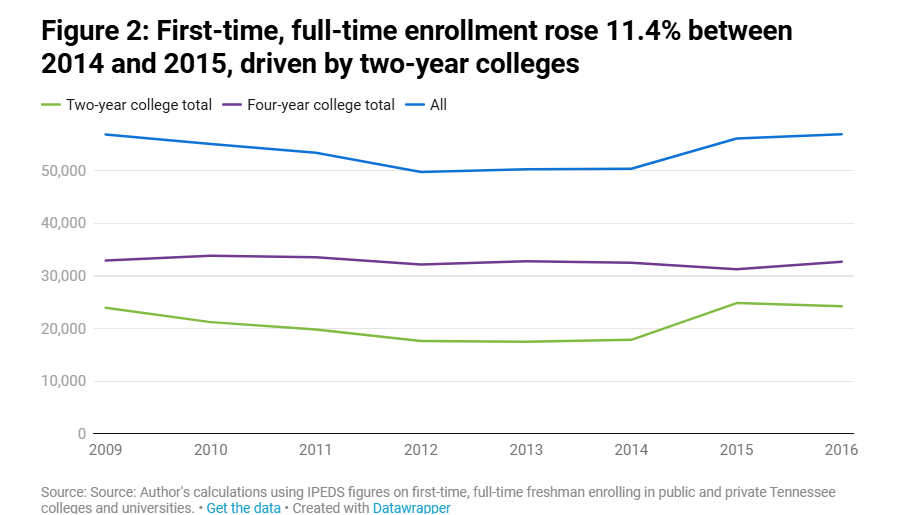
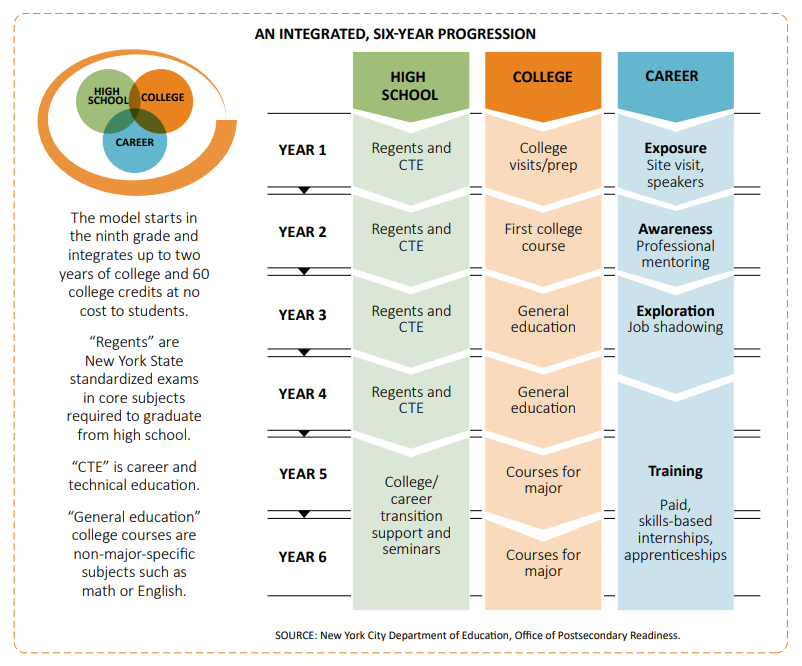
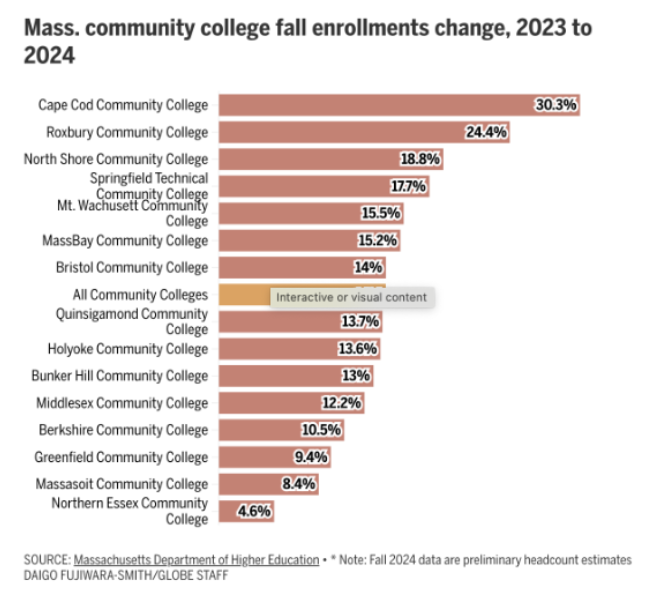


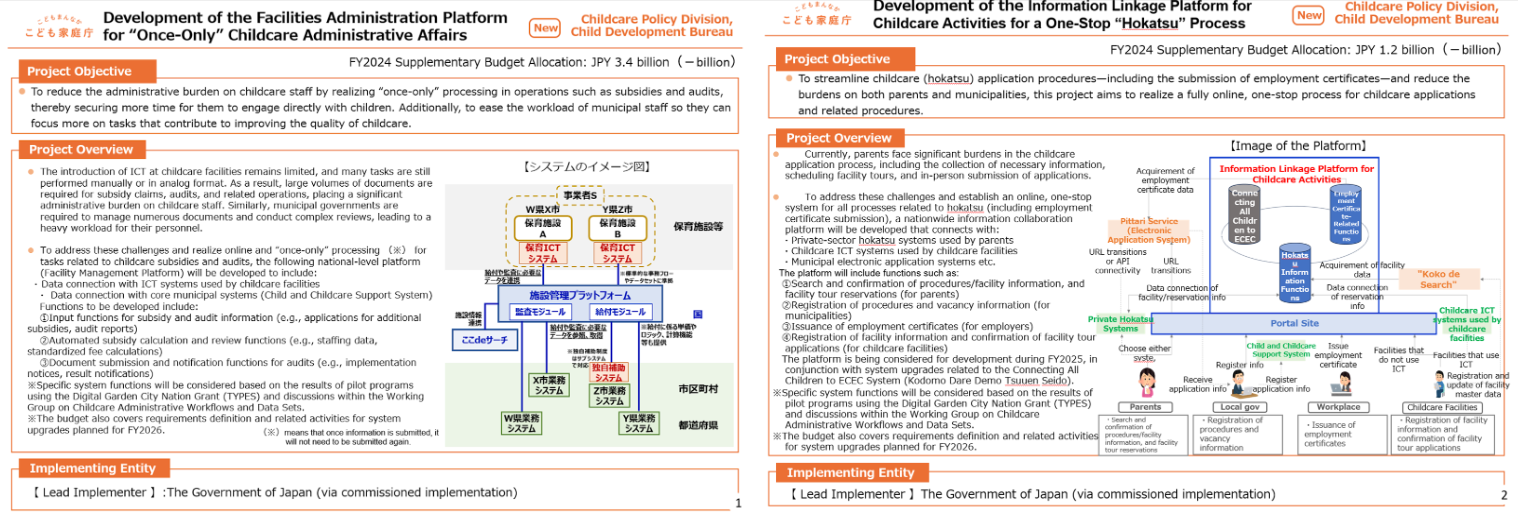


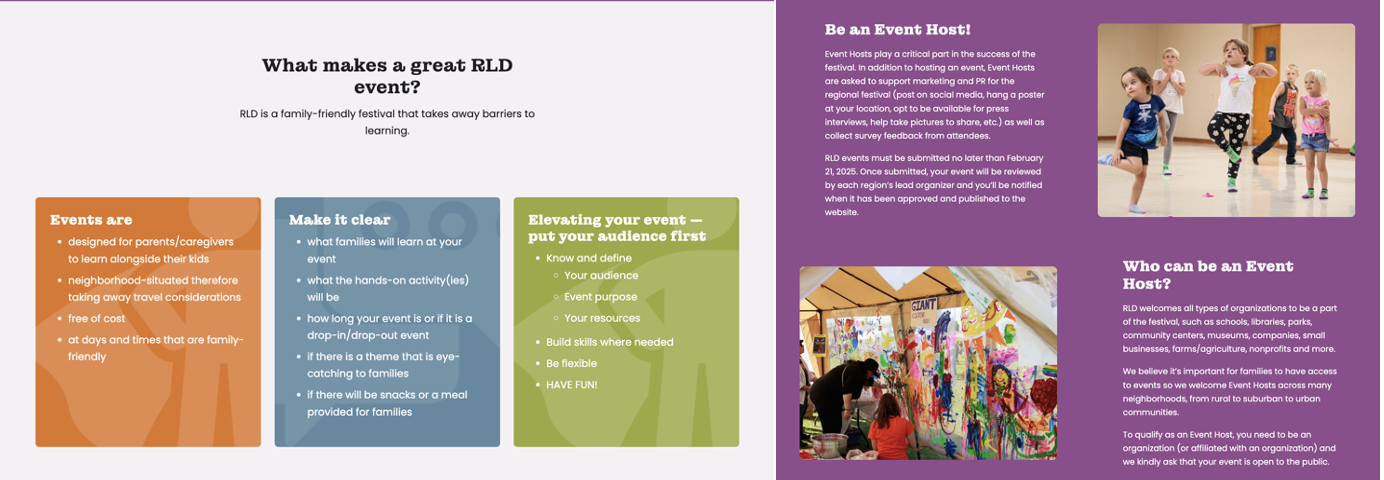


 International Education News