Category Archives: Interviews

Interview with Richard Gerver

dbnews_Richard_Gerver

Richard Gerver

In 2005, Richard Gerver won the prestigious School Head Teacher of the Year Award in Britain for leading one school from the brink of closure to innovation and success. This interview, which is part of the Lead the Change Series of the American Educational Research Association Educational Change Special Interest Group, appears as part of a series that features experts from around the globe, highlights promising research and practice, and offers expert insight on small- and large-scale educational change. Recently, Lead the Change has also published interviews with Diane Ravitch, and the contributors to Leading Educational Change: Global Issues, Challenges, and Lessons on Whole-System Reform (Teachers College Press, 2013) edited by Helen Janc Malone, have participated in a series of blogs from Education Week.

A view from Australia

Dr. Leila Morsy Eckert

Dr. Leila Morsy Eckert

Recent reports from Australia question how the changes outlined in the Gonski school funding reform would be impacted by the outcome of the nation’s recent election, in which Prime Minister Julia Gillard was replaced by her opponent, Kevin Rudd. We asked Dr. Leila Morsy Eckert, a Lecturer in the School of Education at the University of New South Wales, to provide us with some background information on the reform effort, different perspectives on the issue, and the implications of this reform for education in Australia.

What does this reform mean for education in Australia? How will it change?

The Better Schools: A National Plan for School Improvement, colloquially known as the Gonski reforms, are in principal meant to account for the real cost of educating a child. Funding is allocated to schools on the basis of the average cost of a student’s education. A base amount of funding will be allocated per child. Additional funding, or “loadings,” will be given to schools based on whether the children who attend that school are, on average, disadvantaged. Disadvantage will be measured on the basis of socio-economic status, language background other than English, indigeneity, rural or small schools, and disability. Funding is sector-blind, meaning that the Catholic Schools Sector and the Independent (Private) Schools Sector will also receive money. 

What are some of the different perspectives on the issues? 

Overall, there is consensus that the current funding system is unclear and unequal (much funding is duplicated, and it is difficult to trace where funding is coming from and where it is going to). However, Catholic School and Independent School representatives have been concerned that they will lose money under the new policy. Others still believe that the premise of the new funding mechanism itself is flawed. Indeed, the Federal Government in Australia funds non-government schools. Many education researchers believe that this has resulted in a system where any family that can afford to send their child to a private or Catholic school does so. One consequence is that public schools have become a place of last resort for all those who cannot afford a private education. The Gonski reforms continue this trend of federal funding of non-government schools. 

What do you expect will be happening in the near future? 

While the reforms have passed in the Senate, it is unclear what will happen next. Politically, there has been a change of leadership—Julia Gillard, the driving force behind the reforms, was replaced as Prime Minister last week by Kevin Rudd, who supports the reforms but to a less fervent degree than Gillard. Also, not all Australian states and territories have signed up to the federal reforms. So, it may be a slow start for any actual change to roll out across the country. 

For more information:

Independent schools sign up to Better Schools plan in $1bn deal

Giles digs in on Better Schools funding scheme

Gonski reforms in ‘chaos’: Pyne

Japan

Interview with the Minister of Education

Ministry of Education, Culture, Sports, Science, and Technology (May 7, 2013)

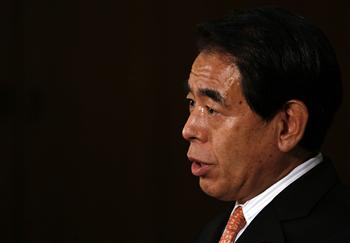
Japan's Education Minister Hakubun Shimomura. REUTERS photo

Japan’s Education Minister Hakubun Shimomura. REUTERS photo

Mr. Shimomura, the Minister of Education, Culture , Sports, Science, and Technology, has just returned form his visit to European nations. Reflecting on his tour, he commented on the urgent necessity of shifting the paradigm of Japanese language education abroad. In the past, the target population of Japanese language education abroad was children of Japanese citizens, who intended to return to Japan in the near future. Recently, there has been an increase in the number of Japanese children who are not planning to return to Japan. Many of these children are biracial, having a Japanese parent who hopes to instill and nurture his/her children’s identity as Japanese. In response to this need, the MEXT will generate an plan on how to spread Japanese language education globally.
In addition, the MEXT plans to suggest other nations to teach Japanese in public schools. For example, the UK, has a plan of teaching seven foreign languages in elementary schools soon. However, in the current plan, Japanese is not included as one of those seven languages. The MEXT will communicate the ministry of education in the U.K about how important it is to teach Japanese to prepare global citizens, who can contribute to the world economy.

For more information:

Council proposes lowering age for English education

Japan’s ambitious proposals for higher education and language sectors

LDP takes aim at English education, seeks to boost TOEFL levels

Pakistan

Malala Yousafzai: Pakistan observes day of prayer

BBC (October 12, 2012)
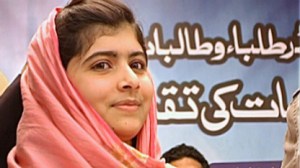
Malala Yousafzai

Malala Yousafzai, who wrote a diary for BBC Urdu about education under the Taliban, was accused by the Taliban of “promoting secularism,” and attacked by a gunman who shot her in the head and neck while on a school bus returning home from school. Using the pen-name Gul Makai, she wrote about the suffering caused by militants who had taken control of the Swat Valley in 2007 and ordered girls’ schools to close.

For more information:

Diary of a Pakistani Schoolgirl

Malala Yousafzai: Pakistan observes day of prayer

Pakistan: Quality Education Still a Long Way Off

IRIN (October 9, 2012)

Photo: Rebecca Conway/IRIN

Despite the fact that state-run primary schools do not charge fees and many provide free textbooks, other expenses mean that for many poor families, schools are unaffordable. As a result, unofficial schools have been providing an education to children who live on the streets, or work in markets and houses.

Education was made a fundamental constitutional right for the children of Pakistan in 2010; however the country has made limited progress in improving the quality and reach of its education system, and millions of children are missing out on schooling altogether in what the governments of Pakistan and the UK have termed an “education emergency.” As a result, Pakistan will not be able to meet its Millennium Development Goal of universal education by 2015.

For more information:

Protection of Street Children’s Rights Linked to Education

Boards For Action Against Teachers Refusing Exam Duties

Govt Has Taken New Initiatives on Education: Minister

The News International (October 7, 2012)
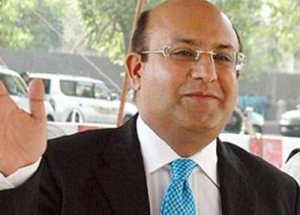
Punjab Minister for Education, Mian Mujtaba Shuja-ur-Rehman on Friday said that complete elimination of terrorism and extremism was must for peace and prosperity of the country.

The ILM Ideas Program, a three-year program funded by UKaid from the Department of International Development that is aimed at increasing access to quality education, held a launch to announce its second Request for Applications (RFA) to grant awards nationwide for increasing the access to quality education for children aged 5-16 years at a local hotel. The event included an Innovation Education Expo, which showcased ideas an innovation funded under the Ilm Ideas portfolio and demonstrated ideas such as radio learning, satellite enabled mobile vans, and digital whiteboards.

For more information:

World Bank gives $3 Million to Education

Elimination of terrorism must for peace: minister


Germany

Public school or private school? – Two educational researchers discuss (in German)
Otto, J & Spiewak, M.  Die Zeit (18 May 2012)

Two educational researchers, Heiner Barz and Manfred Weiß, are interviewed and discuss whether private schools create divisions in society or are pioneers of school reforms. The researchers, who have opposite opinions about private schools, argue about performance of pupils, PISA results comparing private and public schools, social equity, and school funding.  According to Weiß, “Private schools are not better when you consider the composition of the student body. Therefore, OECD has recently come to the conclusion that private schools are not the solution to raise the performance level of a country.”  But, Barz retorts:  “It’s not so simple. Schools must do more to teach than knowledge. Equally important is the school climate, cooperation with parents, the satisfaction of the students.”

Finland and Singapore

Global Perspectives: Vivien Stewart, Pasi Sahlberg, and Lee Sing Kong Discuss Teacher Quality
Center on International Education Benchmarking (27 March 2012)

In this roundtable conducted by Vivien Stewart, Senior Advisor for Education at the Asia Society, Lee Sing Kong, Director of the National Institute of Education in Singapore, and Pasi Sahlberg, Director General of the National Center for International Mobility and Cooperation (CIMO) at the Finnish Ministry of Education and Culture, discuss issues around teacher quality within the Finnish and Singapore contexts.  Two specific topics that they mention are perceptions of the teaching profession and teaching preparation programs in each country.