Category Archives: Interviews

Relationship Building for Educational Advocacy: Lead the Change Interview with Nicole Patterson

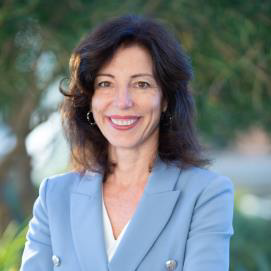
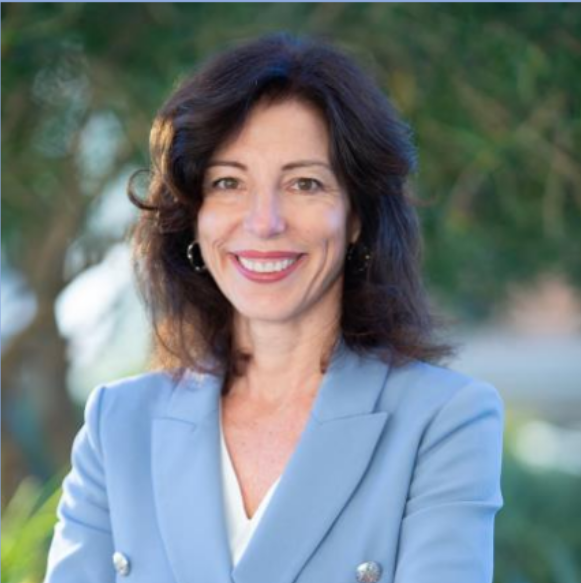
In this month’s Lead the Change (LtC) interview Nicole Patterson shares her experiences as a principal working to create equitable opportunities and sustain educational change for her students. Patterson recently completed her Doctoral degree in Educational Leadership at Saint Joseph’s University. She has worked as a teacher, instructional coach, assistant principal, and is currently a principal — all within inner-city communities.The LtC series is produced by Alex Lamb and colleagues from the Educational Change Special Interest Group of the American Educational Research Association. A pdf of the fully formatted interview is available on the LtC website.

Nicole Patterson: Educational change scholars have a responsibility to ensure they operate with a sense of urgency as they advocate for sustainable change for those entrusted in our care. In short, this looks like educational scholars staying updated on the latest research on racial injustices, applying these findings to their everyday work, committing to the feeling of discomfort, and understanding change is often on the other side of this feeling. 

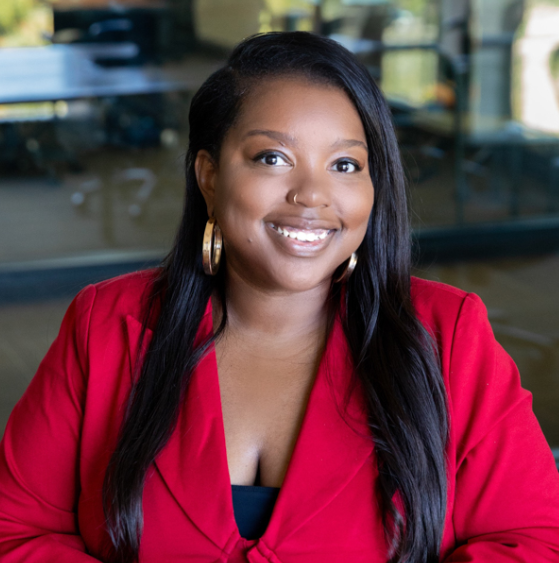
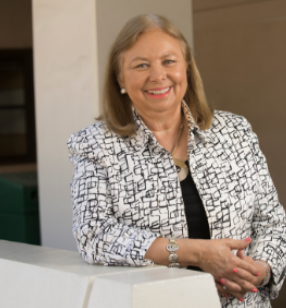
Nicole Patterson

My latest research titled, Taking a Knee (Patterson, 2022) is connected to the 2024 AERA theme of “Dismantling Racial Injustice and Constructing Educational Possibilities: A Call to Action” by examining the level of cultural competence and awareness of structural inequities educators used in their daily teaching practice of Black and Brown students. 

“Taking a Knee” is a phrase with various meanings. To some, taking a knee was perceived as a disrespectful act to the flag of the United States of America. To some, taking a knee was a stand against an American history of oppression and injustice. Forothers, the phrase represents the lack of regard for human life evidenced by the Minneapolis police officer’s murder of George Floyd. The difference between these aforementioned perspectivesis that oftentimes when Black and Brown people take a stand to uplift and overcome the plight and oppression that they’ve experienced for over 400 years by promoting their natural given birth right to live without oppression and within a life full of joy, opportunities, and advancement, the intent is misconstrued. Individuals without awareness of the plight of Black and Brown people, in turn, can intentionally or unintentionally use the same behavior of continuous oppression to crucify the dreams and ambitions of Black and Brown people, and this process can be defined as cognitive dissonance.

“Overt and covert acts of violence and disservice represent the need for increased levels of cultural competence for all educators.”

For me “Taking a Knee” represents the consistent murder of Black and Brown people through police brutality and how such events mirror the treatment of Black and Brown children in the United States’ educational system. We are currently amid two global pandemics, the COVID-19 pandemic and the pandemic of Social Injustice. The pandemic of Social Injustice in America begins in 1619 when chains were worn instead of masks and the only viable vaccine was the risk of traveling the underground railroad with Harriet Tubman. We see evidence of this pandemic in the field of education when educators unintentionally and intentionally “kneel” on the necks of Black and Brown students, sucking the breath of air, knowledge, passion, and opportunity from Black and Brown youth. These overt and covert acts of violence and disservice represent the need for increased levels of cultural competence for all educators including educators who mean well but show levels of cognitive dissonance by participating in actions they previously stated they would not. Educators need to engage in reflectionand engage in the process of unlearning and relearning or dismantling and constructing a system full of possibilities. 

NP: It is truly a blessing to serve in the capacity as school principal and scholar. I truly did not understand the blessing until I was within my dissertation work. I felt such liberation in the access to relevant information to inform my practice as an educator.  Lessons I have acquired along the way are: 

●      Power of relationships

●      Advocacy

●      Consistent Action 

Relationships have been the greatest lesson in this sphere. Meeting like-minded individuals and others that challenge perspectives has been an asset to my overall paradigm in education. These relationships have afforded me the privilege to get into the spaces and places of those who came before me. These relationships have also allowed me to lift those up that come after me to bring them into the same spaces and places as I was. I often say, “relationships are worth more than money.” The power of a relationship can take you so much further than any dollar amount. My professional and personal relationships have allowed me to develop into the scholar- practitioner that I am today. I will continue to reach back and support those as was done for me. 

Each day as scholar-practitioners we are either moving closer to a more equitable system or further away.

As a scholar-practitioner I have found my voice as an advocate in my field. Understanding and having the level of discernment on when and what to advocate for is paramount. This season and growth in advocacy that did not occur until I realized the power and privilege I have as a Black female educator. In other words, although I have intersections of race and gender, I still have a privilege regarding access to educational advancement and financial means to attain schooling. Understanding this, I use my education to empower and educate others. On a daily basis, the power of advocacy is a lesson learned and utilized to ensure I continue to pave the way for the students and families that are so deserving of an educational and life experience that is oftentimes not equitable. 

Last, consistent action! One of my favorite quotes is, “What you do every day matters more than what you do every once in a while.” This quote applies to all areas of life, and while I typically reference this regarding my health and fitness journey, these words hold true in service in the educational field. Each day as scholar-practitioners we are either moving closer to a more equitable system or further away; I do not believe that anything stays the same. With this mindset, I am committed to ensuring consistency in all that I do for educational advancement. I am also cognizant of those who are constantly watching what I do and say. I need to model leadership to empower those in my care.

“Each day as scholar- practitioners we are either moving closer to a more equitable system or further away.”

NP: My research allowed the space for educators to evaluate their sense of cultural competency on a pre-existing Cultural Competence Self-Assessment for Teachers (Adapted from Lindsey, Robins & Terrell [2009] Cultural Proficiency: A Manual for School Leaders). This survey paired teacher voices to the interpretation of their score to their daily instructional pedagogy. Once the teacher was provided their numerical cultural competence score, the teacher was able to answer a series of questions to bring life to that number. Their responses were able to transition a number to words and experience of current teaching practice based upon their belief systems and lived experiences. The findings and lived experiences display that there is a clear need for educators to be aware of their level of cultural competence and differences with those they interact with. My recent work reviewed cultural competence in the context of three structural inequities: healthcare, housing, and education and all three of these structural inequities show the need for cultural competence of educators and individuals.  

The implications for practice of school leaders and classroom teachers are as follows:

  1. use cultural competence as an umbrella for the development of teachers,
  2. provide consistent relationship building opportunities,
  3. fund programs focused on financial literacy and entrepreneurship to reach diverse populations of post-secondary student interest
  4. use embedded/required instructional materials that reflect student cultures and address current/future structural inequities that will mutate from current ones
  5. stay up to date on the digital world and provide students with needed resources
  6. mentor teachers in the field to address and develop understanding of their bias/feelings,
  7. codify a process to continue the work of educators self-assessing their cultural competence and awareness of structural inequities. 

Through the findings of this work, a new process emerged that will assist educators, researchers, and students to gain an understanding of their cultural competence level and awareness of structural inequities.

This process of authentic self-assessment must takeplace for sustainable change within the educational system. This process allows educators to self-assess where they currently stand with cultural competence and structural inequities and where they think they can continue to grow and develop to make a difference through their instructional practice.

From Patterson 2022

NP: Prior to supporting those who are in our care, we have to first understand and evaluate the change we are asked to spearhead and transform. Individuals in our care are in an organizational structure. It is important that teachers use this self-assessment on a continuous basis and that reflection take place at all levels to enact sustainable change. Connected to self-assessment, there must be collaboration and support systems for leaders facilitating these transformation efforts. Leaders are chameleons, and we must adapt to the needs of those we support but also use wisdom in the supports we are in need of. At times, support for leaders can be as simple and impactful as a listening ear, mentorship, and self-care,to name a few examples. 

Expectations, accountability, and support are the key ingredients to needed educational change of academic and life outcomes for marginalized communities. Additionally, in order to evoke change we must include those whom the change will impact in the conversation. I often think of the saying, “nothing for me, without me.” Courageous conversations must happen at the individual and group level to ensure we are uplifting the voices of those who are involved in the change process. Everyone wants to be heard. Everyone also wants to be a part of something bigger than themselves. This can be achieved through transparency, consistent communication, and partnership during the transformational process. 

NP: Hope is amazing and the strongest thing to hold on to! I hope that with the rise of advocacy for cultural competence and access to relevant research, the field of education will truly become a space that benefits all the children we are blessed to serve. I am excited and encouraged by the youth! Working with such brilliant, bold, and brave students on a daily basis excites and inspires me to continue to work for educational change. The innovation, creativity, and relentlessness of our youth is a joy to experience as an educator and leader. I am encouraged by the advocacy I see young people engage in, by the multiple ways success is defined for them, and the no fear mindset that allows them to go for the goals they desire without a fear of failure. I am encouraged that as current scholar-practitioners we can contribute to the future success of students by keeping an open mind and holding onto hope. Hope is one of the most powerful things this world has to offer. Maintaining a growth mindset is needed to experience the true value of hope and dealing this hope to others. 

I foresee continuous growth in the areas of educational technology. I am curious to see how artificial intelligence will continue to influence education. Currently, there are several systems that are being used by scholar-practitioners and students regarding artificial intelligence. I can only hope that as the times continue to change, schools will be ahead of the curve by providing opportunities and spaces to educate students and educators on how to best use these various technologies. I hope to see a major change in the mandates regarding curriculum and instruction to focus on financial literacy requirements, fostering entrepreneurship, courses in social emotional well-being, and courses that teach conflict resolution/self-regulation. These courses are especially imperative in Black and Brown communities where we see and experience tragedy due to gun violence on a daily basis. 

Last, at the policy level, I hope to see change connected to continuous efforts to encourage and uplift the Black vote. These are the views of the silent majority and reflect the importance of the future of elections for us and our children. I am fully aware that this process is not an immediate one and will take strategic and intentional advocacy, collaboration, and resistance. I am also fully aware that the students, families, and individuals for whom we continue this heart work, will bring about a promising future for those that come after them.

References: 

Guerra, P. L., & Wubbena, Z. C. (2017). Teacher beliefs and classroom practices cognitive dissonance in high stakes test-influenced environments. Issues in Teacher Education, 26(1), 35-51.

Lindsey, R. B., Robins, K. N., & Terrell, R. D. (2009). Cultural proficiency: A manual for school leaders (3rd ed.). Corwin Press

McGrath, A. (2020). Bringing cognitive dissonance theory into the scholarship of teaching and learning: Topics and questions in need of investigation. Scholarship of Teaching and Learning in Psychology, 6(1), 84-90. 10.1037/stl0000168

Patterson, N. (2022). Taking a knee: A mixed methods study evaluating awareness of structural inequities and levels of cultural competence of middle school in-service teachers of Black and Brown students (Publication No. 28967538) [Doctoral dissertation, Saint Joseph’s University]. Saint Joseph’s University ProQuest Dissertations Publishing

Leading Futures: Alternative Perspectives on Education Reform and Policy

In this latest post in the Leading Futures Series, edited by Alma Harris and Michelle Jones, Jenny Gore and Geoff Whitty describe an alternative approach to improving teaching that challenges predominant forms of accountability. Drawing from their public lecture at Bath Spa University on May 17, 2017, with a focus on the potential of Gore’s work in Australia on Quality Teaching Rounds, they suggest that the approach should now be trialed elsewhere.  Jenny Gore is Professor of Education and Geoff Whitty holds a Global Innovation Chair at the University of Newcastle, Australia. 

Improving teaching: some lessons from Australia

Jenny Gore and Geoff Whitty

Why on earth would we look to Australia for lessons about education? After all, its PISA scores have dropped down the rankings where they now sit alongside those of many other OECD nations. What does Australia have to offer that differs from the apparently more successful countries in Scandinavia and East Asia that have often been the focus of policy tourism?
One answer is, of course, that PISA is not the be-all and end-all of educational assessment. But another reason is that other factors have overridden ‘PISA envy’ for countries like the US and UK, which are much more similar to each other than they are to either Finland or Shanghai-China. Their continuing mutual interest in each other’s reforms probably lies with shared social and political networks and assumptive worlds – and, of course, a common language with which to describe reforms.

Indeed, readers in the US and UK, and many others influenced by Anglo-Saxon policies, will readily recognize the major challenges identified by Bentley and Savage in a recent book on policies changes in Australia in recent years. These include:

  • a national curriculum
  • standardised national assessments in literacy and numeracy (NAPLAN)
  • national reporting on schools (through the My School website)
  • professional standards for teachers and school principals
  • a universally accessible year of pre-school
  • partial implementation of needs-based funding reforms (Gonski).

But they also point out that, despite these reforms, there is unfortunately very little sign of positive impacts or outcomes. For example:

  • The percentage of Australian students successfully completing Year 12 is not improving.
  • State and federal school funding policies are still reproducing a status quo that entrenches sectoral division and elitism.
  • New evidence-informed methods, such as clinical and targeted teaching models, are being taken up very slowly in teacher education degrees and schools.
  • The status and efficacy of vocational learning have shown little meaningful improvement.
  • NAPLAN and My School have not led to improvements in literacy and numeracy, with 2016 data showing either stagnation or decline.
  • The performance of Australian students in international assessments of maths, science and literacy skills has steadily declined.

Depressingly familiar stuff to many of us, isn’t it?  Similarly, take this recent statement by Geoff Masters, CEO of the Australian Council for Educational Research.

There is no shortage of challenges in school education. Some of the biggest challenges we face can appear frustratingly intractable. Despite reform efforts, regular government reviews and ongoing calls for change, progress in addressing our most significant challenges is often slow and solutions continue to elude us.

Equally familiar are the five key challenges he identifies as facing Australian education:

  1. Equipping students for the 21st Century, including by increasing reading, mathematical and scientific literacy levels.
  2. Reducing disparities between…schools, particularly along socioeconomic lines, by ensuring that every student has access to an excellent school and excellent teaching.
  3. Reducing the ‘long tail’ of underachieving students who fall behind year-level curriculum expectations and thus fail to meet minimum international standards.
  4. Getting all children off to a good start, by reducing the number of children who begin school with low levels of school readiness and so are at risk of ongoing low achievement.
  5. Raising the professional status of teaching, by increasing the number of highly able school leavers entering teaching.

While this last challenge resonates with the aspirations of many countries, and policy direction of initiatives like Teach for America, Gore et al. have demonstrated that the solution identified here by Masters may be misleading. Rather, the sort of approach we describe below may be a better way to enhance professionalism in teaching.

Bentley and Savage say of Australia, over the past decade ‘the policy landscape has become riddled with reform “solutions” that subject students, teachers, administrators and policymakers to mounting levels of pressure and stress’ and that ‘the short-term cyclical churn of today’s politics and media clearly exacerbates these problems.’

Although the policy context of other countries differs in detail, their actual policies have much in common. In many countries, regulation and accountability have taken a hold on government attitudes towards the teaching profession, alongside (though in different degrees) a belief in market forces as providing a way forward. Education academics (ourselves included) have been rather better at critique of such developments than in pointing to an alternative way forward. What we want to argue is that widely sought-after improvements in teaching will remain elusive unless teachers are afforded more respect, trust and, especially, professional support.

One tested example of such an approach lies in work conducted at the University of Newcastle, Australia, which puts down a challenge to policy makers who seek genuine improvement in teaching. The approach, known Quality Teaching Rounds (QTR), has produced measurable impact on the quality of teaching while simultaneously enhancing teachers’ morale and confidence.

QTR is a form of teacher professional development designed by Bowe and Gore to bring together the benefits of professional learning communities (PLCs), instructional ‘rounds’, and the Quality Teaching (QT) pedagogical framework (NSW Department of Education and Training [NSW DET], 2003). The framework centres on the three dimensions of Intellectual Quality, Quality Learning Environment, and Significance. QTR involves teachers working in PLCs of three or more teachers to observe and analyse each other’s teaching, using the QT framework, followed by extended conversation about their collective practice. QTR is a distinctive form of professional development which: is applicable across stages and subject areas; addresses teaching comprehensively; requires minimal external input; and is adaptable to the specific teaching context. This is in contrast to professional development that: is stage or subject-specific; addresses a part of teaching practice only; requires ongoing provision of external expertise; and is highly prescriptive of practice.

In a recent randomised controlled trial, 24 NSW public schools participated in an investigation of the impact of QTR. Eight teachers at each of the schools were involved in the study, with lesson observations carried out by researchers, who were blinded to group allocation, at three time points – baseline, post-intervention (6-months), and follow up (12- months). There were two intervention groups (QTR-Set and QTR-Choice) and a wait-list control group.

Participating in QTR was found to significantly impact on the quality of teaching (d =0.4-0.5) within the relatively short timeframe of this intervention (most teachers were involved for four days or less) across a diverse range of schools. Moderators of intervention effects were explored for: type of school, SES, location, teaching experience, and gender of teacher.

The key findings were that the quality of teaching improved for both intervention groups and these effects were sustained six months later, signaling the sustainability of impact into a new school year. Effects were independent of school type (primary/secondary) and location (urban/rural) and years of teaching experience. Effects on teacher morale and sense of recognition and appraisal yielded similar results for the two intervention groups, relative to control group. In interviews, teachers reported positive impacts on their own and their colleagues’ teaching and professional confidence, on collegiality and school culture, and on their students. The next study in this programme of work is another RCT designed to investigate further the impact of QTR on student learning outcomes.

The findings from the earlier study demonstrate the value of QTR in not only improving the quality of teaching but simultaneously enhancing teacher morale and teaching cultures across a range of schools and classroom settings in diverse communities. QTR was found to be an effective form of professional development, improving the quality of teaching in primary and secondary schools across subject areas and for teachers at different stages of their careers. The positive effects of QTR are thus highly generalisable across school contexts.

The approach not only builds on widely accepted ‘principles of effective PD,’ but can be implemented at scale and at a relatively low cost. It supports teachers in improving their practice while also developing their efficacy, well-being and professional engagement. This is in stark contrast to approaches that subject teachers to greater levels of accountability, evaluation, and performance review.

This Australian approach simultaneously, and ambitiously, provides evidence of a kind that is persuasive to governments and education systems that want to be sure their investments have pay-off and empower teachers. Such an approach is part of the jigsaw of educational improvement that has somehow been missing in many contexts. We argue that improving teaching in order to improve pupils’ learning depends, in large part, on teachers’ confidence in themselves and each other. This differs from prevailing approaches that seek to improve teaching through forms of accountability premised on a lack of confidence in and respect for teachers. In short, QTR is an alternative that can build public confidence in teachers from the ground up.

Esteem interview with Karen Edge

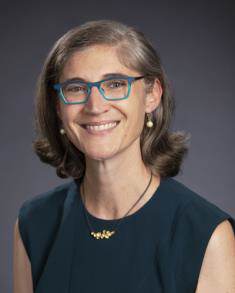
Dr. Karen Edge

Dr. Karen Edge

Karen Edge is the Pro Vice Provost (International) at University College London (UCL) and Reader in Educational Leadership at the UCL Institute of Education in London, UK. Karen is an academic and advocate committed to asking new questions to shake up how policy and educational leaders think about educational opportunities and challenges. Karen’s latest international research project was funded by the ESRC (UK) and engaged 60+ Generation X school leaders in London, New York and Toronto in exploring their careers, leadership and future aspirations. She is a member of the six-person Advisory Panel for International School Leadership Principals and a visiting academic in Canada, Malaysia and Chile. Karen is Past Editor-in-Chief of Educational Assessment Evaluation and Accountability and sits on the Editorial Boards of School Leadership and Management and Leadership and Policy in Schools. Karen regularly gives talks and support organizations in relation to knowledge management, leadership, networks, talent spotting, retention and wellbeing. Karen can be reached at k.edge@ucl.ac.uk or on twitter @drkarenedge

In this interview, which is part of an Esteem series focusing on the public scholarship of women in education leadership, Dr. Edge shares how her current research has helped her to see the importance of role modeling and talent spotting for women in education. Edge believes that we are seeing a new willingness to make conversations around these and other topics more public, which can help us to move forward in a way that’s better for everybody:

Conversations about women in leadership used to be about what women needed to do to be seen as the leaders. I think we are now entering an age where the conversation needs to shift to what are things that are happening in the system that may be institutionally getting in the way of women being successful? But it’s not just women. We also need to consider how the experience of a white woman, a white straight woman, would be radically different than a woman who identifies as LGBT or a person of color. Not all experiences are the same and we need all leaders in our education systems for them to be successful. This is not happening, in my opinion, to the extent necessary at the moment.

This Esteem interview appears as part of a series that features experts in education leadership from around the globe. Recent interviews have included Helen Janc Malone, Gillian Hamilton, and Andrea Stringer.

Learning from successful education reforms in Ontario: Part II

imagesIn 2003, the Ontario government began to focus on issues of educational improvement. The government instituted a series of reforms that have proven incredibly successful, with elementary achievement results rising from 54% in 2003 to 72% in 2014, and high school graduation rates rising from 68% to 84% in the same amount of time. This past summer I spoke with Mary Jean Gallagher, Ontario’s Chief Student Achievement Officer and Assistant Deputy Minister of the Student Achievement Division, and Richard Franz, Ontario’s Director of Research, Evaluation & Capacity Building, to learn more about their experiences with this reform effort thus far, and their plans for the future. As this conversation was so informative, we have decided to post it in two parts. In part one we focused on aspects of the reform that have been key to its success thus far. Here, in part two, we explore Ontario’s approach to moving forward with an expanded reform agenda.

Planning the Future:

In 2013, Ontario’s Ministry of Education (MOE) set a renewed vision for the education system. This process allowed them to identify critical information about what they have achieved, and share this information with parents, business leaders, community members, teachers and students. As Gallagher explained, as a result of Ontario’s success over the past decade, “we have a newfound respect for our ability to set goals and measure progress and achieve them, so we are more careful about goals we set.” By engaging in a broadly based, 7-month collaborative consultation process, they engaged both qualitative and quantitative research methods to determine their next steps.

This process culminated in the production of their “Achieving Excellence” report. This report identifies four new, interconnecting goals for the education system. As they are described in the report:

  • Achieving Excellence: Children and students of all ages will achieve high levels of academic performance, acquire valuable skills and demonstrate good citizenship. Educators will be supported in learning continuously and will be recognized as among the best in the world.
  • Ensuring Equity: All children and students will be inspired to reach their full potential, with access to rich learning experiences that begin at birth and continue into adulthood.
  • Promoting Well-Being: All children and students will develop enhanced mental and physical health, a positive sense of self and belonging, and the skills to make positive choices.
  • Enhancing Public Confidence: Ontarians will continue to have confidence in a publicly funded education system that helps develop new generations of confident, capable and caring citizens.

As Gallagher and Franz explained, the process of determining these goals helped them to understand that in the future they need to “heighten the relevance of what people are learning, increase experiential learning, and use the community more broadly.” By engaging community members in the process they were able to learn that those members felt they had valuable information and experiences to offer the educational system, and were being underutilized. As a result, the MOE is now thinking of better ways to reach out.

Another key aspect that emerged is the importance of student voice. Since the consultation process included school-age students, the MOE was able to learn more about what the students felt needed to be changed about their own education. The MOE, for example, developed a program called “Students as Researchers,” which invites students to formulate questions about how to make their schools better places and trains them in research skills and ethics so that they can design and implement their own research projects, which are then shared with the MOE.

Challenges of new goals:

Looking ahead, Gallagher and Franz explained that there is some tension around the notion that good teaching and learning must be measured. New challenges include thinking about ways in which the system might be able to broaden the measures of success, and what counts as success, so that the emphasis is not only on test scores. This is particularly relevant since one of their new goals is to improve student well-being. In setting the goal, the MOE also must consider how to measure something that has no history of measurement or policy focus.

Another concern is the additional demands of the bureaucracy that might be added once new goals, and new measurement systems for those goals, are implemented. As Gallagher and Franz noted, one of the reasons for the success of the education reforms so far has been attributed to the narrow focus on a small number of goals. With a focus on the renewed four goals, how can they be incorporated into a successful system without overburdening it? As Franz explained, the new tension is about how to do it all is such a way that gets you the insight and information needed to guide the practices of all involved in the system in addressing the new goals, while continuing to build coherence such that actions in the name of one goal also support achievement of the other goals.

For more information:

Ontario Ministry of Education

Deirdre Faughey

Creative Commons License
This work is licensed under a Creative Commons Attribution-NonCommercial-NoDerivatives 4.0 International License.

Learning from successful education reforms in Ontario

class-roomIn 2003, the Ontario government began to focus on issues of educational improvement. The government instituted a series of reforms that have proven incredibly successful, with elementary achievement results rising from 54% in 2003 to 72% of elementary students performing at or above the provincial standard in in reading, writing and mathematics in 2014, and high school graduation rates rising from 68% to 84% in the same amount of time. This past summer I spoke with Mary Jean Gallagher, Ontario’s Chief Student Achievement Officer and Assistant Deputy Minister of the Student Achievement Division, and Richard Franz, Director of Research, Evaluation & Capacity Building, for the Student Achievement Division, to learn more about their experiences with this reform effort thus far, and their plans for the future. As this conversation was so informative, we have decided to post it in two parts. Here, in part one, Gallagher and Franz share some of their thinking on aspects of the Ontario reform effort that have been essential to its success.

Bringing educators into policymaking realm

In 2008, Gallagher was the leader (Director of Education) of Canada’s southernmost school district when she was selected for her new position at the Ontario Ministry of Education (MOE). This position – Chief Student Achievement Officer and Assistant Deputy Minister of the Student Achievement Division– was envisioned as an innovation. While MOE officials were typically promoted from public service positions, Gallagher’s experience was in schools, as a teacher, a principal, superintendent, and Director of one of Ontario’s 72 school districts. With the creation of this Division and position, and the hiring of Gallagher, the MOE demonstrated that it valued the expertise of educators. This went along with the MOE’s renewed emphasis on valuing the work of educators, particularly in positions that focused on student achievement. At that time, the MOE wanted to ensure that all of their work was based on valuing educators—seeing improved learning as a result of improved teaching.

With this new effort to bring educators into the policymaking realm, the MOE also made sure that approximately two-thirds of staff within the Student Achievement Division was comprised of practicing educators who had already proved themselves to be strong instructional leaders. In order to do this they created new positions in which practitioners, such as teachers and school leaders, could work for up to three years with the MOE. The theory behind this model was that working closely with “front-line” educators would build the capacity of both those who worked in the field, as well as those who worked in the central offices. Franz pointed out that working with educators on the creation of new policy helps the MOE officials by providing perspective on how such policy might “land” in schools. Additionally, once those educators complete their temporary positions in the MOE offices and return to their schools, they arrive with more knowledge and understanding of how such policies were developed and created. This new “blended” model builds appreciation in both spheres. As Gallagher and Franz explained, this effort helps create alignment between goals, priorities, methodologies and implementation, and over the past 13 years it has proven a “formula for wonderful results.”

Maintaining a limited number of goals

Gallagher and Franz also attributed Ontario’s success to the MOE’s narrow focus on a limited number of educational goals, specifically increasing student achievement, closing educational gaps, and increasing confidence in public education. As Gallagher and Franz explained, these are the goals that everyone working in the Ontario education system can recite, as well as the targets associated with them. By focusing closely on a limited number of goals they have seen a huge difference in their ability to keep focused on what is important.

In addition to knowing these goals, educators have become increasingly aware of the ways in which they can measure improvement and identify success as they work to achieve them. This allows teachers to develop an understanding of their own efficacy and agency, which, as Gallagher and Franz noted, excites and motivates educators. Ontario’s focus on province-wide testing standards in literacy and numeracy, and a set curriculum, has promoted clarity about what students are expected to know, understand, and be able to do.

Using data and assessments to test the system, not individuals

Starting in the mid-1990s, Ontario’s government began implementing a set of tests based on Ontario’s Curriculum Expectations and Standard of Achievement for grades 3 and 6 in reading, writing, and math, as well as in grades 9 (math) & 10 (literacy). As Gallagher explained, Ontario holds very high standards for their students. Student work is identified as level 1, 2, 3, 4, and the provincial standard of success is level 3 (the equivalent of a letter grade of B), which is higher than what is expected on the Program for International Student Assessment (PISA).

Ontario’s assessment organization is an arms-length organization of the government, funded by the MOE but separate from it with its own board of directors. This organization has become, over time—an opportunity for professional learning as well, as teams of educators are assembled to devise test items and mark assessments over the summer months. As a result, teachers become well versed in the standards and measurement of performance and thereby build their own assessment literacy.

Gallagher and Franz note that these assessments are not standardized, and are not proprietary. Instead, they are criterion referenced assessments of the curriculum. The tests are used to gather information about the degree to which the students are able to demonstrate what they have learned from the curriculum. As a result, Ontario’s teachers feel less pressure to “teach to the test”; instead, the teachers are teaching to a curriculum they approve of and which teachers have had a hand in developing. The overall sense is that the tests are used to assess the entire educational system, rather than individual teachers and students. This collective focus also encourages teachers to work collaboratively and use assessment for learning for student achievement efforts.

Ontario has also moved to a common data system across the province as well. Starting in the late 1990s, the government created a tracking system in which all students were assigned an ID number. This allows the MOE to track individual school’s assessments of student performance, and compare those results to province-wide results. The ID number is also now being used to track students from early childhood education through to college (or apprenticeships). As Gallagher and Franz noted, this ID number is not linked to student names, but is used to analyze trends and patterns to understand what is happening system-wide.

Collaborative Inquiry

Teachers in Ontario regularly work together to analyze student work and plan new instructional strategies. These practices are articulated in an assessment policy called “Growing Success” and have been put into practice through a collaborative inquiry model of professional learning. Professional learning through collaborative inquiry has been so successful that it has replaced the old model of professional learning in which teachers were corralled in “banquet hall style” training sessions, where experts presented and teachers broke out into workshops. As Franz explained, “We assume that teachers come now with a certain level of skill, and we work with teachers on how to use a collaborative inquiry approach to examine student work, thinking about how to move students, and making that the object of their inquiry.”

How have classrooms changed?

As Gallagher explained, one of the things that everyone has learned is that the ideal classroom is less about teaching strategies and more about teacher thinking and behavior. This process starts in the assessment domain, with deep teacher knowledge of the students, the curriculum, and the learning goals. Then, the teachers can utilize any of the strategies they might have in their “backpack,” to help the students progress. Generally, in an ideal classroom one might see high levels of engagement, individual and group work, and differentiation; however, there is no particular reliance on any specific strategies or programs throughout the period. The aim is to allow teachers the space to try out their own strategies, and to develop their ideas through collaborative discussion with other teachers. This way, teachers feel accountable to one another and the classroom becomes a “de-privatized” place.

What Gallagher and Franz have noticed is that there is a trend of more inquiry-based learning in classroom. While there are some concerns about how much curricular content there is to learn, there is an increase in student-led learning, focusing on problem solving and creative work. In the following audio excerpt, Gallagher describes a recent visit to a kindergarten classroom where the teachers allowed students to lead an extended study of trees:

Be on the look-out for part two of this post, in which we focus on how Ontario plans to move ahead with an expanded reform agenda.

Deirdre Faughey

Creative Commons License
This work is licensed under a Creative Commons Attribution-NonCommercial-NoDerivatives 4.0 International License.

Interview with Rukmini Banerji

Dr. Rukmini Banerji

Dr. Rukmini Banerji

Rukmini Banerji is director of the Assessment Survey Evaluation Research (ASER) Center in New Delhi, India, and senior member of the national leadership of Pratham, an organization that reaches three million primary school age children in India every year.

In this interview, which is part of the Lead the Change Series of the American Educational Research Association Educational Change Special Interest Group, she describes her own work with educational change what she sees as the status of education in India today:

“Looking back at the last two decades and more, we can see the impressive progress that India has made in providing educational opportunities to children. Today we have more than 96% of children (in the age group 6-14) enrolled in school. There is a government primary school in almost every habitation in the country. Children get free meals in schools, in many states textbooks and uniforms are also free. In 2010, the India Parliament passed the Right to Education Act which guarantees free and compulsory education to all children ages 6-14. In terms of inputs and infrastructure, the Indian government has made huge strides in the provision of schooling. Now it is time to look at some of the outcomes of schooling and more specifically at the question: are our children learning?”

This Lead the Change interview appears as part of a series that features experts from around the globe, highlights promising research and practice, and offers expert insight on small- and large-scale educational change. Recently, Lead the Change has also published interviews with Diane Ravitch, and the contributors to Leading Educational Change: Global Issues, Challenges, and Lessons on Whole-System Reform (Teachers College Press, 2013) edited by Helen Janc Malone, have participated in a series of blogs from Education Week.


Multicultural Education in South Korea

Over the past decade or so, South Korea (as well as Taiwan and Japan) has experienced a wave of immigration that has resulted in an increasingly ethnic and racially diverse population. The issue has received considerable attention—from the media, as well as from politicians—as the country works to find ways to address the needs of multicultural population, as well as a rising concerns about ethnic conflictsdiscrimination, and a general sense that South Korea is “not ready for multiculturalism.” However, South Korea is a country that been considering ways to “redefine multiculturalism,” such as with the concept of Tamunhwa (multiculturalism), which suggests that South Koreans need to learn as much as they can about the new immigrant population while finding ways to create a “new national identity not based on ethnicity.”

Dr. Jeehun Kim & Dr. Jang-ham Na

Dr. Jeehun Kim & Dr. Jang-ham Na

In order to learn more about how educators are addressing multiculturalism in the classroom, Eun-Kyoung Chung and Deirdre Faughey spoke with Dr. Jeehun Kim and Dr. Jang-ham Na, two visiting scholars at Teachers College, Columbia University, this semester. In this interview, posted on Esteem: Conversations Between Educators, the two scholars explain what they are learning about the multicultural classroom in South Korea. For example, while textbooks and the curriculum are centralized and the Ministry of Education has established guidelines for multicultural instruction, there is no mechanism for ensuring that these guidelines are followed by teachers and schools. This might be problematic for curricular reforms that aim to cater to multicultural populations that are geographically specific, as well as curricular reforms that aim to promote sensitivity to multiculturalism throughout the country.  The scholars also address the issue of teacher education, and the difficulties that sometimes arise when student teachers ask for strategies and methods that address the needs of a diverse student body. Since South Koreans have long considered their population homogenous, the issue of multiculturalism can become personal. As Jang-ham Na explains, “When it comes to multiculturalism, depending on what social background you have, sometimes you have some privilege compared with others. But the privilege will be gone in other places. So we have to be more critical.”

Esteem has also published recent interviews with scholars such as Luis Huerta, Christopher Emdin, Karen Hammerness, Maxine Greene, and Pedro Noguera.  To learn more please visit www.esteemjournal.org

José Weinstein on systemic change in Chile

This month, the Lead the Change Series features an interview with José Weinstein, professor at Universidad Diego Portales and formerly Deputy Minister of Education and then Minister of Culture in Chile. Weinstein talks about the need to engage the entire system in Chile in focusing on improving practice in the classroom. In the process, he expands on many of the issues we touched on last October including the recent proposals for system-wide change in Chile and efforts to strengthen teacher education and the teaching profession. Weinstein describes as well the key role that principals may play in this transformation, arguing that the Latin American context requires an “orchestrating leader” whose responsibilities include but go beyond those of the “instructional leader” that is the focus of work on educational leadership in the US and the UK. He also offers several different hypotheses that help to explain some of the positive developments in the Chilean education system and the significant dissatisfaction that has contributed to violent protests. As he concludes: “Chile will have to create its own path to continue its educational progress, taking ownership of the dark sides of its development but without losing sight of what has been accomplished. In the coming years, teachers and principals will have to be the key protagonists of education improvement in Chile.”

Thomas Hatch

Interview with Sakena Yacoobi

Sakena Yacoobi

Sakena Yacoobi

Sakena Yacoobi is the Founder and CEO of the Afghan Institute of Learning (AIL), a Private Hospital in Herat, and two Private High Schools in Kabul and Herat. AIL is an Afghan women-led NGO founded in 1995 to support the education of Afghans and provide health education to women and children. This interview, which is part of the Lead the Change Series of the American Educational Research Association Educational Change Special Interest Group, appears as part of a series that features experts from around the globe, highlights promising research and practice, and offers expert insight on small- and large-scale educational change. Recently, Lead the Change has also published interviews with Diane Ravitch, and the contributors to Leading Educational Change: Global Issues, Challenges, and Lessons on Whole-System Reform (Teachers College Press, 2013) edited by Helen Janc Malone, have participated in a series of blogs from Education Week.

Curriculum reform in Australia

In 2010, Australia established its first national curriculum: the Australian Curriculum. The Australian Curriculum has defined content and achievement standards for the entire country. After a staged process of development, it is now being implemented. Recently, this curriculum was reviewed for the first time by the Australian federal government. The review raised a number of concerns that have led federal Education Minister Christopher Pyne to announce he will work with advisors to make sure it is serving the needs of Australian students. Pyne has stated, however, that any changes to be made as a result of the review won’t be implemented until at least 2016, due to the difficulty of earning the support of states and territories.

To learn more about this curriculum reform and the context of reform in Australia, I spoke with Dr. Glenn Savage of the University of Melbourne. Dr. Savage, with Kate O’Connor, recently published an article in the Journal of Education Policy titled “National agendas in global times: curriculum reforms in Australia and the USA since the 1980s.” From his perspective, there may be similar driving forces for reform in the US and Australia, but the reforms themselves have been quite different.

Savage and O’Connor (2014) wanted to understand how curriculum reform in Australia and the US were playing out, given that both countries have federal systems and histories of state and local control over education. Their research identified three key historical phases in the development of curriculum, which are shared by both nations. The first is the late 1980s, when both countries developed national education goals for the first time. They see this phase as a shift towards thinking in national terms, but also as a precursor to the standards movement of the 1990s and the push towards nationalizing aspects of the curriculum. The second was in the 1990s, when both countries attempted to create national curriculums or frameworks. In both countries those efforts failed when the realities of actually having to put the reforms into practice came along. For example, in both countries there was strong pushback against the idea of moving towards a national approach. The third phase was when each country rejuvenated their national reform efforts as a result of global economic and social pressures in the late ‘90s and early 2000s. Influences included the global PISA testing program, which put the performance of each country in a global perspective and helped put standards-based national reforms back on the agenda. 

While there have been common historical driving forces in both countries, Savage and O’Connor (2014) see current reforms as very distinct in scope and form. In the US, the Common Core State Standards (CCSS) are voluntary national standards that focus on the areas of literacy and numeracy, whereas in Australia the national curriculum is more extensive and discipline-based. Savage and O’Connor (2014) argue that the distinctive nature of reform in each country can be explained to a large extent by four key differences in the ‘national policy space’ of each nation: 1) contrasting system diversity and complexity; 2) different roles and expectations of federal governments; 3) different forms of state-to-state intergovernmental cooperation; and 4) the contrasting involvement of non-government policy actors. The authors argue that the distinctive features of each system mean that each country provides different “conditions of possibility for reform” (Savage & O’Connor, 2014, p. 18). Their key argument is that while global flows of policy ideas and practices are powerful, these influences manifest differently in different national contexts. As such, reforms must be thought of as both national and global

Looking ahead, Savage identifies several issues that Australia will need to work through in relation to the curriculum.

First is the fall-out from the recent review of the curriculum. It is the first review of the curriculum and it has been heavily politicized. There are ideological arguments around it and it has raised questions about what a contemporary curriculum should look like. There is the possibility that the review could lead to the reshaping of certain elements of the Australian Curriculum.

Second is an ongoing debate about federalism and the role of state and tertiary governments in education. A Reform of the Federation White Paper, which was developed by a taskforce in the Department of the Prime Minister and Cabinet, was released in late October. The goal is to work out the appropriate division of responsibility between states and government. In contrast to the US, national intergovernmental organizations have long been essential to the Australian reform process and have the capability of bringing all of the states together with the federal government to consider a number of education-related issues.

Another issue Savage identified is that even though Australia now has a national curriculum, there are differences in how states interpret and enact the standards. Despite a common national framework, state-based inflections emerge. While this can be positive, in that it allows for tailoring to state-based needs and issues, it can also present problems of consistency, which is partly what the national curriculum set out to tackle in the first place. In one example, the state of Victoria has adopted a hybrid curriculum called “AusVELS” that takes some from the national Australian Curriculum, and some from the prior Victorian Essential Learning Standards.

Savage also said that since federation in 1901, there have been debates around the role of academic knowledge versus vocational knowledge and skills. From the early 1900s, for example, many Australian states tracked students into either high schools (academically-focused) or technical schools (vocationally-focused). In 1980s, most states eliminated tech schools and established a common, unified school system that aimed to provide all students with the opportunity to go to university. While this effort was intended to be a more inclusive model, it has also led to an increase in high school drop out rates. In order to address this, the pendulum has swung back and there are now proposals at Federal and State levels to return to a more vocational curriculum.

Finally, Savage said there are now debates about what a curriculum should look like for the future. Some argue that the curriculum should prioritize disciplinary knowledge, while others argue more for 21st century skills and competencies so that students are ready to participate in global workforce. There are huge tensions around this issue as many feel the skills focus is too short-sighted and too focused on what students should be able to do, rather than what they should know.

As Savage explained, the issues that Australia is grappling with at the moment are also educational issues that many countries across the globe are dealing with, illustrating the point that educational policies need to be recognized as simultaneously national and global in nature.

Deirdre Faughey