This week, Thomas Hatch and Anushka Banerjee pull together some of the headlines discussing the release of the 2025 PISA tests in reading, math and science, For IEN’s coverege of other OECD reports on education tests, see: Scanning the headlines for creativity around the world: PISA Creative Thinking Assessment 2022; Scores Plummet Around the World: Scanning the Headlines on the Release of the 2022 PISA Results; Headlines Around the World PISA 2015 Edition; Headlines around the world: PISA (2015) Collaborative Problem Solving; and Headlines around the world: PISA (2015) Well-Being Report.
+++++++++++++++++
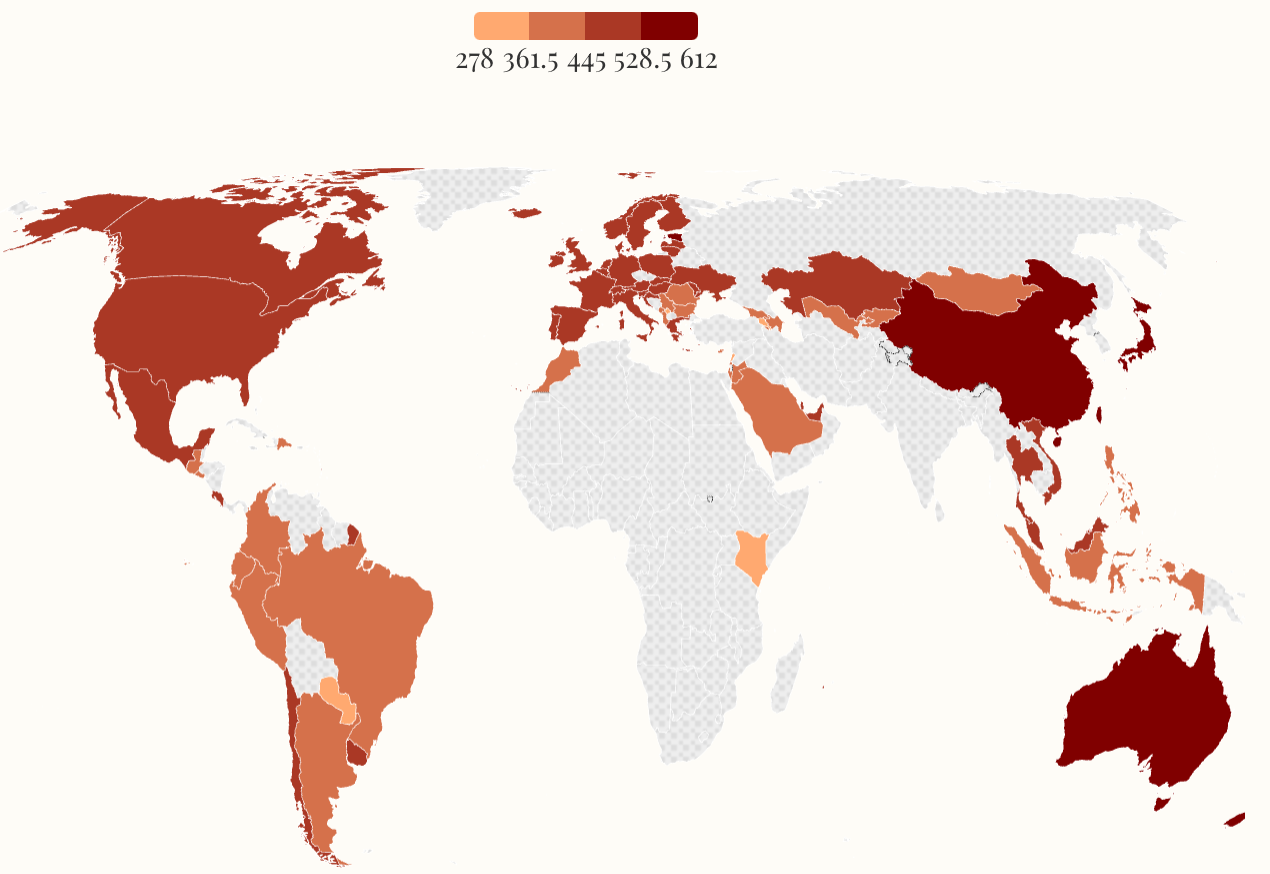
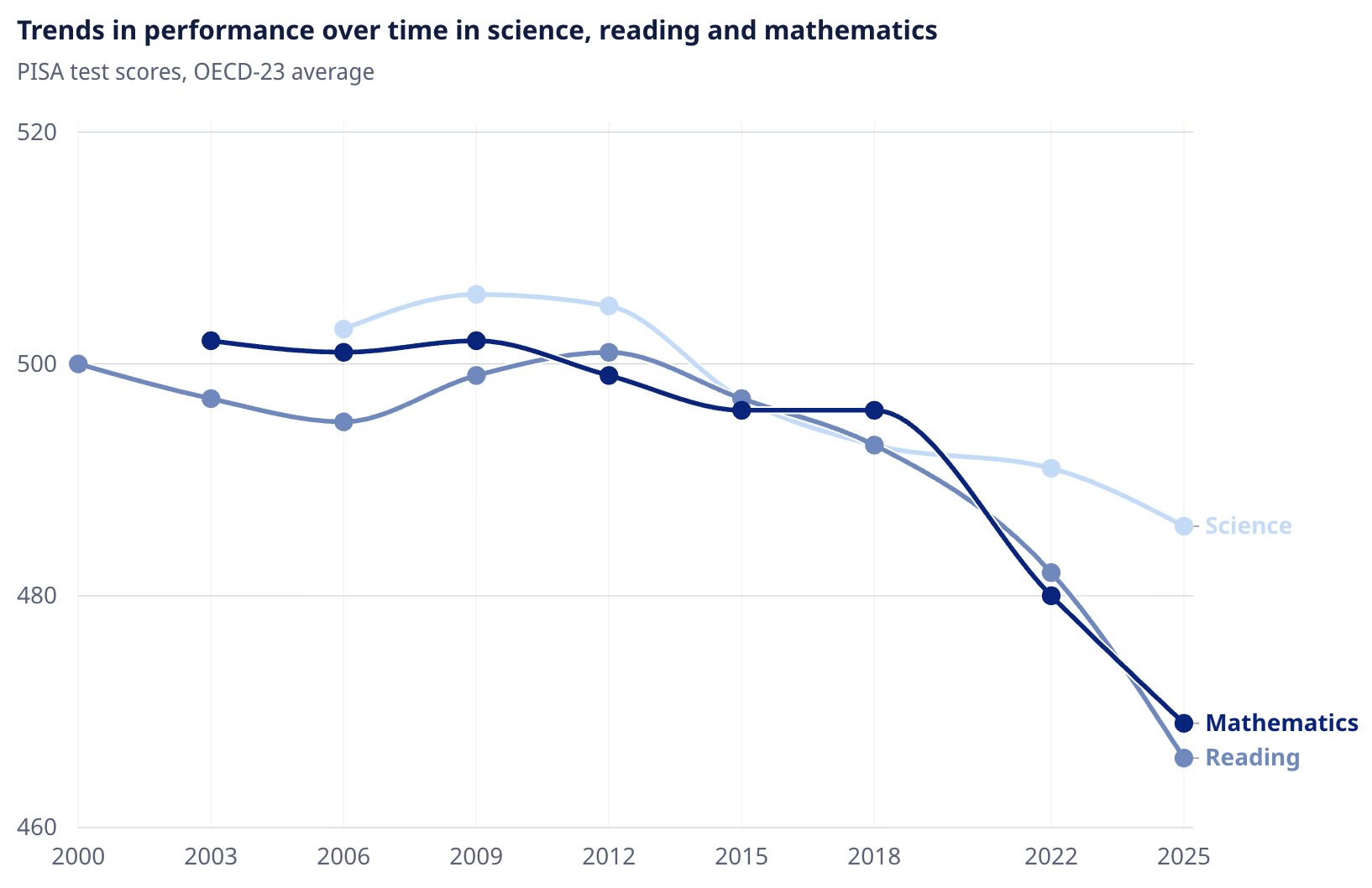
“Plunged,” “plummeted,” and cratered are among the terms that media sources, particularly in Europe and the America’s, used to describe the results of the latest reading, math and science scores from OECD’s 2025 PISA tests. The negative headlines reflect the fact that the average performance of OECD countries was the lowest recorded to date in science, reading, and mathematics. At the same time, the depressing headlines mask some more positive findings. In particular, Türkiye and Thailand’s students improved in all three subjects; England and the UK jumped into the top ten for the rankings in all three subjects by maintaining its performance in reading and math and improving in science; and many of the usual high performers like China, Singapore, Japan and South Korea maintained their high scores, though with some small decreases here and there. Slight decreases in Singapore in particular were sufficient for China’s four participating regions — Beijing, Shanghai, Jiangsu, and Zhejiang — to take the top spot in math and science. Notably, although the decline in test scores was the steepest ever in OECD countries, the average score decline in reading and math in non-OECD countries was almost half as much as in OECD countries, and non-OECD countries average science scores remained about the same as 2022.
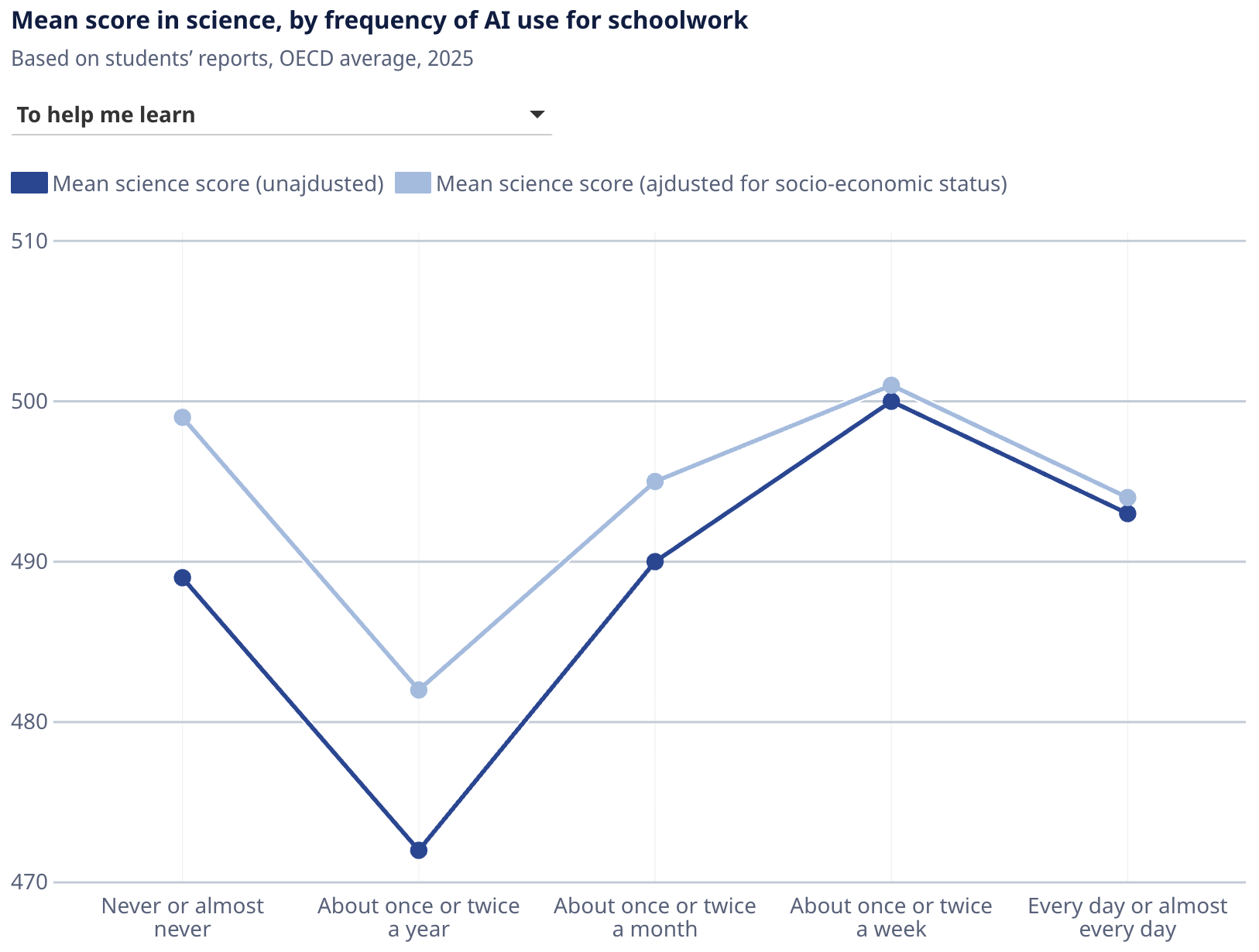
Headlines around the world also highlighted concerns that the drops in scores might be related to the emergence of AI and increases in screen time, cellphone use and other “digital distractions.”As always, assigning blame (or occasionally credit) for changes in average performance is not easy, and there are plenty of reasons to be skeptical of any quick conclusions about the factors that may be affecting the changes in scores this time around. At first glance, some correlations seem to support the concerns. For instance, the UK’s strong performance goes along with survey results showing only 19% of UK students in the UK reported that their peers are often distracted by digital devices during science lessons in 2025, compared to the OECD average of 28%. Furthermore, 80% of UK students attend schools where cellphones are banned compared to the OECD average of 49%. However, even the results within the UK are not consistent, with the performance of students in England largely driving the UK’s improvements. In contrast, students performance declined substantially in reading and math in Wales and Scotland even without substantial differences in screen time or cellphone use from their peers in England.
In addition Iceland reported the largest decline in performance in reading and science and nearly the largest in math over the last 10 years; yet, for the most part, Iceland has lower than average reports of “digital distraction” and the OECD report finds that in Iceland digital distraction is not associated with significant differences in student performance. Iceland also serves as an important reminder that the PISA tests are only one way to measure the effectiveness of education systems. Despite low PISA scores, Iceland ranks near the top on many other measures of happiness, health and quality of life. That includes taking the top spot on the Human Development Index, a statistical composite of average income per person, life expectancy, and education (mean years of schooling completed and expected years of schooling upon entering the education system). (For more on Iceland’s education system and the efforts to support immigrant students in particular see Developing national support for immigrants and multilingual learners in Iceland (Part 1 & Part 2) and an upcoming post will discuss why, as a former Education Minister said, it’s still good to be a child in Iceland.)
Global
Are teenagers growing dimmer?, The Economist
Global Test Scores Hit New Lows — Just as AI Takes Hold in Schools, The 74 million
“Even as they fall further behind in reading and math, the world’s students are turning to artificial intelligence for help with schoolwork. PISA results released this week show average performance in core subjects at the lowest levels ever recorded, with U.S. reading scores plummeting just since 2022. Meanwhile, students across dozens of countries are increasingly using chatbots to research, write and solve problems at school. ‘I see that problem on a micro level and think, ‘My God,’ one researcher said”
Reading Ability Craters on International Exam, Both in the United States and Abroad, Education Week
PISA 2025 results: Reading and math scores plummet worldwide, DW
“The PISA 2025 results reveal record-low student performance, with digital distractions and AI use raising concerns.”
From science to screen time: 4 key takeaways from the latest PISA results
PISA 2025 Results (Volume I), OECD
Africa and Middle East
Morocco
Morocco’s Education Ministry responds to PISA 2025 results, defends reform, Morocco World News
Kenya
Poor global test scores expose learning gaps in Kenya, Daily Nation
Rwanda
Experts weigh in on Rwanda’s first PISA results, The New Times
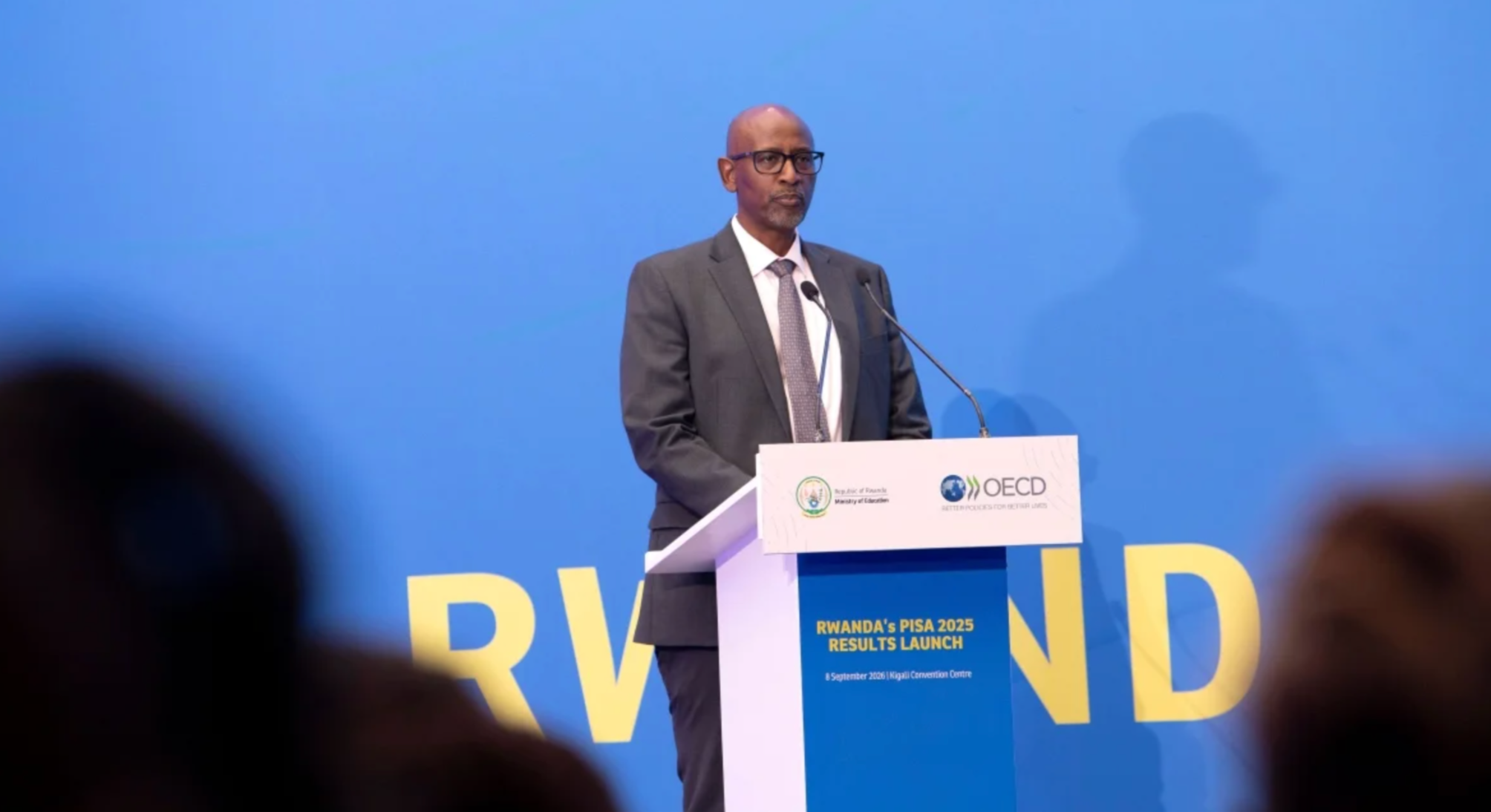
“Three percent of Rwandan students who took part in the 2025 Programme for International Student Assessment (PISA) reached the baseline proficiency level across reading, mathematics and science, according to results released in Kigali on Tuesday, September 8.The results show that 12.7 per cent of students reached the baseline level in science, compared with 7.7 per cent in mathematics and 3.9 per cent in reading.”
Israel
Israel records one of OECD’s steepest declines in reading, Ynetnews
“PISA tests are not the problem; they are the mirror. Instead of arguing with the mirror, it is time to deal with what it reflects,” Israel’s National Parents Association said
Israel’s education system needs a reset, The Times of Israel
Palestine
Announcement of PISA 2025 study results, WAFA
“Seventeen percent of participating Palestinian students reached Level 2 or above in mathematics, compared with an OECD average of 65%; the corresponding shares were 22% in reading, compared with 69%, and 24% in science, compared with 74%.”
United Arab Emirates
Dubai private schools rank among world’s top 10 across all domains in PISA 2025, Zawya / Emirates News Agency
UAE tops Arab world in PISA 2025 as student performance jumps, Gulf News
Australia
Australia a “strong performer” in PISA 2025 despite plunging maths and reading results, EducationHQ
Australia’s classroom disruption among worst in world, prompting calls for “digital detox”, The Guardian
PISA 2025: Australian students perform above OECD average in all domains, Teacher Magazine
Central and South Asia
Armenia
Armenia participated in the PISA international assessment of learners for the first time, Public Radio of Armenia
“In Armenia, the assessment was carried out in March-May 2025, in which about 7,000 learners from 295 schools participated. Minister of Education, Science, Culture and Sports Zhanna Andreasyan, during the presentation of the main results of the PISA-2025 international research, said that Armenia’s participation in the research has for many years been one of the important goals of the state policy in the field of education.”
Azerbaijan
Azerbaijan ranks second globally for PISA progress, News.Az
Azerbaijani students became the first in the region in reading skills, Modern.az
Georgia
Georgia climbs in 2025 PISA results, DFWatch
Kazakhstan
Kazakhstan records long-term gains in science as math scores fall in PISA 2025, Qazinform
Kyrgyzstan
Kyrgyzstan climbs 11 spots in PISA 2025 global education rankings, AKIpress News Agency
East and Southeast Asia
China, Hong Kong, and Macao
Chinese students lead global rankings in 2025 PISA, China Daily Hong Kong
Hong Kong students drop in global rankings for maths, science and literacy, South China Morning Post
Macau tops PISA 2025 digital problem solving, comes third in science and maths, Macau Business
Japan
Japanese 15-year-olds rank top in core subjects among OECD countries for the first time, The Japan Times
Malaysia
2025 PISA results highlight need for stronger family support in children’s education, Bernama
PISA 2025: Malaysia improves in science, reading but slips in mathematics, New Straits Times
Philippines
PH posts highest PISA scores yet in reading, math, science—DepEd, GMA Network
Before we celebrate PISA 2025, Philstar.com
“‘We can certainly say that we have improved,’ two Philippine education scholars wrote. ‘What we cannot reasonably say is that we are already doing well.’ They noted that 21% of Filipino students reached baseline Level 2 proficiency in mathematics, compared with 31% in reading and 32% in science.”
Philippines only country where rich-poor gap in reading gains widened in PISA 2025, Philstar.com
Singapore
Singapore’s 15-year-olds second globally in using digital tools to solve complex problems: PISA, Channel News Asia
Singapore students top global reading rankings, second in maths and science: PISA, The Straits Times
South Korea
Korea near top but lags behind China and Japan in reading, science and math, OECD study finds, Korea JoongAng Daily
Thailand
Thai students improve in PISA 2025, but remain below OECD average, Khaosod English News
Thailand plans AI learning framework after PISA gains, The Nation Thailand
“Thailand was among eight countries and economies to record statistically significant increases across all three core areas compared with 2022.” Thai students’ science score rose 23 points to 432, while mathematics and reading each rose 13 points, to 407 and 392 respectively.
Vietnam
60% of Vietnamese students fail to reach basic reading proficiency, VnExpress International
“The Ministry of Education and Training said this was the first time Vietnamese students had switched from paper-based to computer-based testing. As the two formats differ significantly, the score gap is not sufficient to conclude that education quality has improved or declined, it said.”
PISA 2025: Vietnamese students are diligent, persistent, and adapt quickly to technology, Vietnam.vn
Central and Eastern Europe
Armenia
Armenia participated in the PISA international assessment of learners for the first time, Public Radio of Armenia
“In Armenia, the assessment was carried out in March-May 2025, in which about 7,000 learners from 295 schools participated. Minister of Education, Science, Culture and Sports Zhanna Andreasyan, during the presentation of the main results of the PISA-2025 international research, said that Armenia’s participation in the research has for many years been one of the important goals of the state policy in the field of education.”
Albania
“We have growth compared not only to 2022, but also in the region, where Albania has the highest results. Specifically in mathematics and science, Albania has the highest level in the Western Balkans region. These indicators reflect the progress that Albania has made in a field such as education and it is not simply historical pride, but especially ambition and intention to move forward. It is not important which country we have surpassed, but to understand how PISA helps us increase the performance of our teachers and how students increase their skills,”
Bulgaria
Bulgarian students record lower results in reading and mathematics in PISA 2025, Bulgarian National Radio
Georgia
Georgia climbs in 2025 PISA results, DFWatch
Kosovo
Test PISA 2025, education alert, Kosovar students with catastrophic results, Periskopi
North Macedonia
PISA 2025 results: North Macedonia, OECD
“Socioeconomic status accounted for 7% of the variation in science performance in North Macedonia, compared with 12% on average across OECD countries.”
Poland
Polish students outperform EU peers across math, reading and science, TVP World
Romania
Romania faces sharp educational decline in PISA 2025 assessment, The Romania Journal
Northern, Western, and Southern Europe
European education powerhouses rocked by falling scores in global study
France’s were its worst ever. Germany’s, too. In the Netherlands, results also tumbled to all-time lows.
Estonia
Estonia ranks among top countries in latest PISA results, ERR News
Estonia remains among the world’s best education systems in PISA 2025—but reading scores fall, Estonian World
Finland
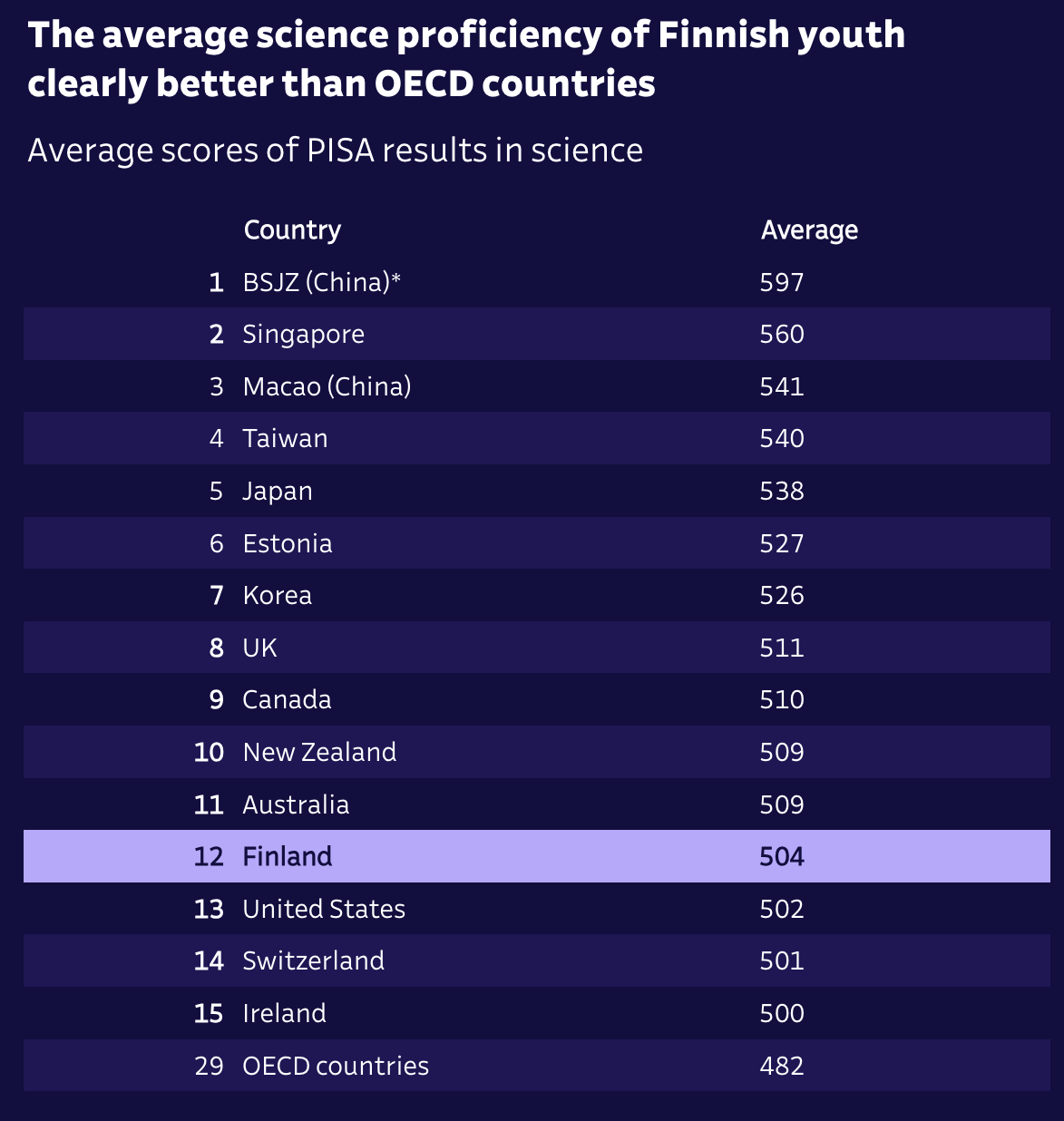
Finland’s PISA scores fall again in reading and maths, Helsinki Times
Finnish pupils’ Pisa results nosedive, but still above OECD average, Yle
France
French pupils fall to record low in global education survey, RFI
French Education Minister Édouard Geffray called France’s ranking“concerning, but sadly, it comes as no surprise…[H]e suggested giving schools greater autonomy ‘to strengthen support for struggling students, diversify the curriculum and open up more opportunities for all students’”.
PISA 2025: Unprecedented drop in French students’ performance echoes worldwide decline, Le Monde
Germany
Germany’s new PISA schooling assessment sees ‘historically low levels’, DPA/Yahoo News
Germany sees lowest ever results in international PISA education study, The Local
Greece
Zacharaki on PISA 2025: “We recognise weaknesses, build on positive results and move forward with a plan”, Athens-Macedonian News Agency
Iceland
PISA 2025: Iceland records its worst results yet, Iceland Review
“Icelandic 15-year-olds are performing below both the OECD average and their Nordic peers in reading, mathematics and science, according to the newly released PISA 2025 results. Only 56% of Icelandic pupils reached basic proficiency in reading, down from 78% in 2015. Only 50% of boys reached the basic reading threshold, compared with 62% of girls”
Iceland sees biggest PISA decline of any country, mbl.is
Malta
Students getting worse at maths, science—especially reading, Times of Malta
Netherlands
Dutch children’s literacy falls further behind European average, Dutch News
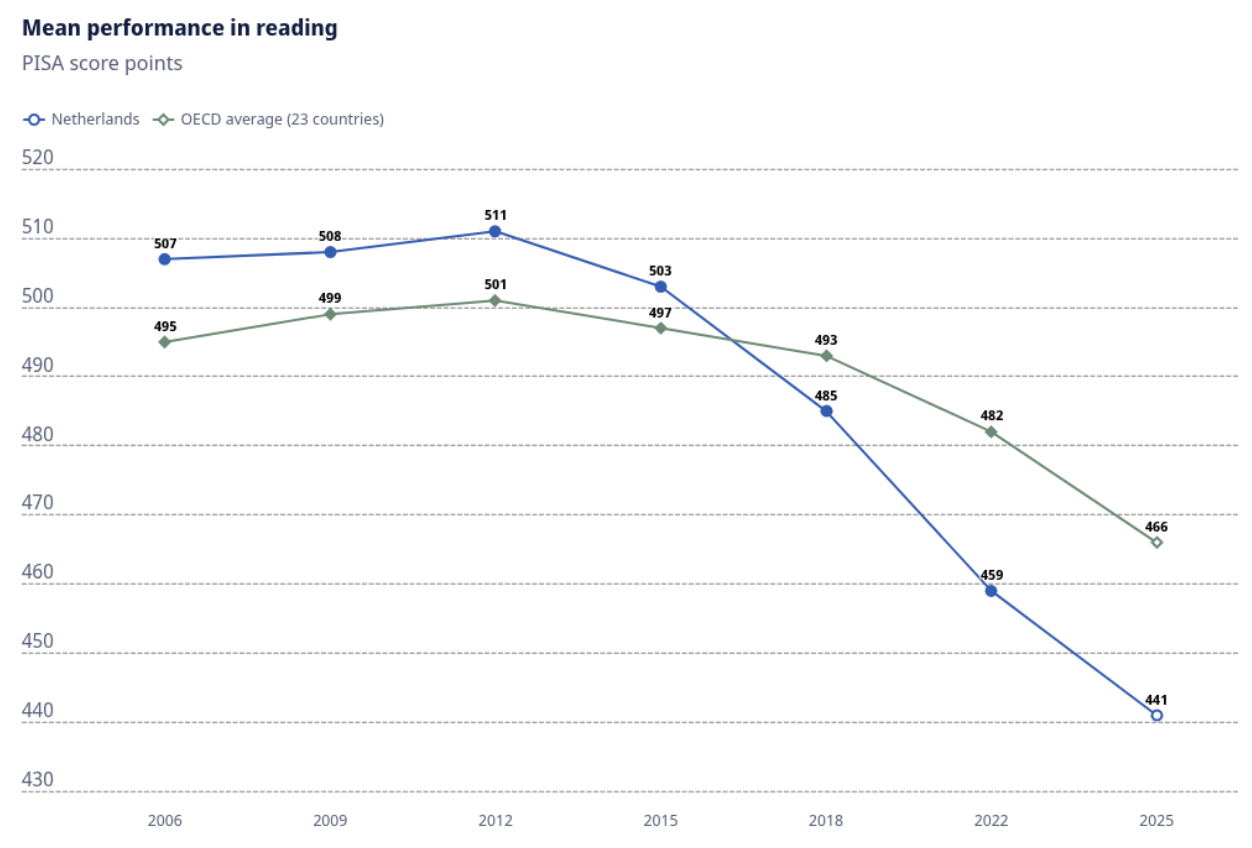
“Some 39% of 15-year-olds had a reading level deemed inadequate to function in society, up from 33% the last time the report was compiled in 2022.”
Türkiye
Türkiye lifts scores in all three PISA subjects in 2025 as OECD averages fall, Türkiye Today
Türkiye leads OECD in PISA 2025 score gains, Hürriyet Daily News
Slovakia
Slovak pupils lag in reading but fare better in maths, PISA results show, The Slovak Spectator
Spain and Catalonia
Spain’s PISA scores fall to record lows as reading, maths and science decline, Spain in English
“The deterioration since the previous assessment in 2022 is substantial: Spain lost 23 points in reading, 16 in mathematics and eight in science. Looking further back to 2015, the cumulative decline amounts to 45 points in reading, 30 in mathematics and 16 in science.”
The PISA 2025 report warns of educational collapse in Spain, El Constitucional
“Catalonia’s PISA 2025 results cannot be compared with other territories or previous cycles because the sample was not representative of the 15-year-old student population. The reported exemption rate reached 23.2%, compared with the OECD guideline of 5%.”
United Kingdom
England’s pupils now outread France and Finland as global reading slump deepens, International Business Times UK
England up in reading, maths and science rankings as Scotland and Wales fall behind, BBC News
Wales falls further behind rest of UK in international school tests, BBC News
Latin America and the Caribbean
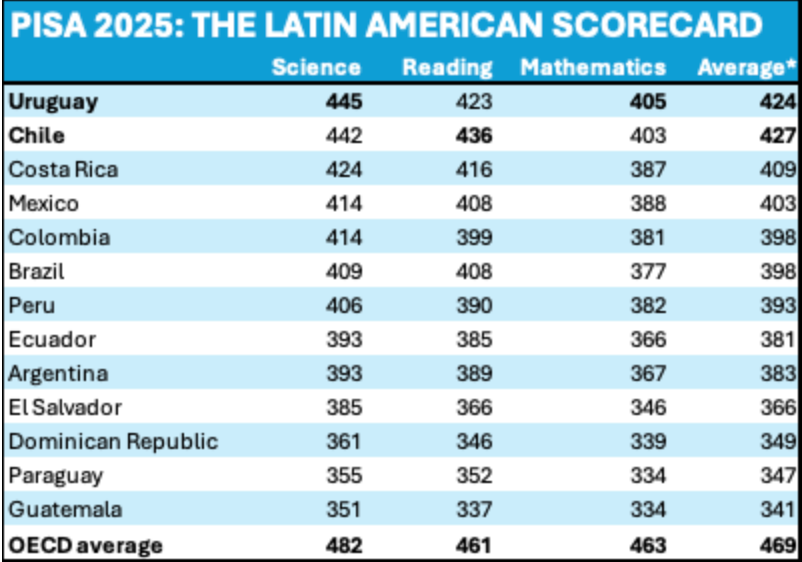
Latin America falls back in PISA 2025 as Argentina posts its worst score since 2006, MercoPress
Global education rankings: U.S. hits record low in reading while multiple Latin American nations fall further behind, Latin Times
Mexico
Mexico’s mathematics and reading performance declines in PISA 2025, Mexico Business News
North America
Canada
Canadian teens still rank among the world’s best in reading, math and science—but scores are slipping. Here’s why, Toronto Star
Canada’s global ranking in education falls to record lows, Juno News
United States
U.S. moves up in PISA test score rankings because other countries are doing worse (Chalkbeat)
U.S. Reading Scores Plummet on Global Exam, New York Times
“Students in Singapore and parts of China had the highest scores on the test known as PISA. Scores for American students were near a 25-year low.”
Map shows which countries outscore U.S. in reading and math, Newsweek