Scanning the globe

News in the last few weeks includes a number of stories on educational quality (often driven by international comparisons), with teacher quality again cited as a critical factor. The news has also included discussions of issues like early childhood education, private/supplementary education, and school inspections.  While there has been comparatively little recent news about educational issues sparking protests, the uprising in the Ukraine has been a major focus of attention. The Voice of America reports that university students there have taken charge of the Education Ministry where a “sign reads ‘Students Welcome.’ Just show an ID card and walk right in. Everyone else is expected to stay out, for now.”

Educational Quality

Stories focusing on “top performers” included a discussion with Elfriede Ohrnberger, Ministerialrätin of the Bavarian State Ministry of Education, in The Global Search for Education, about Germany’s recent improvements on the PISA tests. In a commentary on the Education Nation website “It takes keeping up with the competition,” Amanda Ripley argues that students in “higher-performing” countries like Finland and S. Korea have more challenging work than their peers in the US. (For IEN Editor Thomas Hatch’s take, see this commentary describing his children’s elementary school year in “lower-performing” Norway and the trade-offs involved – a powerful holistic, developmental educational experience, but less focus on basic skills and academics).

Although Finland is usually in the news as a “top performer,” this time in Education Week, Mark Tucker asks Pasi Sahlberg to explain Finland’s declines in reading and math on the 2012 PISA tests. The Calgary Herald reports on a former Canadian Deputy Prime Minister’s concern that “Canadians don’t express similar outrage and disbelief when international testing shows the country’s students, and adults, have been faring worse in math, science and literacy over the past decade;” an OECD report on Sweden’s poor performance on PISA was the focus of a story in the Times Education Supplement.  TES cited “everything from low teacher salaries to excessive spending on keeping class sizes small” as key contributors to the problems; and IOL news reports that the education department in KwaZulu-Natal – a province of South Africa – is getting blamed for failure to address long-standing problems in the schools.  A report presented to the legislature there identified problems including:

“Positions being vacant and the long process involved in getting substitute teachers appointed.

– Schools not having qualified maths, science and accounting teachers, or any teachers at all.

– Toilets being in a “terrible” state.

– Schools being without permanently appointed principals for years as disciplinary cases drag on.”

Teacher Quality

A yearly monitoring report from UNESCO suggests that inadequate teacher training and cutbacks in funding are key factors in underperforming educational systems. As discussed in Voice of America, the report suggests to achieve universal primary education, sub-Saharan Africa alone would need roughly 225,000 more teachers a year, or almost 60% of the number of additional teachers needed worldwide. That report also lists Rwanda, Laos, and Vietnam, as having reduced their out-of-school populations at the primary level by at least 85% over the past five years.  However, The Guardian also cites reports that explain that growth “has come at the expense of teaching excellence, with all three countries forced to recruit less qualified teachers.”

In Australia, on the other hand,  The Hechinger Report  suggests that improving teacher quality has been a key reform strategy.  Those efforts have included increasing standards for teachers to get accredited (the equivalent of certified) and work on a career ladder where teachers who take on more responsibilities can get paid more.

Private/Public and Supplementary Education

While the Asia Pacific Memo talks with Julien Dierkes about the changing status and growing popularity of supplementary education, a story in Airang News describes President Park’s recent call to reduce private education there, explaining:

“In an effort to reduce private tutoring and get students more focused on their schooling, the government will force universities to give a zero-mark on applications that include awards or certificates received outside of school.  These will include TOEFL or other English language test scores, math and science Olympiad awards, and extracurricular education prizes received from private institutions.” 

In Radio Free Asia, Andrei Lankov also shares his thoughts on the problems with private education and education in general in North Korea.

Early Childhood Education

In Slate, Claire Lundberg shares her thoughts on almost 200 years of attention to preschool education in France.  Recent legislation in Scotland should increase free childcare for three and four-year-olds, and BBC News describes the effort that will review the quality of the childcare workforce there.

Assessment, Accountability, and School Inspections

Ofsted, responsible for carrying out school inspections, has also been busy.  The Independent reports that there will be some new, unannounced one-day school inspections to try to address what the Chief Inspector called “a culture of casual acceptance” of disruptions in schools.  The Gaurdian also reports of a rift between Ofsted and Michael Gove, Secretary of State for Education, and, perhaps not coincidentally, a move by Ofsted to begin inspecting chains of academy schools.

The Global Intensification of Supplementary Education

The following post was originally published by the Asia Pacific Memo on February 18, 2014.

Memo #271

Featuring Julian Dierkes

Recently, Ee-Seul Yoon of the Faculty of Education at UBC in coordination with the Asia Pacific Memo sat down with Dr. Julian Dierkes, Associate Professor and Keidanren Chair in Japanese Research at UBC’s Institute for Asian Research, to pose a few questions about Professor Dierkes’ recently co-edited volume, Out of the Shadows: The Global Intensification Of Supplementary Education, which was published in December 2013.

In our discussion, Dr. Dierkes presents an overview of the changing status and burgeoning popularity of supplementary education (that is, informal education received outside the traditional classroom) and what ramifications this is having on students, teachers, parents, education policy, and the political process—in Canada, Japan, Asia and even more globally. Finally, he touches upon how supplementary education itself is evolving as well as the present status of academic interest in the phenomenon of informal education.

Julian Dierkes is an Associate Professor and the Keidanren Chair in Japanese Research at the Institute for Asian Research at the University of British Columbia, where his research interests are in the area of comparative political sociology and the sociology of education.

Links

Janice Aurini, Scott Davies, and Julian Dierkes, Out of the Shadows: The Global Intensification Of Supplementary Education (Emerald, 2013)

Jukupedia, “Shadowing Education,” February 2014

Julian Dierkes, “Is South Korea’s Hyper-Education System the Future?,” Asia Pacific Memo #2

Husaina Kenayathulla, “Private Tutoring in Malaysia: Regulating for Quality,” Asia Pacific Memo #126

Education Reform in Japan

Dr. Christopher Bjork’s most recent publication, Japanese education in an era of globalization, which he co-edited with Gary DeCoker, was published in May of 2013 by Teachers College Press. The following post is based on a conversation in which he discussed educational reform in Japan.

As Dr. Bjork explained, education reforms in Japan in the 1990s aimed to “relax” strict educational standards and policies that many viewed as contributing to anti-social student behaviors, such as bullying and violence. In an attempt to relieve students of stress caused by high stakes testing, long hours spent in school, and rote learning, Japan implemented progressive, student-centered policies that privileged creative thinking and collaboration.  These changes were designed augment student interest in learning.

Teachers tended agreed with the goals of the relaxed education (yutori kyoiku) reforms, but often had difficulty implementing the initiatives in their classrooms.  Secondary instructors, in particular, were reluctant to diverge from practices that had proven effective in the past.  Dr. Bjork attributes this resistance to the cogent influence of entrance examinations, which act as gatekeepers and determine students’ future level of education attainment. Concerns about student performance on these exams made teachers reluctant to adopt strategies that they saw as unrelated to the content of the exam, and parents less willing to rely on the school system to sufficiently prepare their children for the challenges that lay ahead. As a result, many parents looked to private tutoring programs to fill what they saw as a gap in the children’s education.

Today, despite the country’s superior performance on the 2012 PISA test, the conservative government of Japan has a new agenda for overhauling the education system, which includes improving English fluency among teachers and students, teaching morals, and revamping the college entrance exam. A flurry of reports over the past few months also show that there is much debate over the government’s plan to revise curricula to state Japan’s territorial claims over disputed islands in teaching guidelines.  Although some vestiges of the relaxed education policies remain in place, their impact fell far short of the Ministry of Education’s initial projections.  The goal of alleviating pressure in the schools proved more ambitious than had been anticipated.

Teacher Education in Singapore

The following post was written by Sarah Butrymowicz and was originally published on the Hechinger Ed blog of The Hechinger Report.

Lessons from Abroad: Singapore’s secrets to training world-class teachers

Singapore has been a hot topic in education circles ever since it began to appear near the top of the pack of international assessments in math and science in the mid-90s. The country has been held up as an example of a place where education is being done right: Singapore’s standards were higher and better than ours. Its commitment to education stronger. Its teacher training more rigorous.

This month, I visited the tiny nation to see firsthand just what it’s doing and whether lessons from Singapore are really something the U.S. can replicate. During a week touring schools and talking to students and educators, I had a chance to spend several hours at the National Institute of Education (NIE), the school responsible for training all the country’s teachers. It’s a selective school regarded highly by many in the international education community. But I learned a few things that surprised me:

– The school averages 16,000 applicants for 2,000 slots annually, without bothering to do any outreach to high school students.

Teaching is a sought-after profession in Singapore, so the NIE doesn’t need to send brochures to top students or advertise in schools. It is guaranteed an abundance of good candidates because becoming a teacher is highly prestigious. Admissions staff only look seriously at those in the top third of their class, though, and a competitive interview process weeds out those who might just be interested in the salary the Ministry of Education pays students during their training to become a teacher.

– In 2010, the NIE started a pilot e-portfolio program, which quickly expanded to the entire school. All teacher trainees must collect a sampling of projects and main assignments from each of their classes and write about their philosophy of teaching – and document how that changes as their training goes on. Originally intended as an assessment, the portfolio now has no grades or consequences attached to it. Students must present it to faculty prior to graduating, but NIE administration decided that it was better used as a resource and opportunity for reflection, rather than a high-stakes assessment.

– Once students graduate, they must serve in the classroom for at least three years. In that time, though, they have a lighter workload – about three quarters of what a regular teacher has – and a mentor to help them. They’re also not done with the NIE.

The school offers ongoing training for all teachers and has some courses specifically geared towards beginner teachers. A few are even required by the Ministry of Education for recent grads.

Singapore, of course, is a small, centralized country and not everything that they do can apply to the United States. But there were some marked contrasts—such as the popularity of the teaching profession and the continued relationship between teacher and training program even after they’re in the classroom—that the U.S. could learn from. I’ll be checking in again later this week with more of my observations.

Interview with Beatriz Pont

Beatriz Pont

Beatriz Pont

Beatriz Pont is Senior Education Policy Analyst in the OECD Education Directorate. At the OECD since 1999, she has focused on education policy analysis and advice. She has managed and contributed to a range of education policy comparative reviews in the area of school improvement, school leadership, equity, adult learning and adult skills. This interviewwhich is part of the Lead the Change Series of the American Educational Research Association Educational Change Special Interest Group, appears as part of a series that features experts from around the globe, highlights promising research and practice, and offers expert insight on small- and large-scale educational change. Recently, Lead the Change has also published interviews with Diane Ravitch, and the contributors to Leading Educational Change: Global Issues, Challenges, and Lessons on Whole-System Reform (Teachers College Press, 2013) edited by Helen Janc Malone, have participated in a series of blogs from Education Week.

Scanning the globe

Several reports over the past month highlight issues such as educational funding, early childhood education, new schools and school closure, and curriculum:

Funding

In the Phillipines, http://www.philstar.com argues that the country is not contributing enough to education. While education spending increased from 1999 to 2011 (13.9% to 15%), it has yet to reach the target 20% of the national budget. According to UNESCO, “The share of national income invested in education, which equalled the subregional average in 1999, had fallen behind by 2009 at 2.7 percent of GNP, compared with an average of 3.2 percent for East Asia.” In CanadaThe Globe and Mail reports that school boards have increased their spending over the past decade. In Canada as a whole, expenditures have increased 53 per cent – or 5.3 per cent a year, a rate much higher than inflation. In Australia, The Australian Teacher Magazine reports that the government is in the midst of a debate over the funding of education. While the government has committed to a new educational funding system for four years starting from 2014, officials are debating the timeline for the new funding system as well as the question of whether the funding should go to private schools as well as public schools. Meanwhile, The Norway Post reports that the Norwegian government is making plans to increase spending on teacher training.

Early Childhood Education

In Bulgariahttp://www.novinite.com reports that, in order to avoid a loss of EU funding, new legislation is being drafted and must go into effect by September 2014. Legislation includes revisions to a draft law on pre-school education, which include making pre-school education non-compulsory for 4-year-olds. Meanwhile, The Helsinki Times reports that Finland, where approximately 63% of children aged 1-6 attended daycare in 2012, is considering a new law that would “secure the high quality of early childhood education,” as well as all other issues, including funding and teacher quality.

New Schools and School Closure

According to Norways The Foreigner, Conservative Education Minister Torbjørn Røe Isaksen has proposed lifting current restrictions on establishing private schools. Meanwhile, in Scotland, the government has amended the Children and Young People Bill in order to defer decisions about school closures to new review panels. The aim of establishing these panels is to improve transparency and remove allegations of political bias from the process. In Lithuania, the Education and Science Ministry has approved a network of Russian-language schools, emphasizing that education programs of foreign countries and international organizations must be consistent with the education goals and principles in the Education Law of Lithuania, as well as the law on national security and other legal acts.

Curriculum

In Finland, The Helsinki Times reports that a high school reform task force delivered a proposal to the Minister of Education and Science in which they proposed reducing compulsory subjects, such as the study of Swedish, and introducing new interdisciplinary studies. The proposal has been met with resistance from some teachers and politicians. Meanwhile, in The New York Times, questions about the relationship between identity and the curriculum surface for Palestinian children who are educated in Israel, and Muslims who are educaed in Germany. The debate over language instruction is ongoing in countries such as The NetherlandsLatvia, and Japan.

In AustraliaAustralian Teacher Magazine reports on a new review of the national curriculum, which leadership feels should be pared back to basics. Kevin Donnely, one of two men who will conduct the review, raises concerns over teaching and learning, and considers the relationship between educational spending and learning outcomes. As he explains, “We really do need to know whether the millions and millions of dollars that’s gone into education over the last 20 years, where results have flatlined or have gone backwards – we want to know how effective that money has been.”

Global Perspectives on Professional Learning Communities

Dr. Jane B. Huffman

Dr. Jane B. Huffman

At the 27th annual International Conference for School Effectiveness and Improvement, held in Yagyakarta, Indonesia, early this January, Dr. Jane B. Huffman presented a paper, “Professional Learning Community Development in High Schools: Conceptualizing the PLC Process through a Global Perspective,” in which she shared her research on the PLC process within multiple Asian cultural contexts. In a recent conversation with IEN Contributing Editor Paul Chua, Huffman defines professional learning communities (PLCs) as “professional educators working collectively and purposefully to create and sustain a culture of learning for all students and adults.” She described PLCs as a multi-dimensional process, including shared and supportive leadership; shared values and vision; collective learning and application; shared personal practice and supportive conditions. Through her research in the U.S. context over the past two years, she has found that successful implementation of PLCs district-wide depends on a coordinated vision of leadership working together towards a common goal, strong interpersonal relationships, and carefully targeted professional learning.

While the PLC process has been practiced and studied in Anglo-American cultures for twenty years, Huffman’s work with the Global PLC Network extends this work to non-Anglo countries including China, Hong Kong, Singapore, and Taiwan. Huffman and four research colleagues – one each from Hong Kong, Singapore, Taiwan, Australia and the U. S. – began the network in 2009 by studying schools in Taiwan and Singapore that were using the PLC model. From those conversations, they began to construct the essential structures of what came to be called the “Global PLC Model.” Their research on the global construct has five facets for development: structures, policy and procedures; leadership; professionalism; learning capacity and a sense of community.

A Dr. Huffman explained, a brief history of the five educational systems show that external and internal differences in educational systems make it impossible to create a ‘boilerplate’ improvement effort that will fit all contexts and meet all teacher and student needs. In Taiwan, the Ministry of Education (MOE) PLC policy began in 2009 and encouraged K-12 teachers to build school-based PLC teams for teacher professional development. Some government programs, such as a high school improvement project (School Actualization Program) and science education (High Scope Program), continue to motivate teachers to establish subject-based or interdisciplinary PLCs for curriculum innovation or professional development. In Singapore, PLCs started in 2000 with the establishment of Teachers Network, and Learning Circles, a teacher collaborative learning model of action research. In China, although the term PLC is seldom used, schools have a long history of enhancing teachers’ professional competency and instructional skills through collaboration and collective inquiry. In Hong Kong, early steps have been initiated to establish policies related to PLCs.

For more on the topic of Professional Learning Communities and how they are being put to use in various countries around the world, readers can look back to Dr. Huffman’s earlier publications and earlier conversation with ICSEI President Dr. Alma Harris, who shared that some of the debates about professional collaboration range from discussions about the best models to follow, about the time and resources available to support these activities, and the issue of impact. In addition, in a recent conversation with IEN, Dr. Philip Hallinger, described the some of the issues related “policy borrowing,” in which countries attempt to utilize policies that have been successful in different contexts.

Education reform in East Asia

Dr. Philip Hallinger

Dr. Philip Hallinger

This post is drawn from a conversation with Dr. Phillip Hallinger, the Joseph Lau Chair Professor and director of the Asia Pacific Centre for Leadership and Change at the Hong Kong Institute of Education.  He spoke with us about some of the issues surrounding the last two decades of education reform in East Asia, which he addresses in his most recent article, Synthesis of findings from 15 years of educational reform in Thailand: lessons on leading educational change in East Asia,” published in the International Journal of Leadership in Education: Theory and Practice. 

East Asian countries have been actively pursuing education reform over the past two decades. Largely, goals of such reforms have included student-centered learning, teaching with technology, school-based management, and teacher empowerment – ideas that have originated in either the US, the UK, or Australia, and travelled around the world on what Hallinger calls “the winds of globalization.” As Hallinger explained, where Asian societies years ago were once much more isolated, cultural and national boundaries today are permeable. While this “policy borrowing” can be interpreted as a move to build a more modern education system, it belies a “cultural mismatch” that can render the policy ineffective in practice. As Hallinger (2013) suggests, “where educational changes conflict with fundamental cultural values, the process is likely to encounter even greater resistance and require a longer time frame for implementation” (p. 17).

Hallinger’s (2013) recent article, written with Darren A. Bryant, focuses on Thailand and identifies lessons that can apply broadly to the region and beyond. As Hallinger and Bryant explain, Thailand aimed to expand access to education during the 1990s by increasing compulsory education from six to nine years, and finally to 12 years of free schooling, in an effort to improve the knowledge and skill level of the labor force. However, with the increase in access came concerns over educational quality, and in 1999 the National Education Act (1999) was passed, setting ambitious new goals for teaching and learning that many today feel the country has not attained in the ten years since the initial implementation of the reform. Some have also  linked the country’s recent social unrest to the perception of unequal access to quality education.

Hallinger and Bryant also note that in countries such as Malaysia, Hong Kong, Singapore, China and Taiwan, there is a similar gap between the vision of educational change and the reality on the ground. In Thailand, for example, despite the government directive that all teachers implement student-centered learning, a survey of 1800 principals found that only about a one-third reported that their teachers actively engaged the reforms in their teaching practice. Hallinger attributes this disappointment to “over-promising,” rather than faulty strategy, and explains that a successful implementation would require more than a decade in any country. In Thailand, “local factors,” such as budget constraints, cultural mismatch, and political instability, have further tested reform efforts.

Scanning the globe

Photo by Dao Ngoc Thach

Photo by Dao Ngoc Thach

Several reports over the past month highlight the variety of causes that are blamed for failures to improve educational performance around the world. This short scan of reports focusing on issues like school quality and test-score performance, reveals typical concerns about teacher training and teacher quality, questions about the language of instruction and equality of education, as well as questions about the choices policymakers have made and the “policy churn” that can undermine implementation.
 

School Quality

Earlier this year in Sweden, 11,000 students were left without a school to attend when the private education firm that operated it went bankrupt. According to an article published online by Reuters, additional concerns raised about the quality of education in these schools led the opposition Green Party, a long-term proponent of school choice, to issue a public apology in a Swedish newspaper, with the headline: “Forgive us, our policy led our schools astray.”

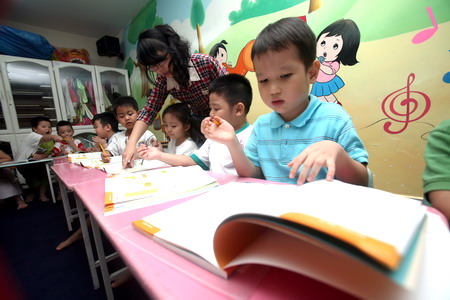
In Vietnam, concerns have been expressed over the quality of care and education children receive in privately operated preschools. Referring to the government policy to privatize education as a failure, thanhniennews.com writes that limits placed on the growth of public preschool facilities has allowed private preschools “of dubious quality to mushroom.” Another article, posted on Vietnam.net, points out the additional problem of inadequate teacher training in provincial and privately operated preschools.

Test-Score Performance

In Malaysia, we see a debate over the cause of the decline of TIMSS scores. The World Bank released a report that found the decline to be caused by the switch in the language of instruction from Bahasa Malaysia to English. However, an article in The Malay Mail online cites the Parent Action Group for Education (PAGE), for pointing out that in 2007 (the year scores declined sharply), the students had yet to receive their instruction in English. Instead, PAGE attributed the decline to the poor quality of teachers and insufficient teaching hours. The Education Ministry announced plans to form a panel to investigate Malaysian students’ decline in performance.

Finnbay.com reports that Krista Kiuru, Finland‘s Minister of Education and Science, has allocated €22.5 million in state aid to promote equality in education for the period 2014-2015 to regain Finland’s top seat in PISA. “Success of Finnish education in international comparisons must be regained by having educational equality and non-discrimination,” said Kiuru.

Educational Improvement and “Policy Churn”

Despite declines in New Zealand students’ test scores, The Otago Daily Times reports that Education Minister Hekia Parata will not do anything differently. Parata attributes the slide to 10 years of a changing education system and not its controversial National Standards assessments, or a lack of school funding. According to Parata, Andreas Schleicher, Deputy Director for Education and Skills and Special Advisor on Education Policy to the OECD’s Secretary-General, has assured her that the country is already doing “what they recommend should be done when you want a whole of system change.”

The Nation has reported that the recent political upheaval in Thailand could mean that the sweeping curriculum-based overhaul of the education system might not come to fruition. The country had planned radical changes, such as decreasing the number of school hours for primary students from 800 to 600 per year, and requiring that students learn outside of the classroom for up to 400 hours per year. In addition, the Pheu Thai party’s controversial, yet “much-touted election policy” called the One Tablet PC Per Child Project, might not be implemented. Other policies at risk of being shelved include changes to the university admission system, promotion of vocational education, and the ongoing effort to improve Thailand’s international educational ranking.

Widespread call to improve vocational education

Christopher Furlong, BBC

Christopher Furlong, BBC

News reports from this past month have shown that many countries are rethinking the role of vocational training in their education systems.

In Denmarkwww.dr.dk reports that the government is considering new academic entrance requirements to vocational programs that some fear would result in thousands of students being barred from such programs.

Denmark is not alone in it’s effort to “raise the bar” on vocational education. The BBC reported that a survey of British employers showed almost 60% believe the government does not do enough to provide students with the vocational training they need.  The Guardian has also reported that a new standard will be applied to vocational education, allowing for diplomas endorsed by companies such as Kawasaki, Honda, and Volvo, but also hotels and even the Royal Ballet School, which is backing a qualification in performing arts.

Similarly, Thailand is also pledging to reform education to meet the demands of employers by reforming their system of vocational education. As reported in The Nation, the Education Ministry shared plans to work with the private sector to jointly design curriculum and training programs that give students real-life experiences as well as an academic education. The Thai government will also work with Germany, Australia, Japan and China – countries that have large investments in Thailand. However, in an earlier article, The Nation also reported that some researchers have expressed concerns that the government could still be doing more.

Similar news reports, collected from online sources over the past month, show a widespread call to improve vocational education, to reconsider the academic curriculum, and for educators to work alongside employers. These reports can be found coming from countries such as MalaysiaNigeriaThe United Arab EmiratesLiberiaSudanGhanaIreland, and India.